Women shaped early Christianity as witnesses, patrons, teachers, and leaders before later tradition recast their authority as servitude or exception.

By Matthew A. McIntosh
Public Historian
Brewminate
Introduction: The Lie of “Biblical Womanhood”
The most enduring lies in religious history rarely announce themselves as inventions. They arrive as tradition, as common sense, as the thing “everyone knows” because it has been repeated from pulpit, household, commentary, and classroom until the repetition itself begins to masquerade as proof. One of Christianity’s most consequential examples is the claim that women were created for subordination, that their proper place is beneath male authority, and that their spiritual dignity is fulfilled chiefly through obedience, silence, sexual restraint, and domestic service. This idea has often been presented as biblical womanhood, as though the Bible offers one stable, obvious, uncontested model of female dependence. Yet the history of Christian women begins not with absence but with presence. Women appear in the earliest Christian sources as patrons, prophets, disciples, witnesses, teachers, benefactors, household leaders, and apostles. The later problem was not that women had left no trace. The problem was that their traces had to be explained away.
The distortion begins early in interpretation, including the long afterlife of Genesis. The woman of Genesis 2 is described as an ezer kenegdo, a helper corresponding to the man, not a decorative assistant or domestic appendage. The Hebrew term ezer is not a word of inferiority; in the Hebrew Bible it is often used of divine help, powerful aid, or rescue. Yet later patriarchal readings compressed correspondence into hierarchy and help into servitude. A text about human companionship and mutuality was made to carry a social order in which woman existed as derivative, secondary, and functionally subordinate. This was not merely an exegetical mistake. It became a theological architecture. Once “helper” could be made to mean servant, the entire Christian imagination of gender could be arranged around a false memory of creation itself. Woman was not simply assigned a subordinate role; she was told that subordination was the reason she had been made.
That claim became especially powerful because early Christianity emerged within cultures already structured by male public authority. Jewish, Greek, and Roman worlds differed in significant ways, but all generally assumed that public leadership, legal power, household governance, and formal teaching belonged primarily to men. The early Jesus movement did not float above that world as a modern egalitarian society. It carried many of the assumptions of its time. Yet it also unsettled them. Women traveled with Jesus, supported his ministry from their resources, remained visible at his death, and became primary witnesses to the resurrection. In Pauline circles, women hosted assemblies, carried letters, worked as missionaries, taught, prophesied, and received titles that later translators and commentators often softened when they appeared beside female names. The lie of biblical womanhood, then, did not arise because the sources were empty. It arose because the sources were inconvenient.
As Christianity became more institutional, more clerical, more legally recognized, and more closely aligned with the structures of Roman public life, the memory of women’s authority was increasingly narrowed. Apostles became “notable women.” Deacons became “servants.” Patrons became “helpers.” Teachers became wives assisting husbands. Resurrection witnesses became penitents. The process was not always crude erasure; often it was more subtle and more durable. Women were left in the story but stripped of the authority the story itself had given them. The Christian past was not simply inherited. It was edited, translated, preached, harmonized, moralized, and disciplined until later hierarchy could pretend to be original order. I begin from that fracture between history and memory. The issue is not whether Christianity ever contained patriarchal ideas. It did. The issue is whether patriarchy gets to claim the whole Christian past as its own. The evidence says it does not.
Women around Jesus: Witnesses, Patrons, Disciples, and the First Fracture in the Lie

The first fracture in the later lie of Christian female subordination appears not in an abstract theological argument but in the narrative shape of Jesus’ own ministry. The Gospels do not present women merely as passive recipients of mercy, grateful mothers, forgiven sinners, or anonymous faces in a crowd. They appear as named disciples, patrons, mourners, witnesses, theological interlocutors, and heralds. This does not mean that the Jesus movement existed outside the patriarchal conditions of first-century Jewish and Roman society. It did not. Men still occupied most public offices, legal authority remained gendered, and household structures were shaped by assumptions of male headship. Yet the Gospel traditions repeatedly preserve women in places where later Christian hierarchy would have preferred not to find them: traveling with Jesus, supporting his mission, standing at the cross, watching the burial, arriving at the tomb, and bearing the first proclamation that death had not held him. The earliest Christian memory did not begin with women hidden safely in the background. It began with women close enough to the center that their presence could not be removed without damaging the story itself.
Luke’s Gospel gives the clearest early glimpse of women as active supporters of Jesus’ ministry. Luke 8 names Mary Magdalene, Joanna, Susanna, and “many others” who traveled with Jesus and the Twelve and provided for them “out of their resources.” That phrase matters. It has often been domesticated into a sentimental image of female kindness, as though these women were simply preparing meals or quietly helping the men do the “real” work of ministry. But in the social world of antiquity, material support was not incidental. Patronage created networks, sustained movements, enabled travel, protected teachers, and shaped the practical conditions of public activity. Joanna is especially striking because Luke identifies her as the wife of Chuza, a steward of Herod Antipas. Whether this connection gave her direct political influence or only social proximity to elite circles, Luke’s decision to name her places the Jesus movement within a wider web of women’s resources and relationships. The ministry did not move through Galilee by spiritual charisma alone. It required food, money, shelter, mobility, and protection, and Luke says women supplied those things.
This is why the category of “disciple” must be handled with more care than later church tradition often allowed. The Twelve were male, and their symbolic role within the restoration of Israel has obvious importance in the Gospel narratives. But the Twelve were not the whole movement. Jesus’ circle included others who followed, learned, served, supported, listened, questioned, and bore witness. Women appear within that broader discipleship, not as decorative exceptions but as part of the movement’s working body. Mary of Bethany sits at Jesus’ feet in Luke 10, the posture of a learner, while Martha’s complaint reflects the ordinary expectations of domestic labor that Jesus refuses to absolutize. Whatever else that passage may mean, it does not reduce women to household function. It interrupts the assumption that a woman’s proper place is always service before study. The scene is especially powerful because Martha’s labor is not mocked or dismissed. Hospitality mattered deeply in ancient households, and women often bore the burden of sustaining social and religious life through such work. But Jesus’ response refuses to make that labor the boundary of female possibility. Mary’s learning is not treated as impertinence, ambition, or rebellion. It is defended. The later church would repeatedly turn women toward domestic obedience as though it were the only biblical pattern. Luke preserves a more difficult memory: a woman learning while another woman names the unfairness of expected labor, and Jesus does not rebuke the learner for crossing a boundary.
The women around Jesus also function as theological interlocutors, not simply emotional figures. The Samaritan woman in John 4, though unnamed, carries on one of the longest conversations with Jesus in the canonical Gospels. She discusses worship, sacred geography, messianic expectation, and revelation, then becomes the catalyst for others in her community to encounter Jesus. The Canaanite or Syrophoenician woman in Matthew and Mark presses Jesus with a sharpness that the narrative itself allows to stand as faith. Martha in John 11 confesses Jesus as Messiah and Son of God in language that echoes the great Christological confessions elsewhere in the New Testament. These stories are not interchangeable, and they should not be flattened into a single claim that Jesus “liked women.” The stronger point is that women in the Gospel traditions ask, answer, interpret, challenge, confess, and proclaim. They are not merely acted upon. They participate in the theological unfolding of the story.
At the crucifixion, the contrast becomes even sharper. The male disciples are often portrayed as scattered, afraid, absent, or compromised, while women remain visible at the execution. The Synoptic Gospels name women watching from a distance, including Mary Magdalene, Mary the mother of James and Joses or Joseph, Salome, and others who had followed Jesus and ministered to him in Galilee. John places women even nearer the cross, including Jesus’ mother, his mother’s sister, Mary the wife of Clopas, and Mary Magdalene. The historical details differ across the Gospel traditions, but the pattern is consistent enough to matter: women are preserved as witnesses to the death of Jesus. In a world where public testimony was often gendered and female credibility could be culturally discounted, the Gospels nevertheless refuse to tell the passion story without them. Their witness bridges the ministry in Galilee, the death in Jerusalem, and the discovery of the empty tomb. They are not inserted at the end as pious mourners. They are narrative continuity itself.
The burial traditions deepen that continuity. In Mark and Luke especially, women observe where Jesus is laid, creating the necessary link between the body placed in the tomb and the tomb later found empty. This is not a minor narrative convenience. It makes women guardians of memory at precisely the point where Christian proclamation would depend upon the identity of the crucified and risen one. If the wrong tomb were imagined, if the body were misplaced, if the witnesses were detached from the burial, the story would unravel. The women’s presence holds it together. They see where death has placed Jesus, and they return after the Sabbath with spices, expecting not triumph but the ordinary obligations of mourning. Their action is devotional, but it is also evidentiary. They know the place. They know the body. They know the sequence between execution, burial, and discovery. Later Christian proclamation would become doctrinal, liturgical, and institutional, but here it rests first on remembered movement through physical space: from cross to tomb, from tomb to announcement. Later apologetic traditions sometimes grew uneasy with women as primary witnesses, and ancient critics of Christianity could mock the resurrection proclamation by pointing to female testimony. Yet the Gospel writers did not replace them with safer male witnesses. They left the women there, at the burial and at the tomb, because the tradition they inherited apparently could not be told honestly without them.
The resurrection narratives pose the most direct challenge to later claims that women were naturally unfit for authoritative proclamation. Mary Magdalene and the other women receive the first news of the resurrection and are commissioned, in different narrative forms, to tell the male disciples. John’s Gospel makes Mary Magdalene especially prominent: she encounters the risen Jesus and announces to the disciples, “I have seen the Lord.” That is apostolic speech in its most basic form. She bears witness to the risen Christ. Matthew also has the women meet the risen Jesus and carry his message. Mark’s abrupt ending complicates the picture, because the women flee in fear and say nothing to anyone in the earliest recoverable ending, but even that fear does not erase their priority. They are still the ones who encounter the empty tomb and hear the announcement. The later title “apostle to the apostles” is not a sentimental exaggeration. It names what the resurrection traditions themselves imply: the first Christian proclamation is placed in women’s mouths before it reaches the men who would later be remembered as the official founders of the church.
This is where the lie begins to crack. The later doctrine of female subordination required women to be remembered as helpers, not heralds; supporters, not leaders; mourners, not witnesses; disciples only in a softened and secondary sense. But the Gospel traditions are more stubborn than that. They preserve women whose money sustained the mission, whose questions opened theological meaning, whose courage outlasted male collapse, whose memory connected cross and tomb, and whose proclamation announced resurrection. The first fracture in the lie is not that the Gospels contain a modern program of gender equality. They do not. The fracture is that they contain too much evidence of women’s centrality for later patriarchy to claim simple continuity with Christian origins. Women were not absent from the beginning. They were standing close enough to the beginning that later interpreters had to spend centuries explaining why their presence did not count.
Mary Magdalene: Apostle to the Apostles and the Sexualization of Female Authority

Mary Magdalene stands at the center of one of the most revealing distortions in Christian memory. In the canonical Gospels, she is not introduced as a prostitute, adulteress, or sexual sinner. She is not the unnamed woman who anoints Jesus’ feet in Luke 7, nor is she identified as Mary of Bethany. She appears instead as a follower of Jesus, a woman from whom “seven demons” had gone out, a member of the Galilean circle that supported his ministry, a witness to his crucifixion and burial, and, most importantly, the first witness to the resurrection in John’s Gospel. The later Western image of Mary Magdalene as the repentant prostitute did not arise from the Gospel texts themselves. It arose from a tradition of conflation, moralization, and sexual suspicion that gradually transformed a resurrection witness into a penitential symbol. The woman who first announced life was remembered instead through sin.
The Gospel evidence is remarkably consistent on the point that matters most: Mary Magdalene belongs near the center of the passion and resurrection traditions. Mark places her among the women who watch the crucifixion, observe the burial, and come to the tomb after the Sabbath. Matthew likewise names her at the cross, at the burial, and at the tomb, where she and “the other Mary” encounter the risen Jesus and receive the command to tell the disciples. Luke includes her among the women who had followed Jesus from Galilee and who report the empty tomb to the apostles, though their words are dismissed as nonsense. John gives her the most developed role. She comes to the tomb while it is still dark, discovers the stone removed, and runs to summon Peter and the beloved disciple. After they inspect the tomb and leave, Mary remains outside weeping, a detail that gives her encounter both emotional force and narrative independence. She is not merely repeating what male disciples have discovered. She sees the angels, mistakes Jesus for the gardener, hears her name spoken, recognizes him, and receives a message to carry back to the others. Her announcement, “I have seen the Lord,” is not private consolation. It is proclamation. It is witness. It is the first Easter sermon in miniature. The later church could debate offices, orders, and ecclesiastical permission, but the Johannine narrative places the first full recognition and announcement of the risen Christ in the mouth of a woman.
The title “apostle to the apostles” rests on that narrative reality. It does not make Mary one of the Twelve, nor does it need to. The word apostle carries the sense of one sent, and John’s Mary is sent by the risen Christ to announce what she has seen. Later Christian tradition could honor that role, and in some strands it did. Yet the same tradition often found it difficult to leave Mary’s authority intact. Her witness was too exposed, too female, too close to the origin of Christian proclamation. The resurrection message reached the male disciples through a woman, and that fact sat uneasily beside later rules that treated women’s speech as dangerous, disorderly, or theologically improper. The solution was not always to remove Mary. She was too prominent to erase. The solution was to change what she meant.
The most influential Western change came through the conflation of three distinct Gospel women: Mary Magdalene, Mary of Bethany, and the unnamed “sinful woman” of Luke 7. Earlier Christian traditions had already moved in this direction in some interpretive settings, but Pope Gregory I’s Homily 33, preached in 591 CE, gave the conflation enormous authority in the Latin West. Gregory identified the sinful woman of Luke, the Mary who anointed Jesus in John, and Mary Magdalene as one figure, then interpreted the seven demons cast from Mary as the totality of vice. His reading turned Magdalene into the great penitent woman whose body, hair, tears, perfume, and sin could be woven into a single moral drama. It is important to be precise. Gregory did not quote a Gospel verse that called Mary Magdalene a prostitute, because no such verse exists. He supplied a theological and moral synthesis that later Western devotion treated as though it were biography. The result was devastatingly effective: Mary remained famous, but her fame was redirected away from apostolic witness and toward sexualized repentance.
That redirection reveals how female authority can be neutralized without being forgotten. Mary Magdalene was not erased from Christian art, preaching, liturgy, or imagination. Quite the opposite. She became one of the most visible women in Christian culture. But visibility is not the same as authority. The Magdalene who appeared in medieval and early modern imagination was often beautiful, tearful, eroticized, penitential, and safely removed from public proclamation. Her past was imagined through sexual sin; her holiness came through repentance; her body became an object through which male preachers could discuss temptation, mercy, sensuality, and conversion. The apostolic witness of John 20 did not disappear completely, but it was overshadowed by a different Mary, one useful for moral instruction and devotional feeling. The lie did not have to deny that Mary mattered. It only had to ensure that she mattered for the wrong reason.
Modern scholarship and modern Catholic liturgical correction have begun to expose the distortion, though centuries of repetition are not easily undone. The Roman Catholic Church’s 1969 revision of the General Roman Calendar separated Mary Magdalene from the penitential conflation that had long dominated her Western image, and in 2016 Pope Francis elevated her memorial to a feast, with the Vatican explicitly invoking her role as “apostle of the apostles.” These changes did not invent a new Mary for modern sensibilities. They acknowledged what the Gospel texts had preserved all along and what the Western tradition had obscured through centuries of interpretive habit. The recovery matters because it shows that the old image was never inevitable. Mary Magdalene’s story is not the story of a prostitute redeemed into silence. It is the story of a disciple whose witness was too foundational to suppress and too threatening to leave untouched. In her afterlife, one can see the broader pattern that shaped Christian memory of women: when female authority could not be removed, it could be sexualized, sentimentalized, and repurposed until the leader became a lesson. That is why Mary Magdalene is not a side case in the history of women and Christianity. She is the pattern exposed in miniature, the apostolic woman whom the tradition could not forget and had to remake.
Paul’s Women: Missionaries, Coworkers, Patrons, and the Evidence of Romans 16
Paul has often been made to stand as the great biblical guarantor of women’s subordination, the apostle whose words closed the door on female speech, authority, and leadership. That reputation is not without textual reasons, especially given the later use of passages that command women to be silent or prohibit them from teaching. Yet the historical Paul cannot be reduced to the later patriarchal uses of Pauline texts. His undisputed letters preserve a missionary world in which women were not merely converts, wives, or anonymous members of the assembly. They were coworkers, patrons, emissaries, laborers, and, in at least one case, an apostle. Romans 16 is the crucial evidence because it is not a theoretical passage about gender order. It is a network map. In the greetings that close the letter, Paul names the people whose labor sustained the movement, and the names of women appear with striking frequency and importance. If later Christian memory preferred a church founded and managed by men alone, Paul’s own greetings stubbornly refuse to cooperate.
Phoebe stands first because Paul places her first. Romans 16 opens with his commendation of “our sister Phoebe,” whom he identifies as a diakonos of the church at Cenchreae and a prostatis of many, including himself. Those words have carried enormous interpretive weight because their translation has often changed when attached to a woman. Diakonos can mean servant, minister, or deacon, and Paul uses the term elsewhere for figures whose ministry is not treated as trivial. When Phoebe receives the title, English translations and commentaries have often preferred the softer “servant,” as though a woman could be helpful but not ecclesially significant. Prostatis is equally important. It can suggest a patron, benefactor, protector, or leader, someone who stands before or on behalf of others. Paul does not describe Phoebe as a kindly assistant who passed through the community unnoticed. He presents her as a recognized figure in the church at Cenchreae and as someone to whom even Paul owed support. Since she likely carried the letter to Rome, she may also have been its first reader, interpreter, or representative before the Roman assemblies. The person entrusted with Paul’s most theologically complex letter was not a marginal woman holding a basket in the background. She was a ministerial and patronal figure whose authority later translation often tried to domesticate.
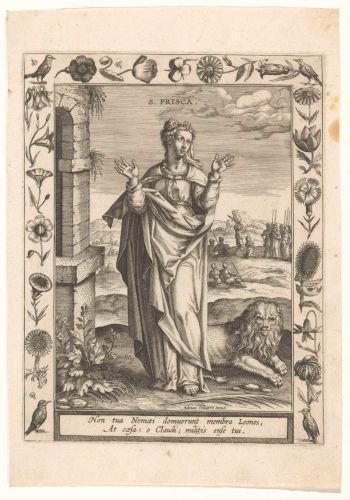
Prisca, also called Priscilla, offers a second example of female authority embedded in missionary partnership. Paul greets Prisca and Aquila in Romans 16 as his coworkers in Christ Jesus, people who risked their necks for his life and to whom not only Paul but “all the churches of the Gentiles” give thanks. This is not the language of polite acquaintance. It is the language of shared mission, danger, and ecclesial debt. In Acts, Prisca and Aquila instruct Apollos, an eloquent and educated teacher, more accurately in the way of God. The scene is brief, but its implications are difficult to soften without doing violence to the text. A woman participates in the theological correction of a male teacher. The fact that Prisca’s name appears before Aquila’s in several passages has often been noticed, though it should not be made to bear more weight than it can carry by itself. Even without pressing the order of names too far, the evidence is clear enough: Prisca was not simply Aquila’s wife in the background of his ministry. She was remembered as a coworker, teacher, host, and missionary actor whose labor was known across more than one Christian community.
Junia exposes the mechanism of erasure even more dramatically. In Romans 16:7, Paul greets Andronicus and Junia, his kin or fellow Jews, his fellow prisoners, and people of note “among the apostles” or “to the apostles,” depending on translation. The older Christian reading took Junia as a woman. John Chrysostom, who was hardly a modern feminist, marveled that she should be counted worthy of the title apostle. The later discomfort came not because the name was obscure, but because the implication was too disruptive: Paul appeared to know a woman who was either outstanding among the apostles or highly regarded by them, and in either case she belonged to the apostolic world of missionary authority. Medieval and modern interpreters increasingly masculinized her as “Junias,” a hypothetical male name for which evidence has been notably thin. More recent scholarship has restored the likelihood that Junia was a woman, even while debate continues over whether Paul means she was outstanding among the apostles or well known to them. The debate itself is revealing. The text forced later interpreters to decide whether a woman could stand so close to apostolic authority, and much of the tradition answered by changing the woman rather than rethinking the assumption.
Romans 16 also names women whose labor is harder to classify but impossible to dismiss. Paul greets Mary, who “worked very hard” among the Roman Christians; Tryphaena and Tryphosa, “workers in the Lord”; and Persis, the beloved, who also “worked hard in the Lord.” These descriptions are not ornamental. Paul regularly uses the language of labor for missionary and ecclesial work, and he does not reserve it for men. The women named here are not reduced to domestic identity, motherhood, or marital status. Some may have been householders, some patrons, some missionaries, some leaders within assemblies, and some members of wider labor networks that Paul expected the Roman Christians to recognize. The exact institutional shape of their authority remains difficult to reconstruct, but the difficulty should not be converted into denial. Paul’s letters belong to a moment before later ecclesiastical offices had hardened into the more formalized clerical structures of subsequent centuries, which means that authority often appears through function, relationship, labor, and recognition rather than through later job titles. That fluidity makes the evidence messier, but not weaker. A person could carry a letter, host an assembly, finance travel, teach converts, mediate disputes, represent one community to another, and sustain the material life of the mission without fitting neatly into a later category such as bishop, priest, or deacon. Within that flexible missionary world, Paul’s women are visible precisely because their work mattered enough to name. He does not pause to defend their presence, which may be the most telling fact of all. He assumes that the Roman recipients will understand why these women deserve greeting, honor, and recognition. Within that texture of Christian work before later offices hardened into more formal clerical categories, women labored visibly enough to be named, praised, and remembered.
The importance of Romans 16 is not merely that Paul happened to know several impressive women. It is that his own missionary world contradicts the later fantasy of an originally all-male Christian authority. Women carried letters, hosted churches, funded missions, instructed teachers, endured imprisonment, labored in the Lord, and stood within apostolic networks. Later patriarchy could still use Pauline texts to silence women, and it did so with immense consequence. But that use required selectivity. It required treating some passages as universal law while treating Romans 16 as a list of private greetings with little theological weight. The lie worked by shrinking women’s titles until they sounded harmless. A diakonos became a servant. A prostatis became a helper. A coworker became a wife. An apostle became a textual problem. Paul’s women did not vanish because they were absent from the record. They were diminished because the record said more than later authority wanted to hear.
House Churches and Domestic Authority: Lydia, Nympha, Prisca, and the Politics of the Home

The earliest Christian churches did not begin as basilicas, cathedrals, parish buildings, or clerical institutions with clear architectural boundaries between sanctuary, nave, altar, and audience. They met in homes. That simple fact changes the meaning of women’s authority in early Christianity because the home was not merely a private retreat from public life. In the Roman world, the household was an economic unit, a social network, a site of patronage, and often a place where clients, freedpersons, workers, kin, guests, and religious associates gathered. The domus could be a residence, workplace, dining space, meeting hall, and status display all at once. Authority within such a space was not only sentimental or familial; it was practical, material, and social. The person who controlled a house could decide who entered, who was fed, who was protected, where people gathered, and how relationships were maintained. When Christians assembled in houses, the household became the church’s meeting place, logistical base, and social structure. Later Christian ideology often confined women to “the home” as though domestic space were naturally separate from public authority. Early Christianity makes that division much harder to sustain. If the church met in the home, then control of the home could also mean control of access, hospitality, resources, teaching space, ritual space, and communal stability.
Lydia is one of the clearest examples. Acts introduces her at Philippi as a dealer in purple cloth from Thyatira, a worshiper of God, and a woman whose household is baptized after she responds to Paul’s message. She then urges Paul and his companions to stay in her house, and by the end of the episode, after Paul and Silas are released from prison, they return to Lydia’s house and see “the brothers and sisters” there. The narrative is brief, but its implications are substantial. Lydia is not described through a husband, father, or son. She appears as an economically active woman, a head of household, and the host of what seems to become the first Christian gathering place in Philippi. Her house does not simply shelter missionaries passing through town. It becomes the local base from which the Philippian community can be imagined taking shape. To call Lydia merely hospitable is to shrink the category of hospitality until it becomes almost meaningless. Hospitality was infrastructure.
Nympha offers another important case because her presence survives inside the fragile politics of textual transmission. In Colossians 4:15, Paul or the Pauline author sends greetings to “Nympha and the church in her house,” though some manuscript traditions shift the pronoun to “his” or “their.” The variation matters because it exposes how easily female household authority could become unstable in the hands of later copyists and interpreters. If the reading “her house” is accepted, Nympha stands among those early Christians whose homes served as assembly sites. If the reading is obscured, the pattern itself becomes harder to see. The issue is not that every textual variant must be blamed on deliberate misogyny. Manuscript history is rarely so neat. But the fact that a female host of a house church could be grammatically blurred reminds us how vulnerable women’s authority was to small acts of transmission, translation, and assumption. The same problem appears across the history of early Christian women: titles become softened, names become masculinized, relationships become recast, and leadership becomes reinterpreted as assistance. Nympha’s importance lies partly in how little the text says. A single greeting and a contested pronoun are enough to reveal both the existence of female household authority and the later instability of its memory. Sometimes erasure does not require a dramatic theological attack. Sometimes it needs only a pronoun.
Prisca, already visible in Paul’s missionary network, belongs equally in the history of house churches. In 1 Corinthians 16, Paul sends greetings from Aquila and Prisca, “together with the church in their house.” Romans 16 again links them to a household assembly. This suggests not a single incidental act of hospitality but a repeated pattern of missionary hosting, movement, and community formation. Prisca and Aquila appear in Corinth, Ephesus, and Rome, and their house seems to function wherever they are as a place where Christians gather. Their mobility made their household a portable base of mission. Prisca’s role should not be reduced to that of a wife who simply opened the door while her husband did the theological work. Acts remembers her participating in the instruction of Apollos, and Paul calls both of them coworkers. The house church connected teaching, hosting, labor, risk, and reputation. In that world, the person who made space for the church helped make the church itself.
Mary the mother of John Mark adds another dimension. In Acts 12, after Peter escapes from prison, he goes to the house of Mary, where many are gathered and praying. The scene is often remembered for Rhoda, the servant girl who recognizes Peter’s voice and is initially dismissed by the praying community, but Mary’s role is equally important. Her house is already known as a gathering place for believers in Jerusalem. The text does not pause to explain why a woman’s home is functioning as a center of communal prayer during a moment of danger. It simply assumes the fact. That assumption is historically valuable. It shows that women’s households could serve as trusted spaces for organized Christian activity even in contexts of political pressure. The irony is sharp: a woman’s home could shelter the praying church, while later Christian culture would use the language of home to keep women away from church authority.
Other women appear at the edges of this same pattern. Apphia is greeted alongside Philemon and Archippus in the letter to Philemon, followed by reference to the church in “your house.” Chloe’s people report divisions in Corinth to Paul, suggesting a household, business, or patronage network associated with a woman whose name carried enough weight for Paul to cite it. These references are fragmentary, and they should not be forced into certainty beyond what they can bear. Yet fragments are exactly what historians often have when reconstructing the social world of non-elite and semi-elite religious communities. The repeated appearance of women connected to households, networks, resources, information, and assemblies is not accidental background noise. It points to a form of authority that later clerical categories have made difficult to recognize. Before church office became fully institutionalized, authority often passed through houses, tables, letters, travel routes, kinship networks, patronage, and trust. Women moved within those structures because many of them helped sustain those structures.
The politics of the house church exposes one of the central tricks of later Christian patriarchy. Later ideology could say that women belonged in the home and men belonged in the church, but early Christianity often located the church inside the home. The same space later used to symbolize female limitation had once been a site of Christian gathering, instruction, prayer, patronage, and mission. Lydia, Nympha, Prisca, Mary, Apphia, and Chloe do not prove that early Christianity abolished patriarchy. They prove something more historically precise and, in some ways, more disruptive: women’s domestic authority could become ecclesial authority because the domestic sphere itself was part of the church’s earliest public life. The lie required a later separation that the earliest evidence does not fully support. It had to make “home” mean confinement after the Christian movement had already used homes as engines of expansion.
Prophetesses, Teachers, and Missionary Women: Charisma before Office

Before Christian authority hardened into the later architecture of bishop, presbyter, deacon, canon, council, and clerical boundary, much of the movement’s life depended on charisma. Prophecy, teaching, healing, exhortation, hospitality, patronage, letter-carrying, and missionary travel all mattered before office became the primary grammar of authority. This does not mean early Christian communities were chaotic or structureless. They had leaders, expectations, moral rules, and emerging forms of order. But authority often appeared through recognized gifts before it appeared through fixed institutional rank. That distinction is crucial for understanding women’s place in the earliest churches. Later Christian systems would increasingly ask whether women could hold office. Earlier Christian communities often faced a different reality: women were already speaking, praying, prophesying, teaching, hosting, funding, and traveling. The institutional question came later, and it often came as a response to authority women had already exercised.
Paul’s discussion of worship in Corinth preserves one of the clearest traces of this charismatic world. In 1 Corinthians 11, Paul regulates how women pray and prophesy in the assembly. He does not introduce the subject as though women’s public prayer or prophecy were unthinkable. He assumes that it is happening. His concern is order, honor, and the symbolic presentation of gender within worship, not the absolute silencing of women’s voices. That matters because later readers have often treated Pauline Christianity as though female silence were its obvious foundation. The Corinthian evidence is more complicated. Women are speaking in a gathered community in forms that carry spiritual weight. Prophecy was not casual conversation. It was inspired speech for the instruction, correction, consolation, and formation of the assembly. If women prophesied, then women participated in shaping the theological and moral life of the community. Paul’s discomfort, where it appears, is not evidence that women were absent from worship; it is evidence that their participation was visible enough to require regulation. Even the language of head coverings, honor, shame, and propriety reveals a community negotiating how women could speak publicly without appearing to overturn social expectations too abruptly. The passage is patriarchal in important ways, but it is not silentist in the simple way later tradition often made it. It preserves the uncomfortable fact that women’s inspired speech belonged to the gathered life of the church before later interpreters tried to make silence sound original.
The four daughters of Philip in Acts 21 show the same pattern from another angle. Luke mentions them briefly, almost casually, as unmarried women who prophesy. Their appearance is easy to pass over because the narrative quickly turns toward Agabus and Paul’s journey to Jerusalem, but the brevity should not obscure the importance of the notice. Luke does not defend their activity, explain it away, or mark it as scandalous. He simply names it as part of the Christian world through which Paul travels. These women belong to a household already connected with evangelistic memory, since Philip is known as an evangelist, but their prophetic identity is not absorbed into his. They are not merely Philip’s daughters in a biological sense. They are remembered because they prophesy. Their existence indicates that female prophetic speech was not a marginal fantasy of later heretics but part of the remembered life of apostolic Christianity.
Prisca shows that women’s authority was not limited to ecstatic or spontaneous forms of speech. Acts 18 presents her with Aquila instructing Apollos, an eloquent and learned man who knew the scriptures and spoke accurately about Jesus, though his understanding was incomplete. The couple takes him aside and explains “the way of God” more accurately. The scene is quiet rather than dramatic, but that quietness is exactly what makes it so powerful. A woman participates in theological correction. She helps instruct a public male teacher whose own ministry will continue afterward. Later Christian anxiety often separated women’s acceptable speech from doctrinal instruction, allowing them to inspire, suffer, pray, or model virtue while restricting them from teaching. Acts preserves a memory in which the boundary is not so clean. Priscilla does not merely offer moral encouragement. She participates in the transmission and refinement of Christian teaching.
Women’s missionary work is also visible in Paul’s language of labor. Euodia and Syntyche in Philippians are remembered as women who “struggled beside” Paul in the work of the gospel, alongside Clement and others whose names are in the book of life. Paul’s phrasing does not make them decorative supporters of a male enterprise. It places them among those who contended in the mission. Romans 16, as already seen, names Mary, Tryphaena, Tryphosa, and Persis as women who labored in the Lord. The repetition of labor language across these greetings suggests more than private piety. It points to public or semi-public work within missionary networks, even when later categories make that work hard to classify. These women may not have held offices recognizable from later ecclesiastical manuals, but they were not insignificant. In the earliest Christian movement, function often preceded title. The person who taught, hosted, traveled, mediated, prayed, prophesied, funded, or carried messages could exercise authority even when the later church had not yet invented the vocabulary that would restrict it. This is especially important because missionary labor in the first century was not a neatly clerical profession. It was exhausting, dangerous, socially exposed work that depended on travel, negotiation, persuasion, hospitality, and trust across cities and households. When Paul says that women labored with him or in the Lord, he is not offering a polite compliment. He is placing them inside the difficult work of sustaining communities, defending teaching, and extending the movement. Later readers who treat such phrases as devotional decoration miss the social force of Paul’s language. The work of the gospel was not carried by sermons alone. It moved through networks of people whose names Paul expected the churches to honor, and many of those names were women’s names.
The tension between charisma and office becomes especially clear in the second century, when prophetic movements exposed the growing unease of institutional Christianity. Montanism, or the New Prophecy, is the most famous example. Its leading prophetic figures included women, especially Priscilla and Maximilla, whose voices were treated by followers as vehicles of divine revelation and by opponents as signs of disorder, excess, and dangerous enthusiasm. The point is not to romanticize Montanism or to accept its claims uncritically. The point is that women’s prophetic authority remained conceivable and powerful enough to provoke ecclesiastical response. Opponents attacked not only the content of the movement’s claims but also the social and gendered disruption represented by women who spoke with commanding spiritual authority. As the church sought to define orthodoxy, regulate revelation, and stabilize leadership, female prophecy became increasingly suspect because it stood at the intersection of several anxieties: uncontrolled speech, bodily inspiration, public influence, and resistance to clerical supervision.
This is where the later lie begins to take a more institutional shape. Women’s speech did not disappear because no one remembered women speaking. It was disciplined because women had spoken, and because some forms of speech were becoming harder for male authority to control. The emerging church did not simply ask whether prophecy was true or false. It increasingly asked who had the right to speak, under what supervision, in what space, with what authorization, and with what consequences for communal order. Charisma had once made room for women because the Spirit could not be neatly confined to male office. But charisma also frightened institutions because it crossed boundaries too easily. A prophetess did not need a chair, a title, or a sanctuary rail to command attention. A teacher in a house church did not need a later clerical rank to shape doctrine. A missionary woman did not need to be called a priest to help carry the movement across cities, households, and networks.
The history of prophetesses, teachers, and missionary women reveals a stage of Christian authority before later office could fully contain it. The earliest evidence does not show a simple world of equality, and it would be careless to pretend otherwise. Women’s speech was regulated, contested, and interpreted within patriarchal cultures from the beginning. But regulation is not the same as absence. Contestation is not the same as silence. The evidence from Corinth, Acts, Philippians, Romans, and second-century prophetic controversy shows women exercising forms of authority that later structures would narrow, absorb, or condemn. The lie of female subordination required more than ignoring women. It required redefining authority itself so that prophecy became dangerous, teaching became male, mission became clerical, and women’s labor became background. Before that narrowing was complete, the record still shows the older world flickering through: women speaking because they had gifts, teaching because they knew the tradition, and laboring because the movement needed them. That flicker matters because it reveals a Christianity before the later hierarchy had successfully taught readers what not to see. It shows a movement in which the Spirit’s gifts, however contested and regulated, could appear in women’s bodies and voices. The later church did not inherit silence and then generously allow women a few exceptional roles. It inherited women’s speech and spent centuries deciding how much of it could survive.
Thecla and the Memory of Female Apostolic Freedom
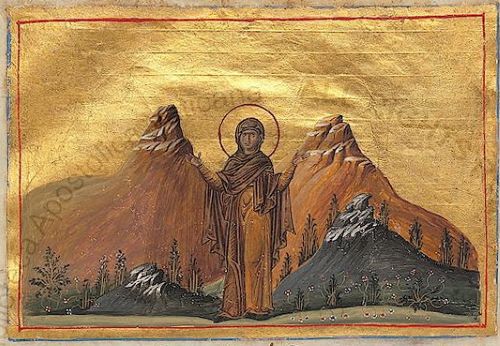
Thecla belongs to a different category of evidence from Mary Magdalene, Phoebe, Prisca, or the women named in Acts and Paul’s letters. She does not appear in the canonical New Testament, and her story in the Acts of Paul and Thecla should not be treated as straightforward biography. Yet that does not make her irrelevant to the history of Christian women. Quite the opposite. Thecla’s popularity in early and late antique Christianity reveals what many Christians could imagine female discipleship becoming: mobile, ascetic, learned, courageous, public, and resistant to the claims of household patriarchy. Her story matters not because every event in it can be verified as historical fact, but because the narrative preserves a powerful memory of female apostolic freedom. Thecla is what happens when a woman hears the gospel and refuses to let marriage, family, civic authority, sexual threat, or even male ecclesiastical discomfort define the limits of her obedience.
In the Acts of Paul and Thecla, Thecla is introduced as a young woman of Iconium who hears Paul preaching from a nearby house and becomes captivated by his message of chastity and resurrection. Her listening is itself disruptive. She does not merely receive doctrine as private consolation; she allows it to reorder her life. Betrothed to Thamyris and expected to enter the ordinary structures of marriage, household continuity, and social respectability, she instead turns toward a religious vocation that breaks the expectations placed upon her body and future. Her mother and fiancé experience this as catastrophe because Thecla’s conversion is not simply internal belief. It is a refusal of patriarchal arrangement. The story presents her listening body as dangerous to the household order around her, and that danger explains the fury she provokes. Thecla’s first act of freedom is not preaching in public. It is hearing differently from what her world required her to hear.
The narrative then turns Thecla into a figure of endurance and divine protection. She faces condemnation, attempted execution, sexual aggression, public spectacle, and repeated efforts to return her to male control. In one of the story’s most famous scenes, she throws herself into water and baptizes herself amid danger, claiming sacramental agency in a moment when no authorized male minister appears to secure her salvation. That scene would later become one of the most controversial elements of her legend because it suggested that a woman, under extreme circumstances, could act with spiritual authority over her own body. The story also imagines Thecla preaching, teaching, traveling, and living as an ascetic holy woman whose fidelity to the gospel is validated by miraculous deliverance. She is not made holy by becoming someone’s wife, mother, or obedient domestic subordinate. She becomes holy by refusing the social script written for her and by attaching herself to an apostolic mission that exceeds the household.
Thecla’s later reception shows why her story mattered. Tertullian, writing in the early third century, complains that some Christians appealed to Thecla’s example to defend women teaching and baptizing. His irritation is historically precious. It shows that the story was not merely entertainment or pious romance. It was being used in arguments about women’s authority. Tertullian rejects the text’s authority, but his rejection confirms its influence. If no one had found Thecla useful, he would not have needed to answer her. His complaint also reveals a larger struggle over who controlled the memory of Paul. The Acts of Paul and Thecla presents a Paul whose preaching frees a woman from marriage and sends her toward ascetic proclamation, while Tertullian insists on a Paul whose authority cannot be used to authorize women’s teaching or baptism. The debate, then, was not only about Thecla. It was about which Paul the church would remember and which women that remembered Paul could empower. Later devotion only expanded her importance. Thecla became a major saint, especially in eastern Christianity, associated with asceticism, healing, pilgrimage, and female piety. Her cult gave Christian women an image of holiness that was not reducible to passive obedience. Yet even this devotion could be managed. The more Thecla became a saintly virgin and miracle worker, the easier it became to honor her as exceptional while denying ordinary women the authority her story had once been used to defend. She could be praised as holy precisely because she was made singular, miraculous, and safely distant from ordinary church governance.
Thecla exposes another mechanism in the long history of Christian lies about women. When female authority appeared in scripture, it could be mistranslated or minimized. When it appeared in memory and legend, it could be declared noncanonical, domesticated into sainthood, or treated as edifying only when stripped of its ecclesial implications. Thecla’s story does not prove that women held universal office in the early church, and it should not be made to carry that argument. Its importance is subtler and more revealing. It shows that early Christians could imagine a woman as disciple, ascetic, teacher, survivor, traveler, and self-possessed religious actor. It also shows that some male authorities recognized the danger of that imagination. The lie of female subordination required not only the suppression of historical women but also the discipline of Christian possibility itself. Thecla survived because she was too beloved to lose, but the freedom she represented had to be fenced in. Like Mary Magdalene, she remained visible. Like Mary Magdalene, she had to be made safe.
Deaconesses, Widows, and Ordered Women: Female Office before Full Exclusion
The movement from charisma to office did not immediately erase women from recognized Christian service. Between the first and fourth centuries, women appear not only as prophets, patrons, teachers, and household leaders but also as members of ordered or semi-ordered groups within the church. Widows, virgins, and deaconesses occupied roles that were regulated, honored, and sometimes formally appointed, even when their authority remained contested and bounded by male oversight. This is an important distinction because later Christian history often imagines women’s exclusion from office as original and seamless, as though the church moved naturally from Jesus and Paul into a male clerical structure without interruption. The evidence is messier. Women did not simply disappear once communities became more organized. In some places, organization created recognizable female roles before it later narrowed them.
Phoebe remains the unavoidable starting point because Romans 16 calls her a diakonos of the church at Cenchreae. Whether one translates the word as servant, minister, or deacon, Paul attaches it to a specific woman and a specific church. That matters because the later history of the diaconate cannot be cleanly separated from the earlier fluidity of ministry language. Phoebe should not be anachronistically turned into a fourth-century deaconess with a fixed liturgical office, but neither should she be reduced to a vague helper simply because later readers grew uncomfortable with female ecclesial authority. She stands at the threshold between function and title. Paul’s commendation suggests public recognition, trusted responsibility, and enough status that the Roman Christians are expected to receive and assist her. If she carried Romans, as many scholars have argued, then her role may have included explanation, representation, and mediation between Pauline theology and the Roman assemblies. The first named diakonos associated with a particular church in the New Testament is a woman, and that fact remains stubbornly inconvenient for traditions that treat female ministry as a late intrusion.
Widows formed another important category of ordered female life. First Timothy 5 describes an enrolled group of widows, setting age, moral, familial, and behavioral qualifications for their recognition. The passage is restrictive, and it reflects anxiety about younger widows, speech, sexuality, household management, and communal reputation. Yet the very existence of enrollment suggests that widows could occupy a recognized place in church life. They were not simply poor women receiving charity. In early Christian literature, widows were associated with prayer, moral discipline, intercession, instruction by example, and communal service. Later texts such as the Didascalia Apostolorum both honor and restrain widows, praising their prayer while warning them not to teach or wander from house to house. That double movement is revealing. Widows were valued because they possessed spiritual authority, but they were regulated because such authority could become socially powerful. A woman without husbandly control, supported by the church and recognized for prayer, was holy in theory and potentially troublesome. Widowhood also created an unusual social space in the ancient household order. A widow could represent vulnerability, especially if she lacked family support, but she could also represent independence from the ordinary structures of male guardianship and marital obedience. That independence made her religiously potent and socially ambiguous. The enrolled widow could become a living symbol of chastity, endurance, and intercession, but she could also move through networks of women, households, and charitable exchange in ways that unsettled male supervision. The church’s attempt to define the “true widow” was not only pastoral care. It was also boundary-making. It sought to determine which women could be recognized as spiritually authoritative and which women would be redirected back into marriage, household labor, or silence.
Deaconesses emerge more clearly in third- and fourth-century sources, especially in the eastern churches. The Didascalia Apostolorum describes women deacons as necessary for ministry to women, particularly in contexts involving baptism, visitation, modesty, illness, and instruction. The text places them under episcopal authority and limits their work, but it also gives them a defined ecclesial function. Later church orders, including the Apostolic Constitutions, preserve prayers for the appointment of deaconesses and place them within a structured ministerial world. Their duties were not identical to those of male deacons, and their status varied by region and period. That complexity should not be flattened into either full equality or total insignificance. The point is more historically precise: the church developed formal female ministry because it needed women to perform work male clergy could not easily or properly perform within ancient norms of gender separation. Female office did not arise from modern ideology. It arose from pastoral necessity inside the ancient church itself.
The evidence for women officeholders also appears outside literary texts. Inscriptions from late antiquity refer to women with titles such as deacon, presbyter, or other ecclesial designations, though each inscription must be interpreted carefully. Some may reflect honorific language, local practice, funerary commemoration, or contested forms of office. But the cumulative evidence matters because it shows that female ecclesial titles were not imaginary. They existed in Christian communities that had to name, bury, commemorate, and remember women who served in recognizable capacities. The question is not whether every inscription proves a woman held the same office as a later male priest or deacon. The question is why Christian communities used official-sounding language for women at all, and why later systems worked so hard to make such evidence appear exceptional, ambiguous, or impossible. Epigraphy is especially valuable because it preserves local Christian memory outside the polished arguments of theologians and church orders. A funerary inscription does not usually write a treatise on ministry; it records how a community chose to identify someone at death. When a woman is remembered with an ecclesial title, the title tells us that her service had public meaning among those who honored her. Even when the title’s exact scope remains debated, the inscription resists the claim that female ministry was merely imaginary or invented by later readers. It shows communities naming women in ways that later doctrinal systems found awkward to explain.
By the fourth century, the same institutional development that had recognized certain female roles increasingly restricted them. Councils and church orders did not regulate women because women were irrelevant. They regulated women because women’s religious activity was visible, necessary, and potentially destabilizing to a clerical order becoming more male, more public, and more closely tied to episcopal authority. The Council of Nicaea’s Canon 19, addressing Paulianist deaconesses, describes them in a way that later interpreters used to deny sacramental ordination, while other eastern sources preserve more formal rites for appointing women deacons. The resulting picture is uneven, regional, and contested. But that unevenness is itself the point. Before full exclusion hardened in many places, the church contained a range of female ministries that later memory struggled to classify. Women were not simply outside the system. They were inside it enough that the system had to define their limits.
The history of deaconesses, widows, virgins, and ordered women complicates the later lie that Christian office was always and obviously male. It shows a church negotiating women’s authority rather than merely denying it from the start. That negotiation often remained patriarchal, and it frequently restricted women to ministry among women, prayer, chastity, charity, or service under male supervision. But restriction is not absence. Regulation is not nonexistence. The ordered women of the early church reveal a transitional world in which female ministry was real enough to be named, useful enough to be organized, and threatening enough to be constrained. Later exclusion could present itself as ancient continuity only by smoothing over this complicated evidence. The lie required women’s offices to be remembered as assistance rather than authority, pastoral necessity rather than ministry, and exception rather than inheritance. Yet the record still preserves them, standing in the doorway between charismatic freedom and clerical closure.
The Patristic Turn: Tertullian, Eve, and the Theological Manufacture of Female Suspicion

The narrowing of women’s authority in early Christianity did not happen only through councils, offices, and institutional regulation. It also happened through theology. As Christian writers of the second, third, and fourth centuries developed arguments about sin, creation, sexuality, discipline, martyrdom, asceticism, and ecclesial order, women increasingly became symbols through which male theologians explained danger. Woman could signify flesh, temptation, disorder, curiosity, weakness, seduction, heresy, or the vulnerable doorway through which death entered the world. This did not mean that every patristic writer hated women in a simple or uniform way. Many praised female martyrs, virgins, widows, ascetics, mothers, and patrons. The more revealing pattern is subtler. Women could be honored when they embodied obedience, chastity, suffering, maternal devotion, penitence, or renunciation, but they were treated with suspicion when they spoke, taught, desired, interpreted, led, or stood outside male supervision. The patristic turn did not invent patriarchy, but it gave patriarchy a Christian grammar.
Tertullian is the unavoidable figure because he expressed this suspicion with extraordinary force. In On the Apparel of Women, he addresses women through Eve and reminds them that they are associated with the first transgression. His rhetoric links female adornment, sexuality, temptation, and moral danger, turning the female body into a theological problem that must be disciplined. The famous charge that woman is “the devil’s gateway” belongs to this wider argument. It should not be treated as a casual insult detached from context, but neither should it be softened into harmless metaphor. Tertullian’s point depends on making Eve’s guilt representative, and that representational move matters. One woman’s role in the Genesis story becomes a theological burden laid upon women as a class. Female bodies become reminders of fallenness; female beauty becomes spiritually dangerous; female autonomy becomes suspect because it can be imagined as Eve’s curiosity repeating itself in every generation. His concern with clothing and ornamentation reaches beyond fashion or modesty. Adornment becomes a sign of moral disorder because it suggests that women may control how they appear, how they are seen, and how they move through social space. In Tertullian’s logic, the decorated female body is not merely vain. It is potentially seductive, deceptive, and theologically dangerous. That kind of argument made suspicion portable. It could travel from clothing to speech, from sexuality to teaching, from bodily presence to ecclesial participation. Once woman had been made the symbolic doorway of sin, almost any female agency could be treated as a door that needed guarding.
This use of Eve was especially powerful because it transformed a scriptural narrative into a social anthropology. Genesis did not need to be read as a permanent indictment of women, but patristic interpretation often made it function that way. Eve became more than a character in the creation and fall narrative. She became the archetype of female moral instability. Her listening, eating, speaking, and giving were read as signs of disorderly initiative, and Adam’s failure could be rhetorically displaced onto the woman who tempted him. Such readings helped make female subordination appear protective rather than oppressive. If woman was more vulnerable to deception, then male governance could be framed as spiritual care. If woman was more closely tied to bodily temptation, then modesty, enclosure, silence, and obedience could be framed as holiness. The lie deepened because subordination no longer looked merely cultural. It looked salvific.
Yet the patristic record is not one-dimensional. The same centuries that produced harsh rhetoric about Eve also produced powerful celebrations of women martyrs and ascetics. Perpetua and Felicitas, for example, became models of courage, endurance, and spiritual authority in the face of imperial violence. Macrina, sister of Basil of Caesarea and Gregory of Nyssa, appears in Gregory’s writings as a teacher of philosophy, ascetic discipline, and Christian hope. Jerome corresponded with learned aristocratic women such as Paula and Eustochium, praising their ascetic devotion and scriptural seriousness. These women were not invisible. Some were remembered with reverence. But their authority was often framed through exceptional holiness that confirmed rather than overturned the larger order. The woman who renounced sex, endured martyrdom, embraced ascetic discipline, or submitted to spiritual direction could become admirable precisely because she appeared to transcend ordinary womanhood. Praise did not necessarily produce equality. Sometimes it intensified the distinction between the holy exception and the suspect female norm.
John Chrysostom illustrates the complexity of this inheritance. In his homilies on Romans, he famously recognizes Junia as a woman and marvels that she was considered worthy of the title apostle. That moment shows that not all patristic interpretation automatically erased female authority. Yet Chrysostom also participated in a broader culture that assumed male ecclesial leadership and treated women’s public religious speech with caution. The contradiction is instructive. A male theologian could admire a woman apostle in the biblical past while accepting restrictions on women in the ecclesial present. The past could be honored as exceptional without being allowed to govern current practice. This is one of the great mechanisms of containment in Christian memory. Women could be praised in scripture, hagiography, and legend, but their examples were often made nontransferable. They inspired devotion without authorizing imitation. Junia could be admired because she belonged to apostolic memory, safely enclosed within the age of origins, while contemporary women could still be told that teaching, governing, or public theological authority belonged elsewhere. The distance between “then” and “now” became a tool of control. A woman’s authority could be acknowledged as real in the sacred past while being treated as impossible, improper, or unnecessary in the living church. This allowed male theologians to preserve inconvenient evidence without letting it become a precedent. The result was a tradition capable of praising a woman apostle while still training generations of readers to believe that women’s leadership was alien to apostolic Christianity.
Asceticism intensified both the possibilities and limits of women’s religious authority. On one hand, ascetic women could gain forms of agency unavailable within ordinary marriage and household structures. Virginity, widowhood, and renunciation could free women from some expectations of reproduction, domestic labor, and male marital control. Elite women used wealth to found communities, support churches, sponsor scholarship, and shape Christian culture. On the other hand, ascetic praise often depended upon suspicion of women’s bodies. The holy woman was honored because she disciplined, denied, veiled, starved, enclosed, or spiritualized the body that male theology had already marked as dangerous. The path to authority ran through the rejection of ordinary female embodiment. Women could become powerful in the church by becoming symbols of victory over what men feared women represented.
The patristic manufacture of female suspicion did not erase women from Christianity. It rearranged the terms under which they could be trusted. A woman could be revered as martyr, virgin, widow, mother, penitent, patron, or ascetic, but she was far less easily received as teacher, interpreter, preacher, or holder of ordinary authority. The lie hardened through this distinction. Women were not said to be worthless. They were said to be spiritually potent but dangerous, holy when controlled, admirable when silent, powerful when exceptional, and safest when mediated through male interpretation. Tertullian’s Eve became one face of that theology, but the larger pattern exceeded him. The church increasingly learned to speak of women through suspicion before it spoke of them through memory. That suspicion made later exclusion feel prudent, ancient, and divinely ordered, even when the earlier record still showed women praying, prophesying, teaching, hosting, funding, and proclaiming.
Constantine, Councils, and the Institutional Narrowing of Women’s Leadership

The fourth century did not suddenly create Christian patriarchy, but it changed the conditions under which Christian authority operated. Before Constantine, Christian communities had already developed leaders, offices, boundaries, and hierarchies. Women’s authority was already contested, regulated, and often subordinated to male oversight. Yet the legalization and imperial patronage of Christianity altered the scale and public meaning of church leadership. Bishops became increasingly visible civic figures. Church property expanded. Disputes over doctrine drew imperial attention. Councils issued canons that shaped discipline across regions. What had once been a network of assemblies meeting in houses, workshops, rented spaces, and local communities became more tightly connected to public architecture, legal privilege, and male civic status. In that transformation, women did not disappear from Christian life. They remained patrons, ascetics, donors, widows, deaconesses, martyrs in memory, and powerful figures in imperial households. But the forms of authority most publicly recognized as “church leadership” became more firmly attached to male office.
Constantine’s conversion and patronage did not produce one uniform Christian institution overnight. The fourth-century church was diverse, regionally varied, doctrinally conflicted, and administratively uneven. Still, imperial favor mattered because it made Christian leadership more public and more politically consequential. Bishops were no longer only pastors of vulnerable communities; they became negotiators, judges, patrons, diplomats, builders, and representatives of urban Christian identity. Their authority moved into spaces already coded as masculine in Roman public life. The more episcopal leadership resembled civic leadership, the more easily it aligned with expectations that public governance belonged to men. This did not require a formal declaration that women were inferior. The social grammar of empire already knew how to make male authority look natural. Christianity, increasingly clothed in that grammar, could preserve memories of women’s earlier leadership while making contemporary leadership harder for women to inhabit.
Architecture also mattered. The shift from house churches to purpose-built basilicas changed more than the size of Christian gatherings. It changed the spatial imagination of authority. In a house church, the boundaries between household, patronage, hospitality, teaching, and worship were more porous. A woman who controlled the household could shape the conditions of assembly. She could decide who entered, who was hosted, who received protection, where teaching occurred, and how the fragile network of believers was materially sustained. In a basilica, authority was increasingly staged through liturgical space, clerical movement, altar access, and public hierarchy. Sacred space became more visibly ordered, and that order increasingly reflected male clerical control. The home had once been one of the church’s primary public spaces; now the church building itself became a public institution. That transition did not simply move Christian worship into larger rooms. It transferred symbolic power from the household network to the clerical sanctuary, from the table to the altar, from the host to the ordained official. This did not eliminate women’s patronage, since elite women continued to fund churches, monasteries, shrines, and charitable work. But patronage and office were not the same. Women could finance holy space without governing the liturgical authority performed within it. They could build the walls, endow the lamps, support the clergy, and sponsor the poor, while the sacred actions that defined public ecclesial leadership were increasingly reserved for men.
Councils and church orders reveal this narrowing in documentary form. The Council of Nicaea in 325 CE, especially Canon 19, addressed the status of Paulianist deaconesses when receiving members of that group into the broader church. The canon describes these deaconesses as not having received the laying on of hands in the relevant sense and as counted among the laity. Later interpreters often used this canon to argue that women deacons were never truly ordained. Yet the canon’s significance is more complicated. It does not discuss all deaconesses everywhere, nor does it erase the evidence from other eastern sources that women deacons could be appointed with formal prayers and recognized functions. What it does show is that women’s ministerial status was becoming an object of ecclesiastical classification. The church was not merely asking what women did. It was asking how their service fit into a hierarchy increasingly defined through ordination, clerical rank, and episcopal control.
The Council of Laodicea, usually dated to the later fourth century, makes the narrowing even more explicit. Canon 11 forbids the appointment of women called presbytides or female presidents in the church, depending on translation and interpretation. The exact meaning of the title has been debated, and caution is necessary. It may refer to an order of elder women, female presidents, or women exercising some recognized liturgical or disciplinary role. But whatever the precise office, the canon is revealing because councils do not usually prohibit what no one is doing or imagining. The prohibition suggests that some women had occupied, claimed, or been associated with forms of recognized ecclesial standing that later authorities wished to stop. Canon 44, traditionally read as forbidding women from entering the altar area, similarly reflects a concern with regulating women’s access to sacred space. The result is a pattern: as church order became more formal, women’s proximity to office, altar, and public liturgical authority became more tightly controlled. The language of prohibition is evidence of memory as much as discipline. It points backward toward practices or claims that had not yet been fully suppressed and forward toward a church increasingly determined to define sacred authority through male clerical presence. Even uncertainty around the terms is useful, because ambiguity itself shows a transitional world. If no one knew quite how to classify some women’s standing, later authorities could resolve the problem by forbidding the category, narrowing the space, and making the memory harder to inherit.
The narrowing was not simply institutional but symbolic. Once male clergy increasingly embodied the visible church, women’s religious authority was redirected into forms that supported rather than challenged clerical order. Widows could pray. Virgins could renounce marriage. Deaconesses could minister to women in gender-segregated contexts. Aristocratic women could donate wealth and found religious houses. Imperial women could influence theology and patronage from within court networks. These roles mattered, and some women wielded real power through them. Yet they were usually framed as exceptional, auxiliary, domestic, ascetic, or gender-specific rather than as ordinary public leadership of the church. The church did not need to abolish women’s religious significance to exclude them from central office. It only needed to redefine significance so that female holiness and female authority no longer pointed toward governance, teaching office, or liturgical presidency. This redirection could even look like honor. Women were praised for purity, charity, intercession, sacrifice, and patronage, but such praise often worked by placing them beside authority rather than within it. They could sanctify the church’s moral imagination without shaping its official voice. They could represent the church as virgin, mother, widow, or bride, while actual governing authority remained male. Symbolic elevation became one of the gentler instruments of exclusion. Women were not told they were useless; they were told they were precious in ways that conveniently kept them from office.
This process also reshaped the memory of earlier women. Phoebe could be remembered as a servant rather than a minister. Prisca could be honored as Aquila’s wife rather than as a teacher and coworker. Junia could become a textual problem. Mary Magdalene could become a penitent rather than the first resurrection witness. The fourth-century institutional church inherited texts that did not fit comfortably inside its increasingly male clerical order. The solution was rarely outright deletion. It was interpretation. Women remained in scripture, but their authority was made exceptional, private, symbolic, or safely past. This is why institutionalization and memory must be read together. The councils narrowed present practice, while interpretation narrowed the usable past. Together they allowed later Christians to imagine that women had never stood as close to authority as the evidence says they did.
The Constantinian and conciliar turn marks a decisive stage in the long construction of the lie. It did not begin the subordination of women, and it did not fully silence women’s Christian activity. But it helped make male office appear as the natural and public face of the church. As Christianity became more visible, legal, wealthy, architectural, and administratively ordered, women’s older forms of authority became easier to recode as assistance and harder to recognize as leadership. The tragedy is not that women vanished. They did not. They continued to pray, fund, serve, organize, write, teach informally, advise, renounce, build, and sustain Christian communities. The tragedy is that the definition of official authority narrowed until much of that work could be treated as peripheral to the “real” church. By the end of this transformation, the lie had gained institutional weight: women had always helped, men had always led, and the complex evidence of early Christian women could be folded into a story it did not actually support.
Mary, Eve, and the Double Trap: Exaltation without Equality
As women’s ordinary ecclesial authority narrowed, Christian theology increasingly organized womanhood around two symbolic poles: Eve and Mary. Eve represented disobedience, temptation, bodily danger, and the entrance of sin into the world. Mary represented obedience, purity, maternal holiness, and the faithful reception of divine will. The contrast was powerful because it seemed to offer women both warning and redemption. Woman had fallen through Eve, but woman had been honored through Mary. Yet this symbolic elevation did not necessarily empower real women. It created a double trap. Women could be blamed through Eve and idealized through Mary, but in both cases they were interpreted primarily as symbols for male theology rather than as full religious agents. The woman became either the danger from which the church had to guard itself or the sacred image before which it could kneel without surrendering authority. This symbolic structure was especially effective because it did not sound like simple contempt. It allowed Christian writers and preachers to speak of women with both reverence and suspicion, praising “woman” in the abstract while still limiting women. The theological imagination could lift one woman above the angels and still treat ordinary women as morally unstable, intellectually suspect, or ecclesiastically dependent. That is what made the trap so durable. It did not merely degrade women; it divided them into impossible categories and then judged them by standards no living woman could fully satisfy.
The Eve-Mary contrast had deep roots in early Christian interpretation. Writers such as Justin Martyr and Irenaeus of Lyons developed typological readings in which Mary’s obedience answered Eve’s disobedience. The logic was elegant and theologically rich: as death entered through the disobedience of a virgin, salvation entered through the obedience of a virgin. This reading gave Mary extraordinary importance in the drama of redemption. She was not a passive vessel in the crudest sense; her assent mattered. Her “let it be” became a moment of faithful cooperation with divine purpose. Yet the typology also left ordinary women in a narrow symbolic field. To be female was to stand between Eve’s failure and Mary’s perfection, between suspicion and impossibility. The woman was either the memory of ruin or the model of absolute obedience. Neither pole easily made room for women as teachers, leaders, interpreters, or public authorities.
Mary’s elevation became even more prominent as Christological debates sharpened in late antiquity. The Council of Ephesus in 431 CE affirmed Mary as Theotokos, God-bearer, in defense of the unity of Christ’s person. The title was primarily about Christ, not about a modern doctrine of women’s status, but its devotional consequences were immense. Mary became the most honored woman in Christian history, the mother of God, the intercessor, the queenly figure of mercy, the new Eve, and the maternal image through which Christians imagined divine tenderness. Her exaltation gave feminine imagery an extraordinary place in Christian worship and imagination. But theological honor did not translate into ecclesiastical equality. A church could sing to Mary, build shrines to Mary, preach Mary’s obedience, and fill its sacred art with Mary’s face while still barring women from the offices through which doctrine, liturgy, and institutional power were governed. Marian devotion proved that Christianity could exalt a woman more highly than any creature and still subordinate women as a class.
That paradox worked because Mary’s greatness was often framed through qualities that made her safe for patriarchal theology. She was virgin and mother, obedient and silent, exalted and exceptional. Her authority did not usually appear as public teaching, institutional governance, or ordinary female agency. It appeared as purity, maternity, humility, intercession, and consent. These are not insignificant virtues, and it would be wrong to reduce Mary to a tool of patriarchy. Devotion to Mary has also given generations of women language for dignity, suffering, protection, grief, endurance, and spiritual nearness to divine power. But the institutional pattern remains striking. Mary could be honored precisely because she was made incomparable. She was not a precedent for women’s leadership but an exception that confirmed the rules governing everyone else. The more perfect Mary became, the less usable she became as a model for ordinary female authority.
Eve performed the opposite but complementary function. Where Mary was too pure to imitate fully, Eve was too dangerous to trust. Theological readings of Eve gave Christian patriarchy a language of caution: women were more susceptible to deception, more tied to bodily desire, more capable of leading men into sin, and more in need of guidance. This logic shaped interpretations of women’s speech, dress, sexuality, education, and obedience. Even when theologians praised women’s souls as equal before God, the social consequences often remained unequal. Eve supplied the suspicion; Mary supplied the ideal. Together they narrowed the field of acceptable womanhood. A woman could be condemned for resembling Eve or praised for approximating Mary, but both judgments left male authorities in control of the scale. Women’s real lives, with their intellect, labor, anger, teaching, ambition, grief, leadership, and desire, were forced into a symbolic machinery that rarely allowed them to define themselves. That machinery was flexible enough to discipline almost any woman. The outspoken woman could be accused of Eve’s presumption. The sexually independent woman could be read through Eve’s temptation. The intellectually ambitious woman could be warned against Eve’s curiosity. The obedient woman, meanwhile, could be praised only insofar as she disappeared into Marian humility. The system did not merely ask women to choose between two models; it made both models impossible in different ways. Eve made women guilty before they acted. Mary made them inadequate no matter how faithfully they acted.
The double trap of Mary and Eve reveals one of the most durable forms of Christian gender distortion. The lie was not simply that women were inferior. It was more sophisticated than that. Women were dangerous and sacred, weak and powerful, fallen and exalted, temptresses and mothers of God. This made the system resilient because it could answer accusations of misogyny by pointing to Marian honor while continuing to structure ordinary authority through Eve-like suspicion. Exaltation became a shield against equality. Praise became a substitute for power. The church could adore the feminine in heaven while restricting women on earth. That is why the symbolic world of Mary and Eve belongs at the heart of this history. It shows how Christian patriarchy survived not only by diminishing women but also by glorifying them in forms that did not threaten male control.
Medieval Memory: Saints, Penitents, Virgins, Queens, and the Managed Power of Holy Women

The medieval church did not erase women from Christian life. It filled its calendars, shrines, visions, monasteries, sermons, and devotional imagination with them. Women appeared as martyrs, virgins, mothers, penitents, queens, abbesses, anchoresses, mystics, founders, patrons, and saints. Their bodies were venerated as relics; their visions were copied; their prayers were sought; their patronage built churches and monasteries; their reputations drew pilgrims across regions. Yet this visibility should not be mistaken for equality. Medieval Christianity often gave women religious power by making that power exceptional, enclosed, penitential, aristocratic, mystical, or dependent upon clerical approval. A woman could be holy, even terrifyingly holy, but her holiness usually had to be translated into forms that did not destabilize the ordinary male governance of the church. The pattern was not absence. It was management. Women were everywhere in medieval devotion, but rarely allowed to define the institutional terms by which devotion became authority. They could inspire preaching without holding the pulpit, attract pilgrims without controlling the episcopal structures around pilgrimage, and shape religious feeling without gaining ordinary access to sacramental office. Medieval Christianity knew how to honor women intensely while keeping that honor carefully channeled. That is what makes the period so revealing: the question was not whether women mattered, but who controlled the meaning of their importance.
The saint was one of the most important forms through which medieval women could become authoritative. A saintly woman could instruct by example, intercede from heaven, command popular devotion, and reshape local religious identity. But sainthood often solved the problem of female authority by moving it out of ordinary institutional life. The dead holy woman could be more powerful than the living woman because death made her safer. Her relics could heal; her shrine could enrich a monastery or city; her legend could teach obedience, chastity, charity, endurance, or repentance. Yet her authority no longer competed directly with bishops, priests, or theologians. Hagiography could preserve women’s courage while reshaping it into moral instruction. The saint became a usable woman: vivid enough to inspire, distant enough to control.
Mary Magdalene’s medieval career shows how this worked with particular force. The apostolic witness of the resurrection did not disappear entirely, but the Western medieval Magdalene was more often remembered as the spectacular penitent. Her imagined sexual sin, tears, perfume, loosened hair, and ascetic withdrawal became central to preaching and art. She was powerful precisely as a converted sinner whose body could be made to tell a moral story. That story gave medieval Christians a moving image of repentance and mercy, but it also obscured the Gospel figure who announced the risen Christ. The Magdalene could be loved, painted, preached, and invoked while her authority was redirected away from proclamation and toward penitence. Her medieval visibility continued the older distortion: the woman remained central, but the meaning of her centrality was changed.
Virginity provided another managed form of female power. In monastic and hagiographic culture, the virgin woman could escape some of the constraints of marriage, childbirth, and household subordination. She could become a bride of Christ, a spiritual athlete, a founder, an abbess, or a visionary. This was not meaningless. For many medieval women, religious life offered education, community, literacy, property administration, and spiritual agency unavailable in ordinary domestic structures. Abbesses could govern lands, supervise communities, correspond with elites, commission texts, and shape local economies. Yet the authority of virginity was also bounded by the logic of renunciation. Women gained power by refusing sexual and reproductive roles, often by becoming symbolically less available as ordinary women. The holy virgin was admired because she overcame the female body’s perceived danger. Her freedom was real, but it was purchased through a theology that still treated female embodiment as something needing discipline.
Abbesses and female monastic communities complicate any simple story of medieval female powerlessness. Houses such as those associated with Hilda of Whitby, Hildegard of Bingen, and other learned women became centers of teaching, music, manuscript culture, counsel, and administration. Hildegard wrote theology, visionary works, letters, music, medical and natural-philosophical texts, and corresponded with popes, emperors, abbots, and bishops. Her voice traveled far beyond the cloister. But even Hildegard framed much of her authority through visionary compulsion, bodily weakness, and divine command, rhetorical strategies that helped legitimate a woman’s public teaching in a world suspicious of female theological initiative. She spoke because God forced speech through her. That claim gave her authority, but it also reveals the constraint. A man could more easily appear as scholar, preacher, or administrator. A woman often had to appear as vessel. Hildegard’s brilliance exposes both possibility and limitation at once. She was not silent, marginal, or intellectually timid; she was one of the most commanding religious minds of the twelfth century. Yet the cultural conditions of her authority required her to present learning as revelation, courage as obedience, and public speech as reluctant submission to divine pressure. The same pattern appears in many medieval women’s writings, where humility formulas and claims of weakness do not necessarily show lack of confidence. Often they show the price women paid to make confidence legible.
Mysticism opened another path, especially in the high and later Middle Ages. Women such as Hadewijch of Brabant, Mechthild of Magdeburg, Angela of Foligno, Catherine of Siena, Julian of Norwich, and Margery Kempe claimed forms of religious knowledge rooted in vision, affective devotion, bodily experience, and direct encounter with Christ. Their writings could be daring, theologically rich, and pastorally powerful. Catherine of Siena advised popes and intervened in church politics. Julian produced one of the most profound theological works in the English language. Margery Kempe fashioned a spiritual autobiography around tears, pilgrimage, conflict, and public religious identity. Yet mystical authority was always vulnerable to suspicion. The visionary woman could be saint, fraud, hysteric, heretic, or nuisance, depending on who interpreted her. Her experience required testing, translation, confession, and often male clerical mediation. The woman could speak, but someone else frequently had to certify that her speech came from God.
Queens and noblewomen also wielded religious power, especially through patronage. Medieval royal and aristocratic women founded monasteries, endowed churches, supported reform movements, sponsored manuscripts, protected clerics, arranged dynastic piety, and shaped the religious identities of courts and regions. Their influence could be immense because wealth and lineage gave them tools unavailable to most women. Queens could act as intercessors, diplomats, regents, builders, and patrons of saints’ cults. But aristocratic female power also confirms the pattern of management. It was often acceptable because it flowed through rank, marriage, widowhood, maternity, or dynastic obligation rather than through ordinary ecclesiastical office. The queen might influence bishops, but she did not become one. The noble patron might build the church, but she did not preside at its altar. Her power was real, but it moved through social privilege and religious sponsorship rather than through recognized clerical equality. This made noblewomen simultaneously indispensable and contained. Their money, family networks, and political leverage could shape religious institutions profoundly, but the official language of church authority still treated them as supporters rather than officeholders. They could direct resources, protect communities, advance reforms, and cultivate devotional cultures, yet their power had to pass through the acceptable channels of patronage, kinship, and piety. Medieval Christianity could depend on women’s wealth while denying that dependence any broader ecclesial implication.
The later Middle Ages preserved a paradox. Christian culture could be saturated with powerful women while still excluding women from the central offices of sacramental and doctrinal authority. Saints, virgins, penitents, queens, abbesses, and mystics all mattered, and some mattered enormously. But their power was usually made exceptional, charismatic, symbolic, enclosed, noble, penitential, or posthumous. That is how the old lie survived within a world full of holy women. The church did not need to deny that women could be close to God. It only had to deny that such closeness created ordinary claims to leadership. Medieval memory honored women by placing them on pedestals, behind grilles, in visions, in shrines, in royal chapels, and in stories of heroic renunciation. The pedestal could be beautiful. It could also be a cage.
Reformation and Translation: Scripture, Household Order, and the New Domestic Ideal

The Reformation disrupted the medieval church, but it did not simply liberate women from Christian patriarchy. Protestant reformers attacked clerical celibacy, monastic vows, saint cults, sacramental mediation, and many forms of late medieval devotion. They returned scripture to the center of Christian life and elevated preaching, literacy, household catechesis, and marriage. These changes created real openings for women. Women read scripture, sponsored reform, protected preachers, wrote letters, defended confessional positions, suffered exile or martyrdom, and shaped the religious formation of households. Yet the Reformation also narrowed some older forms of female religious authority. The nun, abbess, anchoress, visionary, and celibate holy woman lost much of the institutional and symbolic space that medieval Christianity had provided, however managed that space had been. In their place, Protestant culture increasingly honored the godly wife, mother, household manager, and catechetical helper. The old monastic pedestal was removed, but a new domestic enclosure often took its place.
This shift was deeply tied to the reformers’ theology of marriage. Martin Luther rejected the medieval exaltation of celibacy above marriage and insisted that ordinary domestic life could be a holy vocation. That claim had genuine spiritual force. It refused to treat household labor, childbirth, sexuality within marriage, and family responsibility as inferior to monastic withdrawal. For many women, the elevation of marriage also meant the tightening of expectation. If the household became the primary school of faith, then the wife and mother became indispensable to religious formation while remaining subordinate to male household headship. The reformers did not usually imagine women as clergy, public preachers, or ecclesial governors. They imagined them as essential Christian actors inside the household order. The result was not the disappearance of women’s religious labor but its relocation. Women became central to Protestant piety precisely where their authority could be framed as maternal, marital, and domestic.
Translation played a crucial role in this restructuring because the Reformation made vernacular scripture a weapon, a discipline, and a household possession. The Bible in the language of ordinary believers allowed women greater access to sacred text than many had previously enjoyed. Literacy, catechisms, psalms, devotional manuals, and family worship gave women new tools for religious knowledge. Yet translation also became one of the places where inherited assumptions about gender were reinforced. Genesis 2 could continue to turn the woman’s role as helper into a theology of domestic subordination. Romans 16 could soften Phoebe’s diakonos into “servant” rather than minister or deacon. Junia could become Junias in some later traditions, making a female apostle disappear behind a masculine possibility. Passages such as 1 Corinthians 14 and 1 Timothy 2 could be made to speak with louder authority than the texts that remembered women prophesying, teaching, hosting churches, or laboring in mission. The Reformation’s return to scripture did not guarantee a return to the full complexity of the scriptural record. Scripture was read through household order, and household order often decided which parts of scripture would govern women’s lives.
The household codes of the New Testament became especially important. Texts instructing wives to submit to husbands, children to obey parents, and servants to obey masters were read as blueprints for Christian social order. Reformers did not invent these texts, but they gave them renewed force within a culture that treated the household as the basic unit of church and society. The father or husband became priestlike in the home, responsible for instruction, discipline, prayer, and moral supervision. Women were not spiritually irrelevant in this arrangement. They taught children, maintained devotional routines, modeled piety, managed resources, and often held households together under religious pressure. But their authority was derivative and relational. They acted as wives, mothers, widows, or noble patrons, not as ordinary ecclesial leaders. The Protestant home became a place of religious seriousness, but also a place where hierarchy could be sanctified as order.
Women nevertheless participated forcefully in Reformation movements, especially in the early decades when boundaries were still unstable. Argula von Grumbach publicly defended Lutheran teaching in print and challenged university theologians. Katharina Schütz Zell wrote, consoled refugees, defended clerical marriage, and acted as a visible lay theologian in Strasbourg. Marie Dentière argued for women’s right to read and interpret scripture and defended reform in Geneva. In England and the Low Countries, women embraced Protestant teaching, circulated books, sheltered reformers, and sometimes died for confessional commitments. Radical reform movements also created spaces where women prophesied, preached, or claimed spiritual authority, though such openings were often met with suspicion by both Catholic and magisterial Protestant authorities. These women show that the Reformation was never simply a male theological event. It was also carried through households, print networks, patronage, exile communities, and acts of female courage that official histories often treated as secondary.
Catholic reform also reshaped women’s religious life rather than merely preserving the medieval past unchanged. The Council of Trent reaffirmed enclosure for nuns, tightening episcopal and clerical supervision over women’s religious communities. Yet Catholic women continued to found schools, charitable institutions, devotional movements, and missionary networks, sometimes pressing hard against the restrictions placed upon them. Teresa of Ávila reformed Carmelite life and wrote works of spiritual theology with lasting authority. Angela Merici founded the Company of Saint Ursula, creating a new model of women’s religious life oriented toward education without initially requiring traditional enclosure. Mary Ward later attempted to create an active female institute modeled in some ways on the Society of Jesus, only to face severe opposition. These Catholic developments show the same broad pattern visible in Protestant contexts: women’s religious power did not vanish, but it had to negotiate increasingly disciplined institutional forms. Whether Protestant or Catholic, early modern Christianity repeatedly drew energy from women while restricting the terms under which that energy could become authority.
The Reformation and its aftermath did not end the old lie about women. They translated it into new idioms. Medieval Christianity had often managed women through sainthood, virginity, enclosure, penitence, and aristocratic patronage. Protestant Christianity often managed them through marriage, household order, motherhood, and selective scriptural literalism. Catholic reform managed them through enclosure, supervision, and approved forms of female spirituality or service. Across confessional lines, women remained indispensable but constrained. They read, taught children, wrote, funded, sheltered, prayed, argued, suffered, governed households, founded institutions, and sometimes spoke with startling boldness. Yet the dominant systems continued to insist that ordinary public authority belonged to men. The lie survived because it adapted. It could wear a nun’s veil, a queen’s crown, a mystic’s tears, a preacher’s translation, or a housewife’s apron. In each form, it told women they were essential to Christianity while denying that their essential labor entitled them to equal authority within it.
Modern Recovery: Feminist Scholarship and the Return of the Buried Women
The following video from André Bourbeau is DeMille’s “Ten Commandments”:
The modern recovery of women’s authority in Christian origins did not create evidence where none existed. It changed the questions historians, theologians, translators, archaeologists, and textual scholars were willing to ask of evidence that had long been present. Mary Magdalene had always stood at the tomb. Phoebe had always been named a diakonos of the church at Cenchreae. Prisca had always instructed Apollos with Aquila. Junia had always stood in Romans 16:7, however later readers struggled over her name and status. Lydia, Nympha, Chloe, Apphia, Philip’s daughters, Euodia, Syntyche, Tryphaena, Tryphosa, Persis, widows, deaconesses, martyrs, ascetics, abbesses, mystics, and patrons had not been absent from the record. They had been minimized by habits of translation, preaching, commentary, institutional memory, and theological expectation. Modern feminist scholarship did not so much place women into Christian history as remove the interpretive debris that had kept readers from seeing how many women were already there.
This recovery emerged through several converging methods. Feminist biblical scholars returned to the New Testament with attention to names, titles, grammar, patronage, household structures, and the social world of early assemblies. Historians of late antiquity examined widows, deaconesses, ascetics, martyrs, and elite female patrons as participants in the making of Christian culture rather than as decorative figures in a male story. Epigraphers brought inscriptions into the discussion, showing that women were remembered with ecclesial titles and public religious identities in local communities. Scholars of apocryphal literature and hagiography reconsidered texts such as the Acts of Paul and Thecla, not as simple records of events, but as evidence for Christian imagination, contestation, and devotion. Translation studies also mattered. When diakonos became “servant” for Phoebe but “minister” for men, when prostatis became “helper” rather than patron or leader, when Junia became Junias, and when Mary Magdalene became fused with unrelated women, scholarship began to show that interpretation itself had been one of the engines of erasure. The recovery was not only about adding women to the margins of an already settled narrative. It required changing the scale of analysis. A greeting at the end of a Pauline letter, a contested pronoun in Colossians, a funerary inscription, a house-church reference, or a canon prohibiting some female role could no longer be dismissed as incidental. These fragments became evidence of social systems, networks of labor, and struggles over memory. Modern scholarship taught readers to ask why certain details had been treated as minor only when they pointed toward women’s authority. It also exposed how much historical judgment had been shaped by later ecclesiastical assumptions masquerading as neutral interpretation.
The restoration of Junia became one of the clearest examples of this modern recovery. For centuries, many readers found it difficult to accept that Paul could have greeted a woman as notable among the apostles or closely associated with apostolic authority. The solution was often to masculinize her name as Junias, even though evidence for that male name was weak. Later study helped expose how interpretive discomfort shaped the tradition. The issue was never only a name. It was the possibility that apostolic authority had included a woman in a way later church structures could not easily absorb. The recovery of Junia became symbolic of a larger scholarly task: not forcing modern egalitarian conclusions onto ancient texts, but asking why later interpreters so often preferred unlikely explanations when the more straightforward reading gave authority to a woman.
Mary Magdalene’s recovery followed a related but distinct path. Scholars, clergy, and historians increasingly distinguished the Mary of the resurrection narratives from Mary of Bethany and the unnamed sinful woman in Luke 7. The Western penitential Magdalene, shaped so powerfully by late antique and medieval conflation, came under renewed scrutiny. This did not make Mary less important; it made her important in a different and older way. She could be seen again as disciple, witness, and herald rather than primarily as sexual sinner. The Roman Catholic Church’s modern liturgical revisions also reflected this shift, separating her from the old conflation and later giving her feast heightened rank with explicit recognition of her apostolic witness. The recovery matters not because it flatters modern sensibilities, but because it corrects a tradition that had made a woman famous while misnaming the reason for her fame. Mary had not needed a sexualized past to become theologically meaningful. The Gospels had already given her something more disruptive: proclamation. Her case also shows how difficult recovery can be once a distorted image has become culturally beloved. The repentant Magdalene filled sermons, paintings, poems, legends, feast-day devotion, and popular imagination for centuries. Correcting that memory does not simply involve pointing to the Gospel text and declaring the matter settled. It requires untangling art, liturgy, preaching, gender ideology, and devotional emotion from a figure many Christians thought they already knew. Mary’s recovery reveals the persistence of interpretive habit. A false or unsupported identification can become so familiar that the correction feels like novelty, even when the correction is older than the error. That is one of the crueler tricks of tradition: it can make historical recovery look like revisionism while its own revision remains hidden under the comfort of repetition.
Modern scholarship has also changed the moral stakes of the question. The issue is no longer whether a handful of exceptional women can be admitted into an otherwise male story as inspirational footnotes. The issue is whether Christian history itself has been told through categories that made women’s authority difficult to recognize unless it resembled later male office. Feminist historians have shown that authority in early Christianity moved through houses, money, travel, prophecy, teaching, letter-carrying, martyrdom, asceticism, patronage, and memory, not only through later clerical titles. This does not require romanticizing the early church or pretending it was free from patriarchy. It requires telling the truth with better eyes. The buried women were not buried because they had done nothing. They were buried because later Christians learned to call their work something smaller than leadership. Modern recovery is not an act of invention. It is an act of historical repair.
Conclusion: The Lie Was Not That Women Were Absent, but That They Had Never Led
The long history of women in Christianity is not a history of empty spaces. It is a history of crowded evidence made to look sparse. Women were present around Jesus as disciples, patrons, interlocutors, witnesses, and heralds. They funded ministry, followed the movement across dangerous spaces, remained at the cross, watched the burial, and first encountered the resurrection proclamation. They appear in Pauline networks as ministers, coworkers, patrons, teachers, apostles, laborers, and household leaders. They prophesied in assemblies, instructed teachers, carried messages, hosted churches, organized communities, and sustained the material life of mission. Later Christian patriarchy could not honestly claim that women had done nothing. Its more effective claim was that what they had done did not count as leadership.
That is why the lie had to work through interpretation. Mary Magdalene could not be removed from the tomb, so she was remade as a sexual penitent. Phoebe could not be removed from Romans 16, so her title could be softened into service. Junia could not be removed from Paul’s greeting, so her name could be masculinized or her apostolic status debated into harmlessness. Prisca could not be erased from the instruction of Apollos, so she could be folded into marital partnership and made secondary in memory. Lydia, Nympha, Mary the mother of John Mark, Apphia, and Chloe could not be wholly removed from the world of house churches, so domestic space itself could be redefined as private and subordinate after it had helped carry the public life of the church. Women’s authority survived in the record, but the categories used to read the record were changed around them.
The same pattern continued across the centuries. Thecla could be honored as a beloved saint while the implications of her teaching, travel, and self-directed religious agency were fenced in. Deaconesses, widows, virgins, and ordered women could be recognized while their recognition was narrowed into pastoral necessity or supervised service. Patristic theology could praise holy women while making Eve the theological shadow behind ordinary womanhood. Marian devotion could exalt one woman above all creatures while offering that exaltation as a substitute for equality rather than a path toward it. Medieval Christianity could fill its shrines and visions with women while keeping sacramental and doctrinal office male. The Reformation could return to scripture and still read scripture through household hierarchy. At every stage, women remained indispensable. At every stage, systems of memory found ways to make that indispensability look like assistance.
The central falsehood, then, was never merely that women were absent. Absence would have been too easy to disprove. The deeper lie was that women had never led, never taught, never carried authority, never shaped doctrine, never sustained communities, never stood close enough to the center to matter. The evidence says otherwise. It does not reveal a simple golden age of equality, and it should not be forced into one. Christianity emerged within patriarchal worlds and often reproduced their assumptions. But the evidence also refuses the later story that male authority alone built the church while women watched from the margins. Women were there at the beginning, and they were not merely there. They acted. They spoke. They paid. They taught. They remembered. They proclaimed. The task of historical recovery is not to flatter the present by rewriting the past. It is to stop letting later distortions pretend they were the past all along.
Bibliography
- Acts of Paul and Thecla.
- Angela of Foligno. Memorial. Suffolk: D. S. Brewer, 1999.
- Apostolic Constitutions. Books 2, 3, and 8.
- Ascough, Richard S. Paul’s Macedonian Associations: The Social Context of Philippians and 1 Thessalonians. Tübingen: Mohr Siebeck, 2003.
- Augustine of Hippo. On the Literal Meaning of Genesis. John Hammond Taylor, trans. Mahwah, NJ: Paulist Press, 1982.
- Bainton, Roland H. Women of the Reformation in Germany and Italy. Minneapolis: Augsburg Publishing House, 1935.
- Bauckham, Richard. Gospel Women: Studies of the Named Women in the Gospels. Grand Rapids, MI: Eerdmans, 2002.
- Bond, Helen K., and Joan E. Taylor. Women Remembered: Jesus’ Female Disciples. London: Hodder & Stoughton, 2022.
- Brooten, Bernadette. “‘Junia . . . Outstanding among the Apostles’ (Romans 16:7).” In Women Priests: A Catholic Commentary on the Vatican Declaration, edited by Leonard Swidler and Arlene Swidler, 141–144. New York: Paulist Press, 1977.
- Brown, Peter. The Body and Society: Men, Women, and Sexual Renunciation in Early Christianity. New York: Columbia University Press, 1988.
- Bynum, Caroline Walker. Holy Feast and Holy Fast: The Religious Significance of Food to Medieval Women. Berkeley: University of California Press, 1987.
- Catherine of Siena. The Dialogue. Grand Rapids: Christian Classics Ethereal Library.
- Chrysostom, John. Homilies on Romans. Homily 31. Translated by J. Walker, J. Sheppard and H. Browne, and revised by George B. Stevens. In Nicene and Post-Nicene Fathers, First Series, Vol. 11. Edited by Philip Schaff. Buffalo, NY: Christian Literature Publishing Co., 1889.
- Clark, Elizabeth A. Ascetic Piety and Women’s Faith: Essays on Late Ancient Christianity. Lewiston, NY: Edwin Mellen Press, 1986.
- —-. Women in the Early Church. Wilmington, DE: Michael Glazier, 1983.
- Congregation for Divine Worship and the Discipline of the Sacraments. “Decree: The Celebration of Saint Mary Magdalene.” June 3, 2016.
- Cooper, Kate. Band of Angels: The Forgotten World of Early Christian Women. New York: Overlook Press, 2013.
- —-. The Virgin and the Bride: Idealized Womanhood in Late Antiquity. Cambridge, MA: Harvard University Press, 1996.
- Council of Ephesus. “Definition of the Faith.” 431 CE.
- Council of Laodicea. Canons 11 and 44.
- Council of Nicaea. Canon 19.
- Davis, Stephen J. The Cult of Saint Thecla: A Tradition of Women’s Piety in Late Antiquity. Oxford: Oxford University Press, 2001.
- Dentière, Marie. Epistle to Marguerite de Navarre and Preface to a Sermon by John Calvin. Edited and translated by Mary B. McKinley. Chicago: University of Chicago Press, 2004.
- Didascalia Apostolorum, translated by Margaret Dunlop Gibson. London: Cambridge University Press, 1903.
- Dronke, Peter. Women Writers of the Middle Ages: A Critical Study of Texts from Perpetua to Marguerite Porete. Cambridge: Cambridge University Press, 1984.
- Eisen, Ute E. Women Officeholders in Early Christianity: Epigraphical and Literary Studies. Translated by Linda M. Maloney. Collegeville, MN: Liturgical Press, 2000.
- Elliott, Dyan. Proving Woman: Female Spirituality and Inquisitional Culture in the Later Middle Ages. Princeton, NJ: Princeton University Press, 2004.
- Elm, Susanna. Virgins of God: The Making of Asceticism in Late Antiquity. Oxford: Clarendon Press, 1994.
- Epp, Eldon Jay. Junia: The First Woman Apostle. Minneapolis: Fortress Press, 2005.
- Eusebius of Caesarea. Ecclesiastical History. Translated by Kirsopp Lake. Cambridge, MA: Harvard University Press, 1926.
- Fiorenza, Elisabeth Schüssler. In Memory of Her: A Feminist Theological Reconstruction of Christian Origins. New York: Crossroad, 1983.
- Fiorenza, Elisabeth Schüssler. “Missionaries, Apostles, Coworkers: Romans 16 and the Reconstruction of Women’s Early Christian History.” Word & World 6:4 (1986), 420–433.
- Frymer-Kensky, Tikva. In the Wake of the Goddesses: Women, Culture, and the Biblical Transformation of Pagan Myth. New York: Free Press, 1992.
- Gregory the Great. Forty Gospel Homilies. Homily 33. Translated by David Hurst. Minnesota: Collegeville, 1990.
- Gregory of Nyssa. The Life of St. Macrina. London: Society for Promoting Christian Knowledge, 1916.
- Grumbach, Argula von. A Woman’s Voice in the Reformation. Edited and translated by Peter Matheson. Edinburgh: T&T Clark, 1995.
- Haskins, Susan. Mary Magdalen: Myth and Metaphor. New York: Harcourt Brace, 1993.
- Heffernan, Thomas J., ed. The Passion of Perpetua and Felicity. New York: Oxford University Press, 2012.
- Hildegard of Bingen. Liber Scivias, 1151.
- Irenaeus of Lyons. Against Heresies. Translated and annotated by Dominic J. Unger. Ancient Christian Writers 55. New York: Paulist Press, 1992.
- Jerome. Letters. Letters 22, 39, and 108. From Nicene and Post-Nicene Fathers, Second Series, Vol. 6. Edited by Philip Schaff and Henry Wace. Buffalo, NY: Christian Literature Publishing Co., 1893.
- Jewett, Robert. Romans: A Commentary. Hermeneia. Minneapolis: Fortress Press, 2007.
- Johnson, Elizabeth A. Truly Our Sister: A Theology of Mary in the Communion of Saints. New York: Continuum, 2003.
- Julian of Norwich. Revelations of Divine Love. Edited by Grace Warrack. London: Methuen & Company, 1901.
- Justin Martyr. Dialogue with Trypho. Translated by Marcus Dods and George Reith. From Ante-Nicene Fathers, Vol. 1. Edited by Alexander Roberts, James Donaldson, and A. Cleveland Coxe. Buffalo, NY: Christian Literature Publishing Co., 1885.
- Karant-Nunn, Susan C., and Merry E. Wiesner-Hanks. Luther on Women: A Sourcebook. Cambridge: Cambridge University Press, 2003.
- King, Karen L. The Gospel of Mary of Magdala: Jesus and the First Woman Apostle. Santa Rosa, CA: Polebridge Press, 2003.
- Kraemer, Ross Shepard. Her Share of the Blessings: Women’s Religions among Pagans, Jews, and Christians in the Greco-Roman World. New York: Oxford University Press, 1992.
- Kraemer, Ross Shepard, and Mary Rose D’Angelo, eds. Women and Christian Origins. New York: Oxford University Press, 1999.
- Levine, Amy-Jill. The Misunderstood Jew: The Church and the Scandal of the Jewish Jesus. New York: HarperOne, 2006.
- Luther, Martin. The Estate of Marriage. 1522.
- MacDonald, Dennis Ronald. The Legend and the Apostle: The Battle for Paul in Story and Canon. Philadelphia: Westminster Press, 1983.
- MacMullen, Ramsay. Christianizing the Roman Empire (A.D. 100–400). New Haven: Yale University Press, 1984.
- Madigan, Kevin, and Carolyn Osiek, eds. Ordained Women in the Early Church: A Documentary History. Baltimore: Johns Hopkins University Press, 2005.
- Margery Kempe. The Book of Margery Kempe. Translated by W. Butler-Bowdon. London: Oxford University Press, 1934.
- Martimort, Aimé Georges. Deaconesses: An Historical Study. San Francisco: Ignatius Press, 1986.
- McNamara, Jo Ann. Sisters in Arms: Catholic Nuns through Two Millennia. Cambridge, MA: Harvard University Press, 1996.
- Meeks, Wayne A. The First Urban Christians: The Social World of the Apostle Paul. 2nd ed. New Haven: Yale University Press, 2003.
- Methuen, Charlotte. “Widows, Bishops and the Struggle for Authority in the Didascalia Apostolorum.” Journal of Ecclesiastical History 46, no. 2 (1995): 197–213.
- Newman, Barbara. Sister of Wisdom: St. Hildegard’s Theology of the Feminine. Berkeley: University of California Press, 1987.
- Osiek, Carolyn. “The Patronage of Women in Early Christianity.” Theological Studies 65:2 (2004), 330–352.
- Osiek, Carolyn, and Margaret Y. MacDonald, with Janet H. Tulloch. A Woman’s Place: House Churches in Earliest Christianity. Minneapolis: Fortress Press, 2006.
- Pelikan, Jaroslav. Mary through the Centuries: Her Place in the History of Culture. New Haven: Yale University Press, 1996.
- Pervo, Richard I. Acts: A Commentary. Hermeneia. Minneapolis: Fortress Press, 2009.
- —-. The Making of Paul: Constructions of the Apostle in Early Christianity. Minneapolis: Fortress Press, 2010.
- Roper, Lyndal. The Holy Household: Women and Morals in Reformation Augsburg. Oxford: Clarendon Press, 1989.
- Rubin, Miri. Mother of God: A History of the Virgin Mary. New Haven: Yale University Press, 2009.
- Schaberg, Jane. The Resurrection of Mary Magdalene: Legends, Apocrypha, and the Christian Testament. New York: Continuum, 2002.
- Teresa of Ávila. The Life of Teresa of Jesus. Translated by E. Allison Peers. New York: Image Books, 1960.
- Tertullian. On the Apparel of Women. Translated by S. Thelwall. From Ante-Nicene Fathers, Vol. 4. Edited by Alexander Roberts, James Donaldson, and A. Cleveland Coxe. Buffalo, NY: Christian Literature Publishing Co., 1885.
- Tertullian. On Baptism. Translated by S. Thelwall. From Ante-Nicene Fathers, Vol. 3. Edited by Alexander Roberts, James Donaldson, and A. Cleveland Coxe. Buffalo, NY: Christian Literature Publishing Co., 1885.
- Tertullian. On the Veiling of Virgins. Translated by S. Thelwall. From Ante-Nicene Fathers, Vol. 4. Edited by Alexander Roberts, James Donaldson, and A. Cleveland Coxe. Buffalo, NY: Christian Literature Publishing Co., 1885.
- The Hebrew Bible: Genesis 1–3.
- The New Testament: Matthew 15:21–28; Matthew 27:55–61; Matthew 28:1–10; Mark 7:24–30; Mark 15:40–47; Mark 16:1–8; Luke 7:36–50; Luke 8:1–3; Luke 10:38–42; Luke 23:49–56; Luke 24:1–11; Luke 8:1–3; John 4:1–42; John 11:17–27; John 19:25–27; John 20:1–18; Acts 12:12–17; Acts 16:11–15; Acts 18:1–28; Acts 18:24–26; Romans 16:1–16; 1 Corinthians 11:5; 1 Corinthians 12:1–31; 1 Corinthians 14:1–40; 1 Corinthians 16:19; 2 Corinthians 3:6; ; Galatians 3:28; Philippians 4:2–3; 1 Thessalonians 2:6–7; 1 Timothy 3:8–13; 1 Timothy 5:3–16; Philemon 1–2.
- Thurston, Bonnie Bowman. The Widows: A Women’s Ministry in the Early Church. Minneapolis: Fortress Press, 1989.
- Torjesen, Karen Jo. When Women Were Priests: Women’s Leadership in the Early Church and the Scandal of Their Subordination in the Rise of Christianity. San Francisco: HarperSanFrancisco, 1993.
- Trevett, Christine. Christian Women and the Time of the Apostolic Fathers. Cardiff: University of Wales Press, 2006.
- Trible, Phyllis. God and the Rhetoric of Sexuality. Philadelphia: Fortress Press, 1978.
- Warner, Marina. Alone of All Her Sex: The Myth and the Cult of the Virgin Mary. New York: Alfred A. Knopf, 1976.
- Wiesner-Hanks, Merry E. Women and Gender in Early Modern Europe. 3rd ed. Cambridge: Cambridge University Press, 2008.
- Winter, Bruce W. Roman Wives, Roman Widows: The Appearance of New Women and the Pauline Communities. Grand Rapids, MI: Eerdmans, 2003.
- Zell, Katharina Schütz. Church Mother: The Writings of a Protestant Reformer in Sixteenth-Century Germany. Edited and translated by Elsie McKee. Chicago: University of Chicago Press, 2006.
Originally published by Brewminate, 05.22.2026, under the terms of a Creative Commons Attribution-NonCommercial-NoDerivatives 4.0 International license.
About the Author