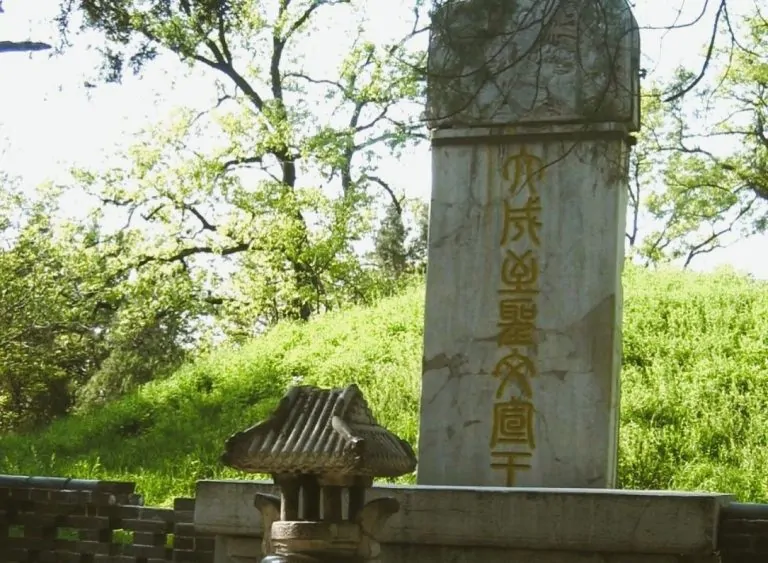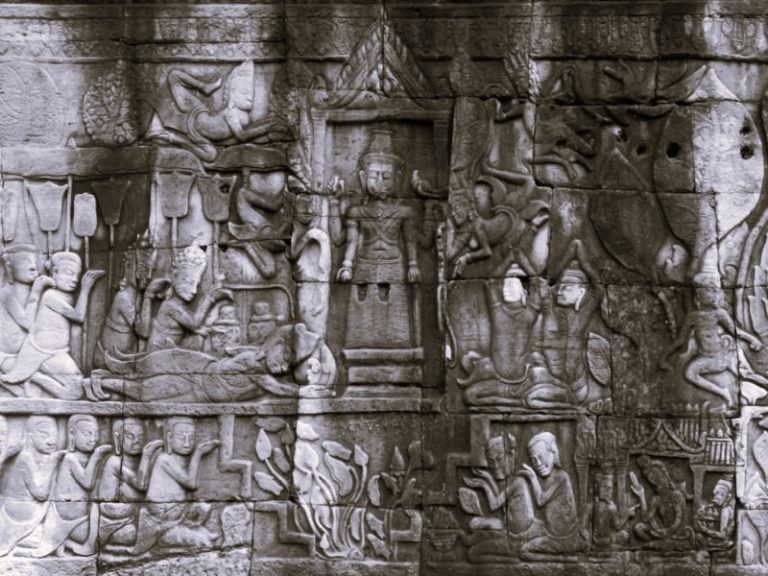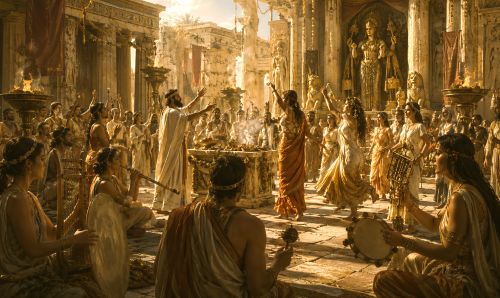
Ancient sacred music did more than accompany worship; it summoned gods, shaped memory, protected communities, and made divine presence audible.

By Matthew A. McIntosh
Public Historian
Brewminate
Introduction: Sacred Sound before “Art”
To call music an “art” in the ancient religious world is not wrong, but it is incomplete. The word can flatten what sacred sound meant before modern categories separated music from ritual, poetry from prayer, performance from theology, and aesthetics from power. In many ancient societies, song, chant, rhythm, and instrumental sound were not decorative additions to worship. They were among the means by which worship became effective. Sacred sound marked the presence of gods, accompanied offerings, carried lament, intensified communal emotion, ordered priestly action, and gave voice to realities that could not be seen. A hymn was not only something heard. It was something done.
The evidence for ancient sacred music is uneven, and that unevenness matters. Mesopotamian tablets, Egyptian tomb paintings, Israelite psalms, Vedic hymns, Greek theoretical writings, Roman ritual descriptions, and early Christian reflections do not preserve sound in the same way. Some offer lyrics without melody. Some show instruments without notation. Some preserve ritual instruction but leave performance practice uncertain. Others, such as Vedic chant traditions or Greek notated fragments, allow more direct but still partial access to ancient musical thought. The historian must move carefully, refusing both silence and fantasy. Ancient music can be studied, but it must be studied through text, image, archaeology, comparative ritual practice, and the disciplined recognition that much of what mattered most vanished in the air as soon as it was performed.
Yet that very disappearance helps explain music’s religious force. Sound was temporary, embodied, and communal. It entered the body through breath, ear, pulse, and movement. It could gather a crowd into one rhythm, set a sacrifice apart from ordinary killing, make mourning public, summon courage before danger, or turn remembered words into living presence. In Mesopotamia, temple lamenters and musicians helped sustain relationships between cities and gods. In Egypt, rattles, harps, chant, and ritual speech helped invoke divine protection and accompany the dead. In Israelite worship, psalms, horns, trumpets, and Levitical song joined sacrifice to memory and praise. In Vedic India, the disciplined transmission of sacred chant made sound itself a vehicle of cosmic and ritual order. In Greece and Rome, music could serve civic religion, procession, prophecy, ecstasy, and imperial ceremony. Across these worlds, sacred sound did not merely express belief. It helped produce the conditions in which belief became socially and ritually real.
I approach ancient religious music as ritual action rather than background atmosphere. It does not assume that all ancient cultures shared one theory of music, nor does it treat every chant, hymn, or instrument as interchangeable. The sistrum of Hathor, the shofar of Israelite tradition, the Vedic recitation of sacred verse, the Greek paean, the Roman procession, and the early Christian psalm belonged to different worlds of language, theology, authority, and performance. Still, they reveal a persistent ancient conviction: sound could cross boundaries. It could move between human and divine, living and dead, individual and community, memory and presence, order and ecstasy. Before music became “art” in the modern sense, it was already one of religion’s most powerful ways of making the invisible audible.
Mesopotamia: Hymn, Lament, Temple Labor, and Divine Persuasion
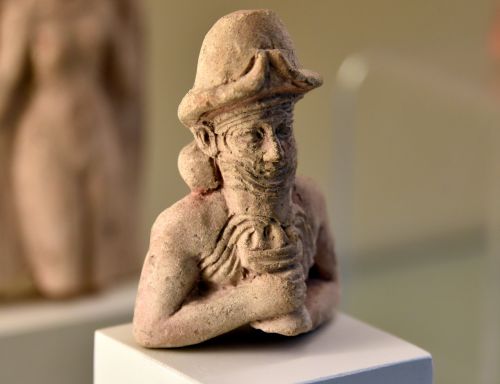
In Mesopotamia, sacred music emerged within one of the earliest urban religious systems, where temples were not simply houses of worship but economic, political, and cosmic institutions. The great cities of Sumer, Akkad, Babylonia, and Assyria imagined themselves as communities dependent upon divine favor, and the temple stood at the center of that relationship. Food, incense, textiles, prayer, song, and ritual service were offered to gods whose presence sustained the city’s life. Music belonged to this world of maintenance. It was not a decorative art performed after the essential ritual had taken place. It was one of the forms through which the god was honored, soothed, summoned, praised, and, at moments of crisis, persuaded not to abandon the people.
The Mesopotamian evidence is especially important because it joins text, archaeology, iconography, and administrative record, allowing sacred music to be approached not as a vague cultural assumption but as an organized practice embedded in institutions. Cylinder seals, plaques, temple inventories, royal inscriptions, and cuneiform tablets reveal a world in which musicians, singers, lamentation specialists, instruments, and ritual compositions were woven into the daily and festival life of cult. Lyres, harps, drums, pipes, and rattles appear in elite and sacred contexts, while textual sources preserve the names of genres, performers, and ritual settings. The famous lyres from the Royal Cemetery at Ur show that musical instruments could belong to the symbolic world of kingship, death, and sacred display, not merely to ordinary amusement. Their careful manufacture, animal imagery, precious materials, and burial context suggest that instruments could carry meanings beyond sound itself, linking music to prestige, ritual authority, and passage between worlds. Administrative texts add another layer, showing musicians as workers attached to temple and palace economies, supported through rations, assignments, and institutional structures. Sacred sound, in other words, required labor, resources, hierarchy, and continuity. Its presence in funerary and elite contexts suggests that sound, status, ritual, and memory were already intertwined in the third millennium BCE.
Lament was among the most distinctive forms of Mesopotamian sacred sound. The destruction of cities, the anger of gods, the fragility of kingship, and the fear of divine withdrawal all found ritual expression in lamentation. These were not only emotional outpourings. They were structured performances, often attached to temple practice and cultic specialists. The Sumerian city laments, including compositions mourning Ur, Sumer and Ur, Eridu, and other devastated places, turned catastrophe into liturgical speech. They interpreted ruin as a rupture in the relationship between city and deity but also made that rupture addressable. To lament was to give grief a ritual form, and in giving it form, to seek restoration.
The gala, known in Akkadian as the kalû, occupied a central place in this tradition of lament. These specialists performed laments in ritual contexts, often using the Emesal dialect associated with particular liturgical compositions. Their work complicates any simple distinction between music, priesthood, poetry, and theology. The lamenter’s voice was an instrument of mediation, carrying the sorrow of a people toward the divine realm while also shaping communal emotion into an acceptable ritual pattern. The point was not merely to express sadness. It was to pacify divine anger, soften the heart of a goddess or god, and preserve the possibility of renewed favor. This made the lamenter a figure of religious skill rather than spontaneous grief alone, someone trained to speak and sing in forms that tradition recognized as ritually effective. The performance of lament also gave communities a way to interpret suffering without surrendering to chaos. War, famine, plague, or destruction could be understood as signs of divine estrangement, but ritual lament insisted that estrangement was not necessarily final. Through repeated, formalized sound, grief became petition, petition became theology, and theology became a disciplined appeal for restoration. In that sense, lament functioned as sacred persuasion.
This persuasive dimension is crucial for understanding Mesopotamian religious music. The gods were powerful, but they were also relational beings who could be honored, angered, appeased, neglected, or moved. Music helped organize that relationship. Hymns praised divine attributes and narrated divine greatness. Laments pleaded across the distance opened by disaster. Cult songs accompanied offerings, festivals, and temple procedures. In each case, sound worked within a ritual economy of attention and reciprocity. Humans served the gods, and the gods, properly honored, sustained the world. Music did not replace sacrifice, prayer, or offering. It gave them voice, texture, rhythm, and emotional force.
Mesopotamia also provides some of the earliest evidence for theoretical reflection on music. Cuneiform sources from the second and first millennia BCE preserve terminology for strings, tuning, intervals, and musical organization, indicating that sound was not only practiced but analyzed. The Hurrian hymns from Ugarit, though from the broader northern Levant rather than Mesopotamia in the strictest sense, belong to the wider cuneiform musical world and show how sacred song could be transmitted through writing. The Hymn to Nikkal is especially significant because it preserves a text connected to a goddess with musical instructions, even if modern reconstruction remains debated. This combination of hymn, deity, performance notation, and scribal preservation reveals how sacred sound could pass between oral performance and written discipline.
The Mesopotamian case establishes a pattern that will recur throughout the ancient world: music was a form of ritual labor. It required specialists, spaces, instruments, texts, memory, and inherited technique. It could mark divine presence, accompany offerings, order grief, intensify praise, and negotiate crisis. Its power lay not in abstraction but in performance, in the moment when breath, instrument, text, and sacred setting converged. To sing before a god, to lament before a ruined city, or to sound an instrument in a temple was to participate in the maintenance of cosmic and civic life. Mesopotamian sacred music made religion audible as service, persuasion, and survival.
Egypt: Hathor, Sistra, Temple Sound, and the Music of Protection
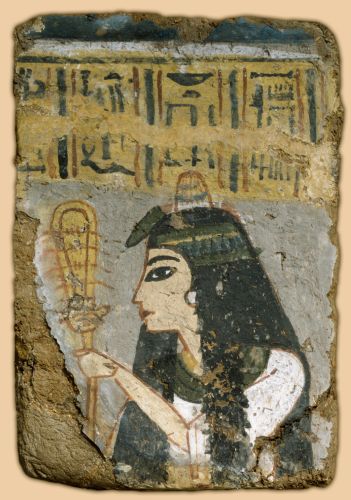
In ancient Egypt, sacred sound belonged to a religious world in which divine presence had to be welcomed, maintained, protected, and renewed. Egyptian temples were not congregational spaces in the modern sense. They were carefully ordered ritual environments where priests served the gods through purification, offering, recitation, procession, gesture, and song. Music was not a secondary ornament placed around worship. It was part of the sensory structure of ritual itself. Voice, rhythm, rattle, harp, and chant helped transform temple space into a place where divine power could be approached without disorder. To sound before a god was to participate in the daily reanimation of sacred order.
The goddess Hathor stands near the center of this Egyptian theology of music. Associated with love, joy, fertility, beauty, motherhood, dance, intoxication, foreign lands, and the welcoming of the dead, Hathor embodied many of the emotional and protective dimensions of sacred sound. Her cult was not limited to formal doctrine. It lived through festival, bodily movement, votive offering, women’s devotion, temple celebration, and the religious imagination of joy as a divine force. Hathor’s music was not trivial happiness. It was the sound of renewal, erotic vitality, divine pleasure, and protection against forces that threatened life. In a culture deeply concerned with cosmic balance, music connected to Hathor could soften danger, restore delight, and make the divine approachable through beauty. This is especially important because Egyptian religion did not oppose joy and sacred seriousness in the way later moralizing traditions sometimes would. Celebration, intoxication, dance, and sensual pleasure could belong to the restoration of order rather than its violation. Hathor’s soundscape made that religious logic audible. The rattle, the song, the festival cry, and the movement of worshippers did not draw people away from divine order. Properly placed within ritual, they helped renew it.
The sistrum, the sacred rattle so closely associated with Hathor, gives this theology a material form. Its sound was sharp, shimmering, and rhythmic, not melodic in the way a harp or flute might be. That matters. The sistrum did not simply accompany a song. It created a sonic field of protection and divine attention. Many sistra bore Hathoric imagery, especially the goddess’s face with cow ears, making the instrument itself a kind of portable sacred sign. When shaken in temple ritual, procession, or festival, it joined image, motion, metal, rhythm, and devotion. Its rattling could delight the goddess, announce her presence, ward off hostile forces, and mark the ritual environment as charged with divine power. The instrument’s meaning lay not only in what it represented, but in what it did when held, moved, and heard.
Egyptian temple sound also reveals the importance of controlled performance. Priestly ritual depended upon accuracy, purity, and repetition. Recitations, hymns, and ritual utterances had to be spoken or sung within correct ritual conditions, because sacred speech was itself efficacious. The boundaries between music, chant, spell, and prayer were not always the boundaries a modern listener would impose. A temple hymn could praise a god; a ritual formula could activate divine protection; a repeated phrase could stabilize the transition from ordinary time to sacred action. Music was part of a broader world of heka, the effective power often translated as magic, though that English word can mislead. Egyptian ritual sound did not operate outside religion as superstition. It belonged inside religion as one of the means by which divine order was maintained against chaos. This is why temple sound should be understood alongside image, incense, offering, and sacred architecture rather than separated from them as a purely musical category. The Egyptian temple was a sensory machine for sustaining maat, the ordered balance of the world, and sound helped animate that machine. A hymn named the god; a ritual utterance made the offering effective; the sistrum’s rhythm marked the space as protected; the trained voice of the priest turned inherited words into present action. Sacred sound was disciplined because divine approach was dangerous as well as desirable. The god was not a casual audience. The god had to be addressed through forms that tradition had authorized and ritual purity had prepared.
Funerary religion extended this power of sound beyond the temple and into the passage from death to afterlife. Egyptian mortuary rites were saturated with words, gestures, offerings, laments, and incantatory speech designed to protect the deceased and help transform the dead person into an effective blessed being. The Pyramid Texts, Coffin Texts, and later Book of the Dead preserve a world in which spoken and inscribed words opened paths, defeated dangers, named divine helpers, and supplied the deceased with knowledge needed for the journey beyond death. Professional mourners, ritual lament, and funerary songs added an emotional and communal dimension to this process. Grief was not left formless. It was shaped into ritual speech and sound that both expressed loss and helped secure continuity.
Egyptian sacred music must be understood through protection, presence, and transformation. It welcomed gods, pleased goddesses, accompanied offerings, framed festivals, guarded bodies, and helped the dead move through perilous unseen spaces. The historian must remain cautious. Pharaonic Egypt did not leave a full musical notation system that allows modern scholars to reconstruct most melodies with certainty. Much must be inferred from instruments, images, ritual texts, temple reliefs, tomb scenes, and later comparative evidence. But that limitation does not reduce music’s importance. It clarifies it. Egyptian sacred sound was not preserved primarily as abstract composition. It was embedded in action, object, place, and rite. It lived where the sistrum shook, where the hymn rose, where mourners cried, and where ritual speech promised that death, like chaos, could be answered by ordered sound.
Israelite and Second Temple Worship: Psalms, Sacrifice, Shofar, and Levitical Song

In ancient Israelite religion, sacred sound belonged to the world of covenant, sacrifice, kingship, memory, and divine presence. The Hebrew Bible does not present worship as silent inward belief, but as embodied ritual action: animals offered, incense burned, priests serving, crowds gathering, words recited, horns sounded, and songs raised before the God of Israel. Music entered this world as a disciplined form of praise and proclamation. It marked sacred time, intensified public worship, and gave theological shape to ritual acts that might otherwise appear only material. A sacrifice was not merely an animal placed upon an altar. Through prayer, psalm, blessing, and instrumental sound, sacrifice became part of a larger drama of dependence, thanksgiving, repentance, and divine-human relationship. This mattered because Israelite worship was built around remembrance as much as offering. The God addressed in song was the God who created, delivered, judged, forgave, and promised. Sacred music did not float above history. It gathered history into ritual speech, turning memory into sound and sound into communal identity. Worshippers did not simply perform before God as isolated individuals. They entered a shared language of covenant in which praise and lament taught them who they were.
The shofar offers one of the clearest examples of sound as religious action. Made from a ram’s horn, it was not primarily valued for melodic beauty but for force, alarm, proclamation, and awe. Its sound could gather the people, announce sacred moments, signal danger, accompany royal or cultic events, and evoke the terrifying nearness of God. In the Sinai tradition, the sound of the horn is bound to revelation, trembling, smoke, and divine descent. In later ritual memory, the shofar could recall judgment, repentance, covenant, and restoration. Its power lay partly in its refusal of refinement. It was raw, piercing, ancient, and bodily, a sound that interrupted ordinary life rather than blending into it. Where a harp might soothe and a choir might articulate praise, the shofar awakened, summoned, warned, and declared.
Temple worship, especially as remembered and idealized in biblical and later Jewish tradition, placed music within a more ordered cultic system. The Levites appear as singers, gatekeepers, attendants, and ritual servants connected to the house of God. The Chronicler gives particular attention to Levitical musicians, presenting them as organized by families, instruments, duties, and liturgical function. Harps, lyres, cymbals, trumpets, and song are woven into scenes of temple dedication, procession, and thanksgiving. Whether every detail reflects the precise practice of earlier monarchic worship or later Second Temple ideals, the theological point is clear: music belonged to sacred service. It was not casual sound. It was assigned, inherited, practiced, and authorized. This organization gave temple music a public authority that private devotion alone could not supply. Song became part of the temple’s ordered labor, like sacrifice, guarding, purification, and priestly blessing. The Levitical singer was not merely a talented performer but a servant within a sacred institution, entrusted with a role that linked worship, lineage, discipline, and memory. In that sense, temple music resembled Mesopotamian and Egyptian ritual sound in its institutional character, yet it remained distinct in its covenantal theology. It did not primarily feed or entertain the deity. It praised, remembered, confessed, and proclaimed before the God who had bound Israel to himself through law, promise, and history.
The Psalms give that sound its most enduring literary form. They preserve praise, lament, thanksgiving, royal theology, pilgrimage, wisdom, penitence, and trust, often in language that assumes public performance even when it can also be used devotionally by individuals. Many psalms speak to God directly, but they also teach communities how to speak before God. They turn fear into petition, victory into thanksgiving, guilt into confession, and creation itself into praise. Their musical superscriptions, references to instruments, and repeated calls to sing, shout, bless, remember, and give thanks suggest a liturgical world in which poetry and music were deeply intertwined. The Psalter does not allow a clean division between theology and song. Its theology is sung, and its song is already interpretation.
Second Temple worship intensified the importance of sacred music as memory and identity. After the Babylonian destruction of the First Temple and the later rebuilding of the Jerusalem Temple, worship had to carry both continuity and trauma. Song could recall Zion, mourn exile, celebrate return, and bind dispersed communities to a sacred center. Levitical song became more than accompaniment to sacrifice. It helped present the restored temple as legitimate, ordered, and continuous with Israel’s sacred past. The sound of worship testified that the relationship between God and people had survived catastrophe. Yet Second Temple Judaism was not limited to temple music alone. Synagogue practice, scriptural reading, prayer, and communal recitation increasingly shaped Jewish religious life, especially across the diaspora. Sacred sound moved along two related paths: the sacrificial music of the temple and the scriptural soundscape of gathered communities.
The Israelite and Second Temple traditions reveal music as proclamation, memory, and covenantal speech. The shofar announced what ordinary speech could not contain. The psalms gave worshippers a vocabulary for grief, praise, repentance, and hope. Levitical song transformed temple service into ordered public devotion. Together, these forms show that sacred sound was not a decorative layer placed upon Israelite religion. It helped define the religion’s public life. Sound gathered the people, interpreted sacrifice, recalled divine action, and trained worshippers to inhabit a world in which history, ritual, and divine promise were inseparable. In this tradition, to sing was not simply to express faith. It was to remember before God.
Vedic India: Chant, Meter, Sacrifice, and the Sacred Discipline of Sound

In Vedic India, sacred sound reached one of its most disciplined and theoretically charged ancient forms. The Vedas were not simply scriptures in the later sense of texts to be read silently, interpreted privately, or stored as written doctrine. They were bodies of sacred speech transmitted orally with extraordinary precision, shaped through meter, accent, memory, and performance. Their authority depended not only on meaning but on sound. To chant a hymn was not merely to communicate a religious idea. It was to activate inherited speech within a ritual order where voice, breath, priestly role, and sacrificial action belonged together. In this world, sacred music was inseparable from the discipline of exact utterance.
The Rigveda, the oldest of the Vedic collections, preserves hymns addressed to deities such as Agni, Indra, Soma, Varuna, Ushas, and others, many of them closely linked to sacrifice, praise, cosmic order, and priestly invocation. These hymns were poetry, but they were not poetry detached from ritual life. They were composed and transmitted in forms that allowed sound to carry religious force across generations. Meter mattered because form helped hold sacred speech in memory and gave it ritual shape. Accent mattered because pronunciation was part of correctness. Repetition mattered because continuity itself became a form of fidelity. Unlike a written page, which can seem stable even when neglected, Vedic sacred speech had to be renewed through trained bodies. It survived because people learned to sound it correctly. That fact gives the Rigveda a different kind of textual life from many ancient written corpora. Its preservation depended not first on manuscript copying but on embodied discipline, on teachers hearing students, correcting them, and passing forward not only the words but the accents, tonal movements, pauses, and inherited patterns of recitation. The sacred poem was never simply an object. It was an event repeatedly re-created under controlled conditions. Its antiquity lived in the present tense whenever the hymn was properly voiced.
The Samaveda makes the musical dimension of Vedic religion especially visible. Drawing largely from Rigvedic verses, it arranged selected material for chant, particularly in connection with soma sacrifice. Its importance lies not simply in preserving “songs” in a broad sense, but in showing how sacred speech could be transformed into a specialized liturgical sound. The same verbal material could assume a different ritual function when sung according to Saman patterns. This movement from verse to chant reveals a key Vedic principle: sound was not a neutral carrier of doctrine. It was a structured power whose form, pitch, prolongation, and ritual placement mattered. The chant did not decorate the sacrifice. It helped make the sacrifice what it was.
The Vedic sacrificial world required specialized priests whose roles were tied to different bodies of knowledge and different forms of speech. The hotṛ recited Rigvedic hymns, the udgātṛ chanted Saman melodies, the adhvaryu managed the physical details of sacrifice with formulas from the Yajurveda, and the brahman supervised the ritual as a guardian of correctness. This division of priestly labor shows how deeply sound was built into ritual structure. Sacrifice was not simply an offering placed into fire. It was a coordinated performance in which gesture, material, recitation, chant, timing, and correction had to converge. Agni, the fire god and divine messenger, stood at the center of this economy, carrying offerings to the gods while priestly speech carried human intention into ordered form. The fire burned, but the rite spoke. This priestly coordination also reveals that Vedic chant was social and institutional, not merely mystical or individual. Each voice had a function, and each function depended upon a tradition of training that gave the rite its integrity. If one priest handled the material sequence of the offering while another sounded the chant and another guarded the whole performance against error, then sacred sound was part of a larger architecture of ritual reliability. The ritual succeeded because no single element stood alone. Fire, offering, formula, melody, priestly authority, and inherited knowledge formed one disciplined system.
This discipline helps explain why Vedic sound cannot be reduced to emotional expression. Certainly, chant could move participants, create solemnity, and shape communal attention. But its primary authority came from correctness, transmission, and ritual efficacy. A hymn improperly uttered was not merely aesthetically flawed. It risked failure within a system where sacred order depended upon precision. Later Indian reflections on mantra, sound, and sacred syllable would develop these ideas in different directions, but the Vedic foundation already treated speech as more than semantic communication. Sound had weight. It could invoke, sustain, protect, and order because it was bound to a tradition that understood voice as an instrument of cosmic participation. This does not mean that meaning was irrelevant, only that meaning and sound were not easily separable. The words praised gods and narrated sacred relationships, but their force also lay in the way they were formed, voiced, remembered, and placed within sacrifice. In that sense, Vedic chant offers a striking counterpoint to modern habits of reading religion primarily as belief. Here, religion appears as trained sound, as breath disciplined by lineage, as memory made exact enough to bear sacred consequence.
The oral transmission of Vedic chant also makes this tradition one of the great achievements of ancient memory. Long before manuscript culture became dominant in India, Vedic specialists preserved vast bodies of sacred material through intricate mnemonic techniques, recitation patterns, teacher-student lineages, and disciplined repetition. The point was not only to remember content. It was to preserve the sound-body of revelation itself. This gives Vedic sacred music a distinctive place in the history of ancient religion. Mesopotamian temple song was attached to scribal and institutional cultures; Egyptian sacred sound was embedded in image, ritual speech, and temple protection; Israelite psalmody joined sacrifice to covenantal memory. Vedic chant made memory itself a sacred performance, one in which the past lived because it continued to be sounded correctly.
The Vedic case sharpens the larger argument. Ancient sacred music was not background, ornament, or mere atmosphere. In Vedic religion, sound became one of the principal ways by which order was maintained between humans, gods, sacrifice, and cosmos. Chant disciplined the body, preserved the word, activated ritual, and carried inherited knowledge across time. It was at once music, theology, memory, and priestly craft. To hear Vedic chant in its ritual setting was to hear a culture insisting that the world could be held together by correctly sounded sacred speech.
Greece: Apollo, Dionysus, Procession, Prophecy, and Ecstasy

In ancient Greece, sacred music belonged to a religious world where song, poetry, dance, sacrifice, civic procession, and divine presence were rarely isolated from one another. The Greek term mousikē embraced a wider field than modern “music,” joining melody, rhythm, poetry, education, memory, and bodily performance under the patronage of the Muses. This broader meaning matters because Greek sacred sound did not exist as a separate artistic category placed beside religion. It was one of the ways religion appeared in public. At sanctuaries, festivals, sacrifices, processions, contests, and dramatic performances, music helped organize the movement between mortals and gods, between civic identity and divine honor, between disciplined praise and ecstatic release.
Apollo provides one of the clearest examples of music as ordered sacred communication. Associated with the lyre, prophecy, purification, healing, and measured beauty, Apollo stood at the center of traditions in which song could discipline emotion and orient human beings toward divine order. The paean, often linked with Apollo though not exclusively his, was a song of appeal, thanksgiving, healing, and communal protection. It could be sung before battle, after deliverance, in festival settings, or in moments when a community sought divine favor against danger. Its power lay not only in melody but in collective voicing. To sing a paean was to bind a group into one appeal, one rhythm, one controlled address toward the god.
The sanctuary of Delphi sharpened this association between music, sacred authority, and revelation. Apollo’s oracle was famous not because it reduced religion to prediction, but because it placed human uncertainty before divine speech. The Pythia’s responses, priestly interpretation, pilgrimage, offering, and festival activity all belonged to a charged ritual landscape in which sound mattered. Hymns to Apollo, including the notated Delphic hymns from the second century BCE, show that Greek sacred song could be publicly performed, textually preserved, and musically notated in ways that let modern scholars glimpse the intersection of poetry, cult, and melody. These hymns are precious not because they unlock the whole soundworld of Greek religion, but because they reveal how sophisticated sacred performance could be when civic display, theological praise, and musical craft converged at a major sanctuary.
Greek sacrifice also depended upon sound. The ritual killing of an animal was surrounded by procession, prayer, gesture, cries, flute music, and communal participation. The aulos, a reed instrument with a penetrating sound, was especially important in many public and ritual contexts. It could accompany procession, dance, sacrifice, and dramatic performance, helping regulate rhythm and atmosphere. In sacrificial settings, music did not sentimentalize violence. It framed it. Sound helped distinguish ritual killing from ordinary slaughter, giving the act a place within a shared sequence of purification, offering, division, and communal meal. The sacredness of sacrifice was not produced by sound alone, but music helped make the action legible as worship rather than mere death. This framing mattered because Greek sacrifice was both religious and social, both an offering to the gods and a mechanism for organizing human participation. The procession brought the victim, worshippers, musicians, and civic representatives into visible order before the altar. The prayer named the divine recipient. The cry at the moment of killing, the sound of the aulos, and the subsequent distribution of meat turned a potentially violent act into a collectively recognized ritual event. Music helped hold that fragile transformation together. It did not erase the animal’s death, but it situated death within a sacred grammar of exchange, honor, and communal belonging.
Procession gave Greek sacred music an especially public and civic form. Festivals moved bodies through space, turning streets, sanctuaries, altars, and theaters into stages of religious identity. Choral song was central to this process because it joined youth, gender, citizenship, education, and devotion. Choruses did not merely entertain spectators. They trained bodies to move together, voices to sound together, and communities to imagine themselves under divine regard. In processional song, the city could hear itself becoming a religious body. This was especially important in a polis world where religion was not sealed away from politics. Public worship affirmed hierarchy, belonging, memory, and civic order, but it also made those structures emotionally powerful through rhythm, repetition, and spectacle.
Dionysus complicates any picture of Greek sacred music as purely ordered or civic. His cult drew music toward ecstasy, possession, intoxication, theater, and the dangerous loosening of boundaries. The thyrsus, drum, aulos, cymbals, dancing bodies, and cries associated with Dionysian worship created a sacred soundscape very different from Apollonian measure. Dionysian music did not simply destroy order. It revealed another kind of religious truth: that divine presence could arrive through disruption, frenzy, release, and the temporary suspension of ordinary identity. The worshipper who entered Dionysian rhythm did not merely praise the god from a distance. In myth, cult, and dramatic imagination, Dionysian sound could draw the human body into the god’s own movement. This is why Euripides’ Bacchae remains so important for thinking about Greek religious music, even though drama is not a transparent record of cult practice. The play imagines Dionysian power through sound, movement, mountains, cries, and collective female ecstasy, presenting worship as something that unsettles the city precisely because it cannot be reduced to civic management. Dionysian music opened a space where gender, status, household order, and rational self-command could be temporarily overturned. That possibility made it both sacred and frightening. Greek religion did not treat all divine music as calming. Some sacred sound shook the body until ordinary social identity loosened.
This tension between Apollo and Dionysus should not be exaggerated into a crude opposition between reason and madness, but it is analytically useful. Greek religion made room for both measured hymn and ecstatic cry, both festival chorus and possessed movement, both civic procession and unsettling divine nearness. Music helped hold these tensions because it could discipline bodies or loosen them, clarify speech or drive it toward inspired utterance, gather citizens into order or release worshippers from ordinary restraint. This is one reason music remained so central to Greek thought about character, education, and power. The Greeks knew that sound shaped the soul, and religious practice showed that this shaping could be civic, ethical, emotional, and dangerous all at once. Philosophical anxiety about musical modes, poetic imitation, and emotional formation did not arise in a vacuum. It reflected a culture that understood music as formative power, capable of producing courage, softness, discipline, lament, frenzy, or reverence. Sacred performance made that power visible. At one pole, song trained the citizen to move in ordered relation to gods and community. At another, rhythm and cry exposed the self to forces beyond ordinary civic discipline. Greek sacred music occupied a charged middle ground between education and possession, public order and divine excess.
The Greek case expands the larger argument by showing sacred sound as a field of balance and excess. In Mesopotamia, lament negotiated with divine anger. In Egypt, sistrum and chant protected sacred order. In Israelite and Second Temple worship, psalms and horns gave covenantal memory a public voice. In Vedic India, chant disciplined sacred speech into exact transmission. Greece adds another dimension: music as the medium through which divine order and divine disturbance could both become present. Whether sung to Apollo, sounded in procession, played beside sacrifice, or driven into Dionysian ecstasy, Greek sacred music made the gods audible not only as objects of belief, but as powers that moved cities, bodies, and souls.
Rome and the Imperial Mediterranean: Ritual Noise, Civic Religion, and Religious Pluralism
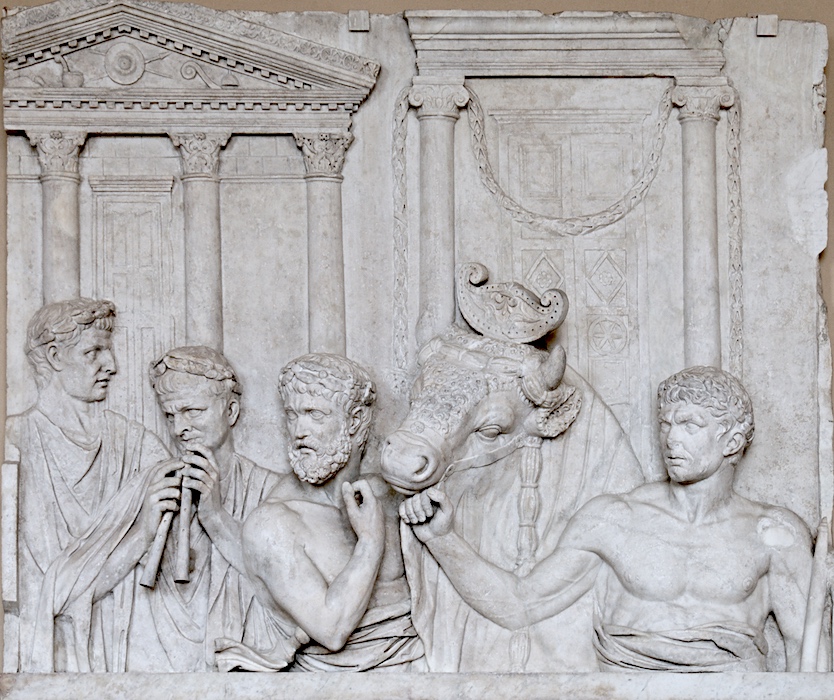
Roman sacred sound belonged to a religious culture deeply invested in correctness, public order, ancestral continuity, and the maintenance of right relations with the gods. The phrase pax deorum, the “peace of the gods,” captures this concern well, though it should not be mistaken for quietness. Roman religion could be loud, formulaic, processional, theatrical, and intensely public. Prayers were recited according to inherited forms; sacrifices were accompanied by music, gesture, and official speech; festivals filled civic space with movement and sound. In this world, music and ritual noise did not merely express devotion. They helped make public religion recognizable, authoritative, and effective.
Roman sacrifice offers the clearest example of sound disciplined by ritual correctness. A public sacrifice required the right victim, the right official, the right words, the right gestures, the right timing, and the right signs. If a mistake occurred, the rite might have to be repeated. Music was part of this ordered environment, especially through the tibia, a reed instrument often associated with sacrificial performance. Its sound could accompany ritual action, regulate atmosphere, and help shield the ceremony from disruptive noises or ill-omened speech. The point was not aesthetic beauty in isolation. The sound helped protect the ritual’s integrity. In Rome, where religion was often defined by doing rather than by creed, sacred sound belonged to the correct performance of public obligation. This is why the tibicen, the ritual piper, mattered as more than a hired musician. His presence helped stabilize the acoustic conditions of sacrifice, surrounding the official prayer and killing with an authorized sonic frame. Roman ritual was vulnerable to interruption because words, omens, and mistakes had consequences. Noise could pollute or confuse the rite, but properly placed music could help contain the ritual moment. Sacred sound functioned defensively as well as ceremonially. It guarded the rite from disorder while giving the public a recognizable signal that the city was fulfilling its obligations to the gods.
This emphasis on correctness also shaped Roman prayer. The spoken formula mattered, and Roman sources repeatedly show anxiety about naming the proper deity, using the proper words, and avoiding ritual error. The official voice was not casual speech. It was a public instrument of religious order. Priests, magistrates, and ritual specialists spoke before gods and citizens at once, making prayer both sacred communication and civic declaration. Sound carried authority because it was authorized: the voice of the magistrate, the chant of ritual attendants, the music of the tibicines, the blast of trumpets, and the noise of public festival all helped place divine service within the structures of Roman civic life.
The trumpet and horn traditions of Rome further reveal how sacred sound crossed the boundaries between religion, military order, and political authority. Instruments such as the tuba, cornu, and lituus belonged to martial and ceremonial worlds, but Roman religion did not separate those worlds cleanly. War, triumph, oath, procession, sacrifice, and state festival were deeply entangled. The sounding of brass instruments could mark assembly, movement, command, or solemnity, giving public events an acoustic force that ordinary speech could not provide. Roman religious sound was often civic sound. It announced hierarchy, gathered bodies, marked time, and gave the state’s actions a sacred resonance. In triumphal processions especially, sound helped translate victory into a religious and political spectacle. The general, soldiers, captives, spoils, images of conquered places, sacrificial victims, and instruments moved together through Rome as the city heard imperial success before it reached the altar. The same acoustic logic could operate in military ritual and public festival: horns and trumpets did not merely communicate practical signals but attached command to ceremony, violence to divine sanction, and state power to sacred order. Roman sound was rarely innocent. It told the crowd who had authority, where attention should be directed, and how public action should be interpreted.
Processions made this soundscape visible and audible at once. Roman festivals turned streets, temples, theaters, circuses, and forums into ritual routes through which gods, images, priests, magistrates, musicians, animals, and citizens moved together. The pompa was not merely a parade in the modern sense. It was a moving display of cosmic and civic order. Music helped coordinate that movement and magnify its emotional force. The public could see the gods carried through the city, hear the instruments and voices that accompanied them, and experience religion as a shared urban event. Roman sacred music did not simply happen inside temples. It extended divine presence into the city’s streets.
The imperial period enlarged this ritual soundscape across the Mediterranean. Rome absorbed, regulated, sponsored, feared, and reinterpreted cults from many regions, including the worship of Cybele, Isis, Mithras, Dionysus/Bacchus, and numerous local gods folded into imperial religious life. These traditions brought different sonic textures into Roman religious experience. The cult of Cybele, with its association with drums, cymbals, ecstatic movement, and the Galli, could sound foreign, intense, and unsettling to Roman elites even as it became an officially recognized part of Roman religion. Isis worship brought processions, hymns, ritual purity, and distinctive ceremonial forms into the imperial city and its provinces. Religious pluralism was not quiet coexistence. It was a crowded soundworld in which different gods could be heard through different instruments, languages, rhythms, and ritual moods.
Roman suspicion of certain ecstatic or foreign-sounding cults reveals how seriously sacred sound was taken. The Senate’s repression of the Bacchanalia in 186 BCE was not only a reaction to moral panic, political anxiety, or elite fear of unauthorized association, though it was certainly all of those. It also reflected concern about ritual practices that seemed to generate loyalties and intensities outside ordinary civic control. Noisy, nocturnal, ecstatic, or emotionally overwhelming religious performance could appear dangerous because it moved bodies and communities in ways the state did not fully manage. The problem was not that music lacked power. The problem was precisely that music, rhythm, secrecy, and group emotion had too much power when detached from authorized forms. This anxiety appears again in Roman responses to imported cults that were tolerated, celebrated, restricted, or mocked depending on how well they could be placed within Roman categories of order. Cybele could be honored as the Great Mother and yet remain marked by ritual practices that challenged Roman ideals of masculine restraint. Isis could attract devotion across the empire while still carrying associations of foreignness, secrecy, purification, and emotional intensity. Roman authorities did not simply ask whether a cult was “religious.” They asked whether its sounds, gatherings, bodies, and loyalties could be governed.
Roman religion depended on precisely the public force it sometimes feared. Civic ritual needed sound to make order perceptible. Imperial ceremony needed music, acclamation, and procession to translate power into experience. Provincial cults used song, chant, and festival to bind local communities into both local memory and imperial structures. The Roman world shows sacred music operating on several levels at once: as technical support for sacrifice, as public voice of civic authority, as emotional engine of procession, as marker of foreignness, and as medium of religious pluralism. Rome did not create a single theory of sacred music. It created an empire in which many sacred sounds competed, overlapped, and were disciplined by power.
The Roman and imperial Mediterranean case adds a political dimension. Mesopotamian music served temple labor and divine persuasion; Egyptian sound protected sacred order; Israelite and Second Temple song carried covenantal memory; Vedic chant preserved ritual precision; Greek music moved between civic form and ecstatic encounter. Rome made sacred sound a public technology of authority. It could guard sacrifice from error, announce the state’s relationship with the gods, dramatize imperial order, and expose anxieties about religious excess. In the Roman world, one could hear religion not only in hymns and prayers, but in the managed noise of the city itself.
Late Antiquity and Early Christianity: Psalms, Chant, Suspicion, and the Reorientation of Sacred Sound
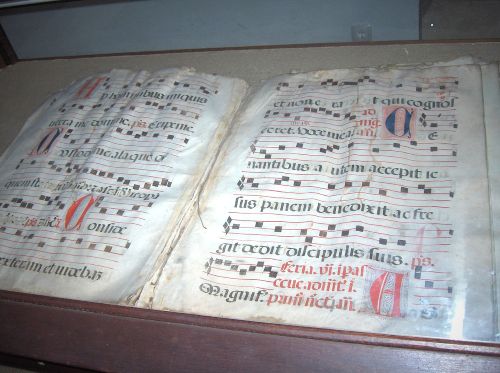
Late antiquity did not end the ancient religious power of music. It redirected it. Early Christianity emerged within a Jewish world already shaped by psalms, scriptural recitation, prayer, and temple memory, and within a Greco-Roman world where music could serve civic ceremony, philosophical education, theater, procession, and ecstatic cult. Christian sacred sound inherited both worlds while also judging them. It could not simply reject music, because scripture itself commanded singing and because Christian communities needed shared forms of praise, memory, teaching, and consolation. Yet it could not embrace music without caution either, because sound moved the body, stirred desire, and recalled theatrical, pagan, or luxurious settings that many Christian writers distrusted.
The destruction of the Jerusalem Temple in 70 CE forms one important background for this reorientation. Temple sacrifice, Levitical song, and priestly ritual did not continue in their old form after the Roman destruction of Jerusalem. Jewish worship increasingly centered on prayer, Torah, synagogue assembly, domestic observance, and scriptural memory, though the relationship between temple and synagogue should not be oversimplified. Early Christianity developed in that altered soundscape. Its first songs were not born in a vacuum. Psalms, blessings, scriptural cantillation, acclamation, and communal prayer already offered patterns by which sacred words could be voiced together. Christian worship took up this inheritance and gave it new christological meanings, reading Israel’s sacred songs through Jesus, resurrection, suffering, fulfillment, and hope. This did not mean that Christian sound simply replaced Jewish sound, nor that synagogue worship can be treated as a straightforward substitute for temple ritual. The transition was messier and more historically layered than that. What changed was the center of gravity. Without a functioning Jerusalem altar, sacrifice could no longer organize Jewish religious sound in the same way it had in temple ideology, while Christian communities increasingly treated the crucified and risen Christ as the interpretive key to scripture, prayer, and song. Sacred sound moved from the temple court into assemblies, homes, burial spaces, and eventually basilicas, carrying older psalmic language into new ritual geographies.
The New Testament itself suggests that song belonged early to Christian communal life, though it does not provide anything like a complete liturgical manual. References to psalms, hymns, and spiritual songs show a community in which sung or chanted praise could teach, encourage, and bind believers together. Some passages, such as the poetic material often identified in Philippians 2, Colossians 1, or 1 Timothy 3, may preserve or echo early hymnic forms, though scholars debate the boundaries between hymn, confession, and elevated prose. The caution matters. Still, the broader pattern is clear: early Christian sacred sound carried doctrine into memory. Before most Christians possessed books of their own, repeated sung or chanted language helped form belief, discipline emotion, and make communal identity audible.
This gave Christian song a different ritual center from many earlier traditions. It did not primarily feed gods, accompany animal sacrifice, summon a deity into a temple image, or preserve the civic relationship between a city and its ancestral divinities. It gathered believers around scripture, prayer, Eucharistic memory, baptismal identity, martyr stories, and eschatological expectation. Psalms were especially important because they gave Christians a divinely authorized language of lament, praise, persecution, kingship, repentance, and trust. They could be sung as the words of Israel, the voice of Christ, the prayer of the church, or the cry of the suffering soul. Christian psalmody did not abandon ancient sacred music’s power to mediate between human and divine. It relocated that mediation within scriptural interpretation and communal formation. The same psalm could speak in several registers at once: historically as Israel’s prayer, typologically as Christ’s voice, morally as the believer’s instruction, and liturgically as the church’s shared utterance. This layered use of song made Christian sacred sound unusually dense. A chant was not only a melody applied to text. It was an act of interpretation, a way of inhabiting scripture aloud. Through repeated singing, Christian communities learned not only what to believe but how to feel belief: how to mourn persecution, await judgment, confess sin, celebrate deliverance, and imagine themselves as a people gathered across time.
Early Christian writers often expressed suspicion toward music’s power. Their concern was rarely that sound was powerless. It was that sound was too powerful when detached from moral and theological discipline. The theater, banquet, dance, erotic song, and pagan festival represented forms of pleasure that could distract the soul, inflame the senses, or blur the boundary between worship and spectacle. Clement of Alexandria, John Chrysostom, and other Christian moralists did not object to all song, but they wanted sacred sound purified of what they viewed as excess, luxury, and sensual corruption. Christian music had to be sober, intelligible, scriptural, and spiritually directed. The voice could lift the soul, but it could also seduce it. This suspicion belongs to a wider late antique Christian effort to discipline the senses rather than simply deny them. Sight, smell, taste, touch, and hearing all mattered in worship, but each had to be redirected from scattered desire toward divine truth. Music was especially difficult because it could make doctrine memorable while also making pleasure respectable. A hymn could teach orthodoxy, but a beautiful melody might draw attention to itself. A congregation could be united by song, but that same collective emotion could begin to resemble the theater, the festival crowd, or the ecstatic cult. Christian suspicion of music was not anti-musical in a simple sense. It was an attempt to govern music’s undeniable force.
Augustine gives the most famous late antique expression of this tension. In the Confessions, he remembers being deeply moved by the singing of hymns and psalms in Milan, especially in connection with the worship associated with Ambrose. He does not deny the beauty or spiritual value of that experience. Indeed, he admits that sacred song can awaken devotion and soften the heart toward truth. Yet he also worries that he may love the musical pleasure more than the sacred words being sung. That anxiety is revealing. Augustine does not imagine music as harmless decoration. He knows it can carry the soul, but he also knows that the soul may follow beauty in the wrong direction. Christian sacred music, for him, required inward discipline as much as outward form.
Ambrose of Milan represents another important turn in the Christian organization of sacred sound. Ambrosian hymnody helped show how doctrinal teaching, congregational participation, and rhythmic song could strengthen Christian identity, especially in moments of conflict. Hymns could teach orthodoxy, comfort communities under pressure, and create a shared sound against imperial, Arian, or civic opposition. This was not music as escape from politics. It was music as communal formation. In late antique cities, where bishops, emperors, monks, crowds, and rival theological parties struggled over authority, sacred song could give doctrine a public voice. What Christians sang together, they learned together; what they learned together, they could defend as a community.
By late antiquity, then, sacred sound had been profoundly reoriented but not diminished. Christian chant and psalmody preserved ancient music’s capacity to gather bodies, shape memory, regulate emotion, and approach the divine, while placing those powers under the authority of scripture, doctrine, and ecclesial discipline. The shift from temple sacrifice and civic procession to psalm, hymn, Eucharist, and monastic office was not a movement from sound to silence. It was a movement from one ritual order of sound to another. Early Christianity inherited the ancient conviction that music could cross the threshold between visible and invisible worlds. It simply insisted that the crossing had to be governed by the Word.
Did Music Cause Religious Experience, or Did Ritual Give Music Its Power?
The following video from ChantWorks discusses historic sacred music in Catholicism:
The religious power of ancient music can be misunderstood in two opposite ways. One error is to treat music as a nearly automatic cause of religious experience, as though rhythm, pitch, repetition, and volume simply produced prophecy, ecstasy, awe, or submission by themselves. The other error is to treat music as a passive symbol whose meaning came entirely from theology, institution, or ritual explanation. Neither view is adequate. Ancient sacred sound worked because it joined bodily sensation to inherited meaning. It moved people physically and emotionally, but it did so within ritual worlds that taught participants what those sensations meant, whom they addressed, and what kind of transformation they were supposed to accomplish.
This tension can be seen across the traditions already considered. Mesopotamian lament did not produce divine reconciliation merely because grief was sung aloud. Its force came from the institutional world of temple service, the authority of lament specialists, the inherited language of divine anger and restoration, and the belief that gods could be moved by properly formed petition. Egyptian sistrum music did not protect simply because metal rattled in the air. Its power depended on Hathoric iconography, temple purity, ritual timing, and a theology in which sound, image, movement, and divine delight could hold chaos at bay. Israelite psalmody did not become covenantal memory because melody alone made people remember. It worked because song carried scriptural language, sacrifice, historical identity, and communal address before God. In each case, sound was powerful, but never nakedly so. It was clothed in ritual authority.
The sensory force of music should not be minimized. Rituals were not philosophical propositions acted out with incidental noise. Sound affected bodies. A horn blast interrupted ordinary attention and created alarm, awe, or summons. Repeated chant shaped breathing and memory. Drums and cymbals could intensify movement and loosen the boundaries of ordinary self-control. Choral song gathered separate voices into one public body. A lament could make grief communal rather than private. A procession could become more than movement through space because music gave that movement pulse, expectation, and emotional direction. Ancient people did not need modern neuroscience to know that sound enters the body differently from abstract speech. They built that knowledge into ritual life. This bodily dimension is especially important because ancient religion was rarely confined to belief alone. It was done with the throat, hands, feet, ears, lungs, and skin. Sound could make a crowd breathe together, walk together, tremble together, or answer together. It could extend authority across space, as when a trumpet or horn gathered attention before any explanation was offered. It could also make invisible relationships feel immediate: the god approached, the dead were mourned, the city was united, the sacrifice had begun. Music mattered because it gave ritual a physical pressure that words alone could not always sustain.
The Vedic case makes this especially clear because it places extraordinary emphasis on correctness, yet that correctness was not merely intellectual. The chant had to be sounded, embodied, remembered, and transmitted through trained voices. Its efficacy depended on tradition and precision, but also on breath, tone, accent, and repetition. Greek religion shows the other side of the same problem. A paean, a procession, a Delphic hymn, and a Dionysian cry did not all produce the same kind of religious experience, because their ritual settings taught worshippers to hear them differently. Apollo’s music could organize appeal, healing, and measured praise, while Dionysian sound could authorize ecstasy, movement, and the loosening of civic identity. The same human capacity to be moved by sound could serve discipline or disruption, order or release, depending on ritual frame.
Rome and early Christianity sharpen the political and moral dimensions of the question. Roman authorities valued ritual sound when it supported public sacrifice, civic hierarchy, triumphal display, or imperial order, but they feared sound when it gathered bodies into unauthorized secrecy, emotional excess, or foreign cultic intensity. That fear itself proves that sacred sound was understood as socially consequential. Early Christians inherited the same problem in moralized form. They sang psalms and hymns because sacred sound formed memory, doctrine, and communal hope; yet writers such as Augustine worried that music’s beauty could seduce the soul away from the words it was meant to serve. The question was not whether music had power. The question was how that power could be governed, purified, and directed. This is where sacred sound becomes inseparable from authority. Communities did not merely ask what music felt like. They asked who controlled it, where it was performed, which bodies it moved, which words it carried, and whether its effects strengthened or threatened the accepted order. A Roman procession, a Christian hymn, a Dionysian rite, and a temple chant could all move people, but not all movement was considered legitimate. Music’s danger and usefulness came from the same source: its ability to make belief public, emotional, contagious, and difficult to keep entirely private.
The better answer, then, is that music and ritual made religious experience together. Music gave ritual bodily immediacy; ritual gave music sacred intelligibility. Without sound, many ancient rites would have lost emotional depth, public coherence, mnemonic force, and sensory authority. Without ritual, many sounds would have remained ambiguous, capable of pleasure or fear but not necessarily divine encounter. Sacred music lived in the meeting place between sensation and interpretation. It caused, but not mechanically. It symbolized, but not passively. It acted because ancient communities placed sound inside worlds of gods, ancestors, scriptures, sacrifices, temples, cities, bodies, and memories. Music became religious power when people learned not only to hear it, but to hear through it.
Conclusion: When the Gods Were Heard
Ancient sacred music mattered because religion was never only a matter of belief. It was enacted in bodies, places, gestures, offerings, memories, and sounds. Across the ancient world, worshippers did not simply think about the divine. They addressed it, summoned it, praised it, feared it, mourned before it, pleaded with it, and organized their communities around the possibility that gods, ancestors, spirits, or sacred powers could be reached through disciplined performance. Music made that possibility audible. It gave ritual breath, rhythm, emotional force, and public form. Before music became “art” in the modern sense, it was already a way of doing sacred work.
The traditions considered here do not collapse into one universal theory of religious music. Mesopotamian lamenters sought to pacify divine anger and restore broken relationships between cities and gods. Egyptian sistra, hymns, and funerary utterances protected sacred order, delighted deities, and helped the dead pass through danger. Israelite and Second Temple worship used shofar, psalm, sacrifice, and Levitical song to make covenantal memory public. Vedic chant preserved sacred speech through exact oral discipline, turning voice into a vehicle of ritual and cosmic order. Greek religion held together Apollonian measure, civic procession, sacrificial sound, Delphic praise, and Dionysian ecstasy. Rome made religious noise part of public authority, imperial order, and plural Mediterranean devotion. Early Christianity inherited ancient musical power while redirecting it toward scripture, psalmody, doctrine, and disciplined communal worship.
What unites these varied worlds is not a single instrument, melody, theology, or institution, but a shared recognition that sound could cross boundaries. It could move between temple and city, living and dead, human grief and divine response, communal memory and present action, bodily sensation and invisible meaning. Sacred music worked because it was both physical and interpretive. A horn blast struck the ear before it could be explained. A chant trained memory before it became doctrine. A lament gave grief shape before grief could dissolve into despair. A procession gathered bodies into motion before civic identity could be abstractly stated. Ancient religion needed sound because sound could make unseen relationships feel immediate.
To hear ancient sacred music, then, is not merely to imagine lost melodies. It is to recognize a world in which the divine was approached through vibration, breath, repetition, and shared attention. Much of that sound is gone, surviving only in texts, instruments, images, notations, prescriptions, and later traditions. But its historical importance remains unmistakable. Sacred sound helped ancient communities make order against chaos, continuity against death, memory against loss, and presence against distance. The gods were not only carved, named, feared, or adored. In ritual, they were heard.
Bibliography
- Aeschylus. The Oresteia. Translated by Christopher Collard. Oxford: Oxford University Press, 2002.
- Apuleius. The Golden Ass. Translated by P. G. Walsh. Oxford: Oxford University Press, 1994.
- Augustine of Hippo. Confessions. Translated by Henry Chadwick. Oxford: Oxford University Press, 1991.
- Barker, Andrew. Greek Musical Writings. Vol. 1, The Musician and His Art. Cambridge: Cambridge University Press, 1984.
- —-. Greek Musical Writings. Vol. 2, Harmonic and Acoustic Theory. Cambridge: Cambridge University Press, 1989.
- Beard, Mary, John North, and Simon Price. Religions of Rome, 2 Vols. Cambridge: Cambridge University Press, 1998.
- Beck, Guy L. Sonic Theology: Hinduism and Sacred Sound. Columbia: University of South Carolina Press, 1993.
- Bell, Catherine. Ritual Theory, Ritual Practice. New York: Oxford University Press, 1992.
- Black, Jeremy, Graham Cunningham, Eleanor Robson, and Gábor Zólyomi. The Literature of Ancient Sumer. Oxford: Oxford University Press, 2004.
- Bradshaw, Paul F. The Search for the Origins of Christian Worship: Sources and Methods for the Study of Early Liturgy. New York: Oxford University Press, 1992.
- Braun, Joachim. Music in Ancient Israel/Palestine: Archaeological, Written, and Comparative Sources. Grand Rapids, MI: Eerdmans, 2002.
- Burkert, Walter. Greek Religion. Translated by John Raffan. Cambridge, MA: Harvard University Press, 1985.
- Calame, Claude. Choruses of Young Women in Ancient Greece: Their Morphology, Religious Role, and Social Functions. Translated by Derek Collins and Janice Orion. Lanham, MD: Rowman & Littlefield, 1997.
- Caland, W., and V. Henry. L’Agniṣṭoma: Description complète de la forme normale du sacrifice de Soma dans le culte védique. Paris: Ernest Leroux, 1906–1907.
- Carr, David M. Writing on the Tablet of the Heart: Origins of Scripture and Literature. Oxford: Oxford University Press, 2005.
- Cicero. On the Nature of the Gods. Translated by H. Rackham. Loeb Classical Library. Cambridge, MA: Harvard University Press, 1933.
- Clement of Alexandria. The Paedagogus. In The Ante-Nicene Fathers. Vol. 2. Edited by Alexander Roberts and James Donaldson. Buffalo, NY: Christian Literature Publishing Company, 1885.
- Duchesne-Guillemin, Marcelle. “Music in Ancient Mesopotamia and Egypt.” World Archaeology 12:3 (1981), 287-297.
- Euripides. Bacchae. Translated by Richard Seaford. Warminster: Aris & Phillips, 1996.
- Faulkner, Raymond O., trans. The Ancient Egyptian Book of the Dead. Austin: University of Texas Press, 1990.
- Feld, Steven, and Donald Brenneis. “Doing Anthropology in Sound.” American Ethnologist 31:4 (2004), 461–474.
- Foley, Edward. Foundations of Christian Music: The Music of Pre-Constantinian Christianity. Collegeville, MN: Liturgical Press, 1992.
- Furley, William D., and Jan Maarten Bremer. Greek Hymns: Selected Cult Songs from the Archaic to the Hellenistic Period. 2 vols. Tübingen: Mohr Siebeck, 2001.
- Gabbay, Uri. The Exegetical Terminology of Akkadian Commentaries. Leiden: Brill, 2016.
- Gonda, Jan. Vedic Ritual: The Non-Solemn Rites. Leiden: Brill, 1952.
- Henrichs, Albert. “Loss of Self, Suffering, Violence: The Modern View of Dionysus from Nietzsche to Girard.” Harvard Studies in Classical Philology 88 (1984), 205–240.
- Jamison, Stephanie W., and Joel P. Brereton, trans. The Rigveda: The Earliest Religious Poetry of India. 3 vols. New York: Oxford University Press, 2014.
- Japhet, Sara. I & II Chronicles: A Commentary. Louisville, KY: Westminster John Knox Press, 1993.
- Johnson, Maxwell E. The Rites of Christian Initiation: Their Evolution and Interpretation. Revised and expanded ed. Collegeville, MN: Liturgical Press, 2007.
- Käppel, Lutz. Paian: Studien zur Geschichte einer Gattung. Berlin: Walter de Gruyter, 1992.
- Kilmer, Anne Draffkorn. “The Discovery of an Ancient Mesopotamian Theory of Music.” Proceedings of the American Philosophical Society 115:2 (1971), 131–149.
- Lichtheim, Miriam, trans. Ancient Egyptian Literature. 3 vols. Berkeley: University of California Press, 1973–1980.
- Livy. Ab Urbe Condita. Translated by B. O. Foster et al. Cambridge, MA: Harvard University Press, 1919–1959.
- Manniche, Lise. Music and Musicians in Ancient Egypt. London: British Museum Press, 1991.
- Mathiesen, Thomas J. Apollo’s Lyre: Greek Music and Music Theory in Antiquity and the Middle Ages. Lincoln: University of Nebraska Press, 1999.
- McKinnon, James. The Advent Project: The Later-Seventh-Century Creation of the Roman Mass Proper. Berkeley: University of California Press, 2000.
- —-. Music in Early Christian Literature. Cambridge: Cambridge University Press, 1987.
- Meconi, Honey. “Listening to Sacred Polyphony.” Early Music 26:2 (1998), 375-379.
- Meyers, Carol. Exodus. Cambridge: Cambridge University Press, 2005.
- Michalowski, Piotr. The Lamentation over the Destruction of Sumer and Ur. Mesopotamian Civilizations 1. Winona Lake, IN: Eisenbrauns, 1989.
- Mowinckel, Sigmund. The Psalms in Israel’s Worship. 2 vols. Translated by D. R. Ap-Thomas. Oxford: Basil Blackwell, 1962.
- Newsom, Carol A., Sharon H. Ringe, and Jacqueline E. Lapsley, eds. Women’s Bible Commentary. Revised and updated third ed. Louisville, KY: Westminster John Knox Press, 2012.
- Orlin, Eric M. Foreign Cults in Rome: Creating a Roman Empire. Oxford: Oxford University Press, 2010.
- Pinch, Geraldine. Votive Offerings to Hathor. Oxford: Griffith Institute, Ashmolean Museum, 1993.
- Pindar. Olympian Odes, Pythian Odes. Edited and translated by William H. Race. Loeb Classical Library. Cambridge, MA: Harvard University Press, 1997.
- Pritchard, James B., ed. Ancient Near Eastern Texts Relating to the Old Testament. 3rd ed. Princeton, NJ: Princeton University Press, 1969.
- Rouget, Gilbert. Music and Trance: A Theory of the Relations between Music and Possession. Translated by Brunhilde Biebuyck. Chicago: University of Chicago Press, 1980.
- Rüpke, Jörg. Religion of the Romans. Cambridge: Polity Press, 2004.
- Scheid, John. An Introduction to Roman Religion. Translated by Janet Lloyd. Bloomington: Indiana University Press, 2003.
- Smith, John Arthur. Music in Ancient Judaism and Early Christianity. Farnham: Ashgate, 2011.
- —-. Music in Religious Cults of the Ancient Near East. London: Routledge, 2020.
- Smith, Jonathan Z. To Take Place: Toward Theory in Ritual. Chicago: University of Chicago Press, 1987.
- Staal, Frits. Agni: The Vedic Ritual of the Fire Altar. 2 vols. Berkeley: Asian Humanities Press, 1983.
- —-. Rules without Meaning: Ritual, Mantras and the Human Sciences. New York: Peter Lang, 1989.
- Sullivan, Lawrence E. “Sacred Music and Sacred Time.” The World of Music 26:3 (1984), 33-52.
- Taft, Robert F. The Liturgy of the Hours in East and West: The Origins of the Divine Office and Its Meaning for Today. 2nd rev. ed. Collegeville, MN: Liturgical Press, 1993.
- Takács, Sarolta A. Isis and Sarapis in the Roman World. Leiden: Brill, 1992.
- Teeter, Emily. Religion and Ritual in Ancient Egypt. Cambridge: Cambridge University Press, 2011.
- Troy, Lana. Patterns of Queenship in Ancient Egyptian Myth and History. Uppsala: Acta Universitatis Upsaliensis, 1986.
- Turcan, Robert. The Cults of the Roman Empire. Translated by Antonia Nevill. Oxford: Blackwell, 1996.
- Watts, James W. Ritual and Rhetoric in Leviticus: From Sacrifice to Scripture. Cambridge: Cambridge University Press, 2007.
- Wellesz, Egon. A History of Byzantine Music and Hymnography. 2nd ed. Oxford: Clarendon Press, 1961.
- West, M. L. Ancient Greek Music. Oxford: Clarendon Press, 1992.
- Wilkinson, Richard H. The Complete Gods and Goddesses of Ancient Egypt. London: Thames & Hudson, 2003.
- Witzel, Michael. Inside the Texts, Beyond the Texts: New Approaches to the Study of the Vedas. Cambridge, MA: Department of Sanskrit and Indian Studies, Harvard University, 1997.
- —-. “Vedas and Upaniṣads.” In The Blackwell Companion to Hinduism, edited by Gavin Flood, 68–98. Malden, MA: Blackwell, 2003.
- Wolkstein, Diane, and Samuel Noah Kramer. Inanna, Queen of Heaven and Earth: Her Stories and Hymns from Sumer. New York: Harper & Row, 1983.
Originally published by Brewminate, 06.05.2026, under the terms of a Creative Commons Attribution-NonCommercial-NoDerivatives 4.0 International license.
About the Author