Classical antiquity, biblical symbolism, emancipation, and the Lost Cause shaped how Americans fought the Civil War and how later generations remembered and contested its meaning.

By Matthew A. McIntosh
Public Historian
Brewminate
Introduction: An Epic War in a Classical Republic
When the United States descended into civil war in 1861, Americans confronted the crisis through languages of history and myth that had shaped the republic since its founding. Greece and Rome supplied familiar examples of republican virtue, civic corruption, tyranny, rebellion, military heroism, and national decline. The Bible offered narratives of bondage and deliverance, collective sin and divine judgment, sacrifice and redemption. The American Revolution had itself become a kind of national sacred history, furnishing both Unionists and Confederates with heroic ancestors whose authority could be claimed against the other. These traditions appeared in political speeches, sermons, newspapers, schoolbooks, military addresses, poems, monuments, paintings, and private correspondence. Classical allusions were particularly common among educated politicians, officers, lawyers, ministers, and journalists, many of whom had encountered Homer, Virgil, Plutarch, Cicero, Livy, and ancient history through the nineteenth-century curriculum. Yet the reach of antiquity extended beyond those able to read Greek or Latin. Translations, popular histories, public statuary, neoclassical architecture, theatrical productions, patriotic iconography, and political rhetoric had embedded classical forms throughout American civic culture. By the eve of the Civil War, Americans did not need to be classical scholars to recognize the figure of the virtuous republican, the ambitious Caesar, the heroic defender, the doomed republic, or the civilization corrupted by luxury and despotism.
The political power of these inherited traditions lay in their adaptability. Antiquity did not provide Americans with a single lesson about the sectional crisis; it supplied a contested archive from which opposing lessons could be drawn. Confederates compared secession to the Revolution of 1776 and represented their new nation as a federation of sovereign republics resisting an increasingly imperial central government. Their constitution invoked liberty, popular government, state sovereignty, and divine favor even as it gave explicit protection to slavery. Unionists answered that secession was not an act of republican liberation but a factional assault upon constitutional government, resembling the internal disorders that had destroyed republics in the ancient world. Each side claimed to be preserving the true republic. Each portrayed the other as the aggressor. Each summoned historical precedents capable of converting political interest into moral duty. These rival appropriations reveal why classical and revolutionary language cannot be treated as neutral ornament. Such language identified heroes and traitors, defined legitimate authority, and positioned the conflict within a larger drama of liberty struggling against tyranny. It did not create the material interests that produced secession, foremost among them the preservation and expansion of racial slavery, but it helped political leaders present those interests as elements of a transcendent historical cause.
The war’s mythic dimensions expanded as its violence exceeded nearly every expectation with which Americans had entered it. Battles initially imagined as tests of masculine courage and republican resolve became scenes of industrialized slaughter, mutilation, disease, imprisonment, displacement, and mass death. Communities facing losses on this scale needed languages capable of making suffering intelligible. Soldiers were remembered as martyrs, heroes, patriots, and defenders of home rather than merely as bodies consumed by military machinery. Union nationalism increasingly joined the preservation of the republic to emancipation, while African Americans interpreted the destruction of slavery through the biblical history of Exodus, transforming escape, military service, and liberation into parts of a collective deliverance in which enslaved people themselves were active participants. Abraham Lincoln’s Gettysburg Address placed the dead within a national story of founding, testing, dedication, and a “new birth of freedom,” while his Second Inaugural Address interpreted the bloodshed more darkly as possible divine judgment upon a nation implicated in slavery. Confederates likewise sanctified sacrifice, portraying their soldiers as defenders of homes, constitutional liberty, and a threatened Southern civilization. The same war could consequently be imagined as punishment, redemption, invasion, revolution, martyrdom, or tragic resistance, depending upon who narrated it and which parts of the conflict that narrator chose to remember.
The mythology of the Civil War did not end with military surrender. Indeed, some of its most influential forms emerged only after the armies had disbanded. Lincoln’s assassination accelerated his transformation from controversial president into emancipator, martyr, national father, and American Moses. Confederate defeat produced an opposing mythology in which Robert E. Lee became a nearly faultless Christian and classical hero, Confederate soldiers were represented as unconquerable except by overwhelming numbers, and slavery receded behind abstractions about states’ rights, honor, and local independence. White reconciliation often brought these traditions together in a national story that praised courage on both sides while diminishing emancipation, Black political agency, Reconstruction, and the centrality of slavery to secession. The Civil War must be understood as both a material conflict and a struggle over narrative possession. Mythology did not determine battlefield outcomes, erase economic interests, or cause Americans to act mechanically according to ancient models. It shaped how they classified events, legitimized political choices, endured loss, assigned innocence and guilt, and transmitted the war to later generations. Americans fought one war with armies between 1861 and 1865, but they continued to fight another through memory, monuments, ritual, scholarship, and public culture. That second war determined whether the first would be remembered chiefly as a struggle for Union, a war of emancipation, a defense of Southern independence, a national tragedy, or an unfinished revolution over the meaning of freedom itself.
The Classical Republic Before the Civil War

The American republic was classical before it was fully democratic. From the revolutionary era onward, political leaders described the new nation through a vocabulary inherited from Greece and Rome: republic, senate, constitution, virtue, corruption, liberty, tyranny, faction, and civic sacrifice. These terms did more than lend dignity to speeches. They provided a framework for judging whether free government could survive without collapsing into anarchy or despotism. The founders understood themselves to be conducting an experiment whose nearest historical precedents appeared not in the monarchies of contemporary Europe but in the republics of antiquity. Yet those precedents were warnings as often as models. Athens had succumbed to instability and imperial ambition; Sparta had sacrificed openness to discipline; the Roman Republic had expanded magnificently before corruption, factional violence, and military dictatorship destroyed its liberty. Americans admired the ancients partly because they feared repeating their failures.
Rome initially occupied the most prominent place in this political imagination. The founders borrowed institutional names such as Senate and Capitol, adopted Roman pseudonyms in public debate, and represented civic leadership through figures such as Cincinnatus, Cato, Brutus, Cicero, and Washington’s favored image of the disinterested patriot returning power to the people. Classical republicanism taught that liberty depended not merely upon constitutional machinery but upon the character of citizens. A republic required independence, public spirit, restraint, vigilance against corruption, and a willingness to place the common good above private appetite. Luxury, dependence, concentrated power, standing armies, demagoguery, and faction were not merely social problems; they were signs of historical decline. John Adams turned repeatedly to ancient constitutions while defending balanced government, and the authors of The Federalist used Greek confederacies and the Roman Republic to test the strengths and weaknesses of the proposed Constitution. They did not imitate antiquity mechanically. Rather, they treated ancient history as an immense record of political experiments whose failures might help Americans construct a more durable union.
The physical landscape of the nation made these claims visible. The Capitol, statehouses, courthouses, banks, universities, memorials, and private residences adopted columns, pediments, domes, rotundas, and porticoes associated with Greece and Rome. Washington became a city of temples devoted not to ancient gods but to law, government, knowledge, and national memory. Classical female personifications (including Liberty, Justice, Minerva, and Columbia) translated abstract political ideals into recognizable human forms. Eagles, fasces, wreaths, shields, and other ancient emblems appeared on seals, coins, paintings, public buildings, and ceremonial objects. The republic surrounded citizens with a visual argument: the United States was heir to the ancient tradition of civic freedom, but it intended to preserve that tradition more successfully than the societies from which it had descended.
During the early nineteenth century, the classical inheritance widened and changed. Rome remained indispensable, but Greece acquired greater prestige through the Greek struggle for independence, romantic philhellenism, archaeological discovery, literary translation, and the spread of Greek Revival architecture. As political participation expanded among white men, Americans increasingly celebrated Athens as an ancestor of democracy rather than merely as a warning against popular excess. Communities adopted names such as Athens, Sparta, Troy, Rome, Syracuse, and Corinth, projecting ancient geography across a rapidly expanding continent. Colleges continued to teach Greek and Latin, while academies, lyceums, newspapers, public lectures, inexpensive editions, and popular histories carried classical narratives beyond the most privileged institutions. The result was not universal or uniform classical literacy. Many Americans knew antiquity through fragments, familiar characters, moral anecdotes, and political comparisons rather than through sustained reading in ancient languages. That partial knowledge could nevertheless be powerful. A reference to Caesar suggested military ambition and dictatorship; Cincinnatus signified the citizen-soldier; Catiline evoked conspiracy; Brutus could represent either republican courage or murderous fanaticism. Classical figures became compressed political arguments that could be deployed without explaining their entire histories.
The transformation of the early republic into a continental nation also exposed tensions within its classical self-image. Americans celebrated republican simplicity while pursuing commercial wealth, territorial expansion, and international power. They feared Roman imperial decline even as they displaced Indigenous nations, conquered Mexican territory, and described expansion as a civilizing destiny. Political parties accused one another of reproducing the corrupt factions that had ruined ancient republics, although party organization became essential to mass democracy. Presidents could be praised as republican tribunes or condemned as aspiring Caesars. Andrew Jackson’s admirers presented him as a heroic defender of popular government, while his opponents interpreted his authority as evidence that the republic was drifting toward military despotism. Classical history offered no neutral judgment on these disputes because its examples were flexible enough to sustain competing interpretations. The political meaning of Rome depended upon whether a speaker identified with its citizens, its Senate, its conquering armies, its subject peoples, or the republic destroyed by its own ambitions.
No contradiction within the classical republic was more consequential than slavery. Greek and Roman societies had celebrated citizenship and political freedom while depending heavily upon enslaved labor, and Americans could use that history in radically different ways. Defenders of slavery cited antiquity as proof that bondage was compatible with civilization, cultural achievement, and republican government. Some claimed that an enslaved laboring class liberated privileged citizens from material necessity and allowed them to cultivate education, political judgment, and public virtue. Antislavery writers answered that ancient precedent could not transform oppression into justice and that a republic founded upon universal natural rights corrupted itself when it treated human beings as property. They also invoked the downfall of ancient states to warn that slavery produced arrogance, violence, luxury, and moral decay. By the 1850s, the classical inheritance no longer unified the American political imagination, if it ever had. It had become an arsenal for sectional conflict. Northerners and Southerners approached the coming crisis already accustomed to identifying tyrants, conspirators, patriots, republics, and empires through ancient analogy. When war came, neither side needed to invent an epic language from nothing. The United States had spent generations preparing to understand its political life as the possible rise or fall of another Rome.
Learning to Think with Greece and Rome
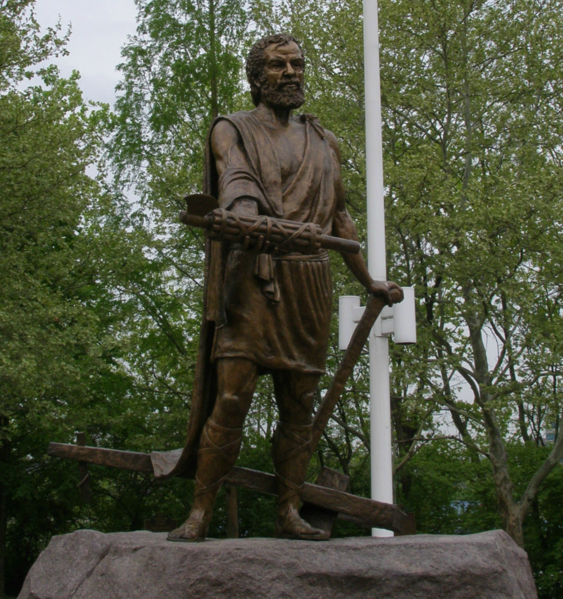
Classical education in antebellum America was intended to form habits of mind as much as to transmit knowledge of ancient languages. At many colleges, competence in Latin and Greek remained an entrance requirement, while further study of classical authors occupied a central place in the prescribed curriculum. The influential Yale Report of 1828 defended this system against demands for more immediately practical instruction by arguing that college should cultivate the full range of a student’s intellectual powers rather than prepare him narrowly for a single occupation. Greek and Latin were valued partly because mastering their grammar required sustained attention, memory, comparison, and precision. Their difficulty was itself treated as educationally useful. Supporters believed that translating ancient texts trained students to recognize distinctions in meaning, follow complex arguments, and impose order upon thought. Classical study also functioned socially. Familiarity with antiquity marked entry into a community of educated men whose members could recognize the same quotations, examples, and historical parallels. A lawyer, minister, editor, professor, or politician who invoked Cicero or Demosthenes was not simply displaying knowledge; he was identifying himself with a tradition of eloquence, judgment, and public leadership.
The classroom methods through which students encountered antiquity encouraged close verbal discipline but also repetition and performance. Students parsed grammar, translated passages aloud, memorized rules, composed Latin or Greek sentences, recited before instructors, and imitated admired rhetorical models. Homer and Virgil could be taught as poets, but also as repositories of courage, loyalty, rage, duty, loss, and the burdens of command. Cicero and Demosthenes demonstrated how language might move an assembly or defend a political order. Sallust, Livy, Tacitus, Xenophon, and Plutarch presented conspiracies, civil conflicts, military reversals, constitutional struggles, and the moral failures of rulers. The distinctions between literary, historical, political, and ethical study were less rigid than they would later become. To translate a speech was also to examine persuasion; to read an ancient life was to judge character; to study the fall of a republic was to consider whether similar dangers threatened the United States.
This education taught students to reason through examples. Ancient history appeared as a vast collection of human types whose virtues and failures could be compared with the conduct of living people. Cincinnatus embodied the citizen who accepted power temporarily and relinquished it willingly. Cato represented austerity, constancy, and republican resistance, although different readers might admire either Cato the Elder’s traditionalism or Cato the Younger’s opposition to Caesar. Cicero could stand for eloquence and constitutional patriotism, but also for indecision and political vanity. Caesar represented military genius, ambition, dictatorship, or necessary order, depending upon the interpreter. Brutus could be praised as a tyrannicide or condemned as an assassin. Alcibiades demonstrated the dangers of brilliance without moral restraint, while the Gracchi could appear as champions of the people or demagogues who opened the republic to violence. Such figures functioned as exempla: memorable cases through which students learned to classify political behavior. The habit was inherently analogical. Instead of asking only what had occurred in Athens or Rome, readers asked who in their own age resembled Pericles, Catiline, Caesar, or Cato. This did not mean that every educated American possessed a sophisticated understanding of ancient political conditions. It meant that classical education encouraged the compression of complicated historical actors into recognizable moral characters. Once compressed, those characters could be applied rapidly and polemically to contemporary disputes.
The influence of antiquity was not confined to elite male colleges. Academies, preparatory schools, female seminaries, private tutors, literary societies, debating clubs, lyceums, libraries, magazines, and inexpensive translations carried classical stories into a wider reading public. Women were often excluded from the full collegiate curriculum, especially its advanced language instruction, but many encountered ancient history, mythology, rhetoric, art, and biography through alternative institutions and private reading. Some used figures such as Cornelia, Portia, Sappho, Minerva, and the women of Greek tragedy to debate education, civic virtue, authorship, motherhood, and women’s intellectual capacity. Free and enslaved African Americans also appropriated antiquity despite the racial barriers surrounding formal education. Black writers and orators could invoke classical civilization both to demonstrate intellectual equality and to expose the hypocrisy of white Americans who praised Greek liberty while maintaining racial slavery. Access remained profoundly unequal, but exclusion did not prevent people outside the traditional college elite from seizing, translating, and redirecting classical materials for their own purposes.
The classical culture Americans absorbed was broad but uneven. A graduate capable of translating Cicero from Latin, a reader familiar with Plutarch in English, a theatergoer who knew the story of Spartacus, and a newspaper subscriber who understood “Caesar” as shorthand for a dictator did not possess the same kind of knowledge. Nevertheless, all could participate at different levels in a shared field of reference. That field was selective. Educational institutions emphasized political and military history, oratory, epic poetry, exemplary biography, and the deeds of prominent men, while giving much less sustained attention to the experiences of women, laborers, enslaved people, foreigners, and conquered populations. Students were often encouraged to identify with senators, commanders, legislators, and statesmen rather than with the people governed, displaced, or exploited by them. Ancient slavery might be treated as a background condition of classical achievement instead of an institution demanding moral scrutiny. Greek and Roman authors could sharpen political judgment while simultaneously reinforcing elite assumptions about who was qualified to exercise it. The classics trained Americans to detect tyranny, corruption, and civic decline, but they did not determine where Americans would find those evils. A Southern slaveholder might see abolitionists as fanatics destroying constitutional order, while an abolitionist might compare the Slave Power to an oligarchy corrupting the republic. Both could believe that antiquity vindicated their diagnosis.
For the generation that confronted secession and civil war, the deepest influence of classical education lay in this habit of arranging contemporary experience into inherited patterns. Politicians and officers did not ordinarily enter the conflict under the literal delusion that they were Achilles, Hector, Caesar, or Leonidas. Their education had done something subtler. It had taught them to interpret leadership through heroic and tragic types, to see political conflict as a test of virtue, and to search the past for precedents that could reveal the meaning of the present. Even Americans without extensive formal schooling inhabited a public culture saturated with republican warnings, ancient names, heroic biographies, and compressed classical analogies. When the Union fractured, Greece and Rome offered no agreed solution. They supplied rival scripts: the small republic resisting empire, the lawful government suppressing faction, the patriot defending liberty, the conspirator destroying constitutional order, the commander sacrificing himself for his people, and the ambitious Caesar rising from civil war. Classical education prepared Americans not to think alike, but to make their disagreements appear as episodes in a historical drama extending back to antiquity.
Slavery and Mastery: The Southern Classical Imagination
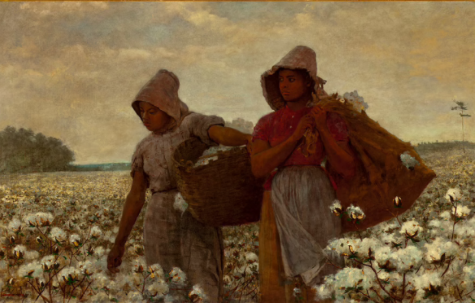
The classical tradition offered slaveholding Southerners a useful historical paradox: the civilizations most admired for republican liberty, philosophy, literature, and civic greatness had also depended upon enslaved labor. Athens and Rome appeared to demonstrate that freedom for citizens could coexist with the coercion of those excluded from citizenship. To defenders of American slavery, this was not an embarrassing contradiction but a precedent. They argued that liberty had never meant the absence of hierarchy and that the political independence of one class had often rested upon the labor of another. Classical antiquity helped some Southern thinkers turn mastery into a qualification for republican citizenship. The independent household patriarch, commanding land, dependents, and enslaved laborers, could be represented as a modern counterpart of the ancient citizen who possessed sufficient property and leisure to cultivate judgment, perform public service, and resist dependence upon employers or the state. Such claims did not merely excuse slavery as an inherited necessity. They made bondage appear foundational to civilization itself.
This vision drew upon a long republican suspicion of economic dependence. From Aristotle through Roman moralists and later republican theorists, political freedom had frequently been associated with control over one’s labor, household, and property. Antebellum slaveholders radicalized that inheritance by treating mastery over others as evidence of their own independence. A man who worked for wages, they maintained, remained vulnerable to employers, markets, and economic insecurity; a planter who owned productive property and enslaved labor supposedly possessed the autonomy required for political virtue. James Henry Hammond’s 1858 “mudsill” speech offered one of the bluntest formulations of this argument. Every civilization, he insisted, required a class that performed its exhausting and degrading labor so that another class could lead social progress, refinement, and government. Hammond invoked Cicero and the alleged universality of hierarchy to present racial slavery as a more honest and stable version of an arrangement concealed by Northern wage labor. George Fitzhugh pushed the argument even further. Rejecting the liberal assumption that freedom should be the natural condition of all adults, he claimed that Northern capitalism subjected workers to a harsher and less responsible form of servitude than Southern slavery. In Cannibals All!, he explicitly compared white Southern citizens to Greek and Roman citizens elevated above a dependent laboring class. The ancient world became evidence not simply that slavery had existed, but that inequality was permanent and that societies acknowledging it openly were more humane than those pretending all people were free.
Yet Southern classicism was never reducible to a single proslavery doctrine. Some writers emphasized Aristotle’s discussion of natural slavery; others appealed more generally to Greek and Roman practice without accepting every ancient philosophical justification. Biblical precedent, racial pseudoscience, paternalist household theory, political economy, constitutional argument, and historical analogy were often blended together. Thomas Roderick Dew, William Harper, John C. Calhoun, Hammond, and Fitzhugh did not agree on every aspect of slavery or on the proper balance between individualism and hierarchy. What united them was their effort to reverse the moral burden of argument. Slavery was no longer to be defended reluctantly as a temporary evil inherited from the past. It was increasingly praised as a “positive good,” a stabilizing institution that protected property, restrained class conflict, disciplined labor, and preserved a ruling population capable of self-government.
Classical imagery also shaped the planter elite’s performance of social authority. Greek Revival houses, columns, porticoes, libraries, classical names, rhetorical education, and the cultivated study of ancient history allowed wealthy slaveholders to portray themselves as guardians of civilization rather than as commercial producers participating in an expanding capitalist economy. They imagined the plantation household as a site of order, responsibility, hospitality, learning, and patriarchal supervision. The planter could appear as a Roman paterfamilias, a country gentleman, a republican magistrate, and a paternal governor whose authority supposedly benefited everyone under his command. This self-image concealed the degree to which plantation wealth depended upon markets, credit, speculation, territorial expansion, forced migration, and the sale of human beings. Cotton planters were not detached philosophers living outside commercial society. They were deeply connected to Atlantic finance and international demand, while the enslaved people whose labor made elite leisure possible experienced surveillance, punishment, family separation, sexual coercion, and the constant possibility of sale. Classical refinement did not stand apart from this violence. It was financed by it. The library, debating society, college education, public office, and neoclassical mansion that signified the master’s cultivated independence rested upon labor extracted from people whom the law denied ownership of their bodies, time, children, and movement.
The planter ideal was also an act of social exaggeration within the white South. Only a minority of white Southern families enslaved people, and an even smaller number belonged to the wealthy planting class capable of approximating the grand image of patrician leisure. Most white Southerners farmed modest holdings, practiced trades, worked for wages, or struggled economically beyond the gates of large plantations. The rhetoric of mastery nevertheless extended political and psychological privileges to white men who owned no enslaved laborers. Racial slavery assured them that, whatever their economic position, they belonged to the citizen population rather than the subordinated caste. Proslavery thinkers could imagine Southern society as broadly republican among white men precisely because Black enslavement established the boundary beneath them. The analogy with Greece and Rome helped transform exclusion into solidarity: as ancient citizens had possessed rights denied to enslaved people and foreigners, white Southerners were invited to understand racial privilege as the foundation of political equality among themselves.
The analogy required extensive historical distortion. Slavery in Greece and Rome had been violent, exploitative, and fundamental to social and economic life, but it was not identical to the racial chattel slavery that developed in the modern Atlantic world. Ancient enslavement arose through warfare, piracy, birth, sale, abandonment, and punishment; enslaved populations could include people from many regions and ethnic backgrounds. American slavery increasingly treated African descent as the visible and inheritable marker of permanent servitude, enforced through statutes that linked the status of children to that of enslaved mothers and constructed a rigid racial boundary between presumed freedom and presumed bondage. Manumission existed in both systems, but ancient practices of emancipation and incorporation differed significantly from the narrowing possibilities available to enslaved African Americans in the nineteenth-century South. Southern apologists selected what served them from antiquity (the presence of slavery, the political exclusion of laborers, the authority of household heads) while ignoring differences that weakened their comparison. They also treated the accomplishments of Greek and Roman civilization as achievements made possible by masters, minimizing the skills, knowledge, resistance, and compulsory labor of the enslaved people who sustained those societies.
Antislavery writers attacked precisely this effort to make oppression respectable through history. Frederick Douglass exposed the obscene contradiction between American celebrations of liberty and the realities of the slave system, while abolitionists repeatedly argued that the age or universality of an injustice could not establish its morality. Classical learning itself could be turned against the slaveholders. Rome furnished examples not only of aristocratic mastery but of corruption, servile war, luxury, conquest, and republican decline. The South’s self-proclaimed patricians could be represented as an oligarchy, a “Slave Power,” whose domination of national institutions threatened the liberty of free citizens as well as the humanity of the enslaved. By the eve of the Civil War, Southern classical identity had become both a defense and an accusation. Slaveholders looked to antiquity and saw cultured citizens supported by a subordinate laboring order; their opponents saw a ruling caste mistaking domination for virtue and leading the republic toward catastrophe. The classical imagination did not cause Southern slavery, which was maintained by profit, law, racial power, and physical force. It helped masters interpret that system as civilization, convert privilege into public virtue, and present the defense of human property as the defense of republican liberty.
Secession Rebellion and Ancient Civil War
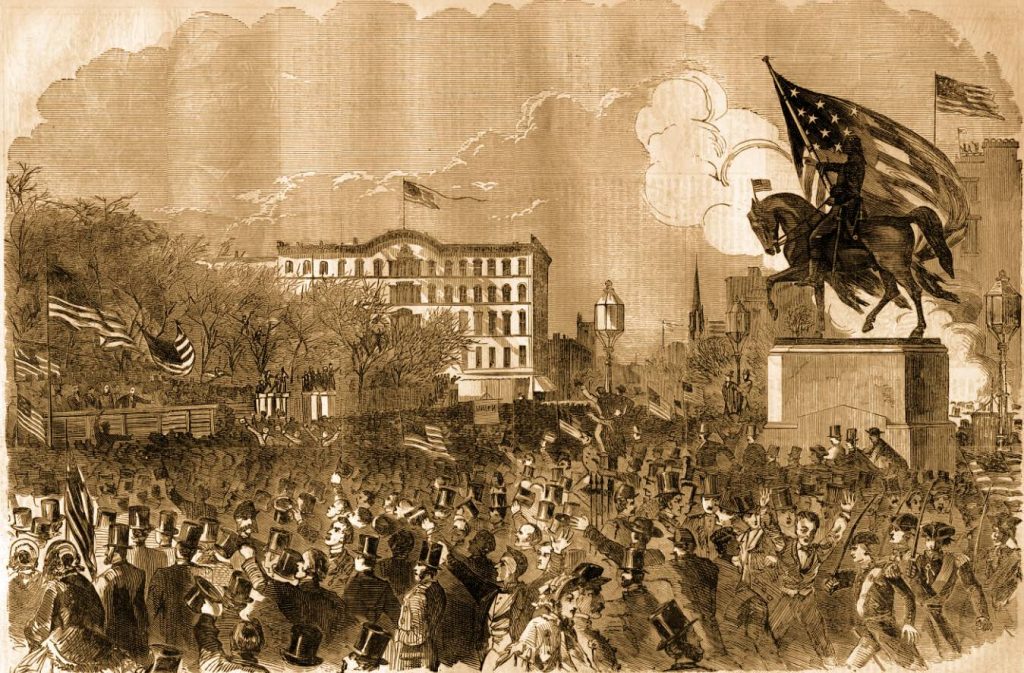
The secession crisis forced Americans to decide which historical pattern they believed they were reenacting. Confederates described their withdrawal from the Union as a second American Revolution, an act of political self-defense by sovereign communities resisting an oppressive central authority. Unionists answered that the Revolution had created a nation whose constitutional government could not be dissolved whenever an electoral minority disliked the result. To them, secession resembled not 1776 but the conspiracies, factions, and civil wars that had destroyed ancient republics. Both interpretations drew upon a political culture trained to locate present events within inherited narratives. The dispute was larger than a technical disagreement over federalism. It concerned whether the seceding states were colonies resisting an empire, republics withdrawing from a federation, or rebellious provinces attempting to destroy a lawful nation. The labels chosen by each side, revolution, independence, secession, rebellion, insurrection, carried historical judgments before the first major battle had been fought.
Confederate leaders worked carefully to claim the revolutionary legitimacy of the founding generation. South Carolina’s secession declaration appealed to the compact theory of the Constitution and compared the state’s position to that of the colonies when Britain violated its obligations. Jefferson Davis’s inaugural address portrayed separation as a peaceful exercise of an inherent political right rather than an aggressive revolution. He insisted that the Confederacy sought only to preserve inherited constitutional principles against a government that had abandoned them. Alexander H. Stephens similarly argued that the new Confederate Constitution corrected defects in the old system while preserving its essential republican structure. This rhetoric depended upon presenting the states as the primary political communities from which federal authority originated. If the Union was a compact among sovereign states, then a state whose partners had allegedly broken that compact could reclaim the powers it had delegated. The revolutionary analogy allowed Confederates to occupy the role of Washington’s patriots: a smaller people, attached to local liberty, resisting concentrated power. It also transformed Abraham Lincoln’s election into evidence of sectional domination. Because Lincoln had won without carrying the slave states, secessionists represented his administration as the instrument of a hostile Northern majority rather than the legitimate result of the constitutional process they had previously accepted.
Classical imagery reinforced this portrayal of honorable resistance. The Confederacy could be imagined as a league of independent republics resembling the Greek city-states, while the Union became an empire attempting to absorb communities entitled to govern themselves. The military imbalance between the sections made comparisons with small ancient peoples resisting superior forces especially attractive. Thermopylae offered an enduring image of disciplined defenders sacrificing themselves against overwhelming numbers, and republican Rome furnished figures who preferred death to submission. Such analogies did not need to be historically exact to be politically effective. They converted weakness into virtue: the smaller power could claim moral grandeur precisely because its prospects were uncertain.
Yet the secessionists’ own documents reveal what the revolutionary abstraction concealed. Mississippi declared that its position was “thoroughly identified with the institution of slavery,” while Georgia and Texas offered extensive complaints concerning Northern hostility to slaveholding rights, the recovery of fugitives, and the future of slavery in the territories. South Carolina concentrated more heavily upon alleged violations of the constitutional compact, but its case likewise centered upon Northern resistance to obligations protecting slavery. Stephens’s “Cornerstone” speech made the ideological foundation of the new government unusually explicit by declaring racial inequality and Black subordination to be its organizing principle. Secessionists did possess a developed constitutional argument concerning state sovereignty, but that argument cannot be detached from the institution it was employed to protect. The immediate crisis followed the election of a president committed to preventing slavery’s expansion, not to abolishing it where it already existed. For the Lower South, even that limitation threatened the long-term balance of political power, the security of slave property, and the claim that slavery was a legitimate national institution rather than a regional system destined for containment. Confederates invoked universal principles of self-government to defend a social order that denied self-government to millions of enslaved people. Their revolution claimed the language of 1776 while rejecting the egalitarian implications that antislavery Americans increasingly drew from the Declaration of Independence.
Unionists reversed the entire structure of the Confederate analogy. Lincoln’s First Inaugural Address denied that the Constitution was merely a temporary agreement among states. The Union, he argued, was older than the Constitution and had been made more perfect, not created from nothing, by that document. No government could survive if a dissatisfied minority possessed a unilateral right to dissolve it. Secession was legally void, and federal efforts to maintain authority were not invasions of an independent nation but acts necessary to preserve constitutional government. This interpretation drew strength from classical warnings about faction. Greek leagues had failed when their members placed local ambition above common security; the Roman Republic had descended into civil violence when political actors substituted force for lawful competition. From the Union perspective, the secessionists resembled not the American revolutionaries but aristocratic conspirators who had rejected an election because they feared losing control of the national government. Republican liberty required obedience to constitutional outcomes as well as resistance to tyranny. Otherwise, every electoral defeat could become the pretext for disunion.
The accusation of aristocratic conspiracy had deep roots in Northern antislavery politics. Critics of the “Slave Power” had long argued that a relatively small planter class manipulated federal institutions, expanded slavery through territorial conquest, suppressed free expression in the South, and demanded national protection for human bondage. The secession winter seemed to confirm this diagnosis. State conventions often moved rapidly, sometimes before popular referenda could be held, and wealthy slaveholders occupied prominent positions within the movement. Unionists could consequently cast the Confederacy as an oligarchy masquerading as a republic, a political order in which white democracy served the interests of a master class. Ancient analogy sharpened this charge. The slaveholding elite could be compared to patricians defending hereditary privilege, while secession itself resembled the work of ambitious men who destroyed republics after failing to control them. Lincoln carefully distinguished the Southern population from those he regarded as its political misleaders, preserving the possibility that ordinary white Southerners might return to their former allegiance. Yet this distinction also simplified the depth of popular support for slavery, white supremacy, and Confederate independence. Secession was led by political elites, but it could not have produced a durable wartime state without broader participation from white Southerners who understood the Confederacy through overlapping commitments to slavery, local loyalty, racial order, masculine honor, and defense of home.
The coming of war made the historical categories still more unstable. Confederates claimed that Lincoln’s decision to provision Fort Sumter forced them to defend their territory, while the administration maintained that federal property could not be surrendered to an unlawful rebellion. After the Confederate bombardment and Lincoln’s call for troops, four Upper South states seceded, describing coercion itself as proof that the Union had become tyrannical. What one side called suppression, the other called invasion; what one called rebellion, the other called national independence. The American crisis acquired the structure of an ancient civil war in which each claimant insisted that it represented lawful republican order. There was no neutral Rome or Greece available to settle the dispute. Antiquity supplied roles, warnings, and symbols, but Americans assigned those roles according to commitments already formed around constitutional authority, slavery, race, territory, and political power. Historical analogy clarified the stakes while also disguising them. It allowed Confederates to present the preservation of slavery as a struggle for liberty and Unionists to describe restoration of the nation as a defense of constitutional government before many had accepted emancipation as a war aim.
The deepest irony was that both sections feared the same historical catastrophe: the death of the republic. Confederates believed centralized power and sectional rule had already destroyed the constitutional Union, leaving secession as the only republican remedy. Unionists believed secession itself would prove that popular government was incapable of surviving electoral conflict. Each side entered the war convinced that submission would betray the founding generation and repeat the failures of antiquity. The question was not whether Americans would think through revolution and ancient civil war, but which side would successfully claim the patriot, which would be condemned as the rebel, and whether a republic built upon slavery could survive its own appeal to liberty.
Two Republics at War: Liberty and the Language of Civilization

Once secession became war, Unionists and Confederates no longer argued only about the constitutional legality of withdrawal. Each government claimed to represent the authentic American republic, and each described military resistance as necessary to prevent liberty from being extinguished. The resulting conflict was fought between two political communities that drew legitimacy from many of the same sources: the Revolution, the Constitution, popular government, Christianity, classical republicanism, and the inherited language of civic sacrifice. Neither side willingly conceded the title of rebel. Confederates called themselves a free people defending independence against invasion, while Unionists insisted that they were defending lawful government against an armed minority that had rejected the result of a national election. This rivalry gave the war a peculiar ideological symmetry. Both sections praised constitutional liberty, accused the other of despotism, honored the citizen-soldier, and claimed that defeat would inaugurate an age of tyranny. Yet the apparent symmetry concealed a decisive difference. The Confederate republic had been created to secure a slaveholding order threatened by political containment, while the Union initially fought to preserve a constitutional nation whose relationship to slavery remained deeply compromised and uncertain.
For the Lincoln administration, the war became a test of whether representative government could survive organized rejection of electoral defeat. In his message to Congress on July 4, 1861, Lincoln presented the rebellion as a challenge to popular government everywhere. If a minority could dissolve the nation whenever it lost an election, constitutional democracy would possess no durable authority. Ballots would be effective only when all parties anticipated victory; once defeated, political factions could appeal to arms and destroy the system that had denied them power. The Union cause acquired an international and historical dimension. Americans were not merely defending federal property or restoring administrative control over seceded states. They were demonstrating whether a government founded upon consent could defend itself without abandoning its republican character. The revolutions of 1848, the persistence of European monarchy, and contemporary movements for national self-determination encouraged Northern speakers to imagine the United States as an experiment watched by the world. Union defeat would supposedly prove that republics were inherently fragile, while victory would demonstrate that free institutions could survive conspiracy, civil conflict, and military necessity. This argument did not require every Union soldier to possess an elaborate theory of democratic nationalism. It condensed the war into a proposition readily expressed in speeches, newspapers, letters, recruitment appeals, and public ceremonies: the Union represented government by law, whereas secession represented government by force.
Confederate nationalism inverted that interpretation. Its advocates maintained that the old Union had already ceased to function as a voluntary compact among equal states and had become the instrument of a hostile sectional majority. From this perspective, resistance to Washington was not rejection of self-government but its preservation. Confederate soldiers were told that they stood between their homes and an invading army whose victory would bring military occupation, racial upheaval, confiscation, and political servitude. The language of defense was powerful because it translated an abstract constitutional argument into immediate obligations to household, kin, locality, and state. Men who knew little about compact theory could understand the demand to defend families and communities from armed outsiders. As Union armies penetrated Confederate territory, destroyed property, liberated enslaved people, and disrupted established authority, the original act of secession could recede behind the experience of invasion. Confederate nationalism thereby converted a rebellion initiated to protect slavery into a war that many white Southerners experienced and remembered as defense of home. The distinction between cause and motivation became increasingly important: slavery and its political future had driven secession, but individual Confederates could fight from combinations of racial loyalty, patriotism, comradeship, coercion, masculine honor, local attachment, and fear of what Union victory would bring.
Both republics situated their claims within a wider language of civilization. Nineteenth-century Americans commonly treated civilization as a hierarchy distinguishing ordered, Christian, self-governing societies from peoples described as barbarous, dependent, degraded, or incapable of political liberty. Wartime rhetoric weaponized these categories. Northerners portrayed secession as the work of an anachronistic slaveholding aristocracy that had rejected free labor, democratic elections, and national progress. Confederates described Northern society as materialistic, industrial, irreligious, socially disordered, and vulnerable to class conflict. Each section claimed refinement and moral order for itself while associating the enemy with corruption or savagery. Reports of battlefield atrocities, prison suffering, guerrilla warfare, property destruction, and mistreatment of civilians reinforced these accusations. Union occupation could be depicted in the South as the advance of a barbarian host; Confederate treatment of Black soldiers and Union prisoners could be presented in the North as evidence that slavery had brutalized Southern society. The language of civilization elevated the stakes of military conduct, but it also licensed cruelty. Once enemies were imagined as destroyers of law, family, Christianity, or human progress, harsh measures could be defended as necessary responses to an opponent who had placed himself outside the moral community.
The Confederate claim to civilization depended most directly upon racial mastery. Its political order promised republican freedom to white citizens while identifying the enslavement of Black people as compatible with, and even essential to, social stability. Confederate leaders argued that racial hierarchy prevented the class conflict they associated with Northern wage labor and European revolution. White equality could flourish, they maintained, because a permanent enslaved caste performed the labor upon which political independence rested. This was the wartime extension of the antebellum planter ideal: the South represented not merely a regional economy but a superior civilization founded upon hierarchy, household government, agricultural virtue, and racial control. Enslaved people shattered that self-description by refusing the passivity assigned to them. They fled to Union lines, withheld labor, guided federal troops, supplied intelligence, protected relatives, negotiated with military authorities, and pressed the United States toward emancipation. Their movement revealed that the Confederacy’s ordered civilization was maintained not by consent or paternal harmony but by surveillance, law, coercion, and military power. Confederate authorities understood the danger clearly. Every enslaved person who escaped weakened production, challenged white authority, and demonstrated that the people supposedly protected by slavery were willing to risk death to leave it.
The Union’s own appeal to civilization was also compromised by slavery and racism. During the first stage of the war, many white Northerners insisted that they fought for the Union rather than abolition, and Lincoln repeatedly moved more cautiously than antislavery activists demanded. Federal policy initially reflected the fear that direct action against slavery would alienate loyal slave states, divide Northern opinion, and transform the conflict into a racial revolution for which much of the white public was unprepared. Yet military events and Black initiative made the separation of Union from emancipation increasingly untenable. Enslaved labor sustained Confederate armies, fortifications, transportation, agriculture, and households; striking at slavery became a military as well as a moral necessity. The Emancipation Proclamation altered the public meaning of the war by linking restoration of the Union to the destruction of slavery in the rebellious states and authorizing the enlistment of Black men in federal service. Nearly 180,000 African American soldiers eventually served in the United States Army, making freedom something defended and enacted by Black military participation rather than bestowed solely by white authority. Their service challenged Confederate claims that African Americans were naturally dependent and forced the Union to confront the contradiction between a war for republican government and the exclusion of Black people from full citizenship. That confrontation remained incomplete. Black soldiers endured unequal pay, discriminatory assignments, violence upon capture, and pervasive white racism, while emancipation did not guarantee political or social equality. Nevertheless, the presence of armed Black men in United States uniforms fundamentally altered the relationship between Union, liberty, and civilization.
The ideological struggle between the two republics cannot be reduced to a contest between identical nationalisms. Both sides used the language of liberty, tyranny, sacrifice, and civilization, but they attached those terms to different political orders. Confederates defined liberty through the independence of states and white citizens within a society protected by racial slavery. Unionists initially defined liberty more narrowly through constitutional continuity and majority rule, then increasingly connected national survival to emancipation. Wartime experience exposed the instability of both positions. The Confederacy could not defend white self-government without intensifying coercion over enslaved people, dissenters, deserters, and reluctant civilians. The Union could not destroy the rebellion without expanding federal power, occupying Southern territory, emancipating enslaved people, and reconsidering who belonged within the political nation. Each government changed as it fought to preserve its conception of republican order. The language of civilization did not simply describe these transformations. It justified conscription, taxation, emancipation, repression, sacrifice, and increasingly destructive warfare by convincing Americans that more than territory was at stake. The victorious republic would determine whether the war entered history as the suppression of a rebellion, the defeat of an invading empire, the destruction of slavery, or the death and rebirth of American liberty.
Homeric Battle and the Experience of the Common Soldier

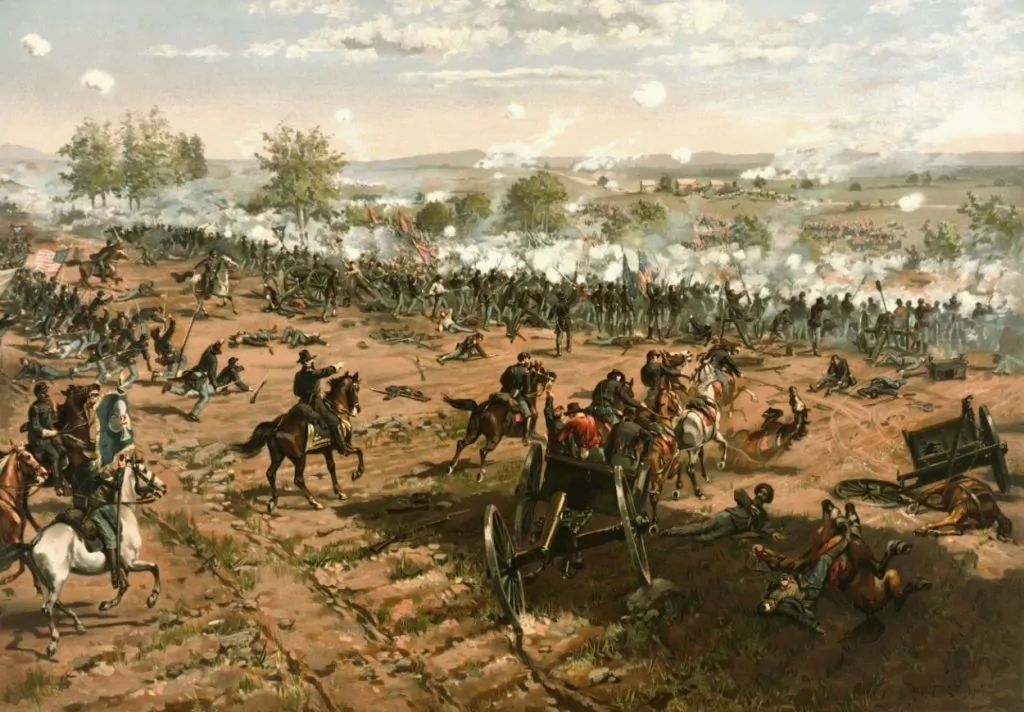
Americans entered the Civil War with a vocabulary of battle shaped partly by classical epic, romantic literature, military biography, and the memory of earlier wars. Public speeches and newspapers praised courage, honor, sacrifice, and martial glory, while officers educated in the classics could describe commanders and armies through comparisons with Achilles, Hector, Leonidas, Caesar, or the legions of Rome. Homeric language was well-suited to the opening expectations of the conflict. It presented war as a test of individual character in which brave men confronted danger before the eyes of comrades and posterity. Regimental banners, martial music, public send-offs, and patriotic ceremonies reinforced the belief that battle would reveal courage and bind soldiers to a cause larger than themselves. Yet the resemblance to ancient epic was always selective. Civil War soldiers did not usually meet enemies in individualized contests between named champions. They advanced in formations, fired into smoke, obeyed commands they often could not understand, and faced death from men they rarely saw clearly. The heroic model remained culturally powerful because it organized expectations, but the actual battlefield fragmented the very kind of personal combat upon which epic recognition depended.
The experience of battle was defined as much by confusion as by courage. Smoke from black powder obscured fields within minutes, orders disappeared beneath artillery and musket fire, formations broke against fences and uneven ground, and soldiers frequently lost contact with officers or neighboring units. Men remembered the roar of cannon, the peculiar tearing sound of projectiles, the cries of wounded soldiers, and the instinctive search for any depression or obstruction that might provide cover. Some fought with remarkable steadiness; others fired without aiming, dropped behind the line, assisted wounded comrades, or fled when discipline collapsed. These responses did not divide neatly into heroic bravery and disgraceful cowardice. A soldier might panic in one engagement and stand firm in another, while men who dreaded battle could nevertheless remain because comradeship, shame, duty, or the momentum of the regiment prevented escape. The heroic language of public culture emphasized decisive moments of courage, but soldiers’ letters and memoirs reveal a more unstable emotional world in which terror, numbness, excitement, exhaustion, loyalty, and self-preservation existed together. Modern weapons intensified the disparity between romantic expectation and physical reality, although the Civil War should not be reduced to a simple story of antiquated tactics confronting revolutionary rifles. Rifled muskets possessed greater potential range and accuracy than smoothbores, but smoke, terrain, limited training, battlefield stress, and the difficulty of estimating distance often reduced their practical effectiveness. Artillery, close-range volleys, field fortifications, and repeated infantry assaults nevertheless produced wounds of terrible severity. Minié balls shattered bone and carried dirt and cloth into tissue; amputations became common responses to injuries that could not otherwise be treated; and soldiers wounded between the lines might remain exposed for hours or days. Disease killed even more men than combat, transforming camps and hospitals into major theaters of suffering. The physical destruction of military bodies challenged the ideal of the beautiful heroic death. Ancient epic had never concealed gore, but it usually attached wounds to identifiable warriors whose deaths possessed narrative importance. Civil War killing often appeared anonymous and arbitrary. A projectile could remove a soldier from history before he had fired a shot, leaving comrades to impose meaning upon an event that possessed no visible moral logic.
Comradeship became one of the most important means through which ordinary soldiers preserved a heroic interpretation of war without denying its horror. Men fought beside relatives, neighbors, and friends recruited from the same communities, and their conduct mattered to people whose judgment they valued. The regiment created an intimate moral audience. Soldiers feared not only death but failure before comrades, and many explained their endurance by referring less to abstract ideology than to the men standing beside them. Recovering the wounded, carrying water under fire, protecting a fallen flag, refusing to abandon a position, or remaining with a dying friend could become acts of heroism as meaningful as killing the enemy. These experiences had Homeric resonances because the Iliad also situated honor within relationships among warriors and treated the possession, recovery, and mourning of bodies as central obligations. Civil War soldiers and their communities likewise struggled over the fate of the dead. Identification, burial, notification of relatives, preservation of personal effects, and later reinterment helped restore individuality to bodies that mass warfare threatened to erase. The heroic soldier was created not only during the charge but through the labor of comrades, nurses, chaplains, families, undertakers, and memorialists who reconstructed a meaningful death from physical devastation.
The mythology of battlefield courage did not merely falsify soldiers’ experiences; it selected certain experiences and made them socially bearable. Veterans could remember endurance, loyalty, and sacrifice while suppressing panic, mutilation, purposeless death, and anger at incompetent leadership. Families could imagine sons and husbands dying peacefully for Union, independence, emancipation, home, or comrades even when the circumstances of death were unknown or horrifying. Commanders and governments could use the same language more dangerously, transforming failed assaults and avoidable losses into demonstrations of valor. The common soldier stood at the intersection of lived experience and public mythology. His war consisted of marching, hunger, boredom, illness, obedience, fear, friendship, violence, and occasional moments of extraordinary courage; the remembered war rearranged those elements into stories of tested manhood and collective sacrifice. Homeric forms survived because they gave names to loyalty, rage, grief, honor, and the duty owed to the dead. They became deceptive when they made slaughter appear inherently ennobling or detached courage from the political cause it served. Union and Confederate soldiers could display equal bravery on the same field, but moral equivalence between their courage did not establish equivalence between the governments, institutions, or futures for which they fought.
African American Exodus: Emancipation and the Promised Land

Long before Abraham Lincoln became associated with Moses, enslaved and free African Americans had interpreted bondage through the biblical story of Israel in Egypt. Pharaoh represented arbitrary mastery; Egypt became a language for slavery; the wilderness signified danger and uncertainty; and the Promised Land named a freedom that was both spiritual and material. These associations developed through sermons, prayer meetings, biblical instruction, oral tradition, spirituals, abolitionist speeches, and the broader religious culture of Black communities. Exodus was powerful because it did not describe suffering as permanent or divinely ordained. Enslavement appeared as a condition condemned by God, while deliverance became part of sacred history. The narrative also placed the enslaved within a chosen people rather than outside civilization, reversing the racial theology through which white Christians defended bondage. Black interpreters did not simply borrow a story created by others. They made Exodus into a political language capable of explaining flight, resistance, communal responsibility, judgment upon slaveholders, and the expectation that liberation would require both divine justice and human action.
The coming of war gave this inherited language an immediate geography. Union lines could become a provisional Jordan, but reaching them was dangerous and uncertain. Enslaved people fled plantations, crossed rivers, traveled at night, concealed relatives, exchanged intelligence, and approached federal forces whose policies toward fugitives were initially inconsistent. Some officers returned escapees to slaveholders; others sheltered them, employed them, or treated them as “contraband” of war. The term contraband reduced people to confiscated property even as it opened a practical route away from enslavement. By moving toward Union armies, fugitives forced military commanders and federal officials to confront a question that national policy had tried to postpone: whether a war against the Confederacy could be fought while respecting Confederate claims to human property.
Flight was not a passive response to emancipation policy. It helped create the conditions that made emancipation increasingly unavoidable. Enslaved labor sustained Confederate agriculture, transportation, fortifications, households, and military logistics. Every person who left a plantation weakened the labor system upon which the Confederate war effort depended. Fugitives provided Union forces with knowledge of roads, rivers, local geography, Confederate movements, and white loyalties. Their presence in camps converted slavery from an abstract political issue into a daily military reality. Federal commanders needed workers, guides, cooks, laundresses, teamsters, nurses, and laborers, while escaped families required food, shelter, protection, and legal recognition. The movement of enslaved people toward Union forces joined self-liberation to military necessity. Emancipation emerged not solely from presidential deliberation in Washington but from thousands of local decisions made by people who refused to remain where the law said they belonged.
The Emancipation Proclamation gave national authority to a transformation already underway, though its legal reach was limited. It declared enslaved people free in territories still in rebellion, left slavery untouched in loyal slave states, and depended upon Union military success for enforcement. Yet it fundamentally altered the war’s declared purpose and authorized the recruitment of Black soldiers. Frederick Douglass understood enlistment as a decisive claim upon citizenship. In urging Black men to join the Union Army, he argued that military service would make it harder for the nation to deny them political membership after the war. Nearly 180,000 African American men served in the United States Army, with additional thousands serving in the Navy. Their uniforms carried enormous symbolic weight. A society that had classified Black men as dependent property now armed them in defense of the republic. Their service contradicted Confederate claims about racial incapacity and challenged white Northerners who wished to preserve the Union without accepting Black equality. Black military service also gave the Exodus story a more complex structure. Liberation was not simply the moment when a white deliverer announced freedom; it became an armed struggle in which formerly enslaved and free Black men fought to destroy the power that had enslaved their people. At Port Hudson, Milliken’s Bend, Fort Wagner, New Market Heights, and elsewhere, Black troops demonstrated courage under conditions made perilous by Confederate refusal to recognize them as legitimate soldiers. Captured Black troops faced enslavement or execution, and the massacre at Fort Pillow revealed the murderous consequences of Confederate racial policy. Black soldiers also endured discrimination within the Union Army, including unequal pay, inferior equipment, labor assignments, and exclusion from many commands. Their families remained vulnerable to hunger, disease, displacement, and violence. The road out of Egypt passed through institutions still shaped by white supremacy. Military service created new claims to manhood and citizenship, but it did not erase the racial hierarchy of the government under whose flag Black men served.
The association of Lincoln with Moses emerged from this wider culture of deliverance. Emancipated people, Black preachers, abolitionists, and later commemorators could portray him as the leader who brought the nation out of slavery and died before the work of freedom was complete. His assassination made the comparison compelling: like Moses, Lincoln did not live to enter the future his actions had helped make possible. Yet the analogy risked placing too much agency in a single white statesman. Lincoln’s policies changed under the pressure of war, antislavery activism, military necessity, congressional action, and the movement of enslaved people themselves. Black Americans had been invoking Exodus before Lincoln adopted emancipation as a war measure, and they continued to interpret freedom through that narrative after his death. In their hands, Moses was not always one individual. Deliverance could be collective, enacted by fugitives, soldiers, families, teachers, ministers, laborers, and organizers whose combined actions pushed the nation beyond its original war aims.
Nor did Union victory amount to uncomplicated arrival in the Promised Land. Freedom brought legal transformation, family reunification, mobility, schooling, religious independence, political organization, and the possibility of landownership, but it also brought hunger, disease, labor coercion, racial violence, and federal abandonment. Camps of formerly enslaved people suffered devastating mortality. Employers and officials attempted to force freedpeople into labor arrangements that reproduced elements of plantation discipline. The failure of land redistribution left many families economically dependent upon former slaveholders, while the retreat from Reconstruction exposed Black communities to disfranchisement, terror, and segregation. Exodus remained powerful precisely because the biblical journey did not end at the shoreline of the Red Sea. Liberation was followed by wilderness, conflict, lawmaking, memory, and the struggle to construct a new social order. African American interpretations of the Civil War challenged national myths that treated emancipation as a completed gift. They presented freedom as something seized, defended, and repeatedly endangered, a promised land glimpsed through military victory but never secured by victory alone.
Lincoln’s Language of Sacrifice and National Rebirth
Abraham Lincoln did not enter the Civil War with a complete doctrine of national sacrifice or emancipation. In 1861, his public argument remained centered on constitutional continuity, majority rule, and preservation of the Union. He denied that secession had legally dissolved the nation and insisted that representative government could not survive if an electoral minority could overturn defeat by force. Slavery caused the sectional crisis, but Lincoln initially separated the immediate goal of restoring federal authority from direct interference with slavery where it already existed. That distinction reflected constitutional caution, concern for the loyal slave states, widespread Northern racism, and uncertainty about how much transformation the public would accept.
The prolonged war gradually made that limited language inadequate. Enslaved people fled to Union lines, weakening Confederate labor systems and forcing federal commanders to confront slavery as a practical military question. Congress adopted increasingly aggressive confiscation measures, abolitionists demanded a war openly directed against bondage, and Union casualties rose beyond anything most Americans had imagined possible. Lincoln’s preliminary and final emancipation proclamations transformed the conflict by declaring freedom for enslaved people in territories still in rebellion and authorizing Black military enlistment. The proclamations did not abolish slavery everywhere, nor did they arise from presidential will alone. They were products of military necessity, antislavery pressure, congressional action, Black self-emancipation, and Lincoln’s changing understanding of what Union victory required. By 1863, restoration of the nation could no longer mean a simple return to the political order that had existed before Fort Sumter. The old Union had contained slavery and repeatedly compromised with it. A war that destroyed slavery would preserve the republic only by remaking it.
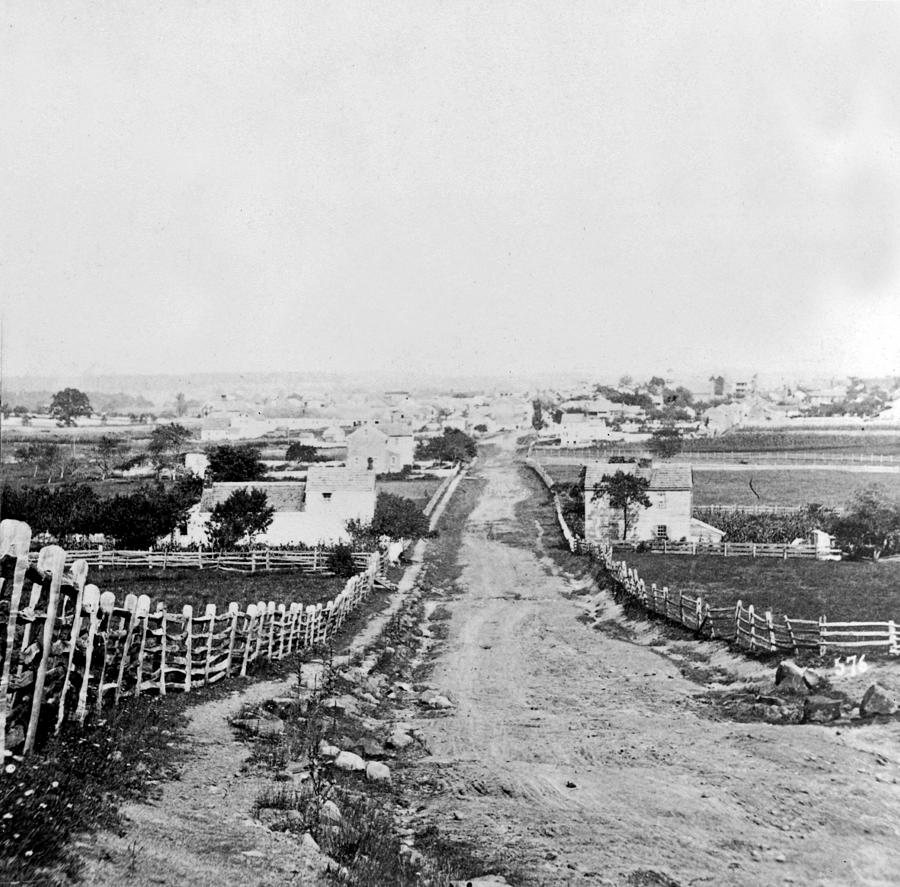
Lincoln gave this transformed Union its most enduring verbal form in the Gettysburg Address on November 19, 1863. Rather than beginning with the Constitution, he located the nation’s moral origin in the Declaration of Independence and its proposition that all people were created equal. The United States became a nation “conceived in Liberty,” now undergoing a test of whether government founded on such principles could endure. The cemetery at Gettysburg allowed Lincoln to join battlefield death to political obligation. The fallen had already consecrated the ground through their actions, but their deaths did not explain themselves. Meaning depended upon the response of the living, who were called to complete the “unfinished work” for which the soldiers had given their lives. Sacrifice imposed a debt rather than guaranteeing redemption.
The address’s promise of a “new birth of freedom” was deliberately more expansive than a call to restore the Union as it had been. Birth suggested continuity and rupture at once. The nation had been brought forth in 1776, but its founding commitment to equality had remained compromised by slavery. The Civil War created the possibility of another beginning in which the egalitarian claim of the Declaration might acquire a fuller political meaning. This language allowed Lincoln to preserve reverence for the founding generation while also judging the republic they had created. He did not describe the founders’ work as worthless because it had tolerated bondage, nor did he treat their principles as already fulfilled. Instead, equality became a proposition that placed the nation under continuing obligation. Emancipation and Black military service made that obligation unavoidable. African American soldiers were not merely beneficiaries of national rebirth; they became participants in the defense and reconstruction of the republic. Their service connected freedom to citizenship, sacrifice, and national belonging, even while unequal pay, discrimination, and racist violence demonstrated how incomplete the transformation remained. Gettysburg offered hope without closure. The dead might inspire a freer republic, but only future political action could determine whether the nation would honor them through equality or reduce their sacrifice to patriotic memory.
Lincoln’s Second Inaugural Address of March 4, 1865 introduced a harsher language of judgment. With Confederate defeat approaching, he declined to celebrate the Union as the innocent instrument of Providence. Both North and South had read the same Bible, prayed to the same God, and asked for divine assistance against the other. Lincoln identified slavery as the offense for which the nation might be suffering, but he did not confine guilt entirely to the seceded states. The wealth accumulated through generations of uncompensated labor had implicated the American nation more broadly. His suggestion that blood drawn by the sword might answer blood drawn by the lash did not present warfare as a cleansing ritual that automatically redeemed the country. It raised the disturbing possibility that the violence of slavery had produced a historical and providential reckoning whose scale no human calculation could control.
This interpretation reflected Lincoln’s growing reluctance to claim simple knowledge of divine intention. In his private “Meditation on the Divine Will,” probably written in 1862, he had reasoned that God could not favor the incompatible purposes of both combatants and might instead be using the war to accomplish ends neither side initially intended. By 1865, emancipation had become one such unforeseen result. The Union had begun the conflict seeking restoration, while the Confederacy had fought for independence and the protection of slavery; the war was ending with Union preserved and constitutional abolition approaching. Yet Lincoln resisted converting victory into proof of Northern righteousness. The nation could act against slavery while remaining morally accountable for having tolerated and profited from it. Sacrifice, judgment, and rebirth remained in tension. Gettysburg imagined that the dead might help call a freer republic into existence, while the Second Inaugural warned that neither victory nor abolition could erase the suffering through which that future had been reached. Lincoln’s wartime language gave the Union a regenerative meaning, but it also denied Americans the comfort of imagining national rebirth as innocence restored.
Martyrdom and Apotheosis: The Making of the Mythic Lincoln

Lincoln’s assassination on April 14, 1865 transformed the meaning of his presidency almost overnight. He had remained a deeply contested figure throughout the war hated by Confederates, denounced by Copperheads, criticized by abolitionists for moving too slowly, and distrusted by white Americans who feared emancipation and racial change. His death, coming only days after Robert E. Lee’s surrender at Appomattox, displaced those conflicts into a national drama of victory interrupted by martyrdom. The president who had guided the Union through rebellion now appeared to have died at the moment of deliverance. Assassination gave his life a providential structure: suffering, perseverance, emancipation, triumph, and sacrifice. It did not eliminate political disagreement, but it made open hostility toward Lincoln more difficult in much of the North and allowed grief to accelerate the conversion of a controversial politician into a sacred national figure. The timing of his death was central to the mythology. Lincoln did not live to preside over Reconstruction, defend a detailed postwar settlement, or accumulate responsibility for the failures that followed. He died at the threshold of peace, leaving memory to imagine what he might have done.
The funeral ceremonies that carried Lincoln’s body from Washington to Springfield turned private bereavement into national ritual. His remains passed through major Northern cities, retracing part of the route he had taken to the presidency in 1861. Crowds gathered at stations, public buildings, churches, and streets transformed by black drapery, flags, torches, flowers, military escorts, and tolling bells. The coffin became the center of a mobile civic liturgy through which millions could participate in mourning, even if only by standing beside the railway in silence. Ministers interpreted Lincoln’s death through Christian narratives of sacrifice, providence, and resurrection, while newspapers described a people united by grief. Such unity was partly ceremonial rather than political. African Americans mourned the man whose administration had issued the Emancipation Proclamation, but they also feared that his death would weaken federal commitment to freedom. White Northerners could honor Lincoln as the savior of the Union without embracing racial equality. The funeral created a shared emotional language while leaving unresolved what precisely the martyr had died to accomplish. For some, he had preserved the constitutional nation; for others, he had destroyed slavery; for still others, he represented mercy toward the defeated South. The flexibility of the symbol helped make it powerful.
Biblical comparison quickly supplied Lincoln with his most durable sacred role. He became an American Moses who had led enslaved people toward freedom but died before entering the promised land of reunion and Reconstruction. The analogy drew strength from both Lincoln’s death and the incompleteness of emancipation. Moses could symbolize deliverance without implying that liberation had been fully secured. Yet the comparison also concentrated historical agency in the person of the president, making emancipation appear as the achievement of a benevolent white liberator rather than the result of enslaved people’s flight, Black military service, abolitionist agitation, congressional legislation, and Union victory. Frederick Douglass would later praise Lincoln while insisting upon a more complicated judgment: he recognized the president’s caution, his responsiveness to white public opinion, and the distance between Lincoln’s priorities and those of Black Americans. The Moses myth was both an expression of genuine gratitude and a simplification of the broader emancipation struggle.
Lincoln’s posthumous image also drew upon classical apotheosis, the elevation of a mortal hero into a transcendent guardian of the political community. Memorial prints, allegorical lithographs, poems, sculptures, biographies, and public ceremonies placed him among angels, personifications of Liberty, mourning figures, Union soldiers, freedpeople, and the nation’s founding heroes. Washington and Lincoln were increasingly joined as complementary fathers of the republic: one had created the Union, the other had preserved and purified it. Christian martyrdom and classical deification could coexist without seeming contradictory because American civil religion had long blended biblical providence with republican antiquity. Lincoln could ascend like an ancient hero, suffer like a Christian martyr, liberate like Moses, and govern like a republican Cincinnatus. These layered forms removed him from ordinary partisan history and relocated him within sacred national time. His familiar face, humble origins, wartime burdens, and violent death made him suited to this transformation. Unlike an aloof classical demigod, he could be represented as both exalted and accessible, the common man who had borne the nation’s suffering and risen above it.
Poetry strengthened the emotional force of this apotheosis. Walt Whitman’s “O Captain! My Captain!” transformed the president into the fallen commander whose ship had survived the storm but whose death shadowed victory. “When Lilacs Last in the Dooryard Bloom’d” presented mourning less as political argument than as a recurring natural and spiritual experience. Such works detached Lincoln from the administrative details of office and rendered him through images of voyage, spring, burial, night, and national grief. The mythic president became easier to feel than to analyze.
The political uses of the myth became increasingly apparent during Reconstruction and after its collapse. Reverence for Lincoln could sustain the claim that the Civil War had redeemed the nation through emancipation, but it could also substitute symbolic devotion for continued protection of Black citizenship. White Americans who praised the Great Emancipator were not necessarily willing to defend voting rights, federal enforcement, land reform, or racial equality. As sectional reconciliation gained prestige, Lincoln’s image was softened into that of the merciful healer who would supposedly have reunited the country without the conflicts associated with Radical Reconstruction. This imagined Lincoln often served as a rebuke to policies he had never lived to confront. His presumed generosity toward former Confederates was emphasized, while his wartime movement toward emancipation, Black enlistment, and limited Black suffrage could be minimized. The mythic Lincoln became capacious enough to support competing national projects. African Americans invoked him as an emancipator whose promise remained unfulfilled; white reconciliationists presented him as a patron of reunion; Republicans claimed him as the founder of a free-labor nation; later memorial culture elevated him into a nearly universal symbol of humility, perseverance, and democracy. Apotheosis preserved Lincoln by removing many of his contradictions, but those contradictions continued to surface whenever Americans asked whether his true legacy was Union, emancipation, equality, mercy, or an unfinished transformation of the republic.
Robert E. Lee and the Classical Hero of the Lost Cause

Robert E. Lee’s transformation into the supreme hero of the Lost Cause began before the Army of Northern Virginia had fully dispersed. His General Orders No. 9, issued after the surrender at Appomattox, praised his soldiers for unsurpassed courage and attributed their defeat to overwhelming numbers and resources. The order offered exhausted Confederates dignity at the moment of catastrophe, but it also supplied a durable explanation for failure: they had not been outgeneraled, divided, or defeated by a society morally and politically stronger than their own; they had simply been submerged by superior material power. Lee’s composed appearance at Appomattox, his refusal to encourage guerrilla resistance, and his subsequent return to civilian life made him particularly suitable for heroic reconstruction. Defeat seemed not to diminish him but to reveal self-command, resignation, and devotion to duty. The Confederate commander could be separated from the wreckage of the government he had served and recast as a tragic figure whose character remained untouched by the collapse of his cause.
The emerging image blended Christian virtue with classical heroism. Lee appeared as a Stoic enduring fortune without complaint, a Cincinnatus laying down military authority, a Roman patrician governed by duty, and a defeated Hector whose nobility became clearer because his city could not be saved. These comparisons did not require a consistent or scholarly reading of antiquity. They placed Lee within familiar traditions of restraint, sacrifice, martial honor, and dignified defeat.
The historical Lee offered enough material for this construction, but only after extensive selection. He possessed formidable military abilities, inspired unusual confidence within the Army of Northern Virginia, and repeatedly frustrated larger Union forces through rapid movement, aggressive concentration, and a willingness to assume risk. His victories during the Seven Days, at Second Manassas, and at Chancellorsville helped make his reputation while the war was still being fought. Yet his generalship was neither infallible nor detached from the Confederacy’s larger strategic failures. Lee favored offensives that imposed severe casualties upon an army and society less capable of replacing them than the Union. His invasions of Maryland and Pennsylvania failed to secure the decisive political effects he sought, while Gettysburg exposed the dangers of attacking a strong enemy position after coordination and reconnaissance had broken down. The assault remembered as Pickett’s Charge became a symbol of Confederate valor partly because Lost Cause memory treated bravery as compensation for failed command. Lee accepted responsibility immediately after the repulse, but later defenders often redirected blame toward James Longstreet or other subordinates to preserve the commander’s reputation for near-perfect judgment. His impressive operational record was elevated into military genius unrestrained by error, while the strategic fact of Confederate defeat was explained almost entirely through Northern manpower and industry.
This military portrait depended upon an even more consequential political abstraction. Lee’s admirers described his decision to resign from the United States Army as a painful act of loyalty to Virginia, suggesting that he stood above slavery, secession, and partisan ambition. His attachment to Virginia was genuine, but choosing the Confederacy also meant employing his abilities in defense of a government created to protect slavery. Lee was not the principal architect of secession, nor did his opinions precisely resemble those of its most radical ideologues. He regarded slavery as morally troubling in the abstract and anticipated its eventual disappearance, yet he also described Black people as unprepared for freedom, managed enslaved labor inherited through his father-in-law’s estate, resisted immediate abolition, and after the war opposed political equality for freedpeople. His postwar reconciliation envisioned restored peace among white Americans more readily than a biracial republic founded upon equal citizenship. The Lost Cause preserved Lee’s reluctance to divide the Union while obscuring the political meaning of the side he ultimately chose.
The organized cultivation of Lee’s image accelerated after his death in 1870. Jubal A. Early, the Southern Historical Society, veterans, memorial associations, former officers, clergy, and biographers constructed a narrative in which Lee embodied the virtue of the Confederate people. Early made defense of Lee central to his campaign to control the history of the war. Criticism of the commander became almost equivalent to disloyalty toward the Confederate dead, while disputes over Gettysburg turned into battles over who could be blamed without weakening the larger mythology. Lee’s personal restraint and religiosity made him more useful than combative political leaders such as Jefferson Davis. He could represent the Confederacy without requiring admirers to defend every action of its government. Monumental sculpture completed the transformation by placing him above ordinary history: mounted, controlled, paternal, and seemingly untouched by political controversy. Twentieth-century biographies, most influentially Douglas Southall Freeman’s four-volume study, further consolidated the image of an exceptionally disciplined man whose devotion to duty governed nearly every decision. The “marble man” was not entirely invented, since it magnified qualities contemporaries genuinely observed. Its distortion came from making those qualities comprehensive, removing hesitation, ambition, anger, racial paternalism, and military misjudgment from a life presented as almost perfectly integrated. Lee became the standard by which the Confederacy claimed moral greatness despite political defeat.
The classical hero of the Lost Cause performed work that the Confederate state could no longer perform for itself. Lee converted surrender into nobility, military failure into tragedy, and service to a slaveholding rebellion into an apparently timeless drama of loyalty and honor. His courage and ability need not be denied to recognize the mythology built around them. The essential distortion lay in treating character as independent of cause. By isolating Lee’s self-command from the political order he defended, Lost Cause writers made personal virtue appear capable of sanctifying national purpose. Their Lee was defeated but never morally implicated, tragic but never culpable, a hero raised above history precisely so that history could not judge him.
The Lost Cause as Confederate Mythology

The Lost Cause was not a single false statement about the Civil War but a broad mythology that reorganized defeat into a story of moral vindication. It portrayed secession as a constitutional defense of state sovereignty, minimized or denied slavery’s centrality, celebrated Confederate soldiers as uniquely courageous, and explained Union victory through overwhelming manpower and industrial resources. The Confederacy had lost its bid for independence, but Lost Cause writers insisted that its principles remained honorable and its people unconquered in spirit. Defeat could become evidence of virtue: only a cause defended with extraordinary bravery and crushed by superior numbers could produce such suffering. This interpretation offered former Confederates consolation, preserved regional pride, and protected the reputations of military and political leaders. It also prevented defeat from becoming a moment of sustained reckoning with slavery, white supremacy, or the consequences of rebellion.
The term itself gained prominence through Edward A. Pollard’s 1866 book The Lost Cause, but the mythology developed through many institutions and voices rather than one author. Former officers, politicians, clergy, newspaper editors, memorial associations, veterans’ groups, and family networks all participated in shaping its claims. Their accounts differed on strategy, personalities, and blame, yet they converged upon the insistence that Confederate motives had been misunderstood by the victors. At the center of the mythology stood the removal of slavery from the war’s causal structure. Confederate declarations, secession commissioners, political speeches, and constitutional provisions had explicitly connected separation to the security of slave property and racial hierarchy. Postwar narratives increasingly displaced that evidence with the more abstract language of states’ rights, constitutional liberty, and resistance to centralized power. States’ rights had genuinely formed part of antebellum constitutional debate, but Lost Cause interpretation treated the principle as though it could be separated from the right most urgently defended in 1860 and 1861. Slavery was recast as an inherited institution for which the South bore limited responsibility, a benign labor system already moving toward peaceful extinction, or an incidental controversy exploited by Northern agitators. Enslaved people appeared in sentimental roles as loyal dependents supposedly attached to masters and plantations, while their flight to Union lines, wartime labor withdrawal, military service, and demands for land and citizenship disappeared. The mythology performed more than historical concealment. It restored white mastery symbolically by denying that enslaved people had rejected the social order in which Confederate memory assigned them contentment.
Military history supplied another essential pillar. Lost Cause writers depicted Confederate armies as tactically and morally superior, defeated only because the North possessed more men, weapons, factories, ships, railroads, and money. Material inequality clearly mattered, and Union victory cannot be explained without its greater resources. The distortion lay in making disparity a complete explanation that insulated Confederate leadership and society from criticism. Strategic errors, internal dissent, desertion, administrative weakness, class conflict, enslaved resistance, and the Confederacy’s inability to convert military endurance into political independence could all be subordinated to the image of an overwhelmed heroic people. Robert E. Lee became nearly infallible, while officers such as James Longstreet could be blamed when events, especially Gettysburg, threatened that perfection. The battlefield was transformed into a moral theater in which Confederate courage mattered more than Confederate objectives or results.
Women played a central role in carrying this interpretation from private mourning into public culture. Ladies’ memorial associations organized cemeteries, reburials, anniversaries, fundraising campaigns, and commemorative ceremonies while federal authority still constrained overt Confederate politics. Their work gave bereavement a regional and ideological form. To care for Confederate graves was also to declare that the dead had sacrificed themselves for an honorable cause. Later, organizations such as the United Daughters of the Confederacy expanded this memorial project through monuments, school programs, historical committees, essay contests, textbooks, children’s auxiliaries, and campaigns against interpretations they considered hostile to the South. These activities were often presented as acts of filial duty rather than political intervention, allowing women excluded from formal office to exercise substantial authority over historical memory. Monuments placed Confederate soldiers and leaders in courthouse squares, state capitols, parks, and civic avenues, embedding the Lost Cause in the physical landscape. Many were erected during the consolidation of Jim Crow, when white Southern governments were disfranchising Black citizens and legitimizing racial segregation. Their messages concerned not only the past but the political order of the present.
The mythology also recast Reconstruction as a second Southern tragedy. Federal intervention became military tyranny, Republican governments were described as corrupt regimes imposed by outsiders, and Black political participation was represented as evidence of social disorder. Terms such as “carpetbagger” and “scalawag” condensed complex political coalitions into figures of betrayal and exploitation. White supremacist violence could then appear as resistance to misgovernment rather than as a campaign to destroy biracial democracy. By defining Reconstruction as punishment inflicted upon a prostrate region, the Lost Cause connected Confederate defeat to the later “redemption” of white Democratic rule.
Its influence extended far beyond the former Confederacy because it offered white Americans a path toward sectional reconciliation. Northerners could honor Union victory while accepting that Confederate soldiers had fought bravely for sincere constitutional beliefs. Southerners could return symbolically to the nation without admitting that their cause had rested upon slavery or that emancipation had justified federal victory. Veterans’ reunions, battlefield commemorations, popular novels, films, and national ceremonies increasingly celebrated courage on both sides while reducing Black freedom to a secondary consequence of white military conflict. The reunited nation could admire Lincoln and Lee together, treating one as the merciful victor and the other as the noble defeated hero. This reconciliation eased sectional hostility, but it did so largely by narrowing the war’s meaning. Emancipation, Black military service, Reconstruction, and the struggle for equal citizenship were pushed aside so that white valor could become the shared national inheritance. The Lost Cause succeeded not because it erased every contradictory fact, but because it arranged facts within a compelling moral structure. It transformed a failed slaveholding rebellion into a tragic epic of honor, sacrifice, and regional fidelity, and made historical distortion appear to generations of Americans as reverence for the dead.
Reconciliation and the Rival Myths of the Nation

After Appomattox, Americans did not agree on what kind of war had ended. To many white Northerners, Union victory proved the endurance of the republic and eventually acquired the added meaning of emancipation. To former Confederates, defeat became a tragedy of lost independence, military honor, and regional sacrifice. African Americans interpreted the conflict through slavery’s destruction, Black military service, citizenship, and the still-unfinished struggle to make freedom secure. These interpretations overlapped at times, but they were never equivalent. They assigned different causes to the war, different meanings to victory, and different places to Black Americans within the national story. The postwar United States faced more than the practical work of reunion. It had to decide which memory of the conflict would define the restored nation. Reconciliation became attractive because it offered emotional relief from prolonged sectional hatred. Former enemies could meet as veterans, praise one another’s courage, exchange stories, visit battlefields, and present the war as a shared ordeal endured by honorable Americans. The language of mutual valor softened the categories of rebel and traitor without requiring former Confederates to repudiate the cause for which they had fought.
This process did not occur immediately or evenly. Reconstruction remained a period of intense political conflict in which the federal government attempted to establish new constitutional protections for formerly enslaved people, while white Southern resistance sought to restore racial control. Union veterans’ organizations such as the Grand Army of the Republic kept alive a memory centered on national preservation, loyal sacrifice, and the defeat of treason. African American communities celebrated emancipation, honored Black soldiers, built schools and churches, organized politically, and invoked the Reconstruction Amendments as fulfillment of the war’s revolutionary promise. Former Confederates, meanwhile, developed memorial traditions that treated the dead as defenders of home and constitutional liberty. As federal commitment to Reconstruction weakened, white reunion became politically easier. The contested questions of land, labor, voting rights, federal protection, and racial violence could be displaced by ceremonies emphasizing courage and grief. Blue and Gray reunions dramatized this shift. Veterans who had once tried to kill one another could shake hands across stone walls, exchange regimental memories, and declare the conflict settled. Yet the terms of settlement were unequal. White Northerners retained the victory; white Southerners regained honor. Black Americans were increasingly asked to accept emancipation as a completed gift rather than a foundation for continuing claims upon the nation.
The Spanish-American War of 1898 accelerated this reconciliationist tendency. Northern and Southern white soldiers served under the same flag, and public rhetoric celebrated their participation as proof that sectional estrangement had ended. Former Confederate officers could be incorporated into a renewed national military culture, while reunion around overseas expansion diverted attention from unresolved struggles at home. A nation that had once divided over slavery could now imagine itself united through imperial power.
The fiftieth anniversary of Gettysburg in 1913 revealed both the emotional force and the exclusions of reconciliation. Tens of thousands of Union and Confederate veterans gathered on the battlefield in one of the largest commemorative events in American history. Public accounts emphasized handshakes, shared meals, reconstructed charges, and the spectacle of aged soldiers embracing across former battle lines. President Woodrow Wilson described the gathering as evidence that the quarrel had been forgotten and the nation made whole. Yet this image of wholeness depended upon a narrowed definition of the national community. Wilson’s administration was extending segregation within the federal government, disfranchisement dominated the South, and racial violence remained pervasive. Black veterans and the emancipationist meaning of Union victory occupied little space in the most celebrated imagery of reunion. The battlefield became sacred ground because white soldiers on both sides had demonstrated courage there, not because Union victory helped open the way to slavery’s destruction. Reconciliation transformed Gettysburg from a struggle over the republic and emancipation into a national temple of mutual valor. The rival memory centered upon emancipation never disappeared. Frederick Douglass repeatedly warned that honoring bravery on both sides could erase the moral distinction between preserving the Union and destroying it. Black newspapers, churches, schools, political organizations, and veterans’ groups maintained commemorations in which slavery, liberation, military service, and citizenship remained central. Emancipation Day celebrations and observances of the Fifteenth Amendment affirmed that Black freedom was not incidental to the war’s meaning.
These competing myths shaped the public landscape. Confederate monuments asserted that regional loyalty and battlefield courage deserved permanent civic honor, often while Jim Crow governments were restricting Black political life. Union monuments honored national preservation, but many avoided direct engagement with slavery or racial equality. Memorials to Black troops and abolitionists existed, yet they were far less numerous and often less prominent. Literature and popular entertainment carried the same imbalance into mass culture. Plantation nostalgia, sentimental accounts of faithful enslaved people, and romantic portrayals of Confederate gallantry reached national audiences, while Reconstruction was depicted as a period of corruption and racial disorder. The Lost Cause and reconciliationist memory reinforced one another. The Lost Cause supplied an honorable Confederacy; reconciliation supplied a generous Union willing to accept it. Together they made it possible to celebrate Lincoln and Lee as complementary heroes of one national epic (Lincoln preserving the Union, Lee demonstrating nobility in defeat) without confronting the incompatibility between emancipation and the slaveholding republic Lee had served.
National reconciliation was real in the sense that sectional warfare did not resume and former Confederates were reintegrated into American political life. It was mythic in the sense that reunion was represented as a restoration of national harmony rather than a settlement shaped by power, forgetting, and exclusion. White Americans increasingly remembered the war as a family quarrel whose deepest truth lay in shared bravery. African Americans remembered that the quarrel had concerned their bondage, freedom, and citizenship. The difference mattered because the dominant story influenced what the nation believed it owed the freedpeople and their descendants. When military courage replaced emancipation as the safest common ground, the United States could declare the Civil War finished while abandoning much of its revolutionary promise. The rival myths of the nation were not harmless variations in commemoration. They helped determine whose suffering became sacred, whose political claims appeared legitimate, and whether reunion meant fulfillment of the war’s meaning or retreat from it.
Myth as a Political Instrument: What These Stories Made Possible
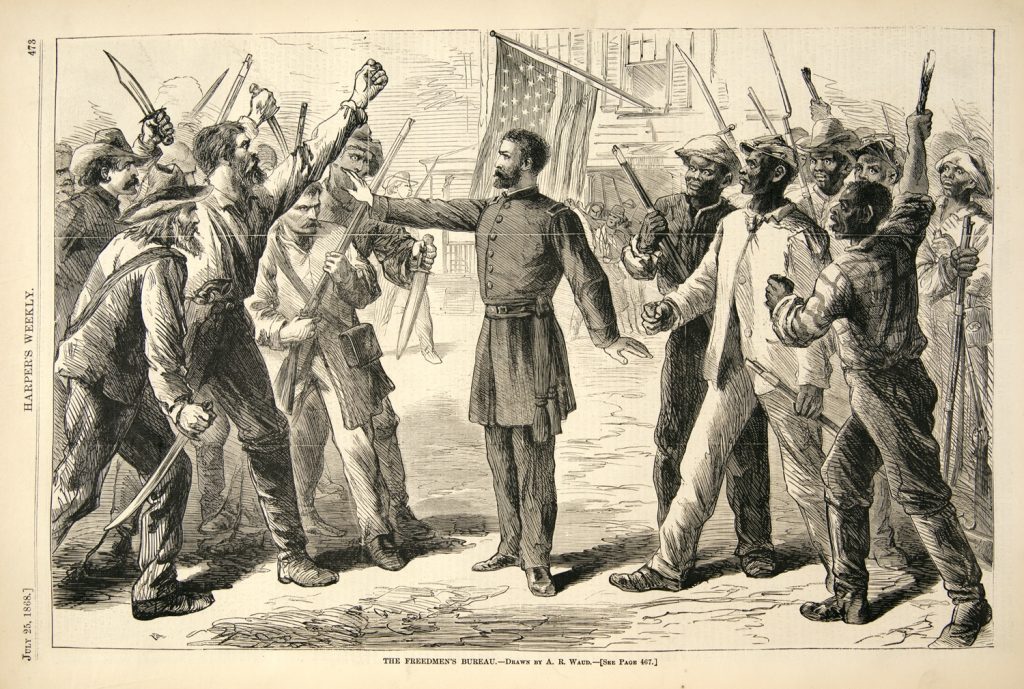
Myth mattered in the Civil War era not because Americans abandoned reality for fantasy, but because they arranged reality into stories that identified legitimate authority, justified sacrifice, and converted political choices into moral obligations. A myth could contain accurate facts while distorting their relationships, emphasizing some causes and suppressing others. It could transform contingency into destiny, military defeat into martyrdom, or emancipation into the accomplishment of a single heroic leader. Classical analogy, biblical narrative, revolutionary memory, and postwar commemoration all performed this ordering function. They told Americans who belonged to the republic, what threatened it, which deaths deserved reverence, and what the nation owed to the past., myth was not merely an inaccurate recollection formed after events. It was an instrument through which people interpreted circumstances and made action appear necessary.
During the war, these stories helped governments mobilize populations whose endurance could not be sustained by coercion alone. Unionists were asked to defend popular government against rebellion; Confederates were called to protect homes and local liberty against invasion; enslaved people interpreted escape and emancipation through deliverance; soldiers understood endurance through honor, comradeship, and sacrifice. Such narratives did not replace military necessity, economic interest, fear, conscription, or discipline. They gave those pressures a larger meaning.
The political usefulness of myth arose from its ability to join unlike experiences within one comprehensible narrative. A Northern farmer, a Republican politician, an abolitionist minister, a formerly enslaved soldier, and a grieving mother might all speak of saving the Union while understanding that phrase differently. Preservation could signify constitutional continuity, the defeat of secession, emancipation, vindication of democratic government, or protection of a soldier’s comrades. Confederate nationalism worked through similar compression. Planters defending slave property, non-slaveholding farmers protecting households, officers pursuing honor, and conscripts fearing punishment could all be represented as participants in a common struggle for Southern independence. Myth did not eliminate these differences; it concealed enough of them to make collective action possible. Its apparent unity was political rather than descriptive. By offering recognizable figures) the patriot, invader, martyr, tyrant, deliverer, faithful soldier, or betrayed people (it translated complicated structures of power into emotionally accessible roles. It also narrowed the range of acceptable interpretation. Once the Union became the world’s test of republican government, surrender could appear as betrayal of democracy itself. Once the Confederacy became a small republic defending civilization, criticism of slavery or military leadership could appear as disloyalty to the dead.
Myth also determined how violence entered public memory. Battlefield death was rarely remembered as nothing more than bodily destruction produced by orders, weapons, disease, and chance. Families, churches, regiments, and governments placed the dead within stories of sacrifice so that loss might become intelligible. Lincoln’s Gettysburg Address made remembrance an obligation imposed upon the living, while Confederate memorial culture treated care for soldiers’ graves as testimony to the righteousness of their devotion. The meaning assigned to death did not arise automatically from death itself. It was created through speeches, ceremonies, cemeteries, monuments, poems, flags, anniversaries, and the repeated retelling of selected episodes.
After the war, control over mythology helped shape the limits of citizenship and Reconstruction. The Lost Cause did more than protect Confederate pride. By denying slavery’s centrality, sentimentalizing plantation life, and depicting Reconstruction as corrupt occupation, it made renewed white rule appear to be a recovery of legitimate civilization rather than the destruction of biracial democracy. Reconciliationist memory performed a related function at the national level. It allowed white Northerners and Southerners to recognize one another as honorable Americans while moving emancipation, Black military service, and racial equality away from the center of the war’s meaning. African Americans challenged this arrangement through Emancipation Day observances, veterans’ organizations, sermons, newspapers, and speeches that preserved the distinction between those who fought for slavery and those who fought against it. Frederick Douglass understood that indiscriminate praise of martial courage could dissolve moral judgment: if loyalty and rebellion were honored equally, the reunited nation might celebrate peace by forgetting what had made war necessary. The eventual dominance of white reconciliation did not prove that alternative memories had disappeared. It showed that institutions possessing greater access to schools, monuments, publishing, public space, and political authority could make one interpretation appear natural and national.
The political instrumentality of myth lay as much in exclusion as in invention. Stories about Lincoln’s martyrdom could inspire devotion to equality, but they could also reduce emancipation to a presidential gift. Stories about Confederate courage could preserve the grief of ordinary families, but they could also detach valor from the defense of slavery. The language of national rebirth could acknowledge transformation while implying that the republic had purified itself completely in 1865. Myths made certain policies, loyalties, and inequalities seem honorable because they connected them to revered ancestors and sacred sacrifices. They also made other experiences difficult to see: the agency of enslaved people, the dissent of Southern Unionists, the coercion within both armies, the violence of Reconstruction’s overthrow, and the distance between legal emancipation and substantive freedom. Political mythology was powerful precisely because it rarely appeared to its believers as fabrication. It appeared as memory, inheritance, loyalty, and common sense, the past arranged so persuasively that it could continue governing the future.
Did Mythology Shape the War or Merely Decorate It?
The following video from “The Cynical Historian” discusses the Lost Cause myth:
It may validly be said that mythology may have been less a force shaping the Civil War than a language used afterward to dignify decisions made for more concrete reasons. Secession arose from slavery, territorial conflict, party collapse, constitutional dispute, racial ideology, and the fear that Republican power would place the slave system on a path toward restriction and eventual extinction. Union victory resulted from military organization, population, industrial capacity, transportation, finance, emancipation, Black enlistment, strategic adaptation, and the destruction of Confederate armies and resources. Soldiers endured because of discipline, comradeship, coercion, local loyalty, ideology, and the practical difficulty of leaving. None of these forces depended upon Americans imagining themselves as Romans, biblical Israelites, martyrs, or epic heroes. From this perspective, classical and sacred references were rhetorical embellishments attached to causes that would have existed without them.
The objection becomes stronger when the uneven distribution of classical learning is considered. Educated politicians, ministers, editors, lawyers, and officers possessed greater familiarity with Greek and Roman texts than most ordinary soldiers or civilians. Even among elites, references to antiquity could function as conventional displays of education rather than evidence that ancient models governed conduct. Calling an opponent “Caesar” did not necessarily mean that the speaker had reached a decision through a careful comparison with Roman history. It might simply mean “tyrant.” Describing a battlefield as another Thermopylae could be a familiar way to praise courage after events had already occurred. The risk is that historians mistake the abundance of classical language in surviving elite sources for proof of deep causal influence throughout society.
The category of mythology also threatens to become so broad that it loses precision. Classical analogy, biblical interpretation, wartime propaganda, heroic commemoration, political theology, collective memory, and deliberate historical distortion were not identical phenomena. An enslaved congregation identifying with Exodus did not engage the past in the same way as a Confederate memorialist denying slavery’s importance to secession. Lincoln’s meditation on divine judgment differed from later images portraying him as an ascending national saint. A soldier using Homeric language to mourn a comrade was not necessarily participating in the same kind of mythmaking as a textbook committee promoting the Lost Cause. If all emotionally charged historical interpretation is called myth, the term may conceal distinctions among sincere belief, literary convention, political persuasion, religious faith, and calculated falsification.
These challenges require a narrower account of mythology’s influence. Myth did not cause slavery, secession, emancipation, battlefield victory, or Confederate defeat. It did not determine conduct mechanically, and it did not produce uniform beliefs across class, region, race, or education. Its influence was strongest at the points where material interests had to be translated into public meaning. Political leaders needed to explain why constitutional disagreement justified war; governments needed to persuade citizens that sacrifice served a cause larger than immediate survival; soldiers and families needed forms through which terror and death could become intelligible; freedpeople needed languages that joined emancipation to collective agency and sacred justice; defeated Confederates needed an explanation that preserved honor without conceding the moral bankruptcy of slavery. Myth operated in these acts of translation. It did not replace power, but it helped power describe itself as liberty, duty, providence, civilization, or redemption. That function could affect behavior by defining which choices appeared honorable, which compromises seemed treasonous, and which losses demanded continued commitment.
Mythology shaped the Civil War most clearly not as an independent cause but as an interpretive and political instrument working alongside material forces. Its influence varied by audience and circumstance, and the historian must distinguish metaphor from conviction, elite rhetoric from popular belief, and commemoration from wartime motivation. Yet to dismiss myth as decoration would be to overlook how Americans converted interests into principles and events into memory. Slavery explains why the Confederacy was created; mythology helps explain how its defenders called that creation liberty and later remembered defeat as nobility. Military necessity helps explain emancipation; Exodus and national rebirth help explain how freedom was understood, claimed, and commemorated. Industrial power helps explain Union victory; sacrifice and providence help explain what Americans believed victory meant. Myth did not move armies by itself, but it shaped the moral worlds within which armies were raised, suffering was endured, and the war’s consequences were either confronted or concealed.
Conclusion: The War Americans Fought and the War They Remembered
The American Civil War was fought within a republic already crowded with inherited stories. Greece and Rome supplied examples of civic virtue, tyranny, civil conflict, republican collapse, and heroic endurance. The Bible offered bondage, Exodus, sacrifice, judgment, and deliverance. The American Revolution provided a sacred national past claimed by both Unionists and Confederates. These traditions did not dictate political choices, and they did not conceal the material foundations of the conflict from everyone who used them. Slavery, territorial expansion, racial power, constitutional authority, military resources, and political organization determined the crisis in ways no classical analogy can replace. Yet Americans rarely encountered those forces as bare abstractions. They understood them through narratives that identified patriots and rebels, defenders and invaders, martyrs and tyrants, chosen peoples and condemned nations. The same cultural inheritance could sustain radically opposed political visions.
Confederates represented secession as a second revolution and their slaveholding republic as the defender of constitutional liberty against centralized empire. Unionists portrayed the rebellion as a factional assault upon representative government and gradually redefined national preservation through emancipation. Enslaved and free African Americans drew upon Exodus while also transforming its meaning through flight, resistance, military service, family reconstruction, and political organization. Lincoln joined the founding proposition of equality to the possibility of national rebirth, but his language of judgment refused to let victory become proof of Northern innocence. Soldiers on both sides experienced a war more chaotic, anonymous, and physically destructive than the heroic traditions through which it was publicly described. After the fighting ended, these wartime interpretations hardened into rival memories. Lincoln became emancipator, Moses, martyr, and national father. Lee became the Stoic commander and tragic hero whose personal honor was detached from the government and social order he defended. The Lost Cause transformed a rebellion undertaken to protect slavery into an epic of state sovereignty, courage, and overwhelming odds. Reconciliation then brought former white enemies together by praising valor on both sides while reducing emancipation and Black citizenship to secondary themes. The nation could remember itself as healed only by forgetting how incomplete freedom remained.
That forgetting was never total. African American commemorations, abolitionist traditions, Union veterans, later historians, and generations of activists preserved a different account in which slavery stood at the center of secession and emancipation remained the war’s most revolutionary achievement. The struggle over memory continued because the consequences of choosing one story over another were political. A nation that remembered the conflict chiefly as a tragic contest between honorable white Americans could tolerate Confederate monuments, disfranchisement, segregation, and the abandonment of Reconstruction. A nation that remembered it as a war against slavery confronted more demanding questions about citizenship, equality, federal responsibility, and the meaning of freedom.
Americans fought two interconnected Civil Wars. The first was fought with armies, legislation, enslaved laborers in motion, contested landscapes, military occupation, and unprecedented destruction. The second was fought through funerals, sermons, memoirs, schoolbooks, monuments, anniversaries, poems, biographies, films, and public argument. The first ended with Confederate surrender and constitutional abolition; the second never fully ended because its stakes remained embedded in American political identity. Mythology did not merely falsify the war. At its best, it helped people name injustice, endure grief, and imagine a transformed republic. At its most destructive, it converted domination into liberty, defeat into innocence, and reconciliation into organized forgetting. The enduring question is not whether the Civil War became mythic, but which myths Americans chose to preserve, whose experiences those myths excluded, and whether national memory would conceal the war’s central conflict or continue the unfinished work of freedom.
Bibliography
Affiliate disclosure: Amazon links on this site are paid links. As an Amazon Associate I earn from qualifying purchases.
- Adams, John. A Defence of the Constitutions of Government of the United States of America. 3 vols. London: C. Dilly, 1787–1788.
- Anthon, Charles. A Classical Dictionary: Containing an Account of the Principal Proper Names Mentioned in Ancient Authors. New York: Harper & Brothers, 1848.
- Berlin, Ira, et al., eds. Freedom: A Documentary History of Emancipation, 1861–1867. Series 1, Vol. 1, The Destruction of Slavery. Cambridge: Cambridge University Press, 1985.
- Billings, John D. Hardtack and Coffee; or, The Unwritten Story of Army Life. Boston: George M. Smith, 1887.
- Blight, David W. Race and Reunion: The Civil War in American Memory. Cambridge, MA: Belknap Press of Harvard University Press, 2001.
- Bottici, Chiara. A Philosophy of Political Myth. Cambridge: Cambridge University Press, 2007.
- Brown, Thomas J. Civil War Monuments and the Militarization of America. Chapel Hill: University of North Carolina Press, 2019.
- Brundage, W. Fitzhugh. The Southern Past: A Clash of Race and Memory. Cambridge, MA: Belknap Press of Harvard University Press, 2005.
- Calhoun, John C. “Speech on the Reception of Abolition Petitions.” United States Senate, February 6, 1837.
- Carmichael, Peter S. The War for the Common Soldier: How Men Thought, Fought, and Survived in Civil War Armies. Chapel Hill: University of North Carolina Press, 2018.
- Carwardine, Richard. Lincoln: A Life of Purpose and Power. New York: Alfred A. Knopf, 2006.
- Confederate States of America. Constitution of the Confederate States of America. Montgomery, AL, March 11, 1861.
- Connelly, Thomas L. The Marble Man: Robert E. Lee and His Image in American Society. New York: Alfred A. Knopf, 1977.
- Cox, Karen L. Dixie’s Daughters: The United Daughters of the Confederacy and the Preservation of Confederate Culture. Gainesville: University Press of Florida, 2003.
- Davis, Jefferson. “Inaugural Address of the President of the Provisional Government.” Montgomery, AL, February 18, 1861.
- —-. “Message to the Congress of the Confederate States.” Richmond, VA, April 29, 1861.
- —-. The Rise and Fall of the Confederate Government. 2 vols. New York: D. Appleton, 1881.
- Dew, Charles B. Apostles of Disunion: Southern Secession Commissioners and the Causes of the Civil War. Charlottesville: University of Virginia Press, 2001.
- Dew, Thomas Roderick. Review of the Debate in the Virginia Legislature of 1831 and 1832. Richmond, VA: Thomas W. White, 1832.
- Douglass, Frederick. “Men of Color, To Arms!” Rochester, NY, March 2, 1863.
- —-. “The Mission of the War.” Speech delivered at Cooper Institute, New York, January 13, 1864.
- —-. “Oration in Memory of Abraham Lincoln.” Washington, DC, April 14, 1876.
- —-. “The Unknown Loyal Dead.” Speech delivered at Arlington National Cemetery, Arlington, VA, May 30, 1871.
- —-. “What to the Slave Is the Fourth of July?” Rochester, NY, July 5, 1852.
- Downs, Jim. Sick from Freedom: African-American Illness and Suffering during the Civil War and Reconstruction. New York: Oxford University Press, 2012.
- Early, Jubal A. A Memoir of the Last Year of the War for Independence in the Confederate States of America. Lynchburg, VA: Charles W. Button, 1867.
- Everett, Edward. Orations and Speeches on Various Occasions. 4 vols. Boston: Little, Brown, 1859.
- Fahs, Alice, and Joan Waugh, eds. The Memory of the Civil War in American Culture. Chapel Hill: University of North Carolina Press, 2004.
- Faust, Drew Gilpin. The Creation of Confederate Nationalism: Ideology and Identity in the Civil War South. Baton Rouge: LSU Press, 1988.
- —-. This Republic of Suffering: Death and the American Civil War. New York: Alfred A. Knopf, 2008.
- —-. A Sacred Circle: The Dilemma of the Intellectual in the Old South, 1840–1860. Baltimore: Johns Hopkins University Press, 1977.
- Fitzhugh, George. Cannibals All! or, Slaves Without Masters. Richmond, VA: A. Morris, 1857.
- —-. Sociology for the South; or, The Failure of Free Society. Richmond, VA: A. Morris, 1854.
- Fleche, Andre M. The Revolution of 1861: The American Civil War in the Age of Nationalist Conflict. Chapel Hill: University of North Carolina Press, 2012.
- Forten, Charlotte L. The Journal of Charlotte Forten Grimké. Edited by Brenda Stevenson. New York: Oxford University Press, 1988.
- Foster, Gaines M. Ghosts of the Confederacy: Defeat, the Lost Cause, and the Emergence of the New South, 1865–1913. New York: Oxford University Press, 1987.
- Fox, Richard Wightman. Lincoln’s Body: A Cultural History. New York: W. W. Norton, 2015.
- Fox-Genovese, Elizabeth, and Eugene D. Genovese. The Mind of the Master Class: History and Faith in the Southern Slaveholders’ Worldview. Cambridge: Cambridge University Press, 2005.
- Freehling, William W. The Road to Disunion. 2 vols. New York: Oxford University Press, 1990–2007.
- Freeman, Douglas Southall. R. E. Lee: A Biography. 4 vols. New York: Charles Scribner’s Sons, 1934–1935.
- Gallagher, Gary W. The Confederate War. Cambridge: Harvard University Press, 1997.
- —-. Lee and His Army in Confederate History. Chapel Hill: University of North Carolina Press, 2001.
- Gallagher, Gary W., and Alan T. Nolan, eds. The Myth of the Lost Cause and Civil War History. Bloomington: Indiana University Press, 2000.
- Genovese, Eugene D. The World the Slaveholders Made: Two Essays in Interpretation. New York: Pantheon Books, 1969.
- Georgia Secession Convention. “The Georgia Declaration of Causes.” January 29, 1861.
- Glaude, Eddie S., Jr. Exodus! Religion, Race, and Nation in Early Nineteenth-Century Black America. Chicago: University of Chicago Press, 2000.
- Goss, Warren Lee. The Soldier’s Story of His Captivity at Andersonville, Belle Isle, and Other Rebel Prisons. Boston: I. N. Richardson, 1873.
- Grand Army of the Republic. Journal of the National Encampment of the Grand Army of the Republic. Various locations, 1866–1949.
- Guelzo, Allen C. Abraham Lincoln: Redeemer President. Grand Rapids, MI: William B. Eerdmans, 1999.
- —-. Robert E. Lee: A Life. New York: Alfred A. Knopf, 2021.
- Hahn, Steven. A Nation under Our Feet: Black Political Struggles in the Rural South from Slavery to the Great Migration. Cambridge, MA: Belknap Press of Harvard University Press, 2003.
- Hamilton, Alexander, James Madison, and John Jay. The Federalist: A Collection of Essays, Written in Favour of the New Constitution. New York: J. and A. McLean, 1788.
- Hammond, James Henry. “Speech on the Admission of Kansas, Under the Lecompton Constitution.” United States Senate, March 4, 1858.
- Harper, William. “Memoir on Slavery.” In The Pro-Slavery Argument, as Maintained by the Most Distinguished Writers of the Southern States. Charleston, SC: Walker, Richards, 1853.
- Hess, Earl J. The Rifle Musket in Civil War Combat: Reality and Myth. Lawrence: University Press of Kansas, 2008.
- Hodes, Martha. Mourning Lincoln. New Haven, CT: Yale University Press, 2015.
- Janney, Caroline E. Remembering the Civil War: Reunion and the Limits of Reconciliation. Chapel Hill: University of North Carolina Press, 2013.
- Jefferson, Thomas. Notes on the State of Virginia. Edited by Frank Shuffelton. New York: Penguin Books, 1999.
- Johnson, Walter. River of Dark Dreams: Slavery and Empire in the Cotton Kingdom. Cambridge, MA: Harvard University Press, 2013.
- Kelley, Mary. Learning to Stand and Speak: Women, Education, and Public Life in America’s Republic. Chapel Hill: University of North Carolina Press, 2006.
- Kennedy, Roger G. Greek Revival America. New York: Stewart, Tabori & Chang, 1989.
- Lee, Robert E. “General Orders No. 9.” Headquarters, Army of Northern Virginia, April 10, 1865.
- —-. “Testimony before the Joint Committee on Reconstruction.” Washington, DC, February 17, 1866.
- Lee, Robert E., Jr. Recollections and Letters of General Robert E. Lee. New York: Doubleday, Page, 1904.
- Lincoln, Abraham. “Address Delivered at the Dedication of the Cemetery at Gettysburg.” Gettysburg, PA, November 19, 1863.
- —-. “Emancipation Proclamation.” Washington, DC, January 1, 1863.
- —-. “First Inaugural Address.” Washington, DC, March 4, 1861.
- —-. “Meditation on the Divine Will.” ca. September 1862.
- —-. “Message to Congress in Special Session.” Washington, DC, July 4, 1861.
- —-. “Second Inaugural Address.” Washington, DC, March 4, 1865.
- —-. “To Horace Greeley.” Washington, DC, August 22, 1862.
- Linderman, Gerald F. Embattled Courage: The Experience of Combat in the American Civil War. New York: Free Press, 1987.
- Logue, Larry M., and Michael Barton, eds. The Civil War Veteran: A Historical Reader. New York: New York University Press, 2007.
- Manning, Chandra. Troubled Refuge: Struggling for Freedom in the Civil War. New York: Alfred A. Knopf, 2016.
- —-. What This Cruel War Was Over: Soldiers, Slavery, and the Civil War. New York: Alfred A. Knopf, 2007.
- McCoy, Drew R. The Elusive Republic: Political Economy in Jeffersonian America. Chapel Hill: University of North Carolina Press, 1980.
- McCurry, Stephanie. Confederate Reckoning: Power and Politics in the Civil War South. Cambridge, MA: Harvard University Press, 2010.
- —-. Masters of Small Worlds: Yeoman Households, Gender Relations, and the Political Culture of the Antebellum South Carolina Low Country. New York: Oxford University Press, 1995.
- McPherson, James M. Battle Cry of Freedom: The Civil War Era. New York: Oxford University Press, 1988.
- —-. For Cause and Comrades: Why Men Fought in the Civil War. New York: Oxford University Press, 1997.
- Mills, Cynthia, and Pamela H. Simpson, eds. Monuments to the Lost Cause: Women, Art, and the Landscapes of Southern Memory. Knoxville: University of Tennessee Press, 2003.
- Mississippi Secession Convention. “A Declaration of the Immediate Causes Which Induce and Justify the Secession of the State of Mississippi from the Federal Union.” January 9, 1861.
- Mitchell, Reid. Civil War Soldiers. New York: Viking, 1988.
- Morel, Lucas E. Lincoln and the American Founding. Carbondale: Southern Illinois University Press, 2020.
- Nash, Margaret A. Women’s Education in the United States, 1780–1840. New York: Palgrave Macmillan, 2005.
- National Convention of Colored Men. Proceedings of the National Convention of Colored Men, Held in the City of Syracuse, N.Y., October 4, 5, 6, and 7, 1864. Boston: J. S. Rock and Geo. L. Ruffin, 1864.
- New York Common Council. Obsequies of Abraham Lincoln, in the City of New York, under the Auspices of the Common Council. New York: D. T. Valentine, 1866.
- Nolan, Alan T. “The Anatomy of the Myth.” In The Myth of the Lost Cause and Civil War History, edited by Gary W. Gallagher and Alan T. Nolan, 11–34. Bloomington: Indiana University Press, 2000.
- —-. Lee Considered: General Robert E. Lee and Civil War History. Chapel Hill: University of North Carolina Press, 1991.
- O’Brien, Michael. Conjectures of Order: Intellectual Life and the American South, 1810–1860. 2 vols. Chapel Hill: University of North Carolina Press, 2004.
- Oakes, James. Freedom National: The Destruction of Slavery in the United States, 1861–1865. New York: W. W. Norton, 2013.
- Peterson, Merrill D. Lincoln in American Memory. New York: Oxford University Press, 1994.
- Piehler, G. Kurt. Remembering War the American Way. Washington, DC: Smithsonian Institution Press, 1995.
- Pollard, Edward A. The Lost Cause: A New Southern History of the War of the Confederates. New York: E. B. Treat, 1866.
- Potter, David M. The Impending Crisis, 1848–1861. Edited by Don E. Fehrenbacher. New York: Harper & Row, 1976.
- Pryor, Elizabeth Brown. Reading the Man: A Portrait of Robert E. Lee through His Private Letters. New York: Viking, 2007.
- Rable, George C. Civil Wars: Women and the Crisis of Southern Nationalism. Urbana: University of Illinois Press, 1989.
- Raboteau, Albert J. Slave Religion: The “Invisible Institution” in the Antebellum South. Updated ed. New York: Oxford University Press, 2004.
- Reidy, Joseph P. Illusions of Emancipation: The Pursuit of Freedom and Equality in the Twilight of Slavery. Chapel Hill: University of North Carolina Press, 2019.
- Reinhold, Meyer. Classica Americana: The Greek and Roman Heritage in the United States. Detroit: Wayne State University Press, 1984.
- Rhodes, Elisha Hunt. All for the Union: The Civil War Diary and Letters of Elisha Hunt Rhodes. Edited by Robert Hunt Rhodes. New York: Orion Books, 1991.
- Richard, Carl J. The Founders and the Classics: Greece, Rome, and the American Enlightenment. Cambridge, MA: Harvard University Press, 1994.
- —-. The Golden Age of the Classics in America: Greece, Rome, and the Antebellum United States. Cambridge, MA: Harvard University Press, 2009.
- Rubin, Anne Sarah. A Shattered Nation: The Rise and Fall of the Confederacy, 1861–1868. Chapel Hill: University of North Carolina Press, 2005.
- Rutherford, Mildred Lewis. A Measuring Rod to Test Text Books, and Reference Books in Schools, Colleges and Libraries. Athens, GA: Mildred Lewis Rutherford, 1920.
- Schwartz, Barry. Abraham Lincoln and the Forge of National Memory. Chicago: University of Chicago Press, 2000.
- Shaffer, Donald R. After the Glory: The Struggles of Black Civil War Veterans. Lawrence: University Press of Kansas, 2004.
- Shalev, Eran. Rome Reborn on Western Shores: Historical Imagination and the Creation of the American Republic. Charlottesville: University of Virginia Press, 2009.
- Sheehan-Dean, Aaron. Why Confederates Fought: Family and Nation in Civil War Virginia. Chapel Hill: University of North Carolina Press, 2007.
- Silber, Nina. The Romance of Reunion: Northerners and the South, 1865–1900. Chapel Hill: University of North Carolina Press, 1993.
- Simpson, Matthew. “Funeral Address Delivered at the Burial of President Lincoln.” Springfield, IL, May 4, 1865.
- Sinha, Manisha. The Counterrevolution of Slavery: Politics and Ideology in Antebellum South Carolina. Chapel Hill: University of North Carolina Press, 2000.
- Smith, Anthony D. Myths and Memories of the Nation. Oxford: Oxford University Press, 1999.
- South Carolina Convention. “Declaration of the Immediate Causes Which Induce and Justify the Secession of South Carolina from the Federal Union.” December 24, 1860.
- Southern Historical Society. Southern Historical Society Papers. 52 vols. Richmond, VA, 1876–1959.
- Stephens, Alexander H. A Constitutional View of the Late War Between the States. 2 vols. Philadelphia: National Publishing Company, 1868–1870.
- —-. “Cornerstone Speech.” Savannah, GA, March 21, 1861.
- Stillwell, Leander. The Story of a Common Soldier of Army Life in the Civil War, 1861–1865. Erie, KS: Press of the Erie Record, 1920.
- Stout, Harry S. Upon the Altar of the Nation: A Moral History of the Civil War. New York: Viking, 2006.
- Taylor, Susie King. Reminiscences of My Life in Camp with the 33d United States Colored Troops, Late 1st South Carolina Volunteers. Boston: Published by the Author, 1902.
- Taylor, Walter H. Four Years with General Lee. New York: D. Appleton, 1878.
- Texas Secession Convention. “A Declaration of the Causes Which Impel the State of Texas to Secede from the Federal Union.” February 2, 1861.
- Tocqueville, Alexis de. Democracy in America. Translated by Henry Reeve. London: Saunders and Otley, 1835.
- Trodd, Zoe, and John Stauffer, eds. The Tribunal: Responses to John Brown and the Harpers Ferry Raid. Cambridge, MA: Belknap Press of Harvard University Press, 2012.
- United Confederate Veterans. Minutes of the Annual Meetings and Reunions of the United Confederate Veterans. New Orleans and various locations, 1889–1931.
- United States War Department. General Orders No. 143. Washington, DC, May 22, 1863.
- —-. The War of the Rebellion: A Compilation of the Official Records of the Union and Confederate Armies. 128 vols. Washington, DC: Government Printing Office, 1880–1901.
- University of Pennsylvania. Catalogue of the University of Pennsylvania, Session 1855–56. Philadelphia: Collins, Printer, 1855.
- Varon, Elizabeth R. Armies of Deliverance: A New History of the Civil War. New York: Oxford University Press, 2019.
- Watkins, Sam R. “Co. Aytch”: A Side Show of the Big Show. Chattanooga, TN: Times Printing Company, 1900.
- Webster, Noah. Sketches of American Policy. Hartford, CT: Hudson and Goodwin, 1785.
- White, Ronald C., Jr. Lincoln’s Greatest Speech: The Second Inaugural. New York: Simon & Schuster, 2002.
- Whitman, Walt. “O Captain! My Captain!” In Sequel to Drum-Taps. Washington, DC, 1865–1866.
- —-. “When Lilacs Last in the Dooryard Bloom’d.” In Sequel to Drum-Taps. Washington, DC, 1865–1866.
- Wiley, Bell Irvin, ed. Fourteen Hundred and 91 Days in the Confederate Army: A Journal Kept by W. W. Heartsill. Wilmington, NC: Broadfoot Publishing, 1987.
- —-. The Life of Billy Yank: The Common Soldier of the Union. Indianapolis: Bobbs-Merrill, 1952.
- —-. The Life of Johnny Reb: The Common Soldier of the Confederacy. Indianapolis: Bobbs-Merrill, 1943.
- Williams, David. I Freed Myself: African American Self-Emancipation in the Civil War Era. Cambridge: Cambridge University Press, 2014.
- Wills, Garry. Lincoln at Gettysburg: The Words That Remade America. New York: Simon & Schuster, 1992.
- Wilson, Woodrow. “Address at the Reunion of the Blue and the Gray.” Gettysburg, PA, July 4, 1913.
- Winterer, Caroline. The Culture of Classicism: Ancient Greece and Rome in American Intellectual Life, 1780–1910. Baltimore: Johns Hopkins University Press, 2002.
- —-. The Mirror of Antiquity: American Women and the Classical Tradition, 1750–1900. Ithaca, NY: Cornell University Press, 2007.
- Wood, Gordon S. The Creation of the American Republic, 1776–1787. Chapel Hill: University of North Carolina Press, 1969.
Originally published by Brewminate, 07.23.2026, under the terms of a Creative Commons Attribution-NonCommercial-NoDerivatives 4.0 International license.
About the Author