Ancient farmers transformed swamps, deserts, rainforests, highlands, and lakebeds into productive food systems through remarkable environmental engineering.

By Matthew A. McIntosh
Public Historian
Brewminate
Introduction: Agriculture Where Agriculture “Should Not” Work
Agriculture is often imagined as the gift of favorable landscapes: deep riverine soils, predictable floods, gentle rainfall, long growing seasons, and plants that practically invited domestication. The old civilizational map reinforces this assumption. Mesopotamia had the Tigris and Euphrates, Egypt the Nile, the Indus Valley its alluvial plains, and early China the Yellow and Yangtze river systems. These places became shorthand for the agricultural origins of civilization because their environments seem to make historical sense: water, silt, grain, population, cities, and states appear to follow one another in a tidy sequence. Yet this familiar geography is only part of the story, and it can become misleading when it implies that agriculture belonged naturally to easy landscapes. Human beings also worked farms in places that seemed to resist agriculture at every turn: high-altitude basins where frost could kill crops overnight, rainforests where fertility was locked in vegetation rather than soil, deserts where rainfall arrived as brief violence rather than dependable moisture, swamps where roots drowned before they could grow, and lakebeds where there was scarcely any dry land to cultivate. These were not marginal curiosities or desperate improvisations at the edges of “real” civilization. In several cases, they supported dense populations, urban centers, ceremonial constructs, long-distance exchange, and complex political orders. They force a broader question about agriculture itself: was farming primarily the exploitation of favorable land, or was it often the art of making unfavorable land productive?
The central question, then, is not simply how people “adapted” to harsh environments. Adaptation is too passive a word for what many of these communities achieved. They did not merely accept the limits of landscape; they redesigned the ecological relationships that made farming possible. In the highlands of New Guinea, early agriculturalists drained and reorganized wetland soils. In Amazonia, Indigenous communities created fertile dark earths in regions long assumed to be too poor for intensive cultivation. In the Lake Titicaca basin, Andean farmers raised fields above waterlogged ground and used canals to buffer crops against frost, drought, and flooding. In the Negev, desert farmers converted rare runoff into productive terraces and orchards. In the Basin of Mexico, chinampa cultivators turned shallow lakes and marshes into one of the most intensive food-producing landscapes in the premodern world. In each case, agriculture depended not on finding ideal land, but on making land, soil, water, and temperature behave differently.
Agriculture in harsh environments was not an exception to the history of civilization, but one of its most revealing patterns. These systems show that farming has always been a form of environmental engineering, social organization, and cultural interpretation. Soil was not merely a natural inheritance; it could be manufactured through charcoal, sediment, refuse, compost, and repeated human occupation. Water was not only a resource; it could be slowed, stored, redirected, drained, warmed, and recycled. Even risk itself could be managed through design: canals moderated frost, terraces captured floods, ditches aerated swamps, and artificial islands transformed wetlands into permanent gardens. These are required more than technical cleverness. They demanded labor, memory, authority, cooperation, ritual meaning, and maintenance across generations. A raised field, a runoff terrace, or a chinampa was never just an agricultural device. It was a social institution embedded in a landscape.
The phrase “agriculture where agriculture should not work” is deliberately provocative, but it must be used carefully. These environments were not impossible to the people who knew them. They only appear impossible when judged by the expectations of conventional grain agriculture, plow agriculture, or modern industrial farming. The societies examined here understood their landscapes in different terms. A swamp could be a reservoir of future fields. A lake could be a platform for urban food production. A desert flood could be a harvest waiting to be caught. A rainforest settlement could slowly become a machine for creating fertility. The achievement of these civilizations was not that they conquered nature in any simple sense. It was that they learned to identify hidden ecological possibilities and organize human life around them. Their farms were arguments in mud, water, charcoal, stone, and labor: proof that civilization often grew not where agriculture was easy, but where people became skilled enough to make difficulty productive.
Kuk Swamp and the Origins of Agricultural Engineering in the New Guinea Highlands
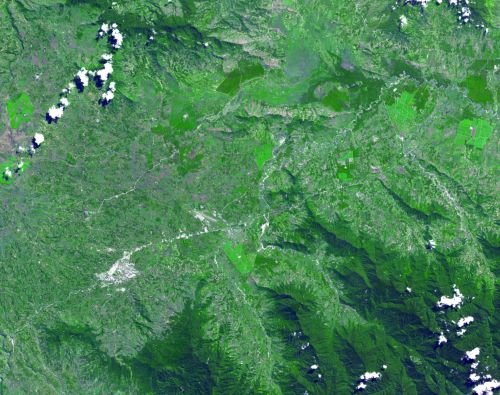
The highlands of New Guinea force any history of agriculture to begin with a correction. Farming did not emerge only in the dry alluvial corridors of the ancient Near East, the loess zones of northern China, or the river valleys that have so often dominated older narratives of “civilization.” At Kuk Swamp, in the western highlands of present-day Papua New Guinea, archaeology reveals one of the world’s earliest independent centers of agriculture in a landscape that looks, at first, deeply unsuitable for it. The site lies in a high-altitude tropical wetland, a place of waterlogged soils, dense vegetation, and difficult terrain rather than open grain fields. Its significance is not simply that people grew plants there very early, but that they transformed a swamp into a managed agricultural landscape. Kuk asks us to rethink agricultural origins not as a single invention radiating outward from a few privileged centers, but as a series of regional experiments in which communities solved local ecological problems with strikingly different tools.
The environmental challenge at Kuk was not aridity or frost in the Andean sense, but saturation. Wetland soils are not automatically fertile in any practical agricultural sense. Too much water can be as limiting as too little. Roots require oxygen; crops can rot in standing water; movement through the landscape is difficult; and any attempt to cultivate must confront the constant return of swamp conditions. The inhabitants of Kuk did not solve this problem by importing a ready-made agricultural package from elsewhere. They worked with the wetland itself, gradually reshaping its surface through clearing, mounding, ditching, and drainage. They created a productive relationship between human labor and swamp ecology. The field was not simply discovered under the forest or marsh. It had to be built.
The archaeological sequence at Kuk is especially important because it preserves stages in the long transition from plant use to cultivation and then to more formal agricultural engineering. Evidence from the site suggests early plant exploitation and possible cultivation along the wetland margins in the early Holocene, followed later by more intensive forms of mounding and ditch construction. This matters because it shows agriculture not as a sudden revolution, but as a cumulative process. People did not wake one morning as “farmers” in the modern categorical sense. They experimented, returned, modified, remembered, and intensified. Over generations, the swamp became an archive of decisions: where to drain, where to mound, where water moved, where plants grew well, and where labor could most effectively convert wet ground into food. The value of Kuk lies partly in this slow chronology. It allows us to see agriculture as a historical threshold crossed unevenly, through repeated interventions rather than a single founding moment. The earliest acts may have looked small: clearing patches of vegetation, encouraging useful plants, cutting shallow channels, or returning to favorable planting places. Yet these modest gestures accumulated into a landscape increasingly shaped by human intention. Kuk gives us a rare view of agriculture becoming itself, not as an abstract invention, but as a practical relationship between people and a wetland they learned to manage.
Kuk also challenges the grain-centered bias that has shaped much writing about ancient agriculture. The crops associated with early New Guinea agriculture included plants such as taro, banana, yam, and other vegetatively propagated species rather than the wheat, barley, rice, or maize that dominate many textbook accounts. That difference is not incidental. Tuber and tree-crop systems do not always leave the same archaeological signatures as cereal agriculture, and they do not always fit neatly into models built around plows, fields, granaries, and states. In New Guinea, agricultural development belonged to a different ecological and botanical world. It depended on drainage, planting materials, garden cycles, and intimate knowledge of wet tropical soils. To treat such them as secondary to cereal farming is to mistake difference for inferiority.
The absence of large domesticable grazing animals in the New Guinea highlands further sharpens the point. In much of Eurasia, agriculture became entangled with animal traction, manure, dairying, wool, transport, and pastoral economies. Kuk developed without that same package. Its agricultural history cannot be understood through the familiar Old World combination of cereal fields and herd animals. Human labor, not oxen; drainage, not plowing; vegetative propagation, not seed-grain agriculture: these were the foundations of cultivation. That made New Guinea agriculture no less sophisticated. If anything, it reveals how varied the pathways to food production could be when communities organized farming around the ecological materials available to them. It also complicates the assumption that agricultural “progress” necessarily moves toward plows, draft animals, and cereal monocultures. In the New Guinea highlands, the most effective agricultural strategy was not to impose an alien model of farming on the landscape, but to develop a method suited to wet soils, perennial and vegetatively reproduced crops, and intensive human attention. The result was a form of agriculture that was less visible to older archaeological imagination precisely because it did not resemble the grain-and-herd economies that later became associated with states and empires.
The drainage at Kuk should be understood as agricultural engineering, but not in the narrow sense of monumental construction. They were not pyramids, palaces, or aqueducts designed to impress viewers from a distance. Their complexity lay in repetition, maintenance, and hydrological intelligence. A ditch is a modest thing until one recognizes that it must be placed in relation to slope, water movement, soil conditions, planting surfaces, and seasonal change. A mound is simple only if it is imagined as a pile of earth rather than as a deliberate answer to root oxygen, moisture, and crop management. At Kuk, small interventions accumulated into a durable agricultural landscape. The achievement was not grandeur but persistence.
This persistence also makes Kuk important for thinking about agriculture as social memory. Wetland farming could not survive as a one-time act of clearing. Ditches silted, vegetation returned, water shifted, and planting surfaces required renewal. Knowledge had to be transmitted: where older channels had run, how deep to cut, when to clear, what to plant, and how to keep the swamp from reclaiming the field. Such knowledge was probably practical, embodied, and communal rather than written or bureaucratic. It lived in work rhythms, inherited landscapes, and repeated acts of maintenance. The result was an agricultural tradition that stretched across millennia, not because the environment was easy, but because people knew how to keep remaking it. This kind of continuity should not be confused with static tradition. A landscape like Kuk required adjustment as channels clogged, soils shifted, plants changed, and communities altered their needs. Agricultural memory was active rather than conservative. It preserved knowledge by applying it, testing it, and revising it in response to the wetland’s behavior. In that sense, Kuk was not simply a place where agriculture happened; it was a teaching landscape, one in which each generation inherited both the physical traces of earlier work and the obligation to renew them.
Kuk Swamp belongs at the beginning not merely because of its age, but because of its interpretive power. It breaks the assumption that agriculture begins where nature offers obvious abundance. It shows that farming could begin in difficult places through gradual, place-specific modification rather than through a universal technological package. It also reminds us that some of the most important agricultural landscapes in world history were not the most visually monumental. A drained swamp in the New Guinea highlands may not look like the cradle of civilization if civilization is measured by walls, kings, and written archives. But if civilization is measured by the long human capacity to reorganize water, plants, labor, and memory into a durable food system, Kuk is one of the foundational places in the agricultural history of the world.
Amazonian Dark Earth: Manufacturing Fertility in the Rainforest
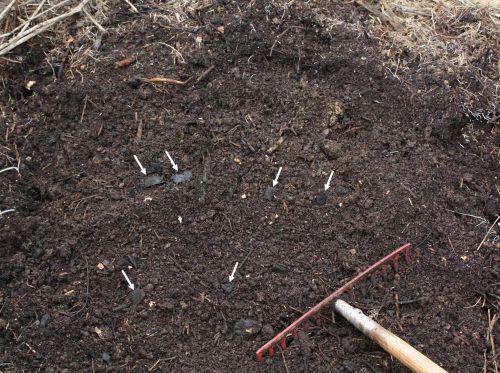
Amazonia has long been burdened by one of the most persistent misunderstandings in environmental history: the idea that a lush forest must rest upon lush soil. To outsiders, the rainforest appears almost impossibly fertile, a green abundance so dense that it seems to confirm the older fantasy of tropical nature as effortless plenty. Yet much of the Amazon Basin reverses that assumption. In many regions, the visible richness of the forest is not stored in deep agricultural soil but in the living biomass itself, cycling rapidly through leaves, roots, fungi, insects, decay, and regrowth. Once forest is cleared and that biological cycle is broken, the underlying soils can be acidic, weathered, leached, and poor in nutrients. The problem was not that the Amazon lacked life, but that its fertility was organized in ways difficult for conventional field agriculture to capture.
This makes the existence of Amazonian dark earth, or terra preta de índio, one of the most important pieces of evidence for Indigenous environmental engineering in the pre-Columbian Americas. These dark, fertile soils are not ordinary rainforest soils. They are anthropogenic earths, enriched through long-term human activity with charcoal, ash, bone, fish remains, food refuse, ceramics, composted organic matter, and the residues of settlement life. Against the pale, nutrient-poor soils surrounding them, terra preta deposits appear as dense, dark, unusually productive islands of fertility. Their very color is historical evidence. They show that soil could be manufactured over time, not merely inherited from geology or river deposition. In Amazonia, people did not simply farm the rainforest. In some places, they changed what the ground itself could become.
The importance of charcoal in terra preta has drawn particular attention because it helps explain the long persistence of these soils. Charcoal, produced through controlled burning and deposited through domestic and agricultural activity, can stabilize carbon in the soil and improve nutrient retention. It does not work alone; terra preta is not just “charcoal dirt.” Its fertility emerged from a broader mixture of organic waste, mineral ash, bones, pottery fragments, microbial activity, and repeated human occupation. Still, charcoal helped create a soil environment that held nutrients more effectively than many surrounding tropical soils. This made terra preta a kind of slow technology. It did not resemble an irrigation canal, a raised field, or a stone terrace. It accumulated quietly through cooking, burning, dumping, gardening, dwelling, and returning. The field and the village were not separate ecological categories. Settlement itself became a fertility engine. The charcoal mattered because it changed the behavior of the soil, making the ground more capable of holding onto what tropical rains and biological cycling might otherwise remove. Nutrients that would have been quickly washed away or locked in short-lived organic matter could instead be captured in a more durable matrix. Broken pottery, bones, shell, ash, and decomposed household refuse added further structure and fertility, turning ordinary domestic debris into a long-term agricultural asset. In that sense, terra preta was both chemically powerful and historically dense: it preserved traces of meals, fires, houses, gardens, and human return, while also making future cultivation more productive.
This point matters because terra preta has helped overturn the older image of pre-Columbian Amazonia as a sparsely populated wilderness incapable of supporting complex societies. For much of the twentieth century, scholars often assumed that the apparent poverty of tropical soils sharply limited population density and political complexity in the region. If the land could not support intensive agriculture, then Amazonian societies must have remained small, mobile, and environmentally constrained. Dark earth forced a reconsideration. Its distribution near archaeological sites, along river bluffs, and in zones of long-term habitation suggests that many Amazonian communities created durable productive landscapes through repeated occupation and management. These were not untouched forests awaiting European discovery. They were inhabited, modified, remembered, and cultivated environments.
The strongest interpretations of Amazonian dark earth do not treat it as a single invention or uniform technology. Some deposits may have been deliberately created for cultivation. Others may have formed as the cumulative byproduct of village life, waste disposal, burning practices, food preparation, and small-scale gardening. The distinction matters, but it should not be overdrawn. In a practical sense, the repeated habits of settlement can become technology even when they are not designed as a formal engineering plan. A community that returns food scraps, ash, charcoal, bones, and broken ceramics to the same inhabited ground over generations is participating in soil formation whether or not it describes that activity in modern agronomic terms. Terra preta complicates the boundary between intention and byproduct. It is both refuse and resource, accident and design, household residue and agricultural infrastructure. This ambiguity is one of the reasons the phenomenon is so historically valuable. It resists the modern habit of separating “technology” from ordinary life. In Amazonia, fertility may have emerged from kitchens, hearths, middens, gardens, paths, and village clearings as much as from explicitly planned fields. What looks like waste in one generation could become agricultural capital in the next. The everyday practices of living in place became cumulative ecological intervention.
There is also a cultural argument embedded in these soils. Terra preta shows that fertility can be social. It was produced through the daily activities of households, communities, cooking fires, middens, gardens, and long-term residence. Unlike large hydraulic works that may imply centralized planning or mobilized labor, dark earth often points toward cumulative domestic practice. This does not make it less impressive. On the contrary, it suggests that environmental transformation can happen through ordinary repetition, through thousands of small acts that become archaeologically monumental only with time. A canal may announce itself as engineering from the beginning. A dark earth deposit reveals its engineering retrospectively, as the slow material consequence of people living in place.
Terra preta should not be isolated from the broader mosaic of Amazonian landscape management. Indigenous peoples also managed forests, encouraged useful palms and fruit trees, shaped settlement mounds, built causeways and fish weirs, burned selectively, gardened along river margins, and altered species distributions. Dark earth was one element in a larger world of anthropogenic ecology. This matters because it prevents a narrow reading in which Amazonian agricultural achievement is reduced to a single soil recipe. The more profound lesson is that pre-Columbian communities understood the rainforest not as a fixed natural container but as a manipulable, responsive environment. They worked with cycles of decay, burning, deposition, regrowth, and succession. The forest was not simply cleared to make agriculture possible; in many places, it was reorganized into a productive landscape.
Terra preta also alters how we think about time in agricultural history. Many agricultural systems depend on annual labor: plow, sow, weed, harvest, repeat. Dark earth, by contrast, reveals a cumulative temporality. Its productivity emerged across decades and centuries, with one generation’s waste becoming another generation’s fertility. This makes it a particularly powerful example of agriculture as inheritance. The soil itself stored past human activity and made that past agriculturally useful. It was an archive, but not a passive one. Unlike a written record, it continued to work. It held nutrients, structured microbial life, supported crops, and marked places where human presence had thickened into enduring ecological consequence. In terra preta, memory became material, and material became food.
The Amazonian case belongs near the beginning as well because it directly challenges the assumption that harsh agricultural environments are always defined by visible scarcity. The rainforest’s difficulty lies not in the absence of water or vegetation, but in the problem of capturing fertility within soil. Indigenous Amazonian communities answered that problem not by forcing the forest to resemble a temperate grain field, but by creating soils adapted to their own ecological world. Their achievement was not merely survival in the rainforest. It was the manufacture of fertility in a landscape outsiders often misunderstood. If Kuk Swamp shows that waterlogged ground could be drained and reorganized into agricultural space, terra preta shows that poor tropical soils could be remade into enduring reservoirs of productivity. Together, they widen the meaning of agricultural engineering from the movement of water to the creation of earth itself. They also complicate any simple contrast between “natural” forest and “artificial” farm. In Amazonia, the productive landscape could be both forested and cultivated, both inhabited and ecological, both shaped by human hands and sustained by biological processes. Terra preta forces us to see agriculture less as the replacement of nature than as the reworking of ecological relationships over long periods of time. The rainforest was not an obstacle simply overcome by clearing; it was a living system whose cycles of growth, decay, fire, waste, and return could be drawn into human food production. That is why Amazonian dark earth stands as one of the clearest examples of agriculture where agriculture supposedly should not work: not because the people of the region defied ecology, but because they understood it deeply enough to make fertility endure.
Raised Fields of the Lake Titicaca Basin: Frost, Flood, and Altitude in the Andes

The Lake Titicaca basin presents one of the most dramatic agricultural paradoxes in the ancient Americas. At more than 12,000 feet above sea level, the altiplano seems, from a lowland perspective, like a landscape at the edge of cultivation. The air is thin, the nights are cold, and the growing season is compressed by the constant threat of frost. Hailstorms can destroy crops with sudden violence. Rainfall is seasonal and uneven. Soils may be waterlogged in some places and drought-prone in others. Yet this region supported dense populations and major cultural developments, including the rise of Tiwanaku, one of the most influential civilizations of the south-central Andes. Its agricultural achievement lay not in discovering an easy environment, but in designing a system that transformed climatic risk into manageable ecological variation. That achievement becomes even more striking when one considers how unforgiving the altiplano can be to crops that require stable conditions. A field might receive intense sunlight during the day and then face killing cold after sunset. A community might have water nearby and still lose harvests to poor drainage, frost pockets, or seasonal drought. Lake Titicaca’s basin was not simply “high” or “cold”; it was a landscape of unstable combinations, where abundance and danger often occupied the same ground. The genius of raised-field agriculture was that it addressed those combinations together rather than treating them as separate problems.
The fundamental problem of farming near Lake Titicaca was not a single environmental limitation, but the convergence of several. Too much water could drown crops in low-lying areas, while too little could leave fields vulnerable during dry spells. The high altitude intensified temperature extremes, especially the sharp difference between daytime sun and nighttime cold. Frost was not merely an inconvenience; it could determine survival. A single cold night at the wrong moment could ruin a planting season. The basin’s farmers needed more than ordinary fields. They needed a landscape technology that could drain, irrigate, warm, fertilize, and buffer crops against the instability of the altiplano. Raised-field agriculture answered that need with remarkable elegance.
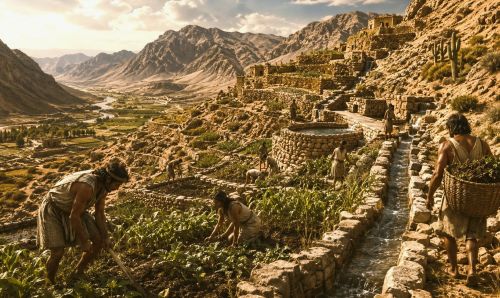
The system is often described by the Quechua and Aymara term waru waru, though the ancient forms varied in size, layout, and local organization. Raised fields consisted of elevated planting platforms separated by canals or ditches. Farmers dug earth from the surrounding channels and piled it into long ridges or rectangular beds, lifting crops above saturated ground while creating canals that stored water between the fields. At first glance, this may seem like a simple rearrangement of mud. It was a sophisticated manipulation of hydrology, soil fertility, and temperature. The canals drained excess water during wet periods, retained moisture during dry periods, and collected organic-rich sediments that could be returned to the planting surfaces. The field was not an isolated patch of earth, but part of a repeating system of beds, water, sediment, and labor.
The frost-moderating function of raised fields has made them especially famous. Water in the canals absorbed solar heat during the day and released it slowly at night, helping to reduce the severity of frost around the crops. This did not make the altiplano warm, and it did not eliminate the danger of crop failure. But it could shift the odds in a difficult environment. A few degrees of thermal buffering might be enough to protect plants during marginal cold events. Raised fields turned water into a kind of stored sunlight. The canals were not merely drainage ditches. They were thermal devices, nutrient traps, moisture reserves, and components of a larger agricultural microclimate.
The raised fields also reveal how Andean agriculture often worked by vertical and ecological diversification rather than by reliance on a single uniform landscape. The Titicaca basin was part of a broader Andean world in which communities managed resources across different altitudes, ecological zones, and seasonal risks. Potatoes, quinoa, tubers, camelids, pastures, wetlands, and lake resources all formed part of a complex subsistence system. Raised fields did not replace this diversity; they intensified one part of it. They made wetland margins and seasonally inundated areas more productive, allowing populations to extract food from terrain that might otherwise have been too risky or inconsistent for sustained cultivation. Their success rested on recognizing that marginal land was not useless land if water, soil, and temperature could be reorganized. This principle fit deeply within Andean strategies of survival, where security often came from spreading production across ecological niches rather than relying on one crop or one zone. A household, community, or polity could draw on high pastures, lake resources, tuber fields, and exchange relationships while also investing labor in raised-field production. The system belonged to a larger logic of redundancy and resilience. It did not promise complete protection from disaster, but it reduced dependence on a single environmental outcome. In a region where weather could be sudden and destructive, that diversification was not merely practical; it was foundational to social endurance.
The association between raised fields and Tiwanaku raises important questions about labor, political authority, and scale. Some scholars have interpreted the large raised-field systems of the Titicaca basin as evidence for centralized coordination by the Tiwanaku state. These required planning, construction, maintenance, and perhaps the mobilization of substantial labor. Others have emphasized the possibility of local or community-based management, arguing that raised fields could be built and maintained by households or village groups without requiring direct state control. The best interpretation may lie between these extremes. Tiwanaku may have encouraged, benefited from, symbolically framed, or politically integrated agricultural intensification without necessarily designing every field from above. Raised fields were technical systems, but they were also social landscapes, where household labor, communal obligation, elite power, and regional identity could overlap.
This matters because agricultural engineering is never only a matter of tools and techniques. A raised-field system requires digging, dredging, planting, harvesting, repairing, and renewing. Canals silt up. Beds erode. Watercourses shift. Sediment must be moved, weeds removed, and planting surfaces rebuilt. The technology works only as long as social organization keeps pace with ecological maintenance. The physical shape of the field preserves traces of collective discipline. It records not just ancient knowledge of frost and water, but a history of people gathering to sustain a landscape that would otherwise deteriorate. In the Lake Titicaca basin, agriculture was not a seasonal act performed on a passive surface. It was a continuous relationship between community and engineered terrain.
Raised fields also complicate the boundary between agriculture and wetland ecology. Modern assumptions often imagine farming as the conversion of wetlands into dry land, treating marshes as obstacles to be eliminated. The Andean raised-field system worked differently. It did not simply destroy the wetland; it reorganized it. The canals remained wet. Aquatic plants, sediments, birds, fish, insects, and decomposing organic matter continued to participate in the agricultural system. Dredged canal mud enriched the fields. Water moderated temperatures. Wetland productivity became part of crop production. This was not agriculture against wetland ecology, but agriculture through wetland ecology. The result was a hybrid landscape, neither untouched marsh nor conventional dry field. That hybridity is essential to understanding why the system was so effective. The fields did not succeed by pretending the altiplano wetland was something else; they succeeded by making wetness useful. Canal water became a buffer against frost and drought. Organic matter from aquatic environments became fertilizer. Sediment that might otherwise clog waterways became part of the planting surface. What looked like environmental difficulty from one angle became agricultural infrastructure from another. Raised fields expose the limits of a simple divide between “natural” and “artificial” landscapes. They were constructed, but their productivity depended on maintaining ecological processes rather than suppressing them entirely.
The scale of abandoned raised fields around Lake Titicaca has also shaped debates about resilience and collapse. If these systems were so effective, why were many of them eventually abandoned? The answer likely lies not in a single environmental failure but in the vulnerability of intensive systems to social and political disruption. Raised fields required maintenance, and maintenance required people, organization, security, and incentives. Changes in climate, shifts in population, the decline of Tiwanaku authority, conflict, disease, colonial reorganization, or changing land use could all weaken the labor that kept the fields productive. Their abandonment should not be read as proof that the technology failed. It may instead show that even highly resilient ecological networks depend on fragile human arrangements.
The modern revival of waru waru agriculture has made the ancient raised fields newly relevant, especially in discussions of climate adaptation and Indigenous knowledge. In parts of the Andes, reconstructed raised fields have been tested as ways to reduce frost damage, improve yields, and restore degraded wetland agriculture. These modern experiments should be handled carefully. They do not mean that ancient systems can simply be copied into the present without social, economic, and political context. But they do show that the principles behind raised-field agriculture remain powerful. Water can buffer temperature. Wetlands can be productive without being erased. Soil fertility can be renewed through sediment and organic cycling. Ancient farmers in the Titicaca basin understood these principles not as abstract science, but as lived practice. Their work reminds modern observers that resilience is not always found in newer technology, larger machines, or more aggressive control over land. Sometimes it lies in older ecological relationships that were ignored, abandoned, or dismissed because they did not match modern expectations of efficiency. The revival of raised fields is not simply an antiquarian exercise. It is a reminder that historical agriculture can contain practical knowledge about risk, diversity, and maintenance in a warming and increasingly unstable climate.
The raised fields of Lake Titicaca stand as one of the clearest examples of agriculture made possible by environmental difficulty. The altiplano did not offer easy abundance. It offered risk, cold, water, sediment, and seasonal uncertainty. Andean farmers turned those conditions into a system that drained and irrigated, warmed and fertilized, elevated and connected. Like Kuk Swamp, these fields show that wetland agriculture could be engineered through drainage and mounding. Like Amazonian dark earth, they show that fertility could be built through accumulated organic matter and human maintenance. But the Titicaca basin adds another dimension here: agriculture could also be climate engineering at a local scale. In the canals between raised beds, ancient farmers stored not only water, but time, heat, memory, and the possibility of harvest in a place where harvest was never guaranteed.
Desert Water Harvesting in the Negev: Nabataean and Later Runoff Agriculture
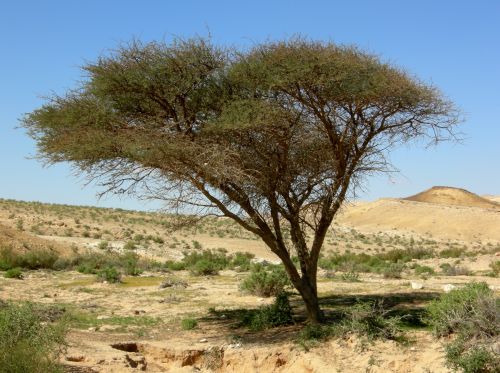
The Negev Desert presents a very different agricultural challenge from the wetlands of New Guinea, the rainforests of Amazonia, or the cold highlands of Lake Titicaca. Here, the problem was not excessive water, hidden soil fertility, or frost-prone saturation, but scarcity sharpened by timing. Rainfall was limited, irregular, and often violently concentrated. Long dry periods could be interrupted by sudden storms whose waters rushed across slopes and wadis before disappearing into stony ground or evaporating under intense heat. To a farmer accustomed to steady rainfall, the desert looked almost useless. Yet ancient communities in the Negev, especially during the Nabataean, Roman, Byzantine, and Early Islamic periods, developed agricultural systems that made brief rainfall events productive. They did not make the desert wet. They made its rare water linger.
The key to Negev agriculture was runoff harvesting. In arid environments, rain that falls on rocky slopes, compacted surfaces, and sparsely vegetated hillsides may not soak immediately into the soil. Instead, it runs downhill in sheets and channels. Ancient farmers learned to treat that runoff not as a destructive force but as a resource to be captured, slowed, and delivered to fields. They built terraces, dams, channels, diversion walls, cisterns, and small catchment systems that gathered rainfall from larger uncultivated areas and concentrated it into smaller cultivated plots. This was an agricultural method based on ratio: a wide area collected water so that a narrower area could grow crops. The field itself was only the visible endpoint of a much larger hydrological design.
The Nabataeans are often placed at the center of this story, and with good reason. Known for their command of desert routes, trade, water storage, and urban settlement, they developed forms of water management that supported towns, caravan stations, gardens, orchards, and fields in environments where permanent agriculture seemed unlikely. Yet the history of Negev runoff agriculture should not be reduced to the Nabataeans alone. Later Roman, Byzantine, and Early Islamic communities expanded, adapted, maintained, or repurposed many desert farming systems. Archaeological remains throughout the region show an enduring tradition of water harvesting rather than a single moment of invention. The Negev was not transformed once and for all by one people. It was repeatedly worked, repaired, and reinterpreted by societies that understood that desert agriculture depended on continuity as much as ingenuity.
The environmental logic of runoff farming was both simple and demanding. A hillside could be cleared of stones to increase runoff. Low stone walls could guide water toward a terrace. Check dams across a wadi could slow a flood, trap sediment, and create pockets of deeper soil. Channels could divert stormwater into fields before it escaped downstream. Cisterns could store water for households, animals, or supplemental irrigation. In each case, the goal was not to overpower the desert but to interrupt speed. Water had to be delayed long enough to soak into soil, deposit nutrients, and sustain crops through the dry season. The technology worked by changing the pace of the landscape. Flash flood became moisture reserve; erosion became sediment capture; slope became catchment; stone became structure.
This transformation of speed into fertility was one of the great insights of desert agriculture. In a humid environment, farmers may worry about drainage, rot, and the loss of nutrients through leaching. In the Negev, the critical task was to make a short-lived event produce a long-lasting effect. A storm might last minutes or hours, but its agricultural value depended on whether its water could be spread across a field, held behind a terrace wall, or absorbed into a pocket of soil. Ancient farmers farmed not only land but moments. They anticipated where water would appear, how it would move, where it could be trapped, and how much force a wall or channel could withstand before failing. Such knowledge required close observation of slope, stone, soil, vegetation, storm paths, and previous flood behavior. Desert farming was not merely irrigation in a dry place. It was the discipline of catching time before it vanished. The farmer had to think backward from a future storm: where would the first sheet of water form, where would it gather force, where would it cut too deeply, where would it spread harmlessly, and where could a small wall turn a destructive rush into a slow agricultural gift? In that sense, the Negev field began uphill, before the planted terrace itself. Its productivity depended on reading the whole watershed as a working system, even when most of it appeared barren for much of the year.
The crops grown varied according to period, location, and water availability, but the Negev became associated with cereals, legumes, vines, olives, dates, figs, and other orchard or garden crops in different contexts. Vineyards are especially important in discussions of the Byzantine Negev, where wine production appears to have been integrated into wider commercial and settlement networks. This reminds us that desert agriculture was not always subsistence farming at the edge of survival. In some periods, it could support surplus production, trade, religious communities, and urban life. The achievement becomes still more striking when one imagines the labor behind every harvest: the clearing of catchments, repair of terrace walls, dredging of channels, maintenance of cisterns, and constant vigilance against the destructive power of the same floods that made farming possible. Grapes, olives, and orchard crops also reveal the long-term confidence built into these systems. Trees and vines require investment across years, not merely a single season of planting. To cultivate them in a desert was to trust that walls would hold, channels would function, storms would return, and labor would remain organized enough to sustain them through failure as well as abundance. The Negev’s agricultural landscapes embodied a wager on continuity. They were not quick improvisations after rain, but durable commitments to making marginal land yield repeatedly.
The Negev also highlights the close relationship between agriculture and settlement. A runoff farm could not function in isolation from paths, houses, watchtowers, animal management, storage facilities, and market connections. Fields had to be close enough to labor and supervision to be maintained, but also positioned where catchments could supply them. Communities had to coordinate work before and after storms, because the most important agricultural events did not always arrive on a predictable calendar. When rain came, structures had to be ready. When floods damaged walls, repairs had to follow. When sediment accumulated, it had to be managed. The desert imposed a rhythm of anticipation and response. Its farmers lived in a landscape where the decisive agricultural labor often happened before the crop was planted.
This also means that runoff agriculture was socially fragile. A terrace system can survive drought better than an unmodified field, but it cannot survive neglect indefinitely. Walls collapse, channels clog, cisterns crack, and flood paths shift. In a desert, small failures can have large consequences because there is so little margin for error. Political instability, population decline, changing trade routes, disease, warfare, taxation, or shifts in land tenure could all undermine the labor that kept runoff agriculture functioning. The abandonment of desert farms should not be interpreted simply as ecological collapse or technological inadequacy. It may reflect the breakdown of the social arrangements that allowed an already demanding environment to remain productive. As in the raised fields of Lake Titicaca, resilience depended on maintenance.
The Nabataean and later Negev systems also challenge modern assumptions about what counts as agricultural land. A conventional view might define farmland as the planted plot alone. Runoff farming reveals a much larger agricultural footprint. The uncultivated slope above the field was part of the farm because it collected water. The rocky hillside mattered because its surface produced runoff. The wadi mattered because it carried floodwater and sediment. The terrace wall mattered because it converted force into storage. The cistern mattered because household survival and field labor depended on stored water. The Negev farm was not a bounded rectangle of cultivated soil. It was a catchment landscape, an organized relationship between terrain, rainfall, architecture, and human timing. This larger footprint also changes the meaning of productivity. A cultivated plot might look small if measured only by planted surface, but its true agricultural area included all the land that contributed runoff to it. The desert farm was distributed across space: part field, part slope, part channel, part storage system, part settlement. Its invisible logic was hydrological. To understand it, one must stop looking only for green fields and begin looking for the architecture of water movement across apparently empty ground.
This wider definition of farmland helps explain why desert agriculture could be both productive and limited. It required large catchment areas relative to cultivated plots, meaning that expansion was constrained by topography and rainfall. Not every slope could feed a field. Not every wadi could be safely dammed. Not every terrace could survive an unusually powerful flood. The system was ingenious precisely because it worked within severe limits, not because it erased them. Ancient farmers in the Negev made the desert productive, but they did not make it cease to be a desert. Their success lay in respecting the arithmetic of aridity: a little water could grow a great deal if it was gathered from enough land, slowed at the right place, and protected from loss.
The Negev case also complicates the familiar association between agriculture and rivers. Many early civilizations depended on great river systems whose floods could be predicted, measured, and institutionalized. Desert runoff agriculture depended instead on small-scale, decentralized, often unpredictable hydrological events. Its water arrived from hillsides, wadis, and storms rather than from a single river artery. This made its engineering more dispersed and its risks more local. A damaged terrace, a failed channel, or a missed storm could matter intensely to a particular field or settlement. The result was a different kind of hydraulic civilization: not one organized around a mighty river and central canals, but one built from many small acts of capture across a dry landscape.
The Negev should not be romanticized as a simple story of harmony with nature. Runoff systems could concentrate labor demands, support unequal control over land and water, and depend on commercial or imperial conditions that were themselves unstable. In the Byzantine period, for example, agricultural expansion in marginal lands may have been connected to broader markets, monastic institutions, taxation, and regional prosperity. When those conditions changed, desert farming could contract. Environmental knowledge was essential, but it was not enough by itself. The success of Negev agriculture rested on the intersection of rainfall, engineering, labor, settlement, power, and exchange. Its fragility was not a contradiction of its sophistication. It was part of it. A system that can make the desert bloom is also one that can reveal, very quickly, when social coordination has weakened. Without maintenance, the same channels that once delivered life-giving water could become clogged, breached, or irrelevant. Without markets or stable communities, vineyards and orchards could lose the economic logic that justified their upkeep. The lesson is not that desert agriculture was unsustainable, but that its sustainability was conditional. It depended on both ecological skill and the human institutions capable of sustaining that skill.
Desert water harvesting in the Negev shows that scarcity can become an organizing principle of agricultural creativity. In Kuk Swamp, people drained excess water. In Amazonia, they manufactured fertility. Around Lake Titicaca, they used water to moderate cold and manage saturation. In the Negev, farmers did something equally subtle: they turned absence into concentration. They accepted that rainfall would be rare, then built landscapes capable of making rare rainfall count. Their fields were not miracles in the sand. They were carefully maintained instruments for converting storms into grain, grapes, orchards, and settlement. The Negev expands the central argument: agriculture in harsh environments was not a single kind of adaptation, but a family of ecological strategies. Where water drowned roots, it had to be drained. Where soils were poor, they had to be made. Where frost threatened crops, heat had to be stored. Where rain vanished quickly, it had to be caught before the desert took it back.
Chinampas and the Agricultural City of Tenochtitlan
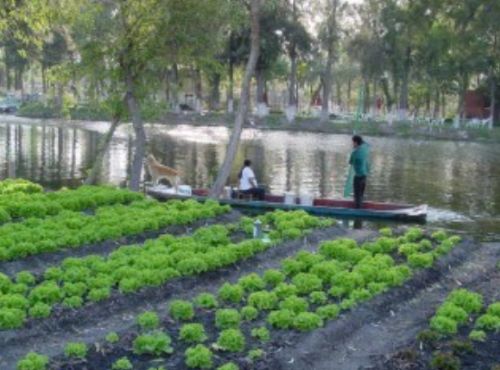
The Basin of Mexico offers yet another version of agriculture where agriculture “should not” work, not because the land was empty, dry, frozen, or infertile, but because the most powerful city in the region was built in a lake. Tenochtitlan, the Mexica capital, rose from the island and marshlands of Lake Texcoco, surrounded by water, causeways, canals, and neighboring communities that shared a complex lacustrine environment. From the perspective of conventional agriculture, this was an unlikely place for one of the largest cities in the premodern world. There was little room for ordinary fields within the city itself, the surrounding waters varied in salinity and depth, and urban growth placed enormous pressure on nearby food systems. Yet the Mexica and their neighbors did not treat the lake as an obstacle to agriculture. They made it part of the agricultural machine. In the chinampa network, water, mud, vegetation, sediment, and labor became the foundations of an extraordinarily intensive form of cultivation.
Chinampas are often called “floating gardens,” but that phrase can mislead as much as it explains. They were not usually floating rafts drifting on open water. They were constructed fields built in shallow lakebeds and wetlands, anchored in place by stakes, woven materials, vegetation, and the gradual accumulation of mud and organic matter. Farmers dredged nutrient-rich sediment from canals and piled it onto rectangular plots, layering lake mud, decaying plants, household refuse, and other organic material to create raised planting surfaces. Trees, especially willows, could be planted along the edges to stabilize the beds and mark boundaries. The surrounding canals provided moisture, transportation, sediment, and access. A chinampa was not simply land reclaimed from water. It was a deliberately maintained interface between field and canal, a wetland converted into a permanent, productive, and renewable agricultural platform.
The environmental genius of chinampa agriculture lay in its refusal to separate land from water. In many agricultural traditions, wetlands are drained to make them resemble dry fields. Chinampas worked differently. They preserved the wetland’s productivity while reorganizing it for intensive cultivation. Canal water kept the beds moist even during dry periods, while the raised surfaces protected crops from being drowned. Dredged muck replenished fertility. Aquatic plants, decomposing organic matter, and nutrient-rich sediments became part of the soil cycle. Canoes moved people, tools, and produce through the system with remarkable efficiency. The result was a landscape in which irrigation, fertilization, transport, and field construction were integrated into one design. As in the raised fields of Lake Titicaca, agriculture did not defeat wetland ecology; it made wetland ecology productive on human terms. This integration also gave chinampas an extraordinary capacity for repeated cultivation. Because the surrounding canals supplied moisture and fertility, farmers could maintain intensive planting schedules that would have exhausted many ordinary fields. The canals were not empty spaces between productive plots; they were part of the production system itself. They carried water, held nutrients, received dredged organic matter, supported aquatic life, and connected each cultivated bed to the wider lake economy. The chinampa landscape worked as a circulatory system, with canals functioning like veins through which fertility, labor, and food moved continuously.
The chinampa system was not invented by the Mexica alone, and it should not be reduced to Tenochtitlan as if the capital created the entire agricultural landscape from nothing. Earlier communities in the Basin of Mexico had long experimented with lakeshore agriculture, wetland management, canals, and raised fields. By the Late Postclassic period, the growth of Tenochtitlan and its allied cities gave chinampa agriculture new political and economic importance. The southern freshwater lakes, especially around Xochimilco and Chalco, became crucial zones of intensive production. These areas could supply vegetables, maize, beans, squash, amaranth, flowers, and other crops to urban markets. The city’s agricultural foundation was regional rather than merely local. Tenochtitlan was fed not only by tribute and trade from distant provinces, but also by a dense nearby landscape of wetland farms linked to the city by canals, canoes, and markets.
This relationship between chinampas and markets is central to understanding the agricultural city. Tenochtitlan was not simply a ceremonial and political capital that happened to have food nearby. It was part of a highly organized economic world in which production, tribute, redistribution, and market exchange overlapped. The great market of Tlatelolco astonished Spanish observers with its scale, order, and diversity of goods. Chinampa produce helped support this urban economy by providing fresh foods close to the city, reducing the distance between cultivation and consumption. Perishable crops could move by canoe through canals and across lakes into marketplaces. This gave the system a logistical advantage that ordinary dryland farming could not easily match. The chinampa was both an ecological technology and an urban technology. It allowed agriculture to remain closely attached to city life rather than being pushed far outside it. That proximity mattered in practical and political terms. Urban populations require not only calories but regular flows of fresh produce, fuel, flowers, ritual goods, and marketable surplus. Chinampas helped compress the distance between production and consumption in a way that suited a city organized around canals and marketplaces. They made food movement faster, reduced overland transport burdens, and tied agricultural communities into the daily pulse of urban exchange. Tenochtitlan’s grandeur cannot be separated from the quieter productivity of the wetland farmers who kept the city supplied.
The productivity of chinampas also depended on continual maintenance. Like every other agricultural system here, they were not self-sustaining machines. Canals had to be dredged. Beds had to be rebuilt and enriched. Edges had to be stabilized. Water levels had to be managed. Salinity, flooding, sedimentation, and vegetation all required attention. The labor was repetitive, local, and skilled. Farmers had to know which sediments improved the beds, how water moved through the canals, when to plant, how to rotate or sequence crops, and how to keep the plots from eroding back into the lake. The apparent abundance of chinampa agriculture rested on this disciplined maintenance. Its productivity was not a miracle of lake mud alone; it was the result of generations of knowledge turned into daily work.
Chinampas also force a reconsideration of the relationship between agriculture and empire. The Mexica state expanded through warfare, tribute, alliance, intimidation, and ritual authority, drawing food and goods from a wide range of subject communities. Chinampa agriculture did not replace this imperial economy, but it anchored the capital in a local food-producing landscape that was unusually intensive and flexible. The system helped make urban density possible, but it also existed within structures of power. Land, labor, water access, market participation, and tribute obligations were never merely technical questions. They were social and political ones. The same agricultural landscape that demonstrated ecological brilliance could also be entangled with hierarchy, extraction, and imperial demand. This is important because it prevents chinampas from becoming a simple environmental success story. They were productive because they were ecologically sophisticated, but their meaning depended on the political world in which they operated. The farmers who maintained these landscapes were not merely anonymous technicians serving an abstract system of sustainability. They lived within communities shaped by status, obligation, property, tribute, and market pressures. Their labor helped sustain one of the great capitals of the premodern world, but that also meant their fields were drawn into the ambitions and demands of imperial power. Chinampas show how ecological intelligence and political inequality could coexist in the same landscape. A farming system can be brilliant without being socially innocent.
The Spanish conquest did not immediately erase chinampa agriculture, but it profoundly altered the lake world that had sustained it. Colonial drainage projects, demographic collapse, livestock, new property regimes, market changes, and the gradual transformation of the Basin of Mexico damaged the ecological foundations of the old system. The lakes were increasingly treated as problems to be drained rather than as living infrastructures to be managed. Even so, chinampas survived in places, especially around Xochimilco, where they remain a powerful reminder of the agricultural intelligence embedded in the pre-Hispanic basin. Their survival should not be romanticized as an unbroken relic untouched by change, but neither should it be dismissed as mere remnant. Chinampas reveal that Tenochtitlan’s food system was not an accident of geography. It was one of the great achievements of urban wetland agriculture: a civilization that learned to make a lake feed a city.
Comparative Analysis: What These Systems Had in Common

Across Kuk Swamp, Amazonian dark earth, the raised fields of Lake Titicaca, Negev runoff agriculture, and the chinampas of the Basin of Mexico, the first common pattern is that none of these systems treated environment as a fixed stage upon which agriculture simply appeared. Each was built around the recognition that a difficult landscape could be reorganized without being entirely remade. In New Guinea, swamp water was drained and redirected. In Amazonia, fertility was accumulated and stabilized in anthropogenic soil. In the Andes, wetland fields became thermal and hydraulic systems. In the Negev, brief storms were converted into stored moisture. In central Mexico, shallow lakes became urban agricultural platforms. The specific techniques differed radically, but the underlying principle was similar: agriculture succeeded when people learned how to alter relationships among water, soil, plants, labor, and time. These were not passive adaptations to nature. They were active, cumulative, and highly localized forms of ecological design.
Water was the most obvious shared problem, though not always in the same form. At Kuk Swamp and in the Basin of Mexico, there was too much water in the wrong place or in the wrong form. At Lake Titicaca, water could both endanger and protect crops, drowning fields in one season and buffering frost in another. In the Negev, water was scarce, sudden, and fleeting. Amazonian dark earth appears at first to be the partial exception, because its central problem was fertility rather than irrigation, but even there rainfall and leaching shaped the challenge. In all five cases, successful agriculture depended on refusing to think of water as a simple quantity. Water had location, speed, temperature, timing, chemistry, and social meaning. It could drown roots, carry sediment, store heat, remove nutrients, transport crops, or vanish before it could be used. The great achievement of these systems was to make water behave agriculturally.
A second common pattern is that soil was made rather than merely found. This is clearest in terra preta, where charcoal, refuse, bone, ash, ceramics, and organic matter transformed poor tropical earth into long-lasting fertile soil. But the same principle appears elsewhere. Kuk farmers created planting surfaces through mounding, clearing, and drainage. Andean raised-field farmers replenished beds with canal sediments and organic matter. Negev farmers trapped flood-borne silt behind terraces and check dams, turning erosion into fertility. Chinampa cultivators repeatedly dredged lake mud and vegetation onto their plots, renewing the fields from the canals around them. These systems show that soil is not only a natural condition; it can be a historical product. The ground itself can become an archive of human labor, diet, settlement, burning, flooding, dredging, and repair. Agricultural landscapes are not merely places where history happened. They are materials through which history accumulated. Soil also becomes a way to see the long duration of human presence, because fertility often outlasted the individual acts that produced it. A discarded bone, a layer of ash, a dredged basket of canal mud, or a trapped sheet of flood sediment might seem insignificant in isolation, but repeated across seasons and generations these acts altered the basic agricultural capacity of a place. This is why these systems blur the line between environmental management and historical memory. They made the past materially useful. The work of earlier households, farmers, and communities remained embedded in the ground, shaping what later generations could plant, harvest, and sustain.
A third shared feature is that these systems were labor regimes as much as technologies. It is easy to describe a raised field, a chinampa, a runoff terrace, a drainage ditch, or a dark earth deposit as an “innovation,” but that word can obscure the work required to make the innovation continue. Ditches silted up. Canals required dredging. Raised beds eroded. Terrace walls collapsed. Catchments had to be cleared. Wetland plots had to be rebuilt. Soil fertility had to be renewed. Even terra preta, which often formed through cumulative domestic practice, depended on repeated human presence and the long-term habits of settlement. None of these systems was a one-time invention that solved an environmental problem permanently. Their productivity came from maintenance. They required people to return, repair, remember, and repeat. That makes them social institutions, not just agricultural techniques. Their success depended on the organization of households, communities, labor obligations, seasonal rhythms, and inherited knowledge. A community had to know when canals needed clearing, who was responsible for terrace repair, how planting surfaces should be renewed, which sediments were useful, where floodwater was likely to break through, and how much labor could be mobilized before the next season or storm. This kind of agriculture was not merely a relationship between people and nature, but a relationship among people mediated through nature. The field held together only when society held together. When labor systems weakened, when political authority shifted, when population declined, or when colonial regimes disrupted older forms of land use, even technically brilliant landscapes could deteriorate.
A fourth commonality is that these systems managed risk rather than abolishing it. They did not make frost disappear from the altiplano, rain reliable in the Negev, swamp soils naturally dry at Kuk, Amazonian soils automatically fertile, or the Basin of Mexico free from flooding and salinity problems. Instead, they reduced vulnerability by buffering extremes, spreading labor, recycling nutrients, concentrating water, and creating multiple forms of resilience. Raised fields could improve the odds against frost. Runoff terraces could make rare rain count. Chinampas could sustain intensive production close to urban markets. Terra preta could hold fertility longer than surrounding soils. Kuk’s drainage systems could make wet ground cultivable, though never permanently free from the need for renewal. These were not utopian systems outside environmental danger. They were practical systems for living with danger more intelligently.
All five cases complicate the traditional relationship between agriculture and civilization. Older narratives often link civilization to surplus, surplus to favorable environments, and favorable environments to the rise of states. The systems examined here suggest a less linear story. In many places, surplus was not simply extracted from naturally generous land; it was engineered through long-term ecological knowledge. Agricultural sophistication did not always look like monumental architecture, writing, plows, or centralized irrigation canals. It could look like a swamp ditch, a charcoal-rich midden, a canal between raised beds, a stone wall catching runoff, or a rectangular garden emerging from lake mud. These forms of agricultural intelligence were often local, embodied, and cumulative, but they could support dense populations, markets, regional power, and enduring cultural landscapes. Their shared lesson is not that harsh environments automatically produced better agriculture, but that difficulty could become productive when communities developed the social capacity to maintain ecological relationships over generations.
Are We Mistaking Exceptional Engineering for Sustainable Civilization?
The following video from Sleepy Time History questions the agricultural revolution:
The strongest challenge is that I may risk turning exceptional agricultural engineering into a story of civilizational wisdom too neat for the historical evidence. Raised fields, chinampas, terra preta, runoff terraces, and swamp drainage systems were undeniably sophisticated, but sophistication is not the same thing as permanence, equality, or sustainability. A landscape can be brilliantly engineered and still be socially exploitative, ecologically fragile, or vulnerable to collapse when the institutions that maintain it weaken. Modern admiration for Indigenous, ancient, or preindustrial agricultural systems sometimes slides too easily into romantic contrast: ancient people lived in harmony with nature, while modern societies destroy it. That contrast is emotionally powerful, but historically insufficient. The systems examined here deserve admiration precisely because they were practical responses to severe constraints, not because they existed outside conflict, hierarchy, risk, or failure.
One problem is archaeological visibility. The systems that survive most clearly are often those that left durable traces: canals, raised beds, terraces, dark soils, drainage channels, field boundaries, settlement mounds, and altered sediments. These remains prove that people transformed difficult environments, but they do not always tell us how productive those systems were in every period, who controlled access to them, how labor was organized, or whether they functioned continuously at the scale sometimes imagined. A large field system may represent centuries of intermittent use rather than a single fully operating agricultural machine. A dark earth deposit may reflect cumulative settlement practices as much as deliberate soil manufacture. A terrace system may show remarkable knowledge of runoff, but it may also have served only a limited area under favorable political or climatic conditions. Archaeology reveals possibility and achievement, but it also requires caution. The presence of impressive infrastructure does not automatically prove long-term abundance or social stability.
A second challenge is that agricultural intensification can create new vulnerabilities even as it solves old ones. The raised fields of Lake Titicaca buffered frost and drainage problems, but they also required continuous maintenance. Chinampas produced extraordinary yields, but they depended on stable water regimes, canal dredging, labor, and lake ecology. Negev runoff farming transformed sudden storms into moisture reserves, but it relied on walls, catchments, and settlement systems that could fail under political disruption or prolonged drought. Kuk Swamp’s drainage made wet ground cultivable, but the swamp always had to be kept at bay. Terra preta created enduring fertility, but its formation was tied to settlement continuity and long-term human presence. In each case, engineering did not eliminate dependency; it changed the form of dependency. The more a society invests in a specialized landscape, the more vulnerable it may become to the breakdown of the labor, knowledge, and authority required to sustain that landscape.
A third challenge concerns power. Agricultural systems are often discussed as collective achievements, and in many ways they were. Yet collective labor does not necessarily mean equal benefit. Large-scale farming can support cities, elites, temples, states, markets, and tribute demands as well as households. The same chinampas that helped feed Tenochtitlan also operated within an imperial economy of tribute, market regulation, and political hierarchy. Raised fields in the Titicaca basin may have been connected to household production, communal work, and Tiwanaku power in ways that remain debated. Desert agriculture in the Negev could support trade, monastic institutions, taxation, and settlement hierarchies, not merely resilient subsistence. Even where central control was limited, access to land, water, labor, and surplus was unlikely to have been perfectly equal. Environmental intelligence can coexist with social inequality. A farming system may be sustainable in ecological terms while still embedded in coercive or unequal social relations. This matters because the language of ingenuity can sometimes hide the human costs of production. A terrace wall, canal, raised bed, or chinampa does not build or maintain itself; it represents hours of labor, networks of obligation, and decisions about who works, who eats, who stores surplus, and who commands the landscape. Some of that labor may have been communal and reciprocal, rooted in household survival and shared obligation. Some of it may also have been shaped by tribute, elite demand, imperial expansion, or unequal access to productive land. The point is not to reduce these systems to exploitation, but to refuse a purely celebratory reading. Agricultural landscapes were arenas where ecological knowledge and social power met.
These challenges do not overturn my main argument; they sharpen it. The point is not that ancient farmers solved harsh environments once and for all, or that their societies offer simple models for modern sustainability. The better conclusion is more complicated and more useful. These systems show that people in difficult environments developed deep, place-specific knowledge of water, soil, plants, climate, and labor. They made swamps, rainforests, high-altitude wetlands, deserts, and lakebeds agriculturally productive through cumulative ecological design. But their success was conditional. It depended on maintenance, social organization, political stability, and inherited knowledge. To call these systems “sustainable” without qualification is too easy. To dismiss them as fragile because they eventually changed, declined, or were disrupted is equally misleading. Their real importance lies in the tension between resilience and vulnerability: they were powerful because they were carefully maintained, and precarious for the same reason.
Conclusion: The Engineered Edge of Civilization
The agricultural systems examined here overturn the assumption that farming belongs most naturally to easy landscapes. Kuk Swamp, Amazonian dark earth, the raised fields of Lake Titicaca, Negev runoff agriculture, and the chinampas of the Basin of Mexico all emerged from environments that seemed, from the outside, to resist cultivation. They were too wet, too poor, too high, too dry, too cold, too unstable, or too watery for ordinary agricultural expectations. Yet that is precisely why they matter. They show that the history of agriculture is not only a history of favorable soils and predictable rivers, but also a history of people learning to make difficult places productive. Civilization did not always begin where nature was generous. Sometimes it began where people developed the skill, patience, and social organization to make nature’s obstacles into agricultural instruments.
Each of these systems succeeded by identifying a hidden possibility within environmental constraint. At Kuk, excess water became a problem to be drained and organized. In Amazonia, nutrient-poor soils became the raw material for manufactured fertility. In the Titicaca basin, canals and raised beds turned water into drainage, irrigation, fertilizer, and thermal protection. In the Negev, rare storms became harvestable events through terraces, catchments, and runoff channels. In central Mexico, lakebeds became food-producing platforms capable of sustaining urban life. The common pattern was not domination over nature in any simple sense. These societies did not erase swamps, deserts, rainforests, highlands, or lakes. They worked through them. Their agriculture was successful because it engaged the specific behavior of each landscape: how water moved, how soil formed, how nutrients cycled, how frost settled, how sediment accumulated, and how labor could keep those processes useful.
The central lesson is that agriculture is never merely a technical act. It is also a social and historical one. A ditch, a chinampa, a runoff terrace, a raised field, or a deposit of dark earth contains more than engineering. It contains memory, repeated labor, household practice, ecological observation, and social coordination. These systems endured only when communities maintained them, taught them, repaired them, and embedded them in daily life. Their vulnerability was real. Political disruption, demographic collapse, conquest, climate stress, labor breakdown, or changing economies could weaken even the most sophisticated agricultural landscapes. But that fragility does not diminish their achievement. It reveals what made them historically significant: they were living systems, not inert inventions. They survived through relationship.
To farm where agriculture “should not” work was not to defeat the environment, but to understand it deeply enough to negotiate with it. These civilizations made soil from waste, fields from wetlands, warmth from canals, orchards from floods, and urban food systems from lake mud. Their achievements ask us to rethink the old geography of civilization. The edge was not always marginal. The swamp, the rainforest, the altiplano, the desert, and the lake were not empty backdrops awaiting transformation by more “advanced” forms of farming. They were places where human ingenuity met ecological difficulty and produced something enduring. Civilization often grew not by escaping harsh environments, but by learning how to live inside their limits with discipline, imagination, and care.
Bibliography
- Acosta, José de. Natural and Moral History of the Indies. Edited by Jane E. Mangan. Translated by Frances López-Morillas. Durham, NC: Duke University Press, 2002.
- Albarracin-Jordan, Juan. Tiwanaku: Arqueología Regional y Dinámica Segmentaria. La Paz: Plural Editores, 1996.
- Armillas, Pedro. “Gardens on Swamps.” Science 174:4010 (1971), 653–661.
- Arroyo-Kalin, Manuel. “The Amazonian Formative: Crop Domestication and Anthropogenic Soils.” Diversity 2:4 (2010), 473–504.
- Avni, Gideon. The Byzantine-Islamic Transition in Palestine: An Archaeological Approach. Oxford: Oxford University Press, 2014.
- Bandy, Matthew S. “Population and History in the Ancient Titicaca Basin.” PhD diss., University of California, Berkeley, 2001.
- Bayliss-Smith, Tim, and Jack Golson. “A Colocasian Revolution in the New Guinea Highlands? Insights from Phase 4 at Kuk.” Archaeology in Oceania 27:1 (1992), 1–21.
- Bruins, Hendrik J. “Ancient Agricultural Terraces in the Negev Highlands: Environmental Ecology and Geoarchaeology.” In Man’s Role in the Shaping of the Eastern Mediterranean Landscape, edited by S. Bottema, G. Entjes-Nieborg, and W. van Zeist, 85–99. Rotterdam: A. A. Balkema, 1990.
- —-. “Ancient Desert Agriculture in the Negev and Climate-Zone Boundary Changes during Average, Wet and Drought Years.” Journal of Arid Environments 86 (2012), 28–42.
- Calnek, Edward E. “Settlement Pattern and Chinampa Agriculture at Tenochtitlán.” American Antiquity 37:1 (1972), 104–115.
- Carvajal, Gaspar de. “The Discovery of the Amazon According to the Account of Friar Gaspar de Carvajal and Other Documents.” In The Discovery of the Amazon According to the Account of Friar Gaspar de Carvajal and Other Documents, edited by José Toribio Medina, translated by Bertram T. Lee, 167–242. New York: American Geographical Society, 1934.
- Cieza de León, Pedro de. The Incas of Pedro de Cieza de León. Translated by Harriet de Onís. Norman: University of Oklahoma Press, 1959.
- The Codex Mendoza. Edited by Frances F. Berdan and Patricia Rieff Anawalt. 4 vols. Berkeley: University of California Press, 1992.
- Coe, Michael D. “The Chinampas of Mexico.” Scientific American 211:1 (1964), 90–99.
- Cortés, Hernán. Letters from Mexico. Translated by Anthony Pagden. New Haven: Yale University Press, 1986.
- Denevan, William M. Cultivated Landscapes of Native Amazonia and the Andes. Oxford: Oxford University Press, 2001.
- —-. “The Pristine Myth: The Landscape of the Americas in 1492.” Annals of the Association of American Geographers 82:3 (1992), 369–385.
- Denham, Tim P. “Early Agriculture and Plant Domestication in New Guinea and Island Southeast Asia.” Current Anthropology 52:S4 (2011), S379–S395.
- —-, et al. “Origins of Agriculture at Kuk Swamp in the Highlands of New Guinea.” Science 301:5630 (2003), 189–193.
- Díaz del Castillo, Bernal. The True History of the Conquest of New Spain. Translated by Alfred Percival Maudslay. London: The Hakluyt Society, 1910.
- Diodorus Siculus. Library of History. Translated by C. H. Oldfather. Cambridge, MA: Harvard University Press (Loeb Classical Library), 1957.
- Ebel, Roland. “Chinampas: An Urban Farming Model of the Aztecs and a Potential Solution for Modern Megalopolis.” HortTechnology 30:1 (2020), 13–19.
- Erickson, Clark L. “Raised Fields and Sustainable Agriculture in the Lake Titicaca Basin of Peru.” In Fragile Lands of Latin America: Strategies for Sustainable Development, edited by John O. Browder, 230–248. Boulder: Westview Press, 1989.
- —-. “The Lake Titicaca Basin: A Precolumbian Built Landscape.” In Imperfect Balance: Landscape Transformations in the Precolumbian Americas, edited by David L. Lentz, 311–356. New York: Columbia University Press, 2000.
- Evenari, Michael, Leslie Shanan, and Naphtali Tadmor. The Negev: The Challenge of a Desert. 2nd ed. Cambridge, MA: Harvard University Press, 1982.
- Ezcurra, Exequiel. De las Chinampas a la Megalópolis: El Medio Ambiente en la Cuenca de México. Mexico City: Fondo de Cultura Económica, 1990.
- Flavius Josephus. The Jewish War. Translated by G. A. Williamson. London: Penguin Classics, 1981.
- Garcilaso de la Vega, El Inca. Royal Commentaries of the Incas and General History of Peru. Translated by Harold V. Livermore. Austin: University of Texas Press, 1966.
- Glaser, Bruno, and William I. Woods, eds. Amazonian Dark Earths: Explorations in Space and Time. Berlin: Springer, 2004.
- Golson, Jack. “The New Guinea Highlands on the Eve of Agriculture.” Indo-Pacific Prehistory Association Bulletin 16 (1997), 69–74.
- Golson, Jack, Tim Denham, and Philip Hughes, eds. Ten Thousand Years of Cultivation at Kuk Swamp in the Highlands of Papua New Guinea. Canberra: ANU E Press, 2017.
- Guamán Poma de Ayala, Felipe. The First New Chronicle and Good Government: On the History of the World and the Incas up to 1615. Translated and edited by Roland Hamilton. Austin: University of Texas Press, 2009.
- Haiman, Mordechai. “Agriculture and Nomad-State Relations in the Negev Desert in the Byzantine and Early Islamic Periods.” Bulletin of the American Schools of Oriental Research 297 (1995), 29–53.
- Harris, David R., ed. The Origins and Spread of Agriculture and Pastoralism in Eurasia. London: UCL Press, 1996.
- Heckenberger, Michael J. The Ecology of Power: Culture, Place, and Personhood in the Southern Amazon, A.D. 1000–2000. New York: Routledge, 2005.
- Janusek, John Wayne. Identity and Power in the Ancient Andes: Tiwanaku Cities through Time. New York: Routledge, 2004.
- Kedar, Yehuda. The Ancient Agriculture in the Negev Mountains. Jerusalem: Israel Exploration Society, 1967.
- Kolata, Alan L. The Tiwanaku: Portrait of an Andean Civilization. Cambridge, MA: Blackwell, 1993.
- —-, ed. Tiwanaku and Its Hinterland: Archaeology and Paleoecology of an Andean Civilization. Vol. 1, Agroecology. Washington, DC: Smithsonian Institution Press, 1996.
- Morehart, Christopher T. “Chinampa Agriculture, Surplus Production, and Political Change at Xaltocan, Mexico.” Ancient Mesoamerica 23:1 (2012), 183–196.
- Netting, Robert McC. Smallholders, Householders: Farm Families and the Ecology of Intensive, Sustainable Agriculture. Stanford, CA: Stanford University Press, 1993.
- Pliny the Elder. Natural History. Translated by H. Rackham et al. Cambridge, MA: Harvard University Press, 1938–1962.
- Rosen, Steven A. Revolutions in the Desert: The Rise of Mobile Pastoralism in the Southern Levant. London: Routledge, 2016.
- Sahagún, Bernardino de. Florentine Codex: General History of the Things of New Spain. Translated and edited by Arthur J. O. Anderson and Charles E. Dibble. 13 vols. Santa Fe: School of American Research and University of Utah, 1950–1982.
- Sanders, William T., Jeffrey R. Parsons, and Robert S. Santley. The Basin of Mexico: Ecological Processes in the Evolution of a Civilization. New York: Academic Press, 1979.
- Schmidt, Morgan J., et al. “Dark Earths and the Human Built Landscape in Amazonia: A Widespread Pattern of Anthrosol Formation.” Journal of Archaeological Science 42 (2014), 152-165.
- Stanish, Charles. Ancient Titicaca: The Evolution of Complex Society in Southern Peru and Northern Bolivia. Berkeley: University of California Press, 2003.
- Strabo. Geography. Vol. 7, Books 15–16. Translated by Horace Leonard Jones. Loeb Classical Library. Cambridge, MA: Harvard University Press, 1930.
- Thevet, André. The New Found Worlde, or Antarctike. Translated by Thomas Hacket. London, 1568.
- UNESCO World Heritage Centre. “Kuk Early Agricultural Site.” UNESCO World Heritage List. Accessed June 6, 2026.
- Yen, Douglas E. “The Origins of Oceanic Agriculture.” Archaeology & Physical Anthropology in Oceania 8:1 (1973), 68–85.
Originally published by Brewminate, 06.08.2026, under the terms of a Creative Commons Attribution-NonCommercial-NoDerivatives 4.0 International license.
About the Author