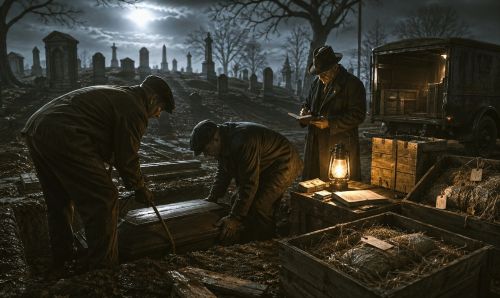
: Twentieth-century grave robbing did not disappear. It changed form, moving through ransom, looting, museums, medical schools, and the fight to restore dignity to the dead.

By Matthew A. McIntosh
Public Historian
Brewminate
Introduction: The Grave Robber Did Not Vanish
The grave robber did not vanish in the twentieth century. He changed costume. The shadowy “resurrection man” of the eighteenth and nineteenth centuries, hauling fresh corpses from churchyards to anatomy schools, no longer stood at the center of the story in quite the same way. New anatomy laws, changing medical systems, municipal burial regulations, and eventually formal donation regimes made the older trade in fresh cadavers less visible and, in many places, less necessary. But the deeper problem remained: the dead could still be converted into value. A body might become ransom property, a skull might become a scientific specimen, a funerary pot might become a collector’s prize, an ancestor might become a museum accession number, and an unclaimed corpse might become educational material. The shovel was still there, but it was now joined by the catalog card, the police file, the archaeological permit, the anatomical form, the auction invoice, and the museum inventory.
This is not a continuation of the familiar nineteenth-century body-snatching narrative so much as an argument about its transformation. The nineteenth-century trade in stolen corpses has its own distinctive history: anatomy riots, medical-school demand, class resentment, racial targeting, religious outrage, and the frightening proximity between the graveyard and the dissecting room. By the twentieth century, that older world had not simply disappeared, but it had been reorganized. The stolen dead were no longer valuable only because they were fresh enough to dissect. They could be valuable because they were famous, ancient, Indigenous, collectible, racially classified, legally unclaimed, or institutionally useful. Grave robbing survived not as one practice but as a family of practices, some plainly criminal, some quasi-legal, some hidden in respectable institutions, and some defended for decades in the language of science, preservation, or public education.
The twentieth-century grave robber also operated in a world that claimed to be increasingly modern, regulated, and humane. This is what makes the subject so revealing. Modern states expanded police power, cemetery law, museum governance, archaeological regulation, and medical ethics. Universities professionalized anatomy and anthropology. Museums presented themselves as guardians of the human past. Archaeologists distinguished their work from looting. Legislatures increasingly spoke of consent, dignity, public order, and cultural heritage. Yet beneath this language of improvement, the dead remained unevenly protected. Some graves were guarded by wealth, fame, race, citizenship, family power, religious authority, or national sentiment. Others were left vulnerable because the people buried there had been poor, colonized, institutionalized, enslaved, segregated, displaced, criminalized, or declared “vanishing” by the very institutions that wished to possess them. That unevenness is the central problem. Grave robbing in the twentieth century was not merely a matter of criminals desecrating isolated graves, although such crimes continued. It was also a problem of markets and institutions deciding whose dead could be used. The celebrity corpse stolen for ransom exposed the grotesque cash value of fame after death. The looted burial mound revealed the appetite of collectors and dealers for objects stripped from funerary meaning. The museum storeroom exposed the colonial habit of turning ancestors into specimens. The anatomy laboratory revealed how poverty and racial marginalization could still shape the supply of bodies even when outright grave theft became less common. In each case, the dead were not simply removed from the ground. They were translated into another category: property, evidence, artifact, resource, curiosity, or teaching material.
This translation often depended on fraud, broadly understood. Sometimes the fraud was literal: thieves claimed control over a stolen coffin, dealers obscured the origins of burial goods, or collectors pretended that grave objects had passed cleanly into the market. But the more important fraud was moral and linguistic. A burial object became an “artifact,” as if its funerary context were incidental. Human remains became “specimens,” as if personhood had ended at the museum door. The poor and unclaimed became “available,” as if lack of family power were the same as consent. Indigenous ancestors became remnants of a supposedly disappearing past, as if living communities had no claim upon them. The violence of grave robbing was often made possible by changing the name of what had been taken.
The law eventually began to catch up, but belatedly and unevenly. The Uniform Anatomical Gift Act, first promulgated in 1968, helped standardize a consent-based framework for donating bodies and organs for transplantation, research, education, and therapy. The Archaeological Resources Protection Act of 1979 strengthened federal protections against the unauthorized excavation, removal, damage, or trafficking of archaeological resources on public and Indian lands. The Native American Graves Protection and Repatriation Act of 1990 marked a major shift by requiring federally funded institutions and federal agencies to inventory, consult over, and repatriate Native American human remains, funerary objects, sacred objects, and objects of cultural patrimony under defined conditions. These laws mattered not because they instantly solved the problem, but because they admitted what earlier systems had often denied: the dead had been taken, traded, studied, and stored under arrangements that many descendants and communities experienced not as preservation, but as theft. The subject also requires caution. Not every twentieth-century excavation was grave robbing. Not every medical cadaver was stolen. Not every museum worker acted with the same motives, and not every older collection can be judged without attention to its legal and intellectual context. Archaeology, anatomy, and museum practice gradually changed, and many professionals came to reject the assumptions they had inherited. Yet caution should not become evasion. The strongest interpretation must hold two truths together: twentieth-century grave violation took many different forms, and those forms were connected by recurring imbalances of power. The dead most likely to be disturbed, collected, displayed, dissected, or forgotten were usually those whose living communities had the least authority to stop it.
The history of twentieth-century grave robbing is a history of modernity’s unfinished promises. It asks whether a society that speaks of dignity can protect the dead without first deciding which lives were dignified. It asks whether science can learn from human remains without repeating the inequalities that delivered those remains into its hands. It asks whether museums can preserve the past while refusing to possess ancestors against the wishes of the living. And it asks whether law can repair violations that law itself once permitted, ignored, or rationalized. The grave robber did not vanish because the desire to profit from, study, display, possess, or control the dead did not vanish. It merely found new justifications.
From Resurrection Men to Modern Desecration: What Changed After the Nineteenth Century
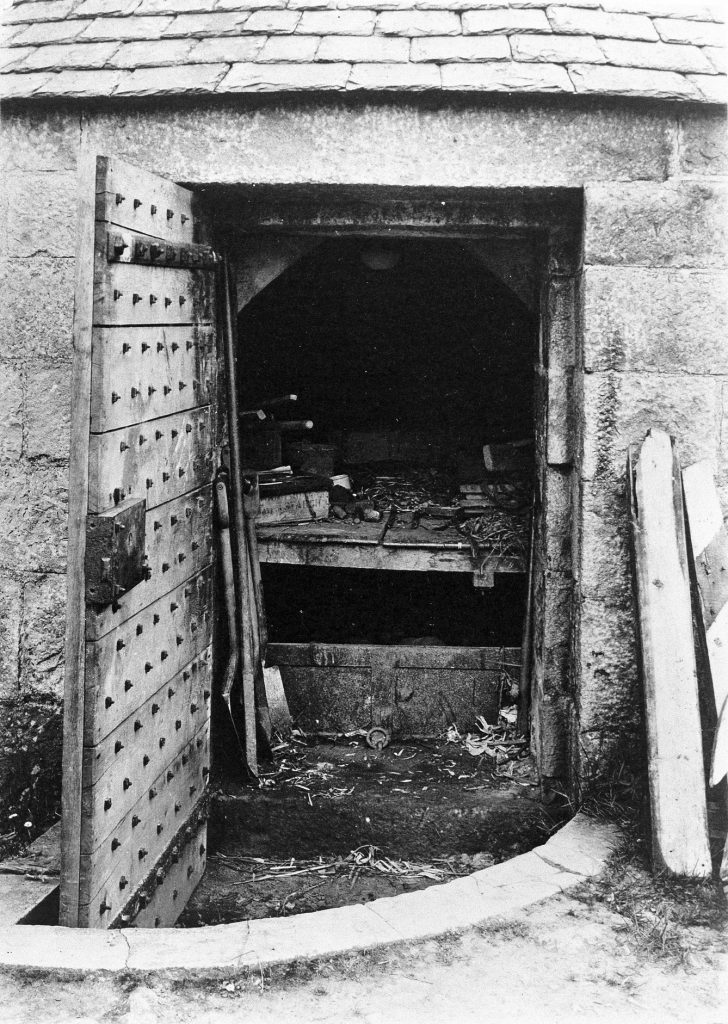
The nineteenth-century body snatcher belonged to a particular economy of death. Medical schools needed fresh cadavers, legal supply was inadequate, and the bodies most available to anatomy were usually those of the poor, the executed, the institutionalized, and the socially vulnerable. The resurrection man was hated not only because he violated graves, but because he exposed a terrifying class truth: some people could protect their dead, while others could not. Families guarded churchyards, installed mortsafes, watched over new burials, and feared that poverty would follow them even into the grave. The theft of a corpse for dissection was not merely a crime against property or public order. It was an assault on family, religion, memory, and the hope that death might finally place the body beyond the reach of power.
By the twentieth century, that older world had changed, but the change was not as clean as reformers liked to imagine. Anatomy acts, state medical regulations, municipal burial systems, and the increasing bureaucratization of hospitals and poorhouses made the nocturnal trade in freshly buried bodies less central to medical education. The resurrection man did not disappear because society suddenly developed a universal respect for the dead. He became less necessary because institutions gained more orderly ways of obtaining bodies. The supply chain moved from the graveyard wall to the hospital ward, the almshouse, the prison, the morgue, the asylum, and the category of the “unclaimed.” A corpse no longer had to be stolen in secret if law or administrative practice could render it available. This was a major transformation in the history of grave violation. In the older body-snatching economy, the scandal was often the illegal removal of the dead. In the newer institutional economy, the scandal lay in the conversion of social abandonment into consent’s substitute. The unclaimed dead were not always literally stolen, but neither were they necessarily freely given. Their availability often reflected poverty, isolation, racial exclusion, institutional confinement, or the inability of relatives to navigate bureaucratic constructs. A body could pass into anatomical use because no one claimed it quickly enough, because kin could not afford burial, because a person died in a public institution, or because the state treated the dead poor as a civic resource. The legal form had changed, but the social geography of vulnerability remained painfully familiar.
This is why the twentieth century should not be described simply as the period after body snatching. It was the period in which body snatching was partially absorbed into modern systems. Medical schools increasingly wanted regularity, legitimacy, and protection from public scandal. Governments wanted public health, orderly burial, and professionalized medicine. Reformers wanted to end graveyard theft and murder-for-dissection panics. Yet these goals did not necessarily create a democratic ethics of the dead. They often redirected anatomical supply toward those least able to resist while allowing respectable institutions to distance themselves from the older criminality of the resurrection trade. The result was not a simple victory of law over desecration, but a shift from illicit theft to bureaucratic entitlement.
Race sharpened this continuity. In the United States, the history of anatomical supply cannot be separated from slavery, segregation, medical racism, and the long targeting of Black cemeteries and Black bodies. Nineteenth-century grave robbing disproportionately threatened African American burial grounds in many cities, but the twentieth century inherited the same moral structure in altered form. Black, poor, imprisoned, institutionalized, and unclaimed bodies remained disproportionately exposed to dissection and medical use. Even when the corpse entered the laboratory through a legal channel, the underlying question remained: whose body was society willing to treat as available? Modern medical education increasingly spoke the language of science and public benefit, but the bodies that made such education possible often came from communities already denied full dignity in life.
Grave robbing expanded beyond the medical cadaver. The twentieth century brought new markets for the dead and their possessions. Archaeological collecting, museum expansion, antiquities dealing, racial science, tourist curiosity, and private collecting all created incentives to disturb burial places. In this newer landscape, the grave robber might not be seeking a whole corpse at all. He might want a skull, a funerary vessel, a beadwork object, a sacred item, a mummy, a weapon, a textile, or any object that could be detached from mourning and made collectible. This distinction matters because it broadened the meaning of desecration. A grave could be robbed even if the body remained partly in place. A burial could be violated by removing the things that joined the dead to kinship, ceremony, identity, and the afterlife.
The professionalization of archaeology and anthropology complicated this story. Modern archaeologists increasingly distinguished scientific excavation from looting, and that distinction mattered. Controlled excavation, documentation, preservation, and interpretation were not the same as pothunting for sale. Yet the line between science and desecration was often blurred by colonial assumptions. Indigenous graves, ancient cemeteries, and burial mounds were frequently treated as archives for outsiders rather than resting places for ancestors. The language of research could make removal appear neutral, even noble. Human remains became “specimens.” Funerary objects became “artifacts.” Sacred belongings became “collections.” Once this vocabulary took hold, the moral claims of descendant communities could be dismissed as sentimental, religious, or anti-scientific, while the claims of museums and universities appeared rational and universal. This was one of the deepest changes after the nineteenth century: grave robbing became harder to identify because it often wore respectable clothing. The resurrection man was easy to hate. He worked at night, violated a recent grave, and delivered the corpse to a known buyer. Twentieth-century desecration could happen through excavation reports, accession records, anatomical statutes, museum donations, estate sales, and institutional transfers. It could be justified as education, preservation, public health, heritage, or scientific progress. The violence was often displaced in time. By the moment a skull sat in a museum drawer or a burial pot appeared in a collector’s cabinet, the original act of removal might be forgotten, obscured, legalized, or normalized. The crime became an object history.
The emotional geography also changed. Nineteenth-century body snatching often centered on the family’s immediate horror: the newly buried mother, child, spouse, or neighbor stolen before mourning could settle. Twentieth-century grave robbing widened that grief across generations. Indigenous communities sought ancestors taken decades earlier. Families discovered that famous graves had been disturbed for money or rumor. Descendant groups learned that bones from cemeteries, battlefields, prisons, hospitals, or archaeological sites had been stored far from their communities. The injury was no longer always a sudden discovery at the graveside. It could be archival, institutional, and intergenerational: the shock of finding one’s dead cataloged elsewhere. Law followed these changes slowly. Reform did not arrive all at once, and it did not emerge from pure benevolence. It usually came after scandal, activism, professional conflict, or political pressure made older arrangements indefensible. Anatomical gift laws began to elevate consent as the proper basis for using the body after death. Archaeological protection laws recognized that looting was destroying cultural and historical resources. Repatriation laws eventually acknowledged that museums and federal agencies had accumulated human remains and funerary objects under conditions that many Native nations regarded as grave robbery by another name. These legal shifts did not erase the past. They revealed how long modern institutions had benefited from the vulnerable dead.
The most important change after the nineteenth century, then, was not that grave robbing declined into insignificance. It became plural. There was no longer one dominant figure, no single resurrection man who embodied the whole problem. Instead, twentieth-century desecration involved thieves, collectors, dealers, museum curators, medical schools, public officials, amateur archaeologists, professional scientists, and legal systems. Some acted criminally, some acted within the law, and some acted according to professional standards that later generations would reject. But the connecting thread remained the same: the dead were safest when they belonged to communities with recognized power, and most vulnerable when they could be reclassified as abandoned, ancient, collectible, scientific, unclaimed, or extinct.
That transformation sets the stage. The twentieth century inherited the moral panic of the stolen corpse but translated it into new forms: celebrity ransom, antiquities looting, Indigenous dispossession, museum retention, and the medical use of marginalized bodies. To understand modern grave robbing, we must stop looking only for the man with the shovel. We must also look for the law that permitted removal, the institution that accepted the remains, the market that rewarded the theft, the discipline that renamed the ancestor, and the archive that made desecration look like knowledge.
Celebrity Corpses and the Ransom Grave
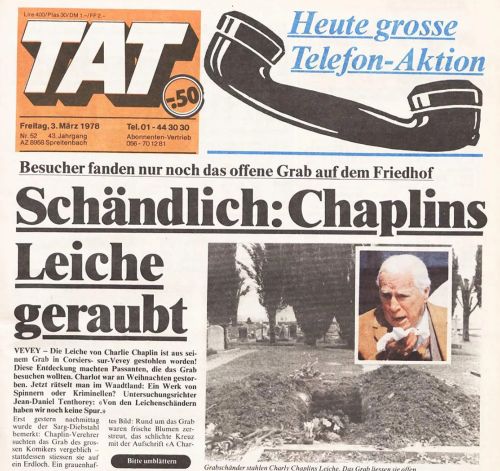
The twentieth-century ransom grave belonged to a different moral universe than the nineteenth-century medical grave robbery. The resurrection man stole the anonymous or socially vulnerable dead because anatomy schools needed bodies. The ransom grave, by contrast, targeted the famous dead precisely because they were not anonymous. Their value came from recognition. A celebrity corpse could be transformed into a hostage, not because the body itself was medically useful, but because the name attached to it carried emotional, symbolic, and financial force. The stolen coffin became a grotesque extension of the celebrity economy: fame converted into leverage after death. The most infamous twentieth-century example was the 1978 theft of Charlie Chaplin’s coffin from the cemetery at Corsier-sur-Vevey, Switzerland. Chaplin had died on Christmas Day 1977 and had been buried near the Swiss home where he had spent the last decades of his life. In March 1978, thieves removed his coffin and hid it in a field, then attempted to extort money from his widow, Oona Chaplin. Contemporary reporting and later accounts agree on the broad facts: the demand was approximately $600,000, the police monitored public telephones around Lausanne, and the coffin was eventually recovered after the suspects were arrested.
The Chaplin case was absurd, cruel, and revealing all at once. It had the shape of a black comedy, and later retellings have often emphasized its almost cinematic quality: the world-famous comic genius stolen from his grave by men whose plan quickly collapsed into incompetence. But the humor of the story should not obscure its violence. The theft did not merely remove a coffin. It forced a widow and children into a second ordeal of death, mourning, threat, and negotiation. According to the Swiss National Museum’s account, the family received not only demands from the actual kidnappers but also false ransom demands from opportunists who tried to exploit the public knowledge of the grave’s desecration. The corpse, once stolen, became a commodity around which fraud multiplied.
That multiplication is crucial. Chaplin’s grave robbers did not need to possess a living hostage. They needed to possess proof. The coffin, the photograph, the phone call, and the threat turned the dead body into a negotiable instrument. The ransom grave exposed a distinctly modern feature of celebrity death: the physical body of the famous person could become valuable not only as a relic of admiration but as evidence of control. The kidnappers’ claim was simple and obscene: they had Chaplin, and because the world still cared about Chaplin, his family should pay. Death had not ended the economic life of his fame. It had merely placed that fame in a more vulnerable form.
The police response showed how celebrity grave robbery could become a public spectacle as well as a private crime. Authorities traced calls, monitored hundreds of phone booths, bargained through intermediaries, and turned the case into a strange contest between extortion and surveillance. The Washington Post reported in May 1978 that police recovered Chaplin’s body from a cornfield after two men confessed to the theft, while The Guardian’s archived court report later described the defendants’ account of digging up the coffin, moving it, and attempting to extract payment from the family. The final protective measure was telling: Chaplin was reburied beneath concrete. The grave had to be fortified because fame had made it insecure.
This was not the same as ordinary theft from a cemetery. The Chaplin case depended on a peculiar inversion of celebrity intimacy. Fans often feel they “know” famous people through film, music, politics, sport, or public image. That intimacy is one-sided, but it can be emotionally powerful. Celebrity death creates a wide field of mourners beyond family, congregation, or nation. Scholars of celebrity death have emphasized that dead celebrities can continue to generate symbolic and commercial value through their “traces”: image, name, likeness, recordings, photographs, voice, and remembered persona. Ruth Penfold-Mounce argues that dead celebrities may remain culturally productive after death because their posthumous identities continue to circulate and be consumed. The ransom grave is the criminal underside of that same process. If the famous dead can remain productive for estates, fans, publishers, studios, museums, or advertisers, they can also become attractive to extortionists.
The case also reveals how the corpse differs from other celebrity property. A film reel, costume, autograph, instrument, manuscript, or photograph may carry market value because it touched the celebrity’s life. The corpse carries a more dangerous kind of value because it is not merely associated with the person; it is the person’s mortal remains. The theft of Chaplin’s coffin violated two boundaries at once: the family’s claim to mourn privately and the public’s belief that even fame should end in bodily peace. The stolen celebrity corpse collapses relic, property, evidence, and kinship into one unbearable object.
A less secure but still useful example is the reported disturbance of Benny Hill’s grave in Southampton in 1992. Hill, the British comedian, was rumored to have been buried with gold or jewelry, and later accounts state that robbers opened his grave in search of valuables, though his body was reportedly left undisturbed. This anecdote should be used cautiously because it is not as well supported in easily accessible scholarly or archival sources as the Chaplin case. Yet even as a reported episode, it illustrates the same cultural logic in miniature. The famous grave became a target because rumor attached wealth to the body. The robbers were apparently not seeking Hill’s corpse as a corpse, but they were willing to violate his burial because celebrity encouraged fantasy: surely the famous man must have taken treasure with him.
Rumor matters in the history of grave robbing because graves conceal. A grave is a place of memory, but it is also a place where the living cannot see. That invisibility invites stories: jewels in the coffin, secret burial arrangements, hidden relics, switched bodies, political cover-ups, bones worth money, objects worth selling. In older grave-robbing panics, rumor often surrounded the newly buried poor, who might be stolen for anatomy. In twentieth-century celebrity cases, rumor attached itself to fame and wealth. The public knew the name, but not the contents of the coffin. That gap between recognition and concealment gave the grave robber room to imagine profit.
Celebrity grave robbery also complicates my broader argument about power. Many of the dead discussed later were vulnerable because they lacked social protection: the poor, the unclaimed, the colonized, the imprisoned, the institutionally confined, and Indigenous ancestors held by museums. Chaplin and Hill represent the opposite problem. They were vulnerable not because nobody cared about them, but because too many people knew them. Their graves were not obscure; they were marked by fame. This kind of grave robbing was not the theft of the socially disposable dead but the exploitation of public attachment. It shows that the dead could be endangered by abandonment or by celebrity, by invisibility or by excessive visibility. Yet the two forms are connected by the same underlying act: the removal of the dead from the moral relationships that should protect them. The ransom grave severed the famous corpse from family custody and transformed grief into a bargaining position. Antiquities looting severed the ancient or Indigenous dead from ceremonial and descendant relationships. Medical exploitation severed the poor or unclaimed dead from consent and kinship. In each case, the dead were made available by being reclassified. Chaplin became collateral. Hill’s grave, in rumor, became a possible treasure chest. The corpse was no longer simply a body at rest; it was a means to extract value from the living.
The ransom grave belongs here not because it was statistically common, but because it was symbolically clarifying. It stripped grave robbing to one of its essential motives: the belief that the dead can be made to pay. In Chaplin’s case, they could be made to pay through family love and public reverence. In the antiquities market, they could be made to pay through collectible objects. In anatomical systems, they could be made to pay through educational utility. The form changed, but the conversion remained. The grave robber did not always want the body for the same reason, but he always depended on the same premise: that burial was not final if the dead could still be turned into value.
The Antiquities Market and the Rise of the Pothunter
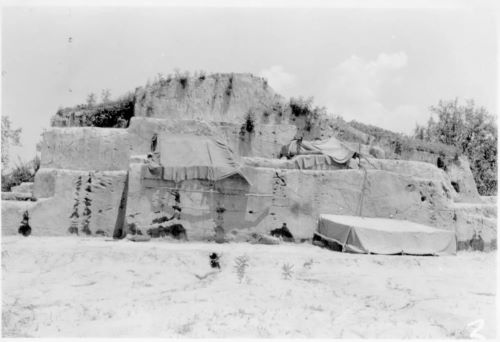
If the nineteenth-century grave robber was imagined as a nocturnal thief of fresh corpses, the twentieth-century pothunter often presented himself as something less sinister: a collector, hobbyist, amateur historian, local explorer, or supplier of interesting objects. This softer image was part of the problem. Grave robbing increasingly moved through the language of curiosity and collecting. Burial places were no longer violated only because bodies were needed for dissection. They were violated because the objects buried with the dead had entered a modern market in antiquities, “folk art,” ethnographic material, and archaeological collectibles. A pot, pipe, bead, copper ornament, shell gorget, textile, mask, weapon, funerary figurine, or carved object could be removed from a grave, stripped of its burial meaning, and transformed into a commodity.
The word “pothunter” is useful because it captures the small-scale, repetitive, destructive nature of much twentieth-century looting. The pothunter did not always resemble the cinematic tomb robber, nor did he necessarily operate with the glamour later attached to international art theft. He might be a local digger with a shovel and a weekend habit, an amateur collector searching mounds and ruins, a dealer’s supplier, or a tourist following rumor and opportunity. Yet his damage could be enormous. Archaeological sites are not treasure chests in which valuable things sit apart from their surroundings. They are contexts. A vessel’s placement, a body’s position, soil layers, associated objects, traces of food, ash, pollen, textiles, tools, architecture, and disturbance all help reconstruct the social and ritual world of the dead. Once looted, that context is usually gone forever. This destruction was not accidental. The antiquities market rewarded objects, not contexts. Collectors wanted things that could be displayed, sold, photographed, authenticated, or admired. Dealers wanted portable value. Museums and private buyers often wanted striking objects with enough cultural identity to appear important but not enough documented history to make ownership troublesome. The grave, by contrast, offered a dense moral and archaeological relationship that the market had every incentive to ignore. In a burial, an object might be a gift, provision, marker of office, sign of kinship, protection for the journey after death, or part of a ceremonial obligation. In the market, it became “a bowl,” “a figure,” “a necklace,” or “a Native artifact.” This narrowing of meaning was one of the central frauds of modern grave robbing.
The looting of Indigenous burial grounds in North America was bound up with this transformation. Across the twentieth century, Native American graves, mounds, caves, village sites, and sacred landscapes were repeatedly disturbed by amateur diggers, collectors, road projects, reservoir construction, museum expeditions, and commercial looters. Some removals were openly illegal. Others occurred in gray zones where property law, federal authority, private land ownership, museum ambition, and weak protection for Indigenous burial places created opportunities for extraction. The underlying assumption was often colonial: Native graves were treated as remnants of a vanished or vanishing people rather than as resting places of ancestors whose descendants retained living claims.
That assumption allowed burial goods to be severed from the dead in public imagination. A collector might claim to admire Native craftsmanship while ignoring the grave from which an object came. A museum might preserve an object while separating it from the ceremony that gave it meaning. A dealer might describe an item by culture area, period, and material, while omitting the violence or illegality of its removal. This was not simply bad documentation. It was a moral laundering process. The less one knew about the object’s exact origin, the easier it became to possess. Ignorance became useful. Provenance, when absent, could function not as a warning sign but as a shield.
The rise of professional archaeology complicated the story because archaeologists themselves increasingly condemned pothunting and distinguished scientific excavation from looting. That distinction matters. A controlled excavation records context, preserves information, follows method, and, in its better forms, operates within legal and ethical constraints. Looting destroys evidence for private gain. Yet the professional boundary was never perfectly clean. Earlier archaeological practice, especially when conducted within colonial or settler-colonial frameworks, often treated Indigenous burials as research resources rather than as graves. Even where the excavation was systematic rather than mercenary, descendant communities could still experience removal as desecration. The scientific method did not automatically answer the ethical question: who had the right to disturb the dead?
By the middle and late twentieth century, archaeologists and preservationists increasingly recognized that looting was not merely a moral offense but an epistemic catastrophe. Looted objects arrived without reliable context. Sites were churned into holes. Burial assemblages were broken apart. Skeletal remains were scattered, discarded, sold, or separated from associated funerary goods. The market rewarded the most visually attractive objects, not the most historically informative evidence. This meant that pothunting damaged both communities and scholarship. It robbed descendant peoples of ancestors and ceremonial relationships, while robbing historians and archaeologists of the evidence needed to understand past lives with care.
The problem was not confined to North America. The twentieth-century international antiquities trade drew material from tombs, temples, cemeteries, shipwrecks, battlefields, monasteries, and archaeological sites across the world. Mediterranean tomb goods, Egyptian funerary objects, Latin American ceramics, African ritual and funerary materials, Asian antiquities, and Indigenous objects from settler societies all circulated through uneven global markets. Wealthy collectors in Europe and North America benefited from political instability, colonial extraction, poverty, weak enforcement, and demand for objects with aura. The farther an object traveled from its burial context, the easier it became to admire it as art rather than confront it as evidence of disturbance. Legal responses emerged slowly because the market was powerful, diffuse, and often protected by respectable buyers. The 1970 UNESCO Convention against illicit import, export, and transfer of cultural property marked a major international attempt to define and restrain the trade in stolen or illegally exported cultural objects. In the United States, the Archaeological Resources Protection Act of 1979 gave stronger federal protection to archaeological resources on public and Indian lands, including penalties for unauthorized excavation, removal, damage, alteration, or trafficking. These laws reflected growing recognition that looting was not simply private misbehavior. It was a threat to cultural heritage, public knowledge, and the rights of communities whose dead and sacred objects had been made vulnerable to commerce.
Still, law often lagged behind damage. A looted grave cannot be fully restored by later prosecution. A burial assemblage cannot be easily reconstructed after its objects have been sold separately across states or countries. A skull separated from its funerary objects, a pot separated from the body beside which it was placed, or a sacred item separated from its community may remain materially preserved while being historically and spiritually dismembered. This is why market language can be so misleading. A collector may “save” an object from decay, but the act of saving may depend on destroying the relationship that made the object meaningful in the first place.
The pothunter’s rise reveals one of the central shifts in twentieth-century grave robbing: the grave was increasingly attacked not only as a source of bodies, but as a source of things. Yet those things were never merely things. Burial objects carried relationships among the dead, the living, the sacred, the household, the community, and the landscape. To remove them was to rewrite the dead as inventory. The antiquities market made this rewriting profitable. It taught buyers to see beauty without violation, rarity without theft, and ownership without mourning. In that sense, the pothunter was not an archaic survivor of a rougher past. He was a modern figure, created by markets that could turn desecration into collecting and make the grave appear valuable precisely by emptying it of its dead.
Indigenous Graves, Colonial Science, and the Museum as Receiver
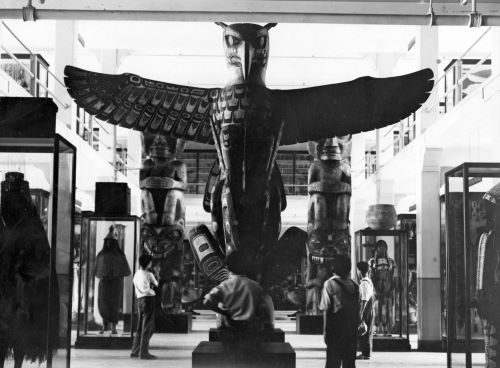
The twentieth-century history of grave robbing cannot be told honestly if it is limited to criminals who dug at night. Some of the most consequential violations of Indigenous graves passed through institutions that described themselves as scientific, educational, or preservational. Museums, universities, medical schools, anthropological departments, government agencies, and private collectors often became the receivers of human remains and funerary objects removed from Native burial places. Their role was not always the same as that of the looter, but it was deeply connected to the looter’s world. A market or method of collection requires somewhere for the stolen thing to go. The museum storeroom, the anatomical cabinet, and the university collection gave grave robbing a respectable destination.
This was not merely a matter of scattered misconduct. It belonged to a broader colonial science that treated Indigenous bodies as evidence to be collected, classified, measured, compared, and preserved. In the nineteenth and early twentieth centuries, physical anthropology, racial science, craniometry, ethnology, and museum anthropology often approached Native remains as data in arguments about human origins, racial hierarchy, migration, “primitive” culture, and social evolution. Skulls, bones, hair samples, funerary objects, sacred belongings, and burial goods were drawn into structures of classification that claimed to speak scientifically about humanity while relying on deeply unequal access to the dead. Indigenous graves were not treated like the graves of socially powerful white communities. They were treated as extractive sites. The language of “salvage” helped justify this extraction. Many anthropologists and museum collectors worked under the assumption that Native peoples were disappearing, or that their cultures were doomed to vanish under the pressure of modernity. This idea was false, colonial, and self-serving, but it had enormous institutional power. If a people was imagined as vanishing, then collecting their ancestors, objects, ceremonies, songs, tools, and sacred belongings could be framed as rescue rather than violation. The museum became the supposed guardian of what colonialism itself was helping to destroy. In that logic, Indigenous communities were denied both a future and authority over their past.
The grave was central to this process because it contained the kind of material that collectors wanted most: bodies and objects together. A burial site offered human remains, associated funerary objects, evidence of ritual, material culture, and a claim to antiquity. For archaeologists and anthropologists, it could appear as a concentrated archive. For descendant communities, it was something else entirely: a resting place, a ceremonial site, a sacred landscape, a point of kinship, a sign of obligation, and a continuing relationship between the living and the dead. The conflict was not simply between knowledge and ignorance. It was between different systems of authority over the dead.
Museums often strengthened their claims by transforming ancestors into specimens. A skull in a drawer was no longer a person’s head; it was an osteological sample. A burial bundle became ethnographic material. A funerary vessel became an artifact. A sacred object became a cultural item. This renaming mattered. It made possession appear orderly. It allowed institutions to speak in the language of care while separating the remains from the relationships that made care meaningful. The museum could claim to preserve what the grave had held, but the preservation was also a removal: from land, from ceremony, from community memory, from descendant authority, and often from the possibility of reburial. The collecting of Indigenous remains also depended on asymmetries of law. Federal agencies, military expeditions, universities, museums, local collectors, and amateur diggers often operated in contexts where Native nations had little power to prevent excavation or demand return. Burial protections were uneven, enforcement was weak, and the legal status of remains and funerary objects often favored landowners, institutions, or the state. Even when removals were documented, they were not necessarily experienced by Indigenous communities as legitimate. A permit, accession record, donation letter, or excavation report could make the chain of custody legible to an institution while doing nothing to answer the deeper question of consent.
The museum as receiver also complicates the distinction between looting and science. A pothunter might destroy a burial for money, while a professional excavator might record and preserve information. That difference is real and should not be erased. Yet both could participate in a structure that treated Indigenous graves as available to outsiders. In some cases, museums acquired remains through fieldwork conducted by their own staff. In others, they accepted donations from collectors, purchased objects from dealers, or inherited older collections whose origins were poorly documented. The institution might not have dug the grave itself, but it often benefited from the grave having been opened. This is why repatriation debates have been so intense. They are not merely arguments about where bones should be stored. They are arguments about whether scientific institutions have the right to retain control over ancestors taken under colonial conditions. For many Native nations, the problem is not only that remains were removed, but that museums then claimed interpretive authority over them. Institutions decided how remains would be classified, whether they were culturally affiliated, whether they could be studied, whether they could be displayed, whether they could be sampled, and whether they could be returned. The original grave robbery was extended by decades of administrative control.
NAGPRA marked a major legal and moral turn in the United States because it challenged this inherited authority. NAGPRA required federal agencies and federally funded institutions to inventory Native American human remains and associated funerary objects, consult with tribes and Native Hawaiian organizations, and repatriate remains and cultural items under defined conditions. It also addressed sacred objects, objects of cultural patrimony, and unassociated funerary objects. The law did not declare all museum collections criminal, nor did it erase difficult questions about affiliation, evidence, or competing claims. But it did shift the balance. It recognized that museums were not neutral owners of the Indigenous dead.
NAGPRA’s importance lies partly in what it revealed. The inventories and reporting processes made visible the scale of institutional possession. Decades after passage, museums and federal agencies still reported large numbers of Native American human remains in their holdings or collections. The persistence of those numbers demonstrates that repatriation has not been a simple administrative cleanup. It has been a long reckoning with the depth of collecting, the weakness of earlier documentation, institutional resistance, legal complexity, and the difficulty of undoing grave violations once they have been absorbed into professional systems. The dead had been made into collections over generations; returning them has required confronting the habits of those generations.
The National Museum of the American Indian Act of 1989, which applied to Smithsonian collections, and NAGPRA the following year should be understood together as part of a broader change in the moral language of museums. They helped move public discussion away from the idea that Indigenous remains were primarily scientific resources and toward the recognition that they were ancestors. That shift in wording was profound. “Human remains” is a legal and administrative phrase; “ancestors” is a relational one. The first can be inventoried. The second demands responsibility. Repatriation has often required institutions to learn that proper care is not always retention, study, or preservation. Sometimes proper care is return.
Still, the story is not one of simple institutional enlightenment. Many museums complied slowly, narrowly, or defensively. Some insisted for years on restrictive standards of proof for cultural affiliation. Others held remains with vague or incomplete provenance. Some worried that repatriation would weaken scientific research, empty collections, or threaten museum authority. These concerns produced real scholarly debate, but they also exposed the unequal assumptions at the heart of the older system. Museums had often acquired the dead under conditions in which Indigenous consent was absent or disregarded, but when return was requested, descendant communities were asked to prove relationship according to institutional standards. The burden shifted to the people from whom the dead had already been taken. The museum as receiver stands at the center of twentieth-century grave robbing because it shows how desecration could become respectable. A grave robber with a shovel might commit the first violation, but a museum could stabilize that violation for a century. It could label it, number it, store it, study it, publish it, display it, and pass it to future scholars. The violence did not end when the grave was filled back in. It continued whenever the ancestor remained separated from community, ceremony, and land by institutional possession.
This does not mean that all archaeology or museum practice should be collapsed into grave robbing. The distinction between careful excavation and destructive looting matters. So does the fact that many contemporary archaeologists, museum professionals, and tribal historic preservation officers now work collaboratively under ethical standards very different from those of earlier generations. But the history of Indigenous graves and colonial science forces a harder conclusion: modern grave robbing was not only a crime of outsiders against museums. It was also, at times, a process through which museums themselves became beneficiaries of removal. The twentieth-century grave robber did not always stand outside the institution. Sometimes the institution was where his work acquired a label, a shelf, and a claim to legitimacy.
The Black, Poor, and Unclaimed Dead in Medical Education
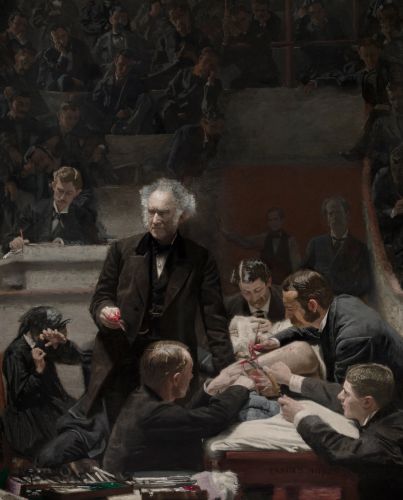
The older trade in stolen bodies did not end because the dead poor suddenly became secure. It declined because medical institutions acquired more formal channels for obtaining them. In the twentieth century, the graveyard thief was no longer the central figure in anatomical supply, but the social logic that had made his work possible remained disturbingly durable. Medical education still required bodies. Students still learned anatomy by cutting, observing, naming, and separating the human body into parts. The question was not whether bodies would be used, but whose bodies they would be, how they would be obtained, and whether the people from whom they came had ever possessed meaningful power to refuse.
The category of the “unclaimed” dead became one of the most important bridges between the old world of body snatching and the modern world of institutional anatomy. An unclaimed body might belong to someone who died in a hospital, almshouse, prison, asylum, workhouse, charity ward, nursing facility, public morgue, or on the street. It might be unclaimed because no relatives could be found, but also because relatives were poor, distant, uninformed, intimidated by institutions, unable to afford burial, or given too little time to intervene. The bureaucratic phrase “unclaimed” could make the absence of immediate family action appear like consent. But silence, poverty, confusion, and administrative delay are not the same thing as permission. This distinction is central to the moral history of medical education. The unclaimed dead were often described as socially useful after death because they had become public responsibilities in life. If the state or county paid for their care, confinement, relief, or burial, then their bodies could be treated as repayment to society through anatomical instruction. This reasoning was rarely stated in its harshest form, but it structured much of the system. The dead poor became available because they had died within institutions that already managed poverty. Their bodies entered the anatomy laboratory not through the violence of a midnight shovel, but through paperwork, transfer orders, anatomical boards, and the authority of public officials.
That shift made the process look cleaner. Medical schools could claim that they no longer depended on grave robbers. Students received bodies through recognized channels. Anatomical boards distributed cadavers. Morgues and public institutions reported the dead. State law defined procedures. Yet legality did not erase inequality. The supply of cadavers still came disproportionately from people who had lacked social power in life: the poor, the unhoused, the institutionalized, prisoners, immigrants, Black Americans, the elderly without family resources, and those whose kin could not afford burial. The old grave robber had preyed on vulnerability directly. The modern system often inherited vulnerability and called it administration.
Black communities had particular reason to be distrustful. In the United States, the history of anatomical education was entangled with slavery, segregation, racial science, and medical racism. In the nineteenth century, African American cemeteries were frequent targets for body snatching because Black families had less legal and political power to protect their dead. That history did not simply vanish in the twentieth century. Even where outright grave robbery became less common, Black bodies remained disproportionately exposed to medical use through poverty, institutional death, segregated care, prisons, and the long afterlife of racial inequality. For many Black families, the fear that the body might be taken, dissected, experimented upon, or mishandled was not superstition. It was historical memory.
Medical schools depended on dissection while often distancing themselves from the social violence that supplied the dissecting table. Students were taught to see the cadaver as a first patient, a teacher, or a neutral object of study, depending on the period and institution. But before the cadaver could become pedagogically meaningful, someone had to lose control over the body. In a truly consent-based network, the donor makes that transfer knowingly. In an unclaimed-body system, the transfer is made by others, often because no one with recognized authority stands in the way. The ethical problem lies precisely there: the anatomy laboratory could become a place where social abandonment was converted into educational value.
The poor dead also carried a symbolic burden. Their posthumous use was frequently justified by public benefit. Doctors had to learn anatomy; surgery required skill; medical science served everyone; someone had to provide the bodies through which future physicians would learn. These arguments were not frivolous. Anatomical education was and remains essential. But the benefits of medical training were distributed through society much more broadly than the burdens of cadaver supply. Wealthier families could usually protect their dead through private burial, social influence, legal awareness, and rapid family intervention. Poor families were more likely to encounter public systems that treated burial as an expense and the body as a resource. This imbalance was sometimes made visible by scandal. When communities discovered that graves had been disturbed, bodies mishandled, or remains used without family consent, outrage revealed the emotional life hidden beneath administrative language. Families did not think of their dead as available teaching material. They thought of them as mothers, fathers, children, spouses, friends, church members, neighbors, and kin. Medical institutions might describe a body as unidentified, unclaimed, or suitable for anatomical use, but such terms could not erase the possibility that someone mourned that person, remembered them, or would have objected had they known what was happening.
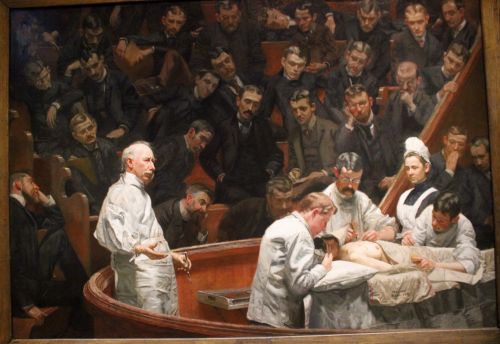
The racial dimension of this history was intensified by the association between Black bodies and medical exploitation more broadly. Anatomical dissection, medical experimentation, surgical display, segregated hospital care, and the use of institutionalized patients all contributed to a wider history in which African Americans had reason to believe that medicine did not always recognize their bodily autonomy. Grave robbing was part of that larger memory. It linked the cemetery to the clinic, the anatomy room to the plantation, the county morgue to the teaching hospital, and the language of science to the history of racial domination. The dead body became one more place where citizenship, dignity, and consent were unequally honored.
In the early and middle decades of the twentieth century, many medical schools still relied heavily on unclaimed bodies. This was not unique to the United States, but the American pattern was shaped by local histories of race, poverty, and public welfare. Anatomy laws varied by state, but they generally sought to regulate supply by giving certain officials authority over bodies that were unidentified, unclaimed, or supported at public expense. These laws reduced the need for illicit grave theft, but they also embedded medical education within poor-law and public-institution systems. The dead body moved from charity ward to dissecting room through a chain of custody that could appear orderly while resting on a deeply unequal social foundation. The emergence of voluntary body donation changed the ethical landscape. The Uniform Anatomical Gift Act, first promulgated in 1968 and later revised, helped standardize the legal framework through which individuals could donate their bodies or organs for transplantation, therapy, research, or education. This mattered because it placed consent more clearly at the center of anatomical use. The ideal donor was no longer the unclaimed pauper but the person who had made a conscious gift. In principle, this represented a profound shift: the body used in medical education would be given, not taken; offered, not appropriated; transferred through autonomy rather than poverty.
Yet the transition was uneven. Voluntary donation did not instantly replace the older dependence on the unclaimed dead, nor did it erase the historical memory of coercive supply. Many institutions continued to use unclaimed bodies for years, and some jurisdictions preserved laws allowing such transfers. Even when donation became more common, the culture of anatomy had to confront the legacy of whose bodies had built medical knowledge. Memorial services, donor ceremonies, ethical training, and language such as “first patient” emerged partly as attempts to humanize the cadaver and teach students gratitude. But gratitude cannot fully substitute for historical reckoning. A respectful ceremony for modern donors does not undo generations in which the poor and marginalized bore the burden of anatomical education without meaningful consent.
The issue of consent also becomes more complicated when death itself occurs inside systems of inequality. A person may sign a donation form freely, but a society that has long treated some communities as medically exploitable must still ask why trust is unevenly distributed. Black Americans’ lower willingness, in some studies and contexts, to donate bodies or organs has often been discussed as a problem of education or outreach. But historically, distrust was not irrational. It emerged from real experiences of grave robbing, segregation, experimentation, unequal treatment, and institutional disrespect. The history of the Black and poor dead in medical education continues to shape the ethics of donation long after the law changes.
The “unclaimed” body also reveals how modern bureaucracy can hide moral violence without intending to. A form may be completed correctly. A waiting period may pass. A body may be transferred according to statute. Students may dissect with solemnity. The institution may follow the rules. Yet the process can still rest on a troubling fiction: that lack of a claimant equals lack of a claim. Human beings do not cease to have histories because no relative arrives at the morgue. They do not cease to belong to communities because poverty has scattered their kin. They do not become ethically empty because the state cannot locate someone to bury them. The unclaimed dead expose the poverty of a system that recognizes only certain kinds of relationship as legally effective. This is why the twentieth-century medical use of marginalized bodies belongs in a discussion of grave robbing even when no grave was literally opened. The older word “grave robbing” must be used carefully; legal transfer is not identical to illegal exhumation. But the moral continuity is undeniable. Both turned vulnerable bodies into resources for others. Both depended on unequal power over the dead. Both produced knowledge from people whose families or communities often lacked the means to object. Both created a hierarchy of posthumous dignity in which some bodies were guarded and others were available.
Medical education has changed substantially since the era when unclaimed bodies dominated cadaver supply. Many medical schools now rely primarily on voluntary donors, incorporate ceremonies of gratitude, and teach students to approach dissection with ethical seriousness. These changes are real and important. But they should not allow the older history to disappear into professional self-congratulation. The modern anatomy laboratory was built, in part, through the bodies of people who did not choose to be there. The dead poor, the Black dead, the imprisoned dead, the institutionalized dead, and the unclaimed dead helped train generations of physicians under conditions that exposed the limits of consent in a society structured by inequality.
The central question, then, is not whether medical dissection was necessary. It is whether necessity was allowed to excuse the unequal taking of the dead. The twentieth century increasingly answered that question by moving toward donation, consent, and memorialization. But the very need for that movement reveals what preceded it. The grave robber did not vanish from medical education all at once. He was replaced, gradually and imperfectly, by systems that could obtain bodies without breaking cemetery gates. The ethical danger was that society mistook this administrative order for justice.
Law, Consent, and the Slow Invention of the Modern Protected Dead
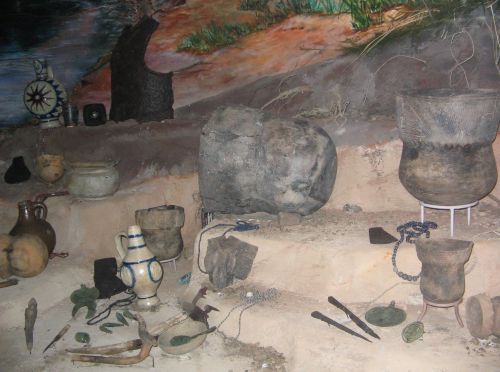
The twentieth century did not inherit a settled principle that the dead possessed dignity enforceable against science, markets, museums, or the state. It inherited fragments: cemetery law, criminal prohibitions against grave desecration, public-health regulations, anatomy statutes, poor-law practices, museum customs, archaeological permits, religious norms, and family expectations. These fragments did not always agree. A family might believe that burial placed the body beyond worldly use, while a medical school might see the unclaimed corpse as a lawful teaching resource. A Native nation might regard ancestral remains as kin, while a museum might classify them as specimens. A collector might see a funerary vessel as private property, while archaeologists and descendant communities saw the same object as part of a destroyed burial context. The “protected dead” had to be invented slowly because modern law first had to decide what kind of thing the dead body was. That question was more difficult than it may appear. In Anglo-American legal tradition, the corpse occupied an ambiguous position. It was not simply property in the ordinary commercial sense, yet it was not entirely outside control. Families had interests in burial. Cemeteries had custodial duties. Public authorities had responsibilities for health and order. Medical institutions claimed access under statute. Archaeological agencies claimed authority over ancient remains. Museums claimed stewardship over collections. This ambiguity made the dead vulnerable. When the law hesitated to call the body property, it sometimes became difficult for families or communities to assert strong claims over it. But when the law treated remains or burial goods too much like property, it could make them transferable, collectible, and alienable. The dead needed protection that was neither simple ownership nor institutional possession.
In the older anatomy regime, law often tried to solve the problem of grave robbing by redirecting supply rather than by establishing full consent. Nineteenth-century anatomy acts in Britain and the United States aimed to reduce illegal exhumation by allowing medical schools access to bodies from prisons, workhouses, hospitals, almshouses, and public institutions. This continued to shape twentieth-century practice. It acknowledged that grave robbing was socially intolerable, but it often substituted the unclaimed poor for the illegally stolen corpse. The result was a troubling compromise: the respectable medical profession could be separated from the resurrection man, while the burden of anatomical supply remained concentrated among those with the least power over their own burial.
Consent became the crucial missing principle. In a consent-centered system, the body after death could be used because the person had chosen that use, or because lawful next of kin had authorized it under clear conditions. In the older system, use often followed status: pauper, prisoner, institutional patient, unclaimed person, or public charge. The moral difference is immense. Consent treats the dead person as someone whose wishes matter beyond death. Status-based availability treats the body as a resource released by social weakness. The history of twentieth-century law is, in large part, the slow and incomplete movement from status toward consent.
The Uniform Anatomical Gift Act of 1968 was central to this transformation in the United States. It provided a model legal framework through which individuals could donate all or part of their bodies for transplantation, therapy, research, or education. Later revisions adjusted the law to new medical realities, particularly organ transplantation and donation systems, but the broader ethical shift was already visible in the original act. The dead body was no longer supposed to arrive in medicine primarily because poverty, abandonment, or public custody made it available. It could arrive as a gift. That language mattered. A gift implies agency, intention, and a relationship between donor and recipient. It did not erase every inequality in medical systems, but it helped make consent the moral center of legitimate postmortem use.
Still, the word “gift” also deserves scrutiny. A gift can be noble, but it can also hide pressure, confusion, or institutional need. Families may authorize donation under emotional strain. Individuals may donate because they cannot afford burial, because they trust science, because they seek meaning, or because they have limited options. Medical schools increasingly honored donors through memorial services and ethical instruction, but modern rituals of gratitude could not erase the long history of unchosen anatomical use. The invention of the consenting donor marked genuine progress, yet it also revealed the inadequacy of the earlier world. If donation had to be framed as a gift, then the unclaimed body could no longer be comfortably treated as a substitute. A similar shift occurred in archaeology and cultural-property law. For much of the nineteenth and early twentieth centuries, archaeological removal was governed less by descendant consent than by land ownership, institutional ambition, state permission, and professional custom. Burial objects and human remains could be excavated, collected, sold, donated, or accessioned into museums with little regard for the communities to whom they mattered most. By the late twentieth century, this began to change. The 1970 UNESCO Convention addressed the international traffic in cultural property by challenging illicit import, export, and transfer of ownership. In the United States, the Archaeological Resources Protection Act of 1979 strengthened protections for archaeological resources on public and Indian lands and imposed penalties for unauthorized excavation, removal, damage, alteration, or trafficking.
These laws did not simply protect objects. They reflected a growing recognition that context, heritage, and cultural relationship mattered. A burial good was not just an item that could be detached from the grave and judged by market value. A mound, ruin, cemetery, cave, or ancient village site was not merely a place where old things could be found. Archaeological law began to treat looting as a public harm because it destroyed knowledge, damaged cultural landscapes, and encouraged illicit markets. Yet even this was not enough. Protecting archaeological resources from pothunters did not automatically resolve the deeper question of who had authority over human remains and funerary objects already held by museums, universities, and federal agencies.
That deeper question came to the center with NAGPRAm which was not merely a museum-management statute. It was a major reordering of legal authority over Native American ancestors and cultural items. It required federal agencies and institutions receiving federal funds to inventory Native American human remains and associated funerary objects, consult with tribes and Native Hawaiian organizations, and repatriate remains and cultural items when legal standards were met. It also addressed unassociated funerary objects, sacred objects, and objects of cultural patrimony. The law’s importance lies in its recognition that museums were not the natural final custodians of the Indigenous dead. NAGPRA changed the grammar of possession. Before repatriation law, institutions often spoke from a position of presumed custody: they had the remains, they had cataloged them, and they decided how they would be studied, stored, or displayed. NAGPRA did not abolish all institutional procedures, and it did not eliminate disputes over evidence, affiliation, or competing claims. But it forced consultation and created a legal pathway by which Native nations could demand return. This was a profound shift. The museum inventory became not just a scholarly tool but a legal and moral confession that ancestors had been accumulated under older regimes of power.
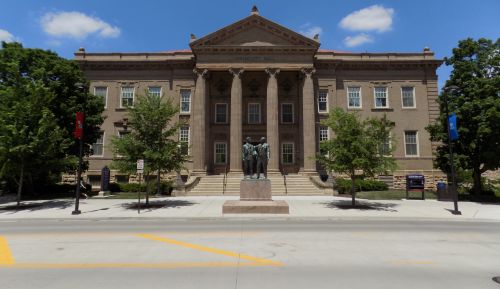
The law also exposed the limits of documentation. Many remains had been collected in ways that were poorly recorded, deliberately obscured, or shaped by racial categories now rejected. Labels might identify remains by tribe, region, excavation site, collector, museum donor, or vague racial type. Some remains were separated from associated funerary objects; others were detached from the places where they had been found. These archival gaps did not arise innocently. They were often the residue of systems that cared more about acquisition than accountability. When institutions later demanded precise proof of cultural affiliation, Native communities were sometimes forced to overcome the very documentary damage caused by the original removal. Consent could not mean only individual consent, because the violation was not only individual. Indigenous grave robbing often harmed collective relationships among ancestors, descendants, land, ceremony, and sovereignty. NAGPRA expanded the moral field. It acknowledged that certain objects and remains could belong to communities in ways not reducible to private property. Sacred objects, funerary objects, and objects of cultural patrimony carried obligations that Western property law had often failed to recognize. This did not make every case simple, but it did challenge the older assumption that possession plus time equals legitimacy.
The modern protected dead were also invented through state cemetery laws, criminal desecration statutes, historic-preservation rules, and local burial protections. These laws varied widely, but together they reflected a growing unwillingness to treat graves as ordinary ground. Cemeteries became regulated spaces. Disinterment often required permission. Grave markers, remains, and funerary objects received statutory protection. Construction projects encountering human remains could trigger reporting duties. Archaeological sites on public land became subject to permitting and enforcement. Such rules did not prevent all looting or disturbance, but they increasingly asserted that burial created obligations that survived both death and ownership transfer.
Yet law remained uneven because protection often depended on recognition. Marked cemeteries were easier to defend than unmarked graves. Recent graves were often better protected than ancient ones. Wealthy cemeteries were less vulnerable than abandoned burial grounds. White cemeteries were historically more likely to be respected than Black cemeteries, pauper cemeteries, prison cemeteries, or Indigenous burial sites. A grave could be legally visible or legally invisible. The invention of the protected dead required not only statutes but acts of recognition: this is a cemetery; these are ancestors; this is a funerary object; this community has standing; this disturbance is not development, research, or collecting, but desecration. The twentieth century also revealed that law could protect the dead only after deciding who could speak for them. For medical donation, the speaker might be the donor through a signed document, or next of kin under statutory priority. For cemetery law, it might be family, cemetery authorities, courts, or public officials. For archaeological remains, it might be the state, federal agencies, land managers, tribes, or professional archaeologists. For repatriation, it might be lineal descendants, federally recognized tribes, Native Hawaiian organizations, or culturally affiliated communities. These rules of representation were necessary, but they were also political. To decide who speaks for the dead is to decide which relationships count.
This is why the legal history of grave robbing is not simply a story of better rules replacing worse ones. It is a story of conflicts among families, states, professions, markets, museums, tribes, religious communities, and scientific institutions over authority. Medical schools wanted bodies. Archaeologists wanted knowledge. Museums wanted collections. Families wanted burial. Native nations wanted ancestors returned. Collectors wanted ownership. States wanted order. Courts wanted categories. Each claim could be expressed in respectable language. The question was which claims would prevail when they collided over the dead.
By the end of the twentieth century, a new moral consensus had begun to emerge, though incompletely. The legitimate use of the dead increasingly required consent, lawful authority, cultural consultation, documented provenance, and respect for burial context. Grave goods could no longer be treated innocently as mere collectibles. Human remains could no longer be assumed to belong permanently to the institutions that held them. Medical education could no longer rely comfortably on the unclaimed poor as its ordinary supply. Archaeology could no longer claim that scientific value automatically overrode descendant concern. The dead had not acquired rights in the same way the living possess rights, but they had acquired stronger claims through the living: families, donors, tribes, communities, and publics.
The most important fact is that these protections were reactive. They arose because the dead had already been stolen, traded, dissected, collected, and stored. The law did not precede the violation; it followed it. The consenting donor emerged against the history of the unclaimed cadaver. Archaeological protection emerged against the destruction caused by pothunting and illicit markets. Repatriation emerged against the mass accumulation of Indigenous ancestors in museums and federal collections. Modern dignity was built from scandal, activism, grief, litigation, professional embarrassment, and the refusal of communities to accept that the dead were lost forever once institutions possessed them.
The “modern protected dead,” then, were not a natural inheritance of civilized society. They were an achievement, and an uneven one. They had to be argued into law by families, Native nations, preservationists, ethicists, religious communities, reformers, and scholars willing to confront the violence hidden in ordinary practice. They had to be distinguished from property without being left defenseless. They had to be available for chosen donation without being vulnerable to exploitation. They had to be studied, when study was ethical, without being reduced to specimens. They had to be remembered not only as remains but as persons and ancestors. The twentieth century’s legal reforms did not end grave robbing, but they changed the terms by which grave robbing could be named. They made it harder for society to pretend that possession was innocence, that silence was consent, and that the dead belonged automatically to whoever had the power to take them.
Fraud, Rumor, and the Marketplace of the Dead
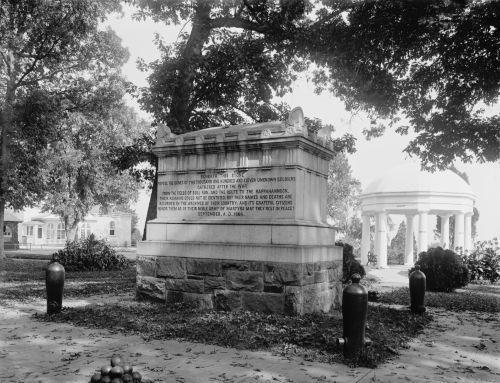
Grave robbing has always depended on opportunity, but in the twentieth century it increasingly depended on stories. A grave is a hidden place. Its contents are concealed by earth, stone, ritual, law, memory, and taboo. That concealment gives burial its dignity, but it also makes the grave vulnerable to fantasy. The living can imagine treasure beneath the marker, jewels in the coffin, relics in the tomb, rare artifacts in the mound, scientific secrets in the skull, or unclaimed bodies quietly waiting in public institutions. Grave robbing begins with physical intrusion, but often before the shovel touches the ground, rumor has already done part of the work. It has taught the robber that the dead might be made profitable.
Rumor was powerful because it transformed uncertainty into motive. In the celebrity grave, rumor might attach wealth to a coffin: jewelry, gold, cash, secret possessions, or some object supposedly buried with the famous dead. In Indigenous burial grounds and archaeological sites, rumor often took the form of treasure talk: old graves were imagined as repositories of pots, beads, weapons, copper, shell, textiles, masks, sacred objects, or saleable curios. In medical contexts, rumor worked differently but no less forcefully. Families and communities feared that hospitals, medical schools, or public authorities might take bodies without permission. Sometimes such fear was exaggerated in particular details, but it rested on a real history of anatomical exploitation, racialized dissection, and institutional control over the poor and unclaimed dead. Rumor was not always accurate, but it often preserved truths that official language tried to bury.
The market fed on these rumors. A grave object did not become valuable only because of its material composition. It became valuable because someone could tell a story about it: ancient, rare, sacred, royal, Indigenous, Egyptian, pre-Columbian, Civil War, frontier, ancestral, ceremonial, macabre, celebrity-owned. The more evocative the story, the more easily the object could move from grave to collection. But the story had to be carefully managed. Too much truth could make the object dangerous. A buyer might want the aura of burial without the legal or moral burden of knowing exactly whose grave had been opened. The marketplace of the dead often relied on a controlled vagueness: enough origin to make the object desirable, not enough provenance to make possession shameful. This is where fraud enters the story, not only as a legal category but as a cultural technique. There were obvious forms of fraud: false provenance, forged documentation, invented collection histories, concealed export violations, misleading bills of sale, and evasive descriptions of how objects had been acquired. But there were also softer and more enduring frauds of language. A burial object became an “artifact.” A human skull became a “specimen.” An ancestor became “material.” A sacred object became “ethnographic.” A corpse became “unclaimed.” A grave became a “site.” These words were not always malicious, and in some professional contexts they served practical purposes. Yet they could also remove moral friction. They made it easier for institutions and buyers to handle the dead without saying plainly what had happened: someone’s burial had been disturbed.
The antiquities market depended heavily on this kind of transformation. A looted object had to be detached from its original relationships before it could circulate easily. In the grave, a pot might have been part of a funerary offering, a sign of care, a vessel of food or drink for the dead, a marker of household identity, or an object embedded in ritual obligation. In the market, it became a collectible ceramic. That narrowing of meaning was not incidental; it was necessary. The object had to be made portable not only physically but morally. It had to be removed from the dead person’s world and placed into a buyer’s world, where value was measured by rarity, beauty, age, displayability, and price.
Human remains passed through similar acts of reclassification. Museums and universities often held bones, skulls, mummies, and other remains under scientific or educational categories that obscured their original status as the dead of particular communities. A museum label might identify age, sex, region, cultural period, collector, excavation date, or accession number while leaving out the most important fact from the viewpoint of descendants: this was a person. The fraud here was rarely the crude falsehood that the remains were not human. It was the subtler claim that scientific classification exhausted their meaning. Once the ancestor became a specimen, institutional possession could appear neutral, even benevolent.
The same pattern shaped the use of the unclaimed dead in medical education. The phrase “unclaimed” appears administrative, but it can hide a chain of social failures. A body might be unclaimed because relatives could not be found, but also because poverty, migration, segregation, incarceration, institutionalization, bureaucracy, stigma, or lack of notice prevented a family from acting. To call such a body unclaimed could be both legally accurate and morally incomplete. It described a procedural condition while concealing a social one. The body was not necessarily unwanted. It was unprotected in a system that recognized only certain kinds of claim, made within certain timeframes, by people with sufficient knowledge and authority. This helps explain why communities often remembered medical body-taking through stories that official institutions dismissed as rumor. Black communities, poor communities, and families near medical schools had long histories of fearing the “night doctor,” the grave robber, the hospital, or the medical college. Some stories became folkloric, but folklore is not the opposite of history. It can carry historical knowledge in symbolic form. When a community says that doctors steal bodies, the claim may compress many experiences: grave robbing, dissection without consent, medical experimentation, segregated care, disrespectful treatment, and the disappearance of the poor into institutions. Official records might not confirm every story, but the persistence of the story reveals a social relationship marked by distrust.
Celebrity grave robbing turned rumor into ransom and spectacle. The theft of Charlie Chaplin’s coffin showed how the famous dead could be treated as hostage property because their bodies remained emotionally valuable to the living. The ransom demand depended on the certainty that the family cared, and that the public meaning of Chaplin’s name intensified the violation. In other celebrity cases or reported disturbances, rumor often attached treasure to the grave. The famous person’s burial became a site of fantasy because celebrity itself produces imagined intimacy. Fans and thieves alike may feel that fame gives the public some claim to the dead, whether through mourning, pilgrimage, collecting, or desecration. The grave robber is the most extreme version of that entitlement.
The marketplace of the dead also included legitimate-looking buyers who preferred not to ask too many questions. This was one of the most important features of twentieth-century trafficking in grave goods and human remains. Markets do not require every participant to be equally corrupt. They require enough distance between act and acquisition that responsibility becomes diluted. The digger may know exactly where the object came from. The local middleman may know less, or pretend to know less. The dealer may describe the object in vague regional terms. The collector may rely on the dealer’s assurance. The museum may accept a donation from a private collection assembled decades earlier. By the end of the chain, the grave has disappeared from the paperwork. The object arrives clean because the dirt has been spread across many hands.
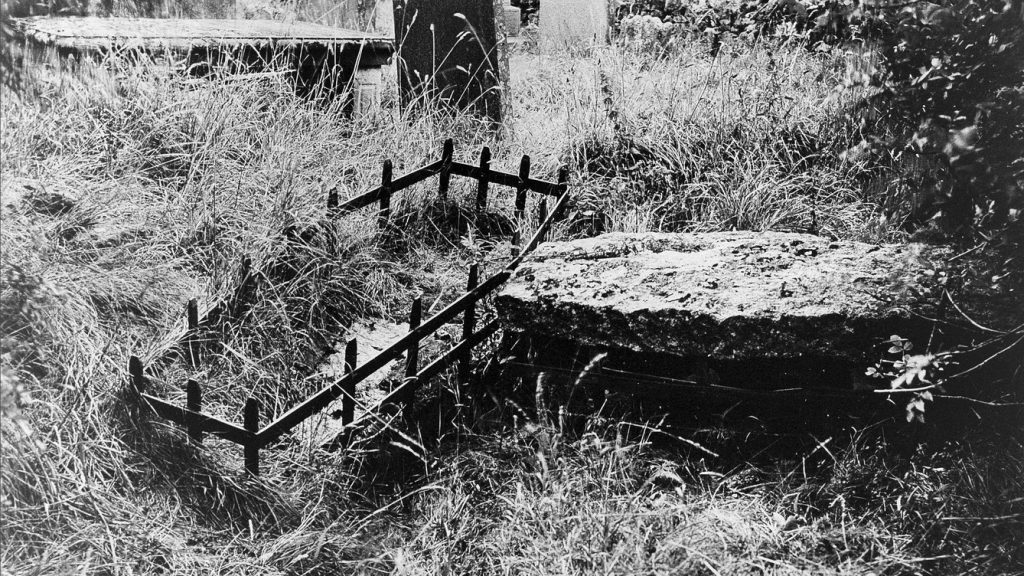
This diffusion of responsibility allowed grave robbery to survive inside respectable worlds. A criminal act at the beginning of a chain could become an educational display at the end. A stolen funerary object could become part of a private library, university collection, museum exhibition, auction catalogue, or scholarly publication. An ancestor removed from a burial could become evidence in a typology, a racial classification, a migration theory, or a teaching collection. The more institutions handled such materials, the easier it became to forget that many had entered circulation through violence, coercion, colonial authority, poverty, or legal indifference. Respectability did not always purify the object. Sometimes it only made the original violation harder to see.
The twentieth-century antiquities trade repeatedly exposed this problem. Collectors and museums often prized objects whose origins were cloudy, while archaeologists warned that looting destroyed the context that gave objects scholarly meaning. The market’s appetite encouraged pothunters to dig first and invent later. A clean provenance could be fabricated; a vague provenance could be tolerated; a bad provenance could be ignored if the object was desirable enough. International agreements and national laws tried to limit this traffic, but the demand for antiquities remained powerful. The illicit market thrived because it served multiple fantasies at once: possession of the ancient, intimacy with the dead, escape from ordinary history, and the prestige of owning what others could not. Fraud also appeared in the romanticization of the grave robber. Popular culture often turned tomb raiding into adventure. The tomb robber became clever, daring, even charming, especially when the dead belonged to a distant past or another culture. This romance depended on distance. Few people would celebrate someone breaking into a neighbor’s recent grave, but many were taught to admire the extraction of ancient objects from tombs if those objects were beautiful, exotic, or old enough. Time itself became a solvent of outrage. The older the dead, the easier it became for outsiders to pretend that no one could still be injured by their disturbance.
Indigenous repatriation movements directly challenged that fraud of distance. They insisted that age did not erase relationship. An ancestor did not become ownerless because centuries had passed. A funerary object did not become mere art because it had entered a museum. A sacred object did not lose its power because collectors misunderstood it. This was one reason NAGPRA was so disruptive to older museum habits. It attacked the assumption that time, possession, and institutional custody could transform grave goods and human remains into neutral property. It made clear that what museums called collections, Native nations might call relatives, ancestors, patrimony, or responsibilities.
The marketplace of the dead also blurred the boundary between legal and illegal possession. Some grave goods were stolen in direct violation of law. Others were excavated under permits that would be ethically unacceptable today. Some were obtained from private land under property regimes that gave little recognition to descendant claims. Some were exported before modern cultural-property laws existed. Some were donated by collectors who had acquired them through unclear channels. This complexity matters, but it should not be used to dissolve moral judgment entirely. The fact that an act was legal, tolerated, or poorly documented does not mean it was just. Law often followed power, and power often belonged to those who wanted the dead for study, prestige, or sale.
The idea of fraud helps tie together my otherwise diverse examples. The ransom thief commits an obvious fraud by asserting control over a corpse to extract money. The pothunter commits a cultural fraud by treating a burial as a storehouse of collectibles. The dealer commits documentary fraud by obscuring origin. The museum may commit an interpretive fraud when it presents ancestors as specimens without acknowledging the conditions of acquisition. The medical system commits an ethical fraud when it allows the word “unclaimed” to stand in for consent. These acts are not identical, but they share a common structure: the dead are made available by being renamed.
That renaming is why grave robbing remained a modern problem. Twentieth-century societies often prided themselves on professional systems, rational administration, scientific progress, and legal reform. But modern systems can hide violence precisely because they produce orderly language. A grave opened by a thief is immediately recognizable as desecration. A grave emptied into a museum drawer, a medical school, a private collection, or an auction catalogue may require more historical work to identify. The body or object has been translated into a new institutional grammar. The task of interpretation is to translate it back.
The marketplace of the dead did more than buy and sell remains or burial goods. It produced ways of not knowing. It taught buyers not to ask, institutions not to remember, and the public not to see. It separated beauty from burial, science from consent, preservation from possession, and fame from family grief. Fraud and rumor were not marginal features of twentieth-century grave robbing. They were engines of it. Rumor made graves desirable. Fraud made their contents movable. Markets made desecration profitable. Institutions made possession respectable. Against all of them stood the same stubborn claim: the dead were not empty matter, and burial was not an invitation.
Repatriation, Reburial, and Repair
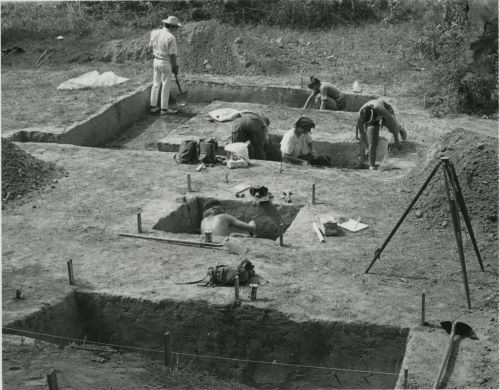
Repatriation is often described in administrative language: inventory, consultation, notice, affiliation, claim, transfer, disposition. Those words are necessary, but they are too small for what is actually at stake. Repatriation is not simply the movement of human remains or funerary objects from a museum shelf to a descendant community. It is an attempt to reverse the moral direction of grave robbing. Where grave robbing extracted the dead from relationship, repatriation seeks to restore relationship. Where collecting turned ancestors into specimens, repatriation insists that they remain ancestors. Where museums claimed authority through possession, repatriation asks whether possession itself was the problem.
This is why reburial cannot be treated as a merely symbolic afterword to the history of grave robbing. For many communities, particularly Native nations whose ancestors were removed under colonial, archaeological, military, medical, or museum authority, reburial is a form of justice. It returns the dead to land, ceremony, kinship, and obligation. It may not undo the original violence, and it cannot erase decades or generations of institutional custody, but it rejects the idea that removal has the final word. The grave robber’s act says: the dead are available. Reburial answers: the dead are claimed.
The American repatriation movement did not emerge from nowhere in 1990. Native activists, tribal leaders, lawyers, scholars, museum critics, and community members had been challenging the collection and retention of ancestral remains for decades. Their argument was not simply that museums had too many bones. It was that museums and universities had built collections through a long history of unequal power, then treated that possession as legitimacy. Indigenous people were often expected to prove cultural relationship to remains that had been taken from them under systems that ignored Indigenous authority in the first place. The demand for repatriation joined burial protection, religious freedom, tribal sovereignty, civil rights, and historical memory.
The National Museum of the American Indian Act of 1989 was an important step in this changing landscape because it required the Smithsonian Institution to address the return of Native American human remains and funerary objects in its collections. The Smithsonian was not just another museum. It was a national institution whose holdings embodied the authority of federal science, collecting, and public memory. Repatriation from such an institution carried symbolic force. It acknowledged that the nation’s museums had not merely preserved Indigenous history; they had also participated in the removal and containment of Indigenous ancestors. The Native American Graves Protection and Repatriation Act of 1990 extended this reckoning across federal agencies and federally funded institutions. NAGPRA required inventories and summaries, consultation with tribes and Native Hawaiian organizations, and processes for repatriating human remains, associated funerary objects, unassociated funerary objects, sacred objects, and objects of cultural patrimony. The law did not abolish archaeology, museum collections, or scientific study. It did something more specific and, in many ways, more disruptive: it denied that institutional possession automatically settled the question of rightful custody. Museums and agencies could no longer assume that the Indigenous dead belonged in drawers because they were already there.
The inventory requirement was powerful because it forced institutions to count what they had. A museum drawer can hide history. An inventory makes that hidden history legible, even if imperfectly. It asks where remains came from, who collected them, what objects were associated with them, how they were classified, and which communities may have claims. This process exposed the scale of collection and the depth of institutional uncertainty. Many remains had vague provenances, outdated racial labels, incomplete accession histories, or records that reflected the priorities of collectors rather than the needs of descendants. Repatriation became an archival reckoning as well as a spiritual and legal one. Consultation changed the moral posture of the museum. In the older model, the museum spoke about Indigenous peoples. Under repatriation frameworks, museums had to speak with Native nations. This did not make every case simple or harmonious. Consultation could be slow, bureaucratic, underfunded, emotionally painful, and shaped by unequal institutional resources. Some museums resisted or narrowed their obligations. Some communities had to repeat traumatic histories to establish claims. Yet even imperfect consultation challenged the one-sided authority that had long defined the museum as receiver. It made descendant communities participants in decisions from which they had historically been excluded.
Reburial also reoriented the meaning of preservation. Museums often defended retention by arguing that they preserved remains and objects for future knowledge. Repatriation advocates did not necessarily reject preservation, but they challenged the assumption that preservation must mean institutional custody. A body can be physically preserved in a climate-controlled room and still be morally displaced. A funerary object can be carefully conserved and still be severed from its ceremonial purpose. A sacred object can be protected from decay while being harmed by separation from the community to which it belongs. Repatriation widened the meaning of care. Sometimes care means study. Sometimes it means restricted access. Sometimes it means return. Sometimes it means reburial and the end of scientific availability.
This was one of the most difficult issues for many archaeologists and physical anthropologists. Human remains can provide information about diet, disease, migration, trauma, demography, environment, violence, labor, and kinship. The scholarly value is real. But the existence of potential knowledge does not automatically create a right to possess the dead. Repatriation forced scholars to ask whether research questions should always outrank the claims of descendants, and whether knowledge produced from nonconsensual removal carries an ethical burden. The question was not whether the past should be studied. It was whether study could proceed as if the dead had no living relations.
The term “cultural affiliation” became one of NAGPRA’s most important and contested concepts. It required evidence of a relationship of shared group identity between present-day tribes or Native Hawaiian organizations and earlier remains or cultural items. This could involve geography, archaeology, oral tradition, biological evidence, linguistics, folklore, historical documentation, kinship, expert testimony, and tribal knowledge. The category mattered because it provided a legal path toward return. But it could also create frustration when institutions demanded forms of proof that colonial violence itself had made harder to produce. Removal, displacement, warfare, forced migration, missionization, allotment, boarding schools, and documentary neglect all complicated the very continuity that tribes were then asked to demonstrate.
The problem was even sharper for culturally unidentified remains. For years, many institutions retained ancestors by claiming that affiliation could not be established under the law’s evidentiary standards. From an institutional perspective, this sometimes reflected genuine uncertainty. From the perspective of many Native communities, it could look like another form of delay, a way for museums to keep control because their own records were inadequate. The issue revealed a central tension in repatriation: legal systems often require classification before return, while communities may understand relationship in ways that exceed or challenge museum categories. The dead had been collected through broad colonial assumptions, but their return could be slowed by narrow technical demands.
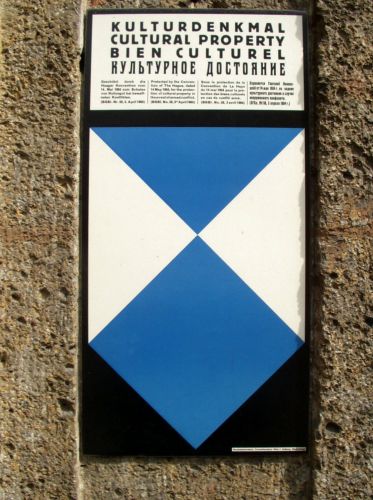
Repatriation also required a change in language. “Remains” is accurate but incomplete. “Ancestors” changes the ethical field. “Objects” may be legally convenient, but “belongings,” “funerary items,” “sacred objects,” or “cultural patrimony” can better express continuing relationships. “Collection” sounds neutral, but “possession” asks how the material came to be held. “Stewardship” can describe care, but it can also conceal control. The repatriation movement has repeatedly shown that vocabulary is not decorative. Words decide whether the dead are encountered as data, property, specimens, heritage, or kin.
Repair is not the same as restoration. The original grave cannot always be reconstructed. Associated funerary objects may have been separated from human remains. Bones may have been commingled, sampled, damaged, displayed, or lost. Burial locations may have been destroyed by development, excavation, erosion, or looting. Records may be missing or wrong. Generations may have passed between removal and return. Communities receiving ancestors back may face the painful task of caring for the dead under circumstances created by outsiders. Repatriation can heal, but it does not pretend that nothing happened. It is a form of justice marked by grief.
The global history of repatriation makes the same point. Indigenous remains and sacred objects taken under colonial rule have been held in museums across Europe, North America, and elsewhere. Aboriginal Australian remains, Māori and Moriori ancestral remains, African human remains collected during colonial expeditions, Egyptian mummies, and many other categories of the dead have become subjects of return claims, ethical review, and public controversy. The specific legal frameworks differ by country, but the moral pattern is recognizable: remains collected under conditions of empire, racial science, missionary activity, military violence, or archaeological extraction are increasingly being reinterpreted as evidence not simply of world cultures but of colonial possession. Repatriation is not anti-history. It is a different way of doing history. It asks historians, archaeologists, anthropologists, and museum professionals to tell the story of how collections were made, not only what they contain. It demands attention to collectors, grave diggers, traders, curators, government agents, military officers, donors, and legal regimes. It restores the acquisition history to the object and the personhood to the remains. In that sense, repatriation deepens rather than diminishes historical understanding. It refuses the old illusion that knowledge begins only when the object enters the museum.
Reburial ceremonies also make visible a kind of knowledge that museums historically undervalued. A ceremony may not produce a published article, but it produces continuity, obligation, and communal repair. It allows descendants to act toward ancestors according to their own laws, religions, and responsibilities. It may involve prayer, song, silence, restricted knowledge, private rites, public witness, or the refusal to disclose details to outsiders. This privacy can frustrate institutions accustomed to documentation and display, but it is part of the repair. Grave robbing exposed the dead to unauthorized view. Reburial may restore the right not to be seen.
The politics of repair also extends to museums that keep collections. Repatriation has forced institutions to revisit acquisition policies, exhibit labels, storage practices, research permissions, human-remains policies, and relationships with descendant communities. Some museums have moved toward collaborative curation, tribal advisory boards, restricted-access collections, shared authority, and proactive provenance research. Others have moved more slowly, acting only when legally required. The difference matters. A museum that waits for a claim places the burden on communities already harmed by removal. A museum that actively investigates and initiates consultation recognizes that repair should not depend entirely on the labor of the dispossessed.
This distinction is important because repatriation work is often emotionally and materially costly for descendant communities. Tribal historic preservation offices and cultural departments may be asked to review inventories, travel to museums, identify remains, negotiate with institutions, conduct ceremonies, and manage reburial responsibilities while also handling many other demands. Institutions that built collections over generations may have more staff, money, records, and legal support than the communities seeking return. Repair requires more than compliance. It requires resources, humility, and the recognition that the original taking created obligations that institutions should help bear.
The idea of repair must also include public memory. Grave robbing flourished when the public could admire objects without knowing how they were obtained. Repatriation asks museums and scholars to tell harder stories: that collections were sometimes built from disturbed graves; that science benefited from colonial power; that beauty in a display case may have come from mourning interrupted; that the category “artifact” may hide a funerary relationship. Public history has a role here because silence protects old possession. To repair the dead’s treatment, institutions must also repair the stories told about them. Yet repatriation should not be romanticized as a simple ending. Some cases involve competing claims. Some communities disagree internally about study, reburial, display, or access. Some remains cannot be affiliated with confidence under existing law. Some objects have complex histories of exchange, migration, and reuse. Some scientific information may be lost when remains are reburied. These complications are real. But they do not invalidate repatriation. They remind us that repair is not a mechanical reversal. It is a difficult ethical practice carried out after violence has made every option imperfect.
In the history of twentieth-century grave robbing, repatriation is the moment when the dead begin to push back through the living. Families, tribes, Native Hawaiian organizations, descendant communities, activists, scholars, and legal advocates refuse the assumption that possession is destiny. They force institutions to answer questions that earlier collectors avoided: Who was taken? From where? By whom? Under what authority? With whose consent? For whose benefit? And who has the right to decide what happens now?
The answer is never only legal. It is historical, spiritual, political, and moral. Repatriation and reburial do not bring the dead back to life, but they can bring them back into relationship. They challenge the marketplace that made graves profitable, the science that made ancestors collectible, the bureaucracy that made bodies available, and the museum practice that made possession look like care. Repair begins when the dead are no longer treated as abandoned material and when the living accept that the work of justice may continue long after burial was first disturbed.
Are We Stretching “Grave Robbing” Too Far?
I may be using “grave robbing” too broadly. A thief stealing Charlie Chaplin’s coffin for ransom, a pothunter digging into a burial mound for saleable objects, a museum holding Indigenous remains collected under earlier scientific standards, and a medical school receiving an unclaimed body through a lawful public process are not identical acts. Some were crimes at the time. Some were legal. Some were hidden in markets. Some were performed openly by professionals who believed they were preserving knowledge. Some involved fresh graves; others involved ancient burials, archaeological sites, or institutional collections far removed from the moment of removal. To call all of these practices “grave robbing” risks flattening important distinctions among theft, excavation, dissection, collection, research, custody, and repatriation.
That challenge matters because historical precision matters. The term “grave robbing” carries moral force, and moral force can become misleading if it erases context. Archaeology is not automatically looting. Medical dissection is not automatically body snatching. Museum custody is not automatically criminal possession. A carefully documented excavation conducted under the laws and professional standards of its time is not the same thing as a pothunter destroying a burial for profit. Likewise, an anatomical donation freely made by a person before death is ethically different from the use of an unclaimed pauper’s corpse. A serious interpretation must avoid turning every encounter with the dead into the same kind of violation. Otherwise, the argument becomes too blunt to explain the very systems it seeks to criticize.
The counterpoint also reminds us that the dead have been understood differently across time, law, religion, science, and culture. Modern assumptions about consent, descendant authority, cultural patrimony, and repatriation were not always available in their current form. Earlier archaeologists, physicians, curators, and lawmakers often worked within intellectual worlds that treated human remains as scientific evidence, public resources, or educational necessities. Some were exploitative, some were indifferent, and some were genuinely committed to knowledge as they understood it. That does not absolve the harm, but it does complicate the language of accusation. Historical judgment becomes stronger, not weaker, when it distinguishes between malicious theft, structural injustice, inherited institutional possession, and ethical frameworks that changed over time.
Yet this challenge modifies rather than overturns the my argument. “Grave robbing” is useful here not as a single legal label for every practice discussed, but as an interpretive pressure point. It asks what connects these different forms of postmortem violation: the conversion of the dead into value without adequate consent, community authority, or respect for burial relationships. The ransom thief converted a corpse into leverage. The pothunter converted funerary objects into market goods. The museum converted ancestors into specimens or collections. The medical system converted the poor and unclaimed into teaching material. These acts differed in law, method, and intention, but they shared a recurring moral structure: the dead were made available by someone else’s power to rename, remove, possess, or use them.
So the best conclusion is not that all twentieth-century handling of human remains was grave robbing. It is that modern grave robbing existed along a spectrum, from obvious criminal desecration to respectable systems that inherited, disguised, or normalized earlier violations. The term should be used carefully, with distinctions intact: criminal grave theft, antiquities looting, scientific extraction, bureaucratic dispossession, institutional retention, and contested custody. But once those distinctions are made, the broader argument becomes stronger. The twentieth century did not simply replace grave robbery with law, science, and preservation. It forced those very systems to confront how often they had benefited from the vulnerable dead.
Conclusion: The Modern Dead and the Unfinished Grave
The grave robber did not vanish in the twentieth century because the desire to extract value from the dead did not vanish. It changed form. The older resurrection man, feared for stealing fresh corpses from churchyards, gave way to a wider and more complex world of postmortem violation: the celebrity coffin held for ransom, the burial mound emptied for saleable objects, the Indigenous ancestor cataloged in a museum, the funerary vessel detached from ceremony, the unclaimed poor transformed into anatomical material, and the sacred object renamed as ethnographic property. The modern grave robber did not always work in darkness. Sometimes he appeared as a thief, but sometimes as a collector, dealer, scientist, curator, public official, or administrator. The central act remained the same: the dead were made available to the living by force, fraud, law, neglect, or institutional confidence.
This history exposes one of modernity’s most uncomfortable contradictions. The twentieth century increasingly spoke the language of dignity, consent, preservation, scientific responsibility, cultural heritage, and legal protection, yet many of its institutions had been built on unequal access to the dead. Some graves were protected by family wealth, racial privilege, religious authority, public fame, cemetery security, or political recognition. Others were left vulnerable because the people buried there had been poor, Black, Indigenous, colonized, institutionalized, imprisoned, displaced, or classified as “unclaimed.” The result was not simply a pattern of criminal theft. It was a hierarchy of posthumous dignity. Some dead were guarded as persons. Others were treated as resources.
The reforms that emerged across the century mattered. Anatomical gift laws helped move medical education toward consent. Archaeological protection laws challenged pothunting and the destruction of burial contexts. Repatriation statutes forced museums and federal agencies to confront the human remains and sacred objects they had accumulated. NAGPRA altered the moral grammar of possession by insisting that Native American remains and cultural items could not be treated as permanent institutional property merely because museums already held them. But these reforms were reactive. They arose because bodies had been dissected without consent, graves had been looted, ancestors had been stored, and communities had refused to accept the authority of institutions that had benefited from removal. The protected dead were not an ancient inheritance. They were a belated and uneven achievement.
The unfinished grave remains because repair is never complete once burial has been violated. A reburied ancestor returns to ceremony, but not to an untouched past. A repatriated object may come home after generations of absence. A medical school may honor modern donors while still inheriting knowledge produced from the unchosen bodies of the poor. A museum may revise its policies while still holding collections shaped by colonial extraction. To write this history is not only to condemn grave robbing as a crime, but to recognize it as a test of social power. Every society reveals itself by the dead it protects and the dead it permits others to use. The twentieth century did not settle that question. It made it impossible to avoid.
Bibliography
Affiliate disclosure: Amazon links on this site are paid links. As an Amazon Associate I earn from qualifying purchases.
- Aaron, Michele. Death and the Moving Image: Ideology, Iconography and I. Edinburgh: Edinburgh University Press, 2014.
- Babcock, Hope M. “A Civic-Republican Vision of ‘Domestic Dependent Nations’ in the Twenty-First Century: Tribal Sovereignty Re-envisioned, Reinvigorated, and Re-empowered.” Utah Law Review 2005:2 (2005), 443–546.
- Baker, Robert. Before Bioethics: A History of American Medical Ethics from the Colonial Period to the Bioethics Revolution. New York: Oxford University Press, 2013.
- Bieder, Robert E. “A Brief Historical Survey of the Expropriation of American Indian Remains.” American Indian Culture and Research Journal 14:1 (1990), 1–27.
- Boyce, Charlotte, and Danielle Dove. “Death and Celebrity: Introduction.” Celebrity Studies 13:4 (2022), 485–489.
- Brodie, Neil, Jennifer Doole, and Peter Watson. Stealing History: The Illicit Trade in Cultural Material. Cambridge: McDonald Institute for Archaeological Research, 2000.
- Brodie, Neil and Morag M. Kersel, Christina Luke, and Kathryn Walker Tubb, eds. Archaeology, Cultural Heritage, and the Antiquities Trade. Gainesville: University Press of Florida, 2008.
- Brown, Alison K, ed. Museums and Source Communities: A Routledge Reader. London: Routledge, 2003.
- Clark, Laura. “Grave Robbers Once Held Charlie Chaplin’s Body for Ransom.” Smithsonian Magazine, March 2, 2015.
- Coggins, Clemency Chase. “A Licit International Traffic in Ancient Art: Let There Be Light!” International Journal of Cultural Property 4:1 (1995), 61–80.
- Colwell, Chip. Plundered Skulls and Stolen Spirits: Inside the Fight to Reclaim Native America’s Culture. Chicago: University of Chicago Press, 2017.
- Davidson, James M. “’Resurrection Men’ in Dallas: The Illegal Use of Black Bodies as Medical Cadavers (1900—1907).” International Journal of Historical Archaeology 11:3 (2007), 193-220.
- Echo-Hawk, Roger C., and Walter R. Echo-Hawk. Battlefields and Burial Grounds: The Indian Struggle to Protect Ancestral Graves in the United States. Minneapolis: Lerner Publications, 1994.
- Elia, Ricardo J. “Looting, Collecting, and the Destruction of Archaeological Resources.” Nonrenewable Resources 6:2 (1997), 85–98.
- Fagan, Brian M. The Rape of the Nile: Tomb Robbers, Tourists, and Archaeologists in Egypt. 2nd ed. Boulder, CO: Westview Press, 2004.
- Fforde, Cressida. Collecting the Dead: Archaeology and the Reburial Issue. London: Duckworth, 2004.
- Fforde, Cressida, Jane Hubert, and Paul Turnbull, eds. The Dead and Their Possessions: Repatriation in Principle, Policy and Practice. London: Routledge, 2002.
- Fine-Dare, Kathleen S. Grave Injustice: The American Indian Repatriation Movement and NAGPRA. Lincoln: University of Nebraska Press, 2002.
- Gamble, Vanessa Northington. “Under the Shadow of Tuskegee: African Americans and Health Care.” American Journal of Public Health 87, no. 11 (1997): 1773–1778.
- Garland, Robert. The Eye of the Beholder: Deformity and Disability in the Graeco-Roman World. London: Bristol Classical Press, 1995.
- The Guardian. “Charlie Chaplin’s Body Snatched from His Grave—Archive, 1978.” December 12, 2019.
- Halperin, Edward C. “The Poor, the Black, and the Marginalized as the Source of Cadavers in United States Anatomical Education.” Clinical Anatomy 20:5 (2007), 489–495.
- Hubert, Jane, and Cressida Fforde. “Introduction: The Reburial Issue in the Twenty-First Century.” In The Dead and Their Possessions: Repatriation in Principle, Policy and Practice, edited by Cressida Fforde, Jane Hubert, and Paul Turnbull, 1–16. London: Routledge, 2002.
- Hurren, Elizabeth T. Dying for Victorian Medicine: English Anatomy and Its Trade in the Dead Poor, c. 1834–1929. Basingstoke: Palgrave Macmillan, 2011.
- Hutt, Sherry, Elwood W. Jones, and Martin E. McAllister. Archaeological Resource Protection: Protecting the Archeological and Cultural Environment. Washington, DC: Preservation Press, 1992.
- Jones, James H. Bad Blood: The Tuskegee Syphilis Experiment. New York: Free Press, 1981.
- Lederer, Susan E. Subjected to Science: Human Experimentation in America Before the Second World War. Baltimore: Johns Hopkins University Press, 1995.
- Mental Floss. “5 Famous People Whose Tombs Were Robbed.” February 17, 2017.
- Merryman, John Henry. “Two Ways of Thinking about Cultural Property.” American Journal of International Law 80:4 (1986), 831–853.
- Messenger, Phyllis Mauch, ed. The Ethics of Collecting Cultural Property: Whose Culture? Whose Property? 2nd ed. Albuquerque: University of New Mexico Press, 1999.
- National Museum of the American Indian Act. Public Law 101-185. 103 Stat. 1336. 1989.
- National Native American Graves Protection and Repatriation Act Program. Fiscal Year 2024 Report. Washington, DC: National Park Service, U.S. Department of the Interior, 2024.
- National Park Service. “Archaeological Resources Protection Act of 1979.” U.S. Department of the Interior. Accessed June 14, 2026.
- Native American Graves Protection and Repatriation Act. Public Law 101-601. 104 Stat. 3048. 1990.
- Penfold-Mounce, Ruth. Death, the Dead and Popular Culture. Bingley, UK: Emerald Publishing, 2018.
- Pensley, D. S. “The Native American Graves Protection and Repatriation Act (1990): Where the Native Voice Is Missing.” Wicazo Sa Review 20:2 (2005), 37-64.
- Peters, Bernard C. “Indian-Grave Robbing at Sault Ste. Marie, 1826.” Michigan Historical Review 23:2 (1997), 49-80.
- Price, H. Marcus. Disputing the Dead: U.S. Law on Aboriginal Remains and Grave Goods. Columbia: University of Missouri Press, 1991.
- Prott, Lyndel V., and Patrick J. O’Keefe. Law and the Cultural Heritage. Volume 3: Movement. London: Butterworths, 1989.
- Radford, Scott K., and Peter H. Bloch. “Grief, Commiseration, and Consumption Following the Death of a Celebrity.” Journal of Consumer Culture 12:2 (2012), 137–155.
- Redman, Samuel J. Bone Rooms: From Scientific Racism to Human Prehistory in Museums. Cambridge, MA: Harvard University Press, 2016.
- Renfrew, Colin. Loot, Legitimacy and Ownership: The Ethical Crisis in Archaeology. London: Duckworth, 1999.
- Richardson, Ruth. Death, Dissection and the Destitute. 2nd ed. Chicago: University of Chicago Press, 2000.
- Sappol, Michael. A Traffic of Dead Bodies: Anatomy and Embodied Social Identity in Nineteenth-Century America. Princeton, NJ: Princeton University Press, 2002.
- Savitt, Todd L. “The Use of Blacks for Medical Experimentation and Demonstration in the Old South.” Journal of Southern History 48:3 (1982), 331–348.
- Sax, Joseph L. Playing Darts with a Rembrandt: Public and Private Rights in Cultural Treasures. Ann Arbor: University of Michigan Press, 1999.
- Simpson, Moira G. Making Representations: Museums in the Post-Colonial Era. Rev. ed. London: Routledge, 2001.
- Swiss National Museum. “When Chaplin’s Corpse Was Kidnapped.” June 13, 2023.
- Thomas, David Hurst. Skull Wars: Kennewick Man, Archaeology, and the Battle for Native American Identity. New York: Basic Books, 1999.
- Thornton, Russell, ed. Studying Native America: Problems and Prospects. Madison: University of Wisconsin Press, 1998.
- Trope, Jack F., and Walter R. Echo-Hawk. “The Native American Graves Protection and Repatriation Act: Background and Legislative History.” Arizona State Law Journal 24:1 (1992), 35–77.
- Turnbull, Paul. Science, Museums and Collecting the Indigenous Dead in Colonial Australia. Cham, Switzerland: Palgrave Macmillan, 2017.
- UNESCO. Convention on the Means of Prohibiting and Preventing the Illicit Import, Export and Transfer of Ownership of Cultural Property. Paris, 1970.
- Uniform Law Commission. Uniform Anatomical Gift Act. 1968; revised 1987 and 2006.
- United States Congress. Archaeological Resources Protection Act of 1979. Public Law 96-95. 93 Stat. 721. 1979.
- Urry, James. “Headhunters and Body-Snatchers.” Anthropology Today 5:5 (1989), 11-13.
- Washington, Harriet A. Medical Apartheid: The Dark History of Medical Experimentation on Black Americans from Colonial Times to the Present. New York: Doubleday, 2006.
- Watkins, Joe. Indigenous Archaeology: American Indian Values and Scientific Practice. Walnut Creek, CA: AltaMira Press, 2000.
Originally published by Brewminate, 06.19.2026, under the terms of a Creative Commons Attribution-NonCommercial-NoDerivatives 4.0 International license.
About the Author