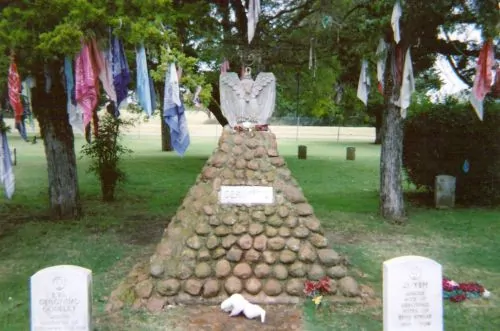
Across Native North America, mourning was never one single tradition. It was a diverse world of ceremony, memory, kinship, and helping the dead journey onward while holding the living.

By Matthew A. McIntosh
Public Historian
Brewminate
Introduction: Grief as Passage, Not Merely Absence
To write a history of grief and mourning in Native North American tribes is to begin with a warning: there was never one Native American deathway. North America contained, and still contains, hundreds of Indigenous nations with distinct languages, lands, kinship systems, ceremonial authorities, and understandings of the dead. Even the modern political category of federally recognized tribes is large and changing, with the Bureau of Indian Affairs listing 575 federally recognized Tribal entities as of January 30, 2026. That number does not include every Indigenous community, nor does it capture the older cultural worlds that preceded federal recognition, removal, allotment, boarding schools, and modern jurisdictional boundaries. Any responsible account must resist the temptation to turn Native mourning into a single spiritual network of beliefs. What can be traced instead are recurring concerns: how the dead are helped onward, how the bereaved are held by kin and community, how dangerous transitions are ritually managed, and how grief becomes part of the ongoing relationship among people, land, ancestors, and spirit.
Across many Native North American traditions, death was not understood simply as disappearance. The person who died did not vanish into private memory alone, nor was the body merely biological residue. Death often marked a passage requiring attention, discipline, and care from the living. The dead might need food, song, fire, tobacco, prayer, possessions, orientation, protection, or release. The living, in turn, needed witnesses, prohibitions, feasts, storytelling, cleansing, redistribution, and time. Mourning was not only an emotional state but a social and spiritual labor. It helped prevent grief from becoming isolation, and it placed sorrow inside a structure of obligation. The bereaved were not asked simply to “move on,” in the modern therapeutic sense. They were often guided through a period in which the ordinary boundaries between the living and the dead had become unusually thin.
Here I treat grief as a passage rather than merely an absence because Native mourning practices repeatedly point toward transition, relation, and reordering. A scaffold, grave, cremation fire, charnel house, wake, mourning feast, giveaway, memorial object, or repatriation ceremony did more than mark that someone had died. These practices answered deeper questions: Where has the person gone? What remains attached to them? What do the living owe them now? What must be released, retained, purified, redistributed, or remembered? Such questions were never abstract. They were shaped by ecology, seasonal movement, clan structure, gendered duty, warfare, epidemic disease, colonial violence, Christian missionization, and the resilience of tribal communities. To grieve was to stand at a crossing where cosmology and daily life met.
The history that follows is neither a museum catalogue of “customs” nor a romantic portrait of timeless spirituality. It is a study of mourning as a living system of care under pressure. Native communities developed many ways to accompany the dead and protect the living, but those ways were repeatedly disrupted by colonization: mass death, forced removals, missionary suppression, boarding schools, land loss, grave desecration, museum collection, and laws that interfered with ceremony. Yet mourning also became a site of survival. In funerals, memorial feasts, language revitalization, repatriation, and renewed ceremonial practice, grief has remained one of the places where Native sovereignty is lived most intimately. The dead are not only remembered; they are related to. The living are not only wounded; they are obligated to continue.
The Problem of “Native North American Mourning”: Diversity, Sources, and Limits
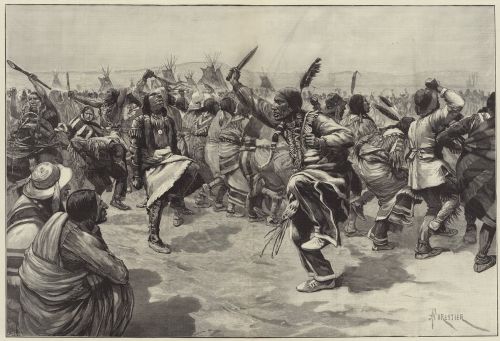
The phrase “Native North American mourning” is useful only if it remains visibly unstable. It names a field of comparison, not a single tradition. The deathways of Haudenosaunee communities in the Northeast, Choctaw communities in the Southeast, Lakota and other Plains peoples, Anishinaabe peoples of the Great Lakes, Pueblo communities of the Southwest, Inuit communities of the Arctic, and Northwest Coast societies cannot be folded into one ceremonial grammar without doing violence to their differences. Land mattered. So did language, subsistence, clan structure, warfare, migration, gender, seasonal movement, and the degree to which a community had been affected by missionization, epidemic disease, forced removal, allotment, boarding schools, or later federal recognition. Even shared words such as “spirit,” “ancestor,” “ceremony,” and “mourning” can mislead if they are treated as direct equivalents across cultures. A spirit journey in one tradition may not resemble a spirit journey in another. An ancestor may be an intimate presence, a dangerous force, a moral guide, a distant category of the dead, or not the central term at all.
This problem is not merely semantic. It affects the entire evidentiary base. Much of what outsiders once recorded about Native death came from missionaries, traders, soldiers, colonial officials, explorers, ethnographers, and government agents, many of whom misunderstood what they saw or described Indigenous practices through Christian, racial, evolutionary, or administrative categories. A Jesuit missionary might interpret mourning as superstition, a nineteenth-century ethnologist might classify it as a “custom,” an archaeologist might describe it through grave goods and skeletal placement, and a federal official might reduce it to a problem of public order or property. These sources can be invaluable, but they are never innocent. They often preserve details that would otherwise be unavailable, yet they also translate Native worlds into outsider vocabularies of heathenism, primitivism, savagery, romance, or scientific collection. The historian’s task is not to discard them wholesale, but to read them against their purposes, silences, and conditions of production.
The problem becomes sharper because many of the most important sources for mourning are not written sources at all. Death rituals often belong to families, clans, ceremonial societies, elders, and communities rather than to public archives. Some knowledge is not meant for general circulation. Some songs, prayers, mortuary procedures, names of the dead, burial locations, or teachings about the spirit world may be restricted, seasonal, gendered, initiated, or protected because disclosure itself can be harmful. Academic history must recognize limits as part of its method. The absence of detail is not always a gap to be filled. Sometimes it is an ethical boundary. A responsible account should not pry open sacred knowledge for narrative completeness, nor should it treat restricted teachings as raw material simply because an older ethnographer wrote them down.
There is also the danger of treating the “traditional” as if it means frozen in the precolonial past. Native mourning changed long before Europeans arrived, and it changed again under the pressure of disease, trade, missionization, slavery, warfare, removal, confinement, wage labor, urbanization, Christianity, federal Indian policy, and pan-Indigenous political movements. Some communities adopted Christian funeral forms while retaining Native mourning obligations. Some revived older practices after periods of suppression. Some created new memorial forms for boarding school children, veterans, murdered and missing relatives, or ancestors held in museums. These changes were not marginal additions to a supposedly stable core; they became part of the history of mourning itself. A wake might include church hymns and tribal language. A burial might follow Christian forms while still being governed by kinship duties, food obligations, taboos, or expectations about the dead person’s continuing presence. A modern memorial might use photographs, social media, veterans’ honors, tribal flags, handmade objects, and older ceremonial elements in the same event. Such combinations should not be read as dilution or contradiction. They show how Native communities worked within violent historical conditions while still making death intelligible on their own terms. Change does not make a practice inauthentic. The search for a pure, untouched deathway often says more about colonial nostalgia than about Indigenous history. Native communities have always adapted, argued, preserved, revised, and protected their ways of caring for the dead.
For these reasons, I use comparison cautiously. It does not ask what “Native Americans believed about death,” as though one answer could stand for the continent. It asks how particular Native communities, in particular historical circumstances, made grief meaningful, survivable, and socially intelligible. It treats missionary accounts, ethnographies, archaeological reports, tribal cultural materials, oral traditions in published form, repatriation records, and contemporary Indigenous scholarship as different kinds of evidence with different degrees of authority. The strongest interpretation will not be the smoothest one. It will be the one that keeps local specificity in view while still recognizing broader patterns: the dead often remained relationally present; mourning often required community action; grief often had ceremonial danger and power; and colonialism repeatedly attacked the very practices through which Native peoples cared for their dead.
Death, Spirit, and Relational Personhood
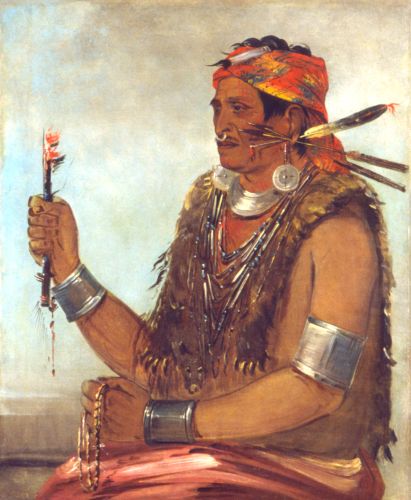
In many Native North American cultures, the person was not imagined primarily as an isolated individual whose life could be measured only between birth and death. Personhood was relational. A human being existed through kinship, clan, name, land, language, memory, obligation, dreams, animals, plants, spirits, and the ancestors. This does not mean that Native peoples lacked a sense of individuality, personality, or private sorrow. It means that the self was often understood as something woven through relationships rather than sealed inside a solitary body. Death did not simply remove one unit from the social order. It disturbed a field of relations. The loss of a parent, child, spouse, elder, leader, healer, or warrior changed the living community, but it also required new attention to the one who had died, whose presence might continue in altered form.
This relational understanding helps explain why mourning so often involved action. The dead might need to be addressed, fed, guided, protected, released, remembered, or ritually separated from the living. The living might need to observe restrictions, avoid certain names, cleanse themselves, give away possessions, feast, sing, cut hair, keep vigil, or wait through a period before ordinary life could fully resume. These acts were not ornamental additions to grief. They were ways of managing a real transformation in the moral and spiritual order. To mourn was to participate in a process through which the dead were accompanied and the living were gradually returned to balance. The community’s role was crucial, because death placed pressure on more than one household. It could unsettle kinship duties, inheritance, leadership, ceremonial obligations, food-sharing networks, and the emotional stability of those closest to the deceased. In some traditions, the immediate period after death was delicate because the dead person had not yet fully departed, or because the bereaved were unusually exposed to sorrow, danger, or sacred power. Mourning marked the time when relations were being rearranged and had to be handled with care. What modern readers may interpret as symbolic behavior often had a more practical and ontological force within the community itself: food could sustain a journey, song could guide or protect, tobacco could mark communication, silence could prevent harm, and the redistribution of belongings could loosen attachments that might otherwise trouble both the dead and the living.
The language of “spirit” must also be handled cautiously, because it can flatten many different Indigenous concepts into one English word. Among the Lakota, discussions of the wanáǧi, often translated as spirit or ghost, belong to a specific religious vocabulary and ceremonial world. Among Anishinaabe peoples, accounts of the dead, dreams, names, and continuing presence emerge from another set of teachings and linguistic relationships. Haudenosaunee condolence traditions, Southeastern secondary burial practices, and Plains mourning observances each developed their own ways of understanding what remained after death and what the living owed to it. English words such as soul, ghost, spirit, ancestor, and afterlife can be useful approximations, but they also carry Christian and Western philosophical baggage. The historian must ask what those translations illuminate and what they obscure.
Relational personhood also included the land. Burial grounds, scaffold sites, charnel houses, mounds, caves, trees, rivers, homes, and ceremonial places were not neutral backdrops where grief happened. They were part of the relationship itself. To die away from home, to be buried without proper ceremony, to have remains removed by collectors, or to have ancestral graves disturbed was not merely a private family tragedy. It could be an injury to kinship, place, memory, and sovereignty. This is one reason modern repatriation has such deep emotional and political force. Returning ancestors from museums and institutions is not only the correction of a scientific or legal wrong. It is the restoration of relationship between the dead, their descendants, their nations, and the lands from which they were taken.
Mourning becomes a form of continuing relationship rather than a technique for ending attachment. The dead were not always imagined as simply gone, but neither were they necessarily kept close in an uncomplicated way. Some traditions emphasized release, some remembrance, some avoidance, some feeding, some naming, some transformation into ancestral presence. What unites these varied practices is not a single doctrine of immortality, but the recognition that death changed obligations without abolishing them. The living had work to do because the dead still mattered. Grief was the human experience of loss, but mourning was the cultural labor of placing that loss back into a world of relation.
Cyclical Time, Sacred Transition, and the Refusal of Finality
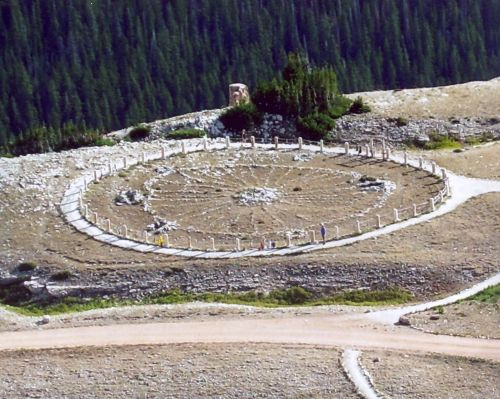
To speak of cyclical time in Native North American mourning is not to claim that all Indigenous peoples shared one theory of time. It is better understood as a recurring contrast with the modern Western habit of imagining life as a straight line: birth, growth, decline, death, and then either extinction or a sharply separate afterlife. Many Native traditions placed human life inside larger patterns of return, renewal, seasonal recurrence, kinship continuity, and ceremonial repetition. The dead did not always depart into an unreachable elsewhere. They might enter another mode of relation, join ancestors, appear in dreams, require food or remembrance, or remain connected to places where they had lived and been buried. Death could be final in one sense and not final in another. A body had ceased to live, but the relationships that made a person meaningful did not necessarily end with the body.
This refusal of simple finality shaped how grief was carried. Mourning was not only the emotional recognition that someone was gone; it was the disciplined acknowledgment that a transition had begun. The living had to respond because death opened a threshold. In many traditions, thresholds are powerful because they are unstable. A child becoming an adult, a hunter entering dangerous country, a healer receiving knowledge, a mourner entering bereavement, or a dead person beginning the journey away from ordinary life all required attention. Death rituals marked this instability and gave it form. Without ceremony, the passage might be incomplete, dangerous, or socially unresolved. With ceremony, grief could be placed within a structure that made sorrow meaningful without pretending that sorrow disappeared.
Seasonal and ecological patterns often helped make death intelligible. Communities that organized life around planting and harvest, hunting and migration, winter storytelling and summer ceremony, river cycles, animal movements, or the return of particular foods did not encounter time as an empty sequence of dates. Time was lived through recurrence. The return of corn, salmon, buffalo, berries, snow, thaw, or ceremonial gatherings could become part of how communities understood loss and renewal. The dead were remembered in worlds where plants died back and returned, animals migrated and reappeared, fires consumed and transformed, and stories carried old presences into new generations. Such patterns did not erase bereavement, but they resisted the idea that absence was the only truth death could tell. The community could mourn a particular person while still inhabiting a cosmos in which disappearance, transformation, and return were woven into ordinary experience. This did not make death gentle or easy. Parents grieved children, spouses grieved spouses, and communities were shaken by epidemic, violence, famine, and removal. But cyclical frameworks could keep grief from becoming pure rupture. The world had known absence before. The world had also known return, transformation, and obligation.
The idea of sacred transition also complicates modern assumptions about “closure.” In many contemporary settings, mourners are encouraged to reach acceptance, detach from the dead, and reassemble an individual life. Native mourning practices often suggest a different emphasis. The goal was not always to close the relationship, but to change its form properly. A name might be avoided for a time, then spoken again under appropriate conditions. Possessions might be removed, buried, burned, or given away, not because memory was unwanted, but because attachment needed ceremonial handling. A feast might feed the living and honor the dead at once. A mourning period might acknowledge that the bereaved were no longer fully in ordinary social time. Such practices do not fit neatly into modern psychological models in which grief is treated mainly as an internal process. They present mourning as an event in a web of relations.
This is why the dead could be both near and distant, remembered and released, loved and feared. The refusal of finality did not mean that every tradition encouraged constant intimacy with the dead. In some cases, the living needed to help the spirit move away. In others, mourners needed protection from excessive grief or from the unsettled presence of the deceased. Certain restrictions around names, possessions, houses, or burial places were not denials of affection. They were ways of acknowledging that death altered the conditions of relation. A dead relative might remain kin, but not in the same manner as before. Mourning helped establish the right distance, and that distance could be as sacred as remembrance.
Colonial observers often struggled to understand this. Missionaries and ethnographers sometimes interpreted Native mourning as superstition, excessive display, primitive fear of ghosts, or irrational attachment to the dead. Yet those judgments reveal more about the observers’ categories than about the practices themselves. Christian missionaries often arrived with their own assumptions about the soul, salvation, burial, resurrection, and the proper emotional discipline of the bereaved. When they encountered mourning rituals that involved food, fire, wailing, bodily alteration, burial goods, secondary treatment of remains, or communication with the dead, they frequently placed those acts inside a moral vocabulary of error rather than a relational vocabulary of care. Later ethnographers could be more descriptive, but even they often divided Indigenous practices into categories such as “belief,” “custom,” “magic,” and “ritual,” as though these could be separated from law, kinship, economy, ecology, and political authority. When a community fed the dead, watched over a body, kept vigil, purified a house, avoided a name, spoke to ancestors, or held a condolence ceremony, it was not necessarily confusing metaphor with reality. It was acting within a world in which relationships extended beyond visible presence. The sacred transition from life to death had practical consequences. It required conduct, speech, restraint, generosity, and memory.
Cyclical time should not be romanticized as a simple belief that “death is not real” or that Native peoples met bereavement with serene acceptance. Grief could be devastating, public, dangerous, and long-lasting. What cyclical and transitional frameworks offered was not immunity from sorrow, but a way to keep sorrow inside a meaningful cosmos. Death was a wound, but it was also a passage. Mourning was the work of accompanying that passage, reordering the living community, and allowing the dead to assume whatever new place their people understood them to hold. The refusal of finality was not a denial of loss. It was an insistence that loss did not exhaust the relationship.
Mourning as Communal Holding: Wakes, Feasts, Storytelling, and Obligation
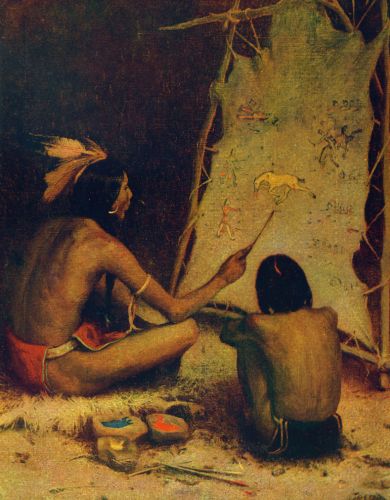
If death disturbed a field of relations, mourning required more than private endurance. In many Native North American communities, grief was held by the group because the loss belonged to more than the closest kin. A death affected the household, clan, band, village, ceremonial circle, and sometimes the political order itself. The bereaved might be the most visibly wounded, but the community had work to do: gathering, feeding, singing, sitting through the night, speaking well of the dead, caring for children, preparing the body, managing possessions, and marking the dangerous interval between death and restored balance. Mourning was not simply an expression of feeling. It was a communal practice of containment, a way of surrounding sorrow so that it did not become abandonment.
Wakes and vigils made grief visible while also giving it structure. To sit with the body, to keep a fire, to pray, to sing, to tell stories, or simply to remain present with the family was to acknowledge that death had opened a threshold that could not be crossed alone. The wake gathered the living around the dead, but it also gathered the living around one another. In some communities, such gatherings might include older ceremonial forms; in others, particularly after long histories of missionization, they might include Christian hymns, church services, rosaries, Native language prayers, tobacco, meals, and tribal protocols together. These combinations should not be treated as incoherent mixtures. They show how Native communities made mourning livable under changed historical conditions. The form could change while the deeper obligation remained: the bereaved were not to be left alone with the dead.
Feasting was one of the most powerful forms of communal holding because food translated grief into obligation. Meals after death did not merely satisfy hunger. They created a shared space in which mourners, relatives, visitors, and ceremonial helpers could participate in the care of the family and the honoring of the deceased. Food marked reciprocity: those who came to support the bereaved were fed; those who mourned were relieved, for a time, of ordinary burdens; the dead might be remembered, addressed, or symbolically included. A death feast could join the practical and the sacred. It nourished bodies exhausted by sorrow, but it also affirmed that the social world had not collapsed. People still gathered. Fires were still tended. Dishes were still prepared. Stories were still told. The living community answered death with the labor of continuance. This mattered because grief can suspend ordinary capacity. A family in mourning might be unable to cook, host, plan, or speak in the ways everyday life required, yet the arrival of food and the organization of a meal gave the community a concrete way to take up that burden. The meal also created a rhythm after the shock of death: preparation, arrival, serving, eating, speaking, cleaning, and departing. In that rhythm, sorrow was not solved, but it was carried. Food made mourning visible without requiring every mourner to explain the depth of their pain.
Storytelling performed a related work. To speak of the dead was to place the person back into a network of memory. Stories could praise generosity, courage, humor, skill, stubbornness, beauty, kinship, mistakes, obligations, and the ordinary gestures by which a life had become known. They could teach younger listeners who the dead person had been and what kinds of relationships had shaped them. In some traditions, names and stories of the dead were handled with caution during particular mourning periods, but this caution itself shows the power of speech. Words were not weightless. They could summon, wound, honor, release, or bind. Mourning speech had to be timed, framed, and witnessed. A story told at a wake, condolence ceremony, feast, or memorial gathering did not simply describe the past. It helped reorganize the dead person’s place in communal memory.
The redistribution of possessions also turned grief into social action. Clothing, tools, ornaments, horses, weapons, household goods, blankets, or other valued objects might be buried, burned, destroyed, given away, or otherwise removed from ordinary use, depending on the community and historical moment. Such acts have often been misunderstood by outsiders as wasteful or superstitious, notably when valuable goods were involved. But possessions were not always treated as neutral property. They could carry traces of the person, obligations to kin, dangers of attachment, or responsibilities toward the dead. To give away a deceased person’s belongings could ease the family’s burden, honor the dead through generosity, and prevent grief from hardening into possessiveness. It could also redistribute value across the community, transforming loss into renewed social bonds. A giveaway was not merely disposal. It was a deliberate reworking of relationship through material things. Objects that had once belonged to the dead could not always remain casually in circulation, as if nothing had changed. They had to be moved, transformed, or reassigned in ways that acknowledged the rupture death had caused. For the bereaved, this could be painful, but it also gave grief an outward motion. Instead of allowing the household to become a shrine of arrested attachment, redistribution could carry memory into the hands of others, turning personal loss into communal remembrance and reciprocal obligation.
Communal mourning also assigned roles. Elders, ceremonial leaders, singers, speakers, women relatives, male relatives, clan members, grave diggers, cooks, fire keepers, pallbearers, and visitors might each have responsibilities. These roles mattered because grief can disorient the bereaved. The mourner may not know what to do next, but the community does. Ritual obligation supplies movement when sorrow has made ordinary action difficult. Someone brings food. Someone speaks. Someone prepares the place. Someone remembers the protocol. Someone corrects what is done improperly. Someone watches over the family after the public gathering has ended. Mourning was not only emotional support but social knowledge enacted at the moment when it was most needed.
The communal nature of mourning should not be romanticized as perfect comfort. Communities could also judge, exclude, disagree, or fail. Mourning obligations could be burdensome, especially for women, poorer families, or those expected to host, feed, give, and perform grief publicly. Colonialism intensified these strains by producing repeated deaths through epidemic disease, removal, warfare, poverty, and institutional violence, sometimes overwhelming the very systems meant to hold sorrow. Yet the persistence of wakes, feeds, giveaways, memorial gatherings, and condolence practices across many Native communities shows the durability of the underlying principle. Grief was not meant to be sealed inside the individual. It was held, witnessed, fed, spoken, and obligated into form. The community did not erase the pain of death, but it refused to let the bereaved carry it unsupported.
The Body and the Landscape: Burial, Exposure, Cremation, Mounds, Trees, Scaffolds, and Houses for the Dead
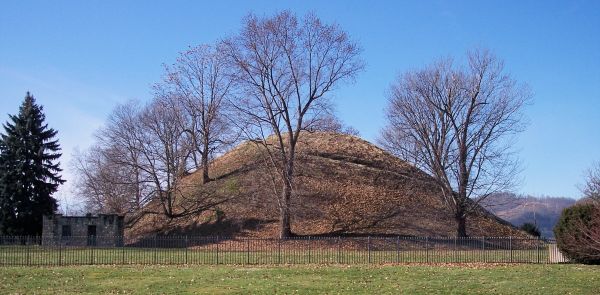
The treatment of the body after death reveals how deeply Native mourning was tied to place. The dead were not handled according to one continental pattern, nor were mortuary practices merely practical responses to climate or soil. They expressed relationships among body, spirit, land, animals, weather, ancestors, and community memory. In some places, the dead were placed in the earth; in others, they were elevated above it, burned, bundled, placed in trees, laid on scaffolds, interred in mounds, deposited in caves, housed in mortuary structures, or moved through stages of secondary burial. These practices were shaped by cosmology and environment together. A river valley, prairie, cedar forest, desert, coastal village, or mound center offered different possibilities, but those possibilities became meaningful only within local constructs of belief and obligation.
Earth burial was common in many regions, but even burial in the ground cannot be reduced to a simple or familiar act. The position of the body, the orientation of the grave, the presence or absence of grave goods, the use of wrappings, the relation to household space or communal burial grounds, and the timing of burial all mattered. A grave could mark return to the earth, proximity to kin, protection of the dead, or placement within an ancestral landscape. In some communities, burial grounds became memory fields where generations of relationship accumulated. In others, the dead might be buried near dwellings, beneath house floors, in cemeteries later shaped by mission influence, or in places chosen because of older ceremonial significance. The ground itself could hold memory, not as abstract symbolism but as the physical location where kinship, ceremony, and ancestral presence converged. To disturb such places was to do more than damage property or interrupt an archaeological site. It was to injure an existing relationship between the living, the dead, and the land that held them. To bury a body was not simply to dispose of remains. It was to locate the person within a moral geography.
Exposure burial, such as in the form of scaffolds or tree platforms, has often attracted outside fascination because it looks so different from Euro-American burial norms. Among some Plains peoples, including Lakota and other groups at various times, the dead could be wrapped and placed above ground on a scaffold, in a tree, or on a raised platform. Outsiders sometimes described such practices as abandonment, but that interpretation misses the care involved. The body had been prepared, wrapped, lifted, and placed according to a logic that belonged to the community performing the rite. Elevation could protect the body from certain disturbances, place the dead in relation to sky and wind, and mark a transitional state before later treatment of the remains. The scaffold was not merely an object; it was a place between earth and sky. It expressed a cosmology in which vertical space could carry meaning, and in which exposure to the elements was not necessarily neglect but a form of passage. The raised body also made death visible in the landscape, refusing to hide the transition too quickly. For the living, such visibility could be painful, but it could also acknowledge that death was not a private disposal problem. It was a public and sacred event that altered the space around it.
Cremation, too, carried different meanings across different Native worlds. In some regions, fire could transform the body, release the spirit, protect the living, or complete the separation between the dead and ordinary social life. Archaeological and historical evidence shows that cremation appeared in a number of Native contexts, though not as a universal practice and not always for the same reasons. Fire may be purifying in one tradition, dangerous in another, and inappropriate in yet another. The significance of cremation cannot be assumed from the act itself. The meaning lay in the people who performed it, the songs or prayers that accompanied it, the handling of ashes or bones afterward, and the way the act fit into local understandings of spirit, body, and transformation.
Mounds and mortuary earthworks show another way the body could become part of landscape and political memory. In many parts of eastern North America, from earlier Woodland traditions through Mississippian mound centers, the dead were sometimes placed within constructed landscapes that joined burial, ritual, authority, and community identity. Mounds could gather ancestors into visible earth, making the dead part of the architecture of social life. They were not only graves; they were statements of continuity, sacred geography, and collective labor. The act of building or maintaining a mound required organized work, shared knowledge, and a community capable of turning grief and authority into landscape. At sites associated with Mississippian societies, mortuary treatment could also reveal hierarchy, office, warfare, gendered authority, and ceremonial power. Some burials were ordinary; others were elaborated through placement, goods, architecture, or association with structures of rule and ritual. This does not mean that every mound should be read simply as a monument to elites, but it does show that death could help express social order. The dead helped make the community legible to itself, and the mound made ancestry visible in the land.
Houses for the dead, charnel houses, and secondary burial practices point even more clearly to death as process rather than instant event. In some Southeastern traditions, including historical Choctaw practice as described in early accounts and later tribal cultural discussions, the body might pass through stages before final deposition. The dead could be placed in a mortuary structure or treated by specialists before the bones were gathered and placed with others. To modern readers, secondary burial can seem unsettling because it does not treat burial as the immediate sealing of the body away from view. But the practice reflects a different rhythm of mourning. Flesh, bone, memory, and kinship did not move at the same pace. The body changed, and the community responded to that change ceremonially.
Trees, caves, houses, mounds, scaffolds, graves, and fires all reveal that the dead were placed somewhere, and that “somewhere” mattered. Mortuary landscapes were not blank containers for grief. They were active parts of the relationship between the living and the dead. A scaffold on the prairie, a burial mound in a river valley, a mortuary house in a village, a grave near kin, or a cremation ground could each express a different answer to the same basic problem: how should the living accompany a person who has crossed out of ordinary life? The treatment of remains made cosmology visible. It showed whether the dead needed elevation, enclosure, transformation, proximity, separation, feeding, protection, or return.
Colonial violence made these relationships vulnerable. Missionaries sometimes condemned mortuary practices they did not understand. Settlers plowed burial grounds, collectors opened graves, museums acquired bodies and funerary objects, and federal policies often disrupted the connection between ancestors and homeland. The injury was not only that bones were taken, though that was grievous enough. The deeper injury was that the dead were removed from the networks of place, kinship, and ceremony that made them relatives rather than specimens. This is why the study of burial, exposure, cremation, mounds, trees, scaffolds, and houses for the dead cannot remain antiquarian. It leads directly to modern questions of repatriation, sovereignty, and the right of Native nations to care for their ancestors according to their own laws of relationship.
Case Study I: Lakota Mourning, the Soul, and the Sacred Danger of Grief
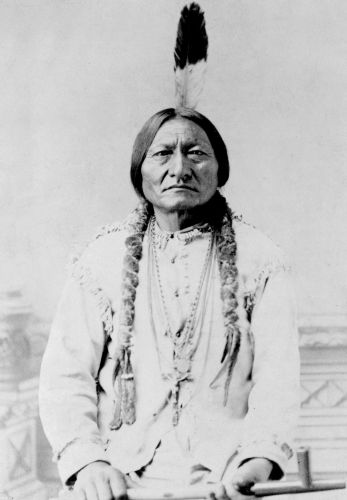
Lakota mourning offers one of the clearest examples of grief as a sacred and dangerous transition, though it must be approached with caution because Lakota religious life has often been overexposed, romanticized, and filtered through outsiders. The Lakota world was not organized around a sharp separation between religion and ordinary life. Kinship, hunting, warfare, prayer, vision, place, and obligation belonged to a world alive with power. Death did not simply remove a person from the camp or family. It disturbed relations among the living, the dead, the spirit world, and the community’s moral balance. The deceased was not merely a memory, and the mourner was not merely a psychologically wounded individual. Both stood within a charged passage that required ritual care.
The aforementioned Lakota term often rendered as “ghost” or “spirit,” wanáǧi, points toward the difficulty of translating Indigenous religious concepts into English. “Soul,” “ghost,” and “spirit” each carry European and Christian assumptions that do not fully fit Lakota thought. The wanáǧi was not simply the immortal soul of Christian theology, nor merely a haunting specter in the modern sense. It belonged to a wider understanding of presence, power, and relation after death. In recorded accounts, Lakota deathways involved concern for the proper treatment of the spirit and for the condition of those who mourned. These sources must be read critically, since the authors were outsiders and their materials came through translation, mediation, and the unequal conditions of early twentieth-century ethnography. Yet they remain important because they preserve Lakota explanations that are more textured than the simplified images often repeated in popular accounts.
The rite known as Wanáǧi Yuhápi, commonly translated as the Keeping of the Soul, reveals mourning as an extended discipline rather than a single funeral event. In this rite, associated with the sacred traditions described through Black Elk and other Lakota religious teachers, a lock of hair or other material connection to the deceased could be kept in a sacred bundle for a period of time before the soul was released. The family’s grief was not denied, but held ceremonially. The dead person’s passage and the mourner’s sorrow were treated as linked processes that required patience, restraint, prayer, and communal attention. Mourning had a duration. It was not finished simply because the body had been buried or placed away from the living. The spirit’s journey and the family’s grief unfolded together.
This is the context in which one should understand the often repeated idea that the grieving person stands near sacred power. The phrasing that mourners are “most holy” circulates widely in modern spiritual writing, but it should not be used carelessly as if it were a universal Lakota formula or an uncomplicated quotation. Still, the broader idea is not foreign to Lakota religious thought. Grief stripped away ordinary defenses. The mourner stood close to death, to the spirit of the one who had gone, and to powers that were not fully under human control. Such nearness could be holy, but holiness did not mean sentimental sweetness. It meant danger, vulnerability, intensity, and responsibility. The grieving person needed care not because grief was merely weakness, but because grief placed the person at a threshold where the ordinary social world and the unseen world touched.
Lakota mourning complicates any modern view that treats grief mainly as an interior emotional wound to be processed privately. Mourning involved kin, ceremony, objects, speech, silence, and time. It could require restraint from the living and proper release for the dead. It could treat sorrow as a condition of sacred exposure, not simply as a problem to be cured. Yet this case study also reinforces the larger caution here: Lakota traditions cannot stand for all Native North American mourning. Their value here lies in their specificity. They show how one Native people developed a powerful ceremonial language for death, spirit, and bereavement, and they remind us that grief can be both intimate and cosmological. In Lakota mourning, sorrow was not only felt. It was carried, guarded, and eventually released.
Case Study II: Ojibwe/Anishinaabe Grief, Memory, and Continuing Bonds
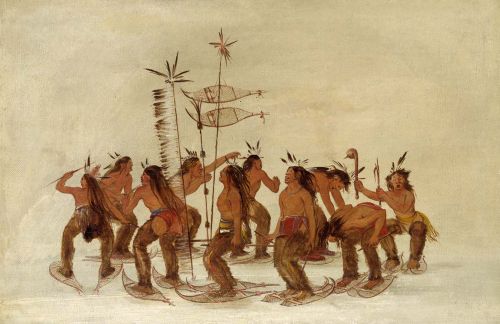
Ojibwe and broader Anishinaabe traditions offer another way to understand mourning as continuing relationship rather than severed attachment. Here, too, caution is necessary: “Anishinaabe” includes related but distinct peoples, communities, histories, and dialects, and published accounts often compress local variation into a single cultural portrait. Yet many Ojibwe materials, from early ethnography to modern Anishinaabe scholarship and elder teachings, emphasize a world in which human beings live among visible and invisible relations. Persons are not isolated bodies moving through empty space; they exist in relation to relatives, names, dreams, animals, plants, waters, manitous, ancestors, and stories. Death changes those relations, but it does not necessarily erase them. The dead may remain present through memory, dreams, kinship, place, and proper forms of address, even when mourning requires restraint, distance, or release.
A. Irving Hallowell’s famous discussion of Ojibwe ontology in 1960 remains useful here, not because it should be treated as the final authority on Ojibwe religion, but because it helps modern readers understand why “personhood” in Ojibwe worlds could extend beyond human biological individuals. Stones, thunderers, animals, and other beings might be encountered as persons under certain conditions, and relationships with them required respect, caution, and reciprocity. This does not mean that every being was always treated as a person in the same way, but rather that personhood was not limited to the category of the human. It could emerge through encounter, power, address, dream, story, and relationship. Death did not simply divide a living subject from a dead object. The deceased remained part of a relational universe in which presence could be transformed rather than annihilated. This has important implications for grief. Mourning was not merely the psychological management of absence; it was the careful reorientation of relationship with someone whose mode of being had changed. The dead person could no longer be engaged as before, but neither could they be reduced to a memory stored privately inside the mourner’s mind. They belonged to a wider field of beings and obligations, one in which dreams, names, places, offerings, stories, and silences could all become ways of negotiating continued relation. Hallowell’s work is most valuable when read alongside Anishinaabe voices, not as an outsider’s complete map of Ojibwe spirituality, but as a reminder that grief makes more sense when the world itself is understood as alive with possible persons.
Memory carried special weight in this process. Stories, names, dreams, and remembered conduct could keep the dead socially present, but they also had to be handled properly. In many Indigenous communities, speech about the dead is not casual. The name of a deceased person may be avoided for a time, spoken only under certain conditions, replaced by kinship terms, or restored through naming practices that carry memory forward into new generations. Among Anishinaabe peoples, names are not merely labels; they can be gifts, powers, histories, and relationships. To remember the dead is not only to recall biographical information. It is to participate in a moral world where speech can maintain bonds, instruct the young, honor obligations, and sometimes risk drawing too near to grief before the proper time.
The idea of continuing bonds is important because it challenges older Euro-American psychological models that treated healthy mourning as detachment from the deceased. Ojibwe and Anishinaabe grief practices often make more sense when understood as transforming attachment rather than ending it. The dead may be released from immediate ties while still remaining part of family history, ceremonial memory, dreams, land, and story. Mourning can include both separation and continuity. A mourner may need to let the loved one travel onward, but the community may also preserve the person’s place through feasts, seasonal remembrance, family narratives, memorial objects, or the passing on of names. Grief does not succeed by forgetting. It succeeds, if that word can be used at all, by learning how to remain related without trapping either the dead or the living in the first shock of loss.
Modern Anishinaabe grief also bears the weight of colonial disruption. Boarding schools, Christian missionization, land loss, child removal, urbanization, poverty, museum collection, and the suppression or weakening of language all affected how families mourned and remembered. Yet they did not erase the relational logic of grief. Contemporary Ojibwe and Anishinaabe communities continue to draw on elder knowledge, wakes, feasts, Native language, spiritual practices, church forms, kinship obligations, and community support in ways that are neither simply “traditional” nor simply assimilated. They are living practices of survival. The dead remain part of the work of cultural continuity, not as symbols frozen in the past, but as relatives whose memory helps shape the responsibilities of the living.
Case Study III: Choctaw Mourning, Bone Picking, and the Care of Remains
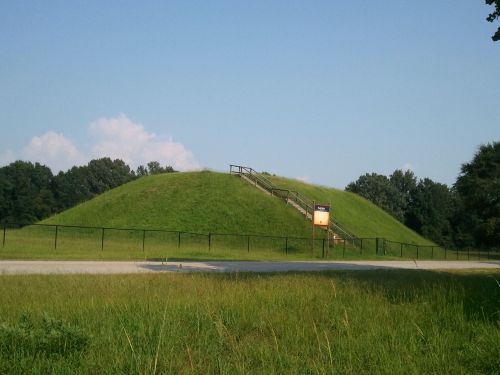
Choctaw mourning presents one of the most striking examples of death as a process requiring continued care for both body and kin. Historical accounts describe mortuary practices in which the dead were not always buried once and left untouched, but moved through stages of exposure, preparation, and final placement. These practices varied and were altered by colonial contact, missionization, removal, and changing settlement patterns, so they should not be treated as a timeless Choctaw “custom” preserved without interruption. Still, the surviving descriptions reveal a world in which the body remained socially and spiritually significant after death. The dead required attention beyond the first moment of loss, and the living community had obligations that unfolded over time. This is crucial because secondary burial makes visible something that many death rituals compress or conceal: death is not only an event but a transformation. The body changes, the mourners change, the relationship changes, and the community must guide those changes into proper order. Mourning was not finished when breath left the body. It continued through the transformation of remains, the actions of specialists, and the eventual placing of the dead among kin.
The figure often described in English as the Choctaw “bone picker” has long fascinated outsiders, sometimes for the wrong reasons. In eighteenth- and nineteenth-century descriptions, this specialist removed remaining flesh from the bones after a period of exposure, preparing the remains for final deposition. Outsider accounts often made the practice sound grotesque, exotic, or primitive, reflecting European discomfort with the deliberate handling of human remains after death. Yet from within the logic of secondary burial, the work was not desecration. It was care. The bones were not refuse, and the body was not simply an abandoned shell. The specialist performed a necessary task in the passage from recent death to ancestral placement, helping complete a process that ordinary burial compressed into a single act. What appears unsettling to an outsider may, in its own setting, represent discipline, reverence, and responsibility.
This practice also reveals a different rhythm of grief. In many Euro-American traditions, burial seeks to remove the body quickly from sight, preserving the dead through memory, grave marker, and doctrine. Choctaw secondary treatment allowed the physical transformation of the body to remain part of mourning’s unfolding. Flesh, bone, decay, cleansing, and final placement were not hidden from the logic of the rite. They marked stages in the dead person’s transition and in the living community’s adjustment to loss. The movement from body to bones could be understood not as the degradation of the person but as a change in the form through which the person was related to kin and community. The mourners did not have to pretend that the body was unchanged, nor did they have to treat physical decay as meaningless. Instead, the process gave bodily transformation a ceremonial path. It allowed grief to move from the immediacy of death toward a more settled ancestral relation, with the bones serving as the durable remainder through which the person could be gathered into collective memory. Mourning followed the body’s transformation rather than pretending that death could be sealed away immediately.
Choctaw mortuary care also belonged to a broader social world organized by kinship, obligation, and collective memory. The final placement of bones in a charnel house or other communal mortuary setting joined the deceased to others who had gone before. The dead were gathered, not merely disposed of. Such gathering made ancestry material: kinship could be seen, handled, protected, and remembered through the remains of the dead. This mattered because death did not dissolve social belonging. If anything, the proper care of remains confirmed that belonging at the moment when it was most vulnerable. To be neglected, improperly handled, or separated from one’s people would have been a different kind of loss. The care of bones expressed the continuing responsibility of the living to keep the dead within the moral and spatial order of the community.
Colonial disruption changed these practices profoundly. Missionaries and American officials often condemned Indigenous mortuary customs, while removal from the Southeast to Indian Territory tore communities from ancestral landscapes where older deathways had been rooted. Later Christian burial forms, cemeteries, written records, and church funerals reshaped Choctaw mourning, but they did not erase the older lesson that remains are relational. The modern struggle to protect graves, repatriate ancestors, and reclaim Choctaw cultural knowledge continues that history in another form. Bone picking should not be reduced to an exotic mortuary detail. It belongs to a larger Choctaw history of care: care for the dead through bodily transformation, care for families through structured mourning, and care for the community through the preservation of ancestral relation.
Possessions, Giveaways, and the Unbinding of the Dead
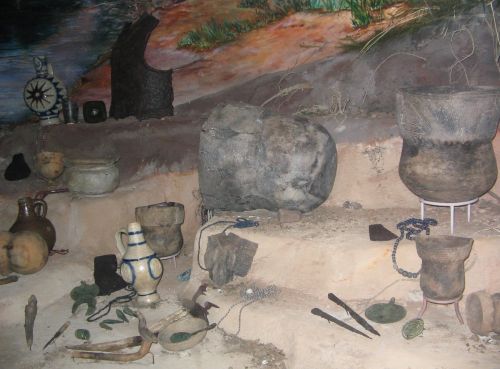
The handling of possessions after death reveals another dimension of mourning as relational work. In many Native North American communities, the belongings of the deceased were not treated simply as transferable property in the modern legal sense. Clothing, tools, weapons, ornaments, blankets, horses, household goods, ceremonial items, and personal objects could carry memory, attachment, power, status, obligation, or danger. What happened to them after death depended on the community, the period, the type of object, and the relationship between the dead person and the living. Some things might be buried with the body, burned, broken, abandoned, placed away, inherited, redistributed, or given away in public acts of generosity. The common thread was not one uniform rule, but the recognition that objects were not inert. They belonged to relationships, and death required those relationships to be reorganized.
Giveaways were powerful because they transformed grief into circulation. Rather than allowing the deceased’s possessions to remain locked inside the mourning household, the act of giving could move memory outward into the community. A blanket, garment, tool, horse, or other valued object might pass into another person’s care, not as a simple inheritance but as a social and emotional transaction. The family honored the dead by giving, and the recipients became witnesses to that honor. Such giving could ease the dangerous weight of attachment, affirm the generosity of the deceased or the bereaved family, and rebind the community after rupture. It also made mourning public. Loss did not remain hidden inside the household; it became visible in the movement of goods, the gathering of people, and the obligations created by receiving. The giveaway converted sorrow into relationship. It allowed grief to travel beyond the closest mourners without becoming spectacle, and it gave others a concrete way to participate in the work of remembrance. To receive something associated with the dead could be an honor, but it could also carry responsibility: to remember, to speak well, to use the object properly, or to recognize the generosity of the grieving family. The object became a vessel of relation rather than a mere possession. Its movement marked the fact that death had changed the social order, but had not destroyed the bonds through which value, memory, and obligation continued to flow.
This practice unsettled many European and American observers, who often interpreted the destruction or redistribution of property as wasteful, irrational, or economically primitive. Their misunderstanding came from assuming that property should remain accumulated, inherited, and preserved as wealth. In many Native contexts, value was not measured only by retention. Value could be demonstrated by giving at the right time, to the right people, under the right obligations. This was particularly true where prestige depended less on hoarding than on generosity, ceremonial authority, and the ability to sustain relations. In mourning, such generosity carried even greater force. The bereaved might give when they were most wounded, and that giving showed that grief had not destroyed the family’s capacity to remain socially responsible.
Objects could also bind the dead too closely to the living if they were not handled properly. A deceased person’s clothing, bed, tools, or personal items might be painful because they held the force of recent presence. To remove, burn, bury, or give them away could help alter the relationship between mourner and dead. This was not the same as forgetting. It was a ceremonial unbinding. The living did not necessarily stop loving the dead; rather, they stopped holding the dead in the form of ordinary possession. The treatment of belongings paralleled the treatment of the body. Just as remains had to be placed, transformed, or released, possessions also had to be moved into a new state. They could accompany the dead, protect the living, honor the family, or re-enter community life through redistribution.
The politics of possession became even more painful under colonialism. Settlers, soldiers, collectors, museums, and archaeologists often took Native objects from graves, homes, ceremonial places, and bodies, severing them from the relationships that gave them meaning. Funerary objects became “artifacts,” sacred items became “specimens,” and belongings once connected to grief became property in institutional collections. This makes modern repatriation more than the return of material culture. It is part of the repair of mourning itself. When funerary objects, sacred objects, and ancestral belongings are returned to Native nations, they are not merely transferred from one owner to another. They are restored to communities capable of understanding them as relatives, obligations, and traces of the dead. Possessions, like bones, remember the violence of removal; their return can become another form of unbinding, releasing both objects and ancestors from the colonial systems that held them captive.
Gender, Age, Status, and the Unequal Shape of Mourning
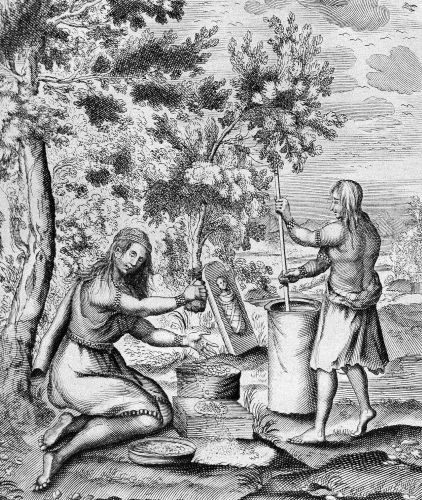
Mourning was communal, but it was not experienced equally by everyone. The form grief took could depend on gender, age, kinship position, social standing, ceremonial role, and the circumstances of death. A child, elder, warrior, mother, spouse, captive, chief, healer, or outsider did not necessarily receive the same treatment, nor did their deaths necessarily produce the same obligations among the living. This was not because some lives were without value, but because Native communities, like all societies, located persons inside particular webs of duty. Death revealed those webs with unusual force. The question was not only who had died, but who had lost them, who owed them care, who inherited their responsibilities, who spoke for them, who mourned publicly, and who bore the labor of feeding, preparing, remembering, and redistributing.
Gender often shaped the visible work of mourning. In many communities, women carried major responsibilities in care for the dead, public lament, food preparation, household rearrangement, kinship memory, and the emotional labor of grief. This does not mean that mourning was “women’s work” in any simple or universal way. Men also mourned intensely, spoke, sang, prepared graves, kept fires, performed ceremonies, gave away goods, or displayed grief through bodily alteration, withdrawal, or acts of remembrance. But gendered expectations frequently shaped how grief was performed and interpreted. Women’s laments might be understood as necessary public expressions of loss, while men’s grief might be regulated through restraint, ceremonial action, warfare memory, or generosity. Such differences were not fixed across Native North America, but they remind us that grief was embodied through social roles as well as private feeling.
The death of a child often carried a different emotional and ceremonial weight from the death of an elder. An elder’s death could be devastating, but it might also be understood as a completed life if the person had fulfilled kinship responsibilities, transmitted knowledge, and reached an honored age. A child’s death, by contrast, could wound the future. It interrupted potential names, relationships, teachings, marriages, descendants, and obligations that had not yet unfolded. The grief of parents, grandparents, and siblings could become charged. Some accounts from Great Lakes and other communities describe mourning objects, memory practices, or special forms of maternal grief that tried to hold the unbearable absence of a child. Such examples should be handled carefully, because outsider observers often sentimentalized Indigenous mothers or turned their grief into ethnographic spectacle. Still, the deeper point remains: age mattered because death changed not only what had been, but what was expected to come.
Status also shaped mourning, especially where political, ceremonial, or military authority was involved. The death of a leader, warrior, healer, clan mother, prominent elder, or ceremonial specialist could unsettle more than a household. It might require public speech, council action, succession, condolence, purification, redistribution, or the rebalancing of political relationships. Among Haudenosaunee peoples, condolence traditions were inseparable from political and social restoration when grief threatened the clarity of mind necessary for public responsibility. The Condolence Council was not merely a comforting rite in a narrow emotional sense. It helped clear the eyes, ears, and throat of those immobilized by sorrow so that they could see, hear, and speak again within the political community. Mourning, in that setting, was tied to governance because grief could cloud judgment, interrupt diplomacy, and weaken the collective capacity to act. In other settings, the death of a warrior might be remembered through songs, honors, bodily display, weapons, horses, or narratives of courage and obligation. A healer’s death might raise anxieties about the loss of knowledge, songs, medicines, and ritual authority. The death of a respected elder could create a rupture in memory itself, removing a person who carried genealogies, place histories, language, and ceremonial instruction. Mortuary distinction did not always mean hierarchy in a European aristocratic sense, but it often made social position visible. The dead person’s role in life shaped what the living had to repair after death.
The circumstances of death mattered as well. Death in old age, death in childbirth, death in war, death by epidemic, death by murder, death far from home, death under captivity, death in a boarding school, and death without proper rites could all produce different kinds of grief. A “good death” was not a universal category, but many communities distinguished between deaths that could be placed within expected moral order and deaths that created special danger, anger, or incompletion. Epidemic disease was devastating because it compressed grief beyond ordinary ceremonial capacity. When many people died at once, the practices meant to accompany each person could be strained or interrupted. Colonial violence multiplied these disordered deaths: bodies left on battlefields, relatives lost during forced removal, children buried at distant schools, ancestors dug from graves, and families prevented from mourning in their own ways. Grief was not only personal sorrow. It was a historical injury to the proper relationship between the living and the dead.
Kinship position could determine who mourned, how long they mourned, and what obligations followed. A spouse might face restrictions, withdrawal, remarriage rules, or expectations about sexual and social conduct. Parents might be expected to grieve visibly, while siblings, clanspeople, or affinal relatives might have specific duties of support, speech, burial, exchange, or replacement. In some societies, adoption, name transfer, or symbolic replacement could help repair the hole left by death, not by pretending the dead person had never died, but by restoring a relationship necessary to the community’s continuity. Captives, adoptees, and outsiders further complicate the picture. A person incorporated into a kin group could become fully mournable within that community, while enemies or strangers might be treated differently. Mourning reveals one of the deepest facts of Native social life: belonging was made through relationship, and death tested the strength and boundaries of that belonging.
The unequal shape of mourning does not diminish my larger claim that grief was a sacred and communal transition. It sharpens it. Mourning was not a single emotional script applied equally to all bodies. It was a flexible but disciplined system through which communities interpreted who a person had been and what their death had changed. Gender, age, status, kinship, and circumstance gave grief its social form. They determined who cooked, who cried, who sang, who spoke, who gave, who received, who withdrew, who replaced, who remembered, and who carried the obligations left behind. To study those differences is to see mourning not as vague spirituality, but as social intelligence under the pressure of loss.
Death Under Colonialism: Epidemic, Missionization, Removal, and Suppressed Ceremony
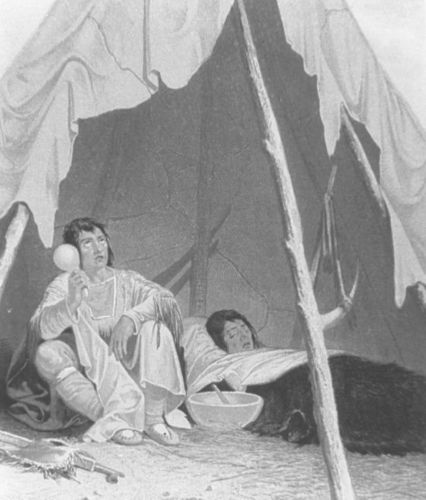
Colonialism transformed Native mourning by multiplying death while attacking the ceremonies through which death could be made bearable. The catastrophe was not only demographic, though epidemic disease, warfare, hunger, enslavement, displacement, and poverty killed on a scale that overwhelmed ordinary grief. It was also ceremonial and relational. Native communities did not merely lose people; they often lost the conditions necessary to mourn them properly. Bodies could not always be recovered. Families were separated. Burial places were abandoned under pressure or seizure. Missionaries condemned rituals. Government agents interfered with ceremony. Children died far from home in boarding schools. Ancestors were removed from graves and placed in museums. Colonialism produced not only bereavement, but bereavement under assault.
Epidemic disease was among the earliest and most devastating forces of disruption. Smallpox, measles, influenza, and other diseases moved through communities with terrifying speed, sometimes killing elders, children, ceremonial leaders, healers, speakers, and caregivers in the same waves. The loss of elders was destructive because they often carried ritual knowledge, genealogies, oral history, ecological knowledge, and protocols for mourning itself. Mass death also strained the practical structures of grief. When too many people died at once, wakes, feasts, secondary burials, condolence practices, and carefully staged rites could be compressed, altered, or made impossible. The problem was not simply that grief became larger. It became less containable. Ceremonies designed to accompany individual or household loss could be overwhelmed by communal catastrophe.
Missionization added another layer of pressure by challenging the spiritual legitimacy of Native deathways. Catholic and Protestant missionaries often approached Indigenous mourning practices through Christian categories of salvation, superstition, idolatry, heathenism, or demonic error. They might object to grave goods, feasting for the dead, communication with ancestors, mourning songs, bodily displays of grief, scaffold burial, cremation, secondary treatment of remains, or the authority of traditional ceremonial specialists. In some places missionaries offered new forms of burial, prayer, hymnody, and cemetery organization that Native communities adopted selectively. In others, mission influence became coercive, tied to schooling, rations, settlement, surveillance, or political dependency. The resulting funerary world was rarely a simple replacement of “traditional” by “Christian.” It was often a contested field in which Native people incorporated, resisted, translated, or reinterpreted Christian forms while trying to preserve older obligations to the dead.
Removal and forced migration created a different kind of mourning crisis: death away from homeland. The forced removal of southeastern peoples, including the Choctaw, Muscogee, Chickasaw, Cherokee, and Seminole, tore communities from burial places, sacred landscapes, town sites, rivers, fields, and the graves of ancestors. Death on removal routes could be painful because the dead might be buried hastily, far from kin, without the full rites that would have accompanied them at home. For survivors, the grief was doubled. They mourned the person and the place. They carried forward memories of graves left behind, relatives who had fallen on the road, and ancestral landscapes increasingly controlled by settlers. Removal made mourning geographical. The distance between the living and the dead became part of colonial violence.
Boarding schools extended this crisis into the bodies of children. Native children were taken from families, languages, and ceremonial worlds, often under policies designed to destroy Indigenous identity through discipline, Christianity, labor, and English-only education. Many children died at or near the schools from disease, neglect, malnutrition, abuse, or despair. Their families might not be informed promptly, might not receive the body, might not know the burial place, and might not be able to conduct proper mourning. The death of a child is always devastating, but boarding school death added the cruelty of distance and institutional control. The child had already been removed from the family in life; death could complete that separation by placing the body under the authority of the institution rather than the kin who loved them.
Federal policy also restricted Native ceremonial life more broadly. Late nineteenth- and early twentieth-century assimilation policy often treated Indigenous ceremony as an obstacle to civilization, Christianity, private property, and state control. The Sun Dance, giveaways, healing rites, dances, mourning observances, and other communal practices could be discouraged, criminalized, or forced underground depending on the community and agency context. The suppression of ceremony affected mourning because death rituals do not exist apart from the larger ritual system. If songs, dances, feasts, religious specialists, sacred objects, or gatherings were restricted, then the ability to mourn according to tribal law was also restricted. Colonial authority sought to govern not only land and labor, but the emotional and spiritual conduct of Native communities.
Grave desecration and scientific collecting introduced yet another form of violence. Soldiers, settlers, antiquarians, archaeologists, physicians, museums, and universities removed Native remains and funerary objects from burial places, battlefields, mounds, caves, and cemeteries. These acts were often justified in the language of science, salvage, racial classification, or national heritage. For Native communities, the removal of ancestors was not neutral research. It interrupted the relationship between the dead, their descendants, and the land. A skull in a museum cabinet, a bundle of bones in a university collection, or funerary objects displayed behind glass marked the continuation of colonial power after death. The dead were transformed from relatives into specimens, and mourning was displaced into a long struggle for return.
Yet colonialism did not simply destroy Native mourning. It also revealed its resilience. Native communities continued to wake the dead, feed mourners, speak in tribal languages, bury relatives, preserve memory, adapt Christian forms, protect graves, hide ceremonies, revive suppressed practices, and demand the return of ancestors. The result was not an untouched survival from a precolonial past, but a history of mourning under constraint. Epidemic, missionization, removal, boarding schools, ceremonial suppression, and grave desecration all changed how Native peoples could care for their dead. But they did not erase the underlying truth that mourning remained a matter of sovereignty, kinship, and relation. To mourn under colonialism was to insist that Native dead were not abandoned, not specimens, not vanished people, and not the property of church, state, school, or museum.
Historical Trauma and Compounded Grief

Historical trauma names a wound that is both personal and collective, inherited not as a simple memory but as a pattern of loss carried through families, communities, institutions, and bodies. In Native North American contexts, the concept has been used to describe the cumulative effects of colonization: land theft, epidemic disease, warfare, forced removal, missionization, boarding schools, child removal, ceremonial suppression, sexual violence, poverty, language loss, and the desecration of ancestors. It is not merely that Indigenous peoples experienced many separate tragedies. It is that those tragedies accumulated across generations, often attacking the very systems that had once helped communities absorb grief. When mourning practices, kinship networks, languages, burial grounds, and ceremonial authorities were disrupted, grief did not disappear. It became compounded, deferred, displaced, and passed forward through stories, silences, symptoms, and obligations left unresolved.
The idea is powerful because it explains why some losses cannot be understood only at the level of individual bereavement. A grandmother grieving a child lost to disease, a parent grieving a child sent to boarding school, a family grieving an ancestor held in a museum, or a community grieving a burial ground destroyed by development is not experiencing loss in isolation from history. The grief is layered. It includes the immediate dead, but also the earlier dead; the particular family, but also the people; the present wound, but also the long pattern that made the wound possible. This does not mean that every Native person experiences grief in the same way, or that Indigenous life should be reduced to trauma. It means that colonial history altered the conditions under which grief was lived. A death may call up other deaths, other removals, other separations, and other moments when mourning was denied or interrupted.
The boarding school context has become one of the clearest examples of compounded grief because it attacked children, language, kinship, and mourning at once. Children were removed from home, disciplined against their languages and cultural practices, converted or pressured into Christian forms, and often buried far from their families when they died. For many families, grief was not granted the ordinary dignity of presence. Parents might never have held the body, spoken the proper words, sung the proper songs, or known the exact place of burial. The trauma did not end with the child’s death. It remained in the unanswered questions: Where is the child? Who buried them? What was done for them? Who spoke their name? The contemporary search for boarding school graves and the return of children’s remains are not simply historical investigations. They are acts of mourning delayed by generations.
Historical trauma also helps explain why grief can become embodied in ways not immediately recognizable as mourning. Depression, addiction, anger, family rupture, suicide, distrust of institutions, spiritual dislocation, and chronic stress may all be linked, in some communities and families, to histories of dispossession and cultural attack. Yet this connection must be handled carefully. Scholars have argued that unresolved collective grief is central to Indigenous historical trauma, while others, including Joseph P. Gone, have cautioned that the framework can become too generalized or can unintentionally translate Indigenous suffering into clinical categories that do not fully match tribal understandings of healing. Both points matter. Historical trauma is useful when it restores history to pain that has been individualized or pathologized. It becomes less useful if it turns Native communities into case studies of damage rather than peoples with sovereignty, knowledge, humor, endurance, and living traditions.
Compounded grief needs to be paired with cultural continuity. Many Native communities have responded to historical trauma not only through therapy or public health programs, but through language revitalization, ceremony, kinship repair, food sovereignty, repatriation, land defense, elder teaching, community memorials, and renewed funeral practices. These are not decorative cultural additions to “real” healing. They are often healing itself, because they restore relationships that colonialism tried to sever. A funeral conducted partly in a tribal language, a memorial feast, a grave protection effort, the return of ancestors from a museum, or the recovery of a boarding school child can all address grief at the level where it was wounded: family, land, ceremony, memory, and nationhood. Healing does not mean erasing grief. It means giving grief a place where it can be carried without destroying the living.
Historical trauma deepens my central argument. If mourning in many Native traditions was the work of helping the dead, holding the bereaved, and restoring balance, then colonialism was devastating precisely because it interfered with that work. It created deaths that could not be properly mourned, separations that could not be ritually repaired, and ancestors who were taken from the care of their people. But the persistence of grief is also evidence of continuing relation. Native communities continue to mourn because the dead continue to matter. The pain is historical, but so is the responsibility. Compounded grief is not only a record of what colonialism broke; it is also a measure of what Indigenous peoples have refused to abandon.
Ancestors in Museums: Grave Robbing, Scientific Collection, and Repatriation
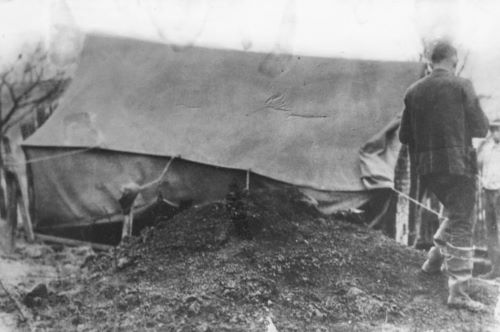
The colonial assault on Native mourning did not end at the grave. Across North America, Native burial places were opened by soldiers, settlers, physicians, antiquarians, archaeologists, museum agents, road builders, farmers, and collectors who treated ancestral remains and funerary objects as curiosities, data, trophies, or property. This was not simply theft in the ordinary sense, though it was often that as well. It was a profound violation of relationship. Ancestors who had been placed in the earth, in mounds, in caves, in mortuary houses, or in other sacred settings were removed from the lands and communities that held them. Funerary objects that had accompanied the dead were separated from the very persons and obligations that gave them meaning. What Native communities understood as relatives and belongings, colonial institutions reclassified as specimens and artifacts.
Scientific collection intensified this violence by giving grave robbing the authority of knowledge. In the nineteenth and early twentieth centuries, human remains were gathered for anatomy, racial classification, craniometry, archaeology, ethnology, and museum display. Skulls, bones, hair, burial goods, masks, pipes, bundles, clothing, and ceremonial items entered institutional collections under the language of preservation or research. The logic was often openly racial. Native peoples were imagined as vanishing, primitive, or destined to disappear, and their bodies and belongings were collected as evidence of a supposedly dying race. This “salvage” mentality created a cruel contradiction: colonial society helped produce Native suffering and dispossession, then claimed the right to preserve Native remains as objects of scientific curiosity.
Museums became powerful sites of this transformation. They could convert a burial into a collection, a relative into a catalogue number, and a sacred object into an exhibit label. The glass case did not merely display Native material culture; it often concealed the violence by which that material had been acquired. Visitors encountered “Indian artifacts” without seeing the opened graves, coerced sales, unequal negotiations, missionary removals, military seizures, or anthropological collecting networks behind them. Even when museums claimed to honor Native cultures, they frequently did so by separating objects from living Native authority. A robe, pipe, mask, basket, bundle, weapon, or funerary object might be praised for its craftsmanship while the community that understood its responsibilities was excluded from the decision about whether it should be seen at all. The museum’s power lay partly in this act of translation: it made sacred, familial, and ceremonial things appear as public educational material. It taught viewers to admire form while forgetting relation. The dead were made available to the public, while descendants were denied control over how their ancestors and sacred belongings were treated. The museum did not stand outside the history of mourning. It became one of the places where mourning was blocked.
The injury was spiritual, familial, political, and epistemological. To hold Native remains without consent was to assert that institutions knew better than Native nations what ancestors were, where they belonged, and how they should be cared for. It also imposed a foreign category system on the dead. A bone became “osteological material.” A burial offering became an “associated funerary object.” A sacred item became “ethnographic material.” Such terms may be necessary within law or museum administration, but they can also hide the relational reality that Native communities insist upon: these are not merely things from the past. They are connected to people, clans, nations, ceremonies, and places. Repatriation begins by challenging the institutional power to define the dead as objects.
The Native American Graves Protection and Repatriation Act of 1990 marked a major legal shift by requiring federal agencies and federally funded museums to inventory, consult, and return Native American human remains, funerary objects, sacred objects, and objects of cultural patrimony under defined conditions. The law did not solve the problem, and many Native advocates have criticized its slow pace, bureaucratic burdens, evidentiary demands, and the reluctance of some institutions to relinquish control. Still, NAGPRA changed the terms of authority. It recognized that Native nations had legal standing in relation to ancestors and cultural items held by museums and federal agencies. Recent federal regulations, finalized in 2023 and effective in 2024, were intended to clarify and strengthen repatriation processes, including more systematic procedures for disposition and return.
Yet repatriation is not only a legal process. It is mourning resumed. When ancestors return from museums, universities, or federal repositories, communities may conduct ceremonies, rebury remains, care for funerary objects, restrict public knowledge, or hold memorial gatherings that repair relationships interrupted for generations. The return may bring relief, anger, sorrow, and renewed responsibility all at once. It can also require painful labor from tribal historic preservation officers, elders, cultural committees, lawyers, museum staff, and families who must confront inventories written in the language of collection rather than kinship. Repatriation asks Native communities to enter colonial archives to undo the violence those archives helped preserve. The work is exhausting because the wound is not abstract. Each box, drawer, catalogue record, and accession number may represent a person who was once mourned, buried, and then taken. The return of ancestors can reopen grief even as it answers it. Communities may have to learn the circumstances of disturbance, confront the indignity of storage, and decide how to care for remains after long separation from place and kin. This is why repatriation cannot be measured only by institutional compliance or the number of items transferred. Its deeper significance lies in restoring authority over mourning itself: who may speak, who may know, who may touch, who may conceal, who may rebury, and who may finally bring the dead home.
The presence of ancestors in museums forces my primary argument into modern view. If Native mourning is the work of relation, then grave robbing and scientific collection were attempts to sever relation after death. They separated bodies from land, belongings from persons, descendants from ancestors, and knowledge from Indigenous authority. Repatriation does not erase that history, but it refuses its finality. It insists that the dead are not trapped forever in the categories imposed on them by collectors. Ancestors can return. Funerary objects can be restored to ceremonial care. Institutions can be made to answer to Native nations rather than only to their own archives. In that return, grief becomes political, and sovereignty becomes intimate: the right to care for the dead is inseparable from the right to continue as a people.
Revitalization: Language, Ceremony, Community Healing, and Contemporary Grief Work
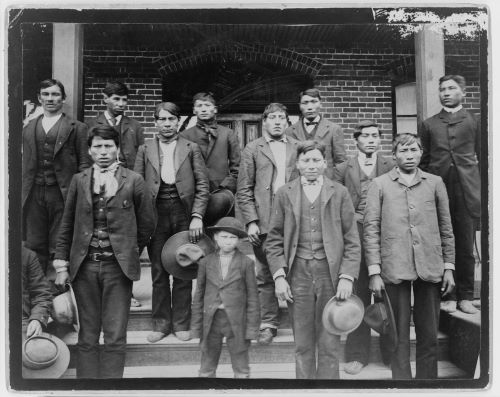
Revitalization is not a return to an untouched past. It is the living work of restoring, adapting, protecting, and renewing relationships that colonialism tried to sever. In Native North American mourning, revitalization may take the form of language spoken at funerals, songs remembered by elders, wakes organized through kinship networks, memorial feasts, tribal flags, veterans’ honors, church services joined with older protocols, repatriation ceremonies, grave protection, or community healing programs rooted in Indigenous knowledge. These practices are not merely cultural decoration added to grief. They are often the means by which grief becomes bearable. If colonialism wounded mourning by separating people from land, ceremony, language, and ancestors, then revitalization addresses grief at the level of those broken relations.
Language is central because mourning depends on words that do more than communicate information. A prayer, kinship term, condolence phrase, name, song, or ceremonial instruction may carry a world of relation that English cannot fully reproduce. When Native languages are used in funerals and memorial gatherings, they do not simply add authenticity to the event. They return grief to the sounds through which ancestors were addressed, obligations were named, and relationships were made intelligible. Even partial use of language can matter: a greeting, a song, a clan term, a word for the dead, or a phrase of release may hold more than its dictionary meaning. Language revitalization belongs to grief work because it restores the vocabulary through which mourning can become more than private pain. It gives sorrow a home inside the people’s own speech.
Ceremony also remains essential, though contemporary ceremony may be complex and blended. Many Native funerals today include Christian prayers, church spaces, hymn singing, Native American Church elements, smudging, tobacco, drum songs, traditional foods, memorial giveaways, tribal honor guards, military rites, family storytelling, and protocols specific to the nation or community. Such combinations should not be dismissed as contradiction. They reflect histories of coercion, adaptation, survival, and choice. A family may be Catholic and deeply tribal, Baptist and ceremonial, urban and connected to home community, Christian in some forms and Indigenous in others. The key question is not whether a funeral is “purely traditional,” but whether it allows the family and community to care for the dead in ways that restore relation, dignity, and responsibility. Blended mourning can be one of the clearest signs of Native endurance. It shows people refusing the false choice between inherited Indigenous obligation and historical realities imposed by missionization, relocation, intermarriage, military service, wage labor, urban life, and Christian affiliation. A service may move from church to cemetery to community hall; it may include hymns, cedar, tobacco, food, photographs, honor songs, and stories that only family members can fully understand. What holds these elements together is not doctrinal uniformity but relational purpose: the dead must be honored, the family must be held, visitors must be received, obligations must be met, and the community must leave the gathering with the sense that something necessary has been done.
Community healing programs have also expanded the meaning of mourning. Historical trauma, suicide, addiction, violence, boarding school memory, missing and murdered Indigenous relatives, and the return of ancestors from institutions have required forms of grief work that exceed the single funeral. Talking circles, grief camps, elder-led teachings, cultural camps, language classes, land-based healing, memorial walks, community feasts, and trauma-informed Indigenous counseling can all become ways of carrying grief collectively. These practices challenge the assumption that healing must occur primarily inside the individual psyche. They suggest instead that pain caused through broken relationships must often be healed through restored relationships: with relatives, land, language, ceremony, food, ancestors, and the community’s future. This is important where grief has become repetitive or layered, as when a death in the present awakens memories of earlier removals, boarding school losses, family separations, or ancestors whose remains have not yet returned home. A talking circle or memorial walk does not erase that history, but it gives the grief a shared form. A cultural camp may teach young people songs, kinship terms, or food practices that reconnect them to those who came before. Land-based healing may place sorrow back in relation to water, plants, animals, and ancestral places rather than leaving it enclosed in clinical language alone. Contemporary grief work becomes both care and instruction, helping communities survive the present while teaching why the past still matters.
Repatriation has made this particularly visible. When ancestors or funerary objects return from museums and universities, Native communities may have to mourn deaths that occurred generations ago and violations that continued into the present. The ceremony of return can involve grief, anger, relief, secrecy, public testimony, and renewed responsibility. It may also create intergenerational teaching: younger people learn why these ancestors matter, how they were taken, and what must now be done. Repatriation becomes both mourning and education. It teaches that the dead are not archaeological fragments but relatives whose care remains unfinished. It also shows that revitalization is not only about recovering ceremonies from the past; it is about applying Indigenous law and responsibility to new historical wounds.
Contemporary Native grief work refuses both disappearance and simple recovery. It does not pretend that colonization failed to wound mourning, nor does it accept that those wounds define Native life completely. Revitalization is better understood as continuity under changed conditions. A wake in a community center, a memorial feast after a church service, a song learned from an elder, a language class dedicated to ancestors, a repatriation reburial, or a family gathering around photographs and food can all participate in the same larger work: returning grief to relation. The dead are honored, the living are held, and the community practices survival not as abstraction, but as care. Mourning becomes one of the places where cultural renewal is felt most intensely because it brings together everything colonialism tried to separate: body, land, memory, kinship, language, and spirit.
Are We Turning Many Native Deathways into One Spiritual System?
The following video from PBS Documentaries discusses Native American cosmology:
I have had to take care that even a cautious comparative account may still turn hundreds of Native deathways into one elegant spiritual system. Words such as “spirit,” “ancestor,” “relation,” “transition,” “community,” and “healing” can become too smooth. They can make Lakota, Ojibwe, Choctaw, Haudenosaunee, Pueblo, Inuit, Northwest Coast, Southeastern, Plains, Great Lakes, and California traditions appear as variations on one shared doctrine rather than as distinct worlds of practice and meaning. The risk is not only factual error. It is interpretive colonialism in a softer form: replacing older stereotypes of “primitive superstition” with newer romantic language about Indigenous spirituality, while still refusing Native peoples the full complexity of difference, disagreement, secrecy, change, and historical specificity.
This is important because Native deathways are not equally available to outsiders. Some knowledge is public, some is family-held, some is ceremonial, some is restricted, and some has been distorted by the very archives historians use. Missionaries, soldiers, travelers, anthropologists, and government officials often recorded practices they only partly understood, and later readers may mistake those partial accounts for transparent descriptions. Even tribally grounded public sources cannot be treated as permission to generalize without limit. A practice described among one community at one moment does not automatically apply to all members of that nation, much less to other Native peoples. Nor should “revitalization” be treated as evidence that a single ancient system has survived unchanged. Contemporary mourning may include Christian forms, urban experience, military honors, social media memorials, repatriation politics, public health programs, and pan-Indigenous healing language alongside older tribal protocols. That complexity is not a problem to be solved; it is the history itself.
The challenge also warns against making grief too redemptive. It is tempting to frame Native mourning as a beautiful alternative to modern alienation: communal instead of individualistic, cyclical instead of linear, relational instead of detached, healing instead of clinical. There is truth in parts of that contrast, but it can become sentimental if it forgets pain, coercion, conflict, and inequality. Mourning obligations could burden families. Public grief could be exhausting. Gendered expectations could place heavy emotional and practical labor on women. Epidemics and removals could overwhelm ceremony rather than being neatly absorbed by it. Boarding school deaths, grave robbing, and museum collection did not become meaningful simply because communities later resisted them. Some losses remained unresolved for generations. To say that mourning restored balance must not imply that balance was always restored, or that grief reliably found a sacred path through devastation.
This does not require abandoning comparison altogether. If comparison is done carefully, it can reveal patterns without erasing difference. My argument is not that Native North America possessed one unified theology of death. It is that many Native communities, in their own ways, treated death as a relational crisis requiring more than private emotion or biological disposal. Across distinct traditions, the dead often remained socially and spiritually significant; mourning often involved kin, community, food, speech, objects, land, and ceremony; colonialism often attacked the practices through which the dead were cared for; and contemporary revitalization often treats grief as a site of cultural endurance. These are not universal laws. They are recurring historical patterns that become meaningful only when held alongside local specificity.
This modifies the my conclusion rather than overturning it. Native mourning should not be described as one system, one spirituality, or one timeless Indigenous wisdom about death. It should be understood as a field of diverse practices that repeatedly show how grief becomes intelligible through relationship. The proper final interpretation is not unity, but disciplined comparison: many peoples, many deaths, many ceremonies, many silences, many adaptations, and many forms of continuing care. The diversity strengthens the argument because it prevents the history from becoming myth. Native deathways matter not because they can be reduced to a single answer to death, but because they show how many different communities made loss bearable, sacred, political, and communal without surrendering the dead to absence alone.
Conclusion: Grief as the Work of Continuing Relationship
The history of grief and mourning in Native North American tribes cannot be reduced to one doctrine of death, one ceremonial pattern, or one ancestral system. Its power lies precisely in its diversity. Lakota mourning, Ojibwe and Anishinaabe memory, Choctaw care for remains, Haudenosaunee condolence, Southeastern secondary burial, Plains scaffold practices, mound landscapes, repatriation ceremonies, wakes, feasts, giveaways, and modern community healing programs all emerge from distinct histories. Yet they repeatedly challenge the idea that death is merely the disappearance of an individual into absence. In many Native worlds, death changed relationship rather than simply ending it. The dead required care, the living required support, and the community required practices through which rupture could be acknowledged, carried, and transformed.
Mourning, in this history, was work. It was emotional work, because grief had to be expressed, contained, witnessed, and endured. It was social work, because death altered kinship, authority, household life, property, memory, and obligation. It was spiritual work, because the dead often had to be guided, released, fed, remembered, protected, or restored to proper relation. It was also political work, especially under colonialism, because the right to mourn became inseparable from the right to land, language, ceremony, family, and ancestral care. A funeral, wake, feast, scaffold, burial ground, charnel house, condolence ceremony, giveaway, or repatriation reburial was never only about the dead. It was also about whether the living could continue as a people with authority over their own relations.
Colonialism tried to break that authority by multiplying death and interrupting mourning. Epidemics overwhelmed communities. Missionaries condemned ceremonies. Removal separated families from homelands and graves. Boarding schools took children from parents in life and, too often, in death. Museums and universities transformed ancestors into specimens and funerary belongings into collections. These were not only historical injustices in the abstract; they were assaults on the ways Native communities cared for the dead and held the bereaved. Yet the persistence of mourning practices, the return of ancestors, the revival of language, the protection of graves, and the renewal of ceremony show that grief was never only a record of what colonialism destroyed. It became one of the means through which Native communities continued to insist on relation.
To grieve was not simply to remember a person who had vanished. It was to keep faith with a changed relationship. Sometimes that meant release; sometimes remembrance; sometimes silence; sometimes speech; sometimes feeding, giving, burying, singing, waiting, repatriating, or teaching the young why the dead still mattered. The central lesson is not that Native peoples possessed a serene answer to death. They suffered death as deeply and devastatingly as any people. The lesson is that many Native communities refused to leave grief unsupported, unstructured, or severed from the larger world of kinship, land, spirit, and memory. Grief was the work of continuing relationship, and that work remains one of the most intimate forms of survival.
Bibliography
Affiliate disclosure: Amazon links on this site are paid links. As an Amazon Associate I earn from qualifying purchases.
- Adams, David Wallace. Education for Extinction: American Indians and the Boarding School Experience, 1875–1928. 3rd ed. Lawrence: University Press of Kansas, 1995.
- Albers, Patricia C., and Beatrice Medicine, eds. The Hidden Half: Studies of Plains Indian Women. Washington, DC: University Press of America, 1983.
- Axtell, James, ed. The Indian Peoples of Eastern America: A Documentary History of the Sexes. New York: Oxford University Press, 1981.
- Berkhofer, Robert F. Jr. The White Man’s Indian: Images of the American Indian from Columbus to the Present. New York: Vintage Books, 1978.
- Black Elk. The Sacred Pipe: Black Elk’s Account of the Seven Rites of the Oglala Sioux. Recorded and edited by Joseph Epes Brown. Norman: University of Oklahoma Press, 1989.
- Boas, Franz. The Social Organization and the Secret Societies of the Kwakiutl Indians. Report of the U.S. National Museum for 1895. Washington, DC: Government Printing Office, 1897.
- Bombay, Amy, Kimberly Matheson, and Hymie Anisman. “The Intergenerational Effects of Indian Residential Schools: Implications for the Concept of Historical Trauma.” Transcultural Psychiatry 51:3 (2014), 320–338.
- Brave Heart, Maria Yellow Horse. “The Historical Trauma Response among Natives and Its Relationship with Substance Abuse: A Lakota Illustration.” Journal of Psychoactive Drugs 35:1 (2003), 7–13.
- Brave Heart, Maria Yellow Horse, and Lemyra M. DeBruyn. “The American Indian Holocaust: Healing Historical Unresolved Grief.” American Indian and Alaska Native Mental Health Research 8:2 (1998), 56–78.
- Brown, James A., ed. Approaches to the Social Dimensions of Mortuary Practices. Memoirs of the Society for American Archaeology, no. 25. Washington, DC: Society for American Archaeology, 1971.
- Bureau of Indian Affairs. “Tribal Leaders Directory.” U.S. Department of the Interior. Accessed June 14, 2026. https://www.bia.gov/service/tribal-leaders-directory.
- Calloway, Colin G. First Peoples: A Documentary Survey of American Indian History. 4th ed. Boston: Bedford/St. Martin’s, 2011.
- Carson, James Taylor. Searching for the Bright Path: The Mississippi Choctaws from Prehistory to Removal. Lincoln: University of Nebraska Press, 1996.
- Catlin, George. North American Indians: Being Letters and Notes on the Manners, Customs, and Conditions, Written During Eight Years’ Travel Amongst the Wildest Tribes of Indians in North America, 1832-1839. 2 vols. London: Published by the Author, 1880.
- Cave, Alfred A. “New England Puritan Misperceptions of Native American Shamanism.” International Social Science Review 67:1 (1992), 15-27.
- Choctaw Nation of Oklahoma. “Choctaws Have Long History of Remembering and Honoring Loved Ones.” Iti Fabvssa. Choctaw Nation of Oklahoma. Accessed June 14, 2026. https://www.choctawnation.com/news/iti-fabvssa/choctaws-have-long-history-of-remembering-and-honoring-loved-ones/.
- Clifford, James. Returns: Becoming Indigenous in the Twenty-First Century. Cambridge, MA: Harvard University Press, 2013.
- Colwell, Chip. Plundered Skulls and Stolen Spirits: Inside the Fight to Reclaim Native America’s Culture. Chicago: University of Chicago Press, 2017.
- DeJong, David H. “’Unless They Are Kept Alive’: Federal Indian Schools and Student Health, 1878–1918.” American Indian Quarterly 31:2 (2007), 256-282.
- Deloria, Philip J. Indians in Unexpected Places. Lawrence: University Press of Kansas, 2004.
- Deloria, Vine Jr. God Is Red: A Native View of Religion. 30th anniversary ed. Golden, CO: Fulcrum Publishing, 2003.
- DeMallie, Raymond J. The Sixth Grandfather: Black Elk’s Teachings Given to John G. Neihardt. Lincoln: University of Nebraska Press, 1984.
- DeMallie, Raymond J., and Douglas R. Parks, eds. Sioux Indian Religion: Tradition and Innovation. Norman: University of Oklahoma Press, 1987.
- Densmore, Frances. Chippewa Customs. Bureau of American Ethnology Bulletin 86. Washington, DC: Government Printing Office, 1929.
- Duran, Eduardo. Healing the Soul Wound: Counseling with American Indians and Other Native Peoples. New York: Teachers College Press, 2006.
- Evans-Campbell, Teresa. “Historical Trauma in American Indian/Native Alaska Communities: A Multilevel Framework for Exploring Impacts on Individuals, Families, and Communities.” Journal of Interpersonal Violence 23:3 (2008), 316–338.
- Fenton, William N. The Great Law and the Longhouse: A Political History of the Iroquois Confederacy. Norman: University of Oklahoma Press, 1998.
- Fine-Dare, Kathleen S. Grave Injustice: The American Indian Repatriation Movement and NAGPRA. Lincoln: University of Nebraska Press, 2002.
- Fixico, Donald L. The American Indian Mind in a Linear World: American Indian Studies and Traditional Knowledge. New York: Routledge, 2003.
- Galloway, Patricia. Choctaw Genesis, 1500–1700. Lincoln: University of Nebraska Press, 1995.
- Gone, Joseph P. “The Impact of Historical Trauma on Health Outcomes for Indigenous Populations in the USA and Canada: A Systematic Review.” American Psychologist 74:1 (2019), 20–35.
- Grim, John A. The Shaman: Patterns of Siberian and Ojibway Healing. Norman: University of Oklahoma Press, 1983.
- Hallowell, A. Irving. “Ojibwa Ontology, Behavior, and World View.” In Culture in History: Essays in Honor of Paul Radin, edited by Stanley Diamond, 19–52. New York: Columbia University Press, 1960.
- Harriot, Thomas. A Briefe and True Report of the New Found Land of Virginia. London, 1588.
- Hertz, Robert. Death and the Right Hand, translated by Rodney Needham and Claudia Needham. Glencoe, IL: Free Press, 1960.
- Hinsley, Curtis M. Savages and Scientists: The Smithsonian Institution and the Development of American Anthropology, 1846–1910. Washington, DC: Smithsonian Institution Press, 1981.
- Hirschfelder, Arlene, Paulette Fairbanks Molin, and Yvonne Wakim. American Indian Stereotypes in the World of Children: A Reader and Bibliography. 2nd ed. Lanham, MD: Scarecrow Press, 1999.
- Hudson, Charles. The Southeastern Indians. Knoxville: University of Tennessee Press, 1976.
- Hultkrantz, Åke. Native Religions of North America: The Power of Visions and Fertility. San Francisco: Harper & Row, 1987.
- Irwin, Lee. The Dream Seekers: Native American Visionary Traditions of the Great Plains. Norman: University of Oklahoma Press, 1994.
- Johnston, Basil. Ojibway Heritage. New York: Columbia University Press, 1976.
- —-. The Manitous: The Spiritual World of the Ojibway. New York: HarperCollins, 1995.
- Kan, Sergei. Symbolic Immortality: The Tlingit Potlatch of the Nineteenth Century. Washington, DC: Smithsonian Institution Press, 1989.
- Kelton, Paul. Cherokee Medicine, Colonial Germs: An Indigenous Nation’s Fight against Smallpox, 1518–1824. Norman: University of Oklahoma Press, 2015.
- —-. Epidemics and Enslavement: Biological Catastrophe in the Native Southeast, 1492–1715. Lincoln: University of Nebraska Press, 2007.
- Kimmerer, Robin Wall. Braiding Sweetgrass: Indigenous Wisdom, Scientific Knowledge, and the Teachings of Plants. Minneapolis: Milkweed Editions, 2013.
- Knight, Vernon James Jr. Mound Excavations at Moundville: Architecture, Elites, and Social Order. Tuscaloosa: University of Alabama Press, 2010.
- Krech, Shepard III. The Indians and the Ecological Indian: Myth and History. New York: W. W. Norton, 2000.
- Lomawaima, K. Tsianina. They Called It Prairie Light: The Story of Chilocco Indian School. Lincoln: University of Nebraska Press, 1994.
- Martin, Michael. “Bi’äñki’s Ghost Dance Map: Thanatoptic Cartography and the Native American Spirit World.” Imago Mundi 65:1 (2013), 106-114.
- Mauss, Marcel. The Gift: The Form and Reason for Exchange in Archaic Societies. Translated by W. D. Halls. New York: W. W. Norton, 1990.
- Mihesuah, Devon Abbott. Choctaw Crime and Punishment, 1884–1907. Norman: University of Oklahoma Press, 2009.
- —-. Natives and Academics: Researching and Writing about American Indians. Lincoln: University of Nebraska Press, 1998.
- —-. Repatriation Reader: Who Owns American Indian Remains? Lincoln: University of Nebraska Press, 2000.
- Miller, Christopher L., and George R. Hamell. “A New Perspective on Indian-White Contact: Cultural Symbols and Colonial Trade.” Journal of American History 73:2 (1986), 311–328.
- Million, Dian. Therapeutic Nations: Healing in an Age of Indigenous Human Rights. Tucson: University of Arizona Press, 2013.
- Morrison, Kenneth M. The Solidarity of Kin: Ethnohistory, Religious Studies, and the Algonkian-French Religious Encounter. Albany: State University of New York Press, 2002.
- Nabokov, Peter. A Forest of Time: American Indian Ways of History. Cambridge: Cambridge University Press, 2002.
- —-, ed. Native American Testimony: A Chronicle of Indian-White Relations from Prophecy to the Present, 1492–2000. Rev. ed. New York: Penguin Books, 1999.
- —-. Where the Lightning Strikes: The Lives of American Indian Sacred Places. New York: Viking, 2006.
- National Park Service. “Interior Department Announces Final Rule for Implementation of the Native American Graves Protection and Repatriation Act.” December 22, 2023. https://www.nps.gov/orgs/1207/interior-department-announces-final-rule-for-implementation-of-the-native-american-graves-protection-and-repatriation-act.htm.
- —-. “Native American Graves Protection and Repatriation Act.” Accessed June 14, 2026. https://www.nps.gov/subjects/nagpra/.
- Neihardt, John G. Black Elk Speaks: Being the Life Story of a Holy Man of the Oglala Sioux. 1932. Albany: State University of New York Press, 2008.
- Nichols, Roger L., ed. The American Indian: Past and Present. 6th ed. Norman: University of Oklahoma Press, 2008.
- O’Brien, Greg. Choctaws in a Revolutionary Age, 1750–1830. Lincoln: University of Nebraska Press, 2002.
- Parker, Arthur C. The Constitution of the Five Nations or The Iroquois Book of the Great Law. Albany: University of the State of New York, 1916.
- Pauketat, Timothy R. Ancient Cahokia and the Mississippians. Cambridge: Cambridge University Press, 2004.
- Perdue, Theda. Cherokee Women: Gender and Culture Change, 1700–1835. Lincoln: University of Nebraska Press, 1998.
- Perdue, Theda, and Michael D. Green, eds. The Cherokee Removal: A Brief History with Documents. 2nd ed. Boston: Bedford/St. Martin’s, 2005.
- Phillips, Ruth B. Trading Identities: The Souvenir in Native North American Art from the Northeast, 1700–1900. Seattle: University of Washington Press, 1998.
- Powers, William K. Oglala Religion. Lincoln: University of Nebraska Press, 1977.
- Prucha, Francis Paul, ed. Documents of United States Indian Policy. 3rd ed. Lincoln: University of Nebraska Press, 2000.
- Redman, Samuel J. Bone Rooms: From Scientific Racism to Human Prehistory in Museums. Cambridge, MA: Harvard University Press, 2016.
- Romans, Bernard. A Concise Natural History of East and West Florida. New York: Printed for the Author, 1776.
- Ronda, James P. Lewis and Clark among the Indians. Lincoln: University of Nebraska Press, 1984.
- Seeman, Erik R. Death in the New World: Cross-Cultural Encounters, 1492–1800. Philadelphia: University of Pennsylvania Press, 2010.
- Shoemaker, Nancy. Negotiators of Change: Historical Perspectives on Native American Women. New York: Routledge, 1995.
- —-. A Strange Likeness: Becoming Red and White in Eighteenth-Century North America. New York: Oxford University Press, 2004.
- Silverman, Gillian S., and Patricia M. Foxen. “Culture and Grief: Ethnographic Perspectives on Ritual, Relationships and Remembering.” Death Studies 45:1 (2021), 1-8.
- Simpson, Leanne Betasamosake. As We Have Always Done: Indigenous Freedom through Radical Resistance. Minneapolis: University of Minnesota Press, 2017.
- Smith, Andrea. Conquest: Sexual Violence and American Indian Genocide. Durham, NC: Duke University Press, 2005.
- Smith, Linda Tuhiwai. Decolonizing Methodologies: Research and Indigenous Peoples. 2nd ed. London: Zed Books, 2012.
- Smith, Theresa S. The Island of the Anishnaabeg: Thunderers and Water Monsters in the Traditional Ojibwe Life-World. Moscow: University of Idaho Press, 1995.
- Starn, Orin. “Here Come the Anthros Again: The Strange Marriage of Anthropology and Native America.” Cultural Anthropology 26:2 (2011), 179–204.
- Sullivan, Lawrence E. “Song and Dance: Native American Religions and American History.” Religion and American Culture: A Journal of Interpretation 4:2 (1994), 255-273.
- Swanton, John R. The Indians of the Southeastern United States. Bureau of American Ethnology Bulletin 137. Washington, DC: Government Printing Office, 1946.
- —-. Source Material for the Social and Ceremonial Life of the Choctaw Indians. Bureau of American Ethnology Bulletin 103. Washington, DC: Government Printing Office, 1931.
- Thomas, Cyrus. Report on the Mound Explorations of the Bureau of Ethnology. Twelfth Annual Report of the Bureau of Ethnology, 1890–1891. Washington, DC: Government Printing Office, 1894.
- Thomas, David Hurst. Skull Wars: Kennewick Man, Archaeology, and the Battle for Native American Identity. New York: Basic Books, 2000.
- Thwaites, Reuben Gold, ed. The Jesuit Relations and Allied Documents: Travels and Explorations of the Jesuit Missionaries in New France, 1610–1791. 73 vols. Cleveland: Burrows Brothers, 1896–1901.
- Trafzer, Clifford E., Jean A. Keller, and Lorene Sisquoc, eds. Boarding School Blues: Revisiting American Indian Educational Experiences. Lincoln: University of Nebraska Press, 2006.
- Treat, James, ed. Native and Christian: Indigenous Voices on Religious Identity in the United States and Canada. New York: Routledge, 1996.
- Treuer, Anton. The Assassination of Hole in the Day. St. Paul: Borealis Books, 2010.
- —-. The Cultural Toolbox: Traditional Ojibwe Living in the Modern World. St. Paul: Minnesota Historical Society Press, 2021.
- Trigger, Bruce G., and Wilcomb E. Washburn, eds. The Cambridge History of the Native Peoples of the Americas. Volume 1: North America. Cambridge: Cambridge University Press, 1996.
- Trope, Jack F., and Walter R. Echo-Hawk. “The Native American Graves Protection and Repatriation Act: Background and Legislative History.” Arizona State Law Journal 24:1 (1992), 35–77.
- United States Department of the Interior. “Interior Department Announces Final Rule for Implementation of the Native American Graves Protection and Repatriation Act.” December 6, 2023. https://www.doi.gov/pressreleases/interior-department-announces-final-rule-implementation-native-american-graves.
- —-. “Native American Graves Protection and Repatriation Act: Systematic Processes for Disposition or Repatriation of Native American Human Remains, Funerary Objects, Sacred Objects, and Objects of Cultural Patrimony.” Federal Register 88, no. 238. December 13, 2023.
- Vizenor, Gerald. The People Named the Chippewa: Narrative Histories. Minneapolis: University of Minnesota Press, 1984.
- Walker, James R. Lakota Belief and Ritual. Edited by Raymond J. DeMallie and Elaine A. Jahner. Lincoln: University of Nebraska Press, 1980.
- —-. Lakota Myth. Edited by Elaine A. Jahner. Lincoln: University of Nebraska Press, 1983.
- Walters, Karina L., et.al. “Bodies Don’t Just Tell Stories, They Tell Histories: Embodiment of Historical Trauma among American Indians and Alaska Natives.” Du Bois Review 8:1 (2011), 179–189.
- Waselkov, Gregory A., and Kathryn E. Holland Braund, eds. William Bartram on the Southeastern Indians. Lincoln: University of Nebraska Press, 1995.
- Watkins, Joe. Indigenous Archaeology: American Indian Values and Scientific Practice. Walnut Creek, CA: AltaMira Press, 2000.
- Wexler, Lisa. “The Importance of Identity, History, and Culture in the Wellbeing of Indigenous Youth.” Journal of the History of Childhood and Youth 2:2 (2009), 267–276.
- Whitbeck, Les B., Gary W. Adams, Dan R. Hoyt, and Xiaojin Chen. “Conceptualizing and Measuring Historical Trauma among American Indian People.” American Journal of Community Psychology 33:3-4 (2004), 119–130.
- White, Richard. The Middle Ground: Indians, Empires, and Republics in the Great Lakes Region, 1650–1815. 20th anniversary ed. Cambridge: Cambridge University Press, 2011.
- —-. The Roots of Dependency: Subsistence, Environment, and Social Change among the Choctaws, Pawnees, and Navajos. Lincoln: University of Nebraska Press, 1983.
- Wied-Neuwied, Maximilian, Prince of. Travels in the Interior of North America. Translated by Reuben Gold Thwaites. Cleveland: The Arthur H. Clark Company, 1906.
- Wilson, Shawn. Research Is Ceremony: Indigenous Research Methods. Black Point, Nova Scotia: Fernwood Publishing, 2008.
Originally published by Brewminate, 06.18.2026, under the terms of a Creative Commons Attribution-NonCommercial-NoDerivatives 4.0 International license.
About the Author