Early modern English medicine imagined cancer through ravenous animals, especially wolves and worms, turning disease into a terrifying struggle between body, metaphor, and belief.

By Dr. Alanna Skuse
Associate Professor of English Literature
University of Reading
Introduction
I have described the crab as the oldest and most pervasive zoomorphic image of cancer, bound up with the disease’s etymology and diagnosis. This creature, however, was arguably the least colourful, and certainly the least frightening, of several animals which came to be associated with cancerous disease. Here I shall argue that the most extreme and culturally resonant figurations of cancer during the early modern period were to be found in the unlikely pair of the worm and the wolf. Through examining the use of these beasts as both popular and medical images, I discuss why early modern Englishmen and women came to associate these creatures with cancer, and how the cultural freight of worms and wolves shaped, and was shaped by, anxieties surrounding this disease.
The relationship between human and non-human species in the early modern period has proven a productive field for literary and historical scholars of the past decade, though it remains under-explored within the medical humanities. Studies of the human/animal interface have often focussed on the anxieties generated by incomplete or fragile distinctions between (wo)man and beast, and on creatures which seemed to bridge the gap between the two. Taking its departure from Keith Thomas’s influential Man and the Natural World, Erica Fudge, Ruth Gilbert and Susan Wiseman’s edited volume Affiliate disclosure: Amazon links on this site are paid links. As an Amazon Associate I earn from qualifying purchases.At the Borders of the Human offers a collection of essays considering bestiality in humans and humanity in animals, of which Margaret Healy’s ‘Bodily Regimen and Fear of the Beast’ has a particular influence in this essay.1 More recently, Jean E. Feerick and Vin Nardizzi’s edited collection titled The Indistinct Human in Renaissance Literature has sought to expand upon the topic by offering essays which dwell upon the animal, vegetable and mineral contexts of Renaissance experience, seeking an ecocritical decentring of the human subject.2 Ian MacInnes’s contribution to that volume, ‘The Politic Worm’, provides the most comprehensive analysis of invertebrates in Renaissance culture to date and is discussed further in the latter half of this essay.3 It is notable, however, that despite focussing closely on the worm in the human body, MacInnes does not mention the ‘worm’ of cancer or its relation to the horticultural canker-worm, an omission perhaps owing to current lack of scholarship on cancers in this period.
Elsewhere, scholarship on individual texts or authors has also provided insight into the rhetorical uses of animals in early modern culture, often centring on religious works. Karen Edwards’s ‘Milton’s Reformed Animals’ provides a comprehensive collation of the occurrence and significance of animals in that poet’s work, which informs various parts of this essay.4 Marta Powell Harley and Jonathan Wright have looked to the worm to shed light on Chaucer’s ‘Physician’s Tale’ and Reformation religious tracts, respectively.5 Most significantly for this essay, Jonathan Gil Harris’s analysis of the utility of the canker-worm in Gerard Malynes’s A Treatise of the Canker of Englands Common Wealth is the only literary-focused work to draw the connection between canker-worms and cancer, usefully arguing that the former lent a ‘distinct, ontological agency’ to the latter.6 As will become clear, however, I believe that the connection Harris portrays might benefit from closer attention to the materiality of the cancer-worm.
Drawing from this rich critical field, this essay focuses on two creatures consistently and often problematically associated with cancerous disease in the early modern period. My first section examines the wolf, a creature long associated with cancers because of its ravenous, secretive nature. The second, longer, section of the essay considers the worm and explores the linguistic and scientific basis of ‘cancer-worms’ and their significant cultural freight.
The Wolf
[Thieves] lye in the bosome of the Church; as that disease in the brest, call’d the Cancer, vulgarly the wolfe: devouring our very flesh, if we will not pacifie and satisfie them with our substance.7
In 1615, clergyman Thomas Adams chose the twinned images of wolf and cancer to express his loathing for those who stole from the church, in a collection of three sermons titled The Blacke Devil or the Apostate, Together with the Wolfe Worrying the Lambes, and the Spiritual Navigator, Bound for the Holy Land. Adams’s designation of cancer as a ‘wolfe’ pointed to anxieties about the destructive potential of certain godless individuals within the body of the Church. It depended on ideas about wolves formed in religious discourses, many of which spilled over into dramatic and poetic forms of writing. Moreover, the sermon recognized and reiterated the long-standing association of cancer and wolves, in which medical practitioners and popular writers variously compared cancer with a wolf, used ‘wolf’ as an alternative name for cancer or even believed the disease to be literally a wolf in the body. The variety of ways in which the wolf emerged as a ‘cancer animal’ reflected the range of beliefs which might arise from one potent central premise: that being devoured by an animal was an appropriate metaphor for the degeneration effected by a malignant disease.
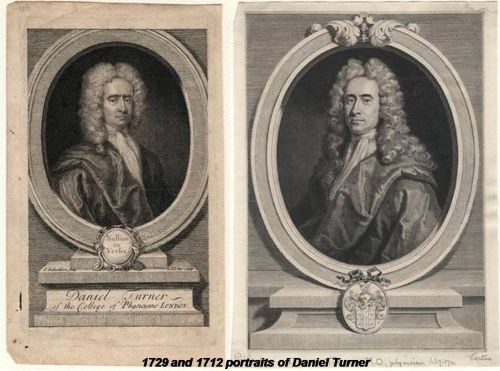
To examine these discourses, I shall begin at the most extreme end of the spectrum of beliefs about the cancer-wolf. Here, one finds an extraordinary, and unusual, account from the respected physician Daniel Turner.8 Turner noted that cancer, being a disease difficult to cure, attracted many tall tales about its nature and causes. Such a tale, he wrote,
I was not long since inform’d of, by a Woman who vow’d, that in Time of Dressing, one of these Ulcers, by a villainous Empiric (a famous Cancer Doctor) when they held a Piece of raw Flesh at a Distance from the Sore, the Wolf peeps out, discovering his Head, and gaping to receive it.9
Turner’s anecdote may seem unbelievable. Yet underlying the story of the ‘villainous Empiric’ and his patient was a web of convictions about the nature of cancerous disease which in their most extreme form could lead to belief in the ‘wolf’ of cancer as a bodily reality. Foremost among these beliefs was the observation that cancers seemed to ‘devour’ the body, growing larger as the patient became steadily more emaciated. This belief was fostered in part by widespread attestation of the efficacy of ‘meat cures’ such as Turner described; that is, the palliative application of freshly killed and sliced poultry, veal, kittens or puppies to a cancerous ulcer. By offering the devouring cancer a meal that was warm, fresh and appealing, it was believed, the disease could be tempted to stop eating the patient, at least for a time, and consume the meat instead.10
Faith in the meat cure did not necessarily imply that one believed, like Turner’s empiric, that a wolf could literally be present in the human body. Nonetheless, the therapy sprang from, and reinscribed, an image of cancer as flesh-eating which made stories such as this one imaginatively satisfying. Meat cures were widely used, and the connection between this therapy and the cancer-wolf was long established. In the fourteenth century, for example, surgeon Guy de Chauliac pronounced: ‘Some people appease [cancer’s] treachery and wolfish fury with a piece of scarlet cloth, or with hen’s flesh. And for that reason, the people say that it is called “wolf”, because it eats a chicken every day, and if it did not get it it would eat the person’.11 Unlike the ‘famous Cancer doctor’ described by Turner, most early modern medical practitioners believed cancer to be wolfish in an analogical rather than literal sense. However, the association was a powerful one, which continued from the medieval period well into the eighteenth century. Turner himself, despite scoffing at the notion of cancer as literally a wolf, freely admitted the resemblance between this creature and the disease ‘for that it is, say some, of a ravenous Nature, and like that fierce Creature, not satisfy’d but with Flesh’.12 The perceived connection between the devouring behaviour of the wolf and the progress of malignant cancers was so engaging that ‘wolf’ was used as a synonym for cancerous disease from as early as the thirteenth century.13 Indeed, the term became so established that some seventeenth-century authors even complained that it was being used too indiscriminately, when it ought to specify a cancer on the legs.14 Often, but by no means exclusively, practitioners did employ this criteria, using ‘wolf’ to mean cancer of the legs and thighs. Why this should have been the case remains unclear. It may have been a reflection of the hunting patterns of the wolf, leaping for the back legs of its prey. It may also have been a simple case of utility to find another word for these leg cancers, since the disease was so strongly associated with women that the word ‘cancer’ often held an unspoken suffix ‘of the breast’.
The use of the cancer-wolf analogy in early modern discussions of cancer was widespread and sustained. Perhaps unsurprisingly, then, this vivid image had far-reaching roots. In non-medical writing, and particularly in religious and moralistic texts, the wolf was often connected with anxieties about human frailty and integrity. Such fears are most visible in the rhetorical uses of that animal in the Bible, a source familiar to virtually every early modern English citizen. Genesis 49:27, for example, threatened that ‘Benjamin shall ravin as a wolf: in the morning he shall devour the prey, and at night he shall divide the spoil’, while Jeremiah 5:6 and John 10:12 depicted the animal in similarly fearsome terms. Throughout such representations, the image of the wolf as a ravenous beast preying upon the faithful flock was foremost: Ezekiel 22:27, for instance, compared the princes of the corrupt house of Israel to ‘wolves ravening the prey’. As well as savage power, the wolf was associated with deceit and false appearances. Matthew 7:15 advised the faithful to ‘Beware of false prophets, which come to you in sheep’s clothing, but inwardly they are ravening wolves’. In the often febrile religious climate of the early modern period, biblical images of the wolf as a fearsome and deceitful predator remained powerfully relevant for many writers of religious or moral polemic. In his 2010 Animal Characters, Bruce Thomas Boehrer identifies the wolf as a popular symbol of deception in early modern culture, augmented by the presence of three wolf fables in William Caxton’s influential 1483 edition of Aesop.15 Furthermore, the continued presence of wolves in many Catholic countries after their extinction in Britain in the fifteenth century, and the omnipresent threat of their return to native shores, made this creature a ready metaphor for the perceived Popish threat.16 In the seventeenth century, Edwards notes that ‘[t]he figurative wolf in Milton’s works consistently represents those with Romish allegiances or inclinations, promoters of superstition, arch-hypocrites, and rapacious predators’.17 Milton, she argues, seemingly aligned those church-destroyers with Romish churchmen who lived luxuriously whilst members of their congregation starved.18
Inevitably, the interchange between religious and medical rhetoric cut both ways, and numerous writers of polemic soon began recycling the wolf image in ways that explicitly drew on its status as a ‘cancer animal’. In the late sixteenth century, for instance, the popular preacher Henry ‘Silver-tongue’ Smith drew upon moralistic and medical writings when he informed his congregation that ‘[covetousness is] … like the disease which we call the Wolfe, that is always eating, and yet keeps the bodie leane’.19 Such writings tended to dwell in particular on the insatiable hunger which was deemed to characterize both actual and bodily ‘wolves’. For example, a moralistic poem by seventeenth-century poet Charles Cotton directly echoed Smith when characterising ambition as ‘the minds Wolf, a strange Disease, / That ev’n Saciety [satiety] can’t appease’ (‘Contentment’ l.51–2).20 By evoking the image of the self ‘eaten up’ by uncontrollable urges of greed, jealousy or pride, these texts played to an anxiety also identified by Erica Fudge in relation to lycanthropia (werewolves). Writing about lycanthropia, argues Fudge, often dwelt on the humanity or otherwise of the werewolf, debating the disturbing possibility that the creature, being without conscience, was temporarily inhuman (tellingly, inhumanity also extended to atheists, and sometimes to Catholics).21 Tales of the eating cancer-wolf likewise conjured an image of the wolf undermining, then taking over, the body, diminishing the victim’s moral or physical substance. From spiritual, psychological and physical perspectives, therefore, wolves were consistently associated with the extinction of the self.
The uses of the ‘cancer-wolf’ in both medical and literary early modern texts thus show clearly that this image was one shaped by multiple discourses. For medical practitioners, the wolf was an appropriate metaphor for malignant disease and a widely used piece of cancer terminology. On very rare occasions, it was even a ‘real’ bodily interloper. Poets, playwrights, moralists and clergymen, meanwhile, found in the cancer-wolf an image well established enough to be bent to diverse purposes, underpinned by biblical rhetoric and vivified by contemporary medical doctrine. For all groups, the wolf and cancer were images which readily coincided to describe deception and threat, since both wolves and malignant tumours were characterised by their ability to remain hidden while wreaking destruction. Furthermore, both the wolves described in preachers’ sermons and those delineated in medical textbooks threatened to undermine one’s humanity, whether spiritual or physical. While the cancer-wolf image never achieved the scientific credibility or cultural saturation of the cancer-worm, its repeated and varied use across genres demonstrates the degree to which early modern people apprehended cancer as a vicious, ravenous and unpredictable threat.
The Worm
Cancer-Worms, Science, and Medicine
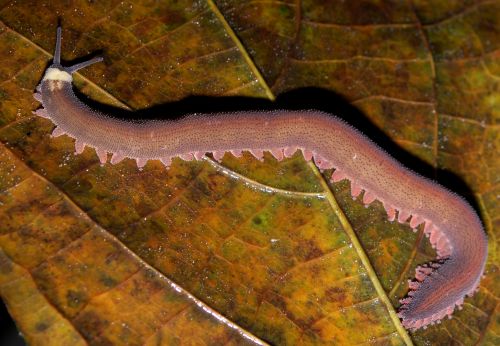
If the wolf represented the devouring force of cancer, the worm – by which I mean the variety of caterpillars, centipedes, maggots and worms that seem to function in the same way in early modern medical texts – stood for a more insidious kind of malignancy.22 The image worked in a broadly similar way, with worms imagined as literally involved with cancer and employed as analogies for the disease. However, the worm proved a more popular zoomorphic image, and one with quite different connotations.
The cancer-worm differs most from the cancer-wolf in the extent of linguistic entwinement between disease and creature. Where the term ‘wolf’ was adopted by medical practitioners because the animal that word describes behaved similarly to a devouring cancer, the cancer-worm concept similarly originated from perceived creatural similitude, but then evolved into a term – ‘canker-worm’ – which came to designate both cancer-causing parasites and horticultural pests.23 At one level, the logic behind this evolution is clear. Bodily and horticultural canker-worms clearly shared a modus operandi: namely, consuming their ‘host’ while remaining hidden from view. Harris has briefly described this connection in ‘The Canker of England’s Commonwealth’, where he argues that notions of cancer having ‘ontological agency … doubtless contributed to the emergence in the fifteenth century of the term “canker worm” or simply “canker”, to designate a parasitic caterpillar’.24 In the following century, he contends,
Through a process of reverse influence, ‘canker’ the parasite arguably began to affect popular perceptions of ‘canker’ the disease … Instead of implying an internal humoral disorder, the now multivalent ‘canker’ more readily suggested a hostile, even foreign organism.25
Harris’s analysis focuses on the use of ‘canker’ in economic and dramatic, rather than in medical, texts and contends that during the early modern period, cancers became perceived as ‘distinct, hostile organisms, extraneous to the body rather than produced by it’.26 His model of reciprocal influence between horticultural and medical terms, facilitated by rhetorical uses of ‘canker’, is undoubtedly astute. Nonetheless, that model may flatten the full complexity of this exchange by underplaying medical sources. As evidenced here, the perceived biological peculiarities of worms in the early modern period allowed for a model of cancer-worm that might be ‘distinct’ from the body without being an external agent in the way Harris describes. Indeed, medical practitioners never identified the cancer-worm as entering the body from outside, and belief in the inter-personal spread of cancers was highly atypical in this period. In other words, it was not simply the case that the linguistic development of a horticultural ‘canker-worm’ in the fifteenth century single-handedly effected the conceptual development of cancer-worms. As I shall demonstrate, biblical, cultural and scientific discourses all had a significant, and hitherto unexplored, role to play.
In order to examine the cancer-worm concept in more detail, one may begin, as with the wolf, at the ‘extreme’ position of imagining this creature to have literally taken up residence in the body. In this case, however, and for reasons which shall become clear, this position did not represent the end of a spectrum of beliefs, but rather occupied a central location. Many medical practitioners from across the early modern period firmly believed that they had witnessed worms living in, and being extracted from, cancerous ulcers. In 1687, for example, medical practitioner William Salmon reported that
[a] certain Emperick did cure many Cancers by this one medicine: He took Worms, called in Latin centum pedes, in English Sowes; they are such as lye under old Timber, or between the Bark and the Tree. These he stamped and strained with the Ale, and gave the patient to drink thereof morning and evening. This medicine caused a certain Black Bug or Worm to come forth, which had many legs, and was quick, and after that the Cancer did heal very quickly with convenient Medicines.27
Unlike the story of the wolf discovering its head from within an ulcer, Salmon’s anecdote went into detail about the emerging creature and its normal habitat.28 He took pains that every reader should understand that his description corresponded to what they had seen for themselves under rocks and in damp logs. That specificity brings to life the emergence of cancer from the dank, dark places of the body, offering the reader a vivid image of the disease’s progress which was, as discussed later, in line with both biblical and contemporary scientific discourses, and thus adding to the credibility of the account. Interestingly, this passage was an almost verbatim repetition of a tale from D. Border’s Polypharmakos Kai Chymistes, published in 1651.29 The 36-year gap between the two testifies both to the power of this image and to the way in which knowledge circulated between texts apparently distant from one another, though the origin of the anecdote remains obscure.
Salmon’s story was unusual in offering such a gruesomely detailed image of a creature emerging from a cancerous ulcer, but the premise of his tale was a credible one, which materially influenced therapy for cancers. In printed medical texts and manuscript receipt books, cancer remedies repeatedly promised to ‘slea the worme’, with one writer suggesting that an application of herbs and butter could tempt worms from a cancerous sore, so that one might ‘plucke [the dressing] awaye sodainlye and it will drawe wormes out of it’.30 Other practitioners, both lay and professional, employed crushed and powdered invertebrates of various kinds in their cancer remedies, clearly seeking to effect a cure by sympathy, or ‘like against like’.31 Moreover, unlike tales of the wolf emerging from the body, belief in cancer as literally a worm (or worms) was not necessarily considered unscientific, but seems in some cases to have been absorbed into theories of cancer as espoused by the period’s most eminent practitioners. In 1714, Turner, who had related (and discounted) the extraordinary story of the wolf ‘peeping out’ from within a cancerous ulcer, vigorously asserted the existence of cancer-worms as ‘too notorious to want Proof’, especially since tiny creatures living in the body could now be observed with the microscope.32 He added that ‘[t]he famous De Mayern takes Notice also, that he observ’d in the cancerous breast cut from a Woman, some Thousands of Worms’.33 This, he argued, explained why ‘perhaps the Progress of the Corrosion is sometimes stopt, by applying the Flesh of a Chick, to which these Animals stick, leaving the coarse for the finer Food’.34
Turner appealed to new and old medical scholarship in this passage. Belief in the profusion of tiny ‘living Creatures’ in the body was undoubtedly augmented by the use of that relatively new and exciting technology, the microscope, which allowed one to perceive a world of organisms invisible to the naked eye.35 Meanwhile, the time-worn popularity of the ‘meat cure’, as described earlier, seemed to provide practical affirmation of the existence of eating creatures in cancers. As Turner relayed, the cancer-worm theory was thus ‘notorious’ among ‘Learned Men’. Even the most comprehensive works on cancer, such as Dionis’s A Course of Chirurgical Operations, gave credence to the cancer-worm theory, noting that
[s]ome believe, that the ulcerated Cancer is nothing else but a prodigious Multitude of small Worms, which by little and little devour all the flesh of the part: What made room for this Opinion, is, that with the Microscope we have sometimes discerned some of these Insects in Cancers; and that putting a bit of Veal on the Ulcer, the Patient has felt less Pain; because, say they, these Worms then feeding on the Veal, leave the Patient at rest for some time.36
Such descriptions of a ‘multitude’ of worms in the flesh highlight the possible origins of the cancer/worm connection. Many early modern citizens would have witnessed at first hand the consumption of carcasses or rotting meat by maggots, and the descriptions here seem to align the cancer patient with these objects. It is also entirely possible that cancer patients with extensive and poorly treated ulcers did find their wounds to become infected with fly larvae, so that worms could be seen at the site of the disease, microscopically or with the naked eye. Indeed, MacInnes contends that during the early modern period, worms in humans, intestinally and in wounds, were ‘not pathological, or even unusual, but an expected occurrence’.37
Furthermore, contemporary experiments in biology affirmed the potential of worms to appear in the most unexpected of places. MacInnes and Matthew Cobb have separately demonstrated that well into the eighteenth century, it was widely believed that worms could be spontaneously generated by organic matter including plants, mud, manure, hair, wood, flesh and even dew.38 Accordingly, lurid reports circulated of such creatures appearing, post-mortem, in the body’s innermost chambers. In 1658, for example, a vernacular translation of The Theater of Insects, by Thomas Moffett, was appended to Edward Topsell’s popular book of zoological observations, The History of Four-Footed Beasts and Serpents.39 Containing some medical material, but clearly intended to entertain and educate a mixed readership, it devoted 17 pages exclusively to the consideration of worms in living human and animal bodies, asserting confidently that worms could breed in numerous spaces of the body, including the heart, and moreover that they might be spontaneously generated from the humours.40 Still more sensationally, a seventeenth-century text entitled Vermiculars Destroyed, with an Historical Account of Worms provided numerous examples of worms found in all parts of the human body, some of extraordinary size or with features such as forked tails.41 The author also provided readers with instructions for seven experiments via which they could see for themselves the extraordinary ability of worms to be generated from meat, dead snakes, leaves, wood, dust and skin.42 Such texts indicate that, as in the medical community, public interest in worms was piqued by the popularisation of microscopy in the mid-seventeenth century.43 However, as I shall argue, they may also be viewed as part of a wider and much older fascination with body-worms in medicinal contexts.
Contrary to Harris’s assertion that cancer-worms necessarily appeared as external agents entering the body from without, both imaginative and medical literature thus suggests that early modern readers appreciated some varieties of body-worms as, in MacInnes’s terms, ‘something latent within the very thing being consumed … in a real sense, part of the individual’.44 In large part, this notion was built on empirical foundations and in particular on the rise of microscopy. Underpinning and working alongside these observations, however, was another set of assumptions. Bodily worms generally, and cancer-worms in particular, were creations of a rich cultural and religious history which positioned that creature as a cause, a symptom, and a punisher of weakness and sin.
Worms and Corruption in Religion and Culture
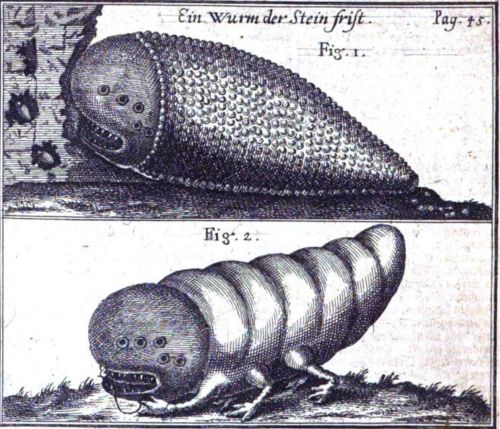
In the Bible, worms – perhaps more than any other creature – appear poised to undermine humans’ fragile dominion over nature and misplaced self-importance. Canker-worms may strike at any time to destroy crops and bring about famine.45 King or pauper, when one dies, ‘the worm is spread under thee, and the worms cover thee’ (Isaiah 14:11). Moreover, the worm may take on an active role as the punisher (and occasionally the cause) of humanity’s sins. According to the scriptures, the undying worm of conscience endlessly tortures the souls of those who have angered God. It has also provided generations of clergymen with a vivid punitive image to impress on their congregations.
From as early as the fourteenth century, it is clear that religious writers seeking to represent the moral tortures of the worm of conscience viewed that creature as analogous to worms which lived in, and gradually devoured, the physical body. Writing on Chaucer’s ‘Physician’s Tale’, Harley finds the worm to have been ‘frequently invoked in the fourteenth and fifteenth centuries … consistently regarded as an agent of severest torture’.46 Medieval churchmen warned that ‘the “curse-lyngs … shuln be cast doun into helle … Venemous wormes and naddris [adders] shul gnawe alle here membris withouten seessyng, and the worm of conscience … shal gnawe the soule”’.47 Like a cancer, these worms devoured one from the inside, and the trope persisted for hundreds of years as poets and polemicists embraced the idea of being literally ‘eaten up’ by guilt.48 Just like the pain inflicted by cancers, these tortures were inescapable precisely because they originated inside oneself. Notably, descriptions of the conscience worm gnawing and biting sinners also conflated eating parasites with sharp-toothed vipers. This association between worms and snakes was common in the early modern period, when authors frequently used the terms ‘worm’ and ‘snake’ interchangeably, or described worms as ‘viperous’, venomous or serpent-like.49 Moreover, the connection between worms and snakes inevitably had implications for how the cancer-worm would be perceived. On the most basic level, snakes had visible fangs, and associating snakes and worms thus lent extra bite (quite literally) to descriptions of the latter creature. Furthermore, Gordon Williams has shown that the worm, which he describes as ‘synonymous with Snake’, was commonly used as a byword for the penis in early modern literatures.50 Given that cancer was sometimes characterised as a monstrous pregnancy, was deemed ‘venomous’ and was believed by some medical practitioners to result from venereal infection, it seems clear that the ‘semantic freight’ of both worms and serpents was brought to bear upon conceptualisations of cancerous disease.51
Why were the cancer-worm and conscience-worm images so abiding and widespread, capturing the imagination of so many different audiences? It is clear that these images’ correlation with real experiences of intestinal parasites had a part to play, as did the prominence of worms and snakes in the Bible. In addition, I believe it is worth considering just how enduring the human fascination with bodily worms might be. In an article on the supposed presence of worms, newts, snakes and frogs in the body, Gillian Bennet argues that such creatures have, for over 400 years, provided a ‘language for sickness’.52 Indeed, she contends, that language continues to the present day, as evidenced by the Western public’s fascination with human parasites.53 However, even Bennet understates the antiquity of this strange allure. If one looks to discussions of pre-Christian languages and societies, it is evident that fascination with worms in the body, and as a source of sickness, was not exclusive to Judaeo-Christian cultures. Thomas R. Forbes’s investigation of early medieval folk medicine, for example, cites charms which are possibly adapted from pre-Christian forms and seek to drive the worm from the body.54 Looking even further into the past, Watkins’s How to Kill a Dragon discusses at length both the place of the dragon-slaying myth and its use within a medical context across Proto-Indo-European (PIE) language cultures. With the dragon, as Watkins explains, linguistically and imaginatively transformed into the serpent or worm, ‘slaying the worm’ in medical terms became a ‘mythographic basic formula’ across a number of PIE languages – all of which, of course, far predate the early modern period.55 This formula, frequently expressed through healing charms or poetics, tended to focus upon the ‘expulsion’ of the worm creature.56 Furthermore, the formula was linked to another which translates as ‘overcoming death’, such that, as Benjamin W. Fortson summarises, ‘the words used as a vehicle for the serpent-slaying myth … [encapsulate] not only that myth, but a whole complex of cultural notions pertaining to the slaying of (or by) a monstrous opponent, the struggle of order against chaos, and rebirth’.57 More work remains to be done on the translation of pre-Christian motifs of illness into Christian contexts, but it appears that, even unconsciously, those early modern writers who employed the worm image accessed an ancient tradition of healing poetics and anxiety about bodily worms.
Conclusion
Zoomorphic characterisations of cancer provided early modern writers with a memorable and flexible mode for imagining a disease which seemed to devour the body in which it was situated. The most extreme iteration of cancer’s ‘creatural’ qualities was, as we have seen, the belief that this disease literally consisted of a worm or wolf present in the body. Interestingly, it appears that this view of cancers as ‘parasitic’ did not preclude an understanding of the disease as humoral in origin. Even those writers who indicated that they believed cancer might literally consist of creatures inhabiting the body also wrote of the role of melancholy and atra bilis in causing cancerous tumours. This ability to subscribe to two seemingly opposed theories of pathology may be viewed as a facet of the broader intellectual flexibility which allowed early modern medical practitioners, as my Introduction suggests, to assimilate aspects of Paracelsianism into medical models that remained broadly humoral. Further along the spectrum, both medical and non-medical writers seized upon these creatures’ devouring activities as an apt analogy for the terrifying experience of degenerative disease, drawing as they did so upon the cultural freight that had surrounded images of the worm and wolf for hundreds, even thousands of years.
The impulse to characterise cancer as a creature attacking the body has never gone away, though that ‘creature’ may now be imagined in less specific terms. James Patterson identifies cancers in the nineteenth-century imagination as ‘uninvited beasts which surreptitiously ganged up on the body’, while to this day, fundraising drives, books, research articles and charities continue to exhort audiences to ‘kill the beast’.58 Given the abiding popularity of this rhetoric in the face of (or perhaps in response to) modern medical understandings of cancer which emphasise minute cellular changes, it is hardly surprising that early modern people, confronted with a deteriorating patient and a growing tumour, concluded that the latter was quite literally eating the former. This conclusion materially influenced how medical practitioners treated people with cancer and shaped dramatic, politic and poetic renderings of that disease. Through zoomorphism, cancer would be viewed as more hostile than other equally mortal diseases, an evil to be expelled from the body at almost any cost. What makes the worm and wolf images particularly interesting, however, is that they are not simply distillations of the ‘devouring’ and ‘enemy’ tropes. Rather, the biblical, imaginative and scientific freight attached to those creatures allowed them to combine – albeit sometimes uneasily – the image of an external creature attacking the body with the sense that the attacked person was in some form responsible for the generation and sustenance of that ‘creature’. It was this tension between internal and external which made worm and wolf images such a rich vein of poetic inspiration, and which we shall continue to see at work throughout this book.
Endnotes
- Keith Thomas, Man and the Natural World: Changing Attitudes in England, 1500–1800 (London: Penguin, 1983); Margaret Healy, ‘Bodily Regimen and Fear of the Beast: “Plausibility” in Renaissance Domestic Tragedy’, in Erica Fudge, Ruth Gilbert and Susan Wiseman (eds), At the Borders of the Human: Beasts, Bodies and Natural Philosophy in the Early Modern Period (Basingstoke: Macmillan, 1999), pp. 51–73. See also Erica Fudge, Perceiving Animals: Humans and Beasts in Early Modern English Culture (Basingstoke: Macmillan Press Ltd, 2000).2
- Jean E. Feerick and Vin Nardizzi (eds), The Indistinct Human in Renaissance Literature (Basingstoke: Palgrave Macmillan, 2012).3
- Ian MacInnes, ‘The Politic Worm: Invertebrate Life in the Early Modern English Body’, in Jean E. Feerick and Vin Nardizzi (eds), The Indistinct Human in Renaissance Literature (Basingstoke: Palgrave Macmillan, 2012), pp. 253–74.4
- Karen Edwards, ‘Milton’s Reformed Animals: An Early Modern Bestiary’ series, published in instalments in Milton Quarterly 39:3 to 43:4 (2005–2009). See especially ‘Milton’s Reformed Animals: An Early Modern Bestiary A–C’, Milton Quarterly 39:4 (2005), 183–292; and ‘Milton’s Reformed Animals: An Early Modern Bestiary T–Z’, Milton Quarterly 43:4 (2009), 241–303.5
- Marta Powell Harley, ‘Last Things First in Chaucer’s Physician’s Tale: Final Judgment and the Worm of Conscience’, The Journal of English and Germanic Philology 91:1 (1992), 1–16; Jonathan Wright, ‘The World’s Worst Worm: Conscience and Conformity During the English Reformation’, The Sixteenth Century Journal 30:1 (1999), 113–33.6
- Jonathan Gil Harris, ‘“The Canker of England’s Commonwealth”: Gerard Malynes and the Origins of Economic Pathology’, Textual Practice 13:2 (1999), 311–28.7
- Thomas Adams, The Blacke Devil or the Apostate. Together with the Wolfe Worrying the Lambes and The Spirituall Navigator, Bound for the Holy Land (London: 1615), pp. 31–2.8
- On Turner’s career and affiliations, see Philip K. Wilson, Surgery, Skin and Syphilis: Daniel Turner’s London (1667–1741) (Amsterdam; Atlanta: Rodopi, 1999) [PubMed].9
- Turner, De Morbis Cutaneis, p. 76.10
- See, for example: Nicholas Culpeper, A Directory for Midwives, or, A Guide for Women, in their Conception, Bearing, and Suckling their Children (London: 1651), pp. 165–6; Théophile Bonet, A Guide to the Practical Physician (London: 1684), p. 116.11
- Guy de Chauliac, Grande Chirurgerie, ed. E. Nicaise (Paris: 1890 [1363]), p. 305.12
- Turner, De Morbis Cutaneis, p. 75.13
- Luke Demaitre, ‘Medieval Notions of Cancer: Malignancy and Metaphor’, Bulletin of the History of Medicine 72:4 (1998), 616 [PubMed].14
- Richard Wiseman, Several Chirurgical Treatises (second edition) (London: 1686), p. 118.15
- Bruce Thomas Boehrer, Animal Characters: Nonhuman Beings in Early Modern Literature (Philadelphia: University of Pennsylvania Press, 2010), p. 165.16
- Edwards, ‘Milton’s Reformed Animals: An Early Modern Bestiary T–Z’, 277–8.17
- Ibid.18
- Ibid.19
- Henry Smith, ‘The Benefit of Contentation’, in The Sermons of Maister Henrie Smith (London: 1593), p. 209.20
- Charles Cotton, ‘Contentment: Pindarick Ode’, in John Beresford (ed.), Poems of Charles Cotton, 1630–1687 (London: Cobden-Sanderson, 1923), pp. 224–8.21
- Fudge, Perceiving Animals, pp. 51–5.22
- On indistinction between varieties of invertebrate in early modern texts, see MacInnes, ‘The Politic Worm’, especially p. 256.23
- Curiously, both the canker-worm as horticultural pest and the cancer-worm as disease agent are absent from Sujata Iyengar’s entry on ‘canker’ in her Shakespeare’s Medical Language: A Dictionary (London; New York: Continuum, 2011), pp. 51–4. This absence seems crucial to her more general downplaying of the ‘ontology’ of cancer, as discussed in Chapter 1.24
- Harris, ‘The Canker of England’s Commonwealth’, 317.25
- Ibid.26
- Ibid., 317–18.27
- William Salmon, Paraieremata, or Select Physical and Chirurgical Observations (London: 1687), p. 378.28
- ‘Sow’ was used from the thirteenth century as a term for woodlice: see ‘sow, n.1’, OED Online http://www
.oed.com , 27 March 2013.29 - D. Border, Polypharmakos Kai Chymistes, or, The English Unparalell’d Physitian and Chyrurgian (London: 1651), p. 15.30
- A.T., A Rich Store-House or Treasury for the Diseased (London: 1596), pp. 41–2; Mrs Corylon, A Booke of Divers Medecines (1606) Wellcome Library MS.213, p. 141r. See also: Elizabeth Sleigh and Felicia Whitfeld, Collection of Medical Receipts (1647–1722) Wellcome MS.751, p. 5; Sarah Hughes, Mrs Hughes Her Receipts (1637), Wellcome MS.363, p. 55r; Johanna St John, Johanna St John Her Booke (1680), Wellcome MS.4338, p. 14.31
- See Chapter 5.32
- Turner, De Morbis Cutaneis, p. 158.33
- Ibid.34
- Ibid.35
- On the advent and development of microscopy, see Catherine Wilson, The Invisible World: Early Modern Philosophy and the Invention of the Microscope (Princeton, NJ: Princeton University Press, 1997) [PubMed].36
- Pierre Dionis, A Course of Chirurgical Operations, Demonstrated in the Royal Garden at Paris (London: 1710 [French edition 1707]), p. 249.37
- MacInnes, ‘The Politic Worm’, p. 256. See also: Ambroise Paré, The Case Reports and Autopsy Records of Ambroise Paré, ed. Wallace B. Hamby (USA: Charles C. Thomas, 1960), which includes an account of one intestinal worm ‘that resembled a serpent more than six feet long’, yet was deemed ‘not surprising’ (p. 128); Daniel Le Clerc, A Natural and Medicinal History of Worms, Bred in the Bodies of Men and Other Animals (London: 1721). From Open Library (online resource), http://openlibrary
.org/books , 26 April 2013.38 - Matthew Cobb, The Egg and Sperm Race: The Seventeenth-Century Scientists Who Unravelled the Secrets of Sex, Life and Growth (London: The Free Press, 2006), especially pp. 66, 84–9; MacInnes, ‘The Politic Worm’, especially pp. 255–6.39
- Thomas Moffet, The Theater of Insects, or, Lesser Living Creatures, appended to Edward Topsell, The History of Four-Footed Beasts and Serpents (London: 1658). Translated from Insectorum, sive, Minimorum Animalium Theatrum (London: 1634). On the provenance of Moffet’s text, see Janice Neri, The Insect and the Image: Visualizing Nature in Early Modern Europe, 1500–1700 (Minneapolis: University of Minnesota, 2011), pp. 45–65.40
- Moffet, The Theater of Insects, pp. 1100–6.41
- R. Clark, Vermiculars Destroyed, with an Historical Account of Worms, Collected from the Best Authors as well Ancient as Modern, Proved by that Admirable Invention of the Microscope (London: 1690). An advertisement for this text shows that it was first printed in 1661, though no extant copy remains. It was reprinted at least four times until 1691.42
- Ibid., pp. 11–14. See also William Ramesey, Helminthologia, or, Some Physical Considerations of the Matter, Origination, and Several Species of Wormes Macerating and Direfully Cruciating Every Part of the Bodies of Mankind (London: 1668).43
- Wilson, The Invisible World, pp. 70–80.44
- MacInnes, ‘The Politic Worm’, p. 263.45
- Interestingly, both the King James Bible (1611) and the Geneva Bible (1560) translate Joel 1:4 and 2:25 as featuring a ‘cankerworm’ which is absent from the same passages of the 1539 Great Bible. In turn, the King James Bible translates as ‘cankerworm’ in Nahum 3:15–16 the pest which appears as ‘locust’ in earlier versions including the Geneva, perhaps indicating a greater investment in that term as time wore on. A reference to cancer as a disease in 2 Timothy 2:17, however, remains stable throughout all three versions, as well as the 1526 Tyndale New Testament.46
- Harley, ‘Last Things First in Chaucer’s Physician’s Tale’, 6.47
- Ibid., 7. Quotation from a sermon by Richard Alkerton, c.1406.48
- See Wright, ‘The World’s Worst Worm’, 121. For further examples of the worm as an agent of conscience, see also: Nicholas Billingsley, ‘On Conscience’, from A Treasury of Divine Raptures (1667), l.123–128; Henry Bold, ‘Song XII’, from Latine Songs (1685), p. 445; Benjamin Keach, ‘Hymn 146: No Light, But Darkness There Doth Dwell’, from Spiritual Melody (1691).49
- See, for example: Shakespeare’s Henry VI, Part 1 3:1, in which the ‘viperous worm / .. gnaws the bowels of the commonwealth’; John Milton, ‘Arcades’, in which the worm bites with ‘cankered venom’ (in Milton: Complete Shorter Poems (second edition), ed. John Carey (New York: Addison Wesley Longman, Inc., 1997), pp. 161–6, l.53).50
- Gordon Williams, Shakespeare’s Sexual Language: A Glossary, 3 vols. (London; Atlantic Highlands, NJ: The Athlone Press, 1994), vol. 3, p. 1549.51
- This phrase is borrowed from Harris, ‘“The Canker of England’s Commonwealth”’, 318.52
- Gillian Bennet, ‘Bosom Serpents and Alimentary Amphibians: A Language for Sickness’, in Marijke Gijswit-Hofstra, Hilary Marland and Hans de Waardt (eds), Illness and Healing Alternatives in Western Europe (London; New York: Routledge, 1997), p. 225.53
- For an example, see the case of Rosemary Alvarez, whose ‘brain worm’ attracted international media coverage: ‘Doctors Find Worm in Woman’s Brain While Operating on “Tumour”’, Daily Mail, 20 November 2008, http://www
.dailymail ; ‘Live Worm “Burrowed through Woman’s Brain”’, Nine MSN, 21 November 2008, http://news.co.uk/news/article-1087937 /Doctors-worm-womans-brain-operating-tumour.html .ninemsn.com . Both accessed 22 January 2010.54.au/article.aspx?id=669745 - Thomas R. Forbes, ‘Verbal Charms in British Folk Medicine’, Proceedings of the American Philosophical Society 115:4 (1971), 312 [PubMed].55
- Calvert Watkins, How to Kill a Dragon: Aspects of Indo-European Poetics (Oxford: Oxford University Press, 1995), especially chapters 57 and 58.56
- Ibid., p. 523.57
- Benjamin W. Fortson, Indo-European Language and Culture: An Introduction (second edition) (Singapore: Blackwell, 2011), p. 30.58
- James T. Patterson, The Dread Disease: Cancer and Modern American Culture (Cambridge, MA: Harvard University Press, 1987), p. 31. See also ‘Fasting and Cancer: Starving the Beast’, The Economist (9 February 2012). Accessed via www
.economist.com/blogs , 4 March 2013 (article); James Capuano, Beast: A Slightly Irreverent Tale about Cancer (and Other Assorted Anecdotes) (Wickford, RI: New Street Communications LLC, 2012); Cancer Research UK, ‘Enemy’ (advertisement) dir. Siri Bunford, 30 April 2013./babbage/2012/02/fasting-and-cancer
Chapter 3 (“‘It Is, Say Some, of a Ravenous Nature’: Zoomorphic Images of Cancer”) from Constructions of Cancer in Early Modern England: Ravenous Natures, by Alanna Skuse (Palgrave MacMillan, 2015), published under the terms of a Creative Commons Attribution 4.0 International license.
About the Author