In medieval and late imperial China, the quack was more than a fraud. He revealed a world where healing, commerce, ritual, print, and trust constantly collided.

By Matthew A. McIntosh
Public Historian
Brewminate
Introduction: The Mediocre Doctor at the Bedside
The accusation usually began after trust had already failed. A patient had worsened, a family had spent money, a prescription had not worked, or a healer had promised certainty where illness offered none. In that moment, the doctor at the bedside could be reimagined as a yōng yī: a mediocre doctor, an incompetent doctor, a quack. The word did not describe only the obvious fraud who sold false pills in a market or waved talismans over the desperate. It could also attach itself to the poorly trained practitioner, the reckless prescriber, the boastful itinerant, the ritual specialist, the midwife, the family doctor whose treatment failed, or even a rival physician whose methods offended another school of medical learning. In medieval and late imperial China, the quack was both a real danger and a social judgment: a figure created at the meeting point of sickness, commerce, expertise, reputation, and blame.
That ambiguity matters because Chinese medicine did not develop as a single profession guarded by one uniform institution. From the classical traditions associated with the Huangdi neijing to the expanding medical culture of the Song, Ming, and Qing, healing was plural, layered, and competitive. Court physicians, scholarly doctors, Buddhist and Daoist healers, drug sellers, local specialists, midwives, family recipe-keepers, itinerant remedy vendors, and ritual practitioners all occupied overlapping therapeutic worlds. Some had deep learning; others had practical experience; others had little more than confidence, patter, and a bundle of medicines. Patients did not move through this world as modern consumers choosing among clearly licensed professions. They navigated reputation, price, kinship advice, urgency, hope, and fear. The danger of the yōng yī arose precisely because the medical marketplace offered both genuine help and plausible imitation.
The problem intensified as medicine became more public, textual, and commercial. The Song dynasty’s great medical transformation elevated medicine through state patronage, printed texts, official formularies, pharmacy projects, and new respect for learned medical practice. These developments strengthened medical knowledge, but they also made it easier to perform knowledge without possessing judgment. A printed formula could be copied; a classical phrase could be memorized; a prescription could be sold; a reputation could be manufactured. Later Ming and Qing medical culture multiplied these possibilities through wider circulation of medical books, local physicians, household manuals, materia medica learning, commercial pharmacies, and a crowded world of healers who competed for patients. The more visible medicine became, the more visible its counterfeit forms became as well.
Medical quackery in medieval and late imperial China was not simply the persistence of superstition against science, nor merely the existence of fraud in an otherwise orderly medical structure. It was a recurring crisis of trust inside a plural healing culture. The yōng yī exposed anxieties about who had the right to heal, what kind of knowledge counted as legitimate, how patients judged success, how scholars defended their authority, and how society explained medical failure. To study the quack is to study more than the margins of Chinese medicine. It is to enter the sickroom at the moment when confidence became suspicious, remedy became commodity, and the healer’s promise could no longer be separated from the patient’s fear.
Before the Quack: Plural Healing in Early and Medieval China
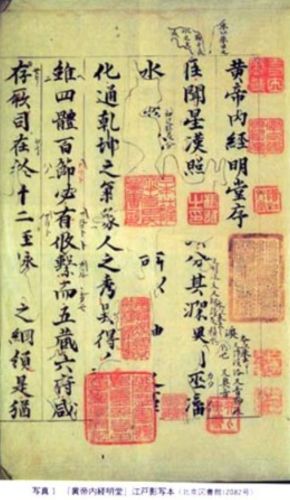
Before the figure of the yōng yī could become a recognizable target of medical criticism, Chinese healing existed in a world too varied to be divided neatly into “doctor” and “quack.” Early and medieval China contained court physicians, recipe specialists, ritual healers, exorcists, drug preparers, Buddhist monks, Daoist priests, household caregivers, midwives, pulse readers, acupuncture and moxibustion practitioners, and learned men who treated medicine as one branch of classical cultivation. Some healers worked from inherited formulas, some from textual study, some from embodied experience, some from ritual authority, and still others from a reputation earned in one village, monastery, market, or elite household. The medical world was not without hierarchy, but it was not governed by a single professional gate. A patient might consult a learned physician for a chronic disorder, a ritual specialist for spirit affliction, a woman neighbor for childbirth, a drug seller for prepared remedies, and a family elder for an old prescription without thinking that these choices belonged to entirely separate constructs.
The earliest layers of Chinese medical thought already show this diversity. Excavated manuscripts from Mawangdui, Zhangjiashan, and Dunhuang preserve recipes, cautery instructions, moxibustion charts, sexual cultivation texts, demonological materials, and practical treatments that do not always resemble the later, more systematized medicine associated with the Huangdi Neijing. Some texts imagined the body through vessels, qi, seasonal rhythms, and correspondences; others offered direct remedies for wounds, swellings, parasites, childbirth problems, or pain. These manuscript finds are important because they reveal medical practice before later editors, commentators, and literati traditions had fully organized the past into a cleaner genealogy of orthodox learning. They show healers and households working with a mixture of observation, analogy, ritual danger, bodily technique, and inherited prescription. A burn, a bite, a difficult delivery, a fever, or a swelling did not necessarily invite abstract theorizing before action; it invited a known method, a remembered formula, a cautery point, a charm, or a procedure whose authority lay in transmission and use. The later canonical tradition did not erase this practical and plural inheritance. It absorbed some parts, argued with others, and coexisted with much that never became fully classical. This matters because quackery, as a category, presumes a clearer standard of legitimacy than early Chinese healing often possessed. Where knowledge moved through manuscripts, families, masters, local specialists, and ritual communities, the boundary between expertise and improvisation could be difficult to draw.
The court and the state did maintain medical offices, and elite texts did imagine ideal forms of medical judgment. Classical medicine placed great emphasis on discerning patterns, reading the body, responding to season and constitution, and avoiding the crude application of fixed formulas. The good physician was not merely someone who possessed a remedy, but someone who knew when, why, and how to use it. Yet even this ideal coexisted with other forms of practice. A village patient did not necessarily have access to an erudite court-trained doctor, and even aristocratic families might rely on household recipe collections or trusted local healers before seeking more formal expertise. Medicine was both textual and personal, learned and practical, theoretical and domestic. It moved through books, but also through memory, touch, apprenticeship, and reputation.
Ritual healing further complicates the story. Illness could be understood as a bodily disorder, but also as the result of ghosts, demons, ancestors, violated taboos, cosmic imbalance, moral failure, or dangerous environmental forces. Buddhist, Daoist, and local ritual specialists offered prayers, talismans, exorcisms, confession rites, incantations, and protective practices that might accompany or substitute for drugs and procedures. To a later polemicist, such healing could look like deception; to a patient, it could answer dimensions of suffering that pharmacology alone did not address. The categories of “medical” and “religious” were not always cleanly separated. A healer might prescribe herbs and perform ritual; a household might burn talismans, consult a monk, and administer decoctions within the same episode of illness. The future accusation of quackery would often arise from precisely this overlap, as one kind of practitioner denied the legitimacy of another.
Nor should practical and domestic medicine be treated as inherently inferior. In many households, women, elders, servants, and kin networks preserved remedies for fever, childbirth, bleeding, digestive disorders, skin problems, and childhood illnesses. Midwives and female caregivers possessed forms of knowledge that male literati physicians often distrusted but could not easily replace. Bone-setters, wound healers, masseurs, cautery specialists, and drug compounders might lack classical polish yet command confidence because they were available, affordable, and tested by local use. Legitimacy did not come only from books or office. It came from results remembered by neighbors, from lineage claims, from embodied skill, from ritual charisma, from social proximity, and from the urgent fact that the sick needed someone who would act.
This early plurality does not mean that fraud, recklessness, or incompetence were absent. There were surely healers who exaggerated their powers, misused drugs, claimed secret transmissions they did not possess, or exploited the desperate. But before the later expansion of printing, commercialization, and elite medical polemic made the yōng yī a sharper figure, the landscape was better understood as a crowded field of competing therapeutic authorities. The “quack” had not yet emerged as a stable social type because medicine itself had not yet narrowed into a stable professional identity. The danger was real, but so was the difficulty of naming it. In early and medieval China, the problem was not simply that false healers imitated true physicians. It was that many kinds of healing could be true enough, useful enough, or trusted enough for the people who turned to them.
The Song Transformation: Printing, State Medicine, and the New Medical Order

The Song dynasty changed the social position of medicine in ways that made the later anxiety over quackery more intense. Earlier China had possessed physicians, medical offices, ritual healers, recipe collections, and classical medical texts, but the Song gave medicine a new public visibility. The state gathered, edited, printed, and circulated medical works; court scholars and physicians participated in large-scale textual projects; official formularies became instruments of governance; and pharmacies connected medical knowledge to the everyday needs of urban populations. These developments did not create medicine from nothing, nor did they abolish older forms of healing. What they did was make medicine more legible as a field of public knowledge, more useful to the state, and more accessible to people outside narrow circles of hereditary or courtly transmission.
Printing was central to this transformation. When medical texts could be reproduced in larger numbers, remedies, classifications, materia medica knowledge, and canonical discussions moved through society in new ways. A formula that had once belonged to a lineage, household, manuscript collection, or regional circle could now become part of a broader textual economy. This was not merely a technical change. Printing altered authority. It allowed the state to identify certain texts as reliable, to correct or standardize medical knowledge, and to present itself as a guardian of public welfare. It also allowed ambitious readers, local practitioners, drug sellers, and literate amateurs to acquire enough language of medicine to appear competent. A printed book could deepen learning in the hands of a serious physician, but it could also become a costume of expertise in the hands of someone who knew how to quote more than how to treat. Song state medicine should be understood as both a humanitarian and administrative project. Official medical compilations promised to preserve useful knowledge and place remedies within reach of the population. The state’s interest in medicine was tied to public health, military needs, epidemic response, imperial benevolence, and the broader Confucian ideal that good rule should protect the people’s bodies as well as their fields and families. The founding and development of official pharmacy institutions reflected this impulse. Prepared medicines, standardized formulas, and state-supervised distribution could reduce dependence on unreliable local sellers and make certain treatments more affordable or trustworthy. In theory, the state pharmacy stood opposite the marketplace quack: measured, regulated, textual, benevolent, and public.
Yet the very creation of an official medical order sharpened the contrast between acceptable and unacceptable healing. Once certain texts, formulas, and institutions carried the imprimatur of imperial authority, other practitioners could be judged against them more explicitly. A healer who ignored dosage, mixed dangerous drugs, boasted of secret cures, or treated all patients with the same formula could now be criticized not merely as unlucky or eccentric, but as medically irresponsible. This mattered because the state’s involvement did not eliminate plural healing; it placed new standards beside it. Local healers, ritual specialists, family doctors, market vendors, monks, midwives, and drug sellers continued to operate, but they now did so in a world where some medical knowledge had been selected, edited, printed, and publicly authorized. The contrast did not always produce clarity. A printed formula could be misused; an unofficial remedy could succeed; a court-approved text could be invoked by someone with little clinical wisdom. Still, the existence of official compilations and pharmacies changed the terms of judgment. The Song did not introduce the moral distinction between good and bad doctors, but it gave that distinction a stronger institutional background. To be a physician increasingly meant more than possessing a remedy. It meant belonging, at least ideally, to a world of disciplined reading, careful diagnosis, textual comparison, and ethical responsibility.
This new order also elevated the learned physician. Song literati culture helped make medicine attractive to educated men who might not have belonged to hereditary medical families. Some took up medicine as an extension of classical scholarship, moral duty, or practical statecraft. The physician could be imagined as a cultivated man who read deeply, reasoned carefully, and acted with humane restraint. That image mattered because it defined the bad doctor by contrast. The mediocre practitioner was not simply someone who failed; all physicians failed at times. He was the person who treated without reflection, copied without understanding, advertised without humility, and sought profit without moral discipline. Song medical culture helped create the intellectual conditions in which the yōng yī could become a sharper object of criticism.
But greater access also created greater ambiguity. A medical marketplace supplied with books, formulas, drugs, and state-sanctioned models did not automatically produce trustworthy practice. It produced more opportunities for practice. A rural healer could use printed recipes sincerely but inadequately. A drug seller could sell state-approved formulas without understanding the patient before him. A literate amateur could enter a sickroom with impressive words and dangerous confidence. A family could trust a handbook when the situation required experienced judgment. The same forces that made medicine more available also made partial knowledge more socially powerful. The problem was not ignorance alone, but knowing just enough to seem authoritative. The Song transformation stands at the center of the history of Chinese medical quackery because it changed the scale on which legitimacy was produced and contested. Medicine became more textual, more public, more commercial, more bureaucratic, and more morally charged. These changes expanded care, preserved learning, and gave the state a more active role in bodily welfare. They also exposed a lasting tension: whenever knowledge becomes more accessible, imitation becomes easier; whenever medicine becomes more trusted, false confidence becomes more profitable. The later figure of the yōng yī was not an accidental byproduct of Chinese medicine’s weakness. He was a shadow cast by its expansion.
The Printed Cure: Manuals, Formula Books, and the Problem of Knowing Just Enough
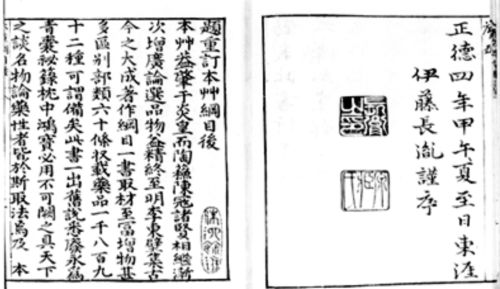
The spread of medical print after the Song did not simply preserve old learning; it changed the social life of medicine. Texts that once circulated through restricted manuscript channels, family libraries, monastic collections, or master-disciple transmission increasingly appeared in printed form, where they could be bought, copied, excerpted, abridged, commented upon, and carried into new settings. Formula books, materia medica works, emergency manuals, household remedy collections, women’s medicine texts, pediatric guides, and popular medical handbooks made healing knowledge more mobile than it had been before. This was a genuine expansion of access. A family without immediate access to a famous physician might still consult a printed collection of remedies; a local practitioner could compare formulas from different lineages; a drug seller could identify ingredients more accurately; a literate household could keep medical knowledge at hand for fever, wounds, childbirth, digestive complaints, epidemics, and sudden emergencies. Print promised democratization, preservation, and practical usefulness.
Yet print also created a new problem: the appearance of knowledge could be detached from the discipline of practice. A medical book could tell a reader what to prescribe, but not always how to judge the patient before him. It could list symptoms, but not fully teach the art of distinguishing similar patterns. It could preserve a famous formula, but not guarantee that the formula suited the season, constitution, age, sex, region, dosage, or stage of illness. The learned physician’s complaint against shallow practitioners often rested on this distinction. To know the name of a disease was not the same as understanding its movement. To possess a prescription was not the same as knowing when to withhold it. The printed page widened the reach of medicine, but it also gave the half-trained healer a dangerous tool: enough language to sound authoritative, enough recipes to act quickly, and enough borrowed prestige to persuade the anxious.
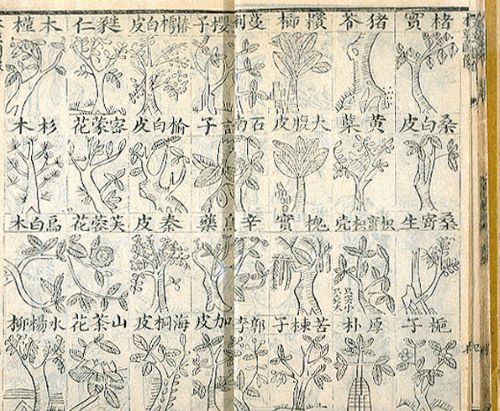
This did not mean that formula books were inherently crude. On the contrary, many were sophisticated efforts to organize practical medicine. Large collections such as the Pujifang gathered an immense range of prescriptions, while later materia medica works such as Li Shizhen’s Bencao gangmu brought together textual learning, pharmacological description, classification, and critical comparison on a grand scale. Such works demonstrate the intellectual ambition of Chinese medical publishing. They were not mere recipe dumps. They attempted to order the therapeutic world, weigh earlier authorities, identify substances, compare names and regional variants, warn against confusion, and give readers access to accumulated knowledge that no single practitioner could easily hold in memory. Their scale also reflected a real confidence that healing knowledge could be collected, corrected, and made useful across time and place. A compiler who arranged prescriptions or materia medica entries was not simply piling up cures; he was creating a map of medical possibility. But their very richness could encourage selective use. The more a book contained, the easier it became for an untrained reader to pluck from it a remedy without absorbing the interpretive habits that made the remedy safe or appropriate. A short passage, detached from the discussion around it, could become a cure-all in the hands of a seller or amateur. A substance described with nuance could be reduced to a single advertised effect. Print preserved learned medicine, but it also made learned medicine excerptable.
Medical publishing also blurred the distinction between physician, pharmacist, reader, and patient. A household might own medical books without employing a doctor. A drug shop might sell prepared remedies alongside advice. A literate amateur might treat relatives, servants, or neighbors because he had read enough to feel obligated or emboldened. A poor patient might prefer a printed formula or commercial pill to the expense of consultation. This blurred world could be useful and even humane, especially where formal medical care was distant or costly. But it also weakened the older assumption that medical knowledge depended primarily on long apprenticeship, family inheritance, or recognized reputation. A man with a book could present himself as a man with medicine. In the marketplace, that distinction was not always visible until treatment failed.
The problem of “knowing just enough” became sharper because Chinese medicine placed great value on adaptation. Classical and later scholarly medicine repeatedly emphasized that illness was not a fixed object to be matched mechanically with a fixed remedy. The same apparent disease could arise from different causes; the same formula could help one patient and harm another; the same symptom could mean different things depending on context. Fever, for example, might invite cooling treatment in one case and a very different response in another, depending on how the physician understood the pattern, the patient’s strength, the season, and the course of the illness. Weakness might call for support, but careless tonification could trap or worsen disease. Purging might save one patient and deplete another. Even a famous prescription could become harmful if treated as a universal answer rather than as one possible intervention in a changing situation. The mediocre doctor, in elite criticism, was often the one who confused names with realities. He saw cough and reached for a cough formula; saw fever and reached for cooling drugs; saw weakness and reached for tonics; saw childbirth difficulty and reached for forceful intervention. Such a practitioner could appear efficient because he moved quickly from symptom to cure, but that speed was precisely the danger. The quack’s error was not only fraud, but reduction. He turned medicine into a list of labels and answers, stripping away the difficult judgment that made treatment responsible.
Commercial print sharpened this danger by rewarding brevity, portability, and confidence. A dense classical text demanded study, but a handy manual promised action. A title claiming broad usefulness could reassure a buyer; a preface invoking famous authorities could lend borrowed legitimacy; a list of tested formulas could suggest reliability even when the circumstances of treatment were unclear. The printed cure became a commodity that could travel without its original teacher. This helped sincere medicine spread, but it also helped doubtful medicine travel under respectable clothing. Charlatans did not need to reject learned medicine. They could imitate it. They could quote canonical phrases, cite famous doctors, display printed books, claim possession of rare formulas, or sell medicines under names that sounded ancient, secret, or courtly. Print made medical authority visible, and anything visible could be performed.
For this reason, the history of medical quackery in Ming and Qing China cannot be separated from the history of medical literacy. The danger was not that books corrupted medicine, nor that wider access to healing knowledge was a mistake. The danger was that print changed the threshold of credibility. It allowed more people to learn, treat, compare, and preserve; it also allowed more people to pretend, oversimplify, and sell. The printed manual sat at the center of this contradiction. In good hands, it was a tool of memory, compassion, and practical care. In careless hands, it became a shortcut from reading to prescribing, from quotation to authority, from cure to commerce. The yōng yī of later criticism was often not the healer who knew nothing, but the healer who knew enough to be believed.
The Marketplace of Healing: Urban Crowds, Itinerant Doctors, and Sold Remedies
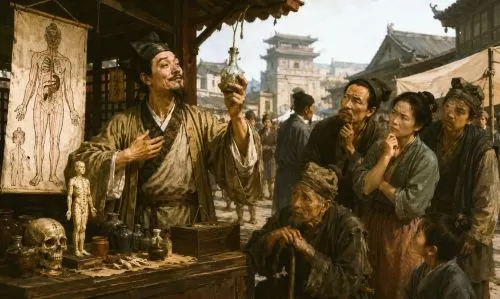
The medical marketplace gave the yōng yī his most visible stage. If printed books made medical knowledge portable, towns and cities made that knowledge sellable. Song, Ming, and Qing urban life brought together patients, physicians, drug shops, peddlers, temple crowds, migrants, servants, soldiers, monks, merchants, and the poor in spaces where illness could quickly become commerce. A sufferer did not always encounter medicine in the quiet setting of a learned consultation. He might encounter it in a market lane, at a temple fair, outside a pharmacy, beside a traveling performer, or through a hawker promising relief for cough, fever, sores, eye disease, toothache, infertility, venereal illness, childhood complaints, or the vague exhaustion that made any tonic seem plausible. The quack was not only a bad doctor at the bedside. He was also a salesman in a crowd.
Urban healing was attractive because it was immediate. A formal physician might require recommendation, appointment, status, money, and time. A market healer required only attention and payment. He could display medicines, demonstrate techniques, shout claims, invoke secret recipes, cite famous teachers, and promise results before doubt had time to form. Some sellers relied on performance: dramatic extractions, staged cures, exotic ingredients, mysterious powders, impressive jars, unusual smells, or the theatrical confidence of a man who seemed to have seen every affliction. Medicine was not merely therapeutic; it was persuasive. The patient had to be convinced before he could be treated, and the crowd itself could become part of the proof. If others gathered, listened, bought, nodded, or testified, the remedy appeared already halfway validated.
Itinerant doctors occupied an ambiguous place in this world. Some were charlatans who moved precisely because movement protected them from accountability. They could sell a medicine in one town, disappear before failure became obvious, and rebuild their reputation elsewhere. Their mobility allowed them to carry rumors of success without remaining long enough to face the social cost of harm. Yet itinerancy was not itself evidence of fraud. Many people needed traveling healers because settled physicians were unavailable, unaffordable, or socially distant. A healer might move because his patients were scattered across villages, because seasonal markets brought the sick together, because pilgrimage routes created opportunities for treatment, or because his skill was useful only occasionally in any one place. Bone-setters, eye specialists, wound healers, midwives, pulse readers, pediatric practitioners, and sellers of prepared medicines might circulate through regions where their skills were genuinely useful. Some may have learned through family practice or apprenticeship rather than through elite textual training; others may have built authority through repeated success in practical problems that scholarly physicians treated only rarely. To the elite physician, the itinerant could look suspicious because he lacked institutional rootedness. To the patient, he might look like the only help close enough to matter.
The marketplace also rewarded specialization. A healer who claimed to cure everything risked sounding absurd, but one who advertised skill in a particular complaint could seem more credible. Eye disease, dental pain, skin disorders, wounds, childbirth problems, infertility, epidemics, and chronic weakness all created openings for specialists who promised focused experience. Some specialists may have possessed real practical knowledge built through repetition. Others converted repetition into exaggeration. A man who treated many eye complaints could plausibly advertise himself as an eye doctor; another could borrow the same label while selling corrosive washes or useless powders. The patient standing before them often had no easy way to tell the difference. In a commercial setting, specialization could be either accumulated skill or carefully branded fraud.
Drug shops intensified this uncertainty because they stood between learned medicine and retail trade. Pharmacies could be centers of real expertise. They stored, identified, prepared, substituted, compounded, and sold substances that ordinary households could not easily manage on their own. They also made medicine materially accessible. A patient could buy pills, powders, decoction ingredients, plasters, tonics, or patent-like prepared remedies without arranging a full consultation. For households managing recurrent illness, this convenience mattered: medicine could be kept in drawers, sent for by a servant, shared among neighbors, or purchased quickly when a child, elder, or laborer suddenly fell ill. But the same convenience could be dangerous. A remedy sold under a familiar name might vary in quality; a powerful substance might be purchased without proper diagnosis; a shopkeeper’s advice might rest on habit more than judgment; and commercial pressure could encourage the sale of medicine where caution would have been better. The substitution of one ingredient for another, the stretching of expensive drugs with cheaper materials, the reuse of famous formula names, or the sale of tonics to anyone who could pay all blurred the line between ordinary trade and medical deception. The pharmacy was both a defense against quackery and one of its possible vehicles.
Sold remedies thrived because they offered certainty in a world where medicine often had to admit uncertainty. Prepared pills, secret formulas, lineage medicines, emergency powders, fertility treatments, aphrodisiacs, longevity drugs, and universal tonics promised to collapse the distance between suffering and relief. Their appeal was not hard to understand. They were portable, concrete, nameable, and often cheaper than repeated consultations. A patient could hold the cure in his hand. A family could send a servant to purchase it. A traveler could carry it. A mother could keep it for a child’s sudden fever. A laborer could buy something for pain without entering the more intimidating world of literati medicine. For the desperate, the sold remedy had emotional power because it transformed uncertainty into action.
Charlatans exploited that emotional power by borrowing every available language of legitimacy. They claimed ancient transmission, rare ingredients, court connections, foreign origins, divine revelation, monastic secrecy, family lineage, or success among famous patrons. They dressed commerce in the language of tradition. A remedy might be “tested,” “secret,” “ancestral,” “imperial,” “miraculous,” or “never failing,” each word designed to answer a different fear. The patient feared danger, so the seller promised tested safety. The patient feared ordinary medicine had failed, so the seller promised hidden knowledge. The patient feared poverty, so the seller promised a cheaper cure. The patient feared death, so the seller promised speed. Fraud worked not because people were foolish, but because the marketplace knew how to speak to suffering. The seller’s genius lay in making purchase feel like prudence, hope feel like evidence, and delay feel like the greater risk.
Elite attacks on market healers must be read with care. Learned physicians had reasons to distrust loud vendors and reckless prescribers, but they also had reasons to protect their own status. A street healer who cured a patient could embarrass a scholar-physician who had failed. A midwife or local specialist could command trust in domains where male literati medicine was limited. A drug seller could provide access to people who had no realistic path to elite care. The marketplace was noisy, uneven, and often dangerous, but it was also a practical medical infrastructure. It brought help to people whom formal institutions did not reliably reach. For poor households, women managing illness inside the home, migrants without local patronage, and patients suffering embarrassing or stigmatized conditions, marketplace medicine could be less a reckless alternative than the most available form of care. The figure of the yōng yī emerged from this tension: the same marketplace that allowed opportunists to prey on the sick also allowed ordinary people to find treatment in a society where medical authority was dispersed.
The marketplace of healing made quackery visible because it turned trust into a public transaction. In the sickroom, a healer’s failure might remain a family grievance. In the street, the pharmacy, the fair, or the crowd, medicine became spectacle, advertisement, reputation, and sale. The urban world did not invent false cures, but it magnified them. It gave the quack an audience, a vocabulary, a supply chain, and a path of escape. It also made therapeutic claims harder to contain. A rumor of success could travel with a vendor; a formula name could become a brand; a crowd could mistake performance for proof; a patient’s relief, whether temporary, imagined, or real, could become tomorrow’s testimonial. Yet it also gave patients choices they might otherwise have lacked. The history of Chinese medical charlatanism cannot be told as a simple story of ignorant crowds deceived by wicked vendors. It is a story of a medical economy in which access and danger traveled together, and where the promise of cure was always also an invitation to believe.
Miracle, Ritual, and Medicine: Shamanic Healing as Competition
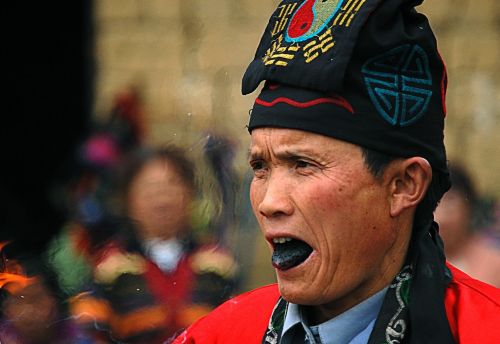
The crowded world of Chinese healing cannot be understood if ritual medicine is treated merely as a residue of superstition waiting to be displaced by more rational practice. For many patients, illness was not only a malfunction of the body but a disturbance in a wider moral, social, cosmic, or spiritual field. A fever, wasting illness, childbirth crisis, nightmare, seizure, epidemic, or sudden pain might be interpreted through qi and organs, but also through ghosts, demons, offended ancestors, pollution, fate, divine punishment, sorcery, or dangerous environmental forces. This did not necessarily produce an either-or choice between medicine and ritual. A household might summon a physician, burn talismans, pray at a temple, invite a Daoist priest, consult a Buddhist monk, and administer decoctions within the same episode of suffering. What later critics might call confusion could, to the patient, feel like prudence: when illness threatened life, one did not always trust only one path to relief.
Shamanic and ritual healers occupied a powerful place in this therapeutic landscape because they addressed dimensions of illness that ordinary prescribing did not always reach. Spirit-mediums, exorcists, Daoist ritual masters, Buddhist monks, talismanic specialists, and local healers could identify invisible agents, negotiate with spirits, expel demons, redirect misfortune, protect the household, or restore violated boundaries. Their authority came not only from books or drugs, but from charisma, ritual performance, sacred language, lineage, trance, possession, and the visible drama of intervention. A physician might arrive with pulse diagnosis and prescriptions; a ritual healer might arrive with chants, registers, talismans, incense, confession, purification, and a claim to command forces beyond the body. Where learned medicine sometimes appeared cautious or uncertain, ritual healing could appear decisive. It gave suffering a face, a cause, and an enemy. That mattered in illnesses that seemed sudden, strange, recurring, socially disruptive, or resistant to ordinary treatment. A child’s convulsions, a woman’s dangerous labor, an epidemic sweeping through a neighborhood, or a wasting condition that no decoction relieved could make purely bodily explanation feel inadequate. Ritual healing did not merely promise cure; it promised interpretation. It told the family what kind of crisis they were in, who or what had caused it, what obligations had been neglected, what hostile force had entered the home, and what action might restore order. The ritual healer competed with the physician not only over treatment, but over narrative authority.
This ritual world did not stand entirely outside textual medicine. Early and medieval medical materials often contain recipes, charms, demonological explanations, apotropaic practices, and techniques for dealing with malign forces alongside bodily treatments. Dunhuang manuscripts, Daoist ritual materials, Buddhist healing practices, and early recipe collections show that the boundaries between drug, charm, prayer, and procedure were often porous. A talisman might be burned and ingested; an incantation might accompany a remedy; a demon might be named as part of the treatment; a medicine might be valued not only for its pharmacological qualities but for its capacity to repel dangerous influences. To separate “religion” from “medicine” too cleanly is to impose a later division on practices that often worked together. For many patients, the question was not whether a cure was spiritual or material, but whether it acted on the right cause of affliction.
Yet this overlap also created competition. Learned physicians often defined their own authority against healers who seemed to substitute spectacle for diagnosis. A ritual specialist might accuse ordinary doctors of treating only symptoms while ignoring the spirit cause. A physician might accuse ritual healers of exploiting fear while neglecting the body’s actual disorders. Each side could present the other as incomplete. The physician claimed disciplined judgment, textual learning, and careful attention to bodily patterns. The shamanic or ritual healer claimed access to hidden agencies that the physician could not see. When a patient recovered, either kind of healer could claim success; when a patient died, either could blame the other’s delay, error, or misunderstanding. The accusation of quackery often emerged from this rivalry, not simply from fraud. It was a struggle over what kind of invisible reality counted: the unseen movement of qi and organs, or the unseen action of spirits and demons. This struggle could become particularly sharp because both systems depended on forms of interpretation that were not immediately visible to the patient. The physician read pulses, colors, textures, timing, appetite, heat, cold, depletion, and excess; the ritual healer read dreams, omens, afflictions, spirit signs, family misfortune, and the moral atmosphere of the household. Both asked the family to trust an expert’s reading of hidden causes. Both could explain failure by saying the case had been misunderstood, the intervention had come too late, or another force had interfered. The difference was that learned physicians increasingly used the language of disciplined medical judgment to mark ritual competitors as dangerous, credulous, or theatrical, while ritual healers could portray physicians as blind technicians treating the shell of the illness while ignoring its source.
The theatrical quality of ritual healing made it vulnerable to charges of deception. Exorcisms, trance performances, talismans, spirit messages, ritual implements, sacred names, and dramatic gestures could inspire confidence, but they could also be imitated. A skilled fraud did not need deep religious authority if he could perform its outward signs convincingly. He could borrow robes, phrases, gestures, diagrams, amulets, or the reputation of a temple lineage. He could frighten a family with claims of ghosts or curses and then sell the cure for the fear he had intensified. In this respect, ritual medicine gave charlatans a rich vocabulary. It allowed them to convert uncertainty into supernatural danger, and then sell themselves as the only ones able to remove it. The miracle cure was powerful because it promised not merely treatment, but rescue.
Still, it would be a mistake to say that ritual healing was simply quackery under sacred clothing. Ritual specialists often served communities in ways physicians did not. They helped families interpret misfortune, manage fear, restore social order, and give meaning to suffering that seemed senseless. In epidemics, childhood illness, madness, possession, difficult childbirth, and chronic affliction, ritual could organize communal response even when physical cure was uncertain. The same ceremony that failed to eliminate disease might still calm a household, redistribute blame, express grief, or make continued care possible. These effects were not trivial in a world where medicine could not reliably cure many conditions. The problem was not that ritual healing had no function. The problem was that its very power to comfort, explain, and persuade could be used sincerely, ambiguously, or fraudulently.
Shamanic healing sharpened the central problem of the yōng yī: legitimacy depended on trust before results could be known. A learned physician might condemn a spirit-medium as deluded or exploitative, but a patient who felt spiritually threatened might find that condemnation useless. A ritual healer might dismiss the physician as blind to the true source of illness, but a bodily disorder left untreated could worsen while ceremonies continued. Between them stood the patient and the family, forced to decide which promise sounded more plausible, which explanation fit the suffering, and which healer seemed worth the risk. In that contested space, the quack was not always easy to identify in advance. He appeared afterward, when confidence collapsed and the miracle revealed itself as performance, error, or theft.
Elite Physicians and the Rhetoric of the Bad Doctor
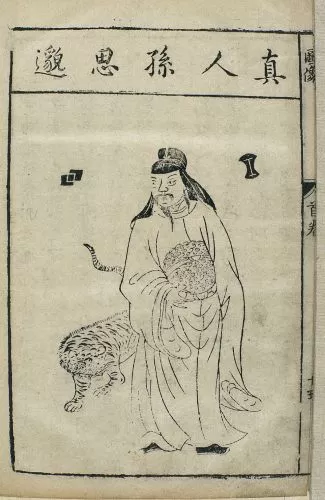
Elite physicians did not simply encounter the bad doctor as a social fact; they helped construct him as a moral and intellectual type. In medical prefaces, case records, polemics, lineage claims, and discussions of proper practice, the careless healer appeared again and again as the negative image of the true physician. He was hasty where the good doctor was patient, greedy where the good doctor was humane, formula-bound where the good doctor was flexible, theatrical where the good doctor was restrained, and shallow where the good doctor was classically grounded. This rhetoric did not emerge from nowhere. Patients were harmed by reckless treatments, dangerous drugs, false claims, and confident ignorance. But elite medical writing turned those harms into a broader language of professional identity. To condemn the yōng yī was also to say what a physician ought to be.
The bad doctor’s most common fault was not always total ignorance. More often, he was accused of partial knowledge badly used. He knew a famous prescription but not its limits. He recognized a symptom but not the pattern beneath it. He had read a formula book but had not absorbed the reasoning that made formulas adaptable. He treated names rather than bodies, illnesses rather than persons, and appearances rather than causes. This complaint fit deeply within Chinese medical thought, which valued discernment, timing, and adjustment. A cough, fever, swelling, pain, or difficult birth could not responsibly be treated as a single fixed thing, because the same outward sign might point to different internal conditions. The mediocre doctor reduced the patient to a category and then reached for the nearest inherited answer. He might warm when he should cool, purge when he should support, tonify when he should disperse, or attack the visible complaint while missing the deeper imbalance. What made this figure troubling was that he could look competent in the early moments of care. He could speak the language of medicine, hold the patient’s wrist, name the disorder, quote an authority, and produce a prescription with impressive speed. Families under pressure might mistake that speed for mastery. His error lay in mistaking the performance of method for the possession of judgment.
The rhetoric of the bad doctor also had a Confucian moral edge. From Sun Simiao’s famous reflections on the “great physician” onward, medical virtue was imagined as inseparable from compassion, seriousness, and self-restraint. The ideal physician did not treat the sick merely as customers or opportunities for reputation. He responded to suffering with responsibility. Later physicians inherited and reshaped that moral vocabulary. Greed, boasting, and impatience were not merely bad manners; they were medical dangers. A healer who promised too much was likely to observe too little. A healer who cared first for payment might prescribe what pleased the family rather than what the case required. A healer who sought fame might turn the patient into a stage for his own cleverness. The true physician, by contrast, was supposed to subordinate ego to care.
Yet this rhetoric also served social purposes. Learned physicians were often competing in a crowded field where authority was not guaranteed by a license in the modern sense. They had to distinguish themselves from itinerants, drug sellers, ritual healers, midwives, hereditary practitioners, monks, and literate amateurs. Condemning the yōng yī helped them draw that line. The bad doctor became a boundary marker: he showed readers what happened when medicine was separated from learning, ethics, and refinement. Anti-quack language was not only diagnostic but strategic. It warned patients, but it also protected the cultural status of physicians who wanted to be seen not as mere tradesmen, but as morally serious men of cultivated knowledge.
Medical case records made this rhetoric vivid. A physician might describe arriving after other doctors had misread the illness, overused warming drugs, purged too aggressively, cooled when they should have supported, or tonified when they should have dispersed. These stories often placed the author in a rescuing role. The failed doctor provided the narrative problem; the learned physician supplied the interpretive solution. Such accounts should not be dismissed as pure self-advertisement, because they preserve real disputes over diagnosis and treatment. But neither should they be read innocently. Case histories could teach, defend, criticize, and promote. They turned therapeutic disagreement into literary evidence of superiority. The bad doctor in these records was often the necessary foil who allowed the author’s clinical insight to shine.
The elite rhetoric of the bad doctor reveals both danger and anxiety. It shows that incompetence, reckless prescribing, and medical fraud were serious enough to become repeated themes in Chinese medical writing. It also shows that “quack” was never a simple label. It could name a genuine predator, a shallow reader, a failed practitioner, a rival school, a low-status healer, or someone whose therapy did not fit the standards of literati medicine. The yōng yī mattered because he made visible the problem that haunted every healing system: medicine required trust before certainty was possible. Elite physicians attacked the bad doctor because patients needed warning, but also because the physician’s own authority had to be continually argued into existence.
Women, Midwives, and the Gendered Quack
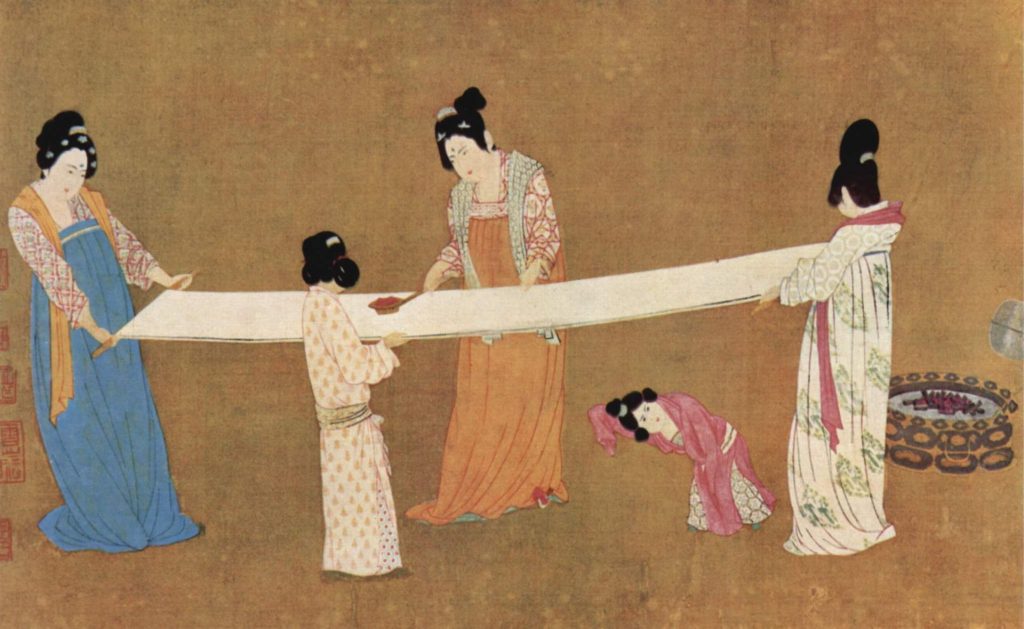
The accusation of quackery was never gender-neutral. In late imperial China, the medical world of childbirth, menstruation, fertility, miscarriage, postpartum illness, and infant survival created a special zone of anxiety because it involved both bodily danger and social reproduction. Women’s illnesses mattered not only because women suffered, but because families depended on wives, mothers, concubines, daughters-in-law, and midwives to sustain lineage continuity. A failed pregnancy, a difficult birth, a hemorrhage, a lingering postpartum fever, or repeated infertility could become a household crisis with moral, economic, and ancestral implications. In that setting, the question of who had the right to treat women’s bodies was never merely technical. It touched gender segregation, family authority, male medical learning, female embodied knowledge, and the limits of what male physicians could see, ask, touch, or know.
Women’s medicine, or fuke, developed a rich textual tradition, and elite male physicians wrote extensively about female bodies. They debated menstruation, conception, pregnancy, fetal development, childbirth, breast disorders, postpartum depletion, and the relationship between women’s reproductive functions and broader patterns of illness. These writings did not simply ignore women. On the contrary, they made women’s bodies a major object of medical reflection. But textual attention was not the same as clinical access. A male physician might have to diagnose through curtains, servants, husbands, mothers-in-law, or indirect description. Modesty, household hierarchy, and the politics of gendered space could prevent direct examination. Women’s medicine depended on intermediaries, and those intermediaries shaped what the physician knew. The male doctor might possess classical theory, but the household women often possessed the immediate facts.
Midwives stood at the center of this tension. They were indispensable because childbirth demanded presence, touch, speed, and practical experience. The midwife could enter the birthing room, read the laboring woman’s condition directly, manage the body in ways a male physician usually could not, and respond before a formal consultation could be arranged. Yet precisely because her work was physical, female, oral, and often outside literati textual control, she was vulnerable to elite suspicion. Male physicians could portray midwives as ignorant women who intervened too forcefully, used crude techniques, mishandled obstructed labor, hastened delivery, or relied on custom rather than principle. Some of these criticisms may have reflected real harms. Childbirth was dangerous, and bad intervention could kill mother or child. But the repeated suspicion of midwives also reveals a struggle over authority. The midwife’s knowledge was not necessarily absent; it was socially devalued because it was not the kind of knowledge elite men most easily recognized.
The “gendered quack” was often produced by a clash between textual medicine and embodied practice. A male physician could condemn a midwife for lacking theory, while the midwife might see the physician as distant, slow, impractical, or useless at the decisive moment. A household might call the midwife first because she was available and trusted, then summon the physician only after danger had escalated. By the time the male doctor entered the story, the most intimate and urgent phases of care might already have passed: the labor had been prolonged, the bleeding had begun, the fetus had shifted, the mother had weakened, or relatives had already tried drugs, prayers, massage, charms, or forceful intervention. This made blame especially unstable. If the outcome was bad, blame could move backward through the chain of care. The physician might accuse the midwife of having ruined the case before his arrival; the family might accuse the physician of arriving too late or prescribing ineffectively; the midwife might disappear from the written record except as the convenient cause of failure. Even when a birth attendant had acted from experience rather than ignorance, her decisions were often preserved only through male medical criticism. Since most surviving medical literature was written by men, the midwife often appears through the hostile voice of the very professionals who competed with her.
This does not mean that all female healers were competent or that elite criticism was merely prejudice. Some midwives, drug sellers, and women’s healers surely caused harm through rough handling, unsafe substances, forced delivery, superstition, or overconfidence. Reproductive medicine was a field in which desperation created openings for dangerous promises: fertility cures, pregnancy-protecting formulas, secret methods for difficult labor, postpartum tonics, charms against miscarriage, and remedies for infant survival could all be sold to frightened families. The desire for children made households vulnerable to confident claims. A woman who had miscarried repeatedly, failed to conceive, or nearly died in childbirth might be surrounded by competing advice from kin, midwives, doctors, ritual specialists, and remedy vendors. Fraudulent or reckless healers could profit from gendered suffering.
Yet the larger point is that the label of quackery could attach itself to women’s healing in ways that reveal the social structure of medicine. The midwife became suspect not simply because some midwives were dangerous, but because childbirth exposed the limits of male medical authority. Female caregivers knew things male physicians could not easily witness; male physicians wrote the texts that preserved judgment for posterity. The result was an uneven archive in which women’s practical authority often survives as a problem to be corrected rather than as knowledge to be understood. The gendered yōng yī was not only the incompetent birth attendant or fraudulent seller of women’s remedies. She was also the figure through whom elite medicine expressed its discomfort with forms of healing that were intimate, embodied, domestic, and female.
State Power, Law, and the Limits of Medical Regulation
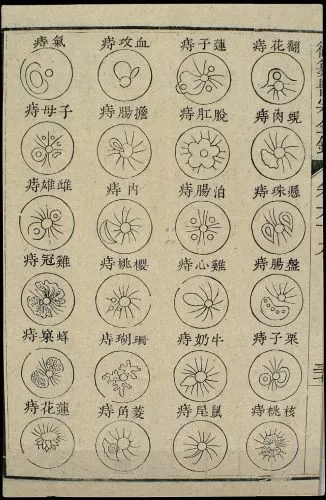
If quackery exposed the instability of medical trust, it also exposed the limits of state power. Imperial governments could sponsor medical learning, compile formulas, maintain court medical offices, establish pharmacies, issue official texts, and punish certain forms of harm, but they could not fully regulate the immense everyday world of healing. The sick did not live only near court physicians or official institutions. They lived in villages, market towns, urban neighborhoods, monasteries, military settlements, women’s quarters, pharmacies, and households where treatment moved through kinship, commerce, ritual, and reputation. The state could declare what good medicine ought to look like, but it could not place a trained examiner at every bedside. This gap between official aspiration and local practice gave the yōng yī room to exist.
The Song state came closer than earlier regimes to imagining medicine as a public responsibility. Its printing projects, official formularies, and pharmacy institutions suggested that government could collect useful knowledge and make it available for the welfare of the people. The state’s concern was not purely abstract. Epidemics, military needs, urban crowding, poverty, and the moral obligations of rulership all made medicine politically significant. A ruler who distributed remedies, supported pharmacies, or commissioned medical compilations could present himself as a guardian of life. But this benevolent ambition also made visible the problem it could not solve. Official formulas might circulate widely, but the state could not ensure that every person who used them understood diagnosis, dosage, contraindication, or timing. A government pharmacy could offer standardized medicines, but it could not eliminate the parallel marketplace of local sellers, private pharmacies, itinerant healers, and household remedies.
Later dynasties inherited this tension. Ming and Qing governments maintained medical offices and sponsored authoritative compilations, including the great Qing medical encyclopedia, the Yuzuan yizong jinjian, which represented an imperial effort to organize and transmit approved medical knowledge. Such projects mattered because they signaled that medicine was not merely a private craft. It belonged, at least partly, to governance, moral order, and the protection of the population. The court could gather expert opinion, classify diseases, standardize therapeutic approaches, and present a vision of medicine disciplined by textual authority and imperial oversight. In that sense, official compilations were not passive libraries. They were statements of order: they suggested that the healing arts could be collected, corrected, arranged, and placed within the moral architecture of the state. Yet official medicine remained only one layer of practice. Even where the court supported medical institutions, ordinary people often relied on local doctors, midwives, drug shops, lineage remedies, charitable halls, temples, and traveling specialists. A Qing emperor could authorize a medical canon, but he could not determine which healer a frightened family summoned at midnight, which midwife entered the birth chamber, which drug seller mixed a powder in the market, or which ritual specialist promised to drive out a demon. The state could sponsor orthodoxy, but it could not monopolize care. In most places, medical authority remained dispersed.
Law could intervene most clearly after harm had occurred. If a practitioner killed, injured, deceived, poisoned, or violated a patient in ways recognizable to legal authorities, he might be punished. The legal system was better equipped to address injury, negligence, assault, fraud, illicit practice in specific contexts, or socially disruptive behavior than to certify all legitimate healers in advance. This distinction is crucial. Premodern Chinese law could punish consequences, but it did not create a modern licensing regime in which only state-approved physicians could legally practice. A healer’s status often depended on reputation, community acceptance, lineage, patronage, textual learning, or practical success rather than formal certification. This made law both important and limited. It could define responsibility after a death, investigate suspicious treatment, weigh testimony, and assign punishment when misconduct became visible, but it could not easily judge the thousands of ordinary decisions that preceded a medical disaster. Was the dose reckless, or merely unsuccessful? Was the prescription fraudulent, or was the disease already beyond help? Had the healer deceived the family, or had the family misunderstood the risks? Such questions were difficult because medicine itself dealt in uncertainty. The law could appear after catastrophe; it rarely prevented the risky consultation before it began.
This reactive quality shaped the meaning of quackery. A healer might be tolerated for years if patients believed in him, if his treatments seemed to work, or if he served a population with few alternatives. Only when a patient died, a family complained, a rumor spread, or a dispute reached officials might his methods be reclassified as criminally dangerous. The same act could look different depending on outcome. A bold intervention followed by recovery might enhance a practitioner’s reputation; the same intervention followed by death might reveal him as reckless. A secret formula might be praised as inherited wisdom if it seemed effective; if it failed dramatically, it could be redescribed as fraudulent pretense. State power often entered the medical story at the moment when trust had already collapsed.
Local society did much of the regulating that the state could not. Families recommended or avoided doctors; neighbors remembered cures and failures; elite patrons endorsed certain physicians; charitable organizations sponsored treatments; pharmacies developed reputations for quality or deceit; and medical authors warned readers against dangerous practitioners. Reputation could be more immediate than law. A healer who harmed patients might lose access to a community, while one who gained a record of success could thrive without official recognition. But reputation was also fragile and manipulable. A traveling doctor could outrun it. A persuasive vendor could manufacture it. A printed preface, a famous name, a temple association, or a claimed lineage could create the appearance of trust before local memory had time to test it. Gossip, testimony, and patronage could protect patients, but they could also amplify error. A single dramatic recovery might outweigh many quiet failures; a wealthy patron’s endorsement might shield a mediocre practitioner; a family’s shame over reproductive illness, venereal disease, madness, or failed treatment might keep complaints private. Informal regulation helped, but it could also be fooled.
The limits of regulation reveal why the yōng yī became such a persistent figure in Chinese medical thought. He occupied the spaces between official knowledge and local need, between law and reputation, between state medicine and household care. The state could print texts, sponsor pharmacies, maintain offices, and punish certain abuses, but it could not remove uncertainty from healing. Nor could it erase the social conditions that made risky healers attractive: distance from elite care, poverty, gender restrictions, chronic illness, urgent pain, epidemic fear, reproductive desperation, and the appeal of quick remedies. Medical quackery survived not because the state ignored medicine, but because the world of sickness was too intimate, too commercial, too plural, and too immediate to be fully governed from above.
Patients, Trust, and the Desperation That Made Quacks Plausible

Patients did not turn to doubtful healers because they were foolish. They turned to them because illness made certainty precious and because the ordinary conditions of care often left families with imperfect choices. A sick person in medieval or late imperial China might face pain, fever, childbirth danger, wasting disease, epidemic fear, infertility, mental disturbance, chronic weakness, or a child’s sudden decline without easy access to a famous physician. Even when a learned doctor was available, his treatment might be expensive, slow, cautious, or already tried without success. In that setting, the confident healer who promised speed could become powerfully attractive. The quack’s plausibility began not in ignorance, but in need.
Trust was the currency of the medical encounter. Before recovery or failure could prove anything, the patient and family had to decide whom to believe. They judged by reputation, recommendation, price, bearing, lineage claims, visible instruments, printed books, previous cures, drug smells, ritual power, and the healer’s ability to explain suffering in a way that felt convincing. A cautious physician might describe complexity and uncertainty; a charlatan might offer clarity. A responsible practitioner might warn that the case was grave; a fraudulent one might promise that the right pill, talisman, powder, or secret formula would reverse everything. Desperation did not eliminate judgment, but it changed what counted as persuasive. When a family feared death, boldness could masquerade as competence.
The sickroom itself heightened this vulnerability. Illness was rarely experienced as a calm intellectual problem. It was a household emergency filled with relatives, servants, neighbors, expenses, rumors, and conflicting advice. A patient might be too weak to decide; a spouse or parent might make the choice; a mother-in-law might insist on one remedy; a neighbor might remember a cure from another family; a servant might fetch medicine from a shop; a ritual specialist might be summoned because the illness seemed uncanny. Each decision occurred under pressure, and the pressure rarely fell evenly. The person with legal or household authority might not be the person in pain. The woman in childbirth, the feverish child, the elderly parent, or the servant whose illness threatened the household’s labor might become the object of decisions made by others. Medical trust was distributed across the family rather than held by the sufferer alone. If a child’s fever rose, if a woman bled after childbirth, if an elder stopped eating, or if a wasting illness consumed the household’s money, the family might not have the luxury of waiting for the best-trained physician. They needed action, and action could become a moral duty as much as a medical choice. To do nothing, or to wait too long, could later be judged as neglect. The yōng yī thrived where action itself felt like hope.
The appeal of quacks also rested on the emotional structure of medical failure. When ordinary treatments failed, patients did not necessarily conclude that medicine had reached its limit. They often searched for another explanation: the previous doctor was incompetent, the diagnosis was wrong, the remedy was too weak, the illness had a hidden cause, or the family had not yet found the person with the right knowledge. This search was entirely human. A disease that resisted treatment invited reinterpretation. The longer the suffering continued, the more plausible extraordinary claims could become. Secret formulas, miracle cures, ritual interventions, rare drugs, foreign substances, and lineage remedies all promised that failure was not final. They implied that hope had not been exhausted, only misdirected.
Poverty sharpened the problem. Elite physicians, repeated consultations, high-quality drugs, and travel to better-known practitioners cost money. Poorer patients often relied on cheaper, nearer, or more informal forms of care because these were the options available. A market remedy could be bought immediately. A traveling healer might charge less than a prestigious doctor. A household manual might spare the family consultation fees. A temple cure or talisman might be accessible when medicine was not. These choices could be risky, but they were not irrational. Cost shaped timing, and timing shaped survival. A family might delay calling a respected physician until the illness had already worsened, not because they dismissed learned medicine, but because the fee, the medicine, the transport, or the social access required to obtain him was beyond reach. Cheaper healers entered that delay. They offered care at the point where need had already outrun resources. The poor were often forced into a medical economy where danger and affordability were inseparable. A cheap cure might be false, but an expensive physician might be unreachable. The quack became plausible because he lowered the cost of hope.
Testimony also mattered. A cure did not need to be statistically reliable to become socially powerful. One dramatic recovery could travel through a neighborhood more vividly than many ordinary failures. A patient who improved after taking a pill, burning a talisman, receiving acupuncture, or drinking a decoction might become evidence in the eyes of others, even if the recovery had other causes. Families remembered stories, not controlled comparisons. A healer’s reputation could grow from anecdotes, coincidences, temporary relief, placebo effects, natural recovery, or selective memory. Charlatans understood this, but so did legitimate practitioners. In a world where outcomes were uncertain and medical explanation was contested, testimony became one of the main ways trust moved from one household to another.
The desperation that made quacks plausible was not an embarrassment at the margins of Chinese medicine; it was a structural feature of healing before modern certainty. Patients had to act before they knew. Families had to trust before they could verify. Physicians had to persuade before they could prove. The yōng yī exploited that interval between fear and outcome, but he did not create it. He inhabited the ordinary uncertainty of sickness and turned it toward profit, reputation, or performance. To understand why quacks persisted, one must begin with the patient’s position: frightened, hopeful, constrained, and searching for someone who could make suffering intelligible enough to treat.
Harm, Failure, and the Politics of Blame
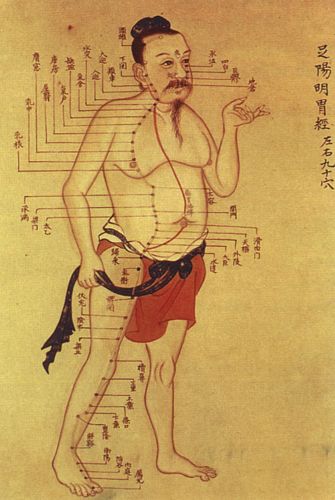
Medical quackery became most visible when treatment failed badly enough to demand explanation. A patient might worsen after a prescription, die after a purge, decline after ritual intervention, miscarry after a remedy, or suffer from a drug that had been sold as safe. The question was not only what had happened medically, but who should be blamed socially and morally. Illness itself could kill, and even respected physicians could misjudge a case. But when the healer seemed reckless, greedy, ignorant, or deceptive, ordinary medical failure could be transformed into accusation. The yōng yī emerged most sharply at this point of rupture, when disappointed hope became anger and the family looked back over the chain of decisions that had led from trust to harm.
The actual dangers were varied. A practitioner might prescribe too aggressively, purging a weakened patient or forcing sweat when the body could not bear it. He might use heating drugs for a condition that demanded cooling, cooling drugs for a case of depletion, tonics where obstruction needed dispersal, or dispersing medicines where the patient required support. He might misread pregnancy, mishandle childbirth, worsen bleeding, overlook epidemic danger, apply moxibustion or acupuncture carelessly, or sell powerful substances without understanding their risks. Drug sellers could substitute ingredients, misidentify materials, adulterate expensive substances, or package ordinary preparations under grand names. Ritual healers could delay bodily treatment while promising supernatural rescue. The harm caused by quackery was not limited to poison or fraud in the narrow sense. It included delay, misdirection, overconfidence, and the false clarity that led families away from better care.
Yet failure did not automatically prove quackery. This is where the politics of blame becomes essential. In a medical culture that understood illness as complex, shifting, and often uncertain, a bad outcome could be interpreted in several ways. Perhaps the disease was incurable. Perhaps the family called the doctor too late. Perhaps earlier healers had damaged the case before the final physician arrived. Perhaps the patient failed to follow instructions, took forbidden foods, or mixed remedies from different sources. Perhaps the doctor chose correctly but Heaven, fate, age, weakness, or epidemic force overwhelmed the treatment. A prescription that looked foolish after death might have seemed reasonable before the disease revealed its course. A treatment that failed one patient might have succeeded in another whose strength, timing, season, or pattern differed. Even a physician’s confidence could be judged differently depending on the outcome: if the patient recovered, decisiveness became brilliance; if the patient died, the same decisiveness could be remembered as arrogance. These possibilities made blame unstable. A healer’s reputation could depend not only on what he did, but on who told the story afterward, whose voice was preserved, and whether the outcome fit existing suspicions about his status.
Medical case records often turned this instability into narrative form. Learned physicians described patients who had been harmed by previous doctors, then explained how they recognized the true pattern and corrected the error. Such stories could be clinically useful, preserving disputes over diagnosis, dosage, and timing. They also shaped moral judgment. The earlier doctor became the foil: the man who used the wrong formula, mistook the disease, followed fashion, relied on crude categories, or treated symptoms mechanically. The successful author appeared as the physician of discernment. When the patient recovered, the case confirmed the author’s authority; when the patient died, the case could still demonstrate that the damage had already been done. Harm was not simply reported. It was organized into a story about competence, error, and rightful medical authority.
Families also participated in this politics of blame. They were not passive recipients of medical judgment. They selected healers, compared advice, paid fees, remembered failures, repeated stories, and sometimes accused practitioners of deception or fatal incompetence. But families also had reasons to redirect blame away from themselves. If they had delayed consultation, trusted a cheap remedy, summoned a ritualist first, overruled the patient, or demanded an intervention, the figure of the quack could help concentrate responsibility elsewhere. This does not mean that accusations were false. Many were surely justified. But blame often served multiple purposes at once: it explained grief, defended family honor, warned others, and gave moral shape to a death that might otherwise seem senseless. The yōng yī became the person through whom suffering could be made accountable.
The politics of blame reveals why quackery was both a medical and social category. It named real forms of danger: harmful drugs, reckless procedures, false promises, shallow learning, and commercial exploitation. But it also marked the uncertain aftermath of treatment, when families, physicians, neighbors, and sometimes officials tried to decide whether a death belonged to illness, fate, delay, incompetence, or fraud. The quack was easiest to identify after the damage was done, but by then the accusation carried the weight of grief. In that sense, the history of the yōng yī is not simply the history of bad doctors. It is the history of how people in a plural medical world assigned responsibility when healing failed.
The Late Qing Turn: Newspapers, Western Medicine, and the New Quack Panic
By the late Qing, the old problem of the yōng yī entered a new public world. Earlier accusations against bad doctors had circulated through medical prefaces, case records, family grievances, local reputation, and occasional legal disputes. In the nineteenth century, newspapers, pictorials, reformist essays, missionary institutions, treaty-port medicine, and new forms of public debate gave the quack a sharper and more visible social identity. The mediocre doctor was no longer only the man who had failed one household. He could become a symbol of collective danger: an ignorant practitioner harming the people, delaying progress, exploiting credulity, and revealing the weakness of Chinese society in an age of crisis. The accusation did not become entirely new, but it became louder.
Newspapers changed the scale of blame. A failed treatment that once might have remained a neighborhood story could now be reported, summarized, moralized, and circulated among readers who had no direct knowledge of the patient, the healer, or the case. The newspaper made medical failure portable. It could turn a local tragedy into an example of a social problem and a single practitioner into a representative type. This mattered because print journalism favored incidents that were dramatic, legible, and morally charged: a patient deceived, a family ruined, a woman harmed in childbirth, a medicine sold under false claims, a healer exposed, a death attributed to incompetence. In that format, the yōng yī became easier to recognize and easier to condemn. He was no longer merely one disputed actor in a plural medical world. He became a recurring public villain. The shift also changed the audience for medical judgment. Where earlier disputes might have been interpreted by physicians, relatives, neighbors, or magistrates, newspaper accounts invited urban readers to participate emotionally and morally in the judgment of medical failure. The reader did not need to know the patient personally to feel outrage, pity, or superiority. The press transformed the quack from a local danger into a repeated lesson in public vigilance.
The late Qing media environment also encouraged simplification. Earlier medical debates had often argued over difficult questions of pattern, dosage, timing, lineage, and interpretation. Newspaper reports, by contrast, tended to present cases through sharper moral contrasts: ignorance versus knowledge, deceit versus responsibility, superstition versus reason, old habits versus modern reform. That clarity made the stories powerful, but it could also flatten the complexity of practice. A healer might be condemned as a quack because he truly had harmed a patient through reckless treatment. But another might be swept into the same category because he represented a style of medicine that reformist writers wished to discredit. The compressed form of the report encouraged moral legibility over clinical uncertainty. It rarely lingered over whether the illness had already been severe, whether previous treatments had complicated the case, whether the family had delayed, or whether the accused healer belonged to a serious but unfashionable tradition. The public language of quackery became both a warning and a weapon. It could protect readers from predatory healers, but it could also teach them to see complex medical plurality as a simple contest between enlightened reform and dangerous backwardness.
Western medicine intensified this transformation. Missionary hospitals, treaty-port clinics, medical schools, vaccination campaigns, anatomy, surgery, laboratory science, and new ideas of public health introduced competing models of medical authority. Western medicine did not immediately displace Chinese medicine, nor did all patients accept it without hesitation. But it offered reformers a new contrast against which the yōng yī could be judged. The quack could now stand not only opposite the learned Confucian physician, but opposite the modern doctor: trained, institutional, anatomical, scientific, and increasingly associated with national strengthening. In this contrast, Chinese medicine could be made vulnerable to the charge once aimed at only its worst practitioners. The bad doctor became evidence in a larger argument over civilization, reform, and survival.
This shift was politically charged because the late Qing was an age of imperial pressure, internal rebellion, institutional reform, and fear of national weakness. Medicine became part of a much larger question: why had China fallen behind, and what had to change? In that climate, the yōng yī could be read as more than a dangerous healer. He became a figure of backwardness, a man whose ignorance injured not only individual bodies but the body politic. Reformers worried about superstition, popular credulity, inadequate institutions, and the absence of systematic public health. The quack fit easily into that critique. He embodied the failure to regulate knowledge, the survival of harmful custom, and the vulnerability of common people to predatory confidence. His presence made medicine a problem of governance and national reform.
Yet this late Qing panic also changed the meaning of Chinese medicine in ways that were not always fair. The more journalists and reformers contrasted Western medicine with quackery, the more difficult it became to distinguish between fraudulent practice, ordinary popular healing, and serious Chinese medical learning. A reckless itinerant, a ritual specialist, a midwife, a drug seller, and a classically trained physician could all be pulled into the same modernizing suspicion if they appeared insufficiently scientific. This mattered because the earlier category of the bad doctor had usually depended on a distinction within Chinese medicine: careful physicians criticized shallow ones, serious learning opposed careless formula use, and ethical practice stood against greed. In the late Qing, that internal distinction could be overwhelmed by a broader civilizational contrast. The “quack” became useful to those who wanted to argue that China’s medical past itself was the problem. The older elite critique of the yōng yī had usually defended learned medicine against shallow or immoral practice. The late Qing critique sometimes went further, using the quack to question whether traditional modes of healing could be trusted at all. Anti-quack discourse could protect patients, but it could also delegitimize whole fields of practice by emphasizing their worst representatives.
The new quack panic also depended on the emotional power of public exposure. Newspapers and pictorials did not merely describe bad medicine; they taught readers how to see it. They invited the public to recognize certain signs: the loud promise, the secret cure, the miraculous advertisement, the untrained healer, the ritual performance, the harmful drug, the delayed hospital visit, the ignorant family persuaded by false hope. This new literacy of suspicion could be useful. It warned readers against dangerous confidence and encouraged skepticism toward extravagant claims. But it also created a modern spectacle of medical failure. The suffering patient became an example, the healer became a type, and the reader became a judge. Public opinion joined law, reputation, and professional criticism as a force in defining quackery.
The late Qing turn did not invent the yōng yī, but it modernized him. The bad doctor had long haunted Chinese medicine as a figure of incompetence, greed, shallow learning, and dangerous performance. What changed was the arena in which he was judged. Newspapers amplified him; Western medicine reframed him; reform politics made him symbolic; and public discourse turned individual failure into social diagnosis. The quack became a sign that medicine was no longer only a matter between patient, family, and healer. It was now part of a national argument about knowledge, authority, progress, and the future of Chinese bodies.
Why Quacks Persisted
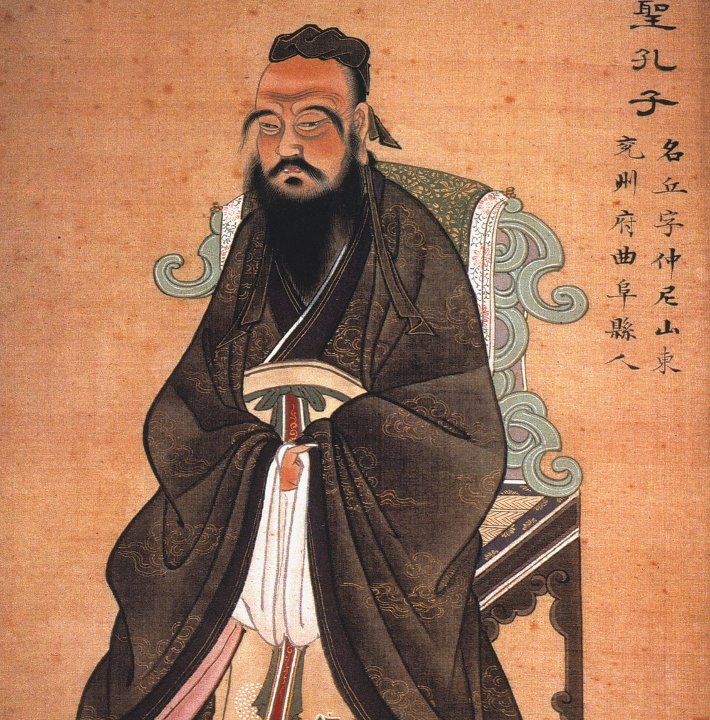
Quacks persisted because medicine itself operated in the space between knowledge and uncertainty. No healer, however learned, could guarantee recovery. Diagnosis depended on interpretation; treatment depended on timing; outcomes depended on the patient’s strength, the stage of illness, the quality of drugs, the family’s compliance, and forces no practitioner could fully control. This uncertainty created openings for honest disagreement, but also for exploitation. The yōng yī survived because the sick often had to choose before proof was possible. A confident healer could enter that gap, claim certainty, and make hesitation feel more dangerous than trust. In that sense, quackery was not an accidental defect attached to medicine from the outside. It was a recurring temptation within every healing culture that promised relief before it could demonstrate results.
The expansion of medical knowledge helped rather than ended the problem. Printing, formula books, materia medica works, official compilations, and commercial pharmacies made remedies more available, but availability did not ensure judgment. A person could read enough to imitate learning, sell enough to resemble a pharmacist, inherit enough formulas to claim lineage, or memorize enough medical language to impress a frightened family. The half-trained practitioner was often more dangerous than the openly ignorant one because he could pass through the first gate of credibility. He knew what authority sounded like. He could cite texts, name diseases, display books, discuss pulse, invoke famous formulas, and claim that his method came from a respected school. He could also benefit from the prestige of the very medical culture he misunderstood, borrowing its vocabulary while avoiding its discipline. The more medicine became textual and commercially visible, the easier it was to turn fragments of learning into performance. A title page, a famous formula, a classical phrase, or a shelf of prepared drugs could all stand in for experience in the eyes of a desperate household. Partial knowledge, when joined to confidence and profit, made the yōng yī plausible.
The structure of the marketplace also favored persistence. Healing was not delivered through a single regulated channel. It moved through households, temples, drug shops, streets, itinerant networks, charitable institutions, local specialists, women’s spaces, and elite consultations. That diversity made care more accessible, but it also made standards uneven. A famous physician might be careful, expensive, and distant; a market healer might be near, cheap, and bold. A pharmacy might sell useful medicines, but also dubious preparations. A midwife might be indispensable, but also vulnerable to suspicion or error. A ritual healer might provide meaning and comfort, but also delay bodily treatment. The same pluralism that made Chinese healing flexible made quackery difficult to eliminate. There was no single door through which all healers entered and no single authority capable of excluding the dangerous ones.
Patients and families also helped sustain the conditions in which doubtful healers could thrive, though not because they lacked intelligence. They sustained them because they needed options. Chronic illness, infertility, epidemics, childhood danger, childbirth emergencies, pain, madness, and wasting disease could exhaust ordinary medicine and household patience. When a respected physician failed, the family did not necessarily stop seeking care; it often widened the search. The next healer might be cheaper, stranger, more confident, more theatrical, or more extreme precisely because ordinary methods had disappointed. Hope moved laterally through the medical world, from doctor to drug seller, from drug seller to ritual specialist, from ritual specialist to secret formula, from secret formula to another doctor. The very act of changing healers could feel like regaining control over a crisis that had become unbearable. Families under pressure did not always ask whether the new promise was more credible than the old one; they asked whether they could endure doing nothing. A quack could exploit that emotional exhaustion by presenting himself as the person who finally understood what others had missed. The quack persisted because suffering made the next promise emotionally credible.
Reputation, testimony, and memory further protected questionable practice. A healer did not need a perfect record to survive; he needed enough remembered successes to outweigh failures, or enough mobility to escape them. Natural recovery, temporary improvement, placebo effect, misattributed causation, and selective storytelling could all become evidence. A patient who improved after taking a pill might credit the pill; a child who survived after a ritual might credit the ritual; a chronic sufferer who felt stronger after a tonic might praise the seller. Failures were often private, embarrassing, or explained away as fate, delay, or the severity of the disease. Successes traveled more loudly because they offered hope. Reputation could be built from real skill, sincere error, lucky timing, or deliberate fraud, and outsiders could not always tell which foundation lay beneath it.
Quacks persisted because the figure of the quack performed social work even when no particular practitioner could be proven fraudulent. The yōng yī gave physicians a foil, families a target for blame, reformers a symbol of backwardness, and communities a way to explain why healing had failed. He named real harm, but he also organized anxiety. He stood at the crossroads of print, commerce, ritual, gender, poverty, state limitation, and patient desperation. That is why he appears so stubbornly across the history of Chinese medicine. The quack was not merely the man selling false cures in the market. He was the recurring shadow of a medical world in which knowledge was precious, suffering was urgent, and trust had to be given before certainty could arrive.
Are We Mistaking Professional Rivalry for Quackery?
The following video from “Absolute History” covers China’s Opium Wars:
Important to consider here is that the yōng yī may tell us as much about professional rivalry as about actual quackery. Much of the surviving evidence was written by learned physicians, reformist critics, officials, or later journalists. These were people who had reasons to define certain healers as dangerous, ignorant, or illegitimate. Their accusations cannot be accepted as transparent descriptions of medical reality. A literati physician who condemned an itinerant doctor, midwife, ritual healer, or drug seller may have been warning against real harm, but he may also have been defending his own status in a competitive marketplace. In a world without a single licensing regime, “quack” was not only a medical judgment. It was also a claim to authority: a way of saying that some healers belonged inside legitimate medicine and others should be pushed outside it.
This is important because many of the people most vulnerable to being labeled quacks served patients whom elite physicians did not always reach. Itinerant healers could bring care to villages and market towns. Midwives could enter birth spaces closed to men. Drug sellers could provide remedies quickly and cheaply. Ritual specialists could address fear, spirit affliction, grief, and social disorder in ways that ordinary prescribing did not. Household healers and women caregivers preserved practical knowledge that rarely appeared in elite texts except through criticism. To dismiss all such figures as fraudulent would reproduce the bias of the archive. Their knowledge might be oral, local, embodied, commercial, or ritualized, but that did not make it meaningless. Some undoubtedly harmed patients; others likely saved them. This also complicates the late Qing story. When newspapers and reformers denounced quacks, they sometimes exposed genuine abuse, but they also participated in a modernizing rhetoric that could reduce Chinese medicine to its worst examples. The contrast between Western medicine and the ignorant yōng yī made powerful journalism, but it risked flattening a plural medical culture into a morality play of science against superstition. A reckless peddler, a serious classical physician, a village midwife, and a talismanic healer might all be treated as signs of backwardness if they failed to fit the new language of scientific modernity. In that context, “quackery” could become less a precise accusation than a tool for reorganizing medical authority around new institutions, new professions, and new ideals of public health.
Taking this challenge seriously does not dissolve the problem of quackery. It sharpens it. Patients really were injured by dangerous prescriptions, adulterated drugs, forced interventions, false promises, and calculated deception. Families really did encounter healers who exploited desperation. Learned physicians were not wrong to worry about shallow formula use, theatrical performance, or greedy treatment. But the counterpoint warns against treating every accusation as proof. The yōng yī was not a stable species of medical criminal who can be easily separated from the “real” physician in every case. He was often a figure produced in conflict: between textual and oral knowledge, elite and popular medicine, male physicians and female caregivers, state authority and local practice, Western medicine and Chinese traditions, reformist journalism and everyday therapeutic need.
This modifies my final interpretation. Medical quackery in medieval and late imperial China should not be understood simply as fraud invading medicine from the outside. It should be understood as a boundary problem inside a crowded healing world. The quack was real, but the label was unstable. It could identify the predator, the incompetent prescriber, the careless seller, and the false miracle worker; it could also stigmatize lower-status healers whose authority came from experience, proximity, gendered access, ritual trust, or affordability rather than elite textual learning. The history of the yōng yī is most revealing not when it lets us sort all practitioners into true and false, but when it shows how Chinese society argued over who could be trusted with the suffering body.
Conclusion: The Quack as a Mirror of Chinese Medicine
The yōng yī endured because Chinese medicine was never a simple contest between knowledge and ignorance. It was a plural field in which texts, formulas, rituals, drugs, family practice, state projects, market exchange, gendered labor, and local reputation all shaped the experience of healing. That world produced remarkable medical learning, careful clinical reflection, and serious ethical ideals. It also produced shallow readers, reckless prescribers, theatrical sellers, manipulative ritualists, adulterated remedies, and confident frauds. The quack belonged to this world not as an alien intruder, but as one of its recurring shadows. He appeared wherever medical authority could be imitated, wherever suffering made promises valuable, and wherever patients had to trust before they could know.
The history of Chinese medical quackery is not a story of superstition waiting to be defeated by progress. It is a story of uncertainty under pressure. A family with a feverish child, a woman in difficult labor, an elder wasting away, or a household facing epidemic fear did not choose healers from a position of calm detachment. They weighed cost, distance, reputation, urgency, gender propriety, ritual fear, and the memory of previous failure. In that setting, the healer who promised certainty could become persuasive, whether he was a learned doctor, a sincere local practitioner, a midwife, a drug seller, a ritual specialist, or a fraud. Quackery persisted because the conditions that made it plausible were the same conditions that made healing necessary: pain, hope, fear, and the need to act before the outcome was known.
The label itself remained unstable. Sometimes it named genuine harm: the false cure, the careless prescription, the dangerous intervention, the greedy seller, the healer who turned desperation into profit. At other times, it expressed rivalry, class judgment, gendered suspicion, professional self-defense, or late Qing reformist impatience with older forms of medicine. This instability does not make the yōng yī less important. It makes him more revealing. Every accusation against the bad doctor carried a hidden question: who had the right to define legitimate healing? The learned physician, the state, the patient, the family, the market, the midwife, the newspaper, or the new institutions of Western medicine?
The quack was ultimately a mirror held up to Chinese medicine at its most vulnerable point. He reflected its achievements, because only a respected and expansive medical culture could produce forms of imitation so persuasive. He reflected its limits, because no system of healing could fully prevent error, exploitation, or misplaced trust. And he reflected the human predicament at the center of all medicine: the sick body demands help before certainty arrives. The yōng yī was feared not simply because he stood outside medicine, but because he revealed how difficult it was, in the urgent moment of suffering, to tell the difference between wisdom, performance, and fraud.
Bibliography
Affiliate disclosure: Amazon links on this site are paid links. As an Amazon Associate I earn from qualifying purchases.
- Andrews, Bridie J. The Making of Modern Chinese Medicine, 1850–1960. Vancouver: University of British Columbia Press, 2014.
- Bian, He. Know Your Remedies: Pharmacy and Culture in Early Modern China. Princeton: Princeton University Press, 2020.
- Bodde, Derk, and Clarence Morris. Law in Imperial China: Exemplified by 190 Ch’ing Dynasty Cases. Philadelphia: University of Pennsylvania Press, 1967.
- Campany, Robert Ford. To Live as Long as Heaven and Earth: A Translation and Study of Ge Hong’s Traditions of Divine Transcendents. Berkeley: University of California Press, 2002.
- Chang, Che-chia. “The Qing Imperial Academy of Medicine: Its Institutions and the Physicians Shaped by Them.” East Asian Science, Technology, and Medicine 41 (2015), 63-92.
- Chen Ziming. Furen daquan liangfang. 1237.
- Chia, Lucille. Printing for Profit: The Commercial Publishers of Jianyang, Fujian, 11th–17th Centuries. Cambridge, MA: Harvard University Asia Center, 1996.
- Choi, Jihee. “Social Perceptions of Quack in Qing Dynasty and Its Transformation in the Late Qing Period.” Uisahak 28:1 (2019), 191–238.
- Furth, Charlotte. A Flourishing Yin: Gender in China’s Medical History, 960–1665. Berkeley: University of California Press, 1998.
- Goldschmidt, Asaf. “Commercializing Medicine or Benefiting the People: The First Public Pharmacy in China.” Science in Context 21:3 (2008), 311–337.
- —-. The Evolution of Chinese Medicine: Song Dynasty, 960–1200. London: Routledge, 2008.
- Hanson, Marta E. Speaking of Epidemics in Chinese Medicine: Disease and the Geographic Imagination in Late Imperial China. London: Routledge, 2011.
- Harper, Donald. Early Chinese Medical Literature: The Mawangdui Medical Manuscripts. London: Kegan Paul International, 1998.
- Hinrichs, T. J. “The Medical Transforming of Governance and Southern Customs in Song Dynasty China.” Journal of Asian Studies :1 (1998), 5–30.
- Hsu, Elisabeth. “The Experience of Wind in Early and Medieval Chinese Medicine.” The Journal of the Royal Anthropological Institute 13 (2007), S117-S134.
- Huangdi neijing suwen. In Huang Di Nei Jing Su Wen: Nature, Knowledge, Imagery in an Ancient Chinese Medical Text. Translated by Paul U. Unschuld and Hermann Tessenow. Berkeley: University of California Press, 2011.
- Jones, William C., trans. The Great Qing Code. Oxford: Clarendon Press, 1994.
- Lei, Sean Hsiang-lin. Neither Donkey nor Horse: Medicine in the Struggle over China’s Modernity. Chicago: University of Chicago Press, 2014.
- Leung, Angela Ki Che, ed. Medicine for Women in Imperial China. Leiden: Brill, 2006.
- —-. “Organized Medicine in Ming-Qing China: State and Private Medical Institutions in the Lower Yangzi Region.” Late Imperial China 8:1 (1987), 134–166.
- Li Shizhen. Bencao gangmu. 1596.
- Lo, Vivienne, and Christopher Cullen, eds. Medieval Chinese Medicine: The Dunhuang Medical Manuscripts. London: RoutledgeCurzon, 2005.
- Rogaski, Ruth. Hygienic Modernity: Meanings of Health and Disease in Treaty-Port China. Berkeley: University of California Press, 2004.
- Scheid, Volker. Currents of Tradition in Chinese Medicine, 1626–2006. Seattle: Eastland Press, 2007.
- Schiffeler, John Wm. “The Origin of Chinese Folk Medicine.” Asian Folklore Studies 35:1 (1976), 17-35.
- Shen Bao. Shanghai, 1872–1949.
- Sivin, Nathan. Medicine, Philosophy and Religion in Ancient China: Researches and Reflections. Aldershot: Variorum, 1995.
- Smith, Richard J. “’Knowing Fate’: Divination in Late Imperial China.” Journal of Chinese Studies 3:2 (1986), 153-190.
- Strickmann, Michel. Chinese Magical Medicine. Edited by Bernard Faure. Stanford: Stanford University Press, 2002.
- Sun Simiao. Beiji qianjin yaofang. Seventh century.
- Ta-Ch’un, Hsü. Forgotten Traditions of Ancient Chinese Medicine: A Chinese View from the Eighteenth Century (The I-hsüeh Yüan Liu Lun of 1757 by Hsü Ta-Ch’un). Translated and annotated by Paul U. Unschuld. Brookline: Paradigm Publications, 1998.
- Taiping Hui Min He Ji Ju Fang. Edited by Joe Hing Kwok Chu. 960-1279.
- Taiping Shenghui Fang. 992.
- Unschuld, Paul U. Medicine in China: A History of Ideas. Berkeley: University of California Press, 1988.
- Wu, Yi-Li. Reproducing Women: Medicine, Metaphor, and Childbirth in Late Imperial China. Berkeley: University of California Press, 2010.
- Xue Ji. Jiao Zhu Fu Ren Liang Fang Fan Li (Revised Good Prescriptions for Women). Ming dynasty. 1487-1559.
- Yu Zuan Yi Zong Jin Jian (Golden Mirror of Medicine). 1742.
- Zhu Chu. Pujifang. 1406.
Originally published by Brewminate, 06.23.2026, under the terms of a Creative Commons Attribution-NonCommercial-NoDerivatives 4.0 International license.
About the Author