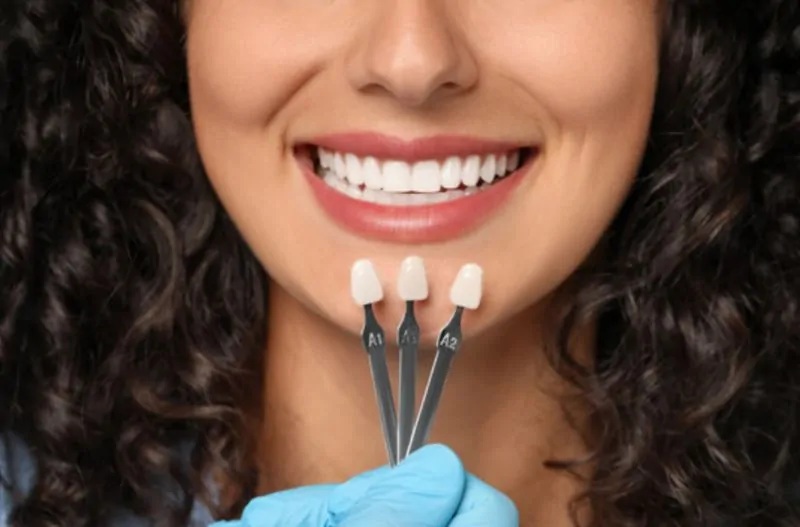
A veneer answers two separate questions for most patients, one about the material and one about the bond. The shell itself is simple to describe, while the attachment involves several careful steps. Both sides matter to anyone who wants to picture the result. The sections below cover each part for patients in Edison.
A Veneer Is a Thin Shell for the Front of a Tooth
A veneer is a wafer of ceramic that sits over the visible surface of a tooth. A set of veneers Edison, NJ, usually measures around half a millimeter in thickness. Porcelain remains the common material, though dental plastics suit certain cases. The shell covers the front and the edge, while the back of the tooth stays exposed. Color and translucency are matched to the teeth on either side. Chips, cracks, gaps, stains, and uneven edges all sit behind that cover. The natural tooth stays in place underneath the whole time.
Tooth Preparation Creates Room for the Shell
The dentist removes a slim layer of enamel from the front surface. That space stops the finished veneer from sitting proud of the arch. Local anesthetic keeps the step comfortable for most patients. Clinics across New Jersey record the shade before this stage, since a dry tooth reads lighter.
What Happens to the Prepared Tooth
An impression or a digital scan captures the new shape. Temporary shells cover the prepared teeth for ten to fourteen days. Chewing on the opposite side aids in keeping those temporaries in place.
The Bond Holds the Veneer Against the Enamel
Attachment relies on a chemical grip at two surfaces at once. The inner face of the porcelain is etched, then coated with a silane primer. The prepared enamel gets a phosphoric acid gel to open its surface texture. Resin cement then joins the two, with a curing light to set it hard.
Steps at the bonding appointment run in this order.
- A try-in with water-based paste to confirm shade and fit
- An etch on the enamel for about twenty seconds
- A rinse and gentle air dry across the prepared surface
- Bonding agent applied to both the tooth and the shell
- Resin cement placed, seated, then cured tooth by tooth
- Excess cement trimmed at the gum line
Bite Checks Finish the Appointment
Thin marking paper shows where the new surfaces meet at closure. High spots are polished down until the contact feels even. Placement of veneers in Edison, NJ ends once the bite reads correct across the arch. According to a systematic review published in PubMed Central, porcelain veneers boast an estimated 10-year survival rate exceeding 90% when proper bonding and occlusion protocols are followed. Flossing technique gets a short demonstration at this stage. Practices in New Jersey usually schedule a review visit two weeks later.
Dentists in Edison Assess the Tooth Before Any Prep
Enamel thickness decides whether a tooth can host a veneer at all. Heavy decay or a large filling points toward a crown instead. Gum health must be stable, since a bond needs a dry, clean margin. A wax model previews shape and length before treatment starts. Patients in Edison approve that mock-up ahead of the prep appointment. Night guards come up for anyone who grinds during sleep.
A veneer is a thin porcelain shell held to the enamel by etched surfaces and resin cement. The bond depends on preparation, a dry field, and a careful bite check. Residents of New Jersey can review candidacy at a consultation. An assessment in Edison confirms whether the tooth suits this treatment.
About the Author