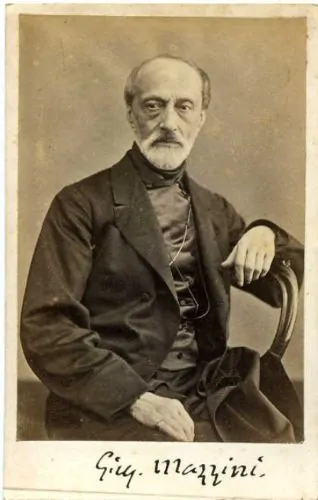
In 1844, Giuseppe Mazzini proved Britain was secretly opening his mail, exposing a hidden postal surveillance system and a constitutional crisis over state secrecy.

By Matthew A. McIntosh
Public Historian
Brewminate
Introduction: The Letter That Had Been Opened
In the spring of 1844, Giuseppe Mazzini turned his own correspondence into an experiment. The Italian republican exile had become convinced that letters passing through the British Post Office were being opened before they reached him, but suspicion alone could prove very little. He began arranging small physical tests inside letters sent through the system, using such things as grains of sand, poppy seeds, and fine hairs whose disappearance or displacement would betray interference. Other signs accumulated. Seals appeared to have been disturbed with extraordinary care, while postal markings suggested delays that somebody had attempted to conceal. What might easily have been dismissed as the fears of a professional revolutionary became increasingly difficult to explain away. Mazzini was correct: his mail was being intercepted under authority granted by the British government.
The discovery was explosive because Mazzini had not uncovered an isolated act of curiosity by a dishonest postal employee. Home Secretary Sir James Graham had authorized the detention and opening of his correspondence, and the operation depended upon established governmental procedures hidden inside the ordinary workings of the Post Office. Letters could be removed from circulation, examined or copied, carefully resealed, and returned to the postal stream so that their recipients remained unaware that another reader had intervened between sender and destination. By Mazzini’s account, the methods were sophisticated enough to include impressions of seals and alterations intended to obscure the time at which a letter had passed through the General Post Office. When radical member of Parliament Thomas Slingsby Duncombe brought complaints concerning Mazzini and his associates before the House of Commons in June 1844, Graham did not deny the underlying authority. He instead defended the secretary of state’s legal power to order letters detained and opened when considerations of public security required it. That defense shifted the dispute immediately beyond the question of whether Mazzini had been watched. Parliament now confronted the existence of a secret administrative power whose exercise had largely depended upon ministerial discretion and whose effectiveness depended upon the people using the postal system remaining ignorant of it.
Mazzini was an unusually complicated figure around whom to stage such a confrontation. He was no politically neutral traveler whose correspondence had accidentally attracted official notice. As the leading figure associated with Young Italy and a determined advocate of republican national unification, he maintained extensive political connections across Europe and regarded revolutionary action against existing governments as legitimate. Austrian authorities had obvious reasons to fear movements directed against their position in the Italian peninsula, while British ministers had to reckon with the diplomatic consequences of political conspiracies organized by exiles enjoying refuge in London. Yet precisely because Mazzini was a revolutionary rather than an ordinary private correspondent, his case exposed the difficult boundary between intelligence gathering that ministers considered necessary and surveillance conducted for the benefit of foreign governments. Britain’s willingness to tolerate political refugees had long helped sustain a national self-image distinct from the repressive police systems associated with continental absolutism. The revelation that British officials could secretly open an exile’s mail and transmit information obtained from it abroad threatened something larger than the reputation of a single home secretary.
The resulting controversy became one of the nineteenth century’s most revealing arguments about secrecy, trust, and the power created by communications infrastructure. Postal reform had recently made letter writing cheaper and more deeply embedded in everyday British life, increasing both the practical importance of the Post Office and the confidence citizens placed in it. The very institution that allowed correspondence to move efficiently across the country also concentrated that correspondence within a network operated by the state. Mazzini’s case exposed the consequences of that arrangement at a moment when government secrecy was becoming harder to reconcile with an expanding political public accustomed to demanding explanations from ministers. Parliamentary inquiries eventually revealed that the authority to intercept correspondence had a history far older than Graham’s government, complicating any claim that 1844 marked the birth of British postal espionage. What changed was visibility. A concealed executive practice became a public constitutional problem, forcing Britons to ask not simply whether dangerous conspiracies could justify surveillance, but who could be watched, whose security justified the intrusion, and how a supposedly responsible government could be held accountable for powers that operated most effectively when their targets never knew they existed. The scandal that began with minute traces inside a letter opened onto a much larger question that would accompany every subsequent transformation in communications technology: what happens when the institution entrusted with carrying private messages is also capable of secretly delivering their contents to the state?
The Revolutionary in Exile: Why Giuseppe Mazzini Mattered
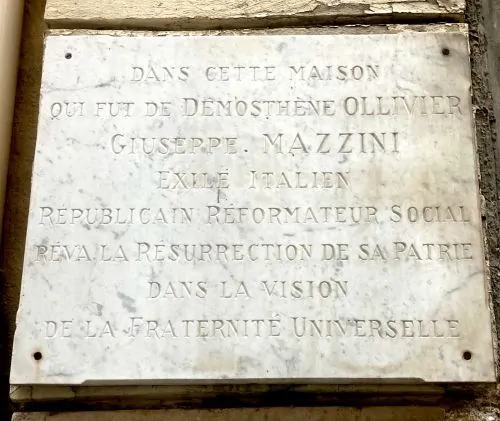
Giuseppe Mazzini was already one of Europe’s most conspicuous revolutionary exiles long before British officials began opening his letters. Born in Genoa in 1805, he entered politics through the Carbonari, was arrested by the Piedmontese authorities in 1830, and emerged from imprisonment convinced that secret conspiratorial methods alone could not create the political transformation he wanted. In Marseille in 1831 he founded Young Italy, an organization committed not merely to removing particular rulers but to creating a united, independent, republican Italian nation through popular action. Mazzini rejected the fragmented political geography of the peninsula as historically obsolete and insisted that Italians constituted a people possessing both the right and the duty to become a nation. Failed insurrectionary schemes during the following years brought arrests and executions among his followers and a death sentence against Mazzini in absentia, while pressure from continental governments repeatedly drove him from one refuge to another. By the time he settled in Britain in 1837, he was neither an obscure expatriate nor simply an intellectual critic of European governments: he was the organizer of a transnational revolutionary movement whose name already carried political danger.
Yet Mazzini’s importance cannot be understood solely through the conspiracies associated with him. His nationalism rested upon a moral and almost religious conception of political obligation in which individuals achieved freedom through duties performed toward family, nation, and humanity. National independence was not, in his thinking, an end in itself. Nations were necessary because distinct peoples could contribute to a wider progress of humanity, and political liberty required citizens educated sufficiently to recognize obligations beyond private interest. Mazzini consequently differed from both conservative nationalists who sought stronger dynastic states and revolutionaries who reduced politics principally to social class or material interest. Republicanism, popular participation, education, association, and national liberation belonged to the same political project. In 1834 he attempted to extend that program beyond Italy through Young Europe, imagining cooperation among national movements rather than an Italy liberated in isolation. Such ideas made him influential well beyond the circle capable of participating in clandestine insurrection. They also explain why his correspondence mattered so greatly: letters were not incidental to Mazzini’s politics but one of the principal instruments through which an exile attempted to sustain a movement dispersed across borders.
London offered Mazzini freedoms that continental governments had repeatedly denied him, although his first years there were marked by loneliness, financial insecurity, and political disappointment. He supported himself partly through journalism and gradually developed relationships with British intellectuals and reformers, most famously Thomas and Jane Carlyle, while remaining connected to Italian and other European exiles. The British capital allowed him to publish, meet supporters, correspond abroad, and cultivate sympathy among people who did not necessarily share his republicanism. Exile, rather than silencing him, eventually gave him access to a political and literary public far larger than the clandestine circles through which Young Italy had first operated.
His London activities also reveal why reducing him to the image of a secret conspirator distorts the person whose mail the government chose to intercept. During the early 1840s Mazzini renewed his effort to organize Italian nationalism from Britain, reviving Young Italy and using the journal Apostolato Popolare to reach a broader audience. He became deeply involved with impoverished Italian migrants in London, particularly the boys who survived through street occupations such as organ grinding and the sale of plaster figures. In 1841 he helped establish a free Italian school where working people and children could receive instruction in reading, writing, arithmetic, geography, and Italian history.
Education had an unmistakably political dimension for Mazzini because he believed that a nation had to be created morally and intellectually before it could securely exist institutionally, but the school was also a concrete response to exploitation and deprivation within London’s Italian community. His appeal increasingly crossed national boundaries as well. British radicals, artisans, reformers, and intellectuals encountered Mazzinian ideas through newspapers, public discussion, personal networks, and political associations, helping to make the Italian national question part of a wider Victorian debate about democracy and European liberty. Mazzini was consequently developing something more durable than a revolutionary command structure: a political constituency capable of surviving the failure of individual uprisings.
All of this made him an intelligible object of government attention without making the methods used against him self-justifying. Mazzini maintained extensive correspondence with activists abroad, encouraged resistance to existing governments, and continued to believe that insurrection could become necessary for national liberation; Austrian and Italian rulers had substantial reasons to seek information about his plans and contacts. British ministers faced a genuine diplomatic problem when foreign governments complained that a revolutionary exile was using the comparative liberty of London to encourage movements directed against them. But Britain had not accepted the political judgments of those governments merely by permitting Mazzini to reside there, and its tradition of sheltering foreign exiles carried meaning precisely because refugees could engage in political activity forbidden at home. The question raised by his surveillance was sharper than it would have been had officials accidentally intercepted an apolitical traveler: Britain had to decide whether the danger Mazzini represented to governments abroad entitled British ministers to penetrate communications entrusted to the British Post Office. His importance made surveillance tempting, but it also made the decision to surveil him a revealing test of where British political liberty ended when foreign security interests began.
Asylum and the Policemen of Europe
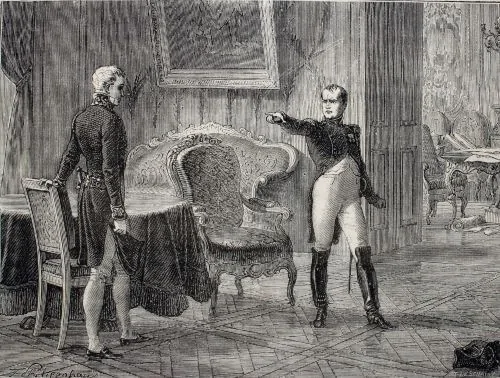
For much of the nineteenth century, Britain acquired a reputation as one of Europe’s safest refuges for political exiles. That reputation was not originally founded upon a clearly codified legal right to asylum comparable to later refugee law. It emerged instead from political practice, the weakness of peacetime restrictions upon the entry and residence of foreigners, and a growing conviction that offering refuge distinguished Britain from governments that imprisoned, censored, expelled, or executed their political opponents. Emergency alien controls introduced during the era of the French Revolution and Napoleonic Wars had largely disappeared by the time Mazzini settled in London, leaving the British executive with comparatively limited powers to exclude or deport foreigners merely because their politics were unwelcome. The result was an unusual European environment in which men condemned as revolutionaries at home could live openly, publish political arguments, organize associations, and communicate with sympathizers abroad. Britain did not necessarily approve of what they advocated, but residence on British soil did not ordinarily require political obedience to the governments from which they had fled.
This distinction mattered particularly after the settlement of 1815, when conservative governments sought to contain the revolutionary and nationalist forces released by the French Revolutionary and Napoleonic eras. Prince Klemens von Metternich’s Austria stood at the center of a diplomatic order deeply suspicious of movements that challenged dynastic legitimacy, while Austrian rule in Lombardy-Venetia made Italian nationalism an immediate security problem for Vienna rather than an abstract ideological dispute. Censorship, political policing, informants, intercepted correspondence, and cooperation among governments became familiar instruments of counterrevolutionary rule across significant portions of continental Europe. Italian patriots faced additional layers of authority because the peninsula remained divided among Austrian possessions, independent dynasties, the Papal States, and the Kingdom of the Two Sicilies. Revolutionary organizations consequently operated across jurisdictions, and exile frequently became part of political activism rather than its termination. A man driven from Piedmont might organize in France, move to Switzerland, publish in Britain, correspond with associates in Italy, and attempt to inspire action across several borders. Governments attempting to suppress such networks naturally sought intelligence beyond their own frontiers. Mazzini’s London appeared to his enemies not as a distant sanctuary disconnected from Italian affairs but as one of the places from which those affairs were being deliberately influenced.
British asylum created an obvious difficulty for diplomacy because tolerance at home could look like hostility abroad. Austrian officials could reasonably complain that revolutionary schemes directed against Austrian territory or allied governments were being planned by men who enjoyed security in London. British ministers, meanwhile, had no interest in allowing foreign revolutionaries to embroil Britain in unnecessary disputes with friendly powers. The government could regard Mazzini’s politics as reckless, destabilizing, or dangerous without accepting Vienna’s view that his political activity ought simply to be suppressed. Britain occupied an uncomfortable middle position: it could refuse to persecute exiles while still wishing to know what some of them were doing.
The British tradition of refuge was also more complicated than the flattering national mythology that later surrounded the phrase “asylum of nations.” Sympathy for foreign revolutionaries varied enormously according to circumstance, nationality, class, religion, and the political character of particular movements. Conservative Britons could fear revolution at home while admiring resistance to despotism abroad, and radicals who celebrated Italian or Polish patriots might condemn revolutionary doctrines they considered socially dangerous. Governments likewise distinguished between permitting political expression and tolerating preparations for violence, although determining where one ended and the other began was notoriously difficult when movements operated through private associations and international correspondence. The British state was not devoid of political surveillance simply because its institutions differed from those of continental monarchies. It watched domestic radicals, Chartists, Irish nationalists, suspected conspirators, and foreign activists when ministers believed public order or foreign relations were at stake. What made the comparison with continental Europe politically potent was not that Britain possessed no secret apparatus, but that British political culture increasingly claimed that such powers were constrained by law, parliamentary responsibility, and habits of government fundamentally different from arbitrary police rule. Critics of secret surveillance could attack it precisely by accusing ministers of importing the methods of governments Britain professed to surpass.
Mazzini’s presence brought those competing principles into direct conflict. To Austrian authorities and other defenders of the European territorial settlement, he was not merely a refugee expressing opinions about his homeland; he was an active organizer encouraging subjects of established governments to overthrow them. To many British sympathizers, the same activities could be understood as the legitimate struggle of an oppressed nationality seeking independence and representative government. The distinction was more than rhetorical because Britain’s treatment of Mazzini helped determine what political refuge actually meant in practice. If an exile could remain physically safe in London while British officials secretly penetrated his correspondence for the benefit of the government he opposed, asylum might protect his body without fully protecting his political activity.
That contradiction became damaging once it appeared that British surveillance could serve interests outside Britain itself. Ministers had legitimate responsibilities for domestic security, and few serious critics insisted that the government could never investigate a genuine conspiracy threatening British lives or institutions. The harder question was whether those extraordinary powers should be used against a resident whose principal enemies were foreign governments and whose revolutionary ambitions were directed primarily beyond British territory. Cooperation with Austria or other continental authorities threatened to collapse the distinction upon which Britain’s reputation for refuge depended: the difference between allowing another government to dislike an exile and helping that government reach him through British institutions. The Post Office scandal would make that distinction painfully concrete because Mazzini’s letters crossed borders while remaining entrusted to a British communications system. Britain had permitted him to live where Austrian police could not arrest him, yet the machinery of the British state could still make his private political communications available to those who wished to defeat his movement. The controversy of 1844 was not simply about whether Britain welcomed refugees. It was about whether asylum remained meaningful when the state offering sanctuary could quietly become an intelligence intermediary for the powers from which those refugees had escaped.
A Revolution in Communication: The Penny Post and the Expectation of Trust
When Mazzini discovered that British officials had been opening his correspondence, the meaning of the Post Office had recently undergone a profound transformation. For generations, the British postal system had been an important instrument of government and commerce, but ordinary correspondence remained burdened by complicated charges that could make sending letters surprisingly expensive. Rates depended heavily upon distance and the number of sheets enclosed, while payment was frequently collected from the recipient rather than the sender. Members of Parliament and certain officials enjoyed privileges of free postage that further emphasized the unequal distribution of access to the system. Families separated by migration, employment, military service, or marriage certainly corresponded before 1840, but the expense could require letters to be treated as occasional expenditures rather than casual extensions of conversation. Reformers increasingly argued that high postal charges restricted communication precisely when expanding literacy, urbanization, commercial development, and improved transportation were creating greater demand for it. Postal reform concerned far more than administrative efficiency. It raised a larger social question about whether correspondence should remain comparatively expensive or become an ordinary facility available across much broader portions of British society.
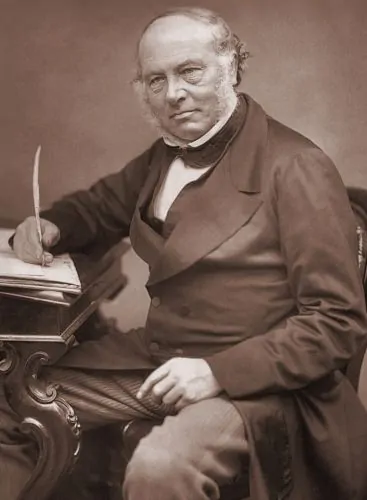
Rowland Hill gave that campaign its most influential program in Post Office Reform: Its Importance and Practicability, first published in 1837. Hill attacked a postal tariff whose complexity he believed imposed heavy costs while encouraging evasion and limiting the volume of legitimate correspondence. His crucial argument was that the expense of carrying an individual letter over distance constituted only a small portion of the Post Office’s total costs; elaborate accounting, collection, and processing requirements contributed substantially to the burden of the existing system. The rational solution was simplification. Rather than calculate postage principally according to the distance traveled and the number of sheets, Hill proposed a uniform low rate based on weight, combined with payment in advance. The most memorable result was the proposal for a penny rate, but the importance of Hill’s scheme lay just as much in making postal transactions predictable. A person contemplating a letter would no longer have to calculate a complicated charge or worry about imposing a substantial expense upon the recipient. Hill also envisioned practical means of demonstrating prepayment, including stamped covers and adhesive labels that could be attached to letters. His proposals attracted opposition from officials who doubted that vastly increased traffic would compensate for the immediate loss of revenue, yet the idea gathered support among commercial organizations, reformers, and members of Parliament who treated cheap postage as a means of enlarging national communication. Parliamentary committees investigated the proposal in 1837–1838, gathering extensive evidence about postal costs, existing abuses, projected revenue, and the likely effects of dramatically cheaper correspondence. What began as an administrative reform proposal was becoming an argument that communication itself could be treated as a form of public infrastructure.
Parliament authorized the decisive change in the Postage Act of 1839. A brief transitional uniform fourpenny rate began in December, followed on January 10, 1840, by the Uniform Penny Post for prepaid inland letters within the prescribed weight limit. Distance within Britain ceased to determine the ordinary charge in the old fashion, making it possible to send a qualifying letter from one part of the country to another for a penny. In May, the introduction of the Penny Black adhesive stamp and the Mulready prepaid stationery gave the new principle an immediately recognizable physical form. The stamp was more than a philatelic novelty: it allowed the sender to demonstrate payment before the letter entered the postal network, shifting an important part of the transaction away from the recipient and simplifying the movement of correspondence through the system.
The consequences rapidly extended beyond the accounting procedures of the General Post Office. Cheap postage lowered one of the barriers that had separated occasional correspondence from habitual correspondence, helping letters become woven more tightly into everyday social life. People who could not afford to write frequently now had greater opportunity to maintain relationships across distance, while businesses gained a cheaper mechanism for orders, invoices, inquiries, and other routine communications. Employers and employees could correspond more easily; migrants could remain in contact with the communities they had left behind; political organizations could circulate information through private networks at far lower cost. The volume of letters rose dramatically after reform, requiring the Post Office itself to expand its administrative capacity to handle the traffic the new system encouraged. The postal network increasingly served not merely as a route along which information traveled but as part of the connective tissue of Victorian society. Its reach also reinforced the practical integration of the United Kingdom by making geographical distance less important to the price of ordinary written communication. A letter might still take longer to reach a remote destination, but the sender no longer faced a steadily rising postal charge merely because the recipient lived farther away. Combined with railway expansion and improvements in mail transportation, cheap postage helped alter expectations about how regularly people separated by distance could remain connected. The revolution was social as much as technological because the Post Office made an existing technology, the written letter, available for vastly more frequent use. Victorians did not need to invent an entirely new form of communication to experience a communications revolution; they needed to make an old form cheaper, faster, more predictable, and sufficiently accessible that people could reorganize their habits around it.
The cultural effects of that change were not uniformly celebrated. Cheap correspondence expanded opportunities for affection and family connection, but contemporaries also recognized that the same network could carry fraud, threats, clandestine courtship, blackmail, political agitation, or unwanted solicitation. The Post Office could not make communication more democratic while guaranteeing that every new use of communication would be respectable. Yet even anxieties about misuse demonstrated how quickly the postal network was becoming embedded in private life. Letters contained information that writers deliberately withheld from neighbors, employers, relatives, political adversaries, and sometimes spouses. The sealed envelope acquired significance not because Victorians imagined correspondence to be metaphysically inviolable, but because effective correspondence depended upon a practical expectation that a message handed to the postal authorities would reach its intended recipient substantially as it had been sent. Routine postal use depended upon forms of trust that legislation did not need to describe explicitly. A sender might know abstractly that letters could be lost, stolen, or legally intercepted in unusual circumstances without behaving as though ordinary correspondence were being routinely read by unknown officials. The effectiveness of the system rested upon the opposite assumption.
That assumption created a tension peculiar to the success of postal reform. The more trustworthy and universal the Post Office appeared, the more correspondence people entrusted to it, and the greater the informational value of access to the network became. Centralization simplified communication for the public while simultaneously concentrating private messages within an institution controlled by the state. Postal reform had increased not only the convenience of correspondence but also the significance of the government’s privileged position inside the communications system. By 1844, opening a man’s mail no longer touched an institution used primarily for expensive or exceptional communication. It intruded upon a network that reformers had only recently encouraged Britons to treat as an ordinary extension of social and economic life.
That development is essential to understanding why the Mazzini revelations struck beyond the immediate circle of Italian revolutionaries and diplomatic officials. Had secret letter-opening been exposed in an era when correspondence remained relatively expensive and the Post Office more distant from daily life, the controversy might still have raised important constitutional questions. After the Penny Post, the potential audience for those questions had dramatically expanded. Millions of postal transactions taught Britons to entrust sealed communications to a national institution whose efficiency depended upon predictable handling and whose reformers had presented cheap correspondence as a public benefit. The same administrative capacity that enabled the Post Office to sort, route, and deliver enormous quantities of private correspondence also allowed selected letters to be identified and diverted when the executive ordered it. Nothing about the Penny Post created the secretary of state’s power to intercept mail; that authority long predated Hill’s reforms. Postal modernization instead changed the social environment in which such a power operated. An old instrument of state secrecy was now embedded inside a rapidly expanding mass communications system. The resulting problem was not simply whether officials had broken a legal promise never to touch private correspondence, for no such absolute promise existed. It was whether citizens could confidently treat a government-operated communications network as a trustworthy intermediary when the government retained secret authority to become an unseen participant in selected exchanges. Mazzini’s opened letters would make that contradiction visible only four years after the Penny Post had encouraged Britons to place more of their personal and political lives into the mail than ever before.
An Old Power Hidden Inside a New Post Office
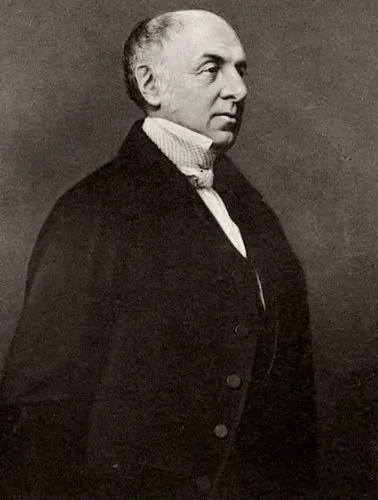
When Parliament began investigating the opening of Mazzini’s letters in 1844, it quickly became apparent that Sir James Graham had not invented a new instrument of surveillance. Government interest in correspondence was almost as old as the centralized British postal system itself, because control over the movement of letters offered rulers an unusual opportunity to observe communications that conspirators and political opponents otherwise conducted beyond official view. The Commonwealth ordinance establishing a Post Office in 1657 explicitly treated organized postal communication as useful for discovering conspiracies and treasonable designs, revealing how closely communications infrastructure and political intelligence could be connected from the beginning. After the Restoration, the statute of 1660 formally established the royal Post Office, while proclamations and administrative arrangements continued to recognize circumstances in which letters could be inspected under executive authority. The precise legal foundations were never as simple as later defenders of interception sometimes suggested, but the practical association between postal administration and intelligence gathering survived changes of dynasty and government. What appeared shocking in 1844 was the persistence of an old governmental capacity inside an institution that the Penny Post had recently transformed into a communications service used on an unprecedented social scale.
A more durable statutory framework emerged during Queen Anne’s reign. The Post Office legislation commonly dated to 1710, which came fully into operation in 1711, reorganized postal administration after the union of England and Scotland and prescribed penalties for postal employees who improperly opened or delayed correspondence. Yet the prohibition contained a critical exception for letters dealt with under an express written warrant from a principal secretary of state. That language did not plainly create the secretary’s authority from nothing; rather, it recognized and regulated an executive practice whose earlier foundations rested upon precedent and royal administration. The distinction would become extremely important in 1844, when critics argued that a statutory exception protecting postal employees from punishment was not necessarily the same thing as an unlimited parliamentary grant of surveillance power. What generations of ministers had treated as settled practice could look far less settled once Parliament examined exactly what the statutes said.
During the eighteenth century, meanwhile, interception developed into an organized administrative activity rather than an occasional act performed in response to a single emergency. A specialized operation within the Post Office became responsible for handling correspondence selected for inspection, while decipherers and government officials could exploit what the intercepted letters revealed. The existence of such machinery became an object of political controversy during investigations of Sir Robert Walpole’s administration in the early 1740s, when parliamentary inquiries exposed a private office engaged in opening and inspecting correspondence. Its activities demonstrated that letter interception was not confined to discovering an imminent act of treason described in a particular piece of intelligence. Postal access could support broader political and diplomatic intelligence by allowing officials to observe patterns of communication, identify associates, copy useful material, and follow correspondence over time. Periods of Jacobite danger, international war, colonial conflict, and revolutionary anxiety gave governments recurring reasons to preserve such capabilities even when their exact scale remained hidden from the public. Diplomatic correspondence also held obvious value because the postal network carried information that foreign representatives assumed was intended for specific recipients rather than British ministers. By the later eighteenth century, the technical tasks required for secret interception (selecting letters, opening seals without obvious damage, copying or deciphering their contents, resealing them, and returning them to the mail) had acquired an institutional history of their own. The Victorian Secret Office was consequently an inheritance from an earlier intelligence state, not an improvised room created to deal with Mazzini.
That inheritance sat uneasily beside another eighteenth-century constitutional development: growing hostility toward general warrants and arbitrary executive searches. The famous struggles associated with John Wilkes during the 1760s challenged the government’s ability to authorize broad searches without sufficiently specific legal justification, and cases such as Entick v. Carrington helped establish powerful principles against executive intrusion unsupported by law. Those decisions did not simply abolish postal interception, which continued under its own statutory and administrative framework, but they provided later critics with a language through which to question sweeping warrants directed at correspondence. By 1844, opponents of postal surveillance could argue that a continuing warrant covering all letters associated with a person resembled precisely the kind of generalized executive authority that earlier constitutional struggles had taught Britons to distrust.
The legal position became still more contentious because Parliament reorganized the Post Office laws shortly before the Penny Post revolution. The Post Office (Offences) Act of 1837 made it a misdemeanor for postal employees improperly to open, detain, or delay letters, but again exempted actions performed in obedience to an express written warrant from a principal secretary of state, or in Ireland from the lord lieutenant. Ministers later treated that proviso as confirming the established authority to intercept correspondence. Critics noticed that the wording differed from the older statute of Anne and disputed what an “express warrant” actually authorized. Lord Campbell, who had been attorney general when the 1837 legislation passed, maintained during the 1844 controversy that Parliament had contemplated the opening of a particular letter believed to contain dangerous material rather than an indefinite authorization to examine everything sent to or from a suspected individual. Government defenders answered that established practice permitted warrants directed against the correspondence of particular persons and that such a power would be nearly useless if a separate ministerial warrant had to identify every individual letter before it entered the Post Office. The disagreement exposed the unusual manner in which surveillance powers can expand through administrative interpretation without an equally visible parliamentary decision to enlarge them. Parliament had consolidated postal law in 1837 without anticipating that seven years later its wording would become the center of a constitutional dispute about secret government.
That history substantially complicates the accusation that Graham had simply violated an unquestioned British tradition of inviolate correspondence. Secretaries of state had authorized the opening of mail under governments of differing political complexions, and the institutional machinery required to carry out those orders had existed in one form or another for generations. Graham could claim continuity with precedent, and defenders of the government repeatedly emphasized that he was exercising a power inherited from his predecessors rather than claiming a novel prerogative. Yet longevity did not by itself establish legitimacy, especially once the practice became publicly visible and Parliament began distinguishing between what governments had habitually done and what legislation clearly authorized them to do.
The transformation of the Post Office after 1840 made that distinction far more consequential because an executive practice inherited from an older and narrower communications regime now operated inside a system increasingly woven into ordinary British life. The Mazzini affair exposed something more unsettling than one home secretary’s questionable judgment: beneath the modern façade of penny stamps, expanding correspondence, and administrative efficiency survived a secret power whose origins reached backward into a political world in which controlling the post had always meant possessing the possibility of reading it.
Behind the Sorting Room: The Secret Machinery of Letter-Opening

The power to intercept correspondence would have been of little intelligence value if exercising it automatically alerted the person being watched. The essential achievement of the Post Office’s clandestine machinery was not simply that officials could obtain a letter, but that they could examine it while preserving the appearance of uninterrupted delivery. Ordinary postal operations provided the necessary cover. Letters already passed through sorting rooms, bags, clerks, messengers, and timed stages of processing, creating points at which selected correspondence could be diverted without the public observing what happened inside the institution. Somewhere within that routine sat what Thomas Slingsby Duncombe publicly called the “secret” or “inner” office, an administrative space separated from ordinary sorting in both function and knowledge. The postal employee handling a letter at one stage did not necessarily know that it would later be withdrawn for inspection, and the sorter receiving it again need not know what had happened while it was absent. Secrecy depended partly upon compartmentalization: the enormous organization surrounding the operation could continue functioning normally while very few people needed to know why particular correspondence had briefly left the ordinary stream.
At the beginning of the formal process stood the secretary of state’s warrant. By the nineteenth century, interception was not supposed to occur merely because a postal clerk considered a letter suspicious; executive authority had to initiate the operation. Government explanations during the controversy revealed that the issuing of warrants itself had acquired bureaucratic safeguards and records. Graham stated in 1845 that regulations dating from 1806 meant that both Home Office undersecretaries and a confidential clerk knew when such warrants were prepared, while original warrants had been preserved as Post Office records since 1822. Once a warrant reached the postal authorities, its practical application posed a different problem from its legal authorization. A continuing warrant directed against an individual required postal workers to recognize correspondence associated with that person among the vast quantity entering the General Post Office and to remove it quickly enough that the resulting delay did not become conspicuous. Duncombe’s description of the inner office suggested that selected letters and, in some circumstances, entire mail bags could be withdrawn from normal handling and carried into the restricted operation. He alleged that bags might remain there for an hour or more before returning to sorters who had no means of determining which letters, if any, had been examined. His more sweeping claims were politically contested and should not all be treated as established fact, but the parliamentary investigations confirmed the underlying reality that an organized mechanism existed for executing secret interception warrants. The system was neither spontaneous nor dependent upon the ingenuity of a single official. A ministerial decision had to be translated into a chain of administrative acts capable of locating the target’s correspondence inside one of the world’s busiest postal establishments.
Opening the letter presented the most delicate physical challenge because a broken seal could reveal the operation immediately. Mazzini later described cuts so fine that they could be difficult to detect without close examination, together with the taking of impressions from seals so that correspondence could be closed again convincingly. He also believed postal markings were manipulated to conceal the additional time consumed by examination, describing the use of a second stamp that obscured the original indication of when the letter had reached the General Post Office. His testimony cannot be treated as a technical manual independently confirming every method he inferred, but the essential requirements are clear from the nature of the operation itself: intercepted correspondence had to be opened, made readable, and restored in a condition unlikely to provoke suspicion. The concealment distinguished British practice from more overt forms of censorship in which authorities openly marked correspondence as examined.
Once opened, a letter had to be converted from a private message into usable intelligence. Duncombe told the Commons that correspondence taken into the inner office was examined and that copies were made according to the importance of its contents, after which information could be communicated beyond the Post Office. Copying mattered because the original letter ordinarily still had to continue toward its intended recipient; retaining it would warn the target and potentially destroy the very correspondence network officials wanted to observe. Transcription or extraction allowed the state to possess the information while leaving the physical communication in circulation. That procedure also multiplied the number of institutions capable of using what had begun as a private letter. Intelligence obtained at the Post Office could move to the Home Office, and material considered relevant to foreign affairs could enter diplomatic channels rather than remaining within postal administration. The machinery involved more than clandestine craftsmanship with wax and paper. It created an information-processing system in which a physical object was identified, temporarily captured, converted into a copy or summary, and then released while its informational content continued separately through government. Duncombe’s allegations concerning the disturbances of 1842 further suggested that personnel familiar with interception techniques could be dispatched beyond London when political conditions demanded it, although his characterization of such operations as effectively unrestricted “roving” surveillance remained part of his attack upon the government rather than a neutral description accepted by ministers. The controversy consequently exposed two distinct questions that critics often fused together: whether an interception apparatus existed and how broadly ministers had actually used it. The first became undeniable. The second was far more difficult to establish precisely because the system had been designed to leave as little evidence as possible in the hands of those subjected to it.
The most revealing feature of the Secret Office was ultimately its ordinariness. Successful surveillance depended less upon theatrical espionage than upon clerks, records, authorization procedures, specialized manual skills, and the ability to exploit an existing communications network without interrupting it visibly. That bureaucratic character helps explain why the Mazzini affair disturbed contemporaries once Duncombe dragged the hidden process into parliamentary debate. A government did not need policemen following every revolutionary through London if the revolutionary voluntarily entrusted his network of contacts to an institution through which his messages already had to pass. The Post Office could become an intelligence collection point precisely because correspondents regarded it as a neutral carrier rather than as another participant in their exchange. Mazzini’s experiments threatened the entire system because they reversed that informational advantage: instead of the state secretly observing him, he began constructing tests that allowed him to observe the state’s interference. The grains, altered seals, suspicious delays, and obscured postal marks mattered because they transformed an invisible administrative procedure into something its target could detect. Once that happened, the machinery behind the sorting room ceased to be merely an intelligence capability and became evidence in a public argument over whether a communications service could command confidence while secretly maintaining the capacity to read what it carried.
The Warrant Against Mazzini
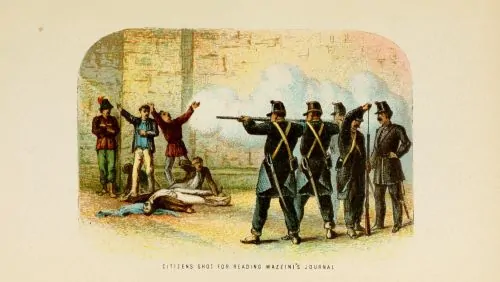
The decision to intercept Mazzini’s correspondence emerged from a web of diplomatic anxiety that connected London directly to the political instability of Italy. Austrian officials regarded Mazzini as a dangerous organizer whose exile had not diminished his capacity to influence events on the peninsula, and Baron Philipp von Neumann, the Austrian ambassador in London, communicated concerns about him to Home Secretary Sir James Graham during the latter part of 1843. The precise chronology of these contacts is not entirely secure: Graham later recalled an interview with Neumann in approximately October, while surviving correspondence suggests a significant written communication in November. That discrepancy matters because critics subsequently accused Graham of acting as the instrument of Austria, whereas Graham insisted that the final decision was his own. He acknowledged receiving information about Mazzini from foreign and diplomatic sources but denied that any foreign minister had ordered or requested the warrant in a manner that dictated his action. The distinction between being alerted by Austria and acting at Austria’s command became central to the government’s defense.
On March 1, 1844, Graham signed the warrant authorizing the interception of Mazzini’s letters. He later explained that by the end of February he had satisfied himself that London had become an important center of revolutionary activity directed toward Italy and that Mazzini stood at the center of that movement. Graham portrayed the matter not as a favor to a continental monarchy but as a threat to European stability that could eventually affect British interests. Lord Aberdeen, the foreign secretary, later emphasized that he had not requested the warrant, although he accepted collective responsibility for its use. The warrant remained in operation until June 3, only shortly before the dispute reached Parliament.
Once the correspondence began to be intercepted, the relationship between the Home Office and Foreign Office became more consequential than the question of who had first suggested surveillance. Graham stated in Parliament that after the first week of March he forwarded to Aberdeen a copy of every intercepted letter received at the Home Office, and he claimed that he did so without reading the copies himself. Aberdeen then determined what use should be made of the intelligence for foreign-policy purposes. His later defense drew a careful distinction between transmitting Mazzini’s actual correspondence and communicating information derived from it. Aberdeen maintained that no foreign agent had been permitted to see the letters, no foreign representative was told that the letters themselves had been intercepted, and names were withheld when disclosure might endanger particular individuals. Nevertheless, he acknowledged that information obtained from the correspondence was communicated to the Austrian government. The British parliamentary inquiry likewise concluded that information deduced from Mazzini’s letters had been supplied to a foreign power. That finding established the most politically damaging fact even while leaving the exact content and consequences of individual communications partly obscured: intelligence extracted secretly from private letters entrusted to the British Post Office had crossed from British domestic administration into international diplomacy.
The government justified that transfer by invoking the possibility that revolutionary activity in the Papal States and elsewhere in Italy might provoke Austrian military intervention and thereby threaten the peace of Europe. British policymakers had long worried that unrest in central Italy could trigger an Austrian advance, widening a local political crisis into a confrontation among the European powers. Graham argued that protecting British interests did not require waiting until a conspiracy threatened London, Manchester, or another British city. If Mazzini’s activities contributed to an international crisis capable of disturbing the European balance, intelligence about those activities could, in Graham’s reasoning, become a legitimate concern of the British government. This was a considerably broader understanding of national security than the defense of domestic tranquillity. It allowed secret powers exercised within Britain to be justified by potential consequences abroad.
That reasoning gave the opposition its strongest line of attack. Duncombe and other critics argued that the relevant distinction was not whether Italian revolution might eventually complicate British diplomacy but whether British institutions should secretly assist governments attempting to suppress political movements among their own subjects. The parliamentary committees tried to soften the implication by stressing that information communicated abroad had not, so far as they could determine, compromised the safety of individuals already within the reach of the foreign government receiving it. Ministers similarly denied that copies of Mazzini’s letters themselves had been handed over or that identifiable correspondents had been deliberately exposed to arrest. Those assurances mattered, and there is no sound reason to discard them merely because opponents distrusted the ministry. They did not erase the underlying chain of transmission. The Post Office intercepted correspondence under Graham’s warrant; the Home Office obtained copies; Aberdeen received them; and selected intelligence reached Austria. The controversy did not depend upon proving that British officials had simply handed Mazzini’s private letters to Austrian policemen. What disturbed critics was that the British government had converted information extracted secretly from a refugee’s correspondence into something useful to the political interests of a continental power.
The warrant against Mazzini consequently reveals a more complicated relationship between surveillance and foreign policy than either the government’s defenders or its fiercest opponents preferred to admit. Graham was not merely an obedient agent of Vienna, and Aberdeen did not originate the interception order; both men could plausibly argue that preventing a wider European crisis served British interests. The information chain they created ended with intelligence being communicated to Austria about a revolutionary movement whose principal objectives lay outside Britain. That made the case difficult to contain within the familiar language of domestic public safety. Britain had not expelled Mazzini, forbidden him to advocate Italian revolution, or prosecuted him for his politics, yet officials had quietly penetrated the communications through which those politics operated. The warrant occupied the uncomfortable space between British asylum and continental counterrevolution, demonstrating how a state could preserve the outward forms of political refuge while secretly assisting the intelligence needs of governments threatened by the refugee’s activities.
How Mazzini Caught the Post Office
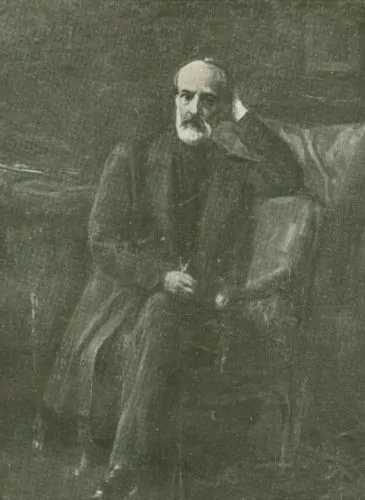
Mazzini did not begin with proof that the British government was reading his letters. He began with irregularities that might individually have seemed trivial: correspondence reached him later than expected, postal markings appeared unusual, and letters addressed to him behaved differently from letters moving through the same system to other recipients. Because London correspondence passed through the General Post Office and received time stamps associated with its arrival and processing, delays could leave traces visible on the envelope itself. Mazzini noticed what appeared to be double stamping, with a later mark obscuring an earlier one, and interpreted the alteration as an attempt to disguise the additional time his correspondence had spent inside the Post Office. An exile accustomed to continental political policing had obvious reasons to be suspicious, but suspicion alone could not distinguish deliberate interception from inefficient handling. He began converting observations about postal irregularity into controlled tests.
One important feature of those tests was comparison. According to later accounts associated with Mazzini and his friend Anthony Panizzi, letters were posted under circumstances in which their dispatch could be witnessed, some directed to Mazzini and others to different recipients. The letters sent elsewhere arrived in the ordinary way, while those bearing Mazzini’s name were delayed. He also experimented with sealing letters in a manner that would allow him to recognize whether the position of the wax impression had changed. Such methods were elementary, but they addressed precisely the difficulty created by clandestine interception: if officials intended to conceal their actions, Mazzini needed evidence that did not depend upon catching anyone physically opening an envelope. Panizzi reportedly initially discouraged his suspicion that the British government would engage in conduct so closely associated with continental political policing. That skepticism was itself revealing, for the effectiveness of covert postal surveillance depended partly upon the belief that such conduct was unlikely to occur in Britain. Mazzini nevertheless persisted. His approach gradually became less a search for accidental signs of tampering than a deliberate attempt to make tampering generate its own evidence.
The most memorable experiments involved placing tiny loose objects inside letters. Mazzini later described using grains of sand, poppy seeds, or fine hairs and folding the correspondence so that these objects could not escape unless the letter was opened. Material placed in letters sent to other people remained where it had been put, while items enclosed in letters directed to Mazzini disappeared. The very inconsequence of the objects made them effective: postal officials interested in the written contents had no reason to preserve something that appeared to be meaningless debris.
Mazzini also scrutinized the physical envelopes for evidence of skilled interference. In a letter communicated to Parliament through Duncombe, he claimed that impressions had been taken from seals and that some openings had been executed with cuts so fine that following them nearly required magnification. He further alleged that a second postal stamp was habitually applied in a manner that altered or obscured the mark showing when a letter had reached the General Post Office, thereby concealing the delay produced by interception. By his calculation, some sixty or seventy letters from perhaps twenty-five or thirty correspondents had been opened after the warrant came into operation. Those numbers were Mazzini’s estimate rather than an independently compiled Post Office inventory, but they convey his belief that he was confronting continuing surveillance rather than a single experimental opening. The concealment techniques also transformed the character of the grievance. An openly detained letter would have announced that the government had intervened, whereas careful resealing and disguised delay were intended to preserve an illusion that sender and recipient remained the only participants in the exchange. It was that deception, as much as the act of reading, that furnished critics with some of their strongest language about governmental dishonor.
Once Mazzini and his associates suspected systematic interception, some correspondence appears to have been written deliberately as bait. Duncombe later told the Commons that a number of letters had been composed as traps, allowing the writers to observe what happened to messages whose contents or physical characteristics they already knew. A letter from the Chartist leader William Lovett to Mazzini became one of the examples Duncombe invoked, arguing that its postal stamps provided unmistakable evidence that it had been intercepted. He also described a deliberately planted reference to the expected visit of Emperor Nicholas I of Russia, although the relationship between that passage and subsequent public reports about the emperor’s movements was suggestive rather than conclusive proof that officials had acted upon the planted information. Such experiments show that Mazzini’s circle was testing more than whether envelopes had been physically opened. They were attempting to discover whether information inserted into correspondence produced effects outside the supposedly private exchange. That was a much more ambitious form of detection because it treated government behavior as another source of evidence.
Private experiments became politically consequential when Thomas Slingsby Duncombe gave them a parliamentary forum. On June 14, 1844, the radical member for Finsbury presented a petition from Mazzini, William James Linton, Serafino Calderara, and William Lovett, associated with the same London address, alleging that their letters had been delayed, their seals broken, and their contents examined by Post Office authorities. Graham acknowledged that he had issued a warrant affecting one of the four petitioners but refused to identify which one, invoking the secrecy necessary to the exercise of his office. Duncombe soon stated openly that Mazzini was the target and returned to the House with additional allegations and evidence. The surveillance operation had consequently crossed a threshold from something known only to those conducting it and suspected by those subjected to it into an accusation that ministers had to answer before Parliament.
Mazzini’s achievement was less that he devised technologically sophisticated methods than that he exploited a basic weakness inherent in concealed surveillance: secrecy can fail when intervention changes the thing being observed. A letter could be resealed, but opening it might displace a hair. A delay could be hidden, but an altered postmark might reveal the attempt to hide it. A government could read correspondence without announcing itself, but a recipient who repeatedly compared controlled letters could begin to recognize a pattern. Mazzini effectively turned the postal network back upon those using it to observe him, creating what would now be recognizable as a form of counter-surveillance. His tests did not by themselves reveal who had ordered the openings, what information had been copied, or where that information had gone. They did something more fundamental first: they supplied enough physical and circumstantial evidence to make official denial increasingly difficult. Once Duncombe carried that evidence into Parliament, the burden of the controversy changed. The question was no longer whether a notoriously suspicious revolutionary merely imagined himself watched, but whether the British government could justify a secret practice whose intended invisibility its target had successfully defeated. Grains of sand and displaced seals mattered because they gave material form to something designed to leave none. Mazzini had forced the secret state to cast a shadow.
Thomas Slingsby Duncombe Takes the Case to Parliament

Giuseppe Mazzini could demonstrate that something unusual was happening to his correspondence, but transforming that evidence into a political scandal required somebody with access to Parliament and little reluctance to antagonize ministers. Thomas Slingsby Duncombe, radical member for Finsbury, was unusually well suited to the role. He had already established himself as an advocate for causes that more conventional parliamentarians often preferred to keep at arm’s length, including Chartist grievances and complaints against administrative abuses. Duncombe possessed neither Mazzini’s revolutionary philosophy nor his international ambitions; his importance lay in his willingness to treat the government’s conduct toward an unpopular foreign radical as a matter involving British constitutional principles. On June 14, 1844, he presented a petition from William James Linton, Mazzini, and two other residents of 47 Devonshire Street, Queen Square, alleging that their letters had been delayed, their seals broken, and their correspondence secretly read by Post Office authorities. The petition deliberately framed the practice as the introduction into Britain of the “spy system” associated with foreign states, giving Duncombe a language that connected an individual grievance to a much larger argument about national political character.
Sir James Graham’s initial answer supplied Duncombe with almost everything necessary to keep the controversy alive. The home secretary denied that warrants had been issued against three of the four petitioners but admitted that, on his own responsibility, he had authorized the interception of the correspondence of one of them. Graham refused to identify that person, explain his reasons, disclose how long the warrant had operated, or provide further details that might reveal why the secret power had been used. He defended his silence by invoking public safety and the responsibility Parliament had placed in ministers who necessarily possessed information that could not always be disclosed. Duncombe immediately challenged the logic of that position. Parliamentary responsibility meant little, he argued, if a minister could justify an intrusive power by declaring himself responsible and then refuse to explain how he had exercised it. Although Graham stressed that the warrant was no longer in force, Duncombe insisted that termination did not erase the grievance or prevent another warrant from being issued. Procedural objections initially threatened to prevent immediate discussion, but Duncombe maneuvered around them by moving the adjournment of the House and continued his attack. He soon identified Mazzini as the person whose correspondence had been targeted and demanded production of the warrant. The confrontation established a pattern that would recur throughout the controversy: Graham appealed to necessary secrecy, while Duncombe argued that secrecy could not become a device for insulating executive power from parliamentary examination.
Duncombe returned to the subject on June 24 with a second petition, this time from Charles Stolzman, a Polish exile who likewise complained that his correspondence had been secretly opened. He expanded the charge far beyond the circumstances of a single Italian revolutionary, alleging that postal interception had been employed more extensively and demanding an inquiry into the warrants, their legal form, and the manner in which they were executed. Duncombe conceded that exceptional cases involving domestic sedition or fugitives from justice might conceivably justify government examination of letters, which made his challenge more difficult to dismiss as absolutist hostility to intelligence gathering. His argument was instead that extraordinary authority had either exceeded its legal limits or been used for purposes Parliament had never intended. The question was becoming not whether government should possess any secret power, but how Parliament could know when such a power had been abused.
By early July, the political pressure had become strong enough that the government could no longer rely upon Graham’s original refusal to explain himself. On July 2, Duncombe pressed for an inquiry into what he described as the secret or inner office of the Post Office and broadened his allegations further, charging that foreign ministers’ correspondence had been opened, that surveillance had been used during disturbances in the manufacturing districts, and that numerous foreigners had been subjected to interception. Some of these charges went well beyond what had yet been proved, and Duncombe’s rhetoric sometimes outran the available evidence. Nevertheless, the accumulated controversy had shaken public confidence sufficiently that Graham now accepted the necessity of parliamentary investigation. The government proposed a Committee of Secrecy empowered to examine the law governing interception and the manner in which the power had been exercised, insisting that officials could disclose sensitive information fully only if their evidence remained confidential. Graham deliberately proposed a committee containing a majority of members generally opposed to the government, presenting its composition as evidence of impartiality, but he excluded Duncombe himself on the ground that the accuser should no more sit in judgment than the accused. That exclusion became another controversy. Duncombe believed that without his participation the investigators would fail to pursue witnesses and operational details he considered essential, while supporters of the committee maintained that he could communicate his evidence without becoming a member. On July 18 he unsuccessfully sought permission to attend, produce witnesses, and examine them himself, complaining that the committee was merely skimming the surface of a system whose workings had to be followed from ordinary postal employees through the people who actually opened and resealed letters. The government had conceded investigation, but it had done so in a form that reproduced the very problem at the heart of the affair: the public was being asked to trust a secret inquiry to determine whether government secrecy had been abused.
Duncombe’s parliamentary campaign mattered because it prevented the Mazzini affair from remaining a dispute between an exile and the Home Office. By repeatedly returning to the subject, presenting additional petitions, demanding documents, naming practices, and challenging ministerial evasions, he forced the government to acknowledge not merely that one warrant had existed but that Britain possessed an organized system for executing such warrants. His rhetoric also widened the constituency that might care about the issue. A commercial correspondent need not sympathize with Young Italy to wonder whether business secrets could be read; a political opponent of Mazzini could still object to British institutions serving foreign governments; and a defender of intelligence powers could nevertheless question whether those powers were sufficiently supervised. Duncombe understood that the most politically effective argument was not that Mazzini should be immune from scrutiny because he was virtuous, but that secret executive powers had implications for people who had nothing whatever to do with Italian revolution. The controversy became an argument about ministerial responsibility itself: Parliament had granted or recognized powers that operated invisibly, yet meaningful responsibility required some mechanism by which their use could later be examined. Duncombe did not resolve that contradiction, and several of his broader allegations remained disputed. What he accomplished was more fundamental. He took evidence produced by a man watching his own mail and compelled the British legislature to ask what exactly the state had been doing behind the doors of its Post Office.
“By What Right?”: Executive Discretion and the Constitution
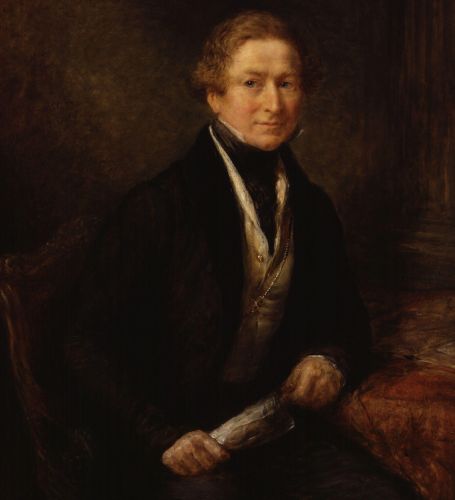
Once Graham admitted that Mazzini’s correspondence had been intercepted under a secretary of state’s warrant, the controversy ceased to turn principally upon whether the letters had been opened. The harder question was expressed implicitly in almost every subsequent parliamentary exchange: by what right could a minister order such an intrusion? Government defenders possessed an apparently formidable answer. Parliamentary legislation had recognized secretarial warrants for generations, the Post Office Act of 1837 expressly exempted letters opened or detained in obedience to such warrants from the criminal prohibition imposed upon postal employees, and successive administrations had exercised the authority. Graham could present himself not as a minister inventing an extraordinary power for Mazzini but as the temporary custodian of a long-established executive instrument. Yet critics immediately exposed a constitutional weakness in that defense. A practice could be old without being unlimited, and the fact that Parliament had acknowledged the existence of a warrant did not necessarily establish everything ministers claimed a warrant could authorize.
The wording of the 1837 legislation became the center of an unexpectedly sophisticated legal dispute. Section 25 made it a misdemeanor for a Post Office employee contrary to duty to open, detain, or delay a post letter, but exempted actions performed in obedience to an “express warrant in writing” under the hand of a principal secretary of state in Great Britain. Lord Campbell, who had been attorney general when the legislation was enacted, argued that this exception had to be interpreted strictly. In his view, the common law itself gave a secretary of state no general authority to open correspondence, and the statute did not confer a sweeping new surveillance power merely because it protected postal officials obeying a lawful warrant. More provocatively, Campbell contended that the statutory language required an express warrant for each particular letter rather than a standing authorization to intercept everything sent to or from a named person. A warrant against “all letters” connected with Mazzini could resemble a general warrant rather than the specific authorization Campbell believed Parliament had contemplated. Other eminent lawyers rejected this construction as impractical. Lord Brougham pointed out that a secretary of state could scarcely describe in advance letters that had not yet been written or received, while Lord Chancellor Lyndhurst maintained that a warrant directed against the correspondence of a named individual could satisfy the requirement that the authorization be express. The disagreement was striking because it was not merely opposition politicians disputing ministerial conduct. Some of the country’s highest legal authorities were publicly divided over what the governing statute actually permitted.
Behind that disagreement stood the eighteenth-century struggle over general warrants. During the Wilkes controversies of the 1760s, ministers had used broadly framed executive warrants to arrest suspected authors and seize papers associated with allegedly seditious publications. In Wilkes v. Wood and particularly Entick v. Carrington, the courts rejected attempts to justify sweeping intrusions into private papers merely by invoking secretarial authority and longstanding administrative usage. Lord Camden’s reasoning in Entick supplied later generations with a potent constitutional principle: executive necessity could not manufacture a power for which lawful authority could not be shown. The Mazzini controversy did not reproduce those cases exactly, because postal interception rested upon specific legislation and administrative precedents absent from the searches condemned in Entick. Nevertheless, the intellectual inheritance mattered. By 1844, the phrase “general warrant” carried associations with arbitrary executive government that made indefinite authority over a person’s correspondence politically combustible.
The dispute also exposed a deeper ambiguity in the British constitution concerning ministerial discretion. Graham argued that interception could be useful only if the executive retained substantial freedom to determine when public interests required it. Conspiracies rarely announced themselves in advance with evidence sufficient for judicial proceedings, and surveillance intended to discover dangerous plans would be defeated if ministers had to identify every future letter individually or explain publicly why they suspected its sender. The home secretary defended discretion together with responsibility: Parliament entrusted the power to a senior minister, and that minister remained politically answerable for its abuse. This was a recognizable principle of nineteenth-century responsible government, but Mazzini’s case revealed its circular quality when applied to secret intelligence. Parliament could ask whether Graham had abused his authority, yet Graham could answer that the information necessary to judge his conduct was itself too sensitive to disclose. Sir Robert Peel defended the eventual use of a secret committee on precisely those grounds, arguing that ministers could explain confidential motives fully only to investigators bound not to reveal the underlying intelligence. The procedure offered a form of oversight, but not one easily visible to the public whose confidence had been shaken. Parliamentary responsibility depended upon legislators accepting that secrecy sometimes prevented the very disclosure through which responsibility would ordinarily be demonstrated.
There was an additional constitutional distinction between the existence of the power and the purposes for which it might legitimately be exercised. Even some parliamentarians who accepted the legality of postal warrants described the authority as odious and insisted that it should be confined to exceptional circumstances. Treason, murder, serious crime, threats against the sovereign, and immediate dangers to public safety furnished relatively strong examples. Mazzini presented a harder case because he had not been accused of plotting against the British state. Lord Campbell argued that such a power should not be employed to satisfy the curiosity or hostility of foreign governments but only when British safety or honor genuinely required intervention. Lord Denman similarly questioned whether older statutory references to detecting treasonable correspondence could justify opening letters for purposes connected with foreign powers. The argument moved beyond formal legality. A warrant might satisfy an administrative tradition and still be condemned as an improper use of a power intended for circumstances more closely connected to British security.
The constitutional significance of the Mazzini affair consequently lies in the fact that no single principle resolved it. Britain possessed statutory language recognizing secretarial warrants, extensive precedent for interception, and plausible reasons for preserving a covert intelligence capability. It also possessed a constitutional culture increasingly suspicious of generalized searches, protective of private papers, and committed in theory to ministerial accountability before Parliament. Graham’s opponents could not simply prove that every interception warrant was illegal, while Graham’s defenders could not convert centuries of practice into an unlimited license whose legitimacy was beyond question. The secret committees appointed in 1844 investigated both the history of the power and the manner of its exercise, but their existence underscored the dilemma rather than eliminating it: secret government was being subjected to secret scrutiny so that Parliament could decide whether secrecy had been abused. Mazzini’s letters exposed the gap between legality and constitutional legitimacy. The most difficult question was not whether ministers possessed some authority to intercept correspondence, but how a political system founded upon accountable government could control a power whose defenders insisted that effective use required concealment from the target, the public, and often Parliament itself. The question “by what right?” had two answers. One concerned statute and precedent; the other concerned whether discretionary executive power remained compatible with British liberty when those subjected to it could neither see the evidence against them nor know that the power had been used.
“The Spy System of Foreign States”: When the Scandal Escaped Westminster
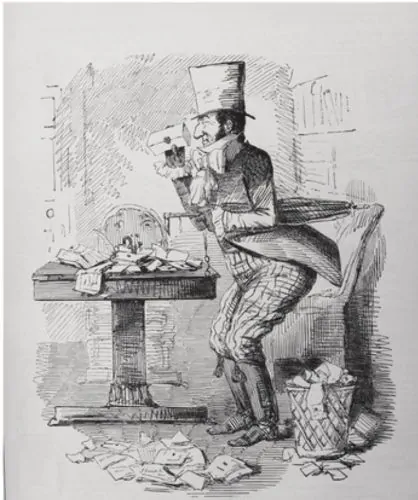
The petition that Duncombe presented on June 14, 1844, supplied opponents of postal interception with language far more politically powerful than a technical dispute over warrants. Mazzini and his fellow petitioners denounced the practice as introducing into Britain the “spy system of foreign states,” describing it as repugnant to the British constitution and destructive of the public confidence essential to a commercial country. The phrase drew upon a deeply rooted political contrast. Britons across a wide ideological range could disagree about parliamentary reform, democracy, or the legitimacy of revolution while still imagining their political system as fundamentally different from continental regimes associated with censorship and secret police. Austria offered an convenient symbol because Metternich’s government had long represented counterrevolutionary repression in British liberal and radical discourse. The accusation against Graham did more than allege that he had invaded Mazzini’s privacy. It suggested that a British home secretary had allowed methods identified with continental despotism to penetrate one of the institutions upon which ordinary Britons increasingly depended. Once the controversy acquired that frame, the personal character of Mazzini could no longer contain it.
The press helped make that transformation possible. The Times treated Mazzini’s merits or faults as secondary to the principle involved, arguing that even a contemptible man would not thereby provide sufficient justification for secretly opening his correspondence. Thomas Carlyle then intervened publicly to defend Mazzini’s character, describing from personal acquaintance a man of exceptional integrity while acknowledging his own reservations about Mazzini’s practical political judgment. Carlyle’s intervention was effective because he did not need to embrace Young Italy in order to condemn ordinary postal interception as alien to British political standards. The controversy consequently produced an alliance of argument rather than ideology: people could reject Mazzini’s revolutionary program while insisting that Britain should not become the clandestine postal auxiliary of the governments he opposed.
Satire carried the scandal into an even broader register. Punch, already hostile to Graham, discovered almost inexhaustible possibilities in a home secretary whose official duties could be represented as peeping between the folds of other people’s letters. John Leech’s “Paul Pry at the Post Office” turned the minister into a comic embodiment of institutional curiosity, while Punch repeatedly played upon Graham’s relationship with seals, secrecy, private correspondence, and foreign rulers. The journal’s “Anti-Graham Envelope,” issued in July, transformed political criticism into an object that could itself travel through the mail. Designed by Leech and engraved by W. J. Linton, one of the men involved in the original complaint, the envelope parodied the familiar visual culture of postal reform while making Graham’s surveillance reputation literally inseparable from correspondence. “Grahaming” or “Grahamizing” letters became a recognizable joke, evidence that an administrative practice previously unknown to most people had acquired a popular vocabulary. Charles Dickens joined the mockery when he wrote on an envelope that if Sir James Graham should open it, he need not trouble himself to seal it again. Humor accomplished something parliamentary debate alone could not easily do. It allowed anyone who used the Post Office to imagine the home secretary hovering over his or her own sealed correspondence, regardless of whether that person knew anything about Italian nationalism. Graham could answer legal arguments with statutes and precedent; ridicule was more difficult to contain because it converted the claim of necessary secrecy into evidence that the government had something embarrassing to hide.
The scandal also escaped Westminster through more serious forms of political print. Radical newspapers connected Mazzini’s complaint with existing suspicions of police surveillance and executive hostility toward Chartism, while pamphleteers and reviewers treated letter-opening as evidence of a wider problem in British political ethics. The Westminster Review devoted substantial attention to the controversy in “Mazzini and the Ethics of Politicians,” presenting the affair as a moral test of ministerial conduct rather than simply an administrative dispute. Reprinted in pamphlet form, the argument could circulate beyond the original periodical readership and became intertwined with accounts of Italian repression and the fate of the Bandiera brothers. Mazzini himself benefited politically from the publicity in ways Graham could hardly have intended. An operation designed to obtain intelligence about an exile instead helped introduce that exile, his cause, and his critique of continental government to a broader British public.
The popular reaction should not be exaggerated into evidence that Britain had suddenly embraced an absolute doctrine of communications privacy. Many contemporaries accepted that the government might properly intercept correspondence in cases of treason, serious crime, or exceptional danger, and even some of Graham’s critics left room for surveillance in circumstances of genuine necessity. What made the Mazzini case politically corrosive was the combination of concealment and foreign involvement. Britons who might tolerate the secret opening of a letter to prevent an attack upon the sovereign could reasonably feel differently about interception intended to frustrate revolutionary activity in Italy and the communication of resulting intelligence to Austria. The rhetoric of a foreign “spy system” worked because it placed the government against its own national mythology: Britain claimed constitutional liberty while Austria represented political policing, yet British officials had secretly obtained information that Austrian authorities wanted. Satire sharpened the contradiction, journalism carried it beyond Parliament, and Mazzini’s British defenders separated opposition to surveillance from endorsement of revolution. By the time the secret committees examined the affair, the government was no longer defending merely an obscure statutory authority. It was defending the compatibility of clandestine surveillance with Britain’s understanding of itself. The most enduring damage of 1844 came not from the revelation that governments sometimes needed secrets, which few informed observers could seriously doubt, but from the discovery that the boundary Britons imagined between their own constitutional state and the surveillance practices of continental Europe was less secure than they had believed.
The Bandiera Brothers: Did British Espionage Help Send Men to Their Deaths?
No episode gave the Mazzini postal scandal greater moral force than the fate of Attilio and Emilio Bandiera. Sons of an admiral in Austrian service and themselves officers in the Austrian navy, the Venetian brothers embraced Italian nationalism and became associated with the Mazzinian revolutionary movement. By 1844 they were living in exile on Corfu, then under British protection as part of the United States of the Ionian Islands, and contemplating an armed expedition to southern Italy. They believed that a sufficiently daring revolutionary initiative might ignite a wider national uprising against existing governments. Mazzini shared their commitment to Italian liberation but did not simply direct the enterprise that followed; surviving accounts indicate that he and other activists attempted to discourage an expedition they regarded as premature and badly prepared. The brothers nevertheless became entangled in precisely the correspondence network that the British government was secretly penetrating from London.
Reports reaching Corfu convinced the Bandieras that Calabria was ripe for revolt, although the political reality was considerably less promising. A disturbance at Cosenza in March 1844 had already been suppressed, and expectations of a large insurgent force waiting to be led were badly exaggerated. During the night of June 12–13, Attilio and Emilio left Corfu with a small company of companions, ignoring warnings against the venture. They landed near the mouth of the Neto River on June 16 and moved inland toward Cosenza under the assumption that their arrival could stimulate an insurrection. Instead they encountered little popular support and discovered that the rebellion upon which their expectations depended did not exist. Their situation deteriorated further when Pietro Boccheciampe, one of the expedition’s own participants, abandoned the group and informed local authorities. Bourbon forces and armed local men closed upon the revolutionaries near San Giovanni in Fiore, where a brief engagement ended with deaths and the capture of most of the expedition. The surviving prisoners were taken to Cosenza and tried before a military commission. On July 25, Attilio and Emilio Bandiera and seven of their companions were executed by firing squad at the Vallone di Rovito, transforming a militarily disastrous expedition into one of the celebrated martyr stories of the Risorgimento.
The chronological proximity between those deaths and the interception of Mazzini’s correspondence made suspicion almost inevitable. Graham’s warrant had operated from March 1 until June 3, precisely while revolutionary schemes involving Italy were being discussed through networks reaching London, Corfu, and the peninsula. British ministers subsequently acknowledged that information deduced from Mazzini’s intercepted letters had been transmitted through official channels to Austria. The disturbing possibility was straightforward: if those letters contained information about impending revolutionary movements, had British surveillance given continental authorities advance knowledge that helped them destroy the Bandiera expedition?
Duncombe turned that possibility into a devastating accusation when he reopened the affair in Parliament in February 1845. He reconstructed a narrative in which intelligence obtained from Mazzini had warned the Austrian government about revolutionary preparations, after which agents and officials associated with continental governments had been able to anticipate the movements of Italian conspirators. He went still further, alleging that the Bandieras had been deceived by spies who encouraged them to believe that Calabria awaited leaders and helped lure them toward destruction. The emotional power of the charge was enormous because it transformed an argument over secret warrants into a question of blood. If British officials had provided intelligence that enabled hostile governments to identify, entrap, or capture the revolutionaries, Graham and Aberdeen could no longer defend postal interception as a harmless precaution undertaken to preserve European peace. They would have assisted governments capable of turning information derived from British mail surveillance into arrests and executions. Duncombe’s account also exploited an undeniable sequence of events: Mazzini’s correspondence had been opened, information had been transmitted abroad, revolutionary activity was under discussion, and men connected with the same political world were soon captured and shot. By April 1845 opponents of the government were openly juxtaposing the interception of Italian correspondence with subsequent political executions and asking whether British ministers could truly know that supposedly anonymous intelligence had not allowed continental police to identify individuals. Even information stripped of names might become dangerous when it disclosed a place, date, intended movement, or conspiratorial plan to officials already possessing other intelligence. The argument anticipated a recurring problem in intelligence history: information harmless in isolation can become identifying when combined with knowledge already held by another government.
Yet the case that British interception caused the Bandieras’ destruction is substantially weaker than the case that British intelligence was transmitted abroad. Independent channels had already exposed the expedition. Before the revolutionaries departed Corfu, Domenico De Nobili had reportedly disclosed their plans to Austrian and Neapolitan representatives, while Boccheciampe’s betrayal after the landing gave Bourbon authorities direct information from inside the group itself. The brothers also proceeded despite warnings from Mazzini and Nicola Fabrizi, entered Calabria after the earlier rising had collapsed, and discovered no mass movement waiting to support them. British ministers emphatically denied that information derived from Mazzini’s opened letters had been used to betray the expedition, and parliamentary debate produced no documentary proof tracing a particular intercepted communication from the London Post Office to the Bourbon forces that captured the men. Indeed, the timing complicates any simple accusation: Graham’s warrant ceased on June 3, more than a week before the Bandieras sailed from Corfu, although earlier correspondence could still have supplied intelligence about broader revolutionary intentions. The existence of multiple independent leaks means that even evidence showing British transmission of relevant information would not automatically establish that it was operationally decisive.
The fairest historical judgment separates what can be demonstrated from what remains plausible but unproved. British officials intercepted Mazzini’s correspondence, information extracted from that correspondence reached Austria, and the material concerned revolutionary agitation in a political environment in which discovery could carry lethal consequences. Those facts were serious enough without claiming that Graham personally furnished the intelligence that placed Bourbon troops in the Bandieras’ path. The brothers’ expedition was compromised through other channels, badly conceived, undertaken against advice, and vulnerable to betrayal from within, so a direct causal chain from the London Post Office to the firing squad at Cosenza cannot securely be established. Yet the government’s inability to disclose fully what it had transmitted was itself one of the political costs of secret intelligence. Once ministers secretly gave a repressive foreign power information drawn from private correspondence, they made it difficult for the public to know where British responsibility ended when people connected to that correspondence were arrested or killed. The Bandiera controversy sharpened the central problem of the Mazzini affair even if it cannot sustain its most dramatic accusation: information shared in secrecy acquires consequences that the government collecting it may neither control nor later be able convincingly to disown.
Parliament Investigates the Secret State
By the beginning of July 1844, Parliament could no longer treat postal interception as a dispute that Sir James Graham might settle merely by invoking ministerial responsibility. Duncombe’s repeated accusations, the petitions from Mazzini and others, and the widening public controversy had raised questions that extended backward through the history of the Post Office and outward into the machinery of the Home and Foreign Offices. On July 2, Sir Robert Peel proposed that the Commons appoint a Committee of Secrecy to examine “the state of the law” concerning the detention and opening of letters and the mode in which the authority had been exercised. Duncombe wanted the inquiry explicitly expanded to encompass the circumstances and extent of interception, particularly his allegation that foreign exiles had been watched at the instigation of foreign governments. Peel maintained that the proposed wording was broad enough to permit the committee to investigate whatever was necessary. Two days later the House of Lords established its own secret committee, creating parallel parliamentary inquiries into a governmental practice whose effectiveness had depended upon remaining largely invisible even to Parliament.
The choice of secrecy solved one problem by creating another. Ministers argued that an open committee could never discover the truth because former and serving officials would be unable to discuss intelligence operations, diplomatic communications, and particular warrants before the public. A secret committee, by contrast, could question ministers and officials under conditions that permitted unusually candid disclosure. The Commons committee consequently heard from an extraordinary concentration of men familiar with the machinery of executive government. Its report stated that, with few exceptions, it had examined every living person who had served as home or foreign secretary since 1822, along with two former lords lieutenant of Ireland and officials who had occupied confidential posts under them. The postmaster general, senior Post Office personnel, and confidential officers from the Home and Foreign Offices were also examined. Committee members could inspect warrants and hear explanations of the reasons for individual interceptions that ministers refused to provide in open debate. But the public could not hear those explanations, and neither could most members of Parliament. Duncombe himself was excluded from membership, largely because ministers and their supporters argued that the principal accuser should not sit as one of the judges of the charges he had brought. He protested that exclusion vigorously and sought permission on July 18 to appear before the committee with witnesses and to participate more directly in their examination. The request was rejected. Parliament had created genuine oversight, but it had done so by constructing another protected chamber of secrecy between the intelligence system and the public demanding to know how that system worked.
The investigation nevertheless disclosed far more about the history of postal interception than the government had probably expected when the controversy began. The Commons committee traced the connection between postal administration and political intelligence far behind Graham, examined statutes and precedents, and reviewed surviving warrants issued by successive administrations. Its statistical findings undermined the claim that interception was an eccentric innovation of the Peel ministry: during the nineteenth century secretaries of state had issued an average of only a little more than eight such warrants annually, affecting the correspondence of roughly sixteen persons in an average year. Numbers rose during moments of internal disorder, notably around the Newport Rising of 1839 and the disturbances of 1842, while other warrants concerned ordinary crimes such as murder, fraud, and theft. Yet the apparent modesty of the warrant totals could not reveal the actual volume of surveillance, because the Post Office had kept no record of how many individual letters were opened under each continuing authorization.
The committees also discovered how difficult it was to separate an inquiry into institutional practice from judgment upon Graham personally. Warrants had been preserved at the Post Office since 1822, allowing investigators to compare his conduct with that of earlier secretaries of state, while Home Office procedures dating from 1806 ensured that a warrant could not ordinarily be generated by a secretary acting entirely alone and without administrative witnesses. The Commons report even identified what it considered an improvement under Graham: warrants issued since September 1841 had remained in force for an average period not exceeding about forty days, with some lasting only three or four days, whereas earlier practice could be less restrained. Such findings strengthened the government’s defense that Graham had operated an inherited system rather than revived an abandoned abuse. But they did not answer the question that interested the public most. Mazzini had asked the Lords to ensure that he could answer damaging allegations about his character that might be presented secretly to their committee, only to encounter resistance on the ground that the inquiry concerned the law and exercise of postal authority rather than a trial of Mazzini himself. That procedural distinction protected the committee’s narrow investigative purpose, but it exposed an inequity built into secret oversight: ministers could justify surveillance by presenting confidential information about the target in proceedings where the target had little opportunity to confront the evidence. The committees could determine whether officials had followed established practice more easily than they could determine whether the person being watched had been treated fairly.
When the Commons report appeared on August 5, its conclusions were simultaneously revealing and reassuring. It established that the secret opening of letters possessed a long institutional history, that governments of different political complexions had used the power, and that warrants had served criminal, political, and foreign-intelligence purposes. It found no evidence of the enormous indiscriminate postal surveillance system Duncombe’s broadest allegations might have suggested, and supporters of Graham could plausibly argue that the inquiry had substantially vindicated him against charges of unprecedented or personally lawless conduct. The report confirmed the existence of precisely the secret machinery whose revelation had started the scandal, meaning that what critics had once been accused of imagining was now recorded in an official parliamentary document.
That uneasy outcome ensured that the investigations did not end the controversy. Duncombe returned to the attack in February 1845, arguing that the committees had examined ministers and senior officials while neglecting witnesses who could substantiate his allegations about the practical operation of the Post Office and the treatment of particular letters. Graham responded with an unusually detailed defense, insisting that he had placed every warrant he issued before the committee and had explained the circumstances and motives behind each one without reservation. His supporters treated the committee’s access to confidential evidence as the strongest possible answer to accusations that he had acted dishonorably. Duncombe saw nearly the opposite: because the decisive evidence remained secret, the ministry could invoke conclusions that outsiders lacked the information necessary to test. The parliamentary investigations accomplished something more important than either acquitting or condemning one home secretary. They exposed a permanent difficulty in supervising intelligence within a representative political system. Some secrecy was necessary if investigators were to see the state’s most sensitive evidence, but secrecy also limited the ability of Parliament and the public to assess what investigators had concluded from it. The Mazzini affair had forced the hidden postal apparatus into constitutional view, yet the institution created to scrutinize that apparatus reproduced its fundamental logic: trust depended upon accepting judgments made behind a closed door.
Graham on Trial: Public Honour and Political Survival
By 1845, the controversy over intercepted correspondence had become inseparable from the personal reputation of Sir James Graham. Duncombe’s renewed attack in February no longer treated the home secretary merely as the official who had signed an objectionable warrant; it challenged his truthfulness, judgment, and conception of ministerial responsibility. Allegations that letters had been opened before the surviving Mazzini warrant formally began even raised suggestions that the documentary record shown to Parliament might be incomplete or misleading. Graham responded with evident anger, insisting that the original warrants had been preserved in the Post Office, that other Home Office officials necessarily knew when they were issued, and that fabricating one would have required the complicity of men whose honor he considered beyond question. The defense was revealing because Graham answered an accusation concerning secret administration in the language of personal character. In a political culture where gentlemen repeatedly invoked honor as evidence of credibility, the scandal had become a contest over whether the public should trust Graham’s word when much of the documentation required to test it remained confidential.
Graham’s position rested most heavily upon the doctrine of ministerial responsibility. He never claimed that the opening of Mazzini’s correspondence had occurred accidentally or without his authority; on the contrary, he repeatedly insisted that the decision was his and that he accepted responsibility for it. That admission distinguished his defense from an attempt to hide behind subordinate officials, but it also created the problem Duncombe exploited relentlessly. Responsibility traditionally implied accountability to Parliament, yet Graham maintained that the reasons justifying a secret intelligence operation could not always be disclosed in Parliament. The secret committees offered his answer to that contradiction. Before investigators bound by confidentiality, Graham said, he had produced the warrants he had issued and explained the circumstances connected with them fully. Sir Robert Peel reinforced that position, emphasizing that members of both the present and previous governments had obtained royal permission to reveal confidential information to the committees precisely because their proceedings would remain secret. Graham could claim that he had submitted to parliamentary examination without making intelligence methods and diplomatic confidences public. His critics replied that this reduced accountability to an exercise in mediated trust: Parliament was told that selected members had seen evidence that other members were forbidden to see. The more completely Graham invoked secret scrutiny as his vindication, the more Duncombe could argue that the public had been denied the means of evaluating that vindication for itself.
The political damage was intensified by ridicule. Punch transformed Graham from a statesman defending an inherited executive power into a comic voyeur eternally associated with broken seals and opened envelopes. The image proved difficult to escape because postal surveillance could be reduced to an immediately understandable personal violation in a way that arguments about diplomatic necessity could not. “Grahamizing” correspondence became a joke precisely because Graham’s surname now communicated an entire accusation without requiring readers to understand Italian politics or the Post Office statutes. Public humiliation did not establish that his legal or diplomatic arguments were wrong, but it sharply weakened his ability to present secret interception as an impersonal instrument of responsible government.
The question of honor became even sharper when Graham attempted to explain why Mazzini had attracted official attention. In the debates of 1845 he referred to allegations concerning Mazzini’s earlier revolutionary conduct, including accusations arising from the violent history of clandestine Italian politics. Duncombe responded that these charges were calumnies introduced against a man who was absent from the House and unable to answer them directly, while Mazzini’s supporters mobilized published material to defend his reputation. The exchange illustrated the structural unfairness inherent in intelligence controversies: ministers could claim that confidential information justified surveillance, yet the target could not easily rebut evidence he was not permitted to see. Thomas Carlyle’s earlier public testimony to Mazzini’s personal integrity had already made character part of the political battlefield, even though Carlyle did not embrace all of Mazzini’s revolutionary methods. Graham found himself fighting on two levels at once. He had to defend the institutional principle that some executive actions necessarily rested upon undisclosed information while also resisting the implication that he had used secrecy to injure the reputation of a political exile. His supporters could reasonably argue that a home secretary must sometimes act upon intelligence that would never satisfy the evidentiary standards of a criminal trial, particularly when international security was involved. His opponents could answer that this was exactly why concentrated secret discretion required exceptional restraint. Once personal honor became the substitute for publicly testable evidence, the controversy inevitably turned upon whose character Parliament trusted more.
Yet Graham survived, and that survival is important because it prevents the scandal from being mistaken for an uncomplicated ministerial defeat. Neither secret committee concluded that he had invented an unlawful espionage apparatus or acted outside an established tradition of secretarial warrants. Peel defended him forcefully, Aberdeen accepted collective Cabinet responsibility for the use made of intelligence, and the government retained sufficient parliamentary strength to resist demands for a wholly new public inquiry. Graham also benefited from what the investigations uncovered about his predecessors. Whig as well as Tory ministers had authorized postal interception, often under conditions similar enough to make partisan denunciations awkward, while warrants had been used for criminal investigations and periods of domestic disorder as well as foreign political surveillance. The scandal damaged Graham’s reputation much more effectively than it established grounds compelling his resignation. He remained home secretary until Peel’s government fell in 1846 for reasons centered on the great struggle over repeal of the Corn Laws rather than the opening of Mazzini’s mail.
Political survival was not the same as vindication. Graham could demonstrate precedent, statutory recognition, administrative safeguards, and Cabinet support without restoring the confidence destroyed once clandestine letter-opening became publicly imaginable. Michael Wheeler has emphasized how the scandal placed private letters, secret dispatches, parliamentary speeches, newspaper interventions, and satire into a common public argument about political honor and morality. David Vincent similarly places the affair near the beginning of a recognizably modern British crisis of public secrecy, in which citizens knew that secret government existed and demanded some means of distinguishing necessary concealment from abuse. Graham became the human face of that contradiction. His conduct was not demonstrably outside the political conventions inherited by his office, yet those very conventions looked increasingly troubling when exposed to a public culture demanding greater accountability. His punishment was consequently more reputational than constitutional: no parliamentary vote drove him from office, no court convicted him of unlawful surveillance, and the power to intercept correspondence survived. But his name remained attached to the opened letter long after the immediate political danger had receded. The affair showed that a minister might legally survive the revelation of secret power while losing the ability to control what that revelation meant. Graham defended himself as a responsible statesman carrying an unpleasant burden of office; much of the public remembered instead the minister peering inside someone else’s mail.
What Changed and What Did Not
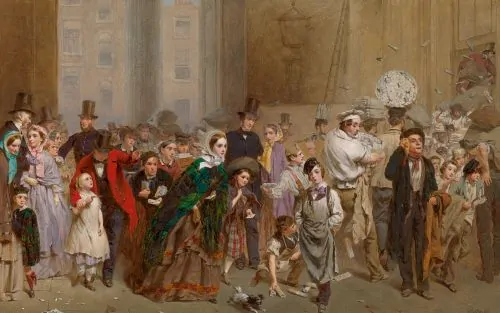
The Mazzini scandal produced no sweeping Victorian equivalent of a communications privacy act. Parliament did not declare correspondence absolutely inviolable, the secretary of state’s warrant power was not abolished, and no court judgment suddenly converted the sealed letter into a constitutionally protected space beyond executive reach. What changed first was political rather than statutory. A power exercised for generations behind administrative secrecy had become publicly known, debated, mocked, and associated with an identifiable political scandal. Ministers contemplating its future use could no longer assume that interception was merely an obscure inheritance of office whose existence itself required little explanation. Exposure had imposed a reputational cost upon secrecy.
There were nevertheless concrete administrative consequences. The parliamentary inquiries revealed that foreign diplomatic correspondence had long been diverted from the ordinary postal stream and sent to a Foreign Office-connected department without the individualized warrant procedure invoked in Mazzini’s case. Once the postmaster general’s attention was drawn to the questionable authority for that routine practice, it was discontinued in June 1844. The specialized apparatus associated with diplomatic interception was subsequently dismantled, and Graham told the Commons in February 1845 that the establishment formerly maintained in connection with the Foreign Office had been withdrawn from the Post Office and was no longer operating there. The disappearance of that particular institutional arrangement was significant because it removed one of the most troubling revelations uncovered by the controversy: systematic access to diplomatic mail had rested upon a practice broader than the exceptional warrant system publicly defended by ministers. Yet Duncombe immediately warned against confusing the disappearance of an office with the disappearance of a power. Moving, closing, or reorganizing the machinery did not prevent a secretary of state from issuing a lawful warrant against particular correspondence. Graham himself made that distinction explicit. The government could abandon an exposed intelligence workflow without renouncing the principle that selected letters might still be intercepted when ministers judged the public interest sufficiently grave.
Attempts to force a more decisive legislative settlement failed. On April 8, 1845, Duncombe sought leave to introduce a bill guaranteeing the inviolability of letters passing through the Post Office and thereby extinguishing the government’s claimed interception power. Graham resisted despite describing the authority as immense, odious, and properly viewed with public jealousy, arguing that the state should not make its own postal system an absolutely secure vehicle for treasonable or dangerous correspondence. The Commons rejected Duncombe’s motion by 161 votes to 78. In the Lords, the Earl of Radnor proposed the more moderate alternative of retaining interception while placing statutory restrictions upon the circumstances in which warrants could issue. His Post Office Offences Act Amendment Bill was defeated at its second reading on May 30 by 55 votes to 9. Parliament had investigated the secret power and subjected it to severe criticism, but when required to choose whether to abolish or substantially rewrite it, large majorities declined to do so.
The failure of legislation did not mean that everything returned to the conditions prevailing before June 1844. Graham announced an important administrative safeguard during the April 1845 Commons debate: whereas records had already been kept explaining the reasons behind criminal interception warrants, political warrants had not been accompanied by an equivalent written record of justification. The three secretaries of state would henceforth require the reasons and grounds for every political warrant to be entered in a dedicated book and signed by the secretary responsible. Existing procedures already ensured that original warrants were preserved and that undersecretaries and a confidential clerk knew when they were issued, so the additional requirement created a documentary trail connecting the minister to the reasons for political surveillance. Such a measure fell far short of independent judicial authorization. The person whose letters were opened still received no notice, no outside judge had to approve the warrant in advance, and Parliament did not acquire routine access to the justification. Nevertheless, the requirement mattered because the scandal had demonstrated how difficult accountability became when political warrants left evidence of authorization but comparatively little contemporaneous evidence of motive. Recording reasons made retrospective scrutiny more possible even while the system remained executive and secret. There was also a subtler restraint that no regulation could express. Foreign governments now knew that cooperation involving British postal interception could become a parliamentary controversy, while British ministers knew that an intercepted exile might detect the operation and produce allies willing to expose it. The cost-benefit calculation surrounding surveillance had changed because discovery could damage diplomatic relationships, ministerial reputations, and confidence in the Post Office itself. The revelations also weakened the informational value of interception by warning politically sophisticated correspondents that the mail could be compromised. Duncombe made precisely that point when he argued that anyone engaged in genuinely treasonable correspondence would have to be a fool to continue entrusting it unquestioningly to the General Post Office after the disclosures.
What did not change is as important as what did. Britain emerged from the affair without recognizing an absolute right to confidential correspondence, and executive interception survived because even many critics accepted that murder, treason, serious crime, or an immediate threat to the state might justify exceptional access to letters. Nor did the scandal end political surveillance more broadly; Chartism, Irish nationalism, revolutionary movements, and later security threats continued to attract governmental attention through changing combinations of police observation, informants, intelligence networks, and communications interception. The deeper legacy of 1844 was instead the movement of postal surveillance from hidden administrative practice into the contested realm of public secrecy. Britons now knew that their communications system possessed a second potential function alongside delivering messages: under particular authority, it could expose them. Governments retained that capacity, but they could no longer exercise it under quite the same cloak of cultural innocence. The Mazzini affair produced neither abolition nor meaningful privacy in the modern sense. It produced something historically less dramatic but institutionally durable, a heightened expectation that secret powers required justification, records, restraint, and some mechanism of retrospective accountability precisely because secrecy made ordinary supervision impossible.
From the Sealed Letter to the Surveillance State: What 1844 Revealed
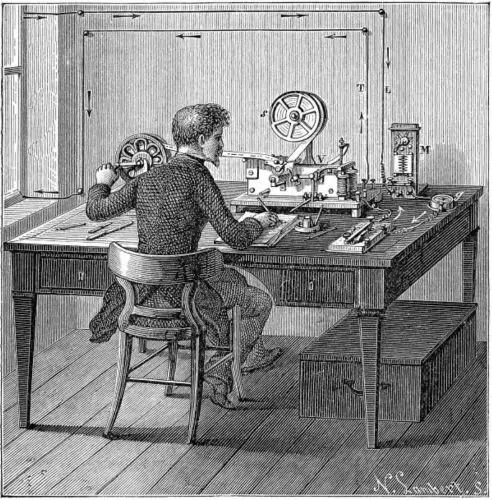
The Mazzini scandal did not reveal a Victorian surveillance state in the modern sense. The number of interception warrants was comparatively small, the opening of letters required human labor, and the Post Office possessed nothing resembling the automated capacity to search enormous populations of communications that later technologies would make possible. Most Britons were not living under continuous postal observation, nor did ministers possess a centralized dossier on every person who used the Penny Post. Yet 1844 exposed a structural relationship that would become increasingly important as modern states and communications systems developed together. The government did not have to follow Mazzini everywhere he went in order to learn about a network extending across Europe. It could gain extraordinary informational leverage by reaching the communications system through which that network maintained itself.
That leverage existed because postal reform had produced centralization as well as convenience. Every successful communications network requires intermediaries capable of accepting messages, identifying destinations, routing traffic, and delivering it reliably enough that users will continue entrusting their communications to the system. In the British postal system, many of those functions were performed by a national institution embedded directly within the state. The sender experienced the Post Office primarily as a carrier, but government officials occupied a different position relative to the same infrastructure: under authorized circumstances they could compel it to divert particular communications for examination. This asymmetry mattered more as the volume and social importance of correspondence grew. The very qualities that made the Post Office valuable to its customers (regularity, geographic reach, centralized administration, dependable handling) also made it potentially valuable to intelligence officials. Mazzini did not have to be persuaded to deliver his political communications to Graham or Aberdeen. He delivered them voluntarily to the postal network because political organization across distance would have been substantially harder without it. Surveillance could exploit trust rather than overcome it. David Vincent’s treatment of the affair as a foundational episode in Britain’s modern culture of public secrecy captures this paradox particularly well: popular communication expanded through institutions whose successful operation simultaneously created new opportunities for official knowledge.
That does not mean that communications infrastructure is inherently an instrument of repression. The Penny Post expanded private correspondence, commercial activity, political organization, and social connection on a scale that strengthened civil society rather than merely strengthening government. Indeed, Mazzini himself benefited enormously from the same postal system that exposed some of his correspondence to official inspection. Modern communications networks are powerful precisely because their political effects run in more than one direction. They can enlarge the capacity of citizens to organize while they enlarge the state’s capacity to observe selected forms of organization.
The larger historical development becomes clearer when postal interception is placed beside the growth of what Edward Higgs has called the English “information state.” Governments had always collected information, but the nineteenth century enlarged both the quantity of knowledge available to centralized administration and the bureaucratic means for processing it. Censuses, civil registration, expanding official statistics, professionalizing departments, and national communications systems gradually made populations more legible to institutions operating at the center. None of these developments should simply be collapsed into surveillance. Counting a population, registering births, delivering letters, and secretly opening correspondence served very different purposes and rested upon different forms of authority. Nevertheless, they belonged to a broader transformation in which government increasingly depended upon the acquisition, organization, transmission, and storage of information. Jon Agar’s characterization of the modern British state as an information-processing entity is useful precisely because it directs attention away from dramatic images of spies toward administrative capacity. A surveillance operation is effective only when information can be collected and then moved to someone capable of using it. Mazzini’s letters illustrate the process in unusually visible form: postal workers located correspondence, specialized personnel exposed its contents, copies or extracts became administrative information, and material judged significant moved through the Home and Foreign Offices toward diplomatic recipients. The important innovation was not any individual component. States had opened letters centuries earlier. What was changing was the scale and density of the infrastructures through which information circulated, while bureaucracies were becoming increasingly capable of converting communication into administratively useful knowledge. James Beniger’s broader concept of a nineteenth-century “control revolution” similarly helps explain why developments such as postal reform, telegraphy, railway coordination, statistical administration, and expanding bureaucracy belonged to a common history of societies attempting to manage greater speed and complexity through information. From that perspective, the Secret Office was not simply an archaic relic hiding inside a modern Post Office. It was an old intelligence practice newly positioned within an expanding information environment.
The scandal also revealed the importance of the intermediary, a problem that would survive changes in technology. A sealed letter creates the intuitive impression of communication passing directly from one person to another, yet the physical message actually depends upon institutions and employees occupying the space between them. The same would later be true of telegrams routed through telegraph companies, telephone calls carried through exchanges, and electronic messages transmitted across privately or publicly operated networks. The technologies differ too greatly for those systems to be treated as equivalents, but the institutional problem persists. A third party necessary for communication may possess access unavailable to either correspondent’s political adversaries. Once government can compel, persuade, or secretly cooperate with that intermediary, surveillance no longer requires physical penetration of the sender’s home. Control over the route can substitute for direct control over the person.
This is where the language of the “surveillance state” becomes useful only if it is handled historically rather than rhetorically. Britain in 1844 lacked the technical capacity, administrative ambition, and legal architecture associated with twentieth- and twenty-first-century mass surveillance, and the Mazzini operation was targeted rather than indiscriminate. Yet the controversy exposed several conditions from which later surveillance systems could grow: expanding dependence upon communications infrastructure, increasing governmental capacity to process information, institutional points of access invisible to ordinary users, and executive claims that secrecy was necessary because disclosure would defeat intelligence collection. It exposed another condition that is easier to overlook, the dependence of communication systems upon confidence. If everyone using the Post Office assumed every letter was being read, politically sensitive communication would migrate elsewhere and the intelligence value of the system would diminish. Surveillance worked best when interception remained exceptional enough, or hidden enough, that most users continued behaving as though the intermediary were neutral. Mazzini’s countermeasures disrupted that arrangement because he made the hidden participant visible. The lasting significance of 1844 lies not in treating Graham’s Secret Office as an embryonic version of every later intelligence agency, but in recognizing a recurring political problem revealed with unusual clarity by a few opened envelopes. As communications networks become indispensable to ordinary life, whoever possesses privileged access to those networks acquires a form of power over relationships that otherwise appear private. The modern surveillance state would eventually possess instruments Mazzini could scarcely have imagined, but the constitutional question exposed by his mail was already recognizable: whether a society can entrust more of its life to communications systems without simultaneously entrusting greater observational power to those capable of entering the system unseen.
Was the Mazzini Affair Really a Victorian Assault on Privacy?
The following video from “MediterraneanMedia” is a brief overview of the biography of Giuseppe Mazzini:
There is a danger in describing the Mazzini controversy too readily as an early battle over “privacy.” The word carries legal and cultural assumptions that became much more fully articulated only later, and Victorian Britons did not generally understand sealed correspondence as absolutely immune from government inspection. The Post Office statutes themselves recognized interception under a secretary of state’s warrant, and parliamentary debates showed that many critics accepted the legitimacy of opening letters in cases involving treason, murder, serious crime, or immediate threats to public safety. Duncombe’s own attacks did not consistently rest upon an absolute doctrine that government could never penetrate correspondence. To portray 1844 simply as a liberal public discovering that the state had violated an already settled right of communications privacy risks projecting later expectations backward onto a different constitutional culture.
Mazzini himself also presents an unusually difficult subject around whom to construct an uncomplicated victim-of-surveillance narrative. He was not merely an exile writing privately about philosophical hopes for Italy. He organized political networks across borders, maintained contact with men contemplating insurrection, encouraged the overthrow of established governments, and regarded revolutionary action as legitimate when peaceful political transformation appeared impossible. Austrian and Italian authorities possessed genuine security reasons for wanting intelligence about his correspondence, regardless of how one judges the legitimacy of the regimes they defended. Britain likewise had recognizable interests in preventing conspiracies organized from London from producing diplomatic crises or armed conflicts abroad. Graham and Aberdeen could plausibly argue that unrest in Italy might provoke Austrian intervention and threaten a wider European peace in which Britain had a substantial interest. Governments have never been required to wait until a danger reaches their own borders before gathering intelligence about developments capable of affecting foreign policy. Mazzini’s political importance was precisely why his letters appeared worth intercepting.
Nor was the machinery exposed in 1844 evidence that Peel’s government had suddenly transformed liberal Britain into a continental police state. Secretaries of state belonging to earlier administrations had issued postal warrants, and the parliamentary committees established that interception had been employed for criminal investigations as well as political purposes. The number of nineteenth-century warrants identified by investigators was relatively small compared with the enormous volume of correspondence moving through the Post Office. Nothing in the evidence supports an image of the British government routinely reading the mail of the population at large. Mazzini was subject to targeted surveillance because officials considered him exceptional.
These objections materially change how the scandal should be interpreted. The strongest historical argument is not that Mazzini possessed a modern, absolute right to communications privacy that Graham knowingly violated, nor that Britain in 1844 had already become a mass-surveillance state. The controversy instead concerned the boundaries surrounding a secret executive power whose existence many people were prepared to tolerate under sufficiently grave circumstances. What made Mazzini’s case troubling was the combination of breadth, purpose, and accountability. A continuing warrant could expose multiple letters and correspondents rather than a single communication; the target’s principal revolutionary activities were directed against foreign governments rather than Britain; and information extracted from his correspondence was subsequently communicated abroad. The government could justify those decisions by presenting confidential evidence to secret committees, but neither Mazzini nor the public could fully examine the intelligence invoked against him. This asymmetry made the controversy fundamentally constitutional even where a modern privacy claim would be anachronistic. Parliamentary critics were asking whether an exceptional power had been used for an exceptional British necessity or whether British institutions had been quietly placed at the service of continental counterrevolution. The distinction mattered because a state might lawfully possess an interception capability while still exercising it for purposes that citizens considered politically illegitimate. Indeed, the acceptance of some legitimate surveillance made the argument more difficult and more enduring: once absolute prohibition was rejected, everything depended upon determining where necessity ended and discretionary abuse began.
Seen in that light, the counterargument strengthens rather than defeats the larger interpretation of the Mazzini affair. The scandal mattered precisely because the target was politically dangerous enough to make surveillance defensible, while the circumstances of that surveillance made the defense deeply uncomfortable. A government power tested only against innocent correspondents would tell historians little about the boundaries of nineteenth-century liberty; Mazzini forced those boundaries into view because he presented ministers with a genuinely difficult case. The enduring issue was not whether correspondence could ever be intercepted, but who decided when interception was justified, what purposes counted as British interests, what happened when intelligence was shared with foreign powers, and how a secret decision could remain meaningfully accountable. Calling the affair simply a Victorian assault on privacy understates that complexity. It was better understood as a crisis over the conditions under which a liberal state claimed the right to become an unseen participant in private political communication.
Conclusion: The State Behind the Seal
Giuseppe Mazzini’s opened letters exposed far more than an embarrassing act of political espionage. They revealed the hidden political possibilities contained within a communications system that millions of people were learning to regard as ordinary, dependable, and increasingly indispensable. The British government had possessed authority to intercept correspondence long before Mazzini arrived in London, and the machinery employed against him belonged to an inherited tradition rather than a sudden invention of Sir James Graham. What changed in 1844 was that the tradition became visible. Once Mazzini’s experiments and Duncombe’s parliamentary campaign forced the operation into public view, an administrative secret became a constitutional controversy about the purposes for which government could enter communications that people reasonably expected to pass undisturbed between sender and recipient.
The scandal resisted simple moral divisions because nearly every important figure occupied an ambiguous position. Mazzini was a political exile entitled to British protection, but he was also an active revolutionary maintaining international networks directed against established governments. Graham possessed statutory precedent for postal warrants, yet the existence of authority did not settle whether its use against Mazzini served a sufficiently British interest. Aberdeen could argue that revolutionary instability in Italy threatened the European peace, while critics could respond that intelligence extracted from British mail had nevertheless been communicated to Austria, one of the principal powers determined to suppress Italian nationalism. Even the parliamentary investigations embodied the contradiction they sought to resolve. Secret committees gained access to information that an open inquiry might never have obtained, but their confidentiality required Parliament and the public to accept conclusions they could not fully test. The affair demonstrated why surveillance controversies rarely reduce cleanly to a choice between absolute privacy and absolute security. Once a society permits exceptional interception at all, the decisive questions become who defines the exception, what purposes justify it, how far intelligence may travel after collection, and what form accountability can take when secrecy prevents ordinary scrutiny.
The consequences were substantial but limited. Postal interception survived, Parliament declined to establish an inviolable right to correspondence, and Britain did not cease gathering political intelligence. Yet the exposure imposed new costs upon secret power by making ministers more conscious of records, justification, parliamentary challenge, and reputational damage. Graham remained in office, but his name became inseparable from the image of an official opening other people’s letters. Surveillance had not been abolished; it had lost some of the protection afforded by public ignorance.
That distinction is the enduring significance of 1844. The Post Office scandal occurred before telephones, electronic networks, databases, or automated communications monitoring, and it would be misleading to treat Graham’s Secret Office as a miniature version of the modern surveillance apparatus. Its lesson is more fundamental. A communications system creates relationships of trust, but it also creates intermediaries possessing unusual access to the messages moving through it. As reliance upon the network increases, so does the potential power of anyone capable of entering that intermediary position without the knowledge of the people communicating. Mazzini understood the danger materially before it was expressed constitutionally: a disturbed seal, a missing grain of sand, or an altered postal mark meant that someone who was not supposed to be present had entered the exchange. His ingenuity made the invisible participant detectable, while Duncombe transformed that discovery into a demand that government account for itself. The state behind the seal was not necessarily an unlawful state, nor even necessarily a uniquely repressive one. It was something more difficult for a liberal political culture to confront, a state exercising powers that might sometimes be necessary but became most effective when those subjected to them did not know they existed. The argument unleashed in 1844 survived the technology that produced it. Every later communications system would confront some version of the same problem: trust makes networks useful, usefulness concentrates information, and concentrated information creates power for those who can secretly gain access to it.
Bibliography
- Agar, Jon. The Government Machine: A Revolutionary History of the Computer. Cambridge, MA: MIT Press, 2003.
- Andrew, Christopher. Secret Service: The Making of the British Intelligence Community. London: Heinemann, 1985.
- Bayly, C. A., and Eugenio F. Biagini, eds. Giuseppe Mazzini and the Globalization of Democratic Nationalism, 1830–1920. Oxford: Oxford University Press for the British Academy, 2008.
- Beniger, James R. The Control Revolution: Technological and Economic Origins of the Information Society. Cambridge, MA: Harvard University Press, 1986.
- Carlyle, Thomas. “To the Editor of The Times.” The Times, June 19, 1844.
- Cove, Patricia. Italian Politics and Nineteenth-Century British Literature and Culture. Edinburgh: Edinburgh University Press, 2019.
- —-. “Spying in the British Post Office, Victorian Politics and Wilkie Collins’s The Woman in White.” Journal of Victorian Culture 22:3 (2017), 380–398.
- Daunton, Martin J. Royal Mail: The Post Office since 1840. London: Athlone Press, 1985.
- Donajgrodzki, A. P. “Sir James Graham at the Home Office.” Historical Journal 20:1 (1977).
- Entick v. Carrington. 19 Howell’s State Trials 1029. Court of Common Pleas, 1765.
- Fagan, Louis. The Life and Correspondence of Sir Anthony Panizzi, K.C.B. 2 vols. London: Remington & Co., 1880.
- Fahrmeir, Andreas. “British Exceptionalism in Perspective: Political Asylum in Continental Europe.” In Exiles from European Revolutions: Refugees in Mid-Victorian England, edited by Sabine Freitag and Rudolf Muhs, 32–42. New York: Berghahn Books, 2003.
- Freitag, Sabine, and Rudolf Muhs, eds. Exiles from European Revolutions: Refugees in Mid-Victorian England. New York: Berghahn Books, 2003.
- Golden, Catherine J. Posting It: The Victorian Revolution in Letter Writing. Gainesville: University Press of Florida, 2009.
- Great Britain. An Act for the Further Regulation of the Duties on Postage until the Fifth Day of October One Thousand Eight Hundred and Forty. 2 & 3 Vict., c. 52. 1839.
- Great Britain. Post Office (Offences) Act 1837. 7 Will. 4 & 1 Vict., c. 36.
- —-. Post Office (Revenues) Act 1710. 9 Anne, c. 10.
- Great Britain. Parliament. House of Commons. First Report from the Select Committee on Postage; Together with the Minutes of Evidence, and Appendix. Parliamentary Papers, 1837–38 (278), vol. 20. London, 1838.
- —-. House of Commons. Report from the Secret Committee on the Post-Office; Together with the Appendix. Parliamentary Papers, 1844, vol. 14. London, 1844.
- —-. House of Commons. Second Report from the Select Committee on Postage; Together with the Minutes of Evidence, Appendix and Index. Parliamentary Papers, 1837–38 (658), vol. 20. London, 1838.
- Great Britain. Parliament. House of Lords. Report from the Secret Committee of the House of Lords Appointed to Inquire into the State of the Law in Respect of the Detaining and Opening of Letters at the General Post Office. Parliamentary Papers, 1844. London, 1844.
- Great Britain. Parliament. Hansard’s Parliamentary Debates. 3rd ser., vol. 74. “Post Office—Opening Letters,” June 24, 1844.
- —-. Hansard’s Parliamentary Debates. 3rd ser., vol. 75. “Opening Letters at the Post Office.” June 17, 1844.
- —-. Hansard’s Parliamentary Debates. 3rd ser., vol. 75. “Post Office—Opening Letters.” June 28, 1844.
- —-. Hansard’s Parliamentary Debates. 3rd ser., vol. 75. “Post Office—Opening Letters,” July 2, 1844.
- —-. Hansard’s Parliamentary Debates. 3rd ser., vol. 76. “Post Office—Opening Letters.” July 2, 1844.
- —-. Hansard’s Parliamentary Debates. 3rd ser., vol. 76. “Post Office—Opening Letters.” July 4, 1844.
- —-. Hansard’s Parliamentary Debates. 3rd ser., vol. 76. “Mr. Mazzini.” July 15, 1844.
- —-. Hansard’s Parliamentary Debates. 3rd ser., vol. 76. “Post Office—Opening Letters.” July 18, 1844.
- —-. Hansard’s Parliamentary Debates. 3rd ser., vol. 77. “Opening Letters at the Post-Office.” February 18, 1845.
- —-. Hansard’s Parliamentary Debates. 3rd ser., vol. 77. “Opening Letters at the Post Office—Adjourned Debate.” February 20, 1845.
- —-. Hansard’s Parliamentary Debates. 3rd ser., vol. 77. “Opening Letters at the Post Office—Adjourned Debate.” February 21, 1845.
- —-. Hansard’s Parliamentary Debates. 3rd ser., vol. 78. “Opening Letters at the Post-Office.” February 18, 1845.
- —-. Hansard’s Parliamentary Debates. 3rd ser., vol. 78. “Opening Letters at the Post Office.” February 28, 1845.
- —-. Hansard’s Parliamentary Debates. 3rd ser., vol. 79. “Opening Letters at the Post Office.” April 1, 1845.
- —-. Hansard’s Parliamentary Debates. 3rd ser., vol. 80. “Post Office Offences Act—Amendment Bill.” May 30, 1845.
- Higgs, Edward. The Information State in England: The Central Collection of Information on Citizens since 1500. Basingstoke: Palgrave Macmillan, 2004.
- Hill, Rowland. Post Office Reform: Its Importance and Practicability. 3rd ed. London: Charles Knight and Co., 1837.
- Hill, Rowland, and George Birkbeck Hill. The Life of Sir Rowland Hill and the History of Penny Postage. 2 vols. London: Thomas De La Rue, 1880.
- Isabella, Maurizio. “Italian Exiles and British Politics before and after 1848.” In Exiles from European Revolutions: Refugees in Mid-Victorian England, edited by Sabine Freitag, 59–87. New York: Berghahn Books, 2003.
- —-. Risorgimento in Exile: Italian Émigrés and the Liberal International in the Post-Napoleonic Era. Oxford: Oxford University Press, 2009.
- Keenan, Bernard. “Interception: Law, Media, and Techniques.” PhD diss., London School of Economics and Political Science, 2017.
- Mazzini, Giuseppe. Life and Writings of Joseph Mazzini. Six Volumes. London: Smith, Elder & Co., 1890.
- Porter, Bernard. “The Asylum of Nations: Britain and the Refugees of 1848.” In Exiles from European Revolutions: Refugees in Mid-Victorian England, edited by Sabine Freitag and Rudolf Muhs, 43–56. New York: Berghahn Books, 2003.
- —-. Plots and Paranoia: A History of Political Espionage in Britain, 1790–1988. London: Unwin Hyman, 1989.
- Robinson, Howard. The British Post Office: A History. Princeton, NJ: Princeton University Press, 1948.
- Sarti, Roland. Mazzini: A Life for the Religion of Politics. Westport, CT: Praeger, 1997.
- Shaw, Caroline. Britannia’s Embrace: Modern Humanitarianism and the Imperial Origins of Refugee Relief. New York: Oxford University Press, 2015.
- Smith, Denis Mack. Mazzini. New Haven, CT: Yale University Press, 1994.
- Smith, F. B. “British Post Office Espionage, 1844.” Historical Studies 14:54 (1970), 189–203.
- Sutcliffe, Marcella Pellegrino. Victorian Radicals and Italian Democrats. Woodbridge: Royal Historical Society/Boydell Press, 2014.
- Thomas, Kate. Postal Pleasures: Sex, Scandal, and Victorian Letters. Oxford: Oxford University Press, 2011.
- Thomas, Peter D. G. John Wilkes: A Friend to Liberty. Oxford: Clarendon Press, 1996.
- Vincent, David. The Culture of Secrecy: Britain, 1832–1998. Oxford: Oxford University Press, 1998.
- —-. “The Origins of Public Secrecy in Britain.” Transactions of the Royal Historical Society 1 (1991), 229–248.
- Ward, J. T. Sir James Graham: A Biography. London: Macmillan, 1967.
- Wheeler, Michael. The Year That Shaped the Victorian Age: Lives, Loves and Letters of 1845. Cambridge: Cambridge University Press, 2022.
- Wilkes v. Wood. 19 Howell’s State Trials 1153. Court of Common Pleas, 1763.
Originally published by Brewminate, 08.27.2026, under the terms of a Creative Commons Attribution-NonCommercial-NoDerivatives 4.0 International license.
About the Author