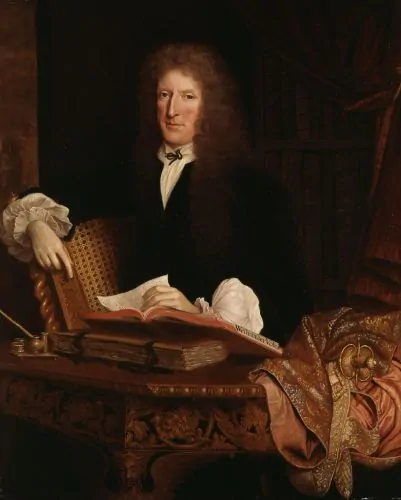
As both press censor and news publisher, Roger L’Estrange turned royal authority into publishing advantage, while rival officials and persistent dissent tested the limits of his power.

By Matthew A. McIntosh
Public Historian
Brewminate
Introduction: A Publisher with the Power to Suppress
On August 31, 1663, Roger L’Estrange introduced The Intelligencer with an unusually candid reservation about the business of publishing news. He warned that a newspaper could make readers “too familiar with the actions and counsels of their superiors,” encouraging them to assume a right to scrutinize government. He nevertheless considered his own undertaking defensible because readers already exposed to hostile reports required guidance. Publication could serve the monarchy by correcting the political judgments that other publications had helped produce. His opening statement presented a theory of authorized communication. The usefulness of news depended on who supplied it and what relationship it cultivated between subjects and their rulers.
Less than three weeks earlier, on August 15, L’Estrange had received his appointment as Surveyor of the Press, giving institutional force to convictions he had already advanced as a royalist controversialist. His responsibilities included investigating unauthorized printing, while his commission also assigned him licensing functions within a broader distribution of jurisdiction. The Licensing Act of 1662 supplied a statutory framework connecting the examination of texts with regulation of the trade that manufactured and circulated them. Enforcement depended on officials who could issue warrants and on assistance from people familiar with printing establishments; the Stationers’ Company retained responsibilities of its own. Alongside these arrangements, L’Estrange received exclusive privileges covering news publications and certain other forms of printed material. He consequently entered the news market with advantages derived from the authority under which competing publications could be restricted. Within a political order that rewarded service through patronage and grants of privilege, the combination could be represented as a practical means of supporting necessary work. Its consequences nevertheless extended beyond the income or status of the officeholder. Decisions about permission helped determine whose account of public affairs could circulate openly.
The rationale appeared clearly in his Considerations and Proposals in Order to the Regulation of the Press, published earlier that year. L’Estrange treated dangerous writing as a problem sustained by the commercial relationships through which manuscripts became saleable objects. His distrust reached into the Stationers’ Company, whose members could have financial reasons to protect the very publications they were expected to suppress. The pamphlet made the organization of the book trade a matter of political security, while presenting stronger supervision as the remedy for interests that allegedly compromised existing controls.
That claim requires examination alongside the practical limits of the authority L’Estrange acquired. His proposals describe what he wanted the system to accomplish; they cannot establish, by themselves, either its effectiveness or the motives behind every intervention. A government composed of competing officeholders could frustrate its own servants, and a publication that escaped suppression might encounter readers unmoved by its arguments. Yet incomplete enforcement could still impose unequal burdens on those attempting to participate in public discussion. The possibility of a search could affect a printer’s willingness to accept work, just as an exclusive privilege could protect an authorized publisher from competition. L’Estrange’s career exposes a consequential relationship between censorship and political advocacy. The defense of royal government operated partly through the conditions under which arguments reached an audience, even though the beliefs formed by that audience remained beyond any official’s assured command.
The Royalist Who Had Learned to Fight in Print
L’Estrange’s commitment to the Stuarts had exposed him to mortal danger well before it brought him public employment. Born in 1616 into a Norfolk family closely associated with royal service, he entered adulthood as the relationship between Charles I and his opponents deteriorated into armed conflict. In 1644, he participated in a scheme to recover King’s Lynn for the king, an undertaking that ended with his capture and condemnation by a parliamentary court-martial. Reprieves prevented his execution, but prolonged imprisonment left him dependent on decisions made by the authorities he had opposed. Printed appeals issued during his confinement carried his case beyond the prison, asking readers to reconsider the proceedings against him. These publications demonstrate that his early involvement with print arose partly from the need to defend himself against an adverse judgment. His escape in 1648, subsequent involvement in the royalist rising in Kent, and flight to the Netherlands extended a record of hazardous service that he would later invoke when seeking recognition from the restored monarchy.
Survival nevertheless required accommodations that complicated any claim to an unbroken history of defiance. Returning to England in 1653, L’Estrange submitted to examination and secured permission to remain after undertaking to refrain from action against the Commonwealth. His acknowledged participation in a musical gathering attended by Cromwell subsequently supplied enemies with the derisive designation “Oliver’s fiddler.” That episode did not establish ideological conversion, but it gave opponents material with which to challenge his presentation of himself as an exemplary royalist. His later defense in Truth and Loyalty Vindicated shows how persistently his conduct under the Protectorate remained available for hostile reinterpretation.
During the governmental breakdown of 1659–1660, pamphlet writing offered L’Estrange a more sustained opportunity to intervene in national affairs. The collapse of Richard Cromwell’s government opened a struggle over the constitutional settlement, in which demands for a free Parliament could attract people whose eventual objectives differed considerably. L’Estrange worked within that uncertainty, using arguments capable of reaching beyond those already committed to restoring Charles II. Publications such as A Free Parliament Proposed by the City to the Nation presented political intervention through the language of collective civic judgment. A title speaking in the name of the City invited readers to encounter an apparently shared demand, allowing the author’s individual allegiance to recede behind a broader claim to representation. This was a practical response to circumstances in which an openly royalist appeal could restrict the audience that a pamphlet might otherwise reach. As the prospect of restoration became clearer, his advocacy could become more explicit about the desired destination. His Apology, published in 1660, subsequently gathered earlier interventions into an account of transactions leading toward the settlement. That retrospective presentation supplied evidence of his activity, while also encouraging readers to interpret a changing political situation through the success that eventually followed.
John Milton provided a revealing target because his reputation connected contemporary republican argument with the justification of the king’s execution. In No Blinde Guides, published in April 1660, L’Estrange attacked Milton’s response to a royalist sermon by Matthew Griffith, placing the exchange within the larger contest over obedience and legitimate rule. The significance of such an intervention extended beyond disagreement with a particular proposition. Milton’s earlier commitments could be used to challenge his standing as an adviser in the present crisis. Personal discredit performed argumentative work, asking readers to evaluate a political recommendation through the previous conduct of the writer who advanced it. L’Estrange was developing a mode of controversy in which an adversary’s identity became part of the case against his counsel.
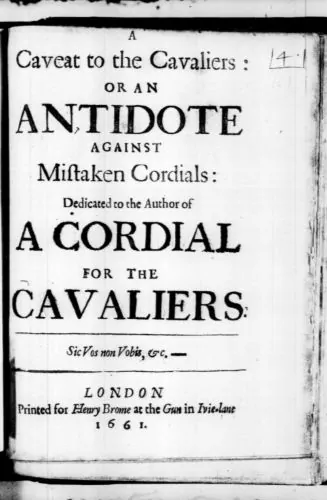
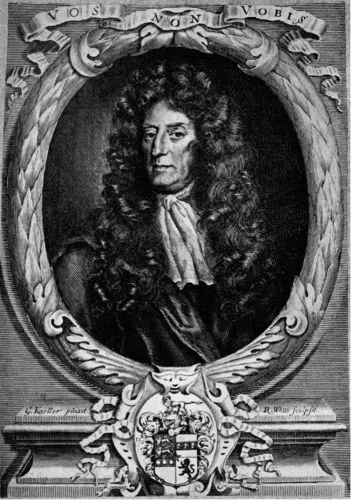
Restoration brought a different problem. Demonstrated loyalty did not guarantee satisfactory compensation. L’Estrange’s experiences had given him substantial grounds for presenting himself as a sufferer for the royal cause, but the settlement required decisions that could disappoint precisely such claimants. The Act of Indemnity restricted attempts to pursue former enemies, frustrating his efforts to obtain redress against men associated with his wartime prosecution. His Caveat to the Cavaliers of 1661, and the ensuing dispute with James Howell, exposed disagreements within royalism about the treatment of the king’s supporters. Those exchanges matter because they prevent his subsequent government service from being projected backward as effortless agreement with everyone exercising authority after 1660. A man could regard the monarchy as indispensable while believing that its servants had mishandled the claims of those who had helped preserve its cause. Pamphleteering consequently furnished a means of pressing grievances inside the victorious constituency, making the obligations created by past allegiance a subject of public argument. L’Estrange’s dissatisfaction should neither be reduced to disappointed self-interest nor detached from his search for advancement: personal claims and judgments about what the Restoration owed its supporters developed together.
Religious controversy gave this account of loyalty a further dimension by making the origins of rebellion a continuing subject of dispute. L’Estrange’s attacks on Presbyterian writers in 1661 treated arguments about religious authority as consequential for the obligations of subjects. The title of his Memento of 1662 explicitly connected reverence for Charles I’s memory with concern for the security of his successor, turning remembrance toward the prevention of another catastrophe. Its dedication to the Earl of Clarendon also placed this warning before a minister capable of recognizing its author’s usefulness. Such interventions reveal the perspective from which L’Estrange approached the restored government. Recent upheaval remained an experience requiring explanation, and rival interpretations could influence what readers believed their religious commitments permitted them to do. By the time he obtained office, he had accumulated experience in answering accusations, adapting appeals to uncertain audiences, and disputing the credentials of opposing writers. Those practices help explain the kind of expertise he could offer the crown, while leaving open the question of how successfully a controversialist’s methods would translate into official responsibility.
Making Printing Governable: The Licensing Act and the Surveyor
Parliament’s passage of the Licensing of the Press Act in 1662 placed the printing trade within the legislative reconstruction of the restored monarchy. Much of the measure followed the Star Chamber decree of 1637, although the court itself, abolished in 1641, was not revived. Restrictive practices acquired a new statutory basis through the cooperation of the crown and Parliament. The preamble attributed religious disorder and hostility toward Charles II’s government to abuses of printing, presenting regulation of the industry as a remedy for recent upheaval. Yet the act’s original duration was limited to two years beginning on June 10, 1662, so its continuation required further legislative action. As Michael Treadwell emphasizes, the measure also accommodated several interests within the trade, making its contents more heterogeneous than the familiar designation “Licensing Act” suggests. L’Estrange would administer parts of an arrangement that Parliament had negotiated before his appointment.
For an individual publication, compliance began with separate requirements for registration and approval. Most books and pamphlets had to be entered in the Stationers’ Company’s register and licensed before printing, with exemptions for specified official material. Registration could establish a stationer’s claim to the exclusive reproduction of a work, while licensing concerned its acceptability under the act’s religious and political standards. Possession of a commercial interest in a manuscript did not settle whether it could lawfully be printed. Examination extended to prefatory matter and dedications, recognizing that these additions might carry arguments absent from the principal text. The legislation required the written copy used for licensing to be preserved after printing, providing an authorized exemplar against which the resulting publication could be checked. Printers also had to identify themselves on their products, and a licenser could require disclosure of the author’s identity. These provisions made the ability to trace a publication central to supervision. Officials were to connect a printed object with an approved text and the people responsible for producing it.
Control reached further back into production through restrictions on equipment and employment. New admissions to the ranks of master printers were to stop until existing numbers had fallen to twenty, with exceptions for the king’s printers and those of the universities. Thereafter, replacement appointments were assigned to the Archbishop of Canterbury and Bishop of London, making entry into the occupation subject to ecclesiastical authorization. Most masters were limited to two presses, although certain company officers could keep three and additional presses might be permitted for exceptional work. Notice to the Stationers’ Company was required when a press was erected or premises were knowingly provided for printing; craftsmen making presses or supplying their components also incurred reporting obligations. The intention was to make concealed production harder to sustain by identifying the arrangements necessary to establish a workshop. Labor received equally pointed attention. The act associated secret printing with the unemployment of journeymen and required masters without a journeyman to accept an eligible worker seeking employment, even when their existing apprentices could perform the work. That provision sought to draw skilled labor into supervised establishments, while punishment for refusing or neglecting employment reinforced the demand for occupational discipline. Read together, these clauses disclose a program in which managing the organization of work was expected to reduce the occasions for clandestine publishing.
The resulting exposure to inspection varied with occupation and social position. Royal messengers acting under warrants, and designated officers of the Stationers’ Company, received powers to search with a constable where there was probable reason to suspect printing or binding. Searches of peers’ houses, and of households outside the regulated trades, required a special warrant from the king or a principal secretary of state. This distinction placed the premises of people working in the book trades under more immediate scrutiny, while preserving an additional procedural requirement for entry into other homes.
L’Estrange’s commission in August 1663 addressed a further problem: the statute had not clearly allocated every kind of publication to a licenser. The act assigned books about affairs of state to the secretaries of state and works concerning common law to designated senior legal officers. Religious and other learned publications generally fell to the Archbishop of Canterbury or Bishop of London and their appointees, with university licensing subject to its own territorial and substantive restrictions. L’Estrange received authority over a residual category of books and printed pictures, excluding fields already assigned elsewhere and material protected by the king’s printers’ patents. The commission supplemented the statutory categories by providing an officer for forms of print whose supervision had remained insufficiently specified. His investigative work as Surveyor consequently covered a different field from this particular licensing remit. He might pursue an unlicensed account of public events even though authorization to print works on that subject belonged to a secretary of state.
The Censor Explains Himself: Considerations and Proposals
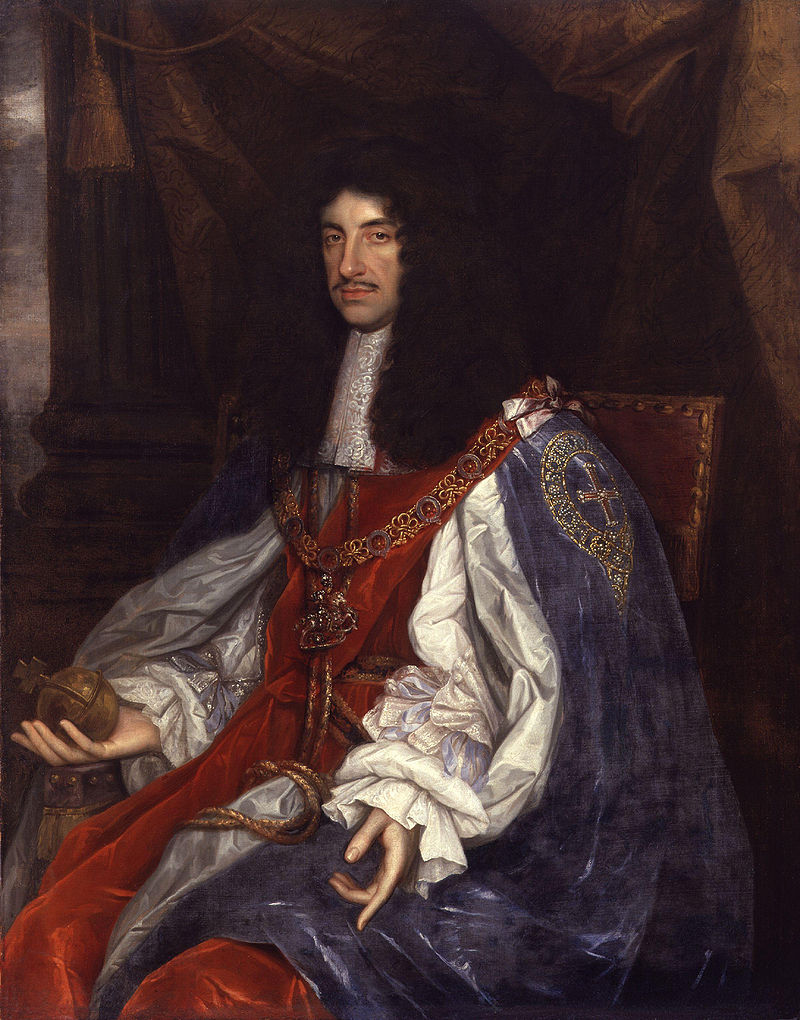
L’Estrange opened Considerations and Proposals with an assertion of agreement. He maintained that nobody disputed the need to suppress licentious and unlawful pamphlets. The question was how that obligation could be fulfilled. This starting point presented censorship as a shared responsibility whose methods required improvement, leaving the designation of objectionable writing to do much of the argumentative work. In his dedication to Charles II, the circumstances demanding intervention became more alarming. The forces responsible for the previous rebellion were supposedly preparing another assault on the monarchy. Within the tract, a compilation of offending passages gave that accusation a documentary form. The selections ranged from demands to punish Charles I to attacks on the restored Church, encouraging readers to understand different kinds of opposition as expressions of a continuing campaign. Titles and publication details supplied specificity, while the headings under which the extracts appeared directed their interpretation. Doctrinal affinities consequently carried much of the burden of establishing a common political purpose.
Earlier publications remained part of this alleged emergency, regardless of the reconciliation promised after 1660. “Persons are Pardon’d, but not Books,” L’Estrange answered the objection that his proposed suppression reached too far backward. He treated the continuing availability of a text as a present danger, separating forgiveness of its producers from permission for their arguments to remain in circulation. His reasoning also addressed the economics of prohibition. Restrictions on sale would accomplish little if dealers retained stocks that scarcity could make more profitable. Effective suppression, in this account, required taking the books themselves, including older works whose arguments remained useful to contemporary opponents.
Possession of an unlawful publication would become a means of forcing its handlers to identify one another. L’Estrange’s inventory of participants extended beyond the workshop to women selling news and the carriers who transported printed goods. He proposed that anyone within this chain found holding an offending book should be treated and punished as its author unless that person produced the supplier or swore that they did not know how it had come into their possession. The attribution depended partly on cooperation with an investigation, allowing responsibility for writing to be imposed on someone who had merely handled its physical product. Rewards for disclosure were to accompany penalties for withholding information, with both made substantial and dependable. Impoverished printers who exposed those commissioning prohibited works could receive pardons for their own involvement and preference for vacancies within the regulated trade. Employment became something that cooperation might secure, alongside the avoidance of punishment. Jody Greene’s analysis of literary ownership and liability helps illuminate this maneuver. Assigning a text to a person could serve the immediate purpose of finding someone answerable for it.
The printer’s specialized knowledge nevertheless remained indispensable to the proposed system. L’Estrange acknowledged printers as “Necessary Assistants” in finding concealed pamphlets and examining work still in type. His willingness to use their expertise stopped short of trusting them with command, and his reference to their “Quality, and Interest” suggests a judgment about social standing as well as financial incentives. He envisaged company officers continuing to manage occupational affairs under superior supervision conducted on behalf of the kingdom. Responsibility would itself be distributed among six Surveyors, each restricted to an assigned jurisdiction. This arrangement preserved professional assistance while reserving control for officials whose authority rested on their claimed service to the kingdom as a whole.
Punishment was also to be adjusted to the offender’s circumstances and vulnerabilities. L’Estrange reasoned that a loss of money might bear more heavily on one person, while damaged reputation or bodily suffering would affect another. Among his suggestions was a blue cap marked with a red T or S, identifying the wearer with treason or sedition; relief from this humiliation could be earned by helping secure another offender’s capture. Such a device would make wrongdoing recognizable in ordinary encounters, prolonging the social consequences of conviction beyond the initial judgment.
The financial provisions create a more difficult problem for his distinction between public duty and private advantage. Supervisors were to receive a regular payment supplemented by incidental income, since sustained attendance and the purchase of information incurred expenses that small licensing fees could scarcely cover. L’Estrange accordingly insisted that officers needed “Benefit, and Power,” treating adequate compensation as a condition of effective service. One proposed penalty would require a printer or bookseller to surrender the best “copy” in his possession, meaning a valuable printing right, selected by the responsible Surveyor. The profits were to be divided equally among the king, the informer, and that officer. Its value as a penalty derived from the asset’s earning capacity; the proposal did not confine forfeiture to rights in the offending publication. This would give the supervisor a direct financial interest in proceedings against people whose commercial calculations L’Estrange elsewhere portrayed as obstacles to trustworthy enforcement. His account took the official’s inward commitment to loyalty and justice for granted before considering the inducements needed to sustain the work. The scheme consequently made political allegiance bear the weight of explaining why official gain would advance the common good when comparable incentives made officers of the trade unreliable.
Inside the Printing House: How Enforcement Worked
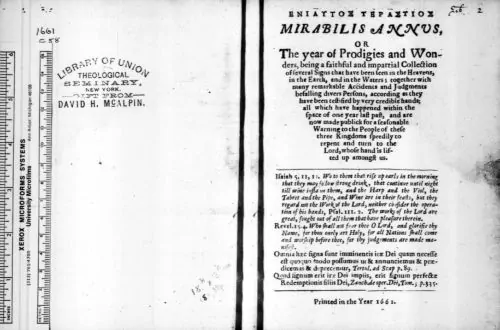
A forbidden pamphlet rarely disclosed the route by which it had reached a buyer. An omitted, fictitious, or outdated imprint could separate the object from the people who had manufactured it, requiring an investigator to follow its movement backward from sellers and carriers. L’Estrange had practiced this form of pursuit before his August 1663 appointment established his position as Surveyor. During his investigation of The Phoenix in 1661, he acted under a warrant from Secretary of State Edward Nicholas and entered with a constable. According to L’Estrange’s subsequent account, the operation recovered 120 newly printed copies before his inquiries carried him through Little Britain and St. Paul’s Churchyard. There he encountered Annus Mirabilis; or, The Year of Prodigies while presswork was still underway. The episode established a recurring operational principle. Locating a publication during production transformed an anonymous argument into identifiable premises, property, and people.
Entering those premises required several kinds of assistance. Royal messengers carried warrants, constables provided coercive support, and officers associated with the Stationers’ Company could contribute knowledge of the trade. Such cooperation was never automatic, especially when stationers’ commercial interests or personal alliances conflicted with an investigation. These participants could gain access and recognize evidence that an outsider might overlook.
Inside a suspect room, unfinished work was often more incriminating than a completed pamphlet recovered from a stall. Pages of movable type were locked into a forme for printing; when corresponding sheets lay nearby, the workshop could be connected to the text without relying on its imprint. A pressman surprised during a run could not as easily maintain that prohibited stock had merely been left by somebody else. Speed remained essential because type was normally redistributed after a job and used again, eliminating the clearest physical correspondence between the equipment and the publication. Investigators consequently secured standing formes, loose sheets, bundled copies, and sometimes the press itself. These objects answered different questions about the undertaking. Type preserved the words being produced, accumulated sheets showed how far the impression had progressed, and packaged copies indicated preparation for sale or distribution. An interrupted run might also lead officers to the manuscript from which compositors had worked or to instructions naming an intermediary. Material evidence could demonstrate manufacture with unusual clarity, but it could not disclose who had composed the argument or whether every person in the room understood its implications. Moving beyond the workshop depended on testimony.
People supplied names, instructions, and the allocation of responsibility that metal and paper could not. A compositor might recognize the copy delivered for setting without knowing its author, while a binder could identify the person who had brought printed sheets for completion. Divided labor helped principals conceal themselves, yet it also produced numerous participants who could be questioned separately. After their imprisonment in connection with The Phoenix, printer John Creake and bookbinder William Thresher furnished information that assisted L’Estrange’s inquiries. Their cooperation illustrates the importance of confinement and bargaining more securely than it proves the existence of an efficient network of paid informers. Despite the rewards L’Estrange advocated and occasionally offered, the surviving record suggests that fear of continued detention often extracted more information than money did.
Economic injury began with confiscation rather than conviction. Paper and wages had already been paid by the time an edition stood ready for sale, so removing the stock could consume the anticipated return on an entire undertaking. Even when a press was not permanently forfeited, holding type, formes, or unfinished sheets interrupted other work and immobilized valuable equipment. Detention compounded the loss by removing skilled workers from businesses that often depended on a small household labor force. Wives and relatives might keep a shop or distribution route operating, but they also became exposed to arrest when they handled the disputed material themselves. Months of imprisonment, ruinous bonds, and repeated searches could exhaust a marginal printer without producing a prompt judicial determination. Better-connected stationers possessed greater resources for petitioning officials, disputing a seizure, or surviving an interruption, leaving enforcement to fall unevenly across the trade. A raid could influence printers who were never prosecuted, since accepting a hazardous commission now threatened their lawful work as well.
The practice nevertheless remained irregular. Secret production shifted among private rooms and religious meeting places, while publications could be directed from prisons or transported to provincial fairs beyond L’Estrange’s immediate reach. Successful intervention depended on timely intelligence, cooperative officers, and the good fortune of arriving before the evidence had been dispersed. These limitations prevented the Surveyor from exercising continuous mastery over the trade, but they did not make an individual search inconsequential. The October 1663 discovery of John Twyn at work supplied the unusually potent combination of prohibited words, an active printing operation, and a craftsman available for interrogation, turning one workshop entry into the foundation of a capital prosecution.
John Twyn: From the Printing House to the Gallows

When Twyn appeared at the Old Bailey on February 20, 1664, he asked for the assistance of counsel. He had spent more than four months in custody and described himself as a poor man responsible for three small children. Chief Justice Hyde answered that the law did not permit counsel to defend him on the facts of this capital charge, although the judges would protect his interests in matters of law. The assurance came alongside Hyde’s declaration that the disputed book’s title alone constituted unmistakable treason. Twyn consequently faced the task of defending his conduct before a judge who had already pronounced emphatically on the criminal meaning of the material.
The prosecution concerned A Treatise of the Execution of Justice, an anonymous work that assigned ordinary people a religious duty to punish oppressive rulers. Where magistrates failed to administer justice, its author maintained, the people became responsible for executing judgment themselves, including judgment against those magistrates. The argument reached beyond a defense of resistance in exceptional circumstances to justify putting a king to death for shedding innocent blood. Its application to the restored monarchy made this an immediate political intervention, with biblical reasoning supporting an urgent appeal to take up arms. Recognizing the violence authorized by the tract is essential to understanding the proceedings. Officials were confronting an argument for overthrowing their government and potentially killing their sovereign. They prosecuted Twyn under the medieval treason statute of 1352, treating his involvement in publication as an overt expression of compassing the king’s death. The charge required a connection between the printer’s actions and a treasonable intention that the mere absence of a license could not establish. The resulting inquiry concentrated on whether his participation demonstrated informed commitment to the undertaking.
Much of the testimony concerned what Twyn had read while performing his work. His apprentice, Joseph Walker, described taking a printed sheet downstairs and receiving it back with corrections after his master had handled it. Walker had not witnessed those corrections being made, but he considered the handwriting similar to that used by Twyn on other occasions. L’Estrange supplied a more direct allegation, testifying that the prisoner had admitted reading the material and had characterized it as “mettlesome stuff.” Another witness, named Dickenson in the published account, initially appeared to corroborate an admission about correction, but judicial questioning established that he had partly inferred it from Twyn’s replies. This distinction mattered because familiarity with printing practice could make an inference plausible without turning it into something the witness had actually heard. Joseph Williamson, who had recorded an earlier examination, offered stronger support by reporting Twyn’s acknowledgment that he had corrected and read the sheets he printed. Twyn repeatedly denied having read the work, and he disputed statements attributed to him, including L’Estrange’s account of their conversation. His denial was difficult to reconcile with the combined evidence, especially Walker’s description of his participation in setting type. Nevertheless, these exchanges show how much depended on recollections of speech and interpretations of ordinary tasks. L’Estrange appeared here as an accusing witness whose testimony helped establish the prisoner’s knowledge; prosecutors organized the case, while the judges determined its legal significance and directed the jury.
The provenance of the manuscript left questions that the conviction did not resolve. Evidence connected its delivery to the maid of the radical bookseller Elizabeth Calvert, an arrangement compatible with Twyn’s claim that he had never dealt directly with the author. Prosecutors associated publication with the planned northern uprising of October 1663, but agreement in purpose and proximity in time did not establish Twyn’s personal participation in organizing that revolt. Both L’Estrange and Hyde presented disclosure of the author as a possible route to mercy, making the prisoner’s uncertain knowledge of another person consequential for his own survival.
After approximately half an hour’s deliberation, the jury returned a guilty verdict. Hyde’s concluding direction had explicitly equated publishing the treatise with raising an army to accomplish its objectives, giving a printer’s contribution the significance of direct action against the monarchy. Twyn’s renewed appeal on behalf of his children brought no reprieve, and on February 24 he was executed at Smithfield under a sentence of hanging, drawing, and quartering. His head and quarters were subsequently displayed on London’s gates, extending the punishment into a public demonstration of what the government classified as treason. This outcome was exceptional even within the accompanying crackdown. Thomas Brewster, Simon Dover, and Nathan Brooks faced noncapital charges of sedition, although their sentences were severe. Twyn’s treatment cannot stand as the routine penalty for unauthorized printing, nor can the incendiary character of the book be omitted from an assessment of his fate. The substantial evidence that he knowingly helped produce it must still be distinguished from the court’s further conclusion that this activity established an intention against the king’s life. His conviction shows how judicial interpretation could give fatal consequences to the knowledge a craftsman acquired through his occupation.
Publishing the Punishment
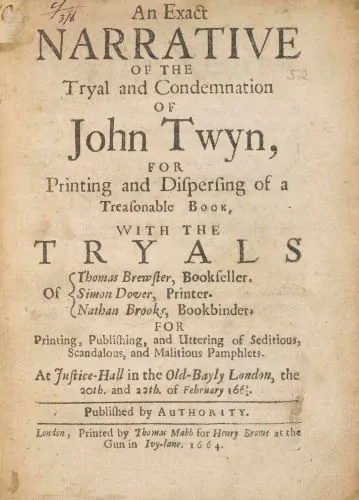
Issued in 1664, An Exact Narrative of the Tryal and Condemnation of John Twyn presented its official credentials before readers encountered the proceedings themselves. The title page announced that the volume was “Published by Authority,” identifying its appearance as an approved intervention in the disputes it described. Its imprint named Thomas Mabb as printer and Henry Brome as bookseller, bringing participants in L’Estrange’s professional circle into the production of the record. Mabb had accompanied the search of Twyn’s premises and testified about the evidence recovered there; he now printed an account in which his own testimony supported the conviction. Brome, closely associated with L’Estrange’s publications, supplied the commercial outlet through which that account reached purchasers. These connections establish the volume’s proximity to the enforcement operation, although they do not by themselves identify the author of its unsigned introductory and concluding commentary.
The prefatory address instructed its audience in how the proceedings should be understood. It promised accuracy and fair treatment of the defendants, then immediately characterized the outcome as an illustration of royal mercy. Four lives had supposedly been forfeited, but the king’s clemency had required only one death. Since the other defendants had actually faced charges of sedition, this assertion went beyond reporting their convictions to pronounce on the capital liability they allegedly escaped. Severe punishment could consequently appear restrained when measured against the greater punishment the crown was said to have forgone. An adjournment granted to the remaining prisoners became further evidence of judicial consideration, while the presence of printers and booksellers on half the jury supplied another assurance of fairness. The prefacer interpreted these jurors’ willingness to convict members of their own occupation as proof that loyalty and justice had overcome commercial self-interest. The invitation to judge the proceedings arrived with an explanation of which features deserved admiration and what conclusions should follow from them.
Reproducing the incriminating language posed a separate editorial difficulty. Where the report reached the passages selected for Twyn’s indictment, it withheld most of their wording and substituted a summary of their alleged political purposes. The stated reason was that the extracts were too impious for publication, allowing their condemnation to circulate while restricting access to the language being condemned. Purchasers could follow extensive exchanges about responsibility for the treatise, but their assessment of its contents depended substantially on the characterization supplied by its opponents.
Twyn’s final speech exposed a more immediate struggle over what could enter the record. The narrative describes Sir Richard Ford interrupting him when he characterized the book as scandalous and seditious, insisting that he also acknowledge its designation as treasonable. Ford permitted confession and admonitions to the spectators, but repeatedly rejected attempts to justify or mitigate the conduct for which Twyn had been condemned. When the prisoner disputed aspects of the investigation, including the alleged failure to apprehend those who had supplied the manuscript, Ford directed him away from defending himself and toward preparation for death. The exchange preserved a sharp restriction beneath the sheriff’s assurances that a dying man’s Christian liberty would be respected. Permission to speak did not include permission to reopen the judgment. After describing the execution, the compiler added two observations answering claims made on the scaffold. One challenged Twyn’s assertion that proofs had been corrected outside his house; the other rejected his accusation that officials had neglected to pursue Calvert and her maid. The publication continued the dispute after Twyn could no longer reply, assigning its final explanatory voice to those defending the prosecution. Its preservation of his objections remains valuable evidence, but those objections reached subsequent readers enclosed within repeated instructions to disbelieve them.
Competition with sympathetic accounts of condemned opponents supplied an explicit reason for producing the volume. The preface complained that unauthorized narratives of earlier treason trials had justified the offenders and cast reflections on the king, making the management of judicial reputation a continuing publishing concern. It also attacked collections of the regicides’ speeches as fabrications through which surviving conspirators advanced their purposes in the names of the dead. Such accusations reveal an anxiety that execution could furnish opponents with persuasive testimony instead of extinguishing their influence. By issuing its own detailed narrative, the authorized publishing circle sought to establish the interpretation against which competing versions would be judged, while reminding those who circulated them that occupational necessity offered uncertain protection. The suppression of Twyn’s undertaking had produced a new item for Brome’s shop, a book that made the prosecution itself an argument for further intervention against the press.
When Religious Dissent Became a Press Offense
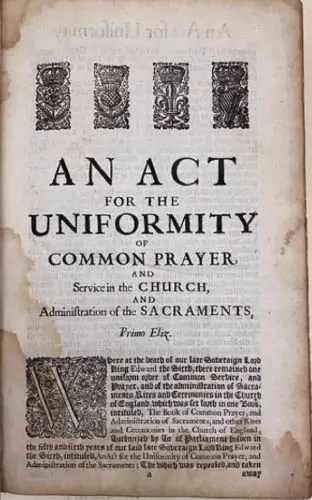
The removal of ministers in 1662 did not dissolve the attachments formed between preachers and their congregations. Under the Act of Uniformity, clergymen who failed to meet the prescribed requirements by August 24 faced exclusion from their positions in the established Church. Many approached that deadline with farewell sermons, explaining their departure to people whose religious lives they had helped shape. Publication subsequently allowed these addresses to outlast the occasions that produced them. Former parishioners could return to a minister’s teaching, while readers elsewhere could encounter a separation they had never witnessed. A settlement that reassigned ecclesiastical office consequently faced a further difficulty: the displaced incumbent might retain spiritual credibility among those expected to accept his replacement.
Matthew Newcomen’s Ultimum Vale, published in 1663, illustrates how pastoral reassurance could sustain an alternative understanding of legitimate ministry. Its title page identified him as formerly preaching at Dedham in Essex and now serving the English church at Leiden, presenting relocation as compatible with continued religious service. Taking Acts 20:32 as his text, Newcomen recalled Paul’s departure from the elders of Ephesus and his commendation of them to God. This biblical encounter furnished an example through which separation could be understood without conceding that the departing preacher’s work had become discredited. His exposition also contained a pointed argument about church government. Although Ephesus was an important city, he observed, the passage mentioned no metropolitan bishop; its elders instead possessed equal authority by divine appointment. That reading disputed the scriptural foundations of the hierarchy restored to power in England. Toward the sermon’s close, Newcomen reminded his hearers that their response to his warnings would matter at the Last Judgment, extending the significance of their relationship beyond his departure. The address combined practical concern for their salvation with a defense of ministerial standing that the restored episcopate could not readily accommodate.
Biblical lament could make the religious settlement appear disastrous without expressly demanding its overthrow. In extracts from Edmund Calamy’s Aldermanbury sermon of December 28, 1662, reproduced in Considerations and Proposals, the threatened loss of the Ark of God signified national spiritual calamity. Speaking several months after the farewell sermons, Calamy complained of advancing popery and asked where the religious leaders capable of answering the danger had gone. Such language invited an unfavorable judgment of England’s condition under the restored Church, even though the passages L’Estrange selected contained no explicit instruction to attack the king.
For L’Estrange, the publication of these grievances could itself constitute an accusation against the settlement’s authors. He described collections of farewell sermons as an arraignment of the law and a charge of persecution against Charles II and Parliament. Their presentation mattered to this judgment. Separate addresses, assembled into volumes and accompanied by images of the ejected ministers, could give readers a collective account of suffering across numerous congregations. In his description, approximately thirty or forty sermons appeared together, converting individual departures into an extensive indictment. He also repeated an estimate, attributed to experienced members of the printing trade, that nearly thirty thousand copies of farewell sermons had been printed since the Uniformity Act. That figure requires treatment as an interested contemporary estimate, rather than a verified total. Its argumentative purpose was nevertheless clear. L’Estrange represented the publications as a substantial campaign whose reach made the ministers’ continuing influence an urgent governmental concern.
His response had already included confiscation before he became Surveyor. In the June 1663 pamphlet, L’Estrange reported seizing between twenty and thirty reams of farewell sermons in unbound sheets. The quantity describes paper taken into custody and cannot establish how many complete books were involved, but it identifies these sermons as actual targets of intervention. His campaign encompassed the unauthorized preservation of an ejected ministry’s teaching alongside the pursuit of writings that expressly defended violent resistance.
David Appleby’s study of the farewell sermons gives serious weight to the political challenge presented by clergy often characterized as moderate. Their arguments could undermine the restored order by encouraging congregations to judge ecclesiastical requirements against obligations understood to come from God. Refusal to accept a bishop’s spiritual authority did not establish an intention to kill the monarch or organize an uprising. L’Estrange compressed that distinction when he predicted that the cultivation of popular resentment would lead to weapons and rebellion. The sermons’ political implications made his concern intelligible, but the progression he anticipated required evidence beyond their expressions of grief or their rejection of episcopal government. His interpretation also left little room for subjects who considered themselves loyal while believing that the Church had wrongfully deprived them of faithful pastors. Suppressing the farewell literature sought to make exclusion from an authorized pulpit constrain the minister’s subsequent relationship with his congregation, extending the consequences of religious conformity into the books through which that relationship might survive.
The Intelligencer and The Newes: The Business of Authorized Information
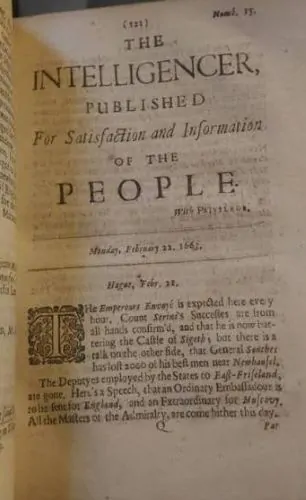
By the autumn of 1663, readers could purchase The Intelligencer on Mondays and The Newes on Thursdays, both associated with Henry Brome’s publishing business. The recurring schedule required L’Estrange to supply material worth another purchase before the previous installment had become distant history. His opening declaration addressed this commercial obligation as well as the political purposes already considered. He promised to avoid recycling intelligence in ways that made customers pay repeatedly for the same information, and he undertook to arrange his material coherently. These assurances recognized that readers could judge a newspaper by its usefulness, irrespective of their allegiance to the monarchy. Exclusive authorization provided an opportunity to sell, but turning that opportunity into dependable income required attention to what purchasers expected to receive.
Obtaining suitable reports depended on arrangements that the grant of a publishing privilege could not supply by itself. Henry Muddiman, whose experience in newswriting preceded L’Estrange’s appointment, was initially supposed to assist the enterprise for £3 a week. The arrangement placed a monetary value on accumulated correspondence and knowledge of how to acquire publishable information. L’Estrange also sought help with postage, complaining in September 1663 that the expense threatened to make his undertaking costly without official assistance. Access to government servants presented another recurring negotiation. On December 17, 1664, Samuel Pepys recorded L’Estrange’s request for naval intelligence, which he intended to provide when he thought appropriate. Pepys’s reservation matters. Association with the crown did not entitle the newswriter to everything an official knew. A useful report still depended on someone deciding to release it, and those decisions could affect both the timeliness and substance of the resulting paper.
What reached readers included matters whose interest exceeded L’Estrange’s campaign against forbidden books. The Newes of November 12, 1663, carried a report from Chester describing an assize verdict in favor of Lord Brandon against Mr. Fitton. The correspondent presented this as private news available in the absence of much public intelligence, allowing a dispute involving provincial gentlemen to enter a publication concerned with affairs of wider consequence. Such items show why the papers should be examined as collections of reports as well as vehicles for their editor’s convictions. Their treatment of the northern rising of 1663 nevertheless gave those convictions a prominent place. In its October 22 issue, The Newes connected the insurgents’ conduct with arguments circulated in recently printed works. An account of an unfolding disturbance thereby became an occasion to explain what L’Estrange believed had caused it. Repeated installments could place that explanation beside further developments, encouraging readers to interpret subsequent proceedings within an account already supplied.
Advertising created a more immediate intersection between commercial dealings and editorial intervention. On November 5, 1663, L’Estrange complained in The Newes that Henry Eversden had induced his printer to insert a book advertisement under a misleading title. He represented the incident as a bookseller’s maneuver to increase sales, using the newspaper to contest the way access to its readers had been obtained. The episode reveals both the value of that access to another trader and the editor’s ability to turn a dispute over its use into published criticism.
Street distribution required a similarly complicated accommodation with people L’Estrange distrusted. In his first number, he acknowledged that hawkers offered a profitable means of selling news, while accusing them of using the same occupation to circulate seditious publications. He contemplated another method unless adequate safeguards could be secured, presenting the possible sacrifice of sales as evidence of conscientious conduct. Yet James Hickes’s subsequent account of the trade recalled allowances of copies and small payments that L’Estrange had provided to women selling the papers. That retrospective testimony indicates the continuing importance of their cooperation, despite his declared suspicions. The circulation of authorized news depended partly on securing the assistance of intermediaries whose other transactions remained objects of official concern.
The financial relationship between the newspapers and the Surveyorship emerges most clearly when L’Estrange’s different categories of expenditure are kept distinct. In correspondence from October 1665, he valued the newsbooks at approximately £400 a year. He also explained earlier complaints about expense by referring to substantial initial outlays, including the maintenance of spies and other agents, which he put at about £500 during the first year. These figures concerned different periods and purposes; they cannot simply be subtracted to establish an annual profit or loss. His account instead presented newspaper income as a resource supporting a wider undertaking whose costs extended beyond producing the next issue. Payments connected with investigation could absorb money earned through privileged publication. Because he advanced these estimates while defending his position and seeking support, they deserve scrutiny as interested representations rather than audited accounts. They nevertheless explain why apparently contradictory descriptions of a profitable newspaper and burdensome employment could coexist. The evidence establishes a material connection between the two activities, while leaving the motives behind particular prosecutions to be demonstrated from the circumstances of each case.
The plague of 1665 further broadened what this publishing business could provide. L’Estrange remained in London, and his papers communicated civic instructions and information about the progress of the disease. Mortality figures gave readers material relevant to immediate decisions about movement and contact with the city, even as reporting sought to counter alarming interpretations circulating elsewhere. Such coverage supplied a practical reason to consult an authorized publication that cannot be reduced to agreement with its editor’s religious or political judgments. It also made accuracy and continuity part of the service expected from a newspaper enjoying official favor. L’Estrange’s enterprise consequently had to satisfy demands that his regulatory powers could not settle. Government wanted useful communication, readers wanted worthwhile intelligence, and the income sustaining his work depended on producing a paper that both would continue to value.
When the Government Chose Another Publisher
The naval war of 1665 exposed disagreements about how a royalist newspaper should distribute praise. Following the English victory at Lowestoft in June, critics complained that L’Estrange’s reporting neglected the Duke of York’s personal conduct and failed to mention Prince Rupert. Pepys, meanwhile, recorded that the newsbook had given the Earl of Sandwich appropriate credit when others were concentrating their admiration on the royal commanders. L’Estrange also issued separate narratives celebrating the victory, making a simple charge of indifference to the fleet’s success difficult to sustain. The dispute concerned which achievements received emphasis and whose reputation benefited from their publication. Reporting that satisfied one participant’s supporters could disappoint another’s, even when everyone involved favored the monarchy. L’Estrange’s allegiance offered no assurance that his treatment of a royal victory would meet the expectations of those supervising public information.
The court’s removal to Oxford during the plague gave these disagreements a different institutional setting. L’Estrange continued working in London, while Secretary of State Henry Bennet, Lord Arlington, and his undersecretary, Joseph Williamson, could consider alternative arrangements from the court’s new location. An October proposal offered L’Estrange £100 annually in exchange for surrendering his rights in the composition and profits of the newsbook. His earlier complaints about the burden of the undertaking supplied an argument for presenting withdrawal as relief from an unwelcome responsibility. In reply, he combined professions of submission with a warning that relinquishing the business would ruin him. He also invoked his service during the epidemic as grounds for continued protection, asking his patron to recognize obligations extending beyond the quality of particular reports. His willingness to resume an arrangement with Muddiman, provided useful intelligence became available, shows that resistance included an attempt at accommodation. Yet the secretary’s office could now employ Muddiman in a competing operation instead of requiring him to assist the existing publisher. Negotiation over L’Estrange’s position proceeded alongside preparations that could deprive his objections of practical force.
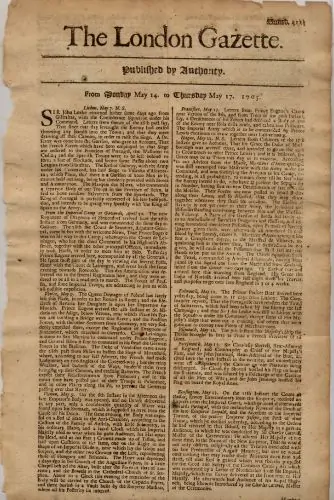
The Oxford Gazette began publication in November 1665, with Muddiman preparing its contents and Thomas Newcombe producing a London reprint. Its first number arranged reports in two columns beneath an assertion of official authorization. News of an episcopal appointment and a substantial list of newly selected sheriffs appeared alongside information from overseas, presenting government business through a comparatively restrained sequence of notices. The compact format also made the paper convenient to transmit. On November 22, Pepys welcomed its supply of news and the absence of what he regarded as foolishness. His response records the appeal of a different editorial presentation to an experienced reader, without establishing that the new publication offered greater freedom to discuss government.
L’Estrange attempted to meet the challenge by adapting his own paper’s size and presentation in late November. An appeal to the king also sought protection for the position that ministerial intervention was undermining. By early 1666, he had agreed to discontinue his news publications in return for compensation. The Surveyorship and his licensing responsibilities continued, as did his separate privilege concerning advertisements, so the settlement curtailed a particular undertaking while leaving substantial portions of his authority intact.
The successor became the London Gazette with its twenty-fourth number in February 1666, continuing the existing sequence after the court’s return. That issue demonstrates how little a quieter editorial manner necessarily implied a change in religious commitments. A report from Durham celebrated Anthony Pearson’s rejection of religious separation and his reconciliation with the Church of England before his death. It characterized his earlier convictions as error and presented his final conformity as a commendable resolution, carrying an ecclesiastical judgment within an apparently routine provincial notice. Private earnings likewise remained connected with the organization of official intelligence. As Will Slauter explains, Williamson combined supervision of the Gazette with a subscription newsletter business, reserving valuable information for paying correspondents while benefiting from privileged postal arrangements. The displacement of L’Estrange consequently brought printed news under more direct secretarial management without dissolving the commercial interests surrounding its production. Decisions about which reports entered the authorized newspaper, and which circulated through more exclusive correspondence, now rested within arrangements controlled by another official whose service to government also supported a personal business.
Why the Press Would Not Stay Regulated
Repeated inspections left some familiar names on the list of unauthorized printers. John Darby appeared among the masters identified as having established themselves contrary to the act in 1668, and he remained among those singled out in 1675. An intervening inquiry recorded his apprenticeship, admission to the freedom of the Stationers’ Company and the City, and marriage to the printer Dover’s widow, whose business he continued. These particulars supplied an occupational history through which his establishment could claim a recognizable place within the trade. The authorities consequently encountered businesses whose qualifications and succession arrangements required consideration alongside the statutory restrictions on admission. Darby’s repeated appearance in the returns demonstrates that identifying an unauthorized master could leave the question of his continued operation unresolved for years.
L’Estrange’s own assessments also distinguished objectionable writing from material likely to sustain a prosecution. In a letter to Arlington dated April 24, 1668, he considered how juries might respond to several pamphlets and judged Liberty of Conscience more suitable for an answer than punishment, except as an unlicensed publication. That qualification preserved a possible charge against its production while treating its argument as something to refute. His estimate of prospective proceedings reveals a practical calculation. An investigator had to consider which accusations other participants in the judicial process would find persuasive.
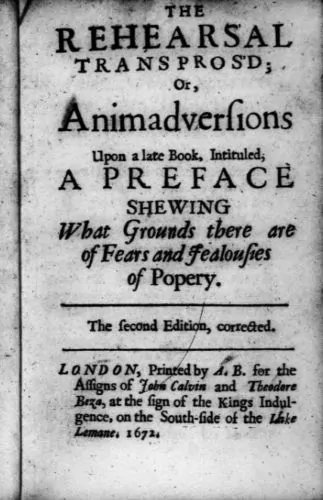
The dispute over Andrew Marvell’s The Rehearsal Transpros’d placed L’Estrange in the unexpected position of assisting a publication that officers of the Stationers’ Company obstructed. First published anonymously in 1672, Marvell’s attack on Samuel Parker challenged a prominent clerical defender of coercive religious authority. After the warden Samuel Mearne seized sheets from a second impression, the Earl of Anglesey intervened on behalf of its publisher, Nathaniel Ponder. According to L’Estrange’s deposition of January 1673, Anglesey told him that Charles II considered Marvell’s intervention favorable to himself and did not want the work suppressed. The Surveyor consented to license an amended text, requiring changes to passages he considered objectionable. Authorization also promised to help Ponder protect his investment against competing reprints, giving the application a commercial purpose. Although a warden likewise signed the license, the Company’s clerk, George Tokefield, refused registration, and the Court of Assistants upheld that refusal on December 16, 1672. L’Estrange’s account was testimony from someone explaining his own conduct, so its report of the king’s wishes requires that qualification. Nevertheless, the proceedings establish that securing approval from the censor could leave a publisher facing resistance at another institutional stage, with royal favor itself communicated through intermediaries whose statements became part of the controversy.
Bibliographical examination reveals different responses to the demanded revisions within the second impression itself. Ponder assembled copies using sheets printed before the corrections alongside material incorporating the alterations. As Marvell’s modern editors reconstruct the production history, some surviving copies consequently preserve passages that the revised text was supposed to exclude. Reusing available sheets conserved a publisher’s investment, while making the practical reach of the licenser’s intervention depend on the particular combination of paper bound into an individual book.
Manuscript publication sustained political writing through a different organization of reproduction. Harold Love’s scholarship establishes that handwritten texts could be deliberately distributed, sometimes through professional copying services, long after printing had become an ordinary means of publication. This practice offered advantages of selective readership and discretion that cannot be explained solely as responses to prohibition. Marvell’s The Last Instructions to a Painter, which satirized the naval and political failures of 1667, circulated in manuscript before its first appearance in print in 1689. That interval makes the printed publication date an inadequate starting point for the history of the poem’s readership. Someone possessing a handwritten copy could provide the basis for further reproduction without obtaining access to a press or commissioning an edition. Such circulation remained vulnerable to discovery, and dependence on particular social connections could restrict the number and composition of its readers. Its significance for enforcement lay in the multiplication of acts of transmission. A work could pass through numerous hands without acquiring the concentrated stock or identifiable production run associated with a printed book.
Once a report entered conversation, further circulation no longer required each recipient to possess a written copy. Royal proclamations in 1672 and 1674 attempted to restrict discussion of affairs of state in coffeehouses and other public places. As Will Slauter explains, people who heard the prohibited talk could themselves incur punishment if they failed to report it to a justice of the peace within twenty-four hours. This obligation sought to enlist listeners as potential witnesses, extending responsibility beyond those who manufactured or sold publications. The orders demonstrate official recognition of the consequences of spoken exchange, although their repeated issuance cannot establish how frequently speakers complied. Recovering a disputed statement now depended on what participants remembered and were willing to disclose, introducing questions about wording and attribution that seizure of a physical text could sometimes settle more directly.
Counting forbidden titles that reached readers would provide a poor measure of what regulation accomplished. Such a count would combine a work circulating intact with one available only after revision, while missing projects abandoned before they generated an identifiable official record. The mixed copies of Marvell’s publication offer unusually direct evidence of alteration and persistence occurring together. Darby’s recurrence in surveys, by comparison, documents an enduring enforcement problem without revealing every interruption to his business or every commission he might have declined. These differences require attention to the particular consequence an intervention produced, including changes that the mere survival of a title would conceal. Regulation continually encountered fresh transactions and interpretations. Approval of one version, action against one workshop, or punishment of one participant could leave subsequent copying and discussion requiring another decision.
The Observator and the Fight to Direct Opinion
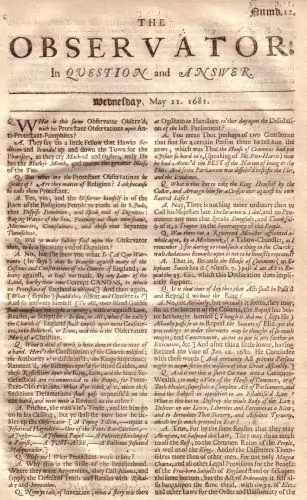
The expiration of the Licensing Act in 1679 removed the requirements for advance approval supplied by that statute, while leaving other means of proceeding against publications available. Charles II obtained judicial support in 1680 for prohibiting unauthorized news, and the crown continued to employ proclamations and prosecutions against unwelcome reporting. These interventions accompanied the Exclusion Crisis, during which opponents of the Catholic Duke of York sought to prevent his succession to the throne. Allegations of a Catholic conspiracy to assassinate Charles, circulating since 1678, gave the campaign an atmosphere of impending catastrophe. L’Estrange launched The Observator on April 13, 1681, shortly after the king dissolved the Oxford Parliament and frustrated another attempt to advance exclusion. The publication offered sustained commentary on a controversy in which the credibility of witnesses had become inseparable from the future of the monarchy.
Conversation supplied the paper’s characteristic method of instruction. Early issues employed questions and answers or exchanges between Whig and Tory, while later encounters featured the Observator and Trimmer. These designations assigned political identities to the speakers before readers assessed their reasoning, allowing a recognizable disposition to accompany each objection. L’Estrange controlled both sides of the exchange and could make an opponent disclose purposes that an actual controversialist would hardly acknowledge. In number 110, for example, the Whig conducts his companion through a study containing an extravagant collection of dissenting literature and political manuscripts. His boast that these materials could furnish an expedient for any emergency presents apparently impressive learning as a collection of resources for partisan manipulation. The discussion proceeds to alleged instruction in the gestures and vocal effects through which dissenting preachers supposedly influenced congregations. Such admissions belong to the constructed encounter; their appearance in dialogue does not establish that opponents actually described their activities this way. The scene nevertheless invites readers to imagine themselves gaining access to concealed intentions, making the pleasure of discovery serve L’Estrange’s explanation of how political deception worked.
The challenge to Titus Oates’s credibility had substantial justification. His allegations of a Catholic assassination conspiracy were fabricated, yet belief in them contributed to proceedings that sent innocent people to their deaths. Peter Hinds’s study of the controversy places L’Estrange’s persistent objections within the wider struggle over how these accusations acquired authority. A dialogue published on May 14, 1681, makes a defender of the witnesses declare that it would be preferable for numerous accused men to hang than for a witness for the crown to lose standing. This invented declaration exposes the moral consequences of protecting an informer’s reputation regardless of the truth of particular allegations. It also illustrates how satire could identify a serious evidentiary problem through an exaggerated confession of indifference to injustice. Discrediting the Plot served L’Estrange’s opposition to exclusion, but that political advantage was compatible with the substantive merit of challenging false testimony.
The preface to the collected Observator reveals a more expansive treatment of evidence when L’Estrange assessed conspiracies among the crown’s opponents. Following the discoveries associated with the Rye House Plot in 1683, he presented the proceedings as confirmation of warnings he had issued throughout his campaign. There were real conspiratorial undertakings to investigate, including discussions of insurrection and a scheme to assassinate the royal brothers. As Newton Key emphasizes, the trials helped organize different plans into the connected account subsequently understood as the Rye House Plot, although participants possessed different knowledge and pursued different objectives. L’Estrange’s retrospective explanation compressed these distinctions by making the exposure of conspiracy vindicate his earlier suspicions of the faction collectively. He invoked seized arms and judicial proceedings, then described the condemned as either acknowledging their crimes or justifying their treason. That formulation allowed a prisoner’s defense of his conduct to reinforce the interpretation already placed upon it. The existence of criminal planning consequently supported a much wider judgment about the political opposition, with insufficient discrimination between involvement in particular schemes and attachment to causes that conspirators also professed. His success in identifying the falsity of Oates’s accusations supplied no independent verification of this enlarged account of Protestant rebellion.
The figure of the Trimmer brought professions of moderation under similar scrutiny. On September 28, 1685, this interlocutor asks why dissenters still warrant attack when coercion has already weakened them, and why compliance with the established Church should not settle doubts about their allegiance. The Observator answers by distinguishing outward conformity from continuing attachments, suggesting that apparently obedient subjects might preserve the sympathies that made them dangerous. The exchange makes acceptable behavior under the law insufficient evidence of political reliability, reserving for the commentator a further judgment about convictions that formal compliance could conceal.
James II’s accession sharpened the difficulty of reconciling this Anglican militancy with obedience to royal policy. L’Estrange received a knighthood in 1685, and Parliament’s renewal of the Licensing Act that year restored the statutory machinery of advance approval. His position nevertheless became uncomfortable as the king moved toward extending toleration to Catholics and Protestant dissenters. When discussing that prospect, L’Estrange promised submission to his superiors while continuing to affirm his own membership in the Church of England. This response preserved loyalty through deference without supplying an enthusiastic defense of the religious accommodation toward which James was proceeding. The Observator ceased publication in March 1687, before the English Declaration of Indulgence appeared in April. The final tension arose within the commitments the paper had taught its readers. Obedience could require acceptance of a policy that unsettled the ecclesiastical settlement L’Estrange had repeatedly associated with political security.
Does a Fragmented System Deserve to Be Called a Press Regime?
The following video from WikiAudio is a brief overview of Roger L’Estrange:
Calling this arrangement a press regime risks granting L’Estrange the institutional centrality that he spent much of his career trying to obtain. The responsibilities distributed among separate authorities did not necessarily converge into a coordinated policy, and disagreements could concern the purposes of regulation as well as its execution. Treadwell’s treatment of the printing legislation as an accommodation of several interests provides grounds for resisting an interpretation organized exclusively around political suppression. L’Estrange’s displacement from newspaper publishing and his difficulties with the Stationers’ Company also challenge the assumption that his priorities reliably expressed those of the government. An account dominated by his explanations could mistake the prominence of his voice in the surviving material for the extent of his command. A career marked by repeated efforts to secure cooperation may reveal several competing projects more clearly than a single governing design. If his victories and reversals become equally serviceable evidence of a regime’s operation, the term loses its ability to distinguish effective authority from frustrated ambition.
Debora Shuger’s work on Tudor and Stuart censorship supplies a further challenge by placing protection against injurious language near the center of contemporary understandings of regulation. Her interpretation directs attention to the damage that defamatory accusations could inflict and to the ethical obligations through which restrictions acquired legitimacy. From this perspective, a censor might understand intervention as a duty toward people endangered by publication, with political obedience forming part of a broader conception of communal responsibility. The material involved in Twyn’s prosecution and the lethal consequences of the fabricated Popish Plot give that argument particular force. Advocacy of violent resistance and false allegations of criminal conspiracy presented problems that cannot adequately be described as ordinary disagreement with those holding office. L’Estrange’s recognition of some such dangers deserves substantive consideration when assessing his purposes. The difficulty arises when evidence of specific wrongdoing supplies grounds for treating a larger religious or political constituency as presumptively dangerous. Establishing that certain publications caused or encouraged harm does not settle whether the same justification properly extended to the other works he pursued.
The financial arrangements likewise require standards appropriate to the institutions in which he served. Fees and exclusive privileges could support public employment, making publishing income insufficient evidence, by itself, of corruption. A claim that L’Estrange prosecuted a particular competitor to increase his own sales would require evidence connecting that intervention with the anticipated benefit. His criticism of commercially compromised stationers nevertheless provides a contemporary basis for examining his incentives. The possibility that profit might distort supervision was a problem he recognized within the system he advocated.
His sustained appeals to readers introduce another complication, because they required forms of engagement that a simple opposition between censorship and public discussion would obscure. An audience expected to examine testimony and detect misleading arguments was being asked to undertake consequential intellectual work. The conversations in The Observator made that activity recurrent, offering occasions for political judgment even while directing readers toward prescribed answers. Participation of this kind did not necessarily entail a claim to choose rulers or determine the constitution; L’Estrange could encourage reasoning about obligations whose binding authority he considered already established. It would be misleading to turn his journalism into an inadvertent declaration of liberal principles. Nevertheless, the paper’s existence demonstrates that a defense of hierarchy could depend on addressing readers as interpreters, making the expansion of political discussion compatible with efforts to discipline its conclusions.
These challenges justify retaining “press regime” only with a more restricted explanatory purpose. The term can identify arrangements that made access to publication conditional, while the degree of coordination and the consequences of particular decisions remain matters for investigation. Randy Robertson’s response to claims of censorial ineffectiveness is useful here. Selective pursuit of objectionable material could reflect practical priorities, especially when failure to obtain a license offered a convenient basis for proceedings. The circulation of other unlicensed works would then establish uneven application without necessarily demonstrating an absence of political discrimination. That explanation cannot simply be assigned to every apparent failure since doing so would reproduce the problem of making the interpretation impossible to disprove. L’Estrange’s defeats must remain defeats, and the early conjunction of investigative responsibility with newspaper privilege must be distinguished from his later activity as a controversialist under altered conditions. The argument consequently rests most securely on identifiable decisions that advantaged particular publications or obstructed others. This formulation accommodates legitimate concerns about harmful writing while preserving scrutiny of how officials converted those concerns into judgments about who deserved permission to publish.
Conclusion: Authority over the Means of Being Heard
For L’Estrange, governing the press meant making the business of publication answerable to the settlement restored in 1660. Considerations and Proposals expressed this ambition through obligations imposed on the people whose work sustained the circulation of books. His surveyorship provided opportunities to pursue that supervision, while his newspaper privileges gave royal service a commercial return. The resulting combination placed an advocate of the monarchy in a position to investigate unauthorized publications while supplying readers with accounts of his own. Its political significance does not require personal enrichment to explain every intervention. The arrangement connected the treatment of competing publications with the advancement of a writer whose claims to authority rested partly on his commitment to their suppression.
The security rationale deserves recognition within this interpretation. Twyn’s publication defended resistance against rulers, while the fabricated Popish Plot demonstrated the destructive consequences of false criminal accusations. These circumstances gave the regulation of writing purposes that cannot be reduced to protecting officeholders from embarrassment. They did not establish an equivalent danger in every expression of religious nonconformity or political dissatisfaction that L’Estrange associated with disobedience.
Changes in official priorities repeatedly disturbed his expectations of what loyal service should secure. The rise of the Gazette showed that the crown’s ministers could arrange an authorized news supply through another publisher, leaving L’Estrange to negotiate compensation for his displacement. Under James II, his attachment to the established Church became difficult to reconcile with the religious accommodation toward which the monarch was moving. Such developments distinguish the continuity of his allegiance from the changing circumstances in which it acquired practical value. They also require a chronology that preserves differences between the early newspaper enterprise and the later campaign conducted through The Observator. The dialogue serial gave literary performance a prominence that cannot simply be equated with the privileges supporting his earlier news business. Across these changes, L’Estrange remained committed to identifying trustworthy counsel through the obligations he believed subjects owed their rulers. His career consequently illuminates both the opportunities available to an energetic royalist and the dependence of those opportunities on decisions he could influence without necessarily determining.
Permission to publish was a consequential resource whose value extended beyond the fortunes of any particular official. Restrictions affected the commitments required of those who produced and distributed a work, even when copies ultimately reached readers. Privilege could sustain an authorized undertaking while exposing competing efforts to expenses and interruptions that their supporters had to absorb. The evidence supports this account of differential treatment more securely than it supports claims of a consistently coordinated campaign or a predictable transformation of opinion. Before readers could accept or reject a publication’s claims, someone had to bear the consequences of making it available.
Bibliography
- Appleby, David J. Black Bartholomew’s Day: Preaching, Polemic and Restoration Nonconformity. Manchester: Manchester University Press, 2007.
- Charles II, King of England. By the King. A Proclamation to Restrain the Spreading of False News, and Licentious Talking of Matters of State and Government. London: Assigns of John Bill and Christopher Barker, 1674.
- Deazley, Ronan. “Commentary on the Licensing Act 1662.” In Primary Sources on Copyright (1450–1900), edited by Lionel Bently and Martin Kretschmer, 2008.
- Dunan-Page, Anne, and Beth Lynch, eds. Roger L’Estrange and the Making of Restoration Culture. Aldershot: Ashgate, 2008.
- England. Licensing of the Press Act, 1662. 13 & 14 Car. II, c. 33. In The Statutes of the Realm, edited by John Raithby, 5:428–35. Record Commission, 1819.
- An Exact Narrative of the Tryal and Condemnation of John Twyn, for Printing and Dispersing of a Treasonable Book: With the Tryals of Thomas Brewster, Bookseller, Simon Dover, Printer, and Nathan Brooks, Bookbinder. London: Printed for Henry Brome, 1664.
- Blagden, Cyprian. The Stationers’ Company: A History, 1403–1959. Cambridge, MA: Harvard University Press, 1960.
- Greene, Jody. The Trouble with Ownership: Literary Property and Authorial Liability in England, 1660–1730. Philadelphia: University of Pennsylvania Press, 2005.
- Hinds, Peter. “The Horrid Popish Plot”: Roger L’Estrange and the Circulation of Political Discourse in Late Seventeenth-Century London. Oxford: Oxford University Press for the British Academy, 2010.
- Key, Newton. “Constructing Conspiracy: Reporting the Rye House Plot Trials.” In The State Trials and the Politics of Justice in Later Stuart England, edited by Brian Cowan and Scott Sowerby, 135–158. Woodbridge: Boydell Press, 2021.
- Keymer, Thomas, and Frank Qiao. “John Twyn.” The Grub Street Project. July 2024.
- Kitchin, George. Sir Roger L’Estrange: A Contribution to the History of the Press in the Seventeenth Century. New York: Augustus M. Kelley, 1971. See especially page 143 for the opening statement of The Intelligencer.
- L’Estrange, Roger. A Caveat to the Cavaliers. London, 1661.
- —-. Considerations and Proposals in Order to the Regulation of the Press: Together with Diverse Instances of Treasonous and Seditious Pamphlets, Proving the Necessity Thereof. London: A. C., 1663.
- —-. The Intelligencer, no. 1, August 31, 1663.
- —-. L’Estrange His Apology. London, 1660.
- —-. A Memento Directed to All Those That Truly Reverence the Memory of King Charles the Martyr. London: Henry Brome, 1662.
- —-. The Newes. October 22, November 5, and November 12, 1663.
- —-. No Blinde Guides. London, 1660.
- —-. Selections from the Observator (1681–1687). Introduction by Violet Jordain. Augustan Reprint Society Publication 141. Los Angeles: William Andrews Clark Memorial Library, University of California, 1970.
- —-. Truth and Loyalty Vindicated from the Reproaches and Clamours of Mr. Edward Bagshaw. London, 1662.
- The London Gazette, no. 24, February 5, 1666.
- Love, Harold. Scribal Publication in Seventeenth-Century England. Oxford: Clarendon Press, 1993.
- Lynch, Beth. “Rhetoricating and Identity in L’Estrange’s Early Career, 1659–1662.” In Roger L’Estrange and the Making of Restoration Culture, edited by Anne Dunan-Page and Beth Lynch. Aldershot: Ashgate, 2008.
- Maltzahn, Nicholas von. “L’Estrange’s Milton.” In Roger L’Estrange and the Making of Restoration Culture, edited by Anne Dunan-Page and Beth Lynch. Aldershot: Ashgate, 2008.
- Marvell, Andrew. The Prose Works of Andrew Marvell. Vol. 1, 1672–1673. Edited by Martin Dzelzainis and Annabel Patterson. New Haven, CT: Yale University Press, 2003.
- Newcomen, Matthew. Ultimum Vale; or, The Last Farewel of a Minister of the Gospel to a Beloved People. London, 1663.
- The Oxford Gazette, no. 1, November 1665.
- Robertson, Randy. Censorship and Conflict in Seventeenth-Century England: The Subtle Art of Division. University Park: Pennsylvania State University Press, 2009.
- Shuger, Debora. Censorship and Cultural Sensibility: The Regulation of Language in Tudor-Stuart England. Philadelphia: University of Pennsylvania Press, 2006.
- Siebert, Fredrick Seaton. Freedom of the Press in England, 1476–1776: The Rise and Decline of Government Controls. Urbana: University of Illinois Press, 1952.
- Slauter, Will. “The Rise of the Newspaper.” In Making News: The Political Economy of Journalism in Britain and America from the Glorious Revolution to the Internet, edited by Richard R. John and Jonathan Silberstein-Loeb, 19–46. Oxford: Oxford University Press, 2015.
- Sutherland, James. The Restoration Newspaper and Its Development. Cambridge: Cambridge University Press, 1986.
- Taylor, Darrick N. “L’Estrange His Life: Public and Persona in the Life and Career of Sir Roger L’Estrange, 1616–1704.” PhD diss., University of Kansas, 2011.
- Treadwell, Michael. “The Stationers and the Printing Acts at the End of the Seventeenth Century.” In The Cambridge History of the Book in Britain, vol. 4, 1557–1695, edited by John Barnard and D. F. McKenzie, 755–76. Cambridge: Cambridge University Press, 2002.
Originally published by Brewminate, 09.14.2026, under the terms of a Creative Commons Attribution-NonCommercial-NoDerivatives 4.0 International license.
About the Author