Rio’s smallpox vaccine worked, but the state imposed it through institutions already associated with demolition, forced removal, and intrusion, turning public health into revolt.

By Matthew A. McIntosh
Public Historian
Brewminate
Introduction: A City at War over a Needle
In November 1904, the capital of Brazil became a battlefield. Crowds overturned streetcars, tore paving stones from the roads, shattered streetlights, severed communication lines, and raised barricades across Rio de Janeiro’s central districts. Police cavalry charged demonstrators while rifle and revolver fire echoed through streets that the government had recently begun transforming into the monumental avenues of a supposedly civilized republic. For nearly a week, the authorities struggled to regain control as popular resistance merged with strikes, neighborhood fighting, and an attempted military coup. At the center of the crisis stood something physically small: the lancet used to vaccinate against smallpox. Later accounts often reduced the confrontation to an edifying contest between Oswaldo Cruz, the farsighted scientist, and an irrational population terrified by modern medicine. The violence that began on November 10 cannot be understood by isolating the vaccine from the government carrying it or the city into which it was being introduced.
Smallpox was not an invented danger, and vaccination was not medical fraud. The disease killed, blinded, scarred, and periodically overwhelmed Rio, while more than a century of accumulated experience had demonstrated that vaccination could prevent it. President Francisco de Paula Rodrigues Alves confronted a genuine public-health emergency when he authorized Cruz to attack the diseases damaging both the population and Brazil’s international reputation. Cruz’s campaigns against yellow fever and bubonic plague had already shown that coordinated state action could break patterns of epidemic transmission. Any interpretation that converts vaccination into a mere excuse for rebellion obscures the suffering caused by smallpox and the lives that wider immunization could have saved.
Yet public health did not approach Rio’s residents as an unfamiliar but benevolent visitor. Under Mayor Francisco Pereira Passos, the government was demolishing tenements, widening streets, and driving working people from neighborhoods coveted for commercial development and urban display. Sanitary brigades operating under Cruz entered homes with police support, inspected rooms, ordered disinfection, removed occupants, and contributed to the condemnation of buildings classified as dangerous to health. Congress made vaccination and revaccination compulsory throughout Brazil on October 31, 1904, drawing the new mandate into an administrative system already experienced as intrusive. When A Notícia published the proposed regulations on November 9, readers encountered provisions that could make vaccination certificates necessary for employment, education, travel, lodging, marriage, and other parts of ordinary life. The regulations had not yet gone into operation, and opposition claims frequently outran what the government had actually authorized. Rumors nevertheless warned that vaccinators would invade bedrooms, restrain inhabitants, and compel women to expose their bodies before male strangers. Such stories were sensational and sometimes knowingly dishonest, but they attached themselves to memories of real household invasions, making falsehood difficult to separate from what residents had already endured.
The uprising that followed was not one revolt directed by one motive. Some participants opposed vaccination itself, others principally rejected compulsion, and many street fighters brought grievances involving housing, police violence, labor conditions, racial exclusion, or the cost of transportation; meanwhile, opposition politicians and military conspirators tried to turn the disorder into a struggle for national power. The revolt must be understood as a convergence in which medical fear, constitutional language, social injury, and political opportunism briefly reinforced one another without becoming identical. Vaccination worked, but its effectiveness did not erase the coercive institutions through which the government sought compliance or transform every objection into ignorance. Rio rose against the needle because the state had made a protective medical procedure appear to be the latest instrument by which officials could enter the home, command the body, and demand trust without first earning it.
The Sick Capital the Republic Intended to Modernize
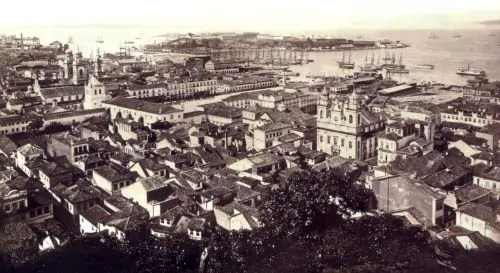
Rio de Janeiro entered the twentieth century as a capital whose population and commerce had expanded faster than its housing or public services. The 1900 census counted more than 800,000 inhabitants, an increase of well over half since 1890 and nearly three times the population recorded in 1872. Formerly enslaved people and their descendants lived alongside migrants from the Brazilian countryside and large communities of Portuguese and other European immigrants, many of them competing for insecure employment near the port and commercial center. Tenements, lodging houses, subdivided mansions, workshops, and improvised dwellings absorbed residents for whom formal housing remained scarce or unaffordable. Sewerage and piped water reached the city unevenly, while refuse accumulated in crowded districts where municipal services were least dependable. Density did not cause disease by itself, but contaminated water, poor drainage, insect vectors, vulnerable housing, and inadequate medical care allowed infection to move rapidly through communities already burdened by poverty.
The capital endured recurring epidemics of yellow fever, smallpox, and bubonic plague while tuberculosis exacted a less spectacular but relentless toll. Yellow fever acquired exceptional political importance because it killed recent European arrivals, frightened prospective immigrants, disrupted shipping, and helped give Rio its international reputation as the “tomb of foreigners.” Smallpox was more familiar to longtime residents, yet familiarity did not make it benign: successive outbreaks killed thousands, left survivors scarred, and demonstrated the weakness of voluntary vaccination arrangements. Disease consequently divided public attention in revealing ways, for the illnesses most feared by foreign travelers were not always those causing the greatest everyday mortality among the poor.
President Francisco de Paula Rodrigues Alves regarded Rio’s condition as a national impediment rather than a merely municipal embarrassment. Brazil’s export economy depended heavily upon coffee, customs revenue, maritime trade, and continued access to foreign credit, all of which passed symbolically or materially through the federal capital. The old port was congested and poorly integrated with railways and warehouses, while quarantine, disinfection, and fear of epidemic disease complicated the movement of vessels and cargo. Alves joined port reconstruction, urban remodeling, and sanitation within a single program intended to make Rio an efficient Atlantic entrepôt and an advertisement for republican Brazil. In his public messages, he argued that the capital could not attract labor and investment while foreign observers continued to associate it with infection. European immigration held particular importance for an elite that regarded imported labor as economically useful and often imagined it as an instrument for gradually whitening the country after abolition. Sanitation promised humanitarian benefits, but it also functioned as economic infrastructure and racialized population policy. The lives of poor Cariocas mattered within this vision, though often less as claims upon the republic than as elements of a city whose disorder supposedly obstructed national development.
The medicine behind this project was itself changing. Older environmental and miasmatic ideas remained influential while laboratory bacteriology, parasitology, and research into insect transmission altered how physicians understood particular infections. Yellow fever control increasingly concentrated on mosquitoes, plague prevention on rats and fleas, and smallpox prevention on vaccination, even though professional agreement about techniques and implementation remained incomplete. “Sanitation” was not one settled procedure but a collection of interventions whose scientific rationales, practical demands, and effects upon residents differed substantially.
Rio’s political institutions offered few reliable means through which the people most affected by modernization could influence its design. The Constitution of 1891 excluded illiterate men from voting and denied women the franchise, while patronage and electoral manipulation further narrowed meaningful participation. Municipal and federal officials consequently possessed extensive authority over a population they could describe statistically, inspect medically, and relocate administratively without treating it as an equal political partner. Cariocas were not politically inert: they petitioned authorities, appealed to courts, organized through workplaces and neighborhood associations, used newspapers, and repeatedly occupied the streets. Their actions exposed the distance between formal republican citizenship and the practical experience of government. Before compulsory vaccination placed a lancet against the body, the republic had already made its version of modernity visible through police uniforms, sanitary notices, construction barriers, and the rubble of condemned homes.
Bota-Abaixo: Displacement and the Cost of Progress
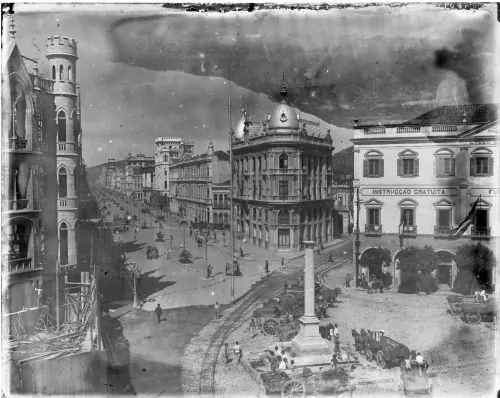
The campaign remembered as the Bota-Abaixo, the “knock-it-down,” began soon after President Rodrigues Alves appointed Francisco Pereira Passos mayor of the Federal District in late 1902. The phrase captured more than the extent of the demolition: it expressed the speed, authority, and apparent impatience with which municipal officials remade central Rio de Janeiro. Federal legislation reorganizing the district strengthened the executive government and reduced the opportunities through which property holders or occupants could delay public works. Buildings could be condemned, expropriated, and cleared according to administrative timetables that left little room for negotiation, particularly for tenants whose rights were weaker than those of owners. What officials regarded as the removal of obstructions appeared to many residents as government by decree, backed by inspectors, engineers, and police. The modern capital was being constructed through institutions that demanded compliance before they offered representation or security.
The reforms nevertheless addressed genuine defects in Rio’s urban fabric. Narrow streets restricted traffic between the port, commercial districts, and expanding suburbs, while inadequate drainage and uneven paving compounded the effects of flooding and waste accumulation. Passos’s administration widened thoroughfares, improved street surfaces, altered grades, extended drainage, and attempted to connect previously fragmented parts of the city. The destructive means by which these aims were pursued should not obscure their practical value, but neither did that value distribute the costs equitably.
Although the reconstruction is commonly described as the Pereira Passos reform, it consisted of distinct federal and municipal programs operating simultaneously. The federal government assumed responsibility for modernizing the port, constructing new access routes, and cutting Avenida Central through the crowded commercial center, while Passos directed a broader set of municipal interventions. Work on Avenida Central began in 1904 under the supervision of engineer Paulo de Frontin and required the destruction of roughly six hundred buildings, displacing several thousand residents and businesses from the corridor. Its imposing width and carefully regulated façades introduced a monumental scale associated with Parisian boulevards and the commercial capitals of the North Atlantic. Banks, newspapers, corporate offices, fashionable shops, and public institutions occupied the new avenue, while Marc Ferrez’s photographic album presented its architecture as material proof that the republic had overcome the disorder of the colonial city. Yet the avenue’s visual coherence depended upon excluding much of what had previously made the district socially heterogeneous: inexpensive lodgings, modest shops, workshops, street trades, and densely subdivided residences. Avenida Central was both a functional artery and a political exhibition, demonstrating national progress through a landscape from which much of the city’s poverty had been made less visible.
Passos’s municipal program extended far beyond this federal showcase. Avenida Passos was widened, Rua do Catete and other important routes were improved, Avenida Mem de Sá opened a new path across older neighborhoods, and Avenida Beira-Mar created an elegant waterfront connection between the center and the southern districts. The government also pursued drainage works, street extensions, public gardens, new paving, and municipal buildings, including the theatrical complex that would anchor the redeveloped center’s cultural identity. These projects altered circulation on a metropolitan scale and supplied infrastructure that Rio badly needed. Their combined effect subjected numerous blocks to demolition, construction dust, interrupted commerce, and abrupt changes in land value. Modernization arrived not as a distant promise but as a daily encounter with walls marked for destruction and streets rendered temporarily uninhabitable.
The housing consequences reached well beyond the buildings directly condemned. Owners whose property was legally expropriated could seek compensation, but tenants, subtenants, lodgers, and informal occupants generally possessed no equivalent claim for the loss of a room, a livelihood, or proximity to employment. Displacement removed people from networks of credit, childcare, transport, and neighborhood exchange that cannot be measured by counting demolished structures alone. As the supply of inexpensive central housing contracted, rents rose in surviving tenements and more residents crowded into buildings outside the principal construction zones. Some households moved along suburban railway lines, accepting longer and more expensive journeys to work; others sought rooms on nearby hills where occupation was cheaper and public regulation initially less effective. The reforms did not single-handedly create Rio’s favelas, as settlements such as Morro da Providência, known at the time as Morro da Favela, predated Passos and had roots in nineteenth-century housing scarcity and the return of soldiers from Canudos. They did accelerate a spatial redistribution already underway, concentrating investment in prestigious corridors while displacing part of the laboring population toward areas with weaker services and less secure tenure. Nor was every poor resident expelled from the center, which continued to contain tenements, workshops, markets, and informal commerce after the reforms. The decisive change was that remaining in central Rio became more expensive, more regulated, and more precarious for people least able to absorb those pressures.
Physical reconstruction was accompanied by an effort to reform conduct in public space. Municipal regulations subjected street vending, the movement of animals, informal trades, begging, festivities, and other customary uses of streets and squares to tighter licensing and policing. Such measures reflected contemporary sanitary concerns, but they also expressed an elite conviction that orderly appearance and disciplined behavior were marks of civilization. The reformed center was intended not merely to look different but to teach its inhabitants how authorities believed a modern urban population should behave.
Recent scholarship has complicated the familiar interpretation of Passos as an official concerned only with driving the poor from central Rio. His administration improved connections between the center and working-class suburbs, supported limited housing initiatives, and envisioned some popular participation in civic life, provided that participation conformed to official standards of respectability and order. André Nunes de Azevedo characterizes this approach as a form of conservative integration: the laboring population was not necessarily to disappear, but it was expected to enter the modern city under pedagogical supervision. This qualification matters because demolition affected varied districts and did not produce a socially homogeneous center. Nevertheless, the administration supplied neither adequate replacement housing nor meaningful participation for the people who bore the greatest disruption, making its integrative ambitions profoundly unequal. The poor could inhabit the civilized capital, but largely on terms defined by property owners, engineers, physicians, and police officials. When sanitary agents soon arrived with authority to inspect dwellings and enforce vaccination, they entered communities that had already learned to associate public improvement with intrusion, material loss, and commands issued without consent.
Oswaldo Cruz and Sanitation by Command
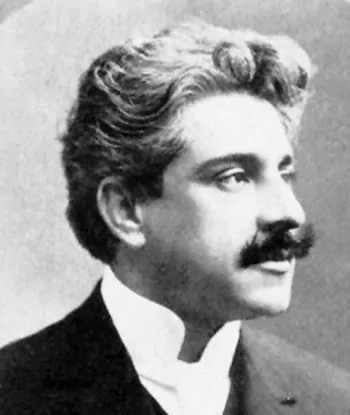
When Oswaldo Gonçalves Cruz became director general of Public Health on March 23, 1903, he was only thirty years old, but he was hardly an untested provincial physician. After studying bacteriology at the Pasteur Institute in Paris, he had participated in the response to bubonic plague at Santos and taken charge of the Federal Serum Therapy Institute at Manguinhos. President Rodrigues Alves selected him to suppress the epidemics that damaged Rio de Janeiro’s population, obstructed immigration, and compromised the capital’s international reputation. Cruz accepted the position only after receiving assurances that he would have sufficient money, personnel, and freedom of action. His appointment joined the laboratory knowledge cultivated at Manguinhos to the executive authority of a government determined to transform its capital within a single presidential term. It also elevated a particular kind of expert, the bacteriologist-sanitarian who regarded disciplined intervention as the necessary bridge between scientific knowledge and collective health.
Cruz’s first great campaign rested on the still-contested proposition that yellow fever was transmitted by mosquitoes rather than directly by infected people, contaminated objects, or poisonous local conditions. Carlos Finlay had proposed mosquito transmission in 1881, and the experiments of the United States Army Yellow Fever Commission had strengthened the theory before William Gorgas applied it in Havana. Cruz adopted the Cuban methods as the basis for policy even though prominent Brazilian physicians continued to question whether the evidence justified abandoning older explanations. His decision was scientifically bold and ultimately vindicated, but at the moment of implementation it remained an expert judgment imposed amid genuine medical disagreement.
The yellow-fever campaign converted that judgment into an elaborate machinery of surveillance. Rio was divided into sanitary jurisdictions, while the workers popularly known as mata-mosquitos searched residences and surrounding properties for the water in which mosquitoes bred. They emptied or treated containers, applied petroleum to drains, cleaned roofs and gutters, and removed objects capable of collecting rainwater. When a case of yellow fever was reported, another team isolated the patient behind screens and netting or transferred the sick person to a hospital if officials considered domestic isolation inadequate. Rooms and sometimes entire buildings were sealed and fumigated with pyrethrum or sulfur to destroy adult mosquitoes, and adjoining houses could also be treated at the discretion of the sanitary physician. The regulations prescribed equipment, chemical quantities, lines of command, daily reports, and procedures extending from the patient’s bed to neighboring yards and watercourses. They explicitly authorized officials to enter residences, interdict rooms or houses when admission was refused, and request the public force when opposition threatened the work. In administrative terms, the household had become a unit in an epidemiological system; to those living inside it, this could mean that strangers arrived with the legal power to inspect possessions, alter rooms, and decide whether a family member could remain at home.
The campaign against bubonic plague followed a different biological logic but displayed the same confidence in centralized execution. Health officials required notification of cases, isolated patients, disinfected infected premises, administered serum produced at Manguinhos, and sought to interrupt transmission by killing rats. Property holders received orders to remove rubbish, repair floors, eliminate accessible basements, and correct conditions believed to harbor rodents. A government bounty for dead rats mobilized residents and professional rat catchers, but it also generated a profitable trade that encouraged theft, manipulation, and even the deliberate breeding of rats for sale. The episode exposed a recurring weakness in administration by numerical target: a scientifically intelligible objective could produce unintended behavior when officials treated compliance as something that incentives and penalties would mechanically secure.
The institutional foundation for these campaigns became considerably stronger in 1904. Decree no. 5,156 reorganized the federal sanitary services, while Decree no. 5,157 placed yellow-fever prophylaxis in Rio under the exclusive supervision of the General Directorate of Public Health. Together, the regulations authorized compulsory notification, medical surveillance, isolation, disinfection, household inspection, fines, interdiction, and recourse to police assistance. The term “sanitary police” was not simply an accusation invented by hostile journalists; it appeared within the government’s own administrative vocabulary and described the coercive component of disease control. Cruz did employ persuasion, most notably through the publication of Conselhos ao Povo, which explained mosquito transmission and advised residents how to prevent yellow fever. Yet printed instruction reached an unevenly literate population and generally communicated decisions already made rather than inviting residents to shape their enforcement. Officials interpreted resistance primarily as an obstacle to be overcome, even when objections arose from physicians who disputed the new theories or from householders reacting to the conduct of particular agents. Dense working-class dwellings attracted intensive attention because their physical conditions facilitated disease transmission, but this epidemiological logic ensured that people with the least control over their housing encountered the state most intrusively.
The results prevent any credible interpretation of Cruz as merely an authoritarian charlatan: yellow-fever mortality fell dramatically between 1902 and 1904, while plague mortality also declined as the campaigns continued. Scientific validity did not resolve the political problem created when officials treated possession of correct knowledge as sufficient authority to command obedience. Inspections, compulsory isolation, police-supported entry, and the interdiction of homes taught residents that public health could suspend customary boundaries between state power and domestic life. By the time compulsory smallpox vaccination became the central controversy, many Cariocas had already experienced sanitation not as an abstract public good but as an official hand upon the door.
The Vaccine before the Revolt: Production and Uneasy Trust
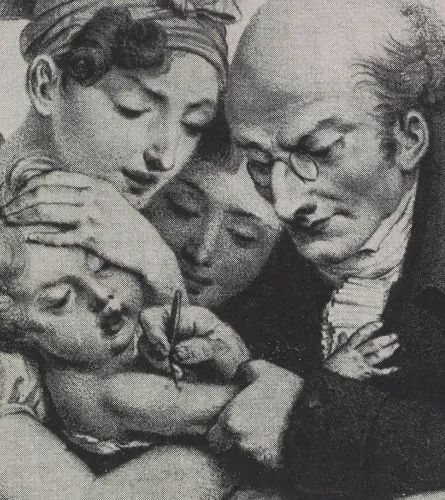
Smallpox vaccination was not an unfamiliar innovation suddenly introduced by Oswaldo Cruz in 1904. Jennerian vaccine reached Brazil in 1804, when merchants in Bahia financed the journey of seven enslaved people to Europe to acquire vaccinal lymph. The material was preserved during the Atlantic crossing by transferring it successively from one person’s arm to another, making human bodies both recipients and instruments of transportation. The Portuguese monarchy created the Junta da Instituição Vacínica da Corte in 1811, and later imperial institutions attempted to distribute vaccine throughout Brazil. Laws enacted in Rio de Janeiro during the 1830s already made vaccination compulsory in certain circumstances, while subsequent rules attached it to children, schools, employment, or epidemic emergencies. These measures remained inconsistently enforced, producing a century-long pattern in which officials declared vaccination obligatory more readily than they supplied a dependable service capable of reaching the entire population.
The central medical claim behind vaccination was supported by extensive observation: people who experienced a successful vaccination were far less likely to contract smallpox and generally suffered milder disease if protection was incomplete. The procedure was not ordinarily a hypodermic injection but the placement of vaccinal material into scratches or shallow incisions made in the upper arm with a lancet. A successful “take” produced a characteristic vesicle, pustule, and eventual scar that allowed the vaccinator to judge whether immunization had occurred. Protection could diminish, which made revaccination necessary and explained some later cases among people who truthfully reported having been vaccinated years before.
Demonstrated efficacy did not mean that every dose reaching every arm was equally reliable. For much of the nineteenth century, Brazilian vaccinators maintained the vaccine through arm-to-arm transmission, taking fresh lymph from the pustule of a recently vaccinated person and inserting it into another recipient. The method required suitable donors, carefully timed collection, uncontaminated instruments, and the return of vaccinated people so that their pustules could supply the next link in the chain. Lymph that deteriorated during storage or transportation might produce no reaction, leaving recipients unprotected even though they believed the procedure complete. Arm-to-arm transfer also carried a recognized danger of transmitting syphilis or other infections when vaccinators selected donors poorly or contaminated blood entered the material. The incisions themselves could become infected when instruments, hands, dressings, or domestic surroundings were unclean. Some apparent vaccine failures resulted from degraded material or faulty application rather than from the biological principle of vaccination. For the person who suffered the consequence, that technical distinction offered little comfort and could make official assurances of perfect safety sound evasive.
The devastating smallpox epidemic of 1887 encouraged Pedro Affonso Franco, later the baron of Pedro Affonso, to establish sustained production of animal vaccine in Rio de Janeiro. Using glycerinated vaccinal material obtained from the Chambon Institute in Paris, he propagated the vaccine in calves and began administering it at the Santa Casa da Misericórdia. His initiative developed into the Instituto Vacínico Municipal, formally created in 1894 to produce, distribute, and apply animal vaccine. Despite its municipal title and public subsidy, the institute remained closely identified with Pedro Affonso and operated through a contractual arrangement resembling a publicly financed private concession. Animal production reduced dependence upon chains of human donors and lowered the danger of transmitting human diseases, although physicians still debated the health of the calves, the purity of the material, and the procedures required to preserve its potency.
The institutional history also complicates the familiar assumption that the vaccine associated with Cruz’s campaign came directly from Manguinhos. Pedro Affonso had helped create the Federal Serum Therapy Institute in 1900 and served as its administrative director, with Cruz initially responsible for its technical work. Personal, scientific, and administrative disagreements ended that partnership, and Cruz succeeded Pedro Affonso as director of the Manguinhos institute in 1902. When the federal sanitary services were reorganized in 1904, Pedro Affonso and his allies resisted any arrangement that would allow Cruz’s expanding institution to absorb smallpox-vaccine production. Amendments to the federal legislation excluded that vaccine from the responsibilities assigned to the Federal Serum Therapy Institute, while the municipality extended its agreement with the Instituto Vacínico Municipal. Pedro Affonso’s establishment consequently continued to produce the smallpox vaccine, whereas inspectors and vaccinators connected to the public-health services assisted in its administration. Behind the public controversy stood a professional struggle between Pedro Affonso’s model of private initiative sustained by government money and Cruz’s preference for centralized state laboratories. The rivalry did not prove that the vaccine was defective, but it reveals that “science” entered the crisis through institutions whose leaders contested authority, resources, and ownership of the program.
By 1904, Rio’s vaccine supply was more reliable than it had been during much of the nineteenth century, yet an ordinary recipient had few means of independently verifying the material placed into an incision. Affluent families could arrange vaccination at home through a trusted physician, while poorer residents were more likely to encounter an unfamiliar public vaccinator backed by administrative authority. Even when properly performed, vaccination could cause soreness, fever, an open pustule, and a permanent scar, while requiring the recipient to expose an arm and submit to inspection afterward. A failed vaccination, an infected wound, or one abusive practitioner could shape neighborhood memory without demonstrating that smallpox immunization was generally ineffective.
Low and uneven coverage left Rio vulnerable when smallpox surged during 1904, producing nearly seven thousand recorded cases and approximately thirty-five hundred deaths over the course of the year. The epidemic supplied powerful evidence that existing voluntary and weakly enforced arrangements had failed to protect the population. Cruz and his medical allies were correct that broader vaccination and revaccination offered the only available means of controlling the disease on the required scale. They were less attentive to the fact that a vaccine never reached the public as a purely biological object: it arrived through calves, laboratories, contracts, vaccinators, certification rules, and officials empowered to compel access to bodies. Critics and rumor merchants would convert limited technical dangers into sweeping claims that vaccination caused smallpox, transmitted fatal diseases, or represented deliberate government violence, none of which followed from the evidence. Yet those falsehoods gained plausibility from a longer history in which vaccine quality had sometimes failed, bodily risks had not been imaginary, and reliable service had been distributed according to social position. On the eve of compulsory vaccination, the medical case for the vaccine was strong, but the political and institutional foundations of trust remained dangerously weak.
From Obligation to the “Torture Code”: What the 1904 Measure Actually Required
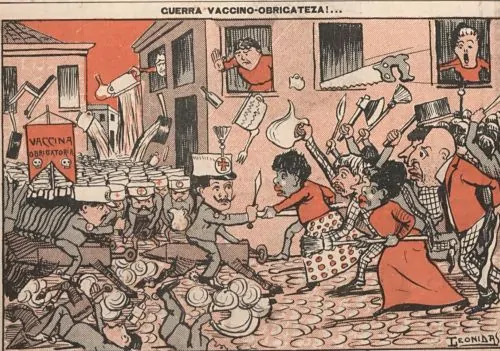
The measure sanctioned by President Rodrigues Alves on October 31, 1904, was both narrower in wording and broader in implication than many subsequent descriptions suggest. Following months of contentious debate in the Senate and Chamber of Deputies, Law No. 1,261 declared smallpox vaccination and revaccination compulsory throughout Brazil but left much of the enforcement machinery to executive regulation. Its three brief articles did not contain the elaborate catalogue of documentary requirements, employment restrictions, and household intrusions commonly associated with the revolt. Those details emerged from a proposed regulation published shortly afterward, while still other coercive powers derived from sanitary legislation already in force. Distinguishing among the statute, the existing sanitary code, and the proposed implementing regulation is essential, even though Rio’s inhabitants reasonably perceived them as interconnected parts of the same expanding apparatus.
The statute’s central command was unequivocal: vaccination and periodic revaccination against smallpox became legal obligations rather than voluntary precautions. Children were to be vaccinated by their sixth month, although proven illness could justify postponement. Anyone older than six months who could not demonstrate a successful vaccination within the preceding six years was also subject to vaccination. Revaccination was required seven years after the initial procedure and was thereafter to be repeated at seven-year intervals, establishing lifelong compliance rather than a single childhood intervention. Officers and enlisted members of the armed forces fell under the mandate, with their commanders made responsible for ensuring compliance. Although the law proclaimed a nationwide obligation, it specifically placed implementation in the Federal District under the Ministry of Justice and Interior, acting through the Directorate-General of Public Health. Brazil’s federal structure and uneven administrative capacity made the measure most immediately consequential in Rio de Janeiro, where Oswaldo Cruz possessed a concentrated sanitary organization capable of translating legislative language into daily surveillance.
Law No. 1,261 also carried a punitive force easily obscured by its brevity. Its enforcement clause incorporated the first portion of an earlier provision in Decree No. 1,151, permitting fines of as much as two contos de réis and conversion of unpaid fines into imprisonment for as long as three months. These were formidable penalties for workers whose livelihoods were already precarious, but the vaccination law itself did not explicitly state that sanitary agents could break into a dwelling or physically restrain an unwilling person for inoculation. Such fears arose instead from the combination of the mandate with the Directorate’s existing inspection powers, its access to police assistance, and residents’ recent experience of sanitary interventions conducted inside private homes.
The most expansive machinery appeared not in the enacted law but in the draft regulation that A Notícia published on November 9, apparently without official authorization while the proposal remained under government review. That document sought to make an officially recognized vaccination certificate a passport through numerous areas of civil and economic life. Proof of compliance would have been demanded for school enrollment, marriage, public employment, travel, hotel and boardinghouse accommodation, and work in fields such as construction, manufacturing, commerce, domestic service, and other regulated occupations. Electoral formalities were also drawn into the projected certificate system, connecting bodily compliance to the exercise of citizenship. Vaccination by a private physician remained possible, but the resulting attestation had to receive official validation, while falsification or fraudulent use of certificates invited punishment. Employers, school authorities, lodging-house operators, and public officials would consequently have become auxiliary enforcers, denying services or opportunities to people unable to produce acceptable documentation. The scheme did not depend solely on vaccinators pursuing every resistant person through the streets; it proposed to surround the unvaccinated with accumulating exclusions until ordinary life became exceedingly difficult. Although the uprising prevented this draft from taking effect in its proposed form, its publication revealed the administrative reach that officials contemplated and transformed an abstract statutory obligation into an immediate social threat.
The notorious phrase “torture code” did not originate exclusively as a nickname for the November vaccination proposal. Months earlier, the journalist Gil Vidal had used código de torturas in the Correio da Manhã to condemn the comprehensive sanitary regulation issued in March 1904, following the initial attack with articles on sanitary despotism. By November, opponents could readily transfer that established language to the compulsory-vaccination regime because the new measure appeared to extend the same governing philosophy from houses and possessions to the surface of the body. The phrase was polemical, deliberately collapsing inspection, disinfection, fines, certificate requirements, and feared physical compulsion into a single image of state cruelty. Yet its effectiveness cannot be dismissed as journalistic invention, for it condensed experiences of sanitary power that residents had already encountered during searches, removals, interdictions, and forced alterations of domestic space.
A precise reading weakens two opposing myths about what occurred in 1904. The government had not enacted a provision explicitly ordering police officers to seize every dissenter and hold that person beneath a vaccinator’s lancet, but neither had it issued a modest public-health recommendation that irrational crowds inexplicably misunderstood. It imposed a penal obligation and prepared a certificate regime through which the state could condition education, employment, movement, lodging, marriage, and civic participation upon submission. Formally universal rules also promised unequal experiences: affluent residents could consult private physicians, preserve records, and navigate official validation, while poor workers, informal laborers, migrants, and tenants were more exposed to inspections and bureaucratic exclusion. Constitutional arguments about the inviolability of the home accordingly resonated beyond legal elites, especially in a post-emancipation city where domestic privacy signified honor, independence, and protection from arbitrary authority. The revolt that followed was directed not merely against the injection described in the enacted statute, but against the anticipated exercise of power disclosed by the draft regulation and rendered credible by the government’s previous conduct.
The Home Was Not a Clinic
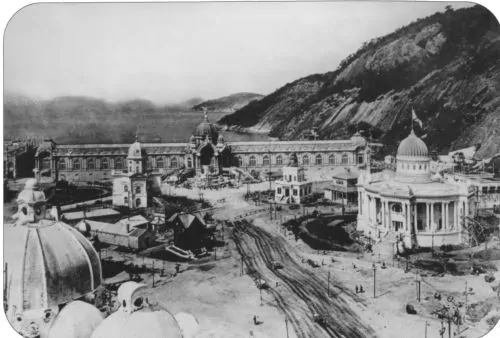
Compulsory vaccination became explosive because it appeared to carry sanitary authority across a boundary that many Cariocas regarded as morally and constitutionally protected. The home was not merely private property; it was a refuge from police attention, workplace discipline, and the humiliations of public life. Article 72 of the Constitution of 1891 called the house an inviolable asylum and restricted official entry without the resident’s consent. Lawyers, merchants, property owners, and organized workers invoked that guarantee when challenging the conduct of public-health personnel. Their arguments joined formal constitutional language to a broader conviction that the republic had no right to transform a family dwelling into an involuntary clinic.
The sanitary regulations issued in March 1904 gave this fear a concrete basis before compulsory vaccination became law. Decree No. 5,156 defined a “house” expansively enough to include inhabited buildings, huts, tents, sheds, boats, and railway cars, thereby bringing nearly every form of shelter within the Directorate-General of Public Health’s jurisdiction. It made disinfection compulsory whenever sanitary authorities judged it necessary. Anyone who obstructed an operation could be fined or imprisoned, while the responsible inspector was instructed to requisition police assistance so that the work proceeded immediately. Inspectors could order the removal of refuse, demand structural improvements, repeat disinfections, and temporarily empty dwellings considered overcrowded or unhygienic. Regulations governing medical surveillance also permitted officials to examine exposed residents in their homes and record their temperatures, with penalties imposed for resistance. None of these provisions was identical to an order authorizing forcible vaccination, but they established the administrative methods through which residents expected a vaccination mandate to be enforced. To a household that had already watched sanitary personnel arrive with police officers, the legal difference between disinfection and inoculation offered little reassurance.
Privacy had a particular meaning in Rio’s cortiços, subdivided houses, workshops, and lodging establishments. Several families might share entrances, courtyards, kitchens, or water supplies, yet limited physical separation did not make residents indifferent to control over their rooms and possessions. On the contrary, people with little secure property could invest extraordinary importance in the doorway they were still entitled to close. An inspector who treated collective housing as a single epidemiological unit erased domestic boundaries that remained socially meaningful to those living behind them.
Gender made the threatened crossing of those boundaries even more provocative. Opponents warned that male vaccinators would enter while husbands and fathers were absent and compel women or girls to uncover their arms and thighs. More sensational rumors moved the imagined site of inoculation to the buttocks or groin, turning vaccination into a scenario of sexualized exposure. Neither Law No. 1,261 nor the leaked regulatory proposal prescribed the examination of women’s genitals or sanctioned sexual abuse, and the most lurid versions were misinformation. Nevertheless, vaccination by scarification required access to bare skin, while later verification could require the presentation of a mark left on the body. In a society that closely connected female respectability with regulated visibility, even uncovering an arm before an unfamiliar man could be represented as a violation. The feared offense did not depend upon a belief that the needle itself was sexual; it arose because the state claimed authority to decide when privacy and customary modesty must yield. Political speakers and newspapers could magnify that anxiety precisely because sanitary personnel already possessed the means to enter domestic spaces against resistance. False claims about intimate inoculation attached themselves to a credible prospect of unwanted contact.
The language of protection was also deeply paternalistic. Male opponents frequently described wives and daughters as dependents whose honor the male head of household was obligated to defend, making government intrusion an insult to his authority as much as an affront to their autonomy. This rhetoric could turn women into symbols while leaving their own opinions unrecorded. Henrique Cukierman has accordingly cautioned that the surviving debate contains abundant claims about violated female bodies but remarkably little testimony from women themselves. That silence prevents historians from assuming that women uniformly opposed vaccination or understood bodily honor exactly as male politicians described it. It does not make their vulnerability imaginary, since poor women working as servants, vendors, laundresses, or lodging-house residents were likely to encounter male officials without the protection that contemporary gender conventions claimed they should possess.
Race and the recent memory of slavery further complicated the meaning of domestic inviolability. Many Black Cariocas lived within a generation of emancipation, and some had themselves experienced a regime in which masters, police officers, and employers exercised sweeping authority over their movement and bodies. A rented room could signify a hard-won sphere of independence even when the law gave its occupant little practical security. Public-health officials saw interconnected dwellings through the epidemiological logic of contagion, which correctly recognized that infection did not respect doors or claims of privacy. Residents saw the same intervention through a political history in which official entry often preceded inspection, removal, or punishment. The conflict was not resolved by the medical effectiveness of vaccination because efficacy did not answer who could cross a threshold, touch a body, or override refusal. By neglecting those questions, the government allowed opponents to present the needle as the culminating instrument of a state that no longer recognized the home as belonging to the people inside it.
Making Fear Political
Resistance to compulsory vaccination did not begin with the leaked regulatory proposal of November 9. From the measure’s introduction in Congress during June, opponents worked to connect apprehension about the vaccine with anger over sanitary policing and the wider exclusions of republican government. Journalists supplied alarming stories and images, positivists offered an ideological critique of compulsion, and labor organizations translated household grievances into collective petitions. Opposition politicians carried these arguments into Congress while cultivating audiences beyond it. By the time the law received presidential sanction, fear had acquired spokesmen, meeting places, and a language of resistance.
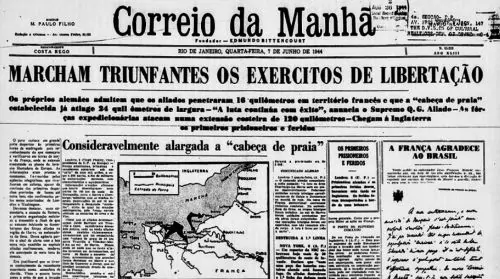
The Correio da Manhã conducted the most relentless newspaper campaign. In October it reproduced the portrait of a man whose arm and chest had been disfigured by a tumor, presenting the condition as evidence of what vaccination might inflict upon an unsuspecting public. Its columns portrayed vaccine lymph as contaminated animal matter capable of spreading disease rather than preventing it. Headlines such as “Vaccination or Death” transformed uncertainty about adverse effects into a stark warning that submission itself could be fatal. The Commercio do Brazil, owned by opposition deputy Alfredo Varela, sustained a column called “Right of Resistance” that framed refusal as a constitutional duty. Other papers published congressional speeches, anti-vaccination appeals, rumors of bodily exposure, and caricatures in which enormous lancets pursued defenseless citizens. This material mixed legitimate criticism of coercion with unsupported medical claims, giving each greater force through association with the other. A reader who correctly recognized that sanitary agents could enter homes was thereby encouraged to believe less substantiated assertions about poisoned lymph or compulsory exposure of intimate body parts.
Printed argument did not remain confined to newspaper subscribers. Columns supplied phrases for petitions and speeches, while cartoons communicated menace without requiring sustained literacy. Copies circulated through workplaces, cafés, association halls, and street gatherings where their contents could be repeated aloud. When demonstrations began, crowds cheered the offices of the Correio da Manhã and jeered government-aligned newspapers, treating the press itself as a participant in the struggle.
Orthodox positivists added a critique that cannot be reduced to simple hostility toward science. Raimundo Teixeira Mendes and Miguel Lemos belonged to a movement that elevated scientific knowledge while insisting that moral and social progress could not legitimately be imposed through indiscriminate state violence. In pamphlets issued by the Apostolado Positivista do Brasil, Teixeira Mendes disputed claims about the vaccine’s safety and challenged the government’s invocation of supposedly more civilized countries as models for Brazil. He also argued that compulsory vaccination violated spiritual liberty, domestic propriety, and what he called feminine delicacy. These positions combined genuine concern about state power with selective medical reasoning that gave disproportionate weight to alleged vaccine injuries. Brazilian positivism was not politically uniform: positivist engineers participated in the modernization program, and the positivist-influenced minister Lauro Müller supervised major public works. Nor should the nonviolent Positivist Church be conflated with every military officer who invoked Auguste Comte. Lauro Sodré and Barbosa Lima drew from positivist and Florianist traditions, but their partisan ambitions carried them toward a confrontation that the Apostolado’s doctrinal leaders did not necessarily endorse.
Organized workers brought grievances rooted in their own encounters with the reforming state. In August, the Centro das Classes Operárias sent Congress a petition endorsed by railway employees, bakers, metalworkers, textile laborers, Arsenal workers, and approximately six thousand individual signatories. Additional lists helped raise the reported total opposing the bill to roughly fifteen thousand names. The petition complained about forced evacuations during disinfection and damage to household utensils, placing vaccination within an existing record of material injury. Its authors understood that wealthier opponents could seek judicial protection while workers faced officials with far fewer defenses. They described proletarians as the republic’s political pariahs, revealing that their opposition was not simply borrowed from elite defenders of property.
After the law passed, these currents converged in the Liga Contra a Vacina Obrigatória. The organization was founded on November 5 at the Centro das Classes Operárias in a meeting reportedly attended by about two thousand people and presided over by Lauro Sodré and Vicente de Souza, a physician, teacher, former abolitionist, and prominent labor organizer. The date is crucial because the league existed four days before A Notícia published the government’s proposed enforcement rules. Its formation reflected months of mobilization rather than a spontaneous reaction to one newspaper disclosure. The league brought workers into the same political space as students, journalists, physicians, congressional opponents, and republican militants. For Sodré and allied military conspirators, the vaccination conflict also offered a chance to weaken Rodrigues Alves and perhaps overturn his government. Vicente de Souza and the labor associations possessed different priorities, even when they shared a platform with those politicians. The league coordinated meetings and gave resistance a recognizable public identity, but it never exercised disciplined command over everyone who would soon fight beneath its slogans.
The coalition succeeded because vaccination became a common symbol without requiring agreement about what the underlying conflict meant. Teixeira Mendes could defend spiritual liberty, Varela could denounce executive despotism, and a displaced laborer could fear another encounter with police-backed sanitary agents. Newspapers compressed those distinct objections into emotionally charged narratives that traveled more quickly than technical explanations from the government. Political opportunists undoubtedly exaggerated the dangers of vaccination and presented rumors as imminent facts, yet they worked with grievances that official conduct had already made credible. The Anti-Vaccination League did not manufacture popular mistrust from empty material; it organized that mistrust and directed it toward a single government measure. Once the leaked regulation appeared to confirm the predicted reach of the sanitary state, fear already possessed the networks needed to move from private conversation into the streets.
November 10–13: From Protest Meeting to Street War
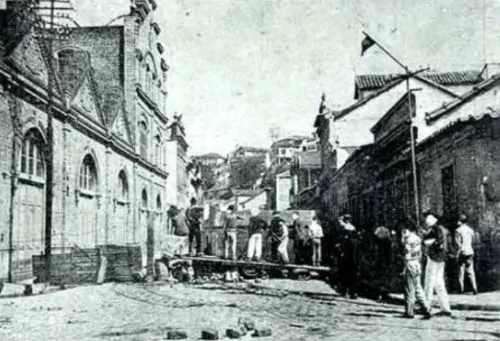
The publication of the proposed vaccination regulations on November 9 did not produce an instantaneous, fully formed insurrection. It prompted a sequence in which public meetings led to arrests, arrests provoked rescue attempts, and police intervention enlarged crowds that had initially gathered to hear speeches. During the first two days, the principal sites were familiar spaces of political assembly in central Rio, especially the Largo de São Francisco and Praça Tiradentes. By November 12, thousands were participating in meetings whose leaders could still claim some organizational authority. On November 13, that authority fractured as fighting spread through the city and the original protest became a broader assault upon the government’s control of public space.
On the evening of November 10, students gathered in the Largo de São Francisco, near the Polytechnic School, and delivered comic, rhyming speeches against the vaccination law. Their mockery drew listeners and converted the square into an improvised political theater. A student named Jayme Cohen addressed the expanding procession as it moved down Rua do Ouvidor, urging resistance to the compulsory measure. When a police official ordered Cohen to accompany him to the station, members of the crowd attempted to prevent the arrest. Near Praça Tiradentes, demonstrators encountered mounted police and answered their arrival with denunciations of both the vaccine and the force sent to disperse them. Officers charged as protesters threw stones and tried to recover the prisoner, establishing a pattern in which an arrest became the occasion for a larger confrontation. Fifteen people were detained, including five students and two public employees. Order appeared to have returned by approximately half past seven, but the police guard left in Praça Tiradentes made clear that the authorities expected another gathering.
The League against Mandatory Vaccination summoned protesters back to the Largo de São Francisco on November 11, but its prominent leaders did not appear. Popular speakers took their place, demonstrating how quickly agitation could continue without formal direction. Police officers approaching the meeting were greeted with jeers, and another attempt to make arrests initiated running clashes toward Praça Tiradentes and the Largo do Rosário. Demonstrators armed themselves with iron bars, pieces of wood, stones, and debris left by the continuing urban works. Eighteen people were reportedly arrested for carrying prohibited weapons. What had begun as student oratory was already developing a decentralized rhythm in which crowds dispersed before cavalry charges and reassembled nearby.
November 12 brought an effort to restore organization. The league planned an evening meeting at the Centro das Classes Operárias on Rua do Espírito Santo, where participants would discuss and approve its governing principles. People began collecting in the Largo de São Francisco several hours beforehand, and working-class boys staged a parody of the previous day’s violence by mounting pieces of construction timber and imitating police cavalry beating the population. The performance turned repression into public ridicule while teaching spectators how the conflict was being remembered. At eight o’clock, the crowd moved toward the Centro, where the Correio da Manhã estimated that approximately four thousand merchants, workers, students, and military men had assembled. Such claims may have inflated the number, but the meeting plainly exceeded the scale of the first student gathering. The league could still provide a destination and a platform, although the surrounding streets were becoming as important as anything decided inside the hall.
On Sunday, November 13, the confrontation changed character. An announcement in the Correio da Manhã had called upon residents to gather in Praça Tiradentes while awaiting the decision of the government commission examining the proposed vaccination regulations. At about two in the afternoon, the automobile carrying police chief Cardoso de Castro was struck by stones as he approached the crowded area. Police charged, the crowd resisted, and fighting spread from the square into Avenida Passos and the neighboring commercial streets. Tramcars were stopped, overturned, and burned; more than twenty belonging to the Companhia Carris Urbanos were reportedly damaged or destroyed. Protesters smashed gas lamps, cut electrical wires along Avenida Central, uprooted newly planted trees, and erected barricades from construction materials. Police stations and the cavalry barracks on Rua Frei Caneca came under attack, while gunfire joined the stones and clubs used during the earlier encounters. On Rua São Jorge, women working in prostitution confronted the police, and contemporary reporting recorded that one was wounded in the face. By nightfall, disturbances had reached Praça Onze, Catumbi, Rio Comprido, Tijuca, Botafogo, Gamboa, and Saúde, extending the revolt well beyond the squares where it had begun.
Rio’s unfinished reconstruction furnished both the weapons and the terrain of rebellion. Rubble produced by demolition could be thrown at police, while loose timber and paving materials could be dragged across narrow streets faster than mounted units could clear them. Tramcars made formidable barricades and, once overturned, disrupted the transportation network on which the authorities depended. The modernized city had been designed to improve circulation and impose order, yet its building sites and new infrastructure were turned against the administration that had created them.
The events of November 10–13 resist description as either a carefully directed revolution or a meaningless explosion by an irrational crowd. The Anti-Vaccination League and opposition newspapers created occasions for assembly, but neither commanded the people who fought through the night or determined the objects they attacked. Police intervention repeatedly converted meetings into conflicts, after which the effort to punish disorder produced more resistance. As the fighting moved into working-class districts, denunciations of vaccination increasingly mingled with attacks upon transportation companies, urban improvements, and the coercive representatives of government. Few of these protesters were confronting vaccinators in the act of forcibly inoculating anyone, since the leaked regulations had not yet taken effect. They were fighting over what the mandate promised to permit, what the sanitary state had already done, and whether a population excluded from official politics could veto government policy by taking possession of the streets.
A Revolt within the Revolt: Lauro Sodré and the Military Conspiracy
By November 14, two insurrections occupied the same city without becoming a single movement. Popular combatants were defending barricades and attacking police authority, while a smaller group of officers and politicians prepared to depose President Rodrigues Alves. The conspirators had encouraged resistance to compulsory vaccination, but their objective extended well beyond suspension of the law. Their plans had been developing before the first street battle and belonged to a longer struggle over who would control the republic. The disorder supplied an opening through which they hoped to convert popular anger into a change of government.
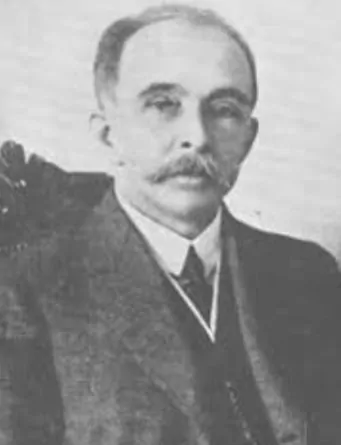
Lauro Sodré stood at the intersection of parliamentary opposition and military discontent. A former army officer, instructor at the Military School of Praia Vermelha, and governor of Pará, he had already challenged the dominant republican establishment as an unsuccessful presidential candidate in 1898. He led the Partido Republicano Federal, which gathered opponents of the arrangement commonly called the politics of the governors and resented the ascendancy of the São Paulo oligarchy. His republicanism drew upon the legacies of Benjamin Constant and Floriano Peixoto, presenting the armed forces as guardians capable of correcting a civilian regime that had betrayed its founding ideals. Sodré’s opposition to compulsory vaccination did not necessarily mean rejection of the procedure itself; according to a later family account, he had arranged for his own household to be vaccinated. What he condemned publicly was the government’s use of compulsion, although that constitutional position also served his contest for political power. A celebration at his Botafogo residence on October 17, his forty-sixth birthday, brought together politicians, labor representatives, and delegations from the military schools. Further discussions among sympathetic officers and cadets turned the homage into a catalyst for plotting against Rodrigues Alves.
The Military School of Praia Vermelha was unusually receptive terrain. Its students inherited a tradition of political engagement shaped by positivist teaching and the army’s decisive part in establishing the republic in 1889. Earlier disciplinary crises in 1894 and 1897 had already demonstrated that cadets could act collectively against their superiors. Most were young and inexperienced, but they were not politically blank instruments manipulated without beliefs of their own. The petition against compulsory vaccination signed by dozens of military students showed that resentment existed inside the schools before the civilian revolt created an opportunity to act upon it.
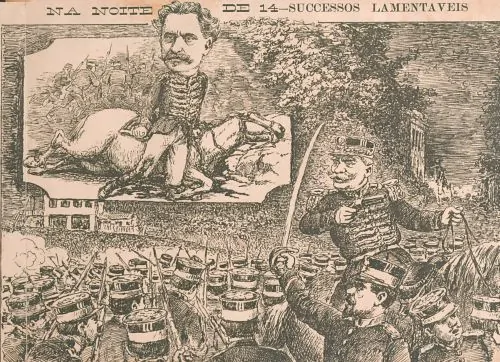
The conspirators initially hoped to exploit the military parade scheduled for November 15, the anniversary of the republic’s proclamation. They anticipated that sympathetic commanders would win over participating units, neutralize loyal officers, and place Sodré at the head of a reconstructed government. The cancellation of the parade amid the street fighting forced them to improvise. On the afternoon of November 14, Sodré met at the Clube Militar with General Silvestre Travassos, Barbosa Lima, General Olímpio da Silveira, Major Gomes de Castro, and Captain Augusto Mendes de Moraes to settle the rising’s final arrangements. The minister of war learned of the gathering and ordered the club’s president to dissolve it, but the participants had already divided responsibility for bringing the military schools into rebellion. At the Preparatory and Tactical School in Realengo, commander Hermes da Fonseca discovered the attempt, rallied the students to discipline, and arrested Gomes de Castro and a civilian accomplice. Mendes de Moraes fired several shots outside the school and escaped, leaving the Realengo branch of the conspiracy broken. Praia Vermelha proved more vulnerable: Travassos displaced its commander, General Costallat, and assumed control of approximately three hundred students, nearly all of whom joined the revolt. Despite failed efforts to obtain additional ammunition from the nearby Fortress of São João, Travassos ordered the cadets to march upon the Catete Palace and remove Rodrigues Alves.
At about nine o’clock that evening, the Praia Vermelha force departed in two groups, with Sodré walking beside the republican flag. A government cavalry detachment sent to reconnoiter defected to the rebels, briefly encouraging the belief that other units would follow. Near midnight the column entered Rua da Passagem, where it encountered a much larger loyalist force commanded principally by General Piragibe. Broken streetlights left both sides nearly blind in a light rain, and a cadet sent forward with a message was shot and killed before he could secure negotiations. The ensuing exchange of fire lasted roughly half an hour and became so confused that participants risked shooting their own comrades. Although the government troops possessed superior numbers and ammunition, they panicked and withdrew toward the Catete Palace; the rebels, unaware of that retreat and shaken by their own losses, also fell back. Travassos suffered a severe wound to the leg and died from complications on November 22, while Sodré received a less serious head wound and went into hiding. Warships illuminated and shelled the school during the night, and at approximately half past six on the morning of November 15, loyal forces occupied it without further resistance. Around two hundred cadets and nine officers surrendered in formation.
The military failure exposed how little operational unity existed between the two revolts. Street fighters did not advance in coordination with the cadets, and the conspirators could not transform neighborhood resistance into reliable support for an assault on the presidential palace. Yet dismissing the rising as an irrelevant farce understates how close confusion came to endangering the government; for a time, Rodrigues Alves believed the loyal forces had been destroyed and rejected advice that he seek safety aboard a warship. The conspiracy also gave the administration a justification for treating the entire crisis as an attack upon constitutional order rather than a protest against its own policies. Its aftermath revealed a stark hierarchy among the defeated: Sodré and many military participants were eventually amnestied, while hundreds of poor civilians faced summary detention and deportation. The revolt within the revolt strengthened the government even as it frightened it, allowing an elite attempt to seize power to furnish political cover for repression of people who had never joined the conspiracy.
The Working-Class Battle for the City
While the military cadets retreated toward Praia Vermelha, popular resistance remained entrenched in Saúde. The port district and its neighboring zones of Gamboa and Santo Cristo contained dock laborers, artisans, market workers, migrants, and a large Black population whose livelihoods depended upon access to the central city. Housing was crowded and insecure, but the area supported durable networks of employment, religion, recreation, and mutual assistance. Port construction and urban renewal threatened those arrangements even when they promised new commercial opportunities for Rio. Police and sanitary campaigns had also made the neighborhood familiar with official inspection and coercion. The battle in Saúde consequently became more than an attempt to prevent vaccination; it was a defense of working-class authority over a portion of the city being reconstructed around its residents.
After driving police from parts of Saúde and Gamboa, combatants fortified the streets with trenches and barricades. Their principal stronghold extended along Rua da Harmonia, where narrow approaches limited mounted movement and gave residents knowledge of the terrain an immediate tactical value. Contemporaries called the position “Porto Arthur,” borrowing the name of the fortress then under siege during the Russo-Japanese War. The comparison converted a poor Rio neighborhood into a battlefield recognizable from international newspaper coverage. A red flag appeared over one defensive position, while rumors credited the rebels with dynamite and artillery. Some firearms were present, but improvised deception amplified their apparent strength: pieces of wood wrapped to resemble explosives were displayed near the trenches, and a fallen streetlamp mounted on cart wheels passed at a distance for a cannon. These devices could not defeat regular troops, yet they made an assault seem more dangerous and delayed the government’s advance. Porto Arthur was partly fortification and partly political theater, projecting organized power from a population the authorities habitually described as incapable of disciplined action.
Horácio José da Silva, known as Prata Preta, emerged from the fragmentary reporting as the stronghold’s most celebrated defender. He was a Black man probably around thirty years old, and later accounts consistently identified him as a stevedore and practitioner of capoeira. Beyond those details, remarkably little about his earlier life can be established with confidence. No manifesto, testimony, or extended statement in his own voice survives to explain what he thought about vaccination or the political future of Rio.
Newspapers credited Prata Preta with appearing wherever the fighting was most dangerous and leading counterattacks against troops entering Saúde. Reports portrayed him as physically formidable and accustomed to the close combat associated with capoeira, although hostile journalism also used racialized images of criminality to make his resistance appear primitive. During the struggle preceding his capture, he was accused of killing an army soldier and wounding two police officers, claims that helped construct his legend but are difficult to verify independently. As government forces closed upon the neighborhood on November 16, police seized him before the final reduction of the barricades. The army advanced through the streets while naval power, including the battleship Deodoro, threatened the district from the bay. Once the defenders began abandoning their positions, troops occupied Rua da Harmonia and arrested men found nearby. The discovery that the rumored dynamite and cannon included elaborate fakes allowed government newspapers and satirical journals to ridicule Porto Arthur after its fall. That mockery obscured the fact that residents had excluded police from part of the capital for several days and had required a coordinated military operation to dislodge them. The imposture worked because the resistance surrounding it had been real.
Prata Preta’s prominence should not turn the Saúde defense into the achievement of a solitary commander. Claims that he directed thousands of disciplined followers exceed what the surviving evidence can demonstrate, while the construction and defense of extensive barricades necessarily depended upon collective labor. Participants came from overlapping worlds of dock employment, informal commerce, neighborhood sociability, and street culture rather than from a single political organization. Some may have feared the vaccine itself, whereas others treated the mandate as another expression of authorities who demolished homes and policed poor people’s movement. Their attacks increasingly concentrated upon police stations, transport infrastructure, and the forces attempting to retake the district. They neither waited for instructions from the Anti-Vaccination League nor coordinated their positions with Sodré’s military conspirators.
After his capture, Prata Preta was denied the public political identity available to the elite leaders of the crisis. He was sent toward Acre with other prisoners under emergency powers rather than receiving a proceeding capable of preserving his testimony and testing the accusations against him. Sodré and many of the military rebels would be amnestied and return to recognizable public careers, while the Black defender of Saúde largely disappeared from the documentary record. Contemporary newspapers alternately rendered him a dangerous criminal, a comic fraud, or a picturesque warrior whose defeat restored urban order. Later commemorations reversed the insult by making him a hero of Black and working-class resistance, although celebration can produce its own simplifying mythology. The evidence does not permit recovery of a complete biography or a precise personal program. His historical importance lies instead in the trace he leaves of collective political agency: for several days, people whom the modernizing republic intended to remove, regulate, and silence made their neighborhood a territory the state could not enter without a fight.
State of Siege: Arrest and Exile to Acre
By dawn on November 16, the military conspiracy had failed, but armed resistance still survived in Saúde and other working-class districts. Rodrigues Alves answered the crisis with two apparently contradictory decisions: his government retreated from compulsory vaccination while obtaining exceptional powers to repress the revolt. The proposed compulsory program was suspended, and the inflammatory draft regulation was abandoned before it could take effect. Law No. 1,261 itself was not formally erased by the state-of-siege decree; what ceased was the attempt to enforce and regulate its compulsory provisions under the conditions that had produced the uprising. This distinction matters because the administration did not concede that vaccination was medically unsound. It conceded that compulsion had become politically impossible, even as it denied the insurgent population the protections normally owed to citizens.
Decree No. 1,270 declared a state of siege for as many as thirty days in the Federal District and the neighboring comarca of Niterói. The measure rested on Article 80 of the Constitution of 1891, which permitted the suspension of constitutional guarantees when foreign aggression or serious internal commotion threatened the republic. Under the article’s second paragraph, the extraordinary measures that could be imposed upon individuals included detention in places not intended for ordinary criminal defendants and banishment to other parts of the national territory. Practices that might otherwise have appeared plainly lawless possessed a constitutional vocabulary and a formal legal mechanism. The failed rebellion of the Military School supplied the government with its strongest justification, since armed cadets and senior conspirators had attempted to overthrow the president rather than merely obstruct a public-health measure. Yet the siege was not confined to military rebels or their civilian organizers; it enabled the police to pursue the much broader population that had occupied streets, raised barricades, or simply appeared suspicious in districts associated with disorder. Renewals kept the siege in force until February 23, 1905, three months and seven days after the fighting that ostensibly necessitated it had begun to subside. An emergency born during one violent week consequently outlasted the revolt itself by an entire season.
Pacification proceeded quickly once the government combined military force with the suspension of compulsory vaccination. Troops dismantled barricades, occupied contested streets, seized weapons, and broke the remaining resistance in Saúde, where Prata Preta was captured after the defense of the neighborhood collapsed. Tram service, commercial traffic, gas lighting, and police patrols gradually returned, allowing official newspapers to describe the capital as rescued from anarchy. The end of street warfare did not mean the end of state violence; it changed that violence from open combat into arrest, classification, and removal.
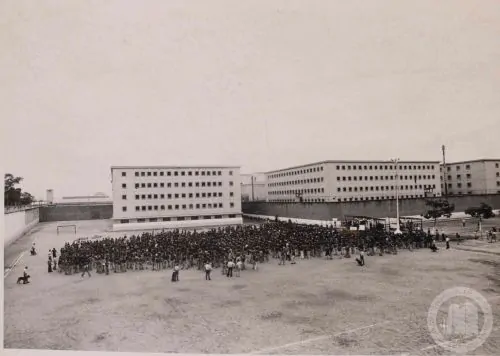
Police forces swept through lodging houses, ports, squares, taverns, railway stations, and neighborhoods already identified with capoeiras, casual laborers, prostitutes, street vendors, and the unemployed. Some detainees had fought behind barricades, attacked police stations, looted shops, or destroyed trams, but participation did not have to be demonstrated before arrest. Appearance, residence, occupation, prior contact with the police, or the inability to offer a convincing account of oneself could be sufficient. Prisoners passed through district stations, the Casa de Detenção, and improvised detention facilities on Ilha das Cobras, where administrative custody blurred into punishment before trial. The most frequently repeated tally gives thirty dead, 110 wounded, 945 arrested, and 461 banished to Acre, although these numbers should be treated as official approximations rather than a complete social accounting. Police authorities claimed that those selected for banishment were known criminals or possessed antecedents, thereby presenting exile as the removal of habitual offenders rather than the punishment of political dissent. Yet a police antecedent could record vagrancy, capoeira, informal employment, previous detention, or repeated surveillance without establishing participation in the revolt. The official category of the “dangerous” person concealed judgments about class, race, work, and belonging. Only a handful of prominent civilians were formally prosecuted, while hundreds of less visible detainees faced drastic penalties without an equivalent judicial inquiry into their conduct.
For Brazilian citizens, removal to Acre was technically internal banishment, or desterro, rather than deportation from the country; foreign prisoners could instead be expelled across the national border. That legal distinction offered little consolation to people transported thousands of miles from their homes to a frontier territory only recently incorporated into Brazil. The coastal steamers Itaipava, Itaperuna, and Itapacy carried groups northward, with the Itaipava reportedly making two voyages. Prisoners were confined in crowded holds under armed guard, with limited air, sanitation, food, and access to the deck. After reaching northern ports, survivors could be transferred to smaller river vessels for the long journey through the Amazonian waterways toward Acre.
Contemporary reports described illness, violence, and deaths during the passage, but the surviving evidence does not permit a dependable mortality total. Official rhetoric represented the territory as a place where supposedly idle or criminal people might find work and subsistence, converting coercive displacement into a story of useful colonization. Acre’s remoteness nevertheless made it an ideal “tropical Siberia”: exile could remove troublesome residents from Rio, furnish bodies for an expanding frontier, and impose a punishment whose suffering remained largely invisible to the capital.
Even the number of people subjected to this removal remains unsettled. The canonical figure of 461 appears in standard narratives and reflects the best-known official accounting of those banished after the revolt. Francisco Bento da Silva’s study of official reports, newspapers, prison records, and shipping evidence concludes that approximately 1,400 people connected to the repression of 1904 may have been transported toward Acre. The figures cannot be reconciled simply, because they may count different groups, intervals, ships, or stages of custody; the larger total may include prisoners taken from existing detention populations as well as people arrested directly during the disturbances. The uncertainty is itself historically revealing, since a government capable of moving hundreds of people without ordinary trials did not create the individualized case records through which their identities and fates could later be reconstructed. In 1905 the lawyer Anselmo Torres da Silva sought habeas corpus on behalf of those exiled, arguing that the resistance to compulsory vaccination had arisen from a defense of constitutional and natural rights, but collective legal action struggled against an apparatus that had already dispersed its intended beneficiaries across an immense frontier.
The state of siege reveals the asymmetry at the heart of the government’s victory. Rodrigues Alves accepted the rebels’ immediate practical demand by suspending compulsory vaccination, but he refused to recognize the uprising as evidence of legitimate grievances about dispossession, privacy, policing, or consent. Political and military conspirators were named, investigated, defended by allies, and eventually encompassed by debates over amnesty; poor combatants and suspects were more often converted into anonymous cargo. Emergency law did not abolish the social hierarchy of republican citizenship but magnified it, making legal representation available to some while exposing others to detention and banishment by administrative decision.
The government restored the physical circulation of the modern city by forcibly expelling people it considered impediments to that circulation. Its retreat over vaccination may consequently be understood neither as an admission that the vaccine failed nor as an uncomplicated popular triumph. It was a tactical concession joined to a punitive demonstration that the state retained authority over movement, residence, and civic status even when it could no longer command the needle. For residents already inclined to distrust public institutions, that conclusion could only confirm a bitter lesson: the republic might withdraw one coercive measure while using the crisis it created to impose another on a far greater scale.
The Epidemic of 1908 and the Making of Oswaldo Cruz’s Vindication
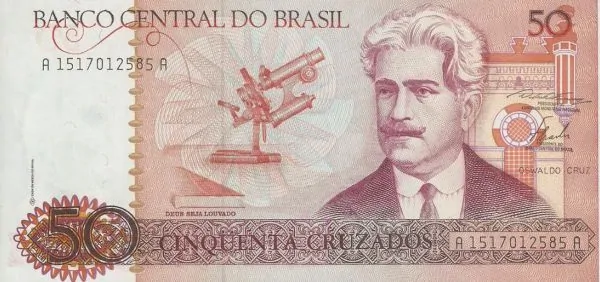
The suppression of the Vaccine Revolt did not restore public confidence in vaccination. Although the October 1904 law remained a declaration of legislative intent, the comprehensive system that had provoked the uprising was not put into operation, and popular demand for vaccination collapsed. The General Directorate of Public Health had requested approximately 24,000 doses from the Municipal Vaccine Institute in August 1904; by December, its request had fallen to 1,360, while only about 7,800 vials were used during the whole of 1905. Activity approached complete stagnation in 1906. These figures measure institutional requests and consumption rather than the exact number of individuals immunized, but the direction of change is unmistakable: the revolt damaged the very preventive practice the government had hoped to universalize. Political defeat and epidemiological vulnerability developed together, although their consequences would not become fully apparent until smallpox again swept through the capital.
The near disappearance of smallpox mortality in 1906 encouraged a deceptive sense that the immediate danger had passed. Low vaccination and revaccination rates, continuing population growth, movement into the capital, crowded housing, and the persistence of endemic infection could all replenish the population susceptible to disease. The available statistics do not permit historians to assign an exact share of responsibility to each factor. It would be too simple to describe the epidemic of 1908 solely as the mechanical consequence of suspending the 1904 regulations, even though inadequate immunization plainly contributed to the conditions in which it flourished.
When the epidemic struck in 1908, its magnitude made complacency impossible. The most frequently cited historical series records approximately 9,900 cases and a mortality rate approaching 1,000 deaths per 100,000 inhabitants, while another widely used count places the number of deaths at 6,545. Differences among the surviving totals reflect the weaknesses of contemporary notification and classification, but they do not alter the scale of the catastrophe. Indeed, the striking ratio between registered cases and deaths should not be treated as a modern case-fatality calculation, since fatal cases were far less likely than surviving infections to escape official notice. Hospitals and isolation facilities struggled with the volume of patients, and the government opened additional accommodations at Engenho de Dentro during the crisis. Behind the aggregate figures lay households confronting fever, disfigurement, blindness, bereavement, and the removal of relatives to isolation wards. Smallpox was no longer an official abstraction represented by certificates, fines, or the lancet of an unwanted visitor; its effects could be seen in neighborhoods across the city. Yet the suffering of 1908 should not be converted into retrospective punishment of the rebels, as though those killed by the epidemic had rendered a moral verdict on those who resisted four years earlier.
The most revealing contrast with 1904 was not the disappearance of all uncertainty but the absence of another organized revolt against vaccination. During the epidemic, residents sought immunization at both the Municipal Vaccine Institute and the General Directorate of Public Health, producing what institutional reports described as spontaneous demand. An intervention represented in 1904 as a violation now appeared to many inhabitants as a means of immediate protection against a visible threat. That change demonstrates that popular attitudes were neither uniformly hostile to science nor permanently fixed by rumor. People could resist vaccination when it arrived through punitive regulations and home invasion, then request the same preventive procedure when the danger became unmistakable and access did not carry the same threat of humiliation.
Even this apparent vindication cannot be attributed to Oswaldo Cruz alone. The smallpox vaccine used in Rio was produced by the Municipal Vaccine Institute under Pedro Affonso Franco, the Baron of Pedro Affonso, whereas Cruz directed the federal health service responsible for much of the campaign’s administration and distribution. Manguinhos produced other sera and vaccines and supplied the expanding scientific authority associated with Cruz, but it did not yet control Rio’s principal production of smallpox vaccine; the Municipal Vaccine Institute would not be incorporated into the institution at Manguinhos until 1920. The epidemic also generated doubts about the quality of Pedro Affonso’s product, revealing that confidence in vaccination depended upon manufacturing standards, preservation, transport, technique, and institutional reputation as well as upon acceptance of the underlying principle. Pedro Affonso defended his institute, increased its response to public demand, and later displayed its achievements at the National Hygiene Exhibition of 1909. The controversy did not invalidate vaccination, but it exposed the misleading simplicity of presenting “science” as a single, unified actor speaking through one heroic physician. The effective vaccine was the product of a contested network of laboratories, municipal authorities, federal officials, physicians, vaccinators, and patients.
Cruz’s rehabilitation had begun before the smallpox epidemic reached its height. The dramatic decline of yellow fever in Rio strengthened his standing, while the Brazilian exhibit prepared under his direction received a gold medal at the Fourteenth International Congress of Hygiene and Demography in Berlin in 1907. When Cruz returned to Rio on February 10, 1908, he was welcomed publicly as a figure of national distinction rather than as the caricatured tyrant of 1904. On March 19, the federal government formally adopted the name Instituto Oswaldo Cruz for the institution at Manguinhos, giving his personal prestige an enduring organizational form. The epidemic subsequently supplied a powerful narrative of confirmation: the disease had returned, the population had demanded vaccination, and the sanitarian once denounced as a despot could be remembered as the prophet whom the city had failed to heed. Still, the fuller cult of Cruz, the exemplary scientist placed above ordinary political conflict, was consolidated especially after his death in 1917 by colleagues and sanitary reformers who needed a heroic founder for their professional and national projects.
The epidemic of 1908 vindicated vaccination more securely than it vindicated the governmental methods proposed in 1904. Smallpox vaccine had not become effective because an epidemic demonstrated the costs of inadequate coverage; its protective value already rested upon a much broader body of accumulated experience. What 1908 supplied was a terrifying public demonstration that low uptake left Rio exposed and that vaccination could be understood as desirable when inhabitants perceived both the danger of disease and the possibility of protection. The absence of renewed organized resistance also indicates that rumors gained or lost force according to political circumstances rather than merely according to the population’s possession of scientific information.
Nothing in the death toll retrospectively legitimized forced entry into homes, threats to livelihood, disregard for bodily privacy, or the wider coercive order created by urban demolition and sanitary policing. Cruz had been substantially correct about the necessity of widespread vaccination, but scientific correctness did not make every instrument used in its name politically or ethically sound. His “vindication” was consequently both real and manufactured: real in the preventive lesson disclosed by the epidemic, and manufactured in the heroic memory that blurred the distinction between the efficacy of a vaccine and the justice of the state that attempted to impose it.
Was This Ultimately an Antivaccination Revolt?
The following video from LLILAS BENSON discusses the vaccine revolt of 1904:
The strongest challenge to a broad political interpretation begins with the event’s most obvious feature: the revolt erupted over compulsory smallpox vaccination. Law No. 1,261 made vaccination and periodic revaccination mandatory throughout Brazil, while the proposed regulations publicized on November 9 revealed how extensively proof of compliance would govern ordinary life. Protest speakers denounced the vaccine itself as well as the government’s right to require it, and the Liga Contra a Vacina Obrigatória gave organized form to that opposition. Rumors about contamination, dangerous inoculations, forced undressing, and violations of female honor supplied much of the rebellion’s emotional energy. Some critics questioned only compulsion, but others sincerely believed that vaccination caused illness or introduced repulsive animal matter into the body. Political opponents could exploit these claims only because they resonated with fears already present among portions of the population. The subsequent military conspiracy does not erase the crowds that assembled before the coup attempt, shouted against vaccination, and fought police after the proposed regulations became public. To describe the vaccine as merely a convenient pretext risks treating the participants’ own language as a disguise whose meaning historians claim to understand better than they did.
The epidemiological consequences make that objection harder to dismiss. Demand for vaccination declined sharply after November 1904, leaving many inhabitants without effective protection while smallpox continued to circulate. When the disease returned with catastrophic force in 1908, thousands died and residents sought vaccination without producing another organized uprising. A structural interpretation that celebrates resistance while neglecting those preventable deaths would replace the old caricature of an ignorant mob with an equally misleading romance of popular rebellion.
Yet calling the episode ultimately antivaccination imposes a unity that the evidence cannot sustain. Contemporary sources repeatedly distinguished opposition to the vaccine from opposition to compulsory vaccination, even though polemical writing often blurred the two. A person might accept that vaccination prevented smallpox while rejecting certificates that determined access to work, schooling, travel, lodging, or marriage; another might fear the procedure because its administration threatened to bring male agents into the household under police protection. For residents already subjected to inspections, property condemnations, demolitions, rising rents, and forcible removals, the proposed regulations arrived as another extension of an aggressively unequal state. Their resistance cannot be reconstructed as though they encountered a neutral medical offer and rejected it solely because they misunderstood its benefits. Nor were the revolt’s organized participants pursuing a single objective: positivists defended bodily liberty, opposition politicians sought advantage against Rodrigues Alves, military conspirators attempted to overthrow the government, and workers in Saúde fought forces that represented a much wider experience of official violence. One influential interpretation consequently describes two overlapping revolts, an elite conspiracy against the political regime and a popular uprising whose aims were less formally articulated, while other historians emphasize citizenship, racial inequality, urban displacement, or the accumulated grievances of working-class life. No surviving source can provide a reliable census of motives among those who built barricades, watched from doorways, joined political meetings, or took advantage of the disorder. Antivaccination sentiment was indispensable to the revolt’s outbreak, but it is insufficient as a complete explanation of what the revolt became.
The most defensible interpretation preserves the distinction between cause and content. Compulsory vaccination was not an incidental label attached afterward: it provided the immediate trigger, the language of mobilization, and the issue around which otherwise separated opponents could assemble. Nevertheless, the speed with which the conflict expanded beyond vaccination reveals how deeply that issue was embedded in antagonisms created by sanitary policing and the remaking of Rio. False medical claims mattered, but they acquired unusual force because they attached bodily fear to credible experiences of intrusion and humiliation. The epidemic of 1908 confirms that vaccine refusal carried a grave collective cost, while the absence of renewed resistance during that crisis shows that attitudes toward vaccination could change when disease became visible and the procedure was sought rather than imposed through an anticipated apparatus of coercion. The Vaccine Revolt was genuinely an antivaccination revolt without being reducible to an antivaccination movement. That conclusion complicates the my argument by requiring both halves to remain in view: many rebels were wrong about the vaccine’s dangers, but their error does not make them wrong about the state’s methods.
Conclusion: When Protection Arrived as Invasion
The Vaccine Revolt began with a needle, but it became a struggle over who possessed the authority to remake Rio de Janeiro and the people who lived within it. Smallpox was a lethal disease, vaccination provided effective protection, and Oswaldo Cruz correctly understood that sporadic voluntary inoculation could not reliably control recurring epidemics. Yet the republican government presented that protection through institutions already associated with demolition, sanitary policing, and the removal of poor residents from spaces coveted by reformers. Its agents claimed powers that seemed to dissolve the boundary between the public interest and the private home. For many inhabitants, the proposed vaccination regulations appeared not as an isolated medical intervention but as another demand for submission to a state that had imposed the costs of modernization unequally. Opposition politicians and military conspirators enlarged the crisis, but they did not manufacture the experiences that made their appeals persuasive. The revolt’s central paradox was that a medically defensible objective arrived in a form that made resistance politically intelligible.
That context does not excuse the false claims circulated about vaccination. Rumors of poisoning, certain illness, and hidden physical violation distorted a procedure whose dangers were substantially smaller than those of smallpox. The collapse in vaccine demand after November 1904 left more people susceptible, although incomplete records prevent an exact calculation of how many later infections resulted from that decline. The epidemic of 1908, which killed approximately 6,500 people, demonstrated the terrible cost of insufficient protection without proving that every coercive measure proposed four years earlier had been necessary or just.
Misinformation in Rio did not acquire power simply because medical knowledge was unavailable. Residents evaluated official assurances through what they already knew about the officials delivering them, and the recent conduct of those authorities supplied ample reason for suspicion. Sanitary agents could enter dwellings, condemn buildings, remove patients, and call upon police support when occupants resisted. The proposed vaccine regulations extended that unequal relationship directly to the body, making certificates of compliance relevant to essential activities while threatening punishment for refusal. Concerns about female exposure drew their urgency from contemporary standards of domestic honor, even when newspapers exaggerated what vaccinators would actually do. Opposition editors transformed uncertainty into alarm, while political leaders converted alarm into a weapon against the government. Their manipulation mattered, but manipulation succeeds most readily when it fastens an invented danger to an injury people have genuinely experienced. Rio’s history consequently shows why correcting a rumor may accomplish little when the institution issuing the correction refuses to confront the conduct that made the rumor believable.
By 1908, residents sought vaccination in large numbers, and Oswaldo Cruz was celebrated as the sanitarian who had foreseen the danger. His scientific reputation rested upon real achievements, particularly the campaign against yellow fever, but the resulting heroic memory simplified the political history of 1904. It encouraged later observers to place an enlightened physician on one side and an irrational populace on the other, obscuring differences among objections to the vaccine, resistance to compulsion, urban protest, and attempted military insurrection. A fairer judgment holds that the authorities were right about vaccination’s protective value while being dangerously inattentive to consent and the accumulated grievances of the governed. Rio did not rise because smallpox vaccine was useless; it rose when a useful intervention became inseparable from an order experienced as punitive and contemptuous. The subsequent epidemic vindicated prevention, not every method proposed in its name. When protection arrived as invasion, the state turned its own credibility into another casualty of the campaign.
Bibliography
Affiliate disclosure: Amazon links on this site are paid links. As an Amazon Associate I earn from qualifying purchases.
- A Notícia (Rio de Janeiro). November 9, 1904; December 27, 1904.
- Alves, Francisco de Paula Rodrigues. Manifesto inaugural de Francisco de Paula Rodrigues Alves, presidente eleito para o quadriênio de 1902 a 1906. Rio de Janeiro: Imprensa Nacional, 1902.
- —-. Mensagem apresentada ao Congresso Nacional na abertura da segunda sessão da quinta legislatura, em 3 de maio de 1904. Rio de Janeiro: Imprensa Nacional, 1904.
- “Appello ao povo.” Correio da Manhã (Rio de Janeiro), November 5, 1904, 1.
- Argollo, Francisco de Paula. Relatório apresentado ao Presidente da República dos Estados Unidos do Brasil pelo Ministro de Estado da Guerra em maio de 1905. Rio de Janeiro: Imprensa Nacional, 1905.
- Arquivo Nacional. “Auto de Informação do Crime—Sublevação da Escola Militar do Brasil, 14 de novembro de 1904.” Fundo Supremo Tribunal Militar, BW 2146.
- —-. Habeas Corpus em favor dos desterrados para o Acre. 1905. Códice de referência BV.0.HCO.2535.
- Azevedo, André Nunes de. A grande reforma urbana do Rio de Janeiro: Pereira Passos, Rodrigues Alves e as ideias de civilização e progresso. Rio de Janeiro: Editora PUC-Rio and Mauad X, 2016.
- —-. “Pereira Passos, a população pobre do Rio de Janeiro e o seu centro reformado: Elementos para um debate.” Revista Maracanan, 39 (2025), 1–19.
- Barbosa, Plácido. “Pela vacina.” Revista Médica de São Paulo 11:20 (1908), 420–425.
- Benchimol, Jaime Larry. Dos micróbios aos mosquitos: Febre amarela e a revolução pasteuriana no Brasil. Rio de Janeiro: Editora Fiocruz and Editora UFRJ, 1999.
- —-, ed. Manguinhos do sonho à vida: A ciência na Belle Époque. Rio de Janeiro: Casa de Oswaldo Cruz, Fundação Oswaldo Cruz, 1990.
- —-. Pereira Passos: Um Haussmann tropical—A renovação urbana da cidade do Rio de Janeiro no início do século XX. Rio de Janeiro: Secretaria Municipal de Cultura, Turismo e Esportes, 1992.
- —-. “Reforma urbana e Revolta da Vacina na cidade do Rio de Janeiro.” In O Brasil Republicano: O tempo do liberalismo excludente—da Proclamação da República à Revolução de 1930, edited by Jorge Ferreira and Lucilia de Almeida Neves Delgado, 231–286. Rio de Janeiro: Civilização Brasileira, 2013.
- Brasil. Congresso Nacional. Anais do Senado Federal. Vol. 3, 143rd session, November 16, 1904. Rio de Janeiro: Imprensa Nacional, 1905.
- —-. Senado Federal. Annaes do Senado Federal. Sessions of June 29 and July 20, 1904. Rio de Janeiro: Imprensa Nacional, 1904.
- Brasil. Constituição da República dos Estados Unidos do Brasil. Rio de Janeiro: Imprensa Nacional, 1891.
- Brasil. Decreto Legislativo no. 1.151, de 5 de janeiro de 1904. “Reorganiza os serviços da higiene administrativa da União.” Coleção de Leis do Brasil, 1904.
- Brasil. Decreto no. 5.156, de 8 de março de 1904. “Dá novo regulamento aos serviços sanitarios a cargo da União.” Diário Oficial da União, March 10, 1904.
- Brasil. Decreto no. 5.157, de 8 de março de 1904. “Approva o regulamento do serviço de prophylaxia da febre amarella.” Diário Oficial da União, March 10, 1904.
- Brasil. Decreto no. 464, de 17 de agosto de 1846. Regulamento do Instituto Vacínico do Império. Rio de Janeiro, 1846.
- Brasil. Lei no. 1.261, de 31 de outubro de 1904. “Torna obrigatórias, em toda a República, a vacinação e a revacinação contra a varíola.” Coleção de Leis do Brasil, 1904.
- Brasil. Lei no. 939, de 29 de dezembro de 1902. “Reorganisa o Districto Federal e dá outras providencias.” Coleção de Leis do Brasil, 1902.
- Brasil. Ministério da Indústria, Viação e Obras Públicas. Diretoria Geral de Estatística. Synopse do recenseamento de 31 de dezembro de 1900. Rio de Janeiro: Typographia da Estatística, 1905.
- Brasil. Ministério da Justiça e Negócios Interiores. Diretoria Geral de Saúde Pública. Relatório. Rio de Janeiro: Typographia Nacional, 1904.
- —-. Relatório apresentado ao Presidente da República dos Estados Unidos do Brasil pelo Ministro da Justiça e Negócios Interiores em março de 1905. Rio de Janeiro: Imprensa Nacional, 1905.
- —-. Relatório apresentado ao Presidente da República dos Estados Unidos do Brasil pelo Ministro da Justiça e Negócios Interiores em março de 1905. Rio de Janeiro: Imprensa Nacional, 1905.
- Britto, Nara. Oswaldo Cruz: A construção de um mito na ciência brasileira. Rio de Janeiro: Editora Fiocruz, 1995.
- Cantisano, Pedro Jimenez . “Lares, tribunais e ruas: A inviolabilidade de domicílio e a Revolta da Vacina.” Revista Direito e Práxis 6:2 (2015), 294–325.
- —-. “A Refuge from Science: The Practice and Politics of Rights in Brazil’s Vaccine Revolt.” Hispanic American Historical Review 102:4 (2022), 611–642.
- Carreta, Jorge Augusto. “Oswaldo Cruz e a controvérsia da sorologia.” História, Ciências, Saúde—Manguinhos 18:3 (2011), 677–700.
- Carvalho, José Murilo de. Os bestializados: O Rio de Janeiro e a República que não foi. São Paulo: Companhia das Letras, 1987.
- Castro, Celso. Os militares e a República: Um estudo sobre cultura e ação política. Rio de Janeiro: Jorge Zahar, 1995.
- Castro, Celso, and Juliana Gagliardi. “A revolta da Escola Militar da Praia Vermelha (1904).” Militares e Política, 5 (2009), 47–64.
- Caulfield, Sueann. In Defense of Honor: Sexual Morality, Modernity, and Nation in Early-Twentieth-Century Brazil. Durham, NC: Duke University Press, 2000.
- Chalhoub, Sidney. Cidade febril: Cortiços e epidemias na Corte imperial. São Paulo: Companhia das Letras, 1996.
- Correio da Manhã (Rio de Janeiro). “Vaccina ou morte.” October 7, 1904.
- Costa, Nilson Rosário. Lutas urbanas e controle sanitário: Origens das políticas de saúde no Brasil. Petrópolis: Vozes, 1986.
- Cruz, Oswaldo Gonçalves. Relatório apresentado a Sua Ex. o Sr. Ministro de Estado da Justiça e Negócios Interiores pelo Diretor-Geral de Saúde Pública, 1903. Rio de Janeiro, 1904.
- Cukierman, Henrique. “The Vaccine Revolt of 1904, Rio de Janeiro, Brazil.” In Oxford Research Encyclopedia of Latin American History, edited by Ángela Vergara. Oxford University Press, 2021.
- —-. Yes, nós temos Pasteur: Manguinhos, Oswaldo Cruz e a história da ciência no Brasil. Rio de Janeiro: Relume Dumará and Faperj, 2007.
- Districto Federal. Decreto no. 105, de 15 de setembro de 1894. Criação do Instituto Vacínico Municipal. Rio de Janeiro, 1894.
- Esparza, José, and Clarissa R. Damaso. “The 1904 Rio de Janeiro Vaccine Revolt: Resistance to Compulsory Smallpox Vaccination.” Vaccine 64 (2025), 127774.
- Fernandes, Tania Maria. “Vacina antivariólica: Seu primeiro século no Brasil, da vacina jenneriana à animal.” História, Ciências, Saúde—Manguinhos 6:1 (1999), 29–51.
- —-. Vacina antivariólica: Ciência, técnica e o poder dos homens, 1808–1920. 2nd rev. ed. Rio de Janeiro: Editora Fiocruz, 2010.
- Ferrez, Marc. Avenida Central, 8 de março de 1903–15 de novembro de 1906. Rio de Janeiro, ca. 1907.
- Fischer, Brodwyn M. A Poverty of Rights: Citizenship and Inequality in Twentieth-Century Rio de Janeiro. Stanford, CA: Stanford University Press, 2008.
- Franco, Afonso Arinos de Melo. Rodrigues Alves: Apogeu e declínio do presidencialismo. Vol. 1. Brasília: Senado Federal, 2000.
- Franco, Pedro Affonso. Projecto de construcção e organização de um Instituto Vaccinico Municipal. Rio de Janeiro: Typographia Leuzinger, 1894.
- Gazeta de Notícias (Rio de Janeiro), November 14, 1904.
- Graham, Sandra Lauderdale. House and Street: The Domestic World of Servants and Masters in Nineteenth-Century Rio de Janeiro. Cambridge: Cambridge University Press, 1992.
- Hochman, Gilberto. A era do saneamento: As bases da política de saúde pública no Brasil. São Paulo: Hucitec and ANPOCS, 1998.
- —-. “Priority, Invisibility and Eradication: The History of Smallpox and the Brazilian Public Health Agenda.” Medical History 53:2 (2009), 229–252.
- Jornal do Brasil (Rio de Janeiro), August 20, 1904, 1.
- Klinger, Bertoldo. Narrativas autobiográficas. Vol. 1. Rio de Janeiro: O Cruzeiro, 1944.
- “Liga Contra a Vaccinação Obrigatoria.” Correio da Manhã (Rio de Janeiro), November 6, 1904, 2.
- Lobato Filho. A última noite da Escola Militar da Praia Vermelha: Contribuição para a história. Rio de Janeiro: Biblioteca do Exército, 1992.
- Löwy, Ilana. Vírus, mosquitos e modernidade: A febre amarela no Brasil entre ciência e política. Rio de Janeiro: Editora Fiocruz, 2006.
- Lynch, Christian Edward Cyril. “‘A multidão é louca, a multidão é mulher’: A demofobia oligárquico-federativa da Primeira República e o tema da mudança da capital.” História, Ciências, Saúde—Manguinhos 20:4 (2013), 1491–1514.
- Mantuano, Thiago. “From the ‘Dirty Port’ to the Disinfection Service of the Port of Rio de Janeiro, 1893–1911.” HoST: Journal of History of Science and Technology 18:1 (2024), 115–138.
- Mattos, Romulo Costa. “Shantytown Dwellers’ Resistance in Brazil’s First Republic (1890–1930): Fighting for the Right of the Poor to Reside in the City of Rio de Janeiro.” International Labor and Working-Class History 83 (2013), 54–69.
- Meade, Teresa. “‘Civilizing Rio de Janeiro’: The Public Health Campaign and the Riot of 1904.” Journal of Social History 20:2 (1986), 301–322.
- —-. “Civilizing” Rio: Reform and Resistance in a Brazilian City, 1889–1930. University Park: Pennsylvania State University Press, 1997.
- “Meios de evitar a febre amarela: Conselhos do diretor da Saúde Pública.” Correio da Manhã (Rio de Janeiro), April 28, 1903, 2.
- Mendes, Raimundo Teixeira. Contra a vacinação obrigatória. Rio de Janeiro: Apostolado Positivista do Brasil, 1904.
- Nachman, Robert G. “Positivism and Revolution in Brazil’s First Republic: The 1904 Revolt.” The Americas 34:1 (1977), 20–39.
- Needell, Jeffrey D. “Making the Carioca Belle Époque Concrete: The Urban Reform of Rio de Janeiro under Pereira Passos.” Journal of Urban History 10:4 (1984), 383–422.
- —-. “The Revolta Contra Vacina of 1904: The Revolt against ‘Modernization’ in Belle-Époque Rio de Janeiro.” Hispanic American Historical Review 67:2 (1987), 233–269.
- —-. A Tropical Belle Epoque: Elite Culture and Society in Turn-of-the-Century Rio de Janeiro. Cambridge: Cambridge University Press, 1987.
- Malho (Rio de Janeiro), November 26, 1904.
- Paiz (Rio de Janeiro), November 11–14, 1904.
- Rio Nu (Rio de Janeiro), November 23, 1904.
- Passos, Francisco Pereira. Mensagem do prefeito do Districto Federal lida na sessão do Conselho Municipal de 5 de setembro de 1905. Rio de Janeiro, 1905.
- Pereira, Leonardo Affonso de Miranda. As barricadas da Saúde: Vacina e protesto popular no Rio de Janeiro da Primeira República. São Paulo: Editora Fundação Perseu Abramo, 2002.
- Prefeitura do Distrito Federal. Melhoramentos da cidade projetados pelo prefeito do Distrito Federal, Dr. Francisco Pereira Passos. Rio de Janeiro: Typographia da Gazeta de Notícias, 1903.
- Rocha, Oswaldo Porto. A era das demolições: Cidade do Rio de Janeiro, 1870–1920. Rio de Janeiro: Secretaria Municipal de Cultura, Turismo e Esportes, 1995.
- Sevcenko, Nicolau. A Revolta da Vacina: Mentes insanas em corpos rebeldes. São Paulo: Editora Unesp, 2018.
- Silva, Francisco Bento da. “Do Rio de Janeiro para a Sibéria tropical: Prisões e desterros para o Acre nos anos de 1904 e 1910.” Tempo e Argumento 3:1 (2011), 161–179.
- Silvado, Jaime. “A obrigatoriedade da vacinação perante a liberdade espiritual.” União Médica, 4 (1890), 121–128.
- Sodré, Emmanuel. Lauro Sodré na história da República. Rio de Janeiro: Edição do Autor, 1970.
- Stepan, Nancy. Beginnings of Brazilian Science: Oswaldo Cruz, Medical Research and Policy, 1890–1920. New York: Science History Publications, 1976.
- Teixeira, Luiz Antonio, and Marta de Almeida. “Os primórdios da vacina antivariólica em São Paulo: Uma história pouco conhecida.” História, Ciências, Saúde—Manguinhos 10, suppl. 2 (2003), 475–498.
- “Vaccinação ou morte.” Correio da Manhã (Rio de Janeiro), October 7, 1904, 1.
- Vaz, Lilian Fessler. Modernidade e moradia: Habitação coletiva no Rio de Janeiro, séculos XIX e XX. Rio de Janeiro: 7 Letras, 2002.
- Vidal, Gil. “Ainda o Código de Torturas.” Correio da Manhã (Rio de Janeiro), March 12, 1904, 1.
- —-. “O despotismo sanitário.” Correio da Manhã (Rio de Janeiro), March 14, 1904, 1.
Originally published by Brewminate, 09.10.2026, under the terms of a Creative Commons Attribution-NonCommercial-NoDerivatives 4.0 International license.
About the Author