During Granada’s Black Death, Ibn al-Khatib argued that plague followed people, garments, and possessions, forcing observation into conflict with inherited religious authority.

By Matthew A. McIntosh
Public Historian
Brewminate
Introduction: When Death Entered with a Visitor
In the patterns that Lisan al-Din Ibn al-Khatib asked his readers to notice, plague did not descend upon every household at once. A family might remain healthy until an infected visitor entered, after which illness moved through the home. A previously untouched neighborhood could suffer following the arrival of a garment or household vessel from a stricken place; even an earring, he reported, might carry death to its new owner. Elsewhere, communities protected by isolation escaped while surrounding populations were devastated. The plague seemed to cross a visible boundary whenever people or possessions crossed it first.
Such observations acquired terrifying urgency when the Black Death reached Nasrid Granada in 1348–1349. The kingdom stood at the intersection of routes connecting Mediterranean ports, the cities of southern Iberia, and the Islamic lands across the Strait of Gibraltar. Those connections sustained Granada economically and politically, but they also offered disease repeated opportunities to move. Ibn al-Khatib witnessed the epidemic from an unusual position: he was a trained physician and prolific historian who also served at the center of the Nasrid government. His teacher and superior Ibn al-Jayyab died during the outbreak, and Ibn al-Khatib succeeded him as head of the royal chancery and vizier. From that position he could observe local experience while receiving reports from merchants, travelers, officials, physicians, and correspondents across a much wider region. In Muqni’at al-Sa’il ‘an al-Marad al-Ha’il, or The Satisfaction of the Questioner Regarding the Appalling Illness, he transformed those converging reports into an argument that plague was transmitted through contact and movement.
The resistance to that conclusion did not arise from ignorance alone. Some Prophetic traditions appeared to deny contagion, and accepting disease as an active cause could seem to assign created matter a power belonging ultimately to God. Other traditions warned against mixing the sick with the healthy or entering a plague-stricken land. Muslim scholars inherited no effortless answer but a collection of statements requiring reconciliation. The controversy concerned how natural causation should be described, which authorities controlled that description, and what believers owed one another during an epidemic.
Ibn al-Khatib’s historical importance does not depend upon turning him into a bacteriologist born five centuries too early. He did not identify Yersinia pestis, distinguish infected people from the fleas that might accompany them, or abandon the humoral and environmental medicine of his age. Nor was he the only Andalusi writer to defend some form of disease transmission. What distinguished him was the force of his epistemological demand: when repeated experience and sensory observation contradicted a received interpretation, the interpretation had to change. Refusal was not merely an intellectual error, because advice founded upon that refusal exposed people to preventable danger. Yet his opponents also confronted a real moral problem, since flight and isolation could leave the sick without care and dissolve the obligations upon which communal survival depended. The resulting struggle was not a simple contest between rational medicine and religious belief, but a dispute over what counted as proof and which human danger deserved priority. Ibn al-Khatib was later destroyed by political rivalry and a separate controversy surrounding his philosophical and mystical writings, not because he defended contagion. His plague treatise instead preserves a more consequential drama: the moment when a medieval scholar insisted that authority could not remain credible by refusing to look at what was entering through the door.
Granada in the Path of the Black Death
To imagine fourteenth-century Granada merely as an embattled Muslim fortress is to misunderstand the conditions that made it vulnerable to plague. The Nasrid kingdom was the last surviving Islamic state in Iberia, but it remained connected to both Christian neighbors and Muslim North Africa through commerce, diplomacy, warfare, migration, and intellectual exchange. Its capital governed a populous urban region supported by irrigated agriculture and linked to Mediterranean ports such as Málaga and Almería. Merchants brought grain, textiles, metals, ceramics, and luxury goods into markets that served local consumers and international trade. Diplomats and political exiles crossed the Strait of Gibraltar, while soldiers, captives, scholars, and refugees traveled through many of the same corridors. Granada survived partly because people and commodities continued to move across its contested frontiers, and those movements also created paths along which epidemic disease could advance.
The Black Death entered the western Mediterranean through a succession of outbreaks whose exact lines of transmission cannot always be reconstructed. By 1347 plague was present in major eastern and central Mediterranean ports, and during 1348 it spread through Sicily, the Italian peninsula, southern France, the Crown of Aragon, North Africa, and other connected regions. Muslim chroniclers understood that the catastrophe extended far beyond any single kingdom, although their explanations of its geographical origin combined travelers’ reports, inherited geographical knowledge, rumor, and conjecture. Plague may have approached Nasrid territory through maritime traffic from elsewhere in Iberia, across the Mediterranean from North Africa, or through several channels in close succession. The surviving sources do not permit one route to be identified with certainty. What they do reveal is a disease moving through the same network that carried commercial cargoes, diplomatic news, and human travelers between ports. The pandemic did not respect the religious and political boundaries dividing the Mediterranean, because those boundaries had never prevented the ordinary movement on which its societies depended.
Plague reached Granada during the reign of Yusuf I, probably in 1348, and remained devastatingly present into 1349. Its effects extended into the Nasrid court, where Ibn al-Khatib’s teacher and superior Ibn al-Jayyab died from the disease. The young court physician Muhammad al-Shaquri also succumbed after composing a brief work advising Granadans how to protect themselves. These identifiable deaths offer only fragments of a much larger catastrophe. No surviving register permits a trustworthy calculation of Granada’s total mortality, making confident claims that a third or half of its inhabitants died impossible to sustain.
The absence of a reliable death toll does not mean that the kingdom escaped the demographic and institutional damage experienced elsewhere. A city depended upon constant physical proximity among residents who gathered in workshops, markets, mosques, baths, schools, government offices, and densely inhabited residential quarters. Households included relatives, servants, dependents, visitors, and sometimes commercial activity, while water channels and narrow streets tied private life to the larger urban environment. Outside the capital, agricultural villages supplied food and labor, mountain roads connected inland settlements, and coastal towns opened the kingdom to Mediterranean shipping. Disruption in any part of this system could spread quickly: deaths reduced production, interrupted taxation, deprived institutions of trained personnel, and placed greater burdens upon survivors. Granada also occupied a politically precarious frontier, requiring its rulers to preserve military readiness and diplomatic relationships even as epidemic disease weakened the human networks through which government operated. Flight offered no simple solution, since abandoning a city or cultivated district could mean surrendering resources and territory that the Nasrid state could not easily recover. The kingdom’s geography consequently made movement both indispensable and dangerous.
For Ibn al-Khatib, this connected landscape became an enormous field of comparison. Reports from ports suggested that disease arrived with travelers from infected places, while accounts of remote or deliberately isolated communities appeared to show what happened when ordinary movement ceased. Within cities, the same pattern could be reduced to the scale of a quarter or household: health persisted until someone or something entered from outside. Such evidence did not disclose the organism responsible for plague, and it could not distinguish an infected person from the fleas or contaminated belongings traveling with that person. It nevertheless revealed a geographical order beneath the catastrophe. Plague followed routes, crossed thresholds, and appeared where previously separate populations came into contact. Granada stood in its path because it was not cut off from the medieval world but deeply embedded within it, and the kingdom’s vulnerability supplied Ibn al-Khatib with the observations from which he would build his case.
The Vizier Who Watched the Plague
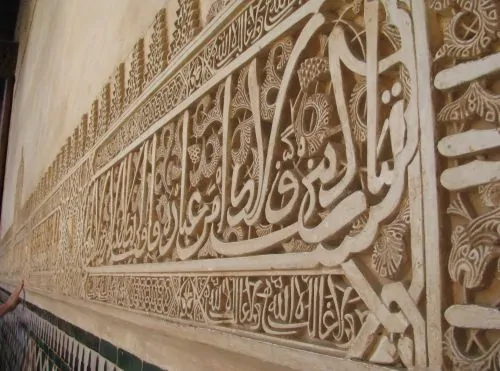
When plague entered Granada, Lisan al-Din Ibn al-Khatib encountered it with an intellectual identity that cannot be reduced to a single profession. He was neither a physician in the modern specialized sense nor a government minister who practiced medicine merely as a private hobby. Born in Loja in 1313, he belonged to a family already connected to Nasrid administration and moved while young into Granada’s courtly and scholarly world. His education encompassed Arabic literature, history, jurisprudence, philosophy, pharmacology, and the medical tradition inherited from Greek and earlier Islamic authorities. These disciplines were not sealed off from one another, because a learned court official could move among them while addressing different kinds of political and human problems. Medicine supplied Ibn al-Khatib with a language for explaining disease, but his work as a historian and administrator helped determine how he collected and judged information.
His ascent began in circumstances shaped by the hazards of frontier politics. Ibn al-Khatib’s father and elder brother were killed in 1340 at the Battle of Río Salado, where the combined forces of Castile and Portugal defeated the armies of Granada and their Marinid allies. The loss deprived him of close relatives while accelerating his dependence upon court service. Ibn al-Jayyab, a former teacher who served as vizier and head of the royal chancery under Yusuf I, brought the younger scholar into government as a secretary. The chancery demanded far more than elegant handwriting: its officials composed diplomatic correspondence, recorded political events, received foreign envoys, and fashioned the language through which the ruler represented himself to allies and adversaries. Ibn al-Khatib’s command of rhymed prose and poetry made him exceptionally suited to that environment, while his historical interests encouraged him to preserve information that might otherwise have disappeared with the political moment. He was learning to recognize patterns and evaluate testimony long before plague made those habits matters of life and death.
The epidemic of 1348–1349 then removed the man who had sponsored his career. Ibn al-Jayyab died from plague, leaving Ibn al-Khatib to succeed him in the chancery and receive the title of vizier. The surviving record does not reveal precisely what Ibn al-Khatib felt as his teacher died or how closely he attended him during the illness. No personal diary provides a sequence of bedside observations from which his contagion theory can be neatly reconstructed. What can be established is that plague struck his professional circle directly and placed him in high office while the kingdom was still absorbing the catastrophe.
The promotion gave Ibn al-Khatib an unusually broad vantage point, although it did not provide him with anything resembling a modern public-health reporting system. Information reached the Nasrid court through provincial administrators, physicians, merchants, diplomats, travelers, military commanders, and petitioners whose statements varied greatly in reliability. The chancery stood near the point where such reports were received, compared, transformed into official knowledge, or forgotten. Ibn al-Khatib’s access to this traffic helps explain why his plague treatise moved readily among several geographical scales: the individual patient, the household, the urban quarter, the port, and the isolated community. Some of his examples may have come from what he personally witnessed, whereas others were explicitly supported by testimony that he regarded as sufficiently widespread or trustworthy. His later journeys and periods of exile in North Africa widened his knowledge of the Maghrib, although it is hazardous to assume that every experience described in his surviving works had already occurred when he first composed the plague treatise. Scholars have consequently differed over its precise date, placing it either relatively soon after the 1349 outbreak or in connection with the years surrounding his return from exile in 1362. The safest conclusion is that the work emerged from the first generation of responses to the Black Death and may reflect a period during which recurring outbreaks allowed earlier impressions to be tested against additional reports. Its evidentiary language suggests not a single revelation during one dramatic encounter but a judgment assembled over time.
Court office also gave Ibn al-Khatib’s conclusions a political and ethical weight that the observations of a less prominent writer might not have possessed. As vizier, he was accustomed to presenting interpretation as a basis for action, not simply as an exercise in speculation. His historical writings likewise treated knowledge of people and places as necessary to the preservation of the state. That background helps explain the confidence with which he transformed recurring associations into a general claim about contagion. It may also explain his impatience with scholars whose legal opinions seemed to him insulated from the consequences they produced. Yet his authority did not make his evidence neutral, since he selected examples, trusted certain reports, and interpreted ambiguous outcomes through his own medical assumptions. The vizier who watched the plague was more than an eyewitness: he was an official practiced in deciding which observations should become authoritative and what rulers and communities ought to do once those observations had been accepted.
Medieval Epidemic Theory

The modern word “plague” suggests a single disease caused by a known organism, but fourteenth-century physicians possessed neither that biological certainty nor an equivalent diagnostic category. They encountered fevers, swellings, coughing, hemorrhage, delirium, and sudden death, then attempted to classify those signs within an inherited medical language. Terms translated as plague, pestilence, or epidemic could overlap without always identifying the same condition. Before Ibn al-Khatib’s argument can be understood, the medical world in which contagion remained only one possible explanation must be reconstructed on its own terms.
At the center of learned medicine stood the humoral system associated with Hippocrates, Galen, and their interpreters in the Islamic world. The body was understood through the interaction of blood, phlegm, yellow bile, and black bile, each connected to combinations of heat, coldness, moisture, and dryness. Health did not require identical proportions in every person; it depended upon a balance appropriate to the individual’s natural temperament, age, occupation, diet, and environment. Disease appeared when this equilibrium was disturbed or when corrupted material overwhelmed the body’s ability to regulate itself. A physician consequently examined symptoms not simply as signs of an external invader but as evidence of processes unfolding within a particular constitution. Treatment sought to restore balance by adjusting food, drink, sleep, exercise, evacuation, medication, or exposure to surrounding conditions.
Epidemics demanded an explanation for why large numbers of bodies became disordered at approximately the same time. The most influential answer located the shared disturbance in the atmosphere, whose corruption could affect an entire city or region. Unusual heat, excessive moisture, stagnant conditions, decaying matter, seasonal irregularity, or winds arriving from unhealthy places might alter the air’s qualities and make it injurious when inhaled. Astrological conjunctions were sometimes invoked as distant causes capable of changing terrestrial conditions, although physicians still concentrated upon air as the immediate medium through which bodies were harmed. “Corruption” did not necessarily mean an offensive odor perceptible to everyone; air might be medically dangerous even when it appeared ordinary to the senses. Preventive advice emphasized ventilation, movement toward supposedly healthier locations, the burning of aromatic woods and resins, washing surfaces with vinegar, and regulating the body so that it would be less receptive to harmful influences. Such measures were theoretically coherent even when they did little against plague. Some practices may incidentally have altered exposure, but their intended purpose was to purify air or strengthen bodily balance rather than destroy microorganisms.
Individual susceptibility explained why corrupted air did not kill everyone exposed to it. Bodies differed in temperament, accumulated humoral matter, daily regimen, and capacity to resist environmental damage. A person filled with matter believed liable to putrefaction might fall ill while a neighbor breathing the same air survived. Age and prior health could further shape the outcome, as could diet, emotional disturbance, exhaustion, or the timing of exposure. This emphasis upon predisposition allowed physicians to accommodate the irregularity of epidemics without abandoning a common atmospheric cause.
The concept of contagion entered this framework without necessarily displacing it. A diseased body might emit corrupted breath or other harmful exhalations that altered the air immediately surrounding it, after which a nearby person inhaled that corruption and became ill according to his own susceptibility. Clothing and household possessions could retain noxious material, while crowded rooms could concentrate dangerous vapors more intensely than open spaces. Ibn Khatima described transmission through proximity and contaminated clothing while continuing to employ humoral and atmospheric explanations. Ibn al-Khatib similarly combined contact-based evidence with claims that nomads living in well-ventilated tents escaped because corrupted air gained little hold among them. For both writers, an epidemic might originate in a general corruption of the atmosphere and then travel through encounters among people, objects, and places. Miasma and contagion were not exclusive theories awaiting a decisive medieval choice between them; they could operate as connected stages within one explanation.
Islamic medicine itself was neither a passive repository of Greek texts nor a body of knowledge isolated from religion. Generations of physicians had translated, criticized, reorganized, and extended the works of Hippocrates and Galen, while figures such as al-Razi and Ibn Sina established authoritative syntheses of clinical practice and natural philosophy. Physicians discussed the apparent transmissibility of leprosy, scabies, consumption, and other illnesses long before the Black Death. Reports attributed to the Prophet Muhammad shaped arguments about plague, flight, divine causation, and obligations toward the sick. Arabic terms such as ta’un, waba’, and adwa carried histories that cannot be reduced respectively to the modern categories of plague, epidemic, and infection. Medical, legal, and theological vocabularies overlapped because the questions raised by disease crossed the boundaries later societies would draw between those disciplines.
Ibn al-Khatib did not step outside medieval medicine when he defended contagion. He continued to understand bodies through humoral balance, accepted the importance of corrupted air, and lacked any concept of bacteria or insect vectors. His departure lay in insisting that these inherited explanations could not erase the repeated association between contact and subsequent disease. Medieval epidemic theory provided him with much of his language, but observation pushed him toward a conclusion that some authorities found much harder to absorb. The question was becoming not whether God governed disease, but whether acknowledging a regular path of transmission improperly limited divine power.
“No Contagion”: The Authority That Seemed to Deny the Obvious

Against Ibn al-Khatib’s conclusions stood a short and formidable statement attributed to the Prophet Muhammad: “There is no contagion.” In Arabic, the phrase la ʿadwa appeared to deny that disease passed naturally from one body to another. Its authority did not rest on an ancient medical hypothesis that could be revised when contrary evidence accumulated; it belonged to the transmitted record of prophetic speech and carried theological, legal, and moral weight. For a Muslim scholar, accepting contagion consequently raised a question larger than medicine: could an observable pattern be affirmed if the plain sense of a revered report seemed to forbid that affirmation?
The report itself belonged to a cluster of sayings directed against beliefs that disease, omens, months, or other created things possessed an autonomous and inescapable power over human affairs. In one well-known exchange, a Bedouin observed that healthy camels could become diseased after a mangy camel entered their midst. The Prophet reportedly answered by asking who had infected the first camel, redirecting the argument from the visible chain of transmission to the ultimate origin of illness. Read in this way, “no contagion” protected divine sovereignty by denying that one diseased creature could act independently of God. Yet the force of that theological correction could easily be extended into a medical denial: if the transmission of disease was rejected at the level of doctrine, then recurring patterns of contact risked being treated as deceptive appearances rather than genuine causes.
The transmitted tradition was not nearly as uniform as the isolated phrase suggested. Other reports instructed owners not to bring sick camels among healthy ones, advised believers to avoid a leper, and prohibited entering or fleeing a land in which plague had appeared. The famous account of the caliph ʿUmar ibn al-Khattab at Sargh likewise showed precaution operating within providence: when he declined to enter plague-stricken Syria, he described himself as fleeing from God’s decree to God’s decree. Such material made behavioral avoidance legitimate even when the language of natural contagion remained contested. The tradition could support separation from danger without settling exactly how the danger traveled.
Reconciling these reports required interpretation rather than simple obedience to a single unambiguous rule. Some scholars argued that “no contagion” denied only the pre-Islamic belief that illness transmitted itself necessarily, while precautions against the sick acknowledged a regular association established by God. Influential currents of Sunni theology held that created things did not exercise causal power independently: fire did not burn and medicine did not heal apart from God’s action, even though burning regularly followed contact with fire and recovery might follow treatment. The customary sequence of events could be studied, anticipated, and used in practical judgment without becoming an autonomous force competing with divine will. This distinction provided conceptual room for acknowledging transmission, but it did not produce consensus, because scholars disagreed over whether speaking of contagion preserved the distinction or quietly erased it. Medical and theological vocabularies could describe the same sequence while assigning very different meanings to the word “cause.” The disagreement also concerned the conduct expected of Muslims during an epidemic. Plague traditions associated patient endurance with divine reward and sometimes represented death from plague as martyrdom, giving spiritual significance to remaining steadfast amid collective disaster. Families still had obligations to nurse the ill, prepare bodies, conduct burials, and prevent the abandonment of vulnerable neighbors. A strong doctrine of contagion might encourage prudent separation, but it could also justify flight by the wealthy, suspicion of caregivers, or the neglect of those already infected. Conversely, refusing to acknowledge transmission could expose households and communities to dangers that repeated experience seemed to reveal. Jurists and theologians had to consider not only whether contagion was true but what kinds of behavior its recognition might authorize. Behind an apparently abstract dispute about causation lay competing visions of courage, responsibility, solidarity, and the preservation of life.
Ibn al-Khatib entered this contested field without simply placing secular reason against Islam. He accepted divine causation and worked within a learned culture in which prophetic tradition remained authoritative, but he rejected an interpretation that required scholars to deny what disciplined observation repeatedly confirmed. For him, transmitted reports had to be understood in a manner compatible with the evidence of infected visitors, contaminated possessions, spared communities, and diseased ports. His opponents were not necessarily incapable of seeing those patterns; they disputed what the patterns proved and how far human observers could move from regular succession to causal judgment. The authority that seemed to deny the obvious did more than obstruct medical discovery. It forced the deeper question at the center of the Granadan controversy: whether fidelity to revelation demanded the rejection of contagion, or whether revelation itself had been read too narrowly.
A Granadan Debate, Not a Solitary Discovery

Ibn al-Khatib’s plague treatise is often presented as the achievement of a solitary genius who recognized contagion while everyone around him remained imprisoned by inherited doctrine. That framing heightens the drama but distorts the intellectual setting in which he wrote. Fourteenth-century Granada was the center of a small yet vigorous scholarly world connected to Almería, Málaga, Fez, and other cities of the western Mediterranean. Physicians, jurists, court officials, teachers, and religious scholars confronted the same epidemic through overlapping bodies of medical knowledge and prophetic tradition. They did not reach a common conclusion, but neither did Ibn al-Khatib formulate his position in isolation. Their disagreements reveal a local conversation about transmission, causation, religious authority, and communal survival already underway before his most famous declaration.
The young Granadan court physician Muhammad al-Shaquri provides one indication of that wider discussion. As plague struck the Nasrid capital in 1348, he composed a short work entitled Nasihat fi al-Awbiʾa, or An Advisory Notice concerning Epidemics. Al-Shaquri cautiously defended ideas about transmissibility while offering practical measures for purifying dwellings, maintaining bodily health, and limiting exposure to dangerous air. Rather than treating precaution as a failure of faith, he represented useful knowledge as a gift permitted by God for the protection of the community. He died during the outbreak not long after composing the work, leaving behind a concise intervention shaped by the emergency it sought to address.
An even more substantial parallel came from Abu Jaʿfar Ahmad ibn Khatima, a physician and poet in Almería, then part of the Nasrid kingdom. His Tahsil Gharad al-Qasid fi Tafsil al-Marad al-Wafid examined the epidemic through ten organized questions, moving from causes and symptoms to treatment and religious problems. Ibn Khatima described plague within the inherited physiology of corrupted air, altered cardiac temperament, and damaged humors. He treated exposure to infected people as a real danger confirmed by repeated experience. Environmental corruption and person-to-person transmission were not mutually exclusive explanations in his account: tainted air could produce a general epidemic condition while proximity helped communicate disease among particular bodies. He also addressed prevention, diet, medication, and the religious status of those afflicted, refusing to separate medical practice completely from theological obligation. His work joined empirical claims to a conventional medical framework rather than overthrowing medieval medicine in anticipation of bacteriology. The existence of such a detailed treatise in nearby Almería makes it impossible to cast Ibn al-Khatib as the only Andalusi observer who recognized that plague traveled along human connections.
The debate also included scholars who rejected contagion, most notably Ibn al-Khatib’s teacher, the influential Granadan jurist Abu Saʿid ibn Lubb. Ibn Lubb denied that plague passed from one person to another as an effective natural cause, yet his position was more considered than a refusal to look at evidence. He worried that belief in contagion would encourage flight, abandonment of the sick, and neglect of the duties owed to dying Muslims. His legal response, later preserved by Ahmad al-Wansharisi, placed the maintenance of communal bonds above attempts to escape a danger that remained subject to God’s decree. The contrast with Ibn al-Khatib was both epistemological and ethical: they differed over what observed associations established, but they also differed over the social consequences of treating those associations as causal.
These writers did not divide neatly into physicians who trusted experience and religious scholars who rejected it. Ibn Khatima incorporated legal and theological questions into a medical treatise, while Ibn Lubb reasoned from observed human behavior as well as transmitted authority. Even the term “contagion” concealed several possible claims, ranging from the modest assertion that illness regularly followed contact to the stronger proposition that a diseased body possessed its own power to infect another. Calling Ibn al-Khatib the discoverer of contagion collapses those distinctions and turns a contested medieval category into a modern scientific possession waiting to be claimed. His distinctiveness lay less in noticing that contact mattered than in the uncompromising epistemic force he gave to accumulated observation. He argued that recurrent patterns of infection constituted evidence strong enough to require reinterpretation of apparently contrary authority. Restored to the Granadan debate, his treatise appears not as an isolated flash of modernity but as the most forceful surviving statement from a community struggling to decide what experience could prove.
The Muqni’at al-Sa’il: Building a Case from Experience
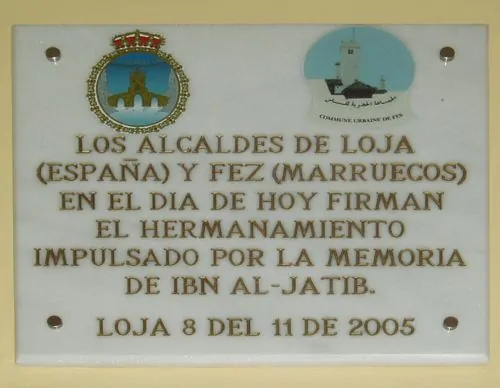
The work in which Ibn al-Khatib made his most sustained argument for contagion was the Muqniʿat al-Saʾil ʿan al-Marad al-Haʾil, a title commonly rendered as Convincing the Questioner concerning the Appalling Disease. Its interrogative framing suggests that the treatise was meant to answer doubt, not merely to record symptoms or prescribe remedies. The precise date of composition remains uncertain, although it belongs to the years following Granada’s catastrophic outbreak of 1349 and may reflect later recurrences of plague. That uncertainty matters because the work could represent either an immediate response to the first epidemic or a judgment strengthened by repeated encounters with the disease. In either case, Ibn al-Khatib wrote after observation had supplied him with patterns that demanded explanation.
The Muqniʿat al-Saʾil was not a modern epidemiological study disguised in medieval language. It was a compact plague treatise combining inherited medical theory, descriptions of illness, preventive advice, and theological argument. Ibn al-Khatib continued to discuss corrupted air, bodily susceptibility, and humoral imbalance while also asking how plague moved between particular people and places. The result was a layered explanation in which environmental conditions could initiate epidemic danger but contact helped determine its path through a population.
At the center of the treatise stands Ibn al-Khatib’s declaration that contagion had been established through experience, investigation, sensory evidence, and trustworthy reports. Each part of that claim carried epistemic weight. Experience meant the recurrence of recognizable outcomes rather than a single striking anecdote, while investigation implied deliberate comparison among cases. The evidence of the senses gave trained observation a standing that could not be erased by an appeal to textual authority alone. Trustworthy reports extended the inquiry beyond Granada, allowing information from travelers, merchants, prisoners, households, and distant communities to form part of a cumulative case. Ibn al-Khatib was not claiming that every report deserved belief; his language emphasized accounts that were numerous, consistent, and supplied by credible observers. Nor did he pretend to know the hidden physical agent responsible for transmission. He argued instead that the regularity of the visible sequence justified belief in a connection even when the mechanism remained unknown.
His reasoning depended heavily on comparison. Those who associated with the afflicted frequently became ill, whereas people protected from such contact sometimes remained healthy despite the surrounding epidemic. A household could be spared until an infected visitor crossed its threshold, after which the disease appeared among its inhabitants. Objects associated with the sick seemed able to introduce plague where no afflicted person had previously been present, and communities separated from ordinary routes of intercourse could escape devastation occurring nearby. None of these examples amounted to a controlled experiment in the modern sense, and each admitted possible alternative explanations. But together they resembled a series of natural experiments in which contact or separation was the most conspicuous changing condition.
The strength of Ibn al-Khatib’s case lay in accumulation rather than demonstration of an invisible pathogen. A single household might escape by chance, and one person might become sick without remembered contact, but repeated contrasts made coincidence increasingly inadequate as a general explanation. His method moved from observed sequences to a probable causal judgment: where contact occurred, disease often followed; where communication was interrupted, it sometimes did not. This reasoning left room for exceptions because bodily constitutions differed and all events ultimately remained subject to God. It nevertheless denied that unexplained exceptions could invalidate the broader pattern, just as the occasional failure of a medicine did not prove that medical treatment was useless. When Ibn al-Khatib insisted that religious tradition must be interpreted rather than used to abolish established experience, he was defending more than a particular theory of plague. He was asserting that disciplined observation could impose obligations upon interpretation, and the garments, vessels, visitors, and ports in his treatise supplied the material evidence for that claim.
The Geography of Transmission
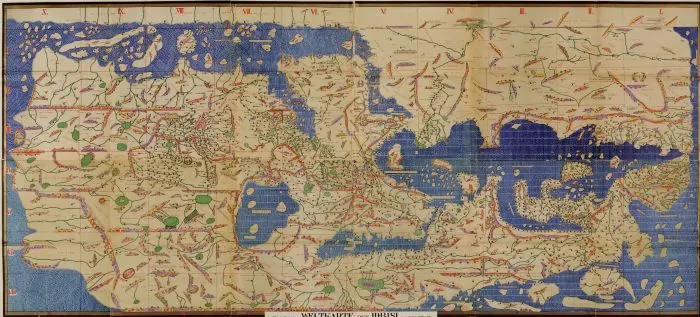
Ibn al-Khatib’s evidence gave contagion a geography. Instead of treating plague solely as a general corruption descending upon an entire region, he followed its movement through encounters among particular bodies, objects, households, and settlements. Disease advanced along lines created by residence, travel, trade, captivity, and domestic exchange. These connections explained why neighboring groups exposed to apparently similar air could experience radically different outcomes. The plague did not merely appear in a place; it arrived through relationships linking that place to somewhere already afflicted.
The household supplied the smallest and most immediate scale of transmission. Ibn al-Khatib described homes that remained healthy until someone suffering from plague entered them, after which illness appeared among the residents. Such cases transformed the infected visitor into a before-and-after marker: the household’s circumstances seemed unchanged except for the arrival of one person. Contact did not guarantee that everyone would become ill, because medieval medicine allowed differences in constitution, diet, age, and susceptibility to shape individual outcomes. Nevertheless, recurrent infection after visits made it difficult to explain each household outbreak as an unrelated effect of the atmosphere. The doorway became an epidemiological boundary because crossing it connected previously separated groups.
Physical contact was not the only connection Ibn al-Khatib considered dangerous. He maintained that plague could be communicated through a garment, a household vessel, or another possession associated with the afflicted. He even included an earring among the objects implicated in transmission, an unusually specific example suggesting that apparently harmless personal property could carry danger into a new body or home. A garment retained a close relationship with its wearer, while a cup, bowl, or container passed through several hands and domestic spaces. These objects appeared to preserve something of an earlier encounter after the infected person had departed or died. The claim greatly expanded the possible range of contagion because it detached transmission from the simultaneous presence of sick and healthy bodies. It also supplied an explanation for outbreaks in which no infected visitor could be identified but recently acquired property provided a material link to an afflicted household. Possessions, in this reasoning, could carry the history of their circulation with them.
Ports revealed the same process on a larger scale. Ibn al-Khatib reported that a healthy seaport could become afflicted after the arrival of people from a plague-stricken land, making the ship’s arrival the communal equivalent of the visitor entering a house. Maritime traffic compressed distance by moving passengers, crews, provisions, cargo, and personal belongings between epidemiologically unequal regions. A port was not simply a coastal location exposed to bad air; it was a junction where the movement of people and things could alter the health of an entire population.
Isolation provided Ibn al-Khatib with the inverse of these cases. He invoked reports of Muslim captives confined in the arsenal at Seville who supposedly escaped the plague while disease spread through the surrounding city. Their imprisonment, ordinarily a condition of vulnerability, may have shielded them by restricting communication with the infected population. He also referred to nomadic communities in North Africa that remained healthy while settled populations suffered, attributing their survival partly to separation and the freer circulation of air around their tents. These examples were not equivalent, since confinement within an arsenal and movement through an open landscape created very different environments. They nevertheless shared the interruption of ordinary urban contact. Ibn al-Khatib treated such communities as comparison groups showing what happened when the chains connecting people, possessions, and infected places were broken. Their reported survival strengthened his claim that proximity and communication helped determine where plague would appear.
Modern biology makes some of these observations more intelligible without turning Ibn al-Khatib into a microbiologist. Bubonic plague is generally transmitted through infected fleas, while pneumonic plague can pass more directly through respiratory exposure. Clothing and bedding can transport ectoparasites, although the importance of human fleas and lice in the medieval pandemic remains debated. Ships and ports could move rodents, fleas, infected passengers, and contaminated belongings together, leaving observers unable to distinguish among several overlapping pathways. A household vessel was unlikely to transmit plague merely because its surface had been touched, but its circulation could mark the movement of people or parasite-bearing materials between homes. Ibn al-Khatib correctly identified consequential associations while lacking the biological framework needed to separate their mechanisms.
The geography he reconstructed was relational rather than merely territorial. Places became vulnerable because they were connected, while temporary safety could arise from the interruption of those connections. Corrupted air still remained part of his explanation, especially when accounting for the epidemic’s broad environmental setting, but atmospheric corruption alone could not easily explain why an isolated group survived within or near an afflicted region. Contact helped account for plague’s uneven distribution inside the larger zone of danger. Ibn al-Khatib’s garments, vessels, ports, and protected communities turned scattered reports into a coherent spatial argument: disease followed the routes by which human society held itself together.
When Observation Forced Tradition to Be Read Again

The sharpest moment in Ibn al-Khatib’s argument came when he confronted the apparent conflict between transmitted authority and sensory evidence. A proof drawn from religious tradition, he maintained, could not retain an interpretation that manifestly contradicted perception and experience. He did not declare prophetic tradition false, nor did he claim that physicians possessed authority over revelation itself. His contention was that human interpretations of transmitted reports remained fallible, particularly when those interpretations required the denial of repeatedly observed events. The point shifted the dispute from whether revelation was authoritative to whether one particular reading of revelation was defensible. A contradiction between tradition and experience might reveal a failure of interpretation rather than a failure of the senses.
That demand was bold, but the interpretive procedure behind it was not foreign to Islamic scholarship. Jurists and theologians routinely reconciled apparently conflicting reports by distinguishing their contexts, narrowing their application, or treating one text as a qualification of another. A statement could be authentic without every possible literal inference drawn from it being correct. Ibn al-Khatib used this established flexibility to argue that acknowledgment of transmission need not violate the framework of revelation.
His reinterpretation centered upon the meaning of the prophetic statement “There is no contagion.” The phrase could be understood as denying that disease possessed an independent power capable of operating outside God’s will, rather than denying that illness regularly followed contact. Other traditions made that distinction plausible because they instructed believers to keep sick camels away from healthy ones and to avoid close proximity to lepers. Reports prohibiting entry into a plague-stricken land likewise recognized that location and exposure mattered, even if their purpose also included obedience, patience, and the prevention of panic. The caliph ʿUmar’s decision not to enter an afflicted region provided a powerful precedent for precaution exercised within belief in divine decree. God remained the ultimate creator of illness, but human beings were still permitted to respond to the ordinary sequences through which danger appeared. Ibn al-Khatib could accept contagion as a created pattern without treating it as a force independent of providence.
Ibn al-Khatib strengthened this reinterpretation by describing his evidence as something more substantial than personal opinion. His appeal to experience included repeated observation, deliberate inquiry, sensory perception, and reports supplied by credible witnesses. The categories echoed a learned culture in which the reliability of testimony depended upon the number, consistency, and trustworthiness of those transmitting it. He did not equate reports about plague with prophetic hadith, but he understood that knowledge beyond an individual’s immediate sight had to travel through human testimony. Accounts from households, ports, captives, and isolated communities converged upon the same relationship between communication and disease. Their geographical separation made collusion improbable, while their similarity increased their evidentiary value. A single anomalous case could be questioned, but a widespread pattern confirmed by observers in different circumstances demanded explanation. The authority of transmitted knowledge and the authority of empirical reporting moved through comparable social channels, even when they carried very different religious status.
The issue was also moral because interpretation determined what kinds of risk believers were expected to accept. Ibn al-Khatib invoked the religious prohibition against knowingly casting oneself into destruction and argued that denying contagion could expose Muslim lives to avoidable danger. Precaution did not necessarily express cowardice or distrust of God, since believers already guarded against fire, hunger, violence, and other divinely created hazards. Recognition of natural danger could instead become part of the obligation to preserve life. A reading of tradition that forbade such recognition risked turning piety into preventable harm.
Observation did not force revelation to surrender; it forced interpreters to explain why revelation should be read in a way that contradicted accumulated experience. That distinction prevents the controversy from collapsing into a story of science defeating religion. Ibn al-Khatib remained a Muslim thinker reasoning within a world of providence, prophetic authority, and humoral medicine, yet he refused to let any one interpretation make inquiry meaningless. His opponents could answer that apparent regularities did not establish causal power and that the exceptions to transmission remained significant. The same body of tradition could consequently support precaution, steadfastness, or a combination of both. What changed in Ibn al-Khatib’s argument was the burden of proof: once contagion had been established through converging observation, those who denied it had to do more than repeat an authoritative phrase.
The Teacher Who Disagreed: Ibn Lubb and the Ethics of Staying
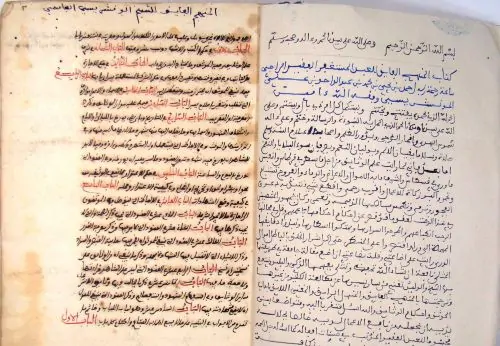
Abu Saʿid ibn Lubb was not a distant conservative reacting to ideas he barely understood. He was one of Granada’s leading Maliki jurists and had participated in Ibn al-Khatib’s own education. The relationship makes their disagreement strikingly revealing because both men belonged to the same scholarly environment and confronted the same epidemic. Ibn Lubb knew the medical claims made for contagion but concluded that they could not bear the theological and ethical meaning assigned to them. Their dispute emerged within Granada’s learned establishment rather than between an enlightened outsider and an undifferentiated religious opposition.
Ibn Lubb’s position survives in a legal response later preserved in Ahmad al-Wansharisi’s collection of western Islamic fatwas. The questions presented to him concerned whether disease could be said to pass between people and how Muslims should behave during an epidemic. Ibn Lubb answered that plague did not possess a transmissible power by which one infected body naturally produced illness in another. He did not need to deny that sickness sometimes followed contact, because the appearance of a sequence did not establish an independently operating cause. Contact could precede illness without compelling God to create illness, just as avoiding the sick could be followed by infection from another source. The fact that some attendants remained healthy while others became ill weakened any claim of necessary transmission. For Ibn Lubb, irregular outcomes confirmed that contagion could not function as a dependable causal law. What physicians identified as transmission remained, in his account, a contingent succession of events governed at every moment by divine action.
The ethical center of Ibn Lubb’s response lay in the obligations owed to those already afflicted. Muslims were expected to nurse the sick, comfort the dying, prepare bodies for burial, and maintain the bonds of the community during catastrophe. Prophetic traditions promising the reward of martyrdom to those killed by plague gave endurance a religious dignity that flight could not automatically claim. Staying among the afflicted could become an expression of courage, service, and trust rather than ignorance of danger.
Granada’s precarious circumstances made those obligations unusually consequential. Epidemic mortality could empty neighborhoods, disrupt food supplies, suspend ordinary worship, and weaken the institutions through which the remaining Muslim polity functioned. A doctrine of contagion might intensify that disintegration by encouraging the healthy to treat every sufferer as a threat. Families could abandon relatives, neighbors might refuse assistance, and physicians or burial workers could withdraw from indispensable duties. Those with wealth and political connections would be better able to escape, leaving servants, captives, laborers, and the poor to absorb the danger. Ibn Lubb’s insistence upon remaining did not eliminate fear, but it denied fear the authority to dissolve communal responsibility. His legal reasoning sought to preserve the social body even when individual bodies were dying. Yet the position carried its own danger, because discouraging separation could expose caregivers and households to precisely the transmission Ibn al-Khatib believed experience had established.
The contrast between teacher and student was not a simple choice between morality and evidence. Both treated preservation of life and fidelity to Islam as central concerns, but they located the greater danger in different places. Ibn al-Khatib feared that denial of contagion would sanction avoidable exposure, while Ibn Lubb feared that belief in contagion would sanction abandonment. The same irregularity of plague could support either position: selective infection demonstrated differing susceptibility for Ibn al-Khatib but undermined necessary transmission for Ibn Lubb. Their disagreement shows that observation did not interpret itself, because assumptions about causation and moral duty shaped what an observed pattern was allowed to prove. Ibn Lubb’s challenge consequently complicates Ibn al-Khatib’s achievement by revealing that the controversy concerned not only how disease spread, but what people owed one another when staying close might be fatal.
What Ibn al-Khatib Saw and What He Could Not Know

Ibn al-Khatib saw that plague clustered rather than striking with complete spatial randomness. He recognized that illness frequently followed contact, that infected households could communicate danger beyond their walls, and that interruption of ordinary movement sometimes protected communities. His conclusion that garments and other possessions could carry disease preserved an observation that remained important even though he could not explain its biological basis. He also understood that exceptions did not automatically destroy a pattern, because differences among bodies could influence whether exposure ended in illness. In that limited but consequential sense, his account described genuine features of epidemic transmission. Accuracy at the level of observed relationships did not provide accuracy about the mechanisms producing them.
Modern genetic evidence has established that the Black Death was caused by Yersinia pestis. The bacterium circulates primarily as a zoonotic pathogen associated with animal hosts and flea vectors, although it can infect humans through more than one route. Bubonic plague commonly follows the bite of an infected flea, while pneumonic plague can pass between people through respiratory exposure. Septicemic infection can also develop when the bacterium enters and multiplies within the bloodstream.
These mechanisms make Ibn al-Khatib’s material examples suggestive but not self-explanatory. Garments and bedding could transport infected fleas or lice, especially in densely occupied homes where clothing was stored, exchanged, inherited, or sold after death. Mathematical models have supported the possibility that human ectoparasites contributed substantially to the speed of the medieval pandemic, but other researchers have challenged the strength of that conclusion. A cup or household vessel was less likely to function as a persistent bacterial reservoir, although its transfer could accompany the movement of people, textiles, food stores, or parasites. Ships could carry infected passengers along with rodents, fleas, cargo, and clothing, any combination of which might introduce plague into a port. The arrival of disease after the landing of a vessel identified a meaningful epidemiological event without revealing which organism or vector had crossed the harbor. Ibn al-Khatib detected the connection while the biological components remained hidden inside it.
Direct contact presented a similar ambiguity. A patient suffering from pneumonic plague could infect someone nearby through respiratory droplets, giving Ibn al-Khatib’s conclusion an immediately recognizable modern mechanism. Ordinary bubonic plague, by contrast, rarely passes directly from one person to another. Household clustering could result from residents sharing an infestation of infected fleas rather than from one sick person transmitting disease to every subsequent victim. Because several forms and routes could operate within the same epidemic, medieval observers had little means of distinguishing a contagious breath from a parasite moving among bodies and belongings. The visible sequence remained the same even when the invisible pathway differed.
Ibn al-Khatib could not know that a microorganism caused plague, that animal populations maintained reservoirs of infection, or that an insect might connect a diseased rodent to a human victim. He lacked laboratory culture, microscopy capable of revealing bacteria, and a biological concept of vectors. He could not reliably separate bubonic, pneumonic, and septicemic plague from other acute diseases producing fever, swellings, bleeding, or sudden death. Nor could he determine incubation periods precisely enough to reconstruct every exposure, especially when infected people and parasites traveled before symptoms became apparent. His comparisons depended upon remembered contacts and trustworthy testimony rather than systematic case records. Humoral predisposition supplied a reasonable medieval explanation for selective infection, but it could not identify immunity, infectious dose, genetic variation, or differences in the route of exposure. Reports of untouched communities might also reflect incomplete information, timing, ecological circumstances, or good fortune rather than isolation alone. His theory consequently gathered several distinct biological processes under the broad category of contagion.
Calling Ibn al-Khatib a discoverer of germ theory would replace historical analysis with retrospective celebration. Yet dismissing his conclusions because he could not identify Yersinia pestis would impose an equally misleading standard. His achievement was to infer an unseen relationship from the patterned distribution of visible events and to defend that inference against interpretations that made the pattern evidentially irrelevant. He recognized that disease traveled through networks connecting bodies, possessions, and places, even though he could not disassemble those networks into pathogen, host, and vector. What he saw was the geography of transmission at a human scale. What he could not know was the layered biology moving within it.
Why Evidence Did Not Automatically Win
Evidence did not automatically win because no neutral tribunal existed in which observation could simply defeat tradition. Facts acquired meaning within established assumptions about causation, testimony, divine action, and the responsibilities of believers. Ibn al-Khatib considered repeated contact patterns sufficient to establish contagion, but his opponents could accept many of the same observations without accepting his causal conclusion. To them, sequence remained distinct from agency: illness following contact did not prove that the diseased body possessed a transmissible power. The controversy concerned the rules by which evidence became knowledge, not merely the amount of evidence available.
Plague itself generated enough irregularity to sustain disagreement. Some caregivers became ill while others survived, and households could contain both victims and apparently untouched residents. Disease sometimes appeared without any remembered encounter, while an exposed person might remain healthy for reasons no observer could identify. Ibn al-Khatib explained these variations through differences in bodily susceptibility, but opponents could treat them as evidence against contagion. Corrupted air offered a broader cause capable of accounting for simultaneous outbreaks across large territories, while divine decree explained why exposure produced no uniform result. The absence of knowledge about bacteria, vectors, incubation periods, and asymptomatic movement prevented either side from isolating the variables involved. Reports could be compared, but they could not be tested with enough control to eliminate every rival explanation. Repetition made Ibn al-Khatib’s inference powerful without making it logically compulsory.
Institutional authority also shaped which conclusions could govern public behavior. Physicians possessed specialized knowledge, but jurists interpreted prophetic tradition and defined the legal duties attached to illness, flight, caregiving, and burial. Ibn al-Khatib’s offices as vizier and court physician gave him extraordinary prominence without granting him the power to settle a theological controversy. Nasrid Granada had no single institution capable of converting his medical judgment into an uncontested doctrine binding every scholar or household.
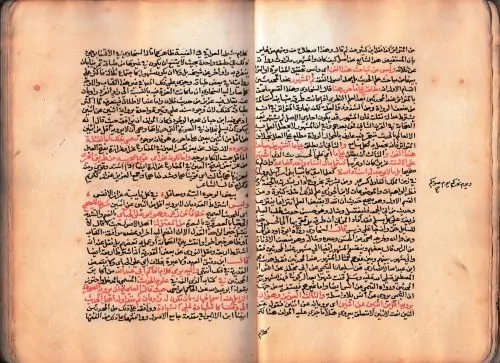
The afterlives of the competing texts further influenced which position remained available to later readers. Ibn al-Khatib’s plague treatise survives in a restricted manuscript tradition and appears to have generated little sustained commentary. Ibn Lubb’s response entered Ahmad al-Wansharisi’s large collection of western Islamic legal opinions, where later jurists could encounter it as part of an authoritative body of Maliki jurisprudence. Manuscript survival cannot measure contemporary influence with precision, but incorporation into a widely consulted legal compilation gave Ibn Lubb’s reasoning a durable institutional setting. In the fifteenth century, the Egyptian scholar Ibn Hajar al-ʿAsqalani could still reject plague contagion while treating observation as support for his conclusion. Selective illness within families and the survival of some attendants seemed to him inconsistent with dependable transmission. He was not simply refusing empirical evidence; he was choosing different observations and interpreting them within another causal framework. The persistence of noncontagion reflected continuing argument rather than collective inability to notice that people became sick.
Evidence gains authority through preservation, interpretation, institutional adoption, and its compatibility with valued forms of life. Ibn al-Khatib could show that contagion explained why plague followed visitors and possessions, but acceptance of that explanation threatened established readings of prophetic speech and raised fears about the abandonment of the afflicted. His opponents could resist his conclusion while believing themselves faithful to experience, theology, and communal ethics. This does not make the two medical positions equally accurate when judged against modern knowledge. It explains why the stronger epidemiological inference did not compel immediate agreement in its own historical setting. Ibn al-Khatib had shifted the burden of argument, but he could not determine which kinds of proof his society would authorize to carry it.
The Murder That Was Not about Contagion
The dramatic resemblance between Ibn al-Khatib’s death and the later fate of persecuted scientific dissenters has encouraged an appealing but unsupported story: that religious authorities murdered him for defending contagion. The surviving evidence does not sustain that connection. Neither the formal accusations against him nor the accounts of his prosecution identify the Muqniʿat al-Saʾil as the cause of his downfall. More than two decades separated Granada’s first Black Death outbreak from his killing in Fez. Correcting the legend does not diminish the courage of his medical argument; it prevents that argument from being attached to a martyrdom it did not produce.
Ibn al-Khatib’s vulnerability originated in the hazardous politics of Nasrid service. He had risen through the chancery to become vizier, chief minister, diplomat, and one of the most powerful figures at the court of Yusuf I and Muhammad V. When a coup displaced Muhammad V in 1359, Ibn al-Khatib was arrested and his property confiscated. Marinid intervention secured his release, after which he joined the deposed ruler and other Andalusi exiles in North Africa. Muhammad V recovered Granada in 1362, and Ibn al-Khatib returned to his offices with him. Restoration brought renewed authority, but it also returned him to a court where access to the ruler depended upon unstable alliances and where exceptional prominence accumulated dangerous enemies.
Over the following years, Ibn al-Khatib’s relationship with Muhammad V deteriorated as rivals gained influence. His former protégé Ibn Zamrak advanced within the chancery and became one of the principal beneficiaries of his fall. The chief qadi al-Nubahi, whose authority Ibn al-Khatib had challenged, supplied the legal and religious weight needed to turn personal hostility into prosecution. In 1371 Ibn al-Khatib fled Granada for the Marinid domains, transforming court suspicion into an accusation of disloyalty.
The religious case against him centered not upon plague but upon Rawdat al-Taʿrif bi-l-Hubb al-Sharif, his elaborate work on Sufism, philosophy, and divine love. Its mystical language and engagement with Graeco-Arabic philosophical concepts allowed opponents to extract propositions they characterized as heretical. Al-Nubahi interpreted the work as more than speculative devotion because Ibn al-Khatib’s claims also intruded upon the religious authority exercised by jurists. The prosecution should not be reduced entirely to a fabricated charge concealing pure political revenge; doctrinal controversy and rivalry reinforced one another. An intellectual disagreement became lethal because it unfolded among officials competing for influence within the Nasrid state. Granada sought his return from Morocco while Marinid patrons initially protected him. Changes within the Marinid court eventually removed that protection, and Ibn al-Khatib was imprisoned in Fez under pressure from his Granadan adversaries. A delegation associated with Granada, including Ibn Zamrak, participated in proceedings against him. Nothing in the surviving record indicates that his observations about infected garments or visitors formed part of this case.
In 1374 Ibn al-Khatib was strangled in prison before the proceedings produced an uncontested legal resolution. Accounts of his death relate that his body was buried, subsequently exhumed and burned, and then buried again, giving the killing a posthumous violence that reflected the intensity of his enemies’ hostility. Responsibility for every act cannot be reconstructed with certainty, although the convergence of Nasrid pressure, court rivalry, and the collapse of Marinid protection is unmistakable. What can be said securely is that he died amid a political and religio-intellectual prosecution organized around loyalty, authority, philosophy, and Sufism. His plague treatise neither explains the timing of his fall nor appears among the surviving charges. The actual history is more complicated than the legend: a statesman who had defended contagion was later murdered, but he was not murdered because he had defended contagion.
Was Ibn al-Khatib Really Choosing Evidence over Faith?
The following video from Storyana follows Ibn al-Khatib’s work in its time:
The strongest challenge to my argument is that the conflict between observation and inherited authority may reproduce a modern opposition that Ibn al-Khatib himself would not have recognized. Describing him as choosing evidence over faith risks turning him into a premature secular scientist and his opponents into defenders of irrational dogma. Islam did not offer a single fixed position on contagion, and prophetic traditions supplied support for both precaution and steadfastness. Medical learning, jurisprudence, and theology were overlapping fields rather than isolated systems competing for control of truth. If Ibn al-Khatib never abandoned revelation, then his argument may have been a dispute within faith rather than a confrontation between faith and evidence.
His medical reasoning confirms much of that objection. Ibn al-Khatib accepted divine providence, worked within humoral physiology, and retained corrupted air as part of his explanation for epidemic disease. He did not conceive of contagion as an autonomous material force operating beyond God’s creation. The Muqniʿat al-Saʾil attempted to reconcile observation with religious truth, not to emancipate medicine from religion.
His opponents likewise cannot be reduced to men who rejected whatever their senses revealed. Ibn Lubb knew that illness sometimes followed contact but disputed what that sequence proved about natural causation. The survival of some caregivers and household members gave him observable grounds for doubting any necessary connection between exposure and disease. He also interpreted plague through an ethical problem that Ibn al-Khatib’s account could not resolve by medical evidence alone. If avoidance preserved one life by abandoning another, then the recognition of danger did not determine the morally correct response. Traditions concerning martyrdom, patience, nursing, and burial addressed obligations that a causal theory could not settle. Ibn Lubb’s concern that contagion might dissolve communal solidarity was neither imaginary nor purely doctrinal. He selected different evidence and gave greater weight to different consequences. From his perspective, remaining with the afflicted could be an informed moral decision rather than a superstitious refusal to acknowledge risk.
Ibn al-Khatib’s empirical case was also less conclusive than later celebrations sometimes imply. His examples were memorable, but he supplied no systematic totals showing how many exposed people became ill or how frequently isolated communities escaped. Trustworthy reports could repeat errors as well as observations, especially when plague’s incubation and transmission routes remained unknown. Modern biology reveals that a garment, visitor, or ship could be associated with infection through several different mechanisms. Some of his apparent demonstrations may have identified a route of social connection without identifying the material cause operating along it. His success lay in forming a strong inference from incomplete evidence, not in proving contagion beyond every reasonable medieval objection.
Yet Ibn al-Khatib was not choosing evidence instead of faith; he was choosing an understanding of faith in which accumulated experience placed limits upon permissible interpretation. Ibn Lubb and other opponents were not rejecting observation altogether; they denied that the reported patterns justified Ibn al-Khatib’s causal language and feared the behavior that language might authorize. The conflict was narrower than a struggle between science and religion, yet deeper than a disagreement over one medical proposition. It concerned who could define the meaning of authoritative texts when physicians claimed that sensory evidence made a literal reading untenable. Evidence struggled for recognition because accepting its implications threatened established interpretations and ethical priorities, not because belief as such prohibited observation. Properly qualified, Ibn al-Khatib’s case shows how a religious intellectual tradition could contain both the resistance to a new empirical claim and the resources required to accommodate it.
Conclusion: The Burden of Proof at the Door
The Black Death did not announce the mechanism by which it entered Granada. Ibn al-Khatib encountered it through patterns: illness after visits, infection following exchanged possessions, and survival where communication had been interrupted. The arrival of an afflicted person could divide a household’s history into the time before plague and the time after it. A doorway consequently became more than an architectural boundary; it marked the point at which one network of bodies and belongings joined another. From such ordinary crossings, Ibn al-Khatib constructed an argument that epidemic disease possessed a traceable path.
He was neither alone in recognizing that path nor surrounded by scholars incapable of observation. Muhammad al-Shaquri defended precaution in Granada, while Ibn Khatima developed a substantial account of plague from nearby Almería. Ibn Lubb, by contrast, denied that contact established a transmissible natural cause and feared that belief in contagion would justify deserting the sick. Each man worked within a culture where medicine, jurisprudence, theology, and communal ethics overlapped. Their disagreement cannot be reduced to rational physicians confronting irrational believers because all of them reasoned from combinations of experience, textual authority, and moral consequence. The prophetic statement “There is no contagion” did not end the discussion; it made the meaning of contagion itself a subject of interpretation. Ibn al-Khatib’s decisive move was to insist that an interpretation contradicted by converging sensory evidence could not remain intellectually untouched. Observation did not displace tradition, but it placed a new burden upon those who claimed that tradition required its denial.
Modern science confirms the bacterial cause of the Black Death while complicating Ibn al-Khatib’s account of its movement. He could not distinguish flea-borne bubonic plague from pneumonic transmission or identify the roles played by animal hosts and human ectoparasites. Garments, visitors, and ships marked connections without revealing the biological mechanism traveling through them. Those limitations prevent his conversion into an inventor of germ theory, but they do not erase the sophistication of his epidemiological inference.
His murder in Fez in 1374 should likewise remain separate from the history of his plague argument. Political rivalries, accusations of disloyalty, and controversy surrounding his philosophical and Sufi writings explain his downfall; the surviving record does not show that his defense of contagion caused his death. The more consequential story requires no manufactured martyrdom. Ibn al-Khatib recognized that evidence could become threatening when it required authoritative words to be read differently and when accepting it carried unsettling ethical consequences. He could not compel agreement because evidence never enters intellectual life without assumptions about causation, authority, and responsibility. Yet once he traced plague to the visitor crossing the threshold, simple denial became harder to sustain. The burden of proof had moved to the door.
Bibliography
Affiliate disclosure: Amazon links on this site are paid links. As an Amazon Associate I earn from qualifying purchases.
- Akhtar, Ali Humayun. “The Political Controversy over Graeco-Arabic Philosophy and Sufism in Nasrid Government: The Case of Ibn al-Khatib in al-Andalus.” International Journal of Middle East Studies 47:2 (2015), 323–342.
- al-Bukhari, Muhammad ibn Ismaʿil. The Translation of the Meanings of Sahih al-Bukhari: Arabic-English. Translated by Muhammad Muhsin Khan. 9 vols. Riyadh: Darussalam, 1997.
- Al-Shaquri, Muhammad ibn Ali. Nasiha fi al-Awbi’a. Real Biblioteca del Monasterio de San Lorenzo de El Escorial, MS Arabic 1785, fols. 106a–111a.
- al-Wansharisi, Ahmad ibn Yahya. Al-Miʿyar al-Muʿrib wa-l-Jamiʿ al-Mughrib ʿan Fatawa ʿUlamaʾ Ifriqiya wa-l-Andalus wa-l-Maghrib. Edited by Muhammad Hajji et al. 13 vols. Beirut: Dar al-Gharb al-Islami, 1981–83.
- Ballan, Mohamad. “Borderland Anxieties: Lisan al-Din ibn al-Khatib and the Politics of Genealogy in Late Medieval Granada.” Speculum 98:2 (2023), 447–495.
- Barbieri, Rémi, et al. “Yersinia pestis: The Natural History of Plague.” Clinical Microbiology Reviews 34:1 (2021), e00044-19.
- Bos, Kirsten I., et al. “A Draft Genome of Yersinia pestis from Victims of the Black Death.” Nature 478 (2011), 506–510.
- Calero Secall, María Isabel. “Rulers and Qadis: Their Relationship during the Nasrid Kingdom.” Islamic Law and Society 7:2 (2000), 235–255.
- Campbell, Bruce M. S. The Great Transition: Climate, Disease and Society in the Late-Medieval World. Cambridge: Cambridge University Press, 2016.
- Conrad, Lawrence I. “Ta’un and Waba’: Conceptions of Plague and Pestilence in Early Islam.” Journal of the Economic and Social History of the Orient 25:3 (1982): 268–307.
- Conrad, Lawrence I., and Dominik Wujastyk, eds. Contagion: Perspectives from Pre-Modern Societies. Aldershot: Ashgate, 2000.
- Dean, Katharine R., et.al. “Human Ectoparasites and the Spread of Plague in Europe during the Second Pandemic.” Proceedings of the National Academy of Sciences 115:6 (2018): 1304–1309.
- Dols, Michael W. The Black Death in the Middle East. Princeton: Princeton University Press, 1977.
- Fancy, Nahyan A. G. Science and Religion in Mamluk Egypt: Ibn al-Nafīs, Pulmonary Transit and Bodily Resurrection. London: Routledge, 2013.
- Galen. On the Natural Faculties. Translated by Arthur John Brock. Cambridge, MA: Harvard University Press, 1916.
- Green, Monica H. “The Four Black Deaths.” American Historical Review 125:5 (2020): 1601–1631.
- Griffel, Frank. Al-Ghazali’s Philosophical Theology. New York: Oxford University Press, 2009.
- Hallaq, Wael B. A History of Islamic Legal Theories: An Introduction to Sunni Usul al-Fiqh. Cambridge: Cambridge University Press, 1997.
- Harvey, L. P. Islamic Spain, 1250 to 1500. Chicago: University of Chicago Press, 1990.
- Hippocrates. Airs, Waters, Places. Translated by W. H. S. Jones. Cambridge, MA: Harvard University Press (Loeb Classical Library), 1923.
- Hopley, Russell. “Contagion in Islamic Lands: Responses from Medieval Andalusia and North Africa.” Journal for Early Modern Cultural Studies 10:2 (2010), 45–64.
- —-. “Plague, Demographic Upheaval and Civilisational Decline: Ibn Khaldun and Muhammad al-Shaquri on the Black Death in North Africa and Islamic Spain.” Landscapes 17:2 (2016), 171–184.
- Ibn al-Khatib, Lisan al-Din. Al-Ihata fi Akhbar Gharnata. Edited by Muhammad Abd Allah Inan. 4 vols. Cairo: Maktabat al-Khanji, 1973–1978.
- —-. Muqni’at al-Sa’il ‘an al-Marad al-Ha’il. Real Biblioteca del Monasterio de San Lorenzo de El Escorial, MS Arabic 1785, fols. 39a–48b.
- —-. Muqni’at al-Sa’il ‘an al-Marad al-Ha’il. Excerpt translated in John Aberth, The Black Death: The Great Mortality of 1348–1350: A Brief History with Documents, 114–116. Boston: Bedford/St. Martin’s, 2005.
- —-. Nufadat al-Jirab fi ‘Ulala al-Ightirab. Edited by al-Sa’diyya Faghia. Casablanca: Matba’at al-Najah al-Jadida, 1989.
- —-. “On the Plague.” In The Black Death: The Great Mortality of 1348–1350: A Brief History with Documents, edited by John Aberth, 114–116. Boston: Bedford/St. Martin’s, 2005.
- Ibn Hajar al-ʿAsqalani, Ahmad ibn ʿAli. Badhl al-Maʿun fi Fadl al-Taʿun. Edited by Ahmad ʿIsam ʿAbd al-Qadir al-Katib. Riyadh: Dar al-ʿAsimah, 1991.
- Ibn Khaldun, Abd al-Rahman. The Muqaddimah: An Introduction to History. Translated by Franz Rosenthal. 3 vols. Princeton, NJ: Princeton University Press, 1967.
- Ibn Khatima, Ahmad ibn Ali. Tahsil Gharad al-Qasid fi Tafsil al-Marad al-Wafid. Real Biblioteca del Monasterio de San Lorenzo de El Escorial, MS Arabic 1785.
- Ibn Sina. The Canon of Medicine (Al-Qanun fi’l-Tibb). Translated by Laleh Bakhtiar. Chicago: Great Books of the Islamic World, 1999.
- Kennedy, Hugh. Muslim Spain and Portugal: A Political History of al-Andalus. London: Longman, 1996.
- Knysh, Alexander D. “Ibn al-Khatib.” In The Literature of Al-Andalus, edited by María Rosa Menocal, Raymond P. Scheindlin, and Michael Sells, 358–372. Cambridge: Cambridge University Press, 2000.
- Malik ibn Anas. Al-Muwatta of Imam Malik ibn Anas: The First Formulation of Islamic Law. Translated by Aisha Abdurrahman Bewley. Granada: Madinah Press, 1989.
- Melhaoui, Mohammed. Peste, contagion et martyre: Histoire du fléau en Occident musulman médiéval. Paris: Publisud, 2005.
- Molina López, Emilio. Ibn al-Jatib. Granada: Editorial Comares, 2001.
- Muslim ibn al-Hajjaj. Sahih Muslim. Translated by Abdul Hamid Siddiqi. 4 vols. Lahore: Sh. Muhammad Ashraf, 1976.
- Nutton, Vivian. “The Seeds of Disease: An Explanation of Contagion and Infection from the Greeks to the Renaissance.” Medical History 27:1 (1983), 1–34.
- Ober, William B., and Nabil Alloush. “The Plague at Granada, 1348–1349: Ibn al-Khatib and Ideas of Contagion.” Bulletin of the New York Academy of Medicine 58:4 (1982), 418–424.
- Park, Sang Woo, et.al. “Human Ectoparasite Transmission of the Plague during the Second Pandemic Is Only Weakly Supported by Proposed Mathematical Models.” Proceedings of the National Academy of Sciences 115:34 (2018), E7892–E7893.
- Pormann, Peter E., and Emilie Savage-Smith. Medieval Islamic Medicine. Washington, DC: Georgetown University Press, 2007.
- Spyrou, Maria A., Lyazzat Musralina, Guido A. Gnecchi Ruscone, et al. “The Source of the Black Death in Fourteenth-Century Central Eurasia.” Nature 606 (2022), 718–724.
- Stearns, Justin K. “Contagion in Theology and Law: Ethical Considerations in the Writings of Two 14th Century Scholars of Nasrid Granada.” Islamic Law and Society 14:1 (2007), 109–129.
- —-. Infectious Ideas: Contagion in Premodern Islamic and Christian Thought in the Western Mediterranean. Baltimore: Johns Hopkins University Press, 2011.
- Szpiech, Ryan. “Granada.” In Europe: A Literary History, 1348–1418, edited by David Wallace, 2:154–169. Oxford: Oxford University Press, 2016.
- Ullmann, Manfred. Islamic Medicine. Edinburgh: Edinburgh University Press, 1978.
- Varlık, Nükhet, ed. Plague and Contagion in the Islamic Mediterranean. Kalamazoo, MI: Arc Humanities Press, 2017.
Originally published by Brewminate, 09.08.2026, under the terms of a Creative Commons Attribution-NonCommercial-NoDerivatives 4.0 International license.
About the Author