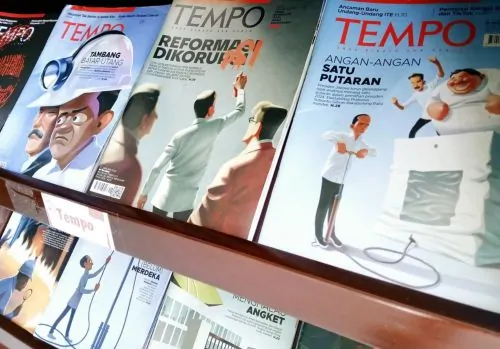
In 1994, Suharto’s government revoked Tempo’s publishing license. Ahmad Taufik and fellow reporters answered by forming AJI and reporting underground despite the risk of prosecution.

By Matthew A. McIntosh
Public Historian
Brewminate
Introduction: The Magazine That Lost Permission to Exist
On June 21, 1994, Indonesian Information Minister Harmoko canceled the Press Publishing Business License, or Surat Izin Usaha Penerbitan Pers (SIUPP), held by PT Grafiti Pers, the company that published Tempo. Separate orders removed the corresponding licenses of Editor and DeTik. For Tempo, a respected newsweekly with more than two decades of experience navigating President Suharto’s New Order, the decision was immediately disabling. Its journalists remained capable of reporting, and its editors had not surrendered control of their accumulated knowledge. Yet the magazine could no longer be printed and distributed as a lawful press enterprise. Without seizing a manuscript or stationing a censor in the newsroom, the government had withdrawn the institutional means by which journalism became publicly available.
That outcome rested on a contradiction within Indonesia’s press system. The Basic Press Law, as amended in 1982, declared that the national press should not be subjected to censorship or banning, while also requiring every press publication operated by a commercial company to obtain a SIUPP from the government. Ministerial regulations converted that requirement into a formidable instrument of supervision. Because officials described the SIUPP as a business license, its cancellation could be presented as an administrative judgment rather than an act of suppression. The formal distinction did little for a magazine deprived of access to printers, distribution networks, advertising revenue, and legal sales. It nevertheless allowed the New Order to endorse a “free and responsible” press while reserving the power to determine which institutions were responsible enough to survive. Editors understood that a publication’s accumulated capital, professional reputation, and employees’ livelihoods could be placed at risk by a decision from the Ministry of Information. Permission therefore exerted influence before it was ever revoked: the possibility of closure accompanied every consequential editorial choice.
The immediate confrontation arose from Tempo’s coverage of the government’s acquisition of thirty-nine vessels from the former East German navy. The transaction had become entangled in disagreements over expense and authority involving Research and Technology Minister Bacharuddin Jusuf Habibie, a prominent Suharto protégé. By reporting the dispute, the magazine made tensions among senior officials visible to readers who were usually expected to receive a more orderly picture of governance. Officials invoked national stability and the danger of provoking conflict within the cabinet. The episode demonstrated how quickly the New Order’s celebrated period of political openness could contract once reporting exposed divisions close to the president.
Closure produced more than one form of resistance. Former Tempo employees challenged Harmoko’s decision before the State Administrative Court, seeking recognition that ministerial discretion remained subject to law. Journalists from several news organizations pursued a more radical institutional response by gathering at Sirnagalih in August 1994 and establishing the Alliance of Independent Journalists, or AJI, outside the government-sanctioned professional structure. AJI’s alternative publication, Independen, carried critical reporting into territory not protected by official approval. In March 1995, police arrested AJI leaders Ahmad Taufik and Eko Maryadi along with office worker Danang Kukuh Wardoyo; their prosecutions turned an abstract dispute over licensing into the prospect of years in prison. The court challenge against Tempo and the proceedings against the AJI defendants consequently tested different boundaries of the same political order. One asked whether the government had exercised its administrative authority lawfully. The other confronted people who had continued reporting without accepting that authority’s legitimacy. Following both struggles through 1995 reveals why a nominal freedom could offer journalists considerable room to work yet fail at the moment they most needed protection: the right to publish remained subordinate to official permission to operate.
A Free Press That Needed Permission
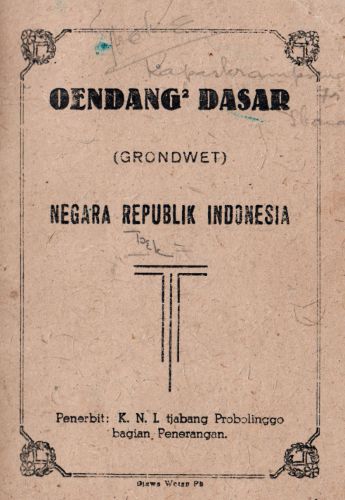
Indonesia’s pre-Reformasi constitutional order treated expression as a regulated civic activity, not as a self-executing claim against executive interference. Article 28 of the 1945 Constitution acknowledged freedom of association and assembly as well as expression through speech and writing, then assigned the terms of those freedoms to legislation. Its syntax was consequential: liberty was named, but its practical scope was returned immediately to lawmakers and administrators. The Constitution contained no separate guarantee for journalism and supplied no direct entitlement to establish a newspaper or magazine. New Order officials further read individual freedoms through Pancasila’s ideal of ordered participation and the citizen’s obligation to national development, making the government’s conception of the common good central to the exercise of a right. A press statute could consequently affirm criticism while leaving the material capacity to publish under executive supervision, without the regime conceding that it had departed from constitutional principle.
The decisive legal maneuver was substitution. Law No. 11 of 1966 declared that the national press should not require a Surat Izin Terbit (SIT), or permit to publish, yet Article 20 preserved that requirement during an undefined transitional period. For sixteen years, the exception outlived its provisional rationale. Law No. 21 of 1982 removed the SIT provision, creating the appearance that publication had finally been released from prior authorization, but inserted Article 13(5), under which every periodical operated by a press company needed a government-issued Surat Izin Usaha Penerbitan Pers (SIUPP). The amended law’s protection against censorship and banning therefore coexisted with a universal licensing requirement. A distinction between content and enterprise allowed the provisions to be reconciled formally: censorship interfered with particular words, whereas SIUPP purportedly governed the legal and economic fitness of the publisher. The statute’s official explanation characterized a permit for the press business as reasonable and presented it as a means of cultivating a “healthy” press that would be free yet responsible. Such language made lawful status depend on evaluative concepts broad enough to encompass editorial behavior. By separating freedom of expression from the institutional capacity to circulate it regularly, the revised law made the former difficult to exercise without the latter.
Ministerial Regulation No. 01/Per/Menpen/1984, issued on October 31, and Decision No. 214A/KEP/MENPEN/1984, issued a month later, gave that condition a detailed administrative form. An applicant had to document its corporate status and capital base. Separate materials identified the proposed publication’s editorial leadership and described how the enterprise would operate, while recommendations from the Indonesian Journalists Association (PWI) and the Newspaper Publishers Association (SPS) also entered the application process. Some of these demands could plausibly be defended as safeguards against financially unstable ventures, and they helped define publishing as an organized profession rather than an improvised political undertaking. Their cumulative effect, however, was to make entry into the news market contingent on approval from bodies already accepted by the state. Nor did authorization become secure once granted. Article 33 of the ministerial regulation empowered the information minister, after hearing the Press Council, to cancel a SIUPP if a company or its periodical was judged no longer to reflect a healthy, free, and responsible press. The test was circular: responsibility helped establish eligibility for admission, while a later assertion that responsibility had disappeared could justify removal through an administrative proceeding rather than adjudication of a defined press offense. A 1986 Press Council decision to halt new SIUPPs because the market was supposedly saturated tightened the system further. Scarcity protected established publishers from potential competitors, but it also increased the value that could be destroyed by an adverse ministerial decision. Commercial expansion therefore failed to eliminate political dependence; as payrolls and invested capital grew, so did the cost of editorial defiance.
Consultation offered little separation between regulator and regulated. The information minister served ex officio as chair of the Press Council, while his director general for press and graphics acted as its secretary. Ministerial Decree No. 47/KEP/MENPEN/1975 had also confirmed PWI and SPS as the sole officially recognized associations for journalists and publishers, giving those organizations influence over senior editorial appointments and permit applications. The council whose advice was supposed to precede ministerial action was consequently embedded in the official order it might otherwise have restrained.
Most newsroom discipline occurred before Article 33 was formally invoked. Ministry officials could summon an editor or convey an objection by telephone, creating what journalists came to call the “telephone culture”; the regulation separately provided for written warnings and temporary suspension before final cancellation. An oral intervention left no directive to challenge, allowing the government to characterize a subsequent omission as an editor’s independent choice. Publishers had reasons to accept that fiction because confrontation could imperil the company as well as the reporter responsible for the disputed work. Earlier cancellations made these quieter interventions credible: Sinar Harapan lost its SIUPP in 1986, and Prioritas was closed the following year. The limited number of terminal sanctions is therefore a poor measure of the licensing system’s influence, since its routine effect was to introduce official expectations into editorial deliberation before readers saw a page. Tempo’s pre-1994 independence must be situated within this environment—not as immunity from supervision, but as a precarious ability to test uncertain boundaries while ministerial tolerance lasted. The eventual crackdown exposed the coercive capacity underlying those everyday negotiations: an arrangement usually employed to elicit accommodation could still be used to end a major publication outright.
Inside Tempo: Independence through Negotiation
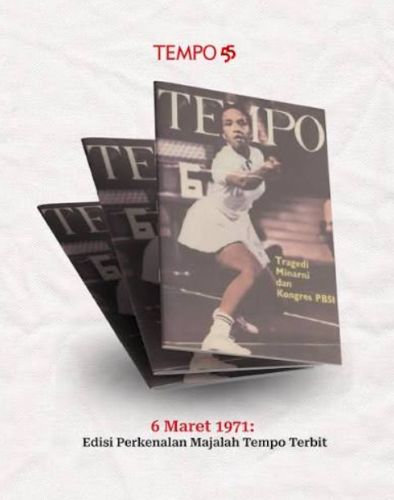
When Tempo began regular publication in March 1971, it did not stand wholly outside the political world of the New Order. Its principal founders—Goenawan Mohamad, Fikri Jufri, Harjoko Trisnadi, Lukman Setiawan, and Bur Rasuanto—belonged to the Generation of ’66, the loose cohort of students, writers, and intellectuals that had opposed Sukarno and initially welcomed the promise of administrative reconstruction under military-backed rule. Several shared the developmental outlook of the economists who entered government, although their earlier experiences at Harian Kami and Ekspres had also produced an aversion to ideological slogans and party journalism. Fikri’s relationships with former teachers and associates in the National Development Planning Agency, for example, later brought the magazine information about corruption and mismanagement at Pertamina. Such connections make it misleading to describe Tempo as an opposition publication from birth: its critical identity emerged through growing estrangement from a system with which its founders had once possessed significant affinities.
Corporate organization supplied one source of editorial leverage. The Jaya Raya Foundation, directed by the developer Ciputra and linked indirectly to the Jakarta government, furnished the initial capital, while the journalists contributed their labor and professional expertise under a fifty-fifty ownership arrangement. Goenawan and his colleagues had learned from Ekspres that a minority editorial stake left a publication vulnerable to a proprietor’s intervention, so they sought a structure that would prevent any outside sponsor from exercising unilateral control. Once Tempo became profitable, the founders established PT Pikatan in December 1973; two months later, that company entered a joint venture with the foundation to form PT Grafiti Pers. Pikatan included the five recognized founders, seventeen other original employees, and a collective allocation for later staff members, while subsequent adjustments created a separate employees’ foundation and eventually gave company insiders a majority interest in Grafiti Pers. This arrangement was not a simple cooperative: priority shares preserved considerable authority for a smaller group of directors and foundation representatives. Nevertheless, distributing ownership among people whose careers depended on the magazine reduced the likelihood that a single investor could dictate coverage. Financial self-direction therefore enlarged editorial discretion without making the organization politically self-sufficient.
Inside the newsroom, autonomy assumed the form of disciplined practice rather than unrestricted expression. Tempo trained reporters, writers, and editors in a recognizable institutional method, with story proposals assessed according to criteria known as layak Tempo—whether a subject was sufficiently important, relevant, and reportable to warrant the magazine’s resources. Reporters gathered interviews, observations, transcripts, and documentary material; writers then shaped that reporting into articles subjected to several editorial reviews. This division could concentrate interpretive authority among senior personnel, yet it also encouraged verification and prevented an individual reporter’s relationship with a source from determining the finished account. A strict refusal of the cash-filled “envelopes” routinely offered to journalists further distinguished professional judgment from personal obligation. Stylistically, the magazine sought prose that was enak dibaca, pleasurable to read, combining lucid explanation with scenes, characterization, and the experiences of people rarely visible in official announcements. Its commitment to presenting contending accounts created opportunities to place government assertions beside testimony that unsettled them. Editors also practiced pinjam mulut, or “borrowing a mouth,” allowing a named source to articulate criticism that the publication could defend as accurately reported speech. Goenawan’s Catatan Pinggir columns added a more reflective register, approaching political questions through history, literature, irony, and deliberately open conclusions. These conventions sometimes softened responsibility or granted unequal claims an appearance of equivalence, but they also enabled readers to encounter discordant evidence without requiring every article to announce an institutional verdict. Under authoritarian conditions, professional form served simultaneously as an ethical discipline, a mode of inquiry, and a limited defense against retaliation.
The cost of that accommodation became unmistakable in 1982. After Tempo reported violence surrounding a Golkar campaign rally at Jakarta’s Lapangan Banteng, Information Minister Ali Moertopo temporarily froze its publishing permit on April 12, officially accusing the magazine of violating the ethics of a “free and responsible” press. Senior figures approached contacts throughout the bureaucracy, the military, and Golkar while employees waited to learn whether the interruption would become permanent. Publication resumed after nearly two months, but only after Goenawan signed a statement expressing regret and willingness to accept government guidance. The newsroom survived, though restoration required its chief editor to participate in a public ritual that cast independent journalists as subordinates in need of correction.
That experience confirmed the importance of lobi, the cultivated personal access through which senior staff gathered information, explained contentious decisions, and sought assistance when publication was threatened. Relationships were allocated with strategic care: Susanto Pudjomartono maintained strong military contacts, publisher Eric Samola communicated through Golkar circles, Goenawan dealt with figures such as State Secretary Moerdiono, and Fikri developed sources around the Center for Strategic and International Studies. Because many acquaintanceships reached back to the 1960s, they could not be reduced to transactions between obedient editors and supervising officials; some rested on former alliances, shared institutions, or subsequent political disagreements. Nor did the state speak with one voice. Rival officers, technocrats, party officials, and ministers sometimes disclosed information that damaged one another, allowing Tempo to report conflicts hidden behind the administration’s public unanimity. In 1988, for instance, Susanto used a personal connection to obtain an interview with East Timor’s military governor, whose acknowledgment of local discontent became the basis of an unusually revealing article. When military information officers disputed the report, the magazine could produce a transcript and defend the published statement as accurate attribution. Yet proximity carried its own hazard: a correspondent assigned to cultivate a powerful figure might cease to distinguish professional access from personal loyalty. The network consequently widened the range of publishable knowledge while making the appearance of impartiality dependent on relationships that readers and officials could interpret in sharply different ways.
By the early 1990s, changes in leadership complicated this carefully managed position. Goenawan announced in 1993 that he wished to relinquish the chief editorship, and Fikri increasingly supervised daily operations even though Goenawan remained legally responsible for the publication. An informal succession plan contemplated later transfers to Yusril Djalinus and Bambang Harymurti, but altering the formal leadership also implicated the approval system governing the magazine. More consequentially, internal affiliations appeared to correspond with a realignment among national elites: Fikri was widely perceived as close to established military and bureaucratic figures, whereas several managing editors were thought friendlier with newer forces associated with B. J. Habibie and the Association of Indonesian Muslim Intellectuals.
Perception mattered even when it overstated personal loyalties, because Tempo’s method depended on rival camps accepting that the magazine reported their disputes without belonging to any one of them. A newsroom built to draw information from competing centers of influence could thus be portrayed as intervening on behalf of whichever group benefited from a particular account. Approaching 1994, Tempo retained a formidable professional culture and unusually broad access, but the relationships that had once made difficult journalism survivable no longer assured that powerful adversaries would regard its work as journalism rather than factional action.
The Warship Controversy and the Limits of Openness
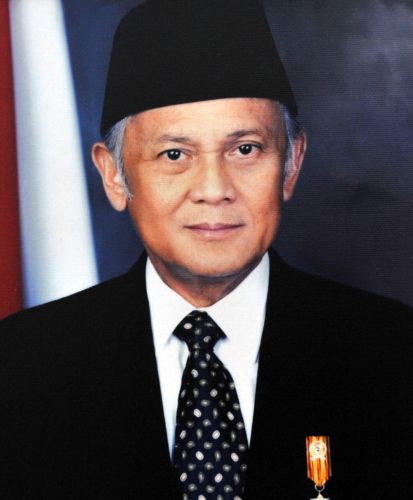
For several years before the confrontation, keterbukaan (openness) had encouraged Indonesian journalists to test subjects once treated as inaccessible. Around 1989, openness became an official watchword, accompanied by livelier coverage of bureaucratic disagreements and public protest. Legislators and nongovernmental organizations also gained greater visibility in the national media. Editors consequently began treating conflict within the state as legitimate news, while readers encountered a government whose policies were neither seamless nor uniformly accepted. Yet this latitude depended on presidential signals and officials’ calculations; no durable procedure prevented the executive from retracting it. The warship affair revealed that vulnerability by turning an authorized degree of candor into a dispute over who could define the boundaries of responsible discussion.
The procurement at the center of the rupture originated in German reunification rather than in an Indonesian media dispute. The Federal Republic had inherited the former East German navy and sought buyers for vessels it no longer needed. Indonesia agreed to acquire thirty-nine ships, among them corvettes, minesweepers, and landing craft, through a project promoted by Research and Technology Minister B. J. Habibie and authorized by Suharto. Habibie described the arrangement as an economical opportunity to strengthen the Indonesian fleet while advancing national maritime capacity. Its accounting, however, admitted sharply different descriptions. The reported price of the surplus vessels themselves was only about US$12.7 million, but acquisition constituted a small portion of an undertaking that required extensive refitting and transport to Indonesia, followed by new support expenditures. One funding request described by Tempo approached US$1.1 billion when the broader program was included. Because the smaller and larger figures covered different components, their contrast did not establish that the purchase price had simply multiplied by that amount; it did make a clear breakdown of the projected costs essential. Finance Minister Mar’ie Muhammad resisted parts of the proposed expenditure and reduced an allocation sought for the project. Senior naval officers questioned the suitability of some aging ships and objected to the influence exercised by Habibie’s civilian-led team over a defense acquisition. What appeared publicly as a bargain therefore concealed a contest over expertise, fiscal authority, and the president’s favored industrial policy.
A mishap at sea gave those institutional questions immediate force. During the delivery process, one landing ship nearly foundered, an incident that drew attention to the condition of the secondhand fleet and the demands of moving it from Europe to Indonesian waters. In its June 4 article “Jerman Punya Kapal, Indonesia Punya Beban,” Tempo reported that nine vessels had arrived even though the Finance Ministry had not approved the full proposed budget. The magazine examined the inexpensive initial transfer beside the much greater sums requested for making the fleet operational. Budget documents and interviews allowed its reporters to trace the disagreement between Habibie and Mar’ie rather than merely announce that the two ministers differed. Naval reservations further suggested that the dispute concerned who had assessed Indonesia’s strategic needs before public money was committed. The numerical disparity did not prove personal enrichment, and the near-loss of one ship could not establish that every vessel was unusable. It nevertheless furnished ample grounds for investigation because official assurances of economy were being made while the agencies responsible for financing and operating the ships remained uneasy. Tempo had converted scattered bureaucratic objections into a question of public accountability.
The cover package dated June 11, which circulated in Jakarta before its nominal publication date, widened that inquiry under the line “Habibie dan Kapal Itu.” Articles such as “Plus Minus Armada Bekas” evaluated the vessels’ military utility, while “Anggaran Itu, Mar’ie Memangkas Rp 327 Miliar” reconstructed the struggle over financing. The package did not rely on a single sensational revelation; it built its case by connecting cost records with official explanations and the sequence of presidential instructions. That arrangement conveyed a politically damaging fact: ministries charged with paying for and using the ships did not share the confidence of the minister directing the purchase. Its skepticism could imply serious impropriety, but the reporting stopped short of demonstrating corruption as an established offense.
Editorial purpose was nevertheless open to challenge. Some members of Tempo later believed that Fikri Jufri’s antipathy toward Habibie had influenced the prominence and tone of the coverage. Managing editor Agus Basri recalled Fikri responding with satisfaction when news arrived that a vessel had almost sunk, a reaction suggesting that the editors were not dispassionate observers awaiting evidence. Previous efforts to persuade owner Ciputra to remove Fikri, reportedly including pressure associated with Armed Forces commander General Feisal Tanjung, also placed the magazine amid an elite struggle already in progress. Such testimony complicates any portrayal of the investigation as journalism untouched by political preference. It does not, however, show that military opponents of Habibie commanded the newsroom or supplied its conclusions. Adversarial selection can coexist with accurate documentation, especially when reporters are examining claims advanced by a powerful official. Questions about seaworthiness and budgeting retained their public importance regardless of whether particular editors wanted Habibie’s influence diminished. The strongest interpretation is therefore that genuine scrutiny overlapped with personal and bureaucratic antagonisms, making the package both journalistically defensible and politically combustible.
Suharto’s intervention removed any uncertainty about the stakes. Speaking on June 9 at a naval facility in Teluk Ratai, Lampung, he declared that the acquisition had been his initiative and defended the secrecy surrounding the negotiations with Germany. He accused the press of obscuring the issue and setting officials against one another, conduct he associated with threats to national stability. By claiming personal ownership of the decision, the president transformed criticism aimed principally at Habibie into an affront to presidential authority. Fikri recognized the warning immediately, although subsequent ministerial discussions reportedly still ranged from a formal reprimand to outright closure.
On June 21, 1994, the Ministry of Information issued Decree No. 123/KEP/MENPEN/1994 canceling Tempo’s Press Publication Enterprise Permit. Separate decisions extinguished the permits of Editor and DeTik on the same day. Instead of rebutting the warship reports, the Tempo decree invoked the magazine’s 1982 suspension, accumulated warnings, and an asserted departure from the “free and responsible” Pancasila press. It further presented cancellation as necessary for national stability without identifying a particular falsehood in the recent coverage. That omission shifted the official issue away from factual accuracy: the decisive concern was the publication’s effect on relations within the government and on public perceptions of its leadership. Accounts differ over the immediate architects of the punishment. Information Minister Harmoko formally advanced and implemented the decision, while Habibie later maintained that he had favored legal action or correction instead of prohibition. Suharto nevertheless possessed the authority that made administrative extinction possible, and his Teluk Ratai speech had already supplied its political rationale. The controversy thus identified the exact limit of keterbukaan: criticism remained tolerable only while the executive retained control over its consequences. Once a magazine organized internal disagreement into an independent assessment of a presidentially sponsored project, openness offered no institution capable of protecting that editorial judgment. Closing Tempo settled the immediate argument by force, but it also presented its journalists with a new question—whether they could contest the decision through law while finding other means to keep reporting.
After the Closure: Different Ways to Survive
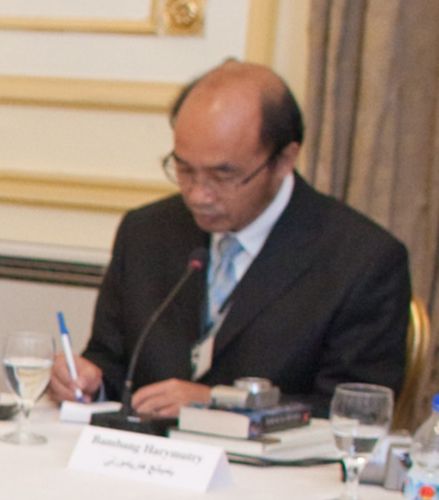
The first response unfolded in the street, before former staff members had settled on any route back into print. On June 27, 1994, six days after Harmoko’s decree, roughly three hundred people attempted to march to the Ministry of Information in Jakarta. Amnesty International reported that security forces detained or badly beat more than fifty peaceful participants. Comparable demonstrations occurred elsewhere, bringing students, lawyers, artists, and concerned readers into a dispute that had begun within the publishing industry. Their involvement changed the meaning of the ban: what officials presented as the correction of an errant company was being understood as an injury to the public’s access to news. Although protest did not restore the SIUPP, it prevented the government from treating the magazine’s disappearance as a quiet personnel matter and displayed the coercion required to enforce an ostensibly administrative decision.
Behind this public defiance lay a more prosaic emergency: the livelihoods attached to Tempo had vanished with a minister’s signature. A network of more than one hundred alumni pooled portions of the earnings received by members who found new positions, sharing them with colleagues who remained unemployed. Under Bambang Harymurti’s leadership, the “Tebet group” operated from an East Jakarta office financed by the former management and sustained dozens of displaced workers. Its members organized themselves through the cooperative firm PT Reksa Mitra Berjaya, convened study meetings, and developed research projects that could retain their professional abilities. They also produced books and white papers about the ban, while later commemorations of June 21 kept the dispersed newsroom connected to a common history. Such arrangements converted mutual assistance into protection against a familiar authoritarian calculation: that unemployment would isolate individuals until resistance became unaffordable. Material solidarity nevertheless had limits, especially for employees with dependents and uncertain prospects. According to a retrospective account published by Tempo, director Eric Samola met businessman Hasyim Djojohadikusumo on June 26 and heard an offer that might have facilitated the magazine’s return. The proposed arrangement would have granted the new investors influence over the appointment and removal of editors, together with priority in future share sales. Tempo’s leadership rejected those conditions, judging that survival of the name without control of the newsroom would amount to a different institution. Because the account was published long afterward and does not document an official government proposal, it should be treated as testimony from one party to the negotiation. Read with that qualification, the episode reveals that restoration could be offered in a form designed to separate the publication’s commercial value from the authority of the journalists who had created it.
The courts provided a more public institutional avenue. In September 1994, Goenawan Mohamad and forty-three former Tempo journalists initiated related actions against Harmoko in the Jakarta State Administrative Court. Their complaints sought the cancellation of the revocation and argued that the minister’s decree violated governing procedures as well as protections contained in higher press legislation. Former employees, news agents, and subscribers also brought separate claims, presenting lost wages and denied access to information as injuries extending beyond the editorial staff. Litigation therefore allowed the plaintiffs to appear as holders of enforceable rights rather than applicants requesting another favor, yet filing suit neither suspended the decree nor authorized a single new issue of Tempo.
Other journalists tested whether a new title attached to existing paperwork might get them back onto newsstands before the judges decided the case. One proposal, initially called Opini and subsequently renamed Berita, attracted Goenawan’s support and that of much of the former staff. Sample copies circulated in Jakarta on October 8 with a design that made their ancestry readily apparent. The Ministry of Information had not granted the venture a license, however, and the Indonesian Journalists Association, or PWI, demanded a list of prospective employees. That request was widely understood as a means of identifying people associated with the newly created Alliance of Independent Journalists, while ministry objections to the proposed publishing foundation’s name indicated that even an institutional reminder of Tempo was unwelcome. A parallel experiment arose from the ruins of DeTik. Eros Djarot and approximately forty former DeTik employees attempted to revive Simponi on October 3 by relying on a dormant permit issued in 1985 under the name of its earlier editor, Syamsu Hadi. After one issue, the printer PT Golden Web refused to continue without assurances that the authorities would tolerate the publication. Conflicting decisions within the PWI—its Jakarta branch withdrew an earlier recommendation even as the central organization offered support—could not overcome that reluctance. The failures of Berita and Simponi demonstrated that formal possession of paperwork was insufficient when officials could influence professional certification, ownership arrangements, and the willingness of commercial firms to print.
Paid newsroom work became more attainable when a prospective publication acquired politically connected ownership. A project first called Masa and then renamed Gatra received majority backing through PT Era Media Informasi from timber magnate Mohamad “Bob” Hasan, a prominent Suharto associate. By October, at least twenty-three of Tempo’s approximately seventy-five journalists had accepted offers to join, reportedly at salaries comparable to those they had lost; subsequent accounts placed the eventual number higher. The first issue, dated November 19, 1994, reproduced much of Tempo’s visual vocabulary and benefited from the experience of its former personnel. Some alumni responded with a boycott campaign and regarded participation as a betrayal because the new magazine occupied space made available by the government’s destruction of the old one. That judgment captured the political utility of Gatra, but it can obscure the practical burdens confronting journalists whose profession had abruptly been closed to them. Employment under Hasan did not make every article an instrument of the regime, and staff members could reasonably hope to preserve elements of serious reporting within the new organization. Even so, the contrast with the blocked efforts behind Berita and Simponi showed that the state could permit journalistic skill to survive while channeling it toward an enterprise whose ownership posed little threat.
The choice with the longest institutional afterlife had already begun in August. On August 7, roughly one hundred journalists and columnists assembled at Sirnagalih, near Bogor, where fifty-eight participants signed the declaration establishing the Alliance of Independent Journalists, or AJI. The declaration defended society’s right to information, opposed interference with reporting, and rejected the compulsory position enjoyed by the PWI. Although the June bans supplied the immediate catalyst, AJI was not merely an association of former Tempo employees: many founders worked for publications that remained legal, and several had no direct connection to any of the three suppressed outlets. That breadth transformed professional discontent into a challenge to the organizational structure through which the New Order supervised journalism. Ahmad Taufik, formerly a Tempo reporter, joined the founding group and became one of the people most closely identified with its refusal to seek official recognition on restrictive terms. Membership carried immediate economic danger because the PWI expelled signatories and pressed editors to dismiss them or deny them future work. The available responses thus cannot be reduced to a simple opposition between courage and accommodation: wage sharing, litigation, commercial reemployment, improvised relaunches, and dissident organization answered different dimensions of the same crisis. Once Taufik and his colleagues extended their association into independent publication, however, the government could move from canceling a corporate permit to prosecuting identifiable journalists—a transition that would shape the proceedings of 1995.
Sirnagalih: Claiming the Right to Organize

Sirnagalih arose from a failure of representation as much as from the three closures themselves. Founded during the revolutionary era in 1946, the Indonesian Journalists Association (PWI) retained nationalist prestige, but a 1975 ministerial decree had made it the only professional organization recognized by the government. When Tempo, Editor, and DeTik lost their permits, the PWI declared that it could understand the ministry’s action instead of mounting a defense of the affected journalists. On July 5, a delegation delivered a protest bearing 357 signatures to PWI secretary-general Parni Hadi, who promised to convey its demand for reversal to Harmoko. The delegates returned on August 5 under the banner Aksi Tagih Janji, or Action to Demand Fulfillment of a Promise, only to be told by PWI chairman Sofyan Lubis that the appeal had not reached the minister because Harmoko had lacked time. By then, deference had become evidence that the authorized association could not represent its profession when doing so required opposition to the official who controlled its conditions of work.
The capacity to act elsewhere had developed well before June 1994. An informal Jakarta meeting at Taman Ismail Marzuki around 1991 had considered creating an association outside the PWI, although the proposal went no further at the time. More durable circles subsequently appeared in several cities: the Independent Journalists Forum in Bandung, the Yogyakarta Journalists Discussion Forum, the Surabaya Press Club, and the Independent Journalists Solidarity group in Jakarta. After the bans, activists from these circles began coordinating with Stanley Adi Prasetyo, Andreas Harsono, Santoso, and reporters still employed by publications such as Kompas, The Jakarta Post, Forum Keadilan, and Bisnis Indonesia. Their participation made the venture more dangerous and more consequential because it implicated operating newsrooms rather than only displaced employees. Organizers arranged a “Gathering of Independent Journalists” for August 6–7 at a Tempo-owned guesthouse in Sirnagalih, near Bogor. Security concerns shaped mundane details: attendees from outside Jakarta were initially told that the destination remained Bandung, then traveled from there to the actual site in an effort to confuse possible surveillance. People arrived and departed throughout the two-day meeting, sometimes leaving to fulfill reporting assignments, a circumstance that may help explain why retrospective accounts differ over attendance. The use of Tempo’s property connected the gathering to the suppressed magazine, but the regional networks and employed reporters present prevented it from becoming an alumni organization.
Those who reached Sirnagalih still disagreed over what they were prepared to create. Some favored a loose forum that could attract sympathizers without immediately exposing them to the liabilities of formal membership, whereas Satrio Arismunandar argued that only a professional association could answer the PWI on equal terms. The eventual word “Alliance” respected the autonomy of the existing city groups, while “Independent” signaled refusal of subordination to political authority. Organizers described AJI as an alternative to the PWI rather than a claimant to its monopoly. Its name therefore expressed the professional pluralism that the New Order’s compulsory institutional model had denied.
The declaration translated that organizational decision into a carefully Indonesian argument about rights and professional duty. Its preamble treated freedom of opinion, access to information, and freedom of association as rights held by every citizen; it then invoked the nationalist tradition of the pers perjuangan, or press of struggle. Rather than repudiating the constitutional order, the text appealed to Indonesia’s identity as a state governed by law and placed just law above the exercise of power. Its six resolutions condemned interference with reporting and the distortion of legal instruments, opposed one-sided information imposed in the name of national interest, and rejected a compulsory professional body. The final resolution proclaimed AJI as one forum for defending the Indonesian press, language that renounced monopoly without demanding exclusive authority for the new organization. This formulation amounted to an internal critique of the New Order: the regime was challenged through principles it publicly professed rather than through a call for its overthrow. Agreement on those principles did not settle whether the founding statement should carry individual names. Some participants favored a general declaration that everyone could endorse and a separate organizational proclamation, knowing that a combined document would give employers and security agencies a ready-made list of dissidents. The Bandung delegation even considered dividing its members between public signatories and less visible organizers so that retaliation could not incapacitate the entire network. After debate continued until about two in the morning, attendees were permitted to decide individually; fifty-eight signed outdoors after breakfast on August 7, turning assent to professional ideals into a traceable affiliation.
Practical authority was distributed accordingly. AJI adopted a federated arrangement that allowed groups in Jakarta, Bandung, Yogyakarta, and Surabaya to pursue local work while sending representatives to a presidium. Ahmad Taufik, formerly a Tempo reporter in Bandung and an activist within the Independent Journalists Forum, became chairman of the presidium; Santoso assumed the post of secretary-general. The chairmanship was intended to rotate, and a congress was projected for the following year, indicating that the founders imagined a continuing institution rather than a temporary campaign against one decree. Accepting office nevertheless made Taufik and the other leaders easier for the security services to identify. He had supported dividing AJI’s efforts between visible advocacy and clandestine activity, an approach that anticipated the conditions under which the organization soon operated. Membership remained below two hundred during the New Order, while a core of approximately twenty journalist-activists conducted much of the work through restricted meetings and guarded communications. Numerical weakness limited AJI’s bargaining capacity, yet its legitimacy rested on voluntary adherence—the very foundation absent from the state-sanctioned arrangement it opposed.
The PWI and the Information Ministry responded by making association with AJI a test of employability. In September 1994, PWI leaders warned that signatories could lose their membership, and official disfavor soon affected access to prominent assignments; two AJI journalists at The Jakarta Post, for example, were denied accreditation to cover the November APEC meetings. On March 17, 1995, the PWI’s Jakarta branch formally expelled thirteen signatories, after which Harmoko endorsed measures against publications that retained AJI members. Editors from eight comparatively critical outlets were summoned by the PWI on March 23 and by the ministry the following day, where they were pressed to dismiss the named journalists and act firmly against other adherents. Consequences varied by employer: Santoso was fired from Forum Keadilan, Ayu Utami and Imran Hasibuan were transferred to advertising duties, and Satrio Arismunandar and Dhia Prekasha Yudha eventually left Kompas after pressure to resign. The verb mengAJIkan, meaning to mark someone for exclusion because of AJI involvement, entered journalistic slang and captured how professional discipline could be delegated to nominally private workplaces. This pattern linked two controls that might otherwise appear separate: the SIUPP determined which publications could operate, while the PWI system helped determine whether dissenting reporters could remain within those that survived. Sirnagalih did not restore Tempo, but it deprived the official association of an uncontested claim to speak for Indonesian journalists; when AJI began producing Independen, that challenge acquired a material form the government could prosecute.
Independen: Testing the Boundaries of Publication

Independen began before it possessed either that name or a national purpose. Following the National Press Day ceremonies in Bandung on February 9, 1993, Ahmad Taufik drafted a critique of the official celebration and the Indonesian Journalists Association’s place within it. Rather than submit the piece to an established publication, he showed it to Eko Maryadi, then active in the student press at Padjadjaran University. Eko typed and arranged the article on a computer at Tempo’s Bandung bureau, while Taufik contributed Rp25,000 toward photocopying approximately one hundred copies of the resulting four-page bulletin. They circulated it among journalists, students, and artists under the name Forum Wartawan Independen, or FOWI. Modest in scale, the experiment established habits of collaboration that later proved useful: access to office equipment could be borrowed, production costs shared, and reporting carried beyond the company that had employed its author. The bulletin was therefore not simply an improvised answer to Tempo’s closure; it had emerged from an earlier search for forms of journalistic exchange that did not depend on recognition by the Ministry of Information.
The June 1994 closures enlarged that experiment and gave it greater urgency. On the evening of June 21, journalists associated with FOWI gathered at the Yayasan Budaya Indonesia in Bandung, where Taufik supplied a chronology of the government’s action against Tempo, Editor, and DeTik for the second bulletin. A longer July number commemorated the first month of the bans and reported the violence of June 27 from a perspective largely absent in licensed outlets, including photographic evidence of a demonstrator being beaten. Copies were financed partly through voluntary contributions collected at artistic and public gatherings. When AJI was established at Sirnagalih in August, its members adopted the Bandung bulletin as an organizational publication and resolved to expand it without seeking a Surat Izin Usaha Penerbitan Pers, or SIUPP. What had begun as irregular dissident commentary consequently became a deliberate test of whether journalists could exercise their vocation without first obtaining administrative approval.
Under Ging Ginanjar’s editorship, production remained centered at Jalan Morse No. 12 in Bandung, premises previously used by DeTik, even as editorial decisions increasingly involved AJI members in Jakarta. The transitional issue dated August 17, 1994, still retained the FOWI identity but displayed Independen more prominently; its sixteen pages examined independence, the press, and press freedom beneath a Tisna Sanjaya cover depicting a human figure confined within a cage. Reports subsequently arrived from Jakarta, Yogyakarta, Surabaya, and Bandung, often with assistance from student journalists whose institutions supplied both personnel and comparatively inconspicuous meeting places. Editors convened on Wednesdays at AJI’s rooms in the Tanah Abang flats to select subjects and assign work. Finished articles traveled to Bandung by fax or courier, after which Ging’s team handled layout, reproduction, and preparation for distribution. On some occasions, printing plates were transported by motorcycle; completed bundles more commonly reached Jakarta aboard the Parahyangan train and were collected at Gambir Station. AJI members contributed portions of their salaries, while sympathetic foreign correspondents sometimes supplied additional funds. Eko Maryadi combined administrative work with editing, reporting, subscription management, and delivery because the organization could not afford a conventional division of labor. The resulting system was cumbersome, but its dispersed character allowed the magazine to function without a recognized publishing company, commercial office, or salaried staff.
At first, Independen concentrated largely on the press crisis that had brought AJI into being. That emphasis offered necessary documentation, yet it also threatened to make the magazine intelligible only to journalists already convinced of the government’s abuses. At a November 1994 discussion, media scholar Ashadi Siregar challenged alternative publications to stop speaking primarily about themselves and to address the political and economic subjects that licensed newsrooms neglected. Beginning with the ninth issue in December, the editors responded by widening their field of inquiry. Goenawan Mohamad contributed a recurring Catatan Pinggir, starting with “Simulacra,” but this recognizable feature from Tempo did not turn the new magazine into a replica of the banned weekly. Contributors employed contacts retained inside authorized organizations, whose reporters could supply tips, verify information, or redirect material rejected by their employers. Independen examined share purchases involving Indocement and members of Suharto’s family, while Santoso provided the full version of an interview with imprisoned East Timorese resistance leader Xanana Gusmão that Forum Keadilan had reduced to three questions in a small inset. The issue of January 10, 1995, carried an especially provocative investigation, “Harmoko dan Saham di 32 Media,” which reported alleged shareholdings by Information Minister Harmoko and his family across thirty-two media enterprises. Eko Maryadi and Andreas Harsono sought Harmoko’s response, and the minister denied the allegations. Whatever uncertainty surrounded particular holdings, the inquiry raised a question that authorized publications had strong incentives to avoid: whether the official who influenced entry into the publishing market also possessed private interests within that market. By creating a destination for reporting that could be gathered but not safely printed elsewhere, Independen revealed that censorship operated through editorial anticipation as well as explicit prohibition.
AJI’s legal position rested on the distinction between a public periodical and a special publication intended for a restricted audience. Article 8 of the Press Law as amended in 1982 permitted certain limited-circulation publications to appear without the ordinary press license, and Independen accordingly carried the statement Untuk Kalangan Terbatas, or “For Limited Circulation.” The description was initially credible: early numbers moved chiefly among journalists and sympathizers, often without a fixed purchase price. Growth gradually made that characterization harder to sustain. In December, the magazine advertised a three-issue subscription costing Rp5,000 including postage, and a January number later listed a single-copy price of Rp1,500. Readers soon included office workers, business executives, legislators, and government employees; members of parliament reportedly photocopied issues for further circulation. AJI’s institutional history records an initial printing of four thousand copies and a further five thousand for the Harmoko investigation, while contemporary human rights organizations estimated that circulation had reached approximately twelve thousand by March 1995. Those figures were not independently audited, but they indicate demand far beyond a private organizational newsletter. The authorities could thus make a factual case that Independen increasingly resembled a publication offered to the general public. Yet the prescribed alternative—applying for a SIUPP—was scarcely meaningful when the government had already demonstrated that critical coverage could cause an existing license to be withdrawn and that a similarly independent applicant was unlikely to receive one.
Popularity also sharpened disagreements among the journalists themselves. Before AJI’s March 16 gathering at Jakarta’s Hotel Wisata Internasional, members argued over whether distributing copies associated with the Harmoko investigation would expose the organization to an immediate police response. Satrio Arismunandar and Dhia Prekasha Yoedha urged caution, whereas Santoso and Eko Maryadi favored circulation despite the danger. Following an internal vote, passages concerning Pramoedya Ananta Toer, Xanana Gusmão, and East Timor were obscured in copies then being prepared, a decision Ging later regretted and described as self-censorship. This retreat does not erase the publication’s defiance; it shows that leaving the licensed sector did not remove the expectation of punishment from editorial judgment. The state no longer reviewed the pages before printing, but fear of imprisonment and military retaliation remained present at the production table.
On March 16, the dispute over Independen’s status ceased to be an argument conducted through labels, circulation figures, and statutory interpretation. AJI’s gathering at the Hotel Wisata, held to mark the end of the fasting month, attracted Indonesian journalists as well as foreign correspondents and diplomats. Police officers detained several participants, and the operations surrounding the meeting left Ahmad Taufik, Eko Maryadi, and AJI office assistant Danang Kukuh Wardoyo in custody. Taufik was released after several hours but arrested again at his home on the morning of March 17; Danang was likewise detained again, while Santoso avoided arrest. Police also searched AJI’s Tanah Abang office and confiscated organizational records, correspondence, computer equipment, and copies of the magazine. The breadth of the questioning, which extended to AJI’s membership and internal organization, suggested that the investigation concerned more than whether individual copies had technically been sold to the public. Officials treated the absence of a SIUPP and criticism of senior officeholders as mutually reinforcing evidence that the journalists had acted outside the acceptable political order. The proceedings that followed would determine whether the law genuinely distinguished an internal bulletin from a public periodical or instead criminalized journalism once it proved capable of reaching readers without executive consent.
March 1995: The Crackdown Reaches the Journalists
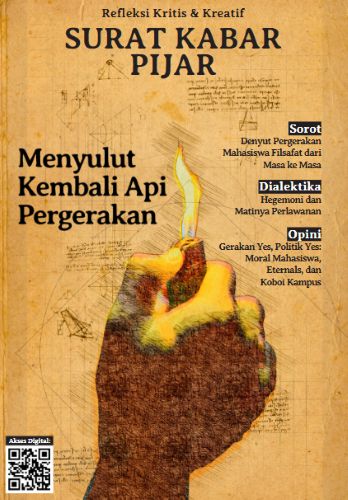
The police operation of March 16–17 had been prepared through surveillance rather than provoked by any disturbance at the Hotel Wisata gathering. During the preceding weeks, unidentified callers repeatedly contacted AJI’s Tanah Abang office to ask when Independen would appear and where it was printed. AJI’s later institutional history also records that a plainclothes officer posed as a prospective purchaser while other agents followed members through Jakarta. Rumors of an impending raid were therefore circulating before the organization assembled its supporters, although no one knew when the intervention would occur. A warning came on March 9, when police searched the offices of the Pijar Foundation and detained Tri Agus Susanto Siswowiharjo over material published in Kabar dari Pijar. That action showed that the authorities were examining alternative publications collectively, not responding to an isolated dispute with AJI. The Hotel Wisata event offered investigators a convenient setting in which copies, editors, distributors, and organizational records could be located within a few city blocks. What appeared publicly as an abrupt enforcement action was the visible conclusion of an intelligence effort already underway.
Custody itself began with confusion. After Ahmad Taufik, Liston P. Siregar, and opposition legislator Sri Bintang Pamungkas were taken to Polda Metro Jaya, the officers responsible for them departed to assist with the AJI office search; other police then allowed the three men to leave after they promised to return. Investigators traced Taufik through the address on his identity card and arrived at his rented home in Condet at approximately four o’clock the following morning with a warrant issued through a unit ordinarily responsible for homicide and kidnapping cases. He said farewell to his wife, Syafa Illiyin, and their ten-day-old son before being taken away again. Eko Maryadi managed to send AJI colleagues a pager message confirming that he had reached police headquarters, while Danang Kukuh Wardoyo was initially held apart from the others. By midday on March 17, a police press conference removed any remaining possibility that these were temporary detentions for routine questioning.
At that briefing, Colonel Nurfaizi of the Jakarta police and Lieutenant Colonel Bambang Haryoko identified Independen’s lack of a SIUPP as the immediate basis for holding Taufik, Eko, and Danang. Investigators also announced that they were examining the magazine for defamation and for expressions punishable under Article 154 of the Criminal Code. Derived from colonial provisions against “sowing hatred,” Article 154 criminalized public displays of hostility, hatred, or contempt toward the government and carried a possible sentence of seven years. Its addition changed the gravity of the case. An alleged violation of Article 19 of the amended Press Law concerned publication and distribution without authorization, whereas Article 154 invited prosecutors to infer criminal purpose from political criticism itself. Issues 9 through 12 supplied the principal material for that inquiry, especially the investigation of Harmoko’s reported media interests and an article questioning the financial transparency of foundations associated with President Suharto. Taufik and Eko responded that Article 8 of the same Press Law exempted special publications intended for a limited audience, a designation printed on Independen’s cover. Authorities countered that copies had been sold at the hotel for Rp2,000 and were already circulating well beyond AJI’s membership. That evidence made the factual boundary debatable, but it did not explain why disputed distribution required allegations of hatred against the government. The contents selected for investigation indicate that the missing permit enabled police intervention while the magazine’s reporting supplied the reason for pursuing a much harsher penalty.
Professional discipline intensified at almost the same moment. On March 17, the Jakarta branch of PWI revoked the membership of thirteen journalists who had signed the Sirnagalih Declaration and urged editors not to employ AJI participants. Information Minister Harmoko endorsed that warning and indicated that publications retaining them could face government action. On March 23, PWI chairman Tarman Azzam summoned senior editors from eight comparatively critical newspapers and magazines, among them Forum Keadilan and Kompas, and pressed them to dismiss the named journalists or control other AJI sympathizers. The following day, Director General for Press and Graphics Subrata called editors to the Ministry of Information and reinforced the message. National Human Rights Commission member Baharuddin Lopa condemned the expulsions as a human rights violation, but his objection did not relieve publishers dependent on government approval. Arrest was thus concentrated on a few individuals, while employment pressure encouraged news organizations to distance themselves from a much wider circle.
Eleven days after the arrests, Attorney General Singgih issued Decree No. KEP-023/J.A/03/1995 prohibiting circulation of the printed work officially identified as Forum Wartawan Independen. Dated March 28, the order accused it of discrediting the government, weakening public trust, and creating conditions that could disturb security, public order, and national unity. Police reportedly assisted the Attorney General’s Office in trying to locate the printing establishment, extending the search beyond writers and distributors to commercial firms that might have reproduced the pages. This decree rested on a power different from the SIUPP system.
The Ministry of Information regulated admission to press publishing, whereas the attorney general could ban printed material on grounds derived from its perceived political effects. Issuing the prohibition after the principal editors had already been detained also revealed the redundancy built into New Order controls: the absence of a license justified initial intervention, and a subsequent content-based order restricted further circulation. Disagreement over whether Independen qualified for the limited-audience exception could therefore be bypassed by invoking another institution with its own authority to suppress print.
AJI answered the detentions before the organization could be driven entirely from public view. At the Jakarta Legal Aid Institute on March 20, Andreas Harsono and Dhia Prekasha Yoedha presented the organization’s account of the arrests and read a statement from Santoso, who was already avoiding the police. His defense relied on Article 28 of the 1945 Constitution: producing Independen, he argued, was an exercise of citizens’ freedom to associate and express ideas. Reporting by licensed outlets gave the statement limited or unfavorable treatment, reflecting the very pressures AJI was contesting. Students and nongovernmental organizations then formed Solidaritas untuk Pembebasan Pers, whose acronym—SIUPP—deliberately appropriated the name of the publishing license as a demand for liberation of the press. Approximately one hundred supporters went to the national legislature on March 21, although only representatives of the Indonesian Democratic Party agreed to meet their delegation. Further demonstrations reached the National Human Rights Commission on March 29 and the Ministry of Information the next day. Amnesty International designated Taufik, Eko, Danang, and Tri Agus prisoners of conscience, while other international press organizations called for their release. These interventions did not end the detentions, but they prevented the government’s description of the affair as ordinary licensing enforcement from passing uncontested.
By the close of March, Taufik, Eko, and Danang remained at Polda Metro Jaya, where they would be held until their cases opened in June. Santoso entered hiding, AJI reduced the visibility of its operations, and Independen could no longer maintain its intended three-week schedule. The repression nevertheless disclosed a problem larger than the fate of one periodical. Every stage between manuscript and reader could identify another potential defendant, including a young office worker whose responsibilities had consisted largely of maintaining the premises and handing out copies. Danang’s detention warned that criminal exposure did not depend upon writing the contested claims or directing editorial policy. At the same time, the combination of constitutional language, legal advocacy, and street protest kept the legitimacy of the licensing order under examination even when the magazine itself became difficult to obtain. The government had not rebutted Independen’s reporting; it had recast involvement in producing that reporting as evidence of dangerous political conduct. When the defendants entered court, prosecutors would ask judges to complete that conversion by finding criminal intention in acts the accused continued to describe as journalism.
Taking Harmoko to Court
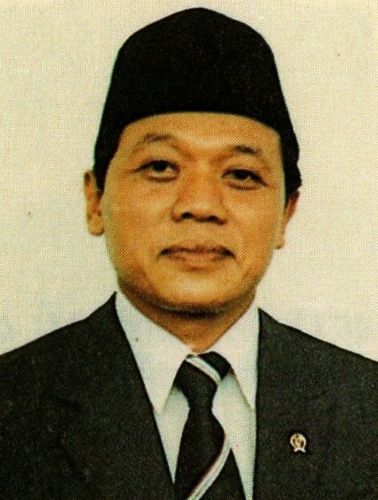
Months before the police detained AJI’s officers, Tempo’s former newsroom had chosen a conspicuously public form of resistance. In September 1994, Goenawan Mohamad and forty-three colleagues brought an administrative action against Minister of Information Harmoko in the Jakarta State Administrative Court. They contested Decree No. 123/KEP/MENPEN/1994, the instrument that had withdrawn the magazine’s publishing authorization on June 21. The choice of forum mattered because Indonesia’s relatively new administrative judiciary allowed citizens to challenge concrete decisions made by state officials. By presenting the closure as an unlawful administrative act, the plaintiffs sought to move it out of the realm of presidential prerogative and into a proceeding governed by evidence, statutory hierarchy, and procedural obligations. Few participants assumed that the courts had suddenly become independent of the executive, yet refusing to sue would have conceded that ministerial discretion lay beyond legal scrutiny. The action was consequently both a demand for reinstatement and an attempt to make the New Order answer in the institutional language through which it claimed to govern.
The challenge soon acquired constituencies beyond the magazine’s editorial staff. More than thirty nonjournalistic employees, along with newsagents and street vendors whose income had depended on Tempo, pursued compensation for the economic losses produced by the shutdown. A separate collective claim joined nearly one thousand former subscribers with 121 journalists associated with prohibited publications. These claimants maintained that the government had deprived readers of access to reliable information while obstructing the press’s legally recognized responsibility to convey public aspirations and exercise social control. Their pleadings treated the disappearance of a periodical as an injury distributed among workers, sellers, writers, and audiences rather than as a private disagreement between a proprietor and a regulator. The Central Jakarta District Court declined to hear the broader civil claims, but the administrative court accepted the narrower case against Harmoko’s decree. There, the former Tempo journalists relied upon a contradiction embedded in the regulatory order: the Basic Press Law declared that the national press was not subject to censorship or banning, whereas the 1984 ministerial regulation made every lawful press enterprise dependent upon a revocable SIUPP. They argued that a subordinate regulation could not authorize an outcome forbidden by statute, particularly when the minister had disregarded the procedures attached to his supervisory powers. What had often appeared as an abstract assurance of press liberty was thereby converted into a justiciable question about the lawful extent of Harmoko’s authority.
Testimony delivered in March 1995 made the ministry’s account of orderly supervision more difficult to sustain. Jakob Oetama, publisher of Kompas and a senior figure in the Press Council, appeared before the court on March 10. He stated that the council had not been consulted before the revocation and had never recommended that Tempo be extinguished. One proposal had concerned replacing chief editor Fikri Jufri, revealing the substantial distance between correcting editorial management and eliminating the publication itself. The record also indicated that the ministry had moved abruptly from an initial warning to a final warning instead of following the graduated process invoked to justify its intervention. The evidentiary dispute was therefore narrower than a general adjudication of press freedom but damaging to the government nonetheless: it asked whether Harmoko had converted regulatory discretion into a power freed from its own rules.
The judgment delivered on May 3 confounded nearly everyone gathered in the crowded courtroom. A panel led by Benjamin Mangkoedilaga, sitting with Sumaryono and Tengku Abdul Rahman Husni, ruled in favor of the former Tempo journalists. The court annulled Decree No. 123 and found that Harmoko’s action had exceeded lawful administrative authority. Withdrawal of the SIUPP under these circumstances, the judges reasoned, amounted in substance to a prohibition of publication, despite the government’s effort to describe it as routine licensing enforcement. Such a result conflicted with the Basic Press Law’s ban on censorship and suppression. Harmoko’s failure to consult the Press Council and his departure from the expected warning process further weakened the decree’s validity. The panel ordered the minister to restore or reissue Tempo’s authorization and required the government to pay the costs of the proceeding. Surprise gave way to applause and tears among observers, many of whom had anticipated that the judges would defer to the executive. Goenawan responded by emphasizing the bench’s courage rather than portraying the outcome as an uncomplicated triumph for the plaintiffs. His caution was warranted, for the court had neither abolished the SIUPP system nor recognized an unrestricted entitlement to publish; it had instead drawn a boundary within the licensing regime and declared that the minister was also subject to law.
A favorable judgment did not place a new issue of Tempo on the newsstands. Harmoko promptly announced an appeal, and President Suharto publicly endorsed the decision to continue the case. The government treated the order as nonfinal and withheld the authorization that would have permitted the magazine to resume publication. Newspapers reported the ruling prominently, but most stopped short of adopting Goenawan’s broader demand that the 1984 licensing regulation itself be discarded. SCTV’s reported cancellation of a planned interview with Judge Mangkoedilaga, amid allegations of official pressure that the Information Ministry denied, exposed the caution still governing broadcasters. The court had rendered the minister answerable in a written judgment, while the executive retained considerable influence over whether that judgment could alter either media behavior or administrative practice.
The sharpest measure of the decision’s limits was the position of Ahmad Taufik, who could not freely share in the celebration. He had helped articulate the intellectual case behind the litigation in “Menegakkan Benteng Terakhir Demokrasi,” an essay published in Mengapa Kami Menggugat, but by May he was detained with Eko Maryadi and Danang Kukuh Wardoyo because of their activities surrounding AJI and Independen. The administrative judges could examine what Harmoko had done to an established publication; their ruling supplied no provisional protection to reporters who continued working after that publication lost official recognition. This contrast prevents the May verdict from being reduced either to empty theater or to a decisive victory. It exposed a genuine inconsistency in the state’s conduct, created a public record of improper procedure, and briefly demonstrated that an official act could be invalidated without dissolving the larger apparatus of control. The Jakarta State Administrative High Court affirmed the judgment in November 1995, although the Supreme Court would reverse the two lower courts in 1996 and validate the minister’s authority. That eventual reversal curtailed the suit’s practical legacy, but it did not erase the spectacle of a New Order tribunal finding that one of Suharto’s ministers had acted unlawfully. Meanwhile, the approaching criminal proceedings presented a different problem: whether the state could imprison journalists for sustaining a form of publication after administrative permission had been taken away.
The Journalists on Trial: Making Criticism a Criminal Offense
On June 16, 1995, after nearly three months in custody, Ahmad Taufik, Eko Maryadi, and Danang Kukuh Wardoyo were brought before the Central Jakarta District Court. Prosecutors divided the matter into two case files: Taufik, AJI’s presidium chair, appeared with Maryadi, while Wardoyo faced a separate proceeding as their alleged assistant. This arrangement converted a collaborative publishing venture into assigned degrees of personal culpability. Foreign diplomats and correspondents attended the opening alongside Ali Sadikin, Sri Bintang Pamungkas, Adnan Buyung Nasution, and other Indonesian critics of the government. Uniformed officers and plainclothes security personnel were also conspicuous, giving a nominally public hearing the atmosphere of a supervised political event. The prosecution did not confine itself to asking whether Independen had circulated without a SIUPP. It invited the judges to conclude that producing unwelcome information through an unrecognized organization could itself reveal hostility toward the state.
That argument drew upon several provisions whose original purposes were not identical. Article 154 of the Criminal Code prohibited public expressions of hostility, hatred, or contempt toward the government and carried a maximum sentence of seven years. Articles 134 and 155 supported subsidiary accusations involving insult to the president and the dissemination of material thought capable of provoking enmity. Article 55 permitted Taufik and Maryadi to be prosecuted as joint participants, whereas Article 56 made it possible to charge Wardoyo with assisting them. Only the two journalists also faced a count under Article 19(1) of the amended Press Law, through which their involvement with an unlicensed periodical was presented as an abuse of press activity. The prosecution selected material from issues 9 through 12 of Independen as evidence. Among the cited reports were allegations concerning Harmoko’s interests in media companies, questions about the finances of foundations associated with Suharto, and discussion of the presidential succession. Prosecutors did not build the case around demonstrably invented quotations or fabricated documents. They maintained instead that the reports could diminish public confidence in government officials and thereby encourage prohibited sentiments. Regulatory noncompliance and political criticism were made mutually reinforcing: the lack of authorization cast suspicion upon the publication’s contents, while those contents supplied a punitive rationale for treating the licensing violation as more than an administrative matter.
Debate over Independen’s intended audience returned during the hearings, although its significance had changed. Taufik and Maryadi invoked Article 8 of the Press Law and the notice on the magazine’s cover identifying it as a publication for limited circulation. Prosecutors answered with evidence that copies had been offered for Rp2,000 at the Hotel Wisata gathering and elsewhere, presenting the modest price as proof of a deliberate effort to reach a wider readership. The defense also insisted that the disputed reports had identifiable sources and satisfied ordinary journalistic standards. Establishing those points could answer an allegation of irresponsible reporting, but it did not dispose of Article 154. Once the anticipated consequence of publication was defined as declining respect for the authorities, factual verification offered little protection against conviction.
Procedural objections likewise failed to narrow the prosecution. The AJI office had been searched without a judicial warrant, and the defendants had been arrested without the documentation required by Indonesia’s Code of Criminal Procedure. During interrogation, each man was compelled to provide information that could be used against the others. Taufik and Maryadi also disputed the legality of an extension of their detention that had not been served upon them or their families within the prescribed period. Their request for pretrial review was dismissed after prosecutors formally introduced the principal case, preventing an independent determination of whether custody had already become unlawful. The judges declined to treat these irregularities as grounds for excluding evidence or ending the proceedings. International observers from the free-expression organization ARTICLE 19 were denied direct access to the defendants, while the visible security presence discouraged any impression that the courtroom stood apart from the political authorities. Several articles named in the indictments had not been written by Taufik or Maryadi, yet the prosecution attached responsibility to their organizational positions and participation in distribution. Veteran journalists such as Mochtar Lubis and Atmakusumah Astraatmadja testified about the press’s public responsibilities, without altering the direction of the case. In their late-August defense statements, Taufik and Maryadi maintained that the challenged material rested on reported facts and recognizable opinion rather than manufactured accusations. Taufik also traced Articles 154 and 155 to the Dutch colonial haatzaai artikelen, provisions once employed against nationalist editors and anticolonial organizers. His historical comparison identified an awkward continuity: the independent republic was using a penal category devised to protect alien rule from the political consequences of criticism.
Wardoyo’s separate prosecution disclosed how far criminal liability could extend beyond editorial decision-making. He was a young office assistant rather than an AJI member, and his employment did not make him responsible for choosing subjects or approving copy. His regular duties concerned the maintenance of the office and receiving visitors; on occasion he also performed minor technical work or handed copies of Independen to purchasers. Testimony indicated that he had little understanding of many political subjects discussed in the publication. Nevertheless, prosecutors requested a thirty-month sentence on the ground that his assistance had enabled Taufik and Maryadi to spread contempt for the government. On August 24, the court convicted him under Article 154 in conjunction with Article 56 and imposed twenty months of imprisonment. His alleged role was derivative, yet he was declared guilty before the two supposed principal offenders had received their judgments. Clementino dos Reis Amaral of the National Human Rights Commission criticized the severity of the punishment and its likely effect upon Wardoyo’s future, but the commission possessed no power to reverse it.
Judgment against Taufik and Maryadi followed on September 1. Prosecutor T. S. Limbong had requested four years for each defendant, arguing that their actions had injured public confidence in the government. The panel headed by Madjono Widiatmadja instead sentenced both men to two years and eight months. It found the Article 154 offense, joined with Article 55, to have been proved and also treated their work on Independen as a violation of the Press Law. In explaining why criticism of named officials constituted contempt for the government, the judges identified the president, vice president, and ministers as components of the state authority protected by the statute. They also accepted the sale and pricing of the magazine as evidence that the defendants intended its accusations to circulate broadly. Whether the reporting about official wealth and influence was substantially accurate did not become the decisive issue. The judgment transformed scrutiny of officeholders into evidence of antagonism toward the governmental order they administered. Spectators crowded into the hallways, jeered portions of the decision, and sang in support of the convicted journalists as police escorted the judges from the building. That tumult did not answer the court’s legal reasoning, but it showed that many observers understood the convictions as punishment for journalism rather than protection against a concrete public danger.
Appellate review increased the penalties imposed upon Taufik and Maryadi. The Jakarta High Court signed its decision on October 11 but did not inform their lawyers until November 24, after counsel inquired because the expected period for a ruling had expired. Each sentence rose by four months to three years, while Wardoyo’s twenty-month term remained unchanged. A parallel prosecution sent Tri Agus Susanto, editor of Kabar dari Pijar, to prison for two years on September 11 because his newsletter had reproduced a speech critical of Suharto, even though the disputed remarks were not his own. Amnesty International classified all four men as prisoners of conscience, and international journalism organizations called for their release. Indonesian officials answered that a free press still had to be responsible and that journalists could not claim exemption from generally applicable law. Yet the judgments showed that the relevant statutes were anything but neutral in operation, since disapproval of those governing the country could be defined as animosity toward the country’s government. AJI responded by circulating Suara Independen as the cases commenced and maintaining its underground network despite the imprisonment of prominent members. The May judgment for Tempo and the September convictions thus divided press freedom according to institutional status: former employees could contest the cancellation of a recognized title, while those who supplied news outside that title could be prosecuted as political offenders. What began as a dispute over a magazine’s SIUPP had become a penal method for distinguishing tolerated criticism from punishable defiance.
What Resistance Had Achieved by the End of 1995
By December 1995, the immediate balance of power still favored Suharto’s government. Tempo had not returned to circulation, and the SIUPP system remained available for disciplining every recognized press enterprise. Ahmad Taufik, Eko Maryadi, Danang Kukuh Wardoyo, and Tri Agus Susanto were serving prison sentences, while journalists associated with AJI faced continuing employment restrictions. These facts preclude any uncomplicated account of victory. Repression had nevertheless failed to restore the professional consensus that existed before the closures of June 1994. AJI remained active, forbidden publications continued reaching readers, and Harmoko’s authority had become the subject of sustained legal and political dispute. The year’s accomplishments therefore lay less in immediate reform than in the creation of capacities the state had been unable to eliminate.
AJI’s survival provided the clearest institutional result. After the March arrests, Santoso evaded the security services while maintaining contact with Imran Hasibuan, Yosep Adi Prasetyo, Ayu Utami, and other participants. Their first decision was that the suppressed publication should reappear under the modified name Suara Independen. Its inaugural issue circulated on June 16, the day the criminal proceedings opened, with a cover devoted to the prosecution of the alternative press. An Amsterdam post-office box appeared as its editorial address, obscuring the location of those responsible while signaling that AJI possessed supporters outside Indonesia. Subsequent numbers examined nepotism around the presidential family and published material involving Pramoedya Ananta Toer, whose work and public presence remained politically sensitive. Production moved among concealed workplaces and sympathetic printers, while student activists joined the journalists who gathered copy and prepared pages. By the October–November issue, the successor publication had demonstrated a degree of regularity that the arrests were intended to prevent. One near-contemporary estimate placed its print circulation around 8,000 and suggested that borrowing, resale, and photocopying produced a readership many times larger. AJI itself remained small, with fewer than 200 members and a working core of roughly twenty activists, but a fixed headquarters and publicly accessible leadership were no longer prerequisites for continued operation. What began as resistance centered upon dismissed journalists had acquired the practical form of a dispersed publishing network.
Professional legitimacy also began to escape the boundaries imposed by the Information Ministry and PWI. A UNESCO-sponsored meeting in Paris on September 29 brought an AJI representative, Hasudungan Sirait, to the same table as a PWI delegation, although the discussion produced no agreement. The encounter mattered because PWI had spent the preceding months insisting that no competing journalists’ organization could lawfully exist. On October 18, the International Federation of Journalists formally admitted AJI as a member, granting it recognition from a major global professional body while Jakarta continued to describe it as illegal. The Committee to Protect Journalists also selected Taufik for a 1995 International Press Freedom Award during his imprisonment. Such recognition did not alter the sentences, but it prevented domestic exclusion from becoming the sole measure of who could legitimately represent Indonesian journalists.
The courts produced a more ambiguous achievement. On November 21, the Jakarta State Administrative High Court upheld the May decision invalidating Harmoko’s withdrawal of Tempo’s publishing authorization. The government’s continuing appeal still prevented the magazine from resuming operations, and the favorable position would not survive subsequent Supreme Court review. As 1995 ended, however, two levels of the administrative judiciary had accepted that ministerial control over the press possessed legal limits. The litigation changed the burden of explanation by requiring officials to identify the source and proper exercise of powers previously presented as routine supervision. Public discussion could now distinguish between an article that angered the government and a decree that violated governing law. That distinction exposed the SIUPP as a political allocation of opportunity rather than a merely technical credential. Because the New Order described Indonesia as a negara hukum, a state founded upon law, the judgments also imposed a reputational cost that executive noncompliance could not entirely remove. The plaintiffs had not recovered their magazine, but they had established a documented argument that future opponents of licensing could use.
None of these advances dismantled the machinery that encouraged caution among recognized outlets. PWI’s expulsions and the warnings against employing AJI members remained effective career sanctions. During September, Lampung Post suspended five journalists after publishing an interview with Pramoedya, while SCTV withdrew the current-affairs program Perspektif and Media Indonesia temporarily halted its Sunday edition. Each organization offered an internal or administrative explanation, yet the timing reflected a media environment in which editors anticipated official displeasure before receiving explicit instructions. Underground publishing also transferred danger to office workers, printers, and distributors who possessed little influence over editorial content. AJI could interrupt the official information order, but it could not match the daily reach or material security of licensed newspapers and broadcasters. Resistance had prevented enforced quiet from being mistaken for agreement; it had not ended the conditions that produced that quiet.
Considered within its own historical horizon, the movement accomplished something narrower than defeating Harmoko but more durable than a single courtroom success. Membership in PWI no longer provided the only credible basis for claiming the identity of an Indonesian journalist. The continuing appearance of Suara Independen showed that readers could be reached beyond the SIUPP system, despite the evident dangers accompanying distribution. Legal advocacy made licensing power open to argument rather than leaving it entirely within ministerial discretion. A coalition extending beyond newsrooms gathered around the dispute, with lawyers and students connecting domestic opposition to international press organizations. These developments should not be treated as an inevitable prelude to Suharto’s fall in 1998, which depended upon political and economic forces far larger than AJI. They did, however, preserve skills, relationships, and institutional alternatives that became valuable when the New Order later entered crisis. Their immediate importance was equally substantial: the government retained the capacity to close publications and imprison their personnel, but it had lost uncontested authority to determine who counted as a journalist. Press freedom had not yet become an enforceable right; its denial had become an organized public conflict.
Was This a Conflict within the New Order?
The following video from Derek Bacon covers the fall of Suharto:
The emphasis on licensing can make the New Order appear more unified than it was. By 1994, Suharto presided over a ruling coalition whose members competed over budgets, bureaucratic jurisdiction, military authority, patronage, and an eventual presidential succession that could no longer be postponed indefinitely. The acquisition of thirty-nine former East German naval vessels condensed several of those tensions into one controversy. B. J. Habibie presented the purchase as an extension of his technology-centered developmental program, while figures in the defense establishment questioned the vessels’ operational value and the Finance Ministry resisted escalating costs. Tempo did more than investigate disputed expenditures: it rendered a quarrel among senior officials intelligible to a national readership. Suharto’s complaint that the press was setting officeholders against one another indicates that he regarded such publicity as interference with his management of the governing coalition. From this perspective, the closures targeted a medium through which insiders could leak information, enlist public opinion, or compel the president to arbitrate disagreements in view of an audience. Revoking the licenses of Tempo, Editor, and DeTik could therefore be interpreted as an act of coalition discipline during a period of mounting elite strain. Such an interpretation challenges any simple division between an authoritarian state and journalists positioned entirely beyond it.
Tempo’s own history lends weight to that objection. The magazine had survived for more than two decades by cultivating official sources, maintaining personal relationships across the bureaucracy, and judging how far a particular investigation could proceed. Its reporting on the ships depended partly upon information supplied by people inside government who had interests of their own in the procurement dispute. Some sources may have hoped that publicity would weaken Habibie, restrain his spending, or defend the military’s authority over weapons acquisition. Acknowledging those motives does not invalidate the reporting, but it places journalistic independence within a field of unequal alliances rather than outside political power altogether.
Other elements of the 1994–95 sequence further complicate the picture. Habibie was neither a dissident nor a marginal administrator; he was a presidential favorite whose industrial ambitions disturbed military officers and economic officials wary of costly state projects. The naval purchase consequently raised questions about who could define national development, allocate public funds, and speak for defense policy. Harmoko also occupied more than a regulatory post. As minister of information and chairman of Golkar, he belonged to the apparatus responsible for translating presidential preferences into administrative action while protecting the ruling organization from destabilizing publicity. Even the simultaneous suppression of three publications can be read as an attempt to prevent rival groups from acquiring sympathetic outlets rather than as proof that every part of the government shared an identical attitude toward the press. The administrative litigation supplies still stronger evidence of institutional divergence. Judges in the Jakarta State Administrative Court concluded that Harmoko had exceeded his authority, and an appellate court sustained that judgment during 1995. Those decisions were meaningful precisely because legal officials working within the existing order did not automatically reproduce the minister’s position. Lawyers, former officeholders, journalists, and other members of the educated elite could use authorized institutions to contest how executive power had been exercised. The later appeal and eventual reversal exposed the narrowness of that opening, yet the intervening judgments caution against describing the government as a single will operating without internal resistance. The conflict crossed state institutions as well as separating officials from the banned publications.
The factional interpretation becomes inadequate, however, once the response is followed beyond the original cabinet dispute. Ahmad Taufik, Eko Maryadi, and Danang Kukuh Wardoyo were pursued for organizing journalists and helping produce or distribute Independen, not for advancing the procurement preferences of the Finance Ministry or the armed forces. The campaign against AJI included employment pressure, surveillance, searches, detention, and prosecution under provisions broad enough to reach association and circulation themselves. Similar coercion against Tri Agus Siswowihardjo and other critics cannot be explained as a continuation of rivalry over the ships. By 1995, the authorities were defending the accredited channels through which journalism was permitted to exist. Had their purpose been confined to settling an argument among senior figures, official denials or disciplinary measures against particular sources might have sufficed. Extending punishment to people who created an alternative professional organization reveals a wider determination to prevent public communication from escaping administrative supervision.
A stronger interpretation therefore treats elite rivalry and publication controls as connected features of the same political arrangement. The New Order did not censor because it possessed effortless unity; censorship helped its leaders manufacture and preserve the appearance of unity. Licensing allowed the executive to decide when disagreement among officials remained an acceptable private contest and when its public expression became a threat to presidential authority. Tempo’s embedded position clarifies why the warship reporting was so combustible: the magazine converted privileged access and bureaucratic dissent into information that readers could evaluate for themselves. AJI’s origins were similarly entangled with the sanctioned press, since many of its founders had acquired their professional standing inside licensed organizations. Their resistance became institutionally distinct when they asserted the freedom to associate and publish without approval from the ministry or the Indonesian Journalists Association. Factional politics thus explains the immediate sensitivity of the naval controversy, whereas the permission system explains how that controversy led to closures and subsequently to criminal trials unrelated to the merits of the purchase. The counterpoint modifies the essay’s central claim by replacing a picture of a monolithic regime confronting an entirely external press with one of a divided ruling order using centralized controls to keep its divisions from becoming public politics.
Conclusion: When the Right to Report Depends on Permission
On June 21, 1994, a ministerial order accomplished what no rebuttal or libel action could have done: it removed Tempo from lawful circulation. The measure exposed the contradiction at the center of the New Order’s press system. Legislation could proclaim that the national press was free from censorship, yet every publishing enterprise required a Press Publication Business License controlled by the Ministry of Information. Because continued operation rested on administrative approval, the stated liberty created no secure claim against the executive. Tempo had managed that contradiction for more than two decades through editorial calculation, access to official sources, and occasional retreat, but its longevity never converted tolerance into an entitlement. Reporting on the purchase of former East German warships brought a dispute involving Habibie, financial officials, and the defense establishment before readers capable of forming their own judgments. Rather than establish that the magazine’s account was false, Harmoko’s decree declared that the institution carrying the account could no longer exist. The closure’s defining significance therefore lay in the government’s power to answer unwelcome journalism by extinguishing its legal platform.
Employees of the banned magazine did not choose a common path, and their divergent responses reflected the pressures confronting them. Some sought work inside the remaining commercial press, while others concentrated on litigation or attempted to preserve professional relationships until conditions changed. The journalists who gathered at Sirnagalih went further by forming AJI, thereby disputing the state-supported monopoly through which the Indonesian Journalists Association certified professional legitimacy. Producing Independen gave material form to that challenge because its editors refused to wait for ministerial recognition before addressing a readership. Ahmad Taufik and his colleagues consequently moved the issue beyond the restoration of one publication and toward a larger question: whether journalism derived its authority from public purpose or official authorization.
The proceedings of 1995 revealed how unequally those competing principles were protected. Administrative judges found that Harmoko had exceeded his lawful powers, and an appellate ruling initially preserved that finding. These decisions cannot be dismissed as meaningless gestures, since they placed limits on ministerial discretion and furnished the plaintiffs with a public judgment against the closure. Even so, judicial review operated after employees had lost their workplace, readers had lost access to the magazine, and other publishers had absorbed the warning. No protective barrier arose around journalists who continued reporting through a different organization. Prosecutors pursued Taufik, Eko Maryadi, and Danang Kukuh Wardoyo by combining press regulations with criminal provisions concerning hostility toward the government, allowing unauthorized publication to support an inference of political disloyalty. The resulting convictions showed that success in challenging one administrative act did not confer a broader freedom to recreate the activity that act had suppressed. Legal procedure could examine whether a minister had followed the rules while police and prosecutors punished those who refused to remain inactive during the examination. Rivalries among Habibie, military officers, economic officials, and other New Order constituencies help explain why the warship coverage became exceptionally sensitive, but they do not account for the subsequent campaign against AJI’s organizing and circulation. A divided regime could still act decisively when independent institutions threatened its authority to regulate entry into public debate.
The importance of this resistance should not be inflated into a claim that AJI caused Suharto’s fall or that the court cases secured press freedom before Reformasi. The economic crisis, widening protest, and defections from the ruling coalition would determine the regime’s collapse in 1998. Nevertheless, the journalists had preserved an alternative conception of their profession through years when the government attempted to make recognition synonymous with obedience. Their associations, publications, trials, and legal arguments supplied later reformers with experience as well as evidence of why licensing had to be abolished. The conflict demonstrated that freedom of expression remains precarious when the practical means of reaching an audience can be withdrawn at an official’s discretion. A press allowed to report only while those in power consent is not exercising a protected right; it is living under a tolerance that may end whenever its reporting matters most.
Bibliography
- Aliansi Jurnalis Independen. “Deklarasi Sirnagalih.” August 7, 1994.
- —-. Independen. Nos. 5–12. Jakarta and Bandung, August 1994–March 1995.
- —-. Semangat Sirnagalih: 20 Tahun Aliansi Jurnalis Independen. Jakarta: Aliansi Jurnalis Independen, 2014.
- —-. Wajah Pers Indonesia 1995. Jakarta: Aliansi Jurnalis Independen, 1996.
- —-. Wartawan Independen: Sebuah Pertanggungjawaban AJI. Jakarta: Aliansi Jurnalis Independen, 1995.
- Alumni Majalah Tempo. Buku Putih Tempo: Pembredelan Itu. Jakarta: Alumni Majalah Tempo, 1994.
- Amnesty International. “Indonesia: Arbitrary Arrest/Possible Prisoners of Conscience: Ahmad Taufik and Others.” Urgent Action 63/95. AI Index ASA 21/019/1995. March 17, 1995.
- —-. Indonesia: Free Speech Protesters Detained and Beaten. ASA 21/27/94. London: Amnesty International, 1994.
- —-. Indonesia: Journalists’ Sentences Increased as Media Restrictions Continue. AI Index ASA 21/063/1995. London: Amnesty International, December 1995.
- Article 19. Pengadilan Pers di Indonesia: Kasus AJI dan Pijar. London: International Centre Against Censorship, 1995.
- Aspinall, Edward. Opposing Suharto: Compromise, Resistance, and Regime Change in Indonesia. Stanford, CA: Stanford University Press, 2005.
- Bedner, Adriaan. Administrative Courts in Indonesia: A Socio-Legal Study. The Hague: Kluwer Law International, 2001.
- Bourchier, David. Illiberal Democracy in Indonesia: The Ideology of the Family State. London: Routledge, 2015.
- Bujono, Bambang, Putu Setia, and Toriq Hadad, eds. Mengapa Kami Menggugat. Jakarta: Yayasan Alumni Tempo, 1995.
- Dhakidae, Daniel. “The State, the Rise of Capital and the Fall of Political Journalism: Political Economy of Indonesian News Industry.” PhD diss., Cornell University, 1991.
- Hanazaki, Yasuo. “The Indonesian Press in the Era of Keterbukaan: A Force for Democratisation?” PhD diss., Monash University, 1996.
- Haghia, Raisye Soleh, Susanto Zuhdi, and Linda Sunarti. “Building a Fortress of Independent Journalism: Historical Study of the Role of Aliansi Jurnalis Independen (AJI) in Indonesia, 1994–1999.” Paramita 35:1 (2025), 104–115.
- Harsono, Andreas. “Indonesia: Dancing in the Dark.” In Losing Control: Freedom of the Press in Asia, edited by Louise Williams and Roland Rich, 74–92. Canberra: Asia Pacific Press, 2000.
- Hefner, Robert W. Civil Islam: Muslims and Democratization in Indonesia. Princeton, NJ: Princeton University Press, 2000.
- Heryanto, Ariel, and Stanley Yoseph Adi. “The ‘Industrialization’ of the Media in Democratizing Indonesia.” Contemporary Southeast Asia 23:2 (August 2001), 327–355.
- Hill, David T. The Press in New Order Indonesia. Nedlands, Western Australia: University of Western Australia Press in association with the Asia Research Centre on Social, Political and Economic Change, Murdoch University, 1994.
- Human Rights Watch/Asia. The Limits of Openness: Human Rights in Indonesia and East Timor. New York: Human Rights Watch, 1994.
- —-. “Press Closures in Indonesia One Year Later.” Human Rights Watch Short Report 7, no. 9 (July 1995).
- —-. Tightening Up in Indonesia Before the APEC Summit. Vol. 6, no. 12. New York: Human Rights Watch, 1994.
- Indonesia, Ministry of Information. “Keputusan Menteri Penerangan Republik Indonesia Nomor 47/KEP/MENPEN/1975 tentang Pengukuhan PWI dan SPS Masing-Masing sebagai Satu-Satunya.” 1976
- —-. “Keputusan Menteri Penerangan Republik Indonesia No. 7.6/Kep/Menpen/1982 tentang Pembekuan untuk Sementara Waktu Surat Izin Terbit Majalah Mingguan Berita Tempo Berkedudukan di Jakarta.” 1982.
- —-. “Keputusan Menteri Penerangan Republik Indonesia Nomor 214A/KEP/MENPEN/1984 tentang Prosedur dan Persyaratan untuk Mendapatkan Surat Izin Usaha Penerbitan Pers.” November 30, 1984.
- —-. Kitab Undang-Undang Hukum Pidana. Articles 134, 154, and 155.
- —-. Ministry of Information. Keputusan Menteri Penerangan Republik Indonesia Nomor 123/KEP/MENPEN/1994 tentang Pembatalan Surat Izin Usaha Penerbitan Pers. June 21, 1994.
- —-. “Peraturan Menteri Penerangan Republik Indonesia Nomor 01/Per/Menpen/1984 tentang Surat Izin Usaha Penerbitan Pers.” October 31, 1984.
- —-. “Undang-Undang Dasar 1945.” Original text, art. 28. 1945.
- —-. “Undang-Undang Republik Indonesia Nomor 11 Tahun 1966 tentang Ketentuan-Ketentuan Pokok Pers.” Lembaran Negara Republik Indonesia Tahun 1966 Nomor 40.
- —-. “Undang-Undang Republik Indonesia Nomor 21 Tahun 1982 tentang Perubahan atas Undang-Undang Nomor 11 Tahun 1966 tentang Ketentuan-Ketentuan Pokok Pers Sebagaimana Telah Diubah dengan Undang-Undang Nomor 4 Tahun 1967.” September 20, 1982.
- The Jakarta Post. “Court Rules in Tempo’s Favor.” May 4, 1995.
- Jakarta State Administrative Court. Goenawan Mohamad et al. v. Minister of Information. Decision No. 094/G/1994/IJ/PTUN.JKT. May 3, 1995.
- —-. Minister of Information v. Goenawan Mohamad et al. Decision No. 111/B/1995/PT.TUN.JKT. November 21, 1995.
- Kakiailatu, Toeti. “Media in Indonesia: Forum for Political Change and Critical Assessment.” Asia Pacific Viewpoint 48:1 (2007), 60–71.
- Kompas. “Achmad Taufik dan Eko Maryadi: ‘Kami Hadapi Sandiwara Politik Ini dengan Tabah.’” August 30, 1995.
- —-. “Karyawan AJI Dituntut 2 Tahun 6 Bulan Penjara.” August 19, 1995.
- —-. “Pemerintah Batalkan SIUPP ‘Tempo,’ ‘Editor,’ dan ‘Detik.’” June 22, 1994.
- —-. “Tiga Aktivis Diadili.” June 17, 1995.
- —-. “Vonis Sidang Anggota AJI: Dua Tahun 8 Bulan untuk Taufik dan Eko.” September 2, 1995.
- Lev, Daniel S. Legal Evolution and Political Authority in Indonesia: Selected Essays. The Hague: Kluwer Law International, 2000.
- Liddle, R. William. “The Islamic Turn in Indonesia: A Political Explanation.” Journal of Asian Studies 55:3 (1996,: 613–634.
- Manan, Abdul, et.al. Semangat Sirnagalih: 20 Tahun Aliansi Jurnalis Independen. Jakarta: Aliansi Jurnalis Independen, 2014.
- Manzella, Joseph C. “Negotiating the News: Indonesian Press Culture and Power during the Political Crises of 1997–8.” Journalism 1:3 (2000), 305–328.
- McCargo, Duncan. “Killing the Messenger: The 1994 Press Bannings and the Demise of Indonesia’s New Order.” Harvard International Journal of Press/Politics 4:1 (1999), 29–47.
- McCoy, Mary E. Scandal and Democracy: Media Politics in Indonesia. Ithaca, NY: Cornell University Press, 2019.
- Mohamad, Goenawan. Sidelines: Thought Pieces from Tempo Magazine. Translated by Jennifer Lindsay. Jakarta: Lontar Foundation, 1994.
- Pompe, Sebastiaan. The Indonesian Supreme Court: A Study of Institutional Collapse. Ithaca, NY: Cornell Southeast Asia Program, 2005.
- Republic of Indonesia. “Law No. 11 of 1966 on the Basic Provisions of the Press, as Amended by Law No. 21 of 1982.”
- Romano, Angela. Politics and the Press in Indonesia: Understanding an Evolving Political Culture. London: RoutledgeCurzon, 2003.
- Schwarz, Adam. A Nation in Waiting: Indonesia in the 1990s. St. Leonards, NSW: Allen & Unwin, 1994.
- Sen, Krishna, and David T. Hill. Media, Culture and Politics in Indonesia. South Melbourne: Oxford University Press, 2000.
- Sirait, Hendrik Dikson. Melawan Tirani Orde Baru. Jakarta: Aliansi Jurnalis Independen, 1999.
- Stanley. “Alternative Press Challenges Information Blockade.” Inside Indonesia, no. 48 (October–December 1996).
- Steele, Janet E. “Representations of ‘The Nation’ in TEMPO Magazine.” Indonesia 76 (October 2003): 127–145.
- —-. Wars Within: The Story of Tempo, an Independent Magazine in Soeharto’s Indonesia. Jakarta: Equinox Publishing, 2005.
- Suara Independen. Nos. 1–5. June–November 1995.
- Sumiati, Wina. “The Non-Cooperative Journalists’ Struggle against Self-Censorship during the New Order Indonesia (1967–1998).” Metahumaniora 10:1 (2020), 52–63.
- Taufik, Ahmad. “Mati Tiga Media Lahir Satu AJI.” FOWI Media, August 17, 1994.
- Tempo. “Anggaran Itu, Mar’ie Memangkas Rp 327 Miliar.” June 11, 1994.
- —-. “Dihadang Ombak Besar dan Biaya Besar.” June 11, 1994.
- —-. “Jerman Punya Kapal, Indonesia Punya Beban.” June 4, 1994.
- —-. “Kemarahan di Awal Kampanye.” March 27, 1982.
- —-. Nomor Perkenalan. 1971.
- —-. “Plus Minus Armada Bekas.” June 11, 1994.
- —-. “Rakyat Timor Timur Tidak Berbahagia.” August 27, 1988.
- —-. “Setelah Tempo Terbit Kembali.” Tempo Komunitas, April 18, 2023.
- Wardoyo, Danang Kukuh. Dari Celah Bui: Tidurlah Akal Sehat. Jakarta: Aliansi Jurnalis Independen, 1997.
- Wiratraman, Herlambang P. Press Freedom, Law and Politics in Indonesia: A Socio-Legal Study. Zutphen, Netherlands: E. M. Meijers Institute and Wöhrmann, 2014.
Originally published by Brewminate, 09.18.2026, under the terms of a Creative Commons Attribution-NonCommercial-NoDerivatives 4.0 International license.
About the Author