Marriage records from Candia show how seventeenth-century Cretan brides adopted mixed fabrics that resembled costlier textiles, using fashion to negotiate status under Venetian rule.

By Dr. Tatiana Markaki
Faculty of Humanities
University of Amsterdam
Introduction
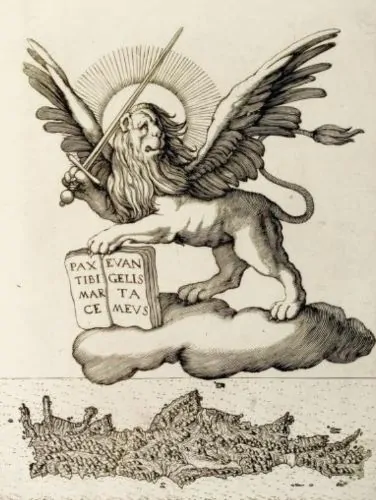
The island of Crete, being under Venetian rule for more than 450 years, became the most important Venetian colony in the Eastern Mediterranean after the loss of Cyprus during the War of Cyprus (1570-1573).1 Situated at the crossroads of three continents, the island and, in particular, its capital Candia, was the transfer point between different economic and cultural zones.2 As such, it was crucial in shaping processes of cultural exchange. In border societies, such as in Candia (modern Heraklion), identities were particularly malleable and the issue of intercultural encounters is a key aspect in defining them. Research has demonstrated that, especially, in ‘contact areas’ and colonial environments, there is a high degree of interconnectedness and interlocking cultural elements.3
The purpose of this study, which is part of a large-scale research project on the marital material culture in Venetian Crete,4 is to contribute to the understanding of fashion as a multifaceted issue.5 It explores the role of certain innovations of the early modern European textile industry in shaping individual and collective identities in Venetian Crete. How did mixed fabrics circulate across transnational networks and facilitate intercultural encounters? How did these novelties shape clothing, bed furnishings as well as identities? To what extent did Crete follow the changes in production techniques of the European textile industry of the time? In order to answer these questions we will look closely at the multiple meanings of mixed fabrics in different socioeconomic and geographical contexts within the Cretan society of the first half of the seventeenth century.
The selected period of study (1600-1645) is a sub-period of the Golden Age in Venetian Crete;6 it is the last peaceful period on the island before the outbreak of the fifth Veneto-Ottoman War, which marked a twenty-five year turbulent period of continuous warfare and led to the fall of Crete to the Ottomans in 1669. During the Golden Age, the creation of the so-called Veneto-Cretan culture reached its climax: «the meeting of East and West in Crete engendered a process of cultural cross-fertilisation» (Holton 1991, 16) leading to a synthesis of Italian, Byzantine and local elements. That cultural encounter is known under the term Veneto-Cretan culture.7
The primary sources used in this study are 130 notarial documents (marriage agreements and accompanying inventories of movables) from the State Archives of Venice (Markaki 2018, 310-17). These archival documents indicate 130 cases of transmission of dowry in Candia between 1600-1645 whereby 8,345 objects are transferred to the brides. Computer-processed data from these documents demonstrate the consumption behaviour of different population groups when fathers were marrying off their daughters by providing information on several material qualities of the transferred objects (such as quantity, material, color, decorative patterns, style, value).8 Through a comparative lens, light will be shed on the ways in which brides (or their families) used mixed cloths to differentiate themselves from others. By converting the monetary units that signify the value of goods to only one stable unit (the unit of account perpero) this study has made comparisons between material goods possible.9
New Products, Mixed Cloths in Venice and Europe

In the seventeenth century, the textile production and distribution was still a great Venetian resource, despite the fierce French, English and Dutch competition (Molà 2000, 61-4). The Venetian brocades were much in request in Europe. This suggests the existence of a vast market with specialized products and an increasing range of distributors and customers. The development of the silk market in Renaissance Venice with its powerful network of manufacturers, merchants and distributors, government and customers, has been already studied in detail.10 The growing demand for new products in Venice and elsewhere brought forth – from the sixteenth century onward – changes in production techniques, which facilitated the consumption of lighter, cheaper, less durable products. Goods became more easily worn out and, therefore, had to be replaced faster and more often. The ephemeral became attractive and sustained product-durability was made subordinate to style (Blondé and van Damme 2009, 5).
A mentality of consumerism was born all over Europe. New mixed silks were produced everywhere in Italy (from Venice to Naples) as well as in Holland and in the Levant.11 That is why Venetian weavers requested flexible state regulations that, on the one hand, intended to guarantee the traditional high-quality features of Venetian cloths, and on the other, made fast modifications of the production standards possible so that they could compete with foreign manufacturers with regard to the introduction of novelties (Molà 2000, 185). Attempts to make false products (products of lower quality imitating the high-quality ones) were common in Venice. This tendency was visible, mainly, in the textile industry, but also in jewelry making and in storage furniture manufacturing. A characteristic example in the field of chest manufacturing was the imitation of the costly decorative style of the inlay work (alla certosina). Painting a wooden chest with tempera to look like intarsia alla certosina was a common practice in Renaissance Venice for patrons who could not afford the ‘real’ luxurious treatment (Brown 2005, 104-5). Making counterfeit products was «a venerable Venetian tradition» (Brown 2005, 104).
Mixed Silks in Venetian Crete
The innovation of fake products reached Crete as well. Glass beads, used as substitutes of valuable pearls,12 and mixed silks, used as substitutes of high quality silk, emerged in Candia attesting a timid appearance of consumerism. These fabrics of lower quality and price, thus, less durable and more sensitive to fashion changes, were frauds: they imitated the pure silk, but, they were made by a warp of thrown silk and a weft of cotton or flax.
Brocadello silk was such a novelty.13 It was a Venetian cloth with thick, inferior quality weft thread, noteworthy for its patterns of bicolored silk (Molà 2000, 184). Its lower quality did not affect the breathtaking visual effect. It was consumed in Candia by whomever wished to keep up appearances: fathers and daughters who longed to distinguish themselves and to give the impression that they were in step with the most privileged (the ones who could afford the pure silk brocado). That were brides from the group of distinguished cittadini (such as bureaucrats, doctors, pharmacists),14 but also daughters of artisans or even priests. In spite of its fake composition, the brocadello was included in the five most expensive silk cloths in Cretan dowries together with canevazzéta, another mixed cloth. The real silks brocado, ormesìn and damasco took the three higher positions in the price-list (Markaki 2018, 184-6; 193-6).
Other mixed silk fabrics in Cretan dowries were the canevazzéta, bavella, terzanela (terzanello) and ferandìna which were suitable for cheaper light clothing items. All imitated the pure silks, such as the brocado, an expensive Venetian fabric of Celtic origin, woven with gold-gilt or silver-gilt thread and used for highly ornamented pieces of clothing, such as a vestura.15 The ferandìna was sometimes made of high quality and waste silk and sometimes of wool and silk.16 The terzanela was a plain or simply-patterned silk fabric.
The canevazzéta fabric, always made of pure silk and bavella (thrown silk), was more common in Cretan dowries than brocadello.17 It was used, chiefly, for making female clothing (valuable gowns), accessories (detachable sleeves) and decorative elements (lining or edgings).18 In addition, it could be used in bed furnishings, such as bed curtains. This mixed fabric was used by nobles, cittadini (‘distinguished’ or not) and artisans.19 The connecting element among these different population groups seems to be wealth. For instance, Marina Moraitopoula received in her ‘rich’ dowry20 three gowns made of canevazzéta (one second-hand and two new ones) trimmed with colorful edgings, gold-gilt thread and other fashionable details.21 Was Marina the daughter of a rich cittadino who wished to show her refined taste, although she could not afford the ‘real’ silks? The answer awaits future research.
Brides Maria Manganaropoula, daughter of the chief of the guild of carpenters in 1622-23, and Zuana Coregiopoula used this mixed cloth as well, whereas they belonged to the social group of popolani.22 Artisan bride Marieta Troulinopoula received for her wedding bed two new sky-blue canevazzéta bed curtains with silk colorful fringes alla Napolitana and valance sheet and holder.23 Among all the artisan brides of the studied sample Troulinopoula distinguished herself by having this particular bed equipment in her sleeping room. Bed curtains created a protected, secret environment, and guaranteed more comfort. They kept out draughts and created a genuine ‘house within the house’, as Sarti notes for the eighteenth-century Paris (Sarti 2002, 119). Marieta Varangopoula received with her ‘rich’ dowry two valuable new coverlets, lined with the mixed fabric bottana and trimmed with red silk.24 She distinguished herself from other cittadini, who did not assign valuable bed furnishings. Although these women had, presumably, a different socioeconomic background, they all used mixed silk cloth as a distinction marker.25
The large variety of pure and mixed silk qualities suggests a high degree of diversification and refinement of the material in Crete. Therefore, there must have been a substantial number of tailors in the town able to work with this material and a considerable import trade of raw materials and/or ready-to-wear silk clothes. Plenty of archival evidence illustrates the economic power of the guild of tailors in Candia; it was one of the largest in town with significant immovable property that reflected the higher social status of its members (Panopoulou 2012, 394-413). Besides, there is ample evidence for purchase orders and import of ready-to-wear clothing items in the town of Candia as there was a continuous range of female customers in the town with varying requirements and a refined taste. Purchasing fashionable garments in Venice for personal use (via a family member) was not uncommon for Cretan women (Maltezou 1986; Markaki 2018, 165-9). It is also documented that the island’s shipowners and merchants exported Cretan agricultural products and brought back luxurious/exotic materials and any commodities they would consider as profitable ones taking into consideration the demand and requirements of the local market of Candia.26 The large-scale export trade of silk (raw or in the form of pure and mixed fabrics and garments) from Venice or other Italian cities to various destinations in the Eastern Mediterranean is well documented.27 In addition, there is archival evidence for Ottoman customers’ preferences for Venetian lighter and cheaper mixed silk fabrics in 1624 in Bursa and 1640 in Istanbul (Iida 2017, 194-5). Based on the above-mentioned information it may be concluded that the existence of mixed cloths in Candia could have been the result of all or some of these factors: expression of female personal taste and knowledge of fashion innovations of the metropolis; local production by tailors in the town; import by Cretan merchants travelling to Venice and elsewhere; direct export to Candia/Crete with Venetian/Italian/English/Flemish ships which could transport these commodities anywhere in the Eastern Mediterranean.

The sixteen different silk qualities of the Cretan dotal items28 were mostly used for making garments and for adding extra value on them, regularly because of their ‘exotic’ origin. Venetian Crete followed what was common practice in Italy. In Renaissance Venice and Florence the silk industry was very important not only for the state, but also for the urban population. Manufacturing and trading in high-quality silk fabrics and so-called new products through flexible laws and a continuous policy-readjustment meant that there was a continuous demand for varying silk products. The refinement of silk qualities, the high valuation of silk clothing items and their restricted quantity classifies silk as a luxury material in Crete.29 Also in Venice, Florence and other Italian cities silk clothes were considered highly luxurious and therefore they were often prohibited.30 In Florence, for instance, the Commune continually passed sumptuary legislation that restricted vestimentary display; from 1281 to 1531 there were approximately eighty separate legal entries, while Florence had a thriving fine clothing industry itself (Frick 2002, 3; 241).
Mixed silk fabrics could also have expensive colors, such as crimson, or certain ornamental features that added even more luxury.31 For instance, Marieta Melissinopoula, daughter of ducal secretary Zuanne Melissino, received in 1630 a valuable crimson brocadello vestura;32 Vittoria Chourdopoula, a furrier’s daughter, received upon marriage a new canevazzéta gown with colorful lining and golden-gilt threads.33 Families in Venetian Crete preferred to transmit these ready-to-wear clothes when they were marrying off their daughters, because these could function as status symbols, suitable for display and social recognition, during the whole process of dowry transmission (Markaki 2018, 127-30). Cittadini must have been aware of the different qualities and high evaluation of silk fabrics. They embraced the novelties and visualized in this way their increasing influence in the urban space. Mixing expensive and cheaper fibers with each other provided a very successful low-quality imitation of the ‘real’ thing, which at the same time was highly competitive in price. Therefore, the use of these fabrics contributed to the visual blurring of social boundaries and could be motivated by a number of elements, such as an effort of the users to compensate for their inferior legal position or an effort to express lucidly their personal taste (Markaki 2015). Both elements were very important in other (early modern) European urban contexts as well.34 Fast changing fashion preferences and the entry of less durable novelties influenced the taste, created a large diversification of choices and led wealthy city residents all over Europe to a constant renewal of their material goods. The blurring of social boundaries, through the deception caused by novelties, could threaten the social order and stability; and that was exactly what the widespread sumptuary legislation in early modern European towns was trying to avoid. Nevertheless, the widening gap between those who were noble and those who simply lived in a noble manner did not close.35
With regard to the geographical setting, there were only two types of silk that infiltrated the rural areas around Candia, i.e. the pure ormesìn and, to a lesser extent, the mixed canevazzéta. Ormesìn was a high-quality silk, lightweight, reasonably priced and had an exotic origin (Vitali 1992, 273). However, it lacked the prestige of other more luxurious silk fabrics, such as the velluto (velvet) and damasco.36 Thus, the choice of these two specific types of silk illustrated that the countryside was somewhat underprivileged in comparison with Candia.37
Mixed Cotton
As the textile techniques continued to improve, new processes were invented to mix not only silk, but also cotton with wool or flax. These new mixed fabrics had remarkable softness and made new styles possible (Pisetzky 1966, 228-30). Dimito was such a case. It was a double-threaded fabric made of flax and cotton, imitating the six-threaded silk cloth sciàmito/samito/εξάμιτο. In Venice, this technique was used to make the homonymous piece of clothing, worn by popolani during the fifteenth century (Vitali 1992, 173-4). However, in the seventeenth-century Cretan dowries dimito was not used for garments, but, exclusively for bed furnishings, such as mattresses, quilts and blankets. This shows that «consumers were adapters not mere adopters. They did not restrict themselves to adopting certain goods; they adapted them to their own needs and sensitivities» (Sarti 2002, 108). A selective adoption of Venetian elements has been documented in Crete in various fields.38 Therefore, the case of the dimito fabric is no exception.
Conclusion
Notarial documents offer the opportunity to look closely at female fabrics and their material details. They illustrate that in ‘contact areas’, such as in Venetian Crete, there was a high degree of interconnectedness and interlocking cultural elements. Crete followed the innovation of fake products, a widespread practice in Venice, and, in particular, the new techniques of the Venetian textile industry of the sixteenth century. The inhabitants of Candia were very well aware of the developments in the textile industry of the metropolis and embraced the mixed cloths that positioned themselves as European commodities and as part of a broader visual culture. Especially the mixed silk fabrics brocadello and canevazzeta had multiple meanings as they offered wealthy brides of lower social groups the opportunity to appropriate elements of the lifestyle of the upper class in an affordable way and to distinguish themselves. Mixed fabrics were consumed by elite and non-elite brides, always in limited numbers, and created a deception which was convenient for whomever wished to keep up appearances.
Appendix
Endnotes
- This point is stressed in many publications. See indicatively Markaki 2018, 39-41; Lambrinos 2019, 162.
- For the participation of Crete in the maritime commercial networks of the era see Panopoulou 2017, in particular, pp. 382-86; 388-89; 391-96.
- The theme of cultural exchange in early modern Europe is discussed in detail in Roodenburg 2007 (relevant bibliography can be found in pp. 381-427). See also Bormpoudaki et al 2017, 8-15. For the malleable identities in Venetian Crete see O’ Connell 2004.
- The project is titled Women and Material Culture in Venetian Crete (17th century) and is being pursued within the research school ARTES (Amsterdam School for Regional, Transnational and European Studies) of the University of Amsterdam. It is based on the computer-process of a sample of 770 marriage agreements and inventories from Candia and its countryside (1600-1645). For the precise methodological parameters of the project see Markaki 2018, 287-325.
- Fashion as a multifaceted phenomenon with economic, social and cultural dimensions is addressed in a number of studies with regard to the early modern European urban and rural space. See, indicatively, Monnas 2008; Frick 2002; Malanima 1990; Molà 2000; Blondè and van Damme.
- On the definition and content of the term see Markaki 2018, 39-41; 58.
- For the definition and content of the term see Holton 1991, 16; Maltezou 1991, 46-7; Lymberopoulou 2010.
- For the methodological details see Markaki 2018, 309-318. For other relevant studies using seventeenth-century Cretan dowries as primary source see, for instance, Karagianni 2011/2012. For relevant cases in seventeenth-century Italy see Pisetzky 1966, 383, note 171 and Molmenti 1929, 419-432. See Molmenti 1928, 475-489; 490-493 with regard to the sixteenth-century Italy.
- On the complex Cretan monetary system see Vincent 2007; Markaki 2018, 134-135. On the perpero see, for instance, Markaki 2018, 31, note 73. The fact that the Cretan inventories make comparisons between material goods possible, due to the separate valuation of almost every single dowry commodity, offers this source a unique place in Europe. As a rule, this last feature is absent from similar sources, such as the probate inventories, extant in other European regions (Markaki 2018, 18). For the role of appraisers in the process of valuations of movables see Markaki 2018, 136-42.
- See, indicatively, Molà 2000 (relevant bibliography can be found in pp. 409-442); Iida 2017, 192, note 5.
- The innovation of mixed silk fabrics in Venice, Italy, Flanders and the Levant is discussed in Molà, 2000, 161-85; 294298. On examples of mixed fabrics in England see Hart and North 2009, 22-3.
- On the use of glass beads (paternostri) and tondini in Venice see Vitali 1992, 278; 378. On their use in Venetian Crete see Markaki 2018, 228-30.
- The spelling of the fabrics in this paper is the original one used in the notarial documents. For visual examples of brocattello see Monnas 2008, 193; 203-5; 290-1; 301.
- On the material choices of the brides of this specific group see Markaki 2015.
- See the lemma’s brocadèli and brocado in Vitali 1992, 72-8. Examples of English brocaded silk of the early 18th century see in Hart and North 2009, 48-9; 60-1; 90-1. Examples of the cloth in Italian paintings see in Monnas 2008, 73-75; 161. For the use of the female gown vestura in Venetian Crete see Markaki 2017. For its use in Venice see Vitali 1992, 422.
- For more information on ferandìna in Venice see Molà 2000, 119-120; 172-14; Vitali 1992, 188-189.
- For the production of the canevazzéta in Venice see Molà 2000, 171-4; 184. For its production and use in Padua and Crema see Molà 2000, 179; 294-5.
- ee for instance the following documents: State Archives of Venice (ASV), Notai di Candia (notary Zorzi Protonotari), busta 222, libro 5, f. 88v and f. 227v-229r; (notary Mattio Seppi), busta 267, minute filza 6, without nr. (dowry of January 25, 1643).
- The upper segment of cittadini consisted of bureaucrats (notaries, secretaries and other high administrative officers in the Venetian chancellery) who could be considered as ‘distinguished’ members of this social group. They enjoyed social prestige, high revenues and other privileges and formed a separate subgroup within the middle social stratum of cittadini in Candia. On their socioeconomic and political development see Lambrinos 2015. Lawyers, doctors, rich merchants and shipowners and rich creditors could be included in this subgroup as well thanks to their social prestige and accumulated wealth. Evidence for the privileged position and high status of all the abovementioned cittadini is provided by the use of special designations before their names in the notarial documents (see Lambrinos 2009, 147-148, Markaki 2018, 28).
- For the methodological distinction in ‘poor’, ‘middle’ and ‘rich’ dowries see Markaki 2018, 142-7.
- ASV, Notai di Candia , (notary Zorzi Protonotari), busta 222, Libro 5, f. 227v-229r.
- On M. Manganaropoula, see ASV, Notai di Candia (notary Zorzi Protonotari), busta 222, libro 5, f. 250v-252v. On her father, a carpenter with social status and prestige, see Panopoulou 2012, 349- 350; 355. On Z. Coregiopoula, see ASV, Notai di Candia (notary N. Benedetti), busta 21, libro 2, f. 96r – 97r.
- On M. Troulinopoula, see ASV, Notai di Candia (notary Giacomo Cortesan), busta 63, libro XXIV, f. 360r-361v.
- ASV, Notai di Candia (notary Giacomo Cortesan), busta 63, protocollo XXV, f. 60r-61v.
- Similar patterns of distinction are documented in other European regions as well. See, for instance, Dibbits 2010.
- See, for instance, Markaki 2018, 53-54; Panopoulou 2017, 394-396; 400; Kalaitzaki and Spanakis-Voreadis 2016, 3; 5-7; Gasparis 2010, 255-261. On the Mediterranean trade and the transport of luxury commodities in the Middle Ages see Bormpoudaki et al. 2017, 37; 130-7.
- See, for instance, Molà 2000; Monnas 2008, 4-21.
- For the names of these qualities see Markaki 2018, 175.
- Of the total 8,345 items registered in the examined sample only 5% was made of silk. On the discussion about the definition of luxury see Rittersma 2010; Malanima 1990.
- On the prohibition of five silk qualities in Venice (canevazzéta, tabì, brocado, veludo, raso) see Vitali 1992, 125; 373. On Florence, see Frick 2002, 179-200.
- On crimson see Monnas 2008, 78; 256-257; Molà 2000, 111-2; 117-20.
- ASV, Notai di Candia (notary Giacomo Cortesan), busta 61, protocollo XVII, f. 206v-209r.
- ASV, Notai di Candia (notary Zorzi Protonotari), busta 222, libro 5, f. 88v. On the addition of gold or silver thread see Monnas 2008, 26.
- See, for instance, Blondé and van Damme 2009; de Laet 2011, 155-9; 186-9; Brown 2005, 221-225.
- See Brown 2005, 221-5; de Laet 2011, 159.
- For the use of velvet in Venice see Vitali 1992, 398-407. For the use of damasco see Vitali 1992, 171; Monnas 2008, 251-4; 302. Later examples of English silk damask can be found in Hart and North 2009, 94-95.
- On the downgraded status of the Cretan countryside see indicatively Lambrinos 2018, 21-4; Markaki 2018, 63-8.
- See, for instance, the case of religious architecture in Gratziou 2010, 16; 19.
Bibliography
Affiliate disclosure: Amazon links on this site are paid links. As an Amazon Associate I earn from qualifying purchases.
- Blondé, Bruno, and Ilja van Damme. 2009. “Fashioning Old and new or moulding the material culture of Europe (Late seventeenth-nineteenth centuries)” In Fashioning old and new. Changing consumer patterns in Western Europe (1650-1900), ed. Bruno Blondé et al, 1-14. Turnhout: Brepols (Studies in European Urban History).
- Bormpoudaki, Maria et al, ed. 2017. Crossroads. Travelling through the Middle Ages. Zwolle: WBooks/Allard Pierson Museum. Brown, Patricia Fortini. 2005. Private lives in Renaissance Venice. Art, architecture and the family. New Haven-London: Yale University Press.
- De Laet, Veerle. 2011. Brussel binnenskamers. Kunsten luxebezit in het spanningsveld tussen hof en stad, 1600-1735. Amsterdam: Amsterdam University Press.
- Dibbits, Hester. 2010. “Eye-catchers in an 18th-century fishing village.” In Luxury in the Low Countries. Miscellaneous reflections on Netherlandish material culture, 1500 to the present, ed. Rengenier C. Rittersma, 137-158. Brussels: Pharo/ASP Editions.
- Frick, Carole Collier. 2002. Dressing Renaissance Florence. Families, fortunes and fine clothing. Baltimore-London: The Johns Hopkins University Press.
- Gasparis, Charalambos. 2010. “Εμπόριο και φορολόγηση προϊόντων.” In Βενετοκρατούμενη Ελλάδα. Προσεγγίζοντας την ιστορία της, vol. Α, ed. Chryssa Maltezou, 253-275. Atene-Venezia: Istituto Ellenico di Studi Bizantini e Postbizantini di Venezia.
- Gratziou, Olga. 2010. Η Κρήτη στην Ύστερη Μεσαιωνική Εποχή. Η μαρτυρία της εκκλησιαστικής αρχιτεκτονικής. Heraklion: Crete University Press.
- Hart, Avril and North, Susan. 2009. Seventeenth and eighteenth-century fashion in detail. London: Victoria and Albert Museum Publishing.
- Holton, David, ed. 1991. Literature and society in renaissance Crete. Cambridge: Cambridge University Press.
- Iida, Miki. 2017. “Venetian silk textiles and fashion trends in the Ottoman Empire during the Early Modern Period.” Mediterranean World XXIII: 191-5.
- Kalaitzaki, Maria and Spanakis-Voreadis Giorgos. 2016. “Διακίνηση αγαθών, παραγόμενων προϊόντων και ειδών διατροφής στην Κρήτη (1555-1608).” In Proceedings of the 12th International Congress of Cretan Studies, Section B, 1-12. Heraklion: Society of Cretan Historical Studies.
- Karagianni, Ourania. 2011/2012. “Καταγραφή κινητής περιουσίας κατά τη μεταφορά της από το Χάνδακα στη Βενετία: Το Libretto sive inventario της Querina Barbarigo (1647).”, Thesaurismata 41/42: 329-39.
- Lambrinos, Κostas. 2009. “Il vocabolario sociale nella Creta veneziana e i problemi del censimento di Triv(is)an. Approcci interpretativi e desiderata di ricerca.” In I Greci durante la venetorazia: uomini, spazio, idee (XIII-XVIII sec.), Atti del Convegno Internazionale di Studi, ed. Chryssa Maltezou, Angeliki Tzavara, and Despina Vlassi, 183-197. Venezia: Istituto Ellenico di Studi Bizantini e Postbizantini di Venezia.
- Lambrinos, Kostas. 2015. Οι cittadini στη βενετική Κρήτη. Κοινωνικο-πολιτική και γραφειοκρατική εξέλιξη (15ος-17ος αι.). Athens: Academy of Athens, Research Centre for Medieval and Modern Hellenism.
- Lambrinos, Kostas, ed. 2018. Kοινωνίες της υπαίθρου στην ελληνοβενετική Ανατολή (13ος-18ος αι.). Athens: Academy of Athens, Research Centre for Medieval and Modern Hellenism.
- Lambrinos, Kostas. 2019. “Social preeminence, power and prestige: nobles versus nobles in Venetian Crete (16th-17th cent.)” Μεσαιωνικά και Νέα Ελληνικά 13: 159-78.
- Lymberopoulou, Angeliki. 2010. “Late and Post-Byzantine art under Venetian rule. Frescoes versus icons, and Crete in the middle.” In A Companion to Byzantium, ed. Liz James, 351-70. Chichester: Wiley-Blackwell.
- Malanima, Paolo. 1990. Il lusso dei contadini. Consumi e industrie nelle campagne toscane del Sei e Settecento. Bologna: il Mulino.
- Maltezou, Chryssa. 1986. “Βενετική μόδα στην Κρήτη (Τα φορέματα μιας Καλλεργοπούλας).” In Βυζάντιον. Αφιέρωμα στον Ανδρέα Ν. Στράτο. Ιστορία-τέχνη και αρχαιολογία. Vol. 1, 139-47. Αthens: Nia A. Stratos.
- Maltezou, Chryssa. 1991. “The historical and social context.” In Literature and society in renaissance Crete. ed. David Holton, 17-48. Cambridge: Cambridge University Press. https://doi:10.1017/CBO9780511519666.004.
- Markaki, Tatiana. 2015. “Cultural Transfers and social ruptures in Venetian Crete: Dowries of distinguished cittadini in seventeenth-century Candia.” In Continuities, Discontinuities, ruptures in the Greek world (1204-2014): Economy, society, history, literature. Proceedings of the 5th European Congress of Modern Greek Studies of the European Society of Modern Greek Studies. Thessaloniki, 2-5 October ed. Konstantinos A. Dimadis. Vol. 5, 207-20. Athens: European Society of Modern Greek Studies. https://www.eens.org/EENS_congresses/2014/books/tomo5.pdf.
- Markaki, Tatiana. 2017. “Υλικά αγαθά σε αέναο ταξίδι: η περίπτωση της vestura στοv βενετοκρατούμενο Χάνδακα.” In Proceedings of the 12th International Congress of Cretan Studies, Section B, 1-10. Heraklion: Society of Cretan Historical Studies. https://12iccs.proceedings.gr/el/proceedings/category/38/33/129.
- Markaki, Tatiana. 2018. Objects and identities: dowry and material culture in Venetian Crete in regional and European context (1600-1645). Amsterdam: Amsterdam University Press. http://hdl.handle.net/11245.1/88113211-ad31-46df-839d-983825f03745.
- Molà, Luca. 2000. The silk industry of renaissance Venice. Baltimore-London: The Johns Hopkins University Press.
- Molmenti, Pompeo G. 1928. La storia di Venezia nella vita privata dalle origini alla caduta della Repubblica. VII edizione, Parte seconda. Lo splendore. Bergamo: Istituto italiano d’arti grafiche.
- Molmenti, Pompeo G. 1929: La storia di Venezia nella vita privata dalle origini alla caduta della Repubblica. VII edizione, Parte terza. Il decadimento. Bergamo: Istituto italiano d’arti grafiche.
- Monnas, Lisa. 2008. Merchants, princes and painters. Silk fabrics in Italian and Northern paintings 1300-1550. Hew Haven-London: Yale University Press.
- O’Connell, Monique. 2004. “The Venetian patriciate in the Mediterranean. Legal identity and lineage in fifteenth-century Venetian Crete.” Renaissance Quarterly 57, 2: 466-93.
- Panopoulou, Angeliki. 2012. Συντεχνίες και θρησκευτικές αδελφότητες στη βενετοκρατούμενη Κρήτη [Corporazioni e Confraternite a Creta durante la Venetocrazia.] Atene-Venezia: Istituto Ellenico di Studi Bizantini e Postbizantini di Venezia.
- Panopoulou, Angeliki. 2017. “At the centre of the sea routes: maritime life in Crete between the Middle Ages and the Early Modern Era.” In The sea in history. The medieval world, ed. Michel Balard, 382-400. Woodbridge: The Boydell Press.
- Pisetzky, Rosita Levi. 1966. Storia del costume in Italia, vol. III. Milano: Istituto editoriale italiano.
- Rittersma, Rengenier, ed. 2010. Luxury in the Low Countries. Miscellaneous reflections on Netherlandish material culture, 1500 to the present. Brussels: Pharo/ASP Editions.
- Roodenburg, Herman, ed. 2007. Cultural exchange in early modern Europe. Volume 4. Forging European identities, 1400–1700. Cambridge: Cambridge University Press.
- Sarti, Raffaella. 2002. Europe at home. Family and material culture 1500-1800. New Haven-London: Yale University Press. Vincent, Alfred. 2007. “Money and coinage in Venetian Crete, c. 1400-1669. An introduction.” Thesaurismata 37: 267-326.
- Vitali, Αchille. 1992. La moda a Venezia attraverso i secoli. Lessico ragionato. Venezia: Filippi Editore Venezia.
Contribution (15-24) from Fashion as an Economic Engine: Process and Product Innovation, Commercial Strategies, Consumer Behavior, edited by Giampiero Nigro (Firenze University Press, 2022), published at Firenze University Press under the terms of a Creative Commons Attribution 4.0 International license.
About the Author