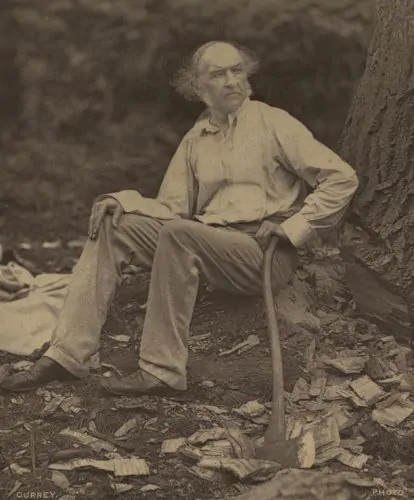
Liberals who rejected Gladstone’s Home Rule bill went from cabinet dissent to campaigning against their own leader. The election turned their policy dispute into a lasting party split.

By Matthew A. McIntosh
Public Historian
Brewminate
Introduction: When a Party Votes against Its Prime Minister
In the early hours of June 8, 1886, Liberal members of Parliament helped defeat the government led by their own party’s leader. William Ewart Gladstone’s bill for Irish Home Rule failed at its second reading after 93 Liberals joined its opponents. Hansard recorded 341 votes against the bill and 311 for it; the frequently cited totals of 343 to 313 include the two tellers on each side. The division postponed a second reading for six months, ending the measure’s immediate prospects. It did not, by itself, tell Gladstone whether the dissenters would accept another Irish policy, oppose him at an election, or remain outside his party. Those possibilities were still being contested. A disagreement that had already driven Joseph Chamberlain and George Trevelyan from the cabinet now forced Liberal MPs to declare publicly which political obligation they considered greater: support for their prime minister or resistance to the government he proposed for Ireland.
Home Rule meant more than an expression of sympathy with Irish grievances. After the 1885 election, Charles Stewart Parnell’s Irish Parliamentary Party held the balance of power in the Commons, giving its demand for self-government immediate consequences for the formation and survival of British ministries. Gladstone’s proposal would establish an Irish legislature and an executive in Dublin, with authority over substantial domestic matters, while reserving imperial concerns to Westminster. Irish MPs would ordinarily cease to sit in the British Parliament. Supporters saw a means of answering an Irish constitutional demand without dissolving the United Kingdom; opponents questioned whether Westminster could exercise meaningful supremacy over Irish affairs after surrendering routine legislative control and excluding Irish representatives. Nor was the argument confined to the arrangement of institutions. Gladstone coupled Home Rule with a separate land-purchase proposal that would use British credit to change the relationship between Irish landlords and tenants. During cabinet discussions, Chamberlain objected to a scheme whose potential commitment he understood to be far larger than the £50 million limit Gladstone presented when he introduced the land bill in April. The revisions mattered, but they did not resolve Chamberlain’s doubts about financial risk or the authority a new Irish government would possess. Lord Hartington had declined to join Gladstone’s ministry in the first place; Chamberlain and Trevelyan entered it while the policy remained unsettled, then resigned as its direction became clear. Their different paths into opposition show why the rupture cannot be dated solely to the Commons vote.
The dissenters did not approach Ireland from a single position. Hartington and other Whigs feared that a legislature with its own executive would loosen the Union beyond repair. Chamberlain, a Radical who had explored proposals for an Irish central board and dealt with nationalist politicians, could favor substantial administrative reform while rejecting Gladstone’s settlement. These differences made cooperation against the bill possible without settling what the former colleagues should do together afterward. Yet organization began even before the parliamentary defeat. Opponents established a Liberal Unionist office, and Chamberlain joined forces with Hartington in the campaign against Home Rule. Once Gladstone called an election, they arranged to contest seats with Conservative support. The July result returned enough Liberal Unionists to help Lord Salisbury govern and left Gladstone’s followers far short of a majority. Irish nationalists, meanwhile, retained strong parliamentary representation. The outcome cannot be reduced to a single electorate delivering one verdict on whether Ireland should govern itself.
The central problem here is how opposition to a leader’s policy became a competing claim to his party’s identity. Cabinet resignation required Chamberlain and Trevelyan to leave office; it did not require them to fight Liberal candidates. Voting against the bill made disagreement unmistakable, but a Commons division could still have been followed by negotiation or a different proposal. Electoral cooperation with Conservatives gave anti-Home Rule Liberals a way to defend the Union and preserve seats, while making reunion with Gladstone’s followers harder to achieve. Those decisions were shaped by constitutional convictions, calculations about voters, and disagreements over who could speak for Liberalism; no single motive can safely be assigned to every dissenter. I will test their public explanations against the developing terms of the bills, parliamentary conduct, and the choices made during the campaign. It will also keep Irish political demands in view, since British party loyalty was being tested by a question Irish representatives had pressed onto the parliamentary agenda. The split of 1886 was neither an instantaneous rebellion nor an inevitable consequence of Gladstone’s personal standing. It emerged as politicians with different objections discovered that defeating his policy together required them to decide whether they could still belong to the party he led.
The Irish Question and the Limits of Liberal Unity
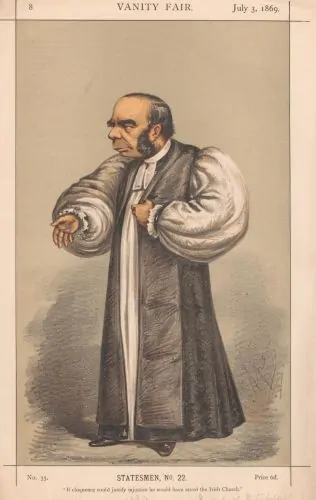
Gladstone’s earlier Irish reforms had assumed that Westminster could remedy grievances while retaining its authority over Irish affairs. The Irish Church Act of 1869 ended the privileged position of the established Protestant church, and the Land Act of 1870 offered tenants limited protection against eviction. Neither measure answered the demand for Irish control over domestic legislation. Isaac Butt’s Home Rule League won fifty-nine seats in 1874 by pressing for an Irish parliament within the United Kingdom, although its MPs differed over what powers that parliament should possess. After Charles Stewart Parnell took the leadership in 1880, the Irish parliamentary group became more disciplined and more closely associated with the struggle over land. By the time Gladstone considered Home Rule, its advocates had spent years building an electoral organization independent of the Liberals.
The land struggle made the limits of reform through Westminster increasingly apparent. Gladstone’s Land Law (Ireland) Act of 1881 allowed courts to set rents and strengthened tenants’ claims to continued occupation and the sale of their tenancy rights. His government also used exceptional powers against agrarian agitation, imprisoned Parnell, and suppressed the Land League. Negotiations preceded Parnell’s release in 1882, but the assassination that May of Chief Secretary Lord Frederick Cavendish and Under Secretary Thomas Henry Burke in Dublin’s Phoenix Park devastated hopes of a quick political accommodation. The killers belonged to a militant organization, rather than Parnell’s parliamentary party; nevertheless, their actions intensified fears among those responsible for governing Ireland. George Trevelyan, who became chief secretary, insisted on distinguishing lawful politics from crime while continuing to defend strong policing. That distinction was difficult to sustain in practice as rent disputes persisted and the Irish National League organized further agitation. A ministry could expand tenants’ rights and still find itself opposed by the representatives of those it intended to help, especially when those representatives regarded the administration of Ireland as part of the grievance.
Liberal politicians drew different conclusions from these years without dividing neatly into reformers and opponents of reform. Some wanted elected Irish bodies to replace aspects of Dublin Castle’s centralized administration but doubted the wisdom of transferring legislative power. Others came to think that an Irish assembly was necessary if constitutional nationalists were to have a credible means of governing. Joseph Chamberlain’s discussions with Parnell in 1884–85 about a proposed central board show how far negotiations could proceed before agreement on the board’s actual authority became essential. Lord Spencer’s experience as viceroy pointed in another direction. After overseeing coercive measures, he grew less confident that policing and land legislation could resolve the political conflict. These were disagreements about institutions and their consequences, formed partly through different experiences of office. Agreement that Irish government needed alteration gave Liberal colleagues little assurance that they would accept the same settlement.
Electoral reform made the disagreement harder to defer. Before the extension of the franchise, only about one in six adult Irish men could vote in parliamentary elections; legislation in 1884 and 1885 enlarged that electorate and redrew constituencies. The general election of 1885 returned eighty-five nationalist MPs from Ireland, including seventeen of Ulster’s thirty-three members. That northern result matters because it rules out a simple account in which one province voted wholly against Home Rule, while the remaining Irish constituencies supported it. Unionist opposition was substantial, particularly among Protestants in parts of the northeast, and would require serious consideration in any proposed settlement. Yet the election also eliminated Liberal MPs from Irish constituencies. Parnell’s gains belonged to his own party, whose members could decide separately whether to support a British government. In George Fottrell’s contemporary account, Hartington urged Ulster Liberals to cooperate electorally with Conservatives against Parnellite candidates during the campaign. Fottrell was a nationalist supporter and his interpretation of the contest needs that qualification, but the reported appeal reveals how opposition to Irish nationalism could already cross British party lines. Meanwhile, newly enfranchised voters in Britain expected attention to agricultural wages, land access, and other domestic reforms. Liberal MPs consequently entered the new Parliament answerable to electorates whose immediate priorities did not necessarily coincide.
The parliamentary parties had already demonstrated that their interests could diverge. In June 1885, Irish MPs joined Conservatives to defeat Gladstone’s government on a budget division amid disputes over taxation and coercion. Gladstone’s election address that September allowed for enlarged local powers but made the Crown, the unity of the empire, and Parliament’s authority governing conditions; it supplied no agreed plan for an Irish legislature. Parnell, for his part, urged Irish voters in Britain to support Conservative candidates against the Liberals. An election fought in those circumstances could establish the strength of Irish nationalism without determining precisely what constitutional arrangement either British party had undertaken to enact.
During the last months of 1885, information arriving from Dublin Castle added urgency to the parliamentary arithmetic. Officials including Sir Robert Hamilton and Edward Jenkinson warned that continuing to govern against organized nationalist opinion might weaken Parnell’s ability to keep more militant forces committed to constitutional politics. Stephen Ball’s study of their advice gives Irish conditions a substantial place in explaining Gladstone’s changing position, although the scale of any immediate threat of renewed violence remains open to debate. Reports in the press that December about Gladstone’s possible Home Rule plans brought the constitutional question into public view before leading Liberals had agreed on its terms. The question of who would form the next government was settled for an entirely different reason. On January 26, 1886, Jesse Collings’s amendment concerning allotments and small holdings for agricultural labourers defeated Lord Salisbury’s Conservative ministry. Liberals could unite to replace Salisbury on that issue without having decided how Ireland should be governed. When Gladstone returned to office, the new Parliament contained a powerful Irish party, a divided Irish electorate, and British Liberals whose shared desire for reform concealed different limits on what they would concede.
A Cabinet Formed before the Disagreement Was Settled
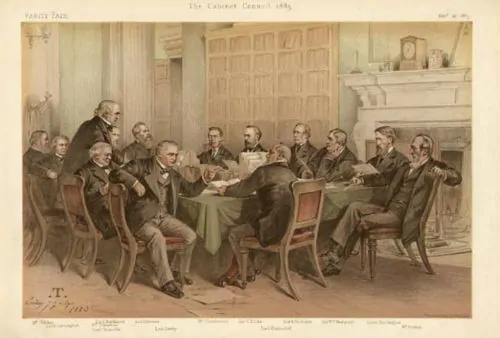
Negotiations over office revealed the problem facing Gladstone’s third ministry before it held a collective discussion of Irish policy. In February 1886, he invited prospective colleagues to examine public order, land, and the widespread Irish demand for powers beyond ordinary local government. He proposed an inquiry into what could be granted while maintaining imperial unity, leaving the form of any Irish legislature open. The Marquess of Hartington declined to serve because he believed a legislature with substantial independent authority could not be reconciled with the legislative Union he had defended. His decision left a senior Liberal outside the government from its beginning, able to question its course without having accepted responsibility for a Cabinet decision. Gladstone could form a ministry, but its membership would reflect different judgments about the inquiry he had asked it to undertake.
Joseph Chamberlain accepted a seat on carefully stated terms. In a letter dated January 30, he acknowledged the strength of the Irish electoral demand and agreed that the government should examine whether it could be met. He also told Gladstone that he doubted a national legislative body in Dublin could exercise meaningful powers while preserving the conditions Gladstone had placed on it. Chamberlain preferred elected local government alongside measures concerning land and, perhaps, education; he agreed to consider a larger proposal if one emerged. Gladstone assured him that he would retain “unlimited liberty of judgment and rejection” and that the smaller proposals would receive consideration. Chamberlain then entered the Cabinet as president of the Local Government Board, with his ally Jesse Collings serving as parliamentary secretary. The surviving acceptance letter establishes that his participation was conditional from the outset, though it does not settle how readily either man expected to persuade the other.
George Trevelyan brought a different set of reservations into the ministry. He became secretary for Scotland after having served as chief secretary for Ireland during years of severe conflict over policing and the enforcement of law. Trevelyan later explained that he had joined partly because withdrawal by every Liberal opposed to Home Rule would appear to concede that the party had already committed itself to that policy. John Morley, appointed chief secretary for Ireland, favored a substantial measure of self-government; Earl Spencer, who had overseen Ireland’s administration, had also come to support constitutional change. Trevelyan remained unconvinced that an elected Irish government could safely direct the magistracy and the civil administration of justice. The ministers shared experience of Ireland, but experience had led them to opposing assessments of where authority should reside.
The work of drafting exposed questions that a general promise of reform could leave unanswered. In early March, Attorney General Charles Russell told George Fottrell, a nationalist with access to officials in Dublin Castle, that he found it difficult to advise on land purchase without seeing how it would relate to the proposed system of Irish government. At a discussion with Irish legal and land officials, Fottrell encountered proposals that began with the sum landlords should receive; he pressed instead on what tenants could pay and who would have an incentive to collect their payments. Morley separately asked him whether Irish MPs should continue to sit at Westminster after the grant of self-government. Fottrell’s journal records the discussions from a committed nationalist’s point of view, but the questions he reports were concrete ones before ministers: the place of Irish representatives, the security of landowners, and the obligations that British credit would support. Russell favored dealing with land first, while nationalists pressed for the constitutional measure to proceed without delay. Gladstone regarded purchase as a way to protect landlords and ease the social conflict that might otherwise endanger a new Irish administration. Chamberlain feared that the British taxpayer would underwrite an arrangement whose collection and repayment depended on an elected authority responsive to Irish tenants.
The rupture came in two stages. Ministers received a preliminary land purchase paper before their meeting of March 13, at which Gladstone also indicated the broad direction of his Irish government proposal. Chamberlain and Trevelyan sent letters tendering their resignations on March 15; Gladstone persuaded them to wait for a fuller account of his plans. At the March 26 meeting, Chamberlain found the constitutional proposals unacceptable as well. He objected to ending Irish representation at Westminster, to the proposed fiscal relationship, to the transfer of judicial and magistrate appointments, and to giving the new legislature broad authority except where powers were expressly withheld. Trevelyan’s concern centered especially on whether officers charged with enforcing the law could act independently of the politicians whom he had confronted as chief secretary. Their departure was settled after that meeting, with the resignations accepted on March 27. Land purchase had prompted the first letters, and the proposed distribution of governing power confirmed their decision.
The timing also limits what the resignations prove. Gladstone described the March proposals as an early version, and some provisions changed before Parliament saw the bills; Chamberlain’s objections must be read against the proposal available to him when he made his decision. Yet Gladstone had given both men time to hear the fuller outline, and they still judged its central direction incompatible with their responsibilities. Morley and Spencer stayed, giving the prime minister experienced colleagues who believed the risks of a new arrangement could be managed. Hartington had refused office at the beginning; Chamberlain and Trevelyan left after testing what participation allowed them to change. By the end of March, disagreement over Ireland had produced an opposition with senior Liberal voices, while the government continued preparing the measures those men would have to judge in Parliament.
What Gladstone Asked Parliament to Accept
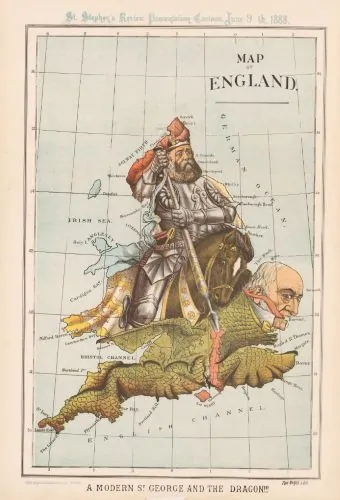
On April 8, 1886, Gladstone asked the House of Commons to authorize an Irish legislature in Dublin with power over much of the country’s domestic government. The Crown would remain part of the new legislature, and Westminster would retain authority over imperial affairs. Gladstone presented the change as a way to give Irish representatives responsibility for decisions that Westminster had struggled to make acceptable in Ireland. He also regarded land ownership as inseparable from the prospects for orderly government, though he introduced the accompanying purchase measure a week later. Members considering Home Rule consequently faced a detailed transfer of authority, with decisions about representation, revenue, and the protection of people who opposed Irish self-government.
The Dublin legislature was designed as a single body divided into two orders that would ordinarily deliberate and vote together. Its first order would contain 28 Irish representative peers and 75 elected members. Those elected members would serve ten-year terms, and their voters would have to own or occupy property worth at least £25 annually; candidates faced a further property qualification. The second order would contain 204 members chosen through a broader electorate, with a possible two additional seats for the Royal University of Ireland. Existing Irish MPs could take seats in that order if they agreed, giving the new institution some continuity with parliamentary politics. Either order could demand a separate vote, allowing the smaller first order to block legislation. After a dissolution or three years, whichever took longer, a measure rejected in this manner could return for a joint vote in which the more numerous second order might prevail. Gladstone expected this arrangement to give property holders and other minorities a means of delaying hasty legislation while leaving the elected majority an eventual route to enactment. It also made the success of an Irish government dependent, in some circumstances, on its ability to wait out a prolonged institutional objection.
The bill gave the Irish legislature broad authority to alter laws within Ireland, then specified subjects it could not control. War, defense, foreign relations, trade, navigation, coinage, and several other imperial matters remained outside its competence. Further provisions barred religious disabilities and privileges, protected denominational institutions, and restricted interference with children’s religious instruction in publicly funded schools. A disputed Irish law could be referred to the Judicial Committee of the Privy Council, which could declare provisions beyond the legislature’s powers void. These protections applied across Ireland. Gladstone included Ulster in the proposed jurisdiction, while saying he would consider workable amendments concerning its position. The choice mattered because a legal right to challenge legislation could restrain what Dublin enacted, but it could not resolve every dispute about how a government administered a valid law.
Irish representation at Westminster posed a separate constitutional problem. Under the bill, Ireland would cease to return members for ordinary sittings of the Commons or representative peers to the Lords. Gladstone argued that a rule permitting Irish MPs to vote only on imperial questions would prove unstable. The Commons could dismiss a ministry as a whole, even when a dispute began with one department’s policy. The bill did provide a special means of summoning Irish representatives if Westminster sought to alter the Home Rule settlement without the Irish legislature’s consent. That exception gave Ireland a voice in proposed changes to its new constitution, but it did not provide continuing participation in decisions about imperial spending or taxes reserved to Westminster. Customs and excise would still be imposed and collected under Westminster’s authority. Their proceeds would first meet specified Irish contributions to the national debt, the armed forces, other imperial services, and policing; the balance would pass to an Irish fund for domestic expenditure. The scheduled annual contributions amounted to £3.242 million for debt and imperial services, with another £1 million for the Royal Irish Constabulary and Dublin Metropolitan Police. Gladstone considered the arrangement compatible with Irish self-government because Ireland would receive the remaining revenue and could levy other taxes. Parliament nevertheless had to judge whether withdrawal from Westminster could sit comfortably with obligations fixed by a legislature in which Irish voters would no longer have regular representatives.
Administration presented questions the division of legislative subjects could not answer by itself. The Lord Lieutenant would continue to exercise executive authority on the Crown’s behalf, while Gladstone expected a government responsible to the Dublin legislature to develop around that office. Existing judges received protections for their tenure and salaries; future Irish judges would ordinarily be appointed under the influence of the Irish executive, although removal required the two orders to vote separately. Judges handling reserved revenue matters had distinct appointment and tenure provisions involving Westminster. The Royal Irish Constabulary would remain under the Lord Lieutenant while it existed, and the Dublin Metropolitan Police would continue under his control for at least two years before Irish legislation could change its position. Local police forces could also be created. These transitional arrangements preserved serving institutions while opening a path toward Irish control of everyday administration. They left members to assess how effectively a locally answerable executive would enforce laws protecting landlords, political opponents, and religious minorities.
The Sale and Purchase of Land (Ireland) Bill, introduced on April 16, placed another set of responsibilities alongside the proposed constitution. Its general mechanism gave landlords the option to sell rented agricultural land; an Irish state authority would stand between seller and occupier, and the tenant would ordinarily become the legal owner on purchase. Ownership would carry an annual payment extending over 49 years. In Gladstone’s illustrative calculation, that payment was about one-fifth below the tenant’s previous rent, while the selling landlord received compensation calculated from the estate’s rental value. To finance purchases, the government sought authority to issue up to £50 million in British stock in stages. Gladstone proposed a Receiver General under British authority through whose hands Irish revenues would pass before the Irish government could spend them, securing payments owed to the imperial Treasury. He believed purchase could ease conflict between landlords and tenants and give property owners a way to leave a relationship they feared would become less secure under Home Rule. Opponents questioned both the use of British credit for that purpose and whether an initial £50 million limit could hold if many landlords accepted the offer. The purchase bill progressed no further than its first reading, yet its terms remained consequential; it showed what financial commitment Gladstone initially thought necessary to accompany the transfer of political power.
Parnell’s response on April 8 exposed difficulties from the other side of the proposed settlement. He welcomed the prospect of an Irish legislature, but argued that the first order might obstruct it for too long and that Ireland was being asked to help pay for a constabulary it would not presently control. He also disputed Gladstone’s calculation of Ireland’s contribution to imperial expenditure, fearing that too little revenue would remain for the new government. Parnell expected these provisions to be reconsidered as the bill proceeded. His qualified support helps explain the judgment facing Liberal MPs. Gladstone had put forward a substantial offer of Irish self-government, but its financial terms and institutional safeguards were open to serious objections even among those prepared to accept its central principle. Agreement on the need to change Irish government did not settle which powers, costs, and protections Parliament should approve.
Different Liberals, Different Objections
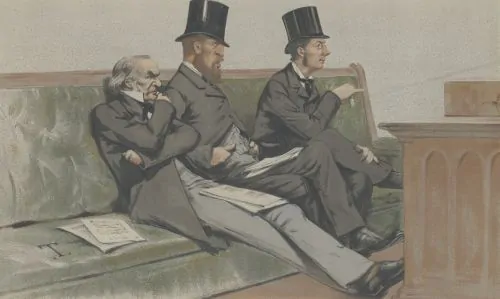
The Liberals who opposed Gladstone agreed that the bill should not pass in its proposed form, but agreement on that point concealed substantial differences. Some feared what a nationalist administration might do in Ireland; others feared what the new arrangement would do to Parliament at Westminster. A few accepted an Irish legislature in principle and still intended to vote against this one. Their objections mattered politically because they allowed men with otherwise incompatible views to act together. As Chancellor of the Exchequer William Harcourt pointed out during the April debates, rejecting one plan did not supply a shared replacement.
For the Marquess of Hartington, Westminster’s responsibilities to Irish people who opposed Home Rule could not be discharged by putting protections into a statute and transferring everyday government to Dublin. Earlier Liberal reforms had weakened Protestant and landlord privilege; he regarded those reforms as just, yet argued that Parliament must remain able to protect people left in a minority by the new electoral order. Hartington did not rule out greater local government. He contemplated elected authorities and, eventually, some coordination among them across the United Kingdom, provided such institutions developed through reforms available to England, Scotland, and Wales as well as Ireland. An Irish national legislature with broad authority was a different proposition to him. He also challenged the government’s claim to proceed on the strength of the 1885 election. Although the Commons had the legal power to pass the bill, he argued that voters had received no adequate warning that a constitutional change of this scale would be its first major business. His position joined a substantive concern about minority protection to an electoral claim about informed consent.
Joseph Chamberlain’s objections began from a more expansive view of Irish self-government. He thought it dangerous to remove Irish MPs from Westminster while the central Parliament retained control over matters that affected Irish taxpayers and citizens. In his April speech, he proposed looking toward a federal arrangement that would preserve Ireland’s participation in common affairs, though he supplied no finished constitution. He also made clear that the national councils he had discussed months earlier were no longer his proposed solution. Irish nationalists had rejected them, and Gladstone’s larger offer had changed what might plausibly be accepted. Chamberlain instead urged a temporary suspension of evictions, with secured advances to landlords where needed, while a commission drawn from all parties sought a settlement. His resistance to extensive British financial liability for land purchase followed the same concern about reciprocal obligations. He was willing to use public credit to help tenants become owners, but doubted the case for exposing taxpayers to substantial risk if Ireland was to have little continuing voice in the Parliament responsible for that risk. These proposals gave his opposition a reforming character; they left open the difficult question of why an Irish majority should accept further delay.
George Trevelyan judged the proposal through his experience as Chief Secretary for Ireland from 1882 to 1884. He asked who would appoint magistrates, direct police work, support witnesses, and enforce judgments after an Irish ministry took office. His concern extended beyond landlords to people who worked on disputed farms or assisted prosecutions and might face intimidation from their neighbors. On his reading, retaining the existing constabulary for a time offered limited reassurance if the new authorities would control much of the civil administration around it and could establish another police force. Trevelyan’s confidence in the previous administration’s handling of crime was itself contested.
Charles Stewart Parnell answered him by defending nationalist complaints that innocent men had been convicted, while denying that those complaints amounted to knowingly accusing Trevelyan or Earl Spencer of executing innocent people. Their exchange exposed a disagreement over the record of British justice as well as over future safeguards. Trevelyan’s fears for vulnerable individuals deserve examination without treating every prosecution he defended as unquestionably fair.
George Goschen placed more weight on the relationship between constitutional change and economic conflict. He doubted that Irish discontent arose chiefly because laws came from a legislature in London. Disputes over rent, contracts, and property would remain even if a legislature in Dublin enacted the rules. He also questioned whether the two islands’ closely connected trade and sources of taxable income could be divided as neatly as the bill required. Pointing to industrial earnings in parts of Ulster, he asked how an Irish government’s finances would work if that region resisted its authority or were excluded. His claims about Irish attitudes toward property sometimes treated his own economic preferences as universal principles, and his tax figures could not settle the political wishes of Ulster’s varied population. Yet he had previously urged serious investigation of Irish complaints about unequal taxation. For Goschen, both excluding Irish MPs from Westminster and retaining them with a separate Irish legislature raised problems that a simple change to their representation would not resolve.
John Bright made it harder to describe the dissent as a retreat by aristocratic Liberals from Irish reform. A longstanding critic of the established church and landlord power in Ireland, he favored elected county councils and had supported stronger rights for tenants. He objected to using British resources to compensate landlords whom he held partly responsible for Irish grievances. He also considered it unjust to require continuing Irish payments for common purposes while denying Irish representatives an ordinary vote on their use. His distrust of Parnell’s movement, especially its record during agrarian conflict, reinforced his resistance to a Dublin parliament. Ian Cawood’s study of Bright shows why neither his reforming past nor his opposition in 1886 should be set aside to make him fit a tidy factional story. Bright rarely explained himself publicly during the crisis, which later gave other Unionists room to use his reputation for their own campaigns; that later use is separate from the reasons he held.
The argument over parliamentary authority drew together critics who disagreed about how much power Ireland should receive. Sir Henry James, a former Liberal attorney general, acknowledged the history of injustice in Ireland but maintained that the Union rested on one Parliament’s ability to legislate for both countries. He asked the government to say plainly whether Westminster could override laws passed in Dublin and challenged the absence of an express statement of that power. Lewis McIver, the Liberal MP for Torquay, approached the question from almost the opposite direction. He accepted Irish legislative self-government and wanted a settlement generous enough to command Irish confidence, yet argued that removing Irish MPs while leaving crucial matters to Westminster would diminish the Parliament of the United Kingdom and burden Irish autonomy with signs of mistrust. He said he had accepted Home Rule when the bill was introduced but could not endorse its second reading as approval of the bill before him. Ministers and supporters disputed the critics’ legal reading, arguing that Westminster’s ultimate authority would survive. The dispute should be understood as a contested judgment about how that authority would work, rather than as proof that every dissenter rejected Irish self-government.
Harcourt’s challenge to the opponents remained powerful. Trevelyan’s local institutions did not satisfy Chamberlain, Chamberlain had withdrawn his earlier council plan, and Hartington was wary of changes that either man might accept. Gladstone’s supporters could reasonably ask how those positions would answer the elected Irish nationalist majority. The dissenters could reply that party loyalty did not oblige an MP to approve a settlement he believed would fail, even before he could offer one that satisfied his colleagues. Electoral judgment entered here without reducing their differences to a loss of faith in Gladstone personally. Each had to consider what he had promised constituents, what an affirmative vote would commit him to, and whether he could defend that commitment if the government sought a general election.
Irish Support and Irish Opposition
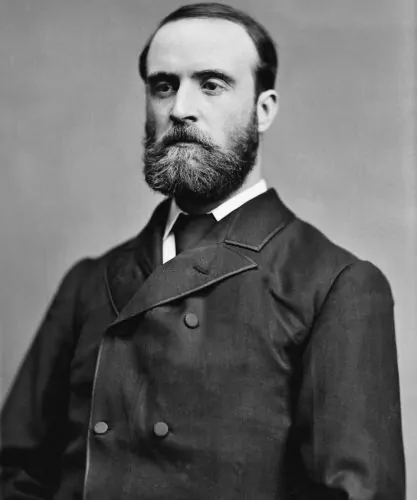
Gladstone’s bill brought an Irish disagreement into the center of a British party crisis. Charles Stewart Parnell could point to the eighty-five nationalist MPs elected in Ireland in 1885 as evidence of a substantial demand for self-government. Those MPs had a stronger claim to speak for Irish voters than any group of British Liberals, and their support gave Gladstone’s proposal political weight. Yet an election victory did not settle what powers an Irish legislature should hold, how it would govern, or whether people who opposed it could trust its authority. The question facing Parliament was more difficult than whether it should listen to Ireland; it had to decide how to respond when Irish representatives and other Irish communities gave conflicting answers.
Parnell treated the bill as an opportunity worth securing, even though he objected to parts of it. When Gladstone introduced the measure in April, Parnell challenged the proposed Irish contribution to imperial expenses, the retention of customs and excise at Westminster, and the prospect of paying for a police force still outside Irish control. He wanted changes that would leave the new administration with enough money and authority to govern effectively. By the final debate on June 7, he was prepared to accept a statutory Irish legislature subordinate to Westminster and described the bill as a final settlement of the constitutional question. That declaration did not erase his earlier reservations. It showed a judgment about political possibility. An Irish government established by an Act of Parliament offered more than another campaign for a constitution no British ministry had agreed to introduce. Parnell also accepted a chamber designed to slow legislation, though he disputed aspects of its composition and delaying power. He preferred disagreement within an Irish legislature to repeated intervention from Westminster, which he expected would make self-government feel insecure from its first day. Other nationalists supplied arguments that Parnell’s negotiation over terms could not fully express. Speaking in May, John Redmond rejected Joseph Chamberlain’s comparison between Irish self-government and a demand for separate government by Londoners. Ireland, Redmond argued, possessed a history and political identity that made the analogy inadequate. He also presented the repeated use of exceptional legislation in Ireland as evidence that government from Westminster had failed to win consent. This case joined a claim of national right to a practical claim about governing. Irish ministers answerable to an Irish legislature might command cooperation that administrations directed from London had struggled to obtain. Redmond promised equal civil and religious liberties to Protestants. His promise mattered, but it was a political assurance from a prospective majority; opponents still had reason to ask what institutions would protect them if assurances proved insufficient.
Support for Home Rule had an organization behind it, as well as parliamentary speakers. The Irish National League had spread branches across the country and helped select candidates before the 1885 election; Timothy Harrington played a central part in that work. A party pledge then bound nationalist MPs more closely to Parnell’s leadership. Catholic clergy took part in this expanding electoral network after the party embraced demands concerning Catholic education. For many voters, an Irish legislature promised a government more responsive to disputes over land, local conditions, and schools. Agreement on self-government did not mean agreement on every social policy. Michael Davitt’s advocacy of land nationalization differed sharply from Parnell’s approach to ownership. Nor did discipline eliminate disputes over leadership. Parnell faced fierce nationalist resistance when he imposed Captain William O’Shea as the candidate at a Galway by-election in February 1886; O’Shea subsequently declined to vote for the Home Rule bill. The nationalist party could act together on its central demand while containing differences that a Dublin legislature would eventually have to confront.
Irish opposition extended far beyond the northeast. In May 1885, southern businessmen, landowners, and academics had founded the Irish Loyal and Patriotic Union in Dublin to defend the legislative union. Its candidates contested numerous seats in the three southern provinces, although nationalist candidates won the ordinary parliamentary constituencies there in the general election. Dublin University still returned two Conservative MPs, giving unionists outside Ulster a parliamentary presence despite their weakness in the wider electorate. Sir Edward Guinness’s association with the Loyal and Patriotic Union in 1886 illustrates the concern among some prominent Dublin business interests about the proposed change of government. Commercial opinion was not uniform. A speaker at the Limerick Chamber of Commerce, for example, argued that Home Rule could help revive trade. Southern unionists had lost the electoral argument in their districts, but their defeat did not make their concerns about investment, administration, and minority status imaginary.
Ulster made the problem of representation particularly sharp. Nationalists won seventeen of its thirty-three seats in 1885, a result Parnell used to dispute the claim that the entire province rejected Home Rule. Their seats lay alongside a concentrated unionist constituency in the northeast, where the prospect of government from Dublin met powerful resistance. A narrow majority of seats across Ulster could not establish the consent of that constituency, any more than opposition in Belfast could establish the wishes of every Ulster voter. Edward Saunderson, the Conservative MP for North Armagh, argued that the bill could not settle the Irish question while so many Irish Protestants rejected it. He distrusted nationalist assurances partly because he feared how a future administration might exercise powers that appeared limited in the bill’s text. Education gave that fear a concrete form. After hearing a deputation of Irish Presbyterian ministers, the Scottish MP Craig Sellar warned that control over appointments, grants, and school administration could alter Protestant education without an openly discriminatory statute. Unionist organizing drew together Conservatives, many former Liberals, and Orange supporters, though their interests were not identical. Even the preceding election had involved tactical bargaining. The nationalist observer Sir George Fottrell recorded failed understandings with Presbyterian Liberals and subsequent nationalist votes against Liberal candidates. Ulster politics combined deeply held constitutional convictions with the calculations of local contests.
Some Irish Protestants made the opposite judgment. A minority of Ulster Liberals resisted their party’s resolutions against Home Rule in March 1886, and Protestant supporters established an association in Belfast that May to campaign for it. They sought to show that attachment to Protestant churches did not require attachment to the existing system of Irish government. During the Commons debate, a nationalist MP read a letter from the Presbyterian minister Matthew Kerr, who asked why Ulster Presbyterians should have no voice in favor of Ireland managing its own affairs. Parnell, himself a Protestant, argued that Protestants participating in an Irish legislature could help resist excessive clerical influence over education. These interventions answered a real weakness in any claim that Irish nationalism belonged solely to Catholics. Their numbers remained small, and their confidence could not stand in for the consent of the much larger Protestant electorate that opposed the bill.
Irish support gave Gladstone a compelling reason to act, and Irish opposition made the consequences of action harder to judge. Parnell’s acceptance showed that a negotiated measure could satisfy the principal nationalist leadership; it did not prove that every Irish interest would accept its government in practice. Unionists identified risks that deserved an answer, especially where control of administration might matter more than formal guarantees. Treating unionist resistance as a veto over the elected nationalist majority would leave that majority’s demand unanswered. Liberal MPs had to decide how much confidence to place in Parnell’s settlement and how much weight to give those who would live under it unwillingly. That unresolved choice helps explain why loyalty to Gladstone could no longer determine their votes.
The Commons Makes the Break Public
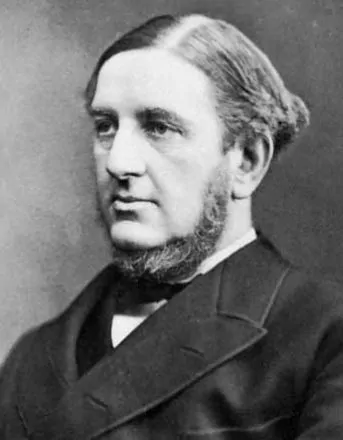
When debate on the bill’s second reading opened on 10 May, Gladstone asked MPs to judge Irish self-government as a remedy for a political demand that Westminster had failed to satisfy. He acknowledged the difficulty of Lord Hartington’s position and challenged opponents to say what they would do instead. Hartington rose immediately afterward to move that the bill be read a second time “this day six months,” the parliamentary form for stopping its progress. His amendment gave Liberal dissent a precise public test. Members could express sympathy with Irish reform, but they still had to decide whether Gladstone’s measure should advance. For twelve nights of debate, that decision remained before the House.
The apparent simplicity of a second-reading vote soon became part of the dispute. Ministers argued that MPs could approve the bill’s governing principle while reserving judgment on provisions open to amendment. On 25 May, the Liberal lawyer John Westlake accepted that second readings usually concern principles, but insisted that the principle being approved had to be found in the bill’s text. A promise to change its terms later could not, in his view, erase the proposed transfer of executive authority to an Irish government. George Trevelyan exposed a related difficulty when he described Liberal associations urging their MPs to support Home Rule while expressing distrust of the accompanying land-purchase scheme. He believed the measures were politically connected, whatever distinction their supporters hoped to draw. These speeches made dissent more than a refusal to follow Gladstone. They asked what an MP would be understood to have endorsed, both in Parliament and by the people who had sent him there.
Gladstone sought to preserve support by clarifying what a favorable vote would mean. At a meeting at the Foreign Office on 27 May, he addressed roughly 260 Liberal MPs and promised further consideration of provisions affecting Irish representation at Westminster. He subsequently described those invited as political friends who were with the government on this question, an increasingly consequential qualification within his own party. Conservative leader Sir Michael Hicks-Beach demanded that the explanation be given to the Commons, where every member would have to vote. On 28 May, Gladstone confirmed that, if the bill received a second reading, the government would seek no further stage during the ordinary session. It might resume consideration in an autumn sitting, or let the bill lapse and introduce an amended version in a new session; he inclined toward the latter course without making a final commitment. This offered uncertain Liberals time and scope for revision, but it also allowed opponents to argue that the House was being asked to approve a bill its authors did not intend to carry through in its present form.
Joseph Chamberlain put that objection sharply on 1 June. He said he could support a separate resolution favoring an Irish legislative authority, because such a statement would leave open very different ways of creating one. A vote for the second reading of this bill, he argued, would go further; it would commit members to the outlines of Gladstone’s chosen method. Chancellor of the Exchequer Sir William Harcourt answered from the government side by recalling Ireland’s earlier Parliament and rejecting the claim that an Irish legislature was inherently alien to British constitutional history. Their exchange showed why agreement on a broad desire for Irish self-government could no longer hold the parliamentary party together. One side regarded the vote as permission to develop a workable settlement; the other regarded it as assent to a constitutional course already set.
The argument outside Westminster made each MP’s choice more exposed. Naomi Lloyd-Jones records 3,087 meetings in England at which Home Rule was discussed between the bill’s introduction in April and its defeat in June. A narrow majority of those meetings opposed the proposals, while a substantial minority supported them; most were organized by parties, and their resolutions cannot be treated as a poll of voters. Local Liberal associations also argued over who could speak for the party and whether a meeting called “public” fairly represented the constituency. Such activity gave MPs reasons to consider the reception of their vote before any general election had been called. It documents organized disagreement over policy and representation, rather than a measurable collapse in Gladstone’s personal popularity.
On the final night, 7 June, George Goschen returned to the question that had survived every proposed concession. What, exactly, would the Commons record as having approved? Some members might vote for the bill because they expected it to be replaced, he observed, but the parliamentary vote still concerned the measure before them. Gladstone replied that a second reading affirmed its central purpose, an Irish legislative body for Irish affairs, while leaving members free to seek different provisions to carry that purpose out. He acknowledged a commitment to revise the treatment of Irish participation in Westminster’s business and denied that the government already possessed a complete amended scheme. His closing appeal asked MPs to act while Ireland’s demand had been expressed through elected representatives and while a settlement could be offered willingly. Goschen’s warning and Gladstone’s answer both took parliamentary responsibility seriously. They differed over whether future revision made a vote for the present bill sufficiently definite. The House then voted on whether the word “now” should remain in the motion to read the bill a second time. The Parliamentary Debates records 311 ayes and 341 noes, a majority of thirty against the government; the commonly reported totals of 313 and 343 include the two tellers on each side. Ninety-three Liberals voted against Gladstone alongside the Conservatives, among them Hartington, Chamberlain, Trevelyan, Goschen, and John Bright. The Commons added the words postponing the second reading for six months, ending the bill’s prospects in that Parliament. Gladstone moved to adjourn the House until Thursday; the division did not itself require his immediate resignation. It did establish, in a named and counted vote, that opposing Home Rule had become a position Liberal MPs were prepared to defend against their prime minister. Whether they could sustain that position before the electorate was the next question.
From Parliamentary Dissent to Electoral Opposition
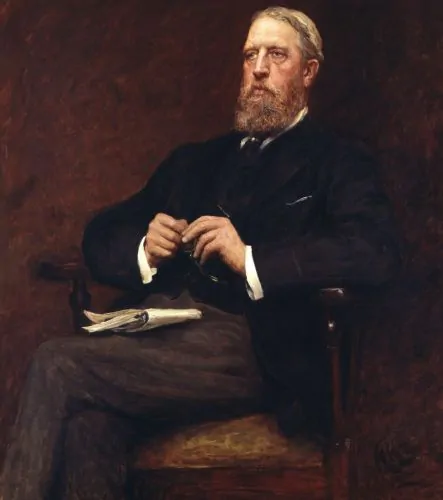
Gladstone answered the bill’s defeat by asking the electorate to decide its underlying principle. In an address to the electors of Midlothian dated June 12 and printed two days later, he presented the choice as Irish self-government or continued rule through coercion. He declined to make the provisions of the defeated bill the center of his appeal and dismissed the proposals of “Seceding Liberals” as uncertain alternatives. That was an effective way to seek a fresh mandate, but it also narrowed the terms in which his former colleagues could explain themselves. They now had to campaign for candidates whose election might bring down a Liberal government they had recently served.
The dissenters entered that campaign without an agreed replacement for Gladstone’s policy. Hartington’s supporters organized through the Liberal Unionist Association, while Chamberlain founded the National Radical Union on June 17 to give his Radical allies a distinct electoral voice; he did not join the broader association until August. John Bright refused Chamberlain’s proposal for a joint election address on June 9 because he opposed any institution that could be called a parliament in Dublin, a firmer position than Chamberlain’s willingness to discuss other forms of Irish self-government. Such differences mattered once opposition had to be expressed in election addresses, public meetings, and choices of candidate. The name Liberal Unionist allowed these politicians to claim that they were defending Liberal principles, even as they sought votes against Gladstone’s Liberals. It described a shared objection more clearly than it described a shared program.
An electoral understanding with the Conservatives made that objection consequential. Its beginnings preceded the Commons division. On May 16, Salisbury and Michael Hicks Beach instructed Conservative organizers to support anti–Home Rule Liberals in seats where a Conservative would have little prospect of defeating a Liberal candidate. After the bill fell, Salisbury wrote to Goschen on June 20 about election arrangements and appealed to Hartington the following day for help where Conservatives faced Gladstonians. Hartington eventually advised Liberal Unionist voters to support a Conservative when no candidate of their own was standing. The arrangement could spare a dissenter a Conservative opponent, but accepting reciprocal support carried a political cost. In May, the anti–Home Rule Spectator had already criticized Salisbury’s language about governing Ireland for twenty years, warning that it made cooperation difficult for Liberals who rejected Home Rule without embracing his approach to Ireland. Constituencies required negotiation as well as conviction. Conservatives stood aside for some Liberal Unionists, and in several two-member seats the allies ran candidates together.
Rossendale shows how much that negotiation could change a contest without changing its sitting member. Hartington had won the Lancashire seat as a Liberal in 1885 with 6,060 votes against 4,228 for a Conservative. In 1886 his local Liberal organization rejected his position, and Thomas Newbigging stood against him as Gladstone’s Liberal candidate; no Conservative contested the seat. Hartington retained it as a Liberal Unionist by 5,399 votes to 3,949. Conservative assistance helped a former Liberal leader defeat the candidate backed by his own constituency party. The figures cannot identify how individual voters transferred their allegiance, especially when turnout also fell. They do show that a parliamentary disagreement had become a contest over who would represent Liberal opinion in Rossendale.
Elsewhere, an established name offered less protection. Hawick Burghs had returned George Trevelyan unopposed in 1885, but in July 1886 the Gladstonian Alexander Laing Brown defeated him by 2,523 votes to 2,493. Chamberlain, by contrast, was returned unopposed as a Liberal Unionist in Birmingham West. Trevelyan’s thirty-vote loss demonstrates the personal electoral risk of dissent; Chamberlain’s uncontested return supplies no vote total from which to measure public approval. The comparison cautions against treating the fortunes of prominent men as a simple measure of Gladstone’s popularity.
Campaigners on both sides tried to make voters see more than a dispute between former colleagues. In a one-penny pamphlet, Charles Bradlaugh urged electors to regard Hartington and Chamberlain as practical supporters of Salisbury, since their candidates could help keep Gladstone out of office. He also reported Chamberlain’s complaint that the government had set aside promises concerning allotments and smallholdings in order to pursue an unexpected Irish measure. The argument over which commitments deserved priority gave electoral calculation a place alongside disagreement about Irish government. Luke Blaxill’s study of campaign language finds that Ireland dominated the election, yet the results varied sharply by locality. In East Anglia, Liberals lost nine of the twelve seats they had won in 1885, five to Conservatives and four to Liberal Unionists. By Blaxill’s calculation, the Liberal share of the national vote fell by only 2.4 percentage points, a much smaller change than the loss of seats might suggest. Those returns establish the effectiveness of the opposition’s electoral arrangements; they cannot tell us how much weight every voter gave to Home Rule, local loyalties, or other Liberal policies.
The new Commons made Gladstone’s defeat decisive. In UK Parliament’s classification of the returns, 316 Conservatives and 78 anti–Home Rule Liberals faced 191 Gladstonian Liberals and 85 Irish Home Rulers. With enough results known to settle the fate of his ministry, Gladstone and his cabinet resigned on July 20, before polling had finished everywhere. Salisbury formed a Conservative government that depended on Liberal Unionist support, while Hartington declined to enter the cabinet. On July 24, the dissenters also resolved to maintain separate headquarters, preserving an organization through which they could act as Liberals outside Gladstone’s leadership. Their objection to an Irish legislature had brought them to the division lobby; candidate agreements, constituency contests, and the resulting balance of seats made it possible to sustain that objection after Gladstone left office.
The Election and Its Uneven Verdicts
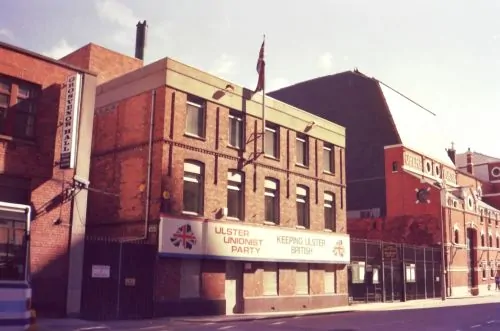
The July returns described several electoral landscapes within one Parliament. A contemporary tally in The Spectator separated England, Wales, Scotland, and Ireland, where candidates and local parties faced different contests. Gains in Great Britain could decide who governed the United Kingdom even when Irish nationalists won an overwhelming majority of Irish seats. That distinction lay at the heart of Gladstone’s appeal to the electorate. Voters throughout the kingdom could determine the fate of a ministry proposing a legislature for one part of it. The result settled which side could command the Commons, but it did not produce a uniform judgment in every part of the kingdom.
England supplied the weight that made a Unionist victory possible. Of its 465 seats, a contemporary count assigned 283 to Conservatives and 56 to Liberal Unionists, against 125 Gladstonian Liberals. The remaining member was T. P. O’Connor, returned for the Liverpool Scotland division as an Irish Nationalist. His election is a reminder that support for Parnell was present among voters in England, even where the overall result favored Salisbury and the Liberal dissenters. The English majority also joined politicians with different histories. A Conservative elected against Liberalism and a former Liberal elected against Home Rule could vote together without agreeing on every other question. What the returns established was their combined strength in Parliament. They did not establish that every English Unionist voter wanted the same policy for Ireland.
Welsh constituencies gave dissenting MPs a markedly different reception. Seven Welsh Liberal members had voted against the bill, yet their votes in the Commons did not entitle them to carry their constituency organizations into the election. Naomi Lloyd-Jones’s study shows Liberal associations challenging members whom they believed had ceased to represent local Liberal opinion, then using their organization to support rival candidates. In Cardiganshire, the sitting member David Davies stood as a Liberal Unionist and lost to the Gladstonian William Bowen Rowlands, despite Davies’s considerable standing in the county. The closeness of their contest shows how finely balanced the choice could be, while the association’s ability to put forward a successful challenger shows what parliamentary dissent demanded at home. Wales did not yield an entirely simple division of opinion. Henry Hussey Vivian was returned for Swansea District as a Liberal Unionist although his election address contemplated a large measure of Irish self-government subject to imperial authority and safeguards. A candidate’s electoral label could indicate opposition to Gladstone’s bill without defining the full extent of the Irish reforms he might accept.
Scotland returned 43 Liberals among its 72 MPs, leaving Gladstone’s followers with a majority there. The opposition was nonetheless substantial. 17 Liberal Unionists won seats alongside 12 Conservatives. Peter Dunn has traced the efforts of Ulster Unionists to enlist Scottish Presbyterian sympathy, an appeal that gave resistance to Irish Home Rule a connection beyond party allegiance. Other Scottish Liberals continued to support Gladstone, while advocates of a legislature in Edinburgh raised their own questions about government from Westminster. Scotland supplied a sizable dissenting contingent without delivering the rejection of Gladstone seen in England.
Ireland’s results exposed the deepest difference between the verdict of its constituencies and that of the new Commons. Nationalists won 84 of Ireland’s 103 seats and held a further seat through O’Connor in Liverpool; within Ireland, Unionist representation was concentrated chiefly in Ulster, with two Conservative members also returned by Dublin University. The regional division was visible in contested seats. Nationalists gained Belfast West, while Liberal Unionists defeated Nationalist members in South Tyrone and South Londonderry. Yet many Irish electors had no occasion to cast a ballot in July. In the three southern provinces, 62 Nationalist candidates were returned unopposed. Brian Walker notes that only seven divisions outside Ulster went to a poll. Recorded votes from the contested constituencies consequently cannot serve as a straightforward count of Irish opinion across the island. The seats conveyed the strength of the nationalist demand for self-government, while the Ulster contests showed that substantial opposition persisted within Ireland.
Even a United Kingdom vote total requires care. Writing in 1911, electoral reform advocate John H. Humphreys estimated votes in uncontested constituencies and calculated a small numerical advantage for candidates he grouped as Home Rulers, despite their large deficit in Commons seats. His estimated totals, 2,103,954 for Home Rulers and 2,049,137 for Unionists, were a reconstruction, not a count of ballots actually cast, and his groupings do not match every conventional party tally. They demonstrate how the distribution of votes among constituencies could affect representation; they cannot prove that a majority approved the provisions of Gladstone’s defeated bill. The certain outcome was parliamentary. Enough members had been elected to prevent him from governing on his Home Rule policy. The uneven returns left both the Irish claim for self-government and the dissenters’ claim to speak for Liberal voters politically alive after the ministry fell.
Why the Split Outlasted 1886
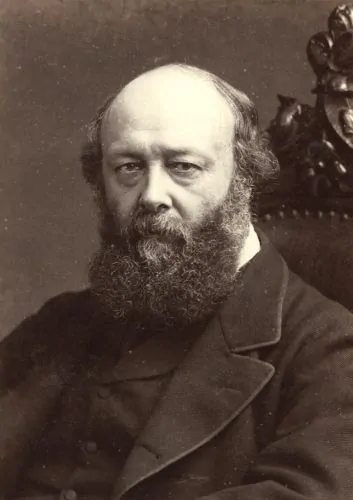
Defeating Gladstone’s bill left the Liberal Unionists with a continuing political task: sustaining Salisbury’s government while persuading voters that opposition to Home Rule remained a Liberal position. They retained their own leaders, raised funds, and negotiated candidacies separately from the Conservatives, though their local organizations were much stronger in some places than others. This independence mattered to members who would support a Conservative ministry on Ireland but still disagreed with it on social policy or religion. It also gave Salisbury a dependable parliamentary ally without requiring the former Liberals to join his party. Each subsequent election made those arrangements more consequential, because candidates and their supporters had to decide again which Liberal claim they recognized.
Reunion was nevertheless a real possibility in early 1887. At the Round Table Conference, Chamberlain and Trevelyan met Harcourt, John Morley, and Lord Herschell to explore an Irish settlement acceptable to both Liberal camps; Gladstone and Hartington did not themselves take part. Chamberlain sought continued Irish representation at Westminster, effective imperial authority over law and order, protection for minorities, and distinct treatment of Ulster. Such provisions addressed genuine objections to the 1886 bill, but agreement among the negotiators would still have required Gladstone to defend their settlement to Home Rule supporters and Hartington to defend it to Liberals who resisted an Irish legislature. The discussions ended without restoring a common party policy. Trevelyan’s return to the Gladstonian Liberals later that year shows that an individual could reconsider his opposition as proposals changed. His departure from the dissenters also shows why the conference could not settle the matter for them all. They had never agreed on precisely how much Irish self-government they could accept.
The Criminal Law Amendment (Ireland) Bill of 1887 made the cost of continued cooperation clearer. Gladstone argued in the Commons that former colleagues had promised a course of Irish reform that avoided both his proposed legislature and renewed coercion; Salisbury’s bill tested whether they could deliver it. Sixty-four Liberal Unionists supported the measure, while a small group of radicals broke away from the Unionist position. Goschen had already entered Salisbury’s cabinet as chancellor of the exchequer, whereas Chamberlain and Hartington remained outside it. These different choices exposed disagreements within the dissenting group, yet they did not end its parliamentary support for the government. Measures on Irish land and, later, elected local government in England and Wales gave some Liberal Unionists grounds to argue that cooperation could produce reform as well as preserve the Union.
The general election of 1892 revealed how vulnerable that position had become. Only forty-seven Liberal Unionist MPs were returned, compared with seventy-eight in 1886, and the survivors were increasingly concentrated around Birmingham and parts of central Scotland. In other districts, weak associations and difficult agreements over which Unionist candidate should stand had left former Liberal MPs dependent on Conservative electoral help. Chamberlain complained that his party was being assigned hopeless contests and gradually displaced as a separate force; Henry James likewise identified poor organization as a cause of defeat. Their criticism was more than wounded pride. A shrinking parliamentary group had less power to demand the domestic reforms with which Chamberlain hoped to retain Radical supporters, while each lost constituency reduced the practical scope for an independent Liberal Unionist candidacy at the next election. The alliance survived this setback, but its balance shifted toward Salisbury’s better organized party.
Gladstone’s return to office brought the original disagreement back before Parliament. His second Home Rule bill, introduced in 1893, kept Irish MPs at Westminster and answered one prominent criticism of the 1886 proposal. Chamberlain still opposed it, arguing that the proposed legislature would fail to provide a lasting Irish settlement. The bill passed the Commons at third reading by 301 votes to 267, then fell in the Lords by 419 to 41. That result prevented Home Rule from becoming law without reconciling the politicians who disagreed about it. When Devonshire, as Hartington had become, and Chamberlain entered Salisbury’s coalition cabinet in 1895, years of conditional cooperation became shared responsibility for government; formal party amalgamation followed only in 1912. The interval matters. The split persisted through attempts at compromise, defections, policy disputes, and electoral losses because the central disagreement remained unresolved while cooperation created durable political commitments of its own.
Did Home Rule Cause the Split, or Expose One Already Forming?
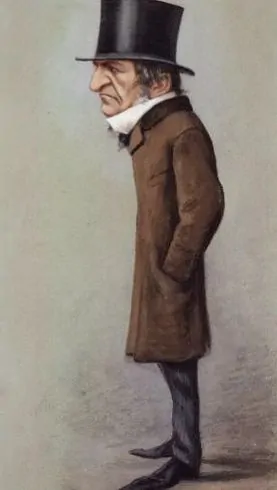
A history centered on Gladstone’s Irish bill can make the Liberal Party appear more settled before 1886 than it was. Hartington and other Whigs had resisted proposals that threatened property and established institutions, while Chamberlain pressed for land reform, church disestablishment, and free education. The enlarged rural electorate gave his program greater force in the 1885 campaign, as Luke Blaxill’s study of constituency speeches demonstrates. Gordon Goodman accordingly interpreted Liberal Unionism as a revolt of the Whigs, and D. A. Hamer drew attention to the competing reform priorities within Liberal politics. Their challenge is substantial. If Liberals already disagreed about the party’s direction, Home Rule may have supplied the occasion for a break whose causes reached further back.
That reading gains force from the political choices open to prominent Liberals after the 1885 election. Gladstone faced an Irish parliamentary party strong enough to affect who governed, while politicians uneasy with his domestic course could find support among Conservatives opposed to Home Rule. The proposed land purchase scheme added another possible source of conflict. Using public credit to compensate Irish landlords could trouble Radicals whose own program demanded changes to the distribution of land and wealth. Contemporary observers recognized the wider stakes. Writing in August 1886, the socialist William Morris treated the new Unionist alignment as an opportunity for Whig and Conservative interests to regain influence; Gladstone, in a Liverpool speech, invited listeners to judge the contest partly through the claims of the “masses” and the “classes.” Neither partisan account establishes the private motive of every dissenting MP. They show why an explanation confined to constitutional arguments would miss the social and electoral pressures surrounding those arguments.
The difficulty for a theory of an inevitable class division is that the people who took each side do not sort neatly by class or by earlier faction. W. C. Lubenow’s study found no straightforward correlation between Liberal MPs’ social background and their Home Rule position. Chamberlain, whose 1885 program had alarmed moderate Liberals, joined Hartington in opposition; the aristocratic Earl Spencer supported Gladstone. Nor were constitutional objections necessarily a disguise for other interests. A. V. Dicey’s sustained criticism of an Irish legislature addressed how authority would be divided between Dublin and Westminster, even though his expressly English viewpoint gave little weight to Irish claims of nationality. These disagreements could be sincerely held by people who also understood their electoral consequences.
The sequence of events presents a further obstacle to treating the rupture as settled in advance. Liberals with sharply different views of reform had governed together before 1886, and the opponents of Gladstone’s bill did not all agree on an alternative Irish policy. Their subsequent attempts at reunion, and Trevelyan’s return to Gladstone’s side, show that disagreement over the first bill did not compel every dissenter to remain outside the party. Within Liberal Unionism, former Whigs and Radicals continued to differ over social measures and Salisbury’s Irish policy; their shared resistance to a Dublin legislature gave them a reason to cooperate despite those differences. The later coalition with the Conservatives can make that cooperation look inevitable when viewed backward from 1895. It was built through intervening decisions about legislation, parliamentary support, and elections. Older Liberal rivalries help explain why compromise proved difficult, but they cannot by themselves explain the particular alliance that emerged.
This changes the weight assigned to 1886 without reducing Home Rule to a pretext. Earlier disputes shaped what leading Liberals feared, how they judged Gladstone’s proposal, and which allies they could seek after rejecting it. Yet those disputes had not produced a comparable separation before members had to decide whether an Irish legislature was compatible with their understanding of Liberal government. The evidence supports no general claim that Gladstone lost their personal regard, or that every opponent calculated chiefly for advantage. The stronger interpretation is that Home Rule turned existing differences into a public decision on which party allegiance depended; later electoral and parliamentary commitments made that decision harder to reverse.
Conclusion: When Dissent Became a Party
The Liberal rupture of 1886 began with a question that cabinet discipline could not settle: What did a Liberal owe a prime minister whose Irish policy he believed would damage the Union? Chamberlain and Trevelyan answered first by resigning, while other Liberals kept their seats and eventually voted against Gladstone’s bill. The subsequent election required a further choice. To oppose their former colleagues before voters, the dissenters had to defend their claim to the Liberal name as well as their rejection of Home Rule. Gladstone’s standing as leader survived among his supporters; loyalty had divided because Liberals disagreed about what their principles required.
Ireland made that disagreement consequential in ways no appeal to party unity could dissolve. Parnell and the Irish parliamentary majority sought a legislature able to govern Irish affairs, and Gladstone concluded that recognizing their demand offered a better basis for governing the Union than continued resistance. His proposal nevertheless asked MPs to accept a particular distribution of legislative authority, financial responsibility, and representation at Westminster. Chamberlain objected to its constitutional and financial terms, including the associated land purchase scheme; Hartington regarded a Dublin legislature as a threat to the common political structure he had served. Irish opponents of Home Rule also feared the authority a new majority might exercise over them. These positions were neither identical nor reducible to a quarrel over Gladstone’s character. The bill forced politicians with different views of Irish consent and parliamentary responsibility to decide which risks they were prepared to accept. That is why alterations to its details could invite discussion without necessarily restoring agreement.
An election changed the practical meaning of dissent. Candidates, local associations, and voters now had to act upon a parliamentary division, and Liberal Unionists discovered that opposing one bill entailed repeated decisions about whom to support in government. Cooperation with Salisbury gave their objection political effect, though it did not immediately erase their separate identity or every prospect of reunion. The returns established that Gladstone lacked the Commons support to enact his policy. They could not establish that Ireland’s demand for self-government had disappeared, or that every voter who opposed his bill endorsed the same alternative.
The years after 1886 reveal how contingent the eventual party realignment was. Another Home Rule bill, renewed attempts at accommodation, and disagreements within Unionism gave former colleagues opportunities to reconsider their positions. Yet each contest also supplied fresh reasons for Liberal Unionists to maintain their electoral alliances; by 1895 they entered a coalition cabinet with the Conservatives, and formal amalgamation followed in 1912. That sequence does not make the Conservative alliance the inevitable purpose of the original resignations. It shows how a conviction about the Union acquired candidates, supporters, and obligations that lasted beyond the immediate dispute. The answer to my opening question lies there. Allegiance to a party can give way when its leader asks members to endorse a policy they judge incompatible with its principles, but dissent becomes a rival party only when those members can carry that judgment through Parliament and into elections. In 1886, Liberals disagreed over Ireland; the demands of governing and campaigning made their disagreement enduring.
Bibliography
- Adams, Robin J. C., et.al. “Business Creation and Political Turmoil: Ireland versus Scotland before 1900.” Business History Review 96:4 (2022), 709–739.
- Ball, Stephen, ed. Dublin Castle and the First Home Rule Crisis: The Political Journal of Sir George Fottrell, 1884–1887. Cambridge: Cambridge University Press for the Royal Historical Society, 2008.
- Biagini, Eugenio F. British Democracy and Irish Nationalism, 1876–1906. Cambridge: Cambridge University Press, 2007.
- Blaxill, Luke. “Joseph Chamberlain and the Third Reform Act: A Reassessment of the ‘Unauthorized Programme’ of 1885.” Journal of British Studies 54:1 (2015), 88–117.
- —-. The War of Words: The Language of British Elections, 1880–1914. Woodbridge: Boydell Press, 2020.
- Bradlaugh, Charles. Mr. Gladstone or Lord Salisbury: Which? London: Freethought Publishing Company, 1886.
- Bright, John. The Diaries of John Bright. Edited by R. A. J. Walling. London: Cassell, 1930.
- Callanan, Frank. “Parnell, Charles Stewart.” Dictionary of Irish Biography. Royal Irish Academy, 2009.
- Cawood, Ian. “The 1892 General Election and the Eclipse of the Liberal Unionists.” Parliamentary History 29:3 (2010), 331–57.
- —-. “A ‘Distinction without a Difference’? The Liberal Unionist–Conservative Alliance.” Journal of Liberal History 72 (Autumn 2011), 14–25.
- —-. The Liberal Unionist Party: A History. London: I. B. Tauris, 2012.
- —-. “‘True to His Principles’? John Bright, Liberalism and Irish Home Rule, 1886–1889.” Journal of Liberal History 85 (Winter 2014–15), 10–19.
- Chamberlain, Joseph. Letter to Edward Heneage, July 6, 1892. Joseph Chamberlain Papers, JC5/41/30, University of Birmingham Library.
- —-. Preface to The Radical Programme. London: Chapman and Hall, 1885.
- Cooke, A. B., and John Vincent. The Governing Passion: Cabinet Government and Party Politics in Britain, 1885–86. Brighton: Harvester Press, 1974.
- Craig, F. W. S., ed. British Parliamentary Election Results, 1885–1918. London: Macmillan, 1974.
- Davis, Peter. “The Liberal Unionist Party and the Irish Policy of Lord Salisbury’s Government, 1886–1892.” The Historical Journal 18:1 (1975), 85–104.
- Dicey, A. V. England’s Case against Home Rule. London: John Murray, 1886.
- Dunn, Peter. “Forsaking Their ‘Own Flesh and Blood’? Ulster Unionism, Scotland and Home Rule, 1886–1914.” Irish Historical Studies 37:146 (2010), 203–220.
- Fottrell, George. “The Political Journal of Sir George Fottrell.” In Dublin Castle and the First Home Rule Crisis: The Political Journal of Sir George Fottrell, 1884–1887, edited by Stephen Ball, 81–198. Cambridge: Cambridge University Press for the Royal Historical Society, 2008.
- Gladstone, William Ewart. “Address to the Electors of Midlothian.” The Times (London), June 14, 1886.
- —-. Speeches on the Irish Question in 1886. Revised edition. Edinburgh: Andrew Elliot, 1886.
- Goodlad, Graham D. “Gladstone and His Rivals: Popular Liberal Perceptions of the Party Leadership in the Political Crisis of 1885–1886.” In Currents of Radicalism: Popular Radicalism, Organised Labour and Party Politics in Britain, 1850–1914, edited by Eugenio F. Biagini and Alastair J. Reid, 163–184. Cambridge: Cambridge University Press, 1991.
- —-. “The Liberal Party and Gladstone’s Land Purchase Bill of 1886.” The Historical Journal 32:3 (1989), 627–641.
- Goodman, Gordon L. “Liberal Unionism: The Revolt of the Whigs.” Victorian Studies 3:2 (1959), 173–189.
- Great Britain. Land Law (Ireland) Act 1881. 44 & 45 Vict. c. 49.
- —-. Representation of the People Act 1884. 48 Vict. c. 3.
- —-. Redistribution of Seats Act 1885. 48 & 49 Vict. c. 23.
- Great Britain. Parliament. House of Commons. “Allotments and Small Holdings.” Parliamentary Debates, 3rd ser., vol. 302 (January 26, 1886): 443–530.
- —-. House of Commons. “Criminal Law Amendment (Ireland) Bill: Motion for Leave, First Reading.” Parliamentary Debates (Hansard), March 29, 1887.
- —-. House of Commons. Government of Ireland Bill. Bill 181. 1886. Reprinted in A. V. Dicey, England’s Case against Home Rule. London: John Murray, 1886, appendix.
- —-. House of Commons. “Government of Ireland Bill: Meeting at the Foreign Office.” Parliamentary Debates, 3rd ser., vol. 306 (May 27, 1886): cols. 211–213.
- —-. House of Commons. “Government of Ireland Bill: Motion for Leave.” Parliamentary Debates, 3rd ser., vol. 304 (April 8, 1886): 1036–1141.
- —-. House of Commons. “Government of Ireland Bill: Motion for Leave.” Parliamentary Debates, 3rd ser., 304 (April 8, 1886): 1036–1141.
- —-. House of Commons. “Government of Ireland Bill: Motion for Leave (Adjourned —-. Debate).” Parliamentary Debates, 3rd ser., vol. 304 (April 9, 1886): 1181–1279.
- —-. House of Commons. “Government of Ireland Bill: Policy of the Government.” Parliamentary Debates, 3rd ser., vol. 306 (May 28, 1886): cols. 317–354.
- —-. House of Commons. “Government of Ireland Bill: Second Reading.” Parliamentary Debates (Hansard), 3rd ser., vol. 305, May 10, 13, and 21, 1886.
- —-. House of Commons. “Government of Ireland Bill: Second Reading (First Night).” Parliamentary Debates, 3rd ser., vol. 305 (May 10, 1886): cols. 574–678.
- —-. House of Commons. “Government of Ireland Bill: Second Reading (Sixth Night).” Parliamentary Debates, 3rd ser., vol. 306 (May 25, 1886): cols. 40–126.
- —-. House of Commons. “Government of Ireland Bill: Second Reading (Ninth Night).” Parliamentary Debates, 3rd ser., vol. 306 (June 1, 1886): cols. 675–780.
- —-. House of Commons. “Government of Ireland Bill: Second Reading (Twelfth Night).” Parliamentary Debates, 3rd ser., vol. 306 (June 7, 1886): cols. 1145–1245.
- —-. House of Commons. “Government of Ireland Bill: Second Reading (Adjourned Debate).” Parliamentary Debates, 3rd ser., vol. 306 (June 7, 1886): 1145–1245.
- —-. House of Commons. “Government of Ireland Bill: Third Reading.” Parliamentary Debates (Hansard), 4th ser., vol. 16, September 1, 1893, cols. 1736–1839.
- —-. House of Commons “Sale and Purchase of Land (Ireland) Bill: Motion for Leave.” Parliamentary Debates, 3rd ser., vol. 304 (April 16, 1886): 1778–1866.
- —-. House of Lords. “The Cabinet.” Parliamentary Debates, 3rd ser., vol. 302 (February 16, 1886): 541.
- —-. House of Lords. “Government of Ireland Bill: Second Reading, Fourth Night.” Parliamentary Debates (Hansard), 4th ser., vol. 17, September 8, 1893, cols. 563–649.
- Hamer, D. A. “The Irish Question and Liberal Politics, 1886–1894.” The Historical Journal 12:3 (1969), 511–532.
- Heyck, Thomas William. “Home Rule, Radicalism, and the Liberal Party, 1886–1895.” Journal of British Studies 13:2 (May 1974), 66–91.
- Howard, C. H. D. “Joseph Chamberlain, Parnell and the Irish ‘Central Board’ Scheme, 1884–5.” Irish Historical Studies 8:32 (1953), 324–361.
- Humphreys, John H. Proportional Representation: A Study in Methods of Election. London: Methuen, 1911.
- Hurst, Michael C. “Joseph Chamberlain, the Conservatives and the Succession to John Bright, 1886–89.” The Historical Journal 7:1 (1964), 64–93.
- —-. Joseph Chamberlain and Liberal Reunion: The Round Table Conference of 1887. London: Routledge and Kegan Paul, 1967.
- Jackson, Alvin. Home Rule: An Irish History, 1800–2000. London: Weidenfeld & Nicolson, 2003.
- Jenkins, Terence A. Gladstone, Whiggery, and the Liberal Party, 1874–1886. Oxford: Clarendon Press, 1988.
- Larkin, Emmet. The Roman Catholic Church and the Creation of the Modern Irish State, 1878–1886. Philadelphia: American Philosophical Society, 1975.
- Lloyd-Jones, Naomi. “Liberal Unionism and Political Representation in Wales, c. 1886–1893.” Historical Research 88:241 (2015), 482–507.
- —-. “Liberalism, Scottish Nationalism and the Home Rule Crisis, c. 1886–93.” English Historical Review 129:539 (2014), 862–887.
- —-. “‘Shut Up! Sit Down!’: The Politics of Disruption and the 1886 Home Rule Crisis in England.” Parliamentary History 43:2 (2024), 183–206.
- “Lord Salisbury’s Speech.” The Spectator, May 22, 1886.
- Loughlin, James. Gladstone, Home Rule and the Ulster Question, 1882–93. Dublin: Gill and Macmillan, 1986.
- —-. “The Irish Protestant Home Rule Association and Nationalist Politics, 1886–93.” Irish Historical Studies 24:95 (1985), 341–360.
- Lubenow, W. C. “Irish Home Rule and the Social Basis of the Great Separation in the Liberal Party in 1886.” The Historical Journal 28:1 (1985), 125–142.
- —-. Parliamentary Politics and the Home Rule Crisis: The British House of Commons in 1886. Oxford: Clarendon Press, 1988.
- McLachlan, Noel. “Davitt, Michael.” Dictionary of Irish Biography. Royal Irish Academy, 2009.
- Morris, William. “Mr. Chamberlain’s Leader.” Commonweal 2:31 (August 14, 1886), 153.
- Parry, Jonathan. The Rise and Fall of Liberal Government in Victorian Britain. New Haven, CT: Yale University Press, 1993.
- Savage, D. C. “The Origins of the Ulster Unionist Party, 1885–6.” Irish Historical Studies 12:47 (1961), 185–208.
- Stephens, Hugh W. “The Changing Context of British Politics in the 1880s: The Reform Acts and the Formation of the Liberal Unionist Party.” Social Science History 1:4 (1977), 486–501.
- UK Parliament. “Two Home Rule Bills.” Living Heritage. Accessed September 26, 2026.
- Walker, Brian. “The 1885 and 1886 General Elections in Ireland.” History Ireland 13:6 (2005), 36–40.
Originally published by Brewminate, 10.01.2026, under the terms of a Creative Commons Attribution-NonCommercial-NoDerivatives 4.0 International license.
About the Author