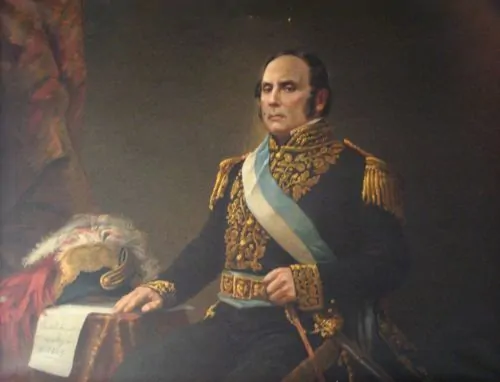
In 1851, Urquiza took Rosas’s resignation offers at face value and reclaimed Entre Ríos’s delegated powers. The decision exposed a deep dispute over Argentina’s confederal pact.

By Matthew A. McIntosh
Public Historian
Brewminate
Introduction: The Resignation Someone Finally Accepted
On May 1, 1851, Justo José de Urquiza, governor of Entre Ríos, issued a decree that took Juan Manuel de Rosas at his word. Rosas, governor of Buenos Aires and the Confederation’s representative in foreign affairs, had repeatedly expressed a wish to relinquish his burdens of office. Urquiza declared that continued appeals for him to remain were inconsiderate of his stated health and harmful to the country’s interests. Entre Ríos would resume the powers it had entrusted to him and conduct its own foreign relations until the provinces established a national government. A familiar offer to resign had received an unfamiliar answer.
The decree drew its force from the Confederation’s unsettled structure. The Federal Pact of 1831 recognized the rights of its member provinces and envisaged a congress to arrange their common affairs. The conduct of foreign relations, peace, and war came to rest with the governor of Buenos Aires, while the promised constitutional settlement remained incomplete. Urquiza claimed that a province which had delegated authority could reclaim it, especially when its holder had spoken of surrendering it himself. Yet the pact also bound provinces to one another. Whether Entre Ríos could withdraw its delegation and then make agreements without their consent was a question Urquiza’s decree asserted an answer to; it could not settle the question for them.
Urquiza had helped sustain the order he now challenged. His military service and political standing made his decision more consequential than another declaration from Rosas’s established opponents. Entre Ríos’s growing agricultural and commercial interests also sharpened disputes over river navigation and Buenos Aires’s command of overseas trade. Calls for a congress carried practical questions about revenue and access to markets alongside arguments about provincial rights. The resignation gave Urquiza a way to act on grievances that had developed during his years as Rosas’s ally.
How did a provincial governor present a break with the Confederation’s most powerful figure as fidelity to its founding arrangement? I examine the claim Urquiza made in May 1851 and the choices that tested it. His language of delegated authority offered a reason to withdraw obedience, but it did not bring the other provinces with him. Corrientes joined him, while most initially reaffirmed Rosas’s position. Agreements with Brazil and Uruguay subsequently gave the break military reach, culminating in Rosas’s defeat at Caseros in February 1852. Victory would change who could build a new political order; it would not prove that Urquiza’s reading of the old one had been the only defensible reading. The episode reveals how an insider could use a leader’s own declarations to claim permission to defect and how much still depended on whether others accepted that claim.
A Confederation Built on Delegated Authority
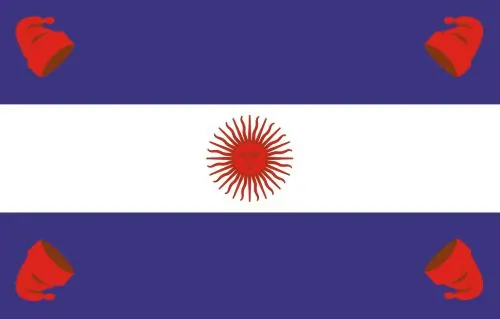
The political framework Urquiza invoked in 1851 had taken shape during an earlier civil war. After the failure of the 1826 constitution and the collapse of the central government, provinces negotiated their relations through treaties. On January 4, 1831, Buenos Aires, Santa Fe, and Entre Ríos concluded an offensive and defensive alliance against the Unitarian coalition led by José María Paz. Corrientes, absent from the signing, adhered later, as did the remaining provinces over time. The Argentine Confederation grew from these commitments before its members had agreed on a permanent national government.
The Federal Pact joined a claim of provincial independence to obligations that each signatory owed the others. Its first article recognized their liberty, independence, and rights; subsequent articles required common defense against foreign invasion and threats from other provinces. Article 4 barred a member from making a separate treaty with another government without the prior agreement of its partners. The pact also protected reciprocal passage through the allies’ ports, rivers, and territories and limited the duties they could impose on one another’s goods. These provisions concerned movement and trade among the provinces; they did not, by themselves, grant foreign vessels unrestricted access to the inland waterways. Each government retained authority within its territory while accepting limits on how it could act beyond it. The difficulty of governing through such commitments would become more pronounced as additional provinces joined the original three.
For matters requiring joint action, the pact created a representative commission seated in Santa Fe. Each founding province appointed a deputy whom it could replace, keeping the commission answerable to the governments that constituted it. The deputies could negotiate peace subject to provincial ratification, declare war when their governments agreed, and arrange military contributions. They were also to invite the other provinces into the federation and propose a general congress. That future assembly was expected to address questions the alliance could not settle on its own, including navigation, commerce, public revenues, and debt.
The commission did not become a lasting center of government. Rosas opposed its continuation and the proposed congress, and it dissolved in 1832. The provinces subsequently entrusted the conduct of foreign relations to the government of Buenos Aires through their own delegations; the 1831 pact had not simply named Rosas permanent representative of the whole country. He was out of the Buenos Aires governorship for a period after 1832, then returned in 1835 and exercised the delegated responsibility alongside his provincial office. Foreign governments consequently dealt with a single powerful governor on matters affecting the wider Confederation. Within it, the other provinces still had governors, legislatures, and political claims of their own. The concentration of external authority in Buenos Aires made common dealings possible, but it also left those provincial institutions to judge how their original commitments were being carried out.
Calling the provinces sovereign does not resolve every question about the authority they possessed. Their leaders could ratify agreements, raise forces, and defend local jurisdiction, yet they also spoke of belonging to a larger republic whose final organization remained unfinished. The word province retained that expectation of a broader union even when its government asserted independence. Sovereignty described a claim to govern and negotiate; it did not supply an agreed procedure for leaving the association.
This distinction mattered when a province later challenged Rosas’s position. The pact could be read as evidence that shared powers originated with the members, whose representatives were meant to shape a future federal order. Its requirement of consent for separate treaties offered an opposing argument. A member could not set aside its obligations simply by withdrawing authority from Buenos Aires. Nor had the end of the commission produced a replacement institution empowered to decide between those readings. By 1851, the Confederation depended on arrangements strong enough to conduct diplomacy and war but uncertain enough for its members to dispute who could alter them. Urquiza would make that uncertainty the basis of a political act.
Urquiza within Rosas’s Political Order
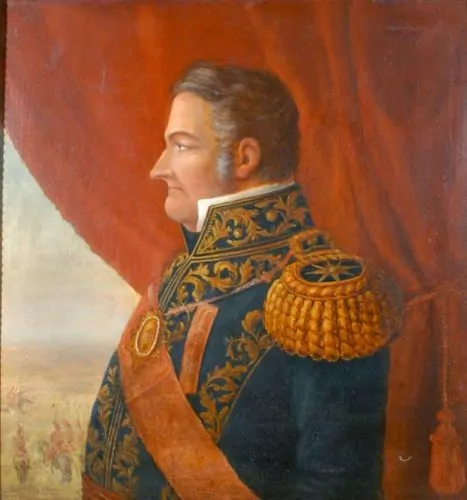
Entre Ríos’s legislature elected Justo José de Urquiza governor in December 1841, after military reverses had weakened his predecessor, Pascual Echagüe. The province faced threats that its government could scarcely contain within its own borders. Urquiza needed local commanders and legislators to sustain his authority, as well as allies elsewhere in the Confederation. Rosas, in turn, depended on provincial governors capable of raising troops and holding territory. Their cooperation rested on work each could do for the other, even when they disagreed about how that work should be carried out.
Military campaigns gave that relationship its substance. In Uruguay, Urquiza fought alongside the forces of Manuel Oribe against Fructuoso Rivera, whom he defeated at India Muerta in March 1845. He then campaigned in Corrientes, where opponents of Rosas had formed a government and drawn support from General José María Paz. Fighting near Laguna Limpia in 1846 led to the capture of Juan Madariaga, brother of the Corrientes governor, Joaquín Madariaga. These operations required Urquiza to command officers, maintain supplies, and deal with political divisions beyond Entre Ríos. Eugenio Garzón, an experienced Uruguayan officer serving under him, recorded the Corrientes campaigns in diaries prepared at Urquiza’s request. Their praise of the governor reveals how service to the federal cause could also build his standing within it.
Those armies drew on power organized at home. Recruiting soldiers and supplying campaigns tied Urquiza to provincial officials and local supporters whose cooperation he had to maintain. Roberto Schmit’s study of eastern Entre Ríos places the growth of political authority amid the region’s wartime disruption and recovery. Urquiza’s influence abroad depended in part on his capacity to govern, mobilize, and retain support within his province.
The proposed peace with Corrientes in 1846 exposed the limits of his freedom to negotiate. Representatives of Urquiza and Joaquín Madariaga signed public and secret agreements at Alcaraz on August 15. The public articles offered peace, renewed Corrientes’s observance of the 1831 Federal Pact, and recognized the governor of Buenos Aires as director of foreign relations. The secret articles exempted Corrientes from assisting in the current war in Uruguay and the disputes with Britain and France; they also allowed its existing commercial agreement with Paraguay to continue. Urquiza had found terms on which a hostile province might return to the Confederation, but Rosas rejected the qualifications attached to that return. Gustavo Enrique Poenitz interprets the negotiations as evidence of an emerging plan to oppose Rosas. That possibility deserves consideration, especially in light of Urquiza’s contacts with the Madariagas, although the signed public terms still affirmed Rosas’s diplomatic role. After attempts to secure a revised agreement failed, Urquiza sought instructions from Buenos Aires and resumed the campaign against Corrientes.
On November 27, 1847, Urquiza’s forces defeated Joaquín Madariaga at Vences. Garzón’s partisan diary records the efforts that preceded battle to draw Corrientes officers, including Nicanor Cáceres, away from Madariaga. Benjamín Virasoro, who had served with Urquiza’s forces, became governor of Corrientes the following month. The victory strengthened Rosas’s position and extended Urquiza’s relationships with federal leaders in the neighboring province. By 1851, Urquiza had acquired the troops, reputation, and regional connections that made a break possible through years spent defending the political order he would challenge.
The Cost of the Arrangement
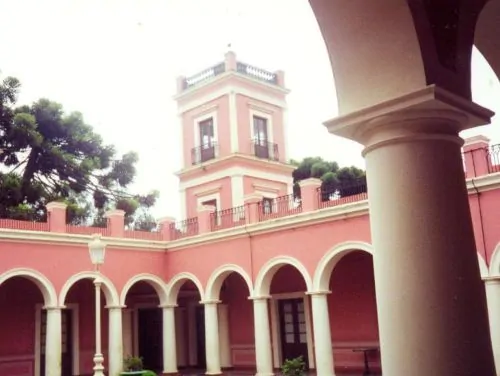
River ports gave Entre Ríos commercial choices that extended beyond its borders. From Concepción del Uruguay and Concordia, merchants shipped hides, wool, tallow, and salted meat downstream, while imported goods traveled back to provincial customers. They also carried yerba mate and other products between Corrientes, southern Brazil, and the estuary. The Uruguay offered routes toward both Buenos Aires and Montevideo; the Paraná served settlements on Entre Ríos’s western side. Those alternatives mattered whenever war or a change in trade rules made one destination harder to reach.
Maritime commerce at Buenos Aires generated customs receipts for its provincial treasury. Goods destined for consumers elsewhere could be taxed there without giving their provinces a guaranteed share of the proceeds. Rosas spent provincial resources on war and assistance to allies, but Buenos Aires retained control over collection and expenditure. His customs law of December 1835 imposed duties and prohibited some imports, offering protection to producers beyond Buenos Aires as well as within it. The law also exempted goods sent overland to the interior from an additional exit duty. These provisions make the economic dispute more precise. Other provinces could benefit from a policy whose terms they did not set, while the largest source of customs income remained under Buenos Aires’s control.
River navigation raised a related question. Domestic vessels carried goods between inland ports, while Rosas resisted granting foreign ships a general right to proceed up the Paraná and Uruguay; jurisdiction over the latter river was shared with Uruguay. Direct access to upriver markets appealed to foreign merchants and promised opportunities for producers in the littoral provinces. In November 1845, an Anglo-French fleet forced its way up the Paraná after fighting confederal defenders at Vuelta de Obligado. Rosas could defend regulation of the rivers as a matter of sovereignty against naval coercion. That position still left the provinces to dispute who should determine the rules governing their own commerce.
The intervention also changed what merchants could do in eastern Entre Ríos. With overseas trade through Buenos Aires disrupted, traffic through Montevideo and ports on the Uruguay River became more valuable. Rosas’s minister instructed Entre Ríos to restrict goods routed through Montevideo and barred shipments of certain provisions to the city besieged by his ally Manuel Oribe. Acting governor Antonio Crespo nonetheless admitted vessels and permitted commerce that Buenos Aires sought to curb. Urquiza initially told Crespo to enforce restrictions on trade with Brazil; by March 1846, he favored continuing the more permissive practice. Crespo argued that Entre Ríos needed customs income to pay for its war effort and offered to take responsibility if Rosas objected. Roberto Schmit’s reconstruction of provincial records shows that shipping and revenue increased. A governor helping to fight Rosas’s wars was drawing on transactions that Rosas regarded as harmful to their common campaign.
That exceptional opening changed as the European intervention wound down. Agreements with Britain in November 1849 and France in August 1850 recognized confederal regulation of navigation on the Paraná and shared jurisdiction over the Uruguay. Commerce through Buenos Aires revived, reducing Montevideo’s importance as a source of goods forwarded to Entre Ríos. Trade in the province continued through several routes, including its connections with southern Brazil. The difficulty for its government was that profitable routes remained vulnerable to decisions made elsewhere. The commercial records also reveal how much Urquiza himself had at stake. In 1850, agents associated with his ranches and salting works dominated shipments of salted hides, salted meat, and rendered fat from Concepción del Uruguay; business at Concordia was distributed among a wider range of merchants. His private income and the province’s customs revenue were distinct interests, though access to buyers could serve both. Rosas had grounds for concern, too. Shipments through Montevideo could sustain a city under siege, and goods entering through Entre Ríos could frustrate his customs rules. The dispute involved the conduct of war, the financing of provincial government, and the fortunes of influential traders at the same time.
These economic pressures help explain why cooperation became harder to maintain, without proving that any single grievance caused Urquiza’s decision. The trade evidence records substantial growth under Rosas alongside restrictions and recurring disputes over control. Urquiza’s May 1851 pronunciamiento withdrew powers entrusted to the governor of Buenos Aires; it did not establish a new tariff or immediately open the rivers to foreign shipping. A government formed with provincial participation might settle how navigation would be regulated and how customs revenue would be used. For Entre Ríos, obtaining a voice in those decisions had become a practical reason to seek a different political arrangement.
The Approach to May 1851
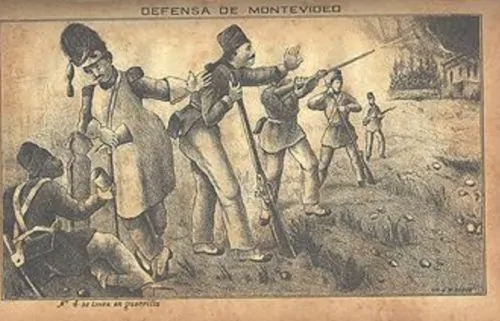
By late 1850, the international setting had changed unevenly. Agreements with Britain and France reduced the pressure of European intervention, yet Manuel Oribe’s siege of Montevideo continued, and the Argentine Confederation’s relations with the Brazilian Empire broke down in September. Brazilian leaders weighed intervention in Uruguay while Rosas prepared for a possible war and continued to rely on Urquiza’s forces in the Litoral. Such a war could draw Entre Ríos’s soldiers into a campaign whose aims Buenos Aires defined. The authority to direct peace and war had become an immediate provincial concern.
Corrientes offered Urquiza a possible partner through ordinary acts of government. On September 18, 1850, its legislature authorized Governor Benjamín Virasoro to confer with him about matters of common interest; on October 15, it approved the business conducted with Entre Ríos. The two governors had fought on the same Federal side, so consultation between them did not announce opposition to Rosas. Their command of neighboring provincial forces nevertheless made each man’s intentions consequential to the other. The surviving legislative entries establish that they met and that Corrientes approved their dealings, but they do not disclose everything discussed. Accounts of plans made at Concordia point to an emerging possibility, whose terms were still kept from public view.
On January 5, 1851, La Regeneración in Concepción del Uruguay described the coming year as one of national organization and called for an assembly of delegates from the provinces. The paper formed part of a press network supported by Urquiza’s government, allowing an argument for a congress to circulate before the governor issued one in his own name. Its article gave neither a clear procedure for convening the assembly nor the identity of the person who would do so. That uncertainty mattered in Buenos Aires, where calls to complete the federal system could be heard as criticism of Rosas’s continued postponement.
Rufino de Elizalde gave that concern a sharper expression in a letter of January 25 to Urquiza’s son Diógenes, who was in Buenos Aires. He urged the governor to prevent similar articles and regarded discussion of a constituent assembly during the crisis with Brazil as dangerously timed. Urquiza answered Elizalde himself on February 22, defending the hope that the provinces would organize the country through their delegates. He also asserted that Entre Ríos obeyed its own authorities, a pointed response to the suggestion that loyalty to the Federal cause required silence on its future. The exchange exposed a dispute over who was entitled to judge when the existing arrangement had served its purpose. A newspaper’s proposal had drawn the governor into stating a position that Rosas could read.
Rosas continued to cite his health and the burdens of office when asking to relinquish his responsibilities in Buenos Aires and those entrusted to him by the provinces. Appeals for him to remain had long allowed the question of succession to be deferred. Support for a congress could coexist with that response. In April, Catamarca’s governor, Manuel Navarro, proposed affirming Rosas’s leadership while requesting a congress whenever Rosas judged the time suitable. Constitutional organization, in that formulation, remained a goal whose timing the present leader would control.
Meanwhile, Urquiza’s contacts across the Río de la Plata were testing what support a change of course might bring. The merchant Antonio Cuyás y Sampere conveyed his views to Manuel Herrera y Obes, foreign minister of the besieged government in Montevideo, and to Brazil’s representative there, Rodrigo de Souza da Silva Pontes. In January, the Brazilian representative heard that Urquiza might seek to mediate over Uruguay if warned of an imperial intervention; this was an opening for discussion, not yet a commitment to fight Rosas. Brazil’s foreign minister, Paulino José Soares de Sousa, set a firmer condition in March. Urquiza should break publicly with Rosas and cooperate against Oribe and the Argentine troops supporting him. The imperial government sought security on its southern frontier and protection for the independence of Uruguay and Paraguay, while Montevideo’s government needed the siege ended. Those aims could sustain cooperation, but each party needed to know what the others would undertake. Before May, the talks had produced neither a signed alliance with Entre Ríos nor an agreed military campaign.
A circular bearing the date April 5 brought Urquiza’s argument directly to the other governors. It accused Rosas of using repeated offers to resign to prolong his authority, urged the provinces to withdraw the powers they had delegated, and promised Entrerrian military support for a declaration against him. Its date does not establish when each intended recipient saw it or how that governor would respond. Indeed, on April 30 the legislature of Corrientes rejected Rosas’s offer to give up the conduct of foreign relations, despite Virasoro’s contacts with Entre Ríos. As May approached, Urquiza had pressed his case in print, correspondence, diplomacy, and a circular, but he could not claim that the provinces had already made a common decision.
The Pronunciamiento: Reading the Decree Closely
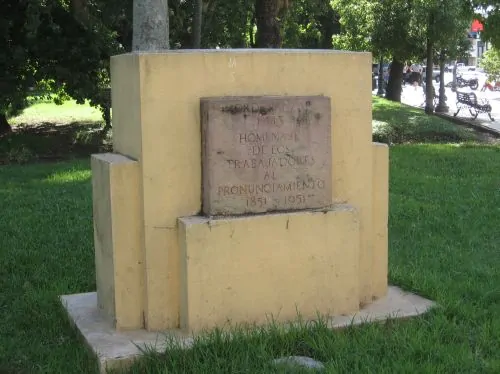
The decree bears the date May 1, 1851, at Urquiza’s headquarters in San José. Its date line also counts the years since liberty, Entre Ríos federalism, independence, and the Confederation, placing the act within several inherited political commitments. Urquiza identifies himself as governor and captain general of Entre Ríos, sets out four considerations, and then makes two declarations. That sequence asks readers to accept his reasons before confronting them with the change in authority he has declared.
The first consideration presents Rosas’s physical condition as a matter of public capacity. It asserts that he can no longer direct foreign relations or affairs of peace and war, though the decree supplies no independent proof that he has stopped doing so. The second distinguishes his requests to be relieved of the Buenos Aires governorship from his stated intention to relinquish powers entrusted to him by the provinces. These involved different offices and different bodies with authority to respond. In the third consideration, urging Rosas to remain becomes both an affront to his health and a danger to national interests that, according to Urquiza, Rosas himself admitted he could no longer serve adequately. The case depends on Rosas’s reported statements; it does not establish that his formal resignation had already taken effect.
The fourth consideration turns from one man’s fitness to the Confederation’s endurance. Urquiza calls the Confederation illustrious and heroic, then rejects the suggestion that it cannot sustain its federal principles or develop institutions without Rosas at its head. His argument gives provincial initiative a national purpose, though it specifies no successor to Rosas’s collective role. Continued confidence in the Confederation, as the decree presents it, permits a change in who speaks for a province.
Only after these considerations does Urquiza state the source of his own authority. He invokes the ordinary and extraordinary powers conferred on him by the Entre Ríos chamber of representatives and declares that he speaks for the province’s people. The document offers a claim of representative authority, without recording a new provincial vote on the declaration or the consent of the other confederated governments. It addresses the republic, the Americas, and the world, an audience large enough to include the governments with which Entre Ríos hoped to deal. Urquiza’s signature and that of his secretary, Juan Francisco Seguí, locate the decision in a provincial government even as its consequences extend beyond provincial borders.
The first operative clause says that the people of Entre Ríos will reasumir, or resume, the exercise of powers inherent in their territorial sovereignty. It identifies those powers as foreign relations and the direction of general affairs of peace and war, previously delegated to the governor of Buenos Aires. The object of the declaration is a specified delegation made on Entre Ríos’s behalf. Urquiza claims no power to dismiss Rosas as governor of Buenos Aires or to withdraw the authority that other provinces had granted him. He does deny Rosas the right to keep acting for Entre Ríos in matters central to the Confederation’s dealings with outsiders. Describing the act as an “acceptance of Rosas’s resignation” captures its political thrust, but neither operative clause uses those words. The decree makes Entre Ríos’s resumption of authority the decisive act.
The document’s citation of its founding agreement requires care. It names a “quadrilateral treaty” dated January 4, 1831, although the Treaty of the Quadrilateral was concluded in 1822; the agreement dated January 4, 1831, was the Federal Pact, initially signed by Buenos Aires, Santa Fe, and Entre Ríos before Corrientes joined. The date identifies the pact Urquiza meant, while the title conflates two agreements. The 1831 pact also assigned certain common functions to a representative commission; it did not name Rosas as their holder. Later provincial delegations placed foreign representation in the hands of the Buenos Aires governor. The pact also restricted individual treaties made without the other members’ assent, so citing it supplied a recognizable basis for Urquiza’s claim without settling every question about what Entre Ríos could lawfully do next. The second clause states the immediate consequence Urquiza sought. Entre Ríos could deal directly with other governments. It also gives that capacity a stated endpoint, the gathering of a national assembly of the sister provinces and the definitive constitution of the republic. The promised collective settlement helps explain why a withdrawal of authority from Rosas could be presented as service to a future union. Yet the decree sets no date for an assembly and provides no procedure for securing the participation of unwilling provinces. It settles neither river navigation nor the division of customs revenue. Those disputes help explain why direct negotiation mattered, while the decree itself establishes only Urquiza’s claim that Entre Ríos may undertake it.
Urquiza closes by ordering the decree communicated, printed in every provincial newspaper, and entered in the official register. Publication would expose the claim to governments and readers whose responses could determine its practical force. A separate decree of the same date changed the slogan used on official papers; it replaced the denunciation of “savage Unitarians” with one directed at “enemies of national organization.” The new wording made room for former political opponents to join Urquiza, while retaining the slogan’s demand for the death of its designated enemies. These acts asserted provincial authority and proposed a wider political alignment; neither, by its wording alone, secured the agreement of the other provinces.
A Provincial Break Seeking a Wider Audience
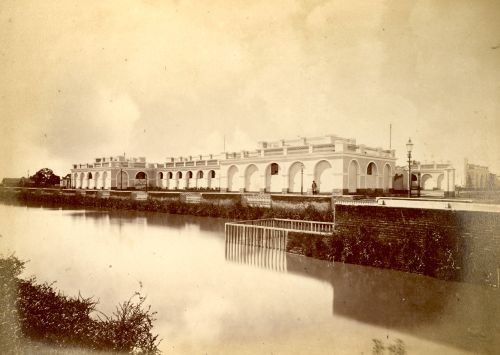
Once Urquiza’s appeal left Entre Ríos, its recipients could decide where it went next. Authorities in Mendoza, San Juan, and Santiago del Estero forwarded his communications to Rosas, giving the governor of Buenos Aires information meant to draw support away from him. Exiles in Chile circulated arguments favoring a constitutional congress through the western provinces, adding another route by which the dispute could reach provincial readers. Wider circulation created opportunities for debate, but it gave Urquiza no assurance that those readers, or their governments, would agree.
Corrientes supplied the first formal expansion of the break. Its legislature had refused Rosas’s resignation on April 30, yet Governor Benjamín Virasoro’s government took the opposite course on May 21, reclaiming its authority over foreign relations, peace, and war. On May 23, Law No. 775 approved the executive decree accepting Rosas’s relinquishment of foreign relations. The reversal mattered because Corrientes acted through its own provincial institutions, giving Urquiza a partner with authority to make commitments in its own name. It did not amount to a decision by the Confederation as a whole. Two provinces now challenged Rosas’s representation of them, while the other provincial governments continued to recognize his authority.
At Montevideo on May 29, Urquiza’s agent Antonio Cuyás y Sampere signed an offensive and defensive convention with representatives of Brazil and the government defending the Uruguayan capital. The treaty’s preamble explicitly treated Entre Ríos’s recovery of its foreign relations powers as a basis for the agreement. Brazil and Montevideo dealt with Entre Ríos as a party capable of undertaking diplomatic obligations, regardless of whether Rosas accepted its claim. The convention’s immediate stated purpose was to remove Manuel Oribe and the Argentine forces under his command from Uruguay and permit an election for its presidency. It also contemplated a common war against Buenos Aires if that government attacked the allies and provided for allied navigation of the Paraná along Entre Ríos’s shores; Corrientes’s consent to the navigation provision remained conditional. Its final article required the agreement to remain secret until its objective was achieved. Urquiza had gained powerful interlocutors abroad, but that success could not supply the provincial consent he still lacked at home, and foreign involvement gave Rosas’s supporters grounds for a charge of betrayal.
A June letter from Catamarca reveals uncertainty beneath an eventual official rejection. Commander Juan Eusebio Balboa reported receiving anonymous copies of a presentation favoring Urquiza and asked Governor Manuel Navarro for his judgment before deciding whether to support it. Navarro initially instructed district judges to impede the pamphlets’ circulation; Catamarca later enacted a law supporting Rosas. Balboa’s hesitation was no provincial endorsement, but it shows that an officer serving a loyal government could take the opposing case seriously enough to seek advice.
Salta’s governor, José Manuel Saravia, answered Urquiza with a proclamation and a circular of his own in July. Saravia called the break treachery and argued that a constitutional congress could not be convened safely while armed opponents and their foreign allies remained active across the Plata. That position addressed the timing and security of constitutional change as well as Urquiza’s conduct. In neighboring Jujuy, an August performance of the Spanish tragedy Lanuza, with its plot against a tyrannical king, became entangled in arguments over support for Urquiza. Federico Medina’s study shows a divided provincial leadership and disputed testimony about the performance’s political meaning. The conflict deepened local factional struggles and drew intervention from Salta; a provocative play could signal sympathy among influential people without becoming a declaration by Jujuy’s government.
Buenos Aires gave rejection a more forceful legal form on September 20. Its legislature declared Urquiza’s actions a breach of the Federal Pact, denied his standing as governor of Entre Ríos, and barred officials from addressing him by his military rank. In Santiago del Estero the following month, 165 signatories repudiated his action at a public gathering held before assembled troops; similar declarations followed in departmental centers. These responses demonstrate how Rosas’s allies could mobilize provincial laws, local assemblies, and military presence to defend their reading of the alliance. Allegiances within a province could nevertheless move as the campaign advanced. Santa Fe’s government initially supported Rosas, while officers and residents in Rosario aided Urquiza in December. The audience for his appeal had grown considerably since May, but formal provincial support remained narrow and later defections cannot be read backward as approval he already possessed.
The May Alliance and the War in Uruguay
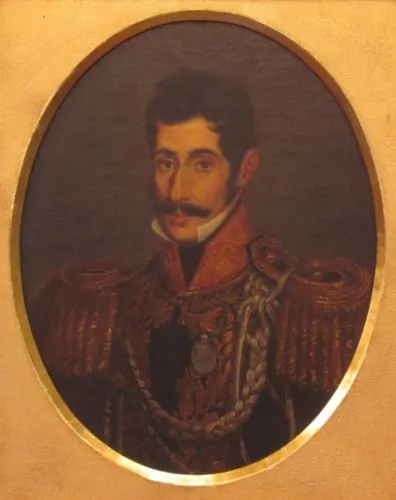
Across the Uruguay River, the coalition entered a conflict with its own claimants to authority. Since 1843 Manuel Oribe, supported by Argentine forces, had besieged Montevideo, where Joaquín Suárez’s Government of Defense continued to claim authority over the republic. Oribe’s government at El Cerrito claimed that authority as well, while his forces controlled much of the countryside. Eugenio Garzón, an Oriental commander estranged from Oribe, offered the allies a prospective leader for an army that might draw support from both sides of the civil war. His presence helped them present intervention as a route toward a Uruguayan political settlement, though that settlement would depend on the choices of Uruguayans who had fought for years.
The May convention supplied more than a promise to expel Oribe. Montevideo agreed to appoint Garzón commander of the Oriental army once he recognized its government, while the agreement preserved separate command for large Brazilian and Entrerrian forces. Brazil undertook to prepare an army on the frontier and a fleet capable of threatening Oribe’s coast and protecting allied navigation. Its troops could also protect people and property in a broad zone inside Uruguay, a provision reflecting Brazilian interests along the border. The allies promised support to the president eventually elected against armed insurrection, giving the projected constitutional government substantial outside protection. For Urquiza, another clause was particularly useful. The manner in which Oribe’s Argentine troops would leave Uruguay was to be arranged with Entre Ríos. A campaign framed around Uruguayan independence had given Rosas’s former military partner a voice in the fate of soldiers serving Rosas’s ally.
Brazilian legislators did not agree on the authority behind that arrangement. During a June debate over the appointment of Luís Alves de Lima e Silva, count of Caxias, to command in Rio Grande do Sul, Senator Montezuma asked whether Brazil could make a convention with the governor of an Argentine province; he compared Urquiza to the rebels who had challenged the Brazilian Empire in Rio Grande do Sul. Honório Hermeto Carneiro Leão replied that the Argentine provinces possessed sovereignty under their pact and could revoke the foreign affairs powers delegated to Buenos Aires. The exchange shows that Urquiza’s interpretation of provincial authority had an influential defender abroad, but its validity remained contested even among people considering an alliance with him.
Urquiza entered Uruguay near Paysandú on July 19 with troops from Entre Ríos and Corrientes. Garzón attracted Oriental support, and men serving Oribe began to change sides, though others stayed with him. Military movement and attempts at negotiation proceeded together. Rosas declared war on Brazil on August 18, bringing the wider conflict anticipated in the May convention closer to realization. Brazilian land forces crossed Uruguay’s northern frontier on September 4; their approach increased the pressure on Oribe before the imperial and Entrerrian columns could unite. He still commanded substantial forces near Montevideo, but their reliability and his prospects in a battle against converging opponents had weakened.
By early October, Oribe’s representatives were seeking terms. Urquiza negotiated with Lieutenant Colonel Lucas Moreno, but Montevideo’s foreign minister, Manuel Herrera y Obes, resisted initial language that would have broadly vindicated Oribe’s wartime government. Oribe’s forces capitulated on October 8, and revisions to the political peace terms were accepted over the following days. The settlement promised equal civic rights to Orientals from opposing camps, provided for constitutional elections, recognized certain debts incurred under Oribe, and allowed him personal freedom. Its wording acknowledged that Oribe’s supporters believed they had defended Uruguayan independence against British and French intervention; it stopped short of approving all the acts of his government. The declaration that there would be “ni vencidos ni vencedores” offered a principle for living together after the war, even as one army had plainly yielded to another. Much of the Argentine rank and file and their weapons passed under Urquiza’s control, while some officers departed. The siege ended through a negotiated surrender whose conciliatory terms could not erase its military consequences.
Peace also exposed the price of outside support. On October 12 Andrés Lamas, representing Montevideo, signed five agreements with Brazil concerning alliance, boundaries, navigation, financial assistance, and extradition, including the return of people who had escaped enslavement across the border. That last provision conflicted with the freedom established by Uruguay’s abolition measures and made Brazilian property claims part of the postwar order. Oribe’s collapse had removed Rosas’s principal position east of the river, yet the May convention alone had not laid out the coming invasion of Buenos Aires. A new agreement on November 21, now including Corrientes, expressly directed the allies against Rosas and designated the two Argentine provinces as the principal combatants, with Brazil and Uruguay as auxiliaries. The change required another act of negotiation. Urquiza’s provincial claim had enabled him to acquire partners; victory in Uruguay allowed those partners to define a further war.
From Withdrawal of Powers to War against Rosas
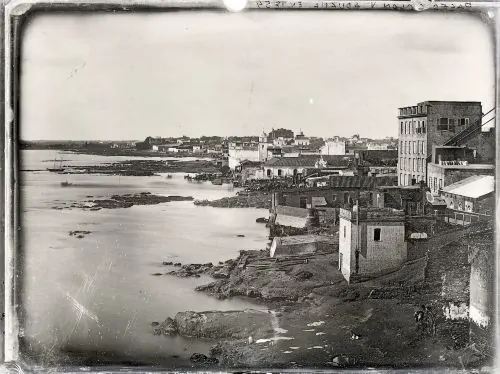
The convention signed at Montevideo on November 21, 1851, gave the coalition a purpose that the May pronunciamiento alone had not supplied. Its preamble treated Rosas’s official declarations and military preparations as grounds for activating a provision of the May alliance. The allies then declared that they would fight his government while respecting the Argentine provinces’ right to determine their own political organization. That distinction gave Urquiza a way to carry a provincial claim into a campaign beyond his province. But it could not settle in advance how the people of the provinces his army entered would judge the presence of Brazilian and Uruguayan troops.
The agreement assigned Urquiza the advance across the Paraná and placed contingents from Brazil and Uruguay at his disposal. Brazil promised an infantry division, a cavalry regiment, artillery, naval assistance, and supplies; Uruguay undertook to provide another contingent. These commitments made the projected campaign possible on a scale that Entre Ríos and Corrientes could scarcely have sustained alone. Command nevertheless remained a matter of negotiation. The Brazilian division was to retain its own immediate commander, who would generally act under Urquiza’s superior orders, while other imperial forces stationed in Uruguay had a separate commander and defined duties. When Urquiza ratified the convention on December 1, he invoked the Federal Pact of 1831 as the basis of Entre Ríos’s sovereignty and stated that he acted with Corrientes’s authorization. He was asserting a provincial right to make war through an agreement that bound several governments, each with interests and forces of its own.
The financial clauses show how much that assertion required. Brazil agreed to lend Entre Ríos and Corrientes 100,000 patacones a month for up to four months, or until Rosas’s government fell if that occurred sooner; an additional article hastened the first installment. Urquiza promised to seek repayment from the government that succeeded Rosas, with annual interest of 6 percent. If the new government declined, the two provinces would owe the debt, secured by their public revenues and lands. Victory would not automatically transfer the expense to a future Confederation. The navigation clause imposed a different limit on Urquiza’s reach. Entre Ríos and Corrientes promised to press a future Argentine government to permit freer river traffic, while the text expressly allowed that government to refuse. Even in a treaty drawn up for war, the allied governors distinguished powers they could exercise from decisions they hoped others would make.
The invitation to Paraguay tested the coalition’s capacity to expand. A supplementary agreement envisaged several thousand Paraguayan infantrymen and pledged that Entre Ríos and Corrientes would urge a future Argentine government to recognize Paraguayan independence. The allies sent their invitation in December, but Paraguay’s foreign minister, Benito Varela, declined to join in January 1852. His reply did not undo the campaign already under way. It does show that shared opposition to Rosas did not oblige every neighboring government to accept the allies’ terms or timetable.
Urquiza also needed his march to be understood by audiences beyond the treaty signatories. Domingo Faustino Sarmiento joined the army in November and began editing its bulletins at Diamante on December 1, using a portable press acquired for the campaign. Such publications could report movements, present the coalition’s case, and address people who might encounter the army before they accepted its authority. Sarmiento’s participation brought an exiled opponent of Rosas into an enterprise led by a longstanding Federal governor. His account of the campaign, published after disagreements with Urquiza had sharpened, remains valuable evidence of that participation, but its later judgments cannot stand for a view shared by every member of the alliance.
The crossing from Diamante began on December 23 under the protection of Brazilian naval forces. It was a military operation, but events in Santa Fe also depended on decisions made within the province. Governor Pascual Echagüe had received authority to resist Urquiza; meanwhile, opponents within the provincial leadership prepared to move when the army crossed. Urbano de Iriondo, left in charge of the capital, turned against Rosas, and Domingo Crespo was chosen provisional governor on December 25. An uprising occurred in Rosario, while Echagüe withdrew with troops rather than submit to the new authorities. These changes supplied Urquiza with allies on the far bank and altered the position from which he could advance toward Buenos Aires. They did not amount to a spontaneous, unanimous provincial verdict. Local preparation, armed support, and the governor’s retreat all shaped the outcome.
Rosas, for his part, had been raising men since September. Vicente Agustín Galimberti’s study of surviving recruitment and militia records reveals a substantial mobilization in Buenos Aires, with heavy demands on the rural districts for which lists survive. The campaign’s outcome should not be read backward as proof that Rosas possessed no means of resistance. By January 1852, Urquiza had moved from accepting a governor’s offered relinquishment of delegated powers to leading an allied army toward that governor’s own province. The intervening treaties, loans, commands, publications, and provincial uprisings explain how he made that move; they also mark the distance between a legal argument for action and the broader consent it claimed to serve.
Caseros Did Not Settle the Meaning of Sovereignty
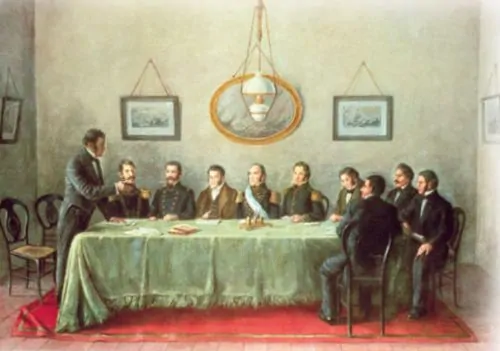
After the defeat of Rosas on February 3, 1852, Urquiza faced a task different from commanding the army that had brought him to Buenos Aires. He supported Vicente López y Planes as provisional governor, giving the province an administration through which decisions could be made. Yet the departure of Rosas did not establish who could commit Buenos Aires to a new arrangement among the provinces. Its governor, legislature, and the victorious general could each claim a role in that decision. The uncertainty would become acute when temporary measures gave way to plans for a constitution.
At Palermo on April 6, representatives of Buenos Aires, Entre Ríos, Corrientes, and Santa Fe entrusted Urquiza with foreign relations until a national congress determined where that responsibility would reside. Their protocol traced the earlier assignment of those affairs to the government of Buenos Aires, then portrayed Rosas’s later exercise of the power as a personal appropriation. On that reading, his removal returned to the provinces their respective shares of authority, enabling a fresh delegation. The signatories directed that the protocol be circulated to the other provincial governments for approval and accepted responsibility for commitments made in the meantime. That proviso mattered. The four governments could provide foreign powers with an official counterpart immediately, but they still sought assent beyond the meeting at Palermo. Urquiza’s new office depended on the same provincial capacity to confer powers that he had asserted the previous May.
The agreement signed at San Nicolás on May 31 proposed a far more extensive provisional government. It reaffirmed the Federal Pact of 1831 and called for a constituent congress in Santa Fe, with two deputies from each province, elected without instructions that would restrict their votes. Equality between provinces would govern the writing of a constitution, even though they differed greatly in population and resources. Meanwhile, Urquiza, now designated provisional director of the Confederation, received command of provincial forces treated as parts of a national army and authority to act against armed disturbances. He could also regulate inland navigation, while the provinces were to contribute proportionally from their external customs revenues to the expenses of national administration until constitutional authorities established permanent taxes. These provisions addressed practical questions the war had exposed. An army needed direction, commerce needed common rules, and government needed income. They also made the interval before the constitution consequential in its own right. Accepting that Rosas should no longer wield delegated authority did not oblige a province to accept every power assigned to his successor.
Buenos Aires’s legislature made that distinction the center of its June debates. Opponents questioned whether López y Planes had authority to sign the San Nicolás agreement on the province’s behalf and objected to the scope of Urquiza’s provisional powers. Equal representation and the proposed use of customs receipts gave the dispute material force; neither was simply a matter of personal allegiance. Mariano José Aramburo’s study shows how opponents joined claims about provincial sovereignty to arguments about the people and their representatives. After the legislature rejected the agreement, López resigned, and Urquiza dissolved the chamber on June 24. His use of force to sustain a constitutional project made the question of who could authorize that project still harder to evade. In September, after Urquiza left Buenos Aires, an uprising displaced his appointees and broke the province’s cooperation with the constituent process.
The congress at Santa Fe nevertheless enacted a constitution on May 1, 1853, for the provinces that remained in the Confederation. It assigned customs duties to the national treasury and declared inland rivers open to ships of all nations under national regulations; its original text also named Buenos Aires as the federal capital, subject to a special law. Those provisions expressed a governing program, and the Confederation developed institutions to carry it forward despite lacking control of the principal port. Buenos Aires set out a competing position in its constitution of April 1854; it claimed the exercise of sovereignty in internal and external affairs until it expressly delegated that power to a federal government, while reserving the right to review and accept a future federal constitution. The province Urquiza had defeated as Rosas’s base now used the language of delegation to resist the order formed after his fall. Caseros had made constitutional change possible. It had left the terms of participation open to a struggle among governments that continued to call themselves Argentine.
Was the Legal Argument Cover for a Breach of the Pact?
The following video from Mitografica covers the Argentine civil wars of the 19th century:
A serious objection begins with the obligations Urquiza had accepted before he asserted his province’s rights. Article 1 of the 1831 Federal Pact recognized each signatory’s liberty and independence, but Article 4 prohibited a province from even proposing a separate agreement with another government without its partners’ prior express consent. The pact’s original provisions also made a declaration of common war depend on provincial agreement. Its representative commission had disappeared by 1851, yet the text did not clearly release Entre Ríos from its commitments when it reclaimed the powers delegated to Rosas. Adolfo Saldías later emphasized the prohibition on separate treaties in arguing that Urquiza had violated the pact. Rosas’s recurring offers to resign, whatever their sincerity, did not supply the missing consent of the other provinces.
Contemporary resistance gives that textual objection weight. Corrientes followed Entre Ríos in withdrawing its delegation, while the other provincial governments continued to recognize Rosas as their representative. In September, the Buenos Aires legislature declared Urquiza’s conduct an infringement of the Federal Pact and condemned his agreements with Brazil and Uruguay. Legislatures in Salta, Catamarca, Tucumán, and Santiago del Estero issued similar repudiations. Their declarations require careful reading. Rosas’s power constrained public opposition, and a legislature’s vote cannot stand for every opinion within its province. Nevertheless, these acts were decisions made through the institutions by which provinces expressed their authority. Catamarca’s support for an eventual constituent congress shows that rejecting Urquiza’s method did not necessarily mean rejecting constitutional organization. For those governments, Entre Ríos could withdraw its own grant of powers, but it could not withdraw theirs.
The November 1851 convention sharpened the difficulty. Its signatories presented their campaign as a war against Rosas that would leave the Argentine provinces free to choose their political future. They also arranged Brazilian financing and military assistance for an advance across the Paraná. Urquiza undertook to seek recognition of the Brazilian loan as a debt of the government that succeeded Rosas, while Entre Ríos and Corrientes promised to press that government for freer river navigation. The convention was to remain secret until its object had been achieved. These clauses did not give Urquiza the power to bind an unwitting future government outright, but they made its debts and policies matters of negotiation with foreign allies before most Argentine provinces had joined him. A defender of the existing pact could reasonably see a breach in the distance between that undertaking and the claim to act for provincial freedom.
Still, the objection cannot by itself establish that Urquiza’s legal argument was merely a pretext. As José Carlos Chiaramonte’s work on provincial statehood helps explain, the provinces were political parties to their association, rather than administrative districts awaiting orders from a settled national authority. The Federal Pact anticipated a congress to resolve questions of commerce, navigation, and common revenues, but no such body had been convened. Its vanished commission offered no practical forum in which Entre Ríos could obtain a ruling on its withdrawal of powers. Urquiza’s May decree spoke in the name of his province and envisaged an assembly of the others; it did not claim that his act had revoked their separate delegations. Those facts made his initial claim intelligible within the Confederation’s political language. They did not establish a right to make every subsequent treaty or wage war with foreign assistance. Giuliana Nicolini’s interpretation captures the tension. Urquiza’s allies sought to remake the pact by breaking with its existing arrangement, while opposing provinces reaffirmed and altered that arrangement through their own decisions. Both sides asserted provincial authority, and neither could point to an accepted confederal institution capable of settling the dispute before the armies did.
The challenge narrows the my central claim. Urquiza cannot be shown to have acted unequivocally within the Federal Pact, particularly once his alliances reached beyond Entre Ríos’s own affairs. Yet a plausible charge of breach does not empty his argument of political force; it identified who had granted Rosas authority and invited each province to decide whether that grant should continue. Corrientes accepted the invitation; other governments rejected it and defended their reading of the pact. Urquiza’s distinctive maneuver was to make continued delegation a question requiring an answer, even as his means of pressing that question exposed his own conduct to a substantial legal objection.
Conclusion: What an Insider Could Do with a Leader’s Words
Rosas’s recurring offers to leave office had usually ended with renewed requests that he stay. In May 1851, Urquiza treated the same language as a reason for Entre Ríos to recover powers it had delegated to him. The pronunciamiento made a familiar expression of deference depend on a decision by one of the provinces that sustained Rosas’s authority. Urquiza’s long service within the Confederation gave that decision unusual weight. He knew its political habits and commanded forces capable of defending his province’s choice. He did not need Rosas to have intended his words as an invitation to revolt. He needed those public words to leave room for a provincial answer.
That answer acquired force through interests the decree alone could not resolve. Entre Ríos’s leaders faced commercial restrictions and a distribution of customs revenue that favored Buenos Aires; Corrientes had its own reasons to challenge Rosas’s direction of common affairs. Uruguay and Brazil entered the alliance with concerns about security, influence, and navigation. Their support enabled Urquiza to carry a provincial dispute into a campaign against the governor of Buenos Aires, but it also raised the stakes of his legal claim. The November convention contemplated Brazilian loans, military operations across the Paraná, and negotiations with a government that did not yet exist. None of those commitments followed automatically from Entre Ríos’s decision to reclaim its representation abroad. The coalition’s aims were substantial and varied, even where its members agreed that Rosas must go. Understanding those aims explains why the break succeeded without making the May decree sufficient authority for everything that came afterward.
The objection raised by Rosas’s supporters remains part of the interpretation. The Federal Pact recognized provincial independence while restricting separate agreements, and most provincial governments initially retained Rosas as their representative. Their opposition cannot be dismissed merely because they later accepted a different political settlement. Equally, their decisions did not remove the unresolved demand for a congress able to address commerce, rivers, and shared authority. Urquiza had made withdrawal possible for Entre Ríos to assert; whether its ensuing alliances respected the obligations owed to other provinces was a further, contested question.
Victory exposed the limits of his method. At San Nicolás in 1852, governors granted Urquiza provisional powers and arranged for a constituent congress, but the Buenos Aires legislature refused the agreement. The constitution of 1853 consequently took effect without the province whose governor had once conducted the Confederation’s foreign affairs. Buenos Aires’s resistance did not vindicate Rosas’s rule; it showed that replacing him could not by itself determine how authority would be shared. Urquiza had demonstrated how an insider could use a leader’s own statements to call a delegated mandate into question. Once he sought authority over the provinces’ common future, he too needed their consent. Rosas’s words helped Urquiza begin the break; the answers given by other governments determined how far it could go.
Bibliography
Affiliate disclosure: Amazon links on this site are paid links. As an Amazon Associate I earn from qualifying purchases.
- “Acuerdo celebrado entre los gobernadores de las provincias argentinas en San Nicolás de los Arroyos.” May 31, 1852.
- Agüero, Alejandro. “¿Provincias o estados? El concepto de provincia y el primer constitucionalismo provincial rioplatense: Un enfoque ius-histórico.” Revista de Historia Americana y Argentina 54:1 (2019), 137–175.
- Aramburo, Mariano José. “La soberanía porteña en discusión: El debate político entre la batalla de Caseros y las jornadas de junio de 1852.” Prólogos: Revista de Historia, Política y Sociedad 7 (2015), 17–42.
- Archivo Nacional de Asunción, Archivo Histórico de la República del Paraguay, colección ex-Rio Branco. “Copia del tratado del 21 de noviembre de 1851,” including the invitation to Paraguay and the response of January 12, 1852. ANA-AHRP-PY-628-1-25.
- Argentine Confederation and France. “Convención Arana–Le Prédour.” August 31, 1850.
- Argentine Confederation and Great Britain. “Convención Arana–Southern.” November 24, 1849.
- Balboa, Juan Eusebio. Letter to Manuel Navarro, June 15, 1851. Reproduced in Pedro Ignacio Galarza, Catamarca y el pronunciamiento de Urquiza, 14. Catamarca, 1965.
- Barcos, María Fernanda, and Ignacio Zubizarreta. “Entre rebeliones y constituciones: El violento camino a la paz.” In Caseros: La batalla por la organización nacional, edited by Ignacio Zubizarreta, Alejandro M. Rabinovich, and Leonardo Canciani. Buenos Aires: Sudamericana, 2022.
- Brazil, the Oriental Republic of Uruguay, and Entre Ríos. “Convención celebrada entre el Brasil, la República Oriental del Uruguay y Entre Ríos.” May 29, 1851. In Asambleas constituyentes argentinas, edited by Emilio Ravignani, vol. 6, pt. 2, 446–50. Buenos Aires: Jacobo Peuser, 1939.
- Brazil. Senate. Anais do Senado do Império do Brasil. 1851, book 2, session of June 17. Brasília: Senado Federal, 1978.
- Buenos Aires, Entre Ríos, and Santa Fe. “Pacto Federal.” January 4, 1831. In Asambleas constituyentes argentinas, edited by Emilio Ravignani, vol. 6, pt. 2. Buenos Aires: Jacobo Peuser, 1939.
- Buenos Aires, Entre Ríos, Santa Fe, and Corrientes. “Tratado del Cuadrilátero.” January 25, 1822. In Asambleas constituyentes argentinas, edited by Emilio Ravignani, vol. 6, pt. 2. Buenos Aires: Jacobo Peuser, 1939.
- Buenos Aires, Province of. “Ley de Aduanas.” December 18, 1835.
- —-. “Law of September 20, 1851, concerning Justo José de Urquiza.” In Rejistro oficial de la provincia de Buenos Aires: Años de 1851–52, 7–8. Buenos Aires, 1875.
- Buenos Aires. Sala de Representantes. Law condemning Urquiza’s actions and foreign alliances, September 1851. In Rejistro Oficial de la Provincia de Buenos Aires: Años de 1851–52, 7–8. Buenos Aires, 1875.
- Bunkley, Allison W. “Sarmiento and Urquiza.” The Hispanic American Historical Review 30:2 (1950), 176-194.
- Chiaramonte, José Carlos. “El federalismo argentino en la primera mitad del siglo XIX.” In Federalismos latinoamericanos: México, Brasil, Argentina, edited by Marcello Carmagnani, 81–129. Mexico City: El Colegio de México and Fondo de Cultura Económica, 1993.
- “Constitución del Estado de Buenos Aires.” April 8, 1854.
- “Constitución de la Nación Argentina.” May 1, 1853.
- “Convención para establecer el modo de satisfacer los deberes de la alianza celebrada entre Entre Ríos y Corrientes con el Brasil y la República Oriental del Uruguay.” Signed at Montevideo, November 21, 1851. Additional articles of November 25 and 30, 1851; ratification by Justo José de Urquiza, December 1, 1851.
- Corrientes, Congreso General. Laws 760 (September 18, 1850), 761 (October 15, 1850), and 773 (April 30, 1851). Listed in Recopilación de leyes desde 1821 a 1864. Corrientes: Honorable Cámara de Diputados, n.d.
- Corrientes, Province of. “Law No. 775.” May 23, 1851. Listed in Recopilación de leyes desde 1821 a 1864. Corrientes: Honorable Cámara de Diputados, n.d.
- Crespo, Antonio. Letter to Justo José de Urquiza, March 26, 1846. Archivo Histórico de Entre Ríos, Hacienda II, carpeta 1, legajo 5. Excerpts reproduced in Schmit, “Los caminos del mercado en el alto Uruguay.”
- Domínguez Arribas, Javier. “El enemigo unitario en el discurso rosista (1829–1852).” Anuario de Estudios Americanos 60:2 (2003), 557–579.
- Duffau, Nicolás, and Ana Frega. “Definir, organizar y representar el territorio de la nación: José María Reyes (1803–1864), topógrafo y geógrafo del Estado Oriental del Uruguay.” Almanack 31 (2022).
- “El año 1851.” La Regeneración (Concepción del Uruguay), January 5, 1851. Quoted in Sarobe, El general Urquiza.
- Entre Ríos, Corrientes, Brazil, and the Oriental Republic of Uruguay. “Convención para establecer el modo de satisfacer los deberes de la alianza.” Montevideo, November 21, 1851. In Asambleas constituyentes argentinas, edited by Emilio Ravignani, vol. 6, pt. 2. Buenos Aires: Jacobo Peuser, 1939.
- Elizalde, Rufino de. Letter to Diógenes Urquiza, January 25, 1851. Quoted in José María Sarobe, El general Urquiza (1843–1852): La campaña de Caseros. Buenos Aires: Guillermo Kraft, 1941.
- Entre Ríos and Corrientes. “Tratados de Alcaraz: Acuerdo público y secreto.” August 15, 1846. In Asambleas constituyentes argentinas, edited by Emilio Ravignani, vol. 6, pt. 2, 275. Buenos Aires: Talleres Casa Jacobo Peuser, 1939.
- Etchechury-Barrera, Mario. “Juan Manuel de Rosas, el Ejército Unido y la geopolítica rioplatense: Algunas hipótesis y lecturas historiográficas (1840–1851).” Prismas 29 (2025), 237–243.
- Galimberti, Vicente Agustín. “Los últimos soldados del Restaurador: Movilización militar y miliciana hacia el ocaso del rosismo.” Revista Universitaria de Historia Militar 13:26 (2024), 216–242.
- Garzón, Eugenio. “Diario de la campaña del general Justo José de Urquiza a Corrientes, en 1847.” Edited by Gustavo Enrique Poenitz. Temas de Historia Argentina y Americana, 7 (2005), 211–233.
- Goldman, Noemí, and Marcela Ternavasio. “Construir la república: semántica y dilemas de la soberanía popular en Argentina durante el siglo XIX.” Revista de Sociologia e Política 20:42 (2012), 11–19.
- Grinberg, Keila. “The Abolition of Slavery and International Relations on the Southern Border of the Brazilian Empire, 1840–1865.” In The Boundaries of Freedom: Slavery, Abolition, and the Making of Modern Brazil, edited by Brodwyn Fischer and Keila Grinberg, 128–160. Cambridge: Cambridge University Press, 2023.
- Iriondo, Urbano de. Apuntes para la historia de la provincia de Santa-Fé. Santa Fe: Imprenta de El Pueblo, 1871.
- Lanteri, Ana Laura. Se hace camino al andar: Dirigencia e instituciones nacionales en la “Confederación” (Argentina, 1852–1862). Rosario: Prohistoria Ediciones, 2015.
- Macías, Flavia Julieta. Armas y política en la Argentina: Tucumán, siglo XIX. Madrid: Consejo Superior de Investigaciones Científicas, 2014.
- —-. “Guerra, instituciones y debates políticos en la Argentina de los inicios de la organización nacional.” Secuencia, 69 (2007), 137–160.
- McLean, David. “Trade, Politics and the Navy in Latin America: The British in the Paraná, 1845–46.” Journal of Imperial and Commonwealth History 35:3 (2007), 351–370.
- Medina, Federico. “Poder político en Jujuy y relaciones interprovinciales a fines del régimen rosista: La representación de la obra de teatro Lanuza en 1851.” Americanía: Revista de Estudios Latinoamericanos, 4 (2016), 335–371.
- Moyano Falconier, Julio Eduardo. “El periodismo en la provincia argentina de Entre Ríos (1819–1871): Construcción de la prensa moderna como actividad de gobierno.” Historia Caribe 19:44 (2024), 273–310.
- Nicolini, Giuliana. “Una lectura del pronunciamiento de Justo José de Urquiza de 1851: Circulación, adhesiones y rechazos.” Almanack, no. 28 (2021), ed00721.
- Pivel Devoto, Juan E., and Alcira Ranieri de Pivel Devoto. La Guerra Grande, 1839–1851. 2nd ed. Montevideo: Medina, 1976.
- “Protocolo de Palermo.” April 6, 1852. In Asambleas constituyentes argentinas, edited by Emilio Ravignani, vol. 6, pt. 2. Buenos Aires: Talleres Casa Jacobo Peuser, 1939.
- Ramos, R. Antonio. La independencia del Paraguay y el Imperio del Brasil. Rio de Janeiro: Conselho Federal de Cultura and Instituto Histórico e Geográfico Brasileiro, 1976.
- Rossi, María Cecilia. Espacios y relaciones de poder: Su articulación en Santiago del Estero durante el proceso inicial de implante de la modernidad, 1851–1875. PhD diss., Universidad Nacional de La Plata, 2004.
- Sabato, Hilda. “Los desafíos de la república: Notas sobre la política en la Argentina pos Caseros.” Estudios Sociales 46:1 (2014), 77–117.
- Saldías, Adolfo. Historia de la Confederación Argentina: Rozas y su época. Vol. 5. Buenos Aires: F. Lajouane, 1892.
- Saravia, José Manuel. Circular to the provincial governors, July 1851. Reprinted in Archivo Americano y Espíritu de la Prensa del Mundo, 25 (1851), 210–217.
- Sarmiento, Domingo Faustino. Campaña en el Ejército Grande Aliado de Sud América. Rio de Janeiro: Imprenta Imperial y Constitucional de J. Villeneuve y Cía., 1852.
- Schmit, Roberto. “Justo José de Urquiza y el Ejército Grande de la América del Sud.” In Caseros: La batalla por la organización nacional, edited by Ignacio Zubizarreta, Alejandro M. Rabinovich, and Leonardo Canciani. Buenos Aires: Sudamericana, 2022.
- —-. “Los caminos del mercado en el alto Uruguay: Comercio y política mercantil del Oriente entrerriano en tiempos de guerra.” Anuario del Centro de Estudios Históricos “Prof. Carlos S. A. Segreti” 2–3 (2002–2003), 101–124.
- —-. Ruina y resurrección en tiempos de guerra: Sociedad, economía y poder en el oriente entrerriano posrevolucionario, 1810–1852. Buenos Aires: Prometeo Libros, 2004.
- —-. “‘Tradición y modernidad’: Inversiones y empresas rurales rioplatenses en tiempos de transición, 1840–1870.” América Latina en la Historia Económica, 28 (2007), 87–114.
- Schmit, Roberto, and Miguel A. Rosal. “Las exportaciones del litoral argentino al puerto de Buenos Aires entre 1783 y 1850.” Revista de Historia Económica 13, no. 3 (1995): 581–607.
- —-.“Política comercial, flujos mercantiles y negocios: Buenos Aires y Montevideo frente al comercio exterior rioplatense en el siglo XIX.” Revista de Indias 59:215 (1999), 91–122.
- Siqueira, Luan. “Reflexos da Política Interna: A política externa brasileira no Rio da Prata (1850–1852).” Revista Brasileira de História & Ciências Sociais 17:34 (2025), 426–452.
- Tamae, Rafael da Fonseca. A política externa do Brasil Império e a Guerra contra Oribe e Rosas: Um estudo sobre o debate político na intervenção de 1851. Master’s thesis, Universidade de São Paulo, 2020.
- Urquiza, Justo José de. Circular to the provincial governors, April 5, 1851. Reprinted in Martín Ruiz Moreno, La revolución contra la tiranía y la organización nacional, vol. 1, 217–20. Rosario: Gran Establecimiento La Capital, 1905.
- —-. “Decreto que sustituye el lema oficial en Entre Ríos.” May 1, 1851. In Beatriz Bosch, Presencia de Urquiza: Con una selección documental, 76–77. Buenos Aires: Raigal, 1953.
- —-. Letter to Rufino de Elizalde, February 22, 1851. Quoted in Sarobe, El general Urquiza.
- —-. “Pronunciamiento del General Urquiza.” May 1, 1851. In Registro Oficial de la República Argentina que comprende los documentos espedidos desde 1810 hasta 1873, vol. 2, 471. Buenos Aires: Publicación Oficial, 1880.
- Urquiza, Justo José de, Eugenio Garzón, and Lucas Moreno. “Capitulación del general Manuel Oribe y las fuerzas a su mando.” October 8, 1851. Biblioteca Digital de Tratados, Ministerio de Relaciones Exteriores, Comercio Internacional y Culto, Argentina.
- Whigham, Thomas L. The Politics of River Trade: Tradition and Development in the Upper Plata, 1780–1870. Albuquerque: University of New Mexico Press, 1991.
- Zubizarreta, Ignacio. “¿Dos Estados para una misma nación? Buenos Aires, la Confederación Argentina y la competencia por la organización de un país escindido (1852–1862).” In La construcción estatal en el Río de la Plata a través del empleo civil y militar (1600–1873), edited by Alejandro M. Rabinovich and Ignacio Zubizarreta. Buenos Aires: Teseo, 2023.
Originally published by Brewminate, 09.30.2026, under the terms of a Creative Commons Attribution-NonCommercial-NoDerivatives 4.0 International license.
About the Author