A dioxin release near Seveso in 1976 exposed the consequences of delayed warnings and helped turn industrial safety into an obligation subject to public scrutiny and European law.

By Matthew A. McIntosh
Public Historian
Brewminate
Introduction: A Cloud Without an Adequate Explanation
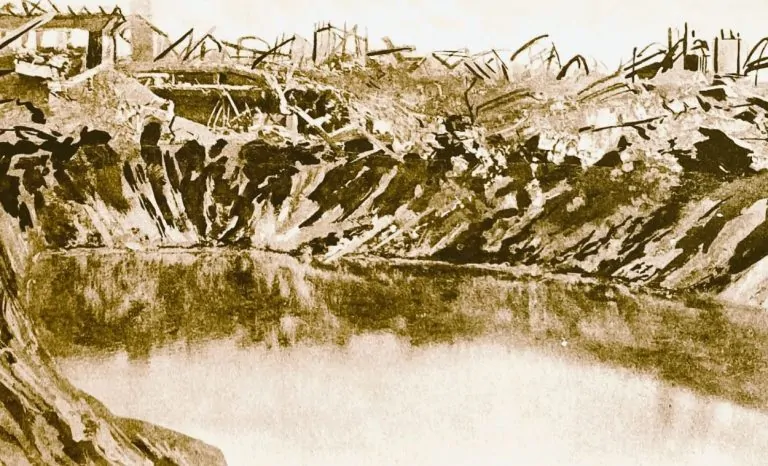
At approximately 12:37 p.m. on July 10, 1976, a pressure-relief disc ruptured on a chemical reactor at the ICMESA factory in Meda, north of Milan. Material discharged through a roof vent, forming a cloud that traveled beyond the premises into neighboring communities, including Seveso. The plant manufactured 2,4,5-trichlorophenol, but the escaping material also contained 2,3,7,8-tetrachlorodibenzo-p-dioxin, or TCDD, a highly toxic unwanted product of the reaction. The discharge lasted about twenty minutes; determining its consequences would occupy public authorities and researchers for decades. Its passage left residents confronting a danger whose identity and extent they could not establish from what they could see. Familiar surroundings had become potentially hazardous without acquiring any reliable visible boundary between safety and contamination. Protection depended immediately on an explanation from people with access to the production process and the means to investigate what had escaped.
Some information reached local officials and residents before the dioxin hazard was adequately communicated. Early precautions concerning vegetables and other possible sources of exposure make it misleading to describe the aftermath as a period of uninterrupted public silence. Yet acknowledgment of a toxic release did not provide a sufficient account of its implications. Advice issued before the contamination was understood could leave important questions unanswered, while subsequent findings required earlier instructions to be reconsidered. The historical problem lies in the interval between recognizing that something dangerous had happened and supplying an explanation capable of guiding protective decisions.
Industrial expertise gave the company a position that public authorities could not readily reproduce. Knowledge of the reactor’s contents and operating history offered an essential starting point for investigating the release, although it did not automatically establish how much TCDD had formed or where it had settled. Municipal officials needed information quickly enough to justify restrictions affecting households that had no direct relationship with the manufacturer. Health specialists faced a different difficulty. Evidence that a substance could cause serious injury did not yield an immediate prediction of the consequences for everyone exposed. These unequal positions made the handling of information part of the disaster itself. A warning could arrive late, reach only part of the affected population, or identify a danger without explaining what people should do about it. Responsibility requires close attention to particular communications and decisions, separating what participants knew at the time from what later investigations established. Corporate control of technical information must be examined alongside the capacity of public institutions to demand it, assess its meaning, and act before every uncertainty had been resolved. Residents’ need for protection could not be postponed until specialists possessed a complete account of the contamination.
On June 24, 1982, the Council of the European Communities adopted the measure subsequently known as the Seveso Directive. Its provisions addressed major industrial accidents through preventive obligations and notification requirements, while also requiring appropriate information about safety measures and conduct during an emergency for people liable to be affected. The legislation made hazards extending beyond a factory’s boundaries a matter of explicit public responsibility. Nevertheless, adopting a European rule did not ensure that national authorities would implement it effectively or that communities would receive information they could use. Subsequent disputes over compliance brought residents and public-interest organizations into efforts to make those obligations consequential. Seveso’s regulatory history extends beyond the conversion of a notorious accident into the name of a directive. It concerns whether industrial knowledge could be made accessible to institutions with the authority to question it, and whether people exposed to an establishment’s risks could obtain an explanation before suffering harm. The enduring difficulty was to establish duties that remained actionable when the available evidence was incomplete, without allowing uncertainty to become an indefinite reason for withholding protection.
An Industrial Neighbor: ICMESA in the Landscape of Northern Italy
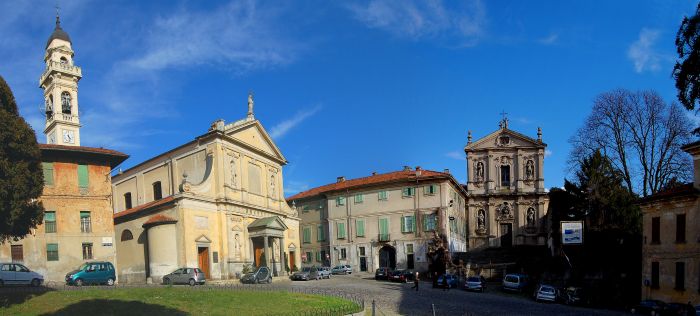
Brianza’s industrial character developed through a close relationship between production and domestic life. Situated north of Milan, the district was particularly associated with furniture manufacture and design, much of it organized through small family businesses. Workshops stood near the households whose labor sustained them, while gardens and backyard poultry preserved forms of domestic provisioning within an increasingly industrial environment. Seveso belonged to this landscape of skilled work and attachment to place. Its surroundings offered chemical manufacturers substantial practical advantages, including water resources and transportation connections to the wider economy of Lombardy.
Chemical investment after World War II consequently entered an area with an established productive identity, adding different processes and environmental pressures to those generated by traditional manufacturing. The setting complicates any picture of a remote industrial installation surrounded by people unfamiliar with factory life. Industry was embedded in the locality’s prosperity, although the activities conducted in one establishment could differ substantially from the work most residents understood.
The Meda works emerged during the immediate postwar reconstruction, but ICMESA itself had an earlier history. On November 29, 1945, the company applied to the Milan civil engineering authorities for permission to construct a factory on property it owned in Meda. Its previous operations in Naples had involved synthetic aromatic substances and chemical intermediates used by other manufacturers. Production at the new establishment began in 1947, the year in which the company adopted the name Industrie Chimiche Meda Società Azionaria (ICMESA) while retaining its familiar acronym. Expansion during the following decades made the premises an enduring presence in the neighborhood. Givaudan, based near Geneva and associated with fragrances and flavorings, was its principal shareholder. When Hoffmann-La Roche acquired Givaudan in 1963, ICMESA became part of a larger Swiss corporate organization centered on pharmaceutical production. These connections placed a relatively modest Italian factory within commercial arrangements extending well beyond the district. Its products belonged to chains of further processing, so the significance of the establishment could not be measured solely by the goods that nearby residents associated with its name.
A comparatively small workforce reinforced the contrast between the factory’s local dimensions and its corporate affiliations. In their contemporary account, Paolo Strigini and Annamaria Torriani-Gorini reported ninety-seven workers and forty-four technical or administrative employees at ICMESA. Their article approached the disaster through an openly critical analysis of industrial capitalism, making its judgments about corporate motives material for examination rather than conclusions to adopt automatically. Nevertheless, the employment figures help establish the scale of the workplace within a district containing numerous small firms. ICMESA occupied a recognizable place in that economy while drawing its ownership and commercial direction from a much larger organization.
Long before 1976, complaints had challenged the acceptability of the factory’s everyday environmental effects. Municipal records preserved in the historical documentation of the Bosco delle Querce describe objections beginning in 1948 to gases and odors associated with wastewater entering the Certesa stream, also called the Tarò. Seveso’s council discussed the problem the following year and pressed for action through its mayor and the authorities of neighboring Meda. In 1953, a veterinary investigation connected the poisoning of sheep to discharges near the works, while company representatives disputed responsibility. Later complaints concerned waste fires as well as water pollution. The history of these disputes establishes that industrial contamination had been recognized and contested locally over an extended period. It also requires care in interpreting what those encounters demonstrated. A polluted watercourse or an uncontrolled fire could establish a serious environmental grievance without disclosing the behavior of a particular production vessel. Residents’ familiarity with recurring nuisances could produce suspicion, while repeated assurances and incomplete remedies could also make such incidents appear to be enduring features of neighborhood life. Their experience provided grounds to demand improvement, even though it offered an incomplete basis for judging the factory’s potential to cause a different kind of accident.
Jurisdiction further complicated the relationship between the establishment and its neighbors. The works stood within Meda, whereas some of the people affected by its discharges lived in Seveso, giving complaints an administrative journey across a municipal boundary. The surviving correspondence shows councils and local health officers seeking intervention, with provincial laboratory investigations adding another institutional participant. Construction authorization belonged to a different administrative process from the examination of polluted water or the handling of objections from residents. These overlapping responsibilities should prevent the earlier history from being described as an absence of public supervision. Officials visited, analyzed, and challenged conditions at the premises. The persistence of disputes instead raises questions about the effectiveness of those interventions and the ability of separate authorities to secure lasting changes. The distinction between taking notice of a problem and obtaining its remedy was already visible before the reactor accident.
Economic attachment to the district gave these disputes a social setting that cannot be reduced to dependence on ICMESA alone. Furniture businesses and other workshops offered employment throughout the area, while homeownership connected family effort to particular streets and properties. Laura Centemeri’s research also emphasizes Brianza’s Catholic cultural traditions and the importance of its family-owned productive structure. Such circumstances help explain why assessments of industrial development involved more than an abstract calculation of wages against pollution. People had interests in maintaining the viability of their locality, and concerns about a factory could coexist with confidence in the broader manufacturing economy. Strigini and Torriani-Gorini interpreted this situation primarily through the pressure that employment placed on opposition to polluting firms, but their explanation leaves room for other forms of attachment and disagreement. The community contained people with different occupational experiences and varying expectations of municipal intervention. Its relationship with ICMESA had been negotiated through recurrent complaints, official correspondence, and disputed promises of improvement. By the summer of 1976, the company had been challenged repeatedly over its environmental conduct, yet that record had not produced a comprehensive public understanding of the dangers associated with its operations.
Dioxin Before Seveso: What Was Already Known?
The relevant chemical danger had entered scientific investigation well before 1976. TCDD belonged to a family of chlorinated compounds whose properties varied with the number and arrangement of chlorine atoms, making “dioxin” an insufficiently precise designation for many technical purposes. In trichlorophenol manufacture, it could form through unwanted reactions involving the material being processed, rather than through the deliberate introduction of a separate toxic ingredient. This distinction mattered because control of the intended product did not necessarily establish control of everything generated during its manufacture. Research published by M. H. Milnes in 1971 examined TCDD formation through the thermal decomposition of sodium 2,4,5-trichlorophenate, connecting the chemistry directly to an industrial accident investigation. The possibility of accidental formation consequently existed in the published literature as a process problem requiring attention to operating conditions. By the time of Seveso, the substance’s presence could no longer reasonably be regarded as an entirely unforeseen consequence of working with this chemistry.
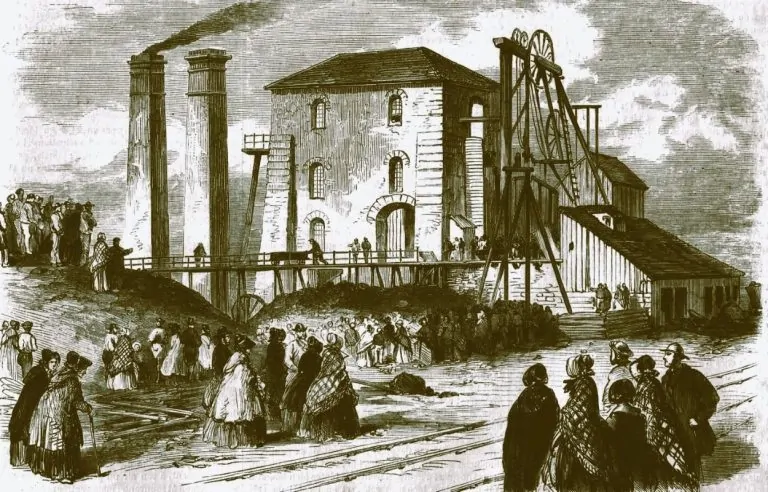
Clinical evidence had accumulated through occupational illness, although the identification of the responsible substances developed unevenly. A serious accident at BASF’s Ludwigshafen works in 1953 became an important episode in the history of exposure associated with trichlorophenol production. Physicians investigating industrial skin disease also helped establish that chloracne could result from certain chlorinated aromatic compounds, with Johannes Kimmig and Karl Heinz Schulz publishing research on the connection in 1957. Their work belonged to an effort to identify the agents responsible for an illness already recognized in industrial medicine. A further accident at the Coalite works in Derbyshire in 1968 supplied evidence of the consequences of an uncontrolled reaction in a trichlorophenol process. George May’s published account recorded seventy-nine cases of chloracne, many described as severe. As a physician associated with the company as well as a local medical practitioner, May wrote from a position that combined access to affected workers with an institutional connection requiring consideration when evaluating his conclusions. Nevertheless, his report documented substantial injury from accidental TCDD production and made that experience available beyond the establishment. These investigations gave the manufacturing industry a record of identifiable harm, even where the quantities absorbed by individual workers remained difficult to reconstruct.
Experiments extended concern beyond visible skin disease. In 1971, K. Diane Courtney and John A. Moore published animal studies examining both 2,4,5-T and TCDD, reporting developmental abnormalities following experimental exposure. Findings included cleft palates and kidney malformations in tested mouse strains, while kidney abnormalities were observed in rats exposed to TCDD. Such results supplied serious grounds for investigating possible reproductive hazards, but they did not establish the outcome of a particular human pregnancy. Differences between the experimental animals, together with questions about dose and exposure timing, limited direct extrapolation to people. The importance of the studies lay in demonstrating a category of potential injury that an assessment restricted to acute illness in adult workers would fail to address.
Vietnam brought this developing toxicological evidence into a much wider political dispute. The herbicide mixture known as Agent Orange contained 2,4,5-T, manufactured using trichlorophenol, and could carry TCDD as a contaminant introduced during production. Distinguishing the herbicidal ingredients from this impurity was essential to evaluating what particular experiments or exposure reports could establish. Commercial formulations could differ in contamination, meaning that the name of a herbicide alone did not specify the amount of TCDD involved. Research into developmental effects sharpened controversy over the acceptability of chemical defoliation and contributed to restrictions on certain uses of 2,4,5-T in the United States before Seveso. Yet the dispute also exposed difficulties in relating controlled experiments to the circumstances of people encountering herbicides during war or civilian application. Establishing that a preparation contained a dangerous contaminant was a different evidentiary task from reconstructing an individual’s exposure and attributing a subsequent illness to it. Alastair Hay’s later synthesis placed the industrial accidents and the herbicide controversy within the same chemical history, while recognizing the difficulties created by uncertain doses and simultaneous contact with other substances. Dioxin had acquired a public significance extending beyond factory medicine, even though the evidence available in different settings answered different questions.
For manufacturers, this prehistory offered practical lessons as well as reasons for further research. May’s 1973 account described testing for dioxin in manufactured trichlorophenol, including a biological assay subsequently superseded by gas-liquid chromatography. It also reported that a replacement plant incorporating modifications and multiple safety features had entered operation. These details show that earlier experience had already prompted changes in production and in methods for detecting contamination. The existence of such work does not establish that every producer adopted equivalent precautions, nor does publication prove that particular personnel read or applied its findings.
That question requires examination of company procedures and the investigations undertaken for the process actually in use. Equally, the limitations of occupational evidence should not be enlarged into a claim that the principal danger was unknown. An industrial population with incompletely measured exposures could provide convincing evidence of injury while offering a weak basis for estimating consequences across an entire residential community. The historical standard available before Seveso was substantial but bounded. Accidental TCDD formation and serious toxic effects had been documented, while translating that record into protection depended on how manufacturers assessed their own operations.
July 10, 1976: How the Reactor Released Its Contents
ICMESA’s trichlorophenol operation required a sequence of treatments whose safety depended on the condition of the material at each stage. The vessel involved in the accident had a capacity of approximately 10,000 liters and processed its ingredients in batches. Tetrachlorobenzene reacted with sodium hydroxide in an ethylene glycol medium, producing sodium trichlorophenate, which would subsequently be acidified to obtain trichlorophenol. Xylene assisted the removal of water during the initial processing, while later distillation under vacuum recovered ethylene glycol. These operations changed the composition and volume of the mixture as production advanced. An external coil provided steam heating and could also circulate water for cooling. ICMESA’s procedures placed solvent removal before acidification, departing from the sequence specified in the original process patent and retaining an alkaline mixture during distillation. The reactor contained material whose behavior depended on its processing history as well as its measured temperature. Completing the initial synthesis did not establish that the remaining operations could be interrupted safely.
By early Saturday morning, solvent removal had begun but remained unfinished when personnel stopped the operation for the weekend. Steam heating was discontinued, and the stirrer was subsequently switched off. Cooling water was not circulated through the external coil, leaving the contents to cool without active intervention. The operating instructions prohibited stopping at this intermediate point. Solvent removal should either remain unstarted or be completed, followed by the prescribed addition of water. The batch was consequently left in a condition outside the authorized shutdown sequence. Several hours separated this interruption from the eventual discharge, an interval during which cessation of production concealed the continuing possibility of chemical change.
The reported liquid temperature at shutdown, approximately 158°C, initially made the subsequent runaway difficult to explain. That figure lay substantially below the temperature at which the most vigorous decomposition reactions were then expected. But a temperature measured within the liquid could not describe every part of the apparatus. The reactor had been heated with superheated steam, and its upper walls, above the liquid level, could retain considerably more heat than the wetted surfaces below. Later reconstructions placed portions of this exposed metal at approximately 300°C. Switching off the steam supply removed further heating from that source, but it did not immediately remove energy already stored in the vessel. While agitation continued, transferred heat could be distributed through the mixture. After stirring stopped, the distribution could become uneven. In a mechanism proposed in 1981, T. G. Theofanous explained how heat from the upper walls could concentrate in a comparatively small surface layer rather than appreciably warming the entire batch. His subsequent large-scale simulation measured localized warming after agitation ceased and supported a model of this initial heating. Those experimental results supplied an explanation for the apparent discrepancy between the shutdown reading and the later accident. They remain a reconstruction of the reactor’s behavior, rather than a continuous temperature record obtained during the incident.
Localized warming could then initiate reactions that generated additional heat within the material itself. Post-accident thermal investigations identified relatively weak exothermic behavior below the previously emphasized threshold of approximately 230°C. Under unfavorable conditions, these slower reactions could contribute enough energy to advance the mixture toward more vigorous decomposition. The sequence depended on the interaction between heat transfer and chemical kinetics, including the rate at which generated heat could escape. Once generation outpaced removal, increasing temperature accelerated the reactions and intensified the disturbance. Theofanous’s 1983 analysis combined the proposed physical mechanism with measured chemical behavior to reproduce the occurrence and timing of the runaway. Elevated temperatures also promoted TCDD formation in the trichlorophenate mixture. Understanding this progression requires distinguishing the initial warming of a limited region from the subsequent reaction that spread through the vessel. Treating the entire batch as though it had steadily heated at a uniform rate would obscure the central finding of the later investigations.
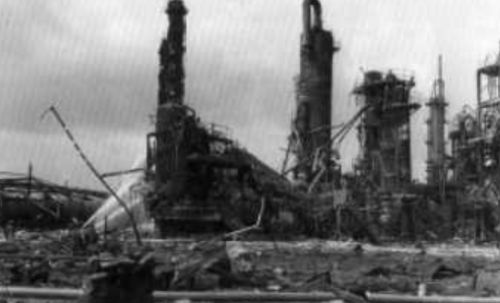
Maintenance personnel heard a whistling sound when the pressure-relief disc ruptured at approximately 12:37 p.m. Material passed through the discharge connection and emerged from a vent above the building. The resulting airborne mixture included TCDD carried with other substances expelled from the reactor. Technical accounts describe a foreman applying cooling water to the coil, an intervention that eventually brought the discharge to an end. By then, the emission had continued for roughly twenty minutes, and material had traveled beyond the factory grounds. The conspicuous cloud marked the loss of containment, although its appearance could reveal neither the composition of the discharge nor the distribution of its toxic constituents.
The pressure-relief arrangement helps explain why an internal process accident became an environmental release. A bursting disc is designed to open when pressure reaches its specified limit, providing an escape route that can protect the vessel against a more destructive rupture. At ICMESA, opening that route allowed the reaction products to enter the atmosphere. No receiving vessel captured the discharge, and no treatment apparatus destroyed its toxic components before they emerged from the roof vent. The Health and Safety Executive’s retrospective assessment records that the disc manufacturer had recommended a second receiver, which had not been installed. The destination of a relief discharge was a consequential design decision in its own right.
Deficiencies in measurement and automatic control compounded the weaknesses in the protective arrangements, but later research also cautioned against assuming that an ordinary temperature alarm would necessarily have provided timely intervention. Paolo Cardillo, Alberto Girelli, and Giuseppe Ferraiolo explained that a thermometer immersed in the main liquid mass might have missed the hotter surface layer described by Theofanous. In that reconstruction, much of the liquid remained near its initial temperature until the final acceleration. Instrumentation needed to address the behavior capable of producing the emergency, while containment needed to address what would happen if prevention failed. Adding a warning device without examining where it measured temperature, or retaining a relief device without examining where it discharged, would leave substantial questions unresolved.
Explanation itself became contested as investigators considered the relation between an unusual mechanism and preventable failures. In their company-affiliated account published in 1979, E. Homberger and his coauthors described the accident as possibly involving an “unforeseeable exothermic reaction,” while acknowledging that its nature remained under investigation. Their uncertainty deserves recognition. The detailed heat-transfer explanation developed through research conducted after the release. Nevertheless, novelty in the reconstructed mechanism does not establish that every protective measure depended on discovering it in advance. The shutdown instructions already excluded the intermediate condition in which the batch had been left, and a receiver could have addressed the consequences of a toxic discharge without requiring a complete prediction of its initiating chemistry. Mark Hailwood’s later technical review accordingly places production scheduling and supervisory knowledge alongside equipment design in assessing the accident. This approach gives procedural departures their proper weight while requiring examination of how work was organized and how compliance was secured. It also makes the adequacy of the installation assessable through particular evidence: authorized stopping points, actual operating practices, thermal investigations, and the physical route provided for emergency emissions. Responsibility for the release turns on identifiable decisions about the process and its safeguards, even where the precise sequence inside the unattended reactor must be reconstructed.
The Warning Takes Shape: Who Learned What, and When?
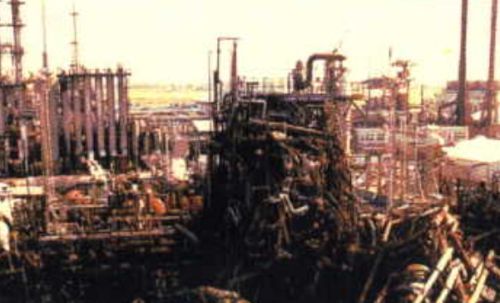
During the afternoon of July 10, knowledge of the release began moving through ICMESA’s management, but the surviving accounts do not establish a single, orderly chain of notification. Roche’s later corporate chronology records that the deputy head of production, Clemente Barni, visited the premises after receiving a telephone call from a foreman. It also credits him with warning some nearby households against consuming local produce that evening. According to this account, attempts to reach the local health officer, Giuseppe Ghetti, failed because he was away, and contact with the Meda carabinieri followed later. Other records disputed the timing of that police notification, a disagreement noted in subsequent archival scholarship. Such differences matter when assessing individual conduct, although they should not obscure the limited character of the information reportedly conveyed. An account of an industrial discharge, or advice delivered to households immediately beside the factory, did not establish that the communities in its path had received a coordinated explanation. The first hours were marked by improvised contacts whose recipients and practical reach require separate examination.
Municipal leaders received a more direct account on Sunday, July 11, when company representatives visited Seveso’s mayor, Francesco Rocca, and met officials from Meda. Rocca later recalled being introduced to trichlorophenol through an explanation of its industrial and herbicidal uses. The discussion identified the production vessel involved and described an uncontrolled reaction, but it did not identify dioxin as the substance demanding special concern. Company representatives requested restrictions on touching or consuming potentially affected produce. These conversations gave the municipalities grounds for precaution while leaving them dependent on the manufacturer’s interpretation of what had escaped. A letter sent by ICMESA to the acting health officer, Dr. Uberti, on July 12 made that dependence particularly evident. Management listed the reactor’s starting materials and acknowledged that it could not assess the substances carried outside or their exact effects. It explained the advice concerning garden produce through the intended product’s use in herbicides and reported that the relevant manufacturing operation had been suspended. The letter also presented the unattended cooling stage as customary, making the event appear to have interrupted an otherwise familiar routine. As an early documentary statement, it reveals how an acknowledgment of uncertainty could coexist with a relatively narrow account of the precautions required. Neither its chemical inventory nor its explanation of the process supplied officials with an explicit warning about possible TCDD formation.
Within the parent company, dioxin had already become a specific investigative concern. The municipal historical reconstruction places Jörg Sambeth’s suspicion that TCDD might have formed on July 11, after the Givaudan technical director learned of the accident. Samples from the reactor and its surroundings were sent to the company’s laboratories in Switzerland. Both the municipal account and Roche’s retrospective chronology place positive analytical findings on July 14; the latter records Sambeth informing ICMESA’s technical director, Herwig von Zwehl, that evening. This agreement provides a firmer chronological anchor than the disputed dates of subsequent external notification. By then, the company possessed an analytical finding that changed the status of dioxin from a possibility to an identified contaminant in the samples examined. The result did not establish the total quantity discharged or the exposure of every affected person. Nevertheless, those unanswered questions concerned the extent and consequences of a contamination whose identity had become substantially clearer. Continuing investigation could refine the finding, but it could no longer justify communicating as though the hazardous constituents remained entirely unspecified.
Illness and animal deaths supplied evidence through a different route. During the first week, children developed skin inflammation, and reports of dead small animals added urgency to complaints from the surrounding neighborhoods. Hospital admissions followed, with the scholarly chronology recording thirteen children hospitalized by July 16. These observations should not all be retrospectively labeled chloracne or attributed individually to TCDD, since the discharge contained several substances and clinical assessment was still developing. Their immediate significance was that injury outside the premises had become difficult to reconcile with an explanation confined to damage to garden produce.
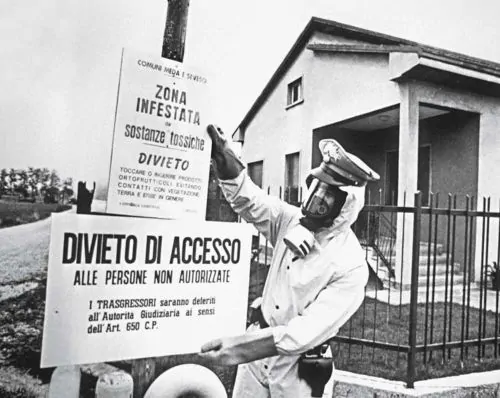
On July 15, Uberti recommended urgent municipal measures after examining reported cases of intoxication. Seveso and Meda declared an affected area around the San Pietro neighborhood contaminated and prescribed restrictions extending beyond consumption of vegetables. Residents were instructed to avoid contact with soil and vegetation, as well as animals from the designated area, and to maintain careful hygiene of hands and clothing. Warning notices were to identify the restrictions on the ground. These instructions recognized that exposure could occur through ordinary activities other than eating homegrown food. They also imposed demanding changes on households whose daily surroundings had not yet been adequately characterized. A prohibition on touching garden soil, for example, raised practical questions about children’s play and the handling of objects used outdoors. The authorities’ instructions did not resolve every such question, but their breadth indicates an expanding appreciation of the problem. Uberti’s recommendation explicitly anticipated further guidance from ICMESA’s laboratories and reserved the possibility of evacuation. Public officials were taking protective action while awaiting information held within the corporate organization. The administrative record exposes a consequential mismatch. Local restrictions were becoming more extensive after company analysis had identified TCDD, yet the municipal warning still lacked an explicit account of that finding. Residents were being asked to comply with increasingly serious precautions without receiving a corresponding explanation of the particular contaminant under investigation.
Factory employees also encountered restrictions without possessing the knowledge available to senior technical personnel. The archival reconstruction by Marzio Marzorati and Massimiliano Fratter describes workers becoming suspicious when management introduced special instructions concerning washing and potentially contaminated clothing. Their proximity to the reactor did not give them access to laboratory findings or to decisions about disclosure. Worker mobilization during the first week consequently complicates any treatment of the company as a body whose members all knew the same things. Meanwhile, the accident acquired a wider audience through newspaper reports published on July 17 in Il Giorno and Corriere della Sera. The following day, judicial intervention and the closure ordered by Meda’s mayor made the emergency more conspicuous. Press coverage helped bring local observations into public discussion, although publicity could circulate reports faster than it resolved their meaning. The manufacturer increasingly faced demands for an explanation from audiences beyond those reached through its initial visits.
The first explicit disclosure of dioxin remains a point on which the sources differ. Roche’s chronology states that von Zwehl announced the release of TCDD to Italian health officials at a meeting on July 17. The municipal reconstruction, drawing on the parliamentary inquiry, dates the company’s formal acknowledgment to July 19. Bruna De Marchi, Silvio Funtowicz, and Jerome R. Ravetz preserve this disagreement in their scholarly chronology instead of assigning every participant the same moment of discovery. They distinguish the notification of authorities from Givaudan’s public statement in Geneva on July 20 and from the confirmation obtained by Italian specialists at the Swiss laboratories. These were different communications, with different evidentiary functions. An oral statement that dioxin had escaped was not equivalent to access to the analytical results and the locations sampled. Nor did informing particular health officers demonstrate that the mayor, attending physicians, and affected households had all received the information. The strongest shared finding is more precise than a generalized accusation of silence. Positive internal analysis preceded an unequivocal public identification of the hazard by several days. Even the corporate account’s earlier date leaves an interval between laboratory confirmation and its claimed announcement to the Italian specialists.
Receipt by public authorities introduced further decisions about circulation. Drawing on Rocca’s recollections, De Marchi and her coauthors report that the mayor learned of dioxin on July 20 through a television journalist and received confirmation from the health officer later that evening. Their account also states that the information was not disclosed at the municipal meeting held that night, while the official municipal history dates confirmation from the visiting specialists to July 21. The discrepancy cautions against treating laboratory verification abroad and communication within Seveso as interchangeable events. More broadly, the episode shows that the movement of information could remain obstructed after it crossed the company’s boundary.
Officials had to decide how to communicate a serious finding whose implications they could not yet fully specify. Withholding the finding left residents unable to understand why earlier advice was changing or to question whether the prescribed precautions were sufficient. By this stage, the adequacy of the warning depended on making its evidentiary basis available along with its instructions. The next decisions would require authorities to translate that basis into restrictions on where people could remain and what they could safely do.
Drawing the Boundary: Contamination Zones and Evacuation

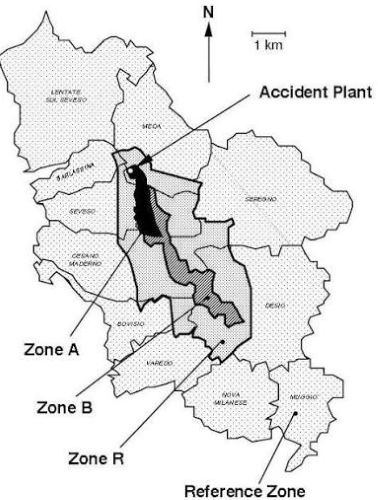
Evacuation required authorities to turn environmental findings into decisions about particular streets and households. Identifying dioxin in samples established the presence of a dangerous contaminant, but determining where people should leave demanded a more extensive investigation of its distribution. Soil analysis became central because material deposited during the release remained accessible through contact with contaminated surroundings. The first evacuation area covered approximately fifteen hectares, considerably less than the territory eventually placed under the strictest restrictions. On July 24, the mayors of Seveso and Meda issued ordinances requiring residents within this area to depart by July 26. Distinguishing the date of the orders from the beginning of departures matters. Evacuation was an operation that required accommodation, transportation, and arrangements for those whose homes would become inaccessible. Subsequent findings enlarged the designated territory, bringing additional households into the removal program. Between July 26 and August 2, authorities evacuated 736 residents from the area ultimately classified as Zone A. By the time they left, more than two weeks had passed since the release. Their departure could reduce further contact with contaminated surroundings, although it could not reverse exposure that had already occurred.
The classification that emerged divided the affected territory into three principal zones. Zone A, eventually encompassing approximately 110 hectares, represented the most heavily contaminated area and was associated with a surface contamination criterion above fifty micrograms of TCDD per square meter. Zone B covered roughly 270 hectares and corresponded to the intermediate category of five to fifty micrograms per square meter. The much larger Zone R, approximately 1,430 hectares, was designated a precautionary area with contamination below five micrograms per square meter. These figures expressed the amount of TCDD attributed to a unit of land surface, rather than a quantity absorbed by a human body. They supported different administrative responses, with compulsory evacuation concentrated in Zone A. The resulting map organized a complicated environmental emergency into categories that public agencies could administer, but its apparent precision required careful interpretation.
Environmental contamination did not distribute itself uniformly within these administrative divisions. Alessandro di Domenico and his colleagues, reporting the investigation in 1980, described extensive sampling undertaken to establish the geographical distribution of TCDD and guide sanitary measures. Their findings documented substantial variation in surface contamination across the affected territory. A zone designation consequently summarized a pattern assembled from measurements; it did not mean that every property within the perimeter had produced the same result. The conversion of such a pattern into a continuous boundary necessarily involved decisions about how to connect sampling locations and manage the intervening land. Another distinction concerned the relationship between contaminated ground and the people who used it. Residents differed in where they had been during the release, how much time they spent outdoors afterward, and which materials they handled. An address could help identify a population requiring protection without supplying a complete account of an individual’s exposure. As Brenda Eskenazi and her coauthors emphasize in their later review, soil measurements cannot capture differences in the frequency and duration of personal contact with contaminated material. Those limitations did not remove the need for territorial precautions. They made it essential to explain what the classifications could establish and why particular measures followed from them. A threshold chosen for evacuation was a basis for intervention under the conditions of the emergency, not a demonstrated biological dividing line at which everyone on one side would suffer injury and everyone on the other would remain unharmed.
For departing households, the practical meaning of classification appeared in the joint municipal announcement issued on July 25. The notice identified TCDD, specified the area to be vacated, and described removal as temporary, lasting only as long as necessary for decontamination. Free hotel accommodation and emergency financial assistance were offered. Residents could take necessary clothing only if it had not been exposed outdoors during the release or used afterward, while household objects were to remain behind. Dogs and poultry also had to stay, with feeding assigned to public veterinary services. These instructions treated possessions as possible carriers of contamination, extending the protective operation beyond the movement of people. Leaving home involved choosing what could accompany a family and surrendering control over much of what remained. The promise of a temporary absence made departure more intelligible, but it could not specify when the conditions for return would be achieved. Officials faced the immediate obligation to provide shelter while confronting a longer problem whose duration depended on investigations and remedial work still to come.
Thomas Whiteside’s subsequent reporting conveyed the domestic scale of that disruption through his interviews with Mafaldo and Edda Sartor. Mafaldo had built their home himself, working during weekends over an extended period. After evacuation, four members of the family occupied a single room in a motel at Assago. Their account placed the cramped conditions of temporary accommodation alongside the distress of losing access to the house they had made. This testimony cannot represent every evacuee’s experience, but it gives concrete meaning to a displacement otherwise recorded chiefly through population totals.
Outside Zone A, protection depended more heavily on restrictions imposed within places where people continued to live. Almost five thousand residents of Zone B remained in their homes, subject to measures that included prohibitions on consuming locally grown produce and poultry. Pregnant women and children under twelve were relocated outside the area during the day, a precaution that distinguished these groups without requiring the removal of the entire population. Approximately thirty-two thousand people in Zone R also received instructions against consuming local food. Later municipal regulations addressed activities capable of disturbing contaminated soil or generating dust, making ordinary movements and work practices matters of public health administration. Such measures depended on sustained compliance in circumstances very different from those of a fenced evacuation area. Families needed to understand which foods were restricted and how to conduct necessary activities around their homes. The burden of implementing protection consequently fell partly on people whose circumstances had shaped their exposure in the first place. An instruction that was straightforward to formulate could become difficult to observe where housing, employment, or household routines offered little room for adjustment. Authorities also had to communicate why remaining under restrictions was considered acceptable in one district while departure was compulsory in another. The distinction needed an explanation of the evidence and the protective strategy, especially as the classifications changed. Continued residence represented a managed condition with obligations attached, rather than an assurance that the emergency had ended at the edge of Zone A.
Laura Centemeri’s research places these geographical decisions within a wider problem of governing displacement. She argues that judgments about tolerable contamination were shaped by the practical feasibility of evacuation and by recognition that removing a much larger population would itself produce considerable harm. This interpretation identifies an element of public choice within arrangements often presented through numerical categories. The measurements established contamination, while decisions about how to respond also required judgments about the consequences of intervention. Those consequences became increasingly contentious when a temporary departure extended into prolonged separation from home. In October, displaced residents organized a peaceful reoccupation and roadblock to demand faster decontamination and renewed access to their properties. Their actions expressed dissatisfaction with the pace and conditions of protection, rather than supplying a scientific answer to whether return was safe. Understanding such protests requires taking seriously the loss produced by restricted access without allowing that loss to settle questions about residual contamination. Territorial management created obligations extending beyond the initial evacuation order. Authorities had to explain revisions, justify continuing restrictions, and establish credible conditions for return. Residents needed opportunities to challenge how those decisions were made because they bore consequences that laboratory analysis alone could not describe. Drawing a defensible perimeter was one part of protecting the population; maintaining an accountable relationship with the people governed by it was another.
Treating Exposure Before Its Consequences Were Clear

Medical services had to care for patients while developing the means to investigate an unfamiliar community exposure. The urgent task was to examine people whose symptoms required attention, but the response also needed to include residents who appeared well. On July 25, Lombardy’s regional authorities launched a coordinated investigation, with the Hospital of Desio playing a central role in collecting blood and conducting clinical laboratory tests. Examinations extended beyond the skin to possible neurological and other systemic effects. This breadth reflected the range of questions raised by existing toxicological knowledge without presuming that every suspected effect would occur in Seveso. The program gradually combined clinical screening with repeated examinations of selected groups and population follow-up. Such arrangements required continuity after the emergency’s most conspicuous phase had passed. A consultation could establish a patient’s condition at that moment; subsequent observations were needed to determine whether an abnormality persisted or whether something new developed. The medical response, “Responsibility Beyond the Reactor: Cleanup and the Meaning of Repair,” created an obligation to maintain contact with affected people whose future health could not be settled through a single examination.
Chloracne became the most clearly established early consequence of the exposure. Nearly two hundred cases were eventually identified, predominantly among children, although published totals differed as investigations developed. These diagnoses must be distinguished from the irritation and other skin lesions reported immediately after the release, which did not all become chloracne. A later follow-up study by Giorgio Assennato and his colleagues examined 193 affected people and reported that all but one had clinically recovered from chloracne by 1983. Following its course over several years allowed investigators to document improvement without reducing the children’s experience to photographs taken during the emergency.
Other early findings proved harder to interpret. In their 1979 progress report, Francesco Pocchiari, Vittorio Silano, and Alfredo Zampieri described neurological abnormalities in some adults and alterations in certain liver tests. They also recorded reports of liver enlargement while noting that the criteria used to establish that finding had not been specified. These observations warranted investigation, but their appearance after the accident did not by itself establish that TCDD had caused them. At that stage, several other investigations, including immunological and chromosome examinations, had not produced abnormal results. Each finding concerned a particular examination and population, making a general declaration about the health of everyone exposed unwarranted. Repeated testing helped clarify some of these questions. Paolo Mocarelli and his collaborators subsequently analyzed more than 4,500 laboratory tests conducted between July 1976 and June 1982 in approximately 1,500 children who had been six to ten years old when the accident occurred. Children classified as most heavily exposed showed small differences in certain liver enzyme measurements, generally within the normal range or slightly above it, which diminished over time. These results documented limited and resolving changes in the functions examined. Their value depended on reporting that scope precisely, since neither a minor biochemical alteration nor its disappearance answered every question about later disease. Medical reassurance needed to remain attached to the findings that supported it, with further investigation directed toward questions those findings left open.
Pregnancy imposed a more immediate deadline on decisions that scientific investigation could not resolve quickly. Evidence from animal experiments justified concern about fetal development, but it did not permit clinicians to predict the outcome of an individual exposed pregnancy. Women seeking advice consequently encountered uncertainty within a legal framework that restricted their options. Italy had not yet adopted its broader abortion legislation of 1978, although therapeutic abortion was already possible under a Constitutional Court ruling issued in February 1975. That decision removed criminal liability where continued pregnancy involved serious, medically established, otherwise unavoidable damage or danger to maternal health, including psychological health. Applying this exception after Seveso required medical judgments that became entangled with a national political controversy. As Stefania Barca’s scholarship explains, the disaster became a prominent setting for conflict over reproductive rights, bringing outside political commitments into encounters already burdened by fear. Laura Conti, a physician and Communist regional councilor involved in the response, criticized an approach that considered women’s health chiefly through their anxiety about the condition of the fetus. Her objection concerned the standing of pregnant women as patients with health interests and decision-making authority of their own. She also warned that concentrating public debate on abortion could displace attention from contamination affecting the wider population. These criticisms expose a difficulty that extended beyond the accuracy of a toxicological prediction. Counseling could convey information while still subordinating the person receiving it to someone else’s moral or political priorities. A responsible account of the episode must recognize both the absence of reliable individual prognoses and the consequential choices women nevertheless faced. Later examinations of particular pregnancies could contribute evidence, but they could not recreate the circumstances in which those choices had to be made.
Preserving clinical specimens provided one of the response’s most consequential contributions to future knowledge. Desio’s investigators retained serum left over from the initial laboratory work, and collections continued during subsequent follow-up. The accumulated specimens made it possible to revisit exposure after analytical techniques improved. A method published by the Centers for Disease Control in 1987 enabled more sensitive measurement of TCDD in human serum; an Italian-American collaboration began applying it to small archived Seveso samples in 1988. Those analyses confirmed substantial exposure in some residents who had not developed chloracne, demonstrating the limits of relying on that condition as an indicator. The archive preserved evidence that contemporary examinations could not fully interpret, giving later investigators an independent means of assessing what had entered people’s bodies.
Over the following decades, research produced a differentiated account of the disaster’s health consequences. Studies examined reproductive outcomes alongside diseases that could emerge long after the original exposure. Their findings did not converge on a uniform pattern affecting every population or outcome. A major update published in 2024 by Dario Consonni and his colleagues followed mortality and cancer incidence through 2013 and reported no overall increase in all-cause mortality or cancer incidence across the full follow-up period, while identifying excesses in particular disease categories. Among the more persistent concerns were cancers of lymphatic and blood-forming tissues, with patterns varying by sex, residential zone, and time since the accident. Such findings require attention to comparison populations and the limited numbers underlying some estimates, as well as recognition that a population association cannot determine the cause of every individual illness. They also show why the early examinations could never have constituted a final assessment. Sustained investigation depended on records and institutional resources maintained over many years, rather than on the capacity of one emergency clinic. Residents’ contribution through repeated participation was indispensable to that work. The resulting history makes medical monitoring part of the continuing response to an industrial release; its purpose includes caring for present illness, but its duration must accommodate consequences that become assessable only much later.
Responsibility Beyond the Reactor: Cleanup and the Meaning of Repair
Every load of excavated soil created a disposal obligation alongside the prospect of safer ground. Decontamination also involved buildings whose different materials required different treatments, making a single procedure inadequate for the affected neighborhood. The United States Environmental Protection Agency’s technical account, published in 1985, described an integrated approach that combined removal of contaminated objects with surface cleaning and the sealing of residual contamination. Roof tiles were replaced, while other surfaces underwent washing or mechanical treatment according to their condition. The report distinguished thirty-six houses that were demolished from 112 homes in subzones A6 and A7 that underwent decontamination. These figures describe materially different outcomes. Some buildings could become habitable again, while others became waste requiring secure disposal. Surrounding ground also needed treatment, since a cleaned interior remained vulnerable to contamination carried in from outside. Excavation depths varied with local conditions and the results of successive interventions. Assessment continued after the work, with further sampling used to determine whether designated targets had been reached. The operation’s success depended on evidence obtained from treated surfaces and ground, rather than on completion of a contractor’s assigned tasks alone. Cleanup was becoming a substantial technical undertaking whose methods and results required scrutiny throughout its execution.
Disposal technology introduced another dispute over the future use of the affected area. Regional authorities approved a plan for an incinerator in Zone A, intended to destroy contaminated material generated by reclamation. Residents objected partly because they feared another release through the installation’s emissions, but concern also extended to whether a temporary cleanup facility would become a permanent destination for hazardous waste from elsewhere. That possibility connected the proposed remedy to decisions about the town’s subsequent industrial role. Opposition developed into an effort to formulate an alternative, bringing citizens together with scientists who could evaluate the available methods. Laura Centemeri identifies Gianantonio Lanzani, a professor of agricultural chemistry at the University of Milan, as an important contributor to the proposal for local containment followed by reforestation. The regional government abandoned the incinerator project in 1979.
This episode gave public participation a concrete technical consequence: the method selected for managing the contaminated territory changed. It also complicates an account in which expertise belonged exclusively to the manufacturer or to official advisory bodies. Scientific competence could support an alternative organized through local mobilization. The dispute concerned the suitability of a particular installation and the development it might encourage, requiring judgments that extended beyond whether incineration could destroy TCDD under controlled conditions.
The adopted containment system concentrated large quantities of contaminated material in two engineered basins constructed during the early 1980s. The larger basin at Seveso had a capacity of approximately 200,000 cubic meters, while the Meda basin provided approximately 80,000 cubic meters. Their contents included excavated earth and demolition debris, incorporating material from dismantling ICMESA itself. Protective membranes and coverings isolated these deposits, while drainage arrangements and monitoring systems addressed the possibility of movement through water or damage to the containment structures. This strategy reduced access to contaminated material by securing it within an installation designed for continuing management. The dioxin retained there had not all been destroyed, making maintenance part of the remedy’s operation. Responsibility consequently acquired a duration determined by the condition of the repositories, extending beyond the period of excavation and construction.
Financial restitution proceeded through arrangements whose scope must be distinguished from the technical work they supported. Roche’s retrospective account records a formal agreement reached in December 1980 under which Givaudan and ICMESA undertook payments to the Italian state and Lombardy, together with continuing reclamation obligations. Municipal claims and settlements with private individuals followed through separate negotiations. The company later presented these expenditures as evidence of extensive assistance and acceptance of financial responsibility. That account documents a consequential contribution, although its purpose as a corporate retrospective requires attention when assessing claims about the completeness of restitution. Funding made substantial remedial operations possible and transferred costs that would otherwise have remained with public authorities or affected households. Further disputes concerned which injuries warranted compensation in the first place. Nadia Coggiola’s analysis of the Seveso litigation traces disagreement over claims for nonmaterial suffering where claimants had not established bodily injury or a diagnosed psychiatric disorder. Restrictive decisions issued by the Court of Cassation in 1997 were followed by a joint-panel ruling in 2002 that recognized compensation for nonmaterial harm in the Seveso case without requiring those forms of injury. The change concerned the legal recognition of suffering produced by exposure and its consequences for people’s lives. Establishing that category still left questions about individual claims and the amounts awarded. These proceedings reveal how the meaning of compensable damage could remain contested long after public funding arrangements had been reached. An agreement to finance reclamation and a judgment recognizing personal suffering addressed different consequences of the same release, each through its own evidentiary and administrative requirements.
A separate waste shipment exposed the difficulty of maintaining responsibility across successive contractors and national borders. In September 1982, forty-one drums containing reactor residues and associated contaminated material left Italy for disposal abroad. Their subsequent disappearance from effective public oversight produced an international search, ending with their discovery in France in 1983. This consignment was distinct from the enormous volume of earth and debris retained in the local basins. After recovery, the drums were transferred to Basel under Swiss federal and cantonal control, with Hoffmann-La Roche providing interim storage. An expert committee’s final report documented physical and chemical identification procedures before destruction, including examinations conducted with official representatives and notarial supervision. The principal incineration took place at Ciba-Geigy’s installation in June 1985, following preparatory investigations and test operations. Additional contaminated materials were treated later that year. These procedures supplied an evidentiary basis for identifying what had been recovered and assessing the disposal process. Industry provided facilities and technical capabilities, while the supervised program subjected their use to specified checks. The sequence demonstrates why a contractual arrangement for removing dangerous material could leave serious questions about its custody unresolved. Once waste traveled beyond Seveso, the population potentially affected by its handling expanded, and protective oversight had to follow the consignment rather than end at the original factory.
Reforestation gave the reclaimed land a new public use. Planting developed during the mid-1980s, and the Bosco delle Querce opened to the public on July 10, 1996, the twentieth anniversary of the accident. Its design accommodated the containment basins, with the limited depth of cultivation soil above their coverings influencing what could grow there. Establishing vegetation also required improvements to ground whose previous surface had been removed during reclamation. The resulting park embodied considerable work to create usable green space within a landscape shaped by the requirements of waste confinement.
Public access raised the further issue of what visitors would learn about that landscape. Centemeri’s research follows local environmental activists who sought to make the park a setting for historical recognition and environmental education. Their work contributed to a collectively developed memory route inaugurated in 2004, placing accounts of the disaster within the reclaimed territory. Producing those accounts required negotiation among people whose experiences and interpretations differed. Some participants remained dissatisfied with compromises they believed softened the conflict surrounding the accident. That disagreement is significant because a shared commemorative space could acknowledge recovery while leaving the extent and character of the injury disputed. The park supplied a public setting in which the history could be examined, but creating it did not produce agreement over how the past should be represented. Recognition involved deciding which experiences would enter the account and how responsibility would be described to later generations. In this respect, repair included the community’s capacity to participate in the narration of what had happened to it. The material achievement of reclamation acquired a fuller public meaning when the restored area also preserved opportunities to examine the decisions that had made such extensive intervention necessary.
From Seveso to European Legislation
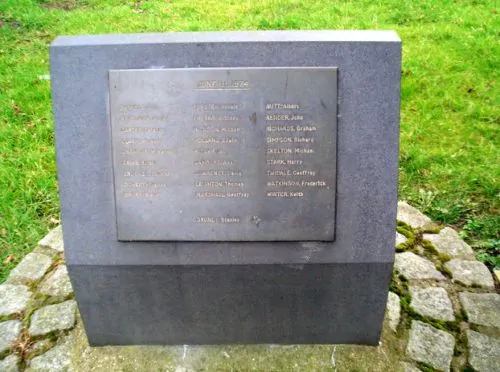
By the late 1970s, the European Community faced the task of bringing divergent national approaches to major industrial accidents into a common legal framework. Seveso occupied a prominent place in that undertaking, alongside the disasters at Flixborough in Britain in 1974, Beek in the Netherlands in 1975, and Manfredonia in Italy in 1976. Their different circumstances encouraged officials to consider a category of industrial events whose consequences could extend beyond the premises where they began. Josée van Eijndhoven’s account of European disaster prevention places this development within a broader political climate favorable to stronger industrial regulation, particularly concerning safety at work. National debates generated proposals that subsequently informed discussions at Community level, while accidents elsewhere helped sustain attention between domestic emergencies. The resulting legislation grew through interaction among countries already reconsidering their arrangements for hazardous industry. Understanding that process requires tracing how a widely publicized disaster acquired legislative significance within institutions whose responsibilities and ambitions were themselves developing.
Britain had begun examining major chemical hazards before the release at ICMESA. A. C. Barrell, writing from the Health and Safety Executive’s Major Hazards Assessment Unit, traced official concern to the chief factory inspector’s annual report for 1967, when increasing plant size and inventories of hazardous materials raised questions about danger to nearby populations. The Robens Report of 1972 subsequently recommended a specialist capacity to investigate major hazards. Flixborough gave those concerns immediate political force, and on June 27, 1974, Employment Secretary Michael Foot announced an expert committee to examine the risks presented by large industrial installations. Its remit included the protection of neighboring residents as well as employees. Asked who should determine whether an installation presented a major hazard, Foot replied, “It would not be a question solely of relying on what the companies might say about it.” That statement preceded Seveso by two years and shows that the problem of evaluating industrial assurances already had a place in public debate. The committee’s subsequent work, together with British investigations into the consequences of major hazards, contributed to the European approach. Barrell’s retrospective emphasized the importance of this national contribution, although his institutional position also warrants attention when weighing its prominence. The British precedent supplied both an argument for independent assessment and experience in developing the specialist knowledge that assessment required.
An environmental policy framework was also taking shape within the European institutions. The first Community environmental action program, adopted in November 1973, endorsed preventing pollution at its source and considering environmental effects early in technical planning. It connected these aims to coordinated national policies and to improving living conditions across the Community. The eventual directive explicitly invoked the environmental programs of 1973 and 1977, together with the 1978 program on safety and health at work. Chemical accident legislation could draw on commitments developed through both environmental protection and occupational safety, while giving them a more specific application to exceptional industrial events.
Parliamentary intervention helped turn those general commitments into demands concerning identifiable installations. In September 1976, members of the European Parliament questioned Commissioner Carlo Scarascia Mugnozza about Seveso and urged the creation of a register through which industrial hazards could be assessed and monitored. Such a proposal addressed an elementary administrative prerequisite. Authorities needed to know where potentially dangerous activities were located before they could organize effective precautions around them. It also treated the accumulation of information as a continuing task, extending beyond investigation of an accident that had already happened. Further pressure followed the fatal industrial accident at Velbert in West Germany in 1979. Parliament’s persistence deserves particular attention because it exercised considerably fewer legislative powers than the institution would acquire later. Jan-Henrik Meyer’s scholarship shows how its members and committees used environmental controversies to influence the Community’s agenda both before and after the first direct parliamentary elections in 1979. Their environmental objectives developed alongside efforts to strengthen European policymaking and Parliament’s own institutional position. This interpretation gives a political explanation for the prominence of industrial safety; it offered an opportunity to demonstrate that European cooperation could address concerns experienced by people outside the institutions. Parliamentary activity helped sustain the demand for action while the Commission prepared a measure that governments would still have to negotiate.
The Commission’s formal proposal of July 16, 1979, supplied a diagnosis of why existing arrangements needed revision. Its explanatory memorandum described national controls divided among administrative bodies and often directed toward pollution or worker protection under normal operating conditions. Major accidents required additional attention to departures from those conditions, including events with serious effects outside an establishment. Preparing the proposal involved discussions with national experts and with the European chemical industry through CEFIC, bringing regulatory experience and industrial knowledge into the drafting process. The memorandum also identified an economic reason for Community action. Unequal safety requirements could influence production costs, competition, and the conditions under which investment occurred. That reasoning connected accident prevention to the functioning of the common market. It raised the prospect that firms operating under demanding rules could face disadvantages relative to competitors subject to less extensive requirements. The legal basis of the adopted directive reflected this combination of purposes. Article 100 of the EEC Treaty supported the approximation of national laws affecting the common market, while Article 235 provided additional authority for measures pursuing Community objectives where the necessary powers had otherwise not been supplied. The directive’s preamble expressly joined harmonization to environmental protection and health and safety at work. Economic integration provided a legal route for preventive regulation, while protective objectives shaped what that regulation was intended to accomplish. Industry’s participation in preparation further complicates any interpretation of the measure as a simple confrontation between companies and public authority. The documentary record instead shows a legislative process in which technical consultation accompanied negotiation over common requirements and their economic consequences.
Agreement over the purpose of prevention left substantial disagreement about its administrative reach. During a Commons debate on June 23, 1980, Employment Under-Secretary Patrick Mayhew described continuing negotiations over substance lists, quantities, and reporting requirements. One unresolved issue was whether quantities should be calculated across an entire industrial site or separately at locations within it, a distinction capable of changing which establishments fell within particular requirements. Mayhew also stressed revisions intended to reduce the demands placed on industry and the Health and Safety Executive. Labour’s Harold Walker questioned whether the executive would receive sufficient resources to carry out additional duties without weakening its other work. This exchange exposes a difficulty inherent in converting a protective ambition into a workable scheme: extensive reporting requires officials capable of examining what is submitted. Selectivity could help concentrate limited expertise, but narrowing coverage also required justification against the hazards left outside more demanding procedures. The British debate consequently records both concern about regulatory burdens and concern about the public capacity to make regulation effective.
The Council adopted Directive 82/501/EEC on June 24, 1982, and the text appeared in the Official Journal on August 5. Its coverage concerned a class of industrial hazards rather than dioxin alone, allowing the response to Seveso to apply to installations with different substances and accident mechanisms. The measure combined prevention with limiting the consequences of accidents that nevertheless occurred. It also relied on action by member states and designated national authorities, connecting European requirements to institutions responsible for their application. Seen against the preceding debates, adoption represented agreement on a shared framework reached through several years of technical preparation and political negotiation. The name associated with Seveso preserved the accident’s importance, while the framework embodied lessons and policy objectives drawn from a wider European history. Its significance now depended on the duties assigned to manufacturers and authorities, and on whether those duties could produce preventive action before another emergency.
The 1982 Directive: Making Prevention a Public Obligation

The directive made the ability to demonstrate precautions part of an operator’s legal responsibility. Article 3 required member states to oblige manufacturers to take necessary measures for preventing major accidents and limiting their consequences, while Article 4 required manufacturers to substantiate hazard identification and appropriate safeguards before the competent authority. The latter provision also covered information, training, and equipment for people working at the site. Its requirement that manufacturers be able to provide proof whenever called upon gave official scrutiny a basis beyond a general declaration that operations were safe. These provisions joined the obligation to act with an obligation to account for the adequacy of that action. A satisfactory response required knowledge of the installation and evidence relevant to its operation. Public oversight was consequently concerned with whether protective arrangements existed and could be explained, rather than with the manufacturer’s willingness to express confidence in them.
Coverage determined how extensively that explanation had to be developed. The general requirements of Articles 3 and 4 operated within the directive’s defined industrial scope, whereas Article 5 imposed detailed notification requirements for particular dangerous substances and quantities. This distinction matters because the original legislation did not require every covered operator to submit an identical technical dossier. For activities subject to notification, the required information went beyond identifying chemicals purchased or manufactured for sale. By-products and residues also entered the assessment, and the account of substances had to address the forms they might take under foreseeable abnormal conditions. Annex III specifically included 2,3,7,8-TCDD, with a notification threshold of one kilogram. The combination of these provisions had direct relevance to a disaster involving an unwanted contaminant formed during a malfunction. It required attention to what an industrial activity might involve chemically, including circumstances that departed from successful production. The notification also connected substances to the installation’s location and technological processes, including conditions under which a major accident could occur. As J. L. Hawksley later explained, satisfying such requirements necessarily involved some form of risk analysis. The operator had to relate possible accident circumstances to measures intended to prevent them or reduce their effects. The legislative task was more demanding than compiling a list of hazardous materials. It called for an account of how danger could arise in a particular operation and how the proposed arrangements addressed it.
Preparing that account raised methodological questions that legislation alone could not settle. Hawksley’s study, published in 1992, found differences among national requirements concerning the quantification of accident likelihood and consequences. He also recorded industry’s reservations about assigning numerical probabilities where the underlying knowledge remained uncertain. These findings caution against describing the original Seveso regime as prescribing a uniform calculation that mechanically established acceptable safety. P. L. Holden’s contemporary discussion of process-plant assessments identified a practical value in the systematic questioning required to perform them. An assessment could expose weaknesses, reveal missing information, and bring relevant experience to bear even when its final numerical estimates remained imprecise. That observation helps explain how a demonstration requirement could improve decisions without depending on complete predictive certainty. An examiner could investigate whether an important failure possibility had been considered and whether the proposed safeguard addressed it, while separately questioning the confidence attached to a probability estimate. The usefulness of analysis lay partly in making those judgments available for examination. Its credibility depended on the quality of the reasoning and supporting information, which required technical evaluation alongside attention to the assumptions shaping the result.
Authorities received duties of their own under Article 7. They were responsible for examining notifications and ensuring the preparation of emergency plans for action outside establishments whose activities required notification. Where necessary, they were to request supplementary information and ascertain that manufacturers adopted appropriate preventive measures. They also had to organize inspections or other suitable controls in accordance with national regulations. These requirements assigned public bodies an active role in assessing what industry submitted. Emergency arrangements illustrate the division of work particularly clearly. Operators supplied plans and resources for dealing with an accident inside the establishment, together with information needed for authorities’ preparations beyond it. This division acknowledged that a factory’s capacity to control its own premises could not encompass every service needed by surrounding communities. It also made the connection between the two sets of arrangements a matter for official attention. Nevertheless, the directive did not establish a uniform European licensing procedure or stipulate a common inspection frequency. In his 1992 opinion concerning Dutch implementation, Advocate General Claus Gulmann distinguished the directive’s notification system from the Netherlands’ requirement of prior official approval, which he regarded as providing protection beyond the European requirements. His interpretation underscores the room retained for stronger national arrangements under Article 17. The distinction also clarifies the character of the original settlement. European law specified tasks that authorities had to perform, while national systems shaped the procedures through which they performed them. Whether an official examination could identify deficiencies depended on the substance of that work, including how further questions were pursued and how documentary claims were checked against operating conditions.
Assessment was intended to remain responsive to change. Article 5 required periodic updating as technical knowledge and hazard evaluation developed, while Article 6 addressed modifications with significant implications for major-accident hazards. The transition for existing activities proceeded through separate stages. Member states were to comply with the directive by January 8, 1984, but existing activities came under its provisions by January 8, 1985, and complete supplementary notification information could be deferred until July 8, 1989. States could also waive automatic submission of that supplementary declaration, requiring it instead upon an explicit official request. The legislation combined continuing revision with substantial latitude over when existing installations supplied the fuller account. Those provisions qualify the extent of the immediate change achieved in 1982: the preventive duties and the detailed documentary requirements followed different timetables.
An accident that occurred despite precautions generated another set of obligations. Article 10 required immediate notification to the competent authorities, followed by further information as it became available, and assigned authorities responsibilities for response and investigation. The distinction between notifying promptly and supplying developing knowledge allowed the initial alert to precede a completed explanation. Reporting then extended beyond the national administration. Member states informed the Commission, which was to maintain a register of accidents, their causes, and the experience gained for preventive purposes. Harry Otway and Aniello Amendola interpreted this arrangement as an information network in which producing and transmitting knowledge formed a basis for managing industrial hazards. Their discussion of the Major Accident Reporting System situated the examination of individual failures within an effort to improve understanding across the Community. The potential benefit was that experience acquired at one installation could become relevant to precautions elsewhere. Achieving it required accounts detailed enough to support comparison and analysis, rather than merely recording that an incident had occurred. The directive made investigation useful to an ongoing preventive undertaking as well as to the immediate handling of harm. This enlarged the institutional purpose of accident information. Public bodies were expected to help turn particular failures into knowledge that could inform subsequent protective
A Right to Information: What the Public Had to Be Told
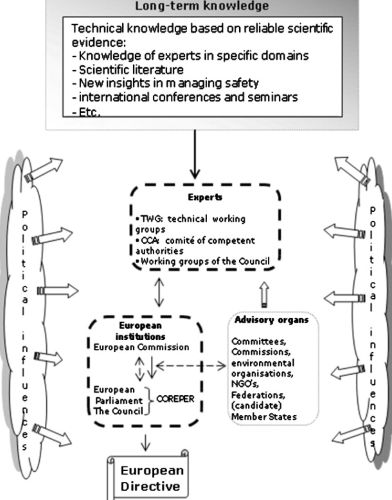
Potential exposure determined who was entitled to receive information under Article 8. The original 1982 provision required member states to ensure that people liable to be affected by a major accident originating in an activity subject to Article 5 notification were appropriately informed about safety measures and emergency behavior. Such people had a claim that arose from the consequences an installation might impose upon them, regardless of whether they worked there or maintained any contractual relationship with its owner. Recognizing that claim changed the position of surrounding residents within accident preparedness. Their knowledge became a matter that governments were obliged to address. The obligation existed in the original directive, although its practical meaning remained incompletely specified. National authorities retained substantial discretion over the content and delivery of information. Article 8 also provided for the relevant information to reach other concerned member states as a basis for bilateral consultation. This provision acknowledged that authorities in a neighboring country could need information about an installation whose hazards extended across national borders.
Six years later, Directive 88/610/EEC made the public-information duty more explicit. The amended Article 8 required relevant information to be supplied without a request, repeated and updated at appropriate intervals, and made publicly available. That clarification expressly placed responsibility for initiating communication with those implementing the duty; residents did not have to discover the available material and begin an inquiry. The new Annex VII specified eleven categories of information, beginning with the company’s identity and site address and an explanation of its activity in simple terms. It also required an account of the dangerous substances or relevant hazard classifications and the potential effects of a major accident on people and the environment. These particulars connected general emergency advice to an identifiable source of danger. The required explanation of how people would be warned and kept informed could help them recognize an official alert, while instructions about their conduct established what response was expected. Information had to refer to the emergency plan for effects outside the site, without necessarily reproducing that plan in full. Another item identified where further relevant information could be obtained, subject to national confidentiality requirements. Confirmation that the installation came under the regulatory regime and had submitted the prescribed notification or declaration also belonged in the public account. Such confirmation established a fact about the site’s administrative status; it supplied no independent guarantee that every precaution was adequate. The requirements made a general assurance of safety insufficient as a public explanation. People were to receive information that related an installation’s activities to its possible consequences and to the arrangements intended to protect them.
Accessibility also concerned the reader’s ability to understand what had been provided. Bruna De Marchi’s work placed the directive’s requirements within research on risk communication and examined communities’ information needs, including an Italian pilot study conducted in 1989. That approach made the recipients’ circumstances part of the problem of providing useful information. Explaining an activity in ordinary language required choices about which details a nonspecialist needed and how they related to possible action. A document could accurately describe a chemical process while leaving its audience unable to interpret a warning or identify the next source of advice. The legal promise raised a question of usability that could not be answered simply by counting notices distributed.
The scope of this entitlement remained narrower than unrestricted access to regulatory records. Article 8 did not require publication of every technical submission exchanged between manufacturers and authorities. Article 13 regulated the use and disclosure of information acquired through specified administrative procedures, with particular restrictions applying to Commission officials and material passed by the Commission to national officials. Its exceptions permitted certain disclosures and the circulation of general safety information while protecting industrial secrecy. These provisions coexisted with the affirmative requirement to inform potentially affected people. Confidentiality could constrain the handling of particular records without erasing the obligation to provide the required protective information. Josée van Eijndhoven distinguished a safety-oriented “need to know” from a more expansive “right to know.” Her distinction concerns the breadth and purpose of disclosure, rather than the existence of a statutory duty to inform. A resident might learn how an accident would be signaled and what response was advised, yet remain unable to examine all the assumptions used to judge the plant’s continued operation acceptable. Similarly, Article 8 itself conferred no general veto over siting decisions, although other national procedures could offer opportunities for participation. The limits mattered because instructions about responding to danger did not settle the separate question of how much danger a community should be expected to accept. The directive established a defined entitlement within emergency preparedness, leaving wider claims to documentary access and influence dependent on additional legal or political arrangements.
For communities near a hazardous installation, the amended requirements provided grounds for assessing a public explanation in specific terms. An account silent about potential effects on residents could be shown to omit required content, as could advice that failed to explain how an alert would be communicated. Adequacy gained a standard that residents as well as administrators could consult. Publication also affected the meaning of reassurance. Identifying major-accident hazards acknowledged the possibility of a serious failure even where preventive arrangements were considered satisfactory. A useful account had to explain the reasons for preparedness without implying that an accident was inevitable or that official oversight guaranteed complete safety. Receiving such an account did not signify public agreement with the judgments behind it. The communication requirement established what people had to be told, while leaving open whether they trusted its providers or considered the risk acceptable. The practical significance of the entitlement would depend on how national systems delivered the information and responded when its recipients sought a fuller explanation.
When Compliance Did Not Produce Communication

An information campaign could be administratively complete while its recipients remained poorly prepared for an emergency. Early studies of the Seveso regime exposed several possible gaps between official activity and public understanding. In some settings, authorities regarded existing access to plant records as sufficient, although few residents consulted them. In others, material reached households without producing much knowledge of protective action. These situations required different remedies, and some represented failures to fulfill the directive’s obligations in the first place. Treating them all as successful legal compliance would obscure that distinction. Nevertheless, their shared difficulty was evaluative: completing an administrative procedure supplied limited evidence about how people would respond when the information became urgently relevant. The history of implementation requires attention to residents’ reception of a program as well as to the institutions that organized it.
Existing licensing procedures initially seemed to offer a convenient route for satisfying the new requirements in West Germany and the Netherlands. As Josée van Eijndhoven described, citizens were notified that an application had been filed and could choose to examine the supporting material. Dutch plant files might occupy numerous cabinets, with information organized for specialist review. The arrangement required residents to identify the relevant documents and interpret them independently. It also concentrated attention on the authorization of an activity, although accident preparedness depended on knowledge that remained current throughout its operation. Such procedures favored people with time and access to technical assistance. They could support scrutiny by organized groups while doing much less for households that had never sought a licensing file. Van Eijndhoven also recorded a subsequent Dutch approach that delivered introductory information door to door and offered meetings, with fuller records available to those who wanted them. That development prevents the early shortcomings from becoming a permanent characterization of an entire country. It changed the sequence through which people encountered information: an initial explanation reached them directly, and further investigation became a choice they could make from an informed starting point. Administrative openness had several possible forms, whose usefulness depended on how much work residents had to perform before acquiring even the basic material.
British campaigns tested a different assumption about public response. Reporting research from the early implementation period, Ortwin Renn noted that industry representatives had warned that extensive disclosure would generate unnecessary fear. Joint campaigns by operators and authorities generally encountered favorable or indifferent reactions, offering little support for those predictions. Some programs acknowledged incomplete emergency arrangements and described improvements under way. Nevertheless, the Manchester survey summarized in Renn’s 1989 article found that many recipients had not studied the emergency guidelines and did not know the protective actions expected of them. They ranked industrial danger below concerns such as unemployment. Evaluating the campaign solely through complaints or expressions of satisfaction would have missed the difficulty most relevant to its emergency purpose.
A later investigation complicated the assumption that communication could be organized around a single widely trusted source. Helmut Jungermann, Hans-Rüdiger Pfister, and Katrin Fischer reported the German component of a survey commissioned by the European Commission and conducted in five countries. Their study, published in 1996, interviewed 430 people using a fifty-item questionnaire. Ratings of credibility differed substantially between sources, and participants expressed strong interest in obtaining information. Their preferences about who should provide it were differentiated, and credibility played only a minor role in explaining those preferences and interests. This finding cautions against equating reluctance to rely on a particular provider with indifference to the subject. A recipient could want an account from an institution whose reliability was also open to question. Requests for additional explanations could serve precisely to examine that institution’s performance. The survey suggests that choosing an authoritative spokesperson addressed only part of the communication problem. A program also needed to investigate what people wished to learn and why they preferred particular routes for learning it. Its audience brought expectations about the source and purpose of an explanation, and those expectations required attention in the design of the program.
Evidence that communication could produce measurable benefits came from a more focused German evaluation published in 1995. Holger Schütz and Peter M. Wiedemann assessed a prototype information package distributed to residents near a pharmaceutical plant. Their telephone survey interviewed 204 recipients after a week and returned to 154 of them four weeks later; 101 residents who had not received the material provided a comparison group. Recipients showed significantly better knowledge of warnings and appropriate emergency conduct. Trust in the company increased, while perceived risk did not change. These were encouraging results within the study’s short observation period, and they challenge the expectation that explaining hazards must increase perceptions of danger. The measured achievement was improved knowledge about emergencies; behavior during an actual accident remained untested. Its importance lay in demonstrating that practical learning could be evaluated separately from changes in attitudes toward the installation.
By the end of the 1990s, research commissioned by Britain’s Health and Safety Executive was investigating public judgments through discussions around seven different major hazard sites. Gordon Walker, Peter Simmons, Alan Irwin, and Brian Wynne used focus groups and asked participants to rank statements to examine how nearby residents understood industrial risks. Combining discussion with structured comparison of viewpoints offered a means of examining the reasoning behind agreement as well as opposition. This approach also allowed differing attitudes within a locality to receive attention, avoiding the assumption that one view represented the entire neighboring population. Their 1998 report emphasized the influence of local circumstances and distinguished different bases for tolerating hazardous establishments. The evaluative task consequently extended beyond recall of emergency instructions. The reasons people gave for living with industry became relevant to interpreting their responses, including their views about information provision and regulation. A criticism could concern how an institution operated, and supplying additional chemical facts would not necessarily address it. Conversely, apparent acceptance required examination of the reasoning through which people reached that position. In their subsequent 1999 article, written in the context of the Seveso II directive, the researchers argued for communication sustained over time, with active attention to public reasoning and the circumstances of particular communities. Their position gave listening an operational purpose: it could reveal what an established information program had failed to address. Residents’ interpretations became part of the evidence against which communication arrangements could be revised. The principal challenge was to give those responses a route back into decisions about preparedness, so that communication could alter official practice as well as instruct residents.
Enforcement from Below: How Communities Used the Directive

Stichting Natuur en Milieu, a Dutch umbrella organization for environmental groups, helped make incomplete implementation an issue for public scrutiny. Its representatives identified discrepancies in proposed national legislation and used advisory bodies and contacts with European officials to pursue them. Organizational expertise gave these interventions access to discussions that ordinary residents could find difficult to enter. The legal proceedings were brought by the European Commission against the Netherlands. On May 20, 1992, the Court of Justice found that the country had failed to implement Article 8(1), alongside other deficiencies. The Dutch government had conceded that the public-information requirement remained unimplemented at the deadline relevant to the proceedings. The Court nevertheless accepted existing national provisions as adequate for the directive’s general preventive obligations under Articles 3 and 4. Its judgment distinguished particular failures from the broader adequacy of Dutch safety regulation. Environmental organizations contributed to the scrutiny surrounding enforcement, while the Commission controlled the infringement action. This division of roles gave civic organizations a means of influencing official accountability without making them the plaintiffs in the European case. It also demonstrates why substantial domestic regulation could coexist with an actionable omission concerning the people exposed to industrial hazards.
Not every appeal to European institutions established a violation. Residents of the Bormida Valley presented a petition concerning the ACNA chemical plant to the European Parliament in 1989, asking whether Italy had fulfilled the directive’s Article 5 reporting requirements. In 1993, the Petitions Committee found no breach in that particular case. The statutory allegation failed, although presenting it in Strasbourg helped publicize the campaign. This outcome gives political intervention a meaning distinct from success on a legal claim. Petitioning offered another audience for grievances and an occasion to press national authorities, even when the committee’s examination did not support the alleged infringement. The episode also cautions against treating European attention as an authoritative endorsement of every demand made by a local movement.
Manfredonia’s activists developed a sustained organization from a protest coalition that proved difficult to hold together. Disagreement over the chemical plant’s closure and the employment it provided divided participants, while the Movimento Cittadino Donne continued its campaign. The women’s movement included people with differing occupational backgrounds, among them teachers and housewives. Its members acquired knowledge of industrial regulation and challenged the information arrangements established by Italy’s implementation of the directive. Their involvement expanded the movement’s activities beyond public demonstrations to scrutiny of the government’s regulatory choices. Maintaining this effort involved learning how to work through institutions outside the town. In March 1990, with assistance from Member of the European Parliament Adriana Ceci, representatives attended the Parliament’s Committee on the Environment, Public Health and Consumer Protection. Ceci’s intervention supplied a connection between a local campaign and a forum capable of questioning the Italian government’s conduct. The women brought their own developing knowledge to that encounter, while their parliamentary ally could place their concerns before officials whom they could not readily reach themselves. Access to European institutions involved cooperation between activists and representatives who occupied different positions within the political system. Parliamentary contacts formed one route within a wider struggle. An application lodged in 1988 was also proceeding through the Council of Europe’s human-rights system, giving the campaign a separate avenue for challenging the effects of missing information on residents’ lives.
Petitions from Priolo in 1990–1991 made external emergency planning a specific issue of enforcement, invoking Article 7 of the directive. Parliamentary questions by the Italian Green representative Enrico Falqui connected these concerns with complaints from other industrial areas. Such interventions helped sustain the Commission’s examination of Italian implementation. The resulting infringement case reached judgment on June 17, 1999, when the Court of Justice ruled against Italy over emergency planning and inspection duties. The government’s own May 1997 response had reported that only 110 of the 443 required plans for action outside establishments had been completed. The Court rejected the suggestion that designating responsible authorities was sufficient to discharge the obligations at issue. Those authorities had to carry out the prescribed work. The ruling attached a legal consequence to a demonstrable deficiency in administrative performance. Its subject was Article 7’s planning and control requirements, rather than a judgment on the public-information provision considered in the Dutch case. Community complaints had helped direct attention to the missing arrangements, but the Commission remained responsible for bringing the state before the Court. Because the proceedings addressed Italy’s implementation, their result extended beyond the grievances of an individual neighborhood. The practical benefit for residents nevertheless depended on the subsequent preparation of plans and conduct of controls that had been lacking.
Forty women from Manfredonia obtained a different form of judicial recognition in Guerra and Others v. Italy. On February 19, 1998, the European Court of Human Rights unanimously found a violation of Article 8 of the European Convention on Human Rights, which protects private and family life. This was a Council of Europe proceeding, legally distinct from enforcement of the Seveso Directive. The Court observed that the applicants had waited until fertilizer production ceased in 1994 without receiving essential information for assessing the risks of continuing to live near the factory. Effective protection of their private and family lives required affirmative action by the state. The judgment connected disclosure to decisions about residence and exposure, giving the information failure significance within an established human-rights guarantee. Its reasoning nevertheless followed a particular legal route. The majority declined to derive the proposed duty to collect and disseminate information from Article 10’s protection of freedom of expression in these circumstances. The applicants received ten million Italian lire each for nonpecuniary damage. The Court left Italy to choose the domestic means of redressing the violation, declining the requested orders for decontamination and further investigations.
The opportunity to pursue these claims depended on resources unevenly distributed among the people at risk. Specialist organizations had established advisory networks; some local groups reached European institutions through sympathetic parliamentarians. The cases reveal how access to an institution could shape which failure became an enforceable issue. They also expose the importance of timing. In Manfredonia, judicial recognition followed the end of the production period during which the missing information had been needed. A successful claim could establish responsibility while arriving too late to serve the original protective purpose. Communities nevertheless made failures of public administration visible to bodies capable of demanding an answer. Their achievement was to connect the experience of living with industrial danger to identifiable duties, making official inaction a subject of proceedings that reached beyond local administration.
Does Corporate Control of Information Explain Too Much?
The following video from “The Raven’s Eye” covers the Seveso disaster:
The strongest objection to an interpretation centered on corporate control of information is that it can turn Seveso into a history of concealed answers. Taken too far, this approach assumes that the knowledge necessary for an adequate response already existed within the company and that disclosure would have resolved the essential difficulties. It also risks treating public authorities as recipients whose principal task was to obtain information, although they bore responsibilities for evaluating evidence and organizing protection. A counterfactual in which officials received every available company record on July 10 would still leave difficult judgments about exposure and the consequences of intervention. Decisions could impose serious burdens on residents even when they were justified, and the evidence needed to choose between alternatives might remain incomplete. The challenge concerns the argument’s causal reach. Unequal access to knowledge may explain an avoidable disadvantage without explaining everything that subsequently went wrong.
Different questions about the accident required different kinds of evidence, acquired over different periods. Identifying a dangerous contaminant was a narrower undertaking than reconstructing its formation inside the reactor, and neither task supplied a reliable prognosis for everyone who had been exposed. In their 1979 account, Homberger and his colleagues reported that the initiating reaction remained insufficiently understood, while describing company laboratory analyses that had assisted protective measures. Their affiliations with Givaudan and Hoffmann-La Roche make this an interested account, especially where it presents the event as beyond anticipation. The report warrants scrutiny as evidence of the company’s interpretation; it cannot settle whether earlier operating choices or safeguards were defensible. Nevertheless, corporate interests do not establish that every acknowledged gap in knowledge was invented. An independent basis for recognizing genuine uncertainty appears in Pocchiari, Silano, and Zampieri’s epidemiological report, prepared under regional public supervision and explicitly presented as work in progress. Its continuing surveillance and unfinished long-term investigation show that important health questions remained open outside the company as well. These accounts require historians to distinguish information already available for disclosure from conclusions that investigation had yet to establish, and to examine claims of ignorance against the particular decision for which knowledge was needed.
A particularly direct scholarly challenge comes from Bruna De Marchi, Silvio Funtowicz, and Jerome Ravetz’s retrospective analysis. They distinguish uncertainty arising from scientific limitations and urgent decisions from difficulties involving institutional relationships, liability, and contested rights over information. Strikingly, they characterize disputes over information as comparatively limited once the factory had been placed under judicial control, observing that authorities did not need to compel the company to disclose information. Their assessment still acknowledges that relevant knowledge arrived imperfectly and that the firm’s initial conduct generated suspicion. Its significance lies in the distinction between phases. Continuing deficiencies in the response cannot all be attributed to an unchanged corporate monopoly over the facts. This challenges the sufficiency of the explanation while leaving the adequacy of the initial warning open to criticism.
Regulators’ dependence on industrial expertise raises a further difficulty for any interpretation that equates public oversight with the displacement of company knowledge. People who design and operate a chemical process possess experience that inspectors need to assess, including knowledge of equipment behavior and deviations from normal operation. Increasing the resources available to public investigators can improve their judgment, but it does not remove the practical importance of obtaining reliable cooperation from operators. Technical independence consequently involves retaining the ability to challenge a manufacturer while drawing on its experience. The 1982 directive acknowledged this relationship by requiring manufacturers to identify hazards and provide technical information, while assigning competent authorities duties of examination and control. Read in this light, its allocation of responsibilities offers a more demanding model than a simple transfer of records from private to public hands. Harry Otway and Aniello Amendola’s analysis helps clarify the point: the legislation concerned the generation of knowledge as well as its transmission. The interpretive implication is that prevention depended partly on making operators investigate matters that had not previously been sufficiently understood. An authority unable to question the scope of an investigation could become dependent on the manufacturer’s definition of the problem, even after receiving a substantial technical submission. Effective scrutiny requires enough independent competence to test assumptions and request further work, together with arrangements through which operational experience can inform public decisions. Industry’s expertise becomes a reason to establish such scrutiny, because its usefulness and its possible limitations are inseparable from the circumstances in which it was produced.
Accepting this challenge narrows down my claim and gives responsibility a more precise meaning. Corporate control mattered because it affected who could assess existing evidence and participate in decisions about its implications; it need not imply possession of a complete, suppressed explanation of the disaster. A defensible judgment must ask what particular actors knew or reasonably suspected, what they could communicate, and which protective decisions that information could assist at the time. The same standard requires attention to public institutions that received evidence but lacked the capacity, preparation, or willingness to use it adequately. Shared dependence on technical knowledge does not distribute obligations equally, since operators and authorities occupied different positions and exercised different powers. Nor does fuller disclosure promise agreement among people who would bear the consequences of official decisions in different ways. The final interpretation consequently rests on a qualified relationship between knowledge and accountability. Companies must expose their assessments to examination, while public bodies must sustain the ability to evaluate them and explain the action taken. The strongest historical claim concerns the organization of responsibility under incomplete evidence, including the power to determine when others may act on what is already known.
Conclusion: The Right to Act Before Certainty
For residents near ICMESA, the lost opportunities of July 1976 cannot be measured entirely through the injuries eventually documented. During the interval in which the character of the release became known, ordinary activities could continue without an adequate basis for reconsidering them. That disadvantage crossed a fundamental division of authority. Decisions made within the establishment could alter conditions in homes whose occupants had no control over its operation. Later investigation could establish more about exposure, and compensation could acknowledge certain losses, but neither could restore the choices available before contamination entered people’s daily lives. This gives the failure of warning a significance that does not depend on attributing every subsequent illness to the accident. Access to usable information had value when households and public officials needed to decide what precautions were warranted. The historical issue includes the loss of that opportunity, alongside the physical damage that research could subsequently identify.
European legislation gave this problem a form that extended beyond the circumstances of one Italian factory. Within the directive’s defined scope, the operator had to identify hazards and demonstrate the measures adopted to address them, while the competent authorities acquired responsibilities for examination, control, and emergency preparation. People exposed to a notified installation’s potential consequences were also entitled to information about protective measures and appropriate behavior during an accident. The important change concerned the sequence in which obligations arose. These requirements did not await proof that a neighboring resident had suffered injury. They recognized that an industrial operation could impose responsibilities toward people outside its workforce before its dangers had produced an identifiable victim. In that respect, the directive challenged a political arrangement in which an establishment’s reassuring account could carry substantial authority while outsiders lacked the means to evaluate its practical implications. Its provisions supplied no guarantee against every release, and they did not give residents an unrestricted power to direct factory operations. They did establish that preparation for an emergency belonged within the ordinary governance of hazardous production. That shift mattered because the separation between a factory and its surroundings was administrative, while the effects of an accident could cross it. Responsibility consequently attached to public institutions with obligations toward people whose interests could not be represented adequately by the operator’s internal judgments. Such an arrangement could fail in practice, but it supplied a basis for identifying neglected duties before the extent of damage had been established. The legislation’s historical importance lies in this advance recognition of obligations, rather than in any claim that its enactment completed the task of protection.
Experience with implementation exposed the distance between recognizing those obligations and making them dependable. The Italian infringement judgment demonstrated that appointing responsible authorities did not satisfy duties requiring actual emergency plans and inspections. Community campaigns, examined by Karin van Leeuwen and Koen van Zon, helped turn failures of preparation into matters that European institutions could investigate. Their achievement also reveals a burden that formal recognition alone left unresolved. People living with industrial hazards sometimes had to secure attention to protections already owed to them. Public accountability remains incomplete when its practical availability depends heavily on the resources of those seeking it. Enforcement from below could strengthen the system, but it could not relieve governments of the responsibility to make routine protection work.
Scientific limitations and weaknesses within government make the final judgment more discriminating. They require a history attentive to the different capacities of those involved, without imagining that full disclosure would have yielded a complete solution to every disputed decision. The public’s claim nevertheless did not require a finished explanation of the reactor failure or a settled forecast of long-term disease. It arose from having to live with consequences over which residents exercised little initial control, while possessing legitimate interests in decisions about their own safety. An adequate assurance must be judged partly by what it enables others to do. Officials need grounds they can investigate, and those affected need to understand the precautions recommended; both must be able to seek reconsideration when evidence changes. The right to act describes this capacity for informed protection without implying unlimited individual authority over emergency operations. Technical knowledge retains its importance within that relationship, but its authority depends on arrangements that permit questions to have practical consequences. Seveso’s legacy encompasses the political position of neighboring populations, as well as the regulation of industrial processes. The measure of an adequate assurance is whether those who must live with its consequences possess a practicable opportunity to question it while protection is still possible.
Bibliography
Affiliate disclosure: Amazon links on this site are paid links. As an Amazon Associate I earn from qualifying purchases.
- Assennato, Giorgio, D. Cervino, Edward A. Emmett, G. Longo, and F. Merlo. “Follow-up of Subjects Who Developed Chloracne Following TCDD Exposure at Seveso.” American Journal of Industrial Medicine 16:2 (1989), 119–125.
- Barca, Stefania. “Work, Bodies, Militancy: The ‘Class Ecology’ Debate in 1970s Italy.” In Powerless Science? Science and Politics in a Toxic World, edited by Soraya Boudia and Nathalie Jas, 115–133. New York: Berghahn Books, 2014.
- Barrell, A. C. “Developments in the Control of Major Hazards.” IChemE Symposium Series 93 (1985), 1–12.
- Blundell, Nigel. A Century of Man-Made Disasters. South Yorkshire: Pen & Sword History, 2019.
- Bonaccorsi, Aurora, Roberto Fannelli, and Gianni Tognoni. “In the Wake of Seveso.” Ambio 7:5/6 (1978), 234-239.
- Bosco delle Querce. “1945. Una nuova industria chimica nasce sul territorio.” Historical chronology of ICMESA and the Seveso disaster. n.d.
- Cardillo, Paolo, Alberto Girelli, and Giuseppe Ferraiolo. “The Seveso Case and the Safety Problem in the Production of 2,4,5-Trichlorophenol.” Journal of Hazardous Materials 9:2 (1984), 221–234.
- Centemeri, Laura. “Informational and Normative Uncertainty in Communities Confronting Chronic Technological Disasters: The Case of Seveso.” Working paper, Centre for Social Studies, University of Coimbra, 2008.
- —-. “Retour à Seveso: La complexité morale et politique du dommage à l’environnement.” Annales. Histoire, Sciences Sociales 66:1 (2011), 213–240.
- Centers for Disease Control. “Preliminary Report: 2,3,7,8-Tetrachlorodibenzo-p-dioxin Exposure to Humans—Seveso, Italy.” Morbidity and Mortality Weekly Report 37:48 (December 9, 1988), 733–736.
- Coggiola, Nadia. “The Johnston Case, the Compensation of Pleural Plaques and Psychiatric Harm in Italian Tort Law.” European Review of Private Law 17:2 (2009), 239–247.
- Commission of the European Communities. Proposal for a Council Directive on the Major Accident Hazards of Certain Industrial Activities. COM(79) 384 final. Brussels, July 16, 1979.
- Committee of Experts. Incineration of the Dioxin-Containing Wastes from Seveso: Final Report of the Committee of Experts. May 7, 1986.
- Consonni, Dario, Magda Rognoni, Luca Cavalieri d’Oro, and Angela Cecilia Pesatori. “Mortality and Cancer Incidence in a Population Exposed to TCDD after the Seveso, Italy, Accident (1976–2013).” Occupational and Environmental Medicine 81:7 (2024), 349–358.
- Conti, Laura. Visto da Seveso: L’evento straordinario e l’ordinaria amministrazione. Milan: Feltrinelli, 1977.
- Council of the European Communities. “Council Directive 82/501/EEC of 24 June 1982 on the Major-Accident Hazards of Certain Industrial Activities.” Official Journal of the European Communities L 230 (August 5, 1982), 1–18.
- —-. “Council Directive 88/610/EEC of 24 November 1988 Amending Directive 82/501/EEC on the Major-Accident Hazards of Certain Industrial Activities.” Official Journal of the European Communities L 336 (December 7, 1988), 14–18.
- Council of the European Communities and Representatives of the Governments of the Member States Meeting in the Council. “Declaration of 22 November 1973 on the Programme of Action of the European Communities on the Environment.” Official Journal of the European Communities C 112 (December 20, 1973), 1–53.
- Court of Justice of the European Communities. Commission of the European Communities v. Italian Republic. Case C-336/97. Judgment of June 17, 1999. European Court Reports 1999, I-3771.
- —-. Commission of the European Communities v. Kingdom of the Netherlands. Case C-190/90. Judgment of May 20, 1992. European Court Reports 1992, I-3265.
- Courtney, K. Diane, and John A. Moore. “Teratology Studies with 2,4,5-Trichlorophenoxyacetic Acid and 2,3,7,8-Tetrachlorodibenzo-p-dioxin.” Toxicology and Applied Pharmacology 20:3 (1971), 396–403.
- De Marchi, Bruna. “Public Information about Major Accident Hazards: Legal Requirements and Practical Implementation.” Industrial Crisis Quarterly 5:4 (1991), 239–251.
- De Marchi, Bruna, Silvio Funtowicz, and Jerome R. Ravetz. “Seveso: A Paradoxical Classic Disaster.” In The Long Road to Recovery: Community Responses to Industrial Disaster, edited by James K. Mitchell, 86–120. Tokyo: United Nations University Press, 1996.
- di Domenico, Alessandro, Vittorio Silano, Giuseppe Viviano, and G. Zapponi. “Accidental Release of 2,3,7,8-Tetrachlorodibenzo-p-dioxin (TCDD) at Sèveso, Italy. II. TCDD Distribution in the Soil Surface Layer.” Ecotoxicology and Environmental Safety 4:3 (1980), 298–320.
- Di Fidio, Mario, ed. Il “Bosco delle Querce” di Seveso e Meda. Milan: Regione Lombardia, 2000.
- Eskenazi, Brenda, et.al. “The Seveso Accident: A Look at 40 Years of Health Research and Beyond.” Environment International 121:1 (2018), 71–84.
- European Court of Human Rights, Grand Chamber. Guerra and Others v. Italy. Application no. 14967/89. Judgment of February 19, 1998. Reports of Judgments and Decisions 1998-I.
- Garagna, Sylvia, et.al. “Recovering Seveso.” Science 283:5406 (1999), 1268-1269.
- Great Britain. Parliament. House of Commons. “European Community (Industrial Accident Hazards).” Hansard, June 23, 1980. Vol. 987, cols. 165–196.
- —-. “Flixborough Inquiry.” Hansard, June 27, 1974. Vol. 875, cols. 1736–1743.
- Gulmann, Claus. “Opinion of Advocate General Gulmann, Commission of the European Communities v. Kingdom of the Netherlands, Case C-190/90.” European Court of Justice, March 17, 1992. ECLI:EU:C:1992:128.
- Hailwood, Mark. “Seveso—40 Years On.” Loss Prevention Bulletin, 251 (October 2016), 14–17.
- Hawksley, J. L. “Risk Analysis in Safety Reports Required by the Seveso Directive.” Reliability Engineering & System Safety 35:3 (1992), 193–199.
- Hay, Alastair. The Chemical Scythe: Lessons of 2,4,5-T and Dioxin. New York: Plenum Press, 1982.
- Homberger, E., G. Reggiani, J. Sambeth, and H. K. Wipf. “The Seveso Accident: Its Nature, Extent and Consequences.” Annals of Occupational Hygiene 22:4 (1979), 327–370.
- Italy. “Legge 22 maggio 1978, n. 194: Norme per la tutela sociale della maternità e sull’interruzione volontaria della gravidanza.” Gazzetta Ufficiale, no. 140, May 22, 1978.
- —-. Corte costituzionale. “Sentenza n. 27 del 18 febbraio 1975.” Gazzetta Ufficiale, no. 55, February 26, 1975.
- Jungermann, Helmut, Hans-Rüdiger Pfister, and Katrin Fischer. “Credibility, Information Preferences, and Information Interests.” Risk Analysis 16:2 (1996), 251–261.
- Kimmig, J., and K. H. Schulz. “Berufliche Akne (sog. Chlorakne) durch chlorierte aromatische zyklische Äther.” Dermatologica 115:4 (1957), 540–546.
- Marsh, Peter. “Batch Reactor Toxic Material Release.” Lessons Learned Database: Individual Incident Summary Report. Institution of Chemical Engineers, July 31, 2023.
- Marzorati, Marzio, and Massimiliano Fratter. “Introduction.” In The Implementation of the Seveso Directives in an Enlarged Europe: A Look into the Past and a Challenge for the Future, edited by Barbara Pozzo, xvii–xxvi. Alphen aan den Rijn: Kluwer Law International, 2009.
- May, George. “Chloracne from the Accidental Production of Tetrachlorodibenzodioxin.” British Journal of Industrial Medicine 30:3 (1973), 276–283.
- Meyer, Jan-Henrik. “Pushing for a Greener Europe: The European Parliament and Environmental Policy in the 1970s and 1980s.” Journal of European Integration History 27:1 (2021), 57–78.
- Milnes, M. H. “Formation of 2,3,7,8-Tetrachlorodibenzodioxin by Thermal Decomposition of Sodium 2,4,5-Trichlorophenate.” Nature 232 (1971), 395–396.
- Mocarelli, Paolo, et.al. “Clinical Laboratory Manifestations of Exposure to Dioxin in Children: A Six-Year Study of the Effects of an Environmental Disaster Near Seveso, Italy.” JAMA 256:19 (1986), 2687–95.
- Otway, Harry, and Aniello Amendola. “Major Hazard Information Policy in the European Community: Implications for Risk Analysis.” Risk Analysis 9:4 (1989), 505–512.
- Pocchiari, Francesco, Vittorio Silano, and Alfredo Zampieri. “Human Health Effects from Accidental Release of Tetrachlorodibenzo-p-dioxin (TCDD) at Seveso, Italy.” Annals of the New York Academy of Sciences 320 (1979), 311–320.
- Ramondetta, Miriam, and Alessandra Repossi, eds. Seveso vent’anni dopo: Dall’incidente al Bosco delle Querce. Milan: Fondazione Lombardia per l’Ambiente, 1998.
- Renn, Ortwin. “Risk Communication at the Community Level: European Lessons from the Seveso Directive.” JAPCA 39:10 (October 1989), 1301–1308.
- Robbe, Federico. Seveso 1976. Oltre la diossina. Itaca: Castel Bolognese, 2016.
- Roche Group. Seveso: 20 Years After. Basel: Roche Group, 1997.
- Schütz, Holger, and Peter M. Wiedemann. “Implementation of the Seveso Directive in Germany—An Evaluation of Hazardous Incident Information.” Safety Science 18:3 (1995), 203–214.
- Seger, Monica. Toxic Matters: Narrating Italy’s Dioxin. Charlottesville: University of Virginia Press, 2022.
- Strigini, Paolo, and Annamaria Torriani-Gorini. “Seveso: Zona Infestata.” Science for the People 9:6 (November–December 1977), 8–16.
- Theofanous, T. G. “A Physicochemical Mechanism for the Ignition of the Seveso Accident.” Nature 291:5817 (1981), 640–642.
- —-. “The Physicochemical Origins of the Seveso Accident—I: Initial Heatup.” Chemical Engineering Science 38:10 (1983), 1615–1629.
- —-. “The Physicochemical Origins of the Seveso Accident—II: Induction Period.” Chemical Engineering Science 38:10 (1983), 1631–1636.
- United States Environmental Protection Agency. Guide for Decontaminating Buildings, Structures, and Equipment at Superfund Sites. EPA/600/2-85/028. Cincinnati: Hazardous Waste Engineering Research Laboratory, 1985.
- van Eijndhoven, Josée. “Disaster Prevention in Europe.” In Learning from Disaster: Risk Management after Bhopal, edited by Sheila Jasanoff, 113–132. Philadelphia: University of Pennsylvania Press, 1994.
- van Leeuwen, Karin, and Koen van Zon. “Preparing for Disaster: The Seveso Directive, Infringements and Societal Mobilisation of European Law, 1976–2000.” European Law Open 4:3 (2025), 518–535.
- van Zon, Koen. “Confronting Europe’s Toxics Trade from Below: The Contested Global Legacy of the 1976 Seveso Disaster.” European Review of History: Revue européenne d’histoire 32:3 (2025), 385–407.
- Walker, Gordon, et.al. Public Perception of Risks Associated with Major Accident Hazards. Contract Research Report 194/1998. Sudbury: HSE Books, 1998.
- —-. “Risk Communication, Public Participation and the Seveso II Directive.” Journal of Hazardous Materials 65:1-2 (1999), 179–190.
- Whiteside, Thomas. “Contaminated.” The New Yorker, September 4, 1978.
- World Health Organization. Polychlorinated Dibenzo-para-dioxins and Dibenzofurans. Environmental Health Criteria 88. Geneva: World Health Organization, 1989.
Originally published by Brewminate, 10.08.2026, under the terms of a Creative Commons Attribution-NonCommercial-NoDerivatives 4.0 International license.
About the Author