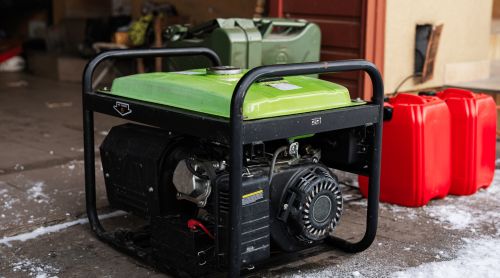
There’s something genuinely odd about a machine whose entire purpose depends on almost never being needed at all. A standby generator can sit quietly outside a house for months, doing absolutely nothing, simply waiting for the rare moment when normal power disappears.
Most equipment gets judged by how often it runs and how well it performs during regular use. A generator flips that expectation entirely, succeeding precisely by staying idle, its value tied entirely to a single unpredictable moment nobody can schedule in advance.
That strange relationship between constant readiness and rare activation shapes everything about how a good system actually gets designed, installed, and maintained by anyone who understands what these machines are truly built to accomplish.
The Blackout Is the Generator’s Starting Gun
Utility power normally flows into a house without anyone thinking twice about it, arriving reliably enough that most people never consider the mechanics involved until the moment it suddenly stops working during a storm or unexpected outage somewhere nearby.
When that happens, automatic transfer equipment detects the interruption and switches the house over to backup power within moments. A skilled provider of Generator Installation Windsor CO homeowners depend on designs this entire relationship to activate seamlessly, often before anyone inside even realizes power went out.
That instant transition represents the entire point of the system working correctly. The generator doesn’t wait to be asked, it responds automatically the moment utility power disappears, turning what could be a stressful outage into a barely noticeable inconvenience instead.
Not Every House Needs Everything Powered
Some homeowners want every single circuit backed up during an outage, refrigerators, lighting, HVAC, and every outlet in the house running exactly as though nothing happened at all. Others take a more targeted approach, prioritizing only the systems that genuinely matter most.
Essential-load strategies focus backup power on critical circuits, like refrigeration, well pumps, and basic lighting, while leaving less critical loads unpowered during an outage. That approach can reduce equipment size and overall cost considerably compared to whole-house coverage.
Deciding between these approaches depends heavily on what actually matters to a particular household, medical equipment, remote work requirements, or simply personal comfort preferences all factor into how a system ultimately gets sized and planned from the very beginning.
Fuel Has to Be Part of the Conversation
A generator is only as useful as the fuel supply feeding it, which makes fuel type a genuinely important part of any system design conversation rather than an afterthought considered only after everything else has already been decided upon.
Natural gas offers continuous supply without needing manual refueling, provided the utility line itself stays intact during an extended event. Propane requires adequate storage capacity planned around expected outage duration, while other fuel types carry their own considerations entirely.
Expected loads and typical outage duration in a given area both influence which fuel approach makes the most practical sense. None of these choices exist in isolation, they all interact to shape a system capable of actually performing when it’s genuinely needed most.
A Backup System Has to Work on the Day Nobody Planned For
A generator that’s never tested is really just an expensive guess about future reliability. Regular testing and maintenance matter enormously here, since equipment that sits idle for months at a time can develop problems nobody discovers until the exact moment it’s actually needed.
Placement matters too, protecting the unit from weather while keeping it accessible for maintenance and safe operation throughout its lifespan. None of these considerations are particularly flashy, but they matter far more than any feature that only shows up in ordinary daily use.
Reliability, not convenience features, defines whether a backup system actually earns its keep. The entire value of the investment comes down to one unpredictable moment, and everything about proper installation and maintenance exists to make sure that moment goes smoothly.
Conclusion
There’s a genuine kind of value in owning a machine that spends nearly all its time doing absolutely nothing, quietly waiting outside for a moment homeowners actively hope never actually arrives at all, and often it simply doesn’t for long stretches at a time.
That paradox is really the whole point behind standby power. Success looks like silence, an uneventful winter, an unremarkable storm season, and a generator that never had to prove itself because normal power simply never failed in the first place.
When that rare moment finally does arrive, though, a properly installed and maintained system becomes the single most important piece of equipment in the entire house, doing exactly the job it was purchased to do all along.
About the Author