A power outage has a way of revealing just how much a home depends on electricity. Heating and cooling can stop, refrigerators begin warming, sump pumps may become useless, and internet, security, lighting, and other everyday systems suddenly disappear. For homes that depend on electrically powered medical equipment or well pumps, losing power can create much more serious problems.
That is why backup power deserves consideration earlier in the design or renovation process. A generator is not simply another piece of equipment to squeeze beside the house. Its size, location, fuel supply, electrical connections, noise, drainage, and maintenance access can all influence how well the finished home functions.
Think About Backup Power Before the Final Plans
Generators are easy to treat as an optional addition that can be figured out later. In practice, early planning can make installation considerably simpler.
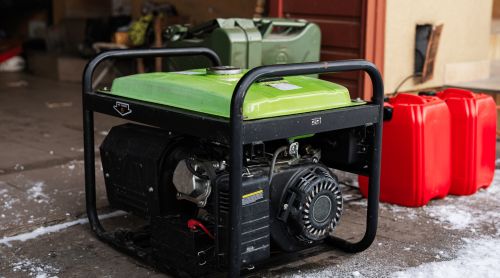
A permanently installed system needs an appropriate outdoor location, electrical connections, a transfer switch, a suitable foundation or mounting surface, and access to its fuel source. The unit also needs enough space for safe operation and future maintenance.
Those requirements can affect landscaping, pathways, utility areas, fences, and other exterior features.
If backup power is being considered during construction or a major renovation, bring it into the conversation while those decisions are still flexible. It is much easier to reserve an appropriate location and plan utility routes before finished surfaces and landscaping are in place.
Give Placement More Attention Than You Think It Needs
Generator placement is where practical requirements and exterior design meet.
The unit needs to be installed according to applicable requirements and manufacturer instructions, with careful consideration given to exhaust, openings into the building, drainage, service access, and other site conditions.
A location that looks convenient on a drawing may become less appealing when you consider noise near a bedroom or patio. Likewise, placing equipment at the far end of the property simply to hide it may increase the complexity of electrical and fuel connections.
When planning generator installation, consider the location as part of the broader site plan rather than choosing an empty spot after everything else has been decided. Electrical connections, fuel access, drainage, maintenance space, and the way the surrounding outdoor area will be used should all influence placement.
The best location is usually one that satisfies safety and installation requirements without making the generator unnecessarily difficult to access or live around.
Decide What Actually Needs to Stay Powered
Backup power does not necessarily mean keeping every appliance and outlet operating exactly as usual.
Start with the systems that would create the biggest problems if they stopped. Depending on the home, those could include refrigeration, heating or cooling, sump pumps, well pumps, medical equipment, security systems, internet equipment, and essential lighting.
This exercise helps establish how much generator capacity is actually useful.
Equipment with motors and compressors also deserves special consideration because some appliances require substantially more electricity when starting than while running. Estimating the generator capacity needed for essential household loads can provide a useful starting point before professional load calculations are completed.
Oversizing simply for the sake of having a larger generator can add cost without necessarily improving the way the home functions during an outage.
Consider Noise as Part of the Design
A standby generator is mechanical equipment, and mechanical equipment makes noise.
That may not matter much during an actual emergency, but many standby systems also perform periodic exercise cycles. A poorly considered location can therefore become annoying even when utility power is working normally.
Think about nearby bedrooms, home offices, patios, and other quiet areas when evaluating possible locations.
Screening can sometimes reduce the visual impact of the equipment, but it should never interfere with required airflow, clearances, exhaust management, or service access.
Landscaping should be planned with the same considerations in mind. A generator surrounded by plants may disappear nicely from view until those plants grow into the space a technician needs to reach.
Good design makes mechanical equipment less intrusive without compromising its operation.
Plan the Fuel Supply Alongside the Electrical System
Fuel deserves as much thought as electrical capacity.
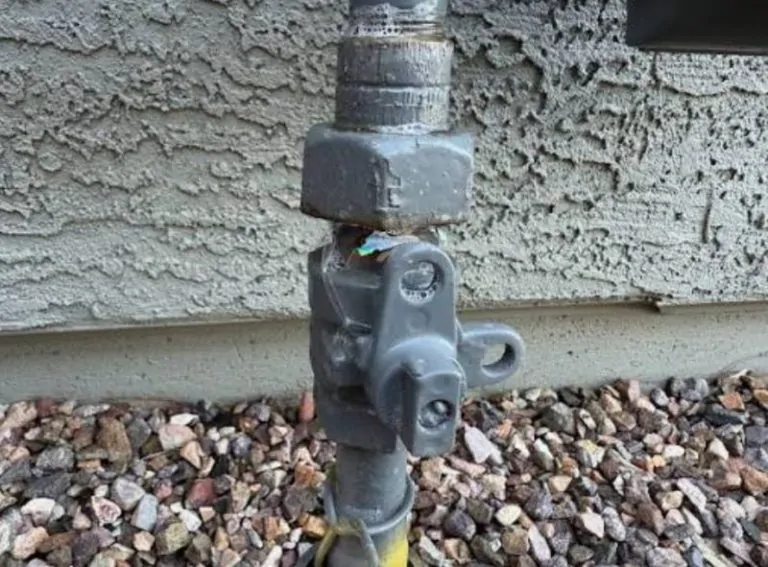
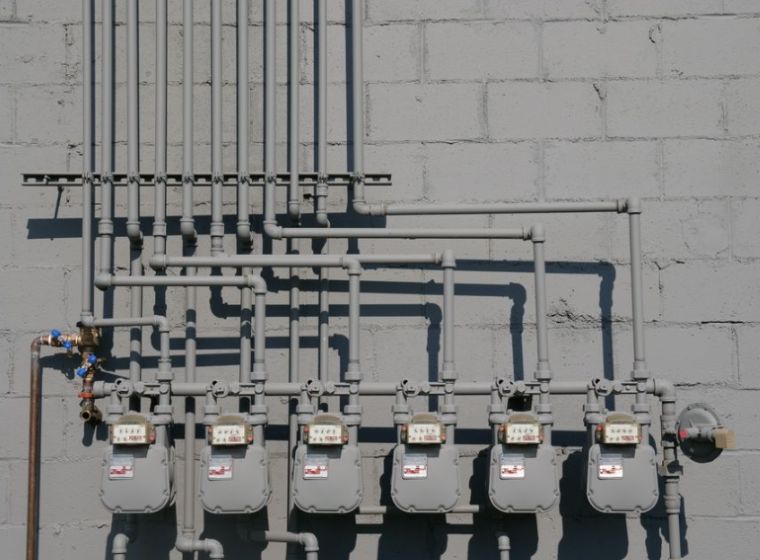
Permanent standby generators commonly use natural gas or propane. The practical choice depends on the property, available infrastructure, generator specifications, expected runtime, and how fuel availability could be affected during an extended outage.
Propane requires appropriate storage and fuel-level planning. A system connected to a gas utility introduces different considerations.
The important question is not simply which fuel sounds more convenient. Think about what happens several hours—or several days—into an outage.
Fuel routing can also influence generator placement, which is another reason to make these decisions before the rest of the exterior design becomes fixed.
Don’t Treat the Transfer Switch as a Minor Detail
A standby system is not simply a generator connected to a house.
An automatic transfer switch allows the electrical load to move from utility power to the generator when an outage occurs and back again when normal service returns. Proper transfer equipment also prevents dangerous backfeeding into utility lines.
For homeowners, the technical details should be handled by qualified professionals. What matters during planning is understanding that the generator, transfer equipment, electrical panel, and selected loads have to function as a coordinated system.
That coordination should influence equipment sizing and installation decisions from the beginning.
Keep Safety at the Center of Placement Decisions
A generator’s exhaust is not merely an inconvenience.
Fuel-burning generators produce carbon monoxide, an odorless gas that can become deadly. Equipment therefore needs to be located and operated according to the manufacturer’s instructions and applicable safety requirements, with particular attention to windows, doors, vents, and other potential paths into the building.
Understanding generator carbon monoxide and electrical safety is useful even when a professional will handle the installation.
Working carbon monoxide alarms provide another important layer of protection.
Safety requirements should come before aesthetics. If the most visually discreet location conflicts with safe installation, choose another location and solve the visual problem through thoughtful design instead.
Make Maintenance Access Part of the Plan
Generators spend much of their time waiting, but that does not make them maintenance-free.
A standby system may require periodic inspections, oil and filter changes, battery checks, testing, and other service specified by the manufacturer. The Department of Energy notes that routine maintenance is important for keeping standby systems prepared to operate when primary power is unavailable.
That means technicians need practical access.
Avoid designing fences, storage areas, dense landscaping, or other permanent features that make routine service unnecessarily difficult. Equipment that is easy to reach is generally easier to inspect and maintain consistently.
The same principle applies to transfer equipment and other components associated with the system.
Think About How the Home Will Function During an Outage
Backup-power planning is ultimately about more than watts.
Imagine actually living in the house during a prolonged outage. Which rooms need lighting? Is heating or cooling essential? Does the home rely on a well pump? Could a failed sump pump cause water damage? Does anyone work from home or rely on powered medical equipment?
Those questions reveal which electrical loads matter most.
They can also influence other design decisions. A home designed around resilience might group important circuits thoughtfully, make mechanical equipment easy to access, and consider backup power alongside water management, insulation, HVAC performance, and other systems that help the building remain usable during disruptions.
This is where backup power becomes part of good home planning rather than simply another appliance purchase.
Build Resilience Into the Home From the Beginning
A generator may never be the most exciting part of a home design, but its value becomes obvious when utility power disappears.
The best systems tend to be the ones that were planned rather than squeezed in. They have enough capacity for meaningful loads, a practical fuel strategy, appropriate placement, safe electrical integration, and enough room for future maintenance.
You do not have to design the entire property around a generator. You simply need to give backup power a place in the conversation early enough for the electrical system, exterior layout, utilities, and everyday living spaces to work together.
When those details are considered from the beginning, backup power feels less like equipment added to a building and more like what it should be: a quiet layer of resilience built into the home.
About the Author