Babylon’s devastation in 689 BCE and its later restoration reveal how Assyrian kings used destruction and rebuilding to assert authority over a city with its own political identity.

By Matthew A. McIntosh
Public Historian
Brewminate
Introduction: The City a King Chose to Destroy
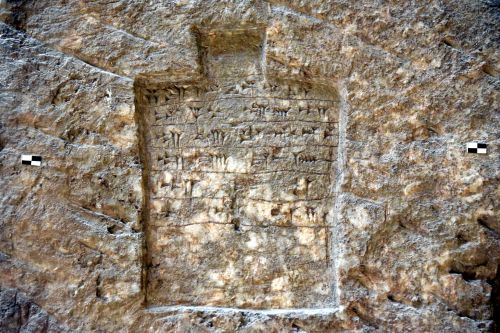
When Babylon fell to Sennacherib in 689 BCE, the Assyrian king represented its capture as the beginning of a deliberate assault on the city’s continued existence. His inscription at Bavian described demolishing buildings and directing water through the site to destroy its foundations. He measured the devastation against the Deluge, claiming an achievement greater than the overwhelming catastrophe preserved in Mesopotamian tradition. Such language proclaimed royal power rather than recording destruction with archaeological precision. Nevertheless, its significance extends beyond exaggeration. Sennacherib wanted his victory remembered through the elimination of an urban center over which he asserted the right to rule.
Babylon occupied an unusually difficult position within Assyria’s imperial ambitions. Its political independence could be challenged by military force, but its religious prestige and traditions of kingship could not readily be replaced by commands issued from the north. Assyrian rulers participated in a wider Mesopotamian culture that accorded substantial importance to Babylon and its chief deity, Marduk, making the city more than another source of tribute or a troublesome military objective. Recognition of established institutions offered opportunities for securing authority, yet it also required engagement with expectations that conquest alone could not satisfy. The population of Babylonia did not constitute a single political community united behind an unchanging program of resistance. Urban interests intersected with the ambitions of competing rulers, while Elamite intervention complicated Assyria’s efforts to control the south. Sennacherib’s reign consequently involved successive attempts to govern through arrangements that failed to produce dependable submission. Understanding the destruction requires reconstructing those experiences without allowing their accumulated difficulties to make the final decision appear inevitable.
The central question concerns the relationship between authority and the people subjected to it. Sennacherib could have regarded devastation as a means of enforcing sovereignty over Babylonia, even while destroying the city that supplied an important focus for opposition. That possibility makes the event more revealing than an explanation confined to anger or personal vengeance. A policy could possess a recognizable strategic rationale while imposing consequences far beyond the removal of hostile leaders. Here the distinction between Babylon and Babylonia becomes essential. Preserving imperial control over the region could be invoked to justify sacrificing one of its principal communities. The resulting problem is how the ruler’s definition of order permitted an inhabited city, including people whose individual involvement in rebellion cannot be established, to become an object of comprehensive punishment.
Under Sennacherib’s son and successor, Esarhaddon, rebuilding Babylon became a prominent expression of legitimate royal authority. His inscriptions celebrated reconstruction and claimed the return of displaced inhabitants and looted possessions, while explaining the earlier catastrophe through Marduk’s anger at Babylonian misconduct. These accounts offered a way to acknowledge devastation without placing the responsibility for it squarely upon his father. Their theological reasoning belonged to the religious world in which royal decisions were made, but it also served the political needs of a dynasty seeking renewed acceptance. Restoration requires scrutiny alongside destruction. Claims of successful rebuilding cannot automatically establish the completeness of recovery, just as the change of policy cannot by itself demonstrate that every objective of the earlier devastation had failed. Both reigns reveal efforts to make Assyrian supremacy effective, with sharply different consequences for Babylon’s inhabitants. The interpretation developed here is that Sennacherib expanded the suppression of resistance into an attack on the community and institutions through which Babylon sustained its distinctive position. Esarhaddon’s response exposed the continuing value of those institutions, while allowing the dynasty to claim distinction through repairing damage inflicted under its own authority.
Reading the Ruins: What the Evidence Can Establish
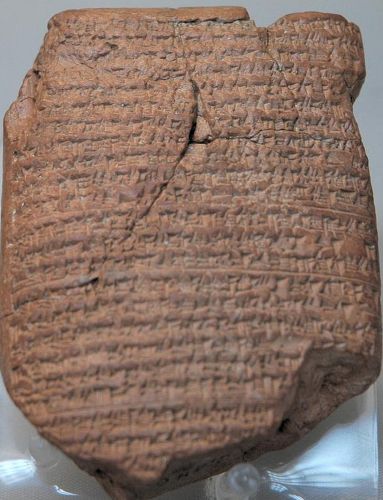
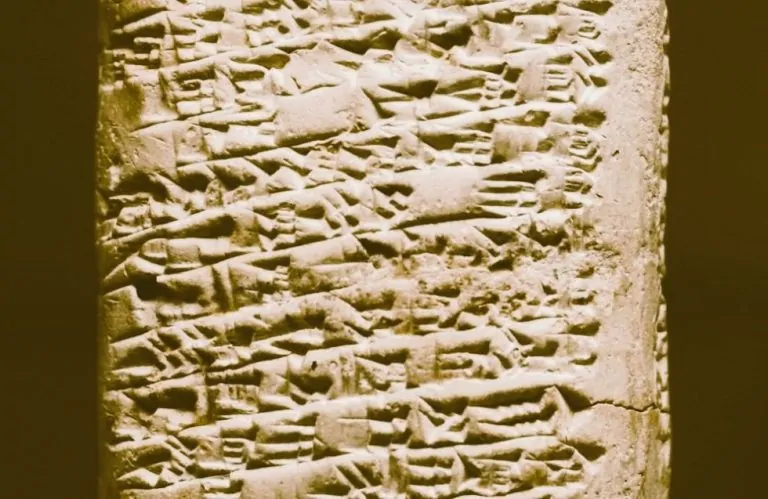
Sennacherib’s inscriptions have to be situated within the circumstances of their production. Although they speak in the king’s first person, their wording belongs to a scribal enterprise that selected accomplishments and shaped them into statements suitable for some monuments. The Bavian account, for example, places Babylon’s destruction within a composition also celebrating hydraulic works serving the Assyrian heartland. Its setting connects destructive action elsewhere with the provision of resources closer to the imperial capital, presenting both as manifestations of effective kingship. The inscription is consequently evidence for how the court chose to commemorate the campaign, as well as for the actions it reports. It is not a surviving operational directive specifying which structures soldiers were instructed to demolish. Establishing a text’s date and relationship to other versions must precede any attempt to convert its assertions into a reconstruction of events.
A shorter record survives in the Babylonian Chronicle, which reports the capture of Babylon and the removal of its king, Mushezib-Marduk, to Assyria. This supplies an important chronological anchor, but it does not offer an account of demolition comparable to Sennacherib’s description. The difference creates an interpretive problem rather than an immediate contradiction. Chronicles organized information according to conventions and interests that differed from those of monumental royal compositions, and their surviving manuscripts cannot automatically be treated as eyewitness records written as events unfolded. Nor does their Babylonian character guarantee that they expressed the experiences or judgments of the inhabitants who suffered during the campaign. Yuval Levavi’s examination of the chronicle tradition draws attention to the significance of its selective treatment of the catastrophe, especially the absence of a corresponding description of the fate of Babylon’s principal sanctuary. Such omissions deserve investigation, but they cannot independently establish that devastation was minor or that a specific political purpose explains the silence. The chronicle’s positive statements are more secure evidence than conclusions drawn solely from what it leaves unmentioned.
Esarhaddon’s construction accounts enlarge the documentary record, although their relationship to the earlier destruction is more complicated than straightforward confirmation. Statements about rebuilding damaged structures and recovering displaced people make sense against a background of substantial disruption, yet they also establish the successor’s qualifications as a ruler. Different versions must be compared rather than combined into an apparently comprehensive report containing every accomplishment attributed to him. Changes in emphasis may reflect the progress of construction or the requirements of a particular audience, while overlapping passages can result from the reuse of an established composition. Dating presents an additional difficulty. The designation of an “accession year” on Babylonian building documents has sometimes been understood as an attempt to associate restoration with the earliest moment of Esarhaddon’s rule, but Jamie Novotny has proposed an explanation connected to the king’s ritual standing in Babylon and the absence of an inaugurated Babylonian regnal count. That argument does not remove the ideological dimensions of the inscriptions; it demonstrates why an unusual documentary formula should not immediately be classified as falsification. Distinguishing the date assigned to an object from the probable date of its composition also prevents claims about completed work from being placed too early in the restoration program.
Letters provide a less ceremonial perspective, bringing administrative difficulties and requests for royal intervention into view. Where their setting can be established, correspondence concerning Babylonia can help identify practical obstacles behind the confident declarations of building inscriptions. Nevertheless, an individual letter may be difficult to date, and its author usually wrote to obtain a response rather than to supply a balanced description for later readers. The surviving correspondence also reflects access to officials and the royal court, leaving many affected households outside its field of observation. It can expose disagreements or unfinished business without supplying a representative account of the population’s experience.
Excavation offers another means of testing written assertions, but Babylon’s physical remains do not provide an unobstructed view of the seventh-century city. Later construction altered earlier buildings, and investigators have not examined every relevant part of the settlement at the depth necessary to isolate conditions following 689 BCE. Access to lower deposits has also been constrained by groundwater, making the visibility of certain periods uneven. These limitations matter when assessing a claim that destruction extended throughout the urban area. Observations from accessible locations cannot automatically be projected across the whole site. Equally, the absence of a uniform burned deposit would not disprove deliberate demolition, since fire and dismantling produce different archaeological signatures. In a city substantially built of brick, material from damaged structures could be removed or reused, further complicating the expectation that devastation should survive as a single recognizable layer. Ruined masonry requires secure dating before it can be assigned to Sennacherib’s campaign, while evidence of subsequent occupation does not by itself show that the earlier damage was slight. Archaeology can constrain the royal narrative, but only when the relationship between the excavated remains and the event under investigation is demonstrable.
Confidence should attach to particular propositions rather than to a source accepted or rejected in its entirety. Agreement among accounts has greater evidentiary value when those accounts are genuinely independent; numerous copies of the same royal composition do not amount to numerous separate witnesses. The capture of Babylon and extensive damage to the city can be established more firmly than the destruction of every building or the precise number of inhabitants killed. Assertions about private emotions require still greater restraint unless the surviving record supplies grounds beyond a retrospective explanation of policy. Descriptions of displacement warrant attention without permitting the experiences of all survivors to be reconstructed from a few royal statements. This approach allows the investigation to proceed from documented devastation while preserving uncertainty about its reach and the motives that cannot be directly recovered.
Why Babylon Was Difficult to Possess
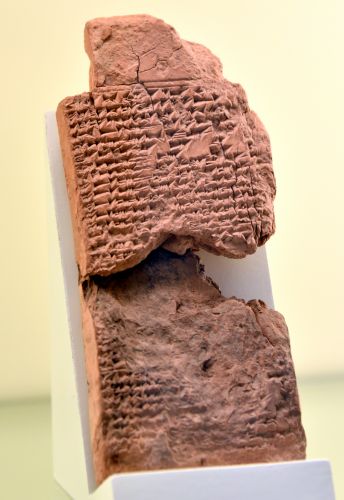
At Babylon, dominion intersected with a sacred geography that Assyrian conquerors already understood. The Esagil temple housed the cult of Marduk, whose supremacy within Babylonian theological traditions gave the city a significance extending beyond its immediate territory. Learned descriptions organized Babylon’s sanctuaries into an ordered religious landscape, associating specific places with divine relationships and inherited ritual obligations. These representations made the city’s standing intelligible to educated audiences elsewhere in Mesopotamia, including those serving Assyrian kings. Its importance depended partly on recognition that an occupying army could neither manufacture nor readily transfer to another location. A conqueror gained access to a prestigious center, but also confronted expectations concerning its treatment. The value of possessing Babylon was inseparable from the traditions that made possession politically demanding.
Babylonian kingship provided a means of engaging those expectations. Participation in the city’s cult, especially the relationship expressed by “taking the hand of Bel,” connected a ruler with Marduk, commonly designated by the title meaning “lord.” The New Year festival, or akitu, supplied an important setting in which the connection between divine authority and earthly government could be enacted. Such participation presented sovereignty as a relationship requiring recognition and observance, rather than as an entitlement exhausted by successful warfare. An Assyrian monarch could enter that relationship; northern origins did not necessarily prevent acceptance as a Babylonian king. Nevertheless, adopting a title and receiving dependable cooperation were different achievements, and neither required the same commitments from every constituency. Temple personnel possessed expertise essential to performing established rites, while influential urban households had interests that extended beyond ceremonial correctness. Religious participation could help a ruler secure their cooperation without ensuring that they would support every subsequent demand. These arrangements should consequently be understood as opportunities for negotiation, not as a constitutional system in which a unified priesthood possessed an automatic veto over royal government.
Established urban communities could also invoke traditions of privileged treatment. The composition conventionally called the Advice to a Prince warns against abuses involving Babylon and other distinguished cities, including the imposition of burdens that violated their protected standing. Its admonitions associate misconduct toward these communities with divine punishment, giving their claims a sanction that rulers were expected to understand. The document expresses an ideal of proper government rather than a statutory charter guaranteeing identical protections to everyone within the walls. Privilege distinguished groups and obligations, meaning that imperial demands could encounter resistance even from people willing to recognize Assyrian supremacy in principle.
Material interests reinforced these political relationships. The irrigated countryside supported urban populations through cereal production and date cultivation, while waterways facilitated the movement of produce between settlements. Maintaining access to this wealth required cooperation with people whose knowledge and resources were embedded in local conditions. Irrigation did not function as a single apparatus controlled exclusively by the crown; agricultural arrangements involved households and institutional landholders whose responsibilities could overlap. Temple establishments received income and maintained property, connecting religious observance with economic relationships that affected people well beyond the sanctuary. A royal intervention in temple resources could disturb established expectations concerning land or payments owed, even when officials presented it as an administrative necessity. Babylon’s markets and workshops likewise depended on continuing exchanges with the surrounding country, making the city useful to an imperial ruler as a functioning economic center. Seizing accumulated treasure offered immediate rewards, whereas obtaining recurring revenue depended on production continuing afterward. That difference helps explain why arrangements protecting selected local interests could be attractive to Assyria. Cooperation promised access to resources that repeated campaigning could disrupt. It also meant that measures intended to increase imperial extraction might weaken the relationships upon which dependable payments rested.
Shared learning gave these southern traditions influence within Assyria itself. Northern scribes worked within Akkadian and Sumerian textual inheritances whose development owed much to Babylonia, and Assyrian courts employed scholarship that drew upon this wider intellectual world. Babylonian expertise could consequently carry authority among the very people responsible for articulating Assyrian royal claims. Recognition of that expertise did not settle questions of political allegiance, nor did it compel monarchs to follow a uniform southern policy. Instead, it made Babylon’s standing a concern that could be discussed within the conqueror’s court through familiar religious concepts and learned precedents. Disagreement over its treatment could emerge within Assyrian governing circles as well as among the people subjected to their decisions.
Regional divisions further complicated any agreement negotiated at Babylon. Chaldean communities, associated with named tribal groups and powerful ruling families, formed an established part of southern political life. Aramean groups also occupied varied positions within the region, and neither designation can be reduced to a population of wandering outsiders confronting supposedly settled civilization. Tribal affiliations could coexist with permanent settlements and participation in agricultural production. A leader drawing support from such connections might seek Babylonian kingship, bringing a regional following into relationships with urban constituencies whose priorities were not necessarily identical. Within the cities, prominent families and temple personnel could also disagree over which ruler offered the most favorable settlement. Cooperation with Assyria might protect an existing position, while opposition could promise advantages to someone excluded from it. The result was a political structure in which allegiance depended on circumstances and relationships, making an agreement with one influential group an uncertain guide to the behavior of others.
Geography enlarged the difficulties created by these shifting associations. Southern marshes and intersecting waterways afforded places of refuge and complicated the pursuit of opponents, especially when local knowledge shaped movement through the landscape. Assyrian armies repeatedly operated in these environments, but military access did not guarantee that fugitives could be isolated or their supporting relationships dismantled. Elam offered additional possibilities beyond the immediate reach of officials stationed in Babylon. Its rulers could support opponents of Assyria, although their interventions followed Elamite ambitions rather than a permanent commitment to Babylonian independence. Control of the principal city left routes through which resistance could find assistance elsewhere. The practical task was to assemble agreements that remained useful to enough participants after the immediate pressure of an Assyrian campaign had diminished.
The Settlement Sennacherib Inherited
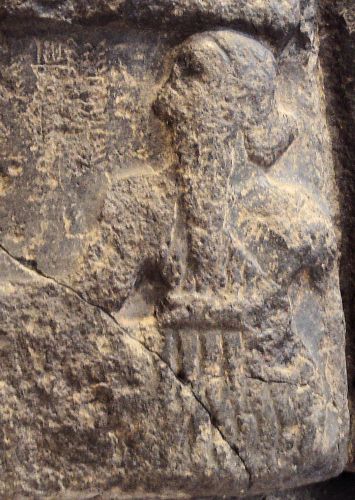
Assyrian possession of the Babylonian throne preceded Sennacherib by more than a generation. Tiglath-pileser III’s campaigns beginning in 731 BCE challenged Nabu-mukin-zeri, a Chaldean ruler who had established himself as king of Babylon. In 729 BCE, Tiglath-pileser assumed Babylonian kingship himself, creating a precedent for combining the northern monarchy with a separately recognized southern crown. Shalmaneser V continued that arrangement, although his death reopened the question of who would exercise authority at Babylon. These developments gave Sennacherib an inheritance more complicated than territory acquired through conquest alone. His predecessors had asserted their supremacy partly by occupying an existing royal office whose continuation acknowledged Babylon’s distinctive political standing.
The principal challenge to this arrangement came from Marduk-apla-iddina II, known in biblical tradition as Merodach-baladan, whose ruling family belonged to the Chaldean group Bit-Yakin. Following Shalmaneser’s death, he secured the Babylonian throne and maintained his position against Sargon II, Sennacherib’s father, for more than a decade. His achievement required more than exploiting a northern succession: he had to sustain a royal position at Babylon while drawing upon connections elsewhere in the south. Elam provided an important counterweight to Assyrian pressure, although its participation should not be mistaken for unquestioning support of Babylonian objectives. The battle near Der in 720 BCE exposed the limits of Sargon’s early efforts to displace his rival. Sargon represented the engagement as an Assyrian success, whereas the Babylonian Chronicle credited the Elamites with defeating the Assyrian army and stated that Marduk-apla-iddina reached the battlefield too late. The conflicting accounts leave aspects of the encounter unsettled, but its political consequence is clearer. Sargon did not obtain the Babylonian throne. Marduk-apla-iddina’s continued tenure demonstrated that an Assyrian accession did not automatically determine the succession in the south. For Sargon, establishing authority there remained a substantial undertaking alongside his other imperial commitments.
The decisive change occurred in 710 BCE, when Sargon’s renewed offensive forced Marduk-apla-iddina to abandon Babylon. Assyrian operations reached beyond the capital toward the southern territories associated with his opponent, making the campaign an effort to overcome the support sustaining a rival monarchy. Marduk-apla-iddina withdrew, but his departure from the city did not eliminate him as a potential claimant or extinguish his connections with Bit-Yakin. Sargon could now establish himself at Babylon, while further action remained necessary against the displaced ruler’s southern base. The distinction mattered for the settlement that followed. Assyria had gained the principal royal center without removing every person or association capable of challenging the new occupant. Victory created an opportunity to reorganize southern authority, rather than an assurance that the contest had ended permanently.
Sargon’s response combined recognition at Babylon with coercion against opponents elsewhere. In 709 BCE, he took the hand of Bel, publicly entering the ceremonial relationship associated with Babylonian kingship; Babylonian king lists assign him five regnal years, running from 709 through 705 BCE. His accounts presented the preceding government as injurious to established urban interests and portrayed his own intervention as the recovery of proper conditions. Assurances concerning privileged treatment gave influential communities reasons to accept the change of ruler, while observance of Babylonian cult demonstrated his willingness to perform obligations attached to the southern throne. These claims did not establish universal enthusiasm, but they show that Sargon considered favorable recognition worth securing and worth recording. The policy also depended on a distinction between communities whose cooperation he sought and opponents subjected to punitive measures. Operations against Bit-Yakin were accompanied by deportation and the destruction of its principal stronghold, Dur-Yakin, revealing the violence that supported his accommodation at Babylon. Sargon’s southern settlement was selective in its benefits and severe toward those excluded from them. Its potential strength lay in allowing important urban groups to associate Assyrian rule with the preservation of their position, even as military intervention weakened a competing source of authority. Its weakness was that this combination depended on continuing enforcement and on the willingness of local participants to maintain the relationships established under the victorious king.
Sargon’s death on campaign in Anatolia in 705 BCE abruptly removed the monarch who had assembled that settlement. The failure to recover his body for royal burial made the loss even more disturbing within Assyrian understandings of kingship, although subsequent attempts to explain his fate cannot securely identify an offense as its cause. For Babylonian politics, the immediate consequence was a change in the person upon whom the recent arrangement had depended. Sennacherib inherited Assyria’s military resources and his dynasty’s claims, but he did not acquire his father’s established relationships simply by succeeding him. Nor should the renewed difficulties be read backward as proof that Sargon’s policy had already collapsed before his death. The earlier reign had demonstrated that an Assyrian ruler could obtain Babylonian recognition while pursuing hostile claimants in the surrounding region. What remained uncertain was whether that result could survive a succession without substantial renegotiation. Sennacherib’s subsequent choices emerged from this unresolved inheritance. A southern crown recently brought under dynastic control, accompanied by obligations and adversaries that outlasted the king who had secured it.
Governing through a Dependent King: Bel-ibni and the Limits of Delegation
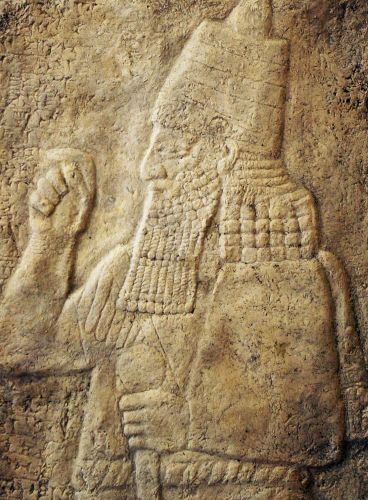
The first serious test of Sennacherib’s southern inheritance came through a succession of competing claims to the Babylonian throne. Babylonian king lists assign him an initial two-year tenure after Sargon, but by 703 BCE another ruler, Marduk-zakir-shumi II, had briefly occupied the position. Marduk-apla-iddina II then returned, demonstrating that his displacement under Sargon had not ended his capacity to contest the kingship. This renewed challenge brought Sennacherib into the field against an opponent already experienced in resisting Assyrian intervention. The political task now involved deciding what arrangement should follow another military victory. Simply recovering the throne would leave unresolved how authority was to be exercised once the Assyrian king departed.
During the campaign of 703 BCE, Sennacherib defeated Marduk-apla-iddina’s forces near Kish and obtained access to Babylon. His opponent escaped, and the subsequent search failed to deliver the fugitive ruler into Assyrian hands. The Babylonian Chronicle records the plundering of the palace and its treasury, identifying the defeated monarchy’s accumulated resources as an immediate object of seizure. It also specifies that Sennacherib did not disperse the Babylonians, a distinction important to understanding his treatment of the capital at this stage. That statement cannot establish that every inhabitant escaped injury, particularly when the wider campaign involved coercion and substantial deportations elsewhere. But it does distinguish the removal of royal property from a policy of expelling Babylon’s population. Sennacherib’s intervention left an inhabited capital in which another king could be installed, allowing the political contest to proceed through a replacement government.
Late in 703 BCE, Sennacherib appointed Bel-ibni, a Babylonian whom his inscriptions described as having grown up in the Assyrian palace. The royal account characterized him through the image of a “young puppy,” language that emphasized formation under the king’s supervision and the subordinate relationship attached to his promotion. It should not be treated as evidence that the two men had been childhood companions or that personal intimacy explains the appointment. What the description establishes more securely is the importance Sennacherib placed upon Bel-ibni’s connection to his court. Babylonian origins and an Assyrian upbringing offered a plausible combination for someone expected to operate between the northern ruler and southern interests. The appointee could occupy a locally recognizable royal office while owing his elevation to the power responsible for defeating its previous occupant. Those attributes may have recommended him, although the surviving account does not document the discussions through which the choice was made. His appointment also left Sennacherib able to conduct affairs elsewhere while another man undertook the immediate work of southern government.
Bel-ibni’s royal designation nevertheless exceeded the territory he could reliably command. By early 700 BCE, his effective jurisdiction appears to have been largely restricted to northern Babylonia, while Chaldean forces retained substantial influence farther south. The continued presence of hostile claimants meant that installing a king at Babylon had not placed all competing centers of power under his direction. His dependence on Assyrian military intervention consequently remained a practical condition of his government. Sennacherib could expect results from the man he had appointed, but Bel-ibni’s ability to produce them was constrained by forces that the earlier campaign had failed to eliminate.
Maintaining a favorable reputation at the Assyrian court introduced another possible source of vulnerability. Letters that Manfried Dietrich attributes to the Babylonian king describe a sender named Bel-ibni defending himself against accusations, although other scholars have questioned whether these documents belonged to the ruler or to a namesake. One letter recalls defamatory reports reaching Sennacherib’s father; another alleges that visitors from Elam had slandered the writer at the palace. If Dietrich’s identification is correct, the correspondence gives a glimpse of a royal appointee whose standing required defense before people outside his immediate sphere of government. The allegations cannot be connected securely to the events that ended his tenure, and the letters should not be presented as established appeals written after his deposition. Their conditional relevance lies in showing how information reaching the northern court could affect the relationship on which his position depended. A dependent ruler needed sufficient authority among the people he governed while remaining credible to the monarch who could remove him. Accusations offered a means of disrupting that relationship without first defeating the southern government in battle.
In 700 BCE, Sennacherib intervened again and brought Bel-ibni’s kingship to an end. The Babylonian Chronicle reports that he took Bel-ibni and his leading officials to Assyria, recording a removal that extended beyond the individual ruler to important members of his government. Whether Sennacherib judged him incapable of controlling the situation or suspected disloyalty remains uncertain; neither explanation should be converted into a demonstrated verdict of treason. The transfer establishes the termination of Bel-ibni’s royal tenure but supplies no dependable account of his subsequent fate. Further operations against southern opponents accompanied this change, indicating that the replacement of the administration occurred within a continuing military struggle. Sennacherib installed his own son, Ashur-nadin-shumi, on the Babylonian throne, bringing the office directly into the Assyrian royal family.
Bel-ibni’s short reign ended without providing a decisive explanation of why delegated government had disappointed its sponsor. The appointment had placed a man associated with both courts in a position exposed to persistent regional opposition, and his removal cannot by itself establish which of those pressures proved most consequential. Sennacherib’s next choice is more clearly documented than his judgment of the departing king. By selecting an Assyrian prince, he made dynastic membership the defining qualification of the new arrangement. The southern throne now carried the fortunes of his own household, increasing the personal and political consequences of any further loss of control.
A Royal Son in Babylon: Dynastic Control and Elamite Intervention
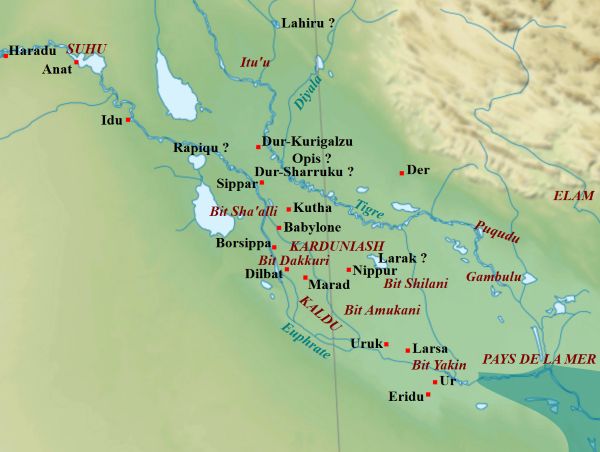
For approximately six years, Ashur-nadin-shumi’s presence on the Babylonian throne sustained the arrangement Sennacherib had established in 700 BCE. His first full regnal year began in 699 BCE, and the sixth fell in 694 BCE, explaining why accounts sometimes give different starting dates for his kingship. Compared with Bel-ibni’s brief tenure, this represented a substantial interval of continuity in the southern monarchy. The surviving documentation does not permit a detailed reconstruction of his administration, but his eventual disappearance should not obscure the years during which the arrangement endured. Babylon remained the seat of a kingship held by an Assyrian prince, giving Sennacherib a direct familial connection to its government. The rupture came when operations outside Babylonia brought an opposing army into the country and placed the prince beyond his father’s protection.
Communities associated with Bit-Yakin had meanwhile established themselves in Elamite territory near the head of the Persian Gulf. Sennacherib’s accounts described fugitives carrying their divine images and ancestral remains across the water, details that suggest an effort to preserve communal attachments in displacement. These settlements were consequently more than places where defeated opponents temporarily sheltered; they could maintain relationships through which southern resistance survived outside Assyria’s immediate reach. The king’s narrative treated their continued presence as a problem requiring military action. Reaching them meant attacking territory belonging to another kingdom, extending the conflict beyond the pursuit of a rival claimant within Babylonia. Elam, whose power rested in southwestern Iran and the adjoining lowlands, could intervene with forces capable of threatening Assyria’s southern possessions. The expedition of 694 BCE involved a substantial political risk alongside its intended suppression of hostile communities.
Preparations required a complicated transport operation that drew upon resources assembled from widely separated parts of the empire. Ships were constructed at Nineveh and Til-Barsip, while Sennacherib’s detailed account identified captured sailors from Tyre and Sidon among those assigned to the fleet. Maritime experience acquired through earlier Assyrian expansion could be applied to a campaign far from the eastern Mediterranean. One inscription traces vessels from Nineveh down the Tigris to Opis, followed by an overland transfer on rollers toward Sippar and passage through the Arahtu canal into southern waterways leading to the Euphrates. The movement between river systems was an important part of the undertaking, rather than an incidental detail in a straightforward voyage downstream. Sennacherib’s account places him accompanying troops on land and waiting near Bab-salimeti while forces embarked for the crossing. It also emphasizes difficult coastal conditions, presenting the successful movement of men and ships as an accomplishment in its own right. The subsequent operations produced royal claims of captured inhabitants and substantial booty from the targeted settlements. Those achievements demonstrate the reach attributed to the expedition, but assessing its consequences also requires following what happened in Babylonia while Assyrian forces were engaged along the Elamite coast.
An Elamite counteroffensive abruptly changed the military situation. Hallushu-Inshushinak, the Elamite king, entered Babylonia and attacked Sippar, where the Babylonian Chronicle records killings. The same chronicle reports that Ashur-nadin-shumi was captured and transported to Elam, removing the reigning Babylonian monarch from the country. Whatever success Assyrian forces had achieved against the coastal settlements, they had not prevented the seizure of the prince whose position was central to Sennacherib’s southern arrangements.
The circumstances of that seizure require attention because foreign intervention and local participation were not mutually exclusive. The chronicle gives a compressed account of the prince’s capture without explaining in detail who physically apprehended him or how his removal was arranged. Later correspondence preserved within the Assyrian court’s documentary record alleges involvement by identifiable people associated with his seizure and delivery to Elam. This provides grounds for considering cooperation within Babylonia, although the accusations belong to a letter written for its own immediate purposes rather than to an impartial investigation of the earlier event. The evidence does not allow every inhabitant of Babylon, or even every influential urban group, to be assigned a common position. It indicates that the prince’s vulnerability may have involved people capable of acting against him as an Elamite army entered the country. Recovering that distinction matters. Participation by certain individuals cannot establish that the entire community accepted responsibility for surrendering an Assyrian royal son.
Hallushu-Inshushinak placed Nergal-ushezib on the Babylonian throne, making the removal of Ashur-nadin-shumi part of a change in government. Elam had demonstrated its ability to influence who held the southern kingship, directly challenging Sennacherib’s appointment rather than merely offering refuge to its opponents. The replacement also gave resistance a reigning figure around whom military activity could continue. Nergal-ushezib’s position soon faced renewed Assyrian pressure, and he was captured in fighting near Nippur in 693 BCE. His defeat removed the king installed under Elamite auspices, but it did not restore Ashur-nadin-shumi or recover the previous arrangement. Assyria could win another engagement and carry away another opponent while remaining unable to retrieve the prince whose capture had precipitated this phase of the conflict.
After his transportation to Elam, Ashur-nadin-shumi disappears from the available historical record. Death in captivity is widely presumed, but no surviving account securely establishes a specific execution or supplies its circumstances. The loss could have carried profound emotional consequences for Sennacherib, yet the evidence provides no direct record of his private response from which those consequences can be reconstructed. Ben Dewar’s study instead examines how royal compositions handled the ideological difficulties associated with dynastic disaster. He argues that the treatment of the prince in Sennacherib’s inscriptions should be considered alongside the potentially troubling memory of Sargon’s death, including the avoidance of mentioning the son in compositions recounting campaigns toward the region where the grandfather had perished. That interpretation concerns the management of royal representation; it does not establish an immediate decision to avenge the prince through the later destruction of Babylon.
The events of 694 BCE nevertheless altered the meaning of Assyrian control in the south. Placing a royal son on the throne had produced several years of continuity, but it had also exposed a member of the ruling household to capture through a combination of external attack and internal vulnerability. Sennacherib’s investment in Babylon now included a dynastic loss that subsequent victories failed to reverse. Five years separated the prince’s removal from the devastation of 689 BCE, an interval containing further warfare and changes of ruler that must remain part of the explanation. His disappearance may have intensified hostility, but it cannot serve as a sufficient cause that makes everything afterward inevitable. The immediate result was a renewed contest over Babylonian government, requiring Sennacherib to confront opponents whose capacity to replace one defeated ruler with another had survived the collapse of his preferred arrangement.
From Halule to the Fall of Babylon
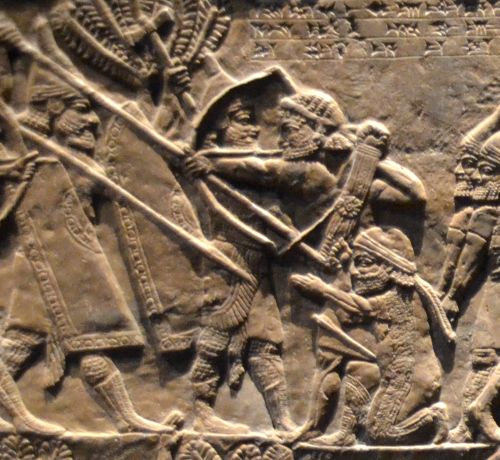
Mushezib-Marduk’s accession in 693 BCE prolonged the contest over Babylonia after Assyrian forces had captured Nergal-ushezib near Nippur. The new ruler emerged from opposition within Babylonia, and his government’s survival depended on maintaining support in the country while securing assistance beyond it. Sennacherib described his elevation in the disparaging language reserved for illegitimate opponents, treating possession of the Babylonian throne without Assyrian authorization as an offense against established sovereignty. Meanwhile, Elam had experienced successive upheavals: Hallushu-Inshushinak was killed in a rebellion, and Kudur-Nahhunte’s brief reign ended in another overthrow. Humban-menanu, called Umman-menanu in the Assyrian inscriptions, subsequently occupied the Elamite throne. The cooperation that developed between Babylon and Elam joined rulers facing Assyrian military pressure within a regional environment unsettled by changes of government. Financing that cooperation brought Babylon’s religious institutions directly into the preparations for war. According to Sennacherib’s account, Babylonian leaders opened Esagil’s treasury and sent gold and silver belonging to Marduk and his consort Zarpanitu to the Elamite king in exchange for military assistance. The inscription presents this transfer as a bribe, making the resources used against Assyria part of its condemnation of the opposition. That characterization expresses the perspective of the ruler whose army the payment helped to confront; it cannot establish how those authorizing the expenditure understood their actions. They may have regarded access to temple wealth as necessary to defend the city and its principal sanctuary, although their reasoning is not preserved in an equivalent Babylonian account. If the reported transaction is accepted, it shows that Esagil’s accumulated valuables could support diplomacy and military mobilization when the government faced an immediate threat. Babylon’s capacity to resist consequently involved converting stored wealth into assistance from an outside power, extending the conflict beyond the forces Mushezib-Marduk could assemble within his own territory.
The resulting confrontation at Halule is conventionally dated to 691 BCE, although the Babylonian Chronicle leaves its year unspecified. Sennacherib locates the encounter on the Tigris, but the settlement’s precise modern identification remains uncertain. His description names an extensive coalition that included Elamite forces, Babylonian opponents of Assyria, Chaldean and Aramean groups, and contingents associated with regions such as Anzan and Parsuash. These names indicate the geographical reach of the alliance without providing a dependable calculation of its strength or a complete explanation of how its different components were commanded. Within the Assyrian narrative, their assembly creates the setting for a conspicuous demonstration of Sennacherib’s military prowess: the more formidable the opposing host appears, the greater the achievement attributed to the king. He places himself at the center of the fighting and describes a devastating assault, the deaths of important Elamite commanders, and the flight of enemy leaders. The account’s attention to severed bodies, blood, and the movement of royal chariots transforms combat into a display of the ruler’s ability to overcome an apparently overwhelming challenge. Its culmination is an emphatic claim that the coalition had been routed, leaving no room within that presentation for an unsuccessful Assyrian campaign.
The Babylonian Chronicle records a sharply different outcome, reporting that the Elamite king forced the Assyrians to retreat. Its notice does not describe a draw; an inconclusive or costly engagement is a modern reconstruction intended to accommodate the conflicting accounts and subsequent events. The available evidence cannot securely determine which army controlled the battlefield afterward or how its losses affected later operations. One political consequence is clearer: Mushezib-Marduk retained his throne, and Babylon remained outside Sennacherib’s control. Whatever success Assyrian troops achieved during the fighting, Halule did not produce the immediate overthrow of the Babylonian government that an uncomplicated reading of the royal victory narrative might suggest.
By the summer of 690 BCE, resistance had entered a different phase, whose consequences appear in a contemporary legal document. The tablet known as YBC 11377, dated to the month of Abu in Mushezib-Marduk’s third regnal year, describes severe food deprivation, closed gates, an absence of opportunities to leave, and bodies remaining unburied. Its notices place ordinary legal activity within an emergency that had already disrupted the conditions necessary for urban life. Restricted movement prevented inhabitants from readily escaping shortages, while the reference to unattended corpses indicates that the crisis extended into the treatment of the dead. The document does not provide a mortality total or distinguish all the causes of deprivation, but it establishes that acute suffering preceded the final capture by well over a year. Babylon continued resisting for approximately another fifteen months after this record was drawn up, making the tablet evidence for an already prolonged ordeal rather than a description of the siege’s opening. The date when the enclosure began remains uncertain, so the interval between the document and the conquest should not be mistaken for the siege’s complete duration. Holding the capital preserved Mushezib-Marduk’s government, yet it also required inhabitants to endure conditions that external military support had not relieved. The continued existence of the monarchy and the deteriorating circumstances of those inside the city became increasingly difficult to separate.
Elam’s royal court suffered another disruption before Babylon fell. The Chronicle reports that on the fifteenth day of Nisannu in 689 BCE, Humban-menanu became paralyzed and unable to speak. Because the previous coalition had assembled under his leadership, his incapacity could have complicated decisions about further assistance, military command, and relations with the besieged Babylonian government. The record does not establish that a relief expedition had been prepared and then abandoned, or that the king’s illness alone determined the outcome of the siege. Nevertheless, this episode identifies a serious disturbance within the power from which Mushezib-Marduk had obtained crucial support, giving political substance to the possibility that Babylon’s prospects of renewed intervention were weakening as its internal conditions worsened.
On the first day of Kislimu in 689 BCE, Babylon fell to Sennacherib, and the Chronicle records Mushezib-Marduk’s removal to Assyria. His capture ended the government that had survived Halule and maintained resistance through the subsequent siege. The interval between the battle and the conquest matters because it separates a disputed military encounter from the eventual elimination of an opposing regime: Babylon’s defeat emerged through continued campaigning and sustained pressure. By the moment of capture, the population had already experienced deprivation on a scale that a contemporary record considered necessary to describe. Sennacherib now possessed the defeated capital and could determine how authority would be exercised there after the removal of its king. Earlier arrangements had demonstrated several possible forms of Assyrian rule, including delegated kingship and government through a member of the royal family; the seizure of Mushezib-Marduk did not itself dictate which arrangement must follow. The question raised by the conquest is how Sennacherib used the freedom that victory gave him, and why the destruction of Babylon became preferable to another attempt to govern it.
Demolition after Conquest: What Sennacherib Claimed to Erase
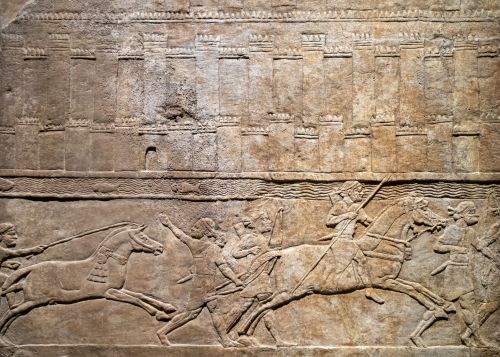
Sennacherib described the destruction of Babylon in 689 BCE as a succession of acts against the city’s physical substance. In the Bavian inscription, the removal of its ruler and valuables leads into burning, dismantling, and the use of water against the built site. First-person verbs make these operations part of the king’s stated accomplishments, carrying his authorship of victory into the treatment of the captured city. His description reaches from buildings used for habitation to structures associated with public defense and worship. This inventory presents damage extending throughout the kinds of construction that made Babylon usable as a city.
Burning could ruin a dwelling without removing the mass of earth from which its walls were made. Babylonian architecture relied heavily on sun-dried brick, while timber and reeds served in roofing and other components vulnerable to fire. Fired brick offered greater resistance to moisture and was used selectively in Mesopotamian construction, especially where exposed surfaces or foundations required protection. These material differences give practical content to the inscription’s combination of burning with pulling buildings apart. A roof could collapse into its rooms while leaving substantial stretches of masonry standing; further demolition could reduce those walls to material that could be shifted or dispersed. Sennacherib’s formula extends the destruction from foundations to the upper edges of buildings, treating their entire vertical extent as subject to attack. Such a claim encompasses tasks that setting fires alone could not accomplish, although neither their duration nor their precise procedures can be reconstructed. Renewed habitation would consequently require rebuilding structural elements, and the survival of a wall or foundation would not by itself establish that the building remained serviceable.
Fortifications offered the clearest military target within this program. The destruction passage identifies an inner wall and an outer wall, presenting their brickwork and earthen material as objects of removal. Taking down defenses beyond the points needed to enter a city could hinder its inhabitants from again sheltering an opposing government or resisting the return of imperial forces. That consequence is a reasonable interpretation of the operation, rather than an engineering objective explicitly explained in the inscription. Dismantling walls also required work upon structures whose thickness and accumulated material had made them formidable during the siege. By including both lines of defense in its account, the text claims an extensive reduction of Babylon’s defensive capacity, reaching beyond the openings through which the victorious army had gained access.
Among the structures singled out for destruction stood the temples and the ziggurat, the latter generally identified as Etemenanki. Sennacherib’s passage does not supply that formal name, which appears in the royal record of rebuilding under Esarhaddon, or describe the tower’s dimensions. The distinction between Esagil, Marduk’s principal temple, and the nearby tower matters because these were different architectural components of the sacred center, with different forms and demands of construction. Much of the familiar image of Etemenanki derives from its later rebuilding, especially the work associated with Nabopolassar and Nebuchadnezzar II, and those dimensions cannot simply be assigned to the structure attacked in 689 BCE. As Olof Pedersén’s examination of the monument emphasizes, the remains visible today also reflect much later dismantling and extraction of bricks. The architectural character of a ziggurat nevertheless helps explain the seriousness of attacking it. An enormous masonry mass supported elevated platforms and access routes whose usability depended on the integrity of the arrangement. Removing upper works or damaging approaches could disable the monument while leaving considerable quantities of material on the site. These are possibilities supplied by architectural reasoning, not individual operations documented for Sennacherib’s troops. His account compresses such distinctions into the removal of building materials, making the tower’s reduction part of the same destructive undertaking as the demolition of the city’s other buildings.
Once structures had been pulled apart, their debris acquired a destination in the royal narrative. Sennacherib states that material from the walls, temples, and tower was thrown into the Arahtu, a watercourse belonging to the Euphrates system. He then describes excavating channels through the city and using water to level the ground and eliminate the outlines of foundations. In the inscription’s ordering, flooding belongs to the treatment of the captured site; the passage does not establish that water had been the means by which Babylon’s defenders were defeated. Saturation and erosion could damage exposed earthen masonry and its mortar, notably where protective construction had already been disturbed. The combination of dismantling and water has a plausible material basis without yielding a recoverable plan of diversions, water levels, or the area inundated. What the account emphasizes is the removal of the shapes left by construction, extending its claim beyond broken buildings to the ground that still recorded where they had stood.
An inscription for the akitu-house at Ashur develops the disposal of Babylon’s earth into a more elaborate demonstration of imperial reach. There Sennacherib claims to have sent the displaced material down the Euphrates to the sea, where its arrival supposedly frightened the inhabitants of Dilmun in the Gulf region into submission. According to the same account, they supplied gifts and corvée workers equipped with bronze spades and plowshares to assist in demolishing Babylon. This is evidence for the manner in which the undertaking was represented, rather than independent confirmation that recognizable Babylonian sediment reached Dilmun or that the workforce arrived as described. The episode makes the city’s displaced earth carry news of the conqueror’s power and portrays additional labor as a response to the alarm it caused. It also depicts demolition as work that could be organized and supported with implements and personnel drawn from beyond the immediate campaign. Some Babylonian dirt, the inscription continues, was retained in heaps and mounds within the akitu-house for future admiration. Material that supposedly lost its place in Babylon thereby acquired a commemorative purpose in Assyria. The claimed destruction was selective in this respect. The city’s physical components could be dispersed, while portions of its earth were preserved to perpetuate the memory of their removal.
At Nineveh, Sennacherib celebrated the construction of walls and the introduction of water that enlarged and sustained his capital. Marc Van De Mieroop has shown how the Bavian account sets Babylon’s demolition against these achievements, adapting the language of royal building to describe its opposite. Walls raised at one city correspond to walls removed at the other, and beneficial canal construction finds its counterpart in channels that undo a built environment. This arrangement gives the Babylon passage a unique significance within Sennacherib’s account of his accomplishments. The expertise praised for making urban life flourish also supports a claim to withdraw its physical conditions. The comparison places the engineering operations at Babylon among works by which the king expected his reign to be remembered. He presents command over construction and destruction as related demonstrations of his ability to determine the fortunes of major cities.
The declared endpoint was a place whose former urban character could no longer be recognized. In its closing description, the Bavian inscription carries the claim past damaged buildings to the disappearance of identifiable foundations and a landscape likened to a meadow or floodplain. Its comparison with the Deluge magnifies that transformation, announcing devastation beyond an ordinary military success. These formulations describe an intended final condition, rather than provide a measured inventory of everything removed, yet they make the advertised objective unmistakable. Babylon was to lose the physical arrangements through which its inhabitants could readily resume life in their capital, so that recovery would require the creation of usable urban space anew.
Beyond the Rebel King: Punishing an Urban Population
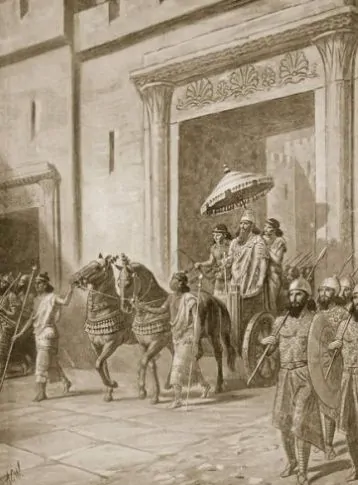
Mushezib-Marduk’s recorded fate illustrates how differently defeat could be imposed upon a ruler and the population associated with him. Sennacherib states that he carried the Babylonian king and his family into Assyria alive. The defeated ruler left his capital as a captive whose identity and dynastic connections remained recognizable to the conqueror. The inscription supplies no corresponding account of named ordinary inhabitants, their decisions, or the circumstances determining their treatment. This difference in presentation matters. The royal family appears as a group to be removed, while the people of Babylon become the subject of a much more encompassing claim of violence.
In the Bavian account, Sennacherib declares that he spared neither the young nor the old and filled the city’s squares with their corpses. The age formula broadens the advertised reach of the killing beyond a description of combat against an army or the execution of identified leaders. It presents inhabitants across the population as exposed to the conqueror’s force, without sorting them according to an individually stated act of opposition. The claim remains a formula of comprehensive victory, and the adjacent reference to living royal captives prevents its straightforward interpretation as the death of every person in Babylon. Nor does it establish the ages or circumstances of some victims. Nevertheless, its political significance lies precisely in the breadth the king wished to proclaim. No distinction between fighting for Mushezib-Marduk and belonging to his capital qualifies the statement. The placement of bodies in public squares also makes collective death conspicuous within the written account, occupying spaces otherwise associated with the city’s communal life. Although this does not demonstrate that corpses were deliberately arranged as a display, the narrative gives them a public setting through which the population’s defeat becomes part of the king’s achievement.
Possessions furnished another means of imposing the consequences of conquest upon inhabitants. Sennacherib describes handing Babylon’s wealth, including precious metals and stones, to his own people, who retained what they received. The account consequently acknowledges royal authorization for an appropriation that redistributed resources from the conquered city to those attached to the victorious ruler. It identifies no requirement that the former owner of each asset had organized resistance or committed a separately specified offense. Losses could extend through the economic relationships connecting property holders and institutions to other residents, even though the inscription does not allow those relationships to be reconstructed individually. Resources accumulated before the war could become rewards for victory, leaving those deprived of them with reduced means to restore their livelihoods. This aspect of punishment concerns the distribution of what survived the conquest. Movable wealth retained its value, but the king claimed the authority to determine who would possess it.
Forced transfer placed another kind of power over people in the hands of the imperial government. Karen Radner’s research on Assyrian resettlement shows that transfers could involve deliberate selection, with professions and family connections receiving close administrative attention. Craftsmen and members of urban elites were among the groups sought for incorporation into imperial society. Some transferred people retained family groups and possessions, and deportation did not invariably reduce its victims to slavery. Their abilities could be redirected toward state service or productive work elsewhere, making survival and economic usefulness compatible with the forcible disruption of an existing community. These are patterns established across the Assyrian Empire, rather than a documented selection procedure for Babylon in 689 BCE. The evidence for this conquest provides neither a comprehensive list of those removed nor an account of their eventual occupations. It nevertheless places the deportation of Mushezib-Marduk and his family within a wider repertoire of coercion through which Assyria could separate people from the local relationships sustaining their previous positions.
Surviving Babylonians also appear in Esarhaddon’s later inscriptions as people who had been purchased, reduced to slavery, and dispersed among foreigners. These claims describe an accumulated condition of displacement after earlier adversity, so every person mentioned cannot securely be assigned to the conquest of 689 BCE. Their relevance here is the additional form of injury they register. Survival could accompany a profound deterioration in personal status. Esarhaddon’s assertion that he counted such people again as Babylonians links release from dependence with renewed recognition of membership in the urban community. The language makes dispossession a matter of what had happened to people’s standing and affiliations, extending the consequences of war beyond the immediate question of who remained alive.
Ancient Mesopotamian literature offered a language for questioning punishment that overtook people without distinguishing their conduct. In Tablet XI of the Babylonian Epic of Gilgamesh, Ea rebukes Enlil over the Flood and urges that wrongdoing be visited upon the person responsible for it. In the Poem of Erra, Išum similarly reproaches Erra for bringing death to righteous and wicked people alike, including those who had offended him and those who had not. Such criticism separates a victim’s suffering from that victim’s responsibility. As Hanspeter Schaudig’s study of catastrophe traditions demonstrates, Babylonian works could recognize differences between guilty and innocent people even when explaining destruction on a vast scale. This comparative evidence supplies intellectual context; it does not preserve a protest by Babylon’s inhabitants against Sennacherib’s actions or establish a rule that constrained his army. It does show that individual responsibility was available within the culture’s thinking about justified punishment. The royal treatment of an urban population as a single defeated body consequently requires explanation as a political representation. Calling that treatment collective punishment describes the extension of harm beyond identified leaders, without asserting that every inhabitant was innocent or that a surviving decree had formally declared them all guilty. The critical point is that the inscription attaches consequences to the population’s association with Babylon while providing no account of the participation of its individual members.
An urban community could lose much of its capacity to act together even when survivors remained valuable to the empire. A household’s position depended partly on nearby kin and access to locally recognized claims, connections that forced removal could disrupt even when relatives traveled together. Keeping people alive elsewhere did not preserve their ability to exercise those relationships in Babylon, and continued employment could coexist with the loss of control over the setting of their lives. This helps explain how a ruler could appropriate human capacities while inflicting lasting harm upon the community from which they came. The punishment was expressed through different outcomes. Some people were reported killed, while others survived under conditions shaped by dispossession or dependence. Those outcomes should retain their distinctions, because they affected people differently and cannot be counted as interchangeable injuries. They reveal the breadth of Sennacherib’s asserted authority over a population whose continued life as a Babylonian community received no secure protection from his claim to govern it.
Attacking the Sacred Basis of Babylonian Kingship
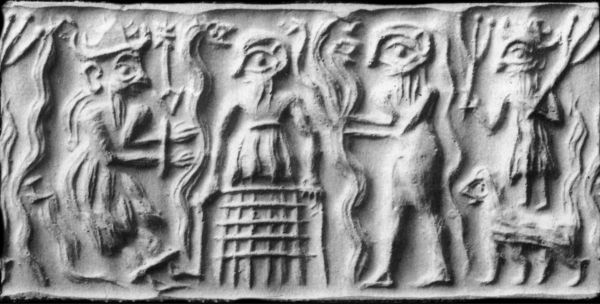
Consecration gave a divine statue a status that its materials alone could not explain. The mouth-washing and mouth-opening rituals edited by Christopher B. F. Walker and Michael B. Dick prepared a newly made image to receive offerings and function as a deity’s earthly embodiment. Within this understanding, an assault on the image interfered with the god’s established presence among worshippers. Removing or damaging it could disrupt the relationships through which a community sought divine protection and a ruler demonstrated his service to the gods. The attack on Babylon’s sanctuaries reached into the practical arrangements sustaining legitimate kingship, even though the surviving sources cannot establish how every inhabitant understood that injury.
The Bavian narrative draws revealing distinctions within the religious spoils of conquest. Its description of troops smashing Babylon’s divine images does not identify the individual gods, whereas Sennacherib expressly names Adad and Shala when claiming to restore them to Ekallatum. According to his account, the Babylonian ruler Marduk-nadin-ahhe had carried these deities away during the reign of the Assyrian king Tiglath-pileser I, and Sennacherib recovered them after 418 years. That interval belongs to the inscription’s presentation of the past rather than to an independently verified chronology. By tracing an earlier removal and announcing its reversal, the king made his conquest the occasion for repairing a religious wrong committed against an Assyrian community. The same campaign could consequently be represented as destructive toward Babylon’s cults and beneficent toward other divine residences. This selective restoration gave devastation a retrospective justification. Babylon was presented as holding gods displaced by an earlier ruler, while Assyrian victory supplied the means of returning them. Sennacherib’s claim depended upon the continuing religious significance of divine images and the value of restoring their established associations.
Marduk’s own image presents a less straightforward evidentiary problem. The usual reconstruction has Sennacherib remove it to Assyria in 689 BCE, but his account of the sack neither names Marduk among the damaged images nor describes transporting his statue. Later records establish that a Marduk image was in Assyria and was returned to Babylon in 668 BCE. They do not settle whether this was the intact image seized during the conquest, a repaired object, or a replacement. The distinction matters for reconstructing the treatment of one particular statue, yet it does not remove the underlying disruption. Babylon lost the normal setting in which its principal deity’s presence was maintained and its royal cult conducted.
Surviving copies of inscriptions on divine furniture document a further appropriation with unusual specificity. Marduk’s bed and throne were taken to Assur and furnished with Sennacherib’s inscriptions honoring Ashur, written on their metal plating. Tablets produced under Ashurbanipal preserve that wording because the later king had it copied before removing it from the objects. Their transmission records an earlier dedication that subsequent policy would overturn, providing evidence more specific than a general statement about temple plunder. A throne and a ceremonial bed belonged to the material provision of divine residence, giving their reassignment a significance beyond the value of their wood and precious metal. Sennacherib made furnishings associated with Babylon’s god serve the patron deity of Assyria and attached his own kingship to that altered dedication. Here, conquest enabled the reallocation of sacred possessions without destroying their usefulness, while their new setting asserted which god and ruler would benefit from them.
At Assur, the challenge to Marduk’s preeminence also acquired an architectural and literary form. The Babylonian creation epic, Enuma Elish, explained how Marduk defeated Tiamat and obtained supremacy among the gods, joining cosmic victory to Babylon’s privileged position. An Assyrian adaptation replaced Marduk with Ashur and reassigned the city’s prominence to Assur. The identification of Ashur with Anshar, a primordial deity already present in the epic’s genealogy, helped give the Assyrian god an authority grounded in the narrative’s own account of origins. Sennacherib’s inscription describing the bronze gate of his akitu festival house supplies a concrete parallel. Ashur appears setting out against Tiamat, occupying the victorious role associated with Marduk. The king also reports that he consulted Shamash and Adad through divination before commissioning the scene. That claim presented the altered design as acceptable to established authorities within the pantheon, making the promotion of Ashur part of properly sanctioned worship. These changes appropriated an established explanation of divine sovereignty while retaining its account of how rightful supremacy was won. As Shana Zaia emphasizes, the redirection of Babylonian traditions toward Ashur made the religious conflict unusually intimate, since the adversaries shared much of their divine and learned inheritance. The undertaking supplied an Assyrian ruler with a divine victor whose supremacy no longer depended upon Babylon’s exalted position.
Learned interpretation supplied another means of diminishing Babylon’s chief god. The composition conventionally called the “Marduk Ordeal,” preserved in versions associated with Assur and Nineveh, recasts aspects of the Babylonian festival as episodes of Marduk’s confinement and interrogation. Ceremonial actions that could express divine majesty are given explanations exposing him to accusation and restraint. Its explanation of red garments worn by the image treats their color as blood from blows Marduk received. The work interprets ritual proceedings; it does not document an actual judicial trial of a captured statue. Its historical placement also requires qualification. Scholars commonly associate its origins with Sennacherib’s reign, but its transmission continued beyond him, and its precise purpose has been disputed. Eckart Frahm argues that differences between this work and the Assyrian adaptation of Enuma Elish make them independent attempts to undermine Marduk’s supremacy rather than products of one coordinated commission. The composition’s concluding curse further complicates any claim of complete theological rejection, because it invokes Bel, meaning Marduk, alongside other gods to punish those who damage the tablet or withhold its contents. Marduk could remain a source of divine power even within a work that subordinated him. The polemic’s force lay in altering the meaning and rank of his authority, demonstrating that sophisticated religious argument could accompany the coercive displacement of a cult.
An Assur household of cult singers preserved copies of both the traditional and Assyrian versions of Enuma Elish, a coexistence emphasized by Frances Reynolds. Traditional texts remained part of Assyrian learned culture alongside adaptations that challenged Babylon’s supremacy. Their survival helps locate the contest within a shared inheritance whose authority remained useful to rulers pursuing different political ends. For Babylonian kingship, Sennacherib’s interventions involved more than interrupted ceremonies; they challenged the standing of the god through whom rulers could present their sovereignty as legitimate. The transfers of sacred furniture and the altered portrayal of divine victory made that challenge materially and intellectually specific. His conquest extended to the institutional expression and interpretation of traditions his predecessors had cultivated as a support for governing Babylonia.
Making Devastation Serve Order
Royal justice in Sennacherib’s self-description encompassed assistance and compulsion. The prologue to one account of his campaigns presents him as a ruler devoted to truth and justice who comes to the aid of the weak, then credits him with controlling the insubmissive and striking enemies. These attributes belong to the same statement of royal competence. Mario Liverani’s analysis of Assyria’s imperial mission helps explain their relationship. The king’s authorized supremacy supplied the hierarchy through which proper relations between peoples and rulers were understood. Within that presentation, coercion could defend a political arrangement whose legitimacy was assumed in advance. The task of justification was consequently to establish that those subjected to force had placed themselves against the order the king was entitled to uphold.
Babylon’s opposition was described in terms that performed precisely that work. In his account of the campaign that culminated at Halule, Sennacherib calls the city’s citizens evil gallû-demons and associates the rebel king’s followers with violent criminality and flight from legitimate authority. Mushezib-Marduk himself receives degrading descriptions of courage and social position. These characterizations strip his supporters of the standing that their connection with an ancient political center might otherwise confer. The inscription also presents his installation as king as inappropriate, denying legitimacy to the act by which the Babylonians placed another ruler on the throne. Their capacity to choose becomes evidence of misconduct when exercised against Assyrian claims. Such language should be read as an accusation constructed by the victorious court, rather than an independently established account of the people involved. Its contribution to the justification of violence is nevertheless clear. Opposition appears as a corrupted exercise of political agency, allowing the suppression of that opposition to be represented as the recovery of rightful authority.
A comparison within Sennacherib’s own campaign narrative shows that punishment did not always have to absorb an entire population into one category. At Ekron, he distinguishes offending leaders from guilty inhabitants and from people he declares innocent. He claims to have killed the first group, deported the second, and released the third. These distinctions remain royal assertions, but they demonstrate that selective culpability could form part of his advertised justice. Babylon’s generalized condemnation requires attention as a choice of representation, especially because the king’s language elsewhere could preserve differences among inhabitants of a rebellious city.
Rebellion also presented a problem for the ruler who claimed to maintain the approved political order. Successful opposition could suggest that his authority lacked either sufficient force or the divine favor that supposedly sustained it. Ben Dewar’s study of Sennacherib’s inscriptions emphasizes this double significance. Rebellion furnished an obstacle through which a king could demonstrate greatness, yet it could also appear as a consequence of deficient kingship. Accounts of revolt consequently required careful handling, and Sennacherib did not consistently identify every hostile action as rebellion. The significance of this finding lies in the pressure it placed upon the explanation of prolonged resistance. Repeated challenges could be incorporated into a story of eventual mastery, with the final defeat of opponents giving earlier difficulties a retrospectively favorable outcome. For Babylon, the destruction offered an exceptionally forceful endpoint through which the king could claim that an enduring challenge had at last been overcome. This reading concerns what the account enabled its royal speaker to assert; it cannot establish that concern for his reputation alone determined the decision of 689 BCE.
Punishment could also address people beyond those immediately subjected to it. Radner’s research on Assyrian punitive practices shows that the location and visibility of penalties could be chosen to affect certain audiences and discourage further disobedience. Applied cautiously to Babylon, that framework suggests how the treatment of a prominent imperial possession might alter other communities’ expectations about the consequences of resistance. The severity of the outcome could make accommodation appear more attractive by demonstrating the ruler’s capacity to impose losses that extended beyond the removal of a competing king. Yet exemplary force depends upon interpretation. An audience must understand the injury as a warning relevant to its own circumstances. Neither the record of destruction nor the scale of the royal claim measures how widely that message traveled or how effectively it changed behavior. Deterrence is a plausible function of the king’s coercion, while its success remains a separate historical question.
The Bavian inscription identifies one intended audience with considerably greater precision. Future kings of Sennacherib’s dynasty. In its account of his construction works, it anticipates a royal descendant who might doubt the magnitude of his achievement and supplies an answer to that skepticism. Near its conclusion, the monument explicitly presents the record of his deeds to succeeding rulers. The king’s image appears in relation to the gods whose support authorizes his accomplishments, placing his actions within a dynastic account of favored kingship. This framework matters because the destruction of Babylon is included among the deeds the monument transmits, preserving it as something posterity should recognize in assessing his reign. The inscription’s closing curses then threaten a successor who damages the works or diverts the canals supplying Nineveh, making the preservation of the king’s constructive legacy a religious obligation. They do not specifically command later kings to leave Babylon ruined, and treating them as such would expand their stated object. Nevertheless, the monument asserts Sennacherib’s authority to define the achievements by which his successors should remember him. A deed that deprived Babylon of its established urban life could be incorporated into an enduring statement of royal excellence.
Access to that statement cannot be assumed merely from its survival. Lauren Ristvet’s research on the reception of Assyrian political rhetoric distinguishes the audiences available to different forms of royal representation, including restricted palace settings and more accessible performances or displays. Violent imagery could affirm the accomplishments and solidarity of the court as well as communicate a threat to outsiders. Her study also cautions against assuming that royal inscriptions were generally read aloud to broad audiences, since clear evidence for such a practice is lacking. These observations limit any reconstruction of the Bavian account as a message uniformly received throughout the empire. Its immediate importance may have included the confirmation of the ruler’s standing among people already invested in Assyrian power. Commemorating Babylon’s defeat could reinforce that authority even without producing a demonstrable change in every subject community’s conduct.
The claim that devastation served order depended upon several connected judgments. The court classified resistance as illegitimate and made defeating it an argument for the king’s fitness to rule. Commemoration preserved that interpretation for the assessment of his reign. The account could make those claims without showing how Babylon’s surviving inhabitants benefited from the result. What counted most visibly was the conqueror’s ability to determine the consequences of opposition and to give those consequences an authorized meaning. This does not prove that practical security considerations were absent, nor does it reduce the inscriptions to empty ornament added to military policy. It shows how the political vocabulary available to Sennacherib could make the loss of a city compatible with the performance of his governing office. The destruction became an achievement when order was assessed through the vindication of imperial authority, leaving the preservation of Babylon’s community subordinate to that judgment.
After 689 BCE: Control without a Restored Babylon
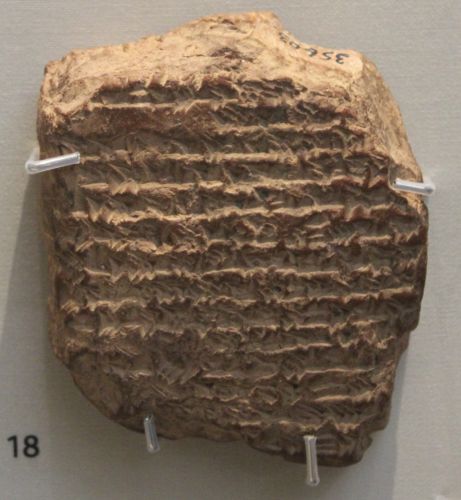
Babylon’s capture did not lead to another appointment of a separate ruler on its throne. Sennacherib exercised direct authority over Babylonia during the remaining years of his reign, conventionally counted as the eight years from 688 to 681 BCE, while Babylon lacked a comprehensive restoration. The Babylonian Chronicle identifies the last of those years as the eighth in which the city had no king. That formulation marks an interruption in the succession recognized by this text; it does not describe a country without government. Babylonian King List A includes Sennacherib, showing that the surviving traditions did not agree on how to classify his position. The disagreement reveals a distinction between possessing the territory and occupying a place in its inherited royal chronology. Assyria could continue to command in the south even when one Babylonian account withheld the designation through which the country normally organized its political history.
Legal records make this distinction more tangible. A sale document from Hursagkalama dates itself to Sennacherib’s twenty-fourth year, using the regnal count of the Assyrian monarch. A property agreement from Borsippa instead reckons time by reference to Ashur-nadin-shumi, the royal son whose Babylonian reign had ended long before. Maria Bazhatarnik’s examination of these formulas places their differences within the wider problem of identifying an authoritative chronological reference during the interregnum. They demonstrate that southern scribes continued to record transactions while employing different conventions for naming the years. Counting from Ashur-nadin-shumi preserved an earlier Babylonian point of reference; dating by Sennacherib could acknowledge the reigning sovereign without establishing enthusiasm for his policies. Neither convention provides a direct measure of popular allegiance. Their immediate significance is that legal relationships remained important enough to document beyond the devastated capital. Property transfers and the recording of obligations could proceed amid uncertainty about Babylonian kingship, although these scattered survivals cannot establish the volume of commerce or the condition of the regional economy.
At Nippur, a later dispute preserves a more specific trace of Sennacherib’s governmental activity. A governor writing to Esarhaddon complained that Babylon’s governor was denying Nippur access to water from the Baritu canal, despite a grant made by Sennacherib. The complaint invoked the earlier king’s decision as an entitlement that his successor should uphold. Grant Frame suggests that the arrangement might have followed Babylon’s destruction, when the damaged city presumably required less water, but that explanation remains a reconstruction of the grant’s purpose. Its precise date cannot be securely fixed from the retrospective appeal. What the letter does establish is that Sennacherib’s authority could be remembered as the source of a practical allocation benefiting another southern community. Water access affected the cultivation of land and the resources available to an urban population; deciding who could use it belonged to the ordinary work of government. The subsequent disagreement also shows how a royal decision could become an issue between local administrations rather than settle their competing demands permanently. This example supplies substance to the otherwise broad description of direct Assyrian rule, while leaving the full arrangement of offices and jurisdictions after 689 BCE uncertain.
Religious recovery elsewhere followed a different timetable from Babylon’s. The Akitu Chronicle records that Babylon’s principal New Year festival remained uncelebrated during Sennacherib’s final eight years. Yet the Babylonian Chronicle reports the return of Uruk’s gods in 681 BCE, before the Assyrian king’s death. The damaged name of the country from which they returned permits conflicting readings, and Sennacherib’s responsibility for the initiative remains uncertain. The event nevertheless establishes that the deprivation associated with Babylon did not determine the experience of every southern sanctuary. One city could recover its divine images while the ceremonial life through which Babylon expressed its central position remained interrupted.
On a narrowly military assessment, the remaining years offer some evidence favorable to Sennacherib’s decision. No renewed Babylonian conflict comparable in scale to the wars preceding 689 BCE is securely documented before his death. Removing the capital as a functioning center of rival kingship may have reduced the immediate capacity to organize opposition around its throne. That possibility deserves weight, especially when assessing a ruler who had repeatedly committed armies to maintaining his southern possessions. Yet the record is too thin to convert the absence of a well-attested war into a description of complete pacification. Few late royal inscriptions survive, and the contemporary correspondence cannot supply a securely dated sequence of reports for the interval; a fragmentary astronomical notice has even been interpreted as mentioning a revolt in 686 BCE, although the reading is uncertain. Much of the apparent calm belongs to a period about which unusually little can be established. Nor would a reduction in large campaigns, by itself, demonstrate that the country had become easier to administer or more productive for its overlord. Those judgments would require evidence about the burdens of maintaining control and the resources still available to support it. The defensible conclusion is limited: Babylon’s destruction was compatible with continued Assyrian dominance during Sennacherib’s lifetime, while its contribution to a durable settlement remains unproven.
Sennacherib’s reign ended in 681 BCE with his assassination and a struggle over the Assyrian succession. The Babylonian Chronicle places his death within the same kingless interval, but chronological proximity supplies no proof that destroying Babylon caused his murder. Christopher W. Jones’s reassessment locates the killing within an attempted seizure of the Assyrian throne, emphasizing dynastic rivalry and the organization of a coup. That interpretation directs attention to a vulnerability at the imperial center which victory in the south had not removed. It also prevents the king’s death from becoming an apparently convenient verdict on his Babylonian policy. The successor’s task arose from a concrete inheritance: Assyria retained supremacy over Babylonia, but its principal city still required decisions about recovery that conquest had left unresolved.
Esarhaddon’s Restoration: Rebuilding a City to Secure a Throne
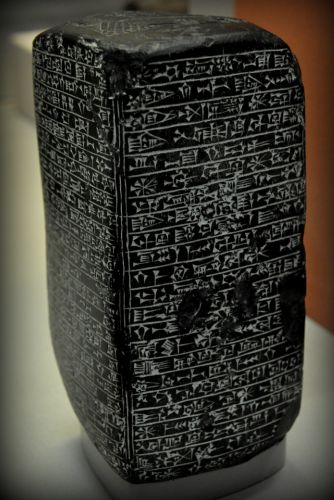
The succession crisis following Sennacherib’s assassination gave Esarhaddon compelling reasons to demonstrate what his government could accomplish. His father’s designation had not prevented rival brothers from contesting the throne, and victory over them settled the immediate struggle without resolving every problem inherited by the new reign. Babylon offered an opportunity to establish a recognizable relationship with southern constituencies through action they could experience directly. Its devastation in 689 BCE had left reconstruction as a task through which royal resources could be converted into buildings and renewed settlement. Undertaking that work allowed Esarhaddon to associate his authority with benefits that distinguished his administration from the circumstances preceding it. He could strengthen his position through patronage while retaining the supremacy his dynasty asserted over Babylonia.
The program developed through several activities whose starting points need not have coincided. Reports of resettlement may belong to the beginning of Esarhaddon’s reign, whereas the chronology of substantial construction at Babylon and Esagil remains debated. Jamie Novotny has argued that serious consideration of those building projects occurred in 679 BCE and that the earliest surviving Babylon inscription was composed in 678 BCE, revising earlier reconstructions that placed the principal texts closer to the king’s accession. This proposed sequence leaves room for returns or preliminary measures before major temple work acquired momentum. Rebuilding also extended across successive stages, requiring preparations that inscriptions celebrating later achievements could compress into a coherent royal undertaking. The distinction matters because recovery involved more than a decision announced at court. People could begin returning while substantial parts of the monumental setting still awaited reconstruction. Esarhaddon’s commitment gradually took material form, and the surviving accounts preserve different views of that developing process.
Architectural work concentrated on Esagil and associated sanctuaries, but the inscriptions also claimed the reconstruction of Babylon’s principal walls, Imgur-Enlil and Nemed-Enlil. Restoring the temple provided a setting for renewed offerings and the activities of personnel whose responsibilities had depended on its functioning. The wall projects addressed the city’s bounded urban form and its capacity for defense, making royal protection visible through structures intended to endure. Esarhaddon emphasized fidelity to established foundations, presenting his work at Esagil as observance of a venerable plan rather than an opportunity to redesign the sanctuary according to personal preference. That insistence gave the reconstruction a claim to continuity, although it cannot establish that every ancient dimension was recovered with exact accuracy. Other religious buildings received attention during the reign, including a temple of Nabu documented in an inscription naming the king’s designated heirs. The variety of projects indicates an effort to recover a functioning sacred space rather than repair one isolated landmark. Each building could serve as evidence of royal involvement, while the combined undertaking connected the revived city with the patron who supplied resources for its renewal.
Those resources included labor obtained through imperial power. One Babylon inscription states that Esarhaddon assembled people from lands he had conquered and required them to take up the hoe and basket for construction. The same composition represented the king himself carrying a basket, joining a ceremonial display of personal participation to the sustained work demanded from others. This evidence prevents the project from being understood solely through its benefits to Babylon’s inhabitants. Rebuilding also drew upon populations whose obligations arose from conquest, without establishing that every person employed at the site worked under identical conditions.
Recovering a resident population required measures different from monumental construction. Esarhaddon’s inscriptions described gathering dispersed Babylonians, including people who had been sold into servitude, and supplying clothing while returning possessions. These claims recognized that the consequences of devastation had followed inhabitants beyond the city and could not be addressed simply by making buildings habitable again. Identifying displaced people as Babylonians also asserted their continuing membership in a community despite separation from its physical setting. The royal accounts do not establish how comprehensively officials located returnees or how disputes over belongings were resolved. Nevertheless, their attention to material assistance gives the restoration a practical dimension beyond the celebration of completed masonry. Another inscription encouraged housebuilding and orchard planting, while canal excavation formed part of the effort to resume productive settlement. Returning households needed the means to sustain themselves, and renewed cultivation would contribute to the city’s provision over a longer period. These measures connected repopulation with the recovery of livelihoods, making residence more viable than a royal instruction to return could have done alone.
Property restoration could also require intervention outside Babylon itself. In his account of a campaign against Bit-Dakkuri, Esarhaddon claimed to recover fields belonging to people of Babylon and Borsippa that had been appropriated by the group’s ruler. The episode placed agricultural holdings within the wider work of recovery, using military action to enforce the ownership claims favored by the crown. Renewed civic privileges and exemption documents similarly gave recognized beneficiaries grounds for expecting favored treatment under the restored administration. Such measures recovered historically specific protections rather than introducing equal standing for every resident. They strengthened the position of some households while making the king an active guarantor of the legal arrangements upon which those households relied.
Evidence of favorable reception appears in a report from Ubaru, an Assyrian official associated with Babylon’s administration. He described inhabitants welcoming the king’s measures and reported praise for the return of captives and possessions, extending his account to Chaldean leaders who appreciated the resettlement. The letter gives the program a contemporary setting in which its benefits were being communicated upward, although an official’s account of approval cannot measure the opinions of everyone affected. Its significance lies partly in the range of support it reported. Recovery could appeal to people whose interests did not otherwise coincide. Barbara Nevling Porter’s analysis helps explain how such practical benefits contributed to governing an empire through relationships that force alone could not sustain. An owner whose land was recovered or a household assisted in returning had reasons to associate the new reign with improved circumstances. That association could encourage cooperation without requiring its beneficiaries to embrace every Assyrian demand. Restoration created opportunities for the monarchy to acquire support through specific interventions whose value was intelligible to those receiving them.
The undertaking nevertheless remained incomplete when Esarhaddon died in 669 BCE. He had designated Ashurbanipal for the Assyrian throne and Shamash-shuma-ukin for the Babylonian kingship in 672 BCE, linking the city’s future to another arrangement within his own family. Marduk’s return to Babylon occurred in 668 BCE, after Esarhaddon’s death, under the succeeding reign and in connection with Shamash-shuma-ukin’s installation. The father had prepared for that culmination but had not himself accomplished it or inaugurated his Babylonian kingship through the restored New Year observance. Construction likewise continued beyond his lifetime, qualifying the impression of comprehensive completion conveyed by some building accounts. His contribution was substantial without constituting the entire recovery. Babylon’s renewal developed across more than one reign, even as successive rulers presented their contributions as evidence of personal royal achievement.
Divine Anger and Dynastic Responsibility
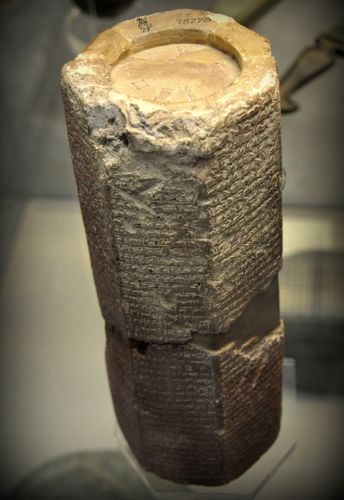
Esarhaddon inherited the task of explaining a catastrophe for which his own dynasty was responsible. His Babylon inscriptions acknowledged extensive devastation, but their accounts left Sennacherib’s military authorship unstated. Some placed the beginning of the disaster in the reign of an unnamed previous king; another introduced it simply as something that happened before Esarhaddon’s time. These formulations established distance between the reigning monarch and the destruction without identifying the ruler who had ordered it. The resulting narrative addressed a difficult problem of succession: how could a son undertake the recovery of Babylon while retaining the legitimacy of the royal house that had devastated it?
The explanation depended partly on allegations against Babylon’s inhabitants, although these accusations differed considerably between inscriptions. Barbara Nevling Porter’s comparison of the versions conventionally designated Babylon A, B, C, E, and G demonstrates why they should be read individually. Babylon A and C describe dishonesty, failures in religious observance, and the appropriation of Esagil’s precious possessions for transfer to Elam. Babylon B and G expand the indictment to include violence, murder, oppression of the weak, bribery, theft, and the breakdown of obedience within households. Babylon E offers a shorter account that begins with Marduk’s anger rather than an elaborate catalogue of offenses. Such variation prevents us from treating civic wrongdoing as a single, consistently reported explanation preserved across the restoration inscriptions. These were accusations issued under royal authority, and their repetition does not independently establish the conduct they described. Their combination nevertheless mattered. Offenses against worship, property, vulnerable people, and domestic hierarchy represented Babylon as a community whose relationships had become disordered. The charges mobilized values that also supported legitimate kingship, allowing the court to explain the city’s suffering through violations of the standards its restorer claimed to uphold.
Within this account, Marduk’s anger supplied the decisive cause of destruction. The Arahtu’s inundation became an expression of divine judgment, while the gods’ departure for heaven explained the withdrawal of protection from their sanctuaries. Shana Zaia emphasizes how this treatment transferred agency away from the Assyrian perpetrators. Divine departure and destructive water occupied the narrative positions that forcible intervention might otherwise have filled. Calling this an explanation through natural disaster would obscure its intentional character, since the flooding fulfilled the will of a deity rather than occurring as an unfortunate accident. Divine causation could also coexist with knowledge of human military action; ancient explanations did not require every event to have only one kind of agent. The significant choice was which participants the inscription identified and which responsibilities it left unspoken.
An elaborate passage made the duration of Babylon’s abandonment subject to Marduk’s reconsideration. In Babylon A, the god initially prescribed seventy years, then relented and reduced the interval to eleven. The account expressed this alteration through the written form of the numbers themselves. As the current edition explains, the mechanism involved reversing the order of numeral wedges. A vertical wedge followed by the sign for ten could represent sixty plus ten, whereas their transposition produced ten plus one. The frequently repeated explanation that the result followed simply from turning a tablet upside down is misleading. This scribal device gave the shortened sentence a precise textual relationship to the original decree, presenting mercy as a transformation of an existing divine decision. Its interpretive importance extended beyond the ingenuity of the numerical formulation. Restoration became permissible because Marduk had changed the period of punishment, without any corresponding declaration that the destruction had been unjust. Esarhaddon could consequently proceed as the executor of a newly favorable decision while the authority behind the earlier catastrophe remained intact. The passage joined severe judgment and renewed habitation within one continuing divine government, making the successor’s different policy compatible with the explanation already supplied for Babylon’s fall.
The treatment of Sennacherib’s name reveals that this distancing had limits. Several Babylon inscriptions omitted the customary identification of Esarhaddon as his father’s son, a departure that Novotny discusses in relation to the religious sensitivities surrounding the rebuilding program. Yet a later inscription, Esarhaddon 113, explicitly named Sennacherib in its genealogy and accorded him prestigious royal titles. The evidence supports selective omission of a destructive role rather than a sustained attempt to suppress every acknowledgment of descent. Ancestry could remain an asset to royal legitimacy even when the father’s responsibility for Babylon was excluded from the account of its recovery.
Living memory makes the purpose of these omissions more complicated than a straightforward attempt to conceal what happened. J. A. Brinkman observed that adults in Mesopotamia were unlikely to have forgotten an Assyrian assault that remained within recent experience. People who had survived displacement, lost relatives, or witnessed damage would not necessarily have needed a royal inscription to identify the army involved. An official account could nevertheless shape the interpretation attached to familiar events, determining how destruction was explained in the monuments of the restored city and how the reigning king entered that explanation. On this reading, the inscriptions offered an authorized relationship between past suffering and present benefaction, even where knowledge of the conquest persisted. Their political usefulness is compatible with serious religious commitment. Belief in Marduk’s capacity to punish and relent could make the account persuasive to its authors as well as useful to the monarchy. We cannot establish from these texts alone either private disbelief among the scribes or acceptance among Babylon’s inhabitants. What can be demonstrated is the arrangement of responsibility within the surviving accounts, in which divine anger explains devastation and divine favor validates the king who undertakes recovery.
Responsibility for repair became explicit while responsibility for inflicting the damage remained unresolved. The inscriptions gave Esarhaddon a positive obligation to restore the relationship between Babylon and its gods, but they supplied no comparable examination of whether his father’s actions had exceeded legitimate punishment. Nor did the shift toward mercy require the successor to acknowledge the inhabitants’ losses as consequences of a wrongful royal decision. This distinction helps explain how substantial assistance to a damaged community could coexist with continued protection of the dynasty’s reputation. Rebuilding had practical value for those whose homes, institutions, and livelihoods had been disrupted, regardless of the explanation attached to it. But its commemorative language placed the authority to interpret their suffering in the hands of the same royal house that now claimed credit for relieving it. Esarhaddon’s account made his responsiveness to Babylon’s condition a basis for renewed legitimacy, while leaving the consequences of Sennacherib’s command without an explicitly responsible king.
Was Destruction a Form of Government?
The following video from “Fall of Civilizations” is a history of the Assyrians:
The strongest challenge here concerns the scale at which Sennacherib’s decision should be assessed. Babylon’s survival as a functioning city and Assyria’s continued command over Babylonia were distinct political objectives, and a ruler could sacrifice the former while pursuing the latter. Frame’s characterization of Babylon as both an obstacle to Assyrian control and a highly desirable possession captures this tension. Its importance made accommodation valuable, but also gave opponents of Assyria a consequential center from which to claim authority. Destroying that center could constitute a strategy of government, especially if government meant maintaining supremacy over the surrounding territory. The interpretation developed here must allow for that possibility. Devastation does not by itself demonstrate that Sennacherib abandoned imperial management or acted without an intelligible political purpose.
A strategic reading gains force from the repeated difficulties associated with preserving a subordinate Babylonian monarchy. Delegation to Bel-ibni and the installation of Ashur-nadin-shumi had failed to secure an enduring settlement, while intervention from Elam increased the danger that local opposition could develop into a broader military coalition. Those experiences gave Sennacherib grounds to doubt whether another appointment would produce substantially different results. From the court’s perspective, disabling Babylon might have reduced the resources and institutional support available to future challengers. Other settlements and local authorities could continue operating under Assyrian supremacy while the city’s capacity to sustain an alternative kingship was diminished. Such an approach would accept considerable economic damage in exchange for anticipated military advantages, although no surviving document records a calculation of that exchange. The destruction account’s expressed intention to prevent future recognition of the site supports an effort to impose lasting consequences beyond the defeat of its current ruler. Its treatment of permanence remains exaggerated royal language, but the aspiration itself is significant. This explanation deserves serious consideration because it connects the decision to the practical problem of recurrent resistance rather than making preservation the predetermined measure of competent rule.
There is also a qualified case that the operation achieved part of its immediate purpose. Frame suggested that Babylon’s destruction intimidated other communities and may have discouraged further Elamite intervention during Sennacherib’s remaining years. Continued Assyrian authority across the region is consistent with that interpretation, even though its administrative workings are incompletely documented. Sennacherib’s account of Dilmun’s submission likewise presented the devastation as capable of producing obedience beyond Babylon, but it supplies the conqueror’s claim rather than independent confirmation. These considerations make limited coercive effectiveness plausible. They give the counterargument a firmer basis than the general observation that ancient rulers frequently employed exemplary violence.
The difficulty arises when plausible suppression is expanded into a verdict of successful government. The surviving evidence cannot establish how much of the apparent reduction in resistance resulted from intimidation, exhaustion, changing Elamite circumstances, or gaps in documentation. Nor can continued supremacy demonstrate that the destruction produced an advantageous balance between the costs of previous campaigns and the losses associated with disabling a major urban center. Frame’s reconstruction itself accommodates the possibility that regional powers strengthened during these years and that Assyrian supervision was uneven. Esarhaddon’s later claim to recover fields forcibly appropriated from citizens of Babylon and Borsippa illustrates the property disputes that required royal intervention, although the uncertain dates of those seizures prevent assigning them securely to the aftermath of 689 BCE. Such evidence warns against assuming that the removal of one powerful opponent automatically created comprehensive control. Esarhaddon’s restoration nevertheless cannot serve as a simple retrospective proof that his father’s strategy failed militarily. A successor could judge rebuilding advantageous under different circumstances while retaining the same larger ambition of Assyrian dominance. There is no evidence that Sennacherib planned destruction as the opening stage of a future restoration program, so the two reigns should not be combined into a coordinated policy. Their contrasting methods instead demonstrate that imperial control could be pursued through materially different arrangements, whose relative effectiveness remains difficult to measure.
This challenge sharpens my argument by locating the decisive change in the treatment of Babylon within an ongoing claim to dominion. Sennacherib’s devastation can be understood as a deliberate governing choice that subordinated the city’s continued functioning to the suppression of opposition. Recognizing its strategic coherence makes the distribution of its burdens more consequential, since an intelligible objective does not establish that the punishment imposed on inhabitants was necessary or proportionate. The same distinction applies to effectiveness. Temporary obedience would explain one benefit sought by the monarchy without accounting for the losses borne by the community. The evidence supports examining those losses alongside the court’s security concerns, while resisting a confident verdict about the policy’s ultimate military or fiscal value. What emerges is a narrower and stronger interpretation of royal responsibility. Sennacherib retained his assertion of authority over Babylonia while making the preservation of its principal city conditional on submission. Destruction was compatible with imperial government, and that compatibility exposes how far a ruler’s claim to maintain order could authorize damage to the society subjected to his command.
Conclusion: The Authority to Destroy and the Claim to Restore
The decisive development in 689 BCE was the treatment of Babylon after its capture. Sennacherib had previously attempted to secure the city through arrangements that preserved a Babylonian throne under Assyrian supervision. Conquest gave him another opportunity to determine how that relationship would operate, and extensive devastation became his response. Earlier rebellions help explain the circumstances of this choice, but they do not establish that it was inevitable. Although the precise reach of the demolition remains uncertain, the inscriptions’ ambition to prevent the city’s recovery reveals the priority asserted by the conqueror. Babylon’s continued usefulness as an inhabited political and religious center had become subordinate to eliminating its capacity to support renewed resistance.
That decision exposes a conflict within imperial possession. A functioning Babylon offered economic resources and prestigious institutions through which Assyrian monarchs could obtain recognition, yet those institutions also sustained claims to authority that the northern court could not reliably control. Preserving the city required accepting relationships whose participants retained interests and allegiances beyond the demands of an Assyrian ruler. Devastation offered a more forceful way to alter those relationships by damaging the setting in which rival kingship could operate. As the counterpoint has shown, this could remain intelligible as a strategy for commanding Babylonia, and limited success in suppressing opposition is plausible. The surviving record provides insufficient grounds for judging its overall advantages against the economic and political costs. The argument nevertheless rests on a demonstrable choice about the distribution of those costs. The consequences extended across a population whose members cannot all be identified as responsible for rebellion. The monarchy’s own expectations of justice and religious care make that extension significant within the values of the period. Its claim to exercise rightful authority over Babylon did not ensure that the city’s inhabitants would receive protection once their community was treated as an obstacle to imperial security.
Esarhaddon subsequently pursued a relationship with Babylon in which recovery supported continued Assyrian supremacy. His restoration program mattered materially because renewed buildings, recovered property, and the return of displaced inhabitants could help reestablish conditions for urban life. The political purposes of those measures do not diminish their practical significance, although royal accounts cannot establish either their universal reach or the population’s response. His commemorative texts also made the undertaking evidence of his fitness to reign, giving the successor an active place in Babylon’s recovery while leaving Sennacherib’s destructive command outside their explanation of its suffering. Marduk’s punishment and subsequent favor supplied continuity between policies with sharply different consequences. Through that account, the dynasty could acknowledge the need to repair extensive damage without expressly judging the royal decision that had caused it.
Destruction and restoration reveal the unequal terms on which rulers could define their responsibilities toward a subjected city. Sennacherib claimed achievement through Babylon’s devastation; Esarhaddon claimed legitimacy through its rehabilitation. The difference between their actions was substantial, but both monarchs retained the authority to explain what had happened and to assign its significance within accounts centered on kingship. Babylon’s inhabitants appeared within those narratives as people whose conduct required punishment or whose recovery demonstrated royal care, while their own assessments are much harder to recover. This imbalance places limits on any history organized exclusively around the intentions and reputations of sovereigns. It also directs attention to the durability of the community itself, whose future depended on rebuilding relationships and institutions that military victory could readily disrupt. The episode ultimately shows how a dynasty could make both the infliction of catastrophe and the relief of its consequences grounds for asserting legitimate rule. Assessing that assertion requires attention to what royal power made possible for the people governed, alongside what it enabled a king to command.
Bibliography
Affiliate disclosure: Amazon links on this site are paid links. As an Amazon Associate I earn from qualifying purchases.
- Anastasio, Stefano. Building between the Two Rivers: An Introduction to the Building Archaeology of Ancient Mesopotamia. Oxford: Archaeopress, 2020.
- Bagg, Ariel M. “The Unconquerable Country: The Babylonian Marshes in the Neo-Assyrian Sources.” Water History 12 (2020), 57–73.
- Bazhatarnik, Maria. “Humban-haltaš of the Astronomical Diaries.” Nouvelles Assyriologiques Brèves et Utilitaires, no. 3 (2024): 120–121.
- Brinkman, J. A. “Merodach-Baladan II.” In Studies Presented to A. Leo Oppenheim, June 7, 1964, edited by Robert D. Biggs and J. A. Brinkman, 6–53. Chicago: Oriental Institute of the University of Chicago, 1964.
- —-. Prelude to Empire: Babylonian Society and Politics, 747–626 B.C. Philadelphia: Babylonian Fund, 1984.
- —-. “Sennacherib’s Babylonian Problem: An Interpretation.” Journal of Cuneiform Studies 25:2 (1973), 89–95.
- —-. “Through a Glass Darkly: Esarhaddon’s Retrospects on the Downfall of Babylon.” Journal of the American Oriental Society 103:1 (1983), 35–42.
- Cogan, Mordechai. “Sennacherib and the Angry Gods of Babylon and Israel.” Israel Exploration Journal 59:2 (2009), 164-174.
- Dewar, Ben. “Rebellion, Sargon II’s ‘Punishment’ and the Death of Aššur-nādin-šumi in the Inscriptions of Sennacherib.” Journal of Ancient Near Eastern History 3:1 (2016), 25–38.
- Elayi, Josette. Sennacherib, King of Assyria. Atlanta: SBL Press, 2018.
- Frahm, Eckart, ed. A Companion to Assyria. Chichester: Wiley Blackwell, 2017.
- Frame, Grant. Babylonia 689–627 B.C.: A Political History. Istanbul: Nederlands Historisch-Archaeologisch Instituut te Istanbul, 1992.
- Frame, Grant. “Babylon: Assyria’s Problem and Assyria’s Prize.” Journal of the Canadian Society for Mesopotamian Studies 3 (2008), 21–31.
- —-. The Royal Inscriptions of Sargon II, King of Assyria (721–705 BC). Royal Inscriptions of the Neo-Assyrian Period 2. University Park, PA: Eisenbrauns, 2021.
- George, Andrew R.. The Babylonian Gilgamesh Epic: Introduction, Critical Edition and Cuneiform Texts. Oxford: Oxford University Press, 2003.
- —-. Babylonian Topographical Texts. Orientalia Lovaniensia Analecta 40. Leuven: Peeters, 1992.
- Grayson, A. Kirk. Assyrian and Babylonian Chronicles. Texts from Cuneiform Sources 5. Locust Valley, NY: J. J. Augustin, 1975.
- —-. “Problematical Battles in Mesopotamian History.” In Studies in Honor of Benno Landsberger on His Seventy-Fifth Birthday, April 21, 1963, edited by Hans G. Güterbock and Thorkild Jacobsen, 337–342. Assyriological Studies 16. Chicago: University of Chicago Press, 1965.
- Grayson, A. Kirk, and Jamie Novotny. The Royal Inscriptions of Sennacherib, King of Assyria (704–681 BC), Part 1. Royal Inscriptions of the Neo-Assyrian Period 3/1. Winona Lake, IN: Eisenbrauns, 2012.
- Jones, Christopher W. “Failed Coup: The Assassination of Sennacherib and Esarhaddon’s Struggle for the Throne, 681–680 B.C.” Journal of Ancient Near Eastern History 10:2 (2023), 293–369.
- Leichty, Erle. The Royal Inscriptions of Esarhaddon, King of Assyria (680–669 BC). Royal Inscriptions of the Neo-Assyrian Period 4. Winona Lake, IN: Eisenbrauns, 2011.
- Levavi, Yuval. “The Sound of Silence: The Destruction of Babylon by Sennacherib and the Babylonian Chronicles.” In Culture of Defeat: Submission in Written Sources and the Archaeological Record, edited by Katharina Streit and Marianne Grohmann, 165–88. Piscataway, NJ: Gorgias Press, 2021.
- Levine, Baruch A. “Assyrian Ideology and Israelite Monotheism.” Iraq 67:1 (2005), 411-427.
- Liverani, Mario. Assyria: The Imperial Mission. Translated by Andrea Trameri and Jonathan Valk. Mesopotamian Civilizations 21. Winona Lake, IN: Eisenbrauns, 2017.
- Livingstone, Alasdair. Court Poetry and Literary Miscellanea. State Archives of Assyria 3. Helsinki: Helsinki University Press, 1989.
- Luukko, Mikko, and Greta Van Buylaere. The Babylonian Correspondence of Esarhaddon and Assurbanipal. State Archives of Assyria 18. Helsinki: Helsinki University Press, 2002.
- —-. The Political Correspondence of Esarhaddon. State Archives of Assyria 16. Helsinki: Helsinki University Press, 2002.
- Machinist, Peter. “The Assyrians and Their Babylonian Problem: Some Reflections.” Wissenschaftskolleg zu Berlin Jahrbuch 1984/1985: 353–64.
- Novotny, Jamie. “New Proposed Chronological Sequence and Dates of Composition of Esarhaddon’s Babylon Inscriptions.” Journal of Cuneiform Studies 67 (2015), 145–168.
- Olmstead, A. T. “The Fall and Rise of Babylon.” The American Journal of Semitic Languages and Literatures 38:2 (1922), 73-96.
- Pedersén, Olof. “The Tower of Babylon Stele Found in Babylon.” Iraq 85 (2023), 179–191.
- Porter, Barbara N. Images, Power, and Politics: Figurative Aspects of Esarhaddon’s Babylonian Policy. Philadelphia: American Philosophical Society, 1993.
- Radner, Karen. “High Visibility Punishment and Deterrent: Impalement in Assyrian Warfare and Legal Practice.” Zeitschrift für Altorientalische und Biblische Rechtsgeschichte 21 (2015): 103–128.
- —-. “The ‘Lost Tribes of Israel’ in the Context of the Resettlement Programme of the Assyrian Empire.” In The Last Days of the Kingdom of Israel, edited by Shuichi Hasegawa, Christoph Levin, and Karen Radner, 101–123. Beihefte zur Zeitschrift für die alttestamentliche Wissenschaft 511. Berlin and Boston: De Gruyter, 2019.
- Reynolds, Frances. The Babylonian Correspondence of Esarhaddon and Letters to Assurbanipal and Sin-šarru-iškun from Northern and Central Babylonia. State Archives of Assyria 18. Helsinki: Helsinki University Press, 2003.
- —-. “The Cuneiform Reception of Enuma Elish.” In Enuma Elish: The Babylonian Epic of Creation, edited by Johannes Haubold, et.al., 129–150. Library of Babylonian Literature 1. London: Bloomsbury Academic, 2024.
- Ristvet, Lauren. “An Imperial Audience: The Provincial Reception of Assyrian Political Rhetoric.” In Pomp, Circumstance, and the Performance of Politics: Acting Politically Correct in the Ancient World, edited by Kathryn R. Morgan, 319–356. ISAC Seminars 16. Chicago: Institute for the Study of Ancient Cultures, 2024.
- Schaudig, Hanspeter. Explaining Disaster: Tradition and Transformation of the “Catastrophe of Ibbi-Sîn” in Babylonian Literature. Dubsar 13. Münster: Zaphon, 2019.
- Seymour, Michael. Babylon: Legend, History and the Ancient City. London: I. B. Tauris, 2014.
- Tadmor, Hayim, and Shigeo Yamada. The Royal Inscriptions of Tiglath-pileser III (744–727 BC) and Shalmaneser V (726–722 BC), Kings of Assyria. Royal Inscriptions of the Neo-Assyrian Period 1. Winona Lake, IN: Eisenbrauns, 2011.
- Van De Mieroop, Marc. “Revenge, Assyrian Style.” Past & Present 179 (2003), 3–23.
- Walker, Christopher B. F., and Michael B. Dick. The Induction of the Cult Image in Ancient Mesopotamia: The Mesopotamian Mīs Pî Ritual. State Archives of Assyria Literary Texts 1. Helsinki: Neo-Assyrian Text Corpus Project, 2001.
- Waters, Matthew W. A Survey of Neo-Elamite History. State Archives of Assyria Studies 12. Helsinki: Neo-Assyrian Text Corpus Project, 2000.
- Weaver, Ann M. “The ‘Sin of Sargon’ and Esarhaddon’s Reconception of Sennacherib: A Study in Divine Will, Human Politics and Royal Ideology.” Iraq 66 (2004), 61–66.
- Zaia, Shana. “The Cosmic Front: War and Its Impact on Official Religion in the Neo-Assyrian Empire (c. 1000–610 BCE).” In Religion and War from Antiquity to Early Modernity: Historical Variations across the Mediterranean, Near East, and Europe, edited by Irene Polinskaya, Alan James, and Ioannis Papadogiannakis, 102–119. London: Bloomsbury Academic, 2024.
- —-. “State-Sponsored Sacrilege: ‘Godnapping’ and Omission in Neo-Assyrian Inscriptions.” Journal of Ancient Near Eastern History 2:1 (2015), 19–54.
Originally published by Brewminate, 10.12.2026, under the terms of a Creative Commons Attribution-NonCommercial-NoDerivatives 4.0 International license.
About the Author