In medieval Paris, the price of a student’s room could become a matter for kings and popes. University privileges made housing a battleground over who held power in the city.

By Matthew A. McIntosh
Public Historian
Brewminate
In 1231, a Paris landlord’s dispute with scholars could become the pope’s business. Pope Gregory IX recognized the university’s right to regulate student lodgings and authorized its masters to suspend lectures if their authority over rent assessment was taken away and redress did not follow within fifteen days of a complaint. The same provision covered grave violence against scholars. Housing belonged in a document protecting a major center of Christian learning because the ability to study depended partly on who controlled the price of a room. sourcebooks.web.fordham.edu
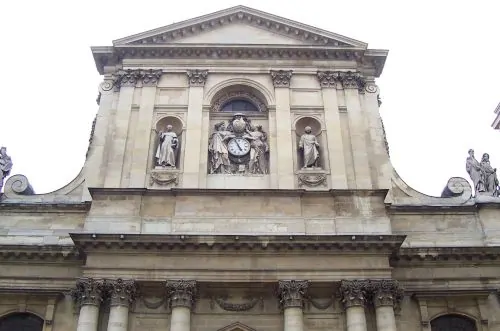
The University of Paris was then a community of masters and scholars embedded in the city. It had grown from existing schools, and its identity rested on an organized association of people. Students needed accommodation in the city; masters also needed places to teach. Many scholars came from elsewhere, bringing spending into the neighborhoods where they lived. Landlords and shopkeepers could profit from their presence, while their customers depended on access to rooms and food at manageable prices. This interdependence created opportunities for disagreement. A newcomer without nearby family could find himself bargaining with people who possessed both property and local connections. Individual wealth varied, and the university offered no guarantee that every student could afford his stay. Collective organization nevertheless gave scholars a means of addressing expenses that might otherwise have remained private troubles. In Paris, where masters predominated in university government, the defense of students’ lodging became part of the institution’s own authority.
These newcomers did not always answer to the same authorities as their neighbors. After violence involving students and townspeople in 1200, King Philip II, known as Philip Augustus, issued privileges protecting the Parisian scholars. Royal officials were restricted in their use of force against them; scholars detained for serious offenses were to be delivered to ecclesiastical justice. This did not make every student a priest or place wrongdoing beyond punishment. It meant that a quarrel involving a scholar could raise a jurisdictional question alongside the original complaint. A townsman and a student might inhabit adjacent rooms while claiming different legal protections. Defending those protections encouraged masters and scholars to act together. In 1215, the papal legate Robert of Courson recognized their ability to make binding agreements concerning lodging prices, as well as rules governing academic life. His statutes also forbade someone from taking over a classroom or house without seeking the existing tenant’s consent when that tenant could be consulted. Such details show how access to usable space had become a matter of institutional government. An individual scholar could still struggle to pay his landlord. Membership in the university, however, connected him to a body entitled to organize around the terms on which scholars occupied the city.
The limits of these protections became brutally clear during Carnival in 1229. A tavern quarrel escalated into student violence against local people, followed by a punitive intervention in which royal forces killed several scholars. Masters demanded redress and suspended lectures; many teachers and students dispersed to other places. The disruption continued into 1231. This confrontation began over drinking and violence, but the withdrawal demonstrated a power relevant to disputes over housing: scholars could leave. England’s Henry III even invited the displaced university community into his kingdom in July 1229. Local property remained in Paris; some of its paying occupants had options elsewhere.
Gregory’s intervention in 1231 addressed the practical machinery of the relationship. In a letter of April 14, he urged King Louis IX to accept assessment of lodging rents by two masters and two townsmen, acting under oath. The townsmen were to be chosen with the masters’ consent; if they failed to attend, the masters could proceed alone. Local representation therefore came with safeguards favoring the scholarly community. The university’s recognized powers also included declaring particular lodgings off limits. This provided a means of organizing a rental boycott, backed by its ability to exclude university members who defied corporate rules. Such arrangements concerned scholars’ accommodation, and ordinary Parisian renters did not acquire equivalent rights through them. Nor did assessment guarantee that every student would find a cheap room. What it supplied was a procedure through which the university could challenge rental terms collectively. A landlord retained his property, but his dealings with scholarly occupants were subject to demands backed by authorities far beyond the neighborhood. The university had become a participant in governing part of the city’s rental economy.
Privilege also carried obligations. Gregory expressly prohibited scholars from going armed in the city and forbade the university from defending people who disturbed peace and study. Anyone claiming scholarly liberties without attending school or acknowledging a master was excluded from those protections. These restrictions reveal the difficulty of maintaining a special legal community inside a crowded city: membership had to be identifiable, and its benefits could attract claims from people who did not qualify. Papal backing served the protection of learning within the Church’s world, while placing limits on how scholars behaved toward their neighbors. For other tenants, the resulting distinctions could be stark. Sharing a street with a scholar did not mean sharing his bargaining power. In medieval Paris, the rent on a room could depend on the corporate privileges its occupant was entitled to invoke.
Originally published by Brewminate, 10.18.2026, under the terms of a Creative Commons Attribution-NonCommercial-NoDerivatives 4.0 International license.
About the Author