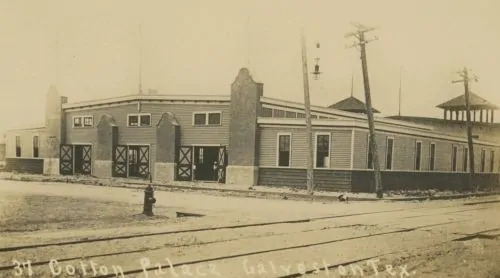
Galveston opened a cruise terminal in a cotton warehouse in 1990. By 2002, public investment and deals with Carnival and Royal Caribbean had made the island a year-round home port.

By Matthew A. McIntosh
Public Historian
Brewminate
Introduction: A Ship Due Back at Pier 25
On September 30, 2000, Carnival’s Celebration left Galveston’s Pier 25 about half an hour behind schedule. Its passengers had booked a five-night cruise to Mexico, but Hurricane Keith threatened the Yucatán, and Carnival redirected the ship to New Orleans. Some passengers chose refunds, delaying the departure while the crew retrieved their luggage. For those who stayed aboard, the substitute destination was the very city where Carnival had previously based the ship. One date on the original itinerary still held. The Celebration was due back in Galveston on Thursday to take aboard the passengers for its next cruise.
The waterfront to which the ship would return had been adapted for passenger traffic once already. In 1990, the Galveston Wharves converted a former cotton warehouse into a cruise terminal with financing from tax reinvestment zone bonds and a federal urban development loan. Day excursions and seasonal sailings gave the facility a use while officials sought regular business. Basing a ship there year-round put different demands on the shore. On a turnaround day, one group could still be collecting its luggage while another was arriving to check in. Dockworkers and suppliers needed access to the ship during the same interval in which its crew had to prepare the vessel for departure. Curbside drop-offs and shuttle runs had to keep pace with the work at the berth. The $10.6 million refurbishment completed in September 2000 included dedicated areas for embarking and disembarking passengers, a physical provision for work that would now recur several times in a single week. In taking on the Celebration, Galveston assumed responsibility for the hours between one vacation and the next.
The Port of Houston had already shown that a cruise line could fill ships sailing from southeast Texas. Norwegian Cruise Line began weekly departures from Barbours Cut in 1997, using a passenger facility at a container terminal. Its cruises regularly sold out, yet the company shifted the Norwegian Sea to Miami at the end of 2000, where it expected to earn more on shorter voyages. Galveston offered a different combination of sailing time and passenger access. Its position nearer the Gulf made four-night trips to Mexico practical, while the terminal’s proximity to the Strand gave passengers a reason to linger downtown even though those arriving by air faced a longer transfer from Houston.
Galveston’s emergence as a home port depended on the order in which the Wharves and the cruise lines made commitments. The first conversion gave the port a facility it could market while the prospect of year-round business remained uncertain. Carnival’s August 1999 berthing agreement gave the Wharves a ship and a proposed schedule around which to plan the larger renovation. Once the Celebration began operating, the two parties had a record of actual departures on which to base further decisions. Royal Caribbean tested Galveston with a short series of sailings in 2001 and moved to year-round service the following spring. In December 2002, Carnival agreed to advance money for additional terminal improvements, with a portion of future passenger fees designated to repay the loan. A port that had raised money to attract cruise traffic could now use revenue from that traffic to help finance its expansion. The expected gains beyond the wharf followed a different logic. Hotels and Strand merchants stood to benefit if travelers stayed or shopped, while a passenger who drove straight to the terminal could contribute to the port’s receipts without spending much elsewhere on the island. The history of Galveston’s first years as a home port turns on how much of that new business the Wharves could secure in advance, and how much still depended on decisions made by cruise lines and their passengers.
The Cotton Warehouse and the First Public Investment
Galveston’s 1913 city directory placed the Mallory Line’s landing at the foot of Twenty-Fifth Street and the Union Passenger Depot at the corner of Twenty-Fifth and the Strand. The two listings show how closely the downtown commercial district had grown around the places where people and goods entered the city. That arrangement took shape in the nineteenth century, when Galveston’s wharf company strengthened its piers to carry railroad tracks, allowing cargo to pass more directly from railcars to ships. The New York shipping entrepreneur Charles H. Mallory advised on the improvements and helped finance them. In 1870, the wharf company reached an agreement with him for regular service to New York. The warehouse that later carried the Mallory name belonged to a waterfront where the cotton trade and scheduled passenger travel had long made use of the same harbor.
The authority to put that property to a different use came from a long change in who owned the waterfront. The city acquired a one-third interest in the wharf company through an 1869 settlement, but the company remained in private control. Galveston voters approved municipal acquisition in 1940, and the city set apart the wharves and terminal properties as a separate utility. Its Board of Trustees managed the properties and their revenues. This arrangement gave the city a stake as owner and placed decisions about berths and facilities with a board responsible for keeping the port commercially viable. By the 1980s, that responsibility still meant attending to a substantial freight business. The city’s 1986 comprehensive plan listed cotton alongside cargoes such as bananas, grain, and raw sugar, and discussed improvements intended to strengthen waterborne commerce. Adapting space at Pier 25 for travelers added a use to a working port whose other berths remained important to the island’s economy.
The campaign to revive the Strand had already changed what city officials could imagine doing with the harbor frontage. In 1972, the Galveston Historical Foundation established a revolving fund with backing from the Moody and Kempner foundations to preserve and redevelop buildings in the old business district. The city subsequently used federal community development and revenue-sharing funds for streetscape improvements and economic development on the Strand. In 1988, it established the Strand/Mechanic district as Galveston’s first locally designated commercial historic district. These efforts gave practical value to the short distance between the wharf and downtown. A ship could put visitors ashore near buildings with new commercial uses, and businesses in those buildings could serve people who had come to see the harbor. The 1986 comprehensive plan placed proposed tourist development at the Wharves within a broader effort to reestablish Galveston as a year-round destination for vacations and conventions. The same plan recorded that some older residential areas needed rehabilitation, an indication of how unevenly investment was reaching different parts of the island. On the harbor frontage, preservation and tourism gave officials a reason to put an old commercial building back to work in a different capacity.
By June 1989, Mayor Jan Coggeshall was describing two kinds of business that the proposed terminal might attract. Ships calling at Galveston could send their passengers into town for a few hours, as visiting liners had already done. Voyages originating on the island would bring travelers there to board and give local travel agents departures they could sell. Coggeshall expected that some lines would eventually base ships in Galveston, but she described the immediate plan as a “rotating dock facility.” The city was preparing a berth that could serve different operators while it sought a line willing to make a longer commitment.
The contract Coggeshall signed that June called for Tellepsen Corporation to build the terminal for $1.8 million. The Associated Press placed the new facility on the upper level of the two-story Mallory Building, which served Piers 23 through 27. A July report in Cruise Industry News described the Pier 25 project at $2.2 million and gave its planned area as 26,000 square feet. The two figures describe different things in the contemporary record, one a building contract and the other the reported cost of the project. A Texas Transportation Institute survey later confirmed that the completed terminal occupied approximately that amount of space on the second floor. The choice concentrated the new investment in part of a building already close to a berth and within reach of downtown. It also gave the Wharves a facility that could be shown to prospective operators while negotiations over specific services were still open. What officials could offer in 1990 was a designated place to bring passengers aboard, with the scale of future traffic still to be established.
The financing shows how Galveston could proceed at that stage. The port’s retrospective identifies tax reinvestment zone bonds and a federal urban development loan as the sources for the roughly $2 million conversion. The city had already incorporated tax increment financing into its redevelopment policy under a Texas law enacted in 1981. Its comprehensive plan explained the mechanism in terms of a base value for taxable property in a designated area. As appraised values rose above that base, the tax revenue attributable to the increase could be directed to improvements in the zone. Bonds allowed public work to begin before that increment had been collected, making future property values relevant to the financing of a facility whose cruise receipts were still uncertain. The federal loan supplied another source of capital, although the published account leaves the amount advanced by each source unclear. The arrangement gave the project a financial rationale that extended beyond the wharf. A successful terminal might generate port charges, while the improvements around it might support the value and use of property nearby. Those were distinct expectations, and in 1990 each still depended on activity that the city was trying to attract.
Public construction at Pier 25 also proceeded alongside private redevelopment on port property. In 1990, the Wharves leased the rooftop and air rights of the Mallory Building to The Woodlands Corporation, as a later Texas appellate opinion records. Contemporary trade reporting separately described plans at Piers 19 through 21 for shops, restaurants, and passenger facilities in a development involving George Mitchell’s business interests. The projects put different parts of the same stretch of harbor frontage to different uses. The terminal created a place for an operator to receive travelers, while the surrounding development sought to give people reasons to visit the waterfront on days when a cruise ship might be absent.
When the Texas Cruise Ship Terminal opened in 1990, a decade of negotiations and experimentation still lay between the first investment and the beginning of regular multiday service under Carnival. The early record can be read on its own terms. By October 1993, the cruise trade press reported that seven ships had used the facility since it opened. That count showed that the Wharves had secured some business, but it said little about how frequently any one operator would use the berth or what it would take to keep a ship there. An occasional departure could be arranged around the availability of the vessel and the terminal. A line considering a much fuller calendar had to judge the port as a place it would use week after week. The first conversion made that judgment possible by giving Galveston an operating facility whose performance could be observed and whose limitations would become clearer with use.
What Occasional Sailings Could Prove
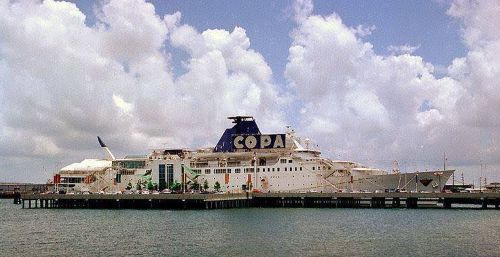
In July 1989, Cruise Industry News reported that sources at the Port of Galveston expected day cruises to draw more than 336,000 additional visitors in their first year. They projected a $67.2 million economic impact and counted on metropolitan Houston to supply a substantial share of the traffic. An operator selling a few hours at sea could fill the same places on a vessel several times a week, giving a single ship considerable earning potential. For Galveston, the first test of the cruise market would come from people buying an afternoon or an evening afloat.
The Pride of Mississippi, recently relocated from Gulfport, made its first Galveston sailing on December 8, 1989. The state’s travel bulletin promoted the service the following month alongside another local operator, Europa. Casino gaming helped make such excursions commercially attractive. Galveston voters had rejected proposals for legalized casino gambling in a series of nonbinding referendums between 1985 and 1988, while a change in state law opened the way for gambling aboard ships once they reached permitted waters. The Wharves agreed to provide Pride with a berth, passenger facilities, and parking at Pier 21, a separate site from the terminal being developed at Pier 25. In return for five years of exclusive day-cruise operating rights from the port, Pride guaranteed the Wharves an annual minimum fee of $500,000 under the agreement filed with the Federal Maritime Commission. Contemporary trade coverage attributed approximately 193,000 passengers in 1990 to Pride’s own count and reported $1.4 million in revenue for the port. The first figure measured traffic for one operator, while the second measured receipts at the Wharves. Both gave officials firmer evidence than the original projections of what this kind of service could bring to Galveston. The business they measured depended on selling repeated short trips to customers who could be home the same evening.
The dispute between Pride and Europa exposed a difficulty that sales figures could obscure. Pride claimed that its agreement with the Wharves barred the Galveston Park Board from authorizing Europa to operate out of Seawolf Park. Europa had obtained access through a different municipal body and disputed Pride’s claim to exclusivity. Meanwhile, fog forced the cancellation of many of Europa’s early departures, and mechanical trouble sidelined its ship for part of the summer of 1990. The two ventures showed that local demand could draw competing operators to Galveston even as the terms of access and the availability of ships made their schedules uncertain.
Gold Star Cruises brought another version of the day-cruise business to Pier 25 in late 1993. It chartered a former Carnival vessel, renamed it Star of Texas, and announced a year-round program of ten short sailings a week. The plan divided the week between six-hour daytime excursions and evening trips marketed around entertainment and gambling. Gold Star projected 240,000 passengers annually and estimated a first-year economic impact of about $20 million. Galveston’s hotel association separately forecast thousands of additional room nights, an expectation that depended on some customers extending what could otherwise be a day trip. In June 1994, publicity also offered monthly five-day voyages to Cozumel beginning in July, showing that the company was willing to try a longer product alongside its short runs. By December, the Associated Press described the day sailings during the preceding year as sporadic. The ship had already moved to Miami, and port officials reported that Gold Star owed about $140,000 in dock rent and other fees. The company subsequently folded after operating briefly from Florida. Galveston had attracted an operator prepared to advertise an extensive calendar, but the chartered vessel could be sent elsewhere while charges from its time at Pier 25 remained outstanding.
A separate opportunity arose when international cruise lines revised their deployments during the 1991 Gulf War. Sun Line announced ten weeklong voyages aboard Stella Solaris from Galveston that spring, and an advertisement in the Midland Reporter-Telegram gave prospective travelers a choice of Saturday departures from April 27 through June 29. The itinerary included Jamaica, Grand Cayman, and the Mexican Caribbean. The line planned to send the ship to Europe in July for charter work. For the weeks advertised in Texas, Galveston could serve as the embarkation point for a conventional Caribbean cruise within a program shaped by decisions made far beyond the Gulf Coast.
Other records show how travelers came to buy such voyages. In a first-person account published in American Heritage in 1995, a passenger recalled finding a Sun Line brochure for a sailing from Galveston to the Yucatán. The attraction was a visit to Chichén Itzá around the spring equinox, with lectures aboard ship providing context for the excursion. The trip gave the line a reason to market a specific departure date to people interested in Maya history. A federal court opinion preserves a different kind of evidence from two years later. In January 1997, Lynn Schaff of Webster, Texas, arranged through a travel agency in nearby Pearland to buy a ticket costing approximately $1,770 for a voyage aboard Stella Solaris. The ship left Galveston on February 28 and returned on March 7. The court recorded the transaction because Schaff alleged that she was injured while leaving the vessel. For the history of the port, the details establish how an ordinary sale worked. A suburban travel agency could sell a week at sea on a Greek-operated vessel to a customer who would board and return within the same metropolitan region. Galveston had become a usable point of departure for a product that travel agents could sell well beyond the island.
In his 1990 study of cruise-port selection, maritime geographer Bruce Marti treated a port’s location in relation to the itinerary a company wanted to offer. Galveston’s early record makes that relationship visible at several scales, from a few hours offshore to a block of weekly Caribbean departures. Each operation gave the Wharves evidence about a different set of customers and a different use of the berth. The remaining question was whether a line could sell multiday departures through ordinary weeks as well as special occasions and keep a ship in southeast Texas long enough to find out.
Houston Tests the Texas Market
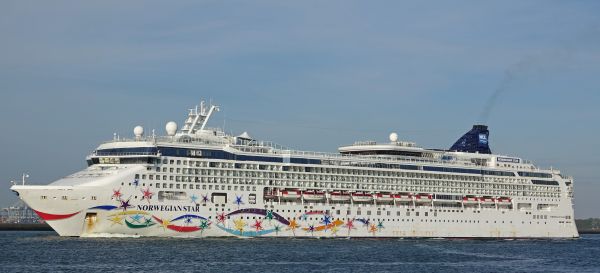
On May 25, 1997, travelers bound for the western Caribbean boarded the Norwegian Star at a container terminal on the Houston Ship Channel. The Port of Houston Authority had signed an initial three-year agreement with Norwegian Cruise Line and adapted a berth at Barbours Cut for the service. It erected an 18,000-square-foot warehouse building to handle passengers, a temporary addition to a complex built for freight. That modest investment let Houston test whether a cruise line could sell weeklong departures from the Texas mainland throughout the year.
Norwegian marketed the route as the Texaribbean, a name that made the place of departure part of the vacation’s identity. Bruce Nierenberg, then an executive at Norwegian, argued that Texans could save the cost of flying to an embarkation port in Florida or the Caribbean. He also saw Houston’s nonstop air connections as a way to draw customers from farther west. The company had two ways to fill the ship, and early reporting gave substance to both. Travel agents described a clientele that generally came by car, while the port magazine later reported that more than half of the Star’s passengers came from Texas and 15 percent from California. The advertised Sunday itinerary gave those travelers a week built around an overnight stop at Calica, time at Cozumel, and a day at Roatán in the Honduran Bay Islands. Some passengers could spend an evening at Xcaret or in Cancún before the voyage continued. Two days at sea on the return allowed for the additional distance back to Houston within a seven-day schedule. The product depended on making the journey to the ship convenient enough for regional customers and giving experienced cruisers an itinerary worth traveling to Texas to join.
The age and condition of the Norwegian Star placed that proposition under strain. On its 1997 Christmas cruise, an engine problem kept the vessel from calling at Calica, and reduced air conditioning drove some passengers out of their cabins to sleep on deck. Norwegian canceled the New Year’s departure after its technicians determined that repairs would keep the ship in Houston. About 960 passengers lost their scheduled voyage, and the company said it arranged overnight accommodations aboard for many who had flown in and needed return flights. Those disruptions made the first season a test of equipment and customer service as well as demand. According to the Port Authority’s later review, the Star still carried 51,295 passengers between May 1997 and October 1998. In December 1998, Norwegian replaced it with the Norwegian Sea, which offered about 1,500 berths. The port welcomed the larger vessel with a reception aboard, where Norwegian executive Art Sbarsky presented the deployment as an expansion of the company’s commitment to Houston. The authority subsequently counted 165,748 passengers over 107 sailings during the Sea’s two years at Barbours Cut. An average of roughly 1,550 people per voyage showed that the trade could sustain a substantial increase in the number of places Norwegian had to sell each week.
Premier Cruise Lines drew its own conclusions from that expansion. Nierenberg, who had helped inaugurate the Norwegian service, was now Premier’s chief executive and used Houston’s booking record to make the case for a second operator. The port told trade reporters that Norwegian’s exclusive use of the terminal had expired, opening space for Premier on a different sailing day. Premier planned seven-day cruises to Mexico, with a regular call at Veracruz to distinguish its route from Norwegian’s. Houston’s berth and its passenger market could now support competing offers, even though each company had to give agents a reason to sell its voyage.
Premier’s first Houston voyage under the Big Red Boat III name departed on May 27, 2000. The company sold a family-oriented week in Mexico, and the Houston Chronicle reported that the ship sailed with capacity loads much of the summer. The strength of those bookings made the interruption of service all the more revealing. Air-conditioning trouble marred the inaugural cruise, and Premier canceled a June departure while the vessel underwent repairs after a collision with a tug in the Houston Ship Channel. The company also faced financial difficulties that extended across its fleet. In September, its principal lender moved to take possession of ships, and Premier suspended operations while the Houston vessel was in the middle of a voyage. Passengers disembarked in Cozumel and Nassau and were flown back to Houston. By November, the Federal Maritime Commission reported that liquidation proceedings had begun in Bermuda. For Houston, the loss of a vessel that had drawn strong bookings showed how little a busy local season could do to protect a schedule when the company that published it could no longer operate.
Norwegian’s departure tested the same market in a different way. In December 1999, a year before the Norwegian Sea finished its Houston service, Sbarsky told Travel Weekly that the company expected to need the ship in Miami. It had operated shorter cruises there before, and he considered its size a good fit for three- and four-day voyages to the Bahamas and nearby ports. The announcement came after Carnival had publicized plans for Galveston and before either Carnival or Premier began its new Texas service. Trade reporting identified the prospect of more competition, while Norwegian’s explanation centered on what the ship could earn elsewhere. The Houston Chronicle subsequently reported that the Sea regularly sold out at Barbours Cut and that Norwegian expected higher revenue from shorter Miami itineraries. In Houston, the vessel took one group of passengers a week. In Miami, the line could sell the same cabins to two successive groups over a comparable period. The choice to move the ship was compatible with the favorable assessment Sbarsky had given Houston when it arrived, because the company was making a new decision about where to use the same asset.
Houston’s investment plans reflected the scale of the business the port now believed it could attract. The Bayport project, for which Harris County voters approved $387 million in bonds in 1999, included cruise berths alongside a larger expansion of container capacity. The vote came while Norwegian was still sailing from Barbours Cut, and the events of 2000 exposed how quickly the operators available to use such facilities could change. Galveston entered negotiations with Carnival in a region where the ability to sell a weekly cruise had already been demonstrated. It still had to make a case for the terms and facilities it could offer a company choosing where to base its ship.
Carnival’s Commitment and the $10.6 Million Rebuild
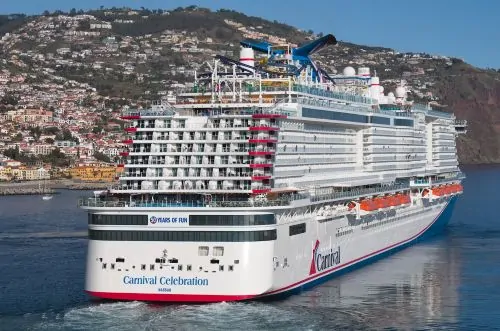
In June 1999, Carnival Cruise Lines gave Galveston a date around which to plan. The company announced that the Celebration would begin year-round service from the island on September 30, 2000. Its sales program paired four- and five-night cruises to Mexico, with starting fares of $389 and $479 per person, respectively, based on double occupancy. By naming a ship, a price, and a first sailing more than a year in advance, Carnival gave travel agents a product to sell and the Wharves a deadline for preparing the terminal.
The assignment of the Celebration made sense within Carnival’s wider fleet strategy. The 1,486-passenger ship had entered service in 1987, before Carnival began introducing its larger Fantasy-class vessels. It was running seven-night western Caribbean cruises out of New Orleans when the Galveston program was announced. Carnival intended to put a larger ship in New Orleans and use the Celebration to reach a different set of customers from Texas. Company president Bob Dickinson told Travel Weekly that consumers and travel agents had been asking about Texas departures. He expected business from beyond the state as well, including from the Midwest and the West. Carnival’s 1999 annual report placed Galveston among a growing group of North American embarkation ports that brought ships closer to potential passengers. A shorter voyage could bring the advertised fare down, while a nearer port could reduce the cost of reaching the ship in the first place. These were ways to make an established vessel useful in a new market without waiting for another ship to be built.
The Wharves and Carnival signed their berthing agreement on August 16, 1999, according to the later operating agreement that records its date. Contemporary reporting described Carnival’s undertaking as a five-year arrangement. Local business interests also had a role in getting the first season underway. In a 2006 interview, developer George P. Mitchell recalled that he and other supporters raised $250,000 to help promote Carnival’s first year, of which he contributed $100,000. His recollection identifies a separate expense that mattered to the launch. The port could prepare a berth for the ship, while money spent on promotion could help fill its cabins once tickets went on sale.
By October 1999, the proposed work had entered the public record in Washington. Veronica Sanchez, speaking for the Cruising America Coalition at a Senate hearing, described a $4.8 million terminal project to be financed with revenue bonds. She cited Carnival’s plans for about seventy cruises a year as evidence that new American cruise markets were opening. Galveston’s municipal accounts subsequently recorded $4.895 million in Series 1999 Wharves and Terminal Revenue Bonds, an issue later identified in trade coverage of Moody’s ratings as the 1999 cruise-terminal bonds. That issue gives the financing a firmer documentary basis than the hearing estimate alone. The figure attached to the completed renovation in September 2000 was $10.6 million. The surviving figures establish the size of one bond issue and the reported cost of the finished work, while leaving the sources of the balance unclear. Carnival’s construction advance appears in a separate December 2002 agreement for additional improvements. For the 1999–2000 project, the evidence shows that the Wharves undertook major spending with a carrier already committed to using the facility. The value of that commitment lay in giving the port an identifiable source of business while it invested in improvements that would remain on the island for years.
The reconstruction reached from the warehouse interior to the water’s edge. Texas Gulf Construction’s later project account describes an extension of the dock apron, additional steel mooring piles, and new bollards and fenders at Terminal 1. These were changes to the berth itself, giving crews more space to work alongside the vessel and adding equipment to hold it securely against the wharf. Inside the building, the work created public and office space and added exit stairs. The Wharves also had to reckon with rights it had granted when the terminal first opened. A 1999 amendment to the Mallory Building’s rooftop lease allowed the port to install elevator and air-conditioning equipment and build an enclosed pedestrian walkway. The change illustrates how adapting an existing building could require a fresh agreement over space the port already owned. By September 2000 the enlarged facility occupied parts of Piers 23 through 26, which together operated under the familiar designation of Pier 25.
The terminal was rededicated on September 27, three days before the first departure. In remarks entered in the Congressional Record, Representative Nick Lampson anticipated twenty calls by the end of 2000 and seventy-nine in 2001. His forecast captured the change in the scale of the undertaking. Each return on that calendar would give the Wharves another occasion to put the improvements to work, with the next departure already sold.
Turning a Ship Around at Pier 25
The Celebration’s published schedule in February 2002 gave it eight hours in Galveston between cruises. On both its four- and five-night itineraries, Carnival advertised an 8 a.m. return and a 4 p.m. departure. At double occupancy, the ship carried 1,486 passengers, so a day at Pier 25 could involve nearly three thousand people coming off the vessel or going aboard. That exchange had to leave time for the crew to prepare the ship for another voyage.
Work on the morning arrival could begin while the vessel was still at sea. A federal court opinion records that Carnival routinely made passenger manifests available to the United States Customs Service before its ships returned, a practice documented aboard the Celebration during its last month of service from New Orleans. A 1999 Justice Department review describes the usual sequence at American cruise ports in this period. Officers of the Immigration and Naturalization Service boarded the arriving vessel to inspect passengers who were required to report to them. The passenger group remained aboard until those inspections were complete, then went ashore for customs processing. Luggage also had to come off the vessel and be made available for collection as people moved through the terminal. An early federal inventory of Pier 25 distinguished the disembarkation area from the one where departing passengers assembled. That division gave workers room to receive passengers for the next cruise while people from the previous one were still making their way out. The arrangement mattered because time spent waiting aboard or collecting luggage drew on the same interval that the crew needed to turn over the cabins.
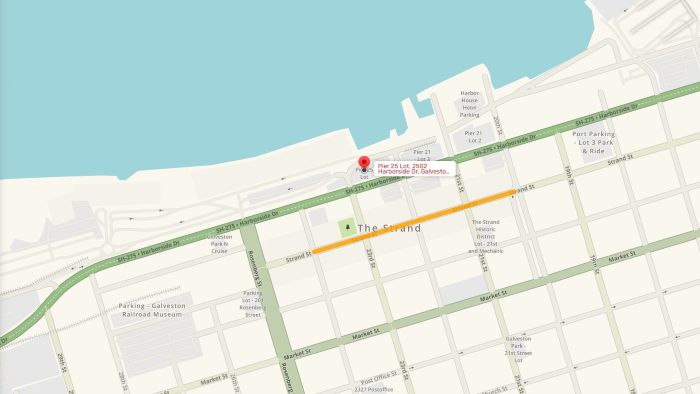
On the street side, the port asked motorists to make two stops. In September 2000, Houston Chronicle travel editor Harry Shattuck advised passengers to drop their luggage at the terminal, pay $8 per day in advance at one of two paved lots about four-tenths of a mile away, and take the free shuttle back. The arrangement reserved the curb nearest the ship for brief stops while giving cars a place to stay for the duration of the voyage. It also made a shuttle ride part of embarkation for people who had driven themselves to Galveston. The time it took to get a family from its car to check-in depended in part on how quickly the port could clear the curb and bring motorists back from the lots.
Much of the work at the berth proceeded outside the passenger’s view. A December 2002 site plan attached to Carnival’s next operating agreement marked a truck staging area as well as a passenger bridge. The agreement also allotted each vessel a storage area measuring forty feet by forty feet, subject to adjustment by mutual consent. Its tariff provisions treated passengers’ luggage, goods consumed aboard, and refuse differently from commercial cargo. That language shows the range of materials moving across the dock during a call. Food and other provisions had to reach the ship while waste and baggage were coming off, and the workers moving them needed access to the apron alongside the vessel. The Rhapsody of the Seas’ food and beverage director later singled out Galveston stevedores for offering help during Royal Caribbean’s 2001 trial. Her recollection supplies a view from the ship of how much depended on the people working ashore. By the end of 2002 the agreements had begun to spell out which spaces and services a line could count on when its ship came in.
The prospect of bringing the Rhapsody to Galveston also exposed the limits of the berth adapted for Carnival. The Celebration was roughly 730 feet long, while the Royal Caribbean vessel measured 915 feet. In March 2001, the Wharves Board allocated $50,000 for design studies after determining that the docking space at the foot of Twenty-Third Street could not accommodate the longer ship in its existing configuration. Two additional service platforms were initially estimated to cost about $300,000. A new passenger ramp, which could cost another $1 million, was discussed in connection with a longer agreement with Royal Caribbean. The separate proposals reflected different engineering questions. Mooring a longer hull required suitable points to secure it, while a passenger crossing had to meet a door in the side of the ship at a usable height. As engineers Raymond Cox and J. Casey Long explained in a 2004 study, the position of such doors varies from vessel to vessel, and water levels and movement at the berth affect the angle and alignment of a gangway. An acceptable connection also had to be usable by people with limited mobility and carry enough passengers to keep boarding on time. The board could study how to receive the ship for its trial while weighing how much more to spend if Royal Caribbean undertook a longer schedule.
In early 2002, Galveston could handle one passenger ship per day, according to Shattuck’s account of the two lines’ plans. Carnival’s cycle included Saturday sailings, and Royal Caribbean scheduled the Rhapsody for Sundays. Putting the ships on different days gave each call the use of the terminal and berth for its own turnaround. As Galveston added operators, the days on which it could clear one ship and receive the next became as important to the schedule as the number of passengers it could board in an afternoon.
Selling a Short Cruise from Galveston
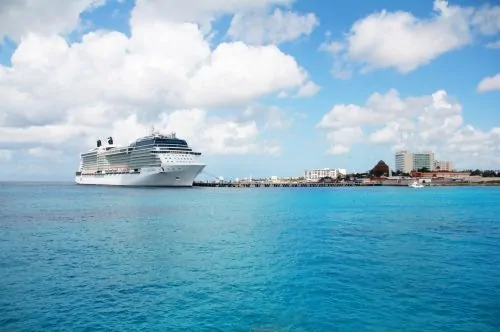
In April 2001, Paris Travel Consultants advertised two summer departures aboard Carnival’s Celebration in the Talco Times, a small-town newspaper in northeast Texas. One voyage promised five nights with visits advertised as Cancún and Cozumel. The other offered four nights with Cozumel as the principal destination, starting at $430 plus port taxes. Readers could choose between two lengths of vacation, book through an agency in their part of Texas, and reach the departure port by road.
The difference between the two offers began with the position of Galveston’s wharf. Port director Katherine O’Neal told Texas Shores that the harbor was about thirty-five to forty minutes from the sea buoy, a short approach she regarded as an advantage for commercial vessels generally. Before the Celebration began sailing, Houston Chronicle travel editor Harry Shattuck estimated that starting in Galveston could save a cruise ship four to six hours on a round trip compared with sailing from Barbours Cut. That estimate included the additional passage up and down the Houston Ship Channel. On a short itinerary, several hours could make a material difference to when a ship could reach a Mexican port and how long it could stay there. The vessel still had to be back in Texas at the hour advertised to the next group of passengers. In his 1998 study of cruise ports, geographer Robert McCalla distinguished the physical site of a terminal from its position relative to the places it served. Galveston’s advantage in that second respect showed up in the sailing calendar, where less time on the Texas approach gave Carnival more latitude to schedule usable hours ashore in Mexico.
The four-night program put that flexibility to work by leaving on Thursday afternoon and returning early Monday. A traveler willing to take a Friday off and make arrangements for Monday morning could fit a foreign cruise around a weekend. A brief stop at Playa del Carmen allowed passengers bound for Tulum to leave for their excursion before the ship continued to Cozumel. The five-night program gave Carnival room for a longer call at Cozumel as well as a stop at Calica, from which passengers could visit Cancún. Both voyages could be advertised around recognizable destinations, although what a passenger could do ashore depended on which sailing they bought. Those choices also had value to Carnival, whose annual filing identified shore excursions, generally conducted by independent operators, as a source of additional revenue.
Selling the itinerary required reaching customers who might never have considered a cruise. In 2000, Carnival opened three branded travel kiosks in Texas shopping centers as part of an effort to introduce more people to its vacations. Travel Weekly reporter Laura Del Rosso spent a day at the Arlington kiosk before the Galveston service began. She watched shoppers look at cabin photographs and menus and use screens to explore the ships. The employee she observed made two reservations through follow-up calls that day, with one credited to a travel agency. The company could make itself visible at a mall while continuing to rely on agents for most bookings, as its fiscal 2001 filing reported. Those agents had room to sell on price as well as convenience. Just before the launch, Shattuck found discount agencies offering an inside cabin on the four-night cruise for as little as $349 per person at double occupancy. That was a price for a particular cabin category under particular booking conditions. It gave prospective customers a concrete price against which to weigh the expense of getting to the ship and the time they could spare.
For passengers flying in, the geography worked differently. Houston’s two principal airports gave the region good domestic connections, but Shattuck estimated that a traveler arriving at Bush Intercontinental faced a bus transfer of about seventy miles each way. That leg mattered more when the voyage itself lasted only four nights, since the transfer came out of an already short vacation. Carnival explicitly identified Galveston in its fiscal 2001 filing as one of the ports it expected to draw customers who could avoid airfare by driving. O’Neal told Texas Shores that many passengers were doing so, including people coming from the Midwest, although her account gives no precise share for the Celebration.
Passengers who allowed extra time on the island found a waterfront already equipped for visitors. Before Carnival’s arrival, the Houston Chronicle described an eleven-room floating inn at Pier 22, near the restored Elissa and the Texas Seaport Museum. The same stretch of waterfront put visitors within walking distance of places to eat and shop in the Strand district. The rail trolley linked downtown to the Seawall, and an extension in 1995 had brought it closer to the attractions at Pier 21. These were services travelers could use around a sailing without having to organize a separate trip across the Houston area. Carnival’s fiscal 2001 filing included Galveston among the places where it sold land packages before or after a cruise. It described those packages generally as stays of one to three nights and provided no sales totals for the island. By December 2003, Travel Weekly identified the Tremont House and the Hotel Galvez as offering packages through Carnival and Royal Caribbean. The hotels had something to sell to passengers, but adding a night in Galveston also lengthened a vacation whose brevity was part of its appeal.
By June 2001, Carnival reported that nearly 100,000 people had sailed aboard the Celebration from Galveston, and the port said the voyages had been running at capacity. Those figures gave Carnival a basis for selling the same short itineraries more frequently. The local lodging trade depended on a further decision, one the port’s passenger figures could scarcely capture. A traveler who could fit Mexico into a long weekend still had to decide whether to give another day to Galveston.
A Second Cruise Line and a Second Terminal
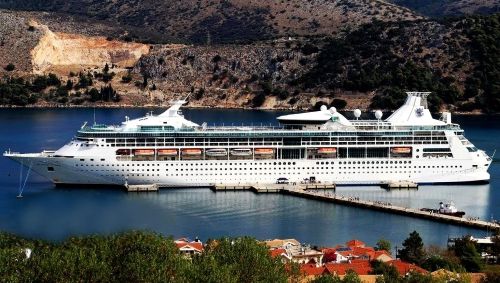
Royal Caribbean announced its first Galveston season in July 2000, before Carnival had begun regular service from Pier 25. The announcement came as part of a Gulf Coast program in which a single ship, the Rhapsody of the Seas, would spend successive stretches at Galveston, Tampa, and New Orleans. The company could try selling cruises from three cities within five months while committing only one vessel to the experiment. Galveston had secured the opening weeks of that program, and its longer-term place in the fleet schedule would depend in part on what the company learned there.
The trial began on October 28, 2001, with the first of eight Sunday departures that brought passengers back to Galveston a week later. The itinerary paired calls on the Mexican coast with visits to Grand Cayman and Key West. A ninth sailing, timed for Christmas, ended in Aruba and took the ship out of its weekly Galveston circuit. In late September, the Houston Chronicle reported that most cabins had been reserved months earlier, even as cruise lines were coping with cancellations after the September 11 attacks. Those reservations showed that a week at sea from a Texas port could draw buyers well in advance. The completed season gave Royal Caribbean a better view of who actually sailed. Ken Muskat, the company’s director of product development and marketing, told the Chronicle that about 80 percent of the fall passengers came from Texas. He put the share of first-time cruisers at 38 percent. The first figure indicated how heavily the trial drew on the regional market, while the second suggested that a weeklong itinerary could recruit people who had never taken a cruise.
By February 2002, Royal Caribbean had signed a multiyear agreement to keep the Rhapsody in Galveston full time. As recently as the previous September, the company had announced fifteen sailings for the following winter. The new agreement brought the ship back on April 14 and made Sunday departures a year-round service, initially calling at Key West, Grand Cayman, and Cozumel. Royal Caribbean identified Galveston in its 2002 annual report as its first year-round home port on the Gulf of Mexico and listed its deployments in Tampa and New Orleans among its winter assignments.
The decision on Royal Caribbean’s second Texas ship followed a different course. The company’s 2001 annual report, issued the following spring, assigned the Splendour of the Seas to Houston, where the Chronicle reported that ten- and eleven-night voyages would begin November 11. By May, Royal Caribbean had confirmed that the program would operate from Galveston. The ship was assigned to Europe for the summer, and its winter deployment was part of a wider seasonal movement of the fleet. Maritime geographers Jean-Paul Rodrigue and Theo Notteboom have since shown how such redeployments link cruise markets on opposite sides of the Atlantic. Within Texas, the company could draw on much the same regional clientele from either port. The revised fall schedule kept the November 11 start and both voyage lengths. The eleven-night itinerary included a call at Cartagena and cruising in the Panama Canal, while the ten-night trip combined stops in Mexico with calls elsewhere in the western Caribbean. The revision preserved the broad shape of the vacation Royal Caribbean had planned and shifted a winter’s worth of embarkations to the island.
Before the Splendour arrived, Carnival expanded its Galveston service with the Jubilee, which entered the schedule in August 2002. The sister ships ran on staggered schedules, allowing Carnival to offer five-night cruises each Monday and Saturday and a four-night cruise each Thursday. That gave customers a standing choice of departure day and trip length, while the Rhapsody served passengers booking a full week. Carnival spokeswoman Jennifer de la Cruz told the Chronicle that the company was pleased enough with its performance in Texas to assign a second ship and would watch how customers responded to the added capacity. Carnival had committed itself to selling the same sort of voyage several times a week, a larger commercial undertaking than sustaining the established schedule of the Celebration alone.
The port and Royal Caribbean agreed in 2002 to develop a second terminal at Pier 28, immediately west of the original cruise facility. The November sailing date set a deadline for the first phase of the work. CH2M HILL’s engineers had been drawing up plans for months, but delays left its design-build team with a compressed construction schedule. The firm reported that the initial renovation took eight weeks. Workers fitted out an existing warehouse for passenger check-in and renovated the dock where the Splendour would berth. On Monday, November 11, the ship tied up at the site the contractor called Terminal No. 2 at Piers 27 and 28, while another cruise ship occupied a separate dock. The contractor’s account described further work at both terminals as future phases. Galveston’s later bond records date the Rhapsody’s transfer to the second terminal to 2003. The port’s master plan dates the full buildout to 2004. The November 2002 arrival marks the point at which the new berth could serve a published itinerary while the larger project continued.
By the close of 2002, Galveston was the year-round base for three ships and a winter base for a fourth. Carnival had increased the frequency of its short cruises, and Royal Caribbean was operating two distinct programs from the same city. With a second berth in use, the lines could schedule two ships to turn around on the same day, giving them more freedom to set departure dates around the voyages they wanted to sell. Providing that flexibility tied more of the port’s property and capital to schedules set by the two carriers.
Who Paid for the Next Berth?

On June 17, 2002, Galveston incorporated a nonprofit to finance improvements on its publicly owned waterfront. The Galveston Port Facilities Corporation was governed by the seven Wharves trustees and two additional directors appointed by the city council. The Wharves leased the corporation the first cruise terminal and, under a separate lease, the land and warehouse designated for the second. Those leases gave the corporation a basis for signing operating agreements with the cruise lines and borrowing against income from the facilities it would manage for the port.
The Wharves had to pay for construction before the additional sailings could bring in revenue. Much of its existing income already stood pledged to bondholders. The covenants governing those bonds also constrained how much more the port could borrow. Port director Steven Cernak later recalled that the Wharves had been required to show revenues available for debt service equal to one and a half times the payments due. Through the new corporation, the cruise lines could lend against future terminal receipts. In the credit assessment Cernak cited, existing bondholders retained a fixed annual pledge based on 2001 cruise revenues, along with their claim on parking income. Fixing the amount at the 2001 level gave the corporation access to the growth in cruise receipts for its own loan repayments. The existing bonds kept their credit rating, although the margin by which pledged revenues covered their payments declined.
The Carnival agreement of December 19, 2002, shows how the financing worked at the first terminal. Carnival agreed to advance funds for additional improvements at Pier 25, and the city’s subsequent accounts recorded an $8.5 million note at 4.5 percent interest. The operating agreement gave Carnival preferential use on approved sailing days for a ten-year term beginning in September 2003. During the first five operating years, Carnival owed $2.875 for each passenger embarking and the same amount for each passenger disembarking. The company guaranteed $575,000 a year in passenger wharfage and had to make up any shortfall. Fees above that minimum went toward repaying the construction loan. Carnival could retain those excess fees and credit them against the corporation’s debt. Once the loan was repaid, the corporation would collect the excess directly, and Carnival would receive a 10 percent discount on its wharfage charges for the remainder of the term. The agreement also specified circumstances in which an early termination could leave part of the advance unpaid. The annual minimum illustrates why Grace W. Y. Wang, Athanasios A. Pallis, and Theo E. Notteboom emphasize payment guarantees in their study of Galveston’s terminal contracts. Carnival bore some of the cost of a weak season even as the port depended on stronger traffic to generate enough fees to retire the loan.
Royal Caribbean’s construction loan came due on a different timetable. The city’s fiscal 2004 report, drawing on the Wharves’ accounts at the end of 2003, recorded about $2.18 million owed to Royal Caribbean at 9 percent interest. The note was payable from the proceeds of a public debt issue. The advance covered the interval between the start of construction and the availability of longer-term financing. That interval mattered because the port could put part of the second terminal into service while the city was still arranging the financing that would help complete it.
The longer-term financing brought the city directly into the transaction. In December 2003, the Wharves trustees committed port revenues to repayment and agreed to make monthly transfers to cover principal and interest. On January 13, 2004, the city issued $19.32 million in combination tax and revenue certificates of obligation. Cernak identified repayment of Royal Caribbean’s construction loan and further work on the second terminal as uses of the proceeds. The same issue financed a wider program that included channel deepening, grain elevator demolition, and work on parking and warehouse facilities. The Wharves recorded its obligation to reimburse the city in its own accounts. Certificate holders had a subordinate claim on net port revenues and the backing of the city’s property-tax pledge. The port’s financial statements also describe the city’s authority to direct increases in port fees, tolls, and charges if net revenues fell below the required debt-service coverage. A shortfall could affect users elsewhere in the harbor, while the tax pledge put municipal resources behind the borrowing.
The cruise lines supplied money when construction bills came due, and each expected to recover its advance under terms tied to its own terminal. The public corporation also retained recurring expenses, including routine upkeep of the first terminal under the Carnival agreement. For the Wharves, the financial gain from additional sailings depended on how much port income remained after operating costs and debt payments. The case for building also rested on what passengers might spend elsewhere in Galveston, where the beneficiaries could include businesses and workers with no part in the financing agreements.
Who Benefited from the New Waterfront?
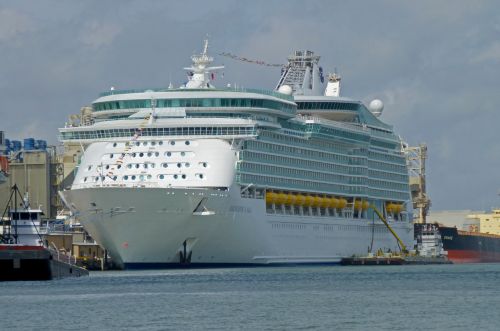
In 2002, federal transportation figures counted 149 cruises departing Galveston with about 271,000 passengers aboard. Compiled from returns by ten major North American cruise brands, those figures show how quickly a business that had begun with a single full-time ship acquired a substantial presence on the waterfront. A departure could bring hundreds of paying customers within walking distance of downtown on a single morning. The value of that traffic to island residents depended on where those customers spent their money and who had access to the work the ships brought.
The Wharves could earn money from cruise passengers before they ever stepped aboard. When year-round service began, the port offered parking in two paved lots at eight dollars a day, payable in advance. A customer on a four-night cruise could leave a car on port property for the entire voyage, generating income for the Wharves even while the ship was in Mexico. For drivers who returned to the mainland as soon as their ship docked, parking could be one of the few purchases they made on the island. By September 2002, Kevin Moran reported in the Houston Chronicle that parking accounted for most of the port’s profit from cruises. The Wharves had been considering a four-acre tract near the docks for additional parking, and a private buyer acquired it before the port could bid. The purchase showed that ownership of land near the terminal could matter almost as much as the ability to handle a ship. As more passengers drove to Galveston, the port’s share of their spending depended in part on how many of their cars it could accommodate.
Work at the berth was divided by contracts and union jurisdiction. Carnival’s December 2002 operating agreement required the company to use stevedores licensed by the Wharves. Competition extended to the work of mooring vessels. In a case heard in 2001, Galveston Linehandlers alleged that it had lost Carnival’s mooring contract to rival Suderman Stevedores. The federal court recounted the allegation while deciding where the dispute should be heard, leaving the claim itself unresolved at that stage. A separate case later brought to light the rules that determined who handled baggage and other cargo inside the terminal. A longstanding rule generally assigned work involving cargo that came to rest for less than twenty-four hours to the deep-sea local, and that description often fit cruise baggage. In 2008, a federal court recorded that the predominantly Black warehouse local had received little or none of the terminal’s loading and unloading work since it opened. The union district disputed the warehouse local’s allegation of racial discrimination, and the judge denied a preliminary injunction. The allocation of work itself was undisputed and shows how an increase in waterfront employment could benefit one group of workers while leaving another with little access to the new assignments.
Downtown businesses began to identify cruise passengers and crews among their regular customers. In June 2003, the Chronicle found them shopping at Morgan’s, a long-established clothing store at the Strand and 24th Street. That December, Travel Weekly reported that the Tremont House and the Hotel Galvez offered cruise packages and that some guests booked rooms around their voyages. Fred Wichelp of the Historic Strand Downtown Partnership also described a noticeable increase in downtown visitors once weeklong ships began calling. These accounts show how an existing shop or hotel could gain business from the terminal by persuading travelers to spend some of their time ashore in Galveston.
Officials had expected that spending to be substantial. In April 2002, the Christian Science Monitor reported that Galveston officials projected $60 million in local economic gains that year and $120 million the next. The port later cited a $445 million estimate for 2002 from the International Council of Cruise Lines that covered Texas as a whole. The local figures were forecasts, while the statewide estimate included economic activity well beyond the island. A ship provisioned at a Galveston berth could generate business wherever its suppliers filled their orders. Interviews for a later port-commissioned study found that some nonperishable supplies for the 2007 cruise season were trucked in from outside the area. Economists Larry Dwyer and Peter Forsyth distinguish between spending that stays in a port community and spending that flows elsewhere through ownership and purchasing arrangements. They also account for the possibility that a cruise purchase takes the place of a trip on which the traveler would have spent money locally anyway. By December 2003, Travel Weekly reported that Galveston had yet to measure how much municipal revenue it gained from the ships.
The city treasury had defined claims on the port’s earnings. The charter prescribed an annual payment of $160,000 from Wharves income after operating and maintenance expenses, with 25.39 percent going to the Galveston Independent School District and the balance available for general city purposes. It directed the remaining net revenue toward the upkeep and development of the wharves. A later joint presentation to the city council and Wharves trustees traced a separate municipal share of taxable parking receipts back to 2002. These provisions gave the city ways to share in the earnings of a public enterprise whose accounts were separate from the municipal budget. The audited statements show how much else those accounts encompassed. Charges for services across the entire port fell from $14.83 million in 2002 to $13.83 million in 2003, even as federal figures recorded more cruise departures. Who would control the waterfront and its revenues was still an open question in 2001. The proposed merger with the Port of Houston would have transferred most of Galveston’s public docks to Houston’s port authority. Supporters argued that a larger port could finance repairs and expand employment. Former Wharves Board chairman Fred Wychlep said Houston’s proposal would put $90 million into the island port over a decade. Opponents urged Galveston to seek competing offers and secure better terms for its property. The proposed terms called for keeping cruise service in Galveston unless the lines asked to move, so the terminals could continue serving passengers under either arrangement. On December 18, voters rejected the merger, by 4,060 votes to 3,041 in the unofficial final count reported by the Chronicle. The result kept control of the docks on the island and left Galveston responsible for finding a way to finance repairs across the wider harbor.
Galveston’s comprehensive plan called for examining pedestrian and vehicle connections between the cruise terminal and the Strand so that nearby businesses could benefit from the growing traffic. That concern put a practical question before the city. Passengers had to be able to reach commercial streets easily if their arrival was to matter to merchants a few blocks from the dock. By the end of 2002, Galveston had a larger market for local goods and services, and decisions about access to the waterfront helped determine who could earn a living from it.
Would the Ships Have Come Anyway?
The following video from Ports to Resorts Travel is a travel guide to Galveston:
A second way to explain Galveston’s rise begins with a problem facing the cruise companies. They had more ships to fill and were looking for customers who lived well beyond the established Florida ports. Under those circumstances, a terminal could become worth rebuilding because a carrier already intended to sell cruises from the Gulf Coast. The sequence matters because an improvement undertaken for an incoming ship can look, in retrospect, like the reason the ship came.
The arrival of the Celebration in 2000 was one of several moves within Carnival’s fleet. That September, the larger Inspiration moved from San Juan to New Orleans to take over the Celebration’s service there. Margaret Myre, reporting for Travel Weekly, found that Carnival had shifted to a larger terminal in New Orleans and that arriving and departing passengers still crossed paths in congested areas. The move placed new demands on a Louisiana terminal and freed a vessel for Texas. In June 2001, Carnival announced another set of linked assignments. The new Conquest would go to New Orleans, and a series of transfers through Tampa would release the Jubilee for Galveston. Carnival explained that spreading departures among more ports would let more customers reach their ships by land and reduce the total cost of a cruise. Figures compiled by the Cruise Lines International Association show that standard passenger berths marketed in North America increased from 149,000 in 1999 to 193,000 in 2002. The economist Andreas Papatheodorou treats capacity, price, and the kind of vacation on offer as connected dimensions of competition among cruise lines. In that setting, assigning an older ship to Texas made sense as part of a fleet expansion that let Carnival sell different kinds of cruises from different ports.
September 11 changed where some of those ships would spend the following summer. By August 2001, Royal Caribbean had already planned regular future sailings from Galveston aboard the Rhapsody of the Seas. Other parts of the ship’s 2002 calendar were still intended for cruises in Europe, Canada, and New England. At the end of September, the Los Angeles Times reported that Royal Caribbean would replace those sailings with seven-night cruises from Galveston between April and October. The revision gave Galveston months of service that had been assigned to other markets. In October, Cruise Industry News raised its forecast for 2002 Caribbean capacity growth among North American operators from 10 percent to 19 percent after taking account of revised deployments. Carnival’s fiscal 2002 filing reported that customers were booking closer to departure and that the attacks had pushed down ticket prices, conditions that made it more urgent to find passengers who could readily reach the ships.
The two Texas ports could draw on much the same pool of customers. Houston had already adapted part of its cargo facility at Barbours Cut for regular cruise departures, and Royal Caribbean named Houston in its 2001 annual report as the winter base for the Splendour of the Seas. Houston’s port authority later reported that Royal Caribbean had judged the existing terminal at Barbours Cut too small. The permanent cruise facility envisioned at Bayport was still under federal review in 2002. By May, Royal Caribbean had switched the Splendour to Galveston, where the second terminal also required construction. The carrier subsequently advanced funds for the terminal where the ship would dock in November. The order of events gives some force to the argument that construction followed the fleet decision. It also shows what Galveston had to deliver once that decision was made. The island needed a berth ready by the first advertised departure for an assignment that Royal Caribbean had already been willing to move once.
Galveston’s port had identified an enlarged cruise terminal as a possible use of its waterfront in 1998, a year before Carnival’s first full-time commitment. The earlier conversion gave the island a facility to put forward when the companies widened their search for passengers. Later investments answered requirements that became clearer once the lines began assigning vessels and setting dates. The industry’s expansion explains why ships became available to Texas, while Galveston’s ability to finance and complete work to match those assignments helps explain why the lines could keep basing them there.
Conclusion: A Waterfront Built for the Return Voyage
The cotton warehouse at Pier 25 was built to hold goods between shipments. Its conversion in 1990 put an existing building and part of Galveston’s freight waterfront to work for passengers. An occasional cruise could use that space without fixing the port’s plans for the rest of the year. Once a ship was based there, the Wharves had to set aside the berth and terminal for departures the cruise line was already selling months ahead.
Galveston took on that obligation through investments of increasing scale and specificity. The first passenger facility gave the port something to offer cruise lines while the prospects for sustained service were still uncertain. Occasional sailings established that people would board a cruise on the island, giving officials and prospective operators some evidence on which to proceed. Once Carnival committed a ship to Galveston, the Wharves knew which vessel it had to receive and how frequently it would return. Royal Caribbean’s arrival widened the range of itineraries and required the port to make room for another operator’s schedule. The second berth entered service while further work on the terminal was still ahead. That order mattered because the time between selling a voyage and sailing it was also time the port could use to finish essential construction. Advances from the carriers helped pay for work within that interval, and longer-term financing allowed the Wharves to carry the second terminal beyond its first usable phase. The growth of the cruise industry gave Galveston the opportunity to become a home port, and the ability to bring improvements into service in stages helped it meet the obligations that came with each new ship.
Public ownership shaped what the island could gain from the trade and what it had to undertake to keep it. The 2001 merger vote left Galveston with authority over the docks as well as responsibility for their upkeep. The carriers supplied some of the construction money, and the city’s property-tax pledge later backed the certificates that helped complete the second terminal. Those obligations could be traced in contracts and financial statements, while the gains to the wider community appeared in the accounts of businesses and households. A hotel could earn income from passengers who chose to begin their holiday a night early. On the docks, the new traffic could increase paid work for the people entitled to handle it. Passenger totals measured the scale of the business Galveston had secured, while decisions about property, contracts, and access to work helped determine who shared in its earnings.
The significance of the Celebration’s first departure is easier to see from the ship’s return. A new party of travelers could hold tickets for the afternoon when the previous passengers came ashore. By the end of 2002, two companies were organizing different voyages around the expectation that their ships could come back to Galveston and sail again. Across two neighboring terminals, preparing for the next voyage had become part of the ordinary work of the waterfront.
Bibliography
- Associated Press. “Celebration Sets Sail from Galveston but Is Hampered by Weather.” Midland Reporter-Telegram, October 2, 2000.
- —-. “Galveston Building Luxury Cruise Ship Terminal.” Big Spring Herald, June 26, 1989, 2-A.
- —-. “Miami Casino Cruise Line Shirking Debt in State Port.” The Battalion (College Station, TX), December 9, 1994, 3.
- “Big Red Boat III Departure Canceled.” Travel Weekly, June 16, 2000.
- Board of Trustees of the Galveston Wharves. Comprehensive Annual Financial Report for the Year Ending December 31, 2019. Galveston, TX, 2020.
- Blum, Ernest. “NCL Cancels Norwegian Star Sailing.” Travel Weekly, December 31, 1997.
- —-. “Premier Chief: Houston Pick Is ‘Slam Dunk.’” Travel Weekly, July 15, 1999.
- Carnival Corporation. Annual Report on Form 10-K for the Fiscal Year Ended November 30, 2001. Miami: Carnival Corporation, 2000.
- Cernak, Steven. “Partnerships for Connectivity: Leveraging Public-Private Partnerships for Mutually Beneficial Infrastructure Projects: The Port of Galveston Experience.” Presentation at the annual convention of the American Association of Port Authorities, New Orleans, September 12, 2006.
- CH2M HILL. “Galveston Port Group.” CH2M HILL Unlimited, fourth quarter 2002.
- City of Galveston. Comprehensive Annual Financial Report for the Fiscal Year Ended September 30, 2003. Galveston, TX: City of Galveston, 2003.
- —-. Comprehensive Annual Financial Report for the Year Ended September 30, 2004. Galveston, TX: Finance Department.
- —-. Galveston Comprehensive Plan. 1986.
- —-. Galveston Comprehensive Plan: A Shared Vision for Galveston Island. August 2001. Final ed., September 2003.
- —-. Preliminary Official Statement: Wharves and Terminal First Lien Revenue Bonds, Series 2023 (AMT). Galveston, TX, 2023.
- City of Shoreacres v. Waterworth, 332 F. Supp. 2d 992 (S.D. Tex. 2004).
- Cox, Raymond, and J. Casey Long. “Embarkation/Disembarkation of Cruise Ship Passengers Between the Terminal and the Ship.” In Ports 2004: Port Development in the Changing World, edited by Stephen A. Curtis, 1–10. Reston, VA: American Society of Civil Engineers, 2004.
- Del Rosso, Laura. “Mall Crawl: Slow Day at Carnival’s Kiosk.” Travel Weekly, July 27, 2000.
- “Embark on a Cruise in Your Own Backyard, the Port of Galveston.” VIVA! Magazine, June 17, 1994, F-13.
- “Epirotiki Lines Business Update.” Cruise Industry News, March 31, 1995.
- Evans, Mark. “At the Water’s Edge.” Texas Shores 33:4 (Winter 2001), 24–27.
- Federal Maritime Commission. “Agreement(s) Filed.” Federal Register 54, no. 166 (August 29, 1989): 35721. Agreement 224-200279, “Port of Galveston Day Cruise Operating Agreement.”
- —-. “Notice of Termination of Certificates Issued to Premier Operations Ltd. (D/B/A Premier Cruises and Premier Cruise Lines).” Federal Register 65, no. 212 (November 1, 2000): 65316–17.
- Galveston Linehandlers, Inc. v. International Longshoremen’s Association, Local No. 20, 140 F. Supp. 2d 741 (S.D. Tex. 2001).
- Galveston Port Facilities Corporation and Carnival Corporation. “Operating Agreement.” December 19, 2002. Exhibit A, Federal Maritime Commission Docket No. 14-06.
- Galveston Wharves. Port of Galveston 2045 Master Plan. Galveston, TX, February 2026.
- “Gold Star Cruises Launching Service out of Galveston.” Cruise Industry News, October 18, 1993.
- Golden, Fran. “Carnival Plans to Sail Out of Tex. in 2000.” Travel Weekly, June 18, 1999.
- Goff, Zane A., William F. McFarland, Billy Edge, John Basilotto, and Sara Graalum. The Value of Texas Ports. Research Report 2994-1. College Station: Texas Transportation Institute, 1997.
- “Gold Star Cruises Launching Service out of Galveston.” Cruise Industry News, October 18, 1993.
- “Here Comes the Norwegian Sea.” Port of Houston Magazine, January–February 1999, 17–18.
- Houston Chronicle News Services. “Travel Almanac: Jubilee Sails, but It’s Not a Time for Celebration.” Houston Chronicle, August 25, 2002.
- International Longshoremen’s Association Warehouse Workers Local 1504-8 ex rel. Watkins v. South Atlantic & Gulf Coast International Longshoremen’s Association, 543 F. Supp. 2d 662 (S.D. Tex. 2008).
- Jayawardana, Jay, and Anatoly Hochstein. Supply Network for Deepwater Oil and Gas Development in the Gulf of Mexico: An Empirical Analysis of Demand for Port Services. OCS Study MMS 2004-047. New Orleans: U.S. Department of the Interior, Minerals Management Service, Gulf of Mexico OCS Region, 2004.
- Lampson, Nick. “Honoring the City of Galveston, the Port of Galveston, and Carnival Cruise Lines.” Congressional Record 146 (September 22, 2000): E1574.
- Lazarou, Kathleen E. “A History of the Port of Galveston: A Constitutional-Legal Overview.” The Houston Review 2:2 (Summer 1980).
- Major, Brian. “NCL Ship Move Indicates Stiffer Competition in Texas Market.” Travel Weekly, December 27, 1999.
- Marti, Bruce E. “Geography and the Cruise Ship Port Selection Process.” Maritime Policy & Management 17:3 (1990), 157–164.
- Martin Associates. The Local and Regional Economic Impacts of Marine Cargo and Passenger Cruise Activity at the Port of Galveston, 2007. Prepared for the Port of Galveston, October 27, 2008.
- MBP Corp. v. Board of Trustees of the Galveston Wharves, 297 S.W.3d 483 (Tex. App. 2009).
- McCalla, Robert J. “An Investigation into Site and Situation: Cruise Ship Ports.” Tijdschrift voor Economische en Sociale Geografie 89:1 (1998), 44–55.
- McComb, David G. “Galveston, TX.” Handbook of Texas Online. Texas State Historical Association. Accessed November 24, 2026.
- Mitchell, George P. “An Interview with George P. Mitchell.” Interview by Marsh Davis and Joe Pratt. The Houston Review of History and Culture 3, no. 2 (Spring 2006).
- “Moody Upgrades Port of Galveston Ratings.” Cruise Industry News, July 4, 2008.
- Moran, Kevin. “Galveston Council to Discuss Port Merger Terms.” Houston Chronicle, September 20, 2001.
- —-. “Galveston Port Merger Rejected.” Houston Chronicle, December 19, 2001.
- —-. “Port of Galveston Trustees Fight over Travel Expenses.” Houston Chronicle, September 19, 2002.
- Moreno, Jenalia, and Steve Olafson. “Another Cruise Ship to Sail from Galveston.” Houston Chronicle, June 23, 2001.
- Morrison & Fourmy. Morrison & Fourmy’s General Directory of the City of Galveston: 1913. Houston: Morrison & Fourmy Directory Co., 1913.
- Muhich, Mark. “Wharves Board to Study Berth Expansion.” Houston Chronicle, March 28, 2001.
- Myre, Margaret. “Carnival’s Inspiration Brings People Together.” Travel Weekly, December 27, 2000.
- “Mystery Cruise.” American Heritage 46:1 (February/March 1995).
- Neal, Rome. “Royal Caribbean Cruises’ Ports.” CBS News, October 1, 2002.
- “One-Day Cruise Market Overview.” Cruise Industry News, March 28, 1991.
- Papatheodorou, Andreas. “The Cruise Industry: An Industrial Organisation Perspective.” In Cruise Ship Tourism, edited by Ross K. Dowling, 31–40. Wallingford: CABI, 2006.
- Paris Travel Consultants. “Don’t Miss the Boat!” Advertisement. Talco Times, April 12, 2001, 5.
- Port of Houston Authority. Self-Evaluation Report. Houston: Port of Houston Authority, September 2011.
- “Port of Houston Authority Promotes Texarribean Cruises at Seatrade ’97.” Port of Houston Magazine, June 1997, 15.
- “Premier to Houston.” Cruise Industry News, July 16, 1999.
- “Pride/Galveston Europa Suit.” Cruise Industry News, March 31, 1990.
- Rees, Rodger. “Galveston Celebrating 22 Years as Cruise Home Port.” Port of Galveston, September 25, 2023.
- “Retailers Stock Summerwear.” Houston Chronicle, June 26, 2003.
- Reynolds, Christopher. “Cruise Line’s Cash Crisis No Surprise to the Savvy.” Los Angeles Times, September 17, 2000.
- Rodrigue, Jean-Paul, and Theo Notteboom. “The Geography of Cruises: Itineraries, Not Destinations.” Applied Geography 38 (2013), 31–42.
- Royal Caribbean Cruises Ltd. 2001 Annual Report. Miami: Royal Caribbean Cruises Ltd., 2002.
- Royal Caribbean Cruises Ltd. 2002 Annual Report. Miami: Royal Caribbean Cruises Ltd., 2003.
- “Royal Caribbean Unveils Gulf Coast Departures for Rhapsody.” Travel Weekly, July 13, 2000.
- Sappenfield, Mark. “Familiar Waters: Cruises Thrive Close to Home.” Christian Science Monitor, April 4, 2002.
- Schaff v. Sun Line Cruises, Inc., 999 F. Supp. 924 (S.D. Tex. 1998).
- Sealy, Edward Coyle. “Galveston Wharves.” Handbook of Texas Online. Texas State Historical Association. Accessed November 24, 2026.
- Shattuck, Harry. “Cruise Special 2002: Texas Becomes Player in Seagoing Vacation Market.” Houston Chronicle, February 24, 2002.
- —-. “Floating Inn Offers Rich History, Modern Amenities.” Houston Chronicle, February 27, 2000. Republished June 10, 2000.
- —-. “Rhapsody’s Return Is Music to the Ears.” Houston Chronicle, February 24, 2002.
- —-. “Texas Cruising: It’s a Celebration.” Houston Chronicle, September 24, 2000.
- Slater, Shirley, and Harry Basch. “Most Lines Reschedule Mediterranean Sailings.” Los Angeles Times, February 3, 1991.
- —-. “Southern Hospitality on Norwegian Star.” Los Angeles Times, July 20, 1997.
- Sun Line Cruises. “Starting This April, the Spirit of Greece Returns to Texas.” Advertisement. Midland Reporter-Telegram, February 17, 1991.
- “Texas Cruise Potential.” Cruise Industry News, July 14, 1989.
- Texas Department of Transportation. Texas Rail Plan. Austin: Texas Department of Transportation, December 2019.
- Texas Gulf Construction Co. “Cruise Terminal Renovations.” Project profile in proposal for Cruise Terminal 25 Mooring and Berthing Improvements, RFP 2023-005. Galveston Wharves Board of Trustees meeting materials, 2023.
- Texas Travel and Information Division. Texas Travel Log. January 1990.
- Tobin, Rebecca. “Galveston: Riding Cruising’s Next Wave.” Travel Weekly, December 8, 2003.
- U.S. Congress. Senate. Committee on Commerce, Science, and Transportation. S. 1510, the United States Cruise Ship Tourism Development Act of 1999. Hearing, 106th Cong., 1st sess., October 6, 1999. Washington, DC: Government Printing Office, 2002.
- U.S. Department of Justice, Office of the Inspector General. Inspection of the Cruise Ship Exemption from Immigration User Fees. Report I-99-13. Washington, DC: U.S. Department of Justice, September 1999.
- U.S. Department of Transportation, Bureau of Transportation Statistics. State Transportation Statistics 2004. Table 4-8, “Top 15 Cruise Ship Ports by Port of Departure.”
- United States v. Smith, 273 F.3d 629 (5th Cir. 2001).
- Wang, Grace W. Y., Athanasios A. Pallis, and Theo E. Notteboom. “Incentives in Cruise Terminal Concession Contracts.” Research in Transportation Business & Management 13 (2014), 36–42.
Originally published by Brewminate, 11.27.2026, under the terms of a Creative Commons Attribution-NonCommercial-NoDerivatives 4.0 International license.
About the Author