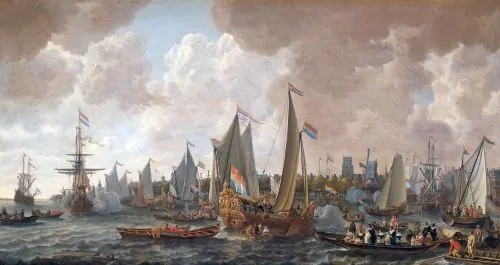
A wager between brothers drew the court onto the Thames in 1661. John Evelyn’s day afloat shows how Charles II could single out a guest for breakfast and entrust him with public business.

By Matthew A. McIntosh
Public Historian
Brewminate
Introduction: Five Guests for Breakfast
On October 1, 1661, John Evelyn breakfasted with Charles II aboard one of the king’s vessels on the Thames. Four other guests joined them, all noblemen, and Evelyn took care to record both their number and their rank. He left their names unrecorded. Later he dined with Charles aboard the yacht, where a wider company ate together with the king. Both meals put Evelyn in the sovereign’s company, but the breakfast invitation distinguished him among people already privileged to spend the day afloat with Charles.
The occasion was a £100 wager between Charles and his younger brother James, Duke of York, on a race from Greenwich to Gravesend and back. A contrary wind cost Charles the outward leg, and he recovered his stake on the return. Evelyn saw the king take the helm at times, a detail that gives Charles a more active role in the story than the ownership of a fast boat might suggest. The two brothers had a sporting interest in how their vessels performed, and there was pleasure to be had in finding out on a river both knew well. The yachts themselves were a recent acquisition of the restored court, which had received the Dutch-built Mary from Amsterdam the previous year. English shipwrights had since built yachts for both brothers, giving them vessels of their own to try against each other. A royal barge and a separate kitchen boat accompanied the outing. Even an excursion the king could steer for himself depended on other people to keep the party fed and moving. The several vessels also gave Charles room to change his company over the course of the day.
During the passage, Charles asked Evelyn to prepare a bill addressing the smoke of London, a nuisance on which Evelyn had recently presented him with a pamphlet. He also instructed him to collect testimony about the clash between French and Spanish retinues at the Swedish ambassador’s reception the previous day. Evelyn dates these instructions to the outing as a whole and records no more precise setting for them. In his account, talk about improvements to gardens and buildings came between the two assignments, giving some sense of how readily the conversation moved among subjects that interested both men and matters on which Charles expected Evelyn to act.
Access to Charles had several meanings in the first years of the Restoration. A spectator at Whitehall could watch the king dine, an encounter with royal ceremony that conferred a different kind of privilege from sharing his table. On the river, Samuel Pepys and his wife Elizabeth had gone out by barge in September to see the royal yachts and found plenty of pleasure in the sight. Evelyn already had opportunities to approach Charles ashore, and his previous work helps explain why the king found him useful on this occasion. What the yacht changed was the setting in which such a relationship could be exercised. Charles could take part in a race with his brother, receive a few guests apart from the larger party, and give Evelyn instructions directly, all within a single excursion. The work those instructions started would lead back into the institutions of government, where a personal command could secure attention and set a draft in motion. Evelyn’s day on the Thames offers a close view of that interval in which the king’s choice of company could become a choice about whom to trust with public business.
The River the Court Already Used
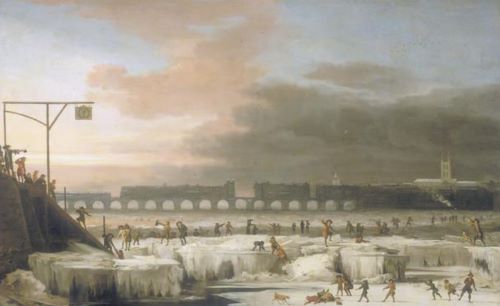
A boat leaving Whitehall for Greenwich passed through several kinds of waterfront before reaching the royal landing. It went down from Westminster past the City’s wharves and through London Bridge, with the Tower just below on the north bank. Farther downstream, Deptford’s naval yard and the palace grounds at Greenwich occupied neighboring stretches of the south bank. Woolwich lay beyond them, followed by the long bends toward Gravesend, where passengers could change between river craft, seagoing vessels, and overland transport. The route joined places with distinct functions, and the court’s movements regularly brought it into waters already busy with the work of supplying London and maintaining the fleet.
The river had long given English monarchs a way to make a working visit into an occasion. On July 3, 1559, Elizabeth I took her barge from Greenwich to Woolwich for the naming of the Elizabeth Jonas. The London diarist Henry Machyn records a banquet and gunfire provided for the queen’s entertainment. The vessel being named was a warship begun under Mary I, so the ceremony gave Elizabeth a public association with a substantial naval undertaking inherited from her predecessor. More than a century later, a shorter passage carried Charles II from Westminster to Whitehall on his coronation day. Evelyn describes the newly crowned king walking over blue cloth laid from the west door of the abbey to Westminster Stairs. Charles still wore the crown when he embarked in the ceremonial barge. The route ashore and the arrangements at the landing made the journey part of the day’s formal proceedings. At Woolwich the royal barge had delivered the sovereign to a shipyard for a ceremony, while at Westminster the act of embarking helped continue one already under way.
Most of the places where Londoners came down to the water served more routine purposes. John Stow’s survey describes Billingsgate as a landing place for boats bringing fish, grain, and other provisions into the City. It was also the London end of the passenger service to Gravesend, so a traveler arriving from downstream stepped into a waterfront organized around the receipt and sale of goods. Elsewhere, stairs gave access to small passenger boats, and a person hiring a wherry could arrange a crossing or travel along the river to another landing. The royal household could launch a barge from stairs adjoining its own grounds, as it did at Whitehall. Control of the point of embarkation gave the household more say over the people and equipment brought to the boat, even as it sent that boat into the same river used by tradesmen and paying passengers.
London Bridge could interrupt even a journey arranged by a powerful household. Its closely spaced piers and their broad protective bases constricted the flow of the Thames, forcing water through narrow openings and making passage hazardous at certain stages of the tide. George Cavendish describes Cardinal Wolsey taking his barge as far as the Three Cranes, riding along Thames Street to Billingsgate, and reembarking below the bridge for Greenwich. The short overland leg belonged to an otherwise carefully ordered progress, complete with attendants and the insignia of Wolsey’s office. It gives a sense of how readily a journey described as going by water could depend on having a suitable place to land and a means of reaching the next embarkation point.
The skills that kept such journeys practicable belonged to men who made their living from the river. A waterman had to know how the tide would affect the time and effort a passage required, which landing places suited the destination, and what room he had to maneuver among other craft. Tudor regulation recognized the difference that the current made to the work. A fare schedule printed in 1555 set the full hire of a two-oared wherry from London to Greenwich at eight pence with the tide and twelve pence against it. The extra charge put a price on the effort of rowing the same reach under less favorable conditions. Apprenticeship gave men a route into the trade, and regulation of boats and fares gave them grounds for defending their livelihoods. John Taylor, who had trained as a waterman before making his name in print, attacked the spread of hired coaches in The World Runnes on Wheeles in 1623. His defense of the river trade was openly partisan, and its terms reveal how closely boatmen watched changes in the ways Londoners chose to travel. The court could call upon a body of experienced river labor because there was regular work for those men on days when no royal party needed carrying.
Downstream, Gravesend’s importance arose from the number of journeys that met there. The Long Ferry ran along the Thames between Gravesend and Billingsgate, carrying passengers for whom the port was a stage on the way to or from London. A traveler coming from a seagoing ship could transfer to a London-bound boat, while someone setting out from the capital could use the same reach to join a route continuing by land. Samuel Pepys followed the latter pattern on April 8, 1661. He took a barge from the Tower with Sir William Batten and his company, dined at Gravesend, and continued by coach toward Rochester. He described the passage as pleasant, and his party’s change of conveyance shows how naturally the river leg fitted into a longer day’s travel. The ferry and the privately arranged barge offered different ways to reach the same town. For a royal race beginning at Greenwich, Gravesend furnished a recognizable destination on a stretch where people routinely reckoned with the time and conditions of a passage.
By the Restoration, the court thus had experience in arranging river journeys of very different scales. It could send a barge a short way along the Westminster waterfront or draw on the services needed for a longer passage below London Bridge. The dockyards and landing places helped determine where a party could embark, stop, or divide, and river workers knew how to fit those decisions to the prevailing conditions. Into that established system came a Dutch sailing vessel that gave Charles and his shipwrights a new kind of boat to put to use.
Amsterdam’s Gift to a Restored King
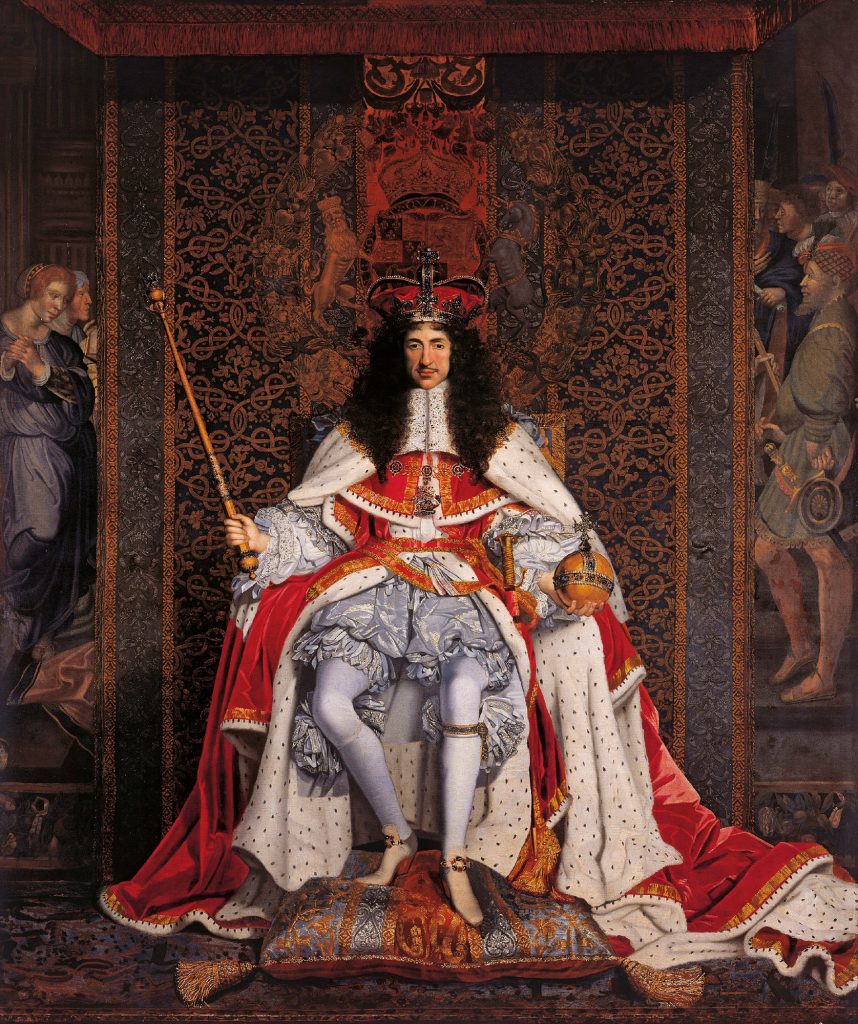
On his way from Breda to the English fleet waiting off Scheveningen in 1660, Charles II traveled through the Dutch Republic in vessels placed at his disposal by his hosts. For part of that journey he chose a yacht formerly used by the Prince of Orange and then in the possession of the Rotterdam Admiralty. He knew the vessel from earlier use and judged it better suited to his company than a smaller boat proposed by his hosts. In the Dutch Republic, yachts carried officials on government business and served wealthy households that could afford a vessel of their own. Charles encountered the type in circumstances that showed what it could offer a court on the move, with a passage to make and a large following to accommodate along the way.
The published account of Charles’s visit, translated into English by Sir William Lower, pays close attention to the assignment of vessels. The Dutch deputies were reluctant to distribute the yachts among the English lords because they saw little prospect of satisfying everyone. Charles entrusted the task to James, Duke of York, who made the arrangements in his presence. The deputies of the States General took one of the Council of State’s yachts, while the English lord chancellor and secretary of state traveled together in a pinnace. A yacht belonging to the young Prince of Orange was reserved for the chamber and wardrobe of the Princess Royal. Provisioning required arrangements across the fleet as well. Vessels without suitable kitchens were accompanied by smaller craft fitted with chimneys and ovens for pastry. The account makes much of the number of dishes that could be prepared on moving boats, an accomplishment it presents through the astonishment of the English stewards. Yet when the wind rose and the Princess Royal grew seasick, the meal that Charles had intended to take at noon was postponed. The royal party eventually ate within sight of Dordrecht, where townspeople and ships saluted the passing fleet.
Amsterdam’s offer arose from a conversation about the yacht Charles had chosen. According to the published account, he spoke of having a similar vessel built for use on the Thames above London Bridge. Cornelis van Vlooswijck, a burgomaster of Amsterdam, responded by offering a vessel of comparable size on the city’s behalf. The municipal authorities paid 4,300 guilders for an unfinished yacht that had passed from the Dutch East India Company into the hands of the Admiralty. That chain of ownership helps explain Evelyn’s later attribution of the gift to the company. Amsterdam’s magistrates authorized the purchase and fitting out, and the yacht that became the Mary was sent to England in August. In their accompanying letter, the burgomasters expressed the hope that Charles would enjoy the benefits of union and peace. The city’s gesture formed part of the same effort to cultivate the restored king that led the States of Holland and West Friesland to assemble paintings, antiquities, and furnishings for the presentation made by representatives of the States General in November. The yacht gave Amsterdam a way to attach its own name to that effort through an object Charles had already indicated he could use.
The fitting-out accounts show what the city was paying for. Alongside the hull and steering gear, they list cabins, sleeping berths, and a galley. They also specify leeboards, which could be lowered to resist sideways drift under sail and helped make a shallow-draft vessel practical in sheltered waters. The arrangement of space inside mattered just as much to the people who would use the yacht. The contemporary account credits the magistrates with having the exterior of the cabin gilded and commissioning paintings for its interior, where the king and his company would spend part of a passage. The royal arms occupied much of the stern, and a unicorn ornamented the bow. A passenger could thus recognize the vessel as royal from another boat or from shore, while the cabin gave the king a suitable place to receive company once aboard.
The earliest notice commonly associated with the yacht’s arrival comes from Samuel Pepys. On August 15, 1660, he reached Whitehall after dinner and learned that Charles had left by five that morning to see a Dutch pleasure boat below London Bridge. Pepys remarked on how much the king’s habit of rising early was tiring the people around him. His entry leaves the boat unnamed, though the timing fits the arrival of the Mary. By November 8, Pepys could describe the yacht from his own inspection at Deptford, where he went aboard with the shipbuilder and naval commissioner Peter Pett. He singled out the neatness of the vessel and the amount of room it offered for its size. That observation gets closer than the August report to what the Dutch builders had achieved. A relatively small sailing vessel could provide the accommodations that made a passage comfortable for people accustomed to being attended.
By June 1661, the Dutch yacht was carrying the Earl of Sandwich downriver as part of a longer journey. Pepys accompanied him aboard from Deptford, took leave near Erith, and came back by wherry while Sandwich’s party continued toward the Downs. The transfer shows how readily the new vessel could serve within existing arrangements for getting people from Whitehall to the fleet. At Deptford, where Pepys and Pett had inspected it together, Amsterdam’s gift had also given English shipbuilders a specific vessel against which to judge their own work.
Building Yachts at Deptford and Woolwich
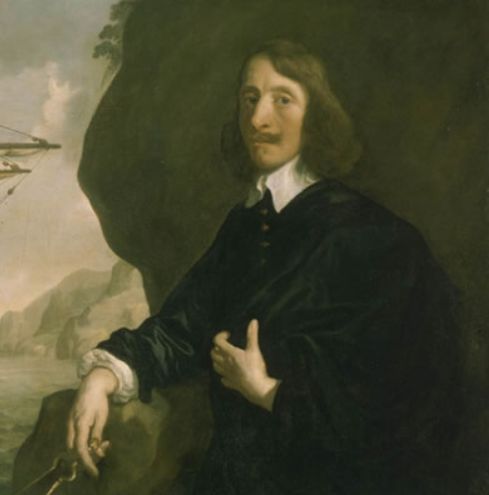
When Samuel Pepys recorded in November 1660 that Peter Pett was to outdo the Dutch yacht for the honor of his country, he added that he doubted it could be done. The challenge was now the shipwright’s. Success would require a vessel the king could sail for pleasure and take pride in showing to people who knew the Dutch original. By January, while Pett was lodging at Deptford to oversee the work, Pepys had begun to think the English yacht would surpass it.
The two commissions went to members of a family whose experience long predated the Restoration. Peter Pett, the navy commissioner in charge of the Deptford build, had learned the business under his father, Phineas, and assisted him in the construction of the Sovereign of the Seas at Woolwich in the 1630s. He subsequently administered Chatham for Parliament and remained in naval employment after the king returned. His younger brother Christopher held a shipwright’s post at Woolwich and took charge of the yacht for James. Peter’s vessel became the Katherine, and Christopher’s the Anne. The yards had also benefited from investment under the preceding government, notably in Woolwich’s docks and workshops. That inheritance mattered because a royal commission could put men to work only where timber could be brought in, shaped, and assembled, with other trades close enough to furnish the vessel as work advanced. James had a place on both sides of the undertaking. As a customer he had a yacht of his own under construction, and as lord high admiral he could issue orders to the officers responsible for getting it into service.
Pepys’s January entries show the builds becoming objects of interest well before either could be tried under sail. On January 13 he visited Peter Pett’s temporary lodgings at Deptford and recorded his growing confidence in the work. Two days later he noted a visit by Charles to Deptford and mentioned the yacht Christopher was building at Woolwich. The entry gives the king’s attention to the work a date, while Pepys’s judgment still rests on a vessel in the yard. A project could already acquire a reputation among naval officers and courtiers while builders were still making decisions that would affect its handling on the river.
At Woolwich, Christopher Pett’s letters show how much had to go right to keep the duke’s commission on schedule. In December 1660 he complained that he lacked timber and then asked that the purveyor be pressed for planks. By February he was recommending Holland duck, a Dutch canvas, for the sails. He specified the same material that was to be bought for the king’s yacht at Deptford. The choice gives a practical dimension to the ambition Pepys had associated with national honor. The builders could try to better the Dutch vessel while trusting Dutch sailcloth to do a job on both English boats. The labor proved harder to secure. In late March Christopher asked the Navy Commissioners to punish two carvers, Thomas Eaton and Richard Swain, if they continued to refuse to work, arguing that the vessel would miss its deadline without them. In April, James ordered the launch to proceed with joinery and carving still unfinished. Putting the hull in the water and completing the accommodation expected aboard a royal yacht had become two separate deadlines.
At Deptford on April 16, Pepys boarded the unfinished Katherine with William Coventry and Sir Robert Slingsby. They then went to Pett’s lodgings for breakfast, where Sir William Batten and Sir William Penn joined them. The ensuing discussion concerned fitting out the fleet. Pepys’s movements that morning show how little distance there was, in the daily business of the yard, between inspecting a vessel for the king’s enjoyment and preparing ships for naval service.
What the Petts produced is easier to describe in some respects than in others. John Evelyn later called Charles’s racing yacht “built frigate-like,” a comparison that places its appearance within a world of English naval vessels familiar to his readers. A drawing by Willem van de Velde the Younger, made some years afterward, shows the old Katherine with guns along the visible broadside and with decorative surrounds at the ports. Carving and ordnance belonged to the same vessel. Accounts for the yachts also record lead fittings and substantial provision for ballast, and in May Christopher requested old shot from the Tower as ballast for the Anne while pressing for the delivery of lead. Such records identify materials the builders intended to use. The drawing, meanwhile, gives much firmer evidence for the yacht’s appearance above water than for the shape of its submerged hull. Maritime historians have accordingly differed over how closely the English vessels followed the Mary. The evidence is clearest about the Dutch yacht’s role as a benchmark and leaves more room for disagreement about how far its hull served as a model.
By May 21, Charles had taken his yacht downriver to try it for pleasure. Pepys was returning from issuing orders at Woolwich and Deptford when the king overtook him in the royal barge after the outing. He reported hearing that Peter Pett’s yacht had done better than the Dutch boat and the one Christopher had built. He gives the judgment as news he picked up, with no details of the conditions under which the boats were compared. By then, though, performance under sail had joined appearance and finish as something people around the yards discussed.
Once the yachts were in use, their accounts took on a different character. A building estimate could put a figure on the work at Deptford, but a vessel kept available to the sovereign also required paid officers and seamen, victuals, and equipment that could be repaired or replaced. The surviving accounts record those recurring expenses separately for the Katherine and the Anne. There was a distinction between paying for a yacht and paying to have it ready whenever its patron wished to use it. The decision to keep men and stores available gave the royal brothers latitude in how they spent a day on the river. By autumn each could call on a vessel whose performance had become a matter of interest to the men who built and served aboard her. The October wager gave Charles and James an occasion to put the two English builds alongside each other on a course of their own choosing.
Greenwich to Gravesend and Back
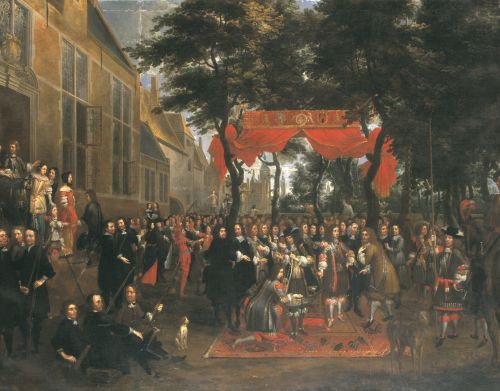
The wager between Charles II and James, Duke of York, called for sailing the Thames in both directions. Gravesend marked the end of the outward leg, and Greenwich was both the starting point and the destination on the return. The vessels generally identified as the competitors were the Katherine and the Anne, the two new English yachts. Evelyn gives the amount of the wager as £100 and describes the contest in terms of what each direction meant for Charles’s chances.
A royal survey commissioned the following year gives some idea of the decisions that lay behind so simple an itinerary. Jonas Moore’s map traces the Thames from Westminster to the sea, recording depths, creeks, and the dockyards used by the navy. Its prospects of Woolwich, Erith, and Gravesend mark successive points on a route that repeatedly changed direction. A crew could round a bend and find that it needed to alter its course relative to the wind. The tide also affected progress over the ground, even when the vessel held its speed through the water. Local knowledge had a value of its own, as Samuel Pepys discovered on a night passage upstream from Gravesend in August 1662. His boatman, accustomed to working above London Bridge, ran the boat onto the Essex shore in rising wind. The party got off and continued, only to lose its way again above Woolwich and double back toward Blackwall. Those difficulties belonged to a different voyage, but they show how much practical knowledge was compressed into Evelyn’s statement of the course.
Evelyn connects the outward result to a contrary wind and remembers that Charles sometimes steered himself. The qualification matters because it gives the king a role in handling a yacht while leaving much of the work of sailing outside the account. Whoever steered depended on the crew to trim the sails and work the vessel through changes of direction. Evelyn gives no comparable detail about what James did aboard his yacht, though the duke’s vessel had the better of the outward passage. The glimpse of Charles at the helm catches a kind of pleasure that was available to him as a participant, even with a company of noble guests aboard for whom the sailing could itself be entertainment.
What the brothers made of the return is easier to establish in financial terms than as a final result. Charles, according to Evelyn, “sav’d stakes returning.” The phrase indicates that the king avoided bearing the loss that the passage downriver had put him in a position to sustain. One early history of British yachting reads the wager as two contests at £50 each, with James taking the first and Charles the second. That is a plausible reconstruction, since opposite results on equally valued legs would leave the brothers even. The division of the money belongs to the reconstruction. Evelyn gives a single figure for the wager and leaves the conditions under which it was to be settled unstated. The maritime historian Arthur H. Clark accordingly treated the outcome of the match as uncertain. The strongest conclusion is that James’s yacht prevailed going down and that Charles recovered his stake on the way back. For Evelyn, that reversal was enough to explain the result before he turned to what happened among the company.
The accompanying barge broadened what the royal party could do while under way. Evelyn records its attendance but leaves its movements undescribed. Twenty years later, Willem van de Velde the Elder drew a visit Charles made to the warship Tiger at Woolwich, showing a royal barge pulling away from a yacht’s stern toward the anchored ship. A separate vessel named Kitchen appears in the foreground. The drawing makes the advantage of carrying a barge alongside sailing vessels easy to see. It provided a way to bring the king to a landing or another ship while the yacht remained where it was.
The kitchen boat met a different practical need. The arrangement allowed at least part of the work of feeding the company to travel in a vessel of its own. Provisions and equipment had to be brought aboard before they could be used, and whatever the kitchen boat supplied had to reach the place where the meal was served. That last step mattered because the two meals Evelyn mentions took place on different vessels. An event whose pace depended partly on sailing conditions still had to provide occasions when people could be brought together and fed. Evelyn gives the kitchen boat only a few words, which is enough to place food service among the arrangements made for the passage. He reserves his attention for where he ate and the company he found there. The difference in detail reflects what the guest had reason to remember and how much of the work could pass without comment once it had been done.
Evelyn places breakfast on the return, in a smaller vessel that he leaves unnamed. He gives neither a landing place nor a precise moment at which the party changed boats. About the invitation itself he is more exact, recording how few people Charles took with him and identifying the other guests by rank. The diary that leaves the terms of the wager largely implicit is unusually precise about the distinction Evelyn carried away from the morning.
Who Could Eat with the King?
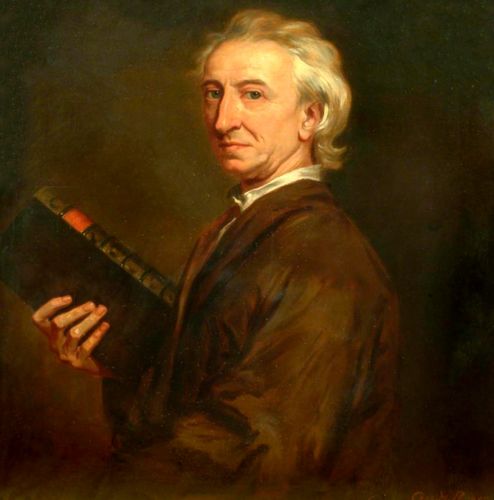
On June 27, 1661, John Evelyn saw the Portuguese ambassador dine in state with Charles II. He singled out the excellence of the music, one of the things a person attending a royal dinner could enjoy from a place away from the table. His description gives the ambassador and the observer distinct parts in the occasion. When Evelyn later wrote that he had eaten with Charles, he was claiming a privilege he had already seen conferred on others.
At a dinner in state, the arrangement of the room made those distinctions visible. The king normally ate in a presence chamber, though an occasion of sufficient importance might be staged in the Banqueting House at Whitehall. His table was set beneath a canopy on a raised platform. A rail could keep spectators from crowding the royal party while still giving them a clear view, and the long side of the table opposite the king was left empty for that purpose. Ushers decided whom to admit, taking account of social standing and appearance. Once inside, a spectator might be allowed to stand close to the king or might watch from farther back. The places of the diners themselves were more precisely graded. A chair with arms, a chair with a back only, and a stool marked distinctions that mattered even among the few people permitted to sit. As Anna Keay’s reconstruction of these occasions shows, a royal dinner could accommodate a substantial audience while keeping the privilege of dining with the sovereign in very few hands.
Breakfast usually belonged to the royal lodgings, where household orders assigned its delivery to the grooms of the Bedchamber. Supper also normally took place in the private apartments and could give admitted visitors a chance to speak to Charles. On May 14, 1661, Evelyn discussed the Royal Society and Saturn with him while the king ate in the withdrawing room adjoining his bedchamber. Evelyn describes the conversation as an honor and records Charles as the person eating. That encounter gives a more exact measure of what changed in October. Evelyn had already been trusted to speak to the king during a private meal, and on the river he was received as a guest at one.
The four noblemen at breakfast mattered to Evelyn because he could identify his own standing with equal precision. The title page of his coronation panegyric calls him John Evelyn, Esquire. He belonged to prosperous Surrey gentry, and his marriage to Mary Browne had connected him to a family with long experience of royal diplomatic service. He had met Charles and James in France before the Restoration and had since found occasions to bring his writing and scientific interests to the king’s attention. In a letter to Henry Bennet a few days after the race, he placed himself among the “poore Country Gentlemen” and distinguished their position from that of men who held places at court. The phrase was deferential, coming from someone with his resources and connections, but the distinction he drew was real. A gentleman could have sufficient standing to be known to the king and still understand a place among noble guests as a favor requiring notice. Evelyn gives the rank of the other four with a precision he denies their identities. What he wanted to preserve was the company in which Charles had chosen to include him.
Samuel Pepys recorded the other side of such a distinction on July 26, 1665. After a morning in which Charles and James had repeatedly drawn him into conversation near Greenwich, he accompanied them to Sir George Carteret’s house. When the party sat down to dine with Charles, Pepys alone was left out. He felt it keenly because his colleague Sir William Batten was included, even as he admitted that Batten had a much better claim to the honor. Afterward Pepys went aboard the royal barge and listened to the brothers talk again. Within a few hours he had been a participant in their conversation, the man who ate elsewhere, and a passenger in the king’s own boat.
An invitation could also extend to a whole company when the occasion gave that company a recognizable identity. After a hunt in Enfield Chase in 1663, Sir John Reresby remembered Charles having everyone who had hunted with him sit down to eat. The group was defined by the activity its members had shared. That arrangement makes sense of the wider dinner Evelyn describes aboard the yacht without requiring a rule peculiar to the river. Brian Weiser’s account of Charles’s court treats access as something the king could vary with circumstances, and the two meals on the Thames show that variation within a single outing. Charles could extend his hospitality to the assembled party at dinner and choose a handful of companions for breakfast. The smaller vessel gave the second gathering a natural physical limit, while the invitation determined who occupied the space available. Each meal gave its participants a distinct claim on the king’s company, and each claim lasted for that occasion.
The distinction between eating with Charles and being entrusted with his business also deserves to hold. Evelyn assigns the instructions he received to the passage, leaving their relation to either meal open. The invitation establishes how Charles received him among the other guests. The request for a bill on London’s smoke shows what the king could ask of a man whose work he already knew.
London’s Smoke and the Reach of a Royal Instruction
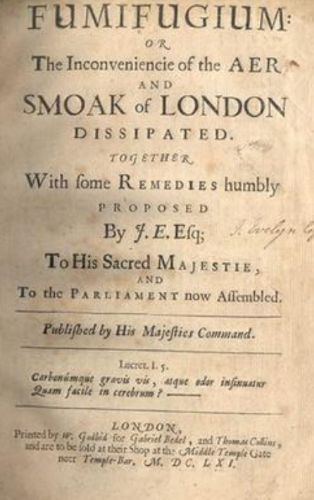
In the dedication to Fumifugium, John Evelyn recalled walking at Whitehall when smoke from one or two chimneys near Northumberland House drifted into the palace. It spread through rooms and galleries until people could scarcely make one another out. Evelyn had long observed what coal smoke did to London, and he presented this incident as the immediate reason for writing. It gave him a way to bring a problem familiar to the capital’s inhabitants before Charles as something the royal household had experienced for itself.
Evelyn’s case rested on a distinction between the ordinary fires of the city and the concentrated emissions of a few trades. He blamed brewers, dyers, lime burners, and makers of salt and soap, whose furnaces produced clouds that he thought dispersed less readily than smoke from household kitchens. He invited readers to compare a working day with a Sunday, when many industrial fires went out and the sky, in his estimation, cleared. He also described a lime kiln near the Falcon on Bankside whose smoke crossed the Thames toward St. Paul’s when the wind blew from the south. The effects could be examined close at hand. A piece of clean linen left out overnight picked up dirt, and bathers could come out of the river with soot on their skin. Evelyn took persistent coughing as further evidence and explained the effects of foul air on the body in the medical language of his day. William M. Cavert’s estimates of coal use give reason to qualify Evelyn’s diagnosis. London’s households collectively drove most of the demand for coal, even though a single large furnace could burn enough to make its effects conspicuous across the river. Moving the trades Evelyn named would have addressed some of the most visible sources while leaving a large part of the city’s coal consumption in place.
The distance Evelyn proposed for the move depended on what he wanted to protect. He suggested placing the offending works five or six miles below London, or at least beyond the promontory he believed screened Greenwich from the air of Plumstead Marshes. A site nearer the capital might improve conditions there while allowing the prevailing westerlies to carry smoke toward the royal grounds. Evelyn wanted to preserve both the air at Greenwich and the prospect from it. The same stretch of river on which Charles began his race thus figured in the pamphlet as a place whose future depended partly on where other people could put their furnaces. Evelyn recognized that the new sites would have to meet the practical needs of the trades. Brackish water at spring tides might pose a problem for brewers, so he suggested locations near freshwater tributaries and entertained Bow as a concession for some of them. Watermen could carry the finished goods back to London wharves for distribution. The sites vacated in town could then be turned into housing, some of it for wealthy occupants who would value a position overlooking the Thames. Evelyn represented relocation as a gain for navigation and property as well as for health, with most of the costs of adapting to the move left to the businesses he expected to undertake it.
His plan for planting the low ground around London addressed what the air might be like once the worst smoke had been removed. Evelyn proposed dividing fields, especially east and southwest of the city, with broad belts of fragrant plants. He named sweetbrier, jasmine, and rosemary among the species whose scent he expected the air to carry. The planting Charles had already begun near St. James’s Park gave him a royal example to invoke for work he wanted undertaken on a much larger scale. As Mark Jenner has shown, contemporaries interested in horticulture and natural philosophy also entertained the idea that planting could improve the air over a wide area. Evelyn’s scheme extended that idea to the outskirts of the capital, where the land itself would have to be laid out and maintained to achieve what he proposed. The call for an act of Parliament was already in the pamphlet Evelyn presented in mid-September 1661. Charles first authorized publication, and one issue carried his command on the title page. That endorsement had some weight in a court with experience of complaints about smoky works. Charles I had sought to remove large brewhouses from the vicinity of Westminster, and in August 1661 Charles II and his Council directed the solicitor general to proceed against a brewer near Whitehall. A case against an individual concern could draw on existing powers. Evelyn was asking for a rule that would apply across several trades and determine where they could operate. During the passage on October 1, Charles told him to prepare a bill for the next parliamentary session. The king had moved from lending his authority to a printed argument to asking its author for a measure that Parliament could consider.
On January 11, 1662, Evelyn recorded receiving a draft from Sir Peter Ball, attorney to the queen mother, Henrietta Maria. He described it as a measure to remove trades whose smoke endangered the health of the king and his subjects. In recalling that the draft was to have been offered to Parliament, Evelyn gives the clearest indication of where the undertaking stopped. There is no evidence that either House debated it, and it never became law. Parliament did legislate on other London nuisances that year. The act for London and Westminster dealt with paving, drainage, and street cleansing, including the disposal of coal ash through local collection. Evelyn himself sat on the commission concerned with highways and sewers. In July he recorded an order to pave the approach north of St. James’s and part of the Haymarket, giving a concrete example of the work that commission could authorize. The record of those proceedings shows what the smoke proposal lacked after January: an enacted measure and officers charged with carrying it out.
The October instruction mattered because it brought a proposal Evelyn had addressed to the king and Parliament into the hands of a lawyer who could help put it in legislative form. The resulting draft marks the extent of the progress that can be traced. The reason it went no further remains unclear. Charles’s second assignment that day would leave a fuller record because the government had an immediate use for the account Evelyn was asked to write.
Diplomatic Precedence and the Account Sent to Paris
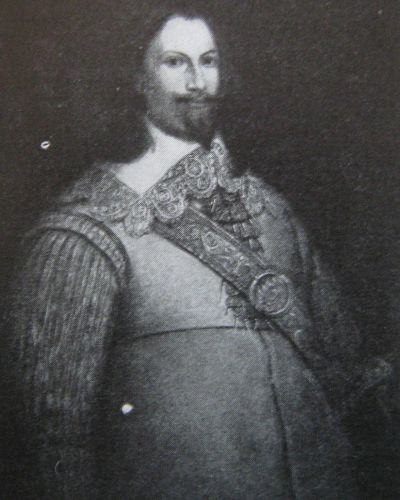
On September 30, 1661, the day before Charles II’s race, Count Nils Brahe came ashore at Tower Wharf for his ceremonial entry as Sweden’s ambassador extraordinary. The landing marked the point at which a reception conducted by water became a procession through London. Brahe took his seat in the English king’s coach, and his own carriage followed. The French and Spanish ambassadors had both sent coaches to join the procession, and their parties came prepared to fight over which would go first.
An ambassador rode in the name of his sovereign, so the order of the carriages gave public expression to a claim about the relative standing of kings. An envoy who yielded a place might have to explain the concession at home, while his rival could point to it when the next ceremony was arranged. France and Spain had disputed precedence for generations, and a temporary agreement between their representatives in London to stay away from public ceremonies had kept the question from being put to the test on every occasion. The new French ambassador, the comte d’Estrades, was under instructions from Louis XIV to maintain his claim. The Spanish ambassador, the baron de Watteville, likewise sent an armed escort with his coach. Charles forbade his subjects to intervene and put troops on duty, leaving the rival parties to take the places they could secure. At the wharf, both escorts pressed to get their carriages into position as the royal coach moved off. Shots were fired, men were killed, and injuries to the French horses prevented their coach from continuing with the procession. The Spanish carriage went through the City in the disputed place, giving its escort a victory that people along the route could see long after the fighting had ended.
Samuel Pepys’s diary preserves something of what those spectators could know. He heard talk of a likely confrontation over his morning drink in King Street and later saw preparations at the two ambassadors’ residences. He learned the result in Cheapside and hurried after the Spanish coach, which he finally saw at the royal Mews surrounded by men with drawn swords. English soldiers were shouting for joy, and Pepys wholeheartedly shared their enthusiasm. A witness could report those cheers with confidence even as the question of what English soldiers or bystanders had done during the fight remained open.
It was that question Charles put to John Evelyn during the race the following day. The king wanted an account that would answer reports of partiality on his own part and misconduct by English officers and spectators. He directed Evelyn to Sir William Compton, master of the ordnance, and Sir Charles Berkeley, captain of the Duke of York’s Life Guard, both of whom had been present. Evelyn went into London on October 2 and took testimony from them, from officers at the Tower, and from others who had seen what happened. His surviving narrative carries the title A Faithfull and Impartial Narrative, and its treatment of the crowd shows how he made a case for the king from testimony that included instances of English participation. He acknowledged that some bystanders had thrown bricks and explained their actions as a response to French gunfire. He credited the Spanish success to the handling of the coaches and their escorts, while describing Berkeley’s guard as enforcing the order to keep English subjects out of the quarrel. Berkeley’s testimony gave Evelyn an account of the orders on the ground from the officer charged with carrying them out. Whether that account persuaded a French reader depended in part on whether the reader accepted Evelyn’s distinction between what some Londoners had done and what Charles had authorized.
On Thursday, October 3, a page of the backstairs brought Evelyn into the king’s cabinet at Whitehall to read the report aloud. Sir Henry Bennet, keeper of the privy purse, was present when he began. The secretary of state, Sir William Morice, interrupted with business of his own, and a letter from the king’s sister Henrietta Anne, Duchess of Orléans, interrupted the reading again. Charles returned to Evelyn’s account, asked for additions, and ordered it sent that night to Henry Jermyn, Earl of St. Albans, his ambassador in Paris. By the following evening Charles had spoken with d’Estrades and reconsidered the language he wanted to circulate. He approached Evelyn in the withdrawing room and pointed out passages to soften before publication. Evelyn subsequently thanked Bennet for helping him obtain the commission and explained that he had tempered the wording to protect the king’s standing at home and his friendships abroad. Writing to William Coventry a few days later, he distinguished the statements he had collected from the reflections he had added himself. He said he had shortened and softened those reflections for Coventry compared with the version sent to St. Albans. The letters make it possible to follow the report through successive decisions about how much the king’s ambassador in Paris, a senior official at home, and a wider readership should be told in Evelyn’s own voice.
While Evelyn was collecting testimony, the Privy Council dealt with the ceremony itself. Its order of October 2 reserved places in future reception and audience processions for the coaches of the king and his subjects, removing the occasion for foreign ambassadors to compete for position in London. The dispute between Louis XIV and Philip IV continued into the following spring, when a Spanish envoy at the Louvre expressed regret and announced that Spanish ministers would stay away from ceremonies where a French presence might revive the quarrel. Louis publicized that undertaking as recognition of French precedence. Evelyn’s surviving papers document the English response, including the dispatch to St. Albans and the preparation of a copy for the Whitehall paper office. Within days of receiving the instruction on the Thames, Evelyn had given the king’s representative in Paris a defense of English conduct that Charles had personally heard and amended.
Pepys and the Pleasure of the River

On March 5, 1660, while England was still a republic, Samuel Pepys met two acquaintances at Westminster who took him by water to the Salutation Tavern at Billingsgate. Other men joined them there with provisions, including a ham, and the company stayed drinking until one of them began to feel the effects. Pepys made his way back to Westminster by water. The entry catches an established habit before the Restoration brought royal yachts to the Thames. A boat made it easy to turn a chance meeting at one end of London into an afternoon with friends at the other.
By the summer of 1661, Pepys was also taking people on the river for what they could see from it. After the Earl of Sandwich’s birthday dinner on July 27, Samuel and Elizabeth Pepys took Sandwich’s daughters, Jemima and Paulina Montagu, through London Bridge to see the ships. Pepys then showed the sisters his house, entertained them there, and accompanied them back through the bridge before returning home with Elizabeth by coach. He singled out the pleasure of showing them the ships, an activity for which his acquaintance with the waterfront fitted him well. A trip to Greenwich with the newly promoted Captain Lambert on June 6 had put Pepys in the position of the interested passenger. On the way downriver he asked Lambert about the parts of a ship and found his answers useful. At the Globe in Greenwich they ate and drank, heard music, and watched a mechanical figure mark time with a rod, an entertainment Pepys found unimpressive. Aboard the boat he had had the undivided attention of someone who could explain what he wanted to know about ships. The July excursion gave him a turn at directing other people’s attention to the vessels he had learned to look at with a naval officer’s eye.
The household could also make an evening out of a visit to the opposite bank. On May 29, 1662, Pepys took Elizabeth, their two maids, and their boy by boat to Vauxhall. They walked in the Old Spring Garden, where the maids gathered pinks, and left when they learned what food would cost and how long it would take to get it. They tried the New Spring Garden, where the boy got through a hedge to gather roses, and had cakes, salt beef, and ale after leaving the grounds. Pepys was especially pleased with the return by water. The party could change its plans in response to prices or delays and still have a satisfying evening, in part because the passage home was itself something to enjoy.
The watermen who made such outings possible had a part in shaping them. On December 3, 1661, Pepys gave sixpence to a man who rowed him through London Bridge toward the Navy Office. He remembered that the same waterman, sculling alone on a previous occasion, had beaten the boat carrying him to the Tower. A year earlier, on a pleasant December night between Parliament Stairs and London Bridge, another waterman had entertained Pepys with bawdy stories about his passengers. A man named White used a passage in February 1660 to tell Pepys how watermen who thought they were signing a petition against hackney coaches had been induced to endorse Parliament instead. The stories and the grievance came from men whose occupation brought them into close contact with passengers for the length of a crossing or a journey along the river. Sometimes what Pepys took away from a passage had as much to do with the man at the oars as with the place where he landed.
Pepys’s position as clerk of the acts to the Navy Board put royal vessels within reach on some of the same journeys. On February 20, 1663, he and Commissioner Peter Pett planned to take the royal yacht Charles to Woolwich, where they had business concerning the stock of masts. They found her aground near low water and continued by oars. By the time they were ready to leave Woolwich, the yacht had floated and come down for them. Pepys found the sail lively enough in the fresh wind to bring on a touch of queasiness, though he recorded his pleasure in it.
At Cuckold’s Point they transferred to a rowing boat for the remainder of the passage. In April he was able to bring his father aboard an unnamed royal pleasure boat for a trip to Woolwich. Elizabeth and her companion, who had turned back for the family dog, rejoined them in Greenwich Park, and Pepys fitted in a visit to the king’s yard during the outing. Bringing his father aboard was one way he could extend a privilege of office to his own family. The episode gives the yacht a place in the history of a household as well as in that of the Navy Board.
A longer expedition in June 1664 shows how much enjoyment Pepys and his companions could make for themselves with the boats ordinarily available to them. After dinner on June 26, Samuel and Elizabeth Pepys and John Creed decided on the spur of the moment to set out for the Hope, where the fleet lay at anchor. They provisioned a boat with food and drink, and the ebb carried them downriver. By the time they reached Gravesend it was night and the tide that had helped them was spent. Creed went ashore to get cherries and send a letter on to the fleet, while the Pepyses remained aboard. They turned back in a thunderstorm. When the sky cleared, Creed told stories in the boat, and they got home about midnight well pleased with the expedition. Gravesend, the appointed turning point for Charles’s race, became theirs because of the hour and the state of the tide. Pepys could count the day a success because the company and the passage home had come to matter more than reaching the anchorage.
On an August afternoon in 1666, Pepys went upriver as far as Mortlake with Elizabeth, her paid companion Mary Mercer, and their cook Jane Birch. He records reading the second part of William Davenant’s The Siege of Rhodes during the outing, without specifying who read aloud. As Kate Loveman observes, reading was one of the pleasures employees could share with the household they served, even as reading aloud could itself be part of their work. An afternoon in the boat put Mercer and Birch in company with their employers and allowed an activity familiar from the house to occupy them on the water. The intimacy Pepys records depended on relationships already formed ashore, and the pleasure of the passage came in part from what those four people could do together during the hours it gave them.
How Much Did the Yacht Change?
The following video from The People Profiles is a documentary about Charles II and the Stuart Restoration:
On May 10, 1672, a letter from the Privy Council instructed John Evelyn to attend Charles II. He found the king in company at Pall Mall in St. James’s Park. Charles stepped away from the people around him and told Evelyn to go to the coast to observe the movements of the English and Dutch fleets. A formal summons had brought Evelyn within reach, and the king chose the moment to give his orders in person. The encounter makes a strong case for treating the commission Evelyn received during the race of 1661 as an instance of an established royal practice.
The objection holds on the water as well. On May 25, 1660, as the ship bringing Charles home from exile lay off Dover, the king and his brothers breakfasted on peas and pork and boiled beef from the ship’s provisions. The dishes had been set out to show them what the crew ate, and the three men made their meal of it. Samuel Pepys, then serving Edward Montagu, ate in his own cabin with two other men. He also spoke to the Duke of York on business and noted that James had called him by name and promised him his future favor. At noon Charles chose to go ashore with his brothers in Montagu’s barge, although a new brigantine stood ready for him. The captain steered, and Montagu accompanied the king bareheaded. Pepys reached shore at about the same time in a separate boat with a royal footman, another passenger, and one of the king’s dogs. Well before the race, the passage from ship to shore could bring king and servant close enough for a word of business while placing them in quite different company for a meal or a landing.
The testimony for October 1661 also imposes limits on what can be attributed to the yacht. Evelyn entered the race account in the surviving Kalendarium when he took up the transcription of his earlier notes again from about 1680. We can see what he considered worth preserving, including the number and rank of his breakfast companions, with less certainty about when he first recorded each detail. His letters from the days after the outing give the diplomatic commission a contemporary paper trail, and his acknowledgment of Henry Bennet’s help shows that someone at court had already acted on his behalf. The invitation to breakfast survives in the later diary account, which leaves the reason for his selection unstated. Evelyn had reason to remember both occasions, but the evidence for why Charles entrusted him with work is fuller than the evidence for why he chose him as a companion at breakfast.
The strongest case for the yacht begins with what the party had assembled to do. At Dover the crossing ended when the king reached land and the civic reception took over. In October the contest under sail was itself the reason to spend the day on the river. Charles could take the helm, follow his brother’s progress, and entertain guests whose interest in the outing continued through the return. The yacht could serve him as a competitor and a host over the course of the same excursion. The attendance of a barge and a kitchen boat gave the party resources beyond any single hull. Within that arrangement Charles entertained five guests in the smaller vessel and later shared dinner with the wider company on a yacht. Whitehall itself was being reconfigured in these years, with a private dining room taking the place of the old Privy Chamber. Aboard, the king could make a comparable distinction between kinds of company by shifting between vessels as the day proceeded. For a guest already included in the outing, a transfer could change whether he had a place beside the king or simply traveled in attendance on him.
Two days after the race, Evelyn was about to leave the royal closet when Charles called him back. The business that had brought him there was complete, and the king wanted to show him some ivory figures and other objects he had yet to see. The moment supplies its own measure of how readily Charles could vary the terms of an encounter in a familiar room at Whitehall. The yacht gave him a way to exercise that discretion across an excursion organized around something he and his brother wanted to do together. That is a narrower change than a transformation in who could reach the king, and it helps explain why a place at breakfast was worth remembering even for a man Charles already knew whom to summon.
Conclusion: What an Invitation Could Set in Motion
The endorsement on a surviving copy of John Evelyn’s account of the fight at Tower Wharf records two destinations for his work. A copy went to England’s ambassador in France, and another was prepared for the Paper Office at Whitehall. What began as an instruction during the royal outing of October 1, 1661, became both a diplomatic dispatch and a record the government intended to keep. The route from the Thames to the Paper Office shows how Charles II could use the company assembled for his recreation to put someone to work on a matter already demanding his attention.
The two commissions Evelyn brought ashore carried him into different kinds of government business. For the precedence inquiry he could question officers who had been present, gather their testimony into a narrative, and submit it to the king. Charles could judge the language for himself and direct a secretary to send it to Paris. The inquiry moved quickly because there was a specific allegation to answer and an ambassador who could use the answer. An instruction concerning London’s smoke carried a different burden. Giving legal force to Evelyn’s proposals would have required decisions about the trades affected and how restrictions on them could be enforced. The draft Evelyn received early in 1662 shows that someone had taken up the work of turning a proposal into the language of legislation. That is as far as the surviving record takes it. A royal instruction could give a capable subject a task immediately, while the authority and cooperation needed to carry that task through depended on what the king had asked him to do.
The occasion for giving those instructions had itself taken considerable work to create. Amsterdam’s gift put a Dutch pleasure craft at Charles’s disposal, and the work at Deptford and Woolwich gave the brothers English-built vessels they could put in competition. The attending barge and kitchen boat show how readily the new craft could be used alongside existing forms of royal service. The result was an outing that drew on the naval establishment to sustain a pleasure already familiar to Londoners who could afford to take a boat. Pepys’s journeys with his family and friends show how much of the enjoyment could lie in the passage itself, even when an intended destination slipped out of reach. For the royal party, the object of going out was likewise an activity pursued on the water. That gave Charles a reason to spend much of the day in the company of people he had chosen, with scope to alter who joined him as the occasion changed.
Evelyn remembered breakfast as something worth recording in its own right. He had been singled out for a small gathering among people already admitted to the day’s pleasures, and the distinction was intelligible even if the reasons for choosing him remain obscure. The commissions show what could follow when a man who enjoyed that familiarity also had skills the king wanted to employ. Once ashore, Evelyn could call on officers for information and prepare a document for Charles to review. His invitation had given him a place in the king’s company for part of a day, and the work Charles entrusted to him gave that brief proximity a reach far beyond the river.
Bibliography
Affiliate disclosure: Amazon links on this site are paid links. As an Amazon Associate I earn from qualifying purchases.
- Bender, Mike. A New History of Yachting. Woodbridge: Boydell Press, 2017. Chapter 2.
- Benson, Claire A. “Boundaries of Belonging in Early Modern London, 1550–1700.” PhD diss., University of York, 2018. 130–136, 154–157.
- Blussé, Leonard. “Navigational Practices and the Use of the Leeboard on Shallow Draft Riverine and Coastal Craft in the Yangzi and Rhine Estuaries: A Short Essay in Comparative Nautical History.” The Low Countries Journal of Social and Economic History 21:1 (2024), 21–34.
- British Yachts and Yachtsmen: A Complete History of British Yachting from the Middle of the Sixteenth Century to the Present Day. London: Yachtsman Publishing Company, 1907. Chapter 2, “The Restoration Period.”
- Broekman, Inge, and Helmer Helmers. “‘Het hart des Offraers’—The Dutch Gift as an Act of Self-Representation.” Dutch Crossing 31:2 (2007), 223–252.
- Bucholz, R. O. “The Art of the Restoration Courtier: Evidence from Three Diaries.” The Court Historian 29:3 (2024), 245–268.
- Bucholz, Robert O., and Joseph P. Ward. London: A Social and Cultural History, 1550–1750. Cambridge: Cambridge University Press, 2012. Chapter 1.
- Capp, Bernard. The World of John Taylor the Water-Poet, 1578–1653. Oxford: Clarendon Press, 1994.
- Cavendish, George. The Life and Death of Cardinal Wolsey. Edited by Richard S. Sylvester. London: Oxford University Press for the Early English Text Society, 1959.
- Cavert, William M. “The Environmental Policy of Charles I: Coal Smoke and the English Monarchy, 1624–40.” Journal of British Studies 53:2 (2014), 310–333.
- —-. “Industrial Coal Consumption in Early Modern London.” Urban History 44:3 (2017), 424–443.
- —-. The Smoke of London: Energy and Environment in the Early Modern City. Cambridge: Cambridge University Press, 2016. 173–194.
- Chambers, Douglas D. C. “Evelyn, John (1620–1706), Diarist and Writer.” In Oxford Dictionary of National Biography. Oxford: Oxford University Press, 2004.
- Clark, Arthur H. The History of Yachting, 1600–1815. New York: G. P. Putnam’s Sons, 1904. 61–64.
- Crone, G. C. E. Nederlandsche jachten, binnenschepen, visschersvaartuigen en daarmee verwante kleine zeeschepen 1650–1900. Amsterdam: Swets & Zeitlinger, 1926. 111–114.
- Dalton, Tony. British Royal Yachts: A Complete Illustrated History. Tiverton, Devon: Halsgrove, 2002.
- Davies, Godfrey. “Charles II in 1660.” Huntington Library Quarterly 19:3 (1956), 245-275.
- Davies, J. D. Gentlemen and Tarpaulins: The Officers and Men of the Restoration Navy. Oxford: Clarendon Press, 1991. Chapters 1 and 7.
- England. “Streets, London and Westminster Act 1662.” 14 Cha. II c. 2.
- Evelyn, John. The Diary of John Evelyn. Edited by William Bray. London: Walter Dune, 1901. October 1, 1661.
- —-. “A Faithfull and Impartial Narrative of W[ha]t Pass’d at the Landing of the Swedish Ambassador.” Add. MS 78393, fols. 10–11. British Library, London.
- —-. Fumifugium, or, The Inconveniencie of the Aer and Smoak of London Dissipated. London: W. Godbid for Gabriel Bedel and Thomas Collins, 1661.
- —-. The Letterbooks of John Evelyn. Edited by Douglas D. C. Chambers and David Galbraith. Vol. 1. Toronto: University of Toronto Press, 2014. Letters 190–92.
- —-. A Panegyric to Charles the Second. London: John Crooke, 1661.
- Geevers, Liesbeth. “The Conquistador and the Phoenix: The Franco-Spanish Precedence Dispute (1564–1610) as a Battle of Kingship.” The International History Review 35:1 (2013), 23–41.
- Green, Mary Anne Everett, ed. Calendar of State Papers, Domestic Series, of the Reign of Charles II, 1661–1662. London: Longman, Green, Longman, & Roberts, 1861. 104–105.
- Guillery, Peter, ed. Woolwich. Survey of London 48. New Haven: Yale University Press for English Heritage, 2012. Chapter 2, “Woolwich Dockyard Area.”
- Jenkinson, Matthew. Culture and Politics at the Court of Charles II, 1660–1685. Woodbridge: Boydell Press, 2010. 10–11.
- Jenner, Mark. “The Politics of London Air: John Evelyn’s Fumifugium and the Restoration.” The Historical Journal 38:3 (1995), 535–551.
- Keay, Anna. “The Ceremonies of Charles II’s Court.” PhD diss., Queen Mary, University of London, 2004. 94–115.
- —-. The Magnificent Monarch: Charles II and the Ceremonies of Power. London: Hambledon Continuum, 2008.
- Laughton, J. K. “Pett, Peter (b. 1610, d. in or before 1672).” Revised by J. D. Davies. In Oxford Dictionary of National Biography. Oxford: Oxford University Press, 2004.
- The Lotus Magazine. “A Summary of Yachting History.” 5:8 (1914), 505-512.
- Loveman, Kate. Samuel Pepys and His Books: Reading, Newsgathering, and Sociability, 1660–1703. Oxford: Oxford University Press, 2015. 31–32, 138.
- Machyn, Henry. The Diary of Henry Machyn, Citizen and Merchant-Taylor of London, from A.D. 1550 to A.D. 1563. Edited by John Gough Nichols. London: Camden Society, 1848. Entry for July 3, 1559.
- Magliocco, David Charles. “Samuel Pepys, the Restoration Public and the Politics of Publicity.” PhD diss., Queen Mary University of London, 2013. Chapter 2.
- Moore, Jonas. A Mapp or Description of the River of Thames from Westminster to the Sea. Commissioned 1662. Manuscript map. WORK 38/331. The National Archives, Kew.
- Olaberria, Juan-Pablo. “Ship Design-Knowledge in Early Modern Europe: Royal Yachts and the Shared Knowledge of Ship-Designers and Common Shipwrights.” PhD diss., University of Southampton, 2018. Chapter 2.
- Pepys, Samuel. The Diary of Samuel Pepys: A New and Complete Transcription. Edited by Robert Latham and William Matthews. Vols. 1–2, 1660 and 1661. London: Bell, 1970. November 8, 1660, and January 15 and May 21, 1661.
- Phelps, Noah Paul. “Transport for Early Modern London: London’s Transportation Environment and the Experience of Movement, 1500–1800.” PhD diss., Loyola University Chicago, 2017. 89–90.
- Reresby, John. Memoirs of Sir John Reresby: The Complete Text and a Selection from His Letters. Edited by Andrew Browning. 2nd ed., revised by Mary K. Geiter and W. A. Speck. London: Royal Historical Society, 1991. 9.
- Sánchez Lupón, Andrea. “¿Cesión de precedencia o el triunfo de la publicística?: Las consecuencias del ruidoso lance de Londres de 1661.” In Poder y privilegio en la sociedad moderna: Actores, medios, fines y circunstancias, siglos XVI–XVIII, edited by Sergio Intorre, Héctor Linares González, Valeria Patti, and Marina Perruca Gracia, 339–355. Palermo: Palermo University Press, 2020.
- Spence, Craig. Accidents and Violent Death in Early Modern London, 1650–1750. Woodbridge: Boydell Press, 2016.
- Stockton, Hannah Melissa. “‘Flows for All Mankind’: Everyday Life, the City and Empire on the London Thames, 1660–1830.” PhD diss., Queen Mary University of London, 2017. 230.
- Stow, John. A Survay of London. Reprinted from the text of 1603. Edited by Charles Lethbridge Kingsford. 2 vols. Oxford: Clarendon Press, 1908.
- ’t Hooft, C. G. “The First English Yachts, 1660.” The Mariner’s Mirror 5:4 (1919), 108–123.
- Taylor, John. The World Runnes on Wheeles: Or, Oddes, Betwixt Carts and Coaches. London: E. Allde for Henry Gosson, 1623.
- Van de Velde, Willem, the Younger. Portrait of the ‘Katherine’ Yacht, an 8-Gun Yacht, Built in 1661. Ca. 1675. Drawing. PAH3912. National Maritime Museum, Greenwich.
- Van de Velde, Willem, the Elder. Visit of Charles II to the ‘Tiger’ at Woolwich: The King Leaving One of the Yachts. 1681. Drawing. PAH1871. National Maritime Museum, Greenwich.
- Weiser, Brian. Charles II and the Politics of Access. Woodbridge: Boydell Press, 2003.
- Wicquefort, Abraham de. A Relation in Form of Journal, of the Voiage and Residence Which the Most Excellent and Most Mighty Prince Charls the II, King of Great Britain, &c. Hath Made in Holland. Translated by William Lower. The Hague: Adrian Vlack, 1660. 27–28, 25-29.
Originally published by Brewminate, 11.25.2026, under the terms of a Creative Commons Attribution-NonCommercial-NoDerivatives 4.0 International license.
About the Author