Behind Chang’an’s cosmopolitan reputation stood the routines of commerce, as regulated markets and neighborhood shops connected daily purchases with goods and people from across Asia.

By Matthew A. McIntosh
Public Historian
Brewminate
In Tang Chang’an, the authorities prescribed 300 drumbeats to announce that the markets were open for business. The signal came at noon. Before sunset, 300 strokes on a gong were supposed to send the crowds away. Shopping had an official timetable in the capital of the Tang dynasty, which ruled China from 618 to 907 CE. At the site of present-day Xi’an, residents could encounter merchandise and merchants connected to distant parts of Asia, but those encounters happened within a closely managed city. Its international character depended on something less spectacular than an embassy arriving at court: people having goods to sell, and customers returning to buy them.
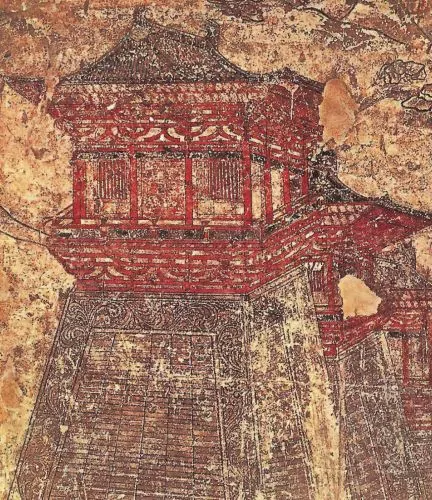
The East and West Markets were its two principal commercial centers, each occupying an enormous walled enclosure within the capital’s grid of avenues and residential wards. They contained permanent shops organized into rows associated with certain trades. The eastern establishment lay near concentrations of aristocratic residences, while foreign merchants were prominent around the western one. Officials supervised business within these commercial districts, and their responsibilities reached into the details of a purchase. Regulations required attention to weights and measures and to the quality of merchandise; officials also recorded prices. A seller’s goods could be assessed for authenticity or checked against approved standards of measurement. Such work addressed an ordinary difficulty with consequences for international exchange. A buyer needed some way to assess what a seller was offering. A costly object from far away still had to be valued and paid for. Familiar provisions presented their own opportunities for short weight or misrepresentation. In principle, supervision gave strangers a more predictable basis for doing business, although regulations alone cannot establish how consistently sellers obeyed them. The surrounding city imposed further limits on a shopping trip. Residential wards had gates, and nighttime restrictions on movement meant that getting home belonged among a customer’s practical concerns.
Among the people conducting those dealings were Sogdians, Iranian-speaking Central Asians whose homelands included the region around Samarkand. Their trading networks linked oasis communities across the routes conventionally called the Silk Road. Goods could move through several hands before reaching Chang’an; commerce did not require every seller to have traveled the entire distance. Sogdian settlement also gave the West Market’s connections a foundation in established households. These merchants participated in the life of the capital while maintaining connections across a much larger commercial world.
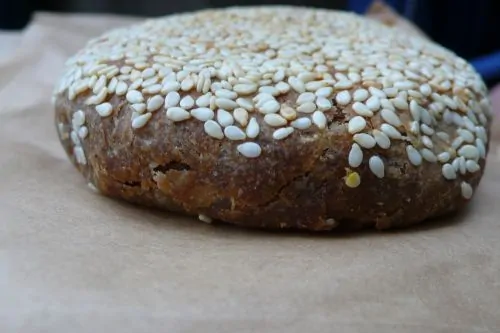
Food offers an intimate measure of how distant connections entered urban habits. Baked breads associated with western peoples were familiar features of Tang eating. One surviving poem by Bai Juyi concerns sesame cakes made in imitation of those in the capital. He describes their crisp texture and oily fragrance when fresh from the oven, then asks whether they compare with the cakes of Fuxing, a Chang’an ward. The neighborhood matters. A food with foreign associations had acquired a reputation tied to a specific place in the Chinese capital. The poem identifies a remembered specialty without telling us the ancestry of its bakers. It also shows the capital’s food becoming a standard against which a cake made elsewhere could be judged. Grape wine circulated through the same broader world of Central Asian contacts, with Sogdian merchants participating in its sale and consumption. These tastes developed over time, often through exchanges older than the Tang itself. By Bai’s lifetime, during the eighth and ninth centuries, a preparation associated with western peoples could belong to the familiar pleasures of the capital. His question about the cakes concerns whether their flavor measures up to a remembered Chang’an example.
Keeping that city supplied required extensive connections within China. Grain and cloth reached the capital through transport networks that included government transfers of taxes collected in goods. Private commerce brought further supplies, while southern tea connected northern consumers with producers far from Chang’an. Regular deliveries of necessities sustained the population that made the international marketplace possible. A merchant dealing in expensive imports still required provisions and somewhere to stay. Inns serving traveling merchants could combine lodging with warehouse space, and some helped negotiate sales with local customers. Those services supplied an essential intermediate stage between transporting merchandise to the capital and finding someone willing to purchase it. Goods needed storage while their owners sought customers; a visitor needed access to local commercial knowledge. The work involved continued after a caravan reached its destination. The celebrated movement of objects across Asia depended partly on these businesses handling the less glamorous difficulties of arrival, including feeding travelers and keeping their merchandise secure.
Commerce repeatedly exceeded the neat boundaries drawn for it. Shops also operated in residential wards, and later in the Tang period the weakening of restrictions allowed business to spread further beyond the principal markets. Official opening hours describe a prescribed order whose enforcement changed over three centuries. The West Market’s excavated remains bring the account back to the practical work beneath that changing order: wheel-rutted roads and drainage channels, along with wells serving the people working there. These facilities supported the movement of goods and the people handling them. An object could reach Chang’an through a remarkable journey across Asia, then spend time in storage while its owner waited for a customer. Its next journey might be a short trip to someone’s home.
Originally published by Brewminate, 10.25.2026, under the terms of a Creative Commons Attribution-NonCommercial-NoDerivatives 4.0 International license.
About the Author