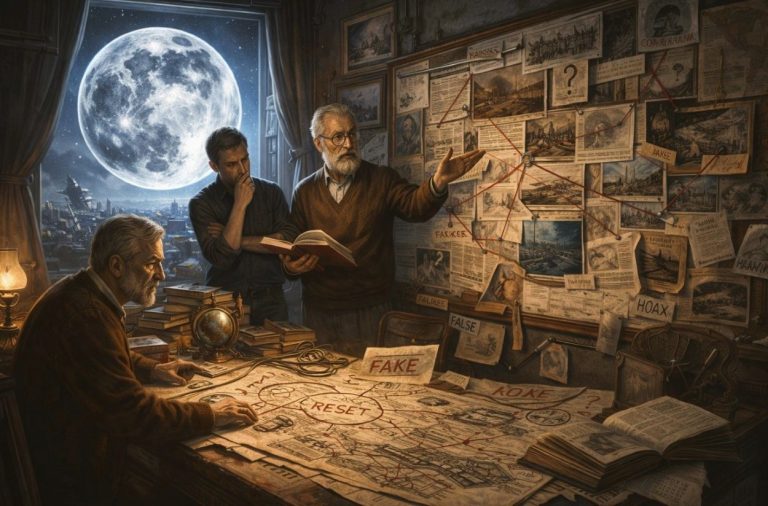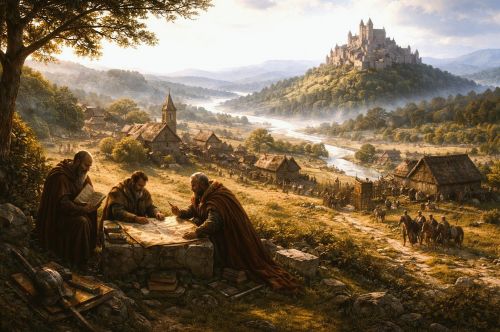
The so-called “Dark Ages” were not a time of collapse but of transformation, where new cultures, institutions, and ideas reshaped Europe after Rome’s fall.

By Matthew A. McIntosh
Public Historian
Brewminate
Introduction: The Persistence of a Misleading Label
The phrase “Dark Ages” has long occupied a prominent place in both popular imagination and older historical writing, conjuring images of cultural stagnation, intellectual decline, and pervasive superstition in the centuries following the collapse of the Western Roman Empire. It is a term that carries not only descriptive weight but also a strong evaluative judgment that implies absence, decay, and failure. For generations, it has shaped how non-specialists and even some earlier scholars have approached the early medieval past, encouraging a simplified narrative in which the achievements of classical antiquity were abruptly extinguished and not meaningfully revived until the Renaissance. Yet this interpretive framework obscures the historical realities it describes. It privileges certain forms of evidence, particularly urban literary production, while neglecting alternative forms of cultural continuity and innovation that persisted outside the traditional centers of Roman power. Rather than offering clarity, the label imposes a conceptual darkness that distorts the period itself, making it more difficult to perceive the diversity, resilience, and transformation that defined early medieval societies.
The origins of this terminology lie not in the early Middle Ages themselves but in the cultural self-positioning of later periods, particularly the Italian Renaissance. The fourteenth-century humanist Francesco Petrarca (Petrarch) famously lamented what he perceived as the loss of classical Latin eloquence and literary refinement, contrasting his own age unfavorably with the grandeur of antiquity. For Petrarch, the centuries between Rome’s fall and his own time represented a break in cultural continuity, a “darkness” defined by the absence of the classical models he revered. This judgment was not based on systematic historical analysis but on aesthetic and linguistic preference, privileging certain forms of elite literary production while disregarding other modes of cultural expression that flourished in the intervening centuries.
The Enlightenment further entrenched this interpretation by incorporating it into a broader narrative of progress that positioned the Middle Ages as a foil to modern rationality. Eighteenth-century thinkers, committed to ideals of reason, science, and secular governance, often depicted the medieval past as an age dominated by ignorance and ecclesiastical authority. In this intellectual climate, the early Middle Ages became a convenient contrast, a period against which the Enlightenment could define its own identity as enlightened and forward-looking. This framing was reinforced by the uneven survival of sources, particularly in regions where administrative and literary production had shifted away from the urban bureaucratic systems of the Roman world. The resulting gaps in documentation were interpreted not as evidence of transformation in how knowledge was recorded and transmitted, but as proof of intellectual decline. Such assumptions overlooked the vitality of monastic scholarship, the persistence of oral traditions, and the localized forms of literacy that continued to shape social and cultural life. The Enlightenment did not merely inherit the notion of a “dark” age but amplified it, embedding it within a teleological narrative that equated historical progress with a return to classical models and the eventual emergence of modernity.
Contemporary historians have decisively challenged the notion of a “Dark Age,” emphasizing instead the transformative character of the centuries between roughly 500 and 1000. While the political structures of the Western Roman Empire gave way, new forms of organization, identity, and cultural production emerged across Europe. Monastic communities cultivated learning and preserved texts, artistic traditions evolved through the fusion of Roman, Germanic, and Christian influences, and regional societies adapted creatively to changing economic and environmental conditions. Far from representing a void, the early Middle Ages constitute a dynamic period of transition, one whose complexity demands careful analysis rather than inherited labels.
The Fall of Rome and the Transformation of the West
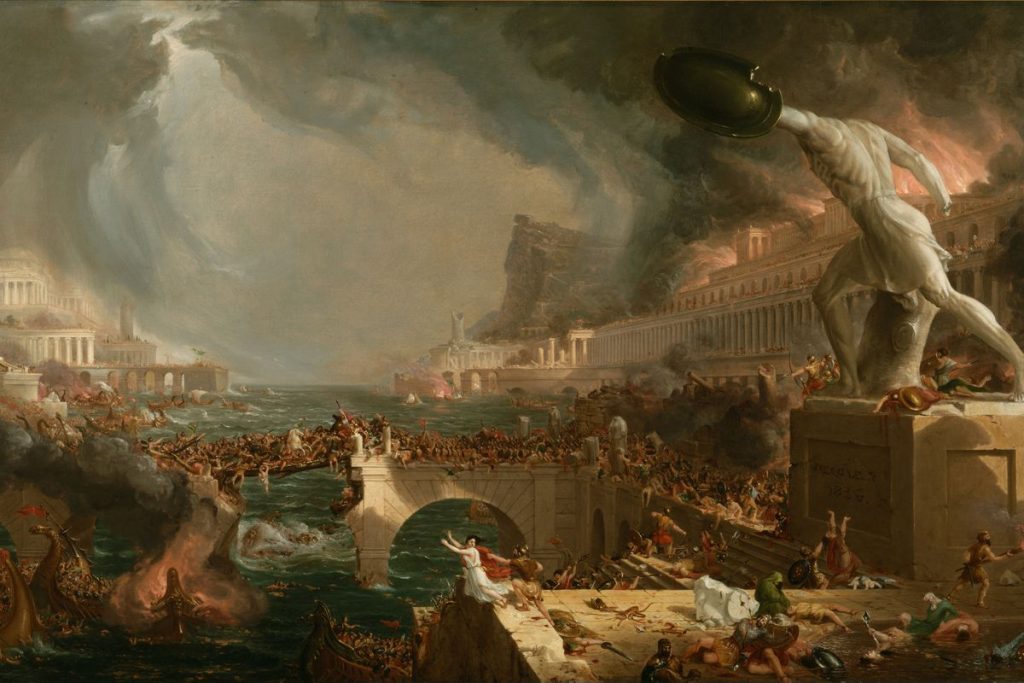
The Western Roman Empire’s collapse in the fifth century has often been portrayed as a sudden and catastrophic rupture, marking the end of civilization in Western Europe. This interpretation, long embedded in popular narratives, suggests a dramatic descent from the administrative sophistication and urban vitality of Rome into fragmentation and disorder. Yet modern scholarship has increasingly challenged this model of abrupt decline, emphasizing instead the gradual and uneven nature of political transformation. The processes that led to the dissolution of imperial authority were complex, unfolding over generations rather than occurring in a single moment of collapse. To understand this period, it is necessary to move beyond the language of “fall” and consider the ways in which Roman structures were reshaped, adapted, and in some cases preserved.
Rather than disappearing entirely, many elements of Roman governance persisted at local and regional levels. Administrative practices, legal traditions, and systems of taxation continued to operate, often under the authority of new rulers who sought to legitimize their power by invoking Roman precedents. In regions such as Italy and Gaul, former imperial officials frequently remained in place, serving new political masters while maintaining continuity in everyday governance. The endurance of Roman law, particularly in its simplified and adapted forms, further illustrates that the transition from empire to post-imperial kingdoms did not entail a wholesale abandonment of institutional frameworks. Instead, it reflected a process of negotiation between inherited structures and emerging political realities.
The so-called “barbarian” kingdoms that arose in the former western provinces were not merely destructive forces but active participants in this transformation. Groups such as the Visigoths, Ostrogoths, and Franks established stable polities that combined their own traditions with Roman administrative practices. Far from rejecting Roman culture, many of these rulers embraced it, adopting Latin as a language of governance and promoting forms of legal and social organization that drew upon imperial models. The court of Theoderic the Great in Italy, for example, consciously cultivated an image of continuity with the Roman past, employing Roman elites and preserving aspects of imperial administration. His regime maintained a functioning bureaucracy, respected Roman senatorial traditions, and supported infrastructure that echoed earlier imperial priorities. Similarly, the Visigothic kingdom in Hispania produced written law codes that integrated Roman legal principles with Germanic customary law, reflecting a deliberate effort to govern diverse populations through a shared framework. These developments suggest not a break with civilization, but its reconfiguration under new leadership, where continuity and change operated simultaneously rather than in opposition.
Economic change during this period has often been interpreted as evidence of decline, especially in consideration of reduced long-distance trade and the contraction of urban centers. While it is true that certain aspects of the Roman economy diminished, especially in the western provinces, this shift did not amount to total collapse. Instead, economic activity became more localized, with production and exchange increasingly oriented toward regional needs. Archaeological evidence reveals both contraction and adaptation, including the persistence of rural estates and the reorganization of settlement patterns. The decline of large-scale urban markets was accompanied by the emergence of new economic structures better suited to the political and social conditions of the early medieval world.
The transformation of the West was also driven by shifts in identity and social organization. As imperial authority receded, new forms of allegiance emerged, often centered on kinship, local leadership, and evolving concepts of kingship. The integration of Roman populations with incoming groups produced hybrid cultures that cannot be neatly categorized as either “Roman” or “barbarian.” Law codes, burial practices, and material culture all reflect this process of cultural synthesis. These interactions contributed to the formation of new political and social identities that would define medieval Europe, demonstrating that the end of Roman rule did not halt historical development but redirected it along new paths.
The “fall” of Rome appears less as an endpoint than as a turning point in a longer continuum of change. The dissolution of centralized imperial authority created conditions for innovation and adaptation, even as it disrupted existing systems. By focusing exclusively on what was lost, earlier interpretations have overlooked the significance of what endured and what emerged in its place. The early medieval West was not a landscape of ruin and inertia, but a dynamic environment in which inherited traditions were reshaped to meet new circumstances. Political authority became more decentralized, yet this very decentralization allowed for experimentation in governance, law, and social organization that would later underpin medieval institutions. The persistence of Roman cultural forms alongside the introduction of new practices illustrates that continuity and transformation were deeply intertwined. Recognizing this complexity is essential to understanding the period on its own terms rather than through the distorting lens of decline, and it underscores the need to replace simplistic narratives with analyses that account for both disruption and creative adaptation.
Reframing “Darkness”: Literacy, Sources, and Historical Visibility

The notion of a “dark” age in early medieval Europe rests heavily on the perceived scarcity of written sources, a condition long interpreted as evidence of intellectual decline. Yet this assumption reflects a misunderstanding of how historical visibility is constructed. The relative reduction in surviving texts from certain regions after the collapse of the Western Roman Empire does not indicate the disappearance of literacy or learning, but rather a transformation in the contexts in which they were produced, preserved, and transmitted. Historians increasingly recognize that what appears as “darkness” is often a function of archival survival and historiographical bias rather than an accurate reflection of contemporary cultural life.
In the Roman world, literacy was closely tied to urban administration, legal systems, and imperial bureaucracy. The production of documents was embedded within state structures that required written communication on a large scale, generating a substantial body of texts that have, in part, survived. These included legal codes, administrative correspondence, tax records, and inscriptions, all of which reflected a society in which writing served practical and institutional needs. As these centralized institutions weakened in the western provinces, the demand for certain types of documentation diminished. This shift did not eliminate literacy but altered its social distribution and purposes. Writing became more closely associated with ecclesiastical institutions and elite circles, changing both the quantity and character of surviving texts. In many cases, documentation shifted from routine administrative record-keeping to more deliberate and selective forms of writing, often tied to religious, legal, or commemorative functions. The resulting documentary landscape appears reduced, but it is also more specialized and context-dependent, reflecting a reorientation rather than a disappearance of literate practice.
Scriptoria attached to monasteries became centers of manuscript production, where texts were copied, preserved, and sometimes adapted to new audiences. These institutions prioritized religious works, biblical texts, and theological commentaries, but they also transmitted elements of classical literature, ensuring its survival into later centuries. The educational functions of monastic life also sustained intellectual traditions, even as the broader social context of literacy shifted away from urban civic life. Literacy did not vanish but became concentrated within specific institutional frameworks that have left a distinctive imprint on the historical record.
The uneven survival of sources is further complicated by the persistence of oral culture, which played a significant role in early medieval societies. Much of what was known, remembered, and transmitted did not take written form, particularly in regions where literacy was not widespread outside ecclesiastical settings. Law, genealogy, and communal memory were often preserved through oral traditions, which were later recorded in writing under different circumstances. This process introduces layers of mediation that can obscure the original context of such material, contributing to the impression of discontinuity. Oral performance itself was not static but dynamic, allowing narratives to be reshaped in response to changing social needs and audiences. When these traditions were eventually written down, they often reflected both earlier forms and the concerns of the period in which they were recorded. When considered alongside archaeological and material evidence, these sources reveal a rich and dynamic cultural landscape that cannot be reduced to silence, demonstrating that the absence of written documentation does not equate to the absence of intellectual or cultural activity.
Modern scholarship has also emphasized the importance of examining not only what sources survive but how they were produced and why. Writing in the early medieval period was often purposeful and selective, shaped by the priorities of those who controlled literacy. Monastic authors, for example, wrote with specific theological and institutional goals in mind, influencing the content and perspective of their works. The historical record is not simply incomplete but structured by various interests and worldviews. Recognizing this fact allows historians to read these sources more critically, uncovering forms of intellectual activity that might otherwise be overlooked.
Reframing the so-called “darkness” of the early Middle Ages requires a shift in perspective from absence to transformation. The decline of certain types of written production, particularly those associated with Roman state administration, created gaps that later observers misinterpreted as evidence of cultural collapse. Literacy persisted in new forms, embedded within religious institutions and adapted to changing social conditions. When combined with insights from archaeology, art history, and comparative analysis, the surviving sources point not to an intellectual void but to a reorganization of knowledge and its transmission. The challenge for historians is not to illuminate a darkened past, but to understand the different ways in which that past was recorded, remembered, and made visible.
Monasticism and the Preservation of Knowledge
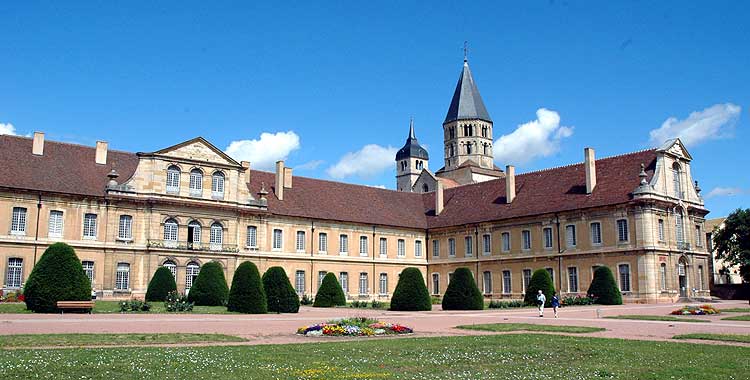
Monasticism emerged as one of the most significant institutional responses to the political and social transformations of the post-Roman West, and it played a central role in the preservation and transmission of knowledge. Far from being isolated enclaves detached from the wider world, monasteries became dynamic centers of intellectual activity, discipline, and cultural continuity. The development of monastic life, particularly under the influence of the Rule of Saint Benedict, provided a structured environment in which learning could be cultivated and sustained across generations. In an era marked by shifting political authority and localized power, monasteries offered stability, organization, and a shared framework of values that placed reading, reflection, and writing at the heart of daily life.
The Benedictine emphasis on lectio divina, or sacred reading, ensured that literacy remained a fundamental component of monastic practice. Monks were expected not only to engage with biblical texts but also to study theological works and, in many cases, elements of classical literature. This commitment to reading fostered the development of scriptoria, where manuscripts were copied with care and precision. These scriptoria were not merely mechanical centers of reproduction but sites of intellectual engagement, where texts were sometimes annotated, corrected, or adapted. The discipline required for manuscript production demanded not only technical skill but also a deep familiarity with language, grammar, and textual structure, reinforcing education as an ongoing process within monastic life. Through this labor-intensive work, monks internalized the texts they copied, turning the act of reproduction into a form of intellectual and spiritual practice. Scriptoria became environments in which literacy was continuously refined and transmitted, ensuring that knowledge was not only preserved but actively engaged with and understood.
The preservation of classical texts within monastic settings has often been highlighted as one of the most important contributions of early medieval monasticism. While the primary focus of monastic libraries remained religious, the inclusion of works by authors such as Virgil, Cicero, and Ovid demonstrates that classical learning retained value within these communities. These texts were not always preserved for purely antiquarian reasons; they were often read through a Christian lens, integrated into educational curricula, or used to refine linguistic skills in Latin. Monastic scholars approached these works selectively, sometimes excerpting passages or incorporating them into compilations that served pedagogical or moral purposes. This process of adaptation allowed classical texts to remain relevant within a changing intellectual environment, even as their original cultural contexts receded. In preserving and reshaping these works, monasteries ensured that elements of classical thought continued to inform medieval scholarship, bridging past and present and supporting the intellectual developments of the High Middle Ages.
Monasteries also functioned as centers of education and administration, extending their influence beyond their immediate communities. They trained clergy, advised rulers, and contributed to the development of legal and administrative practices in emerging medieval polities. The production of manuscripts was closely tied to these broader functions, as written texts were essential for governance, liturgy, and communication. In some cases, monastic schools provided instruction not only for those entering religious life but also for members of the secular elite, further embedding literacy within the structures of early medieval society. This integration of intellectual, spiritual, and practical activities underscores the multifaceted role of monasticism in sustaining and reshaping knowledge.
Rather than representing a passive preservation of inherited traditions, monastic intellectual life was characterized by adaptation and reinterpretation. The act of copying texts involved choices about what to preserve, how to present it, and how it might be understood within a Christian framework. These decisions were shaped by theological priorities, educational needs, and the intellectual interests of individual communities, resulting in a body of preserved knowledge that was both curated and transformed. This process contributed to the development of new intellectual traditions, including the foundations of medieval scholasticism. Monastic engagement with texts also encouraged commentary, glossing, and the organization of knowledge into more systematic forms, laying groundwork for later academic inquiry. Monastic communities did not simply safeguard the remnants of a lost past; they helped create a new cultural and intellectual landscape. Their efforts ensured that knowledge remained a living and evolving force, bridging the gap between the classical world and the medieval societies that would build upon its legacy.
The Carolingian Renaissance: Reform and Revival

The period conventionally known as the Carolingian Renaissance represents one of the most significant episodes of intellectual and cultural renewal in early medieval Europe. Centered on the reign of Charlemagne and his successors in the late eighth and ninth centuries, this movement was not a spontaneous revival but a deliberate and programmatic effort to reform education, administration, and religious life. It emerged within a political context that sought to unify diverse territories under a coherent imperial framework, and it relied heavily on the promotion of literacy and learning as tools of governance. Rather than restoring the classical past in its original form, the Carolingian Renaissance reinterpreted inherited traditions to serve the needs of a Christian empire, blending continuity with innovation.
At the heart of this movement was the court of Charlemagne, which became a focal point for scholars drawn from across Europe. Figures such as Alcuin of York played a central role in shaping educational reforms, emphasizing the importance of grammar, rhetoric, and logic as foundational disciplines. These reforms were not limited to the royal court but extended outward through a network of cathedral and monastic schools, where standardized curricula were gradually introduced. The goal was not only to educate clergy but also to ensure that administrative officials possessed the skills necessary to govern effectively. The revival of learning was directly tied to the practical demands of imperial rule.
One of the most enduring achievements of the Carolingian Renaissance was the standardization of Latin and the development of a clear and legible script known as Carolingian minuscule. This script replaced a variety of regional writing styles that had evolved in the post-Roman period, creating a more uniform system of written communication. The adoption of Carolingian minuscule facilitated the copying and dissemination of texts, reducing errors and improving readability. It also contributed to the preservation of a large body of literature, as manuscripts produced in this script were more easily transmitted and later used as exemplars. Beyond its practical advantages, the script reflected a broader cultural ambition to impose order on intellectual life, aligning written expression with the administrative and ideological goals of the Carolingian state. The uniformity of script enabled scholars and officials across distant regions to engage with texts in a shared visual and linguistic framework, strengthening connections within the empire. Carolingian minuscule would influence later medieval scripts and even modern typefaces, underscoring its lasting significance as both a technological and cultural innovation.
The reforming impulse of the Carolingian period extended beyond education into the realm of religious practice and institutional organization. Efforts were made to standardize liturgy, correct biblical texts, and ensure doctrinal consistency across the empire. These initiatives were closely linked to the broader goal of creating a unified Christian society under imperial authority. Monasteries and churches were expected to adhere to common standards, reinforcing a sense of cohesion that transcended regional differences. The production and circulation of corrected texts played a crucial role in this process, highlighting the centrality of written culture to Carolingian reform.
The intellectual activity of the Carolingian Renaissance was not limited to the preservation and transmission of existing knowledge but also involved original composition and scholarly engagement. Court scholars produced theological treatises, historical works, and educational manuals that reflected both classical influences and contemporary concerns. While the scope of inquiry remained largely within a Christian framework, the methods employed (particularly in grammar and exegesis) demonstrate a sophisticated engagement with language and meaning. This period laid important foundations for later developments in medieval thought, even if its achievements were unevenly distributed and often dependent on royal patronage.
Although the Carolingian Renaissance did not produce a sustained intellectual transformation comparable to later medieval scholasticism, its impact was nonetheless profound. It reestablished the importance of learning within political and religious life, created mechanisms for the transmission of texts, and fostered a cultural environment in which education was valued as a means of both spiritual and administrative reform. The movement’s limitations, including its reliance on elite networks and its vulnerability to political fragmentation after the death of Charlemagne, do not diminish its significance. Instead, they underscore the extent to which intellectual revival in this period was intertwined with the structures of power that supported it. The Carolingian Renaissance stands not as an isolated moment of brilliance, but as a critical phase in the broader transformation of early medieval Europe.
Artistic and Architectural Innovation

Artistic and architectural production in early medieval Europe provides some of the most compelling evidence against the notion of a cultural “dark age.” Rather than signaling decline, the period witnessed the emergence of distinctive visual forms that blended inherited Roman traditions with new influences drawn from Germanic, Celtic, and Christian contexts. These developments did not simply replicate earlier styles but transformed them, producing a rich and varied artistic landscape that reflected the changing identities of early medieval societies. Far from being derivative or stagnant, early medieval art demonstrates a high degree of creativity, adaptability, and symbolic complexity.
One of the most striking expressions of this creativity can be found in the manuscript art of the Insular world, particularly in Ireland and Anglo-Saxon England. Illuminated texts such as the Book of Kells and the Lindisfarne Gospels exhibit intricate decorative programs characterized by interlaced patterns, zoomorphic forms, and elaborate initial letters. These works represent a synthesis of Christian iconography with indigenous artistic traditions, resulting in a visual language that is both highly ornamental and deeply symbolic. The pages of these manuscripts were carefully planned and executed, often requiring extensive preparation of vellum, pigments, and tools, as well as the coordination of scribes and artists working within monastic communities. The complexity of the designs suggests not only technical mastery but also an intellectual engagement with symbolism, as patterns and motifs were used to convey theological meaning and spiritual order. The attention to detail and the technical skill required to produce such manuscripts underscore the sophistication of early medieval artistic practice, challenging any assumption of cultural impoverishment.
The fusion of artistic traditions was not limited to manuscript illumination but extended into metalwork and other portable objects. Early medieval artisans produced finely crafted items such as brooches, reliquaries, and weapon fittings, often using techniques like cloisonné and filigree. These objects combined aesthetic refinement with social and religious significance, serving as markers of status, identity, and belief. The incorporation of both Roman and non-Roman motifs reflects the cultural hybridity of the period, as artisans drew upon multiple traditions to create objects that were meaningful within their specific social contexts.
Architectural developments during this period further illustrate the capacity for innovation and adaptation. While the large-scale urban building projects characteristic of the Roman Empire became less common in the West, new forms of construction emerged that responded to different needs and resources. Early medieval churches, often built using a combination of reused Roman materials and new techniques, developed distinctive layouts that would later influence Romanesque architecture. The emphasis on religious structures reflects the central role of Christianity in shaping the built environment, as communities invested in spaces designed for worship, education, and communal life.
The Carolingian period introduced a renewed interest in monumental architecture, particularly in the context of imperial and ecclesiastical reform. Buildings such as the Palatine Chapel at Aachen demonstrate a conscious engagement with Roman and Byzantine models, reinterpreted within a contemporary framework. This architectural revival was closely tied to broader efforts to assert cultural and political continuity with the Roman past, while also establishing a distinct Carolingian identity. The use of classical forms, including domes, arches, and centralized plans, was not merely imitative but selective, adapting elements of earlier architecture to suit new ideological and practical purposes. Construction projects of this scale required significant resources, coordination, and technical expertise, indicating the presence of organized labor and skilled craftsmen. These buildings also functioned as visual statements of authority and legitimacy, reinforcing the connection between imperial power and sacred space. Carolingian architecture served both symbolic and functional roles, embodying the aspirations of a renewed Christian empire.
The artistic and architectural achievements of the early Middle Ages reveal a period of significant cultural vitality rather than decline. The diversity of styles, materials, and techniques reflects a dynamic environment in which creativity flourished across different regions and social contexts. These works were not merely decorative but deeply embedded in the religious, political, and social fabric of their time, serving as forms of meaning and expression. By examining these material forms, historians gain access to dimensions of early medieval life that written sources alone cannot fully capture, further undermining the notion of a “dark” and culturally barren age.
Science, Technology, and Everyday Innovation
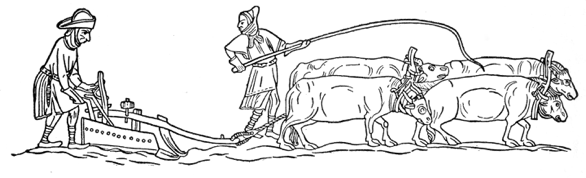
The characterization of the early Middle Ages as a period of technological stagnation has long been challenged by evidence of innovation and adaptation across multiple domains of daily life. While the scale and organization of technological production differed from that of the Roman Empire, this period saw the development and refinement of tools and techniques that reshaped agricultural productivity, resource management, and material culture. Rather than a cessation of progress, the centuries between 500 and 1000 witnessed a reorientation of technological activity toward local needs and environmental conditions, resulting in practical innovations that would have lasting consequences for medieval society.
One of the most significant areas of development was agriculture, which formed the economic foundation of early medieval Europe. The introduction and gradual spread of the heavy plow, particularly in the fertile but difficult soils of northern Europe, allowed for more efficient cultivation of land that had previously been underutilized. This innovation, often paired with the use of the horse collar, improved the effectiveness of animal traction and increased the scale of agricultural production. These changes were not uniform across all regions, but where they took hold, they contributed to more stable food supplies and supported population growth. The adaptation of agricultural techniques to specific environmental conditions illustrates the practical ingenuity of early medieval communities.
Closely related to these developments was the emergence of more systematic approaches to land use, including the early forms of the three-field system. By rotating crops and leaving portions of land fallow, communities were able to maintain soil fertility and reduce the risk of exhaustion. This system represented a shift from earlier agricultural practices and required a degree of coordination among those working the land, as decisions about planting, harvesting, and fallowing had to be aligned across shared fields. The gradual adoption of such methods reflects both experimentation and accumulated knowledge, passed down through generations of agricultural practice. Although its full implementation varied over time and place, the underlying principle of crop rotation reflects an increasing awareness of sustainable agricultural practices. In some regions, these systems contributed to greater yields and more predictable harvests, reinforcing social stability and enabling modest economic growth. Such innovations demonstrate that early medieval farmers were not passive inheritors of declining systems but active participants in the refinement of their economic environment.
Technological innovation was also evident in the production and use of tools, particularly in the fields of metallurgy and craftsmanship. Advances in ironworking allowed for the creation of more durable and effective implements, from agricultural tools to weapons. Blacksmiths and other artisans played a crucial role in local economies, producing goods that were essential for both everyday life and social status. The improvement of tools not only enhanced productivity but also influenced patterns of settlement and labor, as communities adapted to new possibilities in construction, farming, and defense. These developments highlight the close relationship between technology and social organization in the early medieval world.
Water and wind power further illustrate the capacity for innovation during this period. The increasing use of watermills for grinding grain represents a significant technological advancement, reducing the labor required for food production and allowing for more efficient processing. In some regions, mills were integrated into broader systems of resource management, including irrigation and flood control, demonstrating an awareness of how natural forces could be harnessed for multiple purposes. The spread of milling technology also had social and economic implications, as control over mills could become a source of local authority and revenue. Windmills, though less common in the earlier part of the period, began to appear in certain regions, further expanding the range of available energy sources. These developments required not only technical knowledge but also organizational coordination, as the construction and maintenance of mills often involved collective investment and oversight. The adoption of such technologies reflects both practical necessity and a willingness to experiment with new solutions, shaped by the environmental and economic conditions of different regions.
These developments in agriculture, toolmaking, and energy use challenge the notion that the early Middle Ages were technologically inert. Instead, they reveal a period of steady, if uneven, innovation grounded in the realities of everyday life. The technologies of this era were not always dramatic or centralized, but they were effective and adaptive, addressing the specific needs of communities across Europe. By focusing on these practical advancements, it becomes clear that early medieval societies were actively engaged in shaping their material world, laying the groundwork for the more visible transformations of the later Middle Ages.
The Wider World: Byzantium and the Islamic Golden Age
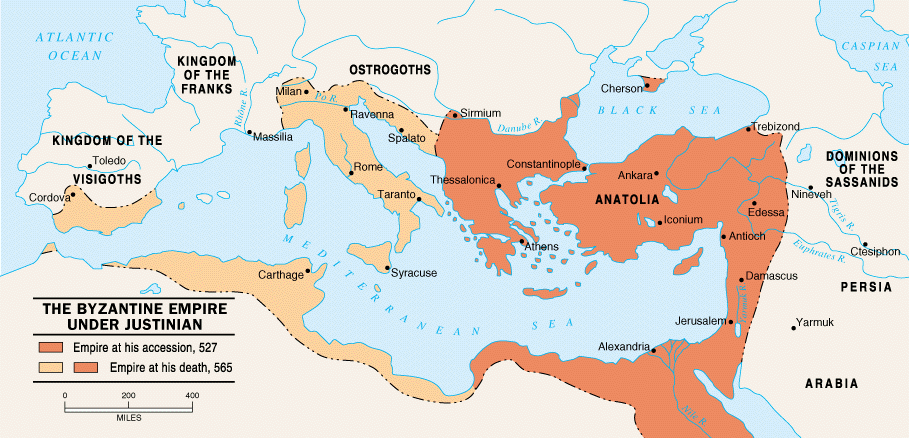
The characterization of the early Middle Ages as a “dark” period collapses entirely when viewed beyond the boundaries of Western Europe. While the western provinces of the former Roman Empire underwent political fragmentation and economic reorientation, other regions of the Mediterranean and Near East experienced continuity, prosperity, and intellectual expansion. The persistence of the Eastern Roman Empire, commonly known as Byzantium, and the rapid rise of the Islamic caliphates demonstrate that the centuries between 500 and 1000 were not defined by global decline but by regional divergence. To label the entire era as “dark” is to mistake a localized transformation for a universal condition.
The Byzantine Empire maintained many of the institutional and cultural features of the Roman world, including a centralized bureaucracy, a complex legal system, and a vibrant urban economy. Constantinople remained one of the largest and most sophisticated cities of the medieval world, serving as a hub of trade, diplomacy, and intellectual life. Its strategic position linking Europe and Asia enabled it to control key trade routes, facilitating the movement of goods such as silk, spices, and precious metals. The preservation and transmission of Greek texts within Byzantine scholarly circles ensured the continuity of classical knowledge, even as these works were studied, interpreted, and integrated into a Christian intellectual framework. Scholars in Constantinople and other centers engaged in the copying and commentary of ancient texts, maintaining a literary tradition that might otherwise have been lost. Far from existing in isolation, Byzantium functioned as a bridge between antiquity and the medieval world, influencing both its neighbors and future generations through diplomacy, trade, and cultural exchange.
The emergence of the Islamic world in the seventh century introduced a new and dynamic center of cultural and scientific development. The expansion of the Umayyad and later Abbasid caliphates created a vast and interconnected region stretching from the Iberian Peninsula to Central Asia. Cities such as Baghdad, Córdoba, and Damascus became centers of learning, where scholars engaged in the translation, preservation, and expansion of knowledge drawn from Greek, Persian, and Indian traditions. These urban centers were supported by stable political structures and economic prosperity, which allowed for the patronage of scholars and the establishment of institutions dedicated to learning. Intellectual life in the Islamic world was not confined to religious study but encompassed a wide range of disciplines, reflecting a culture that valued inquiry and scholarship. This intellectual activity was not limited to the preservation of existing texts but included original contributions in fields such as mathematics, astronomy, medicine, and philosophy, demonstrating a sustained commitment to innovation and intellectual growth.
The translation movement, particularly under the Abbasid caliphate, played a crucial role in shaping the intellectual landscape of the Islamic world. Scholars translated works by Aristotle, Galen, and other classical authors into Arabic, often accompanied by commentaries that extended and refined their ideas. Figures such as Al-Khwarizmi and Ibn Sina made significant contributions that would later influence both Islamic and European thought. The development of algebra, advances in medical theory and practice, and innovations in astronomical observation all attest to a thriving intellectual culture that stands in stark contrast to the notion of a universally “dark” age.
These developments were not confined to isolated centers but were supported by extensive trade networks that facilitated the movement of goods, people, and ideas across vast distances. The interconnectedness of the Byzantine and Islamic worlds, along with their interactions with Western Europe, created channels through which knowledge could circulate. While Western Europe did not initially participate in these intellectual exchanges to the same extent, it would later benefit from them, particularly through the transmission of texts and ideas during the High Middle Ages. This broader context underscores the importance of viewing early medieval Europe as part of a larger, interconnected world rather than as an isolated and declining region.
Recognizing the vitality of Byzantium and the Islamic Golden Age fundamentally alters our understanding of the early Middle Ages. It reveals that the period was characterized not by uniform decline but by a redistribution of cultural and intellectual energy across different regions. The persistence of sophisticated societies outside Western Europe challenges the assumptions behind the term “Dark Ages” and highlights the limitations of a narrowly Eurocentric perspective. By situating early medieval Europe within this wider world, historians can better appreciate the diversity and dynamism of the period, as well as the interconnected processes that shaped its development. This broader view not only corrects misconceptions about Western Europe but also emphasizes the importance of cross-cultural exchange in the preservation and advancement of knowledge. The so-called “Dark Ages,” when examined in a global context, emerge not as an age of darkness but as one of transformation, continuity, and intellectual vitality distributed across multiple civilizations.
Historiography: Why the “Dark Ages” Myth Endures
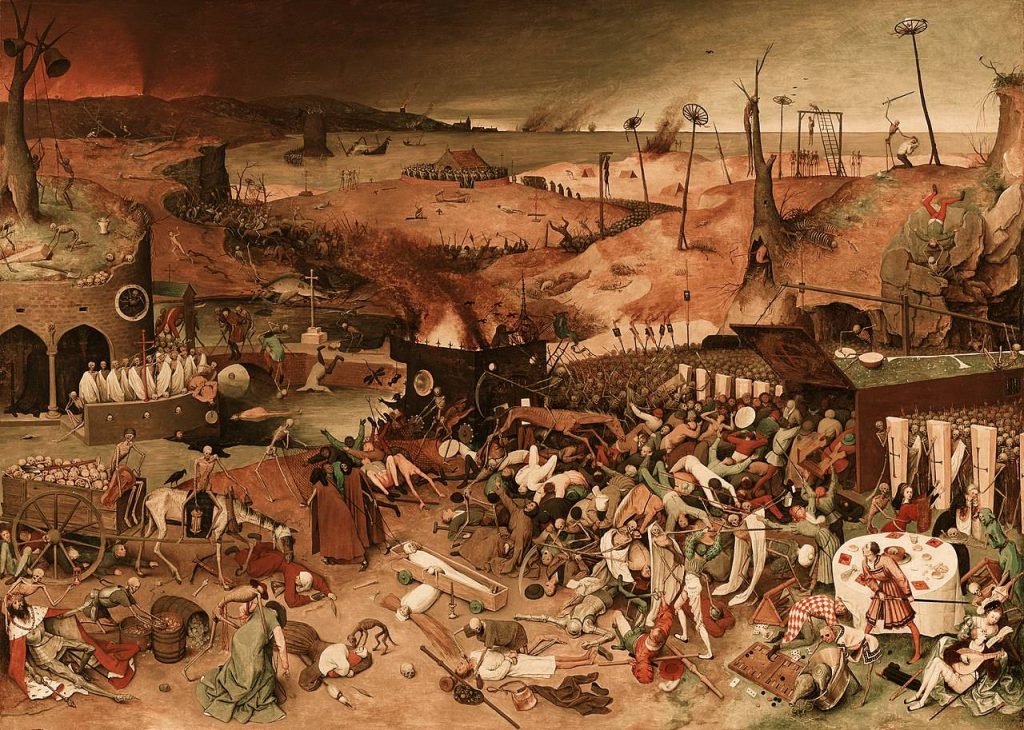
The persistence of the term “Dark Ages” in modern discourse is not the result of historical accuracy but of historiographical inertia. Once established, interpretive frameworks tend to endure long after the evidence supporting them has been revised or rejected. The label originated in specific intellectual contexts, particularly the Renaissance and Enlightenment, but it became embedded in broader cultural narratives that proved difficult to dislodge. The term was reproduced in educational systems, popular histories, and popular understanding, where it continued to shape perceptions of the early medieval period. Its endurance reflects not the strength of its explanatory power, but the familiarity and simplicity it offers in describing a complex past.
Renaissance humanists, most notably Petrarch, framed the centuries following the fall of Rome as a period of decline in comparison to classical antiquity. This judgment was rooted in their reverence for Latin literary culture and their desire to position themselves as revivers of a lost golden age. They established a narrative of rupture that cast the intervening centuries as culturally deficient. Enlightenment thinkers later reinforced this perspective, integrating it into a broader story of progress that contrasted medieval “superstition” with modern rationality. These interpretations were less concerned with the empirical realities of the early medieval world than with the ideological needs of the periods that produced them.
The nineteenth century further solidified the concept of the “Dark Ages” through the development of modern historical disciplines and national narratives. As historians sought to construct coherent accounts of the past, they often relied on periodization schemes that emphasized clear breaks between eras. The early Middle Ages, with its fragmented political landscape and uneven source base, was conveniently positioned as a transitional phase between the grandeur of Rome and the perceived revival of the High Middle Ages and Renaissance. This framing aligned with emerging nationalist histories, which tended to highlight moments of origin and renewal while downplaying periods that did not fit neatly into linear narratives of progress. The label persisted not because it accurately described the period, but because it served broader interpretive goals.
Popular culture has played a significant role in perpetuating the myth of the “Dark Ages,” often favoring dramatic and easily recognizable imagery over nuanced historical analysis. Films, novels, television series, and even video games frequently depict the early medieval period as one of ignorance, violence, and cultural stagnation, reinforcing stereotypes that have little basis in current scholarship. These portrayals often rely on visual shorthand, such as bleak landscapes, primitive living conditions, and the absence of learning, to evoke a sense of regression from the classical past. Educational materials at various levels have also contributed to this persistence, sometimes simplifying complex historical processes into digestible but misleading narratives. The appeal of such representations lies in their clarity and emotional impact, offering audiences a straightforward story of decline followed by eventual recovery. This simplicity sacrifices accuracy, obscuring the diversity and adaptability of early medieval societies. By repeating these tropes across multiple forms of media, popular culture reinforces a deeply ingrained perception that continues to shape public understanding despite decades of scholarly revision.
Modern historians have largely abandoned the term “Dark Ages,” replacing it with more precise and neutral language such as “early Middle Ages” or “Late Antiquity.” This shift reflects a broader commitment to understanding the period on its own terms rather than through inherited judgments. By emphasizing transformation, continuity, and regional variation, contemporary scholarship has revealed a far more dynamic and interconnected world than earlier interpretations allowed. Nevertheless, the persistence of the older terminology serves as a reminder of how deeply historiographical assumptions can shape our understanding of the past. Challenging these assumptions requires not only new evidence but also a willingness to reconsider the narratives through which history has been traditionally told.
Conclusion: From Darkness to Transformation
The enduring image of the early Middle Ages as a “Dark Age” weakens when examined through the lens of modern historical scholarship. What was once interpreted as a period of cultural absence now emerges as a complex era of transition, adaptation, and renewal. The collapse of centralized Roman authority did not bring an end to intellectual or social life, but instead reshaped the structures through which knowledge, power, and identity were expressed. By moving beyond inherited labels, historians have revealed a landscape defined not by uniform decline but by regional diversity and creative transformation.
Across Western Europe, new political entities emerged that both preserved and reconfigured elements of the Roman world, while monastic communities sustained literacy and fostered intellectual continuity. The Carolingian Renaissance demonstrated the capacity for deliberate cultural revival, and artistic and technological developments reflected ongoing innovation in both elite and everyday contexts. The vitality of the Byzantine Empire and the Islamic world underscores the importance of situating early medieval Europe within a broader global framework. These interconnected developments challenge the notion of a universally “dark” period and instead point to a redistribution of cultural and intellectual energy across different regions.
The persistence of the “Dark Ages” myth serves as a cautionary example of how historiographical traditions can shape and distort our understanding of the past. Labels that originate in specific ideological contexts can acquire a life of their own, influencing interpretation long after their original assumptions have been discredited. Recognizing this process is essential for developing a more critical and nuanced approach to history, one that prioritizes evidence over inherited narratives. The case of the early Middle Ages illustrates how deeply embedded misconceptions can be dismantled through sustained scholarly inquiry and a willingness to reconsider established frameworks.
The early Middle Ages should be understood not as an age of darkness but as a formative period in the development of medieval Europe. The transformations that took place between 500 and 1000 laid the foundations for later social, cultural, and intellectual developments, linking the legacy of antiquity with the innovations of the medieval world. By reframing this period in terms of continuity and change rather than decline, historians can more accurately capture its significance and complexity. This reframing replaces a narrative of loss with one of transformation, offering a clearer and more compelling account of a pivotal era in European history.
Bibliography
- Ali, Rabia Umar. “Medieval Europe: The Myth of Dark Ages and the Impact of Islam.” Islamic Studies 51:2 (2012), 155-168.
- Astill, Grenville, and Annie Grant, eds. The Countryside of Medieval England. Oxford: Basil Blackwell, 1988.
- Brown, Michelle P. The Lindisfarne Gospels: Society, Spirituality and the Scribe. London: The British Library, 2003.
- Brown, Peter. The Rise of Western Christendom: Triumph and Diversity, AD 200–1000. 2nd ed. Malden, MA: Blackwell, 1996.
- —-. The World of Late Antiquity: AD 150–750. London: Thames & Hudson, 1971.
- Bullough, Donald A. Alcuin: Achievement and Reputation. Leiden: Brill, 2003.
- Campbell, Bruce M. S. The Great Transition: Climate, Disease and Society in the Late-Medieval World. Cambridge: Cambridge University Press, 2016.
- Clanchy, M. T. From Memory to Written Record: England 1066–1307. 3rd ed. Oxford: Wiley-Blackwell, 2012.
- Contreni, John J. “The Carolingian Renaissance: Education and Literary Culture.” In The New Cambridge Medieval History, Volume II, edited by Rosamond McKitterick. Cambridge: Cambridge University Press, (1995), 709-757.
- Dodwell, C. R. The Pictorial Arts of the West, 800–1200. New Haven: Yale University Press, 1993.
- Geary, Patrick J. The Myth of Nations: The Medieval Origins of Europe. Princeton: Princeton University Press, 2002.
- Goffart, Walter. Barbarian Tides: The Migration Age and the Later Roman Empire. Philadelphia: University of Pennsylvania Press, 2006.
- Gutas, Dimitri. Greek Thought, Arabic Culture: The Graeco-Arabic Translation Movement in Baghdad and Early ʿAbbāsid Society. London: Routledge, 1998.
- Haldon, John. Warfare, State and Society in the Byzantine World, 565–1204. London: Routledge, 1999.
- Heather, Peter. The Fall of the Roman Empire: A New History of Rome and the Barbarians. Oxford: Oxford University Press, 2005.
- Henderson, George. Early Medieval Art and Civilisation. New Haven: Yale University Press, 1972.
- Herrin, Judith. Byzantium: The Surprising Life of a Medieval Empire. Princeton: Princeton University Press, 2007.
- Hodges, Richard. “The Not-So-Dark Ages.” Archaeology 51:5 (1998), 61-63.
- Kennedy, Hugh. The Prophet and the Age of the Caliphates. 2nd ed. London: Pearson, 2004.
- Kitzinger, Ernst. Byzantine Art in the Making: Main Lines of Stylistic Development in Mediterranean Art, 3rd–7th Century. Cambridge, MA: Harvard University Press, 1977.
- Le Goff, Jacques. The Birth of Europe. Malden, MA: Blackwell, 1964.
- Leclercq, Jean. The Love of Learning and the Desire for God: A Study of Monastic Culture. New York: Fordham University Press, 1961.
- McKitterick, Rosamond. The Carolingians and the Written Word. Cambridge: Cambridge University Press, 1989.
- —-. Charlemagne: The Formation of a European Identity. Cambridge: Cambridge University Press, 2008.
- Momigliano, Arnaldo. Essays in Ancient and Modern Historiography. Middletown, CT: Wesleyan University Press, 1977.
- —-. Studies in Historiography. New York: Harper & Row, 1966.
- Mommsen, Theodore E. “Petrarch’s Conception of the ‘Dark Ages’.” Speculum 17:2 (1942), 226-242.
- Mussoff, Lenore. “Light Up the Dark Ages.” The English Journal 52:7 (1963), 525-527.
- Petrarch. Rerum familiarium libri (Letters on Familiar Matters). Translated by Aldo S. Bernardo. New York: Italica Press, 1975.
- Riché, Pierre. Education and Culture in the Barbarian West: Sixth through Eighth Centuries. Columbia: University of South Carolina Press, 1978.
- Ward-Perkins, Bryan. The Fall of Rome and the End of Civilization. Oxford: Oxford University Press, 2005.
- White, Lynn Jr. Medieval Technology and Social Change. Oxford: Oxford University Press, 1962.
- Wickham, Chris. Framing the Early Middle Ages: Europe and the Mediterranean, 400–800. Oxford: Oxford University Press, 2005.
- —-. The Inheritance of Rome: A History of Europe from 400 to 1000. New York: Penguin, 2009.
Originally published by Brewminate, 04.13.2026, under the terms of a Creative Commons Attribution-NonCommercial-NoDerivatives 4.0 International license.
About the Author