A backyard can make a house feel complete, or make it look like the project stalled halfway through. You’ve probably seen both. A clean, well-planned yard does more than boost curb appeal from the back fence inward. It affects how you use the space, how much maintenance you deal with, and how connected the home feels to the landscape. If you care about architecture, outdoor design deserves the same attention as walls, windows, and floor plans.
Why Backyard Design Matters More Than You Think
When you look at a house, you’re not only reading the structure. You’re reading the transitions around it. A backyard acts like the final chapter of the design story, and if it’s patchy, muddy, or awkwardly planned, the whole property can feel unresolved.
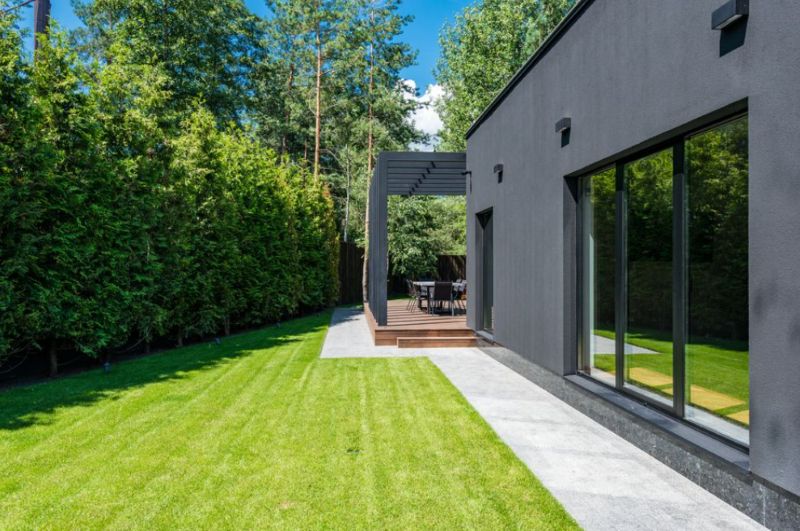
Good backyard design shapes how you move through space. A patio without a defined lawn edge can feel abrupt. A modern home paired with an uneven, dry yard can lose some of its visual discipline. Even a small outdoor area can feel intentional when the ground plane is handled well.
There’s also the practical side. A messy backyard tends to collect problems: poor drainage, bare spots, dust, and endless weed battles. None of that feels elegant. If you want an outdoor area that looks polished and works hard, the surface under your feet matters as much as the furniture or fencing.
The Ground Plane Is Doing More Heavy Lifting Than You Realize
Architects often think in planes: vertical, horizontal, solid, void. Your backyard lawn sits firmly in that horizontal category, but it’s rarely treated with the same seriousness as paving or decking. That’s a mistake.
The ground plane visually unifies outdoor elements. It connects planting beds, frames gathering areas, and gives the eye a place to rest. Without that cohesion, even expensive hardscaping can look scattered. You end up with a grill zone, a seating zone, and a random dirt zone. Not exactly design poetry.
A healthy lawn also influences comfort. Grass reflects less heat than hard surfaces, softens acoustics, and gives kids or pets a forgiving area to use. If you’ve ever stepped from blazing pavers onto cool turf in summer, you already know the difference. It’s not glamorous jargon, but thermal comfort is a real design feature.
That’s part of why landscape professionals often recommend sod installation backyard solution when homeowners want a finished look without waiting through the slow drama of seed establishment.
Sod vs. Seed: What Actually Fits Your Project Timeline
If you’re planning a backyard refresh, timing matters. Seed can work, but it demands patience, ideal weather, careful watering, and a bit of faith. Sometimes a lot of faith. You stare at dirt for weeks and hope nature sticks to the schedule.
Sod offers a faster path to a usable lawn. It arrives as mature turf, which means your backyard gets immediate visual structure. For renovation projects, that speed can be a huge advantage. If you’ve just installed a patio, updated fencing, or completed an addition, waiting months for the lawn to catch up can make the whole project feel incomplete.
Seed is often cheaper at the start, but the real-world math gets more interesting once you factor in erosion, reseeding weak areas, weed pressure, and inconsistent germination. Sod costs more upfront, yet it often delivers a cleaner result with fewer surprises.
The best option depends on your site conditions, budget, and goals. If you need crisp results on a defined timeline, sod tends to win that contest without much debate.
How to Make a Backyard Lawn Look Intentional, Not Generic
A lawn should support the architecture, not float beside it like an afterthought. That means you need to think beyond “green equals good.” Shape, edge definition, and proportion all matter.
Start with layout. A simple rectangular lawn can look sharp in a modern yard, while curved edges may suit more traditional or cottage-inspired homes. The key is consistency. Random wavy borders often read less like artistry and more like indecision with a shovel.
Then consider scale. A tiny strip of grass surrounded by oversized hardscape can feel token. On the other hand, too much uninterrupted turf can make the space feel empty. Balance is everything. You want enough lawn to create breathing room without sacrificing function.
Details carry a lot of weight here:
– Clean edging makes the yard look maintained even before mowing
– Defined transitions between lawn, gravel, and beds improve visual order
– Repeating plant shapes near the lawn creates rhythm
– Irrigation planning helps preserve the look you paid for
– Drainage corrections prevent muddy, worn-out zones
A well-designed lawn doesn’t scream for attention. It quietly makes everything else look better.
Real-World Issues That Can Ruin a Great Backyard Plan
Backyard design looks easy on mood boards. Reality has other ideas. Soil quality, sun exposure, drainage, pets, and foot traffic can all interfere with the dreamy finished result.
Compacted soil is one of the biggest troublemakers. It limits root growth and causes water runoff, which can leave sod struggling or seed failing. Shade creates another challenge. Not every grass variety performs well under trees or next to tall fences, so plant selection matters more than many homeowners expect.
Then there’s usage. If your backyard doubles as a soccer field, dog racetrack, and weekend entertaining zone, delicate turf won’t hold up. You need a lawn plan that matches actual behavior, not fantasy behavior. The backyard version of “we’ll use the formal living room all the time” rarely holds up under inspection.
Before installing anything, it helps to assess:
– Hours of direct sunlight per day
– Existing drainage patterns after heavy rain
– Soil texture and compaction levels
– Expected foot traffic
– Irrigation access and water pressure
These details aren’t glamorous, but they’re the backbone of a yard that still looks good six months later.
The Best Backyards Feel Finished Because They’re Layered
A strong backyard rarely relies on one element alone. Lawn, paving, planting, lighting, and shade structures all work together. When those pieces are coordinated, the space feels complete rather than pieced together over several weekends and one regrettable garden center spree.
Think of the lawn as a visual field that supports the rest. It can make a dining area feel anchored, give sculptural plants more contrast, and soften the edges of masonry or concrete. It also creates a flexible use zone, which is valuable if your needs change over time.
That adaptability matters. A family with younger kids may want play space now, while future use might shift toward entertaining or low-maintenance design. A well-installed lawn keeps those options open while preserving a polished look.
If you want your backyard to feel architecturally coherent, treat the landscape as part of the design language. Not decoration. Not leftover square footage. Part of the composition. Once the ground plane is working in your favor, everything above it starts looking smarter, sharper, and far more resolved.
About the Author