In July 1943, the Fascist Grand Council approved Grandi’s appeal to the king. Mussolini was dismissed hours later, but the councilors’ break and the monarch’s decision had different aims and powers.

By Matthew A. McIntosh
Public Historian
Brewminate
Introduction: A Vote inside the Dictatorship
In the early hours of July 25, 1943, nineteen members of the Fascist Grand Council supported a motion advanced by Dino Grandi. Benito Mussolini had convened and chaired the meeting, and he remained Italy’s head of government when it ended. That afternoon, King Victor Emmanuel III informed him that Pietro Badoglio would replace him; carabinieri arrested Mussolini after the royal audience. These events are often compressed into the claim that Fascist leaders voted their dictator out of power. The shorthand obscures what the vote could do. Grandi’s majority disclosed a rupture among the men who governed with Mussolini, while the king made the separate decision that ended his government. It also leaves a harder question unanswered: what did those men believe they were risking, and what did they hope to preserve?
The Grand Council was a revealing place for that question to surface. Mussolini’s regime had made it a state institution, yet he controlled when it met and ordinarily set its agenda. It had not assembled since December 1939. By July 1943, Allied forces were fighting in Sicily, Rome had been bombed, and the prospect of defeat was pressing on officials who had spent years exercising power under Mussolini. Military disaster made dissent urgent; it did not give the dissenters a common political destination.
Grandi’s ordine del giorno expressed that uncertainty through constitutional language. It called for the restoration of state functions and asked Mussolini to invite the king to resume effective command of the armed forces under Article 5 of the Statuto Albertino. It did not name Badoglio, direct Mussolini’s arrest, or state plainly that the council was dismissing its chairman. The wording could accommodate people who wanted Mussolini removed and others who hoped a transfer of military authority might rescue the war effort without destroying Fascism. Rival proposals sharpened the distinction. Roberto Farinacci also contemplated a larger role for the king in military command while insisting that Italy honor its alliance with Germany. Nor can later accounts settle every participant’s intention. No official transcript was approved during the meeting, and the surviving notes must be read alongside recollections produced after Mussolini’s arrest had changed the meaning of every speech and vote.
The argument developed here is that Grandi assembled a majority capable of withdrawing support from Mussolini’s leadership without forming a united opposition to the political order they had helped build. Their recorded decision gave the monarchy a visible opening, but the king possessed choices of his own and acted through powers the council did not command. The strongest challenge is substantial; if Victor Emmanuel was already preparing to replace Mussolini, the vote may have supplied useful political cover rather than caused the dismissal. That possibility narrows the claim I can make about the council; it does not erase the significance of senior Fascists making their division public to one another at a moment when the regime’s future was in doubt. Mussolini’s decision to permit the vote remains a question for investigation, not proof that he intended to fall or had lost every means of resistance. The inquiry begins with the institution he had built and the authority its members believed they could exercise when they ceased to agree with him.
A Council Built to Serve Mussolini
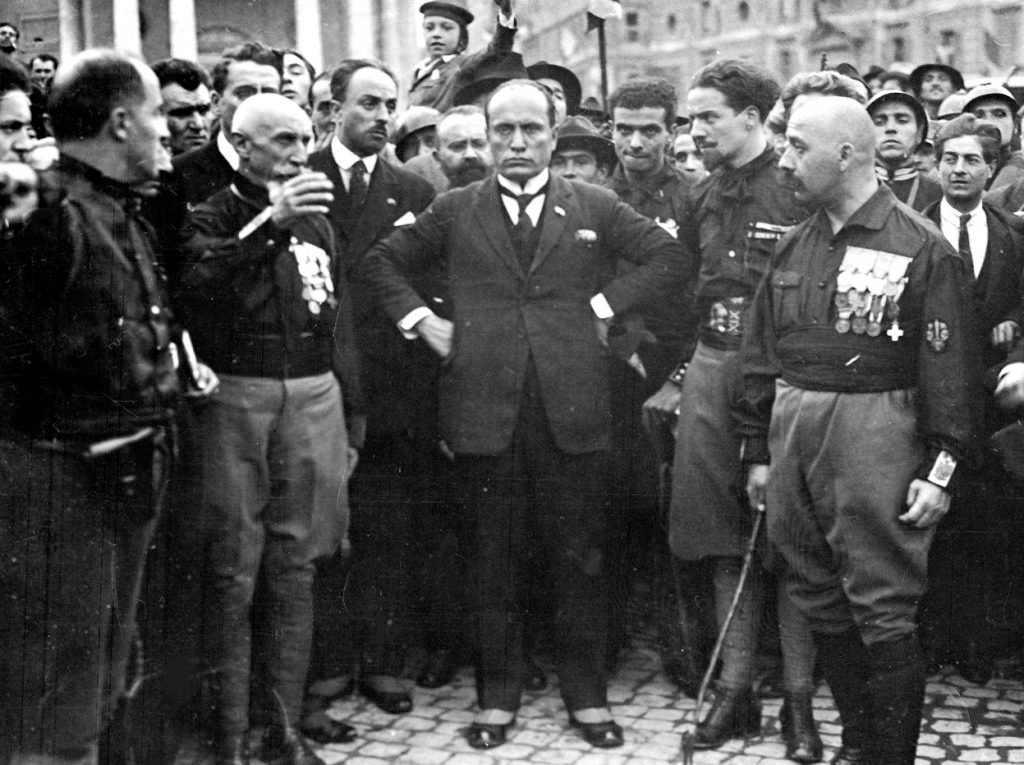
The Fascist Grand Council began as a gathering of party leaders shortly after Benito Mussolini became prime minister in 1922. At the time, Fascism contained rival figures with their own followers, ambitions, and ideas about governing. Bringing them together gave Mussolini a way to hear objections while directing the movement from its center. Ministers joined party officials in discussions whose consequences extended beyond party affairs, although the council initially had no standing under the kingdom’s law. Its early activity mattered. Decisions associated with the regime could emerge from consultation among leading Fascists rather than from Mussolini’s office alone. Yet participation was no guarantee of independence. The council helped bind influential men to decisions made under his leadership, and its authority grew alongside the dictatorship they were helping to establish.
A law enacted on December 9, 1928, recognized the council as the regime’s supreme organ and assigned it functions within the state. The same law made the head of government its president by right. Mussolini could convene it when he considered a meeting necessary and determine the agenda; its members had no equivalent right to summon one another into session. Proceedings were secret, and the secretary of the National Fascist Party served as the council’s secretary. These rules gave the body official standing while leaving access to its deliberations dependent on the man whose conduct its members would eventually question.
Its statutory duties reached beyond internal party management. The council could decide matters concerning party organization and leadership, and it originally had a role in drawing up the list of candidates for the Chamber of Deputies. Its opinion also had to be heard on proposed legislation of a constitutional character, including measures affecting the Crown, parliament, and the head of government. Consultation did not give it a veto over every proposal it considered. Another provision called for a list of possible successors to the head of government, prepared on his proposal for presentation to the Crown if the office became vacant. The condition is revealing. The law contemplated succession, but it supplied no procedure by which council members could remove an incumbent they had ceased to trust. Under the Statuto Albertino and the 1925 law defining the head of government’s office, appointment and dismissal belonged to the king. Fascist legislation had drawn the party’s senior body into constitutional affairs while leaving the act of replacing Mussolini elsewhere. That division would matter in 1943, even though years of royal support for his rule had made the king’s formal powers appear politically remote.
Membership made the council a meeting place for several kinds of authority. Veterans of the March on Rome held places for life; former party secretaries also retained standing, while ministers and holders of other offices served because of their positions. The presidents of the legislative chambers, the commander of the Fascist militia, and the president of the Special Tribunal for the Defense of the State belonged to a membership that connected party leadership with government and coercive institutions. Recognition of membership came by royal decree on the head of government’s proposal and could be revoked through the same process. Mussolini consequently exercised substantial influence over who sat at the table, but he could not make their experiences or interests identical. A former party chief, a serving minister, and a militia commander might each judge the regime’s prospects differently, even after years of working within it.
For much of its existence, the council was an active institution rather than a body invented for the crisis of 1943. Emilio Gentile counts 186 meetings during the Fascist period. At its last session before the war, on December 7, 1939, it affirmed Italy’s position of nonbelligerence. Italy entered the conflict in June 1940 without a further council meeting, and Mussolini did not call another until July 1943. The absence did not mean that every decision taken in the interval required the council’s approval. It meant that senior Fascists had lost a regular occasion to hear the government’s case, challenge one another, or place a collective view on record while the war altered the country’s position.
The arrangement had worked while Mussolini could govern without seeking a fresh judgment from the men assembled in his own institution. By 1943, its long inactivity gave a proposed meeting an importance that routine sessions might never have acquired. The law still made Mussolini responsible for convening the council and directing its business, so dissenters could not simply establish an alternative meeting with the same official standing. Once he brought them together, they could use a recognized organ of the regime to express a view he did not share. Their vote would have neither the force of a parliamentary withdrawal of confidence nor the authority to name a new head of government. It could nevertheless show the king and other officials that obedience among Fascism’s leaders could no longer be presumed. To understand why members were prepared to take that step in July, the institutional history must now be set beside the course of the war.
War Narrows the Choices
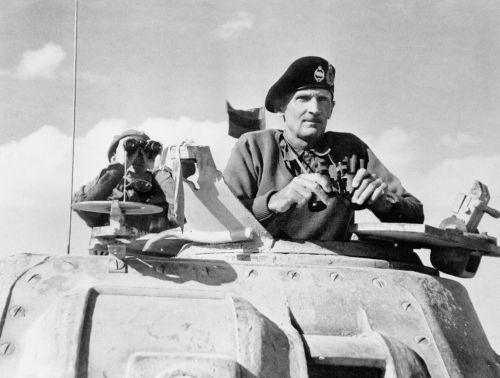
By the winter of 1942–43, Italy’s defeats had begun to alter what its leaders could reasonably expect from the war. The Axis retreat after El Alamein ended hopes of an advance through Egypt, while Soviet offensives shattered much of the Italian Eighth Army on the Don. These losses removed experienced troops that might have helped defend Italy and exposed how little influence Rome exercised over German strategy. Galeazzo Ciano’s wartime diary had already recorded strains within the alliance; the disasters in Africa and Russia gave those strains immediate military consequences. Mussolini could still ask Adolf Hitler for reinforcements, but Germany was fighting major campaigns elsewhere and could supply Italy only by making choices of its own. Senior Fascists had reason to question whether confidence in Mussolini’s relationship with Hitler amounted to a workable defense of their country.
For civilians, the approaching defeat was felt well before Allied troops reached Italian soil. Food grew harder to obtain, wages struggled to keep pace with prices, and air raids from the autumn of 1942 damaged northern cities where much of Italy’s war industry was concentrated. Bombing meant more than the loss of factories. Workers also faced damaged homes, disrupted transport, and the fear that their families would be struck while they were on shift. In March 1943, strikes beginning at Fiat in Turin spread through other factories in Piedmont and Lombardy. Claudia Baldoli places those protests within this wider experience of insecurity, alongside demands over pay and supplies. Antifascist organizers took part, but the workers did not all strike for the same political purpose. What mattered to officials in Rome was that coercion and the regime’s labor institutions had failed to prevent conspicuous collective defiance. The strikes offered no reliable forecast of what the public would support next; they did show that further military setbacks would fall on a society already resisting the burdens imposed on it.
The surrender of Axis forces in Tunisia on May 13 brought the Allied armies to the opposite shore of the Mediterranean. Then, on July 10, British and American forces landed in Sicily. Italian and German troops continued to fight on the island, so its eventual loss was not yet a settled fact when the Grand Council met; the landings nevertheless made the defense of the mainland an immediate question. A diplomatic escape also looked difficult. At Casablanca in January, Franklin Roosevelt and Winston Churchill had publicly called for Italy’s unconditional surrender, giving Fascist leaders little basis for assuming that an approach to the Allies would preserve their authority. Defeat was becoming more likely as the terms of leaving the war appeared harder to control.
July 19 brought the crisis close to the seat of government. Mussolini met Hitler near Feltre to discuss the military situation while Allied aircraft attacked Rome’s rail facilities and the San Lorenzo district. Michael MacWhite, Ireland’s representative in the city, described burning rail yards, ruined housing, and the disruption of routes into the capital. His account conveys the distance between official assurances of defense and what residents could see around them, though it cannot establish what any particular Fascist official concluded from the raid. Nor was Mussolini’s meeting with Hitler simply an occasion on which he ignored Italy’s danger. Emilio Gin argues that Mussolini hoped to persuade Hitler to seek a compromise with the Soviet Union, freeing German forces for the Mediterranean; Hitler would not accept such a settlement. However one assesses Mussolini’s remaining diplomatic hopes, the encounter produced no change capable of relieving the pressure on Italy that week. The bombing and the talks occurred on the same day, bringing into sharp view the two problems the leadership could not solve on its own: protecting the population and redirecting the alliance.
Every available course now carried a risk that senior Fascists could recognize without agreeing on a remedy. Continued fighting invited further Allied advances and deeper hardship at home. Seeking a way out raised the prospect of German retaliation. German troops were already engaged in Italy’s defense, and German commanders had begun planning for a possible Italian defection, although the councillors did not know the details of those plans. A change in leadership might create room for new decisions, but it could promise neither an acceptable Allied settlement nor safety from Germany. These pressures explain the urgency of the choices facing Mussolini’s colleagues; they do not make their eventual votes an inevitable response to defeat. The question each man faced was which danger he judged most immediate, and how much of his existing allegiance he was prepared to put at risk.
Loyal to Whom? The Divisions among Fascists
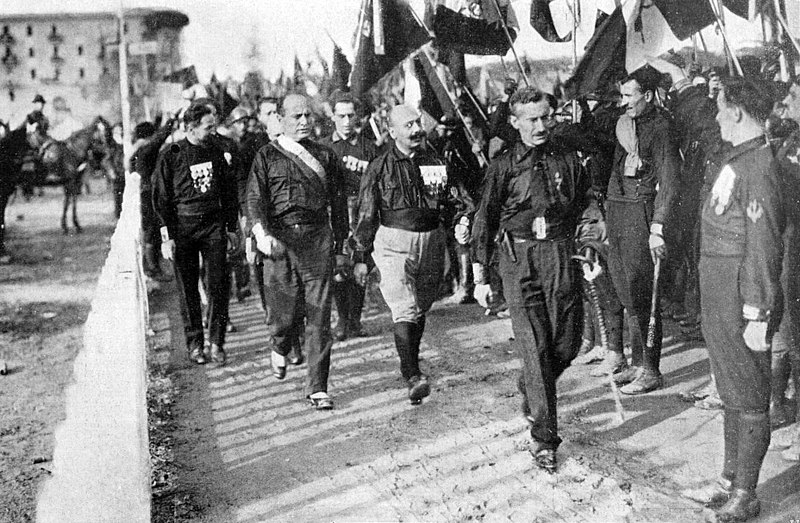
Loyalty had several possible objects for the men who entered the Grand Council in July 1943. They had sworn themselves to Italy, served its king, advanced the Fascist Party, accepted the alliance with Germany, and built their careers around Mussolini. Those obligations had usually been presented as compatible; the war made them difficult to reconcile. As Aristotle Kallis argues, the identification of Fascism with Mussolini made dissent from his leadership fraught for men who still considered themselves Fascists. Their disagreement concerned more than whether he had governed badly. It concerned which commitment should prevail when an attempt to save one threatened another.
Dino Grandi brought considerable authority to that disagreement. He had served as foreign minister, ambassador in London, justice minister, and president of the Chamber of Fasces and Corporations; his standing came from decades spent helping govern the dictatorship. Diplomatic experience also gave him reason to fear that dependence on Germany would leave Italy unable to decide its own future. He sought a royal initiative that could remove Mussolini and permit a different government, yet his preferred alternative remained rooted in monarchy, national authority, and the political world he knew. Paolo Nello’s biography is a useful corrective to any portrait of Grandi as a longstanding opponent of the Duce. His disobedience emerged from within a career of Fascist service and personal attachment. Grandi later described the July initiative as an effort to overthrow Mussolini and his dictatorship. That account illuminates his understanding of the vote, though a memoir written after the king had acted cannot establish that every supporter understood Grandi’s purpose in the same way.
Luigi Federzoni approached the crisis through an older nationalist allegiance to the crown. As president of the Senate, he had defended its place against efforts to diminish it, and he had objected to provisions of the 1928 Grand Council law that intruded upon royal prerogatives. Such objections had coexisted with substantial service to Fascism. Federzoni had been a minister, promoted Italian colonial expansion, and lent cultural authority to the regime. His later claim that he intended Mussolini’s removal deserves to be read alongside both his monarchism and his record in office. Justice minister Alfredo De Marsico added a legal concern to the circle supporting Grandi. Responsibility for government and military command should once again rest in the offices constitutionally charged with exercising it. Neither man’s appeal to established institutions amounted, by itself, to a proposal for democratic rule.
Giuseppe Bottai envisaged a different kind of remedy. A former minister of corporations and of national education, he had long treated Fascism as a political project capable of revision from within. His participation in revising Grandi’s motion was consequential, but it did not mean that he shared Grandi’s later account of its intended result. Writing in August 1943, Bottai maintained that he had imagined Mussolini relieved of military command and brought back within a functioning Fascist constitutional order; he attributed the leader’s arrest and the regime’s destruction to a separate military initiative backed by the king. Alberto De Stefani likewise described his own support for the motion as an attempt to save Mussolini and the regime. These recollections have an evident limitation. After 25 July, participants had powerful reasons to defend their conduct. Yet Bottai’s proposed renewal also has to be judged against what he had done with power. As education minister, he introduced the measures that excluded Jewish teachers and students from Italian schools and universities in 1938. His criticism of concentrated authority did not erase his responsibility for persecution carried out by the state he wished to repair.
For Galeazzo Ciano, political disagreement carried an unusually intimate cost. Mussolini’s son-in-law had been foreign minister until February 1943 and had helped direct Italian expansion, including the disastrous attack on Greece. His diary records mounting frustration with German dominance and Mussolini’s decisions, although it ends before the July meeting and cannot disclose his private calculations there. Ciano supported Grandi’s proposal and argued that Germany had failed to meet Italy’s expectations of the alliance. He also had reason to expect a place among the experienced Fascists who might govern after a change of leadership. His vote joined concern about Italy’s position to the uncertain prospects of his own political future, while turning against the man to whom both family and office had bound him.
Those who rejected Grandi offered more than a single defense of Mussolini. Roberto Farinacci’s alternative motion also asked the king to assume effective command of the armed forces and called for state institutions to resume their functions; it explicitly included the Fascist Party among them. Its decisive commitment was to keep Italy’s alliances and fight on. Party secretary Carlo Scorza proposed changes in government and high command while insisting on resistance at any cost within the existing regime; his text praised the monarchy and the German soldiers fighting beside Italy’s forces. The difference between these proposals and Grandi’s lay partly in what renewed royal authority might enable. Farinacci wanted it to strengthen continued war alongside Germany, while Grandi sought room for a change in Italy’s direction. The opposing votes of figures such as Scorza and militia commander Enzo Galbiati should be understood in the setting of competing responses to defeat, rather than treated as evidence that the regime’s remaining defenders saw no need for change.
The eventual division still crossed lines that might have seemed secure. Emilio De Bono and Cesare Maria De Vecchi, both leaders of the 1922 March on Rome, voted for Grandi. Tullio Cianetti supported the motion and then wrote to Mussolini the following morning withdrawing that support; his letter did not alter the vote already taken. Senate president Giacomo Suardo abstained. Such choices reveal how difficult it was to predict a councillor’s position from seniority, office, or previous loyalty. They also show the limits of calling Grandi’s supporters a unified faction. Men who could agree on an appeal to the king held different expectations of what the king, Mussolini, and Fascism would do next.
The Days before the Meeting: Separate Plans, Uncertain Allies

Plans to remove Mussolini existed before anyone knew what the Grand Council would do. In early July, King Victor Emmanuel III was hearing from officers who considered a change of government, though he remained hesitant about its timing and consequences. His aide Paolo Puntoni recorded discussion of two possible successors, Pietro Badoglio and Enrico Caviglia; the king had reservations about both. Senior Fascists, meanwhile, were considering an appeal to the crown through the regime’s own institutions. Contact with the royal household gave these efforts a point of connection, but it did not give their participants a common plan for Italy after Mussolini.
The first immediate question was whether the Council would meet at all. On July 16, party secretary Carlo Scorza and other senior Fascists asked Mussolini to convene it so the regime could confront the military emergency. Scorza’s involvement did not make him a supporter of Grandi’s eventual motion; he wanted the party and government to organize resistance more effectively. Mussolini agreed reluctantly and promised a meeting within fifteen days. That agreement created an opening whose use was still undecided. Grandi, then in Bologna, had been considering how to persuade the king to exercise his authority over the armed forces, but the councillors who had requested a meeting had not thereby endorsed his proposal. The next few days brought decisions in more than one place. Grandi returned to Rome on July 20 and began circulating the order of the day he intended to present. Puntoni’s account places the king’s determination to make a change around the same time, after the events of July 19 had sharpened his concern about Italy’s position. On July 21, Scorza informed Council members that Mussolini had called them to Palazzo Venezia for July 24. The summons established a date for deliberation; it gave no member a reliable count of votes and offered Grandi no assurance about what the crown would do with a favorable result.
Grandi did not keep the motion from Mussolini until the meeting. He showed it first to Scorza, who made its contents known to the Duce, and on July 22 Grandi discussed it with Mussolini in an audience lasting more than an hour. Their later descriptions of such encounters require care. Each man had reason to explain afterward what he had understood and why he had acted as he did. The secure point is that Mussolini received warning of a proposal asking him to invite a royal initiative, yet permitted it to remain in play. He still controlled the Council’s convocation and could expect the authority he had exercised over previous meetings to matter. Grandi, for his part, left the audience with the opportunity to seek further support, rather than a promise that his motion would be accepted.
That support had to be gathered individually. During July 22–24, Grandi approached councillors in Rome while Bottai helped revise the text; Ciano joined its backers on July 23 and worked on its final wording. Assent from experienced figures such as Federzoni and De Marsico gave the proposal weight, while commitments from officeholders across the regime improved its chances in a body Mussolini had long dominated. A promise to support the wording was a poor measure of agreement about its consequences. Some signatories hoped to end Mussolini’s premiership; others expected him to continue governing with military responsibility restored to the king. Grandi had assembled enough support to risk a vote, but he could not bind his allies to one interpretation of what success would mean.
Within the royal circle, preparation had a more immediate operational purpose. The king’s minister of the Royal Household, Pietro Acquarone, worked with chief of the general staff Vittorio Ambrosio and General Giuseppe Castellano on arrangements for replacing Mussolini; Badoglio was considered for the new government. Carmine Senise, removed as police chief in April, was brought into discussions about an arrest and the security measures that would follow. Planners had to consider how to secure communications and government offices and how to prevent the Fascist militia from obstructing the change. These tasks could not be accomplished by a Council resolution; they depended on royal authorization and on officers and police carrying out orders. Nor did the planners have a settled answer to the larger war problem. German forces were already in Italy, and dismissing Mussolini would leave the new government to decide when and how to approach the Allies.
Anti-Fascist politicians pressed a third course upon the palace. Ivanoe Bonomi and Alessandro Casati had discussed a successor government with Badoglio, seeking a cabinet that included representatives of the political opposition. On July 22, they sent Acquarone a memorandum warning that removing Mussolini while delaying a break with Germany would give German forces time to prepare. They wanted the new government to establish political credibility and move quickly toward ending Italy’s participation in the Axis war. The king favored a government led by Badoglio without the party politicians Bonomi proposed. Opposition to Mussolini did not settle who would govern, how openly Fascism would be dismantled, or how soon Italy would seek an armistice. On the afternoon of July 24, Grandi sent Acquarone a letter for the king enclosing the motion he would put before the Council. He stipulated that it be delivered only after the meeting had begun. The royal household could know the proposal during the debate without the letter establishing that the king had directed its drafting or secured its passage. Mussolini had been told what Grandi intended to present; Grandi knew that the palace could receive his text; each had much less certainty about the decisions being prepared elsewhere. When the councillors assembled, their vote was still to be won, and the king’s means of replacing Mussolini rested with men outside the Council room.
What Grandi’s Motion Actually Requested
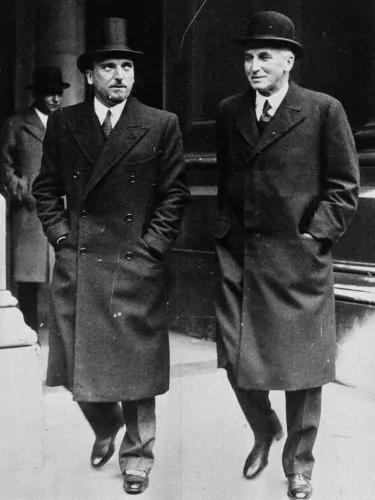
Grandi presented an ordine del Giorno, a resolution stating the Grand Council’s position and urging action by others. Its verbs show the progression. The Council would honor the armed forces, proclaim a duty to defend Italy, affirm the need for national unity, declare that state offices must recover their functions, and finally invite Mussolini to approach the king. The text never instructed the Council to dismiss its own leader. Its challenge lay in asking whether decisions Mussolini had treated as his own should instead be made under the king’s authority.
Before reaching that request, the motion established a claim to speak for the nation. It praised Italian forces fighting in Sicily and invoked the sacrifices made since the Risorgimento to defend the country’s unity, independence, and freedom. “Freedom” in this passage referred to the patria facing invasion; the sentence offered no pledge of civil liberties or political participation. The call to defend Italy “at any cost” also left open what form that defense should take. It could be read as support for continued resistance, but the text did not say that Italy must remain at war beside Germany. Nor did it call for surrender, an armistice, or negotiations with the Allies. By placing the country’s survival and the conduct of the war before the question of command, Grandi made a change in authority appear answerable to a national emergency. The patriotic language allowed councillors with different views of the war to agree on the gravity of the crisis without settling its remedy.
Naming the institutions to be restored made the proposal more specific, though still far from a program of political reconstruction. The motion assigned functions under existing statutory and constitutional laws to the crown, the Grand Council, the government, Parliament, and the corporations. That list included organs created or reshaped by Fascism itself. “Parliament” in July 1943 included the regime’s Chamber of Fasces and Corporations; the resolution did not demand the return of an elected Chamber of Deputies. The Fascist Party was absent from the list, a revealing omission in a document submitted to the regime’s supreme council, but omission did not dissolve the party or repeal its powers. What the clause directly sought was a redistribution of responsibility among existing institutions, with the details of their restored operation left unspecified.
The final sentence carried the greater constitutional risk. It invited the head of government to ask Victor Emmanuel III to assume effective command of the land, sea, and air forces under Article 5 of the Statuto Albertino, together with the “supreme initiative of decision” attributed to the crown. Article 5 gave the king executive power, supreme command, and authority over war, peace, and treaties. The motion invoked a source of authority broader than supervision of military operations, even though it named effective command as the immediate change. Its chosen route was significant. Mussolini was asked to make the request to the sovereign, rather than being declared removed by the Council. A separate provision, Article 2 of the law of December 24, 1925, stated that the king appointed and dismissed the head of government. Grandi’s resolution did not itself exercise that power, and a Council vote was not its legal prerequisite. Approval would nevertheless tell the king that a majority of senior Fascists favored taking decisive authority out of Mussolini’s hands. How far the king might then go remained a political question that the wording deliberately left unanswered.
A draft Grandi later supplied to historian Renzo De Felice sharpens the distinction between his possible aims and the adopted motion. He identified it as an early version that explicitly proposed ending totalitarian rule, permitting other parties to operate, and guaranteeing equality before the law. The draft’s precise date and place in the July revisions require caution, given the conflicting accounts participants later gave of their preparations. None of those explicit proposals appeared in the resolution the Council approved. Whatever Grandi hoped would follow, the councillors voted on a request for restored state functions and royal initiative, leaving the king to decide what use to make of it.
Ten Hours at Palazzo Venezia
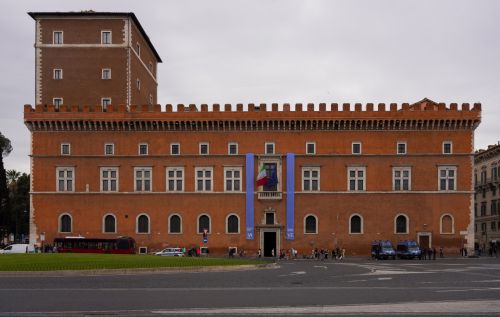
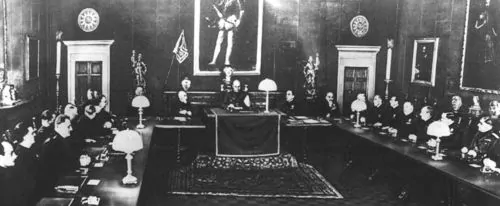
At about a quarter after five on Saturday, July 24, Mussolini entered the Sala del Pappagallo at Palazzo Venezia. Tables formed a horseshoe, with the duce seated slightly above the other councilors and the two surviving leaders of the March on Rome, Emilio De Bono and Cesare Maria De Vecchi, beside him. Carlo Scorza, secretary of the Fascist Party, offered the customary salute, and those present answered. Outside, the party pennant was absent from the balcony; the press had not publicized the session, and Mussolini’s ceremonial guards were missing. The familiar arrangement of rank and ritual housed a discussion in which his account of the war would face open challenge.
Mussolini began with a survey of the military situation, from the losses in North Africa to the fighting in Sicily. A reconstruction preserved among Luigi Federzoni’s papers records that he read a May 1940 letter in which Marshal Pietro Badoglio had proposed that the king delegate supreme military command to Mussolini during the war. The letter brought the origins of that command into the discussion before Grandi introduced his motion. The first speakers then moved from the fortunes of armies to the way those armies had been led. De Bono protested explanations that placed responsibility for defeat chiefly on the soldiers. De Vecchi, according to a surviving version of his intervention, blamed poor preparation and political influence over promotions; capable commanders, he argued, had drawn courage from their troops. Roberto Farinacci asked for precise military information from Chief of the General Staff Vittorio Ambrosio. Giuseppe Bottai disclaimed expertise in military operations but questioned the assumption that Allied forces might avoid invading the mainland. He also argued that Mussolini’s report disclosed weaknesses in the organization of supreme command. By the time Grandi read his resolution, the discussion had already reached beyond battlefield setbacks to the political decisions behind them.
Galeazzo Ciano spoke after Grandi, drawing on his former responsibilities as foreign minister to question the value of Germany’s alliance to Italy. In the reconstructed record, he cited German offensives in western Europe in 1940 and against the Soviet Union in 1941 as decisions of which Rome had received little advance warning. His examples asked whether an allied Italy could meaningfully choose its own course. Farinacci followed with a competing resolution that, like Grandi’s, invited the king to assume effective command of the armed forces. Farinacci’s text also expressly reaffirmed Italy’s alliances and its duty to continue fighting. The reconstructed account distinguishes his proposed transfer of military command from Grandi’s broader invitation to the monarch to exercise political initiative. That is a useful reading of the two texts, though it cannot establish that every councilor understood their consequences in the same way.
Mussolini responded to the presentations, and Federzoni then spoke. Someone proposed postponing the meeting until the following day; Grandi objected and obtained Mussolini’s agreement to continue. An overnight adjournment might have allowed time for persuasion or pressure, but the surviving record cannot show that it would have changed a vote. The Council instead took a recess and returned to the unresolved proposals. Even the precise hour deserves caution. One surviving manuscript dates the interruption from ten to ten thirty at night, while Emilio Gentile’s reconstruction places the suspension closer to eleven. Both accounts agree that the members resumed before midnight and continued their debate into Sunday.
After the break Mussolini called on Giuseppe Bastianini, followed by Annio Bignardi, Giacomo Acerbo, Enzo Galbiati, Antonino Tringali Casanuova, and Carlo Alberto Biggini. In the fuller reconstruction among Federzoni’s papers, Bastianini described a divide between the nation and the Fascist Party. Bignardi discussed the mood of working people and supported Grandi’s proposal, while Galbiati, commander of the militia, insisted that the Blackshirts needed adequate arms and practical measures more than resolutions. Tringali Casanuova opposed Grandi’s text; Biggini observed that it did not even name Mussolini. These accounts convey a debate that reached across foreign affairs, industry, the armed party, and the regime’s legal institutions. They must still be read with care. Federzoni left eight pages of penciled notes taken during the meeting, but the fuller record was assembled in more than one hand, and some materials in his papers arrived years later. No official verbatim transcript exists. The order of speakers and the written motions can be reconstructed more securely than the exact wording of each speech.
Mussolini spoke again before Scorza, acting as party secretary, introduced a third resolution. Scorza called for resistance at all costs, saluted the king as a symbol of national continuity, and praised the German soldiers fighting alongside Italy. He proposed changes in government, supreme command, and domestic administration through the existing institutions of the regime. His text offered a way to demand a different conduct of the war without asking the monarch to take the political initiative envisaged by Grandi. Discussion continued after Scorza finished. Among those who spoke again were De Bono, Farinacci, Ciano, Bottai, Grandi, and Scorza himself. The three motions had entered the meeting at different stages and remained open to argument until its final minutes. Their shared appeals to the defense of Italy did little to settle the questions dividing their authors. Who should direct the state, what the king should decide, and whether Germany remained essential to Italy’s war.
Shortly after two in the morning, Mussolini put Grandi’s resolution to the Council first, as the earliest motion presented. Grandi requested a roll call, requiring each member to give an answer that could be attributed to him. A majority approved the proposal; neither Farinacci’s nor Scorza’s competing text received a separate vote. The procedure established what the Council had adopted, while leaving the intentions behind individual votes to be examined. Approval of Grandi’s appeal to the crown could carry different expectations about Mussolini’s future. The vote itself neither dismissed him nor ordered his arrest.
Why Did Mussolini Allow the Vote?
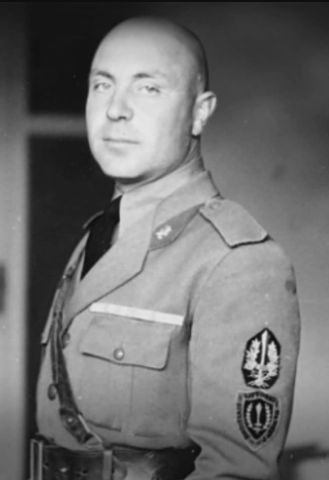
Mussolini’s decision to call a vote presents a question of choice as well as judgment. As president of the Grand Council, he controlled its agenda and knew of Grandi’s proposal before the members assembled. Neither the law governing the Council nor its established practice required him to put a member’s resolution to a ballot. He permitted its discussion, agreed to continue when Grandi opposed postponement, and eventually asked the members to decide. Nor did he introduce a resolution of his own or unmistakably commit the Council to Scorza’s alternative. A leader long accustomed to obtaining assent had opened a procedure whose result he could no longer dictate.
What Mussolini thought the vote would accomplish is less certain than those procedural choices. The reconstruction preserved among Luigi Federzoni’s papers attributes to him a statement that, if Grandi’s motion passed, he would return the delegated supreme military command to the king the next day. Gaetano Polverelli later remembered him asking whether its supporters intended anything beyond a change in military command; in that account, the question received no clear answer. Mussolini appears to have recognized a danger to his position while discussing the resolution as something he might still carry out as head of government. He had already considered relinquishing military responsibilities and changing the composition of his government, measures that could have made criticism the starting point for reorganization. His long working relationship with Victor Emmanuel III might also have encouraged confidence that the king would consult him about what followed. These are inferences from reported words and circumstances, not a record of his private calculations. He may instead have expected the rival proposals, hesitation among Grandi’s supporters, and his own standing to prevent a hostile majority. Forbidding a vote once disagreement had surfaced among senior Fascists might itself have exposed his weakened authority, although no surviving statement proves he reasoned that way.
Mussolini’s account of the meeting, published in 1944, presents him as much more certain of the danger. He claimed to have warned the Council that Grandi’s motion could imperil the regime and, after the ballot, to have declared that the voters had caused its crisis. Renzo De Felice accepted these warnings as genuine, relying partly on later versions by Grandi and Scorza. Emilio Gentile points out that Grandi’s account published in Life in February 1945 omitted the alleged closing declaration, while Scorza’s 1968 interview gave a milder version than his book published later that year. Tullio Cianetti explicitly denied that Mussolini had said either sentence, and neither appears in Federzoni’s notes or the reconstruction preserved with them. Silence in an incomplete record cannot settle exactly what was spoken. The discrepancies nevertheless make those retrospective warnings a precarious basis for claiming that Mussolini announced the vote’s consequences clearly to everyone present.
His conduct also resists a single explanation drawn from his apparent passivity. Gentile observes that Mussolini could have proposed a definite transfer of military command, forcefully backed Scorza’s resolution, or postponed the decision. Those options mattered because support for Grandi was still susceptible to persuasion. Alberto De Stefani later recalled hesitation over whether to combine the competing proposals. Mussolini was not silent throughout. Federzoni’s reconstruction has him defending Fascism’s achievements against criticism, and Giacomo Acerbo remembered his questions about the motion’s implications causing some supporters to waver. Reports of illness and fatigue may help explain why he did not develop those interventions into a sustained alternative, but they cannot establish that he wished to leave office. Gentile’s description of a political “euthanasia” captures the decline of Mussolini’s authority without proving that he planned his dismissal. Eugenio Di Rienzo suggests a different calculation. Mussolini may have wanted visible dissent to convince Hitler that his position was precarious and that Germany needed a settlement with the Soviet Union. Mussolini’s unsuccessful efforts to sway Hitler make the proposed motive intelligible. No contemporaneous record connects his decision to hold the vote with a plan to use its result in negotiations with Berlin. A deliberate gamble remains possible; its central purpose cannot be verified.
The evidence permits a narrower answer than a diagnosis or a confession of intent. Mussolini retained enough authority to avoid a vote yet did too little to prevent the members from registering their disagreement in his presence. Confidence in his influence, expectations about the king, and exhaustion may all have mattered; their relative weight remains unknown. His later claim that he foresaw a fatal crisis cannot securely be read back into the meeting, just as his subdued conduct cannot establish a wish to be overthrown. He allowed a test of collective assent at the moment when he could least rely on its outcome.
The Roll Call and Its Immediate Meaning
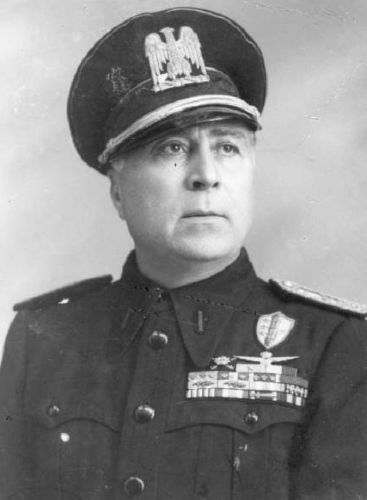
Shortly after two in the morning on July 25, Grandi requested a vote by name. Nineteen councillors supported his motion, seven said no, Roberto Farinacci declared for his own competing proposal, and Giacomo Suardo abstained. Mussolini, who chaired the meeting, cast no vote. The familiar tally of nineteen to eight with one abstention counts Farinacci among Grandi’s opponents, accurately describing the result while obscuring his answer. Mussolini closed the sitting without putting the other proposals to a vote. The names made each councillor’s choice identifiable.
The majority came from several parts of the regime’s leadership. Emilio De Bono and Cesare Maria De Vecchi had been quadrumvirs of the March on Rome; Grandi, Giuseppe Bottai, and Giovanni Marinelli had long helped build Fascism. Serving ministers responsible for finance, justice, agriculture, and corporations voted yes, as did Galeazzo Ciano, Mussolini’s son-in-law. The Council’s corporate seats added Giovanni Balella, head of the industrial employers’ confederation; Luciano Gottardi, head of its industrial workers’ counterpart; and Annio Bignardi, head of the agricultural workers’ confederation. Their offices gave them places in the Council, but their votes provide no evidence that the people or organizations they purported to represent had been consulted. Nor did every councillor command equal influence over ministries or armed forces. The significance lies in the range of senior Fascists willing to attach their names to a resolution that would take effective military command from Mussolini. He could no longer assume the assent of founding figures, current officeholders, and even a member of his family.
The other responses resist a simple division between supporters of the king and supporters of Mussolini. Carlo Scorza, the party secretary, voted no, as did Enzo Galbiati, chief of staff of the Fascist militia, Antonino Tringali Casanuova, president of the Special Tribunal, and four other councillors. Farinacci opposed Grandi’s text while advancing one that also sought effective royal command of the armed forces and expressly upheld Italy’s alliance with Germany. Suardo, president of the Senate, abstained despite holding an office named in the appeal to restore the functions of state institutions. An answer to Grandi’s motion reveals a definite choice in that vote; by itself, it does not disclose a complete position on the war or the regime’s future.
The nineteen affirmative answers also concealed disagreement about what should happen if the king acted. In later accounts, Grandi and Luigi Federzoni described Mussolini’s removal as an intended result of their initiative. Alberto De Stefani, writing in 1943–44, recalled voting in the hope of saving Mussolini and Fascism by returning supreme military command to the king and restoring the functions of other institutions. Bottai’s diary entry of August 23 distinguished the Council’s action from the intervention of the monarchy and military; he could still imagine a reorganized Fascism with a role for Mussolini. Those accounts were written after the vote, under differing pressures, and cannot establish what every supporter expected during the meeting. They do show why the majority cannot be treated as a common mandate for a replacement government, an armistice, or the end of Fascism. Tullio Cianetti’s conduct offers a more immediate glimpse of that uncertainty. Having voted yes, he told Scorza the following morning that he would write to Mussolini to withdraw his vote. His letter could not change the Council’s recorded result, but it exposed how quickly agreement on the motion could dissolve when its possible consequences became personal.
Around four in the morning, Grandi met Pietro Acquarone, minister of the Royal Household, and gave him the approved motion with the signatures of its supporters. The king could learn who had voted for the appeal, as well as its margin of victory. This was valuable political information from men holding prominent positions in Mussolini’s own system. The Council had approved an appeal; it had not selected a new prime minister or ordered an arrest. Whether to dismiss Mussolini remained a separate royal decision. By morning, any claim that the regime’s senior Fascists stood together behind him had become difficult to sustain.
The King’s Decision on July 25
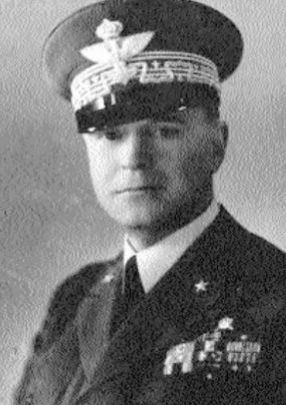
Preparations at the royal court had begun before the Grand Council cast its vote. On July 24, General Giuseppe Castellano approached Carabinieri commander Angelo Cerica about plans to arrest Mussolini after his customary audience with Victor Emmanuel III on Monday, July 26. Accounts of the planning indicate royal approval, though they do not settle when the king became irrevocably committed to dismissal. Victor Emmanuel later claimed that he had resolved to remove Mussolini months earlier; that retrospective account deserves caution, given the monarchy’s need to explain its long association with Fascism. The Council’s vote gave the king evidence that leading Fascists would no longer defend their chief, while Mussolini’s request for an audience on Sunday brought the planned confrontation forward by a day.
The authority Victor Emmanuel exercised had a legal basis within the dictatorship’s own legislation. Article 2 of the 1925 law governing the head of government expressly empowered the king to appoint and revoke him. Choosing a successor presented a more difficult question. The 1928 law contemplated a list of possible appointees prepared by the Grand Council, and historians of constitutional law differ over the implications of proceeding without it. The king chose Marshal Pietro Badoglio rather than Enrico Caviglia, whom Grandi favored, or Ivanoe Bonomi, preferred by some opponents of Fascism. Badoglio brought military standing and access to the court, but he had also served the regime, including as chief of the general staff until 1940. His appointment placed the immediate transfer of power in the hands of the monarchy and senior officers. It offered Victor Emmanuel a means to maintain command during a military emergency, without committing him that day to a government led by the old anti-Fascist parties. The king could dismiss Mussolini under an explicit statutory power; what his choice of Badoglio meant for the wider constitutional order remains a matter of interpretation.
Mussolini spent much of Sunday still carrying out the business of government. In the early afternoon he went with Enzo Galbiati, commander of the Fascist militia, to inspect a Roman neighborhood damaged in the Allied bombing of July 19. He had sought an audience with the king earlier than their usual Monday meeting, but no reliable record establishes exactly what he expected to secure from it. Discussion of ministerial changes or the conduct of the war was still possible from his point of view. At about five o’clock, he arrived at Villa Savoia with his secretary, Nicola De Cesare, while his escort remained outside the royal residence.
Inside, Victor Emmanuel informed Mussolini that Badoglio would replace him. Accounts by participants disagree about the precise words exchanged, and there is no transcript of the audience; its decisive outcome is considerably clearer than its dialogue. Carabinieri officers had meanwhile taken positions at the villa under arrangements directed by Cerica. According to the king’s aide Paolo Puntoni, Victor Emmanuel had wanted Mussolini arrested elsewhere, but the officers responsible considered the grounds of the residence the more workable location.
When Mussolini emerged, Captains Paolo Vigneri and Raffaele Aversa stopped him and said that he must accompany them for protection against possible attacks by a crowd. They directed him into an ambulance instead of his own car, and De Cesare went with him. The vehicle took Mussolini first to the Podgora Carabinieri barracks in Rome; he was subsequently moved to another barracks. Officers also prepared to secure key government locations against resistance. Dismissal in a royal audience and detention by armed men were successive decisions carried out through the crown’s command of state institutions.
The government’s public explanation concealed part of what had happened. The royal decree described Mussolini as revoked from office “at his request,” although he had submitted no resignation, and the announcement broadcast late that evening did not disclose his arrest. Victor Emmanuel proclaimed his assumption of command of the armed forces, while Badoglio announced a military government and declared that the war continued. Italians hearing of Mussolini’s fall could celebrate the end of his rule without knowing what policy the new government would pursue. The Council had made the dictator’s isolation unmistakable; the king decided who would replace him, ordered the measures that secured that decision, and shaped the account the country first received. His action ended Mussolini’s government, but it did not erase the monarchy’s responsibility for the regime it had sustained.
What the Break Did (and Did Not) Settle
By the morning of July 26, Mussolini’s removal had acquired meanings far beyond those intended by the men who met at Palazzo Venezia. A report from Milan’s prefect described demonstrations at the Royal Palace, attacks on Fascist offices, and work stoppages in heavy industry. Some celebrants praised Victor Emmanuel III and Pietro Badoglio; others carried an image of Giacomo Matteotti, the socialist murdered after challenging Fascism in 1924. People tore down portraits and emblems that had long asserted the regime’s presence in public life. Crowds also confronted local Fascists, sometimes violently. Celebration did not give every participant the same political aim, but it showed how quickly a decision made among senior officials became a public reckoning with their rule.
The new government dismantled the organizations at the center of the dictatorship over the following days. Three royal decree-laws dated August 2 abolished the National Fascist Party, dissolved the Chamber of Fasci and Corporations, and suppressed the Grand Council itself. Fascist militia leaders had failed to organize a concerted defense of Mussolini, and these measures removed the legal standing of the party institutions they had served. The dissolution of the Chamber brought no immediate election; its decree promised a new Chamber of Deputies within four months after the war ended. Badoglio governed through ministers drawn chiefly from the military and senior administration, while ministries, police forces, and much of their personnel continued to operate. Ending the party’s formal command of the state was a substantial change. It did not, by decree alone, remove the officials who had administered Fascist policies or decide who would be entitled to govern when the emergency passed.
Opponents who had spent years in prison, exile, or clandestine politics pressed claims the Council had never considered. Anti-Fascist groups called for political freedoms, the release of prisoners, and an end to the war; they began organizing openly as Mussolini’s authority disappeared. The Badoglio government released some detainees, but it did not promptly establish representative government. Its treatment of Italy’s anti-Jewish laws exposed another limit. Although officials halted some recent persecutory measures, the legislation enacted under Fascism remained in force throughout the forty-five days between Mussolini’s dismissal and the September armistice. For those still subject to those laws, a change at the top had not restored equal citizenship.
The sharpest immediate conflict concerned who could use the streets. Royal and military authorities feared that demonstrations, strikes, and attacks on Fascist property might grow into a broader challenge to state power while enemy armies advanced. Milan’s prefect reported genuine assaults and disorder, but official dispatches also portrayed workers’ political activity as a threat requiring force. Military commands took charge of public order, and the directive commonly called the Roatta circular instructed troops to suppress disturbances with extraordinary severity, including gunfire against groups that defied military orders. On July 28, soldiers fired on workers at the Officine Reggiane factory in Reggio Emilia and on demonstrators in Bari. Across Italy, the repression left dozens of civilians dead and thousands under arrest. These were people living under a government that had just announced the end of Mussolini’s rule. The shootings made clear that the crown intended to direct the transition and would resist attempts to turn it into an uprising from below.
The war imposed a second limit on July’s change of government. Italian forces remained in combat, and Badoglio assured Germany that Italy would honor its alliance even as his government began seeking terms from the Allies. German leaders distrusted those assurances and moved substantial forces into the peninsula. Italian representatives signed an armistice at Cassibile on September 3, but the public announcement came only on September 8. German troops then disarmed many Italian units and occupied much of the country; the king and Badoglio left Rome the next morning. None of those outcomes was specified in Grandi’s motion. The vote had exposed a crisis of leadership at a moment when Italy still faced the unresolved military consequences of defeat. The fate of the Council’s majority remained unsettled as well. German forces freed Mussolini on September 12, and he subsequently headed the Italian Social Republic in territory under German military control. Its leaders treated the July vote as treason and brought the nineteen men who had supported Grandi’s motion before a special tribunal at Verona in January 1944. Thirteen were tried in their absence. Of the six defendants in custody, five (including Galeazzo Ciano and Emilio De Bono) were executed on January 11; Tullio Cianetti received a prison sentence after retracting his vote. Scholars of the trial have shown how its treason charge gave a punitive legal form to the restored regime’s account of July. That account assigned a single intention to men whose expectations at the Council had differed, and it attributed the later surrender to their ballot. Their executions reveal the danger of defying Mussolini once he regained power, without making his former colleagues lifelong opponents of the dictatorship they had helped govern.
Victor Emmanuel’s claim to have saved the country faced scrutiny of its own. He had retained Mussolini in office for more than two decades and remained king while Fascism destroyed political liberties, waged aggressive wars, and enacted anti-Jewish laws. Crowds could welcome his action on July 25 while demanding changes that his government hesitated to make. September’s disorder would further damage the monarchy’s claim to provide dependable national leadership. The Grand Council members had broken with Mussolini at a decisive hour, and the king had used the opportunity to remove him. Neither their vote nor his decision supplied an agreed answer to what loyalty to Italy now required, or to who could speak for Italians as the country divided.
Was the Council’s Vote Decisive or Just Useful Cover?
The following video from “Geopolitical Room” covers the fall of Mussolini:
The strongest challenge to the Council’s importance begins before it met. Military officers had already arranged with the Carabinieri for Mussolini’s arrest after an expected royal audience on Monday, July 26. A law enacted under Fascism gave Victor Emmanuel III the power to revoke the head of government without a vote of confidence from the Grand Council. The councilors could appeal to the king, but they commanded neither the officers assigned to seize Mussolini nor the decision to appoint Badoglio. Mussolini’s request for a Sunday audience advanced an operation whose preparations were already under way. It is plausible that the king would have dismissed him even if Grandi’s motion had failed. The surviving evidence cannot tell us whether he would have taken that risk.
The subsequent conduct of the crown strengthens the objection. Grandi’s resolution asked for the restoration of state institutions, including the Grand Council; the king’s government abolished that body days later. Grandi preferred Enrico Caviglia as Mussolini’s successor, but Victor Emmanuel selected Badoglio and placed the transition in military and administrative hands. The decree removing Mussolini falsely described the act as made at his own request. In October, Badoglio told officers that the Council members themselves had brought down Fascism, a claim that shifted responsibility away from the king and his new government. Paolo Colombo and Marco Rossignoli also question accounts of a straightforward constitutional restoration. The monarchy concentrated authority while elected representation remained suspended. Its rulers had reasons to emphasize an internal Fascist break after having sustained Mussolini for two decades. On this reading, the vote was politically useful to the crown even though Grandi did not determine what the crown would do with it.
Yet “cover” needs qualification. The broadcasts on the evening of July 25 did not mention the Council’s vote; they presented Mussolini’s removal as a resignation. A fuller account reached newspapers on July 27 through a communiqué prepared by Grandi, who had pressed for its publication. The new government’s initial reluctance to publicize the ballot sits awkwardly with the idea that it had planned to display the vote immediately as its public authorization. Knowledge of the result could still have reassured officers and senior officials privately. That possibility differs from claiming that the meeting was staged to furnish a ready-made explanation for the country.
Advance planning also leaves the king’s timing unexplained. Ivanoe Bonomi had urged him to dismiss Mussolini in June, without producing an immediate dismissal; the worsening military situation supplied further pressure in July. The Council then showed, in a formal vote, that a substantial part of Fascism’s senior leadership would no longer stand behind its chief. It is reasonable to infer that this reduced the apparent danger of resistance when the king acted, although no document measures how much it altered his judgment. A favorable vote for Mussolini might have made a royal move harder; the planned arrest shows that it might still have gone ahead. The later prosecution of Grandi’s supporters at Verona establishes that their recorded dissent carried grave personal risks, but their punishment cannot prove that the king needed their votes to succeed. Emilio Gentile’s emphasis on the regime’s internal collapse captures something real in the Council’s decision. Badoglio’s later claim that the councilors alone overthrew Fascism goes further than the evidence permits.
The challenge narrows the meaning of decisive. The ballot did not legally dismiss Mussolini, and the royal arrest plan did not originate with Grandi. It gave the king a demonstrated break among leading Fascists at the moment he chose to exercise powers backed by armed force. Whether he would have acted without that break remains unknowable; treating either the vote or the earlier plan as sufficient on its own would turn an uncertain sequence into a foregone conclusion. Grandi and his colleagues made a consequential choice inside the dictatorship, while the crown determined its immediate governmental outcome. That distinction preserves the significance of their dissent without granting them sole credit for Mussolini’s fall or absolution for their years in his regime.
Conclusion: The Limits of Personal Allegiance
Personal loyalty had done institutional work for Fascism. By presenting Mussolini’s judgment as inseparable from Italy’s interests, the regime discouraged its own leaders from asking who should decide when his conduct endangered the country. Defeat and the Allied landing in Sicily made that question impossible to defer. Grandi’s appeal to the king offered a course through an authority Fascism had subordinated but never abolished. The councilors who supported him did not share a program for democratic change, and they could disagree about what should follow. They had reached a point at which continued obedience to Mussolini seemed harder to reconcile with the obligations they claimed to serve. Their vote made that disagreement an act of the regime’s highest body, though it gave them no control over the next government.
The constitutional terms of Grandi’s motion exposed a problem that the ballot could not solve. It called on the crown and other state organs to resume responsibilities diminished during Fascist rule, but invoking those institutions did not make them independent or representative. Victor Emmanuel III had accepted the laws under which Mussolini governed, and he retained the formal power to remove him. On July 25, he exercised that power, had Mussolini arrested, and appointed Badoglio rather than Grandi’s preferred successor. Badoglio’s government subsequently abolished the Grand Council, which Grandi’s resolution had proposed to restore. The earlier preparations for Mussolini’s arrest leave open the possibility that the king would have acted without a favorable vote; the record cannot establish what he would have done after a different result. What the meeting establishes is narrower and firmer. A majority of senior Fascists withdrew its support at the moment the crown was preparing to act. Royal authority could effect a change of government, but neither the king’s decision nor the Council’s appeal settled who could legitimately speak for Italians after twenty years of dictatorship.
The consequences soon exceeded anything decided at Palazzo Venezia. Badoglio announced that the war would continue, while many Italians greeted Mussolini’s fall in hope of its end. The new government dismantled Fascist organizations yet suppressed public protest, and its pursuit of an armistice preceded German occupation and the country’s division. The Council’s majority had answered whether it would continue to stand behind Mussolini. It had offered no settlement of the war, no democratic mandate, and no account of its members’ responsibility for the regime they had sustained.
That responsibility belongs beside the risks the voters took. Fear for their own futures, concern for Italy’s survival, and judgment of Mussolini’s wartime leadership could coexist in a councilor’s decision; the ballot alone cannot assign each motive its weight. Several supporters of Grandi’s motion later faced execution, a consequence that makes the danger of their dissent plain. Their danger does not erase their long service to Fascism, just as their complicity does not make the decision to oppose Mussolini meaningless. The meeting reveals what happened when men trained to identify one leader with the state could no longer maintain that allegiance. They used an institution of the dictatorship to register their refusal; the king used his authority and armed force to end Mussolini’s premiership. Italy then faced the harder work of reckoning with the war and political order that both the councilors and the crown had helped sustain.
Bibliography
Affiliate disclosure: Amazon links on this site are paid links. As an Amazon Associate I earn from qualifying purchases.
- Agarossi, Elena. A Nation Collapses: The Italian Surrender of September 1943. Translated by Harvey Fergusson II. Cambridge: Cambridge University Press, 2000.
- Agenzia Stefani. Announcements of July 25, 1943, and communiqué on the Fascist Grand Council of July 27, 1943. Reproduced in Sergio Lepri, 1943: Cronache di un anno.
- Archivio Centrale dello Stato. L’ultima seduta del Gran consiglio del fascismo nelle Carte Federzoni acquisite dall’Archivio centrale dello Stato. Rome: Ministero per i Beni e le Attività Culturali e per il Turismo, Direzione Generale Archivi, 2020.
- Arthurs, Joshua. Forty-Five Days: The Fall of Mussolini and Italy’s Reckoning with Fascism. Oxford: Oxford University Press, 2026. Online edition.
- Badoglio, Pietro. Address to military officers, October 18, 1943. Quoted in Emilio Gentile, 25 luglio 1943. Rome and Bari: Laterza, 2018.
- Baldoli, Claudia. “Spring 1943: The Fiat Strikes and the Collapse of the Italian Home Front.” History Workshop Journal 72:1 (2011), 181–189.
- Bonomi, Ivanoe. Diario di un anno: 2 giugno 1943–10 giugno 1944. Milan: Garzanti, 1947.
- Bottai, Giuseppe. Diario 1935–1944. Edited by Giordano Bruno Guerri. Milan: Rizzoli, 1982.
- Canali, Mauro. “Senise, Carmine.” In Dizionario Biografico degli Italiani, vol. 92. Rome: Istituto della Enciclopedia Italiana, 1960.
- Cannistraro, Philip V. “Mussolini’s Cultural Revolution: Fascist or Nationalist?” Journal of Contemporary History 7:3/4 (1972), 115-139.
- Castellano, Giuseppe. Come firmai l’armistizio di Cassibile. Milan: Mondadori, 1945.
- Cianetti, Tullio. Memorie dal carcere di Verona. Edited by Renzo De Felice. Milan: Rizzoli, 1983.
- Ciano, Galeazzo. Diary, 1937–1943. New York: Enigma Books, 2002.
- Colombo, Paolo. “La ‘martinicca del Regime’: Il ruolo della Corona nel rovesciamento del 25 luglio 1943.” In L’ultima seduta del Gran Consiglio del fascismo nelle carte Federzoni acquisite dall’Archivio centrale dello Stato, 63–80. Rome: Direzione generale Archivi, 2020.
- Colombo, Paolo, and Marco Rossignoli. “Una parentesi di ‘dittatura monarchica’? La formazione del primo Governo Badoglio.” Storia Amministrazione Costituzione 36 (2018), 277–308.
- De Felice, Renzo. Mussolini l’alleato, 1940–1945. Vol. 1, L’Italia in guerra, 1940–1943, pt. 2, Crisi e agonia del regime. Turin: Einaudi, 1990.
- De Grand, Alexander. “Mussolini’s Follies: Fascism in Its Imperial and Racist Phase, 1935-1940.” Contemporary European History 13:2 (2004), 127-147.
- De Stefani, Alberto. Gran Consiglio: Ultima seduta, 24–25 luglio 1943. Florence: Le Lettere, 2013.
- Di Rienzo, Eugenio. “Il 25 luglio 1943 come problema storiografico.” Nuova Rivista Storica 102:3 (2018), 1111–1117.
- Donini, Massimo, and Francesco Diamanti. “Il processo di Verona.” Materiali per una storia della cultura giuridica 50:2 (2020), 465–490.
- Ellery, Eloise. “The Constitutional Status of the Fascist Grand Council.” Current History (1916-1940) 29:5 (1929), 865-867.
- “The Fascist Grand Council and the Italian Election.” Bulletin of International News 5:21 (1929), 3-10.
- Federzoni, Luigi. Italia di ieri per la storia di domani. Milan: Mondadori, 1967.
- Ferrari Zumbini, Romano. “25 luglio 1943: ma fu un colpo di Stato?” Giornale di storia costituzionale 47:1 (2024), 259–262.
- Fondazione Centro di Documentazione Ebraica Contemporanea. “Cronologia della persecuzione antiebraica in Italia.” n.d.
- Franzinelli, Mimmo. Storia della Repubblica Sociale Italiana, 1943–1945. Rome and Bari: Laterza, 2022.
- Garland, Albert N., and Howard McGaw Smyth. Sicily and the Surrender of Italy. Washington, DC: Office of the Chief of Military History, U.S. Army, 1965.
- Gentile, Emilio. 25 luglio 1943. Bari and Rome: Laterza, 2018.
- Gin, Emilio. “Mussolini and the Fall of Fascism, 25 July 1943: A Reappraisal.” The Historical Journal 61:3 (2018), 787–806.
- Gooch, John. Mussolini’s War: Fascist Italy from Triumph to Collapse, 1935–1943. New York: Pegasus Books, 2020.
- Grandi, Dino. “Ordine del giorno per il Gran Consiglio del Fascismo.” July 24, 1943. Autograph manuscript, Fondo Gianfranco Bianchi, Biblioteca di Milano, Università Cattolica del Sacro Cuore.
- Italy. Comando Supremo. “Disposizioni sull’ordine pubblico” (Circolare Roatta), transmitted by General Paolo Micheletti, July 26, 1943. Archivio di Stato di Bari, Gabinetto del Prefetto, III versamento, b. 1431, f. 9.
- —-. Ministry of the Interior. Dispatches from the prefect of Milan, July 26–27, 1943. Reproduced in L’Italia dei quarantacinque giorni. Milan: Istituto Nazionale per la Storia del Movimento di Liberazione in Italia, 1969.
- —-. Royal decree-laws of August 2, 1943, nos. 704–706, suppressing the National Fascist Party and Grand Council and dissolving the Chamber of Fasci and Corporations. Gazzetta Ufficiale del Regno d’Italia, no. 180 (August 5, 1943).
- Kallis, Aristotle A. “‘A Question of Loyalty’: Mussolinismo and the Collapse of the Italian Fascist Regime in 1943.” Journal of Modern Italian Studies 6:1 (2001), 68–93.
- Kingdom of Italy. “Legge 9 dicembre 1928, n. 2693: Ordinamento e attribuzioni del Gran Consiglio del Fascismo.” Gazzetta Ufficiale del Regno d’Italia, December 11, 1928.
- —-. “Legge 24 dicembre 1925, n. 2263: Attribuzioni e prerogative del Capo del Governo, Primo Ministro Segretario di Stato.” Gazzetta Ufficiale del Regno d’Italia, December 29, 1925.
- —-. Royal decree revoking Benito Mussolini as head of government, July 25, 1943. Corte dei conti, Registro Finanze 14, fol. 135.
- Kingdom of Sardinia. Statuto fondamentale del Regno di Sardegna (Statuto Albertino). March 4, 1848.
- Lanchester, Fulco. “Il Gran Consiglio del fascismo e la monarchia rappresentativa.” Nomos 3 (2017), 1–18.
- Latini, Carlotta. “Il Gran Consiglio del fascismo e la notte del 25 luglio del 1943.” Fundamental Rights 2 (2024), 98–116.
- MacWhite, Michael. “The Aerial Bombardment of Rome.” Memorandum, July 19, 1943. In Documents on Irish Foreign Policy, vol. 7, 1941–1945, edited by Michael Kennedy, et.al., document 299. Dublin: Royal Irish Academy, 2010.
- Mavrogordato, Ralph S. “Hitler’s Decision on the Defense of Italy.” In Command Decisions, edited by Kent Roberts Greenfield, 303–322. Washington, DC: Office of the Chief of Military History, U.S. Army, 1960.
- Morgan, Philip. The Fall of Mussolini: Italy, the Italians, and the Second World War. Oxford: Oxford University Press, 2007.
- Mussolini, Benito. Storia di un anno: Il tempo del bastone e della carota. Milan: Mondadori, 1944.
- Nello, Paolo. Dino Grandi. Bologna: Il Mulino, 2003.
- —-. Un fedele disubbidiente: Dino Grandi da Palazzo Chigi al 25 luglio. Bologna: Il Mulino, 1993.
- Partito Nazionale Fascista. “Esito della votazione nominativa e riassuntiva dell’ordine del giorno Grandi.” 1943.
- Pellegrini, Francesco. L’ultima seduta del Gran consiglio del fascismo. Bologna: Biblioteca Clueb, 2021.
- Polverelli, Gaetano. “La notte del Gran Consiglio negli appunti dell’unica persona autorizzata a stenografare.” Il Tempo, November 15, 1952.
- Puntoni, Paolo. Parla Vittorio Emanuele III. Bologna: Il Mulino, 1993.
- Riscaldati, Marco. “Dal Gran Consiglio al Gran Sasso: I 50 terribili giorni che videro l’Arma protagonista.” Notiziario Storico dell’Arma dei Carabinieri 7:4 (2022), 16–39.
- Roosevelt, Franklin D., and Winston S. Churchill. “Transcript of Press Conference at Casablanca,” January 24, 1943. In Foreign Relations of the United States: The Conferences at Washington, 1941–1942, and Casablanca, 1943, document 395. Washington, DC: Government Printing Office, 1968.
- Santomassimo, Gianpasquale. “Ciano, Galeazzo.” In Dizionario Biografico degli Italiani, vol. 25. Rome: Istituto della Enciclopedia Italiana, 1981.
- Sarfatti, Michele. “The Fascist Anti-Jewish Persecution in Schools and Universities.” Rivista di Storia dell’Educazione 6:2 (2019), 11–30.
- Scorza, Carlo. La notte del Gran Consiglio. Milan: Palazzi, 1968.
- Senise, Carmine. Quando ero capo della polizia: 1940–1943. Rome: Ruffolo, 1946.
- Vittoria, Albertina. “Federzoni, Luigi.” In Dizionario Biografico degli Italiani, vol. 45. Rome: Istituto della Enciclopedia Italiana, 1995.
Originally published by Brewminate, 10.02.2026, under the terms of a Creative Commons Attribution-NonCommercial-NoDerivatives 4.0 International license.
About the Author