

By Erica Etelson
Bill Clinton’s Treasury Secretary, Lawrence Summers, admits that he never visited Rust Belt cities devastated by NAFTA. Displaced White workers “weren’t heavily on our radar screen,” he said, noting that the Democratic Party base is a “coalition of cosmopolitan elite and diversity.”
Summers’ “cosmopolitan elite” are highly educated, affluent people who travel the world, live in ethnically diverse cities, and are in constant global communication. For them, the benefits of globalization are myriad, and the downsides invisible. But for those whose idea of the good life is more slow-paced and parochial, global economic and communication networks are a threat to their livelihoods, their way of life, and their communities, which have been ravaged by foreclosures, offshoring, and automation.
Our economy is being rocked by hugely disruptive enterprises that have reduced many workers to precarious, underpaid piecework in the gig economy and Amazon fulfillment centers. Artificial intelligence breakthroughs will only elevate the level of disruption.

Successful technocrats sometimes sneer at others’ failure to get with the program. Though many affluent liberals have compassion for poor folks, others lean into the myth of the meritocracy to rationalize their wealth, glossing over the intrinsic inequality of a meritocracy in which, by definition, there are winners and losers. “You’re all fucking welfare cases!” a protestor yelled at Trump rally goers in Albuquerque. “You just don’t want anyone else getting any!” A heartwarming moment of working-class solidarity it was not.
Fewer than half of Americans born in 1980 will earn as much as their parents, compared to 79% of those born in 1950 and 92% of those born in 1940. Low-wage White workers have seen their pay stagnate or decrease for decades. (Black and Latinx workers’ wages have risen but still lag far behind Whites’.) Since 1971, the percentage of middle-class households has fallen by 10%—half of those households joined the upper class and half the lower. Little wonder then that the middle class looks with hopeful anticipation upon the rich and with anxious dread upon the poor.
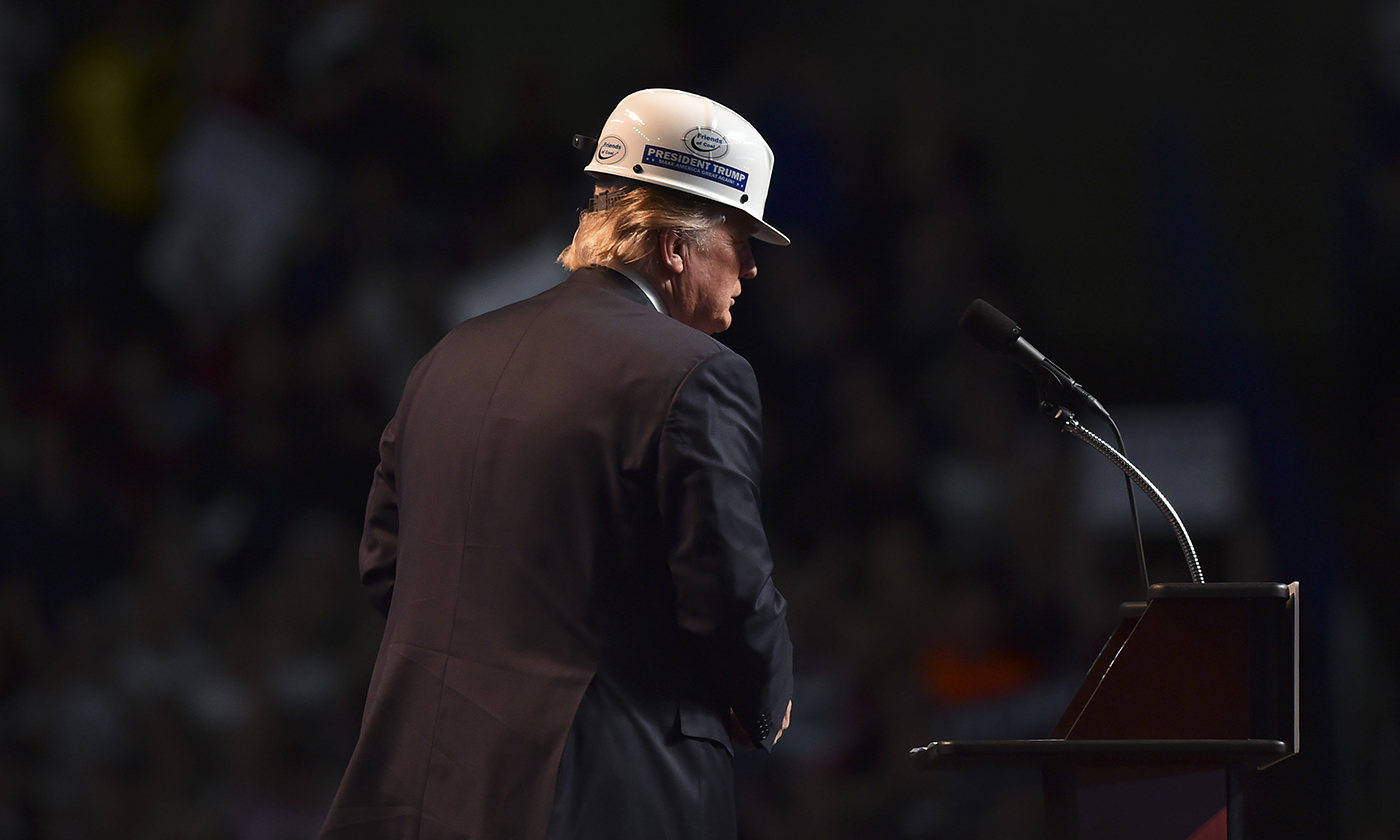
In The Limousine Liberal, historian Steve Fraser traces the rise of right-wing populism to the Nixon presidency when blue-collar Whites realized that “their social contract with New Deal liberalism was expiring.” Structural unemployment and wage stagnation were taking their toll, but the Democrats offered no solutions. Nixon offered no help to the working class either; instead, he celebrated their folkways, initiating a culture war steeped in noble traditions like hard work and humility and pernicious ones like patriarchy and White supremacy. Reagan and George W. Bush carried on in this vein, with Bush going so far with the plutocratic populist ruse as to provide hard hats to the corporate lobbyists who populated his campaign rallies.
Nixon voters’ discontent was not only financial. They bemoaned the atomistic quality of modern life writ large. On that score, the situation has only deteriorated. The social fabric is weak, civic participation is anemic, and poor people are regarded as losers, when they’re regarded at all. The bipartisan myth of the meritocracy has effectively displaced altruistic values of community and care, resulting in social conditions shitty enough to impel nearly 5% of Americans to try to take their own lives.
Coincident with economic precarity and incohesion are several significant demographic and cultural shifts: The proportion of Whites in America has decreased from 88% in 1970 to 72% in 2010. Today, women compete with men in the work-place, gender identities are in flux, multiculturalism is the norm, marriage equality is the law of the land, and there’s a new lexicon for discussing race and gender—and impatience toward those who aren’t yet hip to it. Whites are, on the whole, overrepresented in higher education, politics, corporate management, and prestigious professions like law, medicine, and journalism. But not working-class Whites. While people of color and middle-class White women are slowly gaining representation, poor Whites’ stars are not rising. On the contrary, their well-being, as measured by life expectancy, health, educational attainment, and income, is declining.
These deteriorating social conditions set the stage for race hustlers to forge a counterfeit bond between rich and nonrich Whites—a bond that tends to suppress any claims the have-nots might make on the wealth of the haves. As Briahna Joy Gray astutely argues, absent a class analysis, calling out Trump’s racism can perversely bolster his position as the great White savior who has the best interests of White Americans at heart (thereby obscuring his avaricious allegiance to crony capitalism).
Racist precepts were constructed to justify the slave trade and have served handily ever since to pit poor Whites against Blacks in the capitalist rat race. As economic inequality hits new extremes, oligarchs are more than happy to have nonrich Whites blame immigrants and people of color for their inability to get ahead. Those who are down-and-out have one of three explanations for their circumstances—the system is flawed; they’re losers who have only themselves to blame; or it’s the fault of scapegoats and their liberal coddlers. To the extent that economic elites seal off door No. 1, our democracy is imperiled by the temptation to enter door No. 3.
Most liberals understand that gender equality and racial and ethnic diversity are not the cause of economic decline, but put yourself in the shoes of a White conservative living in an area undergoing rapid diversification. Ku Klux Klan leader Rachel Pendergraft says that hate groups’ numbers are swelling with new members who feel like “strangers in their own country.” Even if one isn’t experiencing downward mobility themselves, seeing others in their community struggle—and mistakenly linking those struggles to racial diversity and liberal immigration policy—makes them worry about what the future holds for them as the White minority.
Liberal professionals look upon nationalism with unmitigated horror, because all they see is the racist aspect. What they’re missing is how nationalism is a reaction to the detrimental impacts of globalization. Two-thirds of working-class Whites and three- quarters of Trump primary voters see trade deals as harmful to American workers, and there’s plenty of evidence that they’re right (and that foreign laborers are being exploited in the bargain as well). When Trump tells them he will bring back their jobs by shredding unpopular trade and climate deals, that sounds pretty damn good.
After NAFTA passed, the president of the electrical workers’ union vowed revenge: “Clinton screwed us and we won’t forget it.” Twenty-four years and a few dozen Trump anti-NAFTA jeremiads later, rank-and-file electrical union members welcomed Trump to their Philadelphia job site. Minnesota iron and steel workers, too, say they’ve never forgiven President Clinton for NAFTA and that Trump won them over with his outspoken commitment to killing the Trans-Pacific Partnership. Trade deals, they say, are their No. 1 issue and the reason the once-solidly blue North Star state is turning red.
Liberal Democrats are right: We’re not going back to the closeted, corseted, Jim Crow 1950s. But we’re not going back to the Clintonian 1990s, either. That much was made evident in 2016.
City University of New York sociologist Charlie Post summed up the 2016 debacle like this: “Traditionally Democratic working-class voters were faced with the choice between a neoliberal who disdained working people and a right-wing populist who promised to bring back well-paying manufacturing jobs. Many stayed home, and a tiny minority shifted their allegiances from the first African-American president to an open racist and xenophobe.” Or, to put it in Michael Moore’s less academic terms, Trump’s victory was “the biggest fuck you ever recorded in human history.”
Post’s conclusion aligns with the views of Trump voters in blue-collar Howard County, Iowa, which Obama won by 20 points and Trump won by a staggering 41. Pat Murray, a press-brake operator and Democratic member of the county Board of Supervisors, said, “Democrats always say we’re going to fight for the working people. The last few elections, we haven’t shown that at all.” Murray didn’t vote for Trump, but his brethren did. And in interview after interview, the reason they gave was Clinton’s elitism. They caucused for Sanders and, when he lost the primary, turned a desperate eye on Trump.
Blue-collar Whites weren’t Clinton’s only detractors. Civil rights scholar Michelle Alexander argued during the primary that Clinton didn’t deserve Black people’s vote; evidently, she wasn’t alone. Eleven percent of Black 2012 Obama voters stayed home in 2016, representing a loss of 1.6 million votes, many of them in swing states that Trump won by razor-thin margins. Some Black Milwaukee residents told reporters they were disillusioned with how little their lives had improved after eight years of Obama and couldn’t bring themselves to vote for Clinton. As pollster and strategist Stanley Greenberg notes, “The Democrats don’t have a ‘White working-class problem.’ They have a ‘working-class problem,’” borne of decades of alignment with the economic interests of the elite.
To hear political analyst Thomas Frank tell it in Listen, Liberal, too many Democrats have stood by and watched—if not cheerleaded—as the invisible hand of the market grabbed Black, brown, and White middle-Americans’ wealth and handed it over to oligarchs. Democrats in the Clinton mold have, as Open Markets Institute Policy Director Matt Stoller puts it, “replaced a New Deal-era understanding of economic and political democracy with an ideology that justified the pillaging of working-class Americans by a new group of political and economic elites.” The Democratic Party has moved so far to the right on economic issues that Bernie Sanders’ 2016 platform looked like Dwight Eisenhower’s! Having hewed to a centrism that has skewed so far to the right, and having made little effort to reposition the center further to the left, Democrats’ working-class mantle was, by 2016, threadbare.
In becoming the party of upper-middle-class professionals that, as Frank puts it, “no longer speaks to the people on the losing end of a free-market system that is becoming more brutal and more arrogant by the day,” an opening has been created for the right-wing to co-opt class and for Trump to disingenuously inveigh against the establishment. What’s more, Frank laments, “The task of deploring and denouncing the would-be dictator Trump has entirely crowded out the equally important task of assessing where the Democratic Party went wrong…They don’t need to persuade anyone. They need only to let their virtue shine bright for all to see.”
You may not agree that neoliberal economic free trade and de-regulatory policies are to blame for our country’s economic woes, and my task here isn’t to convince you to reject market capitalism or to see the meritocracy as mythical and arbitrary. I’m suggesting that there are social and political conditions, other than or in addition to bigotry, that make many working- and lower-middle- class people feel “left behind.” If they hired Trump to blow up a system they see as rigged, campaigns that promise to return to the good ol’ days of 2015—before Trump ruined everything—will not inspire, nor will conversations that refuse to acknowledge how the good ol’ days were rife with cynicism and despair. Trump’s solutions to complex problems are dangerous, simplistic, and cruel, but the problems are real.
This excerpt from Beyond Contempt: How Liberals Can Communicate Across the Great Divide by Erica Etelson appears with permission of New Society Publishers. A fully referenced version appears in the book.
Originally published by Yes! Magazine, 12.16.2019, under a Creative Commons Attribution-NonCommercial-NoDerivatives 4.0 International license.