A receding hairline often raises concerns about testosterone, especially when shedding appears during adulthood. The connection seems logical because testosterone affects male development, body hair, and sexual health. Yet scalp hair loss follows a different biological pathway in most men. Dihydrotestosterone, genetic sensitivity, age, illness, and nutrition each provide better explanations. Separating these causes helps men avoid guessing and choose the right next step, beginning with the difference between testosterone and DHT.
Testosterone and DHT Affect Hair Differently
An enzyme called 5-alpha reductase converts testosterone into dihydrotestosterone, or DHT. DHT binds strongly to androgen receptors, including receptors inside scalp hair follicles.
For men with genetically sensitive follicles, DHT shortens the growth phase and gradually miniaturizes each follicle. Hair becomes finer, shorter, and less visible over time. This process causes the familiar receding hairline and thinning crown associated with male pattern baldness.
That mechanism explains why “Is hair loss a sign of low testosterone?” isn’t a simple yes-or-no question. Men with lower testosterone can keep their scalp hair, while men with higher testosterone can lose hair early. Follicle sensitivity and local DHT activity matter more than the total testosterone level in the bloodstream.
What Low Testosterone Usually Looks Like
Low testosterone usually produces a broader pattern than scalp thinning alone. Men often notice changes in sexual function, energy, mood, physical performance, or body hair.
Common symptoms include:
- Lower sexual desire.
- Fewer or weaker morning erections.
- Persistent fatigue despite adequate sleep.
- Slower recovery after exercise.
- Reduced strength or muscle gain.
- Difficulty concentrating.
- Irritability or a flatter mood.
- Thinner beard, chest, or arm hair.
Body hair changes deserve attention because testosterone supports facial and body hair growth. A thinning beard or reduced chest hair can provide more useful hormonal information than a receding hairline.
One symptom does not confirm low testosterone. Sleep loss, stress, depression, medication, weight changes, and other health conditions produce similar effects. Symptoms need proper evaluation, not a conclusion based on appearance alone.
Hair Loss Patterns Point Toward Different Causes
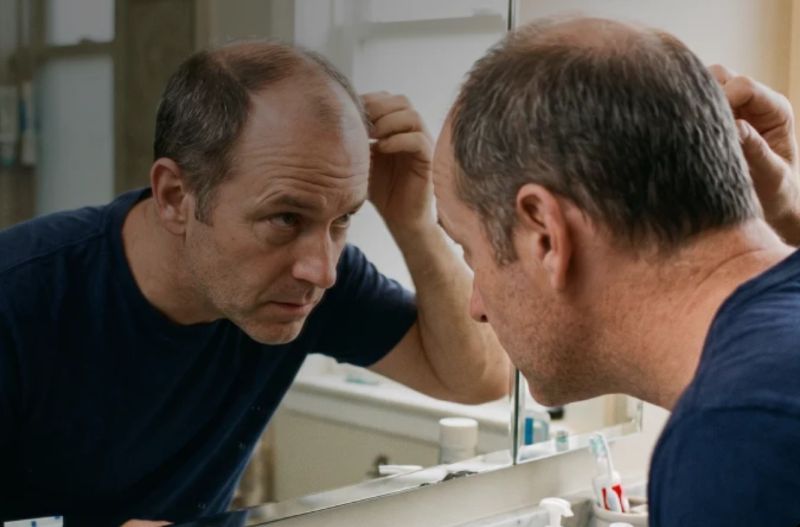
Male baldness usually develops gradually. The hairline moves backward, the crown becomes thinner, or both areas change over several years. This pattern strongly suggests genetic follicle sensitivity to DHT.
Diffuse shedding follows a different course. Hair falls across the entire scalp, often several months after a major physical or emotional stressor. Serious illness, surgery, crash dieting, and severe stress can trigger telogen effluvium, which often improves after the underlying trigger resolves.
Thyroid problems also cause widespread thinning. An underactive thyroid can produce dry, brittle hair, while an overactive thyroid can increase shedding. Low iron stores, low vitamin D, inadequate protein intake, and other nutritional problems can produce similar changes.
Sudden patchy loss requires separate attention. Round, smooth bald patches can occur with alopecia areata, an autoimmune condition that differs from both male baldness and diffuse shedding.
How Doctors Check Testosterone and Hair Loss
A clinician usually starts with the timing, pattern, and speed of hair loss. The examination can distinguish a receding hairline from diffuse shedding, patchy loss, scalp inflammation, or breakage.
Testosterone testing should match the symptoms. Doctors commonly prescribe an early-morning total testosterone test, then repeat an abnormal result before making a diagnosis. Depending on the situation, testing can include free testosterone, sex hormone-binding globulin, thyroid markers, ferritin, vitamin D, and prolactin.
Hair loss treatment depends on the cause. Genetic pattern loss requires a scalp-focused assessment, while diffuse shedding requires attention to recent illness, diet, stress, medications, or endocrine conditions. Treating low testosterone will not automatically restore hair lost through follicle sensitivity.
Men should also avoid starting hormone products based only on hair loss. Testosterone treatment requires confirmed low levels, compatible symptoms, and medical supervision. It does not address every cause of fatigue, reduced libido, or thinning hair.
Conclusion
Scalp hair loss usually reflects DHT sensitivity and genetics, not low testosterone. Low testosterone becomes more plausible when hair changes occur alongside reduced libido, weaker erections, fatigue, poor recovery, mood changes, or thinning body hair. The practical next step is to document the shedding pattern, note related symptoms, and schedule an evaluation. A morning blood test and scalp examination can distinguish hormonal concerns from genetic hair loss, thyroid disease, stress shedding, or nutritional deficiencies.
About the Author