
A federal lawsuit filed by two Texans, including an Austin resident, seeks to overturn a state law that requires weddings to be performed by a member of the clergy or by a judge.
By Chuck Lindell
Joined by the Center for Inquiry — a national nonprofit that seeks to foster a secular society based on “reason, science and humanist values” — the lawsuit argues that the clergy requirement violates the First Amendment by creating a government-sponsored preference for religion over nonreligion.
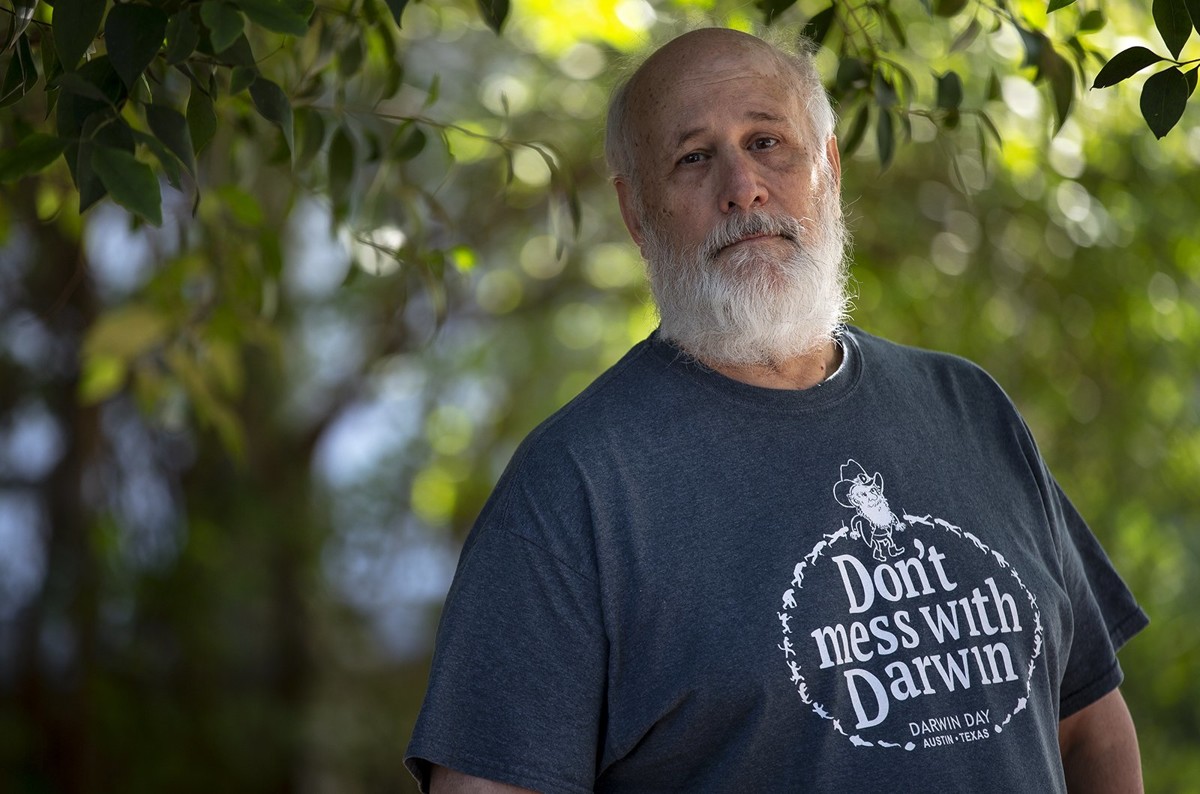
“It turns out that there are quite a few secular folks, even in Texas, who would prefer to have their own way of celebrating this event. The fact that we’re barred by law from doing that seems unfair,” said Steve Bratteng, director of the Center for Inquiry’s Austin office.
Bratteng, trained by the center to perform weddings as a “secular celebrant,” said he joined the lawsuit because he’s had to decline several requests to marry couples who wanted a secular ceremony without religious overtones.
“We’re completely nonreligious, and we feel that the secular community deserves their own opportunity to have that type of thing,” said Bratteng, 73.
Under Texas law, the crime of performing a wedding without authorization can be punished by up to a year in jail and a $4,000 fine.
The requirement is easily bypassed via organizations like the Universal Life Church, which offers free online ordinations into the ministry — with vestments, handbooks, certificates of ministry and other items offered for sale through the church’s website. An “honorary religious degree,” for example, sells for $13.99, while the hand-lettered “doctor of divinity degree” will set you back $19.99.
It’s a common path for couples who want to be married by a close friend or family member, and the church claims Lady Gaga, Paul McCartney and Dwayne “The Rock” Johnson as ordained ministers.
Though popular, online ordinations show “the ridiculous nature of the Texas law,” said Nicholas Little, legal director for the Center for Inquiry.
“I can go online and become ‘ordained’ from an internet church in like three minutes, and I can then perform a wedding in Texas, but our people — who are trained — are excluded from performing marriages, and that just makes no sense to me in the slightest,” Little said.
In addition to asking that the Texas law be declared unconstitutional, the lawsuit seeks a federal court order allowing Center for Inquiry-trained secular celebrants to perform weddings in Texas.
“People should be able to have the wedding that they want, and we want to fill that need for people who don’t want a religious officiant,” Little said. “Let’s make weddings as happy as possible for people. It should be the happiest day in your life.”
Filed last week in Dallas federal court, the lawsuit was assigned to U.S. District Judge Jane Boyle.
Texas Attorney General Ken Paxton, whose office will defend the law in court, could not comment on the lawsuit at this time, his office said.
The Texas lawsuit is part of a wider effort by the Center for Inquiry to allow its trained celebrants to perform weddings.
In 2014, a center lawsuit prompted a federal appeals court to overturn an Indiana law that allowed clergy to marry couples but omitted “equivalent officials of secular groups such as humanist societies.”
A 2017 ruling by a federal judge in Illinois allowed secular celebrants to perform weddings in that state, and the center helped get laws passed in Oregon and the District of Columbia to achieve the same result.
Another center lawsuit was recently filed in Michigan.
If the Texas lawsuit succeeds, Little said, judges, retired judges and clergy will still be able to perform weddings.
“It’s important to say that we are not trying to take anything away from anybody,” Little said. “We’re just saying let us sit at the table. People should be able to have the wedding that they want, and we want to fill that need for people who don’t want a religious officiant or a very impersonal wedding that you get if you go to a judge.”
Originally published by the Austin-American Statesman, 12.10.2018, under the terms of a Creative Commons license.