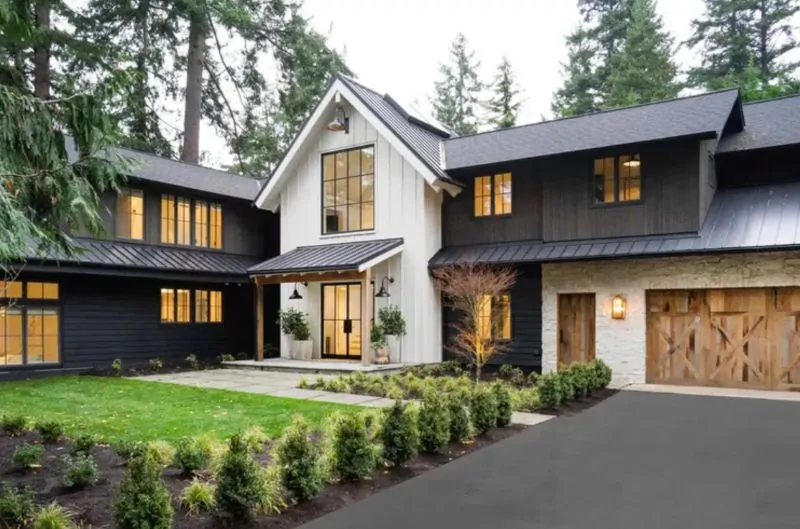
I walked up to a house last spring and stopped dead on the walkway. The front door wasn’t a door the way I understood doors. It was a four foot wide slab of white oak, hung off center, floating maybe an inch above the porch, and when the owner pushed it, the whole thing swung on a hidden pivot like a bank vault that decided to go into design. I stood there longer than a grown adult should stand in front of somebody’s house. If you’ve ever pulled up to a home and felt that same jolt, that’s the door’s whole job, and it’s the reason entryways are the cheapest square footage you’ll ever own in terms of visual impact.
Here’s the promise: by the end of this piece you’ll know what makes a statement entryway work, how pivot hardware actually functions, what it costs, and how to decide whether your house can pull one off. No fluff, no sales pitch, just the stuff I wish someone had told me before I spent three weekends researching door slabs on my phone at 11 p.m.
Why the front door carries more weight than any other upgrade
Buyers judge homes in the first eight seconds, whether they admit it or not. Paint gets you clean. Landscaping gets you tidy. The door gets you a reaction. It’s the one architectural element a visitor physically touches, and it’s the only one they stand in front of long enough to actually see details.
According to the U.S. Census Bureau, roughly two thirds of American households own the home they live in, and that means most of your neighbors are also thinking about resale. A front door is one of the few exterior projects that shows up in listing photos and in person at the same time. Realtors, appraisers, and nosy neighbors all register the same thing.
My opinion, and I’ll stake it here: a great door beats a new garage door every single time. Garage doors are volume. Front doors are identity.
The 8 second test: does your entry want to be looked at?
Stand on your sidewalk. Not the porch, the sidewalk. Now squint. What you’re checking for is silhouette. Silhouette is the shape your entry makes against the house, and it’s the thing a statement door changes most. A standard 36 inch door is a vertical rectangle sitting politely in a wall. Widen the opening past 42 inches, and suddenly the entry becomes a composition instead of a hole.
Ask yourself honestly:
- Does the door disappear into the facade, or does it anchor it?
- Is the hardware visible from 30 feet, or does it vanish into shadow?
- Does the material read as intentional, or like something left over from a prior renovation?
If you answered “disappears,” “vanish,” and “left over,” you don’t have a door problem. You have an entry problem. Those aren’t the same thing and the fix isn’t the same either.
What pivot hardware actually does, explained without jargon
A traditional door swings on hinges attached to the frame at the edge. Take a hinge away and the door falls. A pivot door hangs on a pin set into the floor and sometimes the header, positioned slightly inboard of the door’s edge. The weight sits on that pin, the door rotates around it, and the frame becomes decorative instead of structural. That single change produces a list of consequences most homeowners don’t anticipate.
Pivot doors can run much wider and taller than hinged doors because there’s no edge hinge to strain. They can be steel, oak, walnut, glass, or composite. They open with one finger because the pivot handles the load. And they look, frankly, like something out of a house tour video, which is exactly why they’ve moved from custom builds into mainstream residential work.
They also come with tradeoffs you should hear from a person rather than a product page. Pivot doors need a level floor and a solid subfloor, because that pin carries real weight. They usually want more clearance than a hinged door since the sweep of the slab is wider. And a poorly installed pivot door will not sag, it will wobble, which is somehow worse. For homeowners who want to see how pivot doors are built and configured, Custom pivot doors are a solid reference point for sizing, materials, and finish options.
Materials and finishes: pick for weather, not for the catalog
Here’s a rule I’ve learned the hard way: choose your door material based on your climate first and your Pinterest board second. My cousin in Phoenix built a white oak entry on a west facing wall. It looked incredible for about eighteen months. Then the sun won. Broad guidance from the U.S. Department of Energy points to the same principle: exterior assemblies perform differently depending on climate zone, sun exposure, and moisture. Door material is part of that assembly, not separate from it.
| Material | Best for | Watch out for |
| Solid wood | Covered entries, moderate humidity | Sun fading, seasonal movement |
| Steel | Harsh sun, coastal wind, security | Surface temperature, powder coat quality |
| Composite | Wet climates, low maintenance homes | Limited stain options |
| Glass and steel | Modern architecture, shaded porches | Privacy film, cleaning |
If it were my house in a four season climate with a west facing porch, I’d go steel with a wood look finish. Nine years of watching friends refinish oak entries every third summer made that decision for me.
A homeowner’s checklist before you order anything
Do these five things in this order and you’ll skip the expensive mistakes.
- Measure the rough opening, not the door. Width, height, and jamb depth. Write it down twice.
- Check your subfloor. If it flexes when you bounce on your heels, the pivot has nothing solid to sit on.
- Confirm clearance. Walk the swing path. Pivot doors often sweep wider than the slab itself.
- Match the finish to your sun exposure. Look at the wall at noon and at 5 p.m. before you pick a stain.
- Get the install plan in writing. Who sets the pin, who levels the frame, who handles the door’s weight during installation.
Step three is the one most people skip, and it’s the one that turns a showpiece into a daily annoyance.
Where statement entryways fit in home history
Grand entries are not new. Grand entries are the original. Colonial homes put their best stonework and the widest door on the street facing facade on purpose, and that instinct hasn’t changed in three centuries. Preservation guidance from the National Park Service treats entry features as defining character elements for that exact reason: the entry does more storytelling than any other part of the exterior.
What’s changed is who gets one. A generation ago, a ten foot tall rotating entry slab was a mansion detail. Now it’s a suburban choice, and honestly, I think that’s a good thing. Housing should be allowed to be interesting.
So is it worth it?
If your entry reads as an afterthought on a house you love, a wider, heavier, better hung door is the highest impact change you can make for the money. If your entry is already strong and your real problem is the driveway, spend there instead. Judgment matters more than trend. Walk out to your sidewalk tonight and look at your front door the way a stranger would. Whatever you feel in those eight seconds is exactly what every visitor feels, and you can change that feeling with one satisfying swing.
About the Author