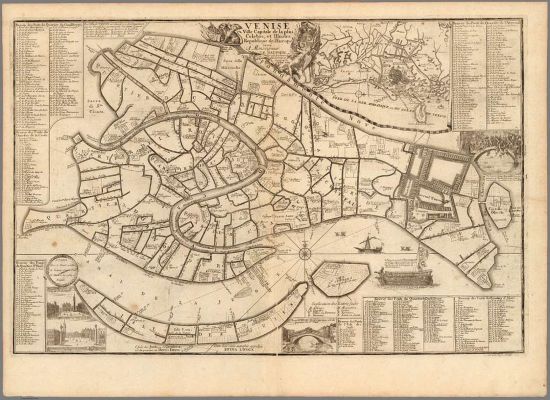
Venice liked to present itself as calm, balanced, and orderly. Yet behind that polished surface stood one of medieval and early modern Europe’s most watchful governments. The Republic did not depend on a single king with private agents.
That is what makes Venice so important in the history of intelligence. The republic treated information as a form of infrastructure. Reports from ports, embassies, marketplaces, and private rooms were gathered, sorted, compared, and acted on. The state wanted signals: changes in tone, shifts in loyalty, odd spending, unusual travel, nervous gestures, and half-spoken hints. Venice ruled a trading empire spread across sea lanes and distant outposts, so it had to turn uncertainty into usable knowledge.
This is also why its social spaces mattered. In Venice, politics did not live only in council chambers. It also moved through inns, salons, quays, churches, and gaming rooms. Places of play were not outside public life. They were woven into it. A city that thrived on masks, ceremony, and conversation naturally produced a culture in which seeing without seeming to see became a civic skill.
Is poker the last surviving version of the Venetian information game
To understand Venice’s intelligence culture, it helps to look at a room where rank, money, chance, and conversation mixed together. In the Venetian world, the cards were perhaps secondary. What mattered was the read. A state watcher in a gaming room was not there only to count coins or follow the play. He was there to study pauses, habits, false ease, quick irritation, and the moment when a face stopped matching a voice.
Generally speaking, today’s poker is the game that most resembles that nature, and perhaps it is the modern generation of the strategy games people would have played in the Venetian Republic back then. Because when someone today sits down to play fast-paced Omaha poker online, or any other variation in casinos, they are first preparing for a mental game. The Venetian spymaster watching a diplomat fidget at the Ridotto and a player studying betting patterns on a mobile poker app are running the same mental software: what does this person’s behavior tell me that their words do not? Venice understood that public speech was often staged. So it looked for truth in the gap between statement and manner.
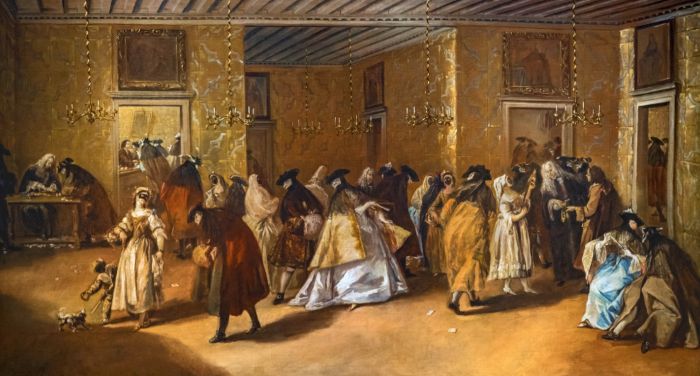
As a matter of fact, their game wasn’t called poker but certainly rewarded close attention to tempo, restraint, confidence, and overconfidence. Venetian intelligence worked in much the same way. Reports mattered, of course, but so did the human texture around them. A delayed answer could matter. So could a careless boast, a sudden friendship, or a man who played boldly at table but cautiously in negotiation. The republic’s advantage came from joining formal reporting to informal reading.
The machinery behind the mask
Venice’s system worked because it combined formal offices with informal channels. The Council of Ten led this system from the top, but Venice also used many other ways to gather information. In 1539, the government added a smaller group called the Inquisitors of State. Their job was to deal with dangers to the state quickly and secretly.
At the same time, Venice collected information from many places:
- written accusations,
- letters from embassies,
- news from the port,
- and information from the Rialto.
Even the famous lion’s-mouth boxes were part of this system. People could put written warnings or accusations into them, and those messages could then reach the government.
| Year | Intelligence milestone | Details |
| 1310 | Council of Ten created after the Tiepolo conspiracy | Venice turned emergency oversight into a lasting tool of state survival |
| 1539 | Inquisitors of State established | Sensitive investigations could be handled by a tighter, faster body |
| 1638 | Ridotto opened at Palazzo Dandolo | A state-run gaming house became a controlled social space where elites and foreigners mixed |
| 1774 | Ridotto closed | The famous venue ended, but the link between sociability and information had already shaped Venetian political culture |
The table shows that Venetian intelligence did not appear all at once. It was built little by little over time. First, the government put careful watching into its institutions, and later into the city itself.
The Ridotto, which opened in 1638, had eleven rooms inside Palazzo Dandolo. It brought together both local Venetians and foreign visitors, many of them wearing masks. That made it a rare place where people of different ranks could mix more easily.
This was important in Venice because diplomats, nobles, and travelers often carried useful news. In that world, even simple conversation could become something politically important.
Why Venetian intelligence lasted
What made Venice unusual was not simply secrecy. Many states kept secrets. Venice made secrecy administrative. It gave intelligence a home, routines, and a chain of command. That helps explain why historians now see the republic as a major early case of organized state intelligence rather than a collection of scattered spies. As one review of recent scholarship puts it, “Venice’s secret service functioned like an organisation of public administration with managerial structures.” That is a modern-sounding description, but it fits the old republic well. Information moved through offices, across distances, and back into decision-making with surprising discipline.
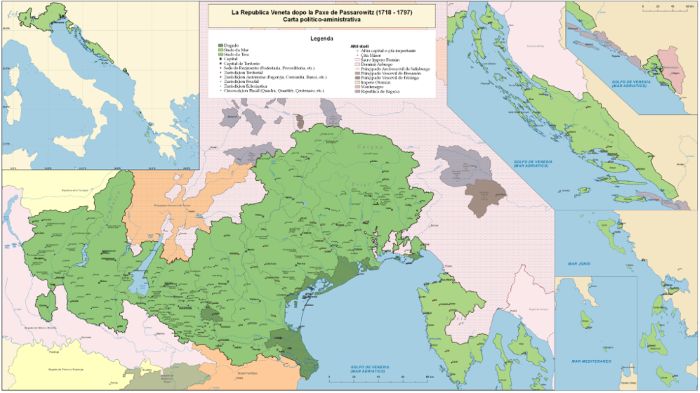
The same discipline appears in the scale of functions attributed to the Venetian service by recent historical work. Research highlighted by the Social History Society describes an apparatus centered in the Doge’s Palace that handled intelligence, covert action, analysis, cryptography, steganography, and cryptanalysis, while drawing on state servants, paid informants, and amateurs across Europe, Anatolia, and North Africa. That breadth matters because it shows Venice was not merely reacting to plots. It was building a method for turning scattered knowledge into state power.
Venice’s great insight was simple: a republic survives not by hearing everything, but by learning which whispers matter. In that sense, its intelligence system was less about shadows than about attention. The state listened to dispatches, markets, ports, and gaming rooms alike, and from that listening it built one of Europe’s earliest information governments.
About the Author