The investigations into the financial dealings of Donald Trump and his associates join a growing body of evidence pointing to lax enforcement of certain high-level financial crimes.

By Ofer Raban, J.D.
Professor of Constitutional Law
University of Oregon
The scope of financial crimes unearthed so far by state and federal authorities investigating President Trump and his associates is remarkable.
Paul Manafort was found guilty of bank and tax fraud, and faces another trial involving charges of money laundering.
Former campaign adviser Rick Gates pleaded guilty to financial fraud.
Former Trump attorney Michael Cohen pleaded guilty to tax evasion and illegal campaign donations. The Trump Foundation was just dissolved over what the New York attorney general described as “a shocking pattern of illegality.”
And authorities opened new investigations following a recent New York Times exposé describing hundreds of millions of dollars of potential financial fraud by the Trump family.
Even more remarkable is what these investigations tell us about the levels of criminality among America’s business and political elite.
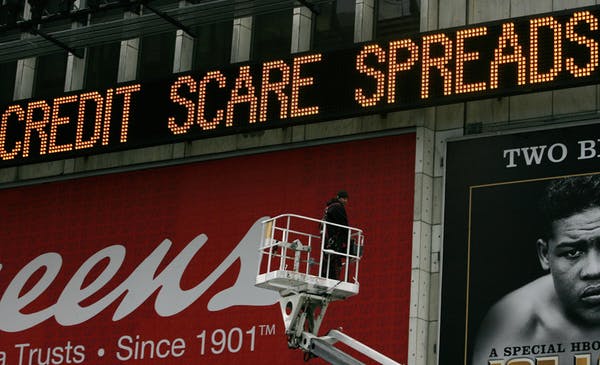
Tax evasion, money laundering, financial fraud and campaign finance violations: Every turned stone reveals thick webs of financial misdeeds. These white collar crimes, which often implicate the powerful and the wealthy, notoriously thrive in the loose regulatory environments created when big money exerts undue influence on politics.
Mounting indications
The Trump investigations join a growing body of evidence pointing to lax enforcement of high-level financial crimes.
We know, for example, that massive fraud involved in the 2008 financial collapse – from mortgage lenders who deceived customers to banks that deceived investors – went essentially unpunished.
We know that under-enforcement is common with certain big-ticket tax evasion practices – like misstating the value of assets under the gift tax. Gift tax fraud, which may save millions of dollars to a taxpayer, is a major component of the alleged tax evasion scheme of the Trump family.
Lax enforcement and minor punishments are notoriously common with violations of campaign finance laws – the point where private and public corruption often meet.
And as for money-laundering: According to congressional testimony, regulations against it are so ineffective that “the bottom-line metrics suggest that money-laundering enforcement fails 99.9 percent of the time.”
Executive, legislative and judicial failures
The blame for this loose regulatory environment is not limited to lax executive enforcement. Legislative and judicial actions play a substantial part in the swirling financial illegalities.
Congress, for example, is responsible for the many easily abused tax deductions for the rich that populate our tax code. And legislators have long refused to fund the IRS at levels allowing effective tax enforcement.
It is also Congress that has structured the Federal Election Commission as a weak and conflict-ridden enforcer of campaign finance regulations.
The courts have similarly contributed to the lax regulatory environment. As a professor of constitutional law (and ex-prosecutor), I have watched with concern as recent Supreme Court cases extended ever-increasing constitutional protections to the alliance between big money and politics.
In recent years, the Supreme Court invalidated numerous campaign finance restrictions by declaring them unconstitutional. In doing so, the court stated that “a substantial and legitimate reason” for making a political campaign contribution is that “the candidate will respond by producing those political outcomes the supporter favors.”
What many regard as political corruption is constitutionally protected as a staple of democracy by our highest court.
Six months before Trump’s election, the Supreme Court reversed the criminal conviction of a former Virginia governor on federal corruption charges. Gov. Robert McDonnell received personal gifts and loans worth hundreds of thousands of dollars from a Virginia businessman.
In exchange, McDonnell sought to influence the University of Virginia to conduct free research on the man’s commercial product.
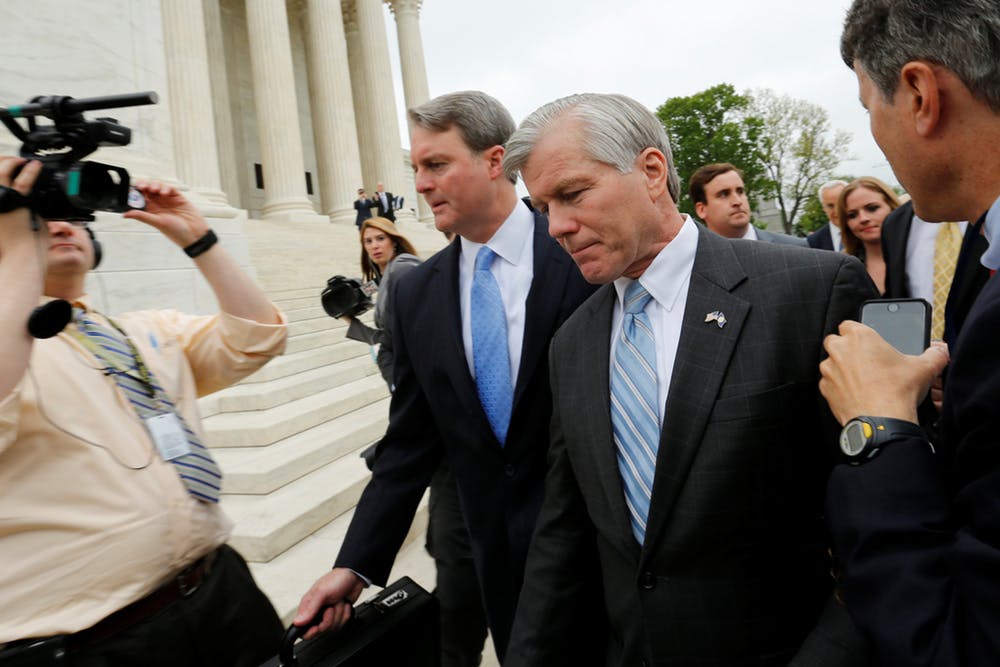
A jury convicted the governor on federal corruption charges, and a federal court of appeals affirmed. But the Supreme Court reversed the conviction after narrowing the definition of what counts as criminal corruption under federal law.
The conviction, said the court, raised serious constitutional concerns because it could chill interactions between politicians and their supporters.
As in McDonnell’s own case, the decision’s significance extends beyond matters of campaign finance. The case was recently cited as a cause for the acquittal, on federal bribery charges, of a high-ranking New York City police official who for years received lavish gifts from wealthy businessmen.
Business and political elite
The rich rewards of the Trump investigations suggest that big-money illegalities are rife in America. And while Trump may be in a league of his own, the problem is not limited to Trump.
Indeed, some of the people embroiled in the Trump scandals have long been situated at the heart of America’s business and political elite.
Paul Manafort, for one, also worked on the campaigns of Gerald Ford, Ronald Reagan, George H.W. Bush and Bob Dole. And the Trumps themselves were always highly politically connected – contributing millions to leading state and federal politicians, both Democrats and Republicans.
“As a business person,” explained Trump in a 2015 interview, “you wanna get along with all sides because you’re gonna need things from everybody.”
Consider the recently disclosed episode involving Manhattan District Attorney Cyrus Vance, Jr. – son of the late former secretary of state under President Carter.
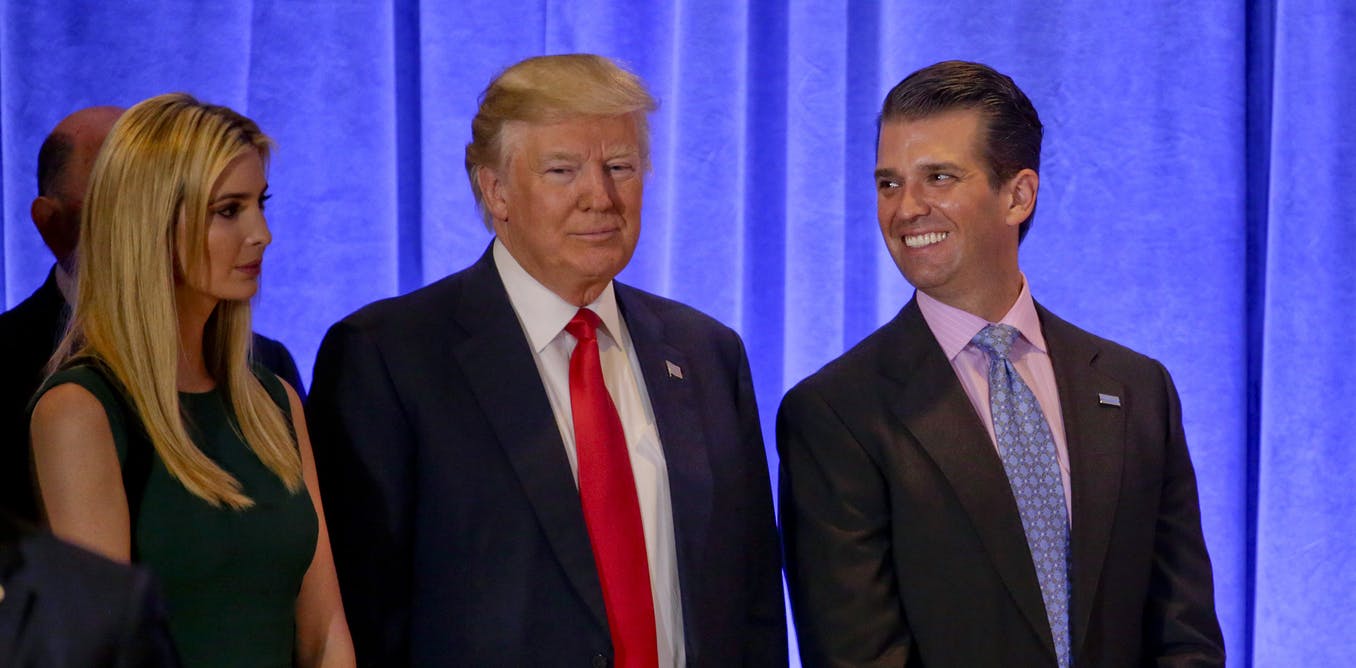
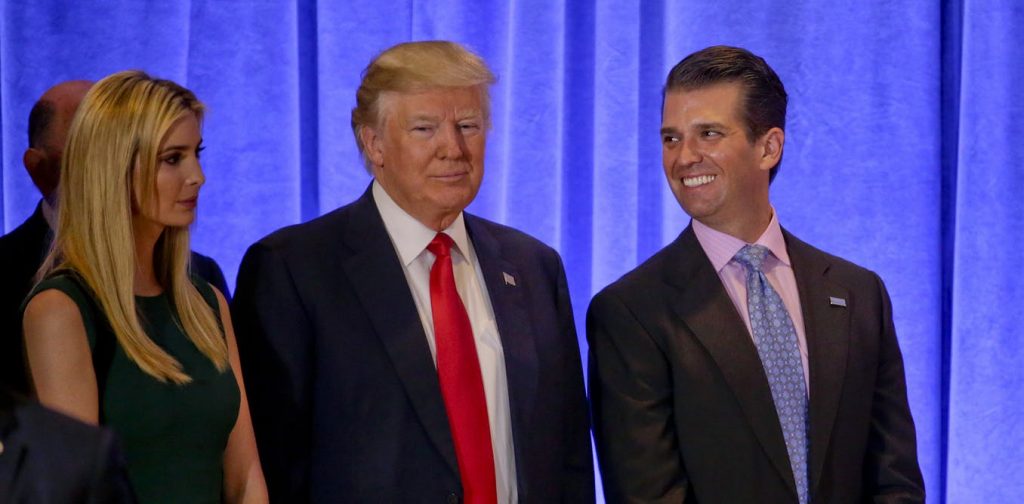
In 2012, Vance ordered prosecutors to drop a promising fraud case against Ivanka Trump and Donald Trump Jr. for lying to investors in a Trump project in Manhattan. The order was made after their father’s attorney paid Vance a visit.
Weeks later, the attorney became one of Vance’s largest donors for his re-election campaign.
That is the wider scandal suggested by the investigations of Trump and his cronies: The high levels of brazen big-money illegalities that ordinarily go unaddressed and unpunished. Indeed many of the alleged crimes are no longer chargeable due to the statute of limitations.
“Zero tolerance” and “broken windows” policies are terms frequently used by law enforcement in discussing low-level crime. But American law enforcement appears to avoid the penthouses.
There is deep irony in the fact that Trump and his cronies are being pursued for the sort of crimes whose chronic under-enforcement generated the inequality and resentment that helped catapult Trump to the presidency.
Originally published by The Conversation, 01.24.2019, under the terms of a Creative Commons Attribution/No derivatives license.