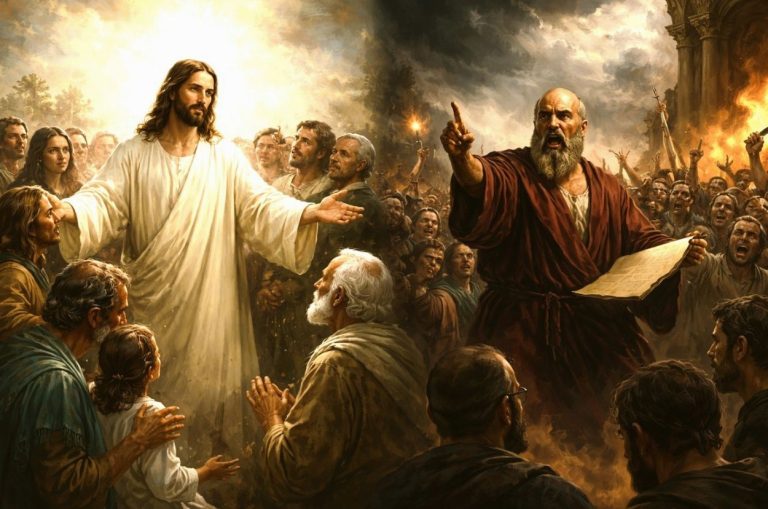
Paul Henri Thiry d’Holbach stands as one of the most systematic and uncompromising figures of the eighteenth century Enlightenment.

By Matthew A. McIntosh
Public Historian
Brewminate
Introduction
The middle decades of the eighteenth century in France produced a constellation of thinkers who challenged the theological and political foundations of the ancien régime, yet few did so with the clarity and explicitness of Paul Henri Thiry d’Holbach. While many philosophes adopted caution through deistic positions or ambiguous formulations, d’Holbach identified openly as an atheist at a time when such a stance risked both censorship and social exclusion. His work articulated a comprehensive materialist system that sought to explain nature, morality, and society without recourse to divine agency.1 His contributions to Denis Diderot and Jean le Rond d’Alembert’s Encyclopédie provided early indications of his commitment to empirical inquiry, yet his later independent writings revealed an intellectual program that aimed to dismantle the authority of religious institutions altogether.2
D’Holbach’s salon on the Rue Royale became a key meeting point for European intellectuals who were willing to debate subjects that remained officially prohibited in print. Visitors included Diderot, Friedrich Melchior Grimm, Jean François Marmontel, abbé Raynal, Helvétius, and a number of foreign thinkers such as David Hume and Ferdinando Galiani.3 The salon fostered an environment where manuscripts circulated privately before publication and where ideas that circumvented censorship could be tested among trusted interlocutors. Grimm’s Correspondance littéraire provides one of the most detailed contemporary accounts of these gatherings and confirms the salon’s role in shaping the intellectual character of the Radical Enlightenment.4
The intellectual project that emerged from this environment took its most systematic form in d’Holbach’s major works, especially Système de la nature (1770), Le Christianisme dévoilé (1766), and Le Bon Sens (1772). Each text advanced a unified critique of religious authority, naturalized human behavior through deterministic materialism, and proposed a moral philosophy grounded in human happiness rather than divine command.5 Scholars such as Alan Charles Kors and Jonathan Israel have argued that these writings constituted one of the most coherent formulations of radical philosophy in eighteenth century Europe.6 Rather than simply asserting disbelief, d’Holbach constructed a worldview that sought to replace revealed religion with a secular account of virtue and political order.
The implications of this work extended far beyond the walls of his salon. His writings circulated clandestinely through European networks documented by historians of the book such as Robert Darnton, who has shown how anti theological literature reached readers across France despite official prohibitions.7 The reception of d’Holbach’s work illuminates a crucial dimension of Enlightenment culture in the decades preceding the French Revolution: the emergence of a countertradition that challenged both religious dogma and the intertwined structures of monarchy and Church. His influence did not occur through mass readership but through the sustained engagement of a transnational community that shaped debates on morality, natural law, and the foundations of civil society.
What follows examines d’Holbach’s intellectual formation, the social world of his salon, the philosophical system developed in his writings, the network of contemporaries with whom he collaborated, and the broader cultural impact of his work. By situating him within the Radical Enlightenment rather than the cautious deism of many contemporaries, this study highlights the distinctive position he occupied within eighteenth century thought. It also assesses the ways in which his materialism and atheism contributed to changing conceptions of moral and political authority in late ancien régime France. The goal is not only to recover the coherence of his system but also to evaluate its significance within the broader evolution of European secular and philosophical traditions.
The Intellectual Formation of d’Holbach
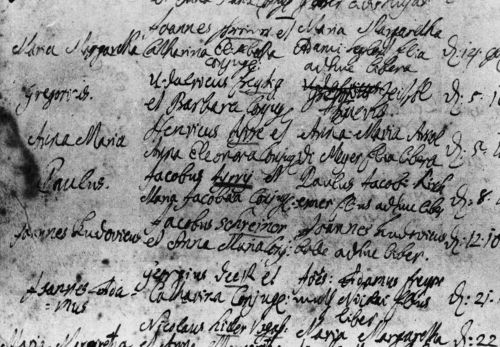
Paul Henri Thiry d’Holbach’s intellectual trajectory began long before his arrival in Parisian philosophical circles. His early education in Germany and subsequent studies at the University of Leiden exposed him to currents of natural philosophy that shaped his lifelong commitment to materialism. Leiden served as a key center for scientific inquiry in the early eighteenth century, attracting students who wished to study anatomy, physics, and the methods associated with the new science.8 The cosmopolitan environment of the Dutch Republic also exposed d’Holbach to a broad spectrum of religious and philosophical debate, a contrast to the more restrictive intellectual climate of France. His time in Leiden is therefore a crucial foundation for understanding the scientific orientation that would inform his later works.
D’Holbach’s engagement with earlier thinkers further shaped the philosophical framework he developed in the 1760s and 1770s. He encountered the writings of Baruch Spinoza, whose monist metaphysics and critique of revealed religion left a deep imprint on later Enlightenment materialism.9 He also drew upon the arguments of Pierre Bayle, whose Dictionnaire historique et critique provided numerous challenges to traditional theology, particularly through its method of skeptical reasoning.10 Likewise, elements of Thomas Hobbes’s political thought and his account of natural philosophy can be detected in d’Holbach’s later systematic writings. These influences did not simply provide a set of sources. They offered him conceptual tools for constructing a worldview in which nature operated through causal laws without supernatural intervention.11
His involvement in the Encyclopédie marked another stage in his intellectual development. Beginning in the 1750s, d’Holbach contributed articles on chemistry, mineralogy, and other branches of natural philosophy. These entries, authenticated in the ARTFL digital edition of the Encyclopédie, demonstrate his commitment to empirical explanation and his familiarity with the scientific literature of his time.12 The articles also reveal a methodological stance that privileged observation and experiment over metaphysical speculation. Participation in the Encyclopédie placed him within a network of writers who viewed natural knowledge as a means of challenging inherited religious and political doctrines.13 The project thus functioned not only as an encyclopedic enterprise but as a collaborative space in which d’Holbach refined the intellectual positions he would later articulate more openly.
By the early 1760s, d’Holbach had begun to compose works that circulated privately among trusted colleagues. These manuscripts explore themes that would later reappear in his published texts, including critiques of Christianity, determinist accounts of human behavior, and evaluations of political authority.14 The private circulation of such material indicates both the danger associated with explicit atheism and the seriousness with which d’Holbach pursued his intellectual project. Private drafts allowed him to test arguments, engage with interlocutors in his salon, and adjust formulations before risking publication abroad. This stage reveals a thinker who approached radical ideas not with impulsiveness but with careful preparation and a growing sense of philosophical coherence.15
D’Holbach’s intellectual formation was therefore neither sudden nor the product of isolated inspiration. It developed through formal education, wide reading, scientific engagement, and participation in one of the century’s most ambitious publishing projects. His salon would later become the social center of his philosophical activity, yet the foundations of his materialism emerged decades earlier through encounters with the scientific and philosophical traditions of northern Europe. These influences provided the conceptual vocabulary and methodological commitments that shaped his mature writings, and they positioned him to articulate one of the most systematic criticisms of religious and political authority in eighteenth century France.16
The Salon of the Baron d’Holbach: Space, Structure, and Sociability
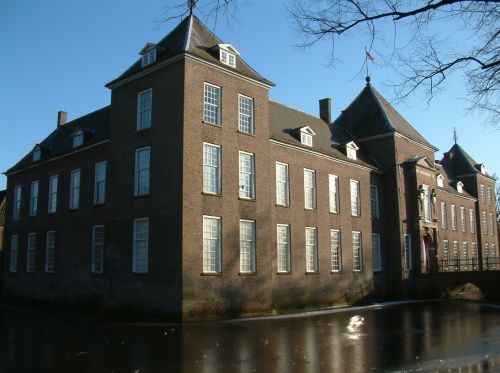
The salon hosted by d’Holbach at his residence on the Rue Royale in Paris functioned as one of the most important centers of intellectual exchange in the later Enlightenment. Contemporary accounts, especially those found in Friedrich Melchior Grimm’s Correspondance littéraire, describe a regular gathering of writers, philosophes, foreign envoys, and visiting intellectuals who met for extended meals and conversation.17 This environment differed from more socially oriented salons that prioritized aristocratic display. Instead, d’Holbach’s gatherings emphasized sustained engagement with philosophical problems, natural science, political economy, and the clandestine circulation of manuscripts. Grimm’s reports indicate that the salon operated with a rhythm and atmosphere shaped by d’Holbach’s hospitality and his willingness to encourage forthright discussion.18
Regular attendees included Denis Diderot, who was both a close friend and a frequent collaborator, and Grimm himself, whose reports provide the richest surviving testimony.19 The abbé Raynal, author of the Histoire des deux Indes, participated in these meetings as well, offering both historical analysis and political commentary. Other French participants included Claude Adrien Helvétius and Jean François Marmontel. The presence of foreign visitors added to the cosmopolitan character of the salon. Among those documented are the economist Ferdinando Galiani and several British visitors, most notably David Hume during his time in Paris.20 This mixture of French and international thinkers created a distinctly transnational intellectual community, one that facilitated the movement of ideas across linguistic and political boundaries.
The salon also served as a testing ground for manuscripts that could not be published openly in France. Writers circulated drafts anonymously or under pseudonyms, and discussions often focused on the feasibility of printing abroad.21 This private exchange of texts formed part of the broader eighteenth century culture of clandestine literature, which scholars such as Robert Darnton have reconstructed from police archives and records of seized books.22 In the case of d’Holbach’s circle, these discussions allowed members to refine arguments, anticipate objections, and adjust rhetorical strategies before sending manuscripts to printers in the Dutch Republic or other more tolerant publishing centers. This phase of intellectual production is essential for understanding how d’Holbach’s work could be both radical and carefully structured.
The social character of the salon contributed significantly to its intellectual productivity. Meals often unfolded over several hours, creating a space in which participants could challenge each other’s assumptions and build upon previously discussed ideas.23 Diderot’s private correspondence reveals moments of disagreement and intense debate within the group, suggesting that the salon did not simply reproduce shared convictions but operated as a forum where arguments were tested and strengthened.24 This atmosphere of conviviality, criticism, and collaboration helped shape the philosophical coherence evident in d’Holbach’s major works. It also created a supportive environment for other writers whose projects benefited from open discussion and feedback.
The salon functioned as a node within a much larger communication network. Grimm’s Correspondance littéraire, a manuscript periodical circulated to European courts, transmitted news of Parisian intellectual life to readers in Germany, Russia, and other regions.25 Through this channel, ideas originating in the salon reached influential patrons and thinkers abroad. The participation of foreign diplomats and scholars further extended this network, allowing for exchanges that influenced debates on political reform, religious tolerance, and the nature of sovereignty. This interaction between local sociability and international correspondence underscores the role of d’Holbach’s salon in shaping Enlightenment discourse beyond France.
Although the salon was never an official institution, its influence derived from its stability, intellectual focus, and the consistency of its participants. The meetings embodied a form of sociability that blended private discussion with public consequence. Ideas that originated within this intimate setting appeared later in books, pamphlets, and philosophical treatises that circulated widely despite censorship.26 The salon therefore occupies a central place in the history of the Radical Enlightenment, not as a peripheral social gathering but as a core space in which new philosophical arguments were formed, shared, and prepared for publication. Its role was both social and intellectual, and the interactions it fostered helped shape the contours of eighteenth century European thought.
Writings and Philosophical Project: Materialism, Morality, and Society

The publication of Système de la nature in 1770 marked the most ambitious expression of d’Holbach’s philosophical program. Presented anonymously and printed outside France to avoid censorship, the work offered a comprehensive account of nature as a self organizing system governed by immutable laws.27 D’Holbach rejected any form of supernatural agency and asserted that all phenomena, including human thought, could be explained through material causes. This position placed him at the far end of Enlightenment critiques of metaphysics. Where many contemporaries retained deistic explanations for the order of nature, d’Holbach insisted that attributing events to divine will constituted an obstacle to scientific understanding.28 The text presented a unified philosophical system that challenged the foundations of religious and political authority in ancien régime society.
A central theme of Système de la nature is its sustained argument for determinism. D’Holbach maintained that all actions arise from prior causes, and that human freedom consists not in the suspension of natural law but in understanding the conditions that influence conduct.29 This deterministic framework linked morality to knowledge rather than to divine command. For d’Holbach, moral behavior followed from accurate judgments concerning human happiness and the consequences of actions. By grounding ethics in naturalistic principles, he sought to construct a moral system that was independent of revelation. His approach resonated with the empirical moral psychology found in earlier Enlightenment thinkers, yet he extended these arguments more systematically into a comprehensive critique of religion.30
His attack on Christianity found its clearest expression in Le Christianisme dévoilé, first published in 1766. The work challenged the historical credibility, moral teachings, and political influence of the Christian tradition.31 D’Holbach argued that Christian doctrine produced social division, encouraged submission to unjust authority, and displaced natural sources of moral obligation. The text drew on a long tradition of heterodox scholarship, including critical examinations of religious history that circulated privately during the eighteenth century. The intensity of the book’s critique prompted authorities to condemn it shortly after publication, which led to further clandestine circulation.32 Despite the danger, d’Holbach continued to develop these ideas in subsequent writings.
In 1772 he published Le Bon Sens, a concise restatement of his materialist philosophy written in a more accessible style. The text summarized arguments from his earlier works and presented them in a form aimed at a broader audience.33 It emphasized the use of reason as a guide to moral and political judgment and rejected appeals to tradition or revelation. The work circulated widely and became one of the most influential of his publications in the decades leading to the French Revolution. Although the authorship remained officially denied, contemporary readers recognized the consistency between Le Bon Sens and d’Holbach’s established philosophical positions.34 Its success illustrates how his ideas extended beyond his immediate circle to reach a wider public.
The coherence of d’Holbach’s thought is evident in the relationship between these works. Each text elaborated different parts of a single materialist framework that encompassed metaphysics, ethics, and social theory.35 His critique of religion did not stand apart from his account of nature but followed from it. If the universe operated through causal principles, then appeals to supernatural authority could only obstruct the pursuit of knowledge. This epistemological position supported a political argument as well. D’Holbach believed that forms of government grounded in irrational beliefs would hinder human happiness and impede reform. His writings therefore connected natural philosophy to political thought in ways that distinguished him from more cautious Enlightenment figures who avoided direct challenges to religious authority.36
D’Holbach’s philosophical system also addressed questions of political order. Although not primarily a political theorist, he argued that governments should promote the well being of their citizens and avoid policies that reinforce superstition or privilege.37 His account of natural law emphasized human welfare rather than divine command, and he proposed that moral and political institutions be evaluated according to their capacity to secure peace and happiness. These ideas placed him among the more radical of Enlightenment thinkers, particularly in comparison with contemporaries who supported constitutional reform while defending established religious structures. His political reflections extended the implications of his materialism into debates about sovereignty and legal authority.
The reception of his writings demonstrates the risks associated with explicit atheism in eighteenth century France. Authorities condemned Système de la nature shortly after its appearance, and copies were seized or burned.38 Yet despite official hostility, the book circulated through private networks and reached readers across Europe. Some philosophes, including Voltaire, criticized the work as excessively dogmatic or destructive, although others recognized its philosophical ambition.39 These disagreements highlight the diversity of Enlightenment thought and the contested nature of debates concerning religion and metaphysics. D’Holbach’s willingness to publish such material underscores his commitment to a philosophical project that sought to transform fundamental assumptions about nature and morality.
The influence of d’Holbach’s writings extended beyond the controversies of his lifetime. Later secular thinkers found in his materialism a foundation for critiques of metaphysics and theological morality. Nineteenth century freethinkers and positivists drew upon his arguments when developing scientific approaches to ethics and society.40 Although his name did not always appear prominently in public debates, his ideas continued to circulate among intellectuals who sought naturalistic explanations of human behavior and social life. His writings positioned him as an important figure in the development of European secular thought, and their systematic character ensured a lasting place within the history of philosophy.
Contemporaries, Correspondence, and Intellectual Networks
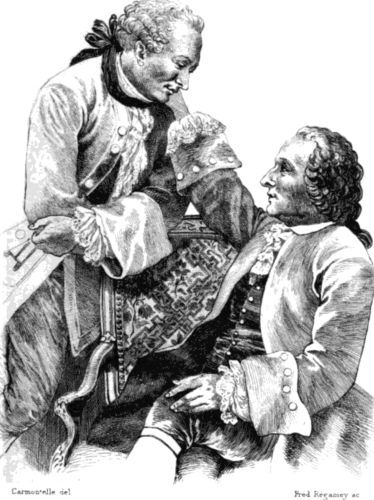
d’Holbach’s intellectual influence emerged not only from his writings but also from his sustained relationships with other Enlightenment figures. Among these, his friendship with Diderot was the most significant. The two collaborated on articles for the Encyclopédie, exchanged manuscripts, and discussed drafts within the privacy of the salon.41 Surviving letters show Diderot sharing philosophical concerns, commenting on stylistic choices, and occasionally offering criticisms that helped refine d’Holbach’s arguments. Their exchanges demonstrate how ideas that appear fully formed in d’Holbach’s published works were often shaped through iterative dialogue.42 These interactions contribute to an understanding of the Enlightenment as a collective enterprise rather than a set of isolated contributions.
Friedrich Melchior Grimm also played a crucial role in disseminating d’Holbach’s ideas to readers outside France. Through the Correspondance littéraire, Grimm provided European courts with regular reports on Parisian intellectual life.43 His descriptions of debates within d’Holbach’s salon and of manuscripts circulating through the group constitute some of the most valuable contemporary testimony regarding the Radical Enlightenment. Grimm’s correspondence reached influential patrons, including Catherine the Great, who relied on it to follow developments in French culture. This transnational readership illustrates how localized discussions in Paris acquired broader European significance through manuscript networks rather than commercial publication.
Relations with British thinkers further expanded d’Holbach’s intellectual horizon. David Hume’s visits to Paris in the mid 1760s placed him in direct conversation with d’Holbach and the salon circle.44 Although Hume maintained a more moderate form of skepticism and avoided explicit statements on religion, their interactions revealed both shared interests and clear philosophical differences. Hume’s caution contrasted with d’Holbach’s assertive materialism, yet the exchange served to clarify positions on causation, metaphysics, and the limits of human understanding. Other British visitors, such as Laurence Sterne and Adam Smith, encountered the salon as well, although their engagements were less sustained.45 These interactions reinforced the cosmopolitan character of Enlightenment intellectual networks.
D’Holbach’s correspondence also extended to Italian and German thinkers involved in debates on political economy and natural law. Ferdinando Galiani, who served in Paris as secretary to the Neapolitan embassy, participated actively in discussions at the salon and later continued to correspond with several of its members.46 His letters reveal a mutual interest in economic reform, religious criticism, and the philosophical foundations of law. German thinkers, including individuals associated with the Göttingen scholarly community, encountered d’Holbach’s writings through manuscript circulation and clandestine print editions.47 These connections illustrate the ways in which Enlightenment debates unfolded across linguistic and geographic boundaries.
The circulation of d’Holbach’s ideas also depended on intermediaries who facilitated the movement of manuscripts across Europe. Booksellers and printers in the Dutch Republic played a crucial role in publishing his works, many of which could not be printed in France due to censorship.48 Scholars documented how clandestine transport networks ensured that books printed in Amsterdam or Rotterdam reached readers in Paris, Lyon, and provincial towns. These systems of dissemination shaped the reception of Enlightenment texts by enabling authors like d’Holbach to reach sympathetic audiences despite official prohibitions. The involvement of multiple intermediaries underscores the collective nature of the philosophical enterprise.
The network surrounding d’Holbach thus consisted of close collaborators, international visitors, diplomatic intermediaries, and clandestine printers. Through these relationships, his ideas traveled far beyond the salon and entered broader European debates on religion, morality, and political reform.49 The combination of personal correspondence, manuscript exchange, and unofficial publishing created a dynamic intellectual environment in which ideas could be contested and refined. D’Holbach’s participation in this network not only enhanced the reach of his writings but also situated him within a complex system of communication that shaped the development of the Radical Enlightenment.
Cultural and Political Impact in Late Eighteenth Century France

The reception of d’Holbach’s writings in France reveals the tension between radical Enlightenment ideas and the political structures of the ancien régime. His critiques of Christianity, natural law, and monarchical authority challenged the intellectual assumptions that underpinned both Church and state. Police archives demonstrate that authorities viewed texts like Système de la nature as threats to public order, which led to seizures, interrogations of booksellers, and attempts to block clandestine distribution.50 Yet despite these measures, d’Holbach’s works circulated widely among educated readers who sought alternatives to traditional religious explanations. The persistence of this underground readership illustrates the growing appetite for secular and naturalistic accounts of morality during the final decades of the eighteenth century.
D’Holbach’s materialism contributed to broader debates concerning political reform. His insistence that governments derive legitimacy from their capacity to promote human welfare rather than divine sanction resonated with writers engaged in discussions of legal and institutional change.51 Although his writings did not advocate revolutionary action, they provided conceptual tools for evaluating authority through empirical criteria. His critiques of superstition and clerical privilege also supported emerging arguments for religious tolerance and civil equality. These themes aligned with aspects of the reformist literature that circulated among magistrates, administrators, and members of the Parlement of Paris. His influence on political thought therefore operated less through direct calls for upheaval than through the diffusion of naturalistic principles that undermined traditional forms of legitimacy.
The cultural impact of his writings appears in the ways they shaped prerevolutionary discourse among intellectuals and salons outside his own circle. Grimm’s Correspondance littéraire reported reactions to d’Holbach’s books among readers in Germany, Russia, and other regions where Enlightenment debates intersected with local questions of religious authority.52 These reports confirm that the work’s influence extended beyond France and contributed to European discussions on natural law, secular morality, and the critique of ecclesiastical power. At the same time, interactions with more moderate Enlightenment figures reveal the contested nature of this influence. Voltaire, for example, criticized d’Holbach’s positions as excessively dogmatic and feared that explicit atheism would alienate potential allies in reform.53 These disagreements illustrate the variety of Enlightenment perspectives and the complex reception that radical ideas encountered.
Within France, d’Holbach’s writings also shaped the intellectual atmosphere that preceded the Revolution. Scholars have argued that the Radical Enlightenment provided an ideological framework that later informed debates on sovereignty, citizenship, and the restructuring of religious authority.54 While d’Holbach was not a political activist and did not participate directly in revolutionary events, his naturalistic account of society contributed to the emergence of secular political thought. His critique of hereditary privilege and his emphasis on the welfare of citizens appeared in reformist arguments that sought to limit clerical power and rationalize state institutions. These developments demonstrate the broader significance of his philosophical project for late eighteenth century political culture.
The cultural and political impact of d’Holbach’s work thus extended beyond the confines of his salon and the readership of his clandestine publications. His ideas entered European debates on religion, morality, and political authority through manuscript circulation, international correspondence, and the writings of contemporaries who engaged with his arguments.55 The reception of his work illustrates how radical philosophical positions contributed to the transformation of intellectual life in the decades preceding the French Revolution. Although not universally accepted, his materialist system and critique of religious authority played a significant role in shaping the contours of Enlightenment thought and in challenging the structures that supported ancien régime society.
Legacy: The Afterlives of d’Holbach’s Materialism

The legacy of d’Holbach extends into the intellectual transformations that reshaped Europe during the nineteenth century. His arguments for a naturalistic morality, his critique of religious authority, and his commitment to causal explanation influenced thinkers who sought to ground ethics and social organization in empirical principles rather than metaphysical foundations.56 Although his writings did not achieve the widespread public recognition associated with figures such as Voltaire or Rousseau, they circulated among freethinkers, reformers, and scientific writers who found in his system a coherent alternative to the religious frameworks that continued to shape European political and cultural life. His reputation grew particularly among those who viewed the Enlightenment as a project of intellectual emancipation from the constraints of revelation.
During the nineteenth century, secular and positivist movements adopted aspects of d’Holbach’s materialism. The development of scientific naturalism in Britain, France, and Germany incorporated the assumption that natural causes suffice to explain all phenomena, including human behavior.57 Writers such as Ludwig Büchner and other members of the German materialist movement engaged with Enlightenment critiques of religion and acknowledged the importance of earlier figures who had articulated systematic naturalistic philosophies. D’Holbach’s emphasis on the unity of nature and the rejection of supernatural explanations aligned with the methodological commitments of these later thinkers. Although the political and scientific contexts differed significantly from those of the eighteenth century, his work provided a historical precedent for challenges to theological authority.
His writings also contributed to debates concerning secular morality. Freethought organizations that emerged in Britain and the United States during the nineteenth century cited Enlightenment figures who had advanced arguments for ethical systems independent of divine command.58 D’Holbach’s insistence that morality could be grounded in human welfare rather than revealed doctrine supported these efforts to promote rational approaches to ethics. Histories of atheism and secularism published during the late nineteenth and early twentieth centuries often included discussions of his work as part of a broader lineage connecting Enlightenment philosophical critique with modern scientific worldviews. These assessments situated him within a tradition of writers who challenged the authority of religious institutions through appeals to reason and natural law.
In recent scholarship, d’Holbach has been recognized as a central figure within the Radical Enlightenment. Historians have argued that his systematic materialism, explicit atheism, and engagement with transnational intellectual networks distinguish him from more moderate philosophes who avoided direct confrontation with religious authority.59 This reassessment has contributed to a deeper understanding of the diversity of Enlightenment thought and has highlighted the significance of thinkers whose influence operated through private correspondence, manuscript circulation, and clandestine publication rather than through officially sanctioned platforms. D’Holbach’s legacy therefore reflects both the limits and the power of radical philosophy in shaping long term intellectual change. His system, grounded in naturalistic principles, continues to serve as a reference point in the study of secular thought and the history of modern European ideas.60
Conclusion
Paul Henri Thiry d’Holbach stands as one of the most systematic and uncompromising figures of the eighteenth century Enlightenment. His work rejected the theological and metaphysical assumptions that shaped much of European intellectual life and replaced them with a coherent naturalistic philosophy grounded in causal explanation.61 His salon created a sociable environment in which interlocutors could debate these ideas openly, and his writings articulated a worldview that sought to realign moral and political thought with the principles of nature. Although he often published anonymously to avoid prosecution, his ideas circulated widely through clandestine networks and reached audiences across Europe who were increasingly receptive to secular approaches to ethics and governance.
The coherence of his system distinguishes him within the broader field of Enlightenment thought. While many contemporaries pursued moderate reform through appeals to reason tempered by religious sentiment, d’Holbach’s critiques addressed the foundations of theological authority itself.62 His emphasis on natural law, empirical knowledge, and human welfare contributed to a framework for evaluating institutions without reference to divine order. These ideas helped shape prerevolutionary debates on religious tolerance, political legitimacy, and the moral foundations of society. His engagement with correspondents and collaborators across Europe further extended the reach of his philosophical project and revealed the international character of Enlightenment intellectual life.
Modern scholarship has recognized the importance of d’Holbach’s materialism for the development of secular and scientific worldviews in the nineteenth and twentieth centuries. Historians have traced the influence of his writings on movements that sought to ground moral reasoning in naturalistic principles, and his role in the Radical Enlightenment has become a subject of sustained academic interest.63 His contributions demonstrate how philosophical ideas circulate through both private sociability and clandestine publication, shaping debates long after their initial reception. D’Holbach’s legacy thus reflects the enduring power of a philosophical system that challenged the intellectual foundations of his age and provided resources for subsequent efforts to articulate secular accounts of nature, morality, and political order.
Appendix
Footnotes
- Paul Henri Thiry d’Holbach, Système de la nature (London, 1770), ARTFL electronic edition.
- ARTFL Encyclopédie Project, University of Chicago, entries attributed to d’Holbach.
- Alan Charles Kors, D’Holbach’s Coterie (Princeton: Princeton University Press, 1976), 3–25.
- Friedrich Melchior Grimm, Correspondance littéraire, ed. Maurice Tourneux (Paris: Garnier Frères, 1877–1882), selections for the 1760s and 1770s.
- d’Holbach, Le Christianisme dévoilé (Amsterdam, 1766); d’Holbach, Le Bon Sens (Amsterdam, 1772).
- Kors, D’Holbach’s Coterie; Jonathan Israel, Radical Enlightenment (Oxford: Oxford University Press, 2001), 563–590.
- Robert Darnton, The Literary Underground of the Old Regime (Cambridge: Harvard University Press, 1982), 65–110.
- Willem Otterspeer, Grotius in Context: Essays on Legal and Political Thought (Leiden: Leiden University Press, 2004), contextual material on Leiden as an intellectual center.
- Israel, Radical Enlightenment, 159–218.
- Pierre Bayle, Dictionnaire historique et critique, 4 vols. (Rotterdam: Reinier Leers, 1697).
- Thomas Hobbes, Leviathan, ed. Richard Tuck (Cambridge: Cambridge University Press, 1996), introduction and chapters on natural philosophy.
- ARTFL Encyclopédie Project, University of Chicago, articles attributed to d’Holbach.
- Robert Darnton, The Business of Enlightenment (Cambridge: Harvard University Press, 1979), 32–70.
- Kors, D’Holbach’s Coterie, 45–92.
- Ibid., 93–118.
- Israel, Radical Enlightenment, 563–590.
- Grimm, Correspondance littéraire, vol. 6, selections for the 1760s.
- Ibid., vol. 7, notes on the Rue Royale gatherings.
- Kors, D’Holbach’s Coterie, 3–25.
- David Hume, The Letters of David Hume, ed. J. Y. T. Greig (Oxford: Clarendon Press, 1932), letters from Hume’s 1763–1765 stay in Paris.
- Kors, D’Holbach’s Coterie, 45–92.
- Darnton, The Literary Underground of the Old Regime, 65–110.
- Grimm, Correspondance littéraire, vol. 7.
- Denis Diderot, Correspondance, ed. Georges Roth and Jean Varloot (Paris: Minuit, 1955–1970), letters referencing discussions at d’Holbach’s home.
- Darnton, The Business of Enlightenment, 32–70.
- Israel, Radical Enlightenment, 563–590.
- d’Holbach, Système de la nature (London, 1770), ARTFL electronic edition.
- Kors, D’Holbach’s Coterie, 119–148.
- d’Holbach, Système de la nature, book 1, chapters on causation.
- Israel, Radical Enlightenment, 563–590.
- d’Holbach, Le Christianisme dévoilé (Amsterdam, 1766).
- Darnton, The Literary Underground, 65–110.
- d’Holbach, Le Bon Sens (Amsterdam, 1772).
- Kors, D’Holbach’s Coterie, 149–172.
- Israel, Radical Enlightenment, 580–590.
- Ibid.
- d’Holbach, Système social (Amsterdam, 1773), selected chapters on political authority.
- Darnton, The Literary Underground, 75–90.
- Voltaire, Correspondance, ed. Theodore Besterman (Geneva: Institut et Musée Voltaire, 1953–1965), letters reacting to Système de la nature.
- James Thrower, Western Atheism: A Short History (Amherst: Prometheus Books, 2000), 121–135.
- Diderot, Correspondance.
- Kors, D’Holbach’s Coterie, 119–148.
- Grimm, Correspondance littéraire, vols. 6–8.
- Hume, The Letters of David Hume.
- Laurence Sterne, The Letters of Laurence Sterne, ed. Melvyn New and Peter de Voogd (Gainesville: University of Florida Press, 2009), relevant entries; Nicholas Phillipson, Adam Smith: An Enlightened Life (New Haven: Yale University Press, 2010).
- Ferdinando Galiani, Correspondance, ed. Ettore Rota (Bari: Laterza, 1911).
- Darnton, The Literary Underground of the Old Regime, 92–120.
- Ibid., 65–110.
- Israel, Radical Enlightenment, 563–590.
- Darnton, The Literary Underground, 65–110.
- d’Holbach, Système social (Amsterdam, 1773), chapters on political authority.
- Grimm, Correspondance littéraire, vol. 8.
- Voltaire, Correspondance, ed. Theodore Besterman.
- Israel, Radical Enlightenment, 563–590.
- Kors, D’Holbach’s Coterie, 172–198.
- Thrower, Western Atheism, 121–135.
- Frederick Gregory, Scientific Materialism in Nineteenth Century Germany (Dordrecht: Reidel, 1977), 45–78.
- Susan Jacoby, Freethinkers: A History of American Secularism (New York: Metropolitan Books, 2004), 25–48.
- Israel, Radical Enlightenment, 563–590.
- Kors, D’Holbach’s Coterie, 198–214.
- d’Holbach, Système de la nature (London, 1770), ARTFL electronic edition.
- Israel, Radical Enlightenment, 563–590.
- Thrower, Western Atheism, 121–135.
Bibliography
- Bayle, Pierre. Dictionnaire historique et critique. 4 vols. Rotterdam: Reinier Leers, 1697.
- Darnton, Robert. The Business of Enlightenment: A Publishing History of the Encyclopédie, 1775–1800. Cambridge: Harvard University Press, 1979.
- —-. The Literary Underground of the Old Regime. Cambridge: Harvard University Press, 1982.
- Diderot, Denis. Correspondance. Edited by Georges Roth and Jean Varloot. Paris: Minuit, 1955–1970.
- Galiani, Ferdinando. Correspondance. Edited by Ettore Rota. Bari: Laterza, 1911.
- Gregory, Frederick. Scientific Materialism in Nineteenth Century Germany. Dordrecht: Reidel, 1977.
- Grimm, Friedrich Melchior. Correspondance littéraire. Edited by Maurice Tourneux. Paris: Garnier Frères, 1877–1882.
- Hobbes, Thomas. Leviathan. Edited by Richard Tuck. Cambridge: Cambridge University Press, 1996.
- Holbach, Paul Henri Thiry d’. Le Bon Sens. Amsterdam, 1772.
- —-. Le Christianisme dévoilé. Amsterdam, 1766.
- —-. Système de la nature. London, 1770. ARTFL Electronic Edition.
- —-. Système social. Amsterdam, 1773.
- Hume, David. The Letters of David Hume. Edited by J. Y. T. Greig. Oxford: Clarendon Press, 1932.
- Israel, Jonathan. Radical Enlightenment: Philosophy and the Making of Modernity, 1650–1750. Oxford: Oxford University Press, 2001.
- Jacoby, Susan. Freethinkers: A History of American Secularism. New York: Metropolitan Books, 2004.
- Kors, Alan Charles. D’Holbach’s Coterie: An Enlightenment in Paris. Princeton: Princeton University Press, 1976.
- Otterspeer, Willem. Grotius in Context: Essays on Legal and Political Thought. Leiden: Leiden University Press, 2004.
- Phillipson, Nicholas. Adam Smith: An Enlightened Life. New Haven: Yale University Press, 2010.
- Sterne, Laurence. The Letters of Laurence Sterne. Edited by Melvyn New and Peter de Voogd. Gainesville: University of Florida Press, 2009.
- Thrower, James. Western Atheism: A Short History. Amherst: Prometheus Books, 2000.
- Voltaire. Correspondance. Edited by Theodore Besterman. Geneva: Institut et Musée Voltaire, 1953–1965.
Originally published by Brewminate, 12.05.2025, under the terms of a Creative Commons Attribution-NonCommercial-NoDerivatives 4.0 International license.
About the Author