Proof has always been a technology. Long before insurers and adjusters, courts wrestled with the same problem a collision claim presents today: two accounts of a single event, both sincere, neither complete. What settles the question is not the strength of anyone’s conviction but the quality of the material left behind, and the discipline with which it was gathered.
Memory Reorganizes Itself Around the Outcome
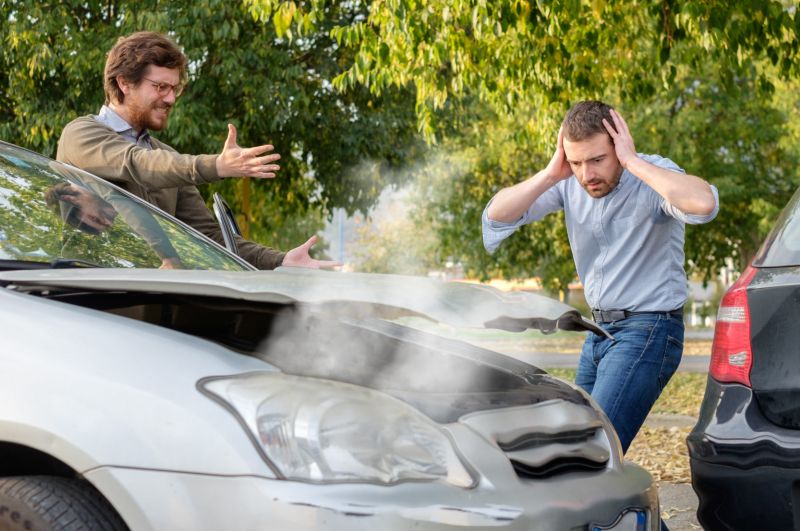
Human recollection is not a recording. It is a reconstruction, assembled each time it is retrieved and quietly edited by everything that happened afterward. A driver who walked away shaken will remember the other vehicle as faster, the light as later in its cycle, the gap as narrower. This is not dishonesty. It is ordinary cognition, and it is why a claim built on testimony alone tends to soften over the months a case takes to resolve.
What a Claim Actually Rests On
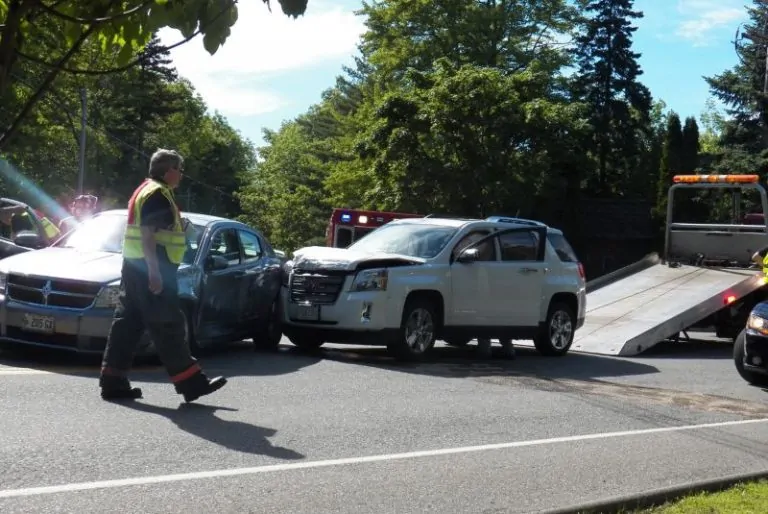
The material that holds its shape is the material captured before interpretation set in. Photographs taken at the roadside, a police report filed the same day, the first medical note describing symptoms in the present tense: these are fixed points, and everything argued later is measured against them. Anyone assembling the evidence needed after a car accident is really doing one thing, which is converting a fading experience into a record that survives scrutiny.
The order of collection matters more than most people expect. Physical traces disappear first, within hours. Digital traces persist but overwrite themselves on a schedule nobody controls. Human witnesses last longest as people and shortest as reliable narrators.
The Police Report and Its Limits
A responding officer’s report is the spine of most claims, and it is routinely overvalued. It fixes the date, the location, the vehicles, the parties and the immediate conditions, which is a great deal. What it does not do is establish fault in any binding way. Officers arrive after the event, take statements from participants who are frightened and sore, and record a preliminary judgment under time pressure. Diagrams get drawn from memory. Names get misspelled. Requesting a copy and reading it carefully within the first week is worth the effort, because factual corrections are far easier to make while the officer still remembers the call. The distinction that matters is between the observed and the concluded. A measurement of skid length, the position of the vehicles on arrival, the weather at the time: these are observations, and they hold. A checked box assigning contributing factors is a conclusion drawn in ten minutes at the roadside, and it is treated as one.
Photographs, Damage and Physical Traces
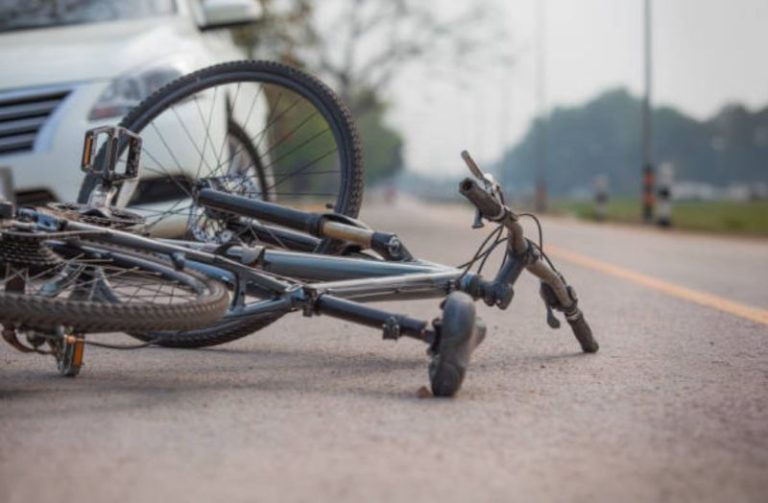
The vehicles themselves are documents. Crush depth, paint transfer, the direction a bumper folded, the pattern of glass on the asphalt: each records the geometry of the impact in a way no description can. Photograph widely and repeatedly, including things that seem irrelevant, because relevance is decided later by someone reconstructing the scene from your images alone. This instinct is old. Forensic medicine emerged in the 1600s precisely as an attempt at turning traces into proof, from Paolo Zacchia’s 1621 treatise on medical questions before the courts through the Marsh Test for arsenic in 1836 and the first fingerprint conviction in Argentina in 1892. The through line across four centuries is that physical detail, patiently recorded, outperforms confident narration.
Medical Records as a Continuous Story
Treatment records carry more weight than any single dramatic finding, because their value lies in continuity. A same-day emergency assessment, a follow-up two weeks later, a specialist referral, a course of physical therapy with measured range-of-motion values: together they describe a direction of travel. A gap in that sequence invites a different reading, in which the injury resolved and something unrelated caused the later pain.
Quality of documentation is a discipline in its own right. Health information professionals treat completeness, precision and correct patient attribution as the core of a usable record, and note that data is most useful when it arrives in a timely manner. The American Health Information Management Association’s policy position on keeping records trustworthy also flags a structural weakness worth knowing about: the absence of a national patient-identification strategy has stalled progress for more than two decades, which is one reason records from three providers do not automatically assemble into one coherent history.
Digital Traces and the Authentication Problem
Dashcams, phone location logs, telematics from the vehicle, timestamped messages sent minutes before impact: these have become the most persuasive category of proof and, very recently, the most contested. Courts are now confronting fabricated material submitted as genuine. In one reported case, a party submitted deepfake video as authentic testimony, and over 350 documented US cases involve self-represented litigants citing nonexistent cases, statutes or quotations produced by AI tools. A proposed Rule of Evidence 707 would subject machine-generated material to the same reliability standards as expert testimony. Judges are scrutinizing digital submissions far harder than they did five years ago, which raises the value of footage with unbroken provenance and lowers the value of a file with no clear origin.
Witnesses and the Human Layer
Independent witnesses remain valuable for one reason: they have no outcome to protect. A driver two cars back, a pedestrian at the corner, the delivery driver waiting to turn. Their accounts will be imperfect in the ordinary way, but their imperfections are not aligned with anyone’s interest. Get contact details at the scene rather than a statement. A phone number collected in five minutes is more useful than a paragraph dictated by someone still processing what they saw.
Proof Assembled Early Holds Its Shape
The pattern that runs through every category is the same one that produced forensic medicine four hundred years ago. Evidence gathered close to the event, with no theory of the case guiding what to keep, survives challenge. Evidence gathered later, selected to support a conclusion already reached, invites the question of what was left out. The practical instruction is dull: photograph more than seems necessary, get examined the same day, keep every discharge sheet and receipt, and preserve digital files in their original form rather than in a compressed copy forwarded through three apps. None of it feels urgent in the week after a collision. All of it is what the claim eventually stands on.
About the Author