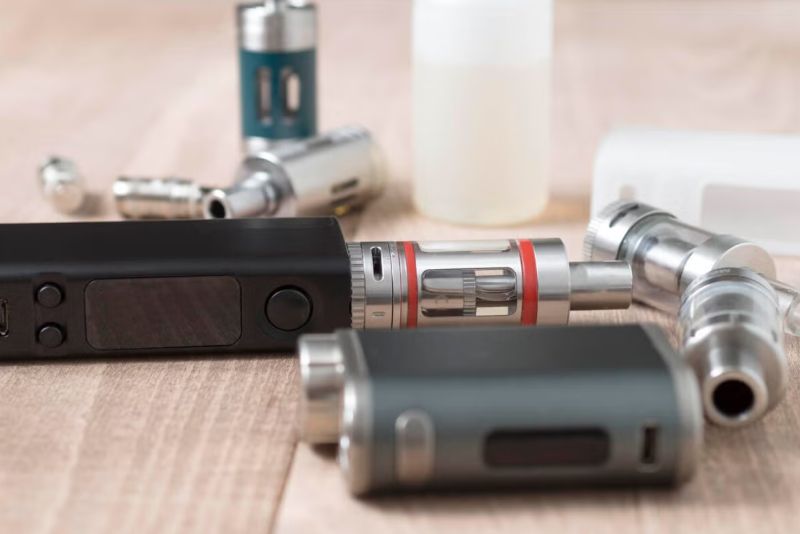
Most people don’t think about battery life until they’re stuck with a dead device at the worst possible moment. Battery capacity, charging speed, and how a device handles daily wear all determine whether your vape fits your routine or fights against it. Before you spend money on a new device, knowing what to look for in a battery can save you from buyer’s remorse.
The difference between a satisfying purchase and a frustrating one often comes down to a few technical details that aren’t always obvious on a product page. This guide breaks down what you should check about the battery before committing to any rechargeable vape.
If you’re comparing rechargeable vape options, browsing a trusted online store like Olofly can make the process easier since product listings typically include key battery specifications such as capacity, charging type, and device features. Whether you’re looking for a compact pod system for everyday convenience or a higher-capacity device for extended use, reviewing these details before purchasing helps you choose a vape that matches your habits and minimizes the need for frequent recharging.
Battery Capacity and What mAh Actually Means
Battery capacity is the single most important spec to check on any rechargeable vape. It’s measured in milliampere-hours, or mAh. The higher the number, the more charge the battery can hold before it needs a top-up. Most rechargeable vape kits for daily use fall in the 400mAh to 1500mAh range, though larger pod mods can exceed 3000mAh.
A casual vaper who takes a few puffs throughout the day will get by with something in the 800mAh range. A heavier user who vapes frequently, especially at high-wattage output, needs more capacity; otherwise, they’re recharging midday. The mAh number tells you the theoretical maximum, but real-world performance also depends on coil resistance, wattage setting, and how hard you draw. So treat mAh as a rough guide, not a guarantee of exactly how many hours you’ll get.
Charging Speed and the Difference It Makes Day to Day
Charging speed doesn’t get nearly enough attention when people compare vape devices, yet it directly shapes your daily experience. A device with a large battery means nothing if it takes four hours to go from empty to full. Most modern rechargeable vapes charge through USB-C, which supports faster power delivery than the older micro-USB standard.
Some devices fully charge in under an hour. Others take two to three hours even with a decent cable. Look for the charging amperage spec, often listed as something like 1A or 2A; a higher amperage means the battery accepts charge faster. Pass-through charging is another feature worth checking; it lets you vape while the device is plugged in, which matters when you’ve forgotten to charge overnight. A fast-charging device with pass-through support is smart for anyone with an unpredictable schedule or long days away from an outlet.
Battery Type and Why It Affects Long-Term Performance
Not all rechargeable vape batteries are built the same way. The type of cell inside shapes how durable it stays over time. Most compact pod systems use integrated lithium-ion or lithium-polymer (LiPo) cells sealed inside the device. They’re convenient but can’t be replaced. Larger box mods and some advanced pod systems use removable 18650 or 21700 lithium-ion cells, giving you the option to carry spares and swap them out rather than waiting for a charge.
Lithium-polymer cells tend to be lighter and fit into slimmer devices, but they’re generally less energy-dense than cylindrical lithium-ion cells. And here’s the thing: all lithium-based batteries degrade over charge cycles, typically losing noticeable capacity after 300 to 500 full cycles according to general lithium-ion battery data. A device with a removable battery extends its usable life because you can replace the cell rather than the whole device.
How Wattage and Coil Resistance Drain the Battery
Battery life doesn’t exist in isolation; it’s directly tied to how much power your coil pulls from the battery on every single puff. Understanding this connection helps you make smarter choices. Higher wattage settings produce bigger clouds and warmer vapor, but they drain the battery much faster than lower-wattage mouth-to-lung setups.
A sub-ohm coil running at 60 watts can empty a 1500mAh battery in a few hours of regular use. A 1-ohm coil running at 12 to 15 watts on the same battery will last considerably longer. If you prefer a low-power, tight-draw style of vaping, a smaller battery device suits you. Direct-lung vapers who chase clouds should look for devices with 2000mAh capacity or above. Some devices include wattage-control modes that let you fine-tune output to balance battery life against vapor production; you get flexibility as your preferences shift throughout the day.
Signs of a Well-Designed Battery Management System
A good battery isn’t just about raw capacity. It’s about how the device manages the power it holds. Battery management systems, often abbreviated as BMS, handle overcharge protection, over-discharge protection, short-circuit cutoffs, and temperature monitoring. A device without these protections can overheat, swell, or in rare cases fail dangerously.
Reputable manufacturers include important protections, and they list them in the spec sheet. Look for terms like low-voltage protection, which prevents the battery from draining below a safe floor; overcharge cutoff stops charging once the cell reaches full capacity. Consistent cutoff accuracy matters too; a device that stops charging at 4.2 volts per cell keeps the battery healthier than one that occasionally overcharges. Auto-shutoff after a set puff duration, typically around 8 to 10 seconds, also reduces unnecessary battery drain and protects the coil. These protections collectively determine how safe and long-lasting your device turns out to be.
Practical Tips to Get More Life Out of Your Battery
Good battery habits extend the life of your device well beyond what careless use would allow. Store your vape at room temperature; heat degrades lithium cells faster than almost anything else, so leaving a device in a hot car is genuinely damaging.
Charge your device before it drops below 20% rather than running it fully flat, because deep discharges accelerate capacity loss over time. Don’t leave the device on the charger all night once it hits 100%, since consistent overcharging shortens cell lifespan even with cutoff protection in place. Turn the device off when you’re not using it if it has a power button; passive drain from an idle screen or chipset adds up across a full day. Use the cable and charger that came with the device, or at minimum match the specified amperage; mismatched charging hardware can stress the cell and reduce its cycle count.
Conclusion
Battery life shapes every part of your experience with a rechargeable vape, from how often you charge to how long the device stays durable over months of daily use. The right choice depends on your usage style, your wattage preferences, and whether you want the option to swap cells or prefer a compact sealed design. Check the mAh rating, charging speed, battery type, and management protections before you buy, and your device will perform the way you expect it to from day one.
About the Author