
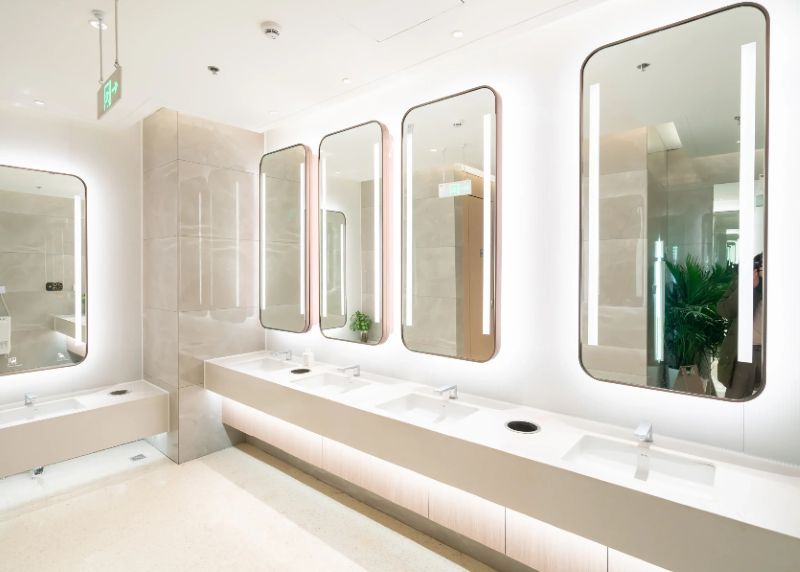
A restroom mirror has a practical job beyond helping people check their appearance. Its size, placement, material, and mounting method affect how a commercial washroom feels and functions each day. A well-chosen mirror supports clear visibility, suits the room’s traffic level, and works with other fixtures without creating maintenance problems. It also contributes to a consistent finish across the space. The selection process starts with the washroom’s users, layout, and day-to-day operating demands.
A commercial washroom needs restroom mirrors that suit its daily conditions. Staff should consider cleaning routines, wall construction, nearby fixtures, lighting, and the likelihood of impact. These details affect the mirror’s position, frame, backing, and installation method. A carefully planned choice reduces awkward reflections, access problems, and avoidable replacement work after the fit-out is complete.
Match the Mirror to Traffic
A low-use office washroom has different demands from a facility used continuously by customers, visitors, or staff. High-traffic areas need materials and fixings that can withstand repeated contact, regular cleaning, and accidental knocks.
Glass can suit many commercial settings, but tougher environments require a more protective approach. Vandal-resistant designs and polished reflective stainless steel provide alternatives where breakage or deliberate damage is a greater risk.
Check Visibility and Placement
A mirror should give users a useful reflection without forcing them to stand in an awkward position. Wall width, basin spacing, partitions, doors, and nearby accessories all affect the final placement.
The installation plan should account for:
- Clear sightlines above each basin.
- Comfortable access for people with different mobility needs.
- Reflections that do not confuse circulation areas.
- Enough wall space for cleaning and maintenance.
A long mirror can create visual consistency across several basins. Individual mirrors can suit separated stations or areas with different wall conditions. The choice should follow the layout rather than a preferred appearance alone.
Choose Materials for Cleaning
Commercial washrooms require frequent cleaning, so the mirror’s surface and frame need to tolerate the approved cleaning routine. Harsh products, abrasive cloths, and trapped moisture can damage finishes over time.
Frameless designs provide a simple appearance and fewer edges around the reflective surface. Framed mirrors create a defined border and can coordinate with other washroom finishes. Stainless steel options suit projects that need a reflective surface with greater resistance to impact.
Coordinate Fixtures and Finishes
A mirror should look intentional beside soap dispensers, hand dryers, paper towel dispensers, grab rails, and lighting. Inconsistent finishes can make a new washroom feel poorly planned, even when each item works correctly.
The project team should compare the mirror’s frame, surface, and mounting details with the other selected fixtures. A plain frameless model can suit a restrained interior. A framed or illuminated model can provide a stronger visual feature when it complements the overall design.
Consider Lighting and Power
Lighting changes how a mirror performs. A dim basin area makes grooming, handwashing checks, and general use less comfortable. An illuminated mirror can provide additional light, but it also introduces electrical and installation requirements.
Lighted models need suitable power connections and may require wall preparation before installation. The electrical trade should complete the required work before the mirror installer arrives. Recessed models also need an opening that matches the installation plan.
Plan for Safe Installation
A commercial mirror must sit securely on its wall. Installers need to confirm the wall type, fixing points, mirror weight, and nearby services before drilling or cutting.
Surface-mounted mirrors provide a straightforward option in many layouts. Recessed mirrors create a more integrated finish but require earlier coordination with the wall and electrical trades. Tilt mirrors need additional consideration because their angle must remain usable and their fittings must hold them firmly in place.
Schedule Maintenance Access
Maintenance staff need a practical way to inspect, clean, and replace a damaged mirror. A design that looks neat but blocks access to a tap, dispenser, or wall service creates problems after handover.
Facility managers should record the mirror model, cleaning instructions, fixing details, and replacement process. They should also inspect edges, brackets, backing, and nearby sealants during routine checks to identify wear or damage early.
Confirm the Specification Before Ordering
A final review should compare the selected mirror with the floor plan, elevations, fixture schedule, and installation sequence. The review should confirm the following:
- Mirror type and finish.
- Mounting method and wall preparation.
- Position beside basins and accessibility fixtures.
- Lighting, power, and recessed requirements.
- Cleaning and replacement instructions.
This check catches mismatched dimensions and coordination issues between trades before dispatch. It also gives the facility team a clear record for future repairs or refurbishment.
Conclusion
The right restroom mirror supports visibility, cleaning, accessibility, durability, and a coherent commercial washroom design. Selection should begin with traffic, wall conditions, fixture placement, lighting, and maintenance rather than appearance alone. Before ordering, the project team should confirm the mounting method, electrical work, cleaning instructions, and final measurements against the installation drawings. That short review can prevent costly changes and help the completed washroom remain practical for staff and visitors.