
After the Lamb Funeral Home scandal, families questioned whose ashes they had received. California’s highest court gave them a way to seek redress, and each claim still depended on proof.

By Matthew A. McIntosh
Public Historian
Brewminate
Introduction: The Assurance Contained in an Urn
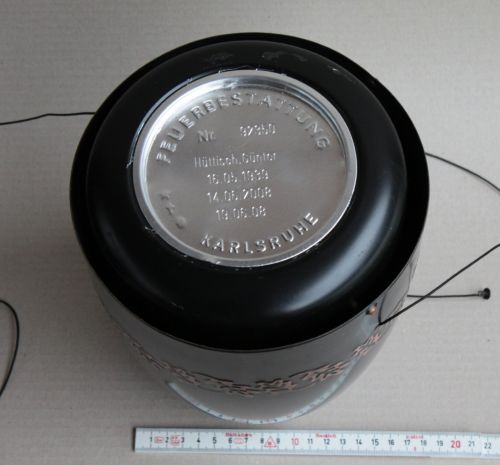
In May 1988, a copper urn holding what had been returned as Tsuru Shiotani’s ashes sat in a relative’s home. Shiotani had wanted her remains taken to Japan, where a portion would be placed at a Buddhist temple in Kyoto. Her daughter, Lucy Nuno, told relatives in Japan that she feared the ashes had been mixed with those of other people. The temple declined to accept the remains, and the burial ritual was canceled. Carrying out Shiotani’s wishes now depended on a fact the urn itself could do nothing to establish.
By the 1980s, cremation had become an increasingly familiar choice in the United States. A family could arrange it through a funeral director even when another business would carry it out. In the civil litigation arising from the Lamb Funeral Home scandal in Pasadena, the plaintiffs described mortuaries that undertook to arrange cremations and hired crematory operators to perform them. The operators supplied forms that the mortuaries used to secure the next of kin’s consent. The arrangement gave families a single business to deal with, even as responsibility for the body passed between firms. The complaint alleged that crematory operators had removed body parts without permission and sold them during the period from 1980 to 1987. It also alleged that operators had cremated bodies together and distributed ashes without preserving their individual identity. When news of the scandal broke in 1987, knowing which mortuary a family had hired was only a starting point for finding out where the body had gone and how it had been treated.
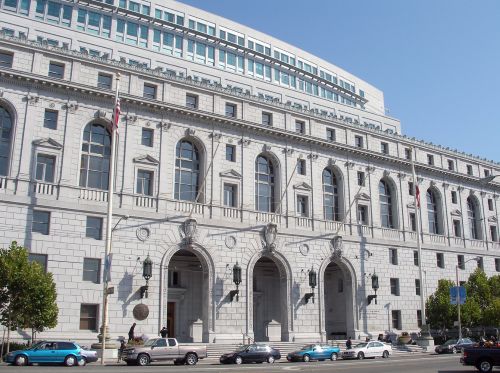
The California Supreme Court considered the resulting civil claims in Christensen v. Superior Court in 1991. The justices reviewed a preliminary ruling based on a representative complaint selected from the coordinated lawsuits. For that purpose, they accepted the pleaded facts as true and asked whether those allegations could support claims for emotional distress. The majority held that mortuaries and crematories could owe a duty of dignified care to close relatives who knew about the services and for whose benefit they were performed. The duty could extend to relatives who had taken no part in the contract or lacked the legal authority to direct disposition. Those relatives could pursue negligence claims even if they had never witnessed the alleged misconduct. Whether any defendant had in fact breached a duty owed to a given claimant remained a question for later proceedings.
For a relative covered by that duty, obtaining damages presented a further difficulty. The majority required a claimant to connect severe emotional distress to a “well-founded substantial certainty” that their own relative’s remains had been mishandled. News of a general pattern could give families reason for alarm while leaving them with little evidence about an individual cremation. Justice Joyce Kennard, concurring in part and dissenting in part, pointed out that families might have to rely on records kept by the very operators accused of misconduct. She would have shifted the burden to the defendants once a claimant showed that they had received the body during a period in which they frequently mishandled remains. The difference between those approaches mattered because families had entrusted funeral businesses with the work that would produce the evidence they might later need. If commingling erased the connection between a person and the ashes returned under that person’s name, the breach of care could itself make redress harder to obtain.
Funeral Care and Professional Trust in Twentieth-Century America
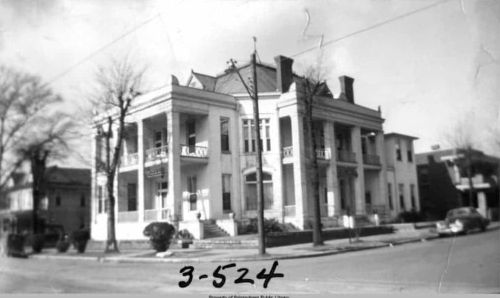
Before the funeral home became a familiar American institution, relatives and neighbors often helped lay out the dead and received mourners in the household. Paid specialists already had a place in these arrangements. An undertaker might furnish a coffin or provide transport to the cemetery, while a minister and the family settled the form of the service. In the early twentieth century, more undertakers brought the preparation of the body and the reception of mourners into premises they managed themselves. A gathering that had once depended heavily on the work of relatives and neighbors could now take place in rooms maintained for that purpose by a business whose staff set the hours and prepared for the visitors.
Part of the funeral director’s growing authority originated outside the funeral trade. As hospitals became more common places of death, the place where a person died and the place where mourners assembled increasingly belonged to different institutions. A funeral home could receive the body from the hospital and give relatives a place to gather once the immediate demands of a last illness had ended. Embalming offered a different basis for professional authority. The practice had gained public attention during the Civil War, when some families used it to bring their dead home, and by the early twentieth century it had become customary in many American funerals with a viewing. Schools taught the procedure, and state licensing gave formal weight to claims of specialized competence. In 1921, Howard S. Eckels, who founded an embalming school in Philadelphia, warned trade readers that the erosion of embalming would reduce funeral directors to merchants selling caskets. His defense reveals how much some practitioners had invested in bodily preparation as a service that justified their standing. A family paid for the exercise of judgment about the condition and presentation of the dead, work that it could see the results of when it came to the funeral home.
For many mourners, the open casket gave that work value they could recognize. Preservation could allow time for a relative to travel, and restorative work could make a face altered by illness or injury recognizable to the people coming to see it. Gary Laderman’s history of the funeral home places such encounters at the center of the relationship between mourners and the businesses they hired. The preparation took place away from the gathering, while the body itself remained central to the occasion. Directors also acquired practical influence over ceremonies whose religious content remained in the hands of families and clergy. A minister could lead the funeral while relying on the director to coordinate a viewing and bring the body to the church at the appointed hour. Much of the director’s standing came from making those arrangements work for people who already knew what they wanted the ceremony to mean. In Black communities under Jim Crow, the standing of a funeral director could carry a distinctly civic significance. Racial exclusion shaped the market in which Black-owned funeral homes grew, and their directors developed lasting relationships with families through homegoing ceremonies and other forms of community service. In Birmingham in 1956, the Reverend Fred Shuttlesworth and fellow organizers met at A. G. Gaston’s Smith and Gaston Funeral Home to plan a response to Alabama’s injunction against the NAACP. The meeting preceded the founding of the Alabama Christian Movement for Human Rights, which chose another local funeral director, William E. Shortridge, as its treasurer. The resources of an established funeral business could support collective action, and familiarity with its owners could give people reasons to trust the firm long before they needed to arrange a funeral.
Cremation developed within a different set of institutions and took time to find a place in established funeral practice. Some early advocates promoted it as a sanitary and efficient means of disposition, an argument that appealed to reformers and offered mourners little guidance about how to commemorate the dead. By the early twentieth century, commercial operators had entered a field once promoted chiefly by cremation societies, and some crematories operated on cemetery grounds. Their supporters increasingly gave attention to what would happen after the cremation. A family could arrange a committal ceremony and place the ashes in a cemetery plot or in a niche in a columbarium. Such practices allowed cremation to take its place within a recognizable sequence of funeral and memorial observances. Its adoption still proceeded gradually, in part because burial retained deep religious and familial significance. The Roman Catholic Church relaxed its restrictions in 1963, and its 1983 Code of Canon Law reaffirmed a preference for burial while permitting cremation when chosen for reasons consistent with Christian doctrine. By the late 1970s and early 1980s, funeral directors who had regarded cremation as a threat to their business were increasingly finding ways to provide it within the range of services they offered.
The same decades brought a public challenge to the discretion funeral directors exercised when families made purchases. In The American Way of Death, published in 1963, Jessica Mitford argued that undertakers could present costly choices as customary obligations or legal necessities, taking advantage of customers who had little time to investigate those claims. Memorial societies had already been helping members arrange simpler funerals, often by considering their options before a death made the decision urgent. Mitford’s book brought national attention to that work and to alternatives such as cremation. It also raised a question about professional advice that a family could seldom resolve by looking at a charge alone. The director who explained what a funeral required might also earn income from the goods and services recommended.
The Federal Trade Commission addressed that problem in its Funeral Rule, issued in 1982 and fully effective in April 1984. The commission found that a mortuary had often taken custody of the body before a family made its final selections. By then, changing firms could entail another transfer and additional expense, and few customers did so. Telephone price disclosures were meant to make comparisons possible earlier. Once an in-person discussion of arrangements began, the provider had to supply an itemized general price list that the prospective customer could keep. At the end of the discussion, a written statement recorded the goods and services selected and their charges. The rule also restricted charging for embalming performed without prior authorization and barred providers from insisting on a conventional casket for direct cremation. In making the individual services visible, the commission gave families a way to ask where an expense came from and whether they could decline it. The rule even contemplated a crematory charge incurred by a funeral home on a customer’s behalf. A transaction involving two businesses could therefore appear in the paperwork as a single entry on the statement handed to the person making arrangements.
A family’s ability to choose a service and a director’s ability to see it through were different matters. Families could exercise considerable judgment about how they wished to mourn while depending on a practitioner to carry out decisions they had made themselves. When a mortuary arranged for cremation at a separately owned establishment, part of the service the family bought was the director’s judgment about whom to engage. That judgment drew its force from a history in which funeral homes had earned trust by carrying out work close to family life, often at moments when relatives had good reasons to leave its practical demands to others. In an arrangement involving a separate crematory, the firm whose name and reputation the family knew could be one step removed from the workers who actually performed the cremation. The choice of that operator was one of the funeral director’s most consequential decisions, even when the family experienced it simply as part of arranging a funeral.
From the Family’s Funeral Director to the Crematory
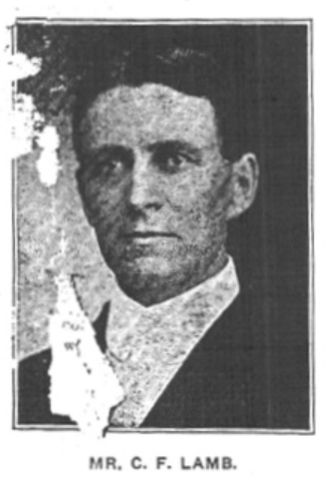
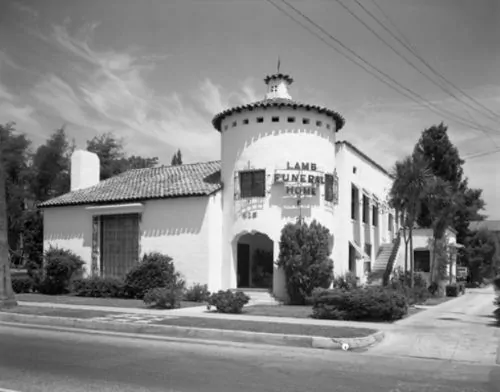
Charles F. Lamb built the Lamb Funeral Home on Orange Grove Boulevard in Pasadena in 1929. Its chapel had sofas and armchairs, and a company brochure encouraged mourners to make themselves as comfortable as they would in their own homes. The furnaces of the Pasadena Crematorium stood in neighboring Altadena, at a separate address from the rooms in which the Lamb family received its clients. By the 1980s, the distance between the place where arrangements were made and the place where cremation occurred could be much greater, as funeral homes across Southern California sent bodies to the same operator.
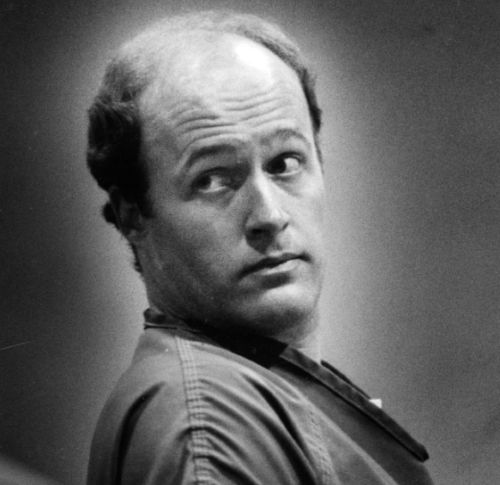
Charles Lamb passed the Pasadena mortuary to his son Lawrence, who also served as president of the Pasadena school board. Lawrence’s daughter, Laurieanne Lamb Sconce, and her husband, Jerry Sconce, came to run the funeral home, with Lawrence still holding its license when the state announced its revocation in 1989. Their son David operated the Altadena crematory and headed the business identified in contemporary reporting as Coastal Cremations. Its principal customers were other mortuaries, which purchased cremations as part of the arrangements they made with their own clients. The California Court of Appeal’s account of the subsequent civil litigation places Lamb Funeral Home and David’s parents among the mortuary defendants. It lists David and several businesses he owned or operated, including Pasadena Crematorium and Coastal Cremation Service, Inc., among the crematory defendants. The distinction reflected the parts they were alleged to have played in arranging and performing the work. For an independent funeral director who purchased a cremation through Coastal, the Sconce operation was a supplier whose work formed part of a service the director had already undertaken to provide.
A contract for that service and the authority to cremate served different purposes. Under the California law then in force, directions left by the deceased governed disposition. In their absence, the statute gave first priority to a surviving spouse, followed by surviving children and then parents, with provision for more distant kin and, in certain cases, a public administrator. The person who dealt with the funeral director or paid the bill could be someone other than the person entitled to make the decision. According to the complaint summarized in Christensen v. Superior Court, the crematory operators supplied authorization forms to the mortuaries, whose staff obtained consent from the next of kin. A contract reproduced in a separate California case in 1982 illustrates the specificity of such paperwork. That agreement distinguished the document authorizing cremation from a removal permit used to collect the body and a disposition permit used to carry out the chosen arrangements. The paperwork could therefore concern different steps in the same service, each involving its own permission or instruction. In the arrangement described by the Christensen plaintiffs, an employee of the referring mortuary obtained the authorization that workers at another business would act upon.
Collecting the body was itself part of what a referring mortuary could buy. Contemporary reporting described Coastal’s wholesale service as covering pickup and return, and a proposed amended complaint in the civil litigation described crematory drivers collecting bodies at funeral homes. An exceptional transfer after the 1986 Cerritos air disaster shows how far the arrangement could extend. A spokesman for the Los Angeles County coroner’s office told the Los Angeles Times that unidentified remains from the crash had been released to Douglas Mortuary of El Segundo. Sam Douglas, the mortuary’s president, said Pasadena Crematorium had collected them directly from the coroner’s office. The circumstances differed from those of a private funeral, but the two accounts identify separate roles in a single transfer. One firm was named by the public office releasing the remains. Employees of another firm, according to Douglas, took physical possession. The ashes could travel back through the mortuary that ordered the service. A man who told investigators he had worked at the Altadena crematory said he sometimes filled urns for return to funeral homes or to customers. His account appeared in a search-warrant affidavit, which also recorded that investigators seized receipts for cremated remains when they searched Lamb Funeral Home in January 1987. Such receipts document a kind of paperwork kept at the mortuary after the crematory’s work was supposed to be complete. State regulators also collected information at a different scale. A reporting rule adopted in 1980 required licensed crematories to submit annual totals and classify the disposition of the ashes, including releases to people who had authorized cremation and transfers to cemeteries. The totals showed how an operator reported disposing of remains across a year. Reconstructing a single return required paperwork or testimony tied to that individual case.
A fire put the Altadena crematory out of operation in November 1986. In January, John Gill of the state Cemetery Board told the Los Angeles Times that Sconce had continued to file permits bearing the old address after the facility closed. By then, investigators were examining the use of kilns at Oscar Ceramics, a business David Sconce owned in Hesperia. Gill said each crematory site required its own license. The Cemetery Board regulated crematories, while the Board of Funeral Directors and Embalmers oversaw mortuaries such as Lamb. The distinction mattered once the furnaces in Altadena were unavailable. A referring director could continue dealing with the same operator even as the question of where that operator could lawfully perform the work had changed.
In the civil complaint, the mortuaries were alleged to have undertaken to arrange cremations with due regard for the wishes of the deceased and their relatives. The crematory operators were alleged to have made assurances of their own about how they would treat the bodies they received. That account put the referring director’s conduct in question alongside what happened at the crematory. A mortuary could know whether a driver appeared for a scheduled collection or whether a container came back on time. Judging the conditions under which the cremation took place called for information from the facility itself. What the referring firms could reasonably have learned about those conditions became an issue in its own right.
Low Prices, High Volume, and Alleged Warning Signs
In 1982, 32.3 percent of Californians who died were cremated, compared with 11.7 percent nationwide, according to figures reported in the Washington Post. In Orange County, the share had already reached about 40 percent. Cremation had become a substantial part of the Southern California funeral market, and mortuaries had reason to seek a dependable wholesale price for work they could expect to order regularly. An operator that could offer such a price stood to gain customers among funeral directors across the region.
Coastal’s wholesale charge of $55 per cremation appears in both John Johnson’s reporting for the Los Angeles Times and an Associated Press account published in January 1989. Johnson put it at about half what competitors charged and reported that the fee covered transportation in both directions. He also reported that mortuaries charged families between $265 and $1,000 for cremation services. Those household charges belonged to a separate transaction that could encompass work performed at the mortuary, and the amount the referring firm retained depended on its own costs and the terms of the sale. The wholesale rate gave the director a predictable expense on each order. A mortuary could offer cremation without assuming the fixed costs of operating a facility of its own. A supplier serving several mortuaries could, in principle, spread its overhead across more orders and make several collections on a single route. Those economies gave buyers a plausible commercial explanation for a discount. The plaintiffs argued that the size of this discount, given the work the fee covered, should have prompted directors to ask how Coastal could provide the service at that price.
The volume reported at Altadena gave state officials a separate reason to inquire. Johnson reported 194 cremations before David Sconce’s first year in the operation, 1,675 in that first year, and 8,173 in 1985. Earlier reporting by Ashley Dunn put the 1985 total above 8,000, the highest reported for any crematory in California. John W. Gill, executive officer of the California Cemetery Board, told Dunn that the volume had aroused the board’s suspicions before the Altadena facility closed. The board could compare reports from crematories across the state, while a mortuary’s own orders showed only a fraction of Coastal’s workload. A director would need information beyond the firm’s own dealings to make the comparison that concerned Gill.
The 1983 lawsuit over cremations at Harbor Lawn in Costa Mesa had already brought allegations of combined cremations into the Southern California press. A state law making unauthorized commingling a misdemeanor took effect at the start of 1984. That June, a separate controversy in Northern California concerned a pilot hired by funeral homes and the Neptune Society who was accused of depositing ashes on his own property after agreeing to scatter them over the Sierra Nevada. The proposed amended complaint in the Lamb litigation alleged that the mortuary defendants knew of both controversies and had encountered accounts of improper handling in trade publications. It also described an inquiry directed at the Lamb operation itself. Johnson reported that in 1984 Ronald Hast, whose mortuary used the Sconce service, asked Laurieanne Lamb Sconce for written assurance that cremations were performed individually. According to the proposed pleading, Hast obtained figures from the Cemetery Board and wrote on behalf of the Los Angeles County Funeral Directors Association, of which he was incoming president. He asked Laurieanne to agree to the standards of the Cremation Association of North America, which would have given directors a written commitment they could invoke in their dealings with the operator. The plaintiffs alleged that she declined to sign and that Hast and other referring mortuaries continued sending work. They further alleged that the mortuaries failed to inspect the facility, leaving the question Hast had raised unresolved while the orders continued.
Several directors sued over their referrals later told Johnson that the Lamb name had reassured them. Thomas Weber, whose Telephase Society also operated in the low-cost funeral market, told the same reporter that the depth of the discount struck him as suspicious. At a preliminary hearing, funeral directors Dorothy Ann Grow and Richard Gray testified that they had seen no evidence of multiple cremations or commingling while doing business with the Sconces. Their testimony records what two customers said they had personally observed, while the proposed civil pleading asked what a more direct inquiry might have revealed.
An inquiry at Altadena still depended on gaining access. Gill told Johnson that a state investigator trying to determine how cremations were performed had been turned away because he lacked a warrant. Gill also described an agency with two investigators covering 180 cemeteries and 45 crematories. A referring director had a different kind of leverage through the power to decide where the next case would go. A mortuary could request a visit or make further orders conditional on a satisfactory account of how the operator managed its workload. The case for taking such a step was stronger for a director who had sought a specific assurance and failed to obtain it than for one who had encountered only a competitive price. Assessing the decision to keep sending bodies therefore required evidence of what reached each firm before it placed another order.
Unauthorized Removal and the Commercial Uses of Human Tissue

An October 1986 shipment to a North Carolina biological supplier was valued at $5,493. It contained twenty-four brains, twenty-four hearts, and twenty lungs, according to Ashley Dunn’s reporting on the preliminary hearing in the Lamb Funeral Home criminal case. Prosecutors traced the sale to Coastal International Eye and Tissue Bank, which operated alongside the Sconces’ funeral and cremation businesses. The shipment was one transaction they could describe in dollars and quantities, while the authority to remove each organ depended on what had happened before it entered the tissue bank’s hands.
Anatomical donation had acquired a different standing in American medicine over the preceding generation. For decades, state anatomy laws had made unclaimed bodies available to medical schools, many of them belonging to people who had died in poverty or in public institutions. Historians Susan E. Lederer and Susan C. Lawrence date the growth of formal donation programs to the mid-1950s. By the mid-1980s, nearly all American medical schools relied on voluntary anatomical gifts for their supply of whole cadavers. Research specimens reached institutions through a wider assortment of arrangements. In 1987, the congressional Office of Technology Assessment described channels that ranged from agreements with hospitals to federally supported collections, and it identified cadavers as a source of vital organs for study. A person who gave a body to a medical school could name the institution intended to receive it. A researcher ordering specimens from a supplier might know the distributor without knowing the circumstances under which an individual had agreed to give tissue. The expansion of legitimate uses made the origin of a specimen a question that institutions could encounter even in the course of ordinary purchasing.
California’s version of the Uniform Anatomical Gift Act gave individuals primary authority to make or refuse an anatomical gift and allowed specified relatives to act in a statutory order of priority. Accredited schools and qualifying tissue banks could receive gifts for education and research. A separate provision of the Health and Safety Code made it a felony to remove a part from remains awaiting interment with intent to sell it without written permission from the person entitled to control disposition. At the federal level, the National Organ Transplant Act of 1984 addressed paid transfers for use in human transplantation that affected interstate commerce. For the research sales alleged in the Lamb case, California’s written-permission requirement directed attention to the decision made before the tissue was removed.
The preliminary hearing exposed a disagreement about what the signatures on the forms represented. Some relatives testified that they understood the documents they had signed to be routine cremation papers. They said they would have refused permission for organ removal had they understood that a provision authorized it. Defense lawyers presented signed forms containing clauses that permitted the removal of body parts. George Bristol, a former manager of the tissue bank, testified that he received a signed consent form before tissue was taken. In February 1987, defense attorney Roger Diamond had said that the forms granted authority to provide tissue to the bank and maintained that his clients had not exercised that authority. He later said that the Sconces believed the forms were lawful because an attorney had approved them. The relatives’ accounts concerned an earlier moment, when a person came to the funeral home to make arrangements and was asked to sign. Staff at the bank could receive a form and act on it with little knowledge of the conversation in which the signature had been obtained. Even where the signature was genuine, the parties could disagree about whether the signer had been given a meaningful opportunity to decline this additional use of the body.
The paperwork concerning Helen Turner raised a further question about who had signed. Her sister, Rosemary Schmitz, said she went to Lamb Funeral Home on September 18, 1986, to arrange the funeral and gave no permission for organ removal. A tissue-bank authorization dated the previous day purported to carry the signature of Turner’s husband, Clarence, and appeared to identify Laurieanne Lamb Sconce as the witness. In testimony given in 1987 and read at a later trial, Clarence denied signing the document or authorizing removal. Edwin Lonnie Marshall, who had worked as a technician at the bank, testified that the form authorized staff to remove Helen Turner’s heart for sale for medical research. His account explains why staff could have treated the document as permission to proceed. The reporting leaves the actual removal or sale of Turner’s heart unresolved.
The civil pleadings identified Carolina Biological Supply Company as the North Carolina purchaser and named William G. Gabriel as its agent. Carolina sold laboratory and classroom supplies, and the Smithsonian’s collection of its trade literature includes a spring 1987 catalog titled Human Anatomy Materials. The catalog documents a line of business whose individual sales would have to be traced through other records. John Johnson reported that records presented at the preliminary hearing showed sales of a combined 381 brains, hearts, and lungs to the North Carolina supplier over three months. The proposed amended complaint described still larger quantities that Carolina allegedly offered to purchase, including between 750 and 1,000 brains and at least 500 hearts. Those figures described the alleged demand, and the reported sales records captured a separate measure of what changed hands. The plaintiffs argued that requests on that scale should have prompted questions about how a supplier they described as having no established operating history could obtain authorization for so many specimens. They contended that Carolina could have asked to see copies of the signed gift documents. That proposal made the buyer’s own dealings with the tissue bank part of the inquiry into how the material reached the market.
Prosecutors described one instance in which relatives were prevented from viewing a body after the eyes had allegedly been removed. In that account, the removal had already altered what the family could do at the funeral. Where a family had arranged cremation without a viewing, the condition of the body before it entered the chamber might never have been apparent to them. The return of ashes could mark the completion of the service they had requested while leaving an earlier use of the body undisclosed.
Multiple Cremations and the Loss of Individual Attribution

The civil complaint alleged that workers put ashes into urns without preserving whose remains they were. It also alleged that workers sometimes cremated several bodies in the same chamber. Even when bodies were cremated separately, their remains could be mixed during collection or storage. By the time a funeral director handed over a container, the failure of separation could have occurred at any of several points in the work.
Former employees described those points in testimony reported during the 1988 preliminary hearing. James Dame said that workers routinely cremated six to fifteen bodies together and later put the ashes in large refuse containers. Steve Strunk described what he said happened during preparation for delivery. He testified that workers sifted the material and filled containers for relatives without matching the portions to individual decedents. John Johnson reported that Dame had also attributed to Jerry Sconce an instruction about how much ash to put in each urn. The target was three and a half to five pounds for a woman and five to seven pounds for a man. Dame said that the urns he filled for families never contained the remains of just one person. Defense attorney Thomas Nishi told reporters that other witnesses had disputed the former employees’ accounts. The instructions attributed to Jerry Sconce are significant because they described a way to give each delivery a feature associated with the deceased. An urn could be filled to the expected weight after the material from which it was filled had already lost its individual attribution.
California’s 1983 statute, effective at the start of 1984, addressed several stages of the work. It generally required express written permission for simultaneous cremation in the same chamber and for combining people’s remains through specified forms of disposal or placement. The person arranging disposition was to obtain permission on a form provided by the Cemetery Board, and the person carrying out the disposition was to retain it. The statute made exceptions for certain shared resting places, including containers designed to hold the cremated remains of several members of a family. Those exceptions gave room for people to choose to place remains together as part of a memorial arrangement. In the cases described by the former employees, the decision to combine remains was alleged to have been made in the course of processing them for return.
Later forensic research helps explain why separating the principal remains mattered. Heat substantially alters bone, and the fragments that survive are usually reduced further before the ashes are returned. As Michael W. Warren and John J. Schultz have shown, this process can leave little biological material with features useful for identifying an individual. The routine reuse of a chamber or other equipment can also transfer minute amounts of residue between successive cremations. Warren and Traci L. Van Deest explain that such carryover varies with equipment and procedures, even when workers handle the main remains from each cremation separately. The presence of foreign material thus calls for attention to its source and amount. A particle from a chamber lining tells an examiner something different from a recognizable object associated with another person. Surviving objects can sometimes help establish the origin of remains or show that mixing occurred. An object traceable to one decedent might help establish that some of that person’s remains were present while leaving the rest of the contents unidentified. The handling described by Dame and Strunk would have made that uncertainty a feature of the way individual portions were produced.
Coastal Cremation handled Clifford Drevlo’s cremation after his death in January 1987. His widow, Celia, buried the ashes she received at the National Cemetery in Riverside. When she visited that May, she tried to take comfort in believing that the remains were his. She told Ashley Dunn that her husband had wanted a simple funeral and that his family still cared about how they buried him. The interment gave her a place to visit, and the possibility that the ashes had been mixed diminished the comfort she found there.
Showing that a person’s remains were mishandled and establishing what a family received called for different evidence. A dated transfer record could place a body at a crematory. A worker who remembered a particular group of bodies could connect one of them to a shared cremation, even if the resulting material could no longer be divided by origin. The account of a delivery might establish when a container reached a mortuary, with little bearing on what had been put into it. In Christensen, the California Supreme Court held that the complaint adequately alleged a connection between the defendants’ conduct and the plaintiffs’ distress, leaving proof in individual cases for later proceedings. Evidence of a general practice could tell investigators what to look for and give families reason to ask about an apparently completed funeral. Its value to any one family depended on how closely the discovery could be tied to the handling of the person they had lost.
Discovery and the Return of Doubt, 1987–1989

On January 20, 1987, the Hesperia Fire District responded to complaints about odors coming from a building in an industrial park. The business there was called Oscar Ceramics. Inside, Assistant Fire Chief Will Wentworth reported finding partially cremated human remains in two kilns. The district shut down the premises that day, bringing an operation that had attracted attention from its neighbors to the notice of state authorities.
The first reports gave readers a name and an address while leaving the identity of the remains uncertain. Writing in the Los Angeles Times on January 23, Louis Sahagún identified David Sconce as the owner of Oscar Ceramics and connected him to the crematory in Altadena. Sconce’s attorney, Ralph Cipriano, relayed his client’s claim that the remains in the kilns came from the Cerritos air disaster. Cipriano acknowledged that the Hesperia site had been used as a crematory and said he believed his client had been unaware that the permits for the earlier facility could not be used there. The state attorney general’s office and the Cemetery Board were already investigating. On January 29, San Bernardino County sheriff’s investigators served warrants for business records at Lamb Funeral Home in Pasadena and arrested David and Jerry Sconce on suspicion of grand theft. The search brought the inquiry into the building where some of the families had made their funeral arrangements. On March 6, San Bernardino County prosecutors separately charged David Sconce and John Daniel Pollerama, whom they identified as the operator of the Hesperia business. The charges included operating an unlicensed crematory and cremating more than one body at a time, allegations to which defense counsel responded by asserting their innocence.
Families reading the coverage had to fit the dates and places in the newspapers to the details they remembered from their own arrangements. The model complaint later summarized in Christensen dated the plaintiffs’ discovery of the alleged mistreatment of their relatives to news reports in February 1987. A report could name the facility investigators had entered and still leave a reader looking for the date or place of a particular cremation. By June, Ashley Dunn reported that eleven families were involved in a civil suit filed in February against Lamb Funeral Home, the Sconces, and others. The lawsuit gave those families a way to pursue a common inquiry, even when the answers they needed concerned separate funerals.
Dorothy Kivel’s search for an answer turned on a death certificate. Her husband, Martin, died on January 15, 1987, and she intended to have his cremated remains buried at the National Cemetery in Riverside. She told Dunn that the certificate listed his cremation on January 21 at the Pasadena Crematorium, whose Altadena facility had burned the previous November. Several weeks later, she said, she was told that his body was still in refrigerated storage at Lamb Funeral Home. Richard Brown, the attorney handling the civil suit, contacted the funeral home about the case. In an April 1 letter to Brown, the Sconces’ attorney Roger Diamond said that Martin had been cremated on February 6 at a facility in Compton and that the ashes were available at Lamb. Diamond attributed the original entry to an error and said the body had been kept at the mortuary because the Hesperia operation had closed. Kivel declined to accept the ashes. On Memorial Day she went to Riverside, where she had intended to leave flowers at her husband’s grave. The latest account offered her a date and place she could use, provided she was prepared to rely on it after receiving a certificate that recorded a different cremation.
Los Angeles County filed its charges in June 1987, and David Sconce and his parents pleaded not guilty on June 8. The prosecution encompassed activities at the family’s mortuary, cremation operation, and tissue bank. The preliminary hearing lasted eight months and heard from ninety-nine witnesses, according to Dunn. On May 9, 1988, Pasadena Municipal Court Judge Victor H. Person found sufficient evidence for the three defendants to stand trial on sixty-seven charges. The ruling allowed those charges to proceed and left determinations of guilt to later proceedings.
California also acted on what regulators could inspect while the criminal cases were pending. Legislation signed in September 1988 directed the Cemetery Board to inspect licensed crematories without advance notice during regular office or operating hours. The inspection power extended to business records and to the areas where remains were held before and after cremation, and refusal could become grounds for discipline. The State Board of Funeral Directors and Embalmers separately addressed the future of Lamb Funeral Home. In February 1989, it announced that the mortuary license held by Lawrence Lamb would be revoked effective March 30 under a stipulated agreement. It issued a conditional license to a company owned by his sons, Bruce and Kirk Lamb, to operate as Pasadena Funeral Home, with the former Sconce operators barred from involvement.
On August 30, 1989, David Sconce pleaded guilty to twenty-one counts and was sentenced to five years in state prison. Contemporary reports identified multiple cremations among the offenses he admitted. The plea also covered charges arising from conduct outside the handling of remains. Superior Court Judge Terry Smerling offered the agreement over the objections of prosecutors, who sought a longer sentence. The district attorney’s office was still appealing dismissals entered earlier that summer, and charges against Laurieanne Lamb Sconce and Jerry Sconce remained pending when their son was sentenced. The plea supplied a formal admission of conduct that families had previously encountered in news accounts, charges, and disputed testimony. What it could tell any one household about a particular funeral still depended on evidence specific to that case. Those questions were already entering civil litigation, where families sought answers from the businesses that had taken their instructions as well as from those that had carried out the cremations.
Turning a Scandal into a Legal Proceeding
Donald Paul Christensen’s father was cremated in 1985. When Christensen’s name entered the appellate caption in 1990, it replaced a designation for unidentified relatives claiming the right to sue in the Sconce and Lamb cases. The change followed a notice in which the plaintiffs named people whose interests they said were directly affected by the trial court’s ruling. Before the appellate court could direct a change that would affect thousands of potential claimants, the petition needed to identify someone with a personal stake in that change.
The lawsuits were already being managed together in Los Angeles County Superior Court under Judge Barnet M. Cooperman. California’s civil coordination procedure allowed one judge to hear actions from different courts when they shared significant questions of fact or law. In the Lamb litigation, that meant the parties could obtain a preliminary ruling on a question that recurred across complaints filed by different groups of families. The defendants told the California Supreme Court that fifteen coordinated lawsuits alleged misconduct involving the disposition of 16,500 decedents. The pleading used for the initial ruling separately alleged at least 6,050 prospective class members. The first figure counted the dead whose remains were said to have been affected, and the second counted people who might be represented in one proposed class. A single death could give rise to claims by more than one survivor, so the definition of an eligible claimant could substantially alter the size of the litigation. Cooperman asked the parties to brief that question using one designated pleading, the second amended complaint. The court called it the model complaint because it supplied the allegations on which the parties would argue who could seek relief.
The requests in that complaint extended beyond compensation for distress. The plaintiffs sought the return of valuables and personal effects they alleged had been taken from the dead, as well as proper disposition of remains still outstanding. They also asked for declarations about the parties’ obligations and orders restraining unfair business practices. Some claims concerned agreements the funeral businesses had allegedly broken or representations on which customers said they had relied. A restitution claim could concern a payment allegedly obtained through an unfair practice. A negligence claim for emotional distress raised a question about the person who suffered the injury, including whether a funeral business owed that person a duty of care.
Cooperman announced his ruling on February 15, 1989, and the formal written order was filed on April 19. The order confined standing under the model complaint to people who had contracted for mortuary services or held the statutory right to direct disposition at the time of the death. Fixing eligibility at that date excluded anyone whose claim rested on acquiring the right later, such as a relative who succeeded to it after the original holder died. The plaintiffs first sought review on behalf of those successors, then widened their request to include close relatives and certain friends. They petitioned for a writ of mandate, asking the Court of Appeal to direct the superior court to change its order while the underlying actions were still pending. That procedural route accounts for the superior court’s appearance as the respondent in the caption and the funeral businesses’ appearance as parties with an interest in the outcome. Carolina Biological Supply Company argued that the time to seek review had begun with the February announcement. The appellate judges counted from the filing of the written order and held that the June 19 petition was timely because the sixtieth day had fallen on a Sunday. They also held that the order could be reviewed by writ because it had restricted participation without ending the litigation.
The plaintiffs had filed a third amended complaint by the time the Court of Appeal first heard argument in September 1989. At the close of that argument, the panel stayed proceedings in the trial court and requested further briefing. A proposed fourth amended complaint remained before the appellate judges as an exhibit while the stay prevented its filing below. They considered its additional allegations insofar as those allegations bore on the question under review. The stay also prevented the trial court from holding its scheduled class-certification hearing on January 16, 1990. Both the plaintiffs and the mortuary defendants asked the appellate judges to address whether the litigation could proceed on behalf of a class. That determination required examining how much the cases had in common despite differences in funeral contracts, dealings with particular firms, and evidence of injury. The panel left certification to the trial judge and observed that coordination could remain useful even if the proposed class was ultimately denied.
On June 28, 1990, the Court of Appeal directed the superior court to replace its standing order, allowing additional relatives to pursue claims and contemplating a wider group, including close friends, for intentional mishandling. The California Supreme Court granted review on October 11. The scope of emotional-distress liability drew briefs from organizations outside the litigation, including the California Funeral Directors Association and the California Chamber of Commerce, both of which supported the defendants. Medical, dental, and hospital associations joined a separate brief filed by the Association for California Tort Reform. On December 2, 1991, the Supreme Court modified the appellate judgment. It treated the preliminary order as a ruling on demurrer, testing what claims the allegations could support if those allegations were later proved. The direct inquiry concerned recovery for emotional distress, leaving claims such as breach of contract and unfair business practices outside the issues decided on review. The resulting opinion records the scandal in the form the plaintiffs had to give it at that stage, with enough detail about the conduct alleged and the parties’ relationships for the courts to decide whose claims could go forward.
Dignified Treatment as a Legally Protected Expectation
California law protected a family’s interest in the dead long before it addressed the obligations of a commercial crematory. In O’Donnell v. Slack (1899), the California Supreme Court set aside a probate order authorizing a stranger to take Roger O’Donnell’s body to Ireland for burial over his widow’s objection. The court treated the authority to bury as a legal right grounded in family obligation and capable of protection even though the body formed no part of the estate. A later generation of cases confronted a different question about that same interest. Once a family had exercised its authority by entrusting the dead to a professional, what protection did the law afford against the way that professional carried out the work?
When August Chelini hired Silvio Nieri to prepare his mother’s body in December 1943, he had a specific reason for asking that it be preserved. His mother, he testified, had feared insects and water, and he wanted her remains protected until he could arrange their transfer to a family vault after the war. According to the evidence the jury credited, Nieri promised prolonged preservation and offered a metal casket he represented as hermetically sealed. Chelini paid $875 for the casket, embalming, and funeral, then another $25 for Nieri to place a ring and slippers on his mother when the remains were moved. Those arrangements made the intended duration of preservation clear to the mortician when he accepted the work. The employee who embalmed the body received no special instructions and used his customary method. After Chelini noticed insects at the temporary vault, Nieri repeatedly assured him that the casket was secure. When cemetery employees opened it in July 1945, the condition of the body showed how badly the promised preservation had failed. Chelini collapsed that night, and his physician testified that the shock could have aggravated his circulatory condition. Nieri disputed making the special promises, but the record gave the jury grounds to find that he had made them and to connect the breach to Chelini’s illness.
In Chelini v. Nieri (1948), the California Supreme Court sustained the jury’s $10,000 compensatory award because the agreement directly concerned Chelini’s personal welfare and the evidence supported his account of the physical effects of the shock. It struck a separate $900 award of punitive damages because deceit had neither been pleaded nor submitted to the jury, and a willful breach of contract alone supplied an insufficient basis for punishment. The compensatory ruling gave legal weight to the reason Chelini had bought the services in the first place. Jack Leavitt, writing in the Hastings Law Journal in 1964, located the significance of funeral agreements in the solace that proper care and disposition were intended to afford the principal mourners. His account helps explain why the fee was a poor measure of what a family could lose when the undertaking failed.
A parcel addressed to Rantoul, Illinois, presented the issue in a form that required no special promise about the preservation of a body. Carl Allen alleged that he paid Miller Jones Valley Mortuary $516 to cremate his brother Ralph and send the cremated remains to Illinois. According to his complaint, the mortuary packed them carelessly, the parcel arrived empty, and the remains were lost in transit. His negligence claim sought compensation for mental anguish alone. When the trial court dismissed the case, the appeal turned on whether that injury was legally cognizable. In Allen v. Jones (1980), the Court of Appeal held that careless performance of the undertaking could support an action in negligence even though the obligation to ship the remains originated in a contract. The court regarded severe distress as a foreseeable result of losing a relative’s remains and allowed the claim to proceed in the absence of alleged physical illness. It reserved the question of whether anguish alone would support damages in a suit brought solely for breach of contract. Allen still had to establish the facts of the loss and its effect on him, but the absence of a bodily symptom no longer foreclosed a hearing on his negligence claim.
The obligation could also require a mortuary to take precautions against someone else’s conduct. In Draper Mortuary v. Superior Court (1982), Roy Thomas alleged that an unlocked chapel allowed an intruder to desecrate his wife’s remains. The Court of Appeal held that by accepting custody, the mortuary assumed a duty of care toward the bereaved family. It left the negligence claim for trial, where a jury could decide whether reasonable care under the circumstances required securing the chapel door.
For the relatives of Lupe Quesada, the injury alleged in court began during a funeral that proceeded despite their protests. His sister and niece said that Oak Hill showed them a stranger’s body in December 1979, dismissed their objections, and buried the stranger in Quesada’s place. According to the pleadings, Santa Clara County acknowledged the error five days later, after which the mortuary exhumed the stranger’s body and buried Quesada in the intended grave. An earlier California appellate decision, Cohen v. Groman Mortuary, Inc. (1964), had rejected claims by two siblings after a similar substitution because neither had contracted with the mortuary or held the legal right to direct burial. In Quesada v. Oak Hill Improvement Co. (1989), the Court of Appeal examined the duty arising from the handling of the remains themselves. It treated the sister and niece as people potentially injured through a breach of a duty owed directly to them. Their presence at the funeral explained how they experienced the alleged breach, while the basis of their claim lay in the responsibilities the county and mortuary had undertaken toward the bereaved. The ruling gave the two women an opportunity to plead and prove their claims even after the burial had been corrected. Proper interment could remedy the error at the grave, while leaving an injury from the original mishandling that the law could address.
The California Supreme Court brought these lines of authority together in Christensen v. Superior Court (1991). It drew on Chelini and Allen to explain why serious emotional injury was foreseeable when funeral work went wrong. It also recognized that the mortuary and crematory defendants, by undertaking services for the benefit of close relatives, assumed a duty to perform them with dignity and respect. The expectation applied to the work through final disposition, including procedures the relatives would ordinarily have no occasion to witness. The court found support for that understanding in California statutes, including the provision authorizing local interment standards to secure decent and respectful treatment of human remains. In the negligence claims arising from the Lamb scandal, dignity consequently had a practical legal meaning. It described how professionals were obliged to carry out work entrusted to them and gave courts a basis for asking whose interests that work was undertaken to serve.
Beyond the Person Who Signed the Contract
The person who arranged a funeral, the person authorized to decide how the body would be disposed of, and the people for whom the services were performed could occupy different positions within a family. Under the version of California Health and Safety Code section 7100 at issue in Christensen v. Superior Court, the right to control disposition ordinarily passed first to the surviving spouse, then to the children, then to the parents, subject to directions left by the deceased. The same provision assigned responsibility for interment and its reasonable cost. That hierarchy gave funeral providers a way to determine whose instructions governed. The plaintiffs in Christensen asked the court to recognize that carrying out those instructions could involve duties to several members of the family.
The majority tested a rule limited to the contracting party or statutory right holder against the way families actually arranged funerals. One of several children might deal with a mortuary on behalf of siblings and a surviving spouse or parent. The family might choose the person best able to manage the arrangements precisely because others were more deeply shaken by the death. Making that choice decisive in a negligence action would allow an administrative decision within the family to determine whose subsequent injury counted. The court found an analogy in Biakanja v. Irving (1958), where a notary undertook to prepare a will that would leave a man’s entire estate to his sister. The will was denied probate because it had been improperly witnessed, and the sister received only one-eighth of the estate under the rules of intestate succession. She could recover from the notary in negligence because securing her inheritance was the purpose of his work, even though her brother had engaged him. In Christensen, the majority likewise considered who was meant to benefit from the services the defendants had agreed to perform. Its conclusion gave qualifying relatives a claim in negligence. The separate question of who could enforce the funeral contracts as a third-party beneficiary remained open because the agreements were neither reproduced in nor attached to the model complaint.
The authority to direct disposition could itself change hands. If its holder died, the court held that section 7100 passed the responsibility to the next eligible person in the statutory order. The Lamb defendants worried that such succession could produce a continuing series of claims, each brought by a new holder of the right. The court answered that taking over responsibility for disposition could supply authority to act from that point forward, while a claim for personal distress arising from earlier services depended on the claimant’s relationship to those services when they were performed.
Knowledge of the death and of the nature of the arrangements was central to that relationship. The Court of Appeal had included grandchildren among the close relatives potentially eligible to sue and had imposed no comparable restriction on when a relative learned about the services. The Supreme Court reasoned that such a rule could reach infants, relatives not yet born, and people who first heard of the death years after disposition. It confined the additional negligence claims to close relatives who knew of the death and the nature of the services when they were performed and for whose benefit the providers had undertaken them. A relative could meet that requirement from a distance, without attending a ceremony or witnessing the mishandling. The distinction soon mattered in Saari v. Jongordon Corp. (1992), a separate case involving a cremation followed by an unauthorized scattering at sea. Robert Saari’s mother and sister had signed no agreement with the cremation provider, which contested their right to recover. The appellate court pointed to a telegram from his mother and telephone conversations with the company’s president as evidence that both women knew of the death and the cremation arrangements. It upheld their awards. The communications helped establish that the women were among those the services were understood to benefit when the company performed them.
The claims against Carolina Biological Supply Company followed a narrower rule. The company had undertaken no funeral services for the families, so the duty that arose from a mortuary’s or crematory’s work supplied no basis for a claim against it. The plaintiffs alleged instead that its purchasing arrangements encouraged removals for sale without the written permission California law required. Only those who held the statutory right to give that permission could pursue damages against the supplier on that theory. Whether Carolina’s dealings with the crematories had induced the removals or otherwise made it legally responsible for the injury remained a matter for proof.
Justice Joyce Kennard would have drawn the line for claims against funeral providers closer to the statutory order. She regarded those legally entitled to control disposition as directly injured by interference with that authority, even if they learned of the interference afterward. Other close relatives, in her view, should have to observe the mishandling or its immediate effects and suffer serious distress as a result. She worried that a rule fashioned in response to the Lamb allegations would also govern routine negligence cases, increasing potential liability and the cost of funeral services. Writing in the Pepperdine Law Review the following year, Julie A. Greenberg identified a related difficulty. The ruling explained why a funeral provider’s undertaking could create a duty to relatives who had no dealings with the firm, but gave limited guidance on when professional services in other settings created comparable duties. For the Lamb litigation itself, the majority directed the trial court to revise its standing order so that qualifying relatives could proceed. Each person who came within the rule still faced the task of connecting the defendant’s conduct to an injury of their own.
Tissue Purchasers and the Uneven Reach of Responsibility

In November 1987, Carolina Biological Supply Company advertised a catalog of more than 30,000 products in BioScience. The Burlington, North Carolina, firm offered free copies to full-time teachers and health professionals, presenting itself as a dependable source of materials for science instruction. The civil litigation in California examined how the company obtained material for resale. The complaint named Carolina and its agent, William G. Gabriel, as having requested and purchased human organs and other body parts from the Sconce operation. Their inclusion brought the terms of purchase into a case that had begun with the treatment of bodies entrusted for cremation.
The proposed amended complaint described an offer to buy between 750 and 1,000 human brains, at least 500 hearts, and an unspecified number of uteri. The plaintiffs alleged that the offer went to a supplier with no operating history more than three thousand miles away. They also cited two Coastal International Eye and Tissue Bank employees who reportedly told Pasadena police that they worked twelve to fourteen hours a day to prepare the first shipment to Carolina. Those figures described the scope of an alleged offer and the labor reportedly required to fill a shipment. Contemporaneous reporting supplied a different kind of figure. In May 1988, Los Angeles Times reporter Ashley Dunn attributed to the prosecution an account of a $5,493 shipment sent in October 1986 to a biological supply company in North Carolina. The reported shipment contained twenty-four brains, twenty-four hearts, and twenty lungs. Dunn’s account left the recipient unnamed, and the appellate opinions did not establish the number or contents of shipments Carolina received. The sources establish the specificity of the allegations while leaving the volume and destination of individual deliveries to be demonstrated.
The plaintiffs made the buyer’s opportunity to inquire a separate issue. California’s Uniform Anatomical Gift Act allowed an interested person to examine or copy a document of gift after the donor’s death. The plaintiffs argued that Carolina could have asked the supplier for copies of those documents or sought confirmation from the families. They also claimed that a blank copy of the crematories’ “Authority to Cremate” form would have alerted the company to the absence of the permission required for the removals. The Court of Appeal considered these allegations sufficient to preserve the negligence claim at the pleading stage. The dispute over the forms put a concrete question before the judges about what a purchaser could have learned before accepting a supplier’s assurances.
In September 1989, the trial court rejected Carolina’s challenge to the legal sufficiency of the negligence claim. The company did not seek review of that ruling or petition the California Supreme Court to review the Court of Appeal’s subsequent decision on who could sue it. The justices nevertheless permitted the company to file a brief on the merits, and Gabriel did not appear before them. Carolina characterized the case against it as a claim that it had failed to uncover the misconduct of others. The majority read the allegations to include the company’s own role in bringing about the removals.
For that theory, the court drew on an ordinary negligence principle explained by Fowler V. Harper, Fleming James Jr., and Oscar S. Gray in The Law of Torts. One party can contribute to an injury by inducing another to engage in the conduct that produces it. A California case the justices cited, Pool v. City of Oakland (1986), arose when Safeway employees summoned police after mistaking a valid hundred-dollar bill for a counterfeit. The police arrested the customer and held him overnight. Safeway could be held responsible because the police response was a foreseeable result of the store’s unsupported report. The comparison supplied a way to assess the effect of a purchase offer on the person expected to fill it. If the terms of Carolina’s offer gave the crematories reason to obtain organs that they could not secure with lawful permission, the resulting removals could be attributed in part to the purchasing decision. The crematories’ own wrongdoing would not by itself interrupt that causal connection. The question concerned what the buyer could reasonably have anticipated when it made the offer, under the circumstances alleged.
A joint enterprise would have required a different showing. Drawing on Roberts v. Craig (1954), the court explained that a common business interest must be accompanied by a right of joint control over the undertaking. A purchaser’s willingness to specify quantities could establish an incentive to produce them. Evidence that the purchaser had a voice in directing how the organs were obtained would bear on whether it shared control of the undertaking itself. The justices left open whether the complaint already encompassed that theory or could be amended to state it. Any finding that Carolina and the crematories operated such an enterprise would depend on evidence about the rights and powers their arrangement gave each of them.
California’s consent statute gave the civil claim against the purchaser its narrower reach. Health and Safety Code section 7051 made it a felony to remove a body part for sale without the required written permission. The Supreme Court understood the provision to protect the person legally entitled to give or withhold that permission from the injury an unauthorized removal could cause. In that setting, a statutory violation could support a claim under California’s doctrine of negligence per se. Evidence Code section 669 made the presumption of a failure to exercise due care rebuttable. A claimant still had to establish the violation and its causal connection to an injury of the kind the statute was designed to prevent. The claimant also had to belong to the group the statute protected. For the case against Carolina, the court identified that group as the holders of the statutory right to control disposition. The same consent requirement that supplied a basis for reaching the purchaser confined the claim to those whose legal authority the alleged transactions had bypassed.
The published decision establishes that those claimants could pursue damages from Carolina. It leaves the effect of the purchase terms, any shared control over procurement, and the connection to an individual claimant’s distress for later proceedings. An order might show what the buyer wanted, and a shipping record might show what a supplier sent. To establish responsibility to a particular family, the evidence still had to connect the buyer’s conduct to an unauthorized removal from that family’s dead.
Proving That a Particular Family Was Harmed

The certificate delivered to Rosalie Stahl gave her husband’s cremation date as April 31, 1916. April had only thirty days, and Carl Stahl had lived until May 5. The same error appeared on the card attached to the urn, and Stahl testified that it persuaded her she had received someone else’s ashes. In Stahl v. William Necker, Inc. (1918), a jury found that the ashes were her husband’s but awarded damages for the anguish she had experienced while doubting their identity. The New York appellate court ordered a new trial because the award, under the instructions given, lacked a finding that she had been deprived of his remains. California’s Supreme Court cited Stahl in Christensen when it considered what a family’s distress could establish about the treatment of its own dead.
The mortuary and crematory defendants argued that the plaintiffs had alleged distress caused by news coverage. The majority understood this as a challenge to causation, an issue that remained even for relatives to whom the defendants owed a duty. Reports of a general practice could explain why families became alarmed, but they could not establish by themselves that the practice had affected the remains of any one person. The model complaint made a more specific allegation. The plaintiffs said that they learned through the press that their own relatives’ remains had been mishandled. At the pleading stage, that allegation was sufficient to let the negligence claims proceed. To recover damages, a claimant would have to show severe emotional distress grounded in what the court called a “well-founded substantial certainty” that the relative’s remains were among those mistreated. Learning through a newspaper or a television broadcast was compatible with that showing if the information gave the claimant substantial reason to believe the misconduct had involved that relative. The court also recognized that a discovery made years after a death could cause a fresh and serious injury. Subject to any applicable time bar, when and how the claimant learned of the misconduct were matters for the factfinder to weigh in assessing the claimed distress.
At oral argument, plaintiffs’ counsel described two situations that the model complaint had yet to address. Counsel said discovery had yielded evidence that could identify many of the people whose remains had been mishandled. Counsel also described families whose distress arose from the prospect of never knowing whether their relatives’ remains had been involved. The Supreme Court left it to the trial judge to decide whether to allow amendments based on either account. Its ruling on the existing complaint left the legal status of distress arising from permanent uncertainty unresolved.
Justice Joyce Kennard saw a problem with requiring evidence that the defendants themselves would largely control. Even records sufficient to show when a body reached a crematory might say little about what happened afterward. She drew on Haft v. Lone Palm Hotel (1970), a case involving a father and son who drowned in a motel pool where the law required a lifeguard. The missing lifeguard had increased the danger and deprived the survivors of a potential witness to the drownings. Once the plaintiffs established the statutory violation and presented evidence strongly suggesting that a lifeguard could have prevented the deaths, the court shifted the burden on causation to the motel. Kennard proposed a comparable rule for the Lamb litigation. A claimant would first have to prove that a relative’s remains had been entrusted to the defendants during a period in which they frequently mishandled bodies in their care. The defendants would then have the burden of showing that those particular remains had been properly handled. The majority declined to shift that burden, warning that recovery might rest on little more than a report of misconduct that could have involved a relative. Kennard’s proposal depended on proving a pattern during the relevant period, and the disagreement concerned who should bear the remaining uncertainty once that pattern and the individual entrustment had been established.
A distinction about the object of that uncertainty became clearer the following year in Saari v. Jongordon Corp. The cremation company’s president told Tyme Saari that the company had disposed of her son’s ashes contrary to his instructions. She testified that she lay awake wondering what had actually happened to them, and medical evidence supported her account of depression. The Court of Appeal upheld her award because the uncertainty concerned the eventual disposition of remains that the company had already mishandled. The jury could take that uncertainty into account in evaluating the injury. In his 1993 analysis of Christensen, Alex William Craigie endorsed the recognition of a duty to close relatives while criticizing the evidentiary restriction on recovery. The distinction illustrated by Saari helps explain the force of that criticism. A survivor with evidence of a specific breach could obtain compensation for the questions it left unanswered, while another survivor with similarly persistent distress might lack the evidence needed to connect the misconduct to their relative.
In February 1992, Los Angeles Times reporter Penelope McMillan spoke with Lucy Chybinski, whose husband, George, had died in 1985. McMillan reported that Chybinski learned, when the court sent notices to potential claimants, that the ashes she had taken to be his were someone else’s. The account records when the discovery occurred and how it affected her, while leaving the basis for the identification unclear. Chybinski said she still did not know where her husband was. An answer about the ashes she had received left her with a separate question about what had happened to him.
Deliberate Misconduct and the Intentional-Tort Barrier
Participation in planning a funeral might help establish the closeness of a friendship, the California Court of Appeal reasoned in 1990. The question mattered because the court was prepared to let close friends, as well as relatives outside the immediate family, seek damages for deliberate mistreatment of the dead. The judges concluded that the existing allegations fell short of the ordinary tort of intentional infliction of emotional distress. They nevertheless recognized a separate claim for intentional mishandling of remains. In their view, the law could hold a deliberate wrongdoer answerable to a wider group, both to deter the conduct and to recognize the injuries it could cause. How closely a particular claimant had been connected to the deceased would be a matter for the trial judge to assess.
The California Supreme Court treated the claim for emotional injury from intentional mishandling as one for intentional infliction of emotional distress. William L. Prosser’s 1956 article “Insult and Outrage,” which the majority cited, supplied part of the rationale. Prosser had explained that what made certain abuses of a corpse actionable was the injury they inflicted on survivors’ feelings, an interest the law could protect directly. The majority applied the established elements of the emotional-distress tort. A claimant had to show extreme and outrageous conduct undertaken with the intention of causing distress or with reckless disregard of its probability. The conduct also had to cause severe distress to the person seeking damages. Deliberately mistreating remains could establish the character of the act, while the required state of mind concerned its effect on the claimant. The majority looked for conduct directed at that person or, where the conduct was directed elsewhere, for knowledge that the claimant was present and reckless disregard of the probability of severe distress. The complaint alleged that the operators acted deliberately and that severe distress to relatives and friends was substantially certain to result. For the majority, that general allegation supplied too little about what any defendant intended toward an individual claimant or knew about that person’s exposure to the conduct.
The court drew on Ochoa v. Superior Court (1985), in which the parents of a teenager held in a county juvenile hall alleged that they had seen him grow gravely ill while officials failed to provide adequate medical care. His mother had urged the authorities to obtain treatment. The parents’ accounts of what they witnessed supported a negligence claim for their distress. The alleged failures concerned the care of their son, and the court found the allegations insufficient to show the kind of deliberate or reckless conduct toward the parents that the intentional tort required.
Justice Stanley Mosk considered that analogy ill suited to the treatment of the dead. In Ochoa, the young man could himself suffer the immediate injury from the denial of care. In the cremation case, the survivors were the people capable of suffering the emotional injury from the handling of the remains. Mosk reasoned that a jury could find recklessness even if the operators’ motive was profit. People engaged in funeral work could understand the likelihood of severe distress if their practices became known and choose to run that risk for financial gain. Their efforts to keep the practices out of sight also made it especially unlikely that a relative would be present during the conduct. In Mosk’s view, making recovery turn on known presence in those circumstances brought recklessness too close to a requirement of purpose. He would also have allowed a nonrelative to make a preliminary showing of a close relationship with the deceased. His example of a longtime business associate and an estranged sibling challenged the use of kinship alone as a measure of who might be seriously harmed. He would have left the severity of the injury and the defendants’ recklessness for the factfinder to decide.
An Ohio decision Mosk cited showed how another court had handled deliberate interference with remains discovered afterward. In Carney v. Knollwood Cemetery Ass’n (1986), a cemetery superintendent ordered workers to resume digging after a backhoe struck a burial vault he knew contained a coffin. Months later, police found Katherine G. Mallison’s coffin nameplate among material dumped behind the cemetery, and the defendants acknowledged that the recovered remains were hers. Her daughter and three grandchildren learned of the disturbance through local television coverage. The Ohio appellate court upheld their verdicts, including a total of $40,000 in punitive damages, on evidence that the superintendent consciously disregarded the interests of those whose family grave he disturbed. The decision concerned four descendants and left the boundaries of the eligible group open. It nevertheless gave Mosk a concrete example of a court holding a defendant responsible for the emotional effects of deliberate mistreatment that the family learned about later.
The California majority held that the model complaint failed to state a claim for intentional infliction of emotional distress and left any further amendment to the trial judge’s discretion. Speaking to the Los Angeles Times after the ruling, plaintiffs’ attorneys Elizabeth J. Cabraser and Edith R. Matthai emphasized that relatives could still seek damages in negligence. Evidence that employees had acted deliberately could matter to whether the defendants had breached a duty of care and whether serious injury was foreseeable. To pursue the intentional tort, a family would need allegations concerning conduct aimed at a survivor or a defendant’s conscious disregard of the risk to a survivor it knew was present. An investigation could document deliberate wrongdoing in considerable detail and leave that element of the civil claim unanswered.
Did the Court Restrict Redress or Responsibly Define It?
The following video from Dearly Departed Tours with Scott Michaels discusses the Lamb Funeral Home:
The prospect of claims involving more than sixteen thousand decedents was central to the defendants’ argument that liability could become disproportionate. The California Supreme Court attributed the scale of the litigation to the number of times the alleged conduct had occurred. A firm that accepted thousands of bodies for cremation could incur thousands of distinct obligations even under a carefully confined rule. The number of potential claims gave the court a reason to define those obligations precisely, and it also showed how much wrongdoing a narrower definition could leave unaddressed.
The strongest defense of Christensen begins with the responsibilities that providers accepted before the scandal became public. Undertaking to care for a person’s remains gave a funeral business a reason to anticipate the effects of its work on the people for whom it performed the service. Often one member of a family took charge of the arrangements because that person was in the best position to manage them. A rule confined to the purchaser would have made that practical division of labor decisive in determining whose injury the law would recognize. The court’s approach extended legal protection to people who relied on the service and whose absence during the cremation was an ordinary incident of hiring professionals to perform it. Julie A. Davies, writing in 1992 about claims for negligently inflicted emotional harm, argued that ordinary rules of duty could provide a workable balance between compensation and liability proportionate to fault. That approach helps explain the strength of the majority’s negligence ruling. A family member could seek redress by showing how a provider’s failure injured them personally, without having to show that they negotiated the arrangements or watched the work. The provider’s own undertaking supplied a reason to recognize that claim and a means of defining its reach.
The defendants also predicted that broader liability would make funeral services more expensive or less available. The majority acknowledged that insurance might offer little protection against the costs of deliberate wrongdoing, yet saw little expense in preventing misconduct of the kind alleged. It also considered the duration of the alleged practices a reason to doubt that licensing sanctions and criminal penalties alone could deter them adequately. The court’s answer rested on a judgment about what businesses could control in their own operations, and it left room for damages to serve families whom public enforcement could neither compensate nor give a direct remedy.
The more difficult issue was who should bear the risk that evidence of individual mistreatment had disappeared. Requiring a connection between a provider’s conduct and a specific injury serves a purpose when the evidence can distinguish bodies that were mishandled from bodies that received proper care. Its fairness is harder to defend when the alleged practice itself deprived families of the means to draw that distinction. An intake ledger could accurately record a body’s arrival and still tell a family very little about what happened after the crematory accepted it. Justice Kennard’s concern about dependence on the operators’ records exposed the imbalance between the parties. Evidence of a recurring practice at a particular facility during a documented period could carry substantial weight when other records placed a named decedent there during that period. A defendant with reliable evidence about the handling of that individual would be in a position to answer the inference. California’s Cremation Standards Act of 1993 addressed the underlying problem for later cases by requiring identifying records to be retained for at least ten years and an identification system to follow each decedent from acceptance through release of the cremated remains. Regulators could enforce those duties before a family needed the records for a claim. For the families already in litigation, the chance to establish what had happened still depended on evidence produced under the earlier practices.
The separate Harbor Lawn litigation in Costa Mesa showed how a negotiated settlement could address injuries that would be difficult to try one at a time. A public notice invited claims from people who alleged injury and had a specified connection to someone cremated at the facility during the covered years, including those who claimed a special relationship with the deceased. The proposed allocation gave weight to family relationships and participation in the arrangements, with an informal hearing available to claimants who were denied payment or considered the calculated amount inadequate. By August 1992, checks had been mailed to about eleven thousand people. The settlement could account for differences among claims through a common process without a separate verdict in each case, though the proposed points inevitably used relationships and responsibilities as proxies for suffering. That compromise helps explain both the value and the limits of the approach in Christensen. The majority had a sound basis for tying civil liability to obligations a defendant owed to identifiable people. Its reasoning was less persuasive where the burden of establishing individual mistreatment fell on families whose ability to trace the remains depended on the very businesses they accused.
Conclusion: What the Promise of Care Could Guarantee
In February 1989, California’s Board of Funeral Directors and Embalmers announced that Lawrence Lamb had agreed to the revocation of the Lamb Funeral Home’s license. The board issued a new license to a company owned by Bruce and Kirk Lamb, who had taken no part in the earlier operation, on condition that Laurieanne Lamb Sconce, Jerry Sconce, and David Sconce have no connection with the successor business. Funeral services would continue at the premises under the name Pasadena Funeral Home. The board could decide who would be entrusted with that work in the future, while families who had used the old business still faced questions about decisions made years before.
The California Supreme Court’s ruling in Christensen v. Superior Court gave those families a way to hold funeral providers to the obligations they had accepted. A mortuary might arrange for another business to perform a cremation, and most relatives would have no dealings with the people who actually did the work. The family’s interest in how the body was treated continued through that transfer. The court gave legal force to that interest by recognizing that providers could owe duties to several people for whose benefit the services were performed. This mattered because the arrangement asked relatives to rely on professional judgment precisely where their own supervision was least practicable. It also meant that the information they needed to establish a failure was usually in other hands. A family might have good reason to lose confidence in an institution’s account and still struggle to show what the institution had done with one person’s remains. The law could require a provider to answer for an injury that the evidence connected to its work. The scandal showed how much the value of that remedy depended on what the provider had done to preserve the evidence in the first place.
On February 19, 1992, Superior Court Judge Barnet M. Cooperman approved a $15.44 million settlement. By then, 5,237 claims had been filed, and relatives could continue to submit claims through May 1. The agreement drew contributions from the former operators and from about a hundred mortuaries that had referred cremations to them. Even at approval, the parties differed over what that participation meant. Plaintiffs’ counsel emphasized the mortuaries’ legal obligations to families, while an attorney for the referring firms maintained that those businesses had themselves been deceived. The settlement provided a means of compensation without resolving what each firm had known. Owen M. Fiss had distinguished the work of settling a dispute from the work of giving public meaning to a legal obligation. In the Lamb litigation, the published opinion and the agreement served those different purposes, and the amount of the settlement could tell a family little about the treatment of any one person.
By the time Tsuru Shiotani’s family learned of the allegations, the ashes sent in her name had already reached Japan. Her daughters had undertaken to carry out her wishes, and the family’s ability to do so depended on being able to identify what they would place at her chosen resting places. Ashley Dunn reported in 1987 that a few strands of hair saved by her daughter Kate Kazue Iannone were what the family could confidently lay beside Shiotani’s husband. That burial was an act the family could complete on the strength of what it knew. The assurance it had expected from the mortuary had to be secured while there was still a way to preserve the identity of her remains.
Bibliography
Affiliate disclosure: Amazon links on this site are paid links. As an Amazon Associate I earn from qualifying purchases.
- Allen v. Jones, 104 Cal. App. 3d 207 (1980).
- American Funeral Concepts v. Board of Funeral Directors & Embalmers, 136 Cal. App. 3d 303, 305–6, 310–11 (1982).
- Biakanja v. Irving, 49 Cal. 2d 647 (1958).
- California Administrative Code, tit. 16, § 2351 (1980).
- California Code of Civil Procedure § 404.1.
- California. Cremation Standards Act. 1993 Cal. Stat. ch. 1232, §§ 28–29.
- California Evidence Code § 669 and California Health and Safety Code §§ 7051, 7100, 7151, and 7153.5, as discussed in the 1990 and 1991 Christensen opinions.
- California Health and Safety Code §§ 7051, 7100, as discussed in Christensen v. Superior Court, 54 Cal. 3d 868, 880–81 (1991).
- California Office of the Attorney General. Opinion No. 80-710. December 11, 1980.
- California. Statutes and Amendments to the Codes, 1988. Vol. 3, ch. 1620, §§ 1–4, 5910–12.
- Carney v. Knollwood Cemetery Ass’n, 33 Ohio App. 3d 31, 514 N.E.2d 430 (1986).
- Carolina Biological Supply Company. “Your One-Stop Source for Science Teaching Materials.” Advertisement. BioScience 37, no. 10 (November 1987), back matter.
- Catholic Church. Code of Canon Law. 1983. Canon 1176, § 3.
- Chelini v. Nieri, 32 Cal. 2d 480 (1948).
- Christensen v. Pasadena Crematorium of Altadena, California Court of Appeal, Second District, Division Three, no. B042719, June 28, 1990.
- Cohen v. Groman Mortuary, Inc., 231 Cal. App. 2d 1 (1964).
- Craigie, Alex William. “Burial of a Tort: The California Supreme Court’s Treatment of Tortious Mishandling of Remains in Christensen v. Superior Court.” Loyola of Los Angeles Law Review 26:3 (1993), 909–942.
- “Crematorium Operator Admits to Felonies.” Deseret News, September 1, 1989.
- Davies, Julie A. “Direct Actions for Emotional Harm: Is Compromise Possible?” Washington Law Review 67:1 (1992), 1–54.
- Draper Mortuary v. Superior Court, 135 Cal. App. 3d 533 (1982).
- Dunn, Ashley. “Bizarre Case of Wayward Ashes May Reach Trial.” Los Angeles Times, May 8, 1988.
- —-. “Crematory Operator Unexpectedly Pleads Guilty, Draws 5 Years.” Los Angeles Times, September 1, 1989.
- —-. “Funeral Home Owners to Be Tried Over Cremations.” Los Angeles Times, May 10, 1988.
- —-. “Mortician’s Bail Is Set at $500,000.” Los Angeles Times, June 9, 1987.
- —-. “Relatives Left in Pain, Wondering if Ashes Were Mixed in Cremations.” Los Angeles Times, June 14, 1987.
- Eckels, Howard S. “Can Embalming Be Saved: Is It Worth Saving?” The Sunnyside, October 15, 1921, 1, documented by Gary Laderman in Seeing the Difference: Conversations on Death and Dying, edited by Christina M. Gillis, Berkeley: Townsend Center for Humanities, 2001.
- Federal Trade Commission. “Trade Regulation Rule; Funeral Industry Practices.” Federal Register 47:186 (September 24, 1982), 42,260–42,304.
- Fiss, Owen M. “Against Settlement.” Yale Law Journal 93:6 (1984), 1073–1090.
- Greenberg, Julie A. “Negligent Infliction of Emotional Distress: A Proposal for a Consistent Theory of Tort Recovery for Bystanders and Direct Victims.” Pepperdine Law Review 19:4 (1992), 1283–1310.
- Haft v. Lone Palm Hotel, 3 Cal. 3d 756 (1970).
- Hager, Philip. “High Court Limits Suits Over Corpse Desecration.” Los Angeles Times, December 3, 1991.
- Harper, Fowler V., Fleming James Jr., and Oscar S. Gray. The Law of Torts. 2nd ed. Vol. 5. Boston: Little, Brown, 1986.
- Johnson, John. “A Mortuary Tangled in the Macabre.” Los Angeles Times, December 30, 1988.
- Laderman, Gary. Rest in Peace: A Cultural History of Death and the Funeral Home in Twentieth-Century America. New York: Oxford University Press, 2003.
- Leavitt, Jack. “The Funeral Director’s Liability for Mental Anguish.” Hastings Law Journal 15:4 (1964), 464–494.
- Lederer, Susan E., and Susan C. Lawrence. “Rest in Pieces: Body Donation in Mid-Twentieth Century America.” Bulletin of the History of Medicine 96:2 (2022), 151–181.
- “Local News in Brief: Funeral Home Has Its License Revoked.” Los Angeles Times, February 28, 1989.
- Mathews, Jay. “In California, Low Cost and New Attitudes Fuel Cremation Boom.” Washington Post, January 2, 1984.
- McMillan, Penelope. “Cremation Suit Ends With $15.4-Million Settlement.” Los Angeles Times, February 20, 1992.
- Mitford, Jessica. The American Way of Death. New York: Simon and Schuster, 1963.
- National Organ Transplant Act, Pub. L. No. 98-507, § 301, 98 Stat. 2339, 2346–47 (1984).
- O’Donnell v. Slack, 123 Cal. 285 (1899).
- Ochoa v. Superior Court, 39 Cal. 3d 159 (1985).
- Pool v. City of Oaklandhttps://law.justia.com/cases/california/court-of-appeal/2d/124/202.html, 42 Cal. 3d 1051 (1986).
- Prosser, William L. “Insult and Outrage.” California Law Review 44:1 (1956), 40–64.
- Prothero, Stephen. Purified by Fire: A History of Cremation in America. Berkeley: University of California Press, 2001.
- Quesada v. Oak Hill Improvement Co., 213 Cal. App. 3d 596 (1989).
- Saari v. Jongordon Corp., 5 Cal. App. 4th 797 (1992).
- Sahagún, Louis. “2 Had Permission to Take Dental Gold From Corpses, Attorney Says.” Los Angeles Times, February 3, 1987.
- —-. “Ceramics Firm’s Kilns Illegally Used to Cremate Bodies, Officials Say.” Los Angeles Times, January 23, 1987.
- —-. “Crematory Ashes Sifted for Gold, Affidavit Says.” Los Angeles Times, February 4, 1987.
- Sahagún, Louis, and Ashley Dunn. “Pair Accused of Stealing Gold From Corpses.” Los Angeles Times, January 30, 1987.
- Sconce v. Garcetti, 96 F.3d 1451 (9th Cir. 1996).
- Smith, Suzanne E. To Serve the Living: Funeral Directors and the African American Way of Death. Cambridge, MA: Belknap Press of Harvard University Press, 2010.
- Smithsonian Libraries and Archives. “Trade Catalogs from Carolina Biological Supply Co.” Collection record SILNMAHTL_9844. Entry for Human Anatomy Materials, spring 1987.
- Sneiderman, Phil. “Couple Blame Son in Funeral Home Scandal.” Los Angeles Times, April 17, 1992.
- Spano, John. “Turning Pain Into Cash Is Cremation Case Challenge.” Los Angeles Times, January 29, 1989.
- Stahl v. William Necker, Inc., 184 A.D. 85 (N.Y. App. Div. 1918).
- U.S. Congress, Office of Technology Assessment. New Developments in Biotechnology: Ownership of Human Tissues and Cells. OTA-BA-337. Washington, DC: U.S. Government Printing Office, 1987.
- United Press International. “Pilot Sued for Dumping Ashes of Cremated Bodies.” June 15, 1984.
- Warren, Michael W., and John J. Schultz. “Post-Cremation Taphonomy and Artifact Preservation.” Journal of Forensic Sciences 47:3 (2002), 656–659.
- Warren, Michael W., and Traci L. Van Deest. “Human Cremation: Commingling and Questioned Identity.” In Commingled Human Remains: Methods in Recovery, Analysis, and Identification, edited by Bradley J. Adams and John E. Byrd, 239–255. San Diego: Academic Press, 2014.
Originally published by Brewminate, 11.20.2026, under the terms of a Creative Commons Attribution-NonCommercial-NoDerivatives 4.0 International license.
About the Author