The long European suspicion of bathing was not the result of indifference to health or ignorance of cleanliness, but the outcome of a coherent and internally consistent logic.

By Matthew A. McIntosh
Public Historian
Brewminate
Introduction: The Paradox of Cleanliness
Modern assumptions about hygiene make it difficult to grasp a central paradox of early modern European life: for centuries, bathing was widely regarded not as a safeguard of health but as a genuine danger to it. From the Renaissance through much of the nineteenth century, medical authorities, moralists, and household manuals repeatedly warned against immersion in water, especially warm water. To wash the body too thoroughly was believed to weaken it, open it to disease, and disturb the delicate balance on which health depended. What appears, from a modern vantage point, as neglect or ignorance was in fact a coherent response to prevailing theories of the body and its environment.
Early modern Europeans did not lack concern for cleanliness. On the contrary, cleanliness was treated as a serious matter of health, morality, and social order. What differed was the method. Instead of frequent bathing, people relied on dry rubbing, linen clothing, controlled ventilation, and surface washing of the hands and face. These practices were grounded in humoral medicine, which imagined the body as porous and highly susceptible to external influences. Water, particularly when warm, was thought to dilate the pores, allowing harmful airs to penetrate the body and corrupt its internal balance. In this framework, restraint rather than immersion appeared prudent.
Medical caution overlapped with moral suspicion. Bathing carried associations of pleasure, sensuality, and loss of discipline, especially when conducted in communal or semi-public settings. Religious traditions that emphasized bodily restraint reinforced the idea that excessive attention to physical comfort threatened moral health. Cleanliness, therefore, was framed not as purification through water but as moderation and control. A clean body was one that was orderly, regulated, and protected from excess, not one repeatedly stripped of its natural coverings.
What follows approaches early modern bathing practices not as curiosities to be mocked, but as expressions of a historically specific logic. By tracing how medical theory, material culture, and moral reasoning converged to discourage bathing, it becomes possible to see early modern hygiene as a rational system operating under different assumptions about risk, disease, and the body itself. The eventual embrace of regular bathing did not occur simply because people “learned better,” but because the intellectual foundations of health were transformed. Understanding that transformation requires first taking seriously the world in which cleanliness itself was once considered a threat.
From Roman Bathhouses to Medieval Suspicion
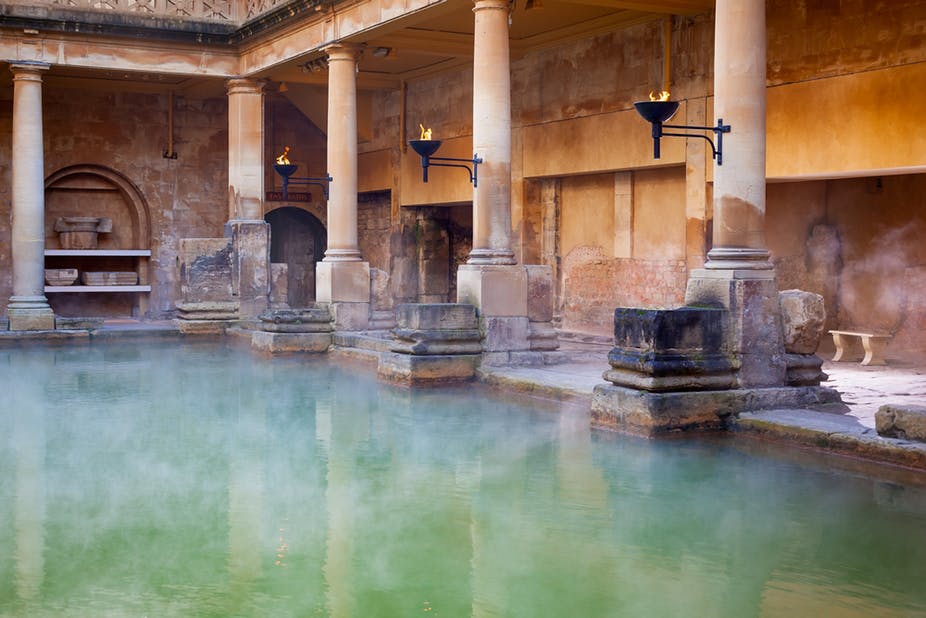
Roman bathing culture represented one of the most elaborate and institutionalized systems of bodily care in the ancient world. Public bathhouses were not merely places for washing but centers of social interaction, exercise, medical treatment, and civic identity. Bathing was understood as health-promoting, supported by classical medical theory that emphasized balance, circulation, and the therapeutic value of heat and water. Regular immersion was normalized across social classes, and the architecture of the Roman city was built around access to baths as a marker of urban life and imperial order.
The decline of Roman authority in western Europe did not immediately produce hostility toward bathing, but it did dismantle the infrastructure that sustained it. As aqueducts fell into disrepair and urban populations contracted, large public bath complexes became increasingly difficult to maintain. Bathing did not disappear, but it became localized, private, and less frequent. What had once been a civic ritual gradually lost its institutional support, making bathing more vulnerable to moral reinterpretation and practical neglect.
By the early medieval period, Christian authorities began to express ambivalence toward communal bathing, particularly when it occurred in mixed-gender settings. Public baths, inherited from Roman models, were increasingly associated with sexual temptation, idleness, and moral laxity. These concerns did not arise from ignorance of cleanliness but from anxieties about bodily exposure and uncontrolled pleasure. Water itself was not condemned, but the social environments surrounding bathing were viewed with suspicion.
Medical ideas also evolved in ways that subtly undermined immersion. While early medieval medicine retained many classical elements, it increasingly emphasized moderation and avoidance of extremes. Prolonged exposure to heat and moisture was thought capable of weakening the body, especially when combined with fasting, illness, or moral excess. The body was imagined as more fragile and less resilient than in classical thought, a shift that encouraged caution rather than routine immersion.
Importantly, medieval Europe did not abandon washing altogether. Evidence from household accounts, monastic rules, and urban regulations indicates continued use of baths, especially for therapeutic purposes. However, bathing was no longer framed as a routine practice of everyday hygiene. Instead, it became occasional, purposeful, and often medically supervised. This narrowing of acceptable contexts marked a transition from bathing as habit to bathing as exception.
By the late Middle Ages, these overlapping moral and medical concerns had prepared the ground for the early modern rejection of frequent bathing. The Roman model, once a symbol of health and civilization, was reinterpreted through a Christian and post-imperial lens that emphasized restraint, discipline, and vulnerability. What followed was not a sudden break with cleanliness, but a reorientation of how cleanliness itself was understood and achieved.
Miasma Theory and the Fear of Open Pores
Early modern medical thinking was dominated by the belief that disease arose from corrupted air, or miasma, produced by decaying organic matter, stagnant water, and environmental filth. This theory did not treat illness as an internal malfunction but as an invasion from outside the body. Health depended on managing exposure to the environment, especially air quality, temperature, and moisture. In this framework, prevention mattered more than cure, and everyday habits were evaluated for their ability to shield the body from harmful influences.
Central to this worldview was the idea that the human body was porous. Skin was not a sealed barrier but a permeable surface through which vapors, smells, and invisible particles could pass. Bathing, particularly in warm water, was thought to dilate the pores, softening the skin and allowing dangerous airs to enter the body. Once inside, these miasmatic influences could disrupt humoral balance, corrupt bodily fluids, and initiate disease. Medical manuals therefore warned that washing too thoroughly, or too often, made the body vulnerable rather than clean.
This fear of open pores shaped daily hygiene practices. Physicians frequently advised that if bathing occurred at all, it should be brief, infrequent, and followed by vigorous drying to close the pores. Cold water was sometimes considered safer than warm, though still risky. Even healthy individuals were cautioned against bathing during times of epidemic, seasonal transitions, or physical weakness. The safest form of cleanliness, according to many authorities, was dry rubbing combined with fresh linen, which could absorb impurities without exposing the body to moisture.
Miasma theory also reinforced existing social distinctions. Those who could afford clean clothing, perfumes, and controlled indoor environments were better positioned to manage perceived risks, while the poor were blamed for inhabiting spaces thought to generate dangerous airs. Bathing did not promise protection from disease; vigilance against exposure did. Within this logic, avoiding water was not a rejection of hygiene but a rational strategy for preserving bodily integrity in a world believed to be saturated with invisible threats.
Clean without Water: Linen, Clothing, and Surface Hygiene

clothing, which was important not only for its sumptuous display, but as a set ritual of court communication. Female
dress, the robe à la française, was characterized by a manteau, consisting of a bodice and robe and the panier en coupole, a type of flexible hoop skirt made of select, ornately decorated damask with a train in attractive, bright colours. The man is wearing a juste au corps richly decorated with buttons and bows, a waistcoat, breeches and stocking, all of the finest silk. The male clothing appears feminine by today’s standards, but it corresponded to the tastes of the time and was in no way considered unsuitable for a man. / Stiftung Preußische Schlösser und Gärten Berlin-Brandenburg
Early modern Europeans did not equate cleanliness with the removal of dirt from the skin. Instead, cleanliness was understood as the management of bodily excretions and the maintenance of an orderly surface between the body and the world. Linen played a central role in this system. Undergarments were believed to absorb sweat, oils, and impurities as they emerged from the body, acting as a protective intermediary. Cleanliness was therefore measured less by the state of the skin than by the frequency with which linen was changed.
This logic made clothing a primary hygienic technology. Shirts, shifts, and chemises were worn next to the skin and laundered regularly, even when outer garments were not. The visible whiteness of linen became a powerful social signal, indicating both cleanliness and moral respectability. To wear fresh linen was to demonstrate discipline, order, and attentiveness to the body without risking the dangers associated with immersion in water. Clean clothes signified a clean person.
Surface washing complemented this textile-based system. Hands, face, and occasionally feet were washed daily using basins and jugs, often with cool or lukewarm water. These practices focused on exposed areas of the body most likely to come into contact with dirt or social interaction. Full immersion, by contrast, was unnecessary and potentially harmful. Cleanliness was thus localized and selective, aimed at maintaining social propriety rather than purifying the body as a whole.
Dry rubbing was also widely recommended. Using cloths or brushes, individuals were advised to stimulate the skin and remove surface impurities without opening the pores. This practice aligned with medical advice that emphasized circulation and moderation while avoiding moisture. Rubbing the body dry was thought to strengthen it, whereas soaking weakened natural defenses. Hygiene manuals frequently praised this method as safer and more effective than bathing.
These practices reveal a coherent alternative hygiene system, one adapted to prevailing medical theories and material realities. Cleanliness was achieved through management rather than elimination, through layers rather than exposure. Linen, clothing, and controlled washing allowed early modern Europeans to care for their bodies while minimizing perceived risks. What modern observers interpret as neglect was, in fact, a carefully calibrated strategy shaped by knowledge, habit, and fear of invisible danger.
Royal Bodies and Elite Example

The hygienic practices of European elites carried outsized cultural authority, shaping assumptions about health and propriety far beyond the court. Royal bodies were not private bodies. They were symbolic, medical, and political objects whose care was closely observed and often imitated. When kings and queens avoided frequent bathing, their habits reinforced prevailing medical cautions rather than contradicting them. Elite behavior did not reject cleanliness; it modeled what cleanliness was believed to be.
Accounts of royal bathing practices, particularly those associated with Henry VIII, illustrate the degree to which immersion was treated as exceptional rather than routine. Contemporary medical advice warned that warm water weakened the body, loosened the pores, and disrupted humoral balance. Court physicians, whose authority depended on preventing illness rather than curing it, typically counseled restraint. Bathing was reserved for therapeutic necessity or extraordinary circumstances, not daily hygiene.
A similar pattern appeared in the French court under Louis XIV, where avoidance of bathing aligned with broader anxieties about water and disease. The king’s body was constantly attended, perfumed, and dressed in immaculate linen, reinforcing the idea that cleanliness could be achieved through management rather than washing. Elite routines emphasized order, visibility, and control, projecting health through surface regulation rather than immersion.
These royal examples mattered because they normalized restraint as wisdom. If kings, surrounded by physicians and resources, avoided bathing, the practice appeared medically prudent rather than backward. Court culture thus amplified existing medical theories and moral expectations, turning elite caution into social orthodoxy. The habits of royal bodies became templates for understanding health itself, shaping European hygiene long before germ theory offered a competing explanation.
Smell, Perfume, and the Management of Odor

In early modern Europe, smell occupied a central place in medical and social thought. Odor was not merely unpleasant; it was diagnostic. Foul smells were believed to signal corruption, decay, and the presence of disease-causing miasmas. Because illness was thought to travel through air, managing smell became a form of preventive medicine. A body that smelled clean was assumed to be healthy, while offensive odors suggested internal disorder or environmental danger.
Perfume emerged as a protective technology rather than a cosmetic indulgence. Aromatic substances were believed to counteract harmful airs by purifying the space around the body. Physicians and household manuals recommended carrying scented pomanders, wearing perfumed gloves, and applying fragrant oils to clothing and hair. These practices were intended to create a personal atmosphere of safety, a fragrant barrier between the individual and a contaminated world. Scent masked odor, but more importantly, it was thought to neutralize it.
Elite environments intensified this logic. Court life brought bodies into close proximity, amplifying concerns about air quality and smell. The notorious sanitary conditions of the Palace of Versailles exemplified this tension. Despite its architectural grandeur, the palace lacked adequate sanitation, and courtiers frequently relieved themselves in corridors, stairwells, and gardens. Rather than prompting widespread bathing, this reality reinforced reliance on perfumes, powders, and constant changes of linen to manage the sensory environment.
Smell also functioned as a marker of social distinction. The ability to control odor through clean clothing, scented accessories, and access to fresh air signaled refinement and status. The poor, crowded into unsanitary housing and lacking resources for scent management, were blamed for producing dangerous smells and, by extension, disease. Odor thus became moralized. To smell bad was not simply unfortunate; it was evidence of disorder, neglect, or vice.
This olfactory regime helps explain why bathing did not appear as an obvious solution to early modern hygienic anxieties. Water removed dirt from the skin, but it did not address the perceived threat of corrupted air. Scent, by contrast, acted directly on the senses through which danger was thought to travel. Managing smell, rather than washing the body, aligned more closely with contemporary medical logic. Cleanliness was achieved not by immersion, but by cultivating an atmosphere of controlled fragrance in a world believed to be saturated with invisible decay.
Morality, Discipline, and the Suspicion of Pleasure
Early modern anxieties about bathing were reinforced by moral frameworks that equated bodily restraint with virtue. Christian traditions emphasized discipline, moderation, and vigilance over physical appetites, shaping how pleasure itself was evaluated. Practices that produced sensory enjoyment were often viewed with suspicion, particularly when they involved the body directly. Bathing, especially in warm water, was frequently grouped with other indulgences that risked weakening moral resolve by prioritizing comfort over control.
Public and communal baths became focal points for these concerns. Long before bathing declined as a routine practice, bathhouses had acquired reputations as sites of sexual temptation, idleness, and moral disorder. Mixed-gender bathing, lingering nudity, and the convivial atmosphere surrounding baths alarmed religious authorities and civic leaders alike. Even when bathing was not explicitly condemned, it was increasingly regulated, restricted, or reframed as a medical intervention rather than a pleasurable habit.
This moral lens also shaped private bathing practices. To bathe for enjoyment alone suggested excess, softness, or self-indulgence. Cleanliness, in contrast, was morally acceptable when it served order, health, or propriety. Washing the hands and face before meals, maintaining clean linen, and keeping the body presentable were acts of discipline rather than pleasure. The goal was not sensory delight but visible respectability and moral self-command.
Gender further complicated these moral judgments. Female bathing attracted particular scrutiny, entangled with anxieties about modesty, sexuality, and bodily exposure. Moral literature often portrayed women as especially vulnerable to temptation through physical comfort, reinforcing the idea that bathing could erode virtue. These concerns did not prohibit washing outright, but they narrowed its acceptable meanings. Within this moral economy, avoidance of bathing was not merely a medical precaution but a sign of seriousness, restraint, and ethical maturity.
Urbanization, Filth, and the Limits of the Old Model

By the seventeenth and eighteenth centuries, the hygienic assumptions that had discouraged bathing were increasingly strained by the realities of urban growth. European cities expanded rapidly, drawing populations into dense quarters with inadequate drainage, limited access to clean water, and minimal waste removal. Streets filled with refuse, animal waste, and stagnant water, creating environments that challenged older ideals of controlled cleanliness. The strategies that had once seemed sufficient in smaller communities proved harder to sustain amid overcrowding and constant exposure to filth.
Urban living intensified fears of miasma without providing effective means to counter it. Narrow streets restricted airflow, while cesspits and open sewers produced persistent odors believed to carry disease. Ironically, these conditions reinforced suspicion of bathing rather than undermining it. If corrupted air caused illness, then immersing the body in water drawn from polluted urban sources appeared especially dangerous. Bathing could not solve the problem of environmental decay and might worsen it by opening the body to pervasive contamination.
Municipal authorities attempted to manage filth through regulation rather than transformation. Efforts focused on street cleaning, waste removal, and controlling offensive trades such as tanning or butchery. These measures aimed to reduce smells and visible disorder, not to encourage changes in personal hygiene. Cleanliness remained an external, environmental concern rather than an internal bodily one. The persistence of miasma theory meant that improving air quality took precedence over washing skin.
At the same time, the scale of urban misery exposed cracks in the older hygienic logic. Epidemics of plague, typhus, and later cholera repeatedly devastated cities despite careful attention to ventilation, perfume, and surface cleanliness. Observers began to note inconsistencies between theory and outcome. While miasma explanations remained dominant, confidence in traditional preventive measures weakened as disease continued to strike indiscriminately across social boundaries.
These pressures did not immediately produce a new hygiene model, but they destabilized the old one. Urbanization revealed the limits of managing cleanliness through restraint, linen, and scent alone. By the late eighteenth century, reformers increasingly questioned whether environmental control without bodily washing could ever succeed in densely populated cities. The conditions were in place for a conceptual shift, even if the intellectual tools needed to complete it had not yet arrived.
The Nineteenth-Century Turn: From Miasma to Microbes

The nineteenth century marked a decisive rupture in European ideas about cleanliness, though the transition was gradual and uneven rather than sudden. For much of the century, miasma theory remained influential, especially among public officials and urban reformers. Efforts to combat disease continued to focus on ventilation, street cleaning, and the removal of foul smells. Yet mounting empirical evidence began to strain the explanatory power of corrupted air alone. Patterns of contagion, recurrence, and localization suggested that disease followed rules that miasma theory could not fully explain.
Advances in microscopy and experimental medicine slowly altered how the body was understood. The development of bacteriology reframed disease as the result of specific organisms rather than diffuse environmental corruption. This shift transformed the skin from a porous liability into a defensive boundary. If pathogens were discrete and material, then washing the body could remove them rather than invite danger. Water, once feared for opening pores, began to acquire a new medical meaning as a cleansing agent capable of interrupting transmission.
Public health reform accelerated this conceptual change. Nineteenth-century sanitation movements promoted clean water supplies, sewer systems, and eventually public baths, especially in rapidly industrializing cities. These initiatives were motivated not only by scientific developments but also by social reform agendas aimed at disciplining and improving working-class life. Cleanliness became associated with moral uplift and civic responsibility, reversing earlier assumptions that linked bodily washing with indulgence or risk.
Bathing practices changed unevenly across class lines. Middle- and upper-class households adopted private bathrooms earlier, integrating regular washing into domestic routines. For the urban poor, access to bathing facilities often depended on municipal intervention. Public bathhouses were reintroduced, now framed as instruments of health rather than sites of moral concern. The bath, once suspect, was rehabilitated as a tool of progress.
Importantly, the triumph of germ theory did not simply correct an error; it replaced one coherent system with another. Earlier fears of bathing had been grounded in reasonable interpretations of available evidence. The nineteenth-century embrace of washing reflected new assumptions about visibility, material causation, and bodily boundaries. Cleanliness shifted from managing exposure to eliminating contaminants, a change rooted as much in epistemology as in technology.
By the late nineteenth and early twentieth centuries, bathing had become a normalized expectation of modern life. What had once appeared dangerous now seemed essential. This reversal highlights the contingent nature of hygienic knowledge. Practices that feel self-evident in one era may appear reckless in another. The history of bathing thus illustrates how cleanliness is never purely about dirt or water, but about the frameworks through which societies understand health, risk, and the human body.
Conclusion: Cleanliness as Cultural Logic, Not Ignorance
The long European suspicion of bathing was not the result of indifference to health or ignorance of cleanliness, but the outcome of a coherent and internally consistent logic. Early modern societies operated with a medical worldview that emphasized environmental danger, bodily permeability, and the constant threat of invisible corruption. Within that framework, restraint made sense. Avoiding immersion, managing odor, and relying on linen and surface hygiene were rational strategies for preserving health in a world understood to be hostile to the body.
Seen in this light, the contrast between past and present hygienic practices loses its moral edge. Modern observers often frame historical bathing avoidance as backwardness, yet such judgments project contemporary knowledge onto earlier contexts. The people who feared water were responding to real patterns of illness, limited infrastructure, and medical theories that offered plausible explanations for disease. Their conclusions were not foolish; they were provisional, shaped by the best information available at the time.
The eventual embrace of bathing did not occur because Europeans suddenly valued cleanliness more, but because the conceptual foundations of health changed. Germ theory redefined danger, recast the skin as a barrier rather than a vulnerability, and transformed water from a threat into a solution. This shift illustrates how hygienic practices are inseparable from broader epistemological frameworks. Cleanliness is never merely technical. It is cultural, theoretical, and moral.
Understanding this history matters beyond curiosity. It cautions against assuming that present-day health practices are final or self-evident. Just as earlier societies acted logically within their own medical systems, modern confidence rests on frameworks that may one day be revised. The history of bathing reminds us that cleanliness is not a universal constant but a negotiated practice, shaped by knowledge, fear, and the changing boundaries of what societies believe the body to be.
Bibliography
- Archibald, Elizabeth. “Bathing, Beauty and Christianity in the Middle Ages.” Insights 5:1 (2012): 1-16.
- Ashenburg, Katherine. The Dirt on Clean: An Unsanitized History. New York: North Point Press, 2007.
- Brown, Peter. The Body and Society: Men, Women, and Sexual Renunciation in Early Christianity. New York: Columbia University Press, 1988.
- Buzzatto, Pedro. “A History of Hygiene for French Royalty in the Palace of Versailles.” L’Officiel (July 11, 2023).
- Corbin, Alain. The Foul and the Fragrant: Odor and the French Social Imagination. Cambridge, MA: Harvard University Press, 1986.
- Classen, Constance, David Howes, and Anthony Synnott. Aroma: The Cultural History of Smell. London: Routledge, 1994.
- Evans, Richard J. Death in Hamburg: Society and Politics in the Cholera Years, 1830–1910. Oxford: Oxford University Press, 1987.
- Fagan, Garrett G. Bathing in Public in the Roman World. Ann Arbor: University of Michigan Press, 1999.
- Karamanou, Marianna, George Panayiotakopoulos, Gregory Tsoucalas, Antonis A. Kousoulis, and George Androutsos. “From Miasmas to Germs: A Historical Approach to Theories of Infectious Disease Transmission.” Le Infezioni in Medicina 1 (2012): 52-56.
- Łanuszka, Magdalena. “Scrub-a-Dub in a Medieval Tub.” JSTOR Daily (Nov. 22, 2023).
- Latour, Bruno. The Pasteurization of France. Cambridge, MA: Harvard University Press, 1988.
- Mack, Phyllis. “Women and Gender in Early Modern England.” The Journal of Modern History 73:2 (2001): 379-392.
- Porter, Roy. Disease, Medicine and Society in England, 1550–1860. Cambridge: Cambridge University Press, 1987.
- —-. The Greatest Benefit to Mankind: A Medical History of Humanity. New York: W. W. Norton, 1997.
- Robinson, Michele Nicole. “Dirty Laundry: Caring for Clothing in Early Modern Italy.” Costume 55:1 (2021): 3-23.
- Rosen, George. A History of Public Health. Expanded edition. Baltimore: Johns Hopkins University Press, 1943.
- Scobie, Alex. “Slums, Sanitation, and Mortality in the Roman World.” Klio 68, no. 2 (1986): 399–433.
- Slack, Paul. The Impact of Plague in Tudor and Stuart England. Oxford: Oxford University Press, 1985.
- Squatriti, Paolo. Water and Society in Early Medieval Italy, AD 400–1000. Cambridge: Cambridge University Press, 1998.
- Vigarello, Georges. Concepts of Cleanliness: Changing Attitudes in France since the Middle Ages. Cambridge: Cambridge University Press, 1988.
- Wear, Andrew. Knowledge and Practice in English Medicine, 1550–1680. Cambridge: Cambridge University Press, 2000.
- Weir, Alison. Henry VIII: King and Court. New York: Ballantine Books, 2001.
- Wilson, Adrian. Ritual and Conflict: The Social Relations of Childbirth in Early Modern England. Cambridge: Cambridge University Press, 2013.
Originally published by Brewminate, 01.12.2026, under the terms of a Creative Commons Attribution-NonCommercial-NoDerivatives 4.0 International license.
About the Author