
Israel’s occupation and oppression of Palestinians is either ignored or perceived as required to achieve the end result.

By Mimi Kirk
Managing Director
Al-Shabaka
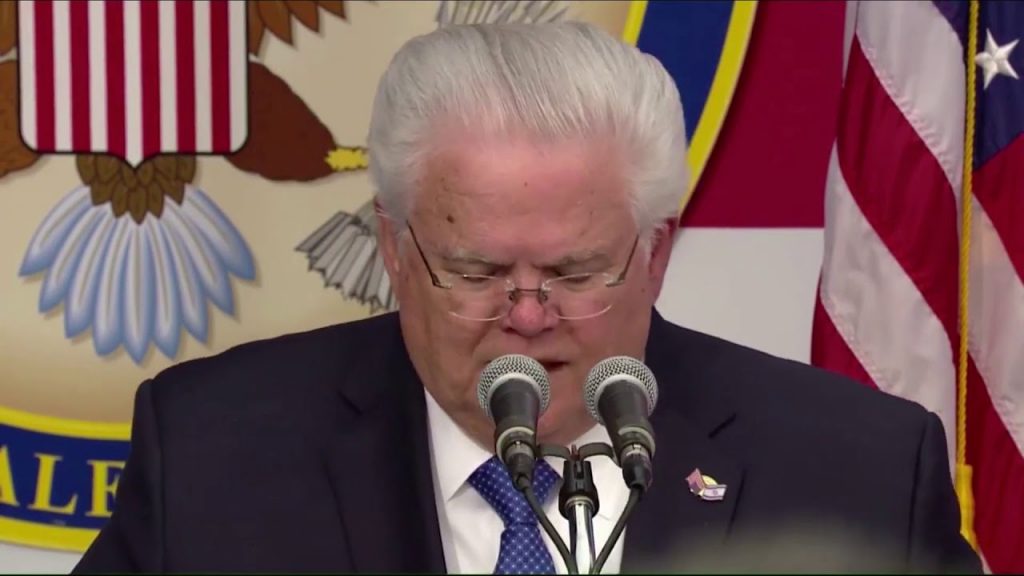
The May 2018 ceremony marking the opening of the US embassy in Jerusalem featured many of the usual suspects. US Ambassador to Israel David Friedman, Senior Advisor to President Donald Trump Jared Kushner and Israeli Prime Minister Benjamin Netanyahu all delivered remarks during the more than one-hour-long ceremony that touted the US-Israel relationship and, in Netanyahu’s words, embraced Jerusalem as “the eternal, undivided capital of Israel.”Trump’s embassy move was controversial—but the two speakers who opened and closed the ceremony were equally controversial. Two evangelical Christian megachurch pastors from Texas who advise Trump, Robert Jeffress and John Hagee, earnestly prayed and thanked God for making the state of Israel possible and Trump for having the courage to acknowledge Jerusalem as the capital of the Jewish people.
“Father, we are…grateful as we think about [the founding of the state of Israel in 1948], when you fulfilled the prophecies of the prophets from thousands of years ago and regathered your people in this promised land,” intoned Jeffress, while Hagee identified Jerusalem as the city “where Messiah will come and establish a kingdom that will never end.”
As Christian Zionists—Hagee is the founder of the main US Christian Zionist organization, Christians United for Israel (CUFI) and Jeffress regularly preaches the ideology on Fox news—the two men’s remarks reflect their belief that the modern state of Israel is the result of biblical prophecy. This belief centers around the idea that 4,000 years ago God promised the land to the Jews, who will rule it until Jesus’ return to Jerusalem and the rapture. Not all will benefit from this end of times scenario: While Christians will be saved and “live forever with Christ in a new heaven and earth,” those adhering to other religions who do not convert to Christianity will be sent to hell.
Israel’s occupation and oppression of Palestinians—including those who are Christian—is either ignored or perceived as required to achieve the end result. In this vein, Christian Zionists consider Israel’s expansion into the West Bank via illegal settlements a positive development and even support Israeli expansion into Jordan’s East Bank.
Such a credo necessarily sees faiths outside of Christianity as false or, in the case of Judaism, as also in the service of Christianity. Jeffress, for example, once said that Judaism, Islam and Hinduism “lead people…to an eternity of separation from God in hell,” and Hagee suggested in a 1990s sermon that Hitler was part of God’s plan to get Jewish people “back to the land of Israel.” Yet when questioned about the decision to include such speakers in the ceremony’s lineup, White House Deputy Press Secretary Raj Shah said, “I honestly don’t know how that came to be.”
Israel’s Christian Support Base
Despite Shah’s circumvention, the Trump administration very purposefully chose Jeffress and Hagee for the occasion. The pastors—and their white evangelical followers, who comprise a significant portion of Trump’s base with 81 percent having voted for him in 2016—had lobbied the president hard to move the embassy. In an interview with the far-right site Breitbart, Hagee related that he had told Trump: “The moment that you [move the embassy], I believe that you will step into political immortality.” Moreover, the Palestinian Christian human rights lawyer Jonathan Kuttab argued in a Jewish Voice for Peace webinar that Trump’s embassy move was done to please his Christian Zionist base, rather than AIPAC or Netanyahu.
About a quarter of US adults identify as evangelical Christian, and 80 percent of them express the belief that the modern state of Israel and the “re-gathering of millions of Jewish people to Israel” are fulfilments of biblical prophecy that show the return of Jesus is drawing closer. Andrew Chesnut, professor of religious studies at Virginia Commonwealth University, argues that Christian Zionism is now the “majority theology” among white US evangelicals.
That number of Christian Zionists adds up to tens of millions of voters, significant financial resources and a great deal of lobbying influence through organizations like Hagee’s CUFI—as the embassy move showed. Yet the US media and political analysts often approach the Israel lobby as if it were composed solely of Jewish supporters, whose numbers are in fact far smaller than Christian Zionists—AIPAC only boasts 100,000 members, for instance, compared to CUFI’s reported five million—and who are also deeply divided on US policy on Palestine-Israel.
The brouhaha and accusations of anti-Semitism that erupted in February 2019 after Congressperson Ilhan Omar (D-MN) pointed to AIPAC’s financial influence on US policy toward Israel demonstrate this fixation. Not only do other lobby groups, such as CUFI, wield as much or more influence as AIPAC (financial and otherwise), but AIPAC, as MJ Rosenberg wrote in The Nation, “is not synonymous with Jews.” Of its 100,000 members, he explained, “most are Jewish but…many are evangelical (and other) Christians.”
Such a focus on American Jewish support for Israel elides how US backing of Israel is at base driven by US geopolitical interests in the Middle East, with its longstanding desire to maintain control over the region’s energy resources and its pursuit of “the war on terror”—with Israel as its firm partner in both endeavors. But it also elides the significant influence of Christian Zionism, particularly at a time when White House leaders like Vice President Mike Pence and Secretary of State Mike Pompeo are avowed evangelical Christians. Indeed, in 2017 Pence was the first sitting vice president or president to address CUFI.
At the same time, Christian Zionism may be an easier ideology to counter than Jewish Zionism. Activists argue that while Christian Zionism may be a broadly held belief, it is not deeply held. “For most people who espouse this theology, it’s not the center of their belief,” Jonathan Brenneman, a Christian Palestinian-American activist, told me. “When people are confronted with the reality of what is going on in Palestine, the theology often falls apart.”
Ideological Origins of Christian Zionism
While the specific tenets of today’s Christian Zionism emerged in the nineteenth century, the movement’s ideological roots go back centuries, to the era during which Christianity became part of the Roman Empire under Constantine in the third century AD, stretching to the Crusades and then European colonialism—all cases in which plunder was accomplished under the cover of Christian ideology, namely the idea of the righteousness of Christian domination over non-Christian land and people.
Several new Protestant sects in sixteenth-century Europe held proto-Zionist ideas. Brookings Institution Fellow Célia Belin has noted that these beliefs, stemming from close and inductive readings of the Bible emerging from the Reformation, renewed interest in end of times debates. “[They] led to a new understanding of the role of the Jewish people in Christian history, leading some to prophesize a return of the Jewish people to the Holy Land,” she wrote.
Iterations of these eschatological ideas spread to America with the Puritans, with the accompanying belief that the colonists escaping religious persecution in England were the new Jews and America the new Israel, promised to them by God. John Winthrop, the first governor of the Massachusetts Bay Colony, proclaimed in 1630 in his famed “city on a hill” speech that “the Lord will be our God, and delight to dwell among us, as his own people, and will command a blessing upon us in all our ways…We shall find that the God of Israel is among us.”
In such a belief system, the indigenous people of Turtle Island were considered against God’s plan and acting against God’s people. “They were considered disposable,” said Brenneman. “There’s a very clear line from that ideology to Christian Zionism.”
The mid-nineteenth century began to see this line realized through the influence of evangelist John Nelson Darby, who through missionary tours across North America popularized the end of times narrative and Jews’ role in it. In 1891, fellow preacher William Blackstone petitioned US President Benjamin Harrison to consider Jewish claims to Palestine “as their ancient home”—five years before Theodor Herzl’s Affiliate disclosure: Amazon links on this site are paid links. As an Amazon Associate I earn from qualifying purchases.call for a Jewish homeland. Subsequent influential evangelists, such as Cyrus Ingerson Scofield, preached how the first telltale sign of the world coming to an end would be Jews returning to the Holy Land. Scofield’s widely read 1909 annotated Bible proclaimed these tenets.
Gary Burge, an expert on Christian Zionism and a theology professor at Michigan’s Calvin Theological Seminary, pointed out in an interview how the horrors of World War I, the influenza epidemic of 1918, the stock market crash, and World War II then helped solidify end of times beliefs among Christians. “The average person felt like the world was falling apart,” Burge said, “and the founding of the state of Israel in 1948—and then the 1967 war—seemed to them to point directly to the fulfillment of the end of times.”
A Fusion of Religion and Politics
Christian Zionists—as well as evangelicals more broadly—tended to remain apolitical throughout much of the twentieth century. But the social upheaval and rights movements that emerged in the late 1960s spurred this demographic to attempt to stem progressive societal changes through political action, particularly after the 1973 Roe v. Wade decision legalizing abortion.
A ready-made constituency was therefore in place for televangelist Jerry Falwell’s 1979 Moral Majority platform, which opposed abortion, the equal rights amendment and gay rights, among other progressive issues, and supported increased defense spending, anti-communism and robust US support for Israel. Falwell and fellow Christian Zionist preachers like Pat Robertson of The 700 Club emphasized the idea that God will only support the United States if the United States supports Israel. “Robertson has described hurricanes and financial prosperity in the US as related to the US position on Israel,” said Burge, “and Falwell used to say that if America backs away from supporting Israel, God will no longer bless America.”
The 1980 election of evangelical-friendly Ronald Reagan and his close (though not always easy) relationship with Falwell and similar conservative Christian leaders solidified the link between the Moral Majority and the Republican Party, giving the movement a seat at the political table and transforming it into the “Christian Right.” The eight-year presidency of born-again Christian George W. Bush furthered the Christian Right’s influence in US politics and foreign policy. Moreover, Bush’s “war on terror” in the aftermath of the September 11, 2001 attacks complemented and abetted Israel’s war on its own “terrorists”—Palestinians.
Christian Zionism’s merging of religion and politics has been the driving force behind its more recent influence on US policy. While Trump does not purport to hold evangelical beliefs, he carefully caters to his white evangelical base, gaining their support through the US embassy move and support for Israeli annexation of the Golan Heights and the West Bank, as well as through the choice of Mike Pence as vice president.
In tandem with this mainstreaming, a small group of Christian Zionists is calling for a focus that is less about the end of times scenario in which Jews are sent to hell unless they convert, and more about urging Christians to be sympathetic and supportive of Jews because biblical theology requires that Jews possess the Holy Land. “What they’ve done is slip out the eschatology and lead with the theological promise,” Burge said.
This approach called the “New Christian Zionism” omits the messier details of the Christian Zionist/Jewish-Israeli pact, which requires that leaders like Netanyahu ignore the fate that Christian Zionists imagine for Jews for the sake of political gain. It may perhaps indicate an attempt to provide a more tempered, attractive ideology for young American evangelicals, who in recent years have been exhibiting more liberal views than their elders—including on the question of Israel.
A 2017 poll by Lifeway Research, for example, demonstrated the generational divide. Only nine percent of older respondents considered the “rebirth” of Israel in 1948 as an injustice to Palestinians, while 62 percent disagreed and 28 percent said they weren’t sure. Among younger evangelicals, nineteen percent said that Israel’s creation was an injustice to Palestinians, 34 percent disagreed, and almost half weren’t sure.
Such a trend may hold promise for Palestinians and their allies working to shift the Christian Zionist narrative and secure Palestinian human rights in the Occupied Palestinian Territory and beyond. Some activists also point to how Christian Zionism is a less entrenched ideology than that of Jewish Zionism, and how exposure to the Palestinian reality on the ground can convince Christian Zionists to shift their thinking.
Countering Christian Zionism
Jonathan Brenneman, the Christian Palestinian-American activist, worked as Israel/Palestine Partners in Peacemaking coordinator for the Mennonite Church. “Christian Zionism is so prevalent in the US that any work by Christians on Palestinian rights has to confront it,” he said. Brenneman believes that education is the best strategy to reach Christian Zionists.
“Christian Zionism is an extremist ideology, but it’s also incredibly broadly held and is part of a larger Christian package of belief,” he said. “Most people who hold it don’t realize they’re holding really hateful beliefs; it’s very much based on ignorance and insularity.” Brenneman adds that such beliefs are rarely challenged, particularly because the mainstream media plays into them by emphasizing, among other tropes, the idea that Israel is always in grave danger from the Palestinians or surrounding Arab states. The result: When Christian Zionists learn of Israel’s brutal treatment of the Palestinians, their belief system is vulnerable to disruption.
Brenneman says the best route to education is for Christian Zionists to tour Palestine-Israel and hear from Palestinian Christians and Jews who challenge the dominant narrative. Groups such as Telos and Churches for Middle East Peace (CMEP) run tours that aim to trouble this narrative through meetings with a variety of Israelis and Palestinians; in both cases, groups meet with people ranging from Jewish settlers to business leaders to Palestinian activists.
Executive Director of CMEP Mae Elise Cannon also believes that education is the key to changing mindsets and that Christians are generally open to such change. While CMEP does not necessarily oppose Christian Zionist beliefs—the group is composed of nearly 30 church-based organizations with diverse theological framings, including evangelicalism—it works to counter the beliefs’ negative repercussions through the tours as well as speaking engagements in US churches and government advocacy.
“The vast majority of people in the American church want to honor God and are pursuing the goodness of the world,” Cannon told me. “They are open to their mind being changed, but their underlying concern is they think if they shift their political perspective, they won’t be faithful to theology.” Cannon says using the example of Israeli settlements is productive in this regard. “It’s straightforward to show people that they are not following the basic Christian tenet of ‘love thy neighbor’ if they are supporting those who build a settlement on Palestinian farmland that’s been in that family for decades or a century,” she said. “The current realities speak for themselves. We show them that they can honor God while advocating for Palestinian rights, too.”
Friends of Sabeel North America (FOSNA), a Christian organization seeking justice and peace in Palestine through advocacy and education, focuses on ensuring that Palestinian narratives are heard by American churches. Tarek Abuata, FOSNA’s executive director, stresses that Christian Zionist beliefs aren’t solely held by those who identify explicitly with Christian Zionism but are found throughout mainstream American churches.
“Christian Zionism is not just the John Hagee’s of the world, but is found in Protestant mainline churches, including those that have divested from companies that profit from the Israeli occupation,” he said. “It’s a more nuanced and diffused theology found at the level of hymns as well as in the pulpit.” This phenomenon is also part of what liberation theologian Marc H. Ellis calls the “ecumenical deal” between Christians and Jews, in which mainline Christians are silent on Israel’s abuse of Palestinians to repent for Christianity’s historic anti-Semitism.
With this in mind, FOSNA helps Palestinians tell their stories to a variety of audiences, from Episcopal bishops to Methodist congregations to evangelical groups, training them how to elucidate their narratives and present them in a public space. “We often find a defining event and distill it,” he told me. “For a 25-year-old Palestinian man from Gaza, it was the story of his friend being shot by Israeli soldiers as he checked the level of his water tank on the roof of his home.”
FOSNA also works to counter CUFI. “CUFI isn’t going to provide a space for Palestinians to tell their stories, so we have to confront them,” Abuata said. In July 2019, FOSNA worked with fellow progressive organizations to organize panels and protests in Washington, DC, during CUFI’s annual summit. “We want to present the alternative vision of inclusivity rather than exclusivity that a lot of CUFI adherents might not even be aware that they’re engaged in,” he said. “It’s confrontational, but always with the cognizance that reconciliation is possible when there’s an acknowledgment of Palestinian agency and humanity.”
Abuata says the Christian movement for Palestinian rights has grown significantly in the past decade, noting that 10 years ago he wouldn’t have been welcomed into 80 percent of the mainline Christian denominations and churches with which he now coordinates. This year also marks the 10-year anniversary of the publication of the Kairos document, a call by Palestinian Christians to Christians around the world to fight the Israeli occupation. While Christian Zionism has certainly internationalized in recent years, growing in popularity in Africa, Latin America, and Asia, Abuata says the movement countering Christian Zionism has as well. “The trend on the ground is a growing internationalization reflecting on globalized racism through Palestinian lenses,” he said.
Still, Abuata acknowledges the continued challenges. “There are fractures appearing in the Christian Zionist narrative, but there’s still a long way to go,” he said.
Originally published by LobeLog, 08.19.2019, based at the Institute for Policy Studies, a program of Open Society Foundations, under the terms of a Creative Commons Attribution-NonCommercial-NoDerivs 3.0 Unported license.
About the Author