Wills made medieval merchants seem narrowly devotional, but inventories and manuscripts reveal Londoners reading literature, chronicles, practical guides, and public notices.

By Dr. Caroline M. Barron
Professor Emerita of History
Royal Holloway University of London
Historians have tended to take a dim view of the reading habits of medieval Londoners. Sylvia Thrupp wrote ‘The fact that the book trade remained largely in the hands of aliens and that as late as 1520 the Mercers were classing books among “tryfylles”… does not speak well for the London merchants’ intellectual curiosity or initiative’.1 Sheila Lindenbaum in her thoughtful analysis of ‘London texts and literate practice’ notes that those citizens who owned ‘more than the commonly held devotional texts and works of religious instruction’ were usually members of the merchant elite who, in her view, consciously aimed to draw a clear social line between themselves and the rest of the citizenry.2 Any analysis of the reading habits of medieval Londoners is bound to be skewed: in the first place by the wealth of the merchants who could afford the money to buy books and the time to read them, and in the second place by the nature of the evidence: much of what we know about the book-owning habits of Londoners derives from their wills which have survived in large numbers. But wills are not inventories. They were drawn up with particular concerns and objectives and reflect the pious preoccupations of the testators.
This essay aims to see if it is possible to move a little closer to the reading practices of Londoners, artisans as well as merchants. One way of attempting this is to look, not only at bequests of books in wills, but also at surviving manuscripts which we know (largely from inscriptions) to have been owned by Londoners. This study has been greatly helped by two recent articles: in the first Kathleen Scott provides two lists of books owned by merchants, and in the second article Anne Sutton analyses the books ‘for worship and pleasure’ to be found in the wills of nearly 650 London mercers between 1259 and 1536.3 Scott’s first list contains seventy-two merchants whose names, or merchant marks, are inscribed in manuscripts of whom fifty-five may be identified as Londoners. The second is a list of 106 merchants who refer to books in their wills, or whose ownership of books is recorded in inventories or attested in some other secondary source. There are seventy-one Londoners in this second list. The earliest London book-owner recorded in these two lists is Andrew Horn, the famous city chamberlain and bibliophile who died in 1328, and the latest is Richard Crympe ‘grocer in newgate market at the syne The griffin’ who inscribed his name in a copy of Mandeville’s Travels and Lydgate’s poems on 8 March 1571 (Cambridge, Trinity College MS R.4.20).4 Anne Sutton’s meticulous work has added considerably to this second list: she found some fifty-seven mercer wills which mentioned books and thirty-six of these were not included in Scott’s list because they were unknown before the publication of Sutton’s research.
To look first at Scott’s list of Londoners whose ownership of books is attested in secondary sources, almost all of them will bequests. Some 150 named volumes can be attributed to Londoners in this list, only thirty (or 20 per cent) of which are not religious. There are seventeen psalters, and sixteen each of primers and breviaries (portiforia); ten missals and eight bibles. But the text which appears most frequently is the Legenda Aurea, whether in its Latin or English versions: there were twenty-one copies recorded among these London book-owners. By contrast there are only single copies of Piers Plowman, the Ars Moriendi, The Prick of Conscience and Cleansing.5 Among the non-religious books there is much greater diversity, as one would expect. But the most common books to appear were chronicles (eight altogether in French, Latin or English); four law books (canon and civil law); four ‘romances’ of various kinds and three copies of The Canterbury Tales. So the overwhelming impression to be gained from Scott’s list of the books owned by Londoners is that their primary focus and concern was religion. The same conclusion may be drawn from the analysis by Anne Sutton: only five of the fifty-seven book-bequeathing mercers listed secular books in their wills.6 But this is what we would expect from the evidence of wills, and the majority of these recorded bequests were made to religious people or institutions and sought prayers in return for the gifts.
A rather different impression of the reading of Londoners may, however, be derived from studying the inventories of their household possessions. Such inventories were drawn up by the executors before disposing of the testator’s goods, but very few of these inventories survive. There are also a few inventories which were produced in cases of bankruptcy. Seven of the London book owners noted by Scott in her second list are known from such sources (Roger Chalket, pepperer, inventory 1361; John Cogsale, haberdasher, inventory 1376; Richard Lyons, vintner, inventory 1376; John Sharnebrok, chandler, inventory, 1376; Richard Toky, grocer, inventory, 1391; William Cost, grocer, inventory, 1392;Richard Cely, Stapler, inventory, 1482).7 These seven inventories record seventeen books: three primers, three Legends of Saints, a copy of The Cleansing of Man’s Soul and then four romances, four practical volumes and two books ‘de Englyssh’8 priced at eight pence. The evidence of these inventories thus suggests a much more even balance between religious and secular books in the ownership of medieval Londoners. The inventory of the household goods of the middle-ranking mercer, Richard Gyttens, whose goods were sequestered by the London sheriff in August 1507, illustrates this point very well. In all he possessed twenty-one books: five mass books (richly bound), three printed primers, and copies of The Canterbury Tales, Guy of Warwick, Piers Plowman, The Siege of Jerusalem, a book of tales in English and two books of French tales, two chronicles, a book of physic and another of medicines for horses and ‘a book in English of the Customs of London’.9 Some of these volumes may have been book stock for sale, but this remarkable inventory demonstrates that the reading matter of Londoners, at least by the early sixteenth century, was more diverse than their wills might suggest.
This partial, or biased, picture of book-owning by Londoners derived from reading their wills is well-illustrated by the earlier case of Thomas Carleton. He was an embroiderer who was elected an alderman in the period of annual elections to that office, was an MP in 1382 and died in 1389.10 He was a member of the Tailors’ fraternity of St. John the Baptist and wished to be buried in their chapel at the north door of St. Paul’s Cathedral. A chantry was to be set up and to John Anne, the chaplain there, Carleton bequeathed two books: a bible and a legend of saints.11 But we know that Thomas Carleton owned at least one other book: a lay ‘common place book’ (BL, Additional MS 38131), which Hannes Kleineke identified as compiled by Carleton, although in the volume he does not identify himself as the owner/compiler. This contains copies of statutes and ordinances, both civic and national, documents relating to the Tailors’ fraternity and a version of FitzStephen’s famous account of the city of London derived from the Liber Custumarum, compiled by Andrew Horn and bequeathed by him to the London Guildhall. So here we find a London embroiderer, a wealthy and reasonably important citizen, not only owning the religious books specified in his will, but putting together a compendium of documents and other texts in a volume for his own use in a secular context. He is unlikely to be the only Londoner who compiled and owned such a volume of useful personal memoranda.12 Among the surviving cartularies compiled by, or for, laymen (as opposed to clerics and religious houses) there are five which belonged to London merchants: three from the fourteenth century (Adam Fraunceys, mercer, alderman, d. 1375; John Pyel, mercer, alderman, d. 1382; John Curteys, ?grocer, mayor of the Calais Staple, d. 1391) and two from the sixteenth century (Richard Fermor, grocer, alderman, d. 1551 and Sir George Monoux, draper, alderman d. 1544).13 All these men held land outside London as well as in the city (as was the case with many successful London merchants) and they used their cartularies to record their newly acquired rural manors. There was less need to keep a private record of London properties since deeds relating to city lands were recorded in the voluminous City Husting Rolls. But secular utilitarian books of this kind must have been ubiquitous in the houses of London merchants.
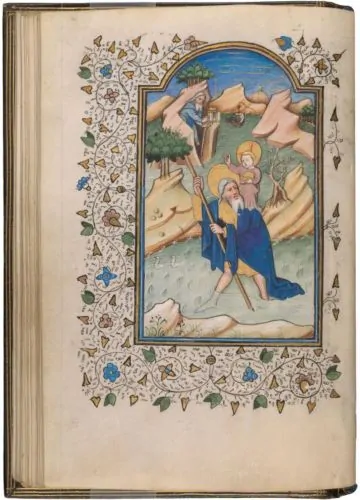
When we turn to consider the other list of books compiled by Kathleen Scott, namely those surviving manuscripts in which medieval merchants have inscribed their names or marks, the more balanced picture suggested by the inventories is confirmed. Of the seventy-seven merchants in the list, fifty-five are Londoners and among them they owned sixty-five volumes: twenty (31 per cent) were broadly religious volumes and the remaining forty-five (69 per cent) were secular. This is almost the reverse of the figures for the religious and secular books mentioned in the wills in the other list. It may well be the case that the vicissitudes of religious controversy and change encouraged the destruction of more religious books and that secular, non-controversial, books had a better chance of surviving. Perhaps not surprisingly, however, it is the books of hours and psalters which appear most frequently among the religious books. This may be because they were often beautifully illustrated and so survived as works of art rather than as devotional books. Moreover such volumes often have the births and deaths of family members written into the calendars and so their owners are more easily identified than may be the case with other volumes.14 Although some of the named obits are hard to read, and their identification with Londoners is not always secure, some like John Clerk, grocer and apothecary, clearly stated that a fourteenth-century psalter and hours (BL, Harley MS 273) belonged to him15 and on a folio of a thirteenth-century psalter (Cambridge, Trinity College MS O.4.16) is recorded ‘Of your charyte pray for the soull of Wyllyam Clarkson ferrar of london and Margaret hys wyffe and all there childaris’.16 Simon Rice, a mercer, and merchant of London who died in 1530, likewise had written into a fifteenth-century psalter ‘Off your charite pray for the soules of Symon Rice and Letyce his wyffe their father soules ther mothers soles ther frendes soules and all Cristen solles’.17 Most of the books of hours and psalters associated with Londoners belong to the later fifteenth or early sixteenth centuries. The earliest book of hours and psalter with a secure London obit is the volume (Oxford, Bodleian Library, MS Hatton 4) which appears to have belonged to Richard Gregory, a London ironmonger whose obit is recorded in the calendar on 4 September. His will was drawn up on 2 September 1397 and proved two days later.18 Doubtless there are further books of hours and psalters which have inscribed in them the names of London merchants and their families. On the eve of the Reformation, William Harding, a London mercer, noted in a fifteenth-century book of hours (Victoria and Albert Museum, Reid MS 46), his intention to record all the births in his family in the volume which, in fact, passed down the female line.19
But books of hours were not the only religious volumes owned by Londoners: two merchants in the sixteenth century inscribed their names in thirteenth-century bibles20 and three others owned copies of The Prick of Conscience: William Smart, who was warden of the Grocers’ Company in 1509–10; Robert Cresswell, ‘grocer at the harrowe in bucklersburye’; and Christopher Eliot, a goldsmith who was several times warden of his Company between 1492 and 1509.21 The fact remains, however, that the great majority of the books which have inscribed in them the names of medieval Londoners were secular rather than religious in emphasis. Some of these were practical books – formularies and books of instruction of various kinds – and seven Londoners owned copies of the Brut or other chronicles. The striking aspect, perhaps, of London book ownership is the predominance of literary texts: five copies of Gower’s Confessio Amantis, two copies of Hoccleve, five copies of works of Chaucer (Tale of Melibee, Troilus, Boethius, The Clerk’s Tale and The Canterbury Tales) and fourteen copies of works by Lydgate, who emerges as the most popular author of the late medieval period in London. This is not perhaps surprising, since he is probably also the most prolific author.22 Although many of these literary texts were owned by merchants from the greater trading companies, some were not. John Bartholomew and Thomas Goodonston, London girdlers, both at times owned a copy of Gower’s Confessio Amantis, and John Keyne ‘of London Frutrer’ wrote his name in a copy of Chaucer’s Troilus and Criseyde; William Marshall ‘armerer’ of London owned a manuscript containing works by Chaucer and Lydgate and a copy of the Libelle of Englyshe Polycye.23 It would be good to know more of these comparatively humble men.
The lists of book owners, known from their inscriptions in surviving manuscripts or from references in wills and inventories, has demonstrated the existence in London of a wide range of books and of book owners and users. These books were not exclusively liturgical and religious and the impression to be gained from will bequests has to be tempered by the evidence from inventories and surviving manuscripts. Moreover, although it was grocers, mercers, drapers and, to a lesser extent fishmongers, vintners and skinners, who owned and bequeathed manuscripts, men from less prestigious companies, or even artisan ones, are also to be found owning books. Apart from those already mentioned24 we know that William Bristowe, a London cordwainer, left ‘all his books’ to his son Simon; Richard Glemesford, felmonger (a dealer in animal skins) in 1384 left his antiphoner to his parish of St. Stephen Coleman Street;25 and John Clifford, a mason in Southwark who died in c.1417, left a collection of books including a psalter, an English translation of the Gospels, and a Legenda Aurea.26 So book-owning among Londoners was by no means confined exclusively to the merchant class.
There are, perhaps, certain types, or categories, of books which we may identify as particularly associated with Londoners. These include common-profit books which were bequeathed to a named individual who, in return, was to pray for the donor and then pass the book on to another recipient who would perpetuate this chain of prayer. John Colop, probably the apprentice of Robert Killum, a grocer who died in 1416, used his own goods and those of his master, for whom he was an executor, to provide religious books to be used by lay people, and priests. One of the books Colop commissioned (Cambridge University Library MS Ff vi 31) is, in the opinion of Ian Doyle, ‘remarkable for combining moderate Lollard tracts … with the rare epistles of spiritual counsel connected with The Cloud of Unknowing’.27 The volume bears the inscription that it was to ‘be delyvered and committed fro persoone to persoone, man or womman, as long as the booke endureth’.28 John Colop, although not a named executor, had been involved with the distribution of the goods of Richard Whittington. He seems to have worked closely with John Carpenter, an executor, who bequeathed Colop twenty shillings in his will.29 So Colop moved in bookish circles, and he linked the search for commemorative prayer with the use of books.
Similar books for use in such chains of prayer were made from the goods of Robert Holland, a shearman (d. 1441) and John Gamelin, a draper. Both volumes (with identical inscriptions) were small, unpretentious texts written in English: Holland’s volume was a copy of Walter Hilton’s A Treatise of Eight Chapters and Gamelin’s goods funded a text of The Poore Caitiff.30 These manuscripts survive with their inscriptions. This link between prayer, spiritual instruction and book ownership was not exclusive to Londoners, but it seems to have been particularly marked among them. There were other comparable common-profit book schemes, but they are to be found among clerical users. What is distinctive about the London scheme is that the books were to circulate among a variety of devout lay Londoners.31 One of the tracts collected by John Colop for his common-profit book states that ‘the science of God cometh of diligence of redynge: truli ignorance of God is dougter of necligence. Treuli if not alle men redynge knowyn God, how schal he know that redith not?’.32
A good example of how this chain of prayer operated among generations of Londoners linked by a religious book, is provided by the example of the psalter/primer which William Pratte, a master of the Mercers’ Company, left to his daughter Alice Bull when he died in 1486. Alice passed it on to the priest, Richard Philip who, in turn, bequeathed it to the mercer John Stile who recorded the book’s history and left it, in 1505, to another priest, John Overton, on the understanding that he would pass it on ‘as in the said book ys expressed by writtyng, dewly to pray for the sowles theryn expressed by writing’. When Overton died in 1509 he bequeathed the book to Thomas Hycdon, his successor as chaplain to the Mercers’ Company. So, in the course of twenty-three years the psalter had been in the possession of two mercers, one woman, who was the daughter of a mercer, and two priests, thus providing a good example of the practical manifestations of the mixed life.33
The chronicles which are collectively known as the ‘London chronicles’ may also be associated particularly with London owners. These chronicles, of which there are some forty manuscripts surviving, are distinguished by being written in English and by their format. The material is divided up, not by regnal years nor by anno domini, but by the mayoral year, which runs from October to October. Each entry is headed by the name of the mayor and the two sheriffs who served for that year. Not all those chronicles classed as ‘London chronicles’ fulfil these criteria precisely. A few are written in Latin while observing the mayoral year divisions of material; others slip from English into Latin and back again, and others survive as short continuations to a Prose Brut chronicle.34
It is clear from the lists compiled by Kathleen Scott that Londoners were interested in historical compilations and owned chronicle histories. At least seven Londoners owned copies of the Prose Brut35 and William Purde, a London mercer, bought a copy of Caxton’s edition of Higden’s Polychronicon.36 Six Londoners are known to have bequeathed chronicles in their wills.37 So there is evidence that Londoners were interested in history in its broadest sense, but their ownership and use of the specifically London chronicles is harder to assess. Sir Matthew Philip, a prominent and wealthy London goldsmith, who was mayor of London in 1463–4 and died in 1476, owned a copy of an ‘English book of Chronicles of London’ which he kept in his parlour.38 One surviving manuscript copy of a London chronicle covering the years 1189 to 1443, was, in the early sixteenth century, in the hands of Richard Myton, a London merchant, who used some blank folios for copies of documents relating to his trade in malt in and out of the port of Boston.39 A brief London chronicle (BL, Harley 541) seems to have emanated from the household of Henry Frowyk, mercer, (mayor 1435–6, 1444–5) but, otherwise, a careful search of the surviving manuscripts containing London chronicles did not reveal the names of any other London owners, apart from those working in institutions.40 It would seem that these chronicles were seen less as domestic, household or entertainment books and more as utilitarian texts.
The earliest London chronicles seem, in fact, to have emanated from the civic bureaucracy: Andrew Horn, the energetic city chamberlain (1320–8) inserted lists of mayors and sheriffs into his compilation known as the Liber Custumarum.41 By the middle of the fourteenth century a list of mayors and sheriffs of London was written into the City’s Letter Book F (fo. 231) tracing the mayor’s office back to 1189.42 Occasionally the compilers of these lists included short historical notes in some years, for example in 1377 the death of Edward III was noted and, and in 1381, the Peasants’ Rising. The fact that the election of Richard Odiham as chamberlain is recorded under the year 1380 may suggest that it was in the chamberlain’s office that this useful list was kept up to date and occasional historical entries inserted. No other such elections to civic office are noted although the list was maintained in a variety of hands up to 1550. The entries are not recorded in English until 1526.43 So this listing in the City’s Letter Book F provides a kind of minimalist, or skeleton, London chronicle.
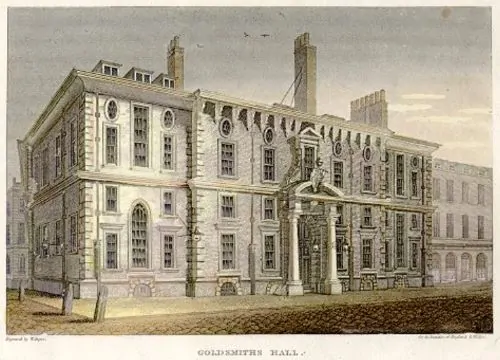
This connection between the civic bureaucracy and the London chronicles is particularly apparent in three other London chronicle manuscripts. The first manuscript known as Miles Adys’ Book (Oxford, Bodleian Library, MS Gough London 10) appears to have been commissioned by Miles Adys, while he was a warden of the Goldsmiths’ Company in 1477–8 and later as chamberlain of London from 1479 to 1484. While he was a warden in 1478, the Goldsmiths commissioned their new volume of company ordinances and statutes and when Adys moved to the city chamberlain’s office the following year it would appear that he decided to commission a comparable record book of useful material for the use of the chamberlain.44 His book contains copies of material from the City’s Letter Books (the latest entry is taken from Letter Book L dated 1481).45 When Adys ceased to be chamberlain in 1484 he appears to have taken his book with him. He continued to interest himself in the tangled affairs of the Goldsmiths’ Company and in 1492 was elected to their new office of controller. It was during this time that he copied into his own book, from the Goldsmiths’ book of ordinances, a number of the oaths to be taken by officers of the craft. It was also at this time (perhaps when he no longer had easy access to the mayoral lists maintained in the chamberlain’s office) that Miles Adys had a London chronicle (ending in 1469) copied into his book. He appears to have died in 1497 or soon after and his book passed to a succession of private owners.46 Here is a manuscript which contains a London chronicle, commissioned and used by a London civil servant in his role both as city chamberlain and as controller of the Goldsmiths’ Company. Miles Adys, together with his book, moved easily between the two bureaucracies of City and craft.
The second ‘bureaucratic’ London chronicle was associated with the Grocers’ Company. This volume (Oxford, Bodleian Library, MS Rawlinson B 359) is about the same size as Miles Adys’s book, but it is much less opulent. The manuscript contains just two items largely written in the same hand: the first seventeen folios contain a brief London chronicle and the remaining eight folios contain the names of the wardens of the Grocers’ fraternity starting in 1345 together with some historical notes. Under the year 1460 the scribe of the volume notes ‘ego henricus nycoll clericus maister(y) Groc(er)ie intravi in officium’.47 In 1471 Nicholl, who had been acting as the rent-gatherer as well as the company clerk receiving a salary of forty shillings per annum for his labours, was granted a pension of 8 marks (£5 6s 8d).48 He seems to have taken particular care of the Grocers’ garden and personally planted the parsley there.49 The lists of the mayors and sheriffs, and of the wardens of the Grocers, are continued in a single hand until 1498, and the lists are then maintained in a variety of hands until 1530. It may be that at this date Henry Nicholl’s book left the company.50
The third bureaucratic London chronicle is a modest volume of forty-four folios. It contains lists of religious houses, churches and chapels in the city as well as the chronicle which begins in 1220. On the last folio Richard Hedley, calling himself clerk of the chamber at the Guildhall of the city, has asserted his ownership of the volume in a seemingly sixteenth-century hand, although nothing more has yet been found about him.51 But his ownership of this volume underlines the close association between these compilers, or users, of London chronicles and the various civic bureaucracies. Apart from Sir Mathew Philip, the goldsmith who kept a copy of a London chronicle in his parlour, and the mercer Richard Myton, who may have owned Harley 565 in the mid sixteenth century, we know of no other privately owned London chronicles. Their strict ordering by mayoral year and their bald historical content (although the chronicles become more verbose in the course of the fifteenth century) made them utilitarian rather than entertaining. They seem not to have occupied the domestic or household role that was the common context of copies of the Brut chronicle.52
But in the second half of the fifteenth century, named London authors and compilers begin to emerge from the shadows, and we find Londoners, who were not professional clerks like Miles Adys, Henry Nicholl and Richard Hedley but, rather, forerunners of the ‘interested general reader’ (and writer). Four men stand out: a draper, a haberdasher, a grocer and a mercer. The first Londoner to deserve to be called a historian since Arnald FitzThedmar in the mid thirteenth century was Robert Fabyan, draper, master of his company and alderman, who died in 1513. Recent work on Fabyan has demonstrated that he not only wrote the New Chronicles of England and France, often known simply as Fabyan’s Chronicle, but also The Great Chronicle of London, and his annotations to a copy of Hartmann Schedel’s Liber chronicarum printed in Nuremberg in 1493 (LMA, CLC/270/MS03789) were so extensive as to constitute an independent piece of historical writing.53 In his Great Chronicle of London Fabyan transformed the simple London chronicle in which events had been merely recorded into a text of analysis and comment.54 It is clear that Fabyan had access to a wide collection of books: some he owned such as the copy of The Nuremberg Chronicle which he purchased for the large sum of £3 6s 8d in 1495; others he borrowed such as the Grandes Chroniques de France (GL, MS 244)55 which his widow’s new husband returned ‘to this Citie’ (i.e. to the collection of books which were kept in the ‘chamber’ of the Guildhall and not to the Guildhall library) three years after his death.56 But it is clear from his writing that Robert Fabyan was able to draw on a wide range of materials, both in manuscript and in print.57 And after his death his work was respected, acknowledged and used by later sixteenth-century scholars such as William Camden and John Stow.58
Robert Fabyan was distinctive in being an author: he was not simply a compiler. But most of the earlier London chronicles were, in effect, compilations of entries garnered from other London chronicles, very occasionally enlivened with what appear to be personal comments or opinions. Often these chronicles are to be found inserted into larger compilations of ‘useful information’.59 It was a London haberdasher, Richard Arnold, who appears to have been the first to seize the opportunities offered by the new medium of print to produce a useful vade mecum aimed at London businessmen.60 Arnold traded, probably in rather a small way, in Flanders and Calais, and in around 1502 he put together a collection of materials: a London chronicle, various legal and financial documents taken off his own desk and provided as exemplars, recipes of various kinds (like Henry Nicholl he seems also have considered the growing of parsley to be important), a poem, ‘The nut brown maid’, and a number of other largely useful miscellaneous documents, which he had printed in Antwerp – but for the English (mostly, but not exclusively, London) market. As many as 600 copies of Arnold’s compilation (when printed by Francis Douce in the early nineteenth century it was given the title The Customs of London)61 may have been in circulation and it was reprinted in England by Peter Treveris in c.1525.62 Whether the volume made Arnold a rich man is hard to know since we do not know when he died and he left no surviving will. But there is no doubt that his printed volume was popular and must have been one of the books that Londoners were reading in the early sixteenth century. And not only reading, for some of the printed copies have additional information written onto pages which may have been left blank for that purpose.63
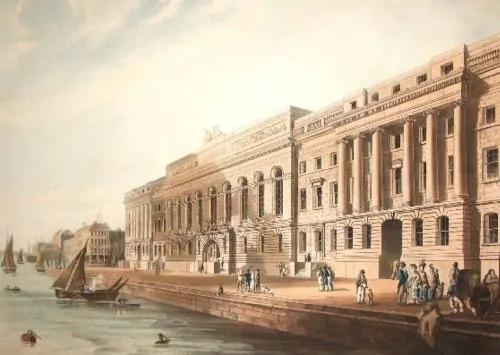
Robert Fabyan and Richard Arnold wrote, or assembled, their books with audiences, if not exactly the same audiences, in mind. But two other London compilers seem to have put their books together for their own private satisfaction. Richard Hill began life well: he was apprenticed to the grocer John Wyngar who was mayor of London in 1504–5, but he seems not to have prospered as a grocer.64 He married Margaret, John Wyngar’s niece, and they had seven children whose details are recorded with touching care in Hill’s book. The last child was born in 1526 and Richard appears to have stopped copying materials into his book around 1536. He may be the Richard Hill whose widow Margaret sought the administration of her husband’s goods in July 1555.65 His manuscript (Oxford, Balliol College MS 354) was written into a standard tall account book in a small neat hand and contains 247 diverse items including a London chronicle, a number of items copied from Richard Arnold’s printed collection, religious pieces in Latin, and English recipes, but what makes Hill’s book distinctive is his inclusion of over a hundred English poems, both secular and religious. These include ‘How the wise man taught his son’, ‘The Lamentation of the duchess of Gloucester’, ‘Earth out of Earth’ ‘The nut brown maid’ and the poem in ‘Praise of London’ attributed to William Dunbar. Hill also includes passages from Lydgate and from Gower (although not, it seems, Chaucer).66 Richard Hill seems to have been a largely unsuccessful London grocer and he may have spent too much time reading literary texts and copying them into his book when he should have been buying and selling spices, but there were probably many more Londoners like Hill whose interests were literary and domestic rather than commercial and civic.
A slightly older contemporary of Richard Hill was John Colyns who became a freeman in the Mercers’ Company in 1492. Colyns bridges the gap between the civic bureaucrats like Miles Adys and Henry Nicholl and the private literary enthusiasts like Richard Hill. Colyns hoped to be chosen as the clerk of the Mercers’ Company in 1516, but he failed and his life then spiralled downwards. In 1520 he took on an apprentice as a ‘vestment-maker’ and the Mercers’ court agreed to this since Colyns did not engage in the ‘secrets of mercery’ but in ‘selling of printed books and other small tryffylles’.67 He died comparatively poor in 1538/9 and his wife Alys was described as a ‘pauper’ when she died four years later.68 John Colyns’s book (BL, MS Harley 2252) contains two romance booklets (Ipomydon and the Morte d’Arthur) which, unlike all the other folios, were not written by Colyns himself. He chose to copy items of history, recipes, some didactic and religious verses, a London chronicle, poems by John Skelton and material relating to his parish of St. Mary Woolnoth where he was elected a churchwarden in 1526.69 Colyns’s book is not as personal a compilation as that of Richard Hill, in that there are no references to his family, but it was written for the use and pleasure of Colyns himself and perhaps also his household. There is no indication that he intended, as Richard Arnold had done, to publish his collection in spite of his dealing in printed books. But the books of Richard Arnold, Richard Hill and John Colyns – and doubtless there were many others like them in early sixteenth-century London – reveal the range of literary, commercial, religious and civic interests and concerns which formed the reading matter of these men.
It is clear from studying the ‘literary output’ of these sixteenth-century Londoners that they had access to a range of manuscripts and printed books. Had this always been the case? We know of some remarkable private libraries which belonged to medieval Londoners: Andrew Horn, a fishmonger by trade but a city administrator by choice, amassed (and created) a notable collection of books mostly relating to the government of England and the administration of the City. These he bequeathed to the chamber of the London Guildhall where he had worked as the City’s chamberlain for the last nine years of his life.70 But his interests ranged more widely than the contents of these book bequests might suggest. He appears to have lent his copy of Hugutio to Bermondsey Abbey in return for a liber herbarum.71 Both books were returned. Another City administrator a hundred years later also amassed a notable collection of books which he bequeathed to the new ‘common library’ at the London Guildhall. John Carpenter, who was the common clerk of the City from 1417 to 1438, was a remarkable polymath whose influence penetrated many aspects of London life and who gathered around him a like-minded group of civil servants and bibliophiles, to many of whom he made specific book bequests in his will.72 Among his twenty-six named books are works of political practice and theory, religious texts including Roger Dymok’s treatise against the Lollards, Richard de Bury’s Philobiblon and works by Seneca. The range of John Carpenter’s book collection is notable, but notable also is the absence of any historical works or romances.
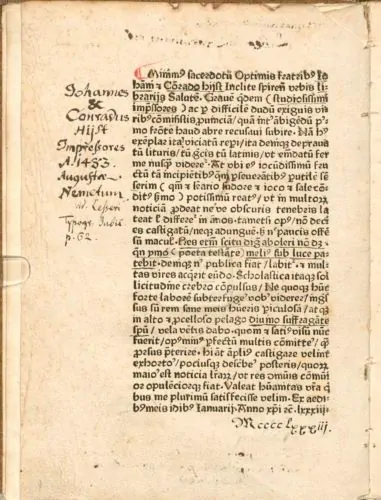
But not all Londoners were as serious in their reading habits as John Carpenter. There is evidence of small private libraries to be found in wills: in 1348 Henry Graspays, a prosperous London fishmonger who probably succumbed to the plague, left to his son Henry various chattels and household goods including his wardrobe, his armour and all his books ‘de Romanse’ and other books which he did not specify.73 In a similar fashion William Bristow, a London cordwainer in 1367 left all his books (again unspecified) to his son Simon.74 But in the last quarter of the fourteenth century we find a number of wealthy Londoners who all served as aldermen, and who owned extensive and varied libraries: Walter de Berneye, a mercer (d. 1377/9); Richard Lyons, vintner (d. 1381); William Walworth, fishmonger (d. 1383); and William Kyng, draper (d. 1393/4). Walter de Berneye, who came from Norwich and maintained close links with the city and county, was an extremely wealthy man who could afford to pay 100 marks to avoid taking on the task of being mayor of London.75 And his lengthy will reflects that prosperity: he left extensive bequests to friars in London, Norfolk, Oxford and Cambridge, and to Balliol College, Oxford; and he left £40 to three named students to help them to pursue their studies at Oxford and Cambridge.76 To William de Norton he left all his books of canon and civil law together with a portiforium which he had in his own custody; to Friar Thomas de Elsyng he left 10 marks, his book called Summa de Abstinencia,77 and a Legenda Sanctorum, which was in his house in London. Whereas Berneye appears to have had a scholarly turn of mind, the vintner Richard Lyons, who was murdered during the Peasants’ Revolt in 1381, had a more practical collection of books: a manual containing various treatises, a book of chancery writs, an English version of the Legenda Sanctorum and a French book called Breton which was probably a law book: a summary of English law sometimes called Britton.78 William Walworth, who was mayor during the Revolt of 1381, was knighted by the king for his help in suppressing the rebels. Walworth came from a bookish family: his brother was a clerical lawyer from Oxford who was a canon of York and spent time at the Papal Curia. To this brother William left fourteen canon law books on condition that after his death the books should be distributed to those who would pray for his soul, an early form of the ‘common-profit books’ discussed earlier.79 Walworth also left books to the London Charterhouse and a two-volume copy of Nicholas of Lyra to the London house of Austin Friars. Walworth, like Berneye, had an interest in the universities and he left four religious books to New College Oxford, including a bible and a glossed copy of the Letters of St. Paul. William Kyng, the draper and alderman who died in 1394, was not quite in the class of William Walworth, but his will demonstrates that he was very prosperous. To the rector and parishioners of his parish church of St. James Garlickhithe he left two books, both written in French, a bible and a Liber Regalis80 which he specified were to be chained in a convenient place in the same way that a bible had been chained before the image of the Virgin in the New Work of the church of St. Paul in London. Kyng specified that anyone coming at a suitable time should be allowed to read the books without taking them away and in return they were to pray for him and for his brother Robert Luton, his mother and father and all the faithful departed.81 Robert Luton, who was to act as an executor, was also left 100 shillings, all Kyng’s armour and all the books not otherwise bequeathed. It is notable that Kyng presumed that the parishioners of St. James Garlickhithe would be able to make use of books written in French and consequently he provided them with a very small public library in their parish church.
When we move into the fifteenth century we begin to find Londoners below the aldermanic class owning substantial collections of books, or small private libraries. Thomas Walyngton, a London draper, left at least fourteen books as well as further ‘libros et quaternos’. Most of the books were for liturgical use, but his collection included a two-volume bible, a copy of the Pars Oculi, a book called ‘Sydrak’ and other books of decretals and law books (Britonem).82 Nicholas Hotot, a woolmonger who died in 1404, left four books: copies of the Brut, The Prick of Conscience and the Speculum Humanae Salvationis and also a primer.83 But the book owner in fifteenth-century London who has attracted particular attention is the tailor, John Brynchele, who is the earliest known London owner of a copy of The Canterbury Tales which he bequeathed in his will drawn up in 1420. Brynchele who began life in Southwark, by 1398 had become the clerk of the Tailors’ fraternity. He may have copied manuscripts as well as owned them. In his will he bequeathed to John Broun (who may have been a tailor) a Latin copy of Boethius’ Consolation of Philosophy which, Brynchele records, he had received as a pledge for an English version of the same work. Brynchele also left to David Fyvyan, the rector of his parish church of St. Benet Fink, an English copy of Boethius, and he left each of his two executors (both of whom were tailors) a book: Piers Dyker was to have ‘a certain book in English which he has in his custody’ and William Holgrave was to have ‘my book called Talys of Caunterbury’.84 Apart from Fyvyan, who was a bookish clergyman,85 the three recipients of Brynchele’s books were tailors and quite modest men. Brynchele may have made copies of these popular works to supplement his income, or possibly even for the communal enjoyment of groups of tailors meeting in Tailors’ Hall. But in Brynchele’s will we glimpse, perhaps, a circle of book-making and book-using friends (who all, incidentally, owned fighting equipment as well as books) focused on the notable fraternity of the Tailors’ craft. Moreover in 1431 William Holgrave was an executor of the will of Martin Kelom, a mercer with a considerable collection of books, and Piers Dyker four years later was the executor for Kelom’s widow, Margaret.86 Kelom, like Brynchele, seems to have been a writer as well as a book collector. In 1404 he was paid 3s 4d by the Mercers for writing out the company ordinances.87 In his will he left to his son James all his books of grammar, philosophy and theology, except his primer which he left to his daughter Johanna. In a separate clause in his will Kelom left James ‘omnes libros meos anglicanos’ together with all his defensive armour although he was to have nothing aggressive such as swords or daggers. One wonders why Martin Kelom made this stipulation. As it turned out his son James became a clerk in chancery where he probably made good use of all his father’s books.88 So we can detect here a circle of book makers and users who were not especially wealthy like Walworth and Berneye, but who had small collections of books which they valued and shared.
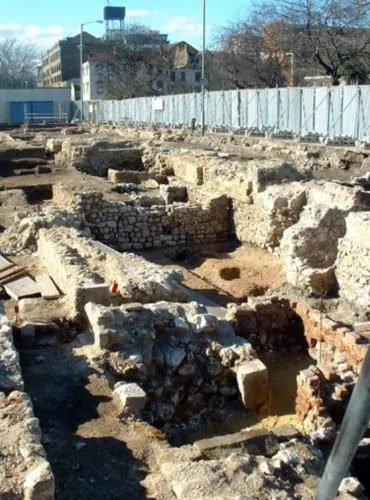
But by the time Martin Kelom died it was no longer necessary to own books to have access to them. We have already noted how Andrew Horn was able to borrow books from the library of the Cluniac house at Bermondsey. Richard Whittington paid the enormous sum of £400 towards the costs of the new library building at the house of the London Greyfriars and this impressive new building, some thirty-nine metres in length, occupied most of the north side of the great cloister. It was completed between 1411 and 1414. The Londoners had a special affection for the Grey Friars, and Whittington’s willingness to donate so much towards the new library may suggest that its contents were considered to be of use to lay Londoners as well as to the friars themselves.89 At the time of the Dissolution, John Leland recorded forty-four books in the library, but there are likely to have been many others.90 Walter Sherrington, a prebendary of St. Paul’s Cathedral and a royal clerk who rose to be chancellor of the duchy of Lancaster in 1449, died an extremely wealthy man. During his lifetime Sherrington paid for the construction of a new library on the east side of the Pardon Churchyard cloister and stipulated that the library was to be kept open for most of the day. Loans were possible, but probably many of the 300 or so library books were chained.91 Again, although it is clear that Sherrington envisaged that most of the readers would be the large clerical population of the cathedral precinct, it is unlikely that serious lay readers would have been turned away. Access to these large ecclesiastical libraries was certainly possible, but most Londoners who wished to read books they did not own would have been more likely to resort to their parish churches where there is considerable evidence of the building up of small parochial libraries. Some of the evidence for these small libraries comes from the wording of bequests by testators such as William Kyng, who specified that his copies of the bible and the Liber Regalis, both written in French, were to be chained in the church of St. James Garlickhithe where they could be conveniently studied by anyone who wished to use them.92 And John Wakeryng, bishop of Norwich, bequeathed a glossed psalter and a copy of the Decretals to the church of St. Benet Sherehog in 1425 expressly ‘pro informacione parochianorum perpetuo dimittendum’.93 Such bequests are to be distinguished from the bequests of liturgical books made for the use of the parish clergy during services. Apart from specific bequests of books mentioned in London wills, there also survive a number of parish church inventories compiled in the century-and-a-half before the Reformation, and nine of these London inventories record the existence of non-liturgical books such as The Prick of Conscience in St. Margaret Fish Street and the Pars Oculi at St. Nicholas Shambles.94 Perhaps the most notable parish library was that attached to the church of St. Peter Cornhill. The original stone library building was later repaired in brick and was well-furnished with books. According to John Stow, John Leland ‘viewed and commended’ the books and noted copies of four volumes of biblical commentaries.95 Two of the volumes which were once in this parish library have survived: a thirteenth-century bible and a fourteenth-century copy of the Polychronicon, both of which contain inscriptions.96
There were certainly libraries at the four Inns of Court: the first certain reference to such a library is the bequest by Edmund Pickering of six books to be chained in the ‘librarie de Graysinne’ in 1488.97 The bequest included a chronicle and a French version of the Legenda Aurea.98 The libraries of the Inns were not confined to law books, but they were obviously vulnerable to depletion. In 1539 it was reported that the library of the Middle Temple ‘by meanes that it stode alwais open and that the lerners had not eche of them a key unto it, it was at the last robbed and spoyled of all the bokes in it’.99 Whether Londoners would have access to these libraries at the Inns is not clear, but if no keys were required then the books in them were widely available – and vulnerable. It is much less certain that the various company halls (of which there were more than thirty by the end of the fifteenth century) were equipped with libraries. As we have seen in the cases of Henry Nicholl and Miles Adys, it is clear that the companies maintained books of record. When William Porland, the clerk of the Brewers’ Company drew up his will in 1440 he left ‘omnes et singulos libros per me factos quoquo modo’ concerning the ordinances, rules and governance of the Brewers’ craft to Robert Coket, his successor as clerk, on condition that when Coket died he should leave them to the Brewers in perpetuity.100 But these were utilitarian books, and Porland chose to write his book in English so that all might understand and use it.101 Porland, like John Brynchele, may also have copied out ‘romances’ or the works of Chaucer. We cannot know whether any of Brynchele’s texts found a home at Tailors’ Hall, or only in the hands of his chosen friends. There is evidence for the existence of libraries at the hall of the Barber-Surgeons (from 1481) and at the College of Physicians, but in 1558 the Mercers’ Company decided to turn a little buttery in their parlour into a library, which may suggest that they did not have one before.102
Apart, however, from these semi-private libraries, Londoners had a ‘common’ or ‘public’ library adjacent to their newly rebuilt Guildhall. It seems likely that the establishment of a common library near the Guildhall was the brainchild of some of the men whom we have already encountered: Richard Whittington, the generous donor of the new library at Greyfriars, John Carpenter, the City’s common clerk who put together one of the most notable private libraries in London and John Colop who appears to have been an instigator of the scheme of ‘common-profit books’. It was Whittington’s money which largely funded the building of the new common library in the years between his death in 1423, and 1425; John Carpenter was Whittington’s principal executor who saw to the building of the library and, in due course, by his own bequest, furnished it with many books; and John Colop assisted Whittington’s executors in distributing his bequests and in return for his hard work was allowed to occupy a property adjacent to Whittington’s college and almshouse.103 But some of the finance was provided by the executors of another mercer, William Bury. He is a comparatively obscure figure, but one of his executors was Thomas Chaucer, the son of Geoffrey Chaucer, who may have sought to use the library to promote his father’s works.104 It has been suggested that John Carpenter was the scribe who made copies of Chaucer’s Troilus and Criseyde and Gower’s Confessio Amantis so even if ‘romances’ were not listed among Carpenter’s books such works would not have been unknown to the founders of the common library at Guildhall.105
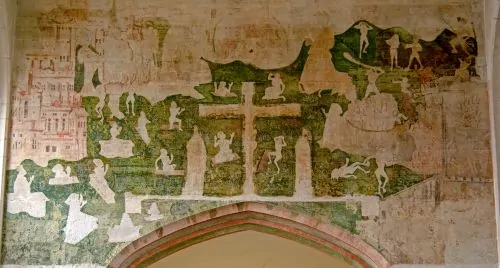
We know more about the library building than we know about its contents. The fourteenth-century college on the south side of Guildhall chapel was moved east into buildings on Basinghall Street and the new library building was constructed on the east side of Guildhall Yard. John Stow recorded that the library was built of stone, roofed with slates and ornamented with the arms of Whittington and with the initials of William Bury. It had three chambers on the ground floor and a large room above housing the books which were chained to the shelves. There were desks, lighted by four south-facing windows.106 There are no surviving catalogues of the medieval library, but we know of a few bequests of books and there are a few surviving manuscripts. In 1425, very soon after the establishment of the library, the grocer and alderman William Chichele, whose brother Henry was the archbishop of Canterbury, left £10 ‘to be bestowyd on bokes notable to be layde in the newe librarye at the Gildhall at London for to be memoriall for John Hadle, sometyme meyre [1379–80, 1393–4, died 1410] and for me there while they mowe laste’.107 Richard Cordon, who had been born in the parish of St. Dunstan in the West and owned a house in Silver Street, had a very successful ecclesiastical career and when he died in 1452 he instructed his executors to dispose of the residue of his goods, but not to interfere with the gifts he had made in his lifetime to ‘the common library’ of London, or the libraries of Oxford University and Wells (where he had been a canon) or with the goods he had left in chests in St. Peter in the East in Oxford and St. Dunstan in the West in London.108 Hugh Damlet, who was the rector of the wealthy and important parish of St. Peter Cornhill for thirty years, amassed a considerable collection of books which, when he died in 1476, he bequeathed to colleges in Cambridge, Syon Abbey, Sherrington’s library at St. Paul’s Cathedral and the ‘common library at the Guildhall in the city of London’ which was to have copies of Aquinas’ Summa contra gentiles and of Bartholomew the Englishman’s De proprietatibus rerum.109 The last known bequest of books to the Guildhall library is to be found in the will of John Graunt, a priest who served in the nearby parish church of St. Michael Bassishaw. In his will, drawn up in 1517, he left two books to the ‘library at yeld hall’, a Medulla gramatice (a Latin/English dictionary) and ‘a nother boke wretyn with sequens, pistilles and gospelles, bownde in bordis and to be tied with a cheyn in the forseid liberary’ (epistles and gospels for the mass with the sequences, i.e. protracted melodies sung to the final syllable of the alleluia which preceded the gospel).110 John Graunt, who was clearly a reflective and ascetic priest, connects us back to two of the other book-using London circles which we have identified. He seems to have owned a common-profit book in which he inscribed his name in 1493111 and one of his executors was the mercer, John Colyns who compiled his own commonplace book.112
The library was closely connected to the chapel and college at Guildhall which were considered to be a corporate chantry and, as such were forfeited to the crown in 1547. The City decided to buy back these buildings ‘so near adjoining to their common Guildhall’ and in 1550 paid £456 13s 4d for the buildings and the land but without the bells, plate and ornaments which had already been removed by the court of augmentations. Although the chapel was restored for religious services, the college and library were not. In January 1549, William Cecil (later Lord Burghley) who was, at the time, secretary to Protector Somerset, was permitted to borrow
all such books of St. Augustine’s works and other as he now desireth that remain in the Guildhall chapel with this gentle request to be made to him upon the delivery of the same: that this house trusteth that he, having perused them, will restore them to the said library there to remain to such use as they were provided for.113
The request was probably too gentle. John Stow reported that ‘three Carries’ were needed to carry away the books ‘but they were never returned’.114 In 1553 the court of aldermen had realized that the books were gone for ever and so they sold the lecterns (desks) and leased the building to Sir John Ayliffe, the keeper of the nearby Blackwell Hall as a common market for the sale of cloths.115 John Stow reported that the building was ‘now lofted through, and made a store house for clothes’.116
But a few of the books survived the sequestration and, indeed, some others may still perhaps be on the shelves of the library at Burghley House. The British Library has a fourteenth-century copy of Thomas Aquinas’s Sentences (BL, Harley MS 32) with an inscription (fo. 253r) ‘liber emptus pro xx s do hunc librum cathenandum in libraria de gyldhalle civitatis London’, but the name of the generous donor is missing. The modern Guildhall Library was able in 1926 to purchase a thirteenth-century copy of the Aurora by Petrus de Riga (now GL, MS 3042) which has an inscription recording ‘Hunc librum donavit Magister Johannes Martil librarie comuni Guyhalde Civitatis londoniarum’.117 John Martell, who died c.1430, was a fellow of Oriel College, Oxford and owned a considerable library, most of which he gave to his college, so it is unclear how he came to be a benefactor of the Guildhall library.118 Charles Welch, who was appointed to the principal post at Guildhall Library in 1888, in the following year published an account of the library and its work in which he noted that William Blades, the Caxton scholar, in 1861 had visited Mr. C. H. H. Sotheby in his set in The Albany where he had seen a manuscript chronicle of England with a fifteenth-century inscription recording ‘iste liber p(er)tinet ad bibliothecam Guyhalde London’.119 This chronicle may yet come to light.
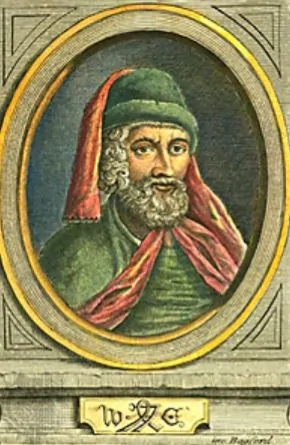
The introduction of printing in England by the mercer William Caxton in the 1470s enormously enlarged the amount of reading material available and Londoners seem to have acquired copies of Caxton’s publications with enthusiasm. John Graunt in 1517 was able to leave printed missals to the Jesus chapel in St. Paul’s and to the parish church of St. Ethelburga, and a printed Legenda (a book of lessons) to St. Michael’s Crooked Lane.120 It may be, however, that the advent of printing has led us to place too much emphasis on the reading of books. It is important to remember that much, perhaps most, of the reading of Londoners would have been out of doors, in the streets, and in public buildings where written texts formed part of the cityscape of London. Inside churches there were tablets hanging on the walls commemorating benefactors and soliciting prayers. Many burial sites were enhanced by a written eulogium about the deceased which would hang above the grave. Caxton provided such a eulogium to hang near the tomb (a simple grave slab set into the floor) of Geoffrey Chaucer in Westminster Abbey.121 Notices were pinned to the doors of churches. Explanations about the wrongdoings of offenders were attached to the pillories. Inside the Guildhall were displayed the names of those who had transgressed civic regulations, both commercial and spiritual. Such public displays were seen as a form of punishment and as a means of warning others against those who were duplicitous. And increasing use was made of the political bill, advocating a particular cause or vilifying a political enemy, which would be posted on church doors or displayed in windows. Attempts were made to suppress such illegal bill casting, but they were largely ineffective. And in addition to the political bill casting which tended to attract the attention of chroniclers and the wrath of the civic authorities, there were also modest bills posted by lowly Londoners concerned about local issues. In 1412 John Leek, a tawyer, and a clerk, William Sutton, wrote a bill on paper and in English, protesting about the enclosure of ‘oure grounde’ on Tower Hill and attached it with wax to the gate of the offending garden. What is remarkable is not that a letter of protest (and threat) was posted on a garden gate but rather that a copy of such an ephemeral document has survived – in the records of the London mayor’s court.122 There must have been many such written documents, some subversive and some probably simply commercial, posted up around the city, and their existence, written in English using the cheap medium of paper, and commissioned by men as low down the social scale as a tawyer, suggests the pervasive nature of civic literacy. There would be no point in posting bills if no one could read them.
So, the study of the surviving manuscripts, whether historical, literary, religious or simply practical, and the analysis of books mentioned in London wills and in inventories, can only provide us with a partial view of the reading habits and tastes of Londoners. The paper bill posted up by the self-appointed ‘trewe men’ of Tower Hill, serves to remind us that much, if not most, of the reading of medieval Londoners, whether merchants or craftsmen, would have been random and inadvertent. Then, as now, we are rarely in control of what we read.
Endnotes
- S. L. Thrupp, The Merchant Class of Medieval London (Ann Arbor, Mich., 1948), p. 161.
- S. Lindenbaum, ‘London texts and literate practice’, in Medieval English Literature, ed. D. Wallace (Cambridge, 1999), pp. 284–309, esp. p. 302.
- K. L. Scott, ‘Past ownership: evidence of book ownership by English merchants in the later middle ages’, in Makers and Users of Medieval Books: Essays in Honour of A. S. G. Edwards, ed. C. Meale and D. Pearsall (Woodbridge, 2014), pp. 150–77; A. F. Sutton, ‘The acquisition and disposal of books for worship and pleasure by mercers of London in the later middle ages’, in Manuscripts and Printed Books in Europe 1350–1550, ed. E. Cayley and S. Powell (Liverpool, 2013), pp. 95–114, 249–57.
- Scott, ‘Past ownership’, pp. 158, 170.
- The Prick of Conscience: a very popular text sometimes attributed (probably incorrectly) to Richard Rolle (see H. E. Allen, Writings ascribed to Richard Rolle, Hermit of Hampole (New York, 1927), pp. 372–97). Cleansing is probably The Cleansing of Man’s Soul (see P. S. Joliffe, A Check List of Middle English Prose Writings of Spiritual Guidance (Toronto, 1974), E. 14).
- Sutton, ‘Books for worship and pleasure’, pp. 108–13. Jeremy Goldberg, in his search for books in the wills of lay testators in York, found only 107 (less than 5%) who owned books, and of these almost all were service books and books of hours (‘Lay book ownership in late medieval York: the evidence of wills’, The Library, xvi (1994), 181–9).
- Scott, ‘Past ownership’, pp. 168–72; see also Sutton, ‘Books for worship and pleasure’, p. 106, citing the bankruptcy inventory (c.1483) of William Ferris (admitted to Mercers’ Company 1453), whose household goods included a primer and a ‘portuous’.
- These two books were listed in the inventory made of the goods of the small-scale grocer William Cost, whose total goods were worth only a few pounds (see S. H. Cavanaugh, ‘A study of books privately owned in England: 1300–1450’ (unpublished University of Pennsylvania PhD thesis, 1980), p. 210 and P. Nightingale, A Medieval Mercantile Community: the Grocers’ Company and the Politics and Trade of London 1000–1485 (1995), pp. 329–30; TNA: PRO, C 131/42/2). I am grateful to Martha Carlin for a transcript of this inventory.
- TNA: PRO, E 13/192, fos. 7–8, plea in court of the barons of the exchequer, 1415–16. For Gyttyns, see A. F. Sutton, The Mercery of London: Trade, Goods and People, 1130–1578 (Aldershot, 2005), pp. 338, 354.
- For a biography of Carleton, see A. B. Beaven, The Aldermen of the City of London (2 vols., 1908), i. 397; H. Kleineke, ‘Carleton’s Book: William FitzStephen’s “Description of London” in a late fourteenth-century common-place book’, Historical Research, lxxiv (2001), 117–26.
- Calendar of Wills Proved and Enrolled in the Court of Husting, ed. R. R. Sharpe, (2 vols., 1889), ii. 272–3; LMA, Commissary Register 1, fos. 173v–174. For the chantry, see M. Rousseau, Saving the Souls of Medieval London: Perpetual Chantries at St. Paul’s Cathedral, c.1200–1548 (Farnham, 2011), p. 22.
- See the volume (BL, MS Additional 48031A) put together in the 1470s by John Vale, the draper and secretary to Sir Thomas Cook (The Politics of Fifteenth-Century England: John Vale’s Book, ed.M. Kekewich and others (Stroud, 1995)).
- See G. R. C. Davis, Medieval Cartularies of Great Britain and Ireland, ed. C. Breay, J. Harrison and D. Smith (rev. edn., 2010); and A Calendar of the Cartularies of John Pyel and Adam Fraunceys, ed. S. O’Connor (1993).
- In fact the seven London owners of books of hours and psalters in Scott’s list are not all securely identified: the volumes are only tentatively associated with William Benet, grocer, John Busshells, tailor and John Hankinson, mercer.
- Scott, ‘Past ownership’, p. 157; John Clerk was certainly a grocer and was the personal apothecary of Edward IV (see Nightingale, A Medieval Mercantile Community, p. 520).
- Scott, ‘Past ownership’, p. 157, and see Scott, The Mirroure of the Worlde: MS Bodley 283 (Oxford, 1980), p. 9 n. 4; K. Harris, ‘Patrons, buyers and owners: the evidence for ownership and the role of book owners in book production and the book trade’, in Book Production and Publishing in Britain 1375–1475, ed. J. Griffiths and D. Pearsall (Cambridge, 1989), pp. 163–99, p. 177, illus.
- For the will of Margaret Clarkson, widow, dated 24 Mar. 1534, see LMA, Commissary Register MS 9171/10, fo. 225v. Scott, ‘Past ownership’, p. 163, and K. Scott, Later Gothic Manuscripts 1390–1490 (2 vols., 1996), ii. 295–6. Simon Ryse’s will was drawn up on 7 Mar. 1529 but he makes no mention of his psalter, only his lands and the numerous gowns which he distributes (see TNA: PRO, PROB 11/23 fos. 126v–127v).
- See K. Scott, ‘An hours and psalter by two Ellesmere illuminators’, in The Ellesmere Chaucer: Essays in Interpretation, ed. M. Stevens and D. Woodward (San Marino, Calif., 1995), pp. 87–119, esp. pp. 102–4 fig. 27; E. Solopova, Latin Liturgical Psalters in the Bodleian Library (Oxford, 2013), pp. 230–1 (see also the will of Richard Gregory, ironmonger, dated 2 Sept. 1397, LMA, Commissary Register MS 9171/1, fos. 400v–401).
- William Harding was a warden of the Mercers’ Company in 1545. See Sutton, Mercery, p. 559; Western Illuminated Manuscripts in the Victoria and Albert Museum, compiled by R. Watson (3 vols., 2011), i. 243–6. I am grateful to Dr. Watson for drawing this manuscript to my attention.
- Cambridge, Gonville and Caius MS 350/567 (bible of c.1230–40), see The Cambridge Illuminations: Ten Centuries of Book Production in the Medieval West, ed. P. Binski and S. Panayotova (2005). The inscription in a 16th-century hand on the end leaf is probably that of Christopher Rawson, who was a warden of the Mercers’ Company in 1514–15. Richard Daldrene, clothworker, owned the bible now GL, MS 415 (see Scott, ‘Past ownership’, p. 158).
- Smart owned Huntington Library MS HM 130 and Cresswell owned Oxford, Trinity College MS 16b (see C. M. Meale, ‘The Libelle of Englyshe Polycye and mercantile literary culture in late-medieval London’, in London and Europe in the Later Middle Ages, ed. J. Boffey and P. King (1995), pp. 181–227, at p. 190, n. 26, and J. Boffey, Manuscript and Print in London, c.1475–1530 (2012), p. 55 and plate 20). Eliot’s manuscript is BL, Royal MS 18.A.v (see Scott, ‘Past ownership’, p. 158 and Boffey, Manuscript and Print, p. 148).
- Scott, ‘Past ownership’, pp. 156–65.
- Scott, ‘Past ownership’, pp. 156, 160, 161; for Marshall, see also Boffey, Manuscript and Print, pp. 14–17.
- See n. 23.
- LMA, Husting Roll 114 (22); Husting Wills, ed. Sharpe, ii. 105, 249. Glemesford also left money to buy a Legenda for his church, and he left 10 marks to buy a missal for use in the church of Glemsford (Suffolk) where his parents were buried.
- Cavanaugh, ‘A study of books’, pp. 196–7; for Clifford see J. Harvey, English Medieval Architects (2nd edn., Gloucester, 1984), pp. 61–2.
- Cited by M. Bose, ‘Reginald Pecock’s vernacular voice’, in Lollards and their Influence in Late Medieval England, ed. F. Somerset, J. Havens and D. Pitard (Woodbridge, 2003), pp. 217–36, at p. 230, n. 66.
- See W. Scase, ‘Reginald Pecock, John Carpenter and John Colop’s “common-profit” books: aspects of book ownership and circulation in fifteenth-century London’, Medium Aevum, lxi (1992), 261–74, at p. 261. Another common-profit book made from the estate of John Killum is Lambeth Palace MS 472 (see Scase, p. 273 n. 49 and below, p. 68).
- J. Imray, The Charity of Richard Whittington (1968), p. 14; T. Brewer, Memoir of the Life and Times of John Carpenter (1856), p. 141; L. Mooney and E. Stubbs, Scribes and the City: London Guildhall Clerks and the Dissemination of Middle English Literature, 1375–1425 (Woodbridge, 2013), pp. 103–4.
- On Gamelyn, see M. Jurkowski, ‘Lollard book producers in London in 1414’, in Text and Controversy from Wyclif to Bale: Essays in Honour of Anne Hudson, ed. H. Barr and A. Hutchinson (Turnhout, 2005), pp. 200–26, esp. p. 215. The volume is now BL, Harley MS 2336 and the inscription is on fo. 137. Robert Holland’s volume is now BL, Harley MS 993 and the inscription is to be found on fo. 38 where it is followed by a note in a late 16th- or early 17th-century-hand recording that James Palmer owned the book ‘yet without the least intention to pray for the soul of Robert Holland being a wicked and simple custom of sottishly ignorant papists’. At one time the volume was in the possession of Anne Colville, a nun at Syon whose name appears on fos. 2* and 39v (see D. N. Bell, What Nuns Read: Books and Libraries in Medieval English Nunneries (Kalamazoo, Mich., 1995), p. 190).
- Scase, ‘Aspects of book ownership’, pp. 262–3. David Harry has recently placed these common-profit books within a wider context of commemoration and, in particular, argues that William Caxton considered his own printed books to be for the common profit (see his ‘William Caxton and commemorative culture in fifteenth-century England’, in The Fifteenth Century XIII: Exploring the Evidence: Commemoration, Administration and the Economy, ed. L. Clark (Woodbridge, 2014), pp. 63–79).
- See K. Ghosh, ‘Bishop Reginald Pecock and the idea of “Lollardy”’, in Barr and Hutchinson, Text and Controversy, pp. 251–65, at p. 264 n. 36; M. Deansley, The Lollard Bible and other Medieval Biblical Versions (Cambridge, 1920), p. 450.
- Hospitals, Towns and the Professions, ed. N. Ramsay and J. Willoughby (Corpus of British Medieval Library Catalogues, xiv, 2009), pp. 116–17; Pratte owned other books and was associated with William Caxton (see Scott, ‘Past ownership’, p. 171; Sutton, ‘Books for worship and pleasure’, p. 106; Harry, ‘Caxton and commemorative culture’, pp. 73–4).
- On the London chronicles, see C. L. Kingsford, English Historical Literature in the Fifteenth Century (Oxford, 1913) and M. McLaren, The London Chronicles of the Fifteenth Century: a Revolution in English Writing (Cambridge, 2002).
- William Bentley, merchant; Robert Lewis, merchant; Richard Myll, grocer; William Nasby, skinner; John Satton, salter (see Scott, ‘Past ownership’, pp. 156–65). John Ashe, grocer and Thomas Northlond, grocer and sheriff 1483–4, and William Purchase, mercer and mayor of London 1497–8 (see L. M. Matheson, The Prose Brut: the Development of a Middle English Chronicle (Tempe, Ariz., 1998), pp. 229, 328).
- Sutton, Mercery, p. 169.
- Thomas Crull, grocer (d. 1540), bequeathed ‘a great book called Polycronyca’ to another grocer, Nicholas Ticheburne; William Kyng, draper (d. 1394), left ‘librum meum vocatum cronicles in gallicis’ to St. Osyth’s priory (LMA, Husting Roll 123 (41)); Robert Skrayngham, mercer, (d. 1467) bequeathed ‘my grete Englyssh booke called pollycronycon’ to the merchant, Thomas Thirland (TNA: PRO, PROB 11/5, fo. 184); Walter Smyth, draper (d. 1538) left an English chronicle (TNA: PRO, PROB 11/26). Anne Sutton found two mercers who bequeathed historical works: William Haxey in 1460 left a copy of the Gesta Romanorum to St. Paul’s Cathedral and William Bromwell had a copy of Frossart’s Chronicles (see Sutton, ‘Books for worship and pleasure’, p. 111). See also Boffey, Manuscript and Print,pp. 64–5.
- TNA: PRO, PROB 11/6, fos. 203–204v. and PROB 2/8. The text is damaged but it appears that the manuscript also contained the poem on Henry V’s expedition into France (as BL, Harley MS 565) and was valued at 6s. I am very grateful to Jessica Lutkin for providing me with a transcript of this will and inventory. For Matthew Philip, see T. F. Reddaway and L. E. M. Walker, The Early History of the Goldsmiths’ Company 1327–1509 (1976), pp. 301–2.
- BL, Harley MS 565, fos. 100v–101v. See J. Boffey and C. Meale ‘Selecting the text: Rawlinson C.86 and some books for London readers’, in Regionalism in Late Medieval Manuscripts and Texts: Essays Celebrating the Publication of ‘A Linguistic Atlas of Late Medieval English’, ed. F. Riddy (Cambridge, 1991), pp. 145–71, 163–4 and n. 71. It has not been possible to identify Richard Myton.
- For the Frowyk chronicle, see A. Sutton and L. Visser-Fuchs, ‘The making of a minor London chronicle in the household of Sir Thomas Frowyk (died 1485)’, Ricardian, x (1994–6), 86–103.
- Liber Custumarum, ed. H. T. Riley (2 vols., 1860), i. 239–46 and 291–4. See also McLaren, The London Chronicles, pp. 109–10.
- Calendar of Letter Books … of the City of London: Letter Book F, ed. R. R. Sharpe (1904), pp. 276–303.
- McLaren, The London Chronicles, pp. 121–2 and Letter Book F, pp. 276–303.
- Reddaway and Walker, The Early History of the Goldsmiths’ Company, pp. 275–6 and 209–12.
- Calendar of Letter-Books … of the City of London: Letter Book L, ed. R. R. Sharpe (1912), p. 177 (fo. 160v), ordinances of the Painters.
- Reddaway and Walker, The Early History of the Goldsmiths’ Company, p. 276 (a different hand has written a short account of 1496 and, still later, another hand has added a single entry for 1550. In 1701 the volume was in the possession of Algernon Capell, earl of Essex, possibly a descendant of Sir William Capel, draper and mayor of London who died in 1515 (see Beaven, The Aldermen of the City of London, ii. 18, 167).
- Oxford, Bodleian Library, Rawlinson MS B 359, fo. 22v.
- GL, Grocers’ Account MS 11571/1 fos. 125, 133; MS 11571/2 fo. 218.
- Nightingale, A Medieval Mercantile Community, p. 420; GL, Grocers’ Accounts, MS 11,571 /2, fos. 18v, 69.
- A private indenture dated 1561 has been copied onto the first folio. By the 17th century the book had come into the possession of Peter le Neve.
- For the Bradford Manuscript (Bradford MS 32D86/42) see McLaren, The London Chronicles, pp. 38–9. The text of the Bradford London chronicle is printed on pp. 149–226. Katherine Hedley, a parishioner of St. Dunstan in the West, whose will was drawn up 19 Aug. 1553, may be Richard’s widow (LMA, Commissary Register 9171/13, fos. 17v–18).
- Matheson, The Prose Brut, pp. 8–16.
- For recent work on Robert Fabyan, see M. T. W. Payne, ‘Robert Fabyan and The Nuremberg Chronicle’, The Library, xii (2011), 164–9; M. T. W. Payne, ‘Robert Fabyan’s civic identity’, in The Yorkist Age, ed. H. Kleineke and C. Steer (Donington, 2013), pp. 275–86; Boffey, Manuscript and Print, ch. 5.
- Printed as The Great Chronicle of London, ed. A. H. Thomas and I. D. Thornley (1938).
- Now LMA, CLC/270/MS00244.
- Ramsay and Willoughby, Hospitals, Towns, pp. 148–56.
- Boffey, Manuscript and Print, pp. 172–8 and, for a more detailed analysis of Fabyan’s sources and value as a historian, see Boffey, ‘Robert Fabyan: a merchant, reader and translator’, in The Medieval Merchant, ed. C. M. Barron and A. F. Sutton (Donington, 2014), pp. 284–98.
- Boffey, Manuscript and Print, pp. 198–204.
- E.g., BL, Egerton MS 1995 (Gregory’s Chronicle) and Trinity College Dublin, MS 509.
- For a recent analysis of Richard Arnold and his book, see Boffey, Manuscript and Print, pp. 11–17, 35–42, and her unpublished paper ‘Networks of influence: readers, owners and makers of manuscripts and printed books, 1340–1550’. I am grateful to Professor Boffey for letting me see this article in advance of publication.
- The Customs of London, Otherwise Known as Arnold’s Chronicle, ed. F. Douce (1811). In the inventory of the goods of Richard Gyttyns drawn up in 1507 (see n. 9 above) there is listed ‘one other book in English of the Customs of the City of London’ which may be a copy of the Antwerp printing of Arnold’s book.
- Boffey, Manuscript and Print, p. 16. Seventeen copies of the first edition, and 18 of the second, are known to survive.
- E.g. Oxford, Bodleian Library, Douce. A.314, a copy of the 1503 edition which has copious annotations and additional recipes and religious poems; Manchester Chetham’s Library copy (ref. 7.B.1 (11)) of the later edition, has an account of the execution of Anne Boleyn written as a continuation of the chronicle on p. 30.
- The most recent study of Richard Hill and his manuscript is by H. Collier, ‘Late fifteenth- and early sixteenth-century manuscript miscellanies: the sources and contexts of MS Balliol 354’ (unpublished Queen’s University Belfast PhD thesis, 2000); Collier, ‘Richard Hill: a London compiler’, in The Court and Cultural Diversity: Selected Papers from the Triennial Congress of the International Courtly Literature Society, ed. E. Mullally and J. Thompson (Cambridge, 1997), pp. 319–29.
- LMA, Commissary Register 9171/13, fo. 71.
- The contents of Balliol MS 354 are listed by Collier in her thesis (pp. 197–213) where she draws attention to the 30 items also to be found in Arnold’s book.
- Acts of Court of the Mercers’ Company 1453–1527, ed. L. Lyell and F. D. Watney (Cambridge, 1936), pp. 438–9, 509.
- LMA, Commissary Register 9171/11, fo. 56v and Probate and Administration Act Book 9, fo. 222v.
- Important work on BL, Harley MS 2252 has been done by Carole Meale (see her ‘London, British Library, Harley MS 2252, John Colyns “Boke”: structure and content’, English Manuscript Studies, xv (2009), 65–122; and ‘The compiler at work: John Colyns and BL Harley 2252’, in Manuscripts and Readers in Fifteenth-Century England: the Literary Implications of Manuscript Study. Essays from the 1981 Conference at the University of York, ed. D. Pearsall (Cambridge, 1983), pp. 82–103).
- For a recent discussion of Andrew Horn and his books, see Ramsay and Willoughby, Hospitals, Towns, pp. 149–52 and references there cited.
- Probably a copy of Hugutio of Pisa (d. 1210), Liber derivationum (Ramsay and Willoughby, Hospitals, Towns, p. 224). See English Benedictine Libraries: the Shorter Catalogues, ed. R. Sharpe, J. P. Carley, R. M. Thomson and A. G. Watson (1996), p. 28, B 10.53–4; N. Denholm-Young, ‘Edward of Windsor and Bermondsey Priory’, English Historical Review, xlviii (1933), 431–43, esp. pp. 438 and 442.
- See C. M. Barron, ‘The political culture of medieval London’, in The Fifteenth Century IV. Political Culture in Medieval Britain, ed. L. Clark and C. Carpenter (Woodbridge, 2004), pp. 111–33. John Carpenter’s will is translated in T. Brewer, Memoir of the Life and Times of John Carpenter (1856), pp. 131–44.
- Cavanaugh, ‘A study of books’, p. 381; Husting Wills, ed. Sharpe, i. 627; LMA, Husting Roll 78(28).
- Husting Wills, ed. Sharpe, ii. 105; LMA, Husting Roll 95 (192). William served as a warden of the Cordwainers in 1351, Sharpe, Calendar of Letter Books … Letter Book F, pp. 238–9, but fell out with the wardens of the craft in 1365, Calendar of Plea and Memoranda Rolls … 1364–1381, ed. A. H. Thomas (Cambridge, 1929), p. 22.
- Calendar of Letter Books … of the City of London: Letter Book G, ed. R. R. Sharpe (1905), pp. 234, 240.
- Husting Wills, ed. Sharpe, ii. 205–6; LMA, Husting Roll 107 (164). The copy of Berneye’s will which was proved at Lambeth is printed in full in J. L’Estrange, ‘Early Norfolk wills from the Norwich Registry’, in The Norfolk Antiquarian Miscellany, ed. W. Rye (3 vols., Norwich, 1877), i. 345–412, esp. pp. 400–3. One of the three young men named in Berneye’s will, John de Folsham, obtained a BTh at Oxford and became a Benedictine monk at Norwich Cathedral Priory and prior of Yarmouth in 1444 (A. B. Emden, A Biographical Register of the University of Oxford to AD 1500 (3 vols., Oxford, 1957), i. 704).
- The Liber, or Summa, de Abstinencia may be the preaching manual attributed to Nicholas de Bayard. I am very grateful to Julia Boffey for help with identifying this, and other volumes, mentioned in London wills.
- The contents of his library, kept in his ‘comptour’ or office, are known from an inventory of his goods made after he was impeached in the Good Parliament of 1376 (see A. R. Myers, ‘The wealth of Richard Lyons’, in Essays in Medieval History Presented to Bertie Wilkinson, ed. T. A. Sandquist and M. R. Powicke (Toronto, 1969), pp. 301–29, esp. p. 327).
- Cavanaugh, ‘A study of books’, p. 905; Biographical Register … Oxford, p. 1978. William also left his brother a considerable amount of silver plate. The will (TNA: PRO, PROB 11/1 fos. 7–8) is printed in S. Bentley, Excerpta Historica or Illustrations of English History (1831), pp. 138–41.
- I am grateful to Julia Boffey who has suggested that this volume may be a medical work: the Regalis dispositio or Liber regalis, based on a work of Constantinus Africanus called the Liber pantegni.
- LMA, Husting Roll 123(41). Kyng’s will is also enrolled in LMA, Commissary Register 9171/1, fo. 323.
- Cavanaugh, ‘A study of books’, p. 903; TNA: PRO, PROB 11/2a, fos. 25v–28. The Pars Oculi was the third volume of the Oculus Sacerdotis of William of Pagula written between 1320 and 1326. It was a manual for the use of priests in the confessional. ‘Sydrak’ is probably a copy of Sidrak and Bokkus, a general book of knowledge in question and answer format. There are French and Middle English versions of this popular work (see Sidrak and Bokkus, ed. T. L. Burton (2 vols., 1998–9)).
- For Nicholas Hotot, see R. A. Wood, ‘Life and death: a study of the wills and testaments of men and women in London and Bury St. Edmunds in the late fourteenth and early fifteenth centuries’ (unpublished University of London PhD thesis, 2012), pp. 222–5 and 284. The Speculum Humanae Salvationis was a compendium of religious doctrine and law compiled in the 12th and 13th centuries.
- LMA, Commissary Register 9171/3, fo. 64v.
- For David Fyvyan, see M. C. Erler, Women, Reading and Piety in Late Medieval England (Cambridge, 2002), pp. 62–7.
- Kelom’s will is LMA, Commissary Register 9171/3, fos. 290r–291r; Margaret Kelom’s will is LMA, Commissary Register 9171/3, fo. 395v.
- The Medieval Account Books of the Mercers of London, ed. L. Jefferson, (2 vols., Farnham, 2009), i. 176; Sutton, ‘Books for worship and pleasure’, pp. 107–8.
- J. H. Baker, The Men of Court 1440–1550 (2 vols., 2012), ii. 959. Richard Southworth, a chancery clerk, brother of Matthew Southworth who was recorder of London 1398–1404, also owned ‘quendam librum meum de Canterbury tales’ (see M. Richardson, ‘The earliest known owners of Canterbury MSS and Chaucer’s secondary audience’, The Chaucer Review, xxv (1990), 17–32).
- For a recent discussion of the layout of Whittington’s library, see N. Holder, ‘The medieval friaries of London: a topographic and archaeological history, before and after the Dissolution’ (unpublished University of London PhD thesis, 2011), pp. 94–5.
- J. Röhrkasten, The Mendicant Houses of Medieval London 1221–1539 (Munster, 2004), pp. 480–2.
- On the Library, see N. Ramsay, ‘The library and archives to 1897’, in St. Paul’s: the Cathedral Church of London 604–2004, ed. D. Keene, A. Burns and A. Saint (2004), pp. 412–25, esp. pp. 415–17.
- LMA, Husting Roll 123c (41) and see above, p. 61.
- Cavanaugh, ‘A study of books’, p. 899. John Wakeryng had been rector of St. Benet Sherehog from 1389–96.
- See F. Kisby, ‘Books in London parish churches before 1603: some preliminary observations’, in The Church and Learning in Late Medieval Society: Studies in Honour of Professor R. B. Dobson, ed. C. Barron and J. Stratford (Donington, 2002), pp. 305–26. Appendix (pp. 325–6) contains a list of London inventories before 1603. See also P. Robinson, ‘A “Prik of conscience cheyned”: the parish library of St. Margaret’s New Fish Street, London, 1472’, in The Medieval Book and Modern Collector: Essays in Honour of Toshiyuki Takamiya, ed. T. Matsuda, R. A. Linenthal and J. Scahill (Cambridge, 2004), pp. 209–21. Robinson notes six London parish libraries which are known to have contained non-liturgical books.
- J. Stow, A Survey of London: Reprinted from the text of 1603, ed. C. L. Kingsford (2 vols., Oxford, 1908), i. 194; Ramsay and Willoughby, Hospitals, Towns, p. 162.
- N. R. Ker, Medieval Libraries of Great Britain: a List of Surviving Books, 2nd edn., Royal Historical Society (1964), p. 221. The bible is GL, MS 4158A; the Polychronicon is BL, Royal MS 13.D.i. See also Boffey, ‘Robert Fabyan’, p. 291.
- Ramsay and Willoughby, Hospitals, Towns, pp. 130–48.
- Ramsay and Willoughby, Hospitals, Towns, pp. 134–6.
- Ramsay and Willoughby, Hospitals, Towns, pp. 147.
- LMA, Commissary Register, 9171/4, fo. 40. On Porland, see C. Metcalfe, ‘William Porland clerk to the Craft and Fraternity of Brewers of London 1418–1440’, Transactions of the London and Middlesex Archaeological Society, lxiv (2013), 267–84. Only one of Porland’s books now remains: GL, MS 5440, known as ‘The Brewers’ Book’.
- See A Book of London English 1384–1425, ed. R. W. Chambers and M. Daunt (Oxford, 1931), pp. 138–9.
- Ramsay and Willoughby, Hospitals, Towns, pp. 116, 165–9.
- J. Imray, The Charity of Richard Whittington (1968), pp. 14, 20–1, 30.
- Bury died in 1422 but there is no reference to books or libraries in his will (LMA, Commissary Register 9171/3, fo. 107, printed by G. Smith, ‘William Bury, John White and William Grove’, Guildhall Miscellany, vi (1956), 2–6).
- Mooney and Stubbs, Scribes and the City, p. 86.
- Stow, Survey, ed. Kingsford, i. 274–5; D. Bowsher, T. Dyson, N. Holder and I. Howell, The London Guildhall (2 vols., 2007), i. 208–10; J. E. Price, A Descriptive Account of the Guildhall of the City of London, its History and Associations (1886), pp. 138–9.
- The Register of Henry Chichele, Archbishop of Canterbury 1414–43, ed. E. F. Jacob (4 vols., Oxford, 1937–47), ii. 340. Chichele had been one of John Hadle’s executors. Robert Chichele, the brother of Henry and William, was also a grocer and alderman. He was mayor of London in 1411–12 and 1421–2 and was a patron of Thomas Hoccleve (for his biography, see The History of Parliament: the Commons 1386–1421, ed. J. S. Roskell, L. Clark and C. Rawcliffe (4 vols., Stroud, 1992), ii. 560–62).
- Emden, Biographical Register of the University of Oxford, pp. 486–7; Registrum Cancellari Oxoniensis 1434–1469, ed. H. E. Salter (2 vols., 1932), i. 299–311, esp. p. 307.
- Ramsay and Willoughby, Hospitals, Towns, pp. 162–4. Damlet’s will is LMA, Commissary Register, 9171/6, fo. 189.
- Graunt’s will is printed in London Consistory Court Wills 1492–1547, ed. I. Darlington (London Record Society, iii, 1967), p. 23, and see Ramsay and Willoughby, Hospitals, Towns, pp. 164–5.
- Lambeth Palace Library, MS 472 (see M. C. Erler, ‘A London anchorite, Simon Appulby: his Fruyte of Redempcyon and its milieu’, Viator, xxix (1998), 227–9, esp. 232–4).
- For Colyns, see above, p. 58.
- LMA, Letter Book Q, fo. 276r.
- Stow, Survey, ed. Kingsford, i. 275.
- LMA, Repertory xii. 1, fo. 207, 209v; Letter Book R, fo. 58. See C. M. Barron, The Medieval Guildhall of London (1974), pp. 40–1.
- Stow, Survey, ed. Kingsford, i. 275.
- Ramsay and Willoughby, Hospitals, Towns, p. 161.
- Emden, Biographical Register of the University of Oxford, p. 1231; Cavanaugh, ‘A study of books’, p. 572.
- C. Welch, ‘The Guildhall Library and its Work’, The Library, i (1889), 320–34, esp. p. 323 n. 3.
- Darlington, Consistory Court Wills, p. 23.
- See W. J. B. Crotch, The Prologues and Epilogues of William Caxton (Oxford, 1928), p. 37.
- Chambers and Daunt, London English, pp. 118–9; Calendar of Select Pleas and Memoranda of the City of London 1381–1412, ed. A. H. Thomas (Cambridge, 1932), p. 313. William Sutton appears to have been the clerk of William Pisthorne, the rector of St. Andrew Hubbard who, in his will drawn up in Sept. 1413, left him two portiforia, one written ‘de littera currente’ and the other ‘notatum’ (TNA: PRO, PROB 11/2A, fo. 221).
Chapter 3 (43-70) from Medieval Merchants and Money: Essays in Honour of James L. Bolton, edited by Martin Allen and Matthew Davies (Institute of Historical Research, School of Advanced Study, University of London, 06.30.2016), published by OAPEN under the terms of a Creative Commons
About the Author