In Roman Judaea, the Sicarii used assassination against officials and collaborators. Their violence reveals how empire and insurgents interpreted political legitimacy in radically different ways.

By Matthew A. McIntosh
Public Historian
Brewminate
Introduction: Political Violence and Competing Narratives of Legitimacy
Political violence has long occupied an ambiguous place in historical interpretation. Acts such as assassination, sabotage, and insurgent attack can appear either as criminal violence or as forms of resistance depending on the perspective of the observer. Empires and established states have typically framed such acts as threats to order and stability, portraying insurgents as criminals or terrorists who undermine legitimate authority. Those carrying out the violence, however, often describe their actions as necessary responses to foreign domination, injustice, or political exclusion. The meaning of political violence depends not only on the acts themselves but also on the narratives through which those acts are recorded and interpreted.
The Roman Empire confronted this problem repeatedly in its provinces, where imperial governance required maintaining authority over diverse populations with their own political traditions and religious identities. In regions where imperial control was contested, resistance movements sometimes adopted tactics designed to challenge Roman authority while avoiding direct military confrontation. These tactics could include sabotage, guerrilla warfare, and targeted assassination associated with imperial rule. Roman officials and historians consistently described such activities as banditry rather than legitimate political opposition. This language reflected not merely rhetorical preference but a broader imperial ideology that denied political legitimacy to resistance movements operating within the empire. By framing insurgents as criminals rather than political actors, Roman authorities could present imperial rule as the natural and lawful order while depicting resistance as a threat to civilization itself. Such narratives were reinforced in official reports, legal frameworks, and historical writing, ensuring that the imperial interpretation of violence often dominated the surviving historical record.
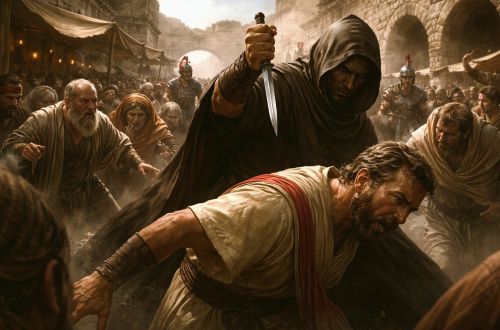
The activities of the Sicarii in first-century Judaea illustrate this interpretive conflict with particular clarity. According to surviving historical accounts, the Sicarii carried concealed daggers and carried out targeted assassinations against both Roman officials and Jewish elites who were perceived as collaborators with Roman authority. These attacks frequently occurred in crowded public spaces, especially during major religious festivals in Jerusalem, where large gatherings provided opportunities for concealment and escape. Roman authorities portrayed these killings as acts of terror that destabilized provincial governance and threatened public order. Yet from the perspective of the perpetrators, such violence likely represented a form of resistance against foreign domination and against local leaders who were viewed as complicit in imperial control.
Understanding the Sicarii requires confronting the problem of historical narrative itself. Much of the surviving evidence about their activities comes from sources shaped by Roman political and intellectual frameworks, most notably the writings of the Jewish historian Flavius Josephus, who composed his accounts under Roman patronage after the suppression of the First Jewish Revolt. His descriptions of militant groups in Judaea have profoundly influenced later interpretations of the period. Josephus’s position was complex: as a former participant in the revolt who later aligned himself with Roman authority, he occupied a unique but politically constrained vantage point. His writings sought both to explain the causes of the rebellion and to justify Roman victory, and these goals shaped the way he described radical factions such as the Sicarii. Modern historians must navigate the tension between Josephus’s invaluable testimony and the interpretive assumptions embedded within it. Examining the Sicarii through this lens reveals not only the dynamics of resistance under Roman rule but also the ways in which imperial narratives shaped the historical memory of political violence.
Roman Rule in Judaea: Imperial Administration and Local Tensions

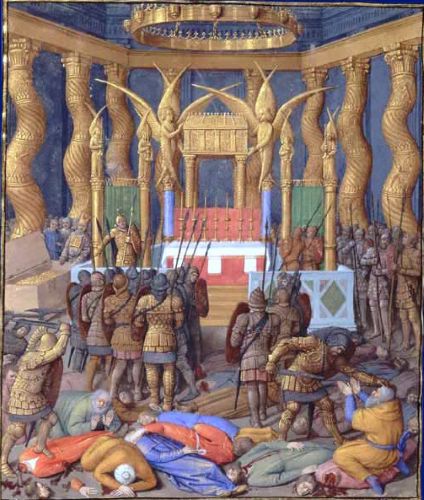
Roman involvement in Judaea began in 63 BCE when the Roman general Pompey intervened in a dynastic conflict within the Hasmonean kingdom and incorporated the region into Rome’s expanding sphere of influence. Although Judaea initially retained a degree of internal autonomy under client rulers, Roman authority ultimately shaped the political framework within which local governance operated. The balance between local autonomy and imperial oversight shifted, reflecting Rome’s broader strategy of maintaining stability in strategically important regions while minimizing the costs of direct administration. Judaea’s location along the eastern frontier of the empire and its proximity to key trade routes made it a region of considerable political and economic significance.
During the early first century CE, Roman control over Judaea became more direct. Following the deposition of Archelaus, son of Herod the Great, in 6 CE, the region was reorganized as a Roman province administered by prefects or procurators who governed on behalf of the emperor. These officials were responsible for maintaining order, collecting taxes, and overseeing the administration of justice. Roman governors typically resided in the coastal city of Caesarea Maritima but traveled to Jerusalem during major religious festivals, when large crowds gathered and the potential for unrest increased. The presence of Roman troops during these periods reflected the authorities’ concern about maintaining stability in a city that held profound religious and political significance for the Jewish population. The prefect’s authority extended over military forces stationed in the province, judicial proceedings involving capital punishment, and the supervision of fiscal matters tied to imperial revenue. Although the provincial administration was relatively small compared to the population it governed, the symbolic presence of Roman authority remained constant through military garrisons, tax collection, and the oversight of key institutions. These arrangements allowed Rome to maintain control while relying on a limited administrative apparatus, but they also meant that tensions between imperial authority and local society could quickly become visible.
Roman administration in Judaea relied heavily on cooperation with local elites, particularly the Jerusalem priestly aristocracy. These leaders played an important role in managing the affairs of the Temple, which served not only as the center of Jewish religious life but also as a major economic and political institution. By working through established local authorities, Roman officials sought to maintain order while minimizing the need for direct intervention in religious and social matters. This arrangement allowed the Roman government to govern the province efficiently, but it also created tensions among segments of the population who viewed these elites as complicit in sustaining foreign rule.
Taxation formed another significant source of friction between Roman administrators and the local population. Like other provinces of the empire, Judaea was required to contribute revenue to the imperial treasury through a system of taxes and tribute. While taxation itself was a normal feature of Roman provincial governance, it could become particularly contentious in regions where economic pressures were already severe. Agricultural fluctuations, land concentration among elite families, and local administrative practices sometimes intensified the burden felt by rural communities. These economic strains contributed to broader social tensions and helped foster resentment toward both Roman officials and the local elites associated with imperial administration.
Religious sensitivities further complicated the relationship between Roman authority and the inhabitants of Judaea. Jewish religious traditions placed particular emphasis on the sanctity of the Temple in Jerusalem and the observance of laws that distinguished Jewish practice from surrounding cultures. Roman officials generally attempted to respect these traditions in order to avoid unnecessary conflict, but misunderstandings and political miscalculations occasionally produced crises. Incidents involving imperial symbols, temple finances, or the conduct of Roman soldiers could quickly escalate into broader confrontations, reinforcing the perception among some Jews that Roman rule threatened both religious autonomy and communal identity. The introduction of imperial imagery into Jerusalem, disputes over the use of Temple funds for civic projects, and clashes between Roman soldiers and local populations all contributed to a climate of recurring tension. Even when Roman authorities attempted to compromise or withdraw controversial policies, the underlying suspicion between rulers and subjects often persisted. These episodes revealed how easily political authority could become entangled with religious symbolism, turning administrative decisions into flashpoints for wider resistance.
These overlapping tensions created a volatile political environment in which opposition to Roman authority could take multiple forms. Some groups pursued accommodation with imperial governance, seeking stability through cooperation with Roman officials. Others advocated more assertive resistance, interpreting foreign rule as incompatible with Jewish religious and political autonomy. It was within this social construct of contested authority, economic pressure, and religious sensitivity that more radical movements began to emerge. The Sicarii would later represent one of the most militant expressions of this resistance, drawing upon the grievances and ideological currents that had developed under decades of Roman administration.
The Emergence of Radical Resistance Movements
The political tensions that developed under Roman rule in Judaea did not produce immediate large-scale rebellion, but they gradually fostered an environment in which radical resistance movements could emerge. Throughout the first century CE, dissatisfaction with imperial governance combined with internal disputes among Jewish communities to create a climate of political uncertainty. Economic pressures, conflicts over religious authority, and resentment toward Roman officials contributed to hostility among segments of the population. While many individuals and communities sought accommodation with imperial rule, others increasingly viewed Roman domination as incompatible with Jewish autonomy and religious identity.
A number of movements arose during this period that blended religious expectation with political resistance. Jewish tradition included longstanding hopes for divine intervention and national restoration, themes that took on renewed significance under foreign rule. Prophetic figures, charismatic leaders, and popular preachers occasionally attracted followers who believed that God would soon liberate Israel from its oppressors. Roman authorities often interpreted such movements as threats to public order, particularly when they gathered large crowds or challenged the authority of existing institutions. As a result, imperial administrators closely monitored these figures and frequently suppressed them before they could develop into broader rebellions.
Resistance to Roman authority was not limited to prophetic movements or religious agitation. Social and economic grievances also played an important role in shaping popular unrest. Rural communities facing heavy taxation, land consolidation, or economic instability sometimes produced individuals or groups who rejected the legitimacy of both Roman governance and local elites associated with it. In the language of Roman officials, such figures were often labeled bandits or brigands, categories that blurred the distinction between criminal activity and political resistance. Modern historians have emphasized that these classifications reflected Roman administrative priorities rather than neutral descriptions of social behavior.
The intersection of religious expectation, political grievance, and social inequality created conditions in which militant resistance could gain traction. Some groups began advocating more direct forms of opposition to Roman rule, rejecting accommodation and emphasizing the necessity of active struggle. These ideas circulated within a broader landscape of political debate among Jewish communities about how best to respond to imperial authority. While many religious leaders continued to emphasize stability and the preservation of communal life, others argued that foreign domination represented an intolerable violation of Jewish law and identity. In this context, debates about resistance were not merely political but also theological, as different groups interpreted sacred texts and historical traditions in ways that justified either patience or confrontation. For some, Roman rule represented a temporary condition to be endured until divine intervention restored Jewish sovereignty. For others, active resistance appeared as a religious obligation, a duty to defend the sanctity of the Temple and the autonomy of the Jewish people against foreign domination.
Militant factions gradually developed strategies that differed from both prophetic movements and conventional rebellion. Rather than confronting Roman military power directly, some groups adopted tactics aimed at destabilizing the structures that sustained imperial authority. These tactics could include intimidation, targeted violence, and the elimination of individuals perceived as collaborators. Such actions were intended not only to weaken the influence of Roman officials but also to send a message to local elites who cooperated with imperial governance.
The emergence of these radical movements did not immediately lead to open revolt, but they contributed to the gradual erosion of political stability in Judaea. As tensions intensified during the decades leading up to the First Jewish Revolt, the boundaries between protest, resistance, and insurgency became increasingly blurred. Small-scale acts of defiance, disputes over taxation, and conflicts between rival factions within Jewish society gradually accumulated into a wider atmosphere of unrest. Roman authorities often responded with repression, arrests, or military intervention, actions that could temporarily restore order but rarely addressed the underlying grievances driving resistance. The cycle of protest and suppression deepened mistrust between imperial officials and segments of the local population. Groups such as the Sicarii would eventually embody one of the most extreme expressions of this radicalization, employing assassination and covert violence as tools of political struggle. Their actions reflected the broader transformation of resistance in Judaea from sporadic unrest into organized opposition to Roman rule.
The Sicarii: Organization, Ideology, and Methods
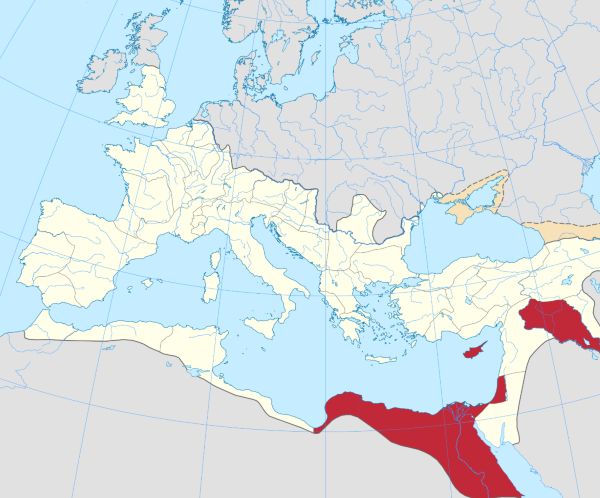
Among the most notorious militant groups operating in first-century Judaea were the Sicarii, whose name derived from the sica, a small curved dagger that could be easily concealed beneath clothing. Ancient sources describe them as a radical faction that emerged within the broader landscape of Jewish resistance to Roman rule during the mid-first century CE. Their activities were particularly associated with the years leading up to the First Jewish Revolt, when tensions between Roman authorities and segments of the Jewish population intensified dramatically. Although Roman and later Christian writers frequently portrayed them simply as assassins or terrorists, their actions were embedded in a complex political environment in which questions of loyalty, collaboration, and resistance were intensely contested. The development of such groups reflected the wider crisis of governance that characterized Roman Judaea in the decades before the revolt. Disputes between Roman administrators, priestly elites, and popular movements created an atmosphere in which radical solutions to political domination could gain supporters among those who believed that conventional leadership had failed to defend Jewish interests.
The Sicarii distinguished themselves from other resistance movements through their use of targeted assassination rather than open confrontation. According to Josephus, they concealed daggers beneath their garments and carried out attacks in crowded spaces, particularly during major religious festivals in Jerusalem. The choice of public settings served both practical and symbolic purposes. Crowds allowed attackers to blend into the population and escape detection, while the visibility of the violence reinforced the political message behind the act. The victims were typically individuals viewed as collaborators with Roman authorities, including Jewish elites who cooperated with imperial governance or supported policies perceived as harmful to Jewish autonomy.
The ideological motivations behind these actions appear to have been closely connected to broader currents of militant resistance within Jewish society. Many historians associate the Sicarii with radical interpretations of Jewish independence that rejected any form of accommodation with foreign rule. In this view, the existence of Roman authority in Judaea represented not merely political subordination but a violation of the covenantal relationship between God and the Jewish people. Those who cooperated with Roman administration could be interpreted as betraying both national and religious obligations. Assassination, in this ideological framework, became a tool intended to purify the community by eliminating collaborators and deterring others from supporting imperial power. This perspective reflected a broader ideological divide within Jewish society about how to respond to imperial domination. While many leaders advocated pragmatic cooperation with Rome to preserve religious institutions and social stability, militant factions increasingly argued that compromise itself represented moral failure. The ideology associated with the Sicarii framed violence not simply as a political tactic but as a form of resistance grounded in religious conviction and national survival.
Organizationally, the Sicarii appear to have operated as a relatively small and clandestine network rather than a mass movement. Their ability to carry out attacks in highly visible public settings suggests a level of coordination and planning that required careful communication and mutual trust among participants. The secrecy surrounding their activities makes it difficult to reconstruct their internal structure with precision. Much of what is known about the group derives from the writings of Josephus, whose perspective was shaped by his own experiences during the Jewish War and by the political context in which he later wrote under Roman patronage.
The methods employed by the Sicarii were designed to create immediate fear and political consequences. Targeted assassinations undermined the authority of individuals who served as intermediaries between Roman administrators and local populations. By eliminating such figures, the Sicarii attempted to disrupt the networks through which imperial governance operated. The unpredictability of attacks contributed to an atmosphere of anxiety in which public gatherings could become sites of sudden violence. Roman authorities interpreted these tactics as acts of terror intended to destabilize provincial order.
The activities of the Sicarii reveal how political violence can function simultaneously as a tactical instrument and a symbolic statement. Their attacks were not random but carefully directed toward individuals whose deaths carried political meaning within the broader conflict between empire and resistance. Yet the interpretation of these actions depended heavily on perspective. For Roman officials and many local elites, the Sicarii represented dangerous insurgents whose violence threatened public stability. For sympathizers within radical resistance movements, however, they could be viewed as defenders of Jewish independence willing to strike against those who enabled foreign domination. The duality of these interpretations illustrates how acts of violence during periods of imperial conflict could generate sharply competing narratives about legitimacy, resistance, and political authority.
Assassination in the Crowd: Political Violence in Public Space
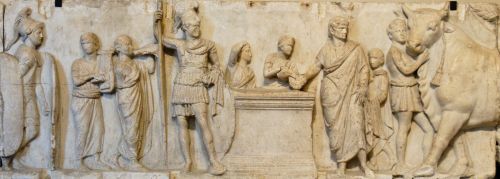
One of the most distinctive features of Sicarii activity was their deliberate use of crowded public spaces as the setting for political violence. According to ancient accounts, particularly those preserved by Josephus, the assassins concealed small daggers beneath their clothing and mingled among large gatherings before striking their targets. Festivals in Jerusalem provided ideal opportunities for such attacks. During major religious celebrations, the city filled with pilgrims from across Judaea and the wider Jewish diaspora, producing dense crowds in which an attacker could approach a victim unnoticed and escape amid the confusion that followed. In this context, public space itself became an arena of political confrontation.
The visibility of these acts was an essential part of their strategic logic. By carrying out assassinations in crowded settings rather than in private, the Sicarii ensured that the violence would be witnessed by large numbers of people. The shock produced by a sudden killing during a religious gathering carried psychological as well as political effects. Witnesses would immediately recognize that the victim had been deliberately targeted, and the identity of the attackers was often widely suspected even when individuals escaped. Such public acts functioned as a form of communication, signaling both the presence of militant resistance and the vulnerability of those perceived as collaborators with Roman authority. The setting amplified the message of the act. A killing carried out during a pilgrimage festival did not occur in isolation but within the sacred and communal heart of Jewish society. In that moment, the violence interrupted religious ritual and civic life simultaneously, transforming the act into a symbolic challenge directed at both imperial power and local leadership. For observers, the spectacle reinforced the idea that political conflict had penetrated the most public and sacred spaces of communal life.
These attacks also exploited the structural limitations of Roman provincial administration. Roman governors relied heavily on local elites to manage daily governance, collect taxes, and maintain social stability. The assassinations carried out by the Sicarii focused on these intermediaries. When a prominent collaborator or political figure could be killed in a crowded festival without immediate reprisal, the event exposed the fragility of the networks through which imperial power operated. Each successful attack reinforced the message that Roman authority could not fully protect those who aligned themselves with imperial rule.
The use of public assassination blurred the boundary between political insurgency and criminal violence. Roman officials interpreted such acts through the lens of maintaining public order, often categorizing the perpetrators as bandits or terrorists rather than political opponents. This framing was not merely rhetorical. In Roman administrative language, the label of brigandage allowed authorities to justify harsh reprisals without acknowledging the political grievances underlying resistance movements. As a result, the official record preserved by Roman sources tended to emphasize disorder and criminality while minimizing the ideological motivations that may have shaped these attacks. This distinction had important consequences for how events were recorded and remembered. When violence was described as criminal banditry rather than political resistance, Roman narratives framed the conflict as a matter of law enforcement rather than a struggle over sovereignty and legitimacy. Such descriptions influenced later historical interpretations, since much of the surviving written evidence derives from authors writing within or alongside Roman imperial structures.
The choice of crowded public space carried multiple layers of meaning. For the Sicarii and those sympathetic to their cause, these assassinations represented a dramatic demonstration that collaboration with Roman rule carried real consequences. For Roman administrators and many members of the Jewish elite, however, the same events symbolized the dangerous erosion of social order and the spread of destabilizing violence. The contested interpretation of these acts reveals how political violence in antiquity could function simultaneously as tactical resistance and as a symbolic challenge to imperial legitimacy.
Roman Perceptions: Terrorism, Banditry, and Rebellion
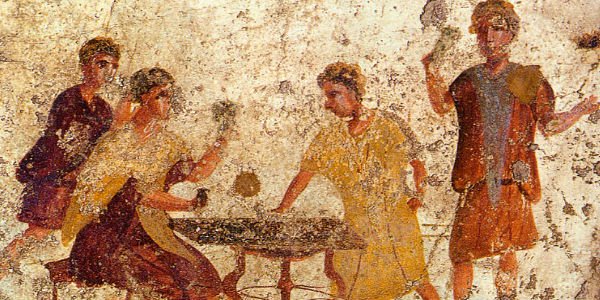
Roman authorities interpreted the violence associated with groups such as the Sicarii through the administrative and ideological frameworks of imperial governance. Roman political culture placed a strong emphasis on order, hierarchy, and the maintenance of stability across the provinces. Any challenge to these principles was typically framed as a threat to legitimate authority rather than as a competing political claim. Acts of assassination and targeted violence appeared in Roman narratives not as expressions of political resistance but as manifestations of criminal disorder. From the perspective of imperial administration, the Sicarii represented a dangerous destabilizing force whose actions undermined both provincial governance and public safety.
Roman writers frequently described insurgent activity in Judaea using the language of brigandage. In Roman legal and political discourse, the latrocinium (bandit) could be applied to a variety of groups that resisted imperial authority, including insurgents, rebels, and political dissidents. By classifying such movements as banditry, Roman officials and historians framed them as illegitimate actors operating outside the boundaries of lawful political life. This rhetorical strategy allowed imperial authorities to justify suppression without acknowledging that resistance might stem from grievances related to governance, taxation, or foreign domination. The language of brigandage also reflected deeper assumptions within Roman political thought about the nature of legitimate authority. In Roman ideology, the empire represented an ordered political system that brought stability and law to its provinces. Those who resisted imperial governance could be depicted not simply as opponents but as enemies of order itself. By framing insurgents as criminals rather than political adversaries, Roman narratives reinforced the legitimacy of imperial rule while delegitimizing alternative claims to authority.
Josephus provides the most detailed surviving account of violence in Judaea during the decades preceding the First Jewish Revolt. Writing after the conflict and under Roman patronage, Josephus portrayed militant factions such as the Sicarii as reckless extremists whose actions contributed to the destruction of Jerusalem. His narrative emphasizes the chaos, fear, and social fragmentation that accompanied their activities. Josephus’ descriptions reflect the political pressures shaping his work. As a former participant in the revolt who later aligned himself with the Roman imperial household, he had strong incentives to present radical resistance movements as destructive forces rather than as legitimate political actors. Josephus frequently contrasts what he describes as the moderation of traditional Jewish leadership with the violence of militant factions, a framing that implicitly supports the Roman interpretation of events. Yet modern historians have emphasized that Josephus’ account must be read critically. His position as an intermediary between Roman audiences and the history of Judaea shaped both the language and emphasis of his narrative, making it necessary to consider how political circumstances influenced the portrayal of groups such as the Sicarii.
Roman administrative perspectives also influenced how violence in Judaea was categorized and addressed. Provincial governors were responsible for maintaining order and preventing unrest that might threaten imperial stability. Reports of assassinations, disturbances, or armed groups would be interpreted primarily as problems of security rather than as manifestations of political conflict. Military intervention, arrests, and punitive measures were common responses to such threats. By focusing on the suppression of disorder, Roman authorities sought to restore stability without engaging with the ideological motivations that animated resistance movements.
This interpretive framework shaped the broader historical record that has survived from the period. Because Roman officials and historians dominated the written sources describing events in Judaea, their language and assumptions heavily influenced later accounts. Groups like the Sicarii were remembered primarily through descriptions that emphasized violence, fanaticism, and social disruption. The perspective of those who may have sympathized with resistance to Roman rule appears far less frequently in surviving texts, making it difficult for modern historians to reconstruct alternative interpretations of these events.
The Roman characterization of militant resistance as terrorism or banditry reveals how imperial power shaped the boundaries of political legitimacy. By defining insurgent violence as criminal rather than political, Roman narratives reinforced the authority of imperial governance while delegitimizing opposition. The persistence of such resistance movements demonstrates that imperial definitions of order did not necessarily reflect the perspectives of all subjects within the empire. The tension between these competing interpretations remains central to understanding how political violence in Roman Judaea was perceived, recorded, and remembered.
The Sicarii and the Escalation toward the First Jewish Revolt
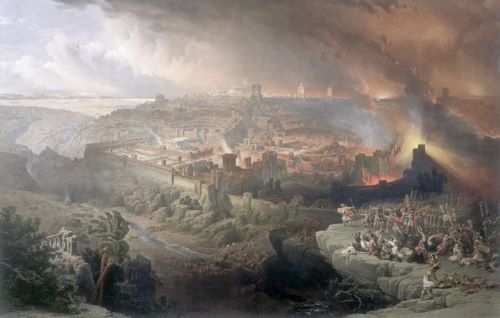
The activities of the Sicarii unfolded within a broader pattern of instability that increasingly characterized Roman Judaea during the middle decades of the first century CE. Political tensions between Roman administrators, local elites, and segments of the Jewish population had been developing for decades. Disputes over taxation, religious authority, and the conduct of provincial governors produced recurring conflicts that gradually eroded trust in imperial governance. Within this volatile environment, militant groups such as the Sicarii contributed to an atmosphere in which violence became an increasingly common feature of political life.
The actions of the Sicarii intensified divisions within Jewish society itself. Their assassinations frequently targeted Jewish elites whom they accused of collaborating with Roman authorities. These individuals often occupied positions within the Temple administration or local political structures that connected provincial governance to the broader population. By attacking such figures, the Sicarii attempted to disrupt the networks that enabled Roman rule to function in everyday practice. The elimination of prominent figures also carried symbolic significance, demonstrating that even individuals of wealth, status, or religious authority could not rely on Roman protection. This message resonated far beyond the immediate victims of the attacks. It signaled to the wider population that political loyalties had become dangerous and that association with Roman authority could provoke violent reprisal. As a result, the assassinations contributed not only to physical insecurity but also to a growing climate of fear that intensified factionalism within Jewish society.
As the frequency of such attacks increased, the stability of Jerusalem itself became increasingly fragile. Public gatherings that had once served primarily religious or civic purposes could now become sites of sudden violence. The presence of militant factions created an atmosphere of suspicion in which individuals feared being accused of collaboration or betrayal. This uncertainty weakened existing social bonds and complicated efforts by traditional leaders to maintain authority. Priestly families and other influential groups attempted to preserve order within the city, but their authority was increasingly challenged by militant factions that rejected compromise with Roman rule. The resulting fragmentation made it more difficult for any single group to exercise effective leadership. Instead, Jerusalem became a space in which competing visions of resistance, accommodation, and religious duty collided, each claiming legitimacy in the face of growing imperial pressure.
Roman responses to these developments further intensified tensions within the province. Governors confronted with disturbances or reports of militant activity often relied on forceful measures to restore order. Arrests, executions, and military interventions were used to suppress suspected insurgents and discourage further resistance. While such actions could temporarily stabilize particular situations, they frequently deepened resentment among local populations. Harsh administrative responses reinforced the perception among some groups that Roman rule operated primarily through coercion rather than legitimate governance.
The cumulative effect of these dynamics contributed to the escalation of conflict that ultimately erupted into open rebellion in 66 CE. Although the Sicarii themselves did not represent the entirety of the resistance movement, their tactics symbolized the growing radicalization of political opposition within Judaea. Acts of assassination and intimidation signaled that certain factions had abandoned hopes for accommodation with imperial authority. Instead, they increasingly viewed confrontation as the only remaining path toward restoring Jewish autonomy.
When the First Jewish Revolt finally began, the environment in which it unfolded had already been shaped by years of internal division, militant activism, and escalating violence. The Sicarii became one of several factions participating in the conflict, though their role remained controversial even among other Jewish rebels. Their earlier campaigns of targeted assassination illustrated how political violence could gradually transform localized grievances into a wider atmosphere of rebellion. The history of the Sicarii offers insight into how insurgent tactics and imperial responses interacted to accelerate the collapse of political stability in Roman Judaea.
Josephus and the Problem of Historical Narrative

The modern understanding of the Sicarii and other militant groups in first-century Judaea depends heavily on the writings of Josephus. His works, particularly The Jewish War, provide the most extensive surviving narrative of the events leading up to and including the First Jewish Revolt. Yet Josephus himself was not a neutral observer. Born into a priestly family in Jerusalem, he initially participated in the revolt against Rome before surrendering to Roman forces and later entering the patronage network of the Flavian imperial household. These circumstances inevitably shaped the way he interpreted and presented the conflicts within Judaea.
Josephus’ portrayal of militant factions reflects both his personal experiences and the political environment in which he wrote. In his narrative, groups such as the Sicarii are frequently depicted as reckless extremists whose actions intensified internal conflict and ultimately contributed to the catastrophic destruction of Jerusalem. This interpretation aligns with Josephus’ broader argument that the revolt resulted not primarily from Roman oppression but from the destructive behavior of radical elements within Jewish society. By emphasizing the chaos produced by militant factions, Josephus constructed a narrative that both explained the failure of the rebellion and implicitly justified Roman victory. His account frequently contrasts the behavior of militant groups with what he presents as the moderation of more traditional Jewish leadership, including priestly authorities and established political figures. In doing so, Josephus portrays the rise of violent factions as a deviation from the stability that might otherwise have been preserved through prudent leadership and cooperation with imperial authorities. This interpretive framework also reflected the broader intellectual environment in which Josephus wrote, where historians often sought to identify moral or social causes for political catastrophe. By attributing the destruction of Jerusalem to internal extremism rather than imperial domination, Josephus crafted a narrative that resonated with Roman audiences while also defending the reputation of Jewish tradition against accusations of inherent rebellion.
Josephus’ works preserve valuable information that might otherwise have been lost entirely. His detailed descriptions of political factions, social tensions, and acts of violence provide insight into the complex dynamics shaping Judaea during the first century CE. Modern historians face the challenge of interpreting Josephus’ account critically rather than dismissing it outright. His writings must be read with careful attention to the circumstances of their production, recognizing both the biases that influenced his narrative and the historical evidence embedded within it.
The problem of Josephus’ narrative illustrates a broader issue in the study of political violence in antiquity. When historical sources are produced within imperial contexts, the perspectives of insurgents or marginalized groups are often filtered through the language and assumptions of those in positions of authority. As a result, acts of resistance may be remembered primarily through descriptions that emphasize disorder, fanaticism, or criminality. Reconstructing the historical reality of movements such as the Sicarii requires not only analyzing the events themselves but also critically examining the narratives through which those events have been transmitted to later generations.
Conclusion: Violence, Empire, and the Politics of Interpretation
The history of the Sicarii illustrates how acts of political violence can be interpreted in profoundly different ways depending on the perspective of those describing them. For Roman authorities, assassinations carried out in crowded public spaces represented criminal acts that threatened the stability of imperial governance. From this viewpoint, the perpetrators were dangerous agitators whose actions disrupted social order and undermined the authority of legitimate institutions. Such interpretations reflected the priorities of an imperial system that viewed political stability as the foundation of effective rule across diverse provinces.
Yet from the perspective of militant resistance movements within Judaea, the same acts could be understood very differently. For those who rejected Roman authority and condemned collaboration with imperial officials, targeted violence appeared as a form of political struggle directed against foreign domination. The Sicarii, in this interpretation, acted as defenders of Jewish autonomy who sought to punish those they believed had betrayed their community. Whether or not such actions were widely supported within Jewish society, they reflected a broader climate of resentment toward imperial rule and the perceived complicity of local elites.
The problem of interpretation becomes especially evident in the surviving historical record. Because most written accounts of these events were produced within Roman imperial contexts, the language used to describe insurgent violence often emphasized disorder, fanaticism, and criminality. The narrative preserved by Josephus illustrates this tension particularly clearly. While his work provides invaluable information about the political conflicts of the period, it also reflects the political realities of writing under Roman patronage. Josephus’ position as both participant and later interpreter of the revolt placed him in a complex relationship with the events he described. His narrative attempts to explain the collapse of Jewish resistance while simultaneously presenting Roman victory as both inevitable and justified. Modern historians must approach such sources with caution, recognizing both their evidentiary value and the interpretive frameworks that shaped them. Careful analysis requires distinguishing between Josephus’ descriptive observations and the moral judgments embedded within his interpretation of events. In doing so, scholars can better understand how imperial perspectives influenced the portrayal of resistance movements and how those portrayals shaped the long-term historical memory of conflict in Roman Judaea.
The story of the Sicarii ultimately reveals how violence, empire, and historical narrative intersect in the construction of political memory. Acts of resistance that challenge imperial authority are often recorded primarily through the voices of those who oppose them, shaping how later generations understand their meaning. Examining the Sicarii within this broader context does not require endorsing their methods, but it does highlight the importance of recognizing how power influences the writing of history. In the case of Roman Judaea, the struggle over political authority extended not only across battlefields and city streets but also into the narratives that continue to define how those conflicts are remembered.
Bibliography
- Ando, Clifford. Imperial Ideology and Provincial Loyalty in the Roman Empire. Berkeley: University of California Press, 2000.
- Chancey, Mark A. The Myth of a Gentile Galilee. Cambridge: Cambridge University Press, 2002.
- D’Alessio, Stewart J. and Lisa Stolzenberg. “Sicarii and the Rise of Terrorism.” Terrorism 13:4-5 (1990), 329-335.
- Goodman, Martin. Rome and Jerusalem: The Clash of Ancient Civilizations. New York: Vintage Books, 2007.
- —-. The Ruling Class of Judaea: The Origins of the Jewish Revolt against Rome. Cambridge: Cambridge University Press, 1987.
- Horsley, Richard A. Bandits, Prophets, and Messiahs: Popular Movements in the Time of Jesus. Minneapolis: Fortress Press, 1985.
- Josephus. The Jewish War. Translated by G. A. Williamson. London: Penguin Classics, 1981.
- Kaplan, Jeffrey. “Nothing Is True, Everything Is Permitted: Premodern Religious Terrorism.” Terrorism and Political Violence 31:5 (2019), 1070-1095.
- Mason, Steve. Josephus and the New Testament. Peabody, MA: Hendrickson Publishers, 1992.
- Rajak, Tessa. Josephus: The Historian and His Society. London: Duckworth, 1983.
- Sanders, E. P. Judaism: Practice and Belief, 63 BCE–66 CE. London: SCM Press, 1992.
- Smallwood, E. Mary. The Jews under Roman Rule: From Pompey to Diocletian. Leiden: Brill, 1976.
- Smith, Morton. “Zealots and Sicarii, Their Origins and Relation.” Harvard Theological Review 65:1 (1971), 1-19.
- Zeitlin, Solomon. “The Sicarii and Masada.” The Jewish Quarterly Review 57:4 (1967), 251-270.
Originally published by Brewminate, 03.18.2026, under the terms of a Creative Commons Attribution-NonCommercial-NoDerivatives 4.0 International license.
About the Author