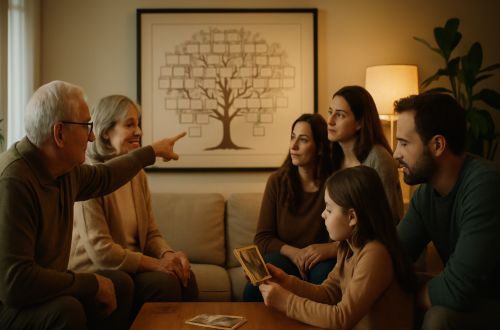
Three simple gifts that forge deeper family connection include a personalized family tree, a collaborative legacy recipe book, and a guided story-sharing journal. These transform passive gift giving into shared, meaningful experiences that strengthen generational bonds. While standard presents are quickly forgotten, these collaborative tools invite every generation to participate in documenting their shared history.
By focusing on storytelling and preserved memories, families can establish stronger emotional roots and create lasting artifacts that grow more valuable over time.
1. Personalized Family Tree or Pedigree Chart
Why It Works
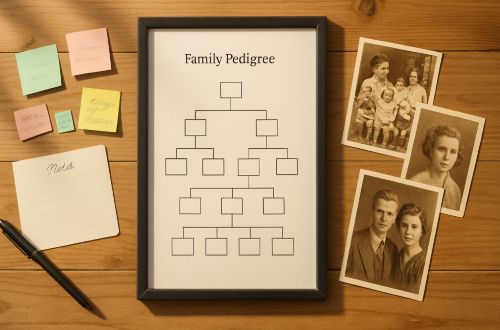
There is something quietly powerful about seeing your family’s story laid out visually. It transforms abstract family history into something concrete that relatives can actually see and point to during gatherings.
Children who know more about their family history may show stronger emotional resilience, higher self-esteem, and a greater sense of identity. The family narrative serves as one of the most reliable buffers against anxiety and uncertainty.
A personalized family tree does double duty as both a lasting keepsake and an immediate conversation starter. As a genealogy gift idea, it genuinely invites everyone to lean in and engage.
How to Create and Give It
You do not need to be a historian or a professional graphic designer to pull this off. Here is all it takes:
- Gather the basics with a quick group chat for names and dates.
- Choose a design that fits your family’s style.
- Customize and order using accessible online platforms.
Online design platforms make this process highly accessible by providing templates that handle the heavy lifting. Simply input the family details and allow the platform to structure the layout. With many services offering fast shipping, this functions beautifully even as a last-minute gift.
Besides a personalized family tree, you can also consider customized phone cases from Custom Envy as a practical yet meaningful way to keep cherished family memories close every day.
2. Legacy Recipe Book or Family Memory Book
Why It Works
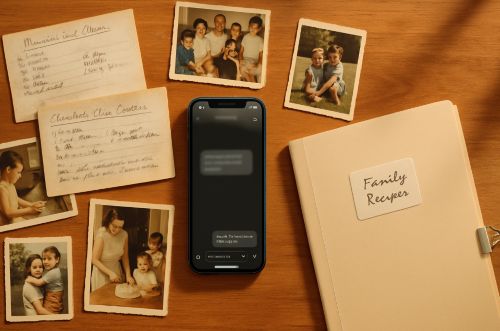
Food acts as one of the most powerful threads of family identity. The scent of a specific dish can carry a person back thirty years in an instant. Shared meals and food rituals are deeply tied to who families are, reflecting cultural roots and geographical histories.
Research highlights that family rituals are symbolic activities that reinforce the identities and sense of belonging among family members. The act of gathering and preserving culinary rituals amplifies this emotional benefit.
There is also an urgency worth acknowledging. Family recipes that live solely in a grandparent’s memory can easily disappear with a generation. A legacy recipe book acts as an act of preservation as much as it is a gift.
How to Create and Give It
The key to a successful collaborative book is keeping the initial request small so that everyone actually participates. Begin by sending one simple message asking each member for just one recipe.
- Compile what you receive into a single digital folder.
- Design the pages using digital templates with drag and drop tools.
- Print and present the final bound book.
Families who complete this exercise often find that the conversations sparked during the collection process are just as meaningful as holding the finished book. Leaving a few blank pages at the back labeled for future recipes signals that the family narrative is not finished. This invites additions every time a relative perfects a new dish worth remembering.
Beyond the gift itself, creating opportunities for meaningful connection becomes even more important as families grow and change. For families managing cognitive decline, fostering these moments can feel challenging. Ensuring an aging loved one’s safety with a senior GPS tracking watch from Tranquil can provide caregivers the peace of mind needed to be fully present during these irreplaceable conversations.
3. Guided Family Journal or Story Sharing Diary

Why It Works
One primary reason families fail to share their stories is simply not knowing how or where to start. A guided journal removes that pressure entirely. The written prompts do the emotional heavy lifting, allowing the person holding the journal to reflect and respond.
The National Archives emphasizes that the most irreplaceable historical records are often personal memories, everyday details, and firsthand accounts of ordinary life. A guided journal creates exactly that kind of primary record.
This gift is highly adaptable for any relative. A grandparent can document childhood memories at their own pace, or a parent can capture early family milestones. Often, a single journal can be passed between households, progressively building a shared document.
How to Create and Give It
You can purchase a high-quality, ready-made guided journal featuring intergenerational prompts. Alternatively, use a print-on-demand service to design a personalized notebook featuring a custom cover. To begin compiling custom pages, consider asking about funny gathering moments, favorite meals, or proud family traditions.
Give the journal with a small ceremony to encourage participation. Sit together when the gift is opened, read the very first prompt aloud, and answer it together on the spot. This transforms a physical object into an immediate shared experience.
The Real Impact
Each of the three gifts detailed above shares one underlying quality that sets them apart. They actively invite families to tell their story together, turning passive recipients into active participants. These tools create artifacts that outlast the occasion they were given for.
Deep family connection does not require a special occasion or flawless planning. It simply requires the active decision to acknowledge that a family’s shared history matters. The best time to start documenting this history is now, while the stories are still there to be told.
About the Author