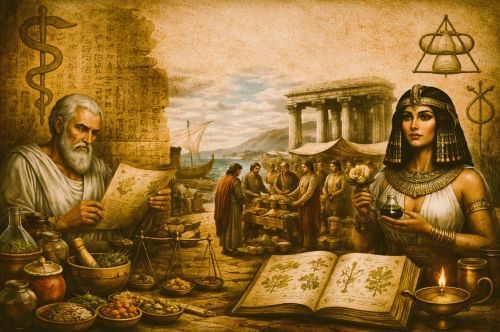
Ancient pharmacology united empirical remedies, medical theory, and global trade networks, shaping early healing practices while laying the intellectual and practical foundations of modern medicine.

By Matthew A. McIntosh
Public Historian
Brewminate
Introduction: Medicine Before Formal Practice
Long before the emergence of formal medical institutions or the scientific frameworks that define modern pharmacology, ancient societies developed complex systems of healing grounded in observation, tradition, and evolving theoretical inquiry. Ancient pharmacists were already blending science, trade, and ritual into systems that shaped the earliest foundations of healthcare. What we now distinguish as “pharmacy” and “pharmacology” existed in more fluid forms, embedded within broader practices of medicine, ritual, and natural philosophy. Remedies derived from plants, minerals, and animal substances were not merely improvised responses to illness but part of a growing body of understanding shaped by experience and transmission across generations. In this early context, treatment was as much an intellectual endeavor as it was a practical one, reflecting attempts to understand nature and humanity’s place within it.
The distinction between pharmacology, the study of medicinal substances, and pharmacy, the preparation and dispensing of those substances, was not yet clearly articulated in antiquity, yet both functions were actively performed. Practitioners gathered, processed, and combined ingredients based on accumulated knowledge that was often preserved through oral tradition before being codified in written texts. The gradual movement from orally transmitted remedies to written compilations marked a critical shift, allowing for standardization, critique, and broader dissemination. Texts associated with the Hippocratic tradition, for example, reveal an increasing concern with consistency in preparation and the effects of different substances, indicating an early effort to move beyond purely anecdotal practice toward something more systematic.
Ancient pharmacology cannot be separated from the philosophical and cultural frameworks in which it emerged. Greek natural philosophy, particularly in the works associated with Aristotle and his intellectual circle, encouraged the classification and analysis of the natural world, including plants and their properties, fostering a mode of inquiry that sought patterns, causes, and relationships rather than isolated observation. This intellectual environment supported a gradual shift from mythological explanations of disease toward naturalistic interpretations, in which remedies were evaluated according to their observable effects and their perceived interaction with the body. Yet this transformation was uneven and often layered upon older traditions rather than replacing them outright, as religious practices, ritual healing, and appeals to divine intervention continued to coexist with empirical approaches. Sanctuaries dedicated to healing deities such as Asclepius remained active sites of treatment, demonstrating that patients and practitioners alike navigated a medical landscape in which rational analysis and spiritual belief were deeply intertwined. The resulting synthesis did not represent a contradiction so much as a reflection of a broader intellectual culture in which multiple ways of knowing were considered valid and complementary, allowing pharmacological knowledge to develop within a rich and complex matrix of ideas about nature, the body, and the causes of illness.
These early developments laid the foundation for the more systematic pharmacological traditions that would emerge in the Hellenistic and Roman periods. By the time figures such as Theophrastus, Dioscorides, and Galen began to write, they were building upon centuries of accumulated knowledge, refining it into increasingly organized and authoritative forms. What distinguishes ancient pharmacology is not simply its antiquity, but its role in establishing enduring patterns of knowledge production, authority, and transmission that would shape medical practice for more than a millennium. This early tradition was not a primitive precursor to modern science, but a formative intellectual framework that defined how therapeutic work could be understood, practiced, and trusted.
Theophrastus and the Botanical Foundations of Pharmacology
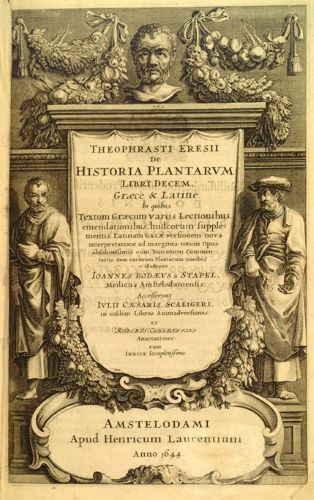
The development of ancient pharmacology rests in no small part on the work of Theophrastus, whose systematic study of plants transformed scattered practical knowledge into a structured intellectual discipline. A student of Aristotle and successor to him at the Lyceum, Theophrastus approached the natural world with a rigor that reflected the broader philosophical aims of Peripatetic inquiry. Rather than treating plants merely as sources of remedies, he sought to understand their nature, classification, and properties in a comprehensive way, establishing a framework that would influence both botanical science and pharmacology for centuries.
In his major works, De Historia Plantarum and De Causis Plantarum, Theophrastus cataloged hundreds of plants, describing their forms, habitats, and uses with a level of detail unprecedented in earlier traditions. These texts did more than list medicinal plants; they analyzed patterns in plant behavior, growth, and environmental adaptation, allowing for a more predictive and systematic understanding of their properties. By organizing plant knowledge into coherent categories, Theophrastus made it possible to move beyond isolated observations toward a body of knowledge that could be taught, expanded, and critically examined.
The significance of Theophrastus for pharmacology lies in his insistence on observation as the foundation of knowledge. While earlier traditions often blended practical remedies with myth or inherited authority, Theophrastus emphasized direct engagement with the natural world, encouraging the careful study of plants in their environments, along with comparison of species across regions and conditions. This approach did not eliminate traditional beliefs, but it reframed them within a broader effort to understand causation and regularity, pushing inquiry toward explanation rather than simple description. His attention to variables such as soil, climate, and seasonal change suggested that medicinal properties were not static but could vary depending on context, an insight that added complexity to the use of plant-based remedies. He laid the groundwork for later pharmacological writers who would increasingly rely on empirical description and comparative analysis rather than purely inherited wisdom, creating a methodological framework that supported refinement, correction, and expansion.
Theophrastus did not entirely separate botanical study from its practical applications. His works frequently note the medicinal uses of plants, reflecting an awareness that knowledge of nature was closely tied to human needs. This integration of theoretical classification and practical utility proved crucial, as it allowed later pharmacologists to draw upon his system while focusing more directly on therapeutic outcomes. The continuity between botanical science and pharmacology, so evident in later authors such as Dioscorides, can be traced in part to the intellectual foundations established by Theophrastus.
The enduring influence of Theophrastus lies not only in the content of his writings but in the methodological shift they represent. By organizing plant knowledge into a systematic framework grounded in observation and analysis, he created a model for studying natural substances that extended far beyond his own time and encouraged a disciplined approach to inquiry that could be replicated and refined by subsequent scholars. His contributions provided the essential bridge between early, largely unsystematic traditions of plant use and the more structured pharmacological systems of the Hellenistic and Roman worlds, ensuring that the study of medicinal substances would develop as both a scientific and practical discipline, while also shaping how later generations understood the relationship between nature, knowledge, and healing.
Diocles of Carystus and Early Greek Pharmacological Practice
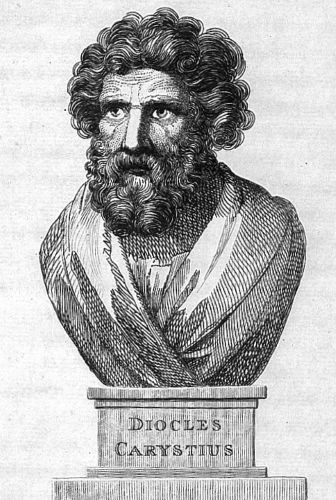
Diocles of Carystus occupies a critical yet often underappreciated position in the development of early Greek pharmacology, serving as a connection between the systematic botanical inquiry of Theophrastus and the more fully developed pharmacological traditions of later figures such as Dioscorides. Active in the late fifth and early fourth centuries BCE, Diocles was among the earliest Greek medical writers to focus extensively on diet, regimen, and the medicinal use of natural substances. His work reflects a moment in which practical healing knowledge began to take on more defined intellectual contours, moving toward a discipline that could be articulated, taught, and developed.
Central to Diocles’ contribution was his association with the rhizotomoi, or “root-cutters,” practitioners who specialized in the identification, collection, and preparation of medicinal plants. These individuals were not merely gatherers of herbs but skilled intermediaries between the natural environment and medical practice, possessing detailed understanding of plant properties, harvesting techniques, and preparation methods that required both experience and careful observation. Their work often involved understanding the optimal conditions for gathering plants, including season, soil type, and stage of growth, as well as the proper methods for drying, storing, and combining ingredients to preserve or enhance their efficacy. Diocles’ engagement with this tradition suggests that he played a role in elevating what had often been considered a more practical or artisanal activity into a subject worthy of theoretical attention, helping to integrate pharmacological practice into the broader framework of Greek medicine and bringing greater intellectual legitimacy to the expertise of those who worked directly with medicinal substances.
Unlike Theophrastus, whose work emphasized classification and natural philosophy, Diocles appears to have been more directly concerned with application, particularly in the context of health maintenance and treatment. His surviving fragments indicate an interest in how substances could be used to influence bodily conditions, often within the framework of regimen and diet that characterized early Greek medical thought. This practical orientation did not imply a lack of intellectual rigor; rather, it reflected a different emphasis, one that prioritized the effective use of materials in the management of health. Diocles contributed to the gradual differentiation of pharmacology as a field concerned not only with identifying substances but with understanding how they could be deployed in specific therapeutic contexts.
Diocles’ work also illustrates the increasing importance of written transmission in preserving and disseminating pharmacological knowledge. Although much of his writing survives only in fragments quoted by later authors, the very fact of its citation attests to its influence within the medical tradition and suggests that his ideas circulated widely enough to shape subsequent thinking. These fragments reveal a practitioner engaged not only in describing remedies but in considering how knowledge itself could be organized and communicated, contributing to the gradual development of a shared medical vocabulary. His texts likely contributed to the standardization of certain techniques and the establishment of common approaches among practitioners, even as regional differences and individual experience continued to influence application. The fragmentary nature of his legacy underscores both the richness of early Greek pharmacological thought and the challenges inherent in reconstructing it from later sources, reminding us that much of what once existed has been filtered through the interpretations and priorities of those who preserved it.
The significance of Diocles of Carystus lies in his role as a transitional figure who helped to connect empirical plant use with emerging medical theory. By engaging with the practices of the rhizotomoi while also contributing to the written medical tradition, he exemplifies the synthesis of practical knowledge and intellectual inquiry that defined early pharmacology. His work demonstrates that the development of pharmacological practice was not a sudden innovation but a gradual process of integration, in which observation, experience, and theory were brought together to form a more coherent understanding of how natural substances could be used to promote health and treat disease.
Hellenistic Pharmacology: Alexandria and the Expansion of Medical Knowledge
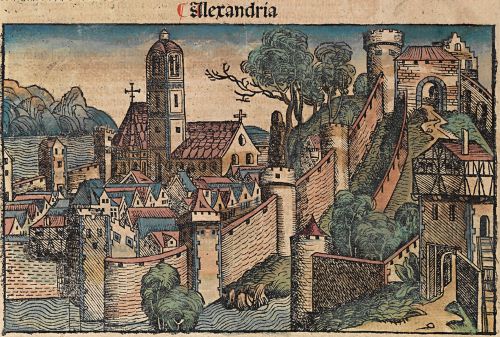
The Hellenistic period marked a decisive expansion in the scope and ambition of pharmacological knowledge, driven in large part by the intellectual environment of Alexandria. Founded in the wake of Alexander the Great’s conquests, the city became a center of scholarship where Greek, Egyptian, and Near Eastern traditions intersected, bringing together not only texts and ideas but also practical knowledge embedded in different medical cultures. This convergence created fertile ground for the development of medicine and pharmacology, as practitioners gained access to a broader range of materials, ideas, and techniques than had been available in earlier Greek contexts, including substances and remedies drawn from regions as distant as India and North Africa. The institutional support of the Ptolemaic rulers, particularly through the Library and Museum, further encouraged systematic study and the accumulation of knowledge, fostering an environment in which inquiry could be pursued with both intellectual rigor and material resources, allowing pharmacology to evolve within a setting suited to experimentation, comparison, and synthesis.
Pharmacology began to move beyond the largely descriptive and classificatory approaches of earlier periods toward a more experimental and synthetic mode of inquiry. The availability of exotic plants, minerals, and compounds from across the Hellenistic world expanded the range of substances available for medical use, while the cosmopolitan character of Alexandria facilitated the exchange of practical knowledge among diverse practitioners. This combination of expanded resources and intellectual collaboration contributed to a more dynamic understanding of how medicinal substances could be combined, modified, and applied.
Figures such as Apollonius, though less well preserved in the historical record, are indicative of this broader trend toward specialization in pharmacological study. Working within the Alexandrian milieu, pharmacologists increasingly focused on the properties and preparation of drugs as a distinct area of expertise, separate from but closely related to general medical practice. This specialization reflects a growing recognition that the effective use of medicinal substances required not only empirical knowledge but also technical skill and theoretical understanding, particularly as compounds became more complex.
The role of court physicians further illustrates the evolving status of pharmacology during this period. Andreas, who served as personal physician to Ptolemy IV Philopator, exemplifies the integration of pharmacological expertise into elite and institutional contexts. His work on drug preparations and complex pharmaceutical compounds suggests a level of refinement that went beyond simple remedies, incorporating multiple ingredients and carefully calibrated methods of preparation. The association of such practitioners with royal courts underscores both the prestige of pharmacological knowledge and its practical importance in maintaining the health of those in positions of power.
The expansion of pharmacological knowledge in Alexandria did not occur in isolation from broader medical theory. The continued influence of earlier Greek ideas about the body, particularly those associated with humoral theory, provided a conceptual framework within which new substances and treatments could be understood, shaping how practitioners interpreted both illness and cure. Pharmacology developed in tandem with medical theory, with practitioners seeking to align the properties of drugs with their expected effects on bodily balance, reinforcing the idea that treatment required harmony between substance and system. This integration of theory and practice contributed to a more coherent and systematic approach to treatment, even as empirical observation continued to play a central role, and it helped ensure that the rapidly expanding body of pharmacological knowledge remained anchored in a broader intellectual tradition that gave it meaning, structure, and authority.
The legacy of Hellenistic pharmacology lies in its role as a bridge between early Greek traditions and the more fully developed systems of the Roman period. By expanding the range of available substances, encouraging specialization, and fostering the synthesis of diverse traditions, the Alexandrian context helped to transform pharmacology into a more complex and sophisticated discipline. The developments of this period provided the foundation upon which later authors such as Dioscorides and Galen would build, ensuring that the knowledge generated in Alexandria would continue to shape medical practice for centuries.
Dioscorides and the Systematization of Pharmacognosy
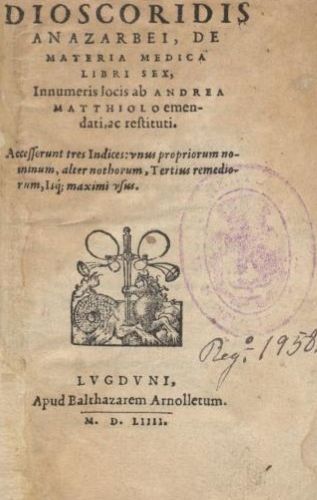
Pedanius Dioscorides stands as one of the most influential figures in the history of pharmacology, not because he discovered entirely new substances, but because he organized existing knowledge into a coherent and enduring system. A Greek physician serving in the Roman army during the first century CE, Dioscorides traveled widely throughout the Mediterranean, gaining firsthand experience with a range of medicinal materials drawn from different ecological regions and cultural traditions. This mobility exposed him to local practices, regional remedies, and a wide variety of plants and compounds that might otherwise have remained isolated within specific communities. His work reflects not only personal observation but also the integration of earlier Greek traditions with practical knowledge encountered in the field, allowing him to synthesize a body of information that was both broad in scope and grounded in real-world application. This practical exposure, combined with earlier traditions of botanical and pharmacological inquiry, enabled him to produce a text that would define the study of medicinal substances for centuries.
His principal work, De Materia Medica, represents a turning point in the development of pharmacognosy, the study of drugs derived from natural sources. Structured into five books, the text catalogs hundreds of substances, including plants, minerals, and animal products, describing their physical characteristics, methods of preparation, and therapeutic uses. Unlike earlier compilations, which often reflected local traditions or fragmented knowledge, Dioscorides’ work aimed for comprehensiveness and usability, providing a reference that could be applied across different regions and contexts.
A defining feature of Dioscorides’ approach is its emphasis on empirical observation and practical application. While he drew upon earlier sources, his descriptions frequently reflect direct experience, including attention to the identification of plants in the field and the conditions under which they were most effective. This practical orientation distinguished his work from more purely theoretical treatments, ensuring that it remained relevant to practitioners who required reliable guidance in the preparation and use of medicinal substances. His focus on recognizable features and reproducible methods contributed to the longevity and authority of his text.
De Materia Medica reveals the continued interplay between empirical knowledge and inherited custom. Dioscorides did not entirely reject earlier beliefs or practices; instead, he incorporated them into a broader framework that prioritized observation while still acknowledging established uses. This synthesis allowed his work to function as both a repository of accumulated knowledge and a tool for its refinement, bridging the gap between tradition and innovation. The result was a text that could be adapted and interpreted across different cultural and medical contexts, enhancing its influence over time.
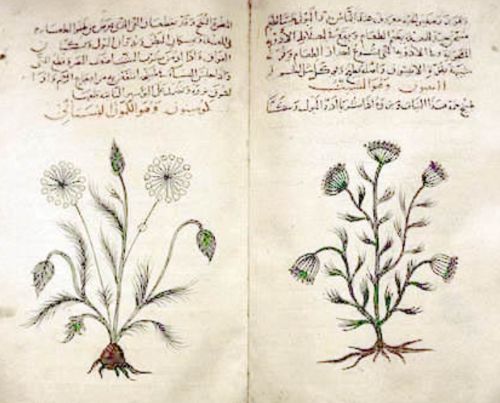
The impact of Dioscorides’ work extended far beyond the Roman world, shaping medical practice in Byzantine, Islamic, and medieval European traditions. Manuscripts of De Materia Medica were copied, translated, and annotated for more than a millennium, often accompanied by detailed illustrations that aided in the identification of medicinal plants and helped standardize their recognition across regions. Its integration into educational and medical customs ensured that generations of physicians and pharmacists relied upon it as a foundational reference, even as local adaptations and commentaries expanded upon its contents. Its authority was such that it remained a central reference for pharmacology well into the early modern period, even as new discoveries and emerging scientific methods began to challenge aspects of its content. This remarkable longevity underscores not only the effectiveness of its structure and the clarity of its organization but also its adaptability within evolving intellectual and cultural contexts.
Dioscorides’ lasting significance lies in his ability to transform a diverse and often fragmented body of knowledge into a systematic and practical discipline. By organizing medicinal substances according to their properties and uses, and by grounding his work in observation and experience, he established a model for pharmacological study that would endure across centuries and cultures. He not only preserved the knowledge of his predecessors but also shaped the future of medicine, ensuring that pharmacognosy would remain a central component of medical practice long after his own time.
Galen and the Art of Compounding Medicine

Claudius Galenus, known in English as Galen, represents a decisive moment in the development of pharmacology, where the preparation and application of medicinal substances became closely integrated with a comprehensive theoretical system of medicine. Active in the second century CE and practicing primarily in Rome, Galen built upon earlier Greek traditions while expanding them into a more structured and authoritative framework. His extensive writings, covering anatomy, physiology, and therapeutics, placed pharmacology within a broader understanding of the body, ensuring that the use of drugs was not merely practical but rooted in an overarching medical philosophy.
Central to Galen’s contribution was his development of compounded medicines, later known as “Galenicals,” which involved the careful combination of multiple ingredients to produce specific therapeutic effects. Unlike simpler remedies that relied on single substances, Galenic preparations were designed to achieve balance within the body by addressing the perceived qualities of heat, cold, moisture, and dryness associated with humoral theory, requiring practitioners to think not only about individual substances but about their combined properties. This approach demanded a nuanced understanding of how ingredients interacted, as certain combinations could enhance or counteract one another, creating either effective remedies or unintended consequences. The process of compounding became a sophisticated exercise in both theory and practice, where knowledge of materials, proportions, and preparation methods had to be carefully coordinated. In elevating compound remedies to a central place in treatment, Galen helped redefine pharmacy as an intellectual as well as a practical discipline.
Galen’s emphasis on compounding also reflected a growing concern with dosage, preparation, and standardization. He provided detailed instructions on how substances should be processed, including methods of grinding, mixing, heating, and preserving, recognizing that the effectiveness of a remedy depended as much on its preparation as on its ingredients. This attention to technique helped to formalize the role of the pharmacist, distinguishing it more clearly from that of the physician while still maintaining a close relationship between the two. Galen contributed to the professionalization of pharmacological practice, setting expectations for consistency and reliability.
Galen’s pharmacology cannot be separated from his broader theoretical commitments. His adherence to humoral theory shaped not only his understanding of disease but also his approach to treatment, as drugs were selected and combined based on their perceived ability to restore balance within the body and counteract specific imbalances of the humors. This framework provided a logical structure that guided therapeutic decisions, allowing practitioners to classify substances according to their qualities and expected effects. Yet it also imposed certain constraints, as the interpretation of results was filtered through this theoretical lens, sometimes reinforcing established assumptions rather than encouraging alternative explanations. Despite these limitations, the integration of theory and practice created a cohesive system that was both intellectually compelling and practically useful, supporting its widespread acceptance and long-term impact.
The legacy of Galen in pharmacology lies in his ability to systematize the preparation and use of medicinal substances within a unified medical framework. His work transformed pharmacy from a largely empirical practice into a discipline governed by principles, methods, and standards that could be taught and replicated. The continued use of Galenic preparations well into the early modern period attests to the durability of his approach, as well as to the enduring influence of his ideas on the relationship between medicine, theory, and the art of healing.
Sextius Niger and the Literary Tradition of Materia Medica
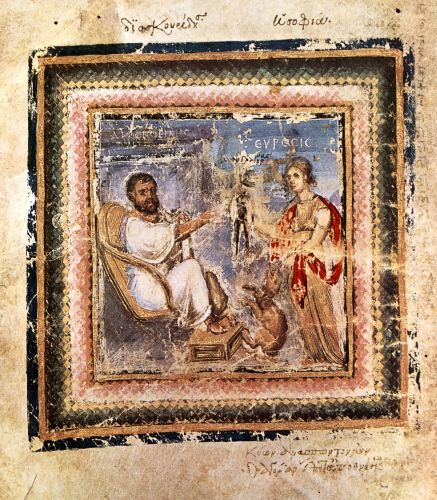
Sextius Niger occupies a more elusive but nonetheless significant place in the development of ancient pharmacology, representing the consolidation of medicinal understanding into literary form. Writing in the first century CE, likely under the early Roman Empire, Niger composed a work on materia medica that gathered together descriptions of plants, minerals, and animal-derived substances used in treatment. Although his original text does not survive in full, its influence is preserved through later authors, particularly Pedanius Dioscorides and Pliny the Elder, who drew upon his classifications and observations. Niger stands as a crucial intermediary figure, helping to organize and transmit earlier traditions into a format that shaped subsequent medical literature.
At the heart of Niger’s contribution was his role in systematizing medicinal substances through written description rather than purely oral or apprenticeship-based transmission. His work reflected a growing Roman interest in cataloging the natural world, aligning pharmacology with broader intellectual currents that sought to classify and order knowledge. By presenting remedies in a structured format, Niger made it possible for practitioners to consult texts directly, reducing reliance on local traditions or individual memory. This shift toward textual authority marked an important step in the professionalization of medicine, as knowledge became more standardized and accessible across regions of the empire.
Niger’s influence is particularly evident in the development of later pharmacological texts, which adopted and expanded upon his approach. Authors such as Dioscorides, in De Materia Medica, incorporated similar organizational strategies, arranging substances according to their properties and uses while emphasizing practical application, while Pliny the Elder’s Natural History preserved fragments of Niger’s observations within a broader encyclopedic framework. The continuity between these works suggests that Niger’s text served as a model for how pharmacological knowledge could be compiled and transmitted, shaping not only the structure but also the methodological expectations of later writers. His emphasis on description, classification, and cross-referencing of substances contributed to a shared intellectual framework in which medicinal knowledge could be compared, debated, and refined across generations. The reliance of later writers on his material underscores the cumulative nature of ancient medicine, where new works often built directly upon earlier compilations rather than replacing them entirely, ensuring that Niger’s contributions persisted even as his original text was lost.
The legacy of Sextius Niger lies not in the survival of his own writings, but in the enduring structure he helped establish for pharmacological literature. By contributing to the transformation of materia medica into a written, organized body of knowledge, he played a key role in shaping how medicinal substances were studied, recorded, and disseminated. His work illustrates the importance of textual tradition in the preservation of scientific knowledge, bridging the gap between empirical practice and the systematic recording that would define later developments in medicine.
Knowledge, Authority, and the Economics of Medicine
The development of pharmacological knowledge in the ancient world cannot be separated from the structures of authority and economic exchange that shaped medical practice. As remedies became more complex and knowledge more specialized, the ability to diagnose illness and prescribe treatment increasingly conferred social and professional status. Physicians who could demonstrate mastery over medicinal substances, whether through empirical success or theoretical sophistication, positioned themselves as authoritative figures within both urban and elite contexts. This authority was not merely intellectual but also economic, as expertise in medical care became a commodity that could be exchanged for payment, patronage, or prestige.
Medical knowledge was not evenly distributed. Access to training, texts, and materials created distinctions between different types of practitioners, from formally educated physicians to local healers and herbalists. Written works such as those attributed to Galen or Dioscorides circulated among literate elites, reinforcing the connection between education and professional legitimacy. Oral traditions and practical experience continued to play a crucial role, particularly in rural or less affluent regions where access to texts and formal instruction was limited. These overlapping systems of knowledge created a complex medical landscape in which authority was negotiated rather than universally recognized.
Economic considerations further shaped the practice of medicine through the cost and availability of medicinal substances. Some ingredients, particularly exotic plants, resins, and minerals imported from distant regions, carried significant expense and were often reserved for wealthy patients. The use of such materials could enhance a physician’s reputation, signaling both knowledge and access to rare resources, while also tying medical practice to the prestige economy of luxury goods within the Roman world. Trade routes stretching across the Mediterranean, into Arabia, India, and beyond, enabled the circulation of substances such as pepper, myrrh, and cinnamon, embedding pharmacology within broader commercial systems that linked distant regions to local treatment. More common remedies remained in widespread use, reflecting the need to balance effectiveness with affordability, particularly for non-elite populations who could not access imported materials. Physicians operated within a layered economic environment, where therapeutic decisions were influenced not only by medical reasoning but also by the availability, cost, and symbolic value of the substances they prescribed.
The relationship between physician and patient was also influenced by economic expectations and social hierarchy. In elite settings, physicians often operated within systems of patronage, providing care in exchange for financial support or social advancement. In other contexts, fees for services could vary widely, leading to ongoing debates about fairness, exploitation, and professional ethics. Ancient authors occasionally criticized practitioners who prioritized profit over patient welfare, suggesting that economic incentives could undermine the moral dimensions of medical practice. Such critiques reveal an awareness of the tensions inherent in commodifying knowledge of healing.
The commercialization of medicine contributed to its institutional development. The demand for reliable treatments encouraged greater attention to consistency, standardization, and the documentation of remedies. Apothecaries and suppliers played an increasingly important role in preparing and distributing medicinal substances, creating a more specialized division of labor within the medical economy and separating the roles of diagnosis, prescription, and preparation. This growing complexity fostered a proto-professional infrastructure in which trust depended on reputation, quality control, and the reliability of both practitioners and their products. Medicine became increasingly embedded in urban markets, where competition, regulation, and consumer expectation shaped the evolution of pharmacological practice alongside intellectual developments.
Ultimately, the intersection of knowledge, authority, and economics shaped the trajectory of ancient medicine in lasting ways. Pharmacology was not simply a body of techniques but a field shaped by systems of power, access, and exchange. The authority of the physician rested not only on theoretical understanding but also on the ability to navigate these systems effectively, balancing intellectual credibility with practical and economic realities. The history of medicine reflects broader patterns of social organization, where knowledge and power were closely intertwined.
Conclusion: The Enduring Legacy of Ancient Pharmacology
The history of ancient pharmacology reveals a gradual transformation from localized, experience-based healing into a more structured and intellectually grounded discipline. Across centuries, practitioners moved from relying primarily on inherited remedies and practical observation to engaging with written traditions, theoretical frameworks, and increasingly complex methods of preparation. Figures such as Galen and Sextius Niger contributed to this shift by organizing knowledge in ways that could be transmitted, debated, and refined, ensuring that pharmacology developed as both a science and an art within the broader medical systems.
Ancient pharmacology remained deeply connected to the natural world and to systems of trade and exchange. The identification, classification, and use of medicinal substances depended on the movement of goods across regions, linking medical practice to economic and cultural networks that extended far beyond individual communities. This interplay between local knowledge and global exchange enriched the pharmacological system while also introducing new challenges related to access, authenticity, and cost. The resulting body of knowledge reflected not only empirical insight but also the realities of the societies in which it developed.
Equally important was the integration of pharmacology with broader theories of the body and disease. Ancient practitioners did not treat drugs as isolated interventions but as components of a comprehensive understanding of health, most notably within the framework of humoral theory. While modern medicine has moved beyond these specific theoretical models, the underlying principle of seeking coherence between diagnosis, treatment, and physiological understanding remains central to medical practice. Ancient pharmacology laid the groundwork for later efforts to systematize and rationalize therapeutic approaches.
The lasting significance of ancient pharmacology rests in its synthesis of observation, theory, and practice within a unified medical framework. Its influence persisted through the medieval and early modern periods, shaping the development of pharmacy, medicine, and scientific inquiry. Even as specific remedies and explanations have been replaced, the commitment to careful preparation, critical evaluation, and the transmission of knowledge continues to define the field. Ancient pharmacology stands not as a relic of the past but as a foundational chapter in the ongoing history of medicine.
Bibliography
- Dioscorides. De Materia Medica. Translated by Lily Y. Beck. Hildesheim: Olms-Weidmann, 2005.
- Fraser, P. M. Ptolemaic Alexandria. Oxford: Oxford University Press, 1972.
- Galen. On the Constitution of the Art of Medicine. The Art of Medicine. A Method of Medicine to Glaucon. Translated in various editions. Loeb Classical Library.
- Hippocrates. Hippocratic Writings. Translated by G. E. R. Lloyd. London: Penguin Classics, 1983.
- Keyser, Paul and John Scarborough, eds. The Oxford Handbook of Science and Medicine in the Classical World. London: Thames and Hudson, 1969.
- King, Helen. Greek and Roman Medicine. London: Bristol Classical Press, 2001.
- Nutton, Vivian. Ancient Medicine. 2nd ed. London: Routledge, 2012.
- —-. “Roman Medicine.” In The Western Medical Tradition: 800 BC to AD 1800, edited by Lawrence I. Conrad et al., 39-58. Cambridge: Cambridge University Press, 1995.
- Pliny the Elder. Natural History. Translated by H. Rackham et al. Cambridge, MA: Harvard University Press, 1938–1962.
- Riddle, John M. “AMBER in ancient Pharmacy: The Transmission of Information About a Single Drug: A Case Study.” Pharmacy in History 15:1 (1973), 3-17.
- —-. Dioscorides on Pharmacy and Medicine. Austin: University of Texas Press, 1985.
- Scarborough, John. “Theophrastus on Herbals and Herbal Remedies.” Journal of the History of Biology 11, no. 2 (1978): 353–385.
- Temkin, Owsei. Galenism: Rise and Decline of a Medical Philosophy. Ithaca: Cornell University Press, 1973.
- Theophrastus. Enquiry into Plants. Translated by Arthur Hort. Cambridge, MA: Harvard University Press, 1916.
- Totelin, Laurence M. V. Hippocratic Recipes: Oral and Written Transmission of Pharmacological Knowledge in Fifth- and Fourth-Century Greece. Leiden: Brill, 2008.
- van der Eijk, Philip J. Diocles of Carystus: A Collection of the Fragments with Translation and Commentary. Leiden: Brill, 2000.
- Wilson, John A. “Medicine in Ancient Egypt.” Bulletin of the History of Medicine 36:2 (1962), 114-123.
Originally published by Brewminate, 03.30.2026, under the terms of a Creative Commons Attribution-NonCommercial-NoDerivatives 4.0 International license.
About the Author