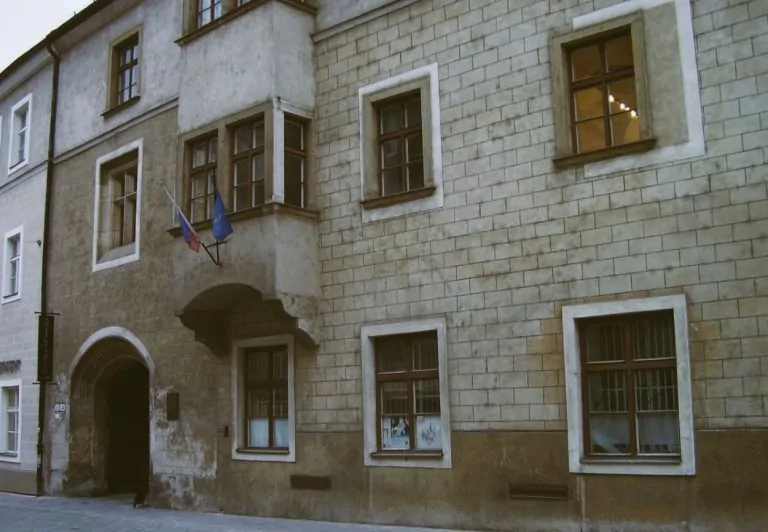
Europe holds more UNESCO World Heritage Sites than any other continent, over 600, spread across more than 50 countries. From Neolithic megaliths to Cold War relics, the density of history per square kilometer is unmatched anywhere on Earth. Whether you’re a first-time visitor or a seasoned traveler, these are the historical places in Europe that genuinely deserve your time.
Why Historical Places in Europe Still Matter Today
History in Europe isn’t confined to textbooks. It’s embedded in the stones of forum ruins, in the graffiti of Pompeii, in the bullet holes still visible on Budapest facades. These sites aren’t just old — they’re active sites of cultural memory, ongoing archaeological research, and collective European identity.
Understanding why a site matters changes how you experience it. Below, each entry is ranked not by popularity but by historical density: the concentration of layered civilizations, events, or transformations concentrated in a single place.
The 12 Most Important Historical Places in Europe
1. The Acropolis of Athens, Greece
The Acropolis is the clearest physical expression of Classical antiquity. Built primarily between 460 and 406 BCE, the Parthenon atop the hill served as a temple to Athena, then a Byzantine church, then an Ottoman mosque. Each layer is still legible in the stone.
What most guides skip: the Erechtheion’s Porch of the Caryatids features five of six original statues. The sixth is in the British Museum. The ongoing dispute over the Elgin Marbles makes this site as politically alive as it is ancient. For anyone serious about ancient Greek history, Athens is the unavoidable starting point.
2. The Colosseum, Rome, Italy
Built between 70 and 80 CE under Emperors Vespasian and Titus, the Colosseum held between 50,000 and 80,000 spectators. It hosted gladiatorial combat, animal hunts, and public executions for over 400 years.
Key fact: the hypogeum, the underground network of tunnels and cages beneath the arena floor, was only opened to the public in 2021. It reframes everything you thought you knew about how the spectacles functioned.
3. Pompeii, Italy
Pompeii is not a ruin. It’s a freeze-frame. When Vesuvius erupted in 79 CE, it sealed an entire Roman city under 4 to 6 meters of ash. Streets, bakeries, electoral graffiti, and frescoes survived intact.
Ongoing excavations in Regio V, active since 2018, continue to produce major discoveries: a thermopolium with identifiable food residues, a ceremonial chariot, frescoes depicting dishes that predate modern Italian cuisine. Pompeii is the most actively excavated archaeological site in the world.
4. Stonehenge, England
Stonehenge was constructed in phases between 3000 and 1500 BCE. The largest sarsen stones weigh up to 25 tons and were transported from Marlborough Downs, 25 miles away. The bluestones originated in Wales, 150 miles distant.
Archaeologists still disagree on its primary function: solar calendar, burial site, or healing sanctuary. Recent discoveries at nearby Durrington Walls suggest Stonehenge was part of a much larger ceremonial landscape, not an isolated monument.
5. The Alhambra, Granada, Spain
Built between the 13th and 15th centuries by the Nasrid dynasty, the Alhambra is the most complete surviving Islamic palace complex in Europe. Its geometric tilework, muqarnas ceilings, and water gardens represent the apex of Moorish architecture on the continent.
The Alhambra isn’t simply beautiful: it encodes a cosmological and political worldview. The inscriptions carved into every surface are Quranic verses and poetry. The walls themselves are a text.
6. Auschwitz-Birkenau, Poland
Auschwitz is not a tourist destination in the conventional sense. It is a memorial and a lesson. Over 1.1 million people, the majority Jewish, were murdered here between 1940 and 1945.
Visiting requires preparation. The Auschwitz-Birkenau State Museum recommends allocating at least 3.5 hours. Entry is free with a guide. This site should be approached with full knowledge of what occurred, not as a backdrop, but as testimony.
7. Versailles, France
The Palace of Versailles was Louis XIV’s instrument of political control. By relocating the court from Paris in 1682, he kept the aristocracy under constant surveillance and proximity. The Hall of Mirrors, 73 meters long with 357 mirrors, was designed to project French dominance to visiting foreign delegations.
Often overlooked: the Trianon palaces and Marie Antoinette’s hamlet on the estate grounds are more intimate and historically revealing than the main château.
8. The Hagia Sophia, Istanbul, Turkey
Completed in 537 CE under Emperor Justinian I, the Hagia Sophia was for nearly a thousand years the largest cathedral in the world. It became a mosque in 1453 following the Ottoman conquest of Constantinople, then a museum in 1934, and a mosque again in 2020.
The building is the physical embodiment of the transition between two empires. To understand its full significance requires understanding the Byzantine Empire and how Constantinople served as Rome’s direct continuation for over a millennium.
9. Dubrovnik Old Town, Croatia
Enclosed within 14th-century walls stretching 1.9 km, Dubrovnik was the center of the Republic of Ragusa, a medieval maritime power that rivaled Venice. It maintained independence from both the Ottoman Empire and Venice for centuries through sophisticated diplomacy.
Lesser-known fact: Ragusa abolished the slave trade in 1416, making it one of the first states in the world to do so.
10. The Carnac Stones, France
Most lists skip Carnac. They shouldn’t. Located in Brittany, Carnac features over 3,000 standing stones arranged in parallel rows stretching more than 4 kilometers. They predate Stonehenge and constitute one of the largest megalithic sites on Earth.
Their function remains unknown. Their scale is staggering. Visitor crowds are minimal. For travelers exhausted by overtourism at major sites, Carnac is the most rewarding detour in Western Europe.
11. The Parthenon Sculptures, London and Athens
The British Museum is itself a historical place in Europe, not for what it built, but for what it contains and what that raises. The Elgin Marbles, removed from Athens between 1801 and 1812, remain one of the most contested cultural property disputes in the world.
Visiting both London and Athens offers a rare comparative lens: half a frieze on the Thames, the other half on the Acropolis. The absence is as instructive as the presence.
12. The Wieliczka Salt Mine, Poland
In operation since the 13th century, this mine runs 327 meters deep across 287 kilometers of tunnels. It contains underground lakes, chapels carved entirely from salt including a reproduction of Da Vinci’s Last Supper, and a full subterranean cathedral used for concerts today.
It is among the most underrated historical places in Europe and has held UNESCO World Heritage status since 1978.
How to Prioritize: A Framework for History Travelers
Not all historical sites deliver the same experience. Here is a practical matrix:
| Site | Era | Crowds | Unique Factor |
| Pompeii | Roman | High | Active excavation |
| Carnac | Neolithic | Low | Megalithic scale |
| Auschwitz | WWII | Moderate | Moral imperative |
| Alhambra | Medieval Islamic | High | Architectural density |
| Wieliczka | Medieval–Modern | Low | Underground world |
| Acropolis | Classical | Very high | Political legacy |
| Hagia Sophia | Byzantine–Ottoman | High | Civilizational layering |
Rule of thumb: combine one major site (Colosseum, Acropolis) with one undervisited site (Carnac, Wieliczka) per trip. The contrast deepens both experiences.
Practical Logistics for Visiting Historical Places in Europe
Traveling across multiple European countries means constant connectivity challenges. Many travelers now rely on eSIM technology to stay connected across borders without swapping physical SIM cards. Holafly, for instance, offers the best eSIM for Europe that covers multiple countries on a single data plan, activated before departure.
For history travelers specifically, a reliable data connection enables real-time access to excavation maps, museum digital archives, and instant translation of inscriptions on-site. It’s no longer a convenience. It’s part of how serious travelers research and navigate.
FAQ
What is the oldest historical site in Europe?
The megalithic temples of Malta (Ġgantija) date to 3600–2500 BCE and are considered the oldest freestanding structures on Earth. The Carnac stones in Brittany date to approximately 4500–3300 BCE, making them among the earliest large-scale human constructions in Europe.
Which historical places in Europe are UNESCO World Heritage Sites?
Pompeii, Stonehenge, the Alhambra, Auschwitz-Birkenau, Versailles, Dubrovnik, the Wieliczka Salt Mine, and the Acropolis all hold UNESCO status. The Hagia Sophia is part of the Historic Areas of Istanbul, also a UNESCO site.
What is the most visited historical site in Europe?
The Colosseum is the most visited ancient monument in Europe, with over 7.6 million visitors recorded in 2023.
Are there significant historical places in Europe outside the main tourist circuit?
Yes. Carnac (France), the Varna Necropolis (Bulgaria), the ancient city of Ephesus (Turkey), and the prehistoric caves of Altamira (Spain) are world-class sites that receive a fraction of mainstream tourist traffic.
About the Author