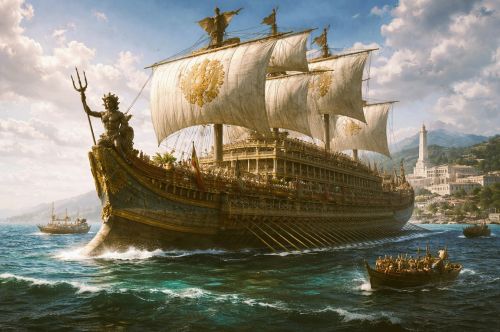
The Syracusia stands as the largest ship of the ancient world, revealing how Hellenistic engineering, royal ambition, and spectacle converged into a floating monument of power.

By Matthew A. McIntosh
Public Historian
Brewminate
Introduction: A Floating Monument to Power
In the third century BCE, amid the shifting political landscape of the Hellenistic Mediterranean, rulers increasingly turned to monumental projects to articulate authority, wealth, and technological mastery. Among the most extraordinary of these was the Syracusia, a colossal ship commissioned by King Hieron II of Syracuse. More than a feat of shipbuilding, the vessel stood as a deliberate projection of power, embodying the capacity of a regional kingdom to rival the grand ambitions of larger Hellenistic states. Its reported scale and opulence challenge modern assumptions about ancient engineering, inviting reconsideration of what pre-industrial societies could conceive and construct.
The Syracusia is primarily known through literary testimony, most notably the account preserved in the Deipnosophistae of Athenaeus, who drew upon earlier descriptions attributed to the historian Moschion. Athenaeus, writing in the Roman imperial period, compiled a wide range of earlier material, and while his work is often treated cautiously, it remains indispensable for reconstructing lost Hellenistic narratives. Through his account, the ship emerges as a vessel of extraordinary scale, equipped not only for transport but for comfort, ritual, and display. Features such as elaborate living quarters, religious spaces, and technical innovations are presented in detail, suggesting either an unusually well-documented construction or a deliberate effort to emphasize its exceptional nature. The absence of corroborating archaeological evidence complicates efforts to verify these descriptions, yet the specificity of the narrative lends it a degree of plausibility that has sustained scholarly interest. The mediation of Moschion’s now-lost account through Athenaeus introduces layers of interpretation that must be critically evaluated. The consistency of the portrayal of the ship as a “floating city” indicates that, whether entirely accurate or partially embellished, the Syracusia occupied a conceptual space beyond ordinary maritime experience, prompting questions about how ancient authors framed technological marvels within traditions of wonder and exaggeration.
The Syracusia must be situated within the broader context of Hellenistic statecraft, where spectacle and engineering frequently intersected. The successors of Alexander the Great cultivated an environment in which rulers competed through architecture, urban planning, and technological innovation, seeking to legitimize their authority and impress both subjects and rivals. In this milieu, a ship of immense scale served not only economic or logistical purposes but also symbolic ones. It represented control over resources, mastery of skilled labor, and participation in a shared culture of elite display that defined the period.
The Syracusia was not merely an oversized vessel but a convergence point of engineering ambition, political messaging, and economic capacity. Its construction reflects both the practical possibilities and ideological priorities of Hellenistic society, revealing how technology could be mobilized to express power as much as to serve function. By examining the ship through the lenses of political economy, design, and historiography, it becomes possible to understand the Syracusia not simply as an anomaly, but as a product of its time, one that illuminates the limits and aspirations of the ancient Mediterranean world.
Hieron II and the Political Economy of Syracuse
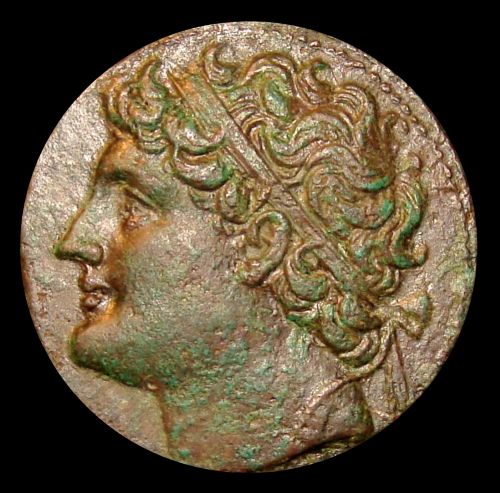
The rise of the Syracusia cannot be understood apart from the political and economic foundations laid by King Hieron II of Syracuse. Ascending to power in the early third century BCE, Hieron established a stable and enduring regime after a period of internal instability and external threat. His rise was not inevitable but emerged from the complex interplay of military command, local support, and shifting alliances that characterized Sicilian politics in the aftermath of Pyrrhus’s campaigns. Once in power, Hieron proved adept at consolidating authority, transitioning from a general to a monarch whose legitimacy rested on both practical governance and the projection of order. His long reign brought a degree of continuity unusual in the volatile Hellenistic world, allowing Syracuse to consolidate its resources and project influence beyond Sicily. This stability created the conditions under which ambitious state-sponsored projects, including large-scale shipbuilding, could be undertaken without jeopardizing internal cohesion or exhausting the city’s economic base.
Hieron’s political strategy was defined in large part by his alliance with Rome following the First Punic War. By aligning Syracuse with the rising Roman Republic, he secured both autonomy and protection, avoiding the destructive conflicts that plagued other Greek polities. This diplomatic positioning allowed Syracuse to flourish economically while maintaining a degree of independence uncommon among Hellenistic states facing Roman expansion. The absence of sustained warfare on Syracusan territory during his reign meant that resources could be directed toward infrastructure, trade, and displays of royal patronage rather than constant military expenditure.
Economically, Syracuse occupied a critical position within Mediterranean trade networks, particularly as a major exporter of grain. Sicily had long been known as one of the primary breadbaskets of the ancient world, and under Hieron II, agricultural production was efficiently organized and closely tied to state interests. The movement of large quantities of grain required reliable maritime transport, and the scale of this trade encouraged experimentation with larger cargo vessels. While the Syracusia exceeded practical requirements for ordinary commerce, its immense capacity reflects an economic environment in which bulk transport and logistical efficiency were already central concerns.
Royal patronage played a decisive role in shaping the cultural and technological landscape of Syracuse. Hieron cultivated relationships with intellectuals and engineers, most famously Archimedes, whose presence at court symbolized the integration of scientific inquiry with state power. This relationship was not incidental but indicative of a broader Hellenistic pattern in which rulers actively sought out and supported scholars as a means of enhancing their prestige and expanding their practical capabilities. Investment in technological innovation was not merely a matter of utility but also of prestige, reinforcing the ruler’s image as both a patron of knowledge and a master of material resources. In Syracuse, this dynamic appears to have been particularly pronounced, with engineering expertise applied not only to military defense but also to civil and symbolic projects. The commissioning of the Syracusia can be seen as part of a broader pattern in which rulers leveraged expertise to produce works that embodied both practical capability and symbolic meaning, transforming intellectual capital into visible demonstrations of power.
The scale of the Syracusia also reflects the capacity of Hieron’s administration to mobilize labor and resources on an extraordinary level. Shipbuilding of this magnitude required access to vast quantities of timber, skilled craftsmen, and coordinated logistical planning, all of which point to a highly organized political economy. Such an undertaking would have drawn upon regional supply networks and possibly extended beyond Sicily itself, illustrating the interconnectedness of Hellenistic economies. The ship’s construction stands as evidence not only of technical ingenuity but of administrative sophistication and resource control.
The Syracusia must be understood as both a product and an expression of Hieron II’s rule. It embodied the economic strength, political stability, and cultural ambition that characterized Syracuse during this period. Its sheer scale suggests that it was conceived not solely for practical use but as a statement of what such a regime could achieve. The ship functioned as a material articulation of power, linking the economic foundations of the Syracusan state with its broader aspirations within the competitive landscape of the Hellenistic Mediterranean.
Design and Construction: Engineering at the Edge of Possibility
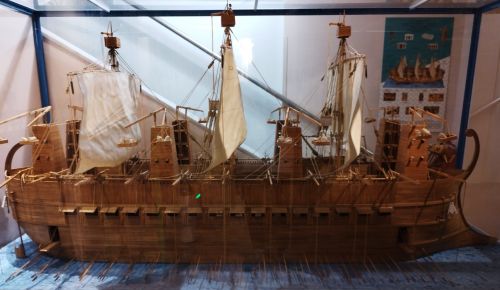
The design and construction of the Syracusia represent one of the most ambitious undertakings in ancient naval architecture, pushing the boundaries of what Hellenistic engineers could achieve. Ancient sources, particularly Athenaeus, attribute its design to Archimedes, whose reputation as both a mathematician and practical engineer lends plausibility to the claim. While definitive proof of his direct involvement remains elusive, the association reflects the intellectual environment of Hieron II’s court, where theoretical knowledge and applied engineering were closely intertwined. The very conception of a vessel on such a scale required not only technical skill but also a willingness to challenge established norms of shipbuilding, which had traditionally favored maneuverability and efficiency over sheer size.
Estimating the dimensions of the Syracusia remains a subject of scholarly debate, with ancient descriptions suggesting a length ranging from approximately 55 to over 100 meters. Even at the lower end of these estimates, the ship would have far exceeded the size of typical Hellenistic vessels, including triremes and merchant ships. Its reported carrying capacity, often placed between 1,000 and 1,800 tons, underscores the magnitude of the project and the logistical challenges it entailed. These figures, though derived from literary sources, align with broader patterns of Hellenistic experimentation in scale, particularly among royal patrons seeking to demonstrate technological prowess. Such dimensions would have required careful consideration of hull form and internal structure, as the stresses imposed by weight and movement increased exponentially with size. Issues of longitudinal strength, torsion, and hydrodynamic resistance would have demanded innovative solutions, especially given the absence of modern fastening techniques. Modern reconstructions and comparative analyses suggest that even slight miscalculations in proportion or weight distribution could have led to structural failure, highlighting the precision required of ancient shipwrights working at the limits of their craft.
Central to these challenges was the problem of hull strength and stability. Traditional Mediterranean shipbuilding relied on mortise-and-tenon joinery, a method that provided flexibility and durability but may have required adaptation for a vessel of unprecedented size. Reinforcement of the hull, possibly through additional internal bracing or thicker planking, would have been necessary to prevent deformation under load. The distribution of weight across multiple decks, as described in ancient accounts, further complicated matters, demanding a level of architectural planning more akin to building construction than conventional shipwright practice. The Syracusia occupied a conceptual space between ship and structure, requiring hybrid solutions that drew on multiple traditions of design.
The procurement of materials for the Syracusia illustrates the scale of resources mobilized for its construction. Athenaeus reports that the timber used was sufficient to build dozens of standard warships, implying extensive access to forested regions and established supply networks. Such a claim, while possibly rhetorical in its exact quantification, nevertheless conveys the extraordinary volume of raw materials required. The selection of suitable wood, likely including fir and pine for structural elements, would have been critical to ensuring both strength and buoyancy, while hardwoods may have been reserved for key stress points within the hull. In addition to timber, large quantities of metal fittings, rope, and sailcloth would have been required, each contributing to the overall complexity of the project. The logistics of sourcing these materials would have involved coordination across multiple regions, transport by land and sea, and careful timing to ensure that construction proceeded without interruption. Coordinating the acquisition, transport, and assembly of these materials points to a highly organized system of production that extended beyond the shipyard itself, reflecting not only technical capacity but also administrative reach.
The construction of the Syracusia reflects both the possibilities and limits of ancient engineering. While its successful completion demonstrates that Hellenistic shipbuilders could achieve remarkable feats of scale, the very need for such innovation underscores the constraints they faced. The vessel’s design required solutions that stretched existing techniques to their limits, and its reported difficulties in operation suggest that these solutions, while effective in principle, may not have translated seamlessly into practice. The Syracusia stands as a testament not only to human ingenuity but also to the challenges inherent in pushing technology beyond its established boundaries.
Luxury and Function: A Ship Beyond Utility
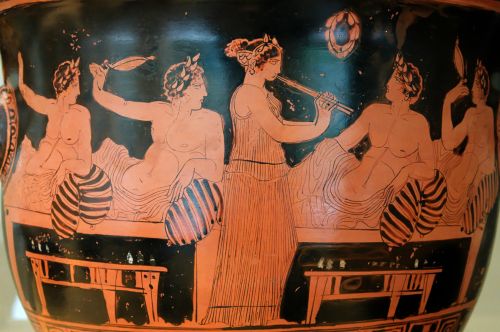
The Syracusia occupies a unique position in ancient maritime history not only because of its size but because of its deliberate fusion of function and luxury. Ancient descriptions portray a vessel that transcended conventional categories, operating simultaneously as a transport ship, a military platform, and a floating palace. This combination reflects a broader Hellenistic tendency to blur the boundaries between utility and display, particularly in projects sponsored by rulers seeking to project power through material culture. In this cultural environment, objects of practical use were often transformed into symbols of prestige, and large-scale constructions became vehicles for political messaging. The Syracusia fits squarely within this tradition, functioning not only as a tool of transport but as an architectural expression of royal ideology. The ship was not simply designed to move goods or people across the sea but to embody an ideal of abundance, refinement, and control over both nature and craftsmanship, making its very existence a statement of what Hellenistic kingship could achieve.
Among its most striking features were the amenities described by Athenaeus, which suggest a level of comfort unparalleled in ancient seafaring. The ship reportedly contained elaborately decorated rooms with mosaic floors, a gymnasium for exercise, and a temple dedicated to Aphrodite, indicating that religious practice and physical culture were integrated into its design. These elements transformed the ship into a microcosm of elite life on land, replicating the social and cultural environment of the Hellenistic court. The inclusion of such features points to an understanding of the vessel not merely as a means of transportation but as a space in which status, identity, and ritual could be continuously performed.
The presence of gardens and possibly landscaped areas aboard the Syracusia further underscores its symbolic function as a “floating city.” In the Hellenistic world, gardens were closely associated with royal luxury and the control of nature, often serving as visible markers of wealth and cultivated taste. Their incorporation into a maritime setting represents an extraordinary extension of this symbolism, suggesting that the ruler’s domain could be projected even onto the unstable environment of the sea. This transplantation of terrestrial luxury into a marine context reflects a broader cultural ambition to overcome natural limitations through human ingenuity and wealth. Such features also highlight the technical challenges involved, as maintaining plant life aboard a large vessel would have required careful planning, access to fresh water, and ongoing maintenance. The logistical implications of sustaining such an environment at sea further reinforce the idea that the ship was as much a demonstration of control and capability as it was a functional vessel.
The ship retained practical capabilities that justified its classification as a multipurpose vessel. Its substantial cargo capacity allowed for the transport of goods on a scale that exceeded typical merchant ships, while accommodations for passengers and possibly soldiers indicate its flexibility in serving different roles. The inclusion of stables for horses, as reported in ancient sources, further emphasizes its logistical versatility, enabling it to function as a transport platform for both human and animal resources. Yet even these practical features appear to have been conceived within a framework of display, as the ability to transport large numbers of people, animals, and goods simultaneously reinforced the image of abundance and control. The blending of logistical function with visual and experiential luxury suggests that utility was never isolated from spectacle, but rather integrated into a broader program of royal self-representation that extended even into the mechanics of transport.
The Syracusia reveals how luxury and function could be integrated into a single architectural and technological form within the Hellenistic world. Its design reflects a conception of power in which material excess and practical capability were mutually reinforcing rather than opposed. By combining the roles of cargo ship, passenger vessel, and royal residence, the ship exemplified the capacity of Hieron II’s regime to transcend conventional limitations and redefine the possibilities of maritime construction. It transformed the act of seafaring into an extension of royal spectacle, where movement across the Mediterranean became itself a display of wealth, ingenuity, and authority.
Technological Innovations: Archimedes at Sea
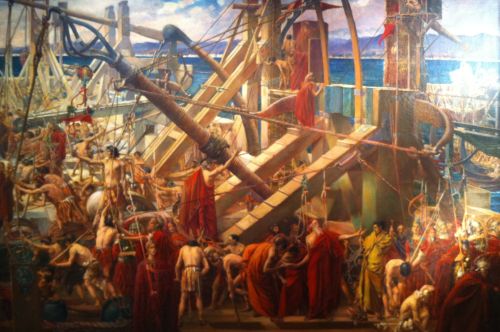
The association of the Syracusia with Archimedes places the vessel at the intersection of theoretical science and applied engineering in the Hellenistic world. Archimedes, renowned for his work in mathematics, physics, and mechanics, exemplified a broader intellectual culture in which abstract principles were increasingly harnessed for practical purposes. His presence at the court of Hieron II suggests that the design of the ship, whether directly supervised by him or influenced by his ideas, was informed by a sophisticated understanding of geometry, buoyancy, and mechanical systems. The attribution itself is significant, reflecting an ancient recognition that projects of this magnitude required not only skilled labor but also conceptual innovation grounded in scientific reasoning.
One of the most frequently cited technological features of the Syracusia is the use of the Archimedean screw for bilge management. This device, designed to remove water from the hull, represents a practical solution to one of the most persistent problems in large wooden ships. As vessels increased in size, the accumulation of water within the hull became more difficult to control, threatening both stability and structural integrity. Traditional methods of bailing relied heavily on manual labor, which became increasingly inefficient as scale increased. The introduction of a mechanical solution allowed for continuous and more controlled water removal, reducing the burden on crew members and enhancing overall safety. Its inclusion on the Syracusia demonstrates how established inventions could be adapted and scaled to meet the demands of increasingly ambitious engineering projects. Moreover, the use of such a device reflects a broader shift toward mechanization in Hellenistic engineering, where the application of simple machines could produce significant gains in efficiency and reliability.
Beyond bilge management, the ship likely incorporated a range of mechanical and structural innovations aimed at addressing the challenges posed by its unprecedented size. The distribution of weight across multiple decks required careful planning, potentially involving calculated load-bearing structures and reinforced support systems. Archimedes’ known interest in statics and equilibrium suggests that principles of balance and force may have been applied to ensure the vessel’s stability under varying conditions. While direct evidence for specific design features remains limited, the complexity of the ship implies the use of advanced planning techniques that went beyond traditional rule-of-thumb construction methods.
Ancient accounts also hint at the presence of defensive technologies associated with Archimedes, though these are more securely attested in the context of the siege of Syracuse. Devices such as catapults, cranes, and other mechanical contrivances were attributed to him, leading some later interpretations to speculate that similar mechanisms may have been adapted for use aboard the Syracusia. While such claims remain uncertain, they reflect a broader perception of Archimedes as an engineer capable of integrating mechanical systems into both military and civil contexts. Even if the ship did not carry elaborate weaponry, the association underscores the extent to which engineering innovation was linked to both defense and display in the Hellenistic imagination.
The integration of these technologies within a single vessel highlights the increasing convergence of scientific knowledge and practical application during this period. Hellenistic engineers were not merely craftsmen but participants in a growing tradition of technical inquiry, drawing upon mathematical principles to solve real-world problems. This intellectual environment fostered a culture in which experimentation and innovation were encouraged, particularly under the patronage of rulers who sought to harness such advancements for political and symbolic purposes. The Syracusia serves as an example of how theoretical insights could be translated into tangible achievements, bridging the gap between intellectual and material culture. This convergence was particularly evident in royal contexts, where rulers like Hieron II provided the resources and institutional support necessary to experiment with new forms of construction and design. The ship can be seen not only as a product of individual ingenuity but as the outcome of a broader system in which knowledge, patronage, and technical skill were closely interconnected.
The technological sophistication of the Syracusia underscores the limits of ancient engineering. While innovations such as the Archimedean screw addressed specific challenges, they could not fully overcome the inherent difficulties of constructing and operating a vessel of such scale. The ship’s reported operational constraints suggest that even the most advanced technologies of the time were insufficient to render it entirely practical. The Syracusia stands as both a triumph and a cautionary example, illustrating how the pursuit of innovation could produce remarkable results while simultaneously exposing the boundaries of what ancient technology could sustain.
Functionality and Limitations: When Scale Becomes a Problem
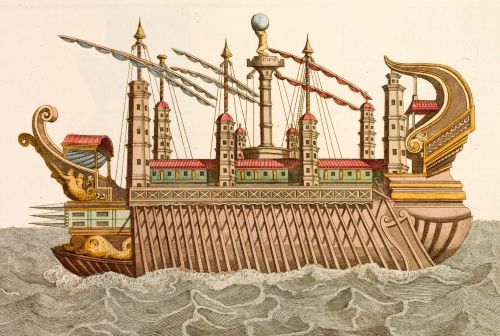
The immense scale of the Syracusia, while central to its symbolic and technological significance, introduced a series of practical challenges that complicated its operation. Ancient shipbuilding traditions had evolved around vessels optimized for balance, maneuverability, and efficiency, and the dramatic increase in size represented by the Syracusia disrupted these established parameters. Shipwrights in the Mediterranean had long relied on proportions refined through experience, where hull length, beam, and draft were carefully balanced to ensure seaworthiness. By exceeding these conventional limits, the Syracusia entered a realm where established practices offered limited guidance, forcing builders to adapt or innovate without the benefit of precedent. The ship’s dimensions, while impressive, would have made it difficult to handle under varying sea conditions, particularly in the confined and often unpredictable waters of the Mediterranean. The very features that made the vessel extraordinary also rendered it vulnerable to the limitations inherent in its design, exposing the tension between ambition and practical seamanship.
One of the most significant issues facing a ship of this magnitude was maneuverability. Traditional oared warships, such as triremes, relied on coordinated rowing and relatively light hulls to achieve speed and agility. The Syracusia’s size and weight would have drastically reduced its responsiveness, making navigation more cumbersome and limiting its ability to adjust quickly to changing conditions. Even if equipped with sails and a substantial crew, the inertia generated by its mass would have posed constant challenges. This lack of agility not only affected its performance at sea but also restricted the environments in which it could safely operate.
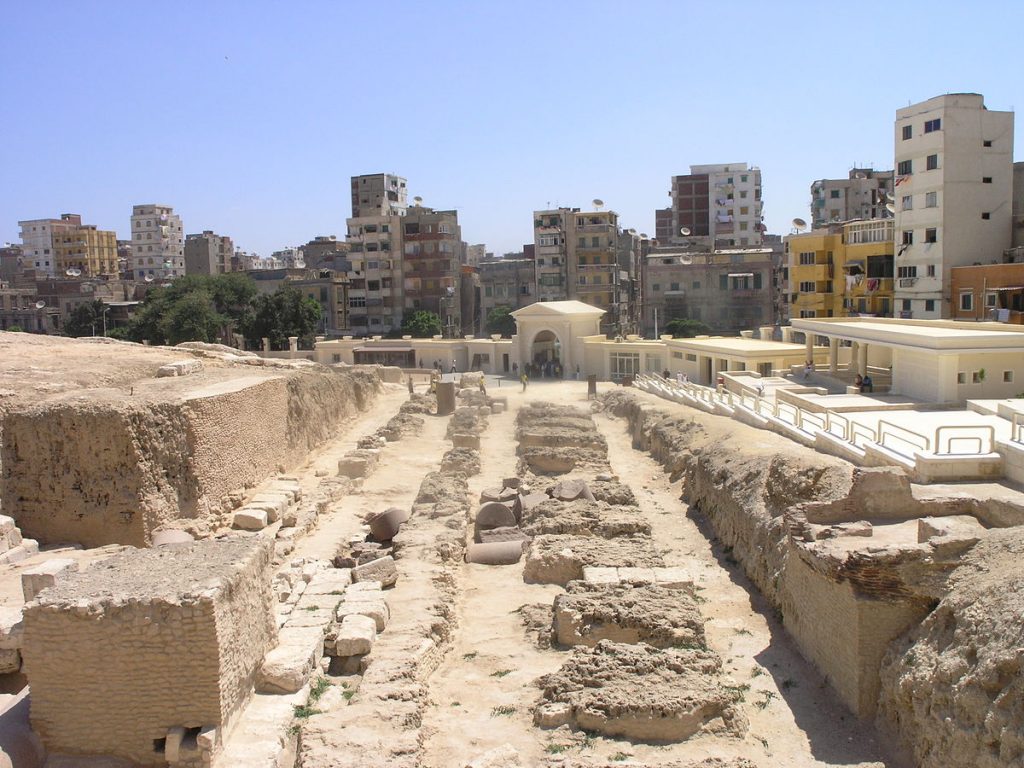
Docking and harbor access presented an additional layer of difficulty. Most ancient ports were not designed to accommodate vessels of such extraordinary scale, and the infrastructure required to support the Syracusia would have been limited or entirely absent. Maneuvering the ship into a harbor, securing it, and facilitating the loading and unloading of cargo would have required careful coordination and possibly specialized equipment. These constraints help explain the traditional account that the ship was ultimately gifted to Ptolemy III of Egypt, whose capital at Alexandria possessed one of the largest and most advanced harbor systems in the ancient world. Even there, accommodating such a vessel would have posed significant logistical challenges.
Maintenance further compounded these operational difficulties. A ship of this size would have required constant attention to preserve its structural integrity, particularly given the stresses imposed by prolonged exposure to seawater. The expansion and contraction of wooden components, the risk of rot, and the wear placed on joints and fastenings would have necessitated ongoing inspection and repair. The upkeep of multiple decks, complex internal spaces, and integrated systems would have demanded a large and skilled workforce, increasing the cost of operation. Additionally, the presence of luxury features, such as decorated interiors and gardens, introduced further maintenance burdens that went beyond those of conventional ships. These elements were not static but required continuous care, from cleaning and preservation to the management of water and plant life, all of which added layers of complexity to an already demanding maintenance regime.
These limitations highlight the tension between ambition and practicality in the design of the Syracusia. While the ship demonstrated the extraordinary capabilities of Hellenistic engineering, it also revealed the constraints that accompanied such innovation. Its reported limited use suggests that it functioned more effectively as a demonstration of power and ingenuity than as a regularly deployed vessel. The Syracusia illustrates how the pursuit of scale, while technologically impressive, could ultimately exceed the functional boundaries of ancient maritime systems.
Diplomacy and Gift Exchange: From Syracuse to Alexandria
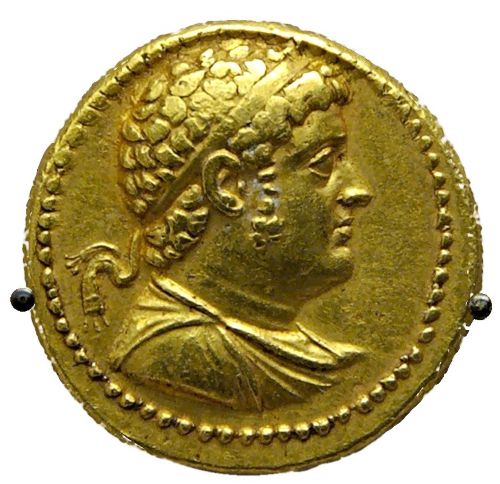
The eventual transfer of the Syracusia from Syracuse to Egypt represents one of the most revealing aspects of its history, situating the vessel within the broader framework of Hellenistic diplomacy. According to ancient accounts, the ship proved too large and unwieldy for regular use in Syracusan waters, leading Hieron II to present it as a gift to Ptolemy III Euergetes of Egypt. This act was not merely a practical solution to a logistical problem but a calculated political gesture. In the Hellenistic world, the exchange of extraordinary objects functioned as a means of establishing and reinforcing relationships among rulers, transforming material goods into instruments of diplomacy.
Gift exchange among Hellenistic monarchs operated within a complex system of reciprocity, prestige, and symbolic communication. Lavish gifts served to demonstrate wealth, technological capability, and cultural refinement, while also acknowledging the status of the recipient. These exchanges were rarely neutral; they carried implicit messages about hierarchy, alliance, and mutual recognition. By sending the Syracusia to Ptolemy III, Hieron II effectively positioned himself within a network of elite rulers who engaged in similar practices of competitive generosity. The scale and uniqueness of the ship elevated it beyond ordinary diplomatic offerings, marking it as an object capable of conveying not only goodwill but also the sender’s capacity for extraordinary achievement. The gift functioned as a form of political language, communicating strength, sophistication, and participation in a shared culture of royal display.
The renaming of the vessel as Alexandria further underscores its integration into the political and cultural identity of its new owner. In Hellenistic practice, the act of renaming was a form of appropriation, allowing the recipient to incorporate the object into their own symbolic framework. By associating the ship with Alexandria, the capital of Ptolemaic Egypt, Ptolemy III effectively transformed it into a representation of his own authority and prestige. This process reflects the fluidity of ownership and meaning in the circulation of elite objects, where value was continually reshaped by context and interpretation.
The choice of Egypt as the destination for the Syracusia was also significant in practical terms. Alexandria possessed one of the largest and most sophisticated harbor systems in the ancient Mediterranean, making it one of the few locations capable of accommodating a vessel of such extraordinary dimensions. The city’s status as a major center of commerce, culture, and intellectual activity further enhanced the symbolic value of the gift, ensuring that the ship would be displayed within a setting that matched its grandeur. Alexandria was not merely a convenient harbor but a stage upon which royal power was performed and observed by a diverse population of merchants, scholars, and officials. The presence of the Syracusia would have amplified its diplomatic impact, serving as a visible testament to both Hieron’s generosity and Ptolemy’s capacity to receive and display such a marvel. The alignment of practical infrastructure with symbolic resonance made Alexandria an ideal destination for a gift of this magnitude.
At a broader level, the gifting of the Syracusia reflects the interconnected nature of the Hellenistic world, where political relationships were maintained through a combination of alliances, exchanges, and displays of mutual recognition. Such acts of diplomacy were not isolated events but part of an ongoing process in which rulers negotiated their positions within a competitive and hierarchical system. The circulation of extraordinary objects formed part of a wider network of interaction that included marriages, treaties, and cultural patronage, all of which contributed to the maintenance of political equilibrium. The movement of objects like the Syracusia across regions illustrates how material culture could serve as a medium through which power was communicated and contested. Diplomacy extended beyond formal agreements, embedding itself in the exchange of tangible symbols that carried layered meanings across different audiences.
The journey of the Syracusia from Syracuse to Alexandria highlights the transformation of a technological marvel into a diplomatic artifact. While its construction demonstrated the capabilities of Hieron II’s regime, its transfer extended its significance beyond its original context, embedding it within the political landscape of the wider Mediterranean. The ship’s history encapsulates the dual role of such objects in the Hellenistic world, functioning simultaneously as products of local ambition and participants in a broader system of international exchange.
Comparative Context: Other Gigantic Ships in Antiquity
The Syracusia was not the only attempt in antiquity to construct vessels of extraordinary scale, yet it occupies a distinctive place within this broader tradition. Across the Hellenistic world and beyond, rulers and states occasionally pursued maritime projects that pushed the limits of contemporary engineering. These efforts were often motivated by a combination of practical ambition and symbolic display, reflecting a shared fascination with size as a marker of power. The Syracusia stands apart in the clarity and detail of its documentation, allowing it to serve as a focal point for comparison with other large ships whose histories are more fragmentary or contested.
One of the most frequently cited parallels is the Tessarakonteres, or “forty-rower,” attributed to Ptolemy IV Philopator of Egypt. Described in ancient sources as an enormous warship with multiple banks of oars, the Tessarakonteres was reportedly far larger than any practical naval vessel, with dimensions that have led many modern scholars to question the literal accuracy of the accounts. The logistical challenges of coordinating such a vast number of rowers, maintaining structural integrity across an extended hull, and ensuring effective propulsion would have been immense, raising doubts about its operational viability. Like the Syracusia, it appears to have functioned more as a demonstration of royal extravagance than as an operational ship. Its design, emphasizing sheer scale and visual impact, highlights the competitive environment among Hellenistic rulers, where technological excess could serve as a form of political expression. The comparison underscores a key distinction: while both vessels embodied ambition, the Syracusia appears to have integrated practical elements more coherently than the largely symbolic Tessarakonteres.
Roman maritime practices provide a different point of comparison, particularly in the development of large grain ships designed to supply the city of Rome. These vessels, while substantial in size, were constructed with a clear emphasis on functionality, balancing cargo capacity with navigational practicality. Unlike the Syracusia, which integrated luxury and symbolic features, Roman grain ships prioritized efficiency and reliability, reflecting the logistical demands of sustaining an urban population. This contrast underscores the unique character of the Syracusia, whose design combined elements of utility with an overt commitment to spectacle.
Comparisons have also been drawn with large ships described in Chinese historical sources, particularly the so-called treasure ships associated with the voyages of Zheng He during the Ming dynasty. These vessels, if the larger estimates are accepted, would have rivaled or exceeded the dimensions attributed to the Syracusia. The chronological and cultural distance between these traditions complicates direct comparison. The Chinese ships emerged within a different technological and administrative context, one that included more advanced shipbuilding techniques and a distinct approach to maritime organization. While such comparisons can be suggestive, they must be treated with caution to avoid anachronistic conclusions.
Within the Mediterranean itself, the distinction between different types of large vessels further clarifies the uniqueness of the Syracusia. Warships, such as the polyremes of the Hellenistic navies, were designed to maximize speed, maneuverability, and offensive capability, often at the expense of comfort and cargo space. Merchant ships, by contrast, emphasized capacity and stability but rarely approached the scale or complexity described for the Syracusia. Even the largest known merchant vessels of antiquity were constrained by practical considerations of navigation and port infrastructure, limiting their expansion beyond certain thresholds. The blending of these characteristics within a single vessel highlights its departure from established categories, positioning it as an experimental form that defied conventional classification. The Syracusia occupies a liminal space between established types, combining features in ways that were rarely attempted and even more rarely documented.
The comparative context reinforces the exceptional nature of the Syracusia while situating it within a broader pattern of ancient ambition. Although other large ships were constructed in different regions and periods, few combined the same degree of scale, luxury, and documented detail. The Syracusia remains a singular example of how technological capability, political aspiration, and cultural expression could converge in the form of a single maritime project. Its legacy is not defined solely by its size but by the way it encapsulates the possibilities and contradictions of large-scale engineering in the ancient world.
Historiography: Between Description and Exaggeration
The Syracusia presents a significant historiographical challenge, situated at the intersection of detailed description and potential exaggeration. Unlike many ancient ships known primarily through archaeological remains, the Syracusia survives almost entirely in literary sources, most notably the account preserved by Athenaeus. This reliance on textual evidence requires careful evaluation, as ancient authors often combined technical reporting with rhetorical embellishment. The ship’s extraordinary features invite skepticism, yet dismissing them outright risks overlooking genuine achievements in Hellenistic engineering.
Athenaeus’ Deipnosophistae, compiled in the Roman imperial period, serves as the primary conduit through which information about the Syracusia has been transmitted. His account draws upon earlier sources, particularly the historian Moschion, whose original work has not survived. This layered transmission introduces multiple levels of interpretation, each shaped by the purposes and contexts of the authors involved. Athenaeus himself was less concerned with technical precision than with the collection of remarkable anecdotes, which raises questions about the reliability of the details he preserves. Nevertheless, the specificity of the descriptions suggests that they were rooted in earlier traditions that may have been closer to the original events.
Modern scholarship has approached the Syracusia with a combination of skepticism and cautious acceptance. Historians and naval archaeologists have sought to assess the plausibility of its reported dimensions and features by comparing them with known shipbuilding practices and technological constraints. While some elements, such as the use of the Archimedean screw, align with well-documented innovations, others, including the scale of its luxury amenities, remain more difficult to verify. This tension reflects a broader challenge in ancient historiography, where the absence of physical evidence often necessitates reliance on sources that blend fact with narrative embellishment.
The tendency toward exaggeration in ancient technical descriptions further complicates the interpretation of the Syracusia. Authors frequently employed hyperbole to convey the impressiveness of large-scale constructions, particularly when describing projects associated with powerful rulers. Such exaggeration was not necessarily intended to deceive but functioned as a rhetorical device to situate these achievements within a framework of wonder and admiration. The portrayal of the ship as a “floating city” may reflect both its actual features and the literary conventions through which those features were communicated. Ancient audiences were accustomed to such language, which often blurred the line between precise description and evocative imagery. Distinguishing between literal description and metaphorical amplification requires a nuanced reading of the sources, one that considers not only the technical feasibility of the claims but also the expectations and interpretive habits of contemporary readers. This process involves cross-referencing accounts, assessing internal consistency, and situating the narrative within broader patterns of Hellenistic literary expression, where grandeur was frequently emphasized to enhance the perceived significance of royal achievements.
The historiography of the Syracusia underscores the need for a balanced approach that neither accepts ancient accounts uncritically nor dismisses them entirely. By situating the ship within the broader patterns of Hellenistic engineering and literary tradition, it becomes possible to appreciate its significance without overreliance on any single source. The Syracusia remains a compelling case study in how historians navigate the boundary between evidence and interpretation, revealing both the richness and the limitations of the ancient record.
Conclusion: Engineering, Power, and the Limits of Ambition
The Syracusia stands as one of the most compelling examples of how engineering, political ambition, and cultural expression converged in the Hellenistic world. Its construction required not only technical expertise but also the mobilization of vast resources and administrative coordination, reflecting the capabilities of Hieron II’s regime at its height. As both a material object and a symbolic creation, the ship embodied the aspirations of a ruler seeking to project authority through innovation. The Syracusia was more than a vessel; it was a statement about what could be achieved when intellectual knowledge and political power were brought into alignment.
The ship reveals the inherent tension between ambition and practicality in ancient engineering. The very scale that made the Syracusia extraordinary also introduced limitations that constrained its functionality. Difficulties in maneuverability, maintenance, and harbor access suggest that the vessel was not suited for sustained operational use, despite its impressive design. This disconnect between conceptual achievement and practical application highlights a recurring theme in the history of technology, where the pursuit of grandeur can outpace the realities of implementation. The Syracusia illustrates how innovation, while capable of producing remarkable results, is always bounded by the material and environmental conditions in which it operates.
Viewed within its broader historical context, the Syracusia reflects the competitive environment of the Hellenistic Mediterranean, where rulers sought to distinguish themselves through monumental projects and displays of technological prowess. In such a setting, scale itself became a language of power, through which kings communicated their capacity to command resources, labor, and knowledge. The construction of an object like the Syracusia was not an isolated act of engineering but part of a broader cultural system in which spectacle and authority were closely intertwined. Its eventual transfer to Alexandria further underscores its role as a diplomatic and symbolic object, extending its significance beyond its original setting. Once relocated, the ship entered a new political and cultural environment, where its meaning was reshaped in accordance with Ptolemaic priorities and the urban identity of Alexandria. The ship participated in a wider network of exchange and representation, linking the ambitions of Syracuse with the cultural and political landscape of Egypt. Its story reveals how objects of exceptional scale could move across regions, acquiring new meanings and reinforcing connections between distant centers of power.
The legacy of the Syracusia lies not only in its size or its features but in what it reveals about the possibilities and limits of ancient society. It demonstrates that the Hellenistic world possessed both the knowledge and the resources to undertake projects of extraordinary complexity, while also reminding us that such achievements were often as much about symbolism as they were about function. The ship endures in the historical imagination as a testament to human ingenuity, but also as a reminder that ambition, however grand, must contend with the constraints of reality.
Bibliography
Affiliate disclosure: Amazon links on this site are paid links. As an Amazon Associate I earn from qualifying purchases.
- Athenaeus. Deipnosophistae. Translated by S. Douglas Olson. Cambridge, MA: Harvard University Press, 2007.
- Blackman, David. “Ancient Harbours in the Mediterranean.” International Journal of Nautical Archaeology 11:2 (1982), 79–104.
- Casson, Lionel. Ships and Seamanship in the Ancient World. Baltimore: Johns Hopkins University Press, 1971.
- Drachmann, A. G. The Mechanical Technology of Greek and Roman Antiquity. Madison: University of Wisconsin Press, 1963.
- Duncan-Jones, R. P. “Giant Cargo-Ships in Antiquity.” The Classical Quarterly 27:2 (1977), 331-332.
- Erdkamp, Paul. The Grain Market in the Roman Empire: A Social, Political, and Economic Study. Cambridge: Cambridge University Press, 2005.
- Erskine, Andrew. A Companion to the Hellenistic World. Malden, MA: Blackwell, 2003.
- Finley, M. I. The Ancient Economy. Updated edition. Berkeley: University of California Press, 1973.
- Ma, John. Antiochos III and the Cities of Western Asia Minor. Oxford: Oxford University Press, 1999.
- Meijer, Fik and André Wegener Sleeswyk. “On the Construction of the ‘Syracusia’ (Athenaeus V. 207 A-B).” The Classical Quarterly 46:2 (1996), 575-578.
- Morrison, J. S., J. F. Coates, and N. B. Rankov. The Athenian Trireme: The History and Reconstruction of an Ancient Greek Warship. 2nd ed. Cambridge: Cambridge University Press, 2000.
- Morrison, J. S., and R. T. Williams. Greek Oared Ships, 900–322 BC. Cambridge: Cambridge University Press, 1968.
- Needham, Joseph. Science and Civilisation in China, Volume 4: Physics and Physical Technology. Cambridge: Cambridge University Press, 1971.
- Plutarch. Plutarch’s Lives, translated by Bernadotte Perrin. Cambridge, MA: Harvard University Press, 1916.
- Polybius. The Histories. Translated by Robin Waterfield. Oxford: Oxford University Press, 2010.
- Prag, Jonathan R. W. “Sicily and the Hellenistic World.” In A Companion to the Hellenistic World, edited by Andrew Erskine. Malden, MA: Blackwell, 2003.
- Rankov, Boris. “Naval Warfare in the Hellenistic Age.” In The Cambridge History of Greek and Roman Warfare, Volume I, edited by Philip Sabin, Hans van Wees, and Michael Whitby. Cambridge: Cambridge University Press, 2007.
- —-. “Ship Construction and the Limits of Ancient Technology.” In The Age of the Galley: Mediterranean Oared Vessels since Pre-Classical Times, edited by Robert Gardiner. London: Conway Maritime Press, 1995.
- Russo, Lucio. The Forgotten Revolution: How Science Was Born in 300 BC and Why It Had to Be Reborn. Berlin: Springer, 1996.
- Sidebottom, Harry. “Ancient Warfare and the Limits of Evidence.” In The Oxford Handbook of Warfare in the Classical World, edited by Brian Campbell and Lawrence A. Tritle. Oxford: Oxford University Press, 2013.
- Steffy, J. Richard. Wooden Ship Building and the Interpretation of Shipwrecks. College Station: Texas A&M University Press, 1994.
- Tassios, T. P. “A Very Brief Introduction to Hellenistic Alexandrian Technology.” Hellenistic Alexandria: Celebrating 24 Centuries – Papers presented at the conference held on December 13–15 2017 at Acropolis Museum, Athens (2018), 191-200.
- Veyne, Paul. Bread and Circuses: Historical Sociology and Political Pluralism. Translated by Brian Pearce. London: Penguin Books, 1990.
- Vitruvius. De Architectura. W. Newton, trans. London: James Newton, 1791.
- von Stackelberg, Katharine T. The Roman Garden: Space, Sense, and Society. London: Routledge, 2009.
- Wallace-Hadrill, Andrew. Houses and Society in Pompeii and Herculaneum. Princeton: Princeton University Press, 1994.
Originally published by Brewminate, 04.17.2026, under the terms of a Creative Commons Attribution-NonCommercial-NoDerivatives 4.0 International license.
About the Author