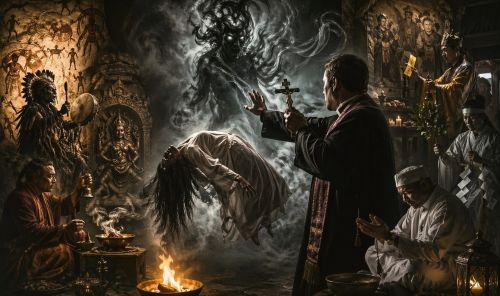
Across civilizations, exorcism has served as a ritual response to unseen forces, revealing how societies interpret suffering, restore order, and define the boundaries of human identity.

By Matthew A. McIntosh
Public Historian
Brewminate
Introduction: Defining Exorcism Across Cultures and Time
Exorcism, broadly understood as the ritualized expulsion of malevolent spiritual forces from individuals, objects, or spaces, represents one of the most enduring and cross-cultural religious practices in human history. Found in societies separated by geography, language, and cosmology, such rituals address a shared concern: the intrusion of harmful, unseen agencies into the human condition. Yet the concept of what constitutes a “demon,” a “spirit,” or even “possession” varies considerably across traditions. In some cultures, these forces are understood as autonomous entities with distinct personalities and intentions, while in others they are expressions of imbalance, ancestral displeasure, or violations of sacred order. The term “exorcism” must be used cautiously, not as a universal category imposed retroactively, but as a heuristic device to compare practices that share functional similarities while differing in meaning.
Historically, exorcistic practices have been closely intertwined with broader systems of healing, authority, and social organization. In ancient Mesopotamia and Egypt, ritual specialists combined incantation, symbolic action, and divine invocation within structured religious-medical frameworks. In the Greco-Roman world, explanations of possession coexisted uneasily with emerging naturalistic theories of illness, while Jewish and early Christian traditions increasingly emphasized the authority of divine names and figures in commanding spiritual forces. Across these contexts, exorcism was never merely a spiritual act; it was also a statement about who held legitimate power to interpret and intervene in human suffering. Whether performed by priests, shamans, healers, or prophets, the act of expelling a spirit reinforced social hierarchies and validated particular forms of knowledge.
Exorcism has often functioned as a lens through which societies interpret misfortune, illness, and deviance. Conditions now understood in medical or psychological terms were frequently attributed to spiritual intrusion, not as a failure of rationality, but as part of coherent explanatory systems grounded in lived experience and cultural logic. What modern observers might classify as neurological disorders, trauma responses, or social marginalization were, in earlier contexts, embedded within cosmologies that gave them meaning and narrative structure. Even in traditions where exorcism appears overtly confrontational, aimed at driving out a hostile entity, it frequently coexists with more restorative approaches that seek to reestablish harmony between individuals, communities, and the spiritual realm. In African, Indigenous American, and Mesoamerican traditions, for example, what might be labeled “exorcism” often emphasizes negotiation, cleansing, or reintegration rather than simple expulsion, reflecting a worldview in which spirits are not always purely malevolent but part of a broader relational system. These differences underscore the importance of resisting reductive interpretations that impose a singular demonological model across diverse traditions, and instead recognizing that exorcism is as much about restoring balance and meaning as it is about removing an intrusive presence.
I approach the history of exorcism through a chronological and comparative framework, tracing its development from ancient civilizations to the modern world while attending to regional diversity and conceptual nuance. By examining how different societies have understood and addressed the presence of harmful spiritual forces, it seeks to illuminate broader patterns in human thought concerning illness, morality, and the unseen. Exorcism serves not only as a religious practice but as a reflection of enduring human efforts to impose order on uncertainty and to confront the limits of knowledge. Its persistence across millennia suggests not the survival of a single tradition, but the continual rearticulation of a fundamental question: how does one respond when suffering appears to come from beyond the visible world?
Ancient Foundations: Mesopotamia and Egypt

The earliest documented forms of exorcistic practice emerge from the urban civilizations of ancient Mesopotamia and Egypt, where religion, medicine, and magic operated as interwoven systems rather than distinct domains. In these societies, illness and misfortune were frequently attributed to the actions of malevolent spiritual entities, including demons, ghosts, and divine agents of punishment. Exorcism was not an isolated ritual but part of a broader framework of diagnosis and healing, in which trained specialists sought to identify the source of affliction and restore order through ritual means. These practices reveal a world in which the boundaries between the physical and spiritual were porous, and where the unseen realm was understood to exert a constant influence on human life.
In Mesopotamia, exorcistic rituals were primarily the responsibility of specialists known as āšipu, often translated as “exorcists” or “ritual experts,” who operated within temple and court contexts. Their work drew upon extensive collections of incantations and ritual instructions preserved in cuneiform texts, including the Maqlû (“Burning”) series, a complex set of rites designed to counteract witchcraft and malevolent forces. These rituals frequently involved the creation and destruction of figurines representing the offending entity, symbolically transferring the affliction onto the object before annihilating it through fire or other means. The use of spoken incantations, often invoking powerful deities such as Ea or Marduk, reinforced the authority of the practitioner and framed the act as one sanctioned by divine order. In addition to these dramatic ritual acts, the āšipu engaged in diagnostic procedures, interpreting omens, symptoms, and signs to determine the nature of the affliction and the appropriate ritual response. This combination of diagnosis, textual knowledge, and ritual performance reflects a highly systematized approach to dealing with spiritual threats, one that was deeply embedded in the intellectual and religious life of Mesopotamian society.
Mesopotamian demonology was highly developed, with specific entities associated with particular forms of harm. Figures such as Lamashtu, believed to prey upon infants and pregnant women, and Pazuzu, a wind demon who could both cause and ward off disease, illustrate the complexity of these beliefs. The presence of such entities was not merely theoretical but was embedded in everyday experience, shaping responses to illness, fertility, and environmental danger. Exorcistic practices served both a therapeutic and a protective function, aiming not only to remove an immediate affliction but also to guard against future incursions. This dual purpose highlights the preventative dimension of ancient exorcism, in which ritual action sought to maintain equilibrium in a world perceived as inherently unstable.
In ancient Egypt, similar concerns with malevolent forces gave rise to a parallel but distinct set of practices centered on protective magic and ritualized expulsion. Egyptian texts, including so-called “execration texts,” record the use of inscribed objects intended to neutralize enemies and harmful spirits by symbolically destroying them. These objects, often figurines or inscribed tablets, were ritually broken, burned, or buried as a means of enacting the defeat of hostile forces in both the physical and spiritual realms. Unlike the more explicitly demon-focused rituals of Mesopotamia, Egyptian approaches often emphasized the maintenance of ma’at, the cosmic order that sustained harmony between the divine, natural, and human realms. Illness and misfortune were interpreted as disruptions of this balance, requiring intervention through incantation, amulets, and the invocation of protective deities such as Sekhmet or Bes. Exorcistic actions were less about confrontation with a singular malevolent entity and more about restoring harmony within a carefully structured cosmic system.
Egyptian ritual specialists, including priests and healers, employed a range of techniques that blurred the lines between medicine and magic. Medical papyri reveal treatments that combined practical remedies with spoken formulas designed to expel or neutralize harmful forces, suggesting that the physical and spiritual dimensions of illness were addressed simultaneously. Amulets, inscribed with protective symbols or divine names, were worn to prevent spiritual intrusion, while ritual performances sought to reenact mythological victories over chaos, such as the triumph of Horus over Seth. These reenactments were not merely symbolic but were believed to have real efficacy, aligning the patient with divine forces that upheld order. Furthermore, temple contexts provided spaces where such rituals could be performed within a framework of institutional authority, reinforcing both the legitimacy of the practitioner and the broader religious system. This integration of myth, material culture, and ritual action demonstrates the sophistication of Egyptian approaches to what might be termed exorcism, even if the term itself only partially captures their intent.
The Mesopotamian and Egyptian evidence demonstrates that exorcism was not a marginal or irrational practice, but a central component of early systems of knowledge. Far from being isolated acts of superstition, these rituals were embedded in sophisticated cosmologies that sought to explain and manage the uncertainties of human existence. By addressing the perceived causes of suffering within a coherent framework of divine and spiritual agency, exorcistic practices provided both practical relief and a sense of control over forces that might otherwise appear arbitrary and overwhelming. They established patterns of ritual response and conceptualization that would resonate across subsequent cultures and historical periods.
Classical Antiquity: Greek and Roman Interpretations
In the transition from the ancient Near Eastern world to classical antiquity, Greek and Roman societies inherited and reshaped earlier understandings of spiritual affliction. Rather than abandoning beliefs in malevolent forces, they reframed them within evolving philosophical, medical, and religious systems. The concept of daimones in Greek thought illustrates this shift, referring not exclusively to evil entities but to a wide spectrum of spiritual beings that could influence human life in various ways. This ambiguity allowed for a more flexible interpretation of possession, one that could encompass divine inspiration, madness, illness, or misfortune without reducing all such experiences to purely malevolent intrusion.
Greek medical traditions, particularly those associated with the Hippocratic corpus, introduced naturalistic explanations for conditions previously attributed to divine or demonic causes. The treatise On the Sacred Disease, which addresses epilepsy, famously argues that the condition is no more divine than any other illness, challenging the notion that such afflictions result from supernatural possession. Yet this rationalizing impulse did not eliminate ritual responses; rather, it coexisted alongside them. Individuals continued to seek healing through religious means, especially in sanctuaries dedicated to Asclepius, the god of medicine, where incubation rituals and dream interpretation played central roles. These practices demonstrate that the boundary between medical and spiritual approaches remained permeable, with both frameworks operating simultaneously rather than in strict opposition.
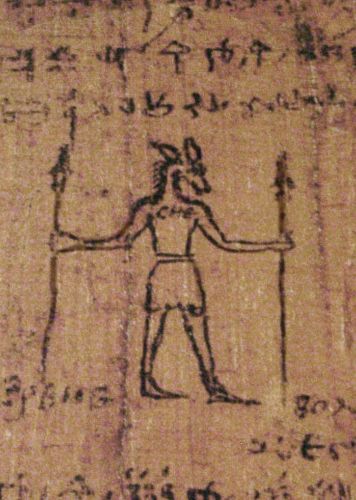
In the broader religious landscape, exorcistic elements persisted within various ritual contexts, including mystery religions and popular magical practices. The Greek Magical Papyri, a collection of texts spanning several centuries, preserve spells and incantations aimed at controlling or expelling spiritual forces, offering a rare glimpse into the practical techniques employed by ritual specialists and lay practitioners alike. These texts often invoke a syncretic array of deities and divine names drawn from Greek, Egyptian, and Near Eastern traditions, reflecting the interconnectedness of Mediterranean religious life during this period. The emphasis on spoken words, secret knowledge, and precise ritual performance suggests a belief that language itself possessed inherent power when properly formulated and delivered. Practitioners frequently sought not only to expel harmful influences but also to compel spiritual beings to act in accordance with human desires, blurring the line between exorcism and manipulation. This dual function underscores the adaptability of these practices, which could be employed for protection, healing, or personal gain depending on context. The continuity with earlier Mesopotamian traditions is evident, yet the forms they take in the Greek Magical Papyri reveal a more individualized and experimental approach, less bound to institutional authority and more reflective of a diverse and fluid religious environment.
Roman interpretations of these practices were shaped by both Greek influence and indigenous traditions. While Roman religion emphasized order, ritual propriety, and the maintenance of relationships with the gods, it also accommodated beliefs in spirits that could disrupt human affairs. Household spirits such as the lares and penates were generally protective, but other entities, including restless dead or malevolent forces, required appeasement or expulsion. Ritual specialists and household heads alike engaged in practices designed to cleanse spaces and restore balance, often through offerings, prayers, and the invocation of divine authority. What might be termed exorcism was less a dramatic confrontation with a demon and more an act of restoring proper relations within a network of visible and invisible forces.
Philosophical traditions offered alternative interpretations of spiritual disturbance. Thinkers such as Plato and later Neoplatonists explored the nature of the soul and its relationship to the divine, sometimes interpreting possession-like states as forms of divine inspiration or imbalance rather than invasion by hostile entities. This intellectual framework allowed for a more nuanced understanding of altered states of consciousness, one that did not always require expulsion as a solution. Such perspectives remained largely within elite circles, while popular practices continued to rely on ritual and incantation to address perceived spiritual threats. The coexistence of these approaches highlights the diversity of thought within classical antiquity and the absence of a single, unified explanation for phenomena associated with possession.
Greek and Roman interpretations of exorcism reveal a period of transition and synthesis, in which older traditions were neither wholly discarded nor uncritically preserved. Instead, they were integrated into new systems of knowledge that combined elements of philosophy, medicine, and religion. This integration allowed for multiple, sometimes competing explanations of spiritual affliction to coexist, reflecting the complexity of classical societies. The legacy of this period would prove significant for later developments, particularly in Jewish and Christian contexts, where concepts of spiritual authority, the power of divine names, and the relationship between illness and possession would be further elaborated and institutionalized.
Second Temple Judaism and Early Jewish Exorcistic Traditions

The development of Jewish exorcistic traditions during the Second Temple period represents a critical turning point in the history of demonology and ritual expulsion. While the Hebrew Bible contains relatively few explicit descriptions of exorcism, it does provide a foundation for later developments through its acknowledgment of harmful spiritual forces and divine authority over them. Figures such as the “evil spirit from the Lord” troubling Saul in 1 Samuel suggest an early framework in which spiritual affliction was understood as both real and subject to divine control. It is in the literature and practices of the this period, roughly from the fifth century BCE to the destruction of the Temple in 70 CE, that a more elaborate and systematized demonology emerges, accompanied by increasingly formalized methods of expulsion.
Texts from this period, including the Book of Tobit, offer some of the earliest detailed accounts of exorcistic practice within a Jewish context. In Tobit, the archangel Raphael instructs Tobias to use the heart and liver of a fish to drive away the demon Asmodeus, who has been afflicting Sarah. The ritual combines material elements, spoken invocation, and divine assistance, illustrating a model in which human action is effective only insofar as it aligns with higher spiritual authority. This narrative reflects broader Second Temple concerns with purity, protection, and the management of unseen dangers, as well as a growing interest in the roles of angels and demons as intermediaries between the divine and human realms. The emphasis on specific techniques and named entities marks a significant development from earlier, less defined conceptions of spiritual affliction. The story situates exorcistic practice within a moral and familial framework, linking the removal of the demon not only to physical relief but also to the restoration of social and covenantal order. The involvement of an angelic figure further reinforces the hierarchical structure of authority, in which divine power is mediated through both heavenly and human agents, emphasizing that exorcism is not an autonomous human act but one embedded within a larger cosmological system.
The writings associated with the Dead Sea Scrolls further illuminate the complexity of Jewish exorcistic thought during this period. These texts include prayers and hymns intended to ward off evil spirits, as well as references to demonic forces linked to cosmic rebellion and disorder. The figure of Belial, for example, is portrayed as a leader of malevolent powers opposed to the forces of light, reflecting an increasingly dualistic worldview. Ritual purity and adherence to divine law are presented as essential defenses against such forces, suggesting that exorcism was not limited to isolated acts of expulsion but was embedded in a broader program of spiritual discipline and communal identity. This integration of exorcistic concern into daily religious life underscores the extent to which the threat of demonic influence was perceived as pervasive and ongoing. Moreover, the community behind these texts appears to have understood itself as engaged in an ongoing cosmic struggle, in which proper ritual practice and moral conduct were necessary to resist the influence of evil powers. The recitation of protective prayers and the maintenance of strict communal boundaries functioned as preventative measures, blurring the distinction between exorcism as a discrete ritual and as a continuous state of spiritual vigilance. This perspective highlights the degree to which exorcistic thinking permeated not only ritual action but also the broader worldview and identity of the community.
Accounts from the first-century Jewish historian Flavius Josephus provide additional evidence of practical exorcistic techniques in use during the late Second Temple period. Josephus describes a method attributed to King Solomon, involving the use of a ring containing a root prescribed by the king, along with the recitation of incantations that invoked divine authority. In one account, an exorcist named Eleazar performs such a ritual in the presence of the Roman general Vespasian, demonstrating both the perceived efficacy of the technique and its potential to impress non-Jewish observers. These descriptions suggest that exorcism was not only a religious practice but also a form of cultural knowledge that could be displayed and validated in broader social and political contexts. The association with Solomon, a figure renowned for wisdom and control over spirits in later traditions, further reinforces the idea that exorcistic power was rooted in divinely sanctioned authority.
The evidence from Second Temple Judaism reveals a tradition in which exorcism becomes increasingly structured, authoritative, and theologically grounded. The use of divine names, angelic intermediaries, and prescribed ritual actions reflects a growing confidence in the ability to confront and control malevolent forces through sanctioned means. These practices remained closely tied to broader concerns with purity, law, and communal identity, rather than existing as isolated or purely technical procedures. This synthesis of ritual, theology, and social structure would prove highly influential in the development of early Christian exorcistic practices, where many of these elements were adapted, reinterpreted, and expanded within a new religious framework.
Early Christianity: Authority, Possession, and Power
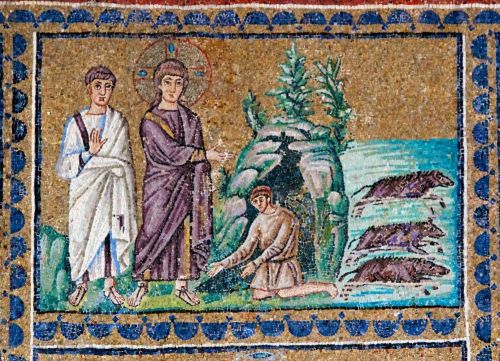
In early Christianity, exorcism assumed a central and defining role, transforming from a specialized ritual practice into a visible marker of divine authority and communal identity. The New Testament presents exorcism not as a marginal activity but as a core aspect of Jesus’ ministry, woven into narratives of healing, teaching, and confrontation with spiritual forces. Unlike earlier traditions that often relied on elaborate ritual procedures, the Gospel accounts emphasize immediacy and command, portraying exorcism as an act accomplished through spoken authority alone. This shift signals a reconfiguration of how spiritual power was understood, locating it not in ritual technique but in the person and authority of Jesus himself.
The Gospel narratives repeatedly depict encounters in which Jesus confronts and expels unclean spirits, often in public settings that underscore the demonstrative nature of these acts. In passages such as Mark 1:23–27 and Luke 4:33–36, the spirits recognize Jesus and respond to his commands, suggesting a hierarchical relationship in which demonic forces are compelled to submit. These episodes serve multiple functions within the text: they validate Jesus’ identity, illustrate the inbreaking of divine power, and provide tangible evidence of the defeat of evil. The language used in these accounts, including direct commands and the naming of spirits, reflects continuity with earlier traditions while simultaneously elevating the act to a sign of eschatological significance, indicating the arrival of a new order in which such forces are subject to divine rule.
The authority to perform exorcisms was not limited to Jesus but was extended to his followers, further embedding the practice within the emerging Christian community. The Gospels and the Acts of the Apostles describe disciples casting out demons in Jesus’ name, reinforcing the idea that exorcistic power derived from participation in a larger spiritual authority rather than individual skill or knowledge. This development marks a significant departure from earlier models in which specialized practitioners relied on secret knowledge, ritual objects, or inherited techniques. In the Christian context, the invocation of Jesus’ name itself becomes the central mechanism of expulsion, functioning as both a declaration of allegiance and a demonstration of power. This emphasis contributed to the formation of a distinct religious identity, one in which the ability to confront and overcome spiritual forces served as evidence of divine favor and legitimacy.
Early Christian writers and theologians began to articulate more systematic understandings of demons and possession. Church Fathers such as Origen and Tertullian interpreted demonic activity within broader theological frameworks, linking it to themes of sin, temptation, and cosmic struggle. Demons were increasingly understood as fallen angels, aligned in opposition to God and humanity, and their influence was associated with both moral corruption and physical affliction. Exorcism was not merely a therapeutic act but a form of spiritual warfare, situated within a narrative of conflict between good and evil that extended beyond individual cases and into the structure of the cosmos itself. This interpretive shift allowed Christian thinkers to integrate exorcistic practice into a coherent theological system, in which the presence of demons served as both a test of faith and a manifestation of a larger cosmic rebellion. It reinforced the necessity of divine mediation, emphasizing that victory over such forces could only be achieved through alignment with God’s will. These theological developments also contributed to the moralization of possession, linking spiritual affliction not only to external forces but also to internal states such as sin, temptation, and vulnerability, thereby expanding the scope of exorcism beyond immediate physical symptoms to encompass broader spiritual conditions.
As Christianity expanded and became more organized, exorcism began to take on more formalized and institutionalized forms. By the third and fourth centuries, specific roles within the Church were associated with exorcistic functions, and rites began to develop those incorporated prayers, gestures, and liturgical elements. These developments reflect the transition from a charismatic movement to an established religious institution, in which practices once performed spontaneously were codified and regulated. The incorporation of exorcism into baptismal rites, for example, underscores its importance in defining Christian identity, symbolizing the renunciation of evil and the entry into a purified spiritual state. Exorcism became not only a response to possession but also a preventative and initiatory act.
Despite this increasing formalization, tensions remained between institutional control and charismatic expression. Accounts of wandering exorcists and contested claims of authority, such as the episode of the sons of Sceva in Acts 19:13–16, reveal ongoing debates about who possessed legitimate power to command spirits. These narratives highlight the risks associated with invoking spiritual authority without proper alignment, reinforcing the importance of recognized structures within the community. They reflect the broader cultural environment in which various forms of exorcistic practice coexisted and competed for credibility. Early Christianity, in adopting and transforming these practices, positioned itself within this landscape while asserting a distinctive claim: that true authority over spiritual forces resided in the name and power of Christ.
Late Antiquity and the Middle Ages

As Christianity moved from a persecuted movement to an established institution in Late Antiquity, exorcism underwent a process of formalization that reshaped both its practice and its meaning. What had once been a visible sign of charismatic authority became increasingly regulated within ecclesiastical structures. The consolidation of Christian orthodoxy brought with it a desire to standardize ritual practices, including those related to the expulsion of demons. By the fourth and fifth centuries, exorcism had become integrated into the developing liturgical life of the Church, reflecting a broader shift from spontaneous acts of power to controlled, institutionally sanctioned rites.
Theological developments during this period further refined Christian understandings of demons and possession. Influential figures such as Augustine of Hippo articulated a worldview in which demons were fallen angels, possessing limited but real power over the material world. Augustine’s writings emphasized the deceptive nature of demonic forces, portraying them as beings capable of manipulating perception and exploiting human weakness. This perspective reinforced the need for discernment, as not all unusual behavior or experiences could be attributed to demonic influence. It affirmed that true power over such forces resided solely in God, with the Church serving as the authorized mediator of that power. Augustine and his contemporaries also wrestled with the implications of demonic agency for human responsibility, seeking to balance the influence of external spiritual forces with the preservation of moral accountability. This tension contributed to a more nuanced framework in which possession was not simply an invasion from without but could intersect with internal states of sin, vulnerability, or spiritual weakness. Such interpretations deepened the theological significance of exorcism, situating it within broader debates about free will, grace, and the nature of evil itself.
Exorcism became closely associated with the maintenance of orthodoxy and the policing of boundaries between acceptable and deviant belief. The Church increasingly positioned itself as the arbiter of legitimate spiritual experience, distinguishing between divine inspiration, natural illness, and demonic possession. This process was not always clear-cut, and disputes over interpretation could arise, particularly in cases involving visionary experiences or unusual behavior. Nevertheless, the growing authority of ecclesiastical institutions meant that exorcism was increasingly tied to clerical oversight, reinforcing the hierarchical structure of the Church and its control over spiritual matters.
Monastic communities played a significant role in shaping medieval approaches to exorcism, often serving as centers of both spiritual discipline and practical intervention. Monks and ascetics were regarded as possessing heightened spiritual sensitivity, making them particularly capable of confronting demonic forces. Accounts of desert hermits and later monastic figures frequently describe struggles with demons, framed as both literal encounters and symbolic representations of inner temptation. These narratives contributed to a broader understanding of exorcism that extended beyond formal ritual, encompassing practices of prayer, fasting, and moral discipline as means of resisting and overcoming spiritual threats. The emphasis on ascetic practice also reflected a belief that the individual could cultivate a form of spiritual resilience, reducing susceptibility to demonic influence through rigorous self-control and devotion. Exorcism was not limited to episodic intervention but became part of an ongoing spiritual struggle, integrated into daily life and personal transformation. Monastic literature, including hagiographies and spiritual biographies, reinforced this perspective by portraying saints as exemplars of resistance against demonic forces, thereby shaping both popular and elite understandings of how such threats could be confronted.
The medieval period witnessed an expansion of demonological literature and an increasing association between demonic activity and social deviance. Accusations of possession could intersect with concerns about heresy, witchcraft, and moral disorder, reflecting broader anxieties about the stability of Christian society. Exorcism was not only a response to individual affliction but also a tool for reinforcing communal norms and addressing perceived threats to religious unity. The development of more elaborate rituals, including the use of specific prayers, gestures, and sacred objects, further institutionalized the practice, embedding it within a comprehensive system of belief and authority.
Despite this growing formalization, tensions persisted between spiritual and medical explanations of illness. Medieval medical traditions, influenced by classical sources, offered naturalistic accounts of certain conditions, even as popular and religious interpretations continued to attribute them to demonic causes. These perspectives often overlapped, with individuals seeking both medical treatment and spiritual intervention. This coexistence reflects the complexity of medieval thought, in which multiple explanatory frameworks operated simultaneously rather than in strict opposition. Exorcism remained a dynamic and multifaceted practice, shaped by theological development, institutional authority, and the enduring human need to make sense of suffering and disorder.
The Reformation and Early Modern Transformations

The Reformation of the sixteenth century introduced profound changes to the religious landscape of Europe, and with them, significant transformations in the understanding and practice of exorcism. As Protestant reformers challenged the authority and rituals of the Roman Catholic Church, they also reevaluated the place of exorcism within Christian life. While belief in demons and spiritual affliction remained widespread across confessional lines, the methods for addressing such phenomena diverged sharply. Protestant thinkers, including Martin Luther and John Calvin, rejected many of the formalized rites of the Catholic tradition, viewing them as overly ritualistic or susceptible to misuse. Yet they did not deny the reality of demonic influence, instead emphasizing prayer, scripture, and faith as the primary means of resistance. Luther maintained a vivid belief in the active presence of the devil, interpreting spiritual struggle as an ongoing and personal reality, but he resisted the need for elaborate ceremonial interventions. This shift reflects a broader theological movement toward interiorized faith, in which authority over spiritual forces was understood to rest less in institutional ritual and more in individual reliance on divine grace, even as older assumptions about the reality of demonic activity remained firmly intact.
The Catholic Church, responding to the challenges of the Reformation, reaffirmed and further codified its exorcistic practices as part of the broader Counter-Reformation effort. The publication of the Rituale Romanum in 1614 provided standardized instructions for the performance of exorcism, reflecting a desire for uniformity and control. This text outlined specific prayers, gestures, and conditions under which exorcisms should be conducted, reinforcing the authority of ordained clergy and the institutional Church. The formalization of these rites can be understood as both a defensive measure against Protestant critiques and an attempt to regulate practices that had previously been more fluid and varied. The Catholic Church sought to assert its legitimacy as the guardian of proper spiritual intervention.
The early modern period witnessed an intensification of concern over witchcraft and demonic activity, culminating in widespread witch trials across Europe. These trials, often fueled by a combination of religious anxiety, social tension, and political instability, frequently involved accusations of possession or collaboration with demonic forces. Exorcism played a complex role, sometimes serving as a means of identifying supposed witches or confirming the presence of demonic influence. In certain cases, the failure or success of an exorcism could be interpreted as evidence in legal proceedings, blurring the boundaries between spiritual practice and judicial process. This intersection reveals the extent to which exorcism had become entangled with broader mechanisms of social control and the maintenance of order. Moreover, the public nature of many of these cases transformed exorcism into a form of spectacle, where demonstrations of spiritual authority could reinforce communal fears while simultaneously legitimizing institutional responses. The association between possession and witchcraft accusations also contributed to a climate in which spiritual affliction was increasingly interpreted through the lens of suspicion and moral panic, amplifying the stakes of exorcistic intervention.
The intellectual climate of the early modern period also introduced new tensions between traditional religious explanations and emerging scientific perspectives. As natural philosophy and early medical science developed, some scholars began to question whether all cases of possession could be attributed to supernatural causes. Conditions such as epilepsy, melancholy, and hysteria were increasingly examined through naturalistic frameworks, even as popular belief in demonic influence persisted. This did not lead to the immediate abandonment of exorcistic practices but rather to a more contested and complex landscape in which multiple explanatory models coexisted. In some instances, exorcism was adapted to accommodate these new understandings, while in others it was defended as a necessary response to phenomena that could not be fully explained by natural causes alone.
The Reformation and early modern period reshaped exorcism by situating it within a fractured religious and intellectual environment. No longer unified under a single ecclesiastical authority, the practice became a point of divergence between competing confessions, each asserting its own interpretation of spiritual power and legitimacy. The growing influence of scientific thought introduced new questions about the nature of possession and the appropriate means of response. These developments did not eliminate exorcism but transformed it, setting the stage for its continued evolution in a world increasingly defined by the interplay between tradition, reform, and emerging rationalism.
African Traditions: Healing, Spirit Mediation, and Colonial Disruption

Across the diverse cultures of Africa, practices that might be categorized as exorcism are embedded within broader systems of healing, cosmology, and social relationship rather than isolated as singular acts of expulsion. In many African religious traditions, the distinction between benevolent and malevolent spiritual forces is fluid, and what is perceived as harmful is often understood in terms of imbalance, disrupted relationships, or spiritual misalignment rather than the presence of an intrinsically evil entity. The goal of ritual intervention is frequently not the violent expulsion of a demon but the restoration of harmony between the individual, the community, and the spiritual world. This perspective challenges Western assumptions about exorcism as a confrontational act and instead situates it within a relational and restorative framework.
Central to many African traditions are ritual specialists who mediate between the human and spiritual realms, including figures such as the babalawo in Yoruba religion or the nganga in Central African contexts. These individuals are not merely exorcists in the narrow sense but healers, diviners, and custodians of spiritual knowledge. Through practices such as divination, they seek to diagnose the source of affliction, which may involve ancestral displeasure, spirit intrusion, or the effects of witchcraft. The response to such diagnoses can include offerings, cleansing rituals, herbal remedies, and carefully structured ceremonies designed to address the underlying cause. The authority of these practitioners derives not from institutional hierarchy but from specialized knowledge, training, and recognized spiritual connection.
Ritual performance in these contexts often involves music, dance, and collective participation, reflecting the communal nature of both affliction and healing. Drumming, chanting, and movement are not ancillary elements but integral components of the process, facilitating altered states of consciousness and enabling communication with the spiritual realm. In some cases, possession itself is not inherently negative but may be interpreted as a form of spiritual calling or temporary inhabitation by a beneficial force. The line between harmful and beneficial possession is context-dependent, requiring careful interpretation by knowledgeable practitioners. What might appear as exorcism from an external perspective may, in fact, be a process of negotiation, accommodation, or transformation rather than simple removal. This interpretive flexibility allows communities to respond to spiritual phenomena in ways that preserve social cohesion, recognizing that not all spiritual encounters are adversarial and that some may require integration rather than expulsion. Ritual specialists must navigate a complex spectrum of possibilities, determining whether a spirit should be appeased, redirected, or removed entirely, and tailoring their interventions accordingly.
The concept of “cults of affliction,” identified by scholars studying African religious systems, further illustrates the complexity of these practices. These are organized responses to specific forms of suffering, often involving initiation into a community of individuals who share similar experiences. Rather than focusing solely on eliminating a perceived spiritual intruder, these systems provide a structured means of coping with and reinterpreting affliction, integrating it into a meaningful social and spiritual framework. The process can be both therapeutic and identity-forming, transforming what might otherwise be a source of marginalization into a recognized and managed condition.
The encounter with European colonialism and Christian missionary activity introduced new interpretations of African spiritual practices, often reframing them in terms of demonic possession and exorcism. Missionaries frequently viewed indigenous rituals through a lens that equated unfamiliar spiritual systems with malevolent forces, leading to efforts to suppress or replace traditional practices with Christian forms of deliverance. This reinterpretation had profound effects, altering both how African traditions were perceived externally and how they evolved internally. Elements of indigenous practice were retained but reconfigured within a Christian framework, creating syncretic forms of exorcism that blended local and imported beliefs.
In the modern period, these dynamics have continued to evolve, particularly with the rise of Pentecostal and Charismatic movements across the African continent. These movements often place a strong emphasis on deliverance from demonic forces, drawing on global Christian narratives while incorporating local understandings of spiritual causation. The result is a complex and dynamic landscape in which traditional practices, colonial legacies, and contemporary religious movements intersect. In many communities, older forms of spirit mediation coexist with newer deliverance-oriented practices, sometimes blending seamlessly and at other times existing in tension. The language of “demons” and “deliverance” may be adopted, yet the underlying concerns with balance, relational harmony, and social integration often remain intact beneath the surface. Exorcism becomes not merely an imported concept but a reinterpreted one, shaped by local cosmologies even as it participates in global religious movements. This ongoing adaptation underscores the resilience and flexibility of African spiritual traditions, demonstrating their capacity to absorb, transform, and redefine external influences while maintaining continuity with longstanding cultural frameworks.
Indigenous Traditions of the Americas

Among the Indigenous cultures of the Americas, practices that resemble exorcism are embedded within holistic cosmologies that emphasize balance, reciprocity, and interconnectedness between the human, natural, and spiritual worlds. Rather than framing harmful spiritual influence as the intrusion of a wholly alien or evil entity, many traditions understand affliction as a disruption in relationships, whether with ancestors, spirits, or the environment. Consequently, what might be labeled as exorcism is more accurately understood as a process of restoring equilibrium, guided by ritual specialists who mediate between visible and invisible realms. This approach reflects a fundamentally different ontology from that found in many Western traditions, one in which spiritual forces are not inherently antagonistic but part of a broader, interdependent system.
Central to these traditions are shamans, medicine people, or ritual specialists who possess the knowledge and ability to navigate spiritual domains. Through techniques such as trance, vision quests, and ritual performance, these individuals diagnose and address the sources of illness or misfortune. The role of the practitioner extends beyond simple expulsion of harmful forces; it involves interpreting complex spiritual dynamics and guiding individuals through processes of healing and reintegration. Authority is derived not from institutional structures but from demonstrated ability, training, and recognition within the community, often reinforced through initiation and personal experience.
Ritual practices frequently incorporate a rich array of symbolic elements, including masks, costumes, sacred objects, and the use of smoke from plants such as sage or tobacco. These elements serve both practical and symbolic purposes, facilitating communication with spiritual forces and creating a space in which transformation can occur. Dance, chanting, and drumming often play central roles, inducing altered states of consciousness that enable both practitioner and participant to engage with the spiritual realm. The ritual is a collective event, involving not only the afflicted individual but also the wider community, whose participation reinforces social bonds and shared understandings of the spiritual world. The sensory intensity of these rituals, combining sound, movement, and symbolic imagery, is not incidental but central to their efficacy, creating an environment in which ordinary distinctions between the physical and spiritual can be temporarily suspended. Through this immersive experience, participants are able to reframe affliction within a broader cosmological context, transforming fear or disorder into a structured and meaningful process of engagement with the unseen.
Possession in these contexts does not always carry negative connotations and may, in some traditions, be understood as a form of spiritual encounter or calling. The distinction between harmful and beneficial possession is fluid, requiring careful interpretation by knowledgeable practitioners. In some cases, what appears as possession may be reinterpreted as an opportunity for transformation, leading to new roles or responsibilities within the community. This perspective challenges the binary distinction between expulsion and acceptance, suggesting instead a spectrum of responses that reflect the complexity of Indigenous cosmologies. Individuals who experience such encounters may undergo processes of initiation or training, integrating their experiences into socially recognized forms of knowledge and authority. Rather than isolating or stigmatizing the afflicted, these traditions often incorporate them into communal structures, thereby converting what might otherwise be perceived as disorder into a source of meaning and continuity.
Specific traditions, such as the Iroquois False Face Society, illustrate how these principles are practically enacted. Members of the society perform rituals involving carved masks, chanting, and the use of sacred materials to drive away illness-causing spirits and restore balance. These performances are not isolated acts but are embedded within a broader cultural and ceremonial framework that integrates spiritual, social, and medical dimensions. The use of masks and other symbolic objects reflects a belief in the transformative power of ritual, in which the practitioner embodies or channels forces capable of confronting and neutralizing harm.
The encounter with European colonization and Christian missionary activity profoundly affected Indigenous practices, often leading to their suppression, reinterpretation, or transformation. Missionaries frequently categorized Indigenous rituals as forms of demonic activity, imposing external frameworks that obscured their original meanings and functions. Despite these pressures, many traditions persisted, adapting to new conditions while maintaining core elements of their cosmologies. In contemporary contexts, Indigenous practices continue to evolve, sometimes incorporating elements of Christianity or other external influences while retaining their emphasis on balance and relationality. Exorcism cannot be understood as a static or uniform practice but as a dynamic expression of cultural resilience and continuity in the face of historical disruption.
Mesoamerican Traditions and Syncretism

In Mesoamerican civilizations, including those of the Aztec and Maya, concepts analogous to exorcism were embedded within complex cosmologies that linked health, morality, and the balance of cosmic forces. Illness and misfortune were often understood as the result of spiritual imbalance, divine displeasure, or the intrusion of harmful forces, rather than the presence of a singular, clearly defined demon. These traditions emphasized the interconnectedness of the human body with broader cosmic structures, meaning that disturbances in one realm could manifest in another. Ritual responses were designed not merely to remove an afflicting presence but to restore harmony within an intricate web of relationships involving gods, ancestors, and natural forces.
Ritual specialists, commonly referred to as curanderos in later syncretic contexts, played a central role in diagnosing and addressing spiritual afflictions. In pre-Columbian settings, these figures relied on a combination of inherited knowledge, ritual practice, and divination to identify the causes of illness. Techniques could include the use of herbal remedies, incantations, and symbolic acts intended to draw out or neutralize harmful influences. As in other Indigenous traditions, the emphasis was often on understanding the origin and nature of the disturbance rather than simply expelling it, reflecting a broader concern with restoring balance rather than waging direct confrontation against an external evil. These practitioners often occupied respected positions within their communities, serving not only as healers but also as interpreters of cosmic order and mediators between the human and divine realms. Their work required an intricate knowledge of calendrical systems, ritual timing, and symbolic correspondences, reinforcing the idea that healing was inseparable from broader patterns of time, environment, and spiritual alignment.
Ritual practices frequently incorporated sacred spaces and elements that held both symbolic and practical significance. The temazcal, or sweat bath, served not only as a physical cleansing process but also as a spiritual purification ritual, designed to remove impurities and restore equilibrium. Incense, particularly copal, was used to create a sacred atmosphere and to facilitate communication with the spiritual realm. Chanting, prayer, and offerings to deities or ancestral spirits formed integral components of these rituals, reinforcing the connection between the individual and the larger cosmic order. These practices highlight the holistic nature of Mesoamerican approaches, in which physical, spiritual, and environmental dimensions of health were inseparable.
The Spanish conquest of the sixteenth century introduced profound disruptions to these traditions, as Indigenous religious systems were suppressed and reinterpreted through the lens of Catholic Christianity. Missionaries often categorized Indigenous spiritual practices as forms of idolatry or demonic activity, seeking to replace them with Christian doctrines and rituals, including formal exorcism. Rather than disappearing, many Indigenous practices adapted to these new conditions, incorporating elements of Catholic belief while retaining underlying structures and meanings. This process of syncretism resulted in hybrid forms of ritual practice that blended Indigenous and Christian concepts in complex and often subtle ways. Indigenous communities frequently reinterpreted Catholic symbols, saints, and rituals through their own cosmological frameworks, creating layered meanings that could satisfy external expectations while preserving internal continuity. Exorcistic practices were not simply replaced but transformed, becoming part of a negotiated cultural space where power, identity, and belief were continually renegotiated under colonial conditions.
In the post-conquest period, figures such as the curandero emerged as mediators within this syncretic landscape, combining elements of Indigenous healing with Catholic symbolism and practice. Rituals might include the use of holy water, crosses, and prayers alongside traditional techniques such as herbal cleansing and spiritual diagnosis. This blending reflects not only a pragmatic adaptation to colonial pressures but also a deeper continuity of worldview, in which new elements are integrated into existing frameworks rather than replacing them entirely. The persistence of these practices demonstrates the resilience of Mesoamerican spiritual traditions and their capacity to evolve in response to external influences.
In contemporary contexts, Mesoamerican-derived practices continue to thrive in various forms, particularly within communities that maintain strong cultural connections to their Indigenous heritage. Practices associated with curanderismo often address both physical and spiritual aspects of illness, incorporating rituals that might be interpreted as exorcistic within a broader framework of healing. Figures such as Santa Muerte have emerged as focal points of devotional practice, reflecting ongoing negotiations between traditional beliefs, Catholic influence, and modern social realities. These developments illustrate the continued adaptability of Mesoamerican traditions, in which the management of spiritual affliction remains an active and evolving aspect of cultural life.
Modern Era: Psychology, Medicine, and Religious Revival
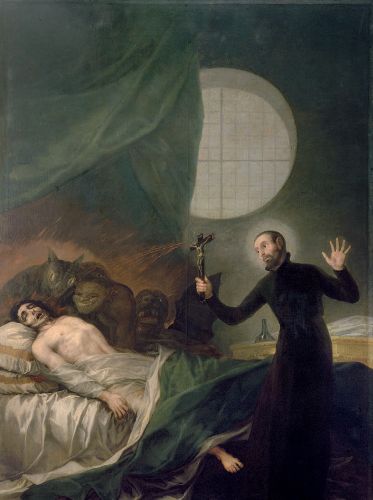
The modern era introduced a fundamental shift in how phenomena traditionally associated with possession were interpreted, as developments in psychology, psychiatry, and medical science provided alternative explanatory frameworks. Beginning in the nineteenth century and accelerating into the twentieth, conditions once attributed to demonic influence were increasingly understood in terms of neurological disorders, mental illness, and psychological trauma. The rise of clinical disciplines reframed experiences such as dissociation, hallucination, and extreme behavioral disturbance, situating them within naturalistic models of diagnosis and treatment. This transformation did not entirely displace earlier religious interpretations, but it significantly altered the cultural authority of exorcism, repositioning it within a landscape dominated by scientific inquiry.
Psychiatry played a central role in redefining the boundaries between spiritual and medical explanations. Diagnostic categories such as hysteria, schizophrenia, and dissociative identity disorder offered new ways of understanding behaviors previously associated with possession. Influential figures like Sigmund Freud and later psychologists emphasized internal psychological processes rather than external spiritual agents, shifting attention from expulsion to therapy and analysis. This intellectual shift was accompanied by the development of institutional frameworks, including hospitals, clinics, and professional standards, which further reinforced the authority of medical interpretations over religious ones. Anthropological and cross-cultural studies complicated this narrative by demonstrating that experiences labeled as possession could not be reduced entirely to pathology but were often embedded in culturally meaningful systems of belief and practice. Researchers began to recognize that what appeared as dysfunction in one context could carry social or religious significance in another, challenging the universality of Western diagnostic categories. This growing awareness encouraged more nuanced approaches that considered both psychological mechanisms and cultural frameworks, opening a space in which multiple interpretations could coexist rather than compete exclusively.
Despite the growing dominance of scientific frameworks, religious exorcism did not disappear but adapted to new conditions. The Roman Catholic Church, for example, retained its formal rite of exorcism while introducing stricter guidelines and greater caution in its application. Modern protocols emphasize the need to rule out medical and psychological explanations before proceeding, reflecting an awareness of the potential for misdiagnosis. This cautious approach illustrates an attempt to reconcile traditional practices with contemporary knowledge, maintaining continuity while acknowledging the authority of scientific disciplines. Exorcism becomes a carefully regulated practice, reserved for cases that cannot be adequately explained through other means.
The twentieth and twenty-first centuries have witnessed a resurgence of interest in exorcism within certain religious movements, particularly within Pentecostal and Charismatic Christianity. These traditions often emphasize direct spiritual experience and the ongoing presence of demonic forces, framing exorcism, or “deliverance,” as a central component of religious life. Unlike the highly formalized rites of the Catholic Church, these practices are frequently more spontaneous and participatory, involving prayer, laying on of hands, and communal engagement. The global spread of these movements has contributed to the expansion of exorcistic practices beyond their historical centers, creating new forms of expression that blend local beliefs with transnational religious narratives. In many regions, these practices intersect with preexisting cultural understandings of spiritual affliction, resulting in hybrid forms that incorporate both traditional and modern elements. The emphasis on personal experience and immediate spiritual intervention also reflects broader trends in contemporary religion, where authority is often decentralized and grounded in lived experience rather than institutional hierarchy. Exorcism in these contexts becomes not only a ritual act but also a means of expressing identity, community, and belief in a rapidly changing world.
The persistence and transformation of exorcism in the modern era reflect the coexistence of multiple ways of understanding human experience. Scientific, psychological, and religious interpretations continue to intersect, sometimes in tension and sometimes in dialogue, as individuals and communities seek to make sense of phenomena that challenge easy explanation. Exorcism, far from being a relic of the past, remains an active and evolving practice, shaped by ongoing debates about the nature of illness, belief, and the limits of human knowledge. Its continued presence underscores the enduring appeal of frameworks that address not only the physical but also the existential dimensions of suffering.
Comparative Analysis: Patterns Across Time and Culture

Across the long history of exorcistic practice, certain patterns emerge that transcend individual cultures while remaining deeply shaped by local contexts. One of the most consistent features is the framing of affliction as an intrusion by an external force, whether understood as a demon, spirit, ancestor, or malevolent energy. This conceptualization allows societies to distinguish between the individual and the source of suffering, preserving the moral integrity of the afflicted while locating disorder in an external agent. Such a framework appears in Mesopotamian incantations, early Christian demonologies, African spirit traditions, and Indigenous healing practices alike, suggesting a shared human impulse to explain extreme or disruptive experiences through the language of invasion and expulsion.
The authority to perform exorcism is almost always embedded within broader structures of power and legitimacy. In ancient societies, ritual specialists derived their authority from specialized knowledge and proximity to the divine, while in organized religions such as Christianity, authority became institutionalized within clerical hierarchies. In other contexts, including many African and Indigenous traditions, authority often remained more fluid, tied to personal calling, communal recognition, or demonstrated efficacy. Despite these differences, exorcism consistently functions as a means of reinforcing social order, as the ritual not only addresses individual affliction but also reaffirms the authority of those who claim the power to confront unseen forces. This dynamic highlights the interplay between belief, ritual, and social structure, where the act of expulsion simultaneously restores both personal and communal equilibrium.
Another recurring pattern lies in the adaptability of exorcistic practices to changing historical conditions. As societies encounter new religious movements, political transformations, or scientific developments, the interpretation and performance of exorcism evolve accordingly. The transition from polytheistic to monotheistic frameworks in the ancient world reshaped the identity of malevolent forces, while the Reformation altered the institutional control of exorcistic rites. In the modern era, the rise of psychology and medicine introduced competing explanations that did not eliminate exorcism but forced it to redefine its place within a pluralistic landscape. This capacity for adaptation ensures the persistence of exorcistic traditions, allowing them to remain relevant even as the intellectual and cultural environments in which they operate undergo profound change.
The comparative perspective reveals that exorcism is not solely a response to perceived supernatural threats, but also a reflection of deeper concerns about identity, morality, and the boundaries of the self. Whether framed in religious, cultural, or psychological terms, the act of expelling an intrusive force speaks to fundamental questions about what it means to be human and where the limits of personal agency lie. Exorcism operates as both a ritual practice and a symbolic language, expressing anxieties about disorder while offering a structured means of restoring coherence. Its persistence across time and culture underscores its role as a versatile and enduring mechanism through which societies confront the unknown, negotiate meaning, and assert control over forces that resist easy explanation.
Conclusion: Exorcism as a Mirror of Human Anxiety and Order
For millennia the practice of exorcism has persisted not because of a single religious doctrine or cultural inheritance, but because it addresses enduring human concerns about disorder, suffering, and the limits of control. From the incantation priests of Mesopotamia to contemporary deliverance ministries, exorcism has provided a structured response to experiences that defy ordinary explanation. Its longevity reflects its adaptability, but also its deep resonance with the human need to impose meaning on chaos. Whether interpreted through the language of demons, spirits, or psychological disturbance, the underlying impulse remains strikingly consistent: to identify a source of disruption and to restore balance through ritualized intervention.
Exorcism also reveals how societies construct and maintain boundaries between the self and the other. By locating affliction in an external force, communities are able to preserve a sense of moral and personal integrity, even in the face of behaviors or experiences that might otherwise be destabilizing. This process is not merely theological but profoundly social, as it reinforces shared norms about what constitutes acceptable conduct and coherent identity. The act of expulsion often serves to reaffirm the authority of those who claim the power to mediate between visible and invisible realms, embedding exorcism within broader systems of hierarchy and legitimacy.
The historical evolution of exorcistic practices demonstrates that these rituals are never static, but continually reshaped by intellectual, religious, and cultural transformations. The rise of monotheistic traditions redefined the nature of malevolent forces, while the emergence of modern science introduced alternative frameworks that challenged, but did not eliminate, earlier interpretations. These perspectives have often come to coexist, creating a complex landscape in which medical, psychological, and spiritual explanations intersect. This coexistence underscores the difficulty of fully resolving questions about the origins of extreme human experiences, as no single framework has proven entirely sufficient.
Exorcism endures because it operates at the intersection of belief, experience, and meaning. It is both a practical response to perceived affliction and a symbolic act that expresses deeper anxieties about vulnerability, agency, and the unknown. By tracing its development across time and culture, it becomes clear that exorcism is less about the literal expulsion of demons than about the human effort to confront and contain what lies beyond understanding. It serves as a mirror, reflecting not only fears of unseen forces but also the persistent desire to restore order in a world that often resists it.
Bibliography
Affiliate disclosure: Amazon links on this site are paid links. As an Amazon Associate I earn from qualifying purchases.
- Abusch, Tzvi. Mesopotamian Witchcraft: Toward a History and Understanding of Babylonian Witchcraft Beliefs and Literature. Leiden: Brill, 2002.
- American Psychiatric Association. Diagnostic and Statistical Manual of Mental Disorders. 5th ed. Washington, DC: American Psychiatric Publishing, 2013.
- Augustine of Hippo. The City of God. Translated by Henry Bettenson. London: Penguin Classics, 2003.
- Bottéro, Jean. Religion in Ancient Mesopotamia. Translated by Teresa Lavender Fagan. Chicago: University of Chicago Press, 2001.
- Bourguignon, Erika. Religion, Altered States of Consciousness, and Social Change. Columbus: Ohio State University Press, 1973.
- Brown, Joseph Epes. The Sacred Pipe: Black Elk’s Account of the Seven Rites of the Oglala Sioux. Norman: University of Oklahoma Press, 1953.
- Brown, Peter. The Cult of the Saints: Its Rise and Function in Latin Christianity. Chicago: University of Chicago Press, 1981.
- —-. The Rise of Western Christendom: Triumph and Diversity, AD 200–1000. 2nd ed. Malden, MA: Blackwell, 1996.
- Burkhart, Louise M. The Slippery Earth: Nahua-Christian Moral Dialogue in Sixteenth-Century Mexico. Tucson: University of Arizona Press, 1989.
- Caciola, Nancy. Discerning Spirits: Divine and Demonic Possession in the Middle Ages. Ithaca, NY: Cornell University Press, 2003.
- Calvin, John. Institutes of the Christian Religion. Translated by Henry Beveridge. Peabody, MA: Hendrickson Publishers, 2008.
- Collins, John J. Apocalypticism in the Dead Sea Scrolls. London: Routledge, 1997.
- Cuneo, Michael W. American Exorcism: Expelling Demons in the Land of Plenty. New York: Doubleday, 2001.
- Deloria, Vine Jr. God Is Red: A Native View of Religion. 30th anniversary ed. Golden, CO: Fulcrum Publishing, 2003.
- Dodds, E. R. The Greeks and the Irrational. Berkeley: University of California Press, 1951.
- Duffy, Eamon. The Stripping of the Altars: Traditional Religion in England, 1400–1580. New Haven: Yale University Press, 1992.
- Edelstein, Emma J., and Ludwig Edelstein. Asclepius: Collection and Interpretation of the Testimonies. Baltimore: Johns Hopkins University Press, 1945.
- Eliade, Mircea. Shamanism: Archaic Techniques of Ecstasy. Princeton, NJ: Princeton University Press, 1951.
- Fenton, William N. The False Faces of the Iroquois. Norman: University of Oklahoma Press, 1987.
- Flavius Josephus. Antiquities of the Jews. Translated by William Whiston.
- Foster, George M. Culture and Conquest: America’s Spanish Heritage. Chicago: Quadrangle Books, 1960.
- Freud, Sigmund. The Standard Edition of the Complete Psychological Works of Sigmund Freud. London: Hogarth Press, 1953.
- Gelfand, Michael. African Witchcraft and Other Beliefs: With Particular Reference to Witchcraft Beliefs and Practice Among the Shona of Rhodesia; with a Foreword by the Rev. Father M. Hannan; Illustrations by V.N. Barlow. Oxford: Basil Blackwell, 1967.
- Goodman, Felicitas D. How About Demons? Possession and Exorcism in the Modern World. Bloomington: Indiana University Press, 1988.
- Graf, Fritz. Magic in the Ancient World. Cambridge, MA: Harvard University Press, 1997.
- Hippocrates. On the Sacred Disease. Translated by W. H. S. Jones. Cambridge, MA: Harvard University Press (Loeb Classical Library), 1923.
- Hultkrantz, Åke. Native Religions of North America: The Power of Visions and Fertility. San Francisco: Harper & Row, 1987.
- Kieckhefer, Richard. Magic in the Middle Ages. Cambridge: Cambridge University Press, 1989.
- Klein, Cecelia F. Gender in Pre-Hispanic America. Washington, DC: Dumbarton Oaks, 2001.
- Levack, Brian P. The Witch-Hunt in Early Modern Europe. London: Routledge, 1987.
- Luck, Georg. Arcana Mundi: Magic and the Occult in the Greek and Roman Worlds. 2nd ed. Baltimore: Johns Hopkins University Press, 2006.
- Luhrmann, T. M. When God Talks Back: Understanding the American Evangelical Relationship with God. New York: Knopf, 2012.
- Luther, Martin. The Table Talk of Martin Luther. Translated by Thomas S. Kepler. London: London: Dover Publications, 2005.
- Maggi, Armando. “Christian Demonology in Contemporary American Popular Culture.” Social Research 81:4 (2014), 769-793.
- Mbiti, John S. African Religions and Philosophy. Portsmouth, NH: Heinemann, 1969.
- Meyer, Birgit. Translating the Devil: Religion and Modernity Among the Ewe in Ghana. Edinburgh: Edinburgh University Press, 1999.
- Nickelsburg, George W. E. Jewish Literature Between the Bible and the Mishnah. 2nd ed. Minneapolis: Fortress Press, 1981.
- Origen. Contra Celsum. Translated by Henry Chadwick. Cambridge: Cambridge University Press, 1953.
- Ortiz de Montellano, Bernard R. Aztec Medicine, Health, and Nutrition. New Brunswick, NJ: Rutgers University Press, 1990.
- Peek, Philip M., ed. African Divination Systems: Ways of Knowing. Bloomington: Indiana University Press, 1991.
- Ritner, Robert K. The Mechanics of Ancient Egyptian Magical Practice. Chicago: Oriental Institute of the University of Chicago, 1997.
- Roest, Bert. “Demonic Possession and the Practice of Exorcism.” Franciscan Studies 76 (2018), 301-340.
- Scurlock, JoAnn, and Burton R. Andersen. Diagnoses in Assyrian and Babylonian Medicine: Ancient Sources, Translations, and Modern Medical Analyses. Urbana: University of Illinois Press, 2005.
- Stuckenbruck, Loren T. The Myth of Rebellious Angels: Studies in Second Temple Judaism and New Testament Texts. Tübingen: Mohr Siebeck, 2014.
- Teeter, Emily. Religion and Ritual in Ancient Egypt. Cambridge: Cambridge University Press, 2011.
- Tertullian. Apology. Translated by T. R. Glover. Cambridge: Harvard University Press, 1931.
- The Holy Bible, King James Version.
- Thomas, Keith. Religion and the Decline of Magic. London: Penguin Books, 1971.
- Trotter, Robert T., and Juan Antonio Chavira. Curanderismo: Mexican American Folk Healing. Athens: University of Georgia Press, 1981.
- Twelftree, Graham H. Jesus the Exorcist: A Contribution to the Study of the Historical Jesus. Tübingen: Mohr Siebeck, 1993.
- Vermes, Geza. The Complete Dead Sea Scrolls in English. London: Penguin Books, 2011.
Originally published by Brewminate, 04.22.2026, under the terms of a Creative Commons Attribution-NonCommercial-NoDerivatives 4.0 International license.
About the Author