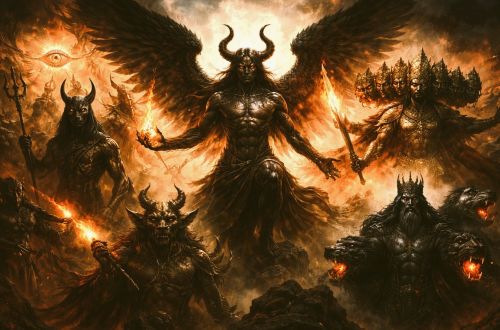
Across civilizations, cultures have imagined forces that oppose order, truth, and divine will, revealing evolving conceptions of evil from cosmic chaos to moral adversaries.

By Matthew A. McIntosh
Public Historian
Brewminate
Introduction: Defining the Adversary Across Cultures
Across the religious traditions of the ancient world, few figures are as culturally persistent yet conceptually diverse as the adversary. In Christian theology, Satan emerges as a singular embodiment of evil: a rebellious being opposed to God, morally corrupt, and actively engaged in the temptation and downfall of humanity. Yet this formulation is neither universal nor original. Earlier and parallel traditions reveal a far more varied landscape in which opposition to divine order is not always moralized, personalized, or even fully antagonistic. Instead, the adversary may appear as chaos, imbalance, necessary counterforce, or even a servant within the divine order itself.
To understand these figures comparatively requires a shift away from assuming a fixed definition of “evil.” In many early cosmologies, particularly those of the ancient Near East, opposition is framed not as a moral struggle between good and evil, but as a structural tension between order and disorder. These traditions often depict creation itself as the result of conflict, in which primordial chaos must be subdued or contained for the cosmos to emerge and persist. The adversarial figure in such systems is not inherently wicked but ontologically necessary, representing forces that exist prior to or alongside creation rather than arising from moral failure. These figures do not tempt humanity in a moral sense, nor do they function as ultimate enemies of a singular, omnipotent deity. Rather, they represent forces that threaten stability and must be continually managed, ritually resisted, or symbolically reenacted in myth and liturgy. This reflects a worldview in which disorder is not an aberration to be eradicated but a constant presence requiring vigilance, reinforcing the idea that early conceptions of opposition were embedded in cosmology rather than ethics.
As religious systems developed, particularly in the Indo-Iranian and later Abrahamic contexts, the adversary became increasingly moralized and individualized. Zoroastrianism introduced a strikingly dualistic framework in which cosmic opposition took on ethical dimensions, dividing existence into forces of truth and falsehood, light and darkness. This shift profoundly influenced subsequent Jewish, Christian, and Islamic thought, where the adversary evolves into a being defined by rebellion, pride, and deliberate opposition to divine will. In these traditions, evil becomes not merely a condition of the cosmos but a moral choice embodied in a conscious agent.
Other traditions moved in a different direction, internalizing the adversarial role rather than externalizing it. In South Asian religious thought, particularly within Buddhism, the figure of the tempter often represents the illusions and desires inherent within the human mind rather than an independent metaphysical entity. This diversity underscores a central argument: that the figure commonly identified as “the devil” is not a universal archetype but a historically contingent construct, shaped by evolving theological, philosophical, and cultural needs. By tracing these figures chronologically, it becomes possible to observe not only their differences, but also the shifting human effort to define, locate, and understand the nature of opposition itself.
Primordial Chaos and Cosmic Opposition in Ancient Near Eastern Mythology
Mesopotamia: Tiamat and the Chaoskampf Tradition

Among the earliest recorded mythological systems, that of ancient Mesopotamia offers one of the clearest examples of cosmic opposition framed not in moral terms, but in primordial struggle. The Babylonian creation epic, commonly known as the Enuma Elish, presents a universe born from conflict between generations of gods, culminating in the confrontation between the storm god Marduk and the primordial sea goddess Tiamat. Rather than representing evil in a moralized sense, Tiamat embodies the untamed, pre-cosmic waters from which all existence emerges, positioning her as a figure of chaos rather than sin or rebellion.
The narrative structure of the Enuma Elish reflects what scholars often describe as the “Chaoskampf” motif, a recurring pattern in ancient Near Eastern mythology in which a divine hero establishes order by defeating a chaotic adversary. Tiamat is not malicious in the way later traditions would define evil, but instead represents a necessary opposition that must be overcome to create a structured world. Her transformation into a monstrous force occurs only after conflict escalates among the younger gods, suggesting that chaos is not inherently antagonistic but becomes so within the dynamics of divine conflict.
Marduk’s victory over Tiamat is both violent and creative, as he splits her body to form the heavens and the earth. This act underscores a critical distinction between Mesopotamian cosmology and later dualistic systems: chaos is not eradicated but repurposed. The material of disorder becomes the foundation of order, indicating a worldview in which opposition is foundational rather than aberrational. The imagery of dismemberment is not merely symbolic but cosmogenic, as specific parts of Tiamat’s body are assigned structural roles within the universe, reinforcing the idea that creation itself depends upon the transformation of chaos rather than its elimination. There is no ultimate moral condemnation of Tiamat; instead, her defeat is a necessary step in the establishment of cosmic stability and divine hierarchy. This integration of chaos into the very fabric of existence reflects a philosophical orientation in which disorder is both dangerous and indispensable, an ever-present condition that must be contained but can never be wholly removed.
This framework reveals an important absence when compared to later conceptions of a satanic figure. Tiamat does not tempt humanity, nor does she function as an enduring adversary opposing a singular, omnipotent deity. Her role is confined to the moment of creation, after which order is maintained by the gods through ritual, kingship, and divine authority. The adversarial force she represents is temporal and structural, not moral or eternal, highlighting a fundamental difference in how early societies conceptualized opposition.
The legacy of the Chaoskampf motif extends far beyond Mesopotamia, influencing later mythological and religious traditions across the ancient world. Variations of the storm god versus serpent or sea monster appear in Canaanite, Hebrew, and even Indo-European contexts, suggesting a shared symbolic language for understanding the emergence of order from disorder. In its original Mesopotamian form, this pattern remains distinctly non-moralized. Tiamat stands not as a devil in any recognizable sense, but as a reminder that the earliest adversaries in human thought were not embodiments of evil, but manifestations of the chaotic conditions from which existence itself was born.
Ancient Egypt: Apophis (Apep) and the Eternal Threat to Order
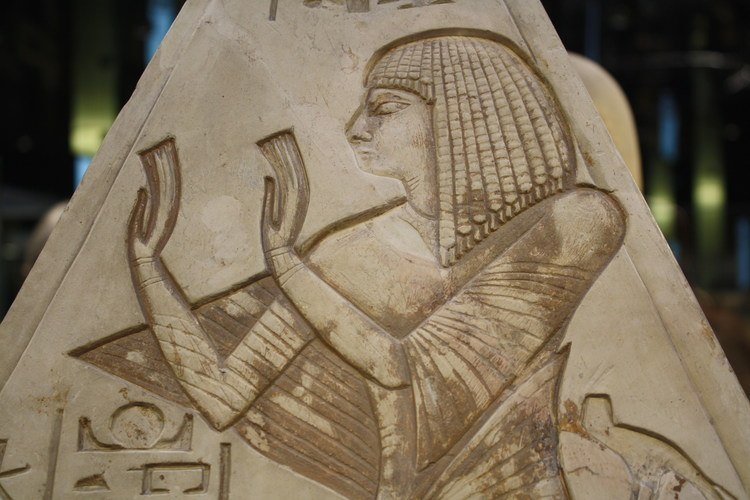
In ancient Egyptian cosmology, the adversarial principle takes a form distinct from both Mesopotamian creation conflict and later moralized dualisms. The figure of Apophis, known in Egyptian as Apep, represents a primordial force of chaos that exists in perpetual opposition to the ordered cosmos upheld by the gods. Unlike Tiamat, whose defeat enables creation, Apophis is never fully vanquished. Instead, he embodies an ongoing threat, a destabilizing presence that must be continually resisted to preserve the balance of the universe.
Apophis is most prominently associated with the nightly journey of the sun god Ra through the underworld. As Ra travels in his solar barque, he encounters Apophis, who attempts to halt the sun’s progress and plunge the world back into darkness. This cyclical confrontation reflects a core principle of Egyptian thought: that order, or ma’at, is not permanently secured but must be constantly maintained against the encroaching forces of chaos, or isfet. The adversary is not a singular opponent to be defeated once and for all, but a recurring challenge embedded within the structure of existence itself. Each night’s journey becomes both a mythological narrative and a cosmological necessity, reinforcing the idea that the survival of the world depends on the successful navigation of this recurring threat. The regularity of the conflict underscores its inevitability, suggesting that chaos is not an anomaly but a built-in counterforce that ensures the continued relevance of divine action.
The nature of Apophis further distinguishes him from later conceptions of a devil figure. He is not depicted as a moral agent who tempts humanity or corrupts individuals through choice and persuasion. Instead, he represents a cosmic condition, a force of negation that threatens dissolution rather than moral deviation. Egyptian texts often describe elaborate rituals, spells, and incantations intended to weaken or repel Apophis, indicating that his opposition operates on a cosmic scale beyond ordinary human ethics. These ritual practices, preserved in funerary texts and temple inscriptions, reveal a worldview in which human participation plays a supporting role in the cosmic struggle, aligning earthly activity with divine resistance. The struggle against Apophis is less about moral righteousness and more about sustaining the fundamental order of reality, a task that requires continual reaffirmation rather than a singular act of triumph.
Importantly, Apophis exists outside the community of gods in a way that reinforces his role as a force of disorder rather than a rebellious insider. He is not a fallen deity, nor does he participate in divine governance; rather, he stands as an ever-present external threat to the ordered system maintained by Ra and other gods. This contrasts sharply with later traditions in which the adversary originates within the divine realm before rebelling against it. In Egyptian cosmology, chaos is not born from defiance but is primordial, coexisting with order as an inherent feature of the universe.
The perpetual conflict between Ra and Apophis also reflects a broader Egyptian understanding of time and existence as cyclical rather than linear. Each night’s battle does not move the cosmos toward a final resolution but instead reaffirms the necessity of vigilance and ritual maintenance. The defeat of Apophis at dawn is temporary, ensuring the continuation of the cosmic cycle rather than the ultimate triumph of good over evil. This cyclical framework is different from later religious systems that anticipate a definitive end to cosmic opposition, such as the apocalyptic defeat of Satan in Christian eschatology. The repetition of this struggle reinforces a worldview in which stability is always provisional, dependent on the constant renewal of divine power and the proper performance of ritual acts by both gods and humans. Time itself becomes a stage upon which order must be continually defended rather than permanently secured. Apophis can be understood not as a precursor to the Christian devil in any direct sense, but as a fundamentally different type of adversary. He embodies the persistent fragility of order rather than the moral corruption of creation, emphasizing the Egyptian preoccupation with balance and continuity. The adversary here is not a tempter or accuser but a force that must be held at bay through divine action and human participation in ritual. As such, Apophis illustrates an early and enduring conception of opposition rooted in cosmology and maintenance rather than morality and rebellion.
Indo-Iranian Zoroastrianism: Angra Mainyu and Absolute Dualism
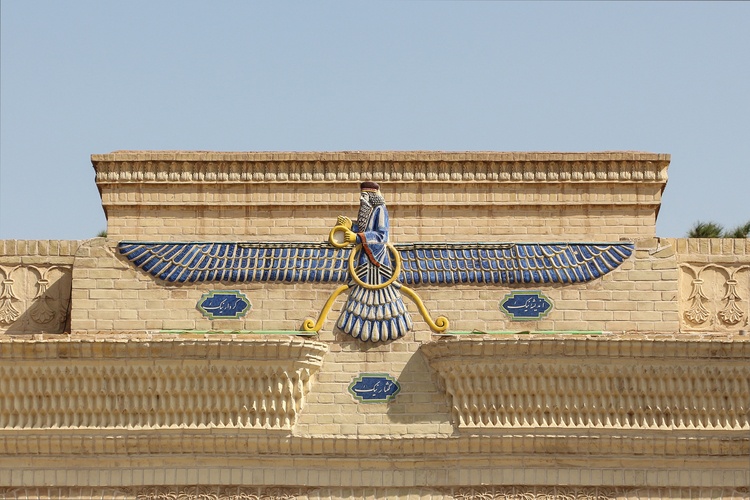
The emergence of Zoroastrianism marks a decisive turning point in the historical development of the adversarial figure, transforming earlier notions of cosmic opposition into a fully moralized and dualistic framework. Rooted in the religious reforms attributed to the prophet Zarathustra, Zoroastrian thought introduces a stark division between truth (asha) and falsehood (druj), embodied respectively in Ahura Mazda and Angra Mainyu, also known as Ahriman. Unlike the adversarial figures of Mesopotamian and Egyptian traditions, Angra Mainyu is not merely a force of chaos or disorder but a conscious and malevolent entity actively opposed to the good.
This dualistic structure represents one of the earliest known systems in which good and evil are positioned as fundamentally opposed and irreconcilable principles. Angra Mainyu is not subordinate to Ahura Mazda, nor is he a necessary counterpart within a balanced system; instead, he is a destructive spirit whose existence introduces moral corruption, suffering, and death into the world. The cosmos, in this view, becomes a battleground in which the forces of light and darkness contend for ultimate dominance, elevating the adversarial role to one of central theological importance.
The implications of this shift are profound. In Zoroastrianism, the struggle between Ahura Mazda and Angra Mainyu unfolds within a linear conception of time, moving toward an eventual resolution in which evil will be definitively defeated. This eschatological framework contrasts sharply with the cyclical patterns observed in Egyptian cosmology, replacing perpetual conflict with a narrative of ultimate victory. Human beings play a crucial role in this process, as their moral choices contribute to the strengthening of either asha or druj, integrating ethical responsibility into the cosmic struggle in a way not previously seen in earlier traditions. This moral participation transforms individuals from passive inhabitants of a divinely ordered cosmos into active agents whose decisions carry cosmic significance. The alignment of human ethics with universal order reinforces a system in which personal conduct is inseparable from metaphysical reality, deepening the integration between theology and lived experience.
Angra Mainyu’s characterization further reinforces the moralization of evil. He is associated with deceit, violence, disease, and decay, representing not only cosmic opposition but also the corruption of the natural and social order. His followers, often conceptualized as demons or destructive spirits, extend his influence throughout the world, actively working against the forces of truth. This expansion of adversarial agency creates a more comprehensive and pervasive understanding of evil, one that penetrates both the metaphysical and material realms.
The historical significance of Zoroastrian dualism extends beyond its immediate religious context, as it profoundly influenced the development of later Jewish, Christian, and Islamic conceptions of the adversary. During periods of Persian rule, particularly following the Babylonian Exile, Jewish thought encountered and absorbed elements of this dualistic worldview, contributing to the gradual transformation of the figure of ha-satan from a subordinate accuser into a more independent and oppositional entity. While the degree and nature of this influence remain subjects of scholarly debate, the structural parallels are difficult to ignore. The introduction of a more clearly defined opposition between forces of good and evil provided a conceptual framework that could be adapted and reinterpreted within emerging monotheistic traditions, helping to shape evolving doctrines of angels, demons, and cosmic conflict. This process did not result in a direct transfer of beliefs, but rather in a gradual reinterpretation of existing concepts through the lens of dualistic thinking. Angra Mainyu stands as a critical bridge between earlier cosmological adversaries and the fully developed figure of Satan in Abrahamic traditions. He represents a moment in which opposition becomes moralized, personalized, and embedded within a linear narrative of cosmic conflict and resolution. The adversary is no longer a necessary aspect of creation or a recurring threat to order, but a force to be defeated, marking a significant evolution in how human societies conceptualized the nature of evil and its place within the universe.
South Asian Traditions: Internalization and Multiplicity of Evil
Hinduism: Asuras, Kali Purusha, and Cyclical Degeneration
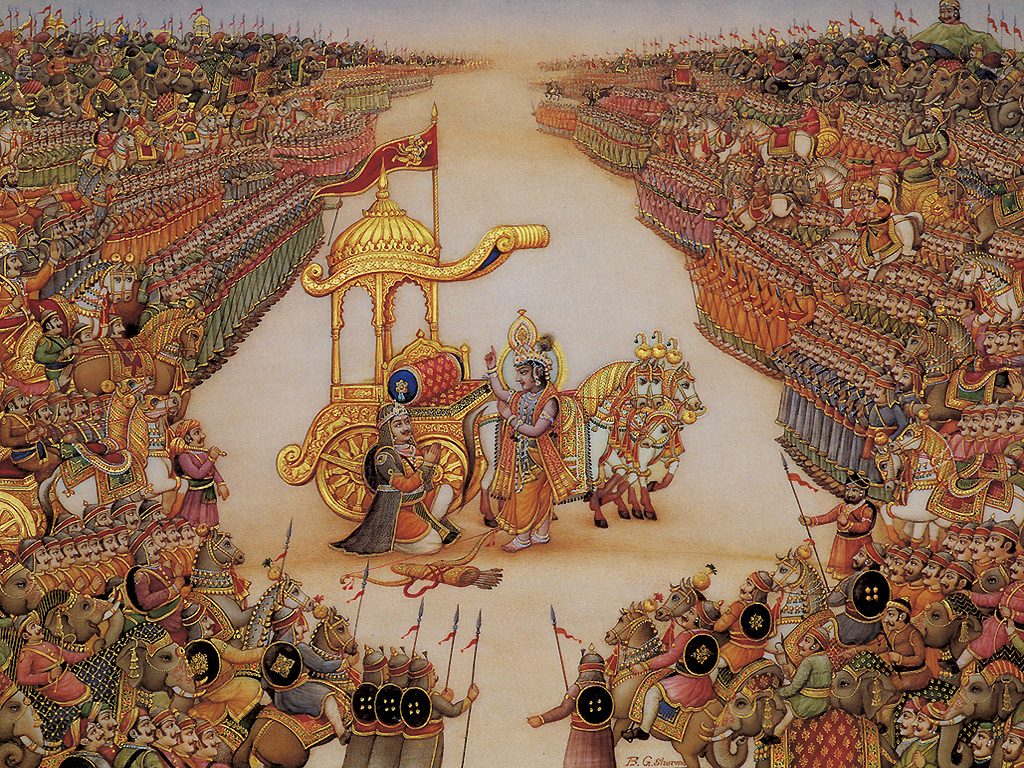
In contrast to the sharply defined dualism of Zoroastrianism, Hindu traditions present a far more fluid and pluralistic understanding of adversarial forces. There is no single, unified figure equivalent to Satan; instead, opposition to divine order is distributed across a range of beings and concepts, most notably the Asuras, as well as later personifications such as Kali Purusha. These figures do not represent absolute evil in a metaphysical sense, but rather embody tendencies toward disorder, ego, and moral decline within a cyclical cosmology.
The Asuras occupy a complex position within Hindu mythology, often portrayed as powerful beings who challenge the Devas, or gods, in ongoing struggles for cosmic dominance. In early Vedic literature, the distinction between Devas and Asuras is not always moralized, and in some cases the term “Asura” even carries positive connotations. The Asuras become increasingly associated with pride, ambition, and a rejection of cosmic order, though they are never wholly divorced from the broader structure of existence. Unlike the singular adversary of later monotheistic traditions, the Asuras function as a class of beings whose opposition is contextual rather than absolute.
The concept of Kali Purusha introduces a more abstract and temporal dimension to the idea of adversarial forces. Associated with the Kali Yuga, the final and most degenerate of the four cosmic ages, Kali Purusha personifies the moral and spiritual decline characteristic of this era. Rather than acting as an external enemy opposing the gods, Kali Purusha represents the conditions of decay themselves, manifesting in social disorder, ethical corruption, and the weakening of dharma, or cosmic law. This framing shifts the locus of opposition from individual beings to the broader patterns of time and human behavior. In many traditional narratives and later theological interpretations, Kali Purusha is depicted not as an independent agent orchestrating evil, but as a symbolic embodiment of the age itself, inseparable from the conditions it represents. His presence reflects a worldview in which decline is not imposed from outside but arises from within the structure of the cosmos and the actions of its inhabitants. This interpretation reinforces the idea that the adversarial principle in Hindu thought is diffuse and systemic, rooted in cycles of degeneration rather than in the willful rebellion of a singular entity.
Central to this worldview is the cyclical nature of time, which fundamentally distinguishes Hindu conceptions of opposition from the linear frameworks of Zoroastrianism and Abrahamic religions. The universe undergoes repeated cycles of creation, preservation, and destruction, within which periods of order and disorder naturally alternate. Adversarial forces are not anomalies to be eradicated, but integral components of a larger cosmic rhythm. The decline associated with the Kali Yuga is not permanent but will eventually give way to renewal, reinforcing the idea that disorder is both inevitable and temporary.
This cyclical and pluralistic approach to opposition complicates any direct comparison with the Christian concept of Satan. Rather than a singular, morally absolute adversary, Hindu traditions present a spectrum of forces that challenge, disrupt, and contribute to the ongoing process of cosmic balance. Evil is less a fixed entity than a condition arising from ignorance, desire, and imbalance, emphasizing the internal and structural dimensions of opposition over the external and personalized. As such, the Hindu framework represents a fundamentally different way of understanding the adversarial role, one that resists reduction to a single, unified figure.
Buddhism: Māra as Psychological and Existential Adversary

In Buddhist thought, the adversarial figure undergoes a profound transformation, shifting from an external cosmic opponent to a largely internalized and psychological presence. Māra, often described as the tempter or obstructer, appears most prominently in narratives surrounding Siddhartha Gautama’s attainment of enlightenment. Unlike Angra Mainyu or later conceptions of Satan, Māra does not represent an independent force of absolute evil opposing a supreme deity. Instead, he embodies the conditions that bind beings to suffering, particularly desire, fear, and illusion, positioning the adversary within the structure of human consciousness itself.
The most famous account of Māra’s role occurs during the Buddha’s meditation beneath the Bodhi tree, where Māra attempts to prevent enlightenment through a series of temptations and assaults. These include the projection of fearsome armies, the seduction of Māra’s daughters, and challenges to Siddhartha’s right to attain awakening. While these episodes can be read as mythological encounters, they are equally interpreted as symbolic representations of internal struggle. Māra’s attacks correspond to psychological obstacles such as attachment, aversion, and doubt, all of which must be overcome to achieve liberation from samsara, the cycle of rebirth. The narrative structure itself reinforces this interpretation, as each confrontation escalates in a manner that mirrors the deepening stages of meditative practice, culminating in Siddhartha’s calling upon the earth as witness to his worthiness. This moment signifies not the defeat of an external adversary through force, but the resolution of internal conflict through clarity and steadfastness.
This interpretive flexibility highlights a key distinction between Buddhist and earlier religious frameworks: the adversary is not fundamentally external. Māra is often understood as a personification of mental states rather than a being with independent ontological status. The “battle” against Māra is not fought in the cosmos but within the mind, reframing the concept of opposition as an internal process of discipline and insight. The defeat of Māra does not signify the destruction of an external enemy, but the transformation of perception and the cessation of ignorance.
Moreover, Māra’s continued presence in Buddhist texts underscores that this adversarial function is not confined to a single moment of enlightenment but persists as an ongoing condition of existence. Even after the Buddha’s awakening, Māra is said to reappear, attempting to sow doubt or encourage withdrawal from teaching. This recurring presence reinforces the idea that the forces Māra represents are not eradicated once and for all but must be continually recognized and transcended. In some traditions, Māra even engages in dialogue with the Buddha, testing his resolve and understanding, which further emphasizes the pedagogical dimension of these encounters. Rather than serving solely as an antagonist, Māra functions as a catalyst that reveals the depth of insight achieved by the enlightened mind, illustrating that the adversarial principle remains intertwined with the process of awakening itself.
Māra represents a radical departure from the moralized and personalized adversaries of dualistic traditions. He is neither a fallen being nor an ultimate enemy of a divine order, but a conceptual tool for understanding the mechanisms of suffering and delusion. The adversarial role is internalized and universalized, applying to all individuals rather than existing as a distinct cosmic entity. This reframing not only distinguishes Buddhist thought from other traditions but also offers a fundamentally different approach to the problem of evil, one that locates its origins within the mind rather than in an external, oppositional force.
Second Temple Judaism: The Transformation of the Adversary
Ha-Satan in the Hebrew Bible
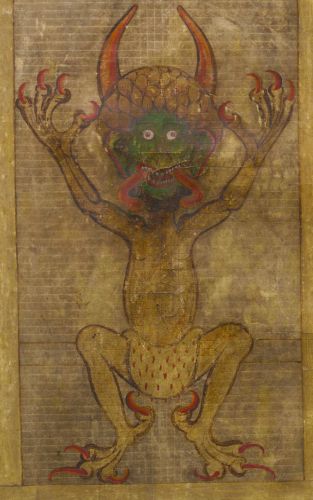
In the Hebrew Bible, the figure later associated with Satan appears in a markedly different form, lacking both the autonomy and moral absolutism that characterize later Christian interpretations. The term ha-satan, meaning “the adversary” or “the accuser,” functions not as a proper name but as a title describing a role within the divine court. Rather than representing an independent force of evil, ha-satan operates as a subordinate agent of God, tasked with testing human righteousness and exposing moral weakness. This conceptualization reflects a theological framework in which all forces, including those that challenge or afflict humanity, remain under divine authority.
The clearest depiction of ha-satan appears in the Book of Job, where he is presented as a member of the heavenly council who questions the sincerity of Job’s piety. Acting with God’s permission, ha-satan subjects Job to a series of trials, including the loss of his wealth, family, and health. Importantly, these actions are not framed as rebellion against God but as part of a divine test, reinforcing the idea that ha-satan serves a functional role within the broader system of divine justice. The adversarial function here is investigative rather than oppositional, aimed at revealing truth rather than undermining divine order.
This portrayal stands in sharp contrast to later developments in which the adversary becomes a figure of outright defiance. In the Hebrew Bible, ha-satan does not act independently, nor does he seek to establish a rival domain or corrupt creation in opposition to God. His presence underscores a worldview in which challenges and suffering are integrated into the divine plan, rather than attributed to a separate and antagonistic force. This theological structure leaves little room for a dualistic conflict between good and evil, as all phenomena derive from and are governed by a single divine source. The adversarial role functions as a tool of divine governance, a means by which faith, loyalty, and righteousness are tested and revealed. Suffering is not evidence of cosmic rebellion but part of a broader framework in which human character is examined under divine oversight.
Other passages in the Hebrew Bible reinforce this limited and functional role. In the Book of Zechariah, ha-satan appears as an accuser standing before God, opposing the high priest Joshua, yet he is rebuked by God and does not act autonomously. Similarly, in 1 Chronicles, a figure identified as “Satan” incites King David to conduct a census, though this account parallels an earlier narrative in 2 Samuel where the action is attributed directly to God. These variations suggest a developing conceptualization of the adversarial role, but one that remains firmly within the bounds of divine sovereignty. The shift in attribution between texts indicates a gradual movement toward distinguishing the adversarial function more clearly, yet without severing it from divine control. Even as the language evolves, the underlying theological framework maintains that any adversarial action operates within the will and permission of God, preserving the monotheistic emphasis on divine unity and authority.
The figure of ha-satan in the Hebrew Bible represents a transitional stage in the evolution of the adversary. While later traditions would reinterpret and expand this role into that of a fully independent and malevolent being, the biblical portrayal remains rooted in a monotheistic framework that resists dualism. The adversary is not an enemy of God, but a participant in the divine order, reflecting a theological perspective in which even opposition serves a purpose within the unfolding of divine will.
Development of Demonology: Samael, Asmodeus
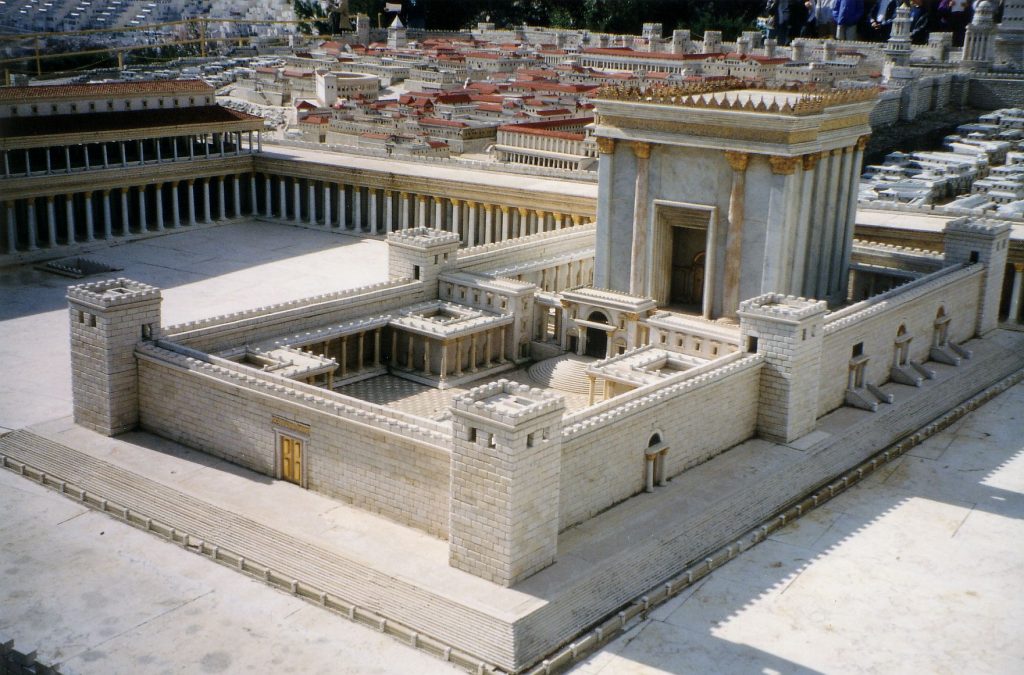
The evolution of the adversarial figure within Jewish thought becomes more pronounced during the Second Temple period, when earlier, more functional conceptions of ha-satan begin to expand into a broader and more complex demonology. Influenced by historical circumstances, including contact with Persian religious ideas, Jewish traditions gradually developed a richer array of supernatural beings associated with opposition, temptation, and destruction. Among these figures, Samael and Asmodeus emerge as prominent examples of a growing tendency to personify and elaborate the forces of evil beyond the limited role assigned to ha-satan in the Hebrew Bible.
Samael, often identified in later Jewish texts as an angel of death or a chief of demons, occupies an ambiguous position within this developing framework. In some traditions, he retains a role within the divine order, acting as an agent of judgment or destruction under God’s authority. In others, Samael begins to take on characteristics more closely aligned with a malevolent adversary, associated with temptation, accusation, and even rebellion. This duality reflects the transitional nature of Jewish demonology during this period, as older monotheistic structures coexist with emerging tendencies toward greater differentiation between good and evil forces. His evolving portrayal illustrates how a figure originally embedded within divine administration could gradually be reinterpreted through expanding theological and cultural frameworks, taking on increasingly independent and adversarial characteristics while still retaining traces of his earlier function.
Asmodeus, by contrast, is more clearly depicted as a demonic figure associated with specific forms of human vulnerability, particularly lust and marital discord. His most notable appearance occurs in the Book of Tobit, a deuterocanonical text in which he repeatedly kills the husbands of Sarah before they can consummate their marriages. Unlike ha-satan, whose actions are tied to divine testing, Asmodeus operates as a destructive and seemingly autonomous entity, targeting individuals in ways that suggest a more personalized and malicious form of opposition. His defeat, facilitated through divine intervention and ritual action, further underscores the growing perception of demons as forces requiring active resistance. The narrative surrounding Asmodeus highlights an important shift in emphasis, as the adversarial figure becomes directly involved in human affairs, not merely as a tester of faith but as a source of suffering that appears arbitrary and intrusive. This personalization of harm contributes to a broader theological development in which evil is increasingly understood as something that actively seeks to disrupt human well-being.
The emergence of such figures is closely tied to broader developments in Jewish apocalyptic literature, where the structure of the cosmos becomes increasingly populated by angels, demons, and intermediary beings. Texts such as 1 Enoch expand upon earlier traditions by introducing fallen angels and elaborating narratives of corruption and punishment that extend beyond the human realm. Within this expanded cosmology, the adversarial role becomes more diversified, no longer confined to a single figure or function but distributed across a hierarchy of beings with varying degrees of agency and malevolence.
This period also reflects a gradual shift toward a more dualistic understanding of the universe, though it never fully embraces the absolute dualism seen in Zoroastrianism. While God remains the ultimate authority, the proliferation of demonic figures introduces a sense of ongoing conflict between forces aligned with divine order and those that oppose it. Samael and Asmodeus represent intermediate stages in the conceptual development of the adversary, bridging the gap between the subordinate accuser of earlier texts and the fully developed Satan of later Christian theology. This emerging complexity reflects an increasing willingness to conceptualize evil as multifaceted and active within the world, while still maintaining the overarching sovereignty of God. The tension between expanding demonological detail and strict monotheism reveals a dynamic theological environment in which ideas of opposition were being actively reinterpreted and reshaped. The development of Jewish demonology marks a critical phase in the transformation of the adversarial figure. By expanding the range and agency of supernatural opponents, these traditions lay the groundwork for more fully articulated concepts of evil in subsequent religious systems. The adversary is no longer merely a role within the divine court, but increasingly a presence that operates at the margins of divine authority, testing the boundaries of monotheism while remaining, in most interpretations, subject to it.
Gnosticism: The Demiurge and the Inversion of Creation
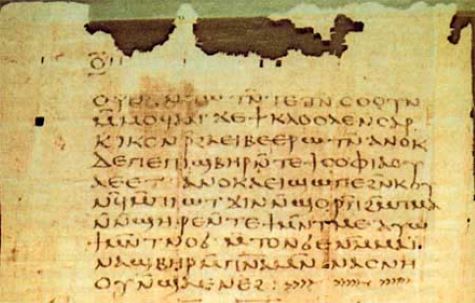
Gnostic traditions introduce one of the most radical reinterpretations of the adversarial principle in the history of religious thought. Rather than locating opposition in a force external to creation, Gnosticism often identifies the very creator of the material world, the Demiurge, as a flawed or malevolent figure. The adversary is not a tempter operating within creation but a being responsible for the creation itself, marking a profound inversion of earlier theological models. The Demiurge is frequently depicted as ignorant of the higher, transcendent God, yet arrogantly claims authority over the cosmos he has fashioned.
This reinterpretation transforms the structure of opposition from a conflict between order and chaos or good and evil into a more complex tension between ignorance and knowledge. The material world, in many Gnostic systems, is viewed as inherently deficient, a product of the Demiurge’s imperfection or deception. Human beings contain within themselves a spark of the divine, originating from a higher, unknowable source. The adversarial role of the Demiurge lies in maintaining the illusion of reality, keeping souls trapped within the material realm and preventing them from recognizing their true, spiritual nature. This dynamic reframes existence itself as a kind of barrier, in which everyday experience conceals rather than reveals ultimate truth. The tension is not simply between competing forces, but between different levels of reality, with the Demiurge presiding over a lower, incomplete domain that obscures access to the higher, transcendent order.
Unlike the adversaries of earlier traditions, the Demiurge does not typically engage in direct acts of temptation or moral corruption. Instead, his power operates through the structure of existence itself, shaping the conditions that obscure truth and perpetuate ignorance. This shifts the focus of opposition away from ethical behavior and toward epistemology, emphasizing knowledge, or gnosis, as the means of liberation. The adversary is not defeated through moral righteousness alone, but through awakening and insight, which reveal the illusory nature of the material world and the limitations of its creator.
The Gnostic framework also reconfigures the relationship between divine authority and opposition. In many texts, the Demiurge is subordinate to a higher, hidden God, often referred to as the Monad, who exists beyond the flawed material cosmos. This layered cosmology introduces a hierarchy in which the apparent creator is not the ultimate source of reality, complicating traditional notions of divine sovereignty. Figures associated with the Demiurge, including various archons, function as enforcers of this imperfect system, further expanding the range of adversarial agents within the Gnostic worldview. These archons are often portrayed as gatekeepers who reinforce the boundaries of the material realm, preventing souls from escaping through knowledge and insight. Their presence underscores the systemic nature of opposition in Gnostic thought, where the adversarial principle is embedded not only in a single figure but in the entire structure of the cosmos as experienced by humanity.
The Demiurge represents a fundamentally different type of adversary, one that challenges not only divine authority but the very nature of existence as perceived by humanity. By positioning creation itself as the problem, Gnostic thought reframes the concept of evil as a condition rooted in ignorance and misperception rather than moral failure or rebellion. This inversion distinguishes Gnosticism sharply from both earlier cosmological traditions and later monotheistic systems, offering a unique perspective in which liberation depends not on defeating an external enemy, but on transcending the limitations imposed by the structure of reality itself.
Christianity: The Consolidation of Satan as Cosmic Enemy

Within Christian theology, the figure of Satan emerges as a fully developed and morally defined adversary, synthesizing earlier traditions into a coherent and enduring concept of cosmic opposition. Drawing upon Jewish scriptural foundations, apocalyptic developments, and influences from surrounding cultures, early Christianity transforms the adversarial role into that of a singular, rebellious being who stands in direct opposition to God. Unlike the functional accuser of the Hebrew Bible or the abstract forces of earlier cosmologies, Satan becomes a personal and active enemy, embodying evil in both intention and action.
This consolidation is evident in the New Testament, where Satan appears in multiple roles that together establish his theological significance. In the Gospels, he acts as the tempter, most notably in the account of Jesus’ temptation in the wilderness, where he seeks to undermine divine purpose through deception and challenge. In other passages, he is described as the “ruler of this world” and the source of demonic activity, extending his influence across both the spiritual and material realms. These portrayals reinforce the idea of Satan as a pervasive and organized force of opposition, actively working to corrupt and mislead humanity. The diversity of these roles suggests not fragmentation but integration, as the adversarial figure becomes capable of operating across multiple dimensions of existence, from individual moral struggle to broader cosmic conflict. This expansion reflects an increasingly sophisticated theological system in which the adversary’s presence is both immediate and universal.
The development of Satan’s identity is also shaped by the reinterpretation of earlier scriptural and mythological motifs. Passages from the Hebrew Bible, such as the fall of the “morning star” in Isaiah and the lament over the king of Tyre in Ezekiel, were later read as allegories for the fall of Satan, contributing to the narrative of a once-exalted being cast down due to pride and rebellion. While these interpretations are not explicit in the original texts, their incorporation into Christian thought reflects a broader tendency to unify disparate traditions into a single, cohesive account of cosmic rebellion. This interpretive process demonstrates how early Christian thinkers engaged in theological synthesis, drawing connections across texts and traditions to construct a more comprehensive understanding of evil’s origin. By recontextualizing earlier material, they were able to articulate a narrative that explained not only the presence of evil in the world but also its ultimate defeat within a divinely ordered framework.
Central to this Christian framework is the moralization and personalization of evil. Satan is no longer a role or a condition, but a conscious agent who chooses to oppose God and actively seeks to draw others into that opposition. This moral dimension is closely tied to the development of doctrines concerning sin, free will, and salvation, in which human beings are understood to be engaged in a spiritual struggle influenced by both divine grace and demonic temptation. The adversary becomes integral to the narrative of redemption, serving as both the instigator of human fallenness and the opponent defeated through divine intervention.
The eschatological dimension of Christian thought further solidifies Satan’s role as a cosmic enemy. In the Book of Revelation, he is depicted as a dragon and deceiver who is defeated and cast into a final state of punishment, marking the end of his influence. This linear narrative of conflict and resolution stands in contrast to the cyclical or open-ended struggles found in earlier traditions, presenting a definitive conclusion in which evil is permanently overcome. The adversary’s defeat is not merely symbolic but absolute, reinforcing the moral clarity and finality of the Christian worldview. This eschatological certainty provides a sense of closure and purpose, situating the struggle between good and evil within a larger narrative that moves toward restoration and divine justice. It also reinforces the centrality of Satan within Christian theology, as his ultimate defeat serves as a defining moment in the culmination of the cosmic drama.
Christianity represents the culmination of a long process in which the adversarial figure becomes increasingly unified, moralized, and central to theological understanding. Satan embodies a convergence of earlier concepts, combining elements of chaos, rebellion, temptation, and opposition into a single, coherent figure. The result is a fully articulated vision of evil as a personal and active force within a dualistic framework, one that has profoundly shaped religious thought and cultural imagination in the centuries that followed.
Islam: Iblis and the Theology of Rebellion

In Islamic theology, the figure of Iblis presents a distinct yet related development of the adversarial role, retaining elements of earlier Abrahamic traditions while introducing important theological differences. Like Satan in Christianity, Iblis is a being who opposes divine command and seeks to lead humanity astray. The Qur’anic narrative situates Iblis within a framework that emphasizes divine unity and sovereignty, avoiding the emergence of a fully dualistic opposition between equal cosmic forces. Iblis is not a rival to God, but a created being whose rebellion unfolds within the bounds of divine will.
The defining moment of Iblis’s role occurs in the Qur’anic account of the creation of Adam. When God commands the angels to bow before Adam, Iblis refuses, citing his own superiority as a being made from fire rather than clay. This act of defiance is rooted in pride, marking Iblis as a figure whose opposition arises from arrogance rather than from an inherent alignment with evil. Unlike the fallen angel of later Christian tradition, Iblis is identified as a jinn, a being created from smokeless fire, which further distinguishes his nature and reinforces the diversity of created beings within Islamic cosmology. His refusal is not merely an act of disobedience, but a declaration of misplaced self-importance that defines his ongoing relationship with humanity.
Following his refusal, Iblis is cast out but granted respite until the Day of Judgment, during which he is allowed to tempt human beings. His role as a tempter operates primarily through suggestion, often described in the Qur’an as “whispering” into the hearts of individuals. This mode of influence underscores a key theological principle: Iblis cannot compel human action, but can only invite or encourage disobedience. Human beings remain responsible for their choices, and the adversarial role of Iblis functions as a test of faith and moral integrity rather than as a force that overrides free will.
The Islamic understanding of Iblis also reflects a careful balance between acknowledging the presence of evil and maintaining the absolute sovereignty of God. While Iblis actively seeks to mislead, his existence and actions are encompassed within divine knowledge and permission. There is no suggestion of an independent kingdom of evil opposing God’s authority; instead, the adversarial function serves a role within the broader divine plan. This perspective reinforces a theology in which even acts of rebellion are not outside divine awareness or control, but occur within a system designed to test and refine human moral agency. The presence of Iblis becomes a mechanism through which believers demonstrate obedience, resilience, and faith, rather than a sign of cosmic instability or divided authority. The problem of evil is addressed not by positing a competing power, but by integrating opposition into a unified framework governed entirely by divine will.
Iblis represents a form of adversarial figure that is both personal and constrained, embodying rebellion without establishing a true dualism. His opposition is real and consequential, yet always subordinate, reflecting a theological framework that integrates the existence of evil into a unified vision of divine control. As such, the Islamic portrayal of Iblis continues the trajectory of moralized opposition seen in earlier traditions, while maintaining a distinctive emphasis on accountability, divine unity, and the limits of adversarial power.
Norse Mythology: Chaos Without Moral Absolutism
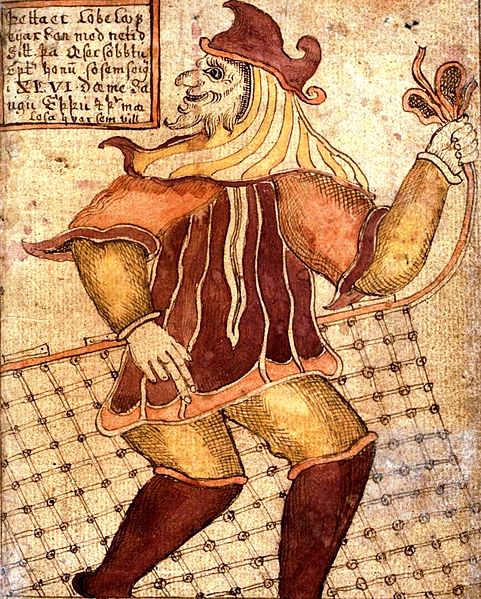
In Norse mythology, the adversarial principle takes a form that resists the moral absolutism found in later monotheistic traditions. Rather than presenting a singular embodiment of evil, Norse cosmology is populated by a range of beings whose actions contribute to both order and disorder within a dynamic and often unstable universe. Among these figures, Loki stands out as the most prominent agent of disruption, though his role is far more complex than that of a straightforward antagonist. He is neither wholly evil nor consistently opposed to the gods, but instead occupies a shifting position within the mythological narrative.
Loki’s character is defined by ambiguity and contradiction. At times, he assists the gods, using his cunning to resolve problems or acquire valuable objects, such as the treasures of the gods forged by dwarves. At other times, he instigates chaos, deception, and harm, most notably in his role in the death of the god Baldr. This duality reflects a worldview in which opposition is not neatly categorized as moral evil but is instead part of a broader interplay of forces that shape the course of events. Loki’s actions are disruptive, but they are also integral to the unfolding of the mythological order. His capacity to move between cooperation and antagonism underscores the fluid boundaries between order and disorder in Norse thought, where even destructive actions can contribute to larger patterns of meaning and consequence. Rather than being cast as an outsider to the divine community, Loki remains deeply embedded within it, complicating any attempt to define him as a purely oppositional figure.
The culmination of Loki’s adversarial role occurs in the events leading to Ragnarök, the prophesied destruction of the world. Having been bound by the gods as punishment for his actions, Loki eventually breaks free and leads forces of chaos against them in a final, cataclysmic conflict. This battle results in the death of many gods and the destruction of the existing world, yet it is followed by a renewal in which a new world emerges. The adversarial force is not eliminated but becomes part of a cyclical process of destruction and rebirth, echoing patterns seen in other mythological traditions while maintaining its own distinctive structure.
Importantly, Loki’s opposition is not framed as rebellion against a morally perfect deity, nor does it represent a cosmic struggle between absolute good and evil. The gods themselves are not infallible, and their interactions with Loki often involve deception, conflict, and negotiation. This absence of moral absolutism distinguishes Norse mythology from the dualistic frameworks of Zoroastrianism and Christianity, where the adversary is clearly defined in opposition to divine goodness. In the Norse context, chaos and order are interdependent, each contributing to the unfolding of cosmic events. The moral ambiguity of both gods and adversaries reflects a cultural perspective in which conflict is inherent to existence, not a deviation from it. Opposition is understood less as a moral failure and more as a natural expression of the tensions that drive the cosmos forward.
The Norse understanding of time further reinforces this perspective. Like certain other Indo-European traditions, Norse cosmology incorporates both linear and cyclical elements, culminating in Ragnarök but also allowing for renewal beyond it. The destruction brought about by Loki and his allies is not an ultimate defeat of order, but a necessary transformation that gives rise to a new beginning. This framing situates the adversarial role within a broader narrative of change and continuity, rather than final resolution.
Loki and the broader Norse mythological framework illustrate a conception of the adversary that is neither moralized nor singular. Opposition is diffuse, embedded in relationships and events rather than concentrated in a single figure of evil. The adversary does not exist to tempt humanity or to oppose a singular divine will, but to participate in a complex and often unpredictable cosmic drama. As such, Norse mythology offers a model of adversarial forces that emphasizes ambiguity, interdependence, and the inevitability of transformation.
Comparative Analysis: Patterns Across Traditions
When examined across traditions, the adversarial figure reveals a clear pattern of conceptual evolution, moving from impersonal forces of chaos to increasingly moralized and individualized entities. In the earliest mythological systems of Mesopotamia and Egypt, opposition is embedded within the structure of the cosmos itself, manifesting as primordial disorder or cyclical threat. These adversaries are not moral agents in a strict sense, but necessary components of a world in which order must be established and maintained. Their role is structural rather than ethical, reflecting a worldview in which instability is an inherent condition of existence rather than a deviation from it.
A significant transformation occurs with the emergence of Zoroastrianism, where opposition becomes explicitly moralized and dualistic. The introduction of Angra Mainyu as a conscious and malevolent force opposing Ahura Mazda represents a turning point in which the adversary is no longer simply a feature of the cosmos but an ethical antagonist. This development reshapes the nature of religious thought by framing existence as a struggle between truth and falsehood, with human beings actively participating through their moral choices. The shift from cyclical to linear conceptions of time further reinforces this transformation, introducing the expectation of an ultimate resolution in which evil is definitively overcome. The adversary assumes a heightened level of agency and intentionality, no longer representing an impersonal force but a being whose actions carry ethical significance. This redefinition of opposition has far-reaching implications, as it provides a conceptual foundation for later traditions that emphasize accountability, judgment, and the eventual triumph of good over evil within a structured, goal-oriented cosmos.
South Asian traditions such as Hinduism and Buddhism offer alternative models that resist both singularity and absolute dualism. Hindu thought disperses adversarial functions across multiple beings and cosmic cycles, emphasizing imbalance and degeneration rather than a unified enemy. Buddhism goes further by internalizing the adversarial principle, locating it within the psychological and existential conditions that bind individuals to suffering. In these frameworks, opposition is not an external force to be defeated in a final confrontation, but a condition to be understood and transcended through insight and discipline.
The Abrahamic traditions, particularly Judaism, Christianity, and Islam, synthesize and reinterpret these earlier patterns in distinct ways. Early Jewish conceptions maintain a subordinate and functional adversary within a strictly monotheistic framework, but later developments introduce a more elaborate demonology and greater differentiation between forces aligned with and opposed to divine will. Christianity consolidates these developments into a singular figure of Satan, embodying moral evil and cosmic rebellion, while Islam preserves the personal adversary in the figure of Iblis but maintains a strong emphasis on divine unity and control. These traditions collectively illustrate a movement toward personalization and moralization, even as they retain varying degrees of theological constraint.
These patterns suggest that the figure of the adversary is not a fixed archetype but a dynamic construct shaped by evolving religious, philosophical, and cultural contexts. Across traditions, opposition serves multiple functions: explaining disorder, structuring moral experience, and articulating the limits of human understanding. The progression from cosmic chaos to moral enemy to internal condition reflects broader shifts in how societies conceptualize the nature of reality and the sources of suffering. The adversary is less a universal figure than a mirror of changing human attempts to make sense of the forces that challenge order, meaning, and existence itself.
Historiography: Interpreting Evil Across Cultures
The study of adversarial figures across religious traditions has generated a substantial body of historiographical debate, particularly concerning the origins, functions, and transformations of the concept of evil. Early scholarship often approached these figures through a comparative lens that sought direct lines of influence, especially from Zoroastrian dualism to later Jewish and Christian demonologies. This diffusionist model, while influential, has been increasingly challenged by scholars who emphasize the complexity of cultural exchange and the independent development of analogous ideas within distinct historical contexts.
One of the most enduring debates centers on the extent to which Zoroastrianism shaped the development of the Jewish and Christian Satan. Scholars have argued for significant Persian influence during the Achaemenid and subsequent periods, suggesting that the clear dualism of Angra Mainyu provided a conceptual framework that later traditions adapted. Others caution against overly deterministic models, pointing out that Second Temple Jewish literature reflects a wide range of ideas about evil that cannot be reduced to a single source. These competing interpretations highlight the difficulty of tracing intellectual transmission in the ancient world, where ideas were often adapted, reinterpreted, and integrated into existing theological systems.
In parallel, historians of religion have increasingly turned their attention to the internal dynamics of traditions, examining how concepts of evil evolve in response to social, political, and theological pressures. Religious history scholars have argued that the development of Satan in early Christianity is closely tied to processes of identity formation and boundary-making, with adversarial figures serving to define orthodoxy against perceived threats. Some have traced the gradual consolidation of the devil as a singular figure, emphasizing the role of narrative, doctrine, and popular belief in shaping its characteristics. These approaches shift the focus from external influence to internal transformation, underscoring the adaptive nature of religious concepts. They also highlight the importance of historical context, showing how periods of crisis, persecution, or institutional consolidation often coincide with more sharply defined notions of evil. The adversarial figure becomes not only a theological construct but also a reflection of communal anxieties and strategies of self-definition, evolving in tandem with the historical circumstances that give rise to it.
Another significant historiographical trend involves the reinterpretation of non-Western traditions, particularly those of South Asia, which have often been mischaracterized through the lens of Western dualism. Earlier comparative studies sometimes sought to identify “devil equivalents” in Hinduism and Buddhism, imposing categories that do not align with indigenous frameworks. More recent scholarship has emphasized the importance of understanding these traditions on their own terms, recognizing that figures such as Māra or the Asuras function within systems that do not posit an ultimate, singular embodiment of evil. This shift reflects a broader methodological commitment to cultural specificity and interpretive nuance.
The historiography of evil has also been shaped by interdisciplinary approaches that draw on anthropology, psychology, and literary studies. Scholars have explored how adversarial figures operate as symbols of human anxiety, moral conflict, and existential uncertainty. In this view, the devil and its analogues are not only theological constructs but also cultural expressions of deeper psychological and social dynamics. Such interpretations have broadened the scope of analysis, allowing for a more holistic understanding of why these figures emerge and persist across diverse contexts.
These historiographical perspectives reveal that the concept of evil is neither static nor universal, but continually redefined through processes of interpretation and reinterpretation. The adversarial figure, whether conceived as a cosmic force, a moral agent, or an internal condition, reflects the concerns and assumptions of the societies that produce it. As scholarship continues to evolve, it increasingly recognizes the need to balance comparative insight with respect for cultural particularity, avoiding simplistic equivalences while still engaging with the broader patterns that connect human understandings of opposition and disorder.
Conclusion: The Human Need to Define Opposition
Across cultures and centuries, the figure of the adversary has served as a powerful means of articulating the boundaries of order, meaning, and identity. Whether expressed as primordial chaos, moral evil, psychological temptation, or cosmic rebellion, these figures reveal a persistent human impulse to define what stands in opposition to the good, the true, and the sacred. The diversity of adversarial forms reflects not only differing theological systems but also varying conceptions of the cosmos itself, from cyclical processes of balance and disruption to linear narratives of conflict and resolution.
The historical trajectory traced in this study demonstrates that the adversary is not a fixed or universal entity, but a concept shaped by evolving intellectual, social, and religious contexts. Early mythologies embedded opposition within the fabric of existence, while later traditions increasingly personalized and moralized it, culminating in figures such as Satan and Iblis. Alternative models persisted, particularly in South Asian traditions, where opposition remained diffuse or internalized rather than concentrated in a singular being. This variation underscores the adaptability of the adversarial concept and its capacity to respond to different explanatory needs.
At a deeper level, the persistence of these figures suggests that the adversary functions as a mirror of human concerns. By externalizing disorder, suffering, and moral failure, societies create frameworks through which such experiences can be understood and addressed. In some traditions, this process leads to the identification of a cosmic enemy to be resisted; in others, it encourages introspection and the recognition of internal sources of conflict. In both cases, the adversary provides a means of grappling with the limits of human knowledge and control, offering narratives that make sense of uncertainty and instability. It also enables communities to assign meaning to misfortune and injustice, situating individual and collective struggles within a broader moral or cosmic framework. The adversarial figure becomes a focal point for ethical reflection, shaping not only belief systems but also practices, rituals, and modes of behavior that respond to perceived threats both external and internal.
The enduring presence of adversarial figures points to a fundamental aspect of human thought: the need to define opposition as a way of clarifying meaning. By delineating what is not, cultures articulate what is, constructing systems of belief that organize experience and guide action. The adversary, in its many forms, is not merely an enemy to be defeated, but a conceptual tool through which human beings explore the nature of existence, morality, and the unknown.
Bibliography
Affiliate disclosure: Amazon links on this site are paid links. As an Amazon Associate I earn from qualifying purchases.
- Allen, James P. Middle Egyptian Literature: Eight Literary Works of the Middle Kingdom. Cambridge: Cambridge University Press, 2014.
- Assmann, Jan. The Search for God in Ancient Egypt. Ithaca: Cornell University Press, 1984.
- Aune, David E. Revelation 1–5. Word Biblical Commentary, vol. 52A. Dallas: Word Books, 1997.
- Boyce, Mary. Zoroastrians: Their Religious Beliefs and Practices. London: Routledge, 1979.
- Brakke, David. The Gnostics: Myth, Ritual, and Diversity in Early Christianity. Cambridge, MA: Harvard University Press, 2010.
- Brooks, W. K. “Lucifer: A Study in Morphology.” Philosophical Transactions of the Royal Society of London 173 (1882), 57-137.
- Bryant, Edwin F. Krishna: A Sourcebook. Oxford: Oxford University Press, 2007.
- Collins, John J. The Apocalyptic Imagination: An Introduction to Jewish Apocalyptic Literature. 3rd ed. Grand Rapids, MI: Eerdmans, 1984.
- —-. Introduction to the Hebrew Bible, 3rd edition. Minneapolis: Fortress Press, 2007.
- Crossley-Holland, Kevin. The Norse Myths. New York: Pantheon Books, 1980.
- Dalley, Stephanie. Myths from Mesopotamia: Creation, the Flood, Gilgamesh, and Others. Oxford: Oxford University Press, 1989.
- Day, John. God’s Conflict with the Dragon and the Sea: Echoes of a Canaanite Myth in the Old Testament. Cambridge: Cambridge University Press, 1985.
- Doniger, Wendy. The Hindus: An Alternative History. New York: Penguin Press, 2009.
- Faulkner, Raymond O., trans. The Ancient Egyptian Book of the Dead. Austin: University of Texas Press, 1990.
- Gethin, Rupert. The Foundations of Buddhism. Oxford: Oxford University Press, 1998.
- Gnoli, Gherardo. Zoroaster’s Time and Homeland: A Study on the Origins of Mazdeism and Related Problems. Naples: Istituto Universitario Orientale, 1980.
- Gombrich, Richard. What the Buddha Thought. London: Equinox, 2009.
- Grabbe, Lester L. A History of the Jews and Judaism in the Second Temple Period, Volume 1. London: T&T Clark, 2004.
- Griffiths, J. Gwyn. “Seth, God of Confusion: A Study of His Role in Egyptian Mythology and Religion.” The Journal of Egyptian Archaeology 55:1 (1969), 226-227.
- Harvey, Peter. An Introduction to Buddhism: Teachings, History, and Practices. Cambridge: Cambridge University Press, 1990.
- Heidel, Alexander. The Babylonian Genesis: The Story of Creation. Chicago: University of Chicago Press, 1963.
- Hiltebeitel, Alf. Dharma: Its Early History in Law, Religion, and Narrative. Oxford: Oxford University Press, 2010.
- Hornung, Erik. Conceptions of God in Ancient Egypt: The One and the Many. Ithaca: Cornell University Press, 1982.
- Jonas, Hans. The Gnostic Religion: The Message of the Alien God and the Beginnings of Christianity. Boston: Beacon Press, 1958.
- Kelly, Henry Ansgar. Satan: A Biography. Cambridge: Cambridge University Press, 2006.
- Lambert, W. G. Babylonian Creation Myths. Winona Lake, IN: Eisenbrauns, 2013.
- Larrington, Carolyne, trans. The Poetic Edda. Oxford: Oxford University Press, 2014.
- Layton, Bentley. The Gnostic Scriptures. New Haven: Yale University Press, 1987.
- Levenson, Jon D. Creation and the Persistence of Evil: The Jewish Drama of Divine Omnipotence. Princeton: Princeton University Press, 1988.
- Nickelsburg, George W. E. 1 Enoch: A Commentary on the Book of 1 Enoch. Minneapolis: Fortress Press, 2001.
- Olivelle, Patrick, trans. The Early Upanishads: Annotated Text and Translation. Oxford: Oxford University Press, 1998.
- Pagels, Elaine. The Gnostic Gospels. New York: Random House, 1979.
- —-. “The Social History of Satan, the ‘Intimate Enemy’: A Preliminary Sketch.” The Harvard Theological Review 84:2 (1991), 105-128.
- —-. The Origin of Satan: How Christians Demonized Jews, Pagans, and Heretics. New York: Random House, 1995.
- Peters, F. E. Islam: A Guide for Jews and Christians. Princeton: Princeton University Press, 2003.
- Quint, David. “Fear of Falling: Icarus, Phaethon, and Lucretius in Paradise Lost.” Renaissance Quarterly 57:3 (2004), 847-881.
- Rhys Davids, T. W., trans. Dialogues of the Buddha. Delhi: Low Price Publications, 1899.
- Rippin, Andrew. Muslims: Their Religious Beliefs and Practices. London: Routledge, 2012.
- Robinson, James M., ed. The Nag Hammadi Library in English. San Francisco: HarperOne, 1977.
- Russell, Jeffrey Burton. The Devil: Perceptions of Evil from Antiquity to Primitive Christianity. Ithaca: Cornell University Press, 1977.
- —-. Satan: The Early Christian Tradition. Ithaca: Cornell University Press, 1981.
- Simek, Rudolf. Dictionary of Northern Mythology. Translated by Angela Hall. Cambridge: D. S. Brewer, 1993.
- Skjærvø, Prods Oktor. Introduction to Zoroastrianism. Cambridge, MA: Harvard University Press, 2012.
- Smith, Jane I., and Yvonne Y. Haddad. The Islamic Understanding of Death and Resurrection. Oxford: Oxford University Press, 1981.
- Smith, Mark S. The Origins of Biblical Monotheism: Israel’s Polytheistic Background and the Ugaritic Texts. Oxford: Oxford University Press, 2001.
- Snorri Sturluson. The Prose Edda. Translated by Jesse L. Byock. London: Penguin Classics, 2005.
- Strong, John S. The Buddha: A Short Biography. Oxford: Oneworld Publications, 2001.
- Stuckenbruck, Loren T. The Myth of Rebellious Angels: Studies in Second Temple Judaism and New Testament Texts. Tübingen: Mohr Siebeck, 2014.
- The Zend-Avesta. Translated by James Darmesteter. Oxford: Oxford University Press, 1880.
- The Bhagavata Purana, trans. J. L. Shastri and G. V. Tagare. New Delhi: Motilal Banarsidass Publishers, 1950.
- The Book of Tobit. In The New Oxford Annotated Bible with Apocrypha. New Revised Standard Version. Pheme Perkins Michael, Marc Z. Brettler, and Carol Newsom, eds. Oxford: Oxford University Press, 2018.
- The Pali Canon, trans. various authors. Accessed through the Pali Text Society editions.
- The Qur’an. Translated by M. A. S. Abdel Haleem. Oxford: Oxford University Press, 2004.
- Turville-Petre, E. O. G. Myth and Religion of the North: The Religion of Ancient Scandinavia. London: Weidenfeld & Nicolson, 1964.
- Watt, W. Montgomery. Islamic Philosophy and Theology. Edinburgh: Edinburgh University Press, 1985.
Originally published by Brewminate, 04.21.2026, under the terms of a Creative Commons Attribution-NonCommercial-NoDerivatives 4.0 International license.
About the Author