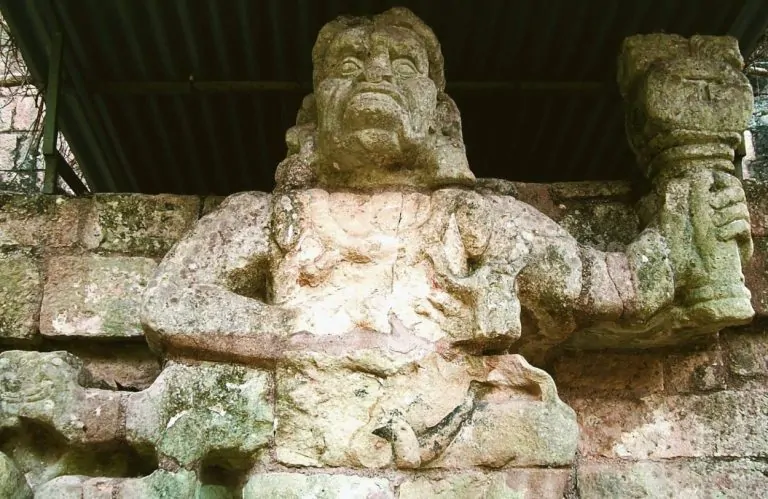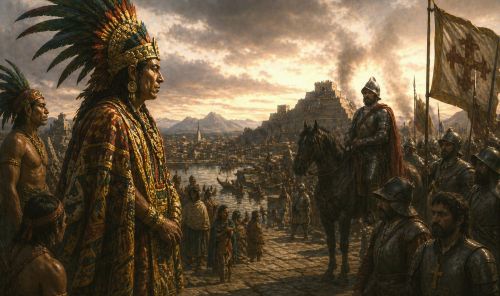
Moctezuma II’s response to the Spanish conquest reveals how authority, belief, and uncertainty shaped decisions that contributed to the fall of the Aztec Empire.

By Matthew A. McIntosh
Public Historian
Brewminate
Introduction: Leadership at the Edge of the Unknown
The encounter between the Aztec Empire and the Spanish expedition led by Hernán Cortés in 1519 stands as one of the most consequential moments in early modern history, not only for its outcome but for the profound uncertainty that shaped it. At the center of this encounter was Moctezuma II (Motecuhzoma Xocoyotzin), a ruler whose decisions have long been interpreted through the lens of hesitation, indecision, or even irrationality. Yet such interpretations often obscure the unprecedented nature of the crisis he faced. The arrival of foreign invaders with unfamiliar technologies, animals, and intentions presented a situation for which there was no clear precedent within the political or cosmological frameworks of the Aztec world. Unlike conflicts with neighboring polities, which followed established patterns of warfare and diplomacy, this encounter introduced entirely new variables that could not be easily categorized or understood. The Spaniards did not fit into existing systems of tribute, alliance, or ritualized conflict, forcing Moctezuma and his advisors to interpret them through incomplete analogies and fragmentary information. The crisis was not merely military or political, but epistemological, challenging the very foundations through which reality itself was understood.
Moctezuma’s response to this crisis has frequently been characterized as contradictory. He initially sought to gather intelligence and limit contact, only to later permit the Spanish to enter the imperial capital of Tenochtitlan, where they were received with ceremony and provided with lavish gifts. This apparent vacillation has been cited as evidence of weakness or confusion, particularly in narratives shaped by early Spanish chroniclers. Such interpretations risk imposing retrospective clarity onto a moment defined by ambiguity. Decisions that appear inconsistent in hindsight may reflect attempts to navigate a rapidly evolving situation in which information was incomplete and outcomes uncertain.
Central to understanding Moctezuma’s actions is the structure of Aztec authority itself, which intertwined political power with religious obligation. As tlatoani, he was not merely a secular ruler but a figure whose role carried significant cosmological implications. His decisions were embedded within a system that emphasized ritual propriety, divine favor, and the maintenance of cosmic order. The arrival of the Spanish could not be interpreted solely in military or diplomatic terms; it required engagement with a broader set of meanings that shaped both perception and response. The possibility that the newcomers were connected, however tenuously, to existing religious expectations further complicated the process of decision-making, reinforcing caution and deliberation.
Moctezuma’s leadership during the Spanish arrival should not be reduced to notions of madness or passivity but understood as a constrained response to an unprecedented crisis. His actions were shaped by a combination of structural authority, cultural expectations, and the limits of available knowledge, producing a pattern of behavior that reflects both adaptation and uncertainty. By examining this moment in its proper context, it becomes possible to move beyond simplistic explanations and to explore how systems of belief and power influence decision-making at the edge of the unknown. The fall of the Aztec Empire is not merely a story of conquest, but a case study in how leadership operates under conditions where the familiar frameworks of understanding begin to break down.
Imperial Authority and Structure in the Aztec World

The authority exercised by Moctezuma II was rooted in a political system that combined centralized power with deeply embedded ritual obligations. As tlatoani of the Mexica, he stood at the apex of an imperial structure that governed not only Tenochtitlan but a vast network of tributary cities across central Mesoamerica. This authority was not absolute in the sense of arbitrary rule, but it was highly concentrated, mediated through councils of nobles and priests who reinforced the legitimacy of the ruler’s decisions. The system functioned through a combination of military dominance, economic extraction, and ideological cohesion, creating a framework in which obedience was both expected and normalized.
Central to this structure was the integration of political and religious authority. The tlatoani was understood not merely as a political leader but as a mediator between the human and divine realms, responsible for maintaining cosmic balance through proper ritual conduct. Decisions made at the highest level were imbued with religious significance, extending their impact beyond immediate practical concerns. This fusion of roles shaped the expectations placed upon both the ruler and his subjects, as actions were evaluated not only in terms of their effectiveness but also their conformity to sacred order. Obedience was systemically reinforced by belief, as compliance with authority was also seen as participation in the maintenance of the cosmos.
The administrative framework of the empire further contributed to this dynamic by organizing society into clearly defined hierarchies. Nobles (pipiltin), commoners (macehualtin), priests, and military leaders each occupied specific roles within a system that emphasized duty and rank. Communication of imperial decisions flowed through these layers, ensuring that commands were transmitted efficiently and with minimal distortion. This structure limited the space for dissent, as individuals were expected to act within the boundaries of their assigned roles. The predictability of this system allowed for effective governance, but it also created conditions in which alternative courses of action were difficult to articulate or pursue. Even when disagreement or uncertainty existed, it had to be expressed within accepted channels, often mediated by higher-status individuals who were themselves invested in maintaining the system’s stability. This layered hierarchy functioned not only as a means of administration but as a mechanism for shaping perception, narrowing the range of acceptable responses and reinforcing the expectation that authority would be followed.
Tribute relationships played a crucial role in sustaining imperial authority, binding subject regions to Tenochtitlan through economic and symbolic ties. Conquered polities were required to provide goods, labor, and military support, reinforcing the dominance of the Mexica while also integrating diverse populations into a shared system. These relationships were maintained not only through force but through ritualized displays of power and reciprocity, which reinforced the legitimacy of the imperial center. The regularity of these exchanges contributed to a sense of stability, making the empire appear both enduring and divinely sanctioned.
The authority of the tlatoani was both powerful and constrained. While Moctezuma possessed significant influence, his actions were shaped by the expectations of the elite groups that supported his rule. Priests played a key role in interpreting omens and guiding decisions, embedding leadership within a framework of religious consultation. This reliance on established practices ensured continuity but also limited flexibility, as responses to new situations were filtered through existing systems of meaning. In moments of crisis, such as the arrival of the Spanish, these constraints could become especially pronounced, shaping the range of perceived options. Decisions were not made in isolation but through processes that required validation within the broader cosmological and political order, reinforcing caution and adherence to precedent. Even when circumstances demanded rapid adaptation, the structures of authority encouraged deliberation and conformity, illustrating how deeply embedded systems can both guide and restrict leadership.
The structure of Aztec imperial authority created a system in which obedience was deeply embedded at multiple levels. Political hierarchy, religious belief, and social organization worked together to reinforce compliance, making it a fundamental aspect of daily life. While this system provided cohesion and stability under normal conditions, it also introduced vulnerabilities when confronted with unprecedented challenges. The same mechanisms that facilitated effective governance could, in moments of uncertainty, restrict adaptive response, illustrating how the strengths of a system can become liabilities under pressure.
First Contact: Uncertainty and Interpretation (1519)

The initial encounters between the Aztec Empire and the expedition led by Hernán Cortés in 1519 unfolded within a framework of profound uncertainty. Reports of the newcomers reached Moctezuma II gradually, carried by messengers who described unfamiliar ships, animals, weapons, and people. These accounts were filtered through existing categories of understanding, yet they resisted easy classification. The Spaniards did not resemble known enemies or allies, nor did they conform to established patterns of interaction. The earliest responses were shaped less by clear strategy than by the need to interpret an unprecedented phenomenon.
Information itself became a critical and unstable factor in this process. Messengers relayed descriptions that were often incomplete or exaggerated, reflecting both the limitations of observation and the attempt to make sense of unfamiliar elements. Horses, for example, were initially perceived as unified beings rather than separate animals and riders, complicating their interpretation within existing frameworks. Similarly, the use of firearms and steel weapons introduced forms of violence that had no direct analogue in Mesoamerican warfare. These uncertainties did not merely delay decision-making; they actively shaped it, as each new report required reinterpretation and adjustment. The accumulation of such reports created a shifting picture of the situation, one in which earlier assumptions could be quickly undermined by new information. Certainty was difficult to achieve, and decisions had to be made on the basis of partial and evolving knowledge. The process of interpretation became continuous, as Moctezuma and his advisors sought to reconcile conflicting accounts and incorporate unfamiliar elements into a coherent understanding of the threat they faced.
The role of cosmology further complicated the situation, as the arrival of the Spaniards intersected with existing religious beliefs and expectations. Some sources suggest that Moctezuma and his advisors considered the possibility that the newcomers were connected to returning deities, particularly Quetzalcoatl. While modern scholarship has questioned the extent and accuracy of this association, the broader point remains that interpretation occurred within a framework that linked unusual events to divine significance. This perspective encouraged caution, as actions taken against potentially sacred figures carried risks that extended beyond the immediate political sphere. Cosmological interpretation did not provide clear guidance, as it introduced ambiguity rather than resolution. The possibility of divine association coexisted with evidence of human behavior, creating a tension that could not be easily resolved. This ambiguity reinforced a cautious approach, as premature action could disrupt the cosmic balance or provoke unintended consequences, further complicating the already uncertain situation.
Diplomatic gestures formed a central component of the early response. Moctezuma sent emissaries bearing gifts, including gold and elaborate textiles, both as a means of acknowledging the newcomers and as an attempt to gather further information. These exchanges can be understood within the established practices of Mesoamerican diplomacy, where gift-giving functioned as a tool of communication and negotiation. The scale and nature of the gifts reflected an effort to manage the situation symbolically, projecting wealth and power while also attempting to define the relationship on terms that were familiar to the Aztec court.
Despite these efforts, the Spaniards continued their advance toward Tenochtitlan, forming alliances with indigenous groups hostile to Aztec rule and demonstrating a willingness to exploit existing political tensions. The inability to halt or redirect this movement underscores the limitations of the initial interpretive framework. Actions that might have been effective in dealing with known adversaries proved insufficient against an opponent operating outside established norms. This mismatch between expectation and reality contributed to a growing sense of instability, as each development challenged the assumptions underlying earlier decisions. The alliances forged by the Spaniards not only increased their military strength but also disrupted the political landscape upon which Aztec authority depended. As subject peoples shifted their allegiance or resisted imperial control, the cohesion of the empire began to weaken, further complicating Moctezuma’s ability to respond effectively. The initial uncertainty of interpretation was compounded by tangible changes in the balance of power, accelerating the transition from ambiguity to crisis.
The first contact between the Aztecs and the Spaniards illustrates how uncertainty can shape both perception and action in moments of crisis. Without clear models for understanding the situation, Moctezuma and his advisors relied on existing systems of meaning that were not fully equipped to address the new reality. The resulting responses, while coherent within their own context, proved inadequate in the face of rapidly changing conditions. This episode highlights the importance of interpretation in shaping historical outcomes, demonstrating how the limits of knowledge can influence the trajectory of events as profoundly as the actions themselves.
Vacillation or Strategy? Moctezuma’s Leadership Under Pressure
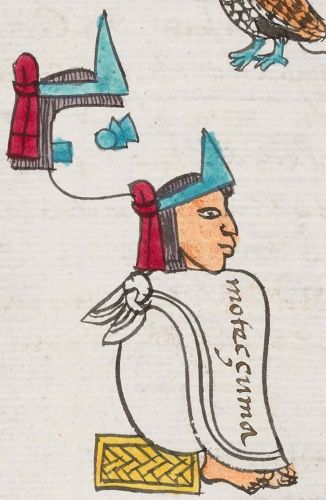
The actions of Moctezuma II in the months following first contact have often been described as inconsistent, oscillating between resistance and accommodation. Yet this apparent vacillation must be situated within the pressures of a rapidly evolving crisis in which no established model of response existed. As the expedition of Hernán Cortés advanced inland, Moctezuma attempted to manage the situation through a combination of intelligence gathering, diplomacy, and controlled engagement. These measures, while sometimes interpreted as indecisive, reflect an effort to contain and interpret a threat whose scale and nature were not yet fully understood.
Early attempts to deter the Spanish reveal a degree of strategic intent. Moctezuma sent envoys not only to deliver gifts but also to observe the newcomers, assess their capabilities, and communicate imperial authority. In some accounts, he even sought to discourage their advance by emphasizing the power and distance of Tenochtitlan, implicitly suggesting that further movement would be unwise. Such actions indicate that resistance was not absent but rather expressed through indirect means consistent with existing diplomatic practices. These measures relied on the assumption that the Spaniards would respond to signals of power and prestige in ways comparable to other Mesoamerican polities, where displays of wealth and authority could influence behavior without immediate recourse to force. The dispatch of emissaries allowed Moctezuma to gather intelligence, creating a feedback loop in which observation and response were closely linked. The effectiveness of these measures was limited by the Spaniards’ own objectives, which did not align with the expectations underlying Aztec diplomacy, and by their willingness to interpret gestures of engagement as opportunities for advancement rather than as boundaries to be respected.
The decision to permit the Spanish entry into Tenochtitlan represents the most debated aspect of Moctezuma’s leadership. On the surface, this act appears to signal submission, granting a small foreign force access to the political and ceremonial heart of the empire. Yet alternative interpretations suggest that the decision may have been an attempt to assert control over the situation by bringing the Spaniards into a space where imperial authority was most visible and structured. Within the capital, Moctezuma could monitor their movements, manage their interactions, and reinforce his status through ceremonial display. This strategy, if such it was, relied on the assumption that the established mechanisms of power would remain effective in shaping the behavior of the newcomers.
The failure of this approach highlights the limits of strategic adaptation under conditions of uncertainty. Once inside the city, the Spanish acted in ways that disrupted the expected balance of authority, culminating in the seizure of Moctezuma himself. This act fundamentally altered the dynamics of power, transforming the emperor from a leader in control into a captive intermediary. The situation exposed the vulnerability of a system that depended heavily on centralized authority, as the capture of a single individual had cascading effects on the entire structure. What had been an attempt to manage the crisis through controlled engagement instead created new opportunities for exploitation by the invaders.
Moctezuma’s leadership can be understood as both adaptive and constrained. His actions were shaped by the need to respond to unprecedented circumstances using tools and frameworks developed for more familiar challenges. The resulting pattern of behavior reflects not simple indecision but the difficulty of applying established strategies to a situation that continually undermined them. The question of whether his choices were ultimately strategic or misguided cannot be answered definitively, but it is clear that they were made within a system that both enabled and limited his capacity to act. This tension between intention and outcome underscores the complexity of leadership at the edge of the unknown, where the line between rational strategy and perceived failure becomes increasingly difficult to draw.
Following the Emperor: Obedience, Hierarchy, and Constraint
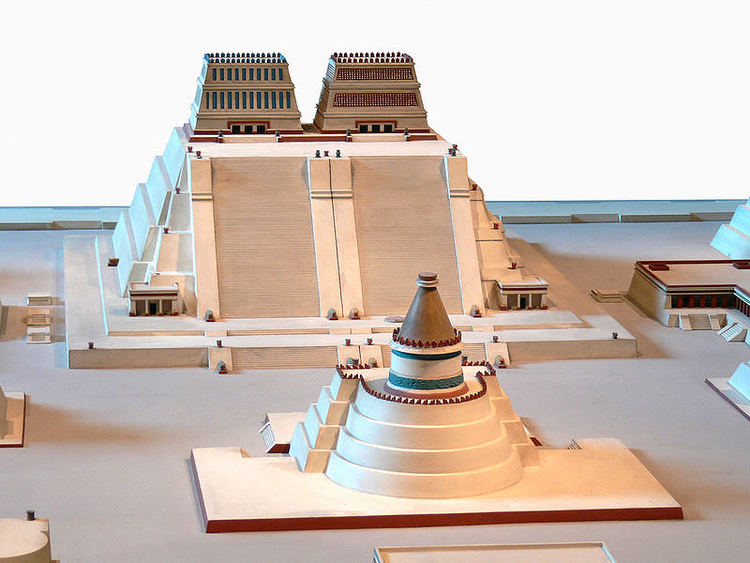
The responses of Aztec elites and commoners to the actions of Moctezuma II were shaped by a system in which obedience was not merely expected but structurally embedded. The authority of the tlatoani rested on a combination of political power, religious legitimacy, and social expectation, all of which reinforced the perception that his decisions were to be followed. When Moctezuma adopted a cautious and accommodating approach toward the Spanish, this posture was reflected in the behavior of those around him. The absence of immediate, coordinated resistance was not simply the result of passivity, but of a system that conditioned individuals to act within the boundaries set by imperial authority. Obedience functioned as a stabilizing force, maintaining coherence even as uncertainty increased. Yet this same stability limited the capacity for rapid or independent response, as individuals were constrained by expectations that prioritized adherence over initiative. The system produced a form of collective behavior in which conformity was both a strength and a liability, shaping the trajectory of events in ways that were not immediately apparent.
The role of the nobility was central in transmitting and reinforcing this obedience. Members of the pipiltin served as intermediaries between the emperor and the broader population, ensuring that directives were communicated and enacted. Their status depended in part on their proximity to the ruler and their ability to uphold the stability of the system, creating strong incentives to align their actions with his decisions. Even when doubts may have arisen regarding the handling of the Spanish, the structure of authority discouraged open dissent. To challenge Moctezuma directly would have risked not only personal standing but the coherence of the political order itself.
Priests and religious specialists further reinforced this dynamic by framing events within a cosmological context that emphasized caution and ritual propriety. The interpretation of omens, signs, and unusual occurrences played a significant role in shaping responses, often encouraging deliberation rather than immediate confrontation. The actions of the emperor were not purely political decisions but part of a broader effort to maintain cosmic balance. This perspective limited the range of acceptable responses, as actions taken outside established ritual expectations carried the risk of disrupting the relationship between the human and divine realms. The authority of the priesthood in interpreting these signs added an additional layer of constraint, as their readings of events influenced both elite and popular perceptions. In moments of ambiguity, such interpretations could reinforce caution, discouraging decisive action until a clearer understanding of divine will could be established. The integration of religion and governance not only legitimized authority but also shaped the tempo and nature of response, often privileging continuity over rapid adaptation.
The general population also operated within these constraints, responding to events through the lens of established hierarchy and communal identity. While individual reactions may have varied, collective action was shaped by the absence of clear authorization to resist. The entry of the Spanish into Tenochtitlan, for example, occurred without widespread violence in part because it was framed as an event sanctioned by the emperor. In a society where authority was closely tied to legitimacy, acting independently of that authority would have required a significant break from normative behavior. The resulting compliance reflects not a lack of awareness but the strength of the structures that guided action. Communal life in the Aztec world was organized around shared obligations and mutual expectations, reinforcing patterns of behavior that prioritized cohesion. Individuals were embedded within networks of family, neighborhood, and occupation, all of which were influenced by broader political and religious structures. This interconnectedness meant that deviation from established norms carried consequences that extended beyond the individual, affecting one’s place within the community. Obedience was not merely a response to authority but a means of maintaining social stability.
This system of obedience was not immutable. As the situation evolved and the consequences of Moctezuma’s decisions became more apparent, tensions began to surface. The capture of the emperor by the Spanish introduced a profound contradiction, as the figure who embodied authority was now visibly constrained by foreign power. This development undermined the basis of obedience, creating uncertainty about how to interpret and respond to his commands. The same structures that had previously reinforced compliance now struggled to accommodate a reality in which the source of authority appeared compromised.
The behavior of the Aztec population during this period illustrates both the strength and the fragility of hierarchical obedience. Under normal conditions, the system provided cohesion and predictability, aligning individual actions with collective expectations. Yet when confronted with a crisis that disrupted the foundations of authority, the mechanisms of obedience became sources of tension rather than stability. The initial compliance with Moctezuma’s approach, followed by growing unrest, reflects the dynamic nature of obedience within structured societies, where adherence to authority can shift rapidly in response to changing perceptions of legitimacy.
Crisis of Authority: Hostage Emperor and Internal Fracture
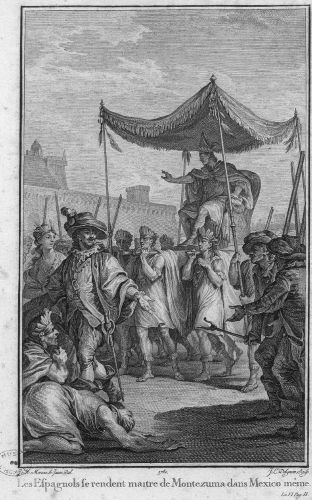
The seizure of Moctezuma II by the forces of Hernán Cortés marked a decisive turning point in the unfolding crisis, transforming a tense but manageable encounter into a profound rupture of political and symbolic order. By taking the tlatoani hostage within his own palace, the Spanish inverted the hierarchy that underpinned Aztec authority. The ruler who embodied sovereignty, ritual legitimacy, and cosmic mediation was rendered visibly subordinate to a foreign power, creating a situation that existing structures were ill-equipped to interpret. This act did not simply alter the balance of power; it destabilized the very framework through which authority was recognized and maintained.
The implications of this reversal were immediate and far-reaching. Moctezuma continued to issue commands and appear before his people, but these actions were now conducted under the watchful presence of his captors, raising questions about their authenticity and legitimacy. In a system where authority was closely tied to the perceived autonomy and sanctity of the ruler, the visible constraint of the emperor undermined confidence in his capacity to act as an independent agent. The performance of authority could not fully compensate for its compromised reality, and the gap between appearance and perception widened as the situation persisted.
This erosion of legitimacy contributed to growing unrest within Tenochtitlan. Members of the nobility and military leadership began to question the viability of continued compliance, particularly as the behavior of the Spanish became increasingly disruptive. Tensions escalated further during episodes of violence, including the massacre at the Templo Mayor, which intensified resentment and eroded any remaining tolerance for the presence of the invaders. These developments exposed the limits of the existing system of obedience, as the structures that had previously reinforced cohesion struggled to contain the pressures generated by the crisis.
The fragmentation of authority was accompanied by a shift in the locus of decision-making. As Moctezuma’s position weakened, alternative centers of leadership began to emerge, reflecting both the urgency of the situation and the inadequacy of existing responses. This transition was not orderly but marked by conflict and uncertainty, as different factions sought to assert control or redefine the course of action. Some leaders advocated for immediate and forceful resistance, while others remained uncertain about how far they could depart from established norms without undermining the broader social and religious order. The resulting instability further complicated the ability of the Aztec polity to respond effectively, as coordination became increasingly difficult in the absence of a universally recognized authority. Communication broke down across different levels of society, and decisions that would previously have been centralized became fragmented, inconsistent, or delayed. The absence of a clear and legitimate center of power did not simply weaken the response; it actively hindered the formation of a coherent strategy, allowing the Spanish to exploit divisions and uncertainties within the Aztec leadership.
The crisis of Moctezuma’s captivity illustrates the fragility of systems that rely heavily on centralized, symbolic authority. Once the icon at the center of the system was compromised, the mechanisms that had sustained obedience and cohesion began to unravel. The rapid shift from compliance to resistance reflects the extent to which legitimacy, rather than coercion alone, underpinned the functioning of the empire. In this moment of fracture, the strengths of the system were revealed as vulnerabilities, demonstrating how the disruption of a single node of authority could precipitate widespread instability.
Collapse and Catastrophe: The Fall of Tenochtitlan (1521)
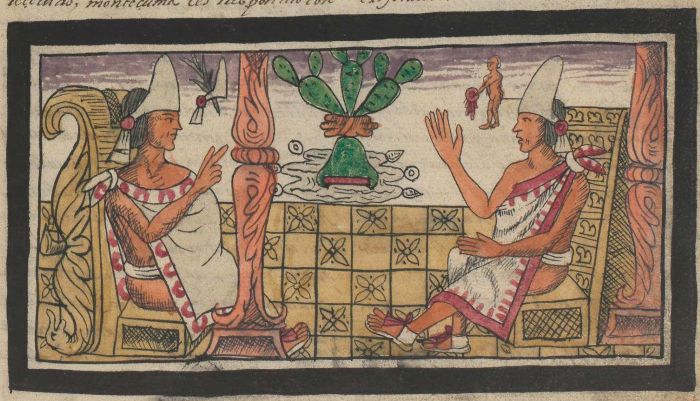
The final collapse of the Aztec capital in 1521 was not a sudden event but the culmination of a prolonged and multifaceted crisis that unfolded over two years. Following the death of Moctezuma II and the temporary expulsion of the Spanish during the episode often referred to as the Noche Triste, the conflict entered a new and more destructive phase. Hernán Cortés regrouped and returned with strengthened forces, bolstered not only by Spanish reinforcements but by thousands of indigenous allies who had aligned themselves against Mexica dominance. The struggle that followed transformed from an encounter defined by uncertainty into a full-scale war of annihilation, in which the survival of Tenochtitlan itself was at stake.
The leadership transition after Moctezuma’s death reflected both continuity and disruption within the imperial system. His successor, Cuitláhuac, sought to adopt a more direct and militarized response to the Spanish threat, signaling a shift away from the earlier strategy of cautious engagement. But his reign was brief, cut short by disease, likely smallpox, which had begun to spread through the population with devastating effect. The subsequent rise of Cuauhtémoc marked another attempt to consolidate resistance, but by this point the structural integrity of the empire had already been severely compromised. Leadership remained present, but it operated within conditions that limited its effectiveness. The rapid succession of rulers not only disrupted continuity but also complicated the process of decision-making, as each new leader inherited an increasingly dire situation with fewer resources and less time to respond. The authority that once derived from stability and ritual continuity now had to function amid crisis and fragmentation, reducing its capacity to coordinate a unified defense.
The role of disease in the collapse cannot be overstated. The introduction of smallpox, to which the indigenous population had no prior exposure, caused widespread mortality and social disruption. The epidemic weakened the defensive capacity of the city, reducing the number of able-bodied fighters and undermining the networks of support necessary for sustained resistance. Beyond its immediate physical impact, disease contributed to a broader sense of instability, as it disrupted social and ritual practices that were vital to maintaining order. The combination of military pressure and epidemic collapse created a situation in which recovery became increasingly unlikely.
The siege of Tenochtitlan itself represents one of the most dramatic and destructive episodes of the conquest. Spanish forces, supported by their indigenous allies, employed a strategy of encirclement and attrition, cutting off supply routes and systematically dismantling the city’s defenses. Control of the surrounding waterways proved decisive, as brigantines constructed by the Spanish allowed them to dominate Lake Texcoco and restrict movement within and around the city. The urban landscape, once a source of strength, became a site of vulnerability as infrastructure was destroyed and resources dwindled. Resistance continued with remarkable intensity, but the conditions of the siege ensured that each day brought further depletion. The prolonged nature of the assault placed immense strain on both the physical and psychological resilience of the defenders, as shortages of food, water, and medical care compounded the effects of constant attack. The systematic destruction of causeways, canals, and buildings not only weakened defenses but also disrupted the internal organization of the city, making coordinated resistance increasingly difficult. The siege operated not merely as a military strategy but as a process of gradual disintegration, eroding the capacity of Tenochtitlan to function as a coherent entity.
The human cost of this conflict was immense. As food supplies ran out and disease spread, the population of Tenochtitlan faced starvation, illness, and constant violence. Contemporary accounts describe scenes of extreme suffering, reflecting the total collapse of the systems that had once sustained the city. The final capture of Cuauhtémoc and the fall of the city marked not only the end of organized resistance but the destruction of a political and cultural center that had dominated the region. The transformation of Tenochtitlan into the foundation of colonial Mexico City symbolized the broader transition from indigenous sovereignty to Spanish rule.
The fall of Tenochtitlan illustrates the convergence of multiple forces that together produced catastrophic collapse. Leadership crises, shifting alliances, epidemic disease, and sustained military pressure interacted in ways that overwhelmed the capacity of the Aztec system to adapt. While the actions of individual leaders, including Moctezuma, played a role in shaping the trajectory of events, the outcome cannot be attributed to any single decision or factor. Instead, it reflects the cumulative impact of structural vulnerabilities exposed under extreme conditions. The destruction of the Aztec capital stands as a stark example of how complex systems can unravel when confronted with challenges that exceed their capacity for response.
Alternative Interpretations: Madness, Religion, or Rational Adaptation?
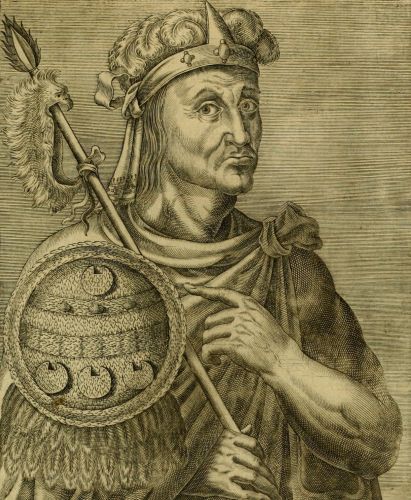
Interpretations of Moctezuma II’s actions have long been shaped by the perspectives of the sources through which they are known. Early Spanish accounts, particularly those associated with Hernán Cortés and later chroniclers, often portrayed the emperor as weak, indecisive, or overwhelmed by superstition. These narratives served a rhetorical purpose, presenting the conquest as both justified and inevitable by emphasizing the supposed inadequacy of indigenous leadership. Moctezuma’s decisions were interpreted as evidence of irrationality, reinforcing a broader depiction of the Aztec world as vulnerable to European intervention.
Modern scholarship has increasingly challenged this characterization, arguing that such interpretations reflect the biases and agendas of colonial sources rather than the realities of Aztec decision-making. Historians have emphasized the need to read these accounts critically, recognizing that they were produced within contexts that privileged Spanish perspectives and often marginalized indigenous voices. By comparing these narratives with Nahua sources and archaeological evidence, scholars have sought to reconstruct a more nuanced understanding of events, one that accounts for the complexity of the situation rather than reducing it to a simple narrative of failure. This reassessment has also highlighted the role of translation, mediation, and retrospective interpretation in shaping the surviving accounts, as many indigenous perspectives were recorded after the conquest under colonial conditions that influenced their content. Historians must navigate not only conflicting narratives but also the processes through which those narratives were produced, complicating any straightforward attempt to determine intent or meaning.
A central point of debate concerns the role of religion in shaping Moctezuma’s response. The long-standing claim that he believed the Spanish to be divine figures, particularly associated with the return of Quetzalcoatl, has been widely reconsidered. While religious frameworks undoubtedly influenced interpretation, many historians now argue that the idea of Moctezuma mistaking Cortés for a god is either exaggerated or a post-conquest construction. Instead, religious thought is better understood as providing a context for interpreting uncertainty rather than dictating a specific course of action. This perspective shifts the focus from credulity to complexity, highlighting the interpretive challenges faced by the Aztec leadership. It also underscores the flexibility within religious systems themselves, which could accommodate multiple interpretations without necessarily producing a single, definitive response. By situating religious belief within a broader cultural and intellectual framework, scholars have moved away from simplistic explanations and toward a more nuanced understanding of how cosmology informed, but did not determine, political decision-making.
Another line of interpretation emphasizes strategic rationality, suggesting that Moctezuma’s actions may have been attempts to manage a situation that defied conventional categories. From this viewpoint, the use of diplomacy, gift-giving, and controlled engagement can be seen as calculated responses aimed at gathering information, delaying confrontation, and assessing the intentions of the newcomers. The decision to allow the Spanish into Tenochtitlan, while disastrous, may have been grounded in the belief that proximity would enable greater control. Such interpretations do not deny the failures of these strategies but seek to understand them within the constraints and uncertainties that shaped their formulation.
It is important to recognize that rationality itself is context-dependent. Actions that appear misguided in hindsight may have been entirely reasonable given the information and frameworks available at the time. The challenge for historians is to reconstruct these frameworks without imposing modern assumptions about decision-making. This requires attention to the cultural, political, and intellectual environments in which Moctezuma operated, as well as an awareness of the limitations inherent in the sources. By situating his actions within their proper context, it becomes possible to move beyond binary distinctions between rationality and irrationality.
The historiography of Moctezuma’s leadership reflects broader debates about agency, interpretation, and the nature of historical explanation. Rather than a simple question of madness or competence, his actions reveal the difficulty of navigating unprecedented circumstances within established systems of meaning. The persistence of competing interpretations underscores the complexity of the case, demonstrating how historical understanding evolves as new evidence and perspectives are brought to bear. Moctezuma’s legacy is not fixed but continually reinterpreted, serving as a focal point for ongoing inquiry into the dynamics of leadership and response under conditions of profound uncertainty. The debate itself has become part of the historical narrative, illustrating how interpretations are shaped by changing scholarly priorities and methodologies. As historians continue to refine their approaches, the case of Moctezuma remains a valuable lens through which to examine not only the past but also the processes by which that past is understood.
Comparative Perspective: Leadership Failure and Obedience in Crisis
The following video from “Biographics” covers the end of the Aztec Empire under Moctezuma II:
The case of Moctezuma II invites comparison with other historical moments in which authority and obedience interacted under conditions of extreme uncertainty. Across cultures and periods, leaders confronted with unprecedented crises have often relied on established frameworks of decision-making that proved inadequate to new realities. In turn, followers, conditioned by structures of hierarchy and identity, have tended to align their actions with those of their leaders, even when doing so carried significant risk. This recurring pattern suggests that the relationship between leadership and obedience operates according to broader dynamics that transcend specific historical contexts.
One point of comparison lies in the role of cultural systems in shaping responses to crisis. In the Aztec world, religious cosmology and imperial hierarchy framed Moctezuma’s decisions and the responses of his subjects. Similar dynamics can be observed in other societies, where deeply embedded values define what constitutes appropriate action. These systems provide coherence and meaning under normal conditions, but they can also limit flexibility when confronted with novel challenges. The persistence of established patterns of behavior, even in the face of changing circumstances, reflects the strength of these cultural frameworks in guiding perception and action. Individuals interpret events through familiar categories, and even when those categories prove inadequate, they are not easily discarded. Instead, they are stretched, reinterpreted, or selectively applied, often delaying the recognition that a fundamentally different response may be required. This tendency highlights the difficulty of adapting to situations that fall outside established experience, as the very tools used to understand the world can become obstacles to effective action.
Another shared element is the centrality of authority as a focal point for collective behavior. In highly structured societies, the decisions of leaders carry disproportionate weight, shaping not only immediate responses but the broader trajectory of events. When leaders act decisively, this can facilitate coordinated action; when they hesitate or misinterpret a situation, the effects can be amplified by the compliance of their followers. In the case of Moctezuma, the initial posture of cautious engagement influenced the behavior of elites and commoners alike, contributing to a delay in organized resistance. This dynamic underscores how the authority of a leader can both enable and constrain collective action.
The breakdown of authority represents another point of convergence across cases. When the legitimacy of a leader is compromised, whether through capture, defeat, or loss of confidence, the structures that sustain obedience can rapidly destabilize. The captivity of Moctezuma parallels other moments in which the symbolic center of authority is disrupted, leading to fragmentation and uncertainty. The transition from obedience to resistance is often uneven and contested, as individuals and groups navigate the shifting landscape of legitimacy. This process highlights the contingent nature of authority, which depends not only on power but on recognition and belief. Once the perception of legitimacy begins to erode, obedience can weaken quickly, exposing underlying tensions that had previously been contained. Competing claims to leadership may emerge, and previously suppressed dissent can surface, further complicating the ability to mount a unified response. The resulting fragmentation underscores the importance of legitimacy as a stabilizing force, demonstrating how its loss can transform a cohesive system into one marked by uncertainty and division.
Important differences must be acknowledged. The specific cultural, political, and environmental conditions of each case shape both the form and outcome of leadership and obedience. The Aztec encounter with the Spanish involved not only internal dynamics but also the impact of external forces, including technological disparity, disease, and alliances with rival groups. These factors complicate direct comparison, as they introduce variables that are not present in all cases. Recognizing these differences is essential for avoiding overly generalized conclusions and for appreciating the particularities of each historical situation.
The comparative perspective reinforces the central argument here while also refining it. Leadership failure and obedience in crisis are not isolated phenomena but part of a broader pattern in which human societies respond to uncertainty through established structures of authority and belief. The case of Moctezuma illustrates how these structures can both guide and constrain action, shaping outcomes in ways that are not always predictable or controllable. By situating this example within a wider historical context, it becomes possible to see more clearly the recurring dynamics that link disparate events, offering insight into the complex interplay between leadership, obedience, and the challenges of the unknown.
Conclusion: Authority, Belief, and the Limits of Control
The case of Moctezuma II reveals the profound complexity of leadership under conditions that defy established understanding. His actions, often reduced in earlier narratives to indecision or irrationality, emerge instead as responses shaped by deeply rooted systems of authority, belief, and interpretation. Faced with the arrival of Hernán Cortés and an unfamiliar form of threat, Moctezuma operated within frameworks that both enabled and constrained his capacity to respond. The resulting decisions, while coherent within their own context, proved insufficient against a rapidly evolving and fundamentally unprecedented challenge.
At the heart of this episode lies the interplay between authority and belief. The structure of Aztec imperial power depended on the integration of political leadership with religious meaning, creating a system in which decisions carried both practical and cosmological significance. This integration reinforced obedience and cohesion, allowing the empire to function effectively under normal conditions. Yet it also introduced limitations, as responses to crisis were filtered through established systems of interpretation that prioritized continuity and ritual propriety. These interpretive frameworks did not simply guide decision-making; they actively shaped what could be perceived as possible or acceptable, narrowing the range of responses available to the leadership. In moments of uncertainty, the impulse to preserve cosmic and social order could outweigh the need for rapid adaptation, encouraging caution even when circumstances demanded decisive action. Belief systems that had long provided stability became sources of constraint, illustrating how the same structures that sustain authority can, under different conditions, inhibit the flexibility required for survival.
The collapse of Tenochtitlan illustrates how these constraints can converge to produce catastrophic outcomes. Leadership decisions, patterns of obedience, and external pressures interacted in ways that amplified vulnerability, transforming uncertainty into fragmentation and finally into collapse. The erosion of Moctezuma’s legitimacy following his capture exposed the dependence of the system on symbolic authority, while the inability to generate a unified response reflected the limitations of its hierarchical structure. The fall of the Aztec capital was not simply the result of external conquest but the product of internal dynamics shaped by the relationship between authority and belief.
This episode underscores the broader limits of control within complex societies. Leaders do not act in isolation but within systems that define the range of possible responses, and followers interpret those actions through shared frameworks that reinforce or undermine authority. When these systems encounter challenges that exceed their capacity to adapt, the outcomes can be both rapid and irreversible. The story of Moctezuma and the fall of the Aztec Empire serves as a reminder that the strength of a system lies not only in its coherence but in its ability to respond to the unknown, a capacity that is never guaranteed.
Bibliography
- Anderson, Arthur J. O. The Florentine Codex: General History of the Things of New Spain. Salt Lake City: University of Utah Press, 1982.
- Brian, Amber. “Revising the Narrative of the Conquest of Mexico: Bernardino de Sahagún’s 1585 Relación de la conquista de esta Nueva España.” Textual Cultures 13:2 (2020), 10-24.
- Brooks, Francis J. “Motecuzoma Xocoyotl, Hernán Cortés, and Bernal Díaz del Castillo: The Construction of an Arrest.” The Hispanic American Historical Review 75:2 (1995), 149-183.
- Carrasco, David. City of Sacrifice: The Aztec Empire and the Role of Violence in Civilization. Boston: Beacon Press, 1999.
- —-. “Quetzalcoatl’s Revenge: Primordium and Application in Aztec Religion.” History of Religions 19:4 (1980), 296-320.
- Clendinnen, Inga. Aztecs: An Interpretation. Cambridge: Cambridge University Press, 1991.
- Cortés, Hernán. Letters from Mexico. Translated by Anthony Pagden. New Haven: Yale University Press, 1986.
- Díaz del Castillo, Bernal. The True History of the Conquest of New Spain. Translated by Alfred Percival Maudslay. London: The Hakluyt Society, 1910.
- Hassig, Ross. Mexico and the Spanish Conquest. Norman: University of Oklahoma Press, 1994.
- Lockhart, James. The Nahuas after the Conquest: A Social and Cultural History of the Indians of Central Mexico, Sixteenth through Eighteenth Centuries. Stanford: Stanford University Press, 1992.
- Restall, Matthew. Seven Myths of the Spanish Conquest. New York: Oxford University Press, 2003.
- —-. When Montezuma Met Cortés: The True Story of the Meeting That Changed History. New York: Ecco, 2018.
- Smith, Michael E. The Aztecs. 3rd ed. Malden, MA: Wiley-Blackwell, 2011.
- Townsend, Camilla. Fifth Sun: A New History of the Aztecs. New York: Oxford University Press, 2019.
- Townsend, Richard Fraser. “State and Cosmos in the Art of Tenochtitlan.” Studies in Pre-Columbian Art and Archaeology 20 (1979), 1-78.
Originally published by Brewminate, 04.29.2026, under the terms of a Creative Commons Attribution-NonCommercial-NoDerivatives 4.0 International license.
About the Author